The Nutritional Root Causes of Hair Loss
Your hair is falling out. Not just the normal 50-100 hairs daily that everyone sheds. Clumps in the shower. Your brush looks like a wig. You're running your fingers through your hair and coming away with a handful. Your doctor says it's stress. Your dermatologist says it's genetic. But hair loss is nutritional first, and it's fixable.

By Niall Kiddle, Founder, Organised

Reviewed by Pedro Rodrigues, Agronomist (farming and sourcing only) ·
8 min read · Published · Updated · 4 cited sources
Makers of the Organised Daily blend, a grass-fed beef organ supplement from regenerative UK farms
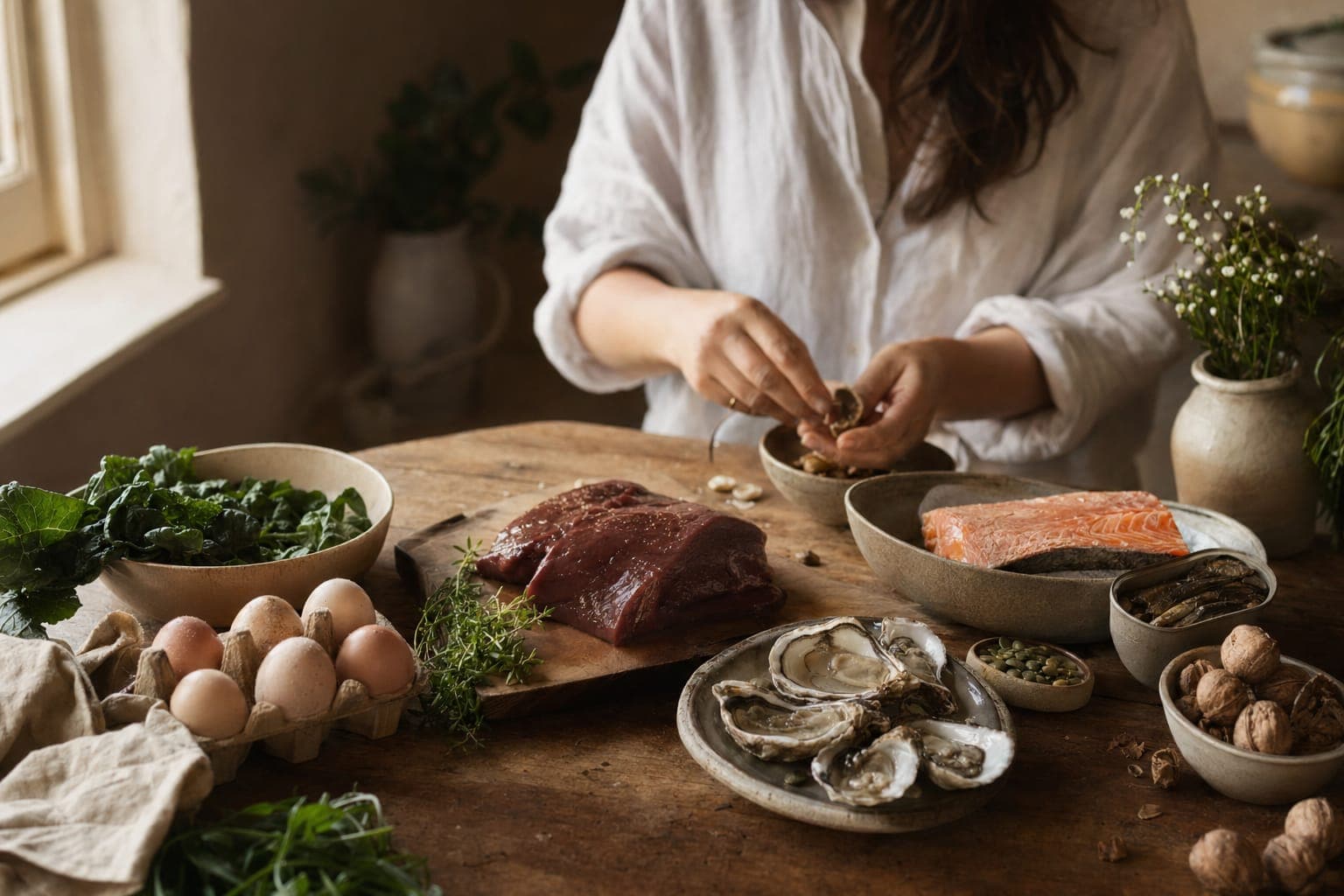
Your doctor says it's stress. Your dermatologist says it's genetic. But it's not genetic, and it's fixable.
Hair loss is a symptom of systemic deficiency
Your hair is the last thing your body prioritises. When nutrients are scarce, your body preserves them for organs that keep you alive. Your heart, your brain, your immune system. Hair gets what's left.
This means that hair loss is often the first visible sign that something deeper is wrong nutritionally. It's your body's way of saying: I don't have enough fuel to maintain luxury functions.
The most common nutritional causes of hair loss are iron deficiency, zinc deficiency, B vitamin deficiency (especially B12 and folate), biotin deficiency, and thyroid dysfunction usually from iodine or selenium deficiency.1
Unlike androgenetic alopecia, which is genetically programmed, nutritional hair loss is reversible. Fix the deficiencies and your hair grows back. The key is recognising which type you have.
Hair loss from nutritional deficiency is your body's distress signal. Fix the nutrition and the hair returns. Ignore it and it compounds over years until you're significantly bald.
Iron and ferritin drive hair growth
Low ferritin is one of the most common causes of hair loss, especially in women. Hair follicles require iron for the anagen (growth) phase. Without sufficient ferritin, your hair shifts prematurely into the telogen (shedding) phase.
If your ferritin is below 70 ng/mL, hair loss often occurs.1 You might have normal haemoglobin and be told your iron is fine, when in reality your ferritin is depleted and your hair is dying as a result.
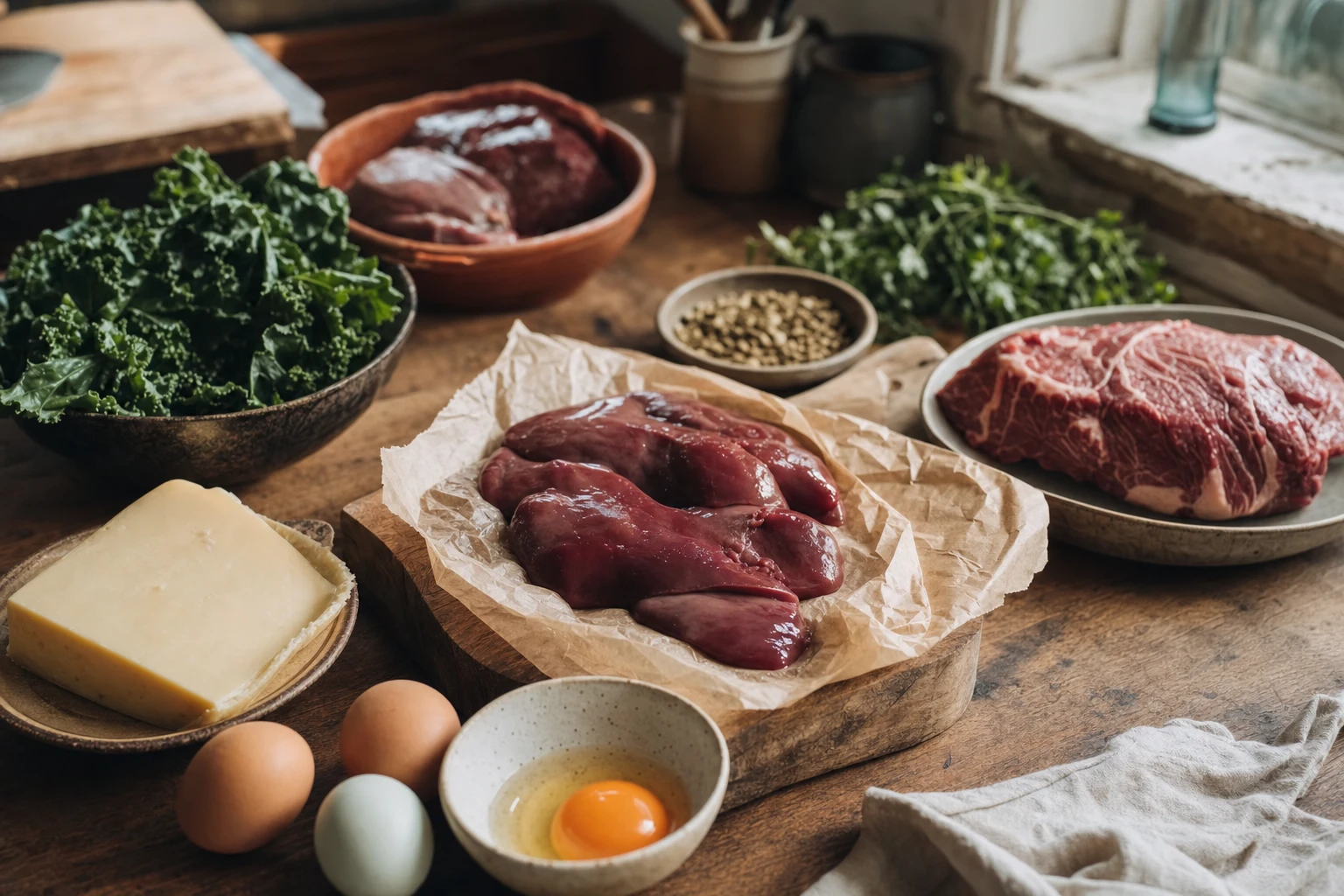
Women losing hair should get ferritin tested immediately. If it's below 50 ng/mL, iron supplementation (preferably through organ meats) is essential for hair recovery. Eating beef liver twice weekly will raise ferritin faster than any oral supplement.
Men rarely suffer from iron-deficiency hair loss unless they have hidden bleeding or are vegan. But post-menopausal women can unknowingly have depleted iron for years without realising it's the cause of their hair loss.
Zinc is the mineral your scalp requires
Zinc is a cofactor for protein synthesis, and hair is pure protein. Without zinc, your scalp can't produce new hair, and existing hair becomes weak and brittle. Telogen effluvium, a type of hair shedding triggered by stress or deficiency, is strongly associated with zinc deficiency.
Oysters are the richest source, providing 11 mg of zinc per 100g serving. Beef provides 5-8 mg per 100g.4 Organ meats provide similar amounts. Most plant sources provide minimal bioavailable zinc, which is why vegetarians and vegans frequently experience hair loss.
If you're vegetarian or vegan, zinc deficiency is likely, and hair loss is one of the first signs. Supplemental zinc helps, but food sources are far superior.
Zinc also supports immune function and wound healing, both of which are critical for scalp health. Scalp inflammation accelerates hair loss. Adequate zinc keeps the scalp healthy and hair rooted firmly.
Biotin and B vitamins support hair structure
Biotin is a B vitamin that supports keratin production, the protein that makes up your hair shaft. Deficiency causes brittle, thinning hair that breaks easily. Hair becomes limp and loses lustre.1
Beef liver provides biotin along with B12, folate, and other B vitamins. These work synergistically to support hair growth and prevent shedding. A single serving of liver provides more of these nutrients than most people consume weekly.
B12 and folate deficiencies cause hair loss through multiple mechanisms. They disrupt the normal hair growth cycle, reduce nutrient absorption needed for hair health, and cause anaemia, which itself causes hair loss. If you're vegetarian or have low stomach acid, B12 deficiency is nearly certain.
Supplemental biotin helps somewhat, but it works far better when accompanied by adequate B12, folate, iron, and zinc. These nutrients work as a team.
Thyroid function determines hair health
Your thyroid controls your metabolic rate and hair growth cycle. Hypothyroidism (low thyroid function) causes hair loss and widespread hair thinning. The hair becomes dry, brittle, and falls out in clumps.
Thyroid function depends on iodine, selenium, iron, and zinc. Deficiencies in any of these create hypothyroidism, which causes hair loss. Most people's thyroid problems are nutritional, not pathological.
Fix your ferritin, zinc, and selenium levels and your thyroid often recovers without medication. Get your TSH and free T3 tested. If TSH is elevated but you don't have autoimmune thyroiditis, try nutritional intervention first.
Selenium is particularly important for thyroid peroxidase, the enzyme that produces thyroid hormones.2 Brazil nuts, fish, and beef provide selenium. Most people don't eat enough.
If you're losing hair and you're hypothyroid, fix your ferritin, zinc, and selenium levels before assuming you need thyroid medication. Often these nutrient deficiencies are causing your thyroid to fail.
Cortisol and hair loss
Chronic stress elevates cortisol, which suppresses thyroid function, reduces nutrient absorption needed for hair health, and shifts hair follicles into the telogen phase prematurely. Stress-induced hair loss is well-documented.
If you're stressed and losing hair, you're creating a double problem. Stress suppresses the very nutrients your hair needs. Chronically elevated cortisol also increases DHT sensitivity in hair follicles, accelerating androgenetic alopecia.
Fixing cortisol requires genuine stress reduction (not just stress management), adequate sleep, minerals, and nutrients. Magnesium, potassium, and sodium help regulate cortisol. Bone broth provides glycine, which supports cortisol metabolism and sleep quality.
The protocol for hair recovery
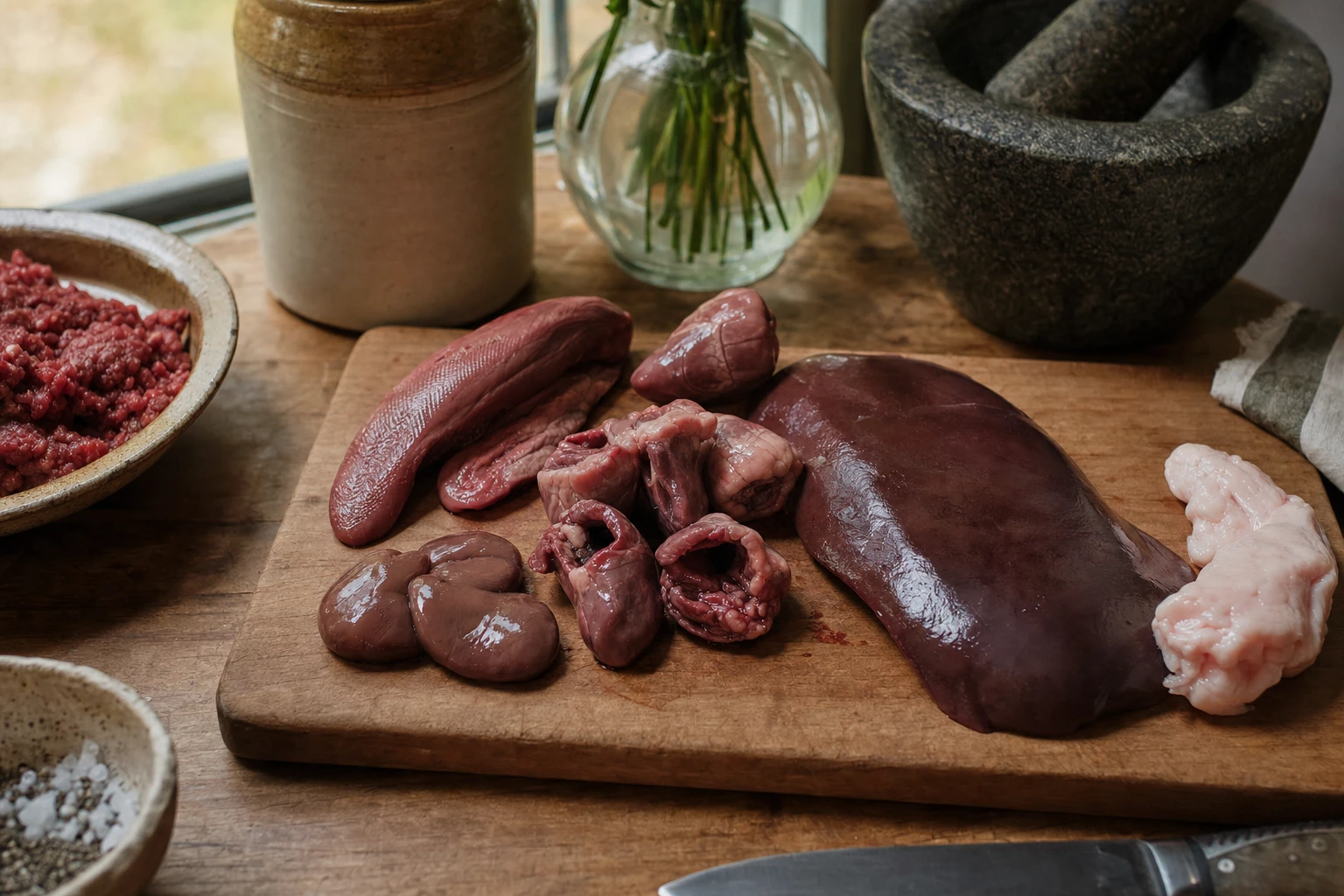
- Eat organ meats 2-3 times weekly. Beef liver provides iron, zinc, biotin, and B vitamins. All the nutrients hair follicles require. Start with liver pate if the taste is unfamiliar.
- Eat oysters or shellfish weekly. Oysters provide zinc and selenium, critical for scalp health and thyroid function. One dozen oysters provides all the zinc you need weekly.
- Eat red meat 4-5 times weekly. Provides iron, zinc, B vitamins, and carnitine, which supports mitochondrial function in hair follicles.
- Add bone broth to meals. Provides collagen, glycine, and minerals that support both hair structure and cortisol regulation.
- Get nutrient testing. Ferritin, zinc, selenium, and thyroid function. If any are low, supplement or increase food sources immediately.
- Reduce stress genuinely. Hair loss from stress requires actual stress reduction, not stress management. This means reducing commitments and obligations that aren't serving you.
- Sleep 7-9 hours nightly. Hair growth happens during sleep. Sleep deprivation disrupts hair growth cycles and elevates cortisol.
- Eliminate seed oils. Oxidised seed oils promote inflammation and contribute to scalp problems and hair loss.

Get health guides like this, free
Two short reads a week on eating for energy, gut health, skin, sleep and more.
By signing up you agree to receive emails from us. No spam, unsubscribe anytime.
Silica and collagen for hair structure
Hair is made of protein, but it also requires silica, a mineral that cross-links collagen molecules. Without silica, your hair is weak and brittle.
Silica comes from connective tissue (bone broth, cartilage), certain vegetables like cucumber skin and horsetail herb, and mineral-rich water. Women eating bone broth regularly have thicker, shinier hair because bone broth provides both collagen and silica.
Bone broth is non-negotiable for hair recovery. It provides the structural substrate that hair follicles use to build hair shaft strength.
DHT sensitivity and nutrient status
Androgenetic alopecia (pattern baldness) is sensitive to DHT, a metabolite of testosterone. But DHT sensitivity is modulated by your nutritional status.
When your nutrient levels are optimal, your scalp is more resistant to DHT. When you're deficient, your scalp is more vulnerable. This is why some people go bald with pattern-baldness genetics and others don't. Nutrition modulates genetic expression.
Saw palmetto and other DHT inhibitors help somewhat, but they work far better when accompanied by adequate zinc, iron, and B vitamins.
Silica, collagen and structural integrity
Hair is made of protein, but it also requires silica, a mineral that cross-links collagen molecules into strong structures. Without silica, your hair is weak and brittle.
Silica comes from connective tissue in bone broth, cartilage, and certain plant sources like horsetail herb and cucumber skin. Women eating bone broth regularly have thicker, shinier hair because bone broth provides both collagen and silica together. This is synergistic. Collagen alone without silica doesn't achieve the same results.
The reason our grandmothers had thicker hair was bone broth. The reason modern women have thin, weak hair is the elimination of bone broth from the diet. This is not genetics. This is nutrition.
1 of 9
Daily blend
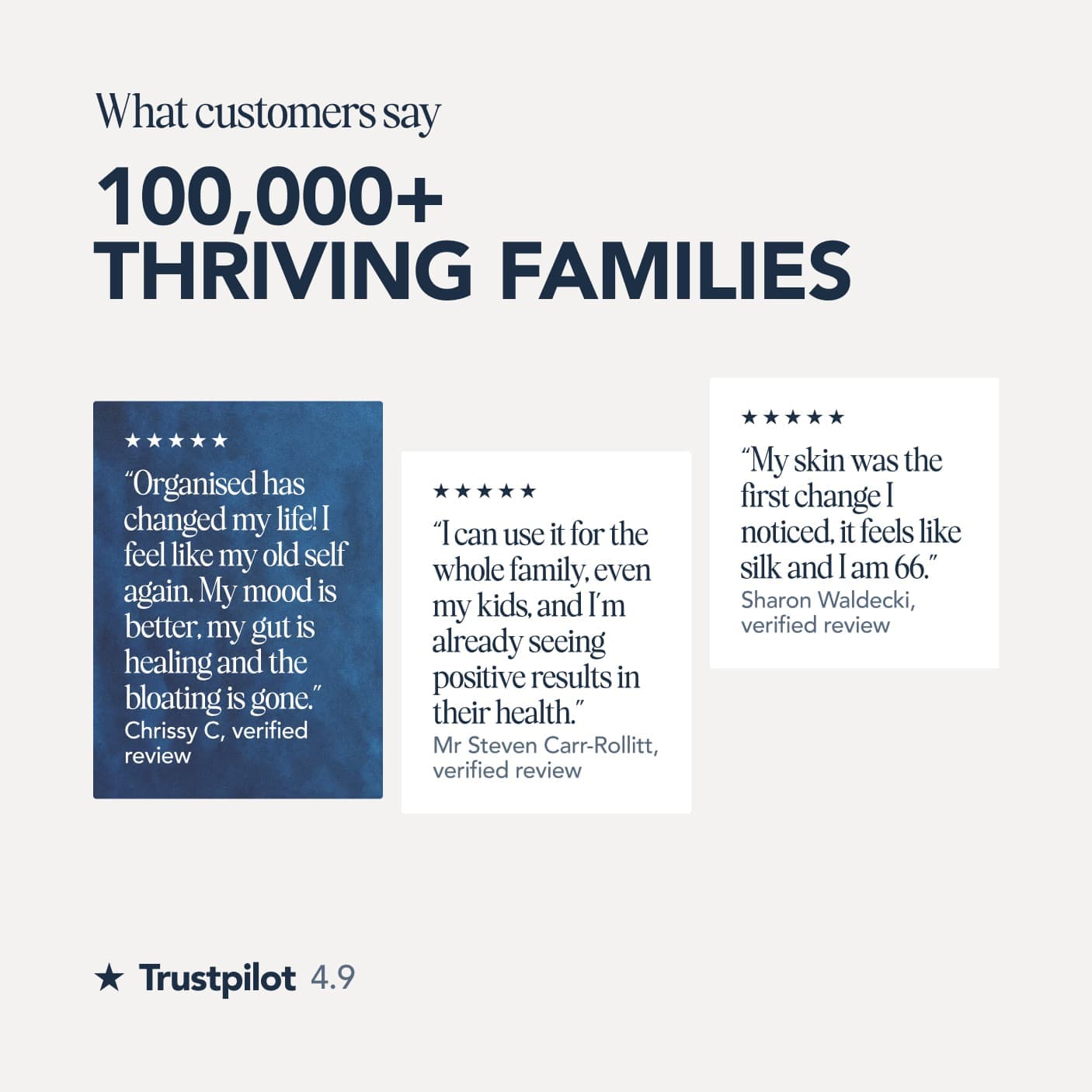
100,000+ thriving families4.9 on Trustpilot
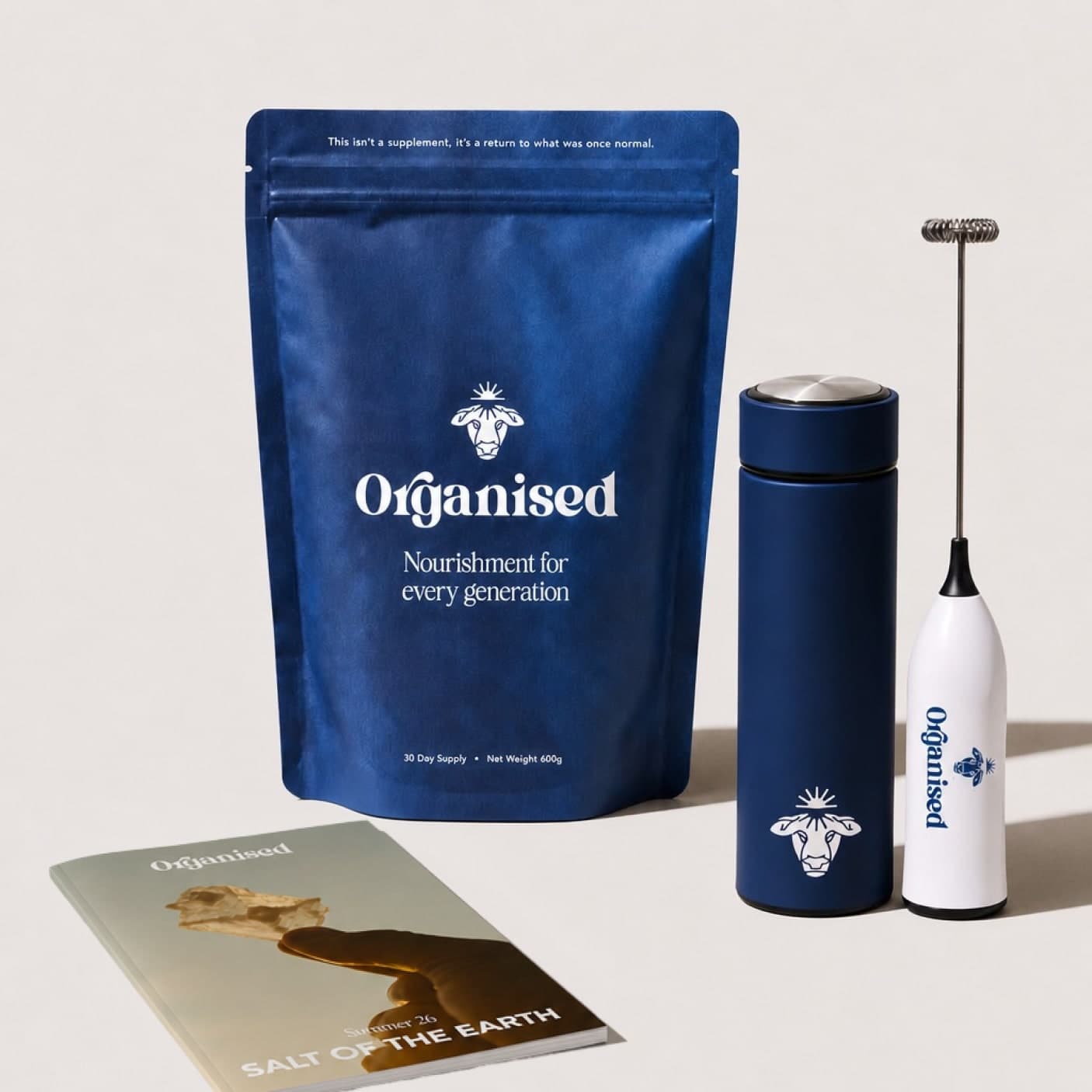
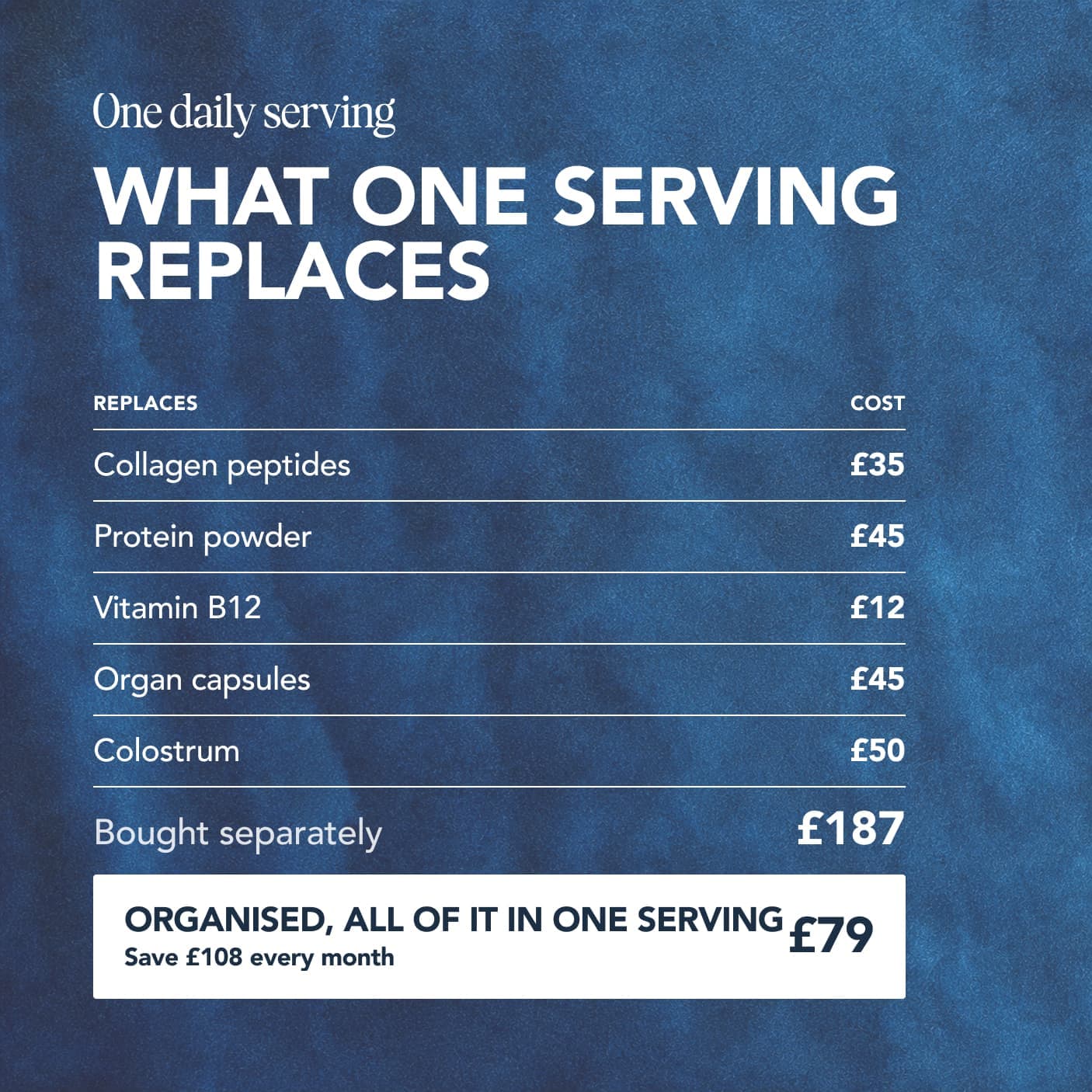
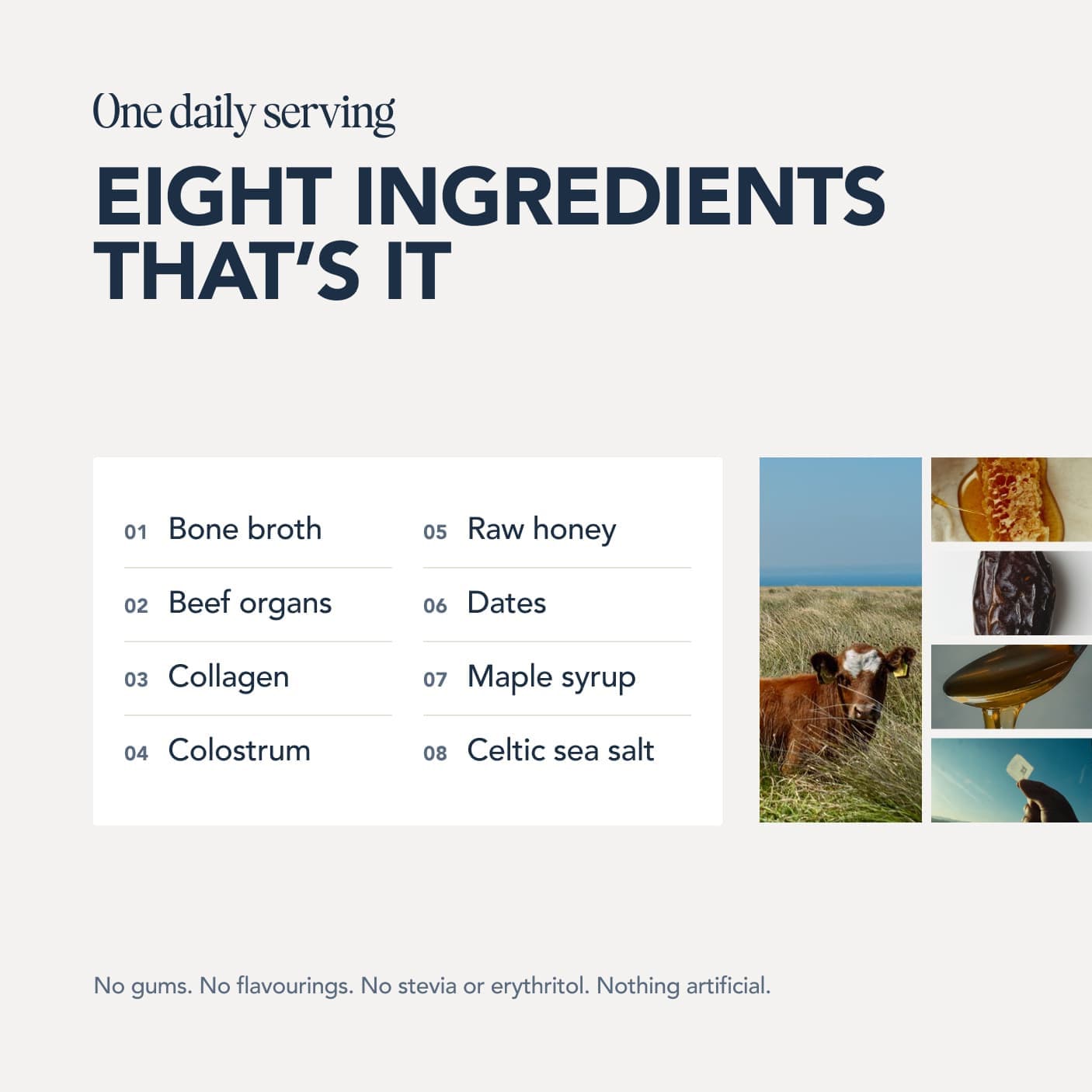
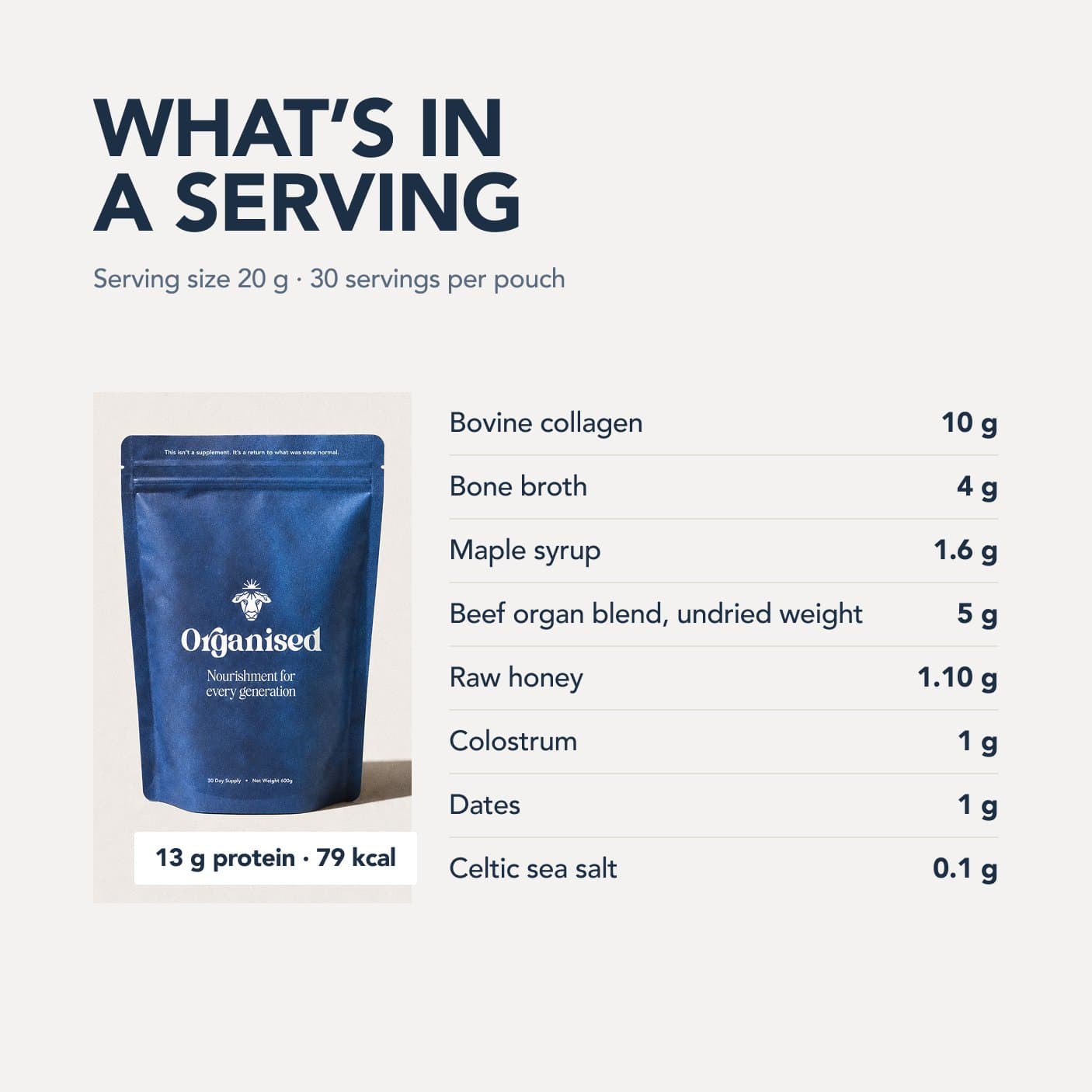
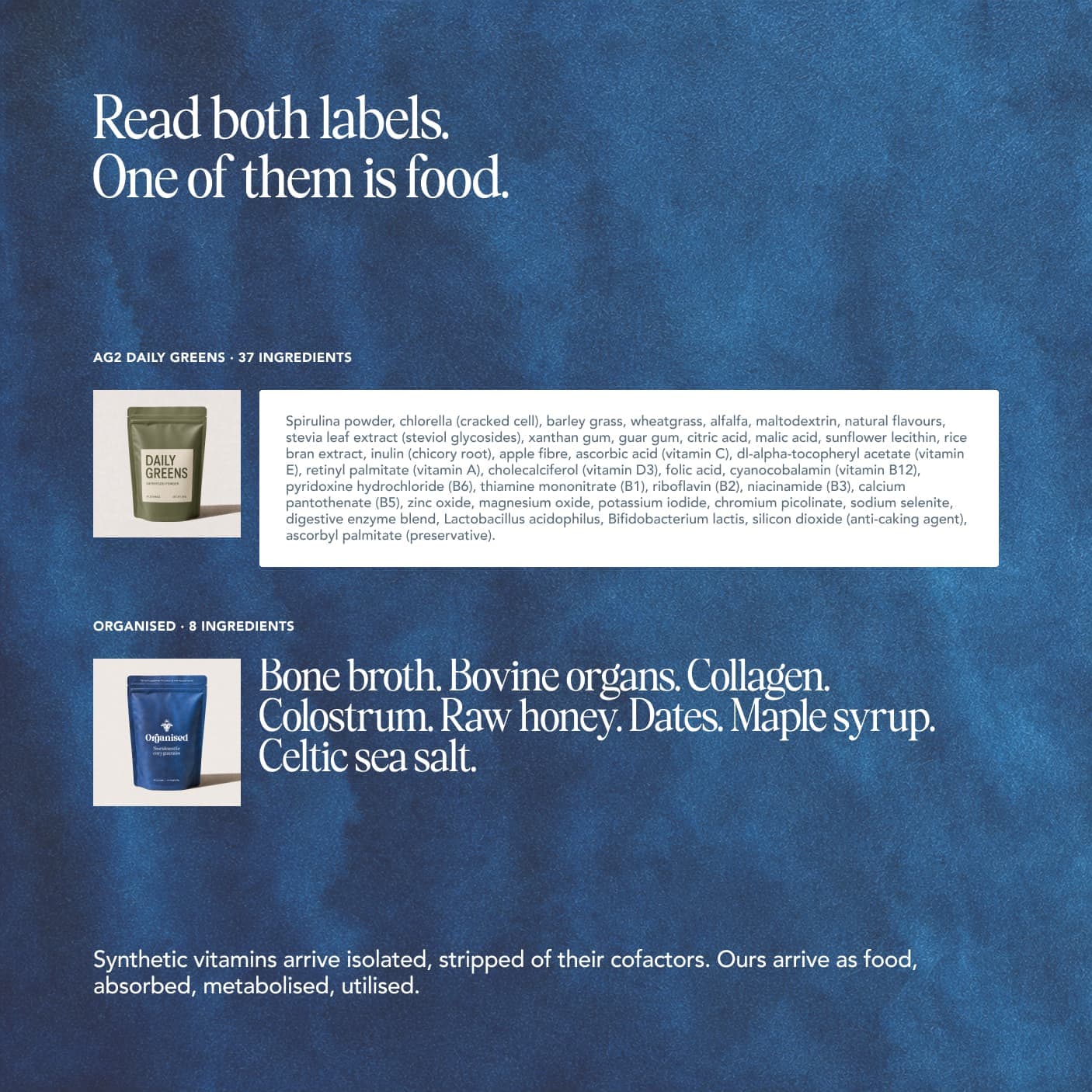
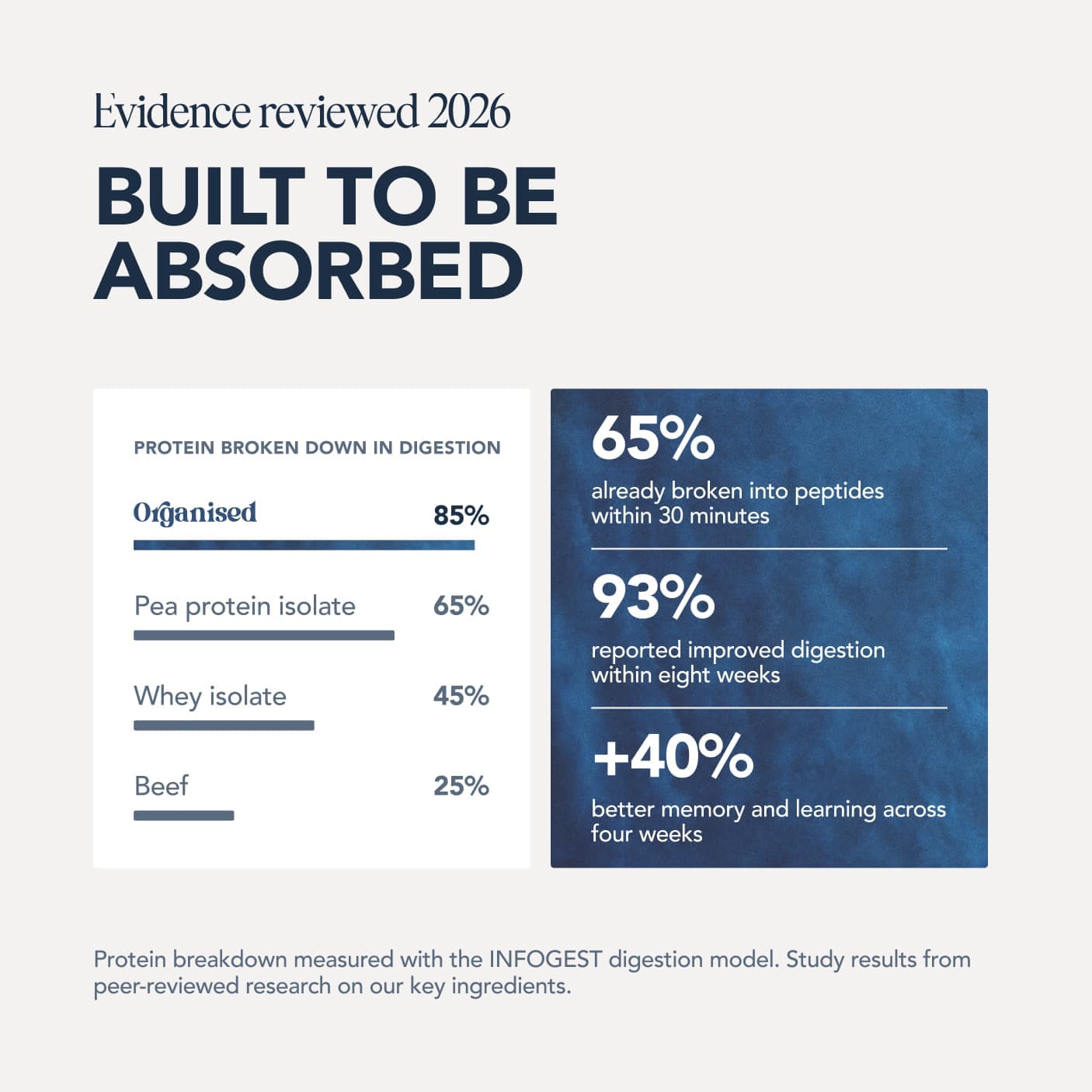
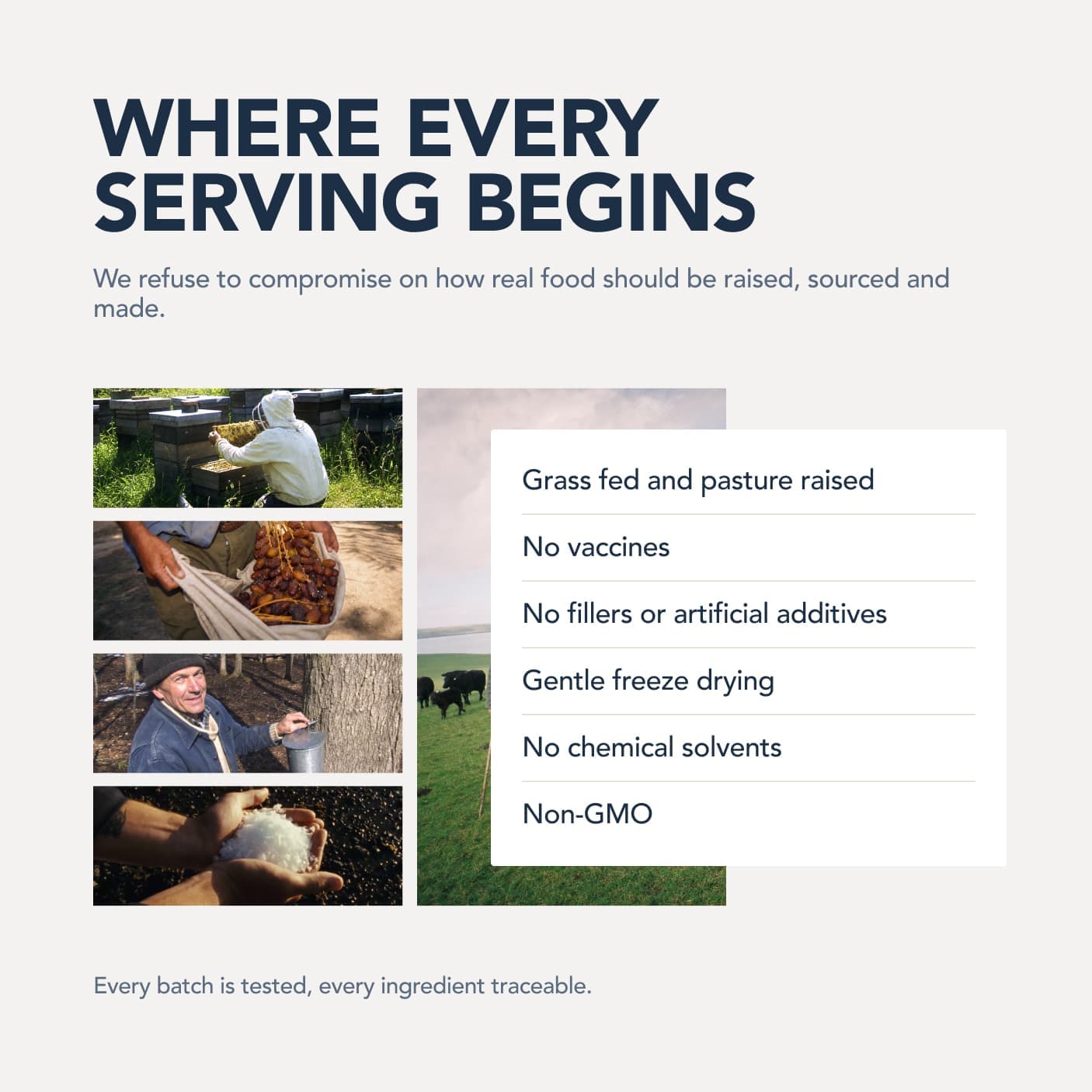
Eight real ingredients built around grass-fed beef organs, collagen and colostrum. Nothing synthetic added.
Free with your first order, worth £38. Plus £10 off the pouch with a subscription.
Free UK shipping · Made in England · 100 day money back guarantee on your first pouch · Skip, pause or cancel anytime
How oestrogen and progesterone affect hair growth
Hair growth is affected by hormonal cycles. High oestrogen promotes hair growth. Low progesterone can trigger shedding. This is why women often experience hair loss during menopause when both hormones drop, or during the luteal phase of their cycle when progesterone drops.
If your hormones are dysregulated from nutritional deficiency, your hair cycle is dysregulated too. Fix the underlying hormonal dysfunction and your hair cycle normalises.
Timeline for recovery
Hair growth cycles take months. Your hair isn't visibly growing new hair until the follicle has been in anagen phase for several weeks.
Weeks 1-4. Hair shedding continues. You won't see recovery yet. But you're rebuilding ferritin and mineral levels in your body.
Weeks 5-12. Shedding begins to slow noticeably. You notice less hair in the shower and on your brush. New hair growth is beginning but not yet visible on your head.
Weeks 13-24. New hair growth becomes visible. You notice thicker, stronger hair growing in at the roots. Hair that was weak becomes sturdy. Baby hairs are visible on your scalp.
Months 6-12. Your hair has significantly recovered. The bald or thin patches are filling in with new growth. Your hair is noticeably thicker and healthier than it was.
Don't expect miraculous recovery in weeks. Hair grows slowly. But nutritional recovery is sustainable and permanent, unlike many hair treatments.
The role of vitamin D in hair growth
Vitamin D regulates the hair growth cycle. Deficiency causes telogen effluvium and pattern baldness acceleration. Studies show women with vitamin D levels below 30 ng/mL experience significantly more hair loss.3
Hair follicles have vitamin D receptors that control the transition from growth phase to shedding phase.3 Without adequate vitamin D, more follicles enter shedding phase prematurely.
Get your vitamin D tested. If below 50 ng/mL, supplement or increase sun exposure. Fish like mackerel and salmon provide vitamin D, as do egg yolks from pasture-raised chickens.
Combining adequate vitamin D with iron, zinc, and biotin creates the optimal environment for hair recovery.
Stress, cortisol and hair loss mechanisms
Chronic stress elevates cortisol, which shifts hair follicles into the telogen (shedding) phase prematurely. This is why people often report hair loss during intensely stressful periods.
Cortisol also suppresses thyroid function, reduces nutrient absorption, and increases inflammation. All of these accelerate hair loss.
Stress reduction is non-negotiable for hair recovery. This means actual stress reduction, not stress management. Identify what's causing the stress and change it if possible. Reduce obligations. Cut ties to people causing stress. Take actual breaks from work.
Combined with nutritional support, stress reduction allows hair recovery to accelerate dramatically.
The bottom line
Hair loss is nutritional until proven otherwise. Get your ferritin, zinc, selenium, and thyroid status tested. Start eating organ meats, oysters, and red meat. Reduce stress genuinely. Sleep properly. Give it six months. Your hair will recover.
References
Every source below was checked on 27 August 2026. Each PubMed, PMC and DOI identifier was resolved against NCBI or Crossref, and what it opens is printed under the citation, so you can see the link goes where the citation says without leaving the page. Where a citation and its identifier disagreed, the citation was corrected to the record or the reference was deleted along with the sentence marker that pointed at it, and where the resolved paper turned out not to support the sentence, the sentence was cut back to what it does support. Borrowed authority is worse than none, because it looks like rigour.
- Almohanna HM, Ahmed AA, Tsatalis JP, Tosti A. The role of vitamins and minerals in hair loss: a review. Dermatology and Therapy. 2019;9(1):51-70. https://pmc.ncbi.nlm.nih.gov/articles/PMC6380979/Checked 27 August 2026: PMC6380979 opens Almohanna HM, Ahmed AA, Tsatalis JP et al, The Role of Vitamins and Minerals in Hair Loss: A Review. Dermatol Ther (Heidelb) 2019;9(1):51-70. PubMed indexes it as: Review.
- National Institutes of Health, Office of Dietary Supplements. Selenium: Fact Sheet for Health Professionals. https://ods.od.nih.gov/factsheets/Selenium-HealthProfessional/ [accessed May 2026].
- Saini K, Mysore V. Role of vitamin D in hair loss: a short review. Journal of Cosmetic Dermatology. 2021;20(11):3407-3414. https://pubmed.ncbi.nlm.nih.gov/34553483/Checked 27 August 2026: PMID 34553483 opens Saini K, Mysore V, Role of vitamin D in hair loss: A short review. J Cosmet Dermatol 2021;20(11):3407-3414. PubMed indexes it as: Review.
- National Institutes of Health, Office of Dietary Supplements. Zinc: Fact Sheet for Health Professionals. https://ods.od.nih.gov/factsheets/Zinc-HealthProfessional/ [accessed May 2026].
Who wrote and reviewed this guide
Niall Kiddle
Author · Founder, Organised
Niall is the founder of Organised. He started the company in 2024 after fixing his own health the slow way: in 2022 he swapped a cupboard of synthetic supplements for real food, raw milk, organ meats, bone broth and honey, and felt the difference within months.
Areas of expertise: Ancestral nutrition, Organ meats, Whole-food supplementation, Gut health, Regenerative sourcing
Read Niall's full profile
Pedro Rodrigues
Reviewer · Agronomist (farming and sourcing only)
Pedro is the agronomist Organised works with on farming and sourcing. His job on the guides is to keep the science honest: he reviews what we publish about soil health, regenerative agriculture, grazing and the way food is actually produced.
Areas of expertise: Regenerative agriculture, Agronomy, Soil health, Grass-fed farming, Food sourcing
Reviewed this guide on
Read Pedro's full profileMore on hair
View all- Hair Loss in Men: Nutrition Beyond Finasteride
- How to Stop Hair Shedding with Ancestral Nutrition
- Keratin Supplements Are a Waste of Money. Here's Why.
- Postpartum Hair Loss: Why It Happens and How to Recover
- Scalp Health: Why It Matters for Hair Growth
- The Best Foods for Thicker, Stronger Hair
- Thinning Hair After 40: What Your Body Is Trying to Tell You
Browse the guides library
All guidesKeep reading

Health goals
SIBO: What It Is and How Nutrition Can Help
Understand SIBO, the migrating motor complex, and how nutrition supports recovery. Meal spacing, bitters, and non-fermented approaches.

Health goals
Stop Wasting Nutrients: How To Increase Nutrient Absorption
You can eat well on paper and still feel flat. Learn how to increase nutrient absorption with simple pairings so more of what you eat actually counts.

Health goals
Can What You Eat Affect Your Anxiety?
Your anxiety might not be psychological. It might be nutritional. How gut health, blood sugar, magnesium, and seed oils fuel anxiety (and how to stop).
Real food, made effortless
Start my daily blendA few ways to use it
All recipes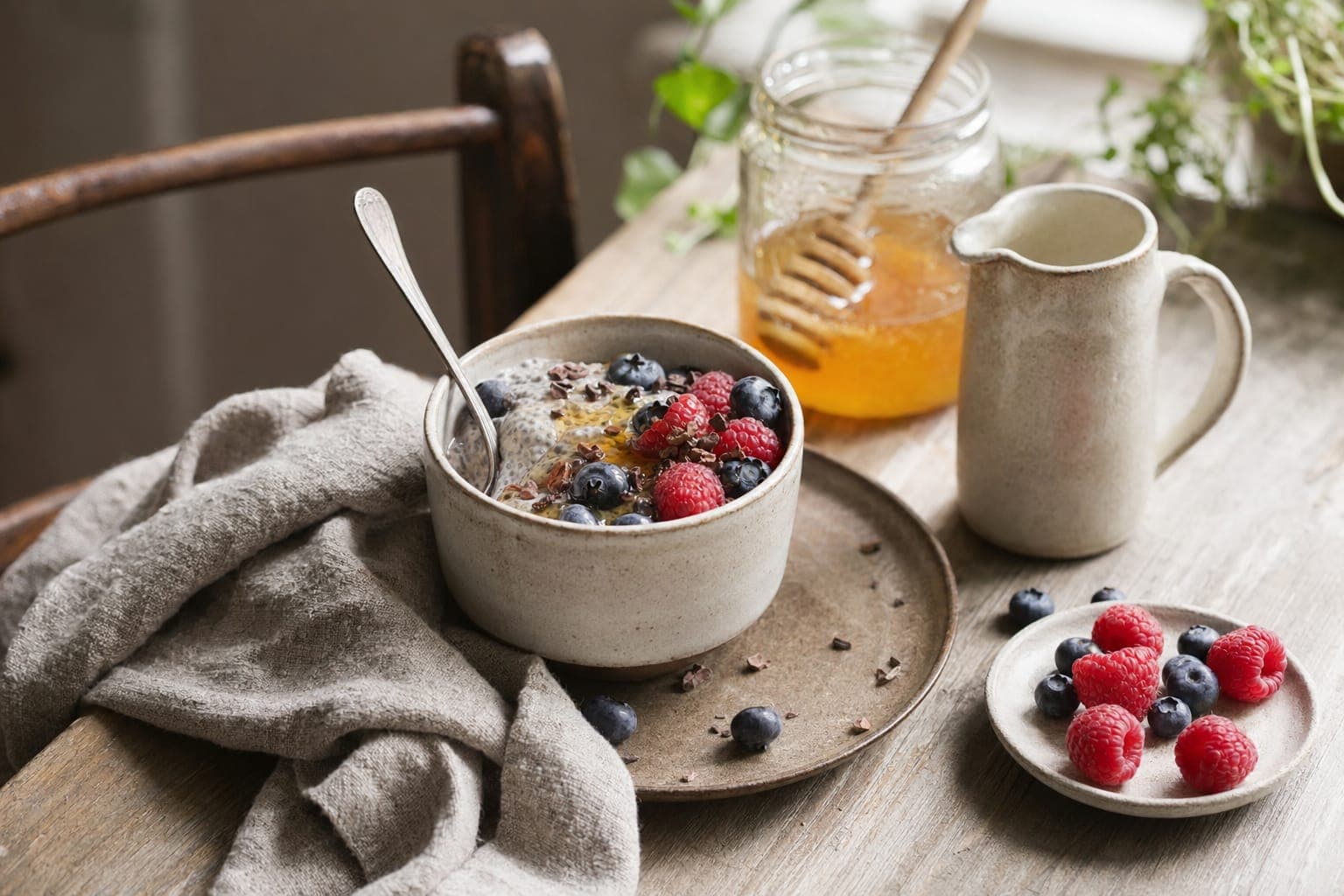
Organised Chia Pudding with Raw Honey and Berries
A no-cook chia seed pudding made with raw milk, collagen, berries, and raw honey. Prep it the night before and eat for breakfast.

The Perfect Organised Morning Shake: Our Favourite Recipe
Our signature morning shake: Organised, raw milk, banana, honey. Simple, nourishing, and optimised for an empty stomach.
10 Ways to Use Organised That Aren't Just a Shake
Move beyond the basic shake. Discover 10 creative ways to use Organised in smoothie bowls, oats, yoghurt, baking, and more.


 Join over 100,000+ members
Build a better food system with us
The Organised community is thousands of people choosing real food and backing the farmers who grow it, all of us trying to leave the world a little better than we found it. If that is what you care about too, you belong here.