How Nutrient Deficiencies Drive Overeating
You're not overeating because you're weak or greedy. You're overeating because your body is starving for nutrients. Fix the deficiency, and the overeating stops.

By Niall Kiddle, Founder, Organised

Reviewed by Pedro Rodrigues, Agronomist (farming and sourcing only) ·
6 min read · Published · Updated · 2 cited sources
Makers of the Organised Daily blend, a grass-fed beef organ supplement from regenerative UK farms

The body doesn't signal for calories in the abstract. It signals for specific nutrients. If you're deficient in protein, you'll feel hungry until you eat protein. If you're deficient in iron, you'll crave red meat (and possibly non-food items). If you're deficient in salt or magnesium, you'll keep eating, searching for the nutrient your body is asking for.
The protein leverage hypothesis
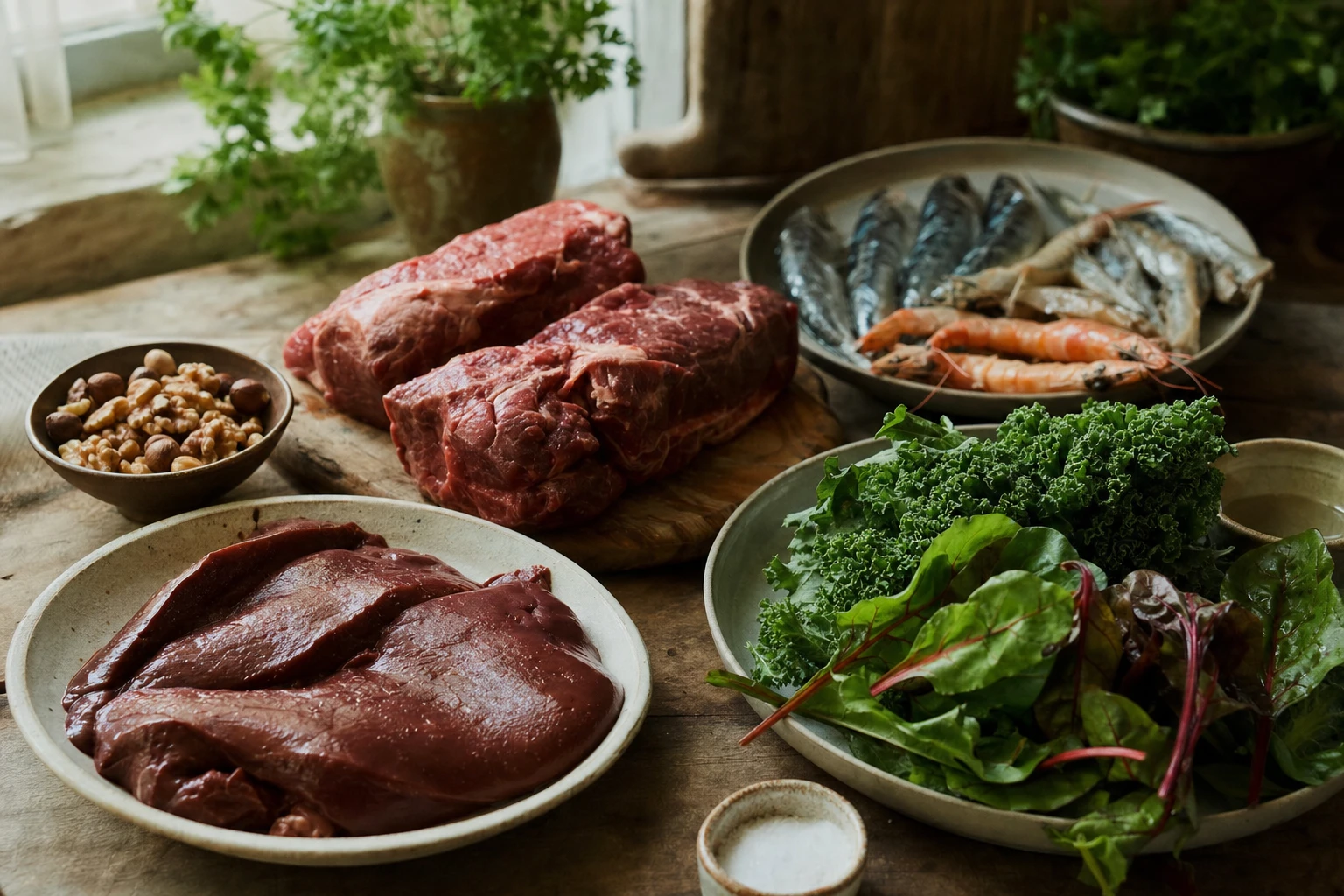
Research in nutrition science describes the protein leverage hypothesis, which states that the body has a specific appetite for protein.1 If the diet is low in protein, hunger and food intake increase until protein is obtained.
This isn't a behavioural or willpower problem. It's biology. If you're eating a diet high in refined carbohydrates and low in protein, your body will signal hunger constantly because it hasn't received the nutrient it's signalling for. You're full but not satisfied.
The person who eats 500 calories of cereal is still hungry an hour later, searching for something to eat. The person who eats 500 calories of eggs with butter is satisfied for four to six hours. Same calories. Completely different satiety response, because the protein density is fundamentally different. The second person is nourished. The first is not.
The appetite is real. The hunger is physical. The weakness isn't character-based; it's biochemical. Your body is following its design, asking for what it needs.
Hunger isn't a failure of willpower. It's your body telling you it hasn't received the nutrients it needs.
Your body has a nutrient sensor
The body constantly monitors the nutrient density of food through various feedback mechanisms. It tracks protein, carbohydrate, fat, and specific micronutrients. When a meal is low in nutrient density, even if it's calorically large, the body signals: keep eating.
Ultra-processed food is engineered to be nutrient-poor and palatable-rich. It's addictive not because it tastes genuinely good, but because it activates reward pathways without triggering satiety signals. So you eat a large volume and still feel unsatisfied. The hunger never switches off because the nutrient signal is weak or absent.
Whole food is the opposite. It's nutrient-dense and less hyperpalatable. Smaller volumes trigger satiety because the nutrient signal is strong and clear to the body. The brain gets the message: you have what you need.
Mineral deficiency creates specific cravings
If you're craving chocolate intensely, you might be magnesium-deficient. Cacao is one of the richest sources of magnesium. Your body is asking for magnesium; chocolate is what your mind goes to because it's familiar and available.
If you're craving salt obsessively, you might be sodium or potassium-deficient. If you're craving red meat, you might be iron, zinc, or B12-deficient. If you're craving carbs late at night, you might be deficient in serotonin precursors or magnesium. The cravings are not random or psychological. They're your body's specific appetite system working as designed, asking for the nutrient that's missing.
Ignoring the craving and restricting further (eating only salads and avoiding chocolate, for instance) perpetuates the deficiency and intensifies the craving. It's a losing battle fought against your own biology.
Why "just eat less" fails
Calorie restriction in the context of nutrient deficiency is metabolic torture. You're telling the body to eat less while it's simultaneously starving for nutrients. The hunger signal never switches off because the underlying cause (nutrient deficiency) hasn't been addressed.
Most people fail at calorie restriction not because they lack willpower or discipline, but because they're trying to restrict in the context of nutrient deficiency. The harder you restrict, the more aggressively the body fights back, hunting for the nutrients it needs to function.
The person eating 1200 calories of processed food is hungry and obsessed with food. The person eating 2000 calories of nutrient-dense food is satisfied. This isn't about calories. It's about nutrition. A small increase in nutrient density often allows a decrease in total food intake without hunger.
This is why restrictive dieting fails for so many people. They're fighting their own physiology. The body is designed to keep eating until it receives the nutrients it needs. Telling the body to eat less without addressing nutrient deficiency is like trying to solve a thirst problem by restricting water but not addressing dehydration. The signal doesn't stop until the underlying need is met.
Satiety isn't about fullness
Satiety is about the nutrient density of what you've eaten. A small meal of liver, butter, and vegetables triggers satiety quickly. A large meal of bread and jam might leave you hungry within an hour.
The stomach stretch receptors do matter, but they're overridden by nutrient signals. You can feel physically full and still be hungry because the food hasn't satisfied the nutrient request. You've filled the volume but not met the requirement. The signal persists.
A satisfied body doesn't keep searching for food. An undernourished body never stops.
Get health guides like this, free
Two short reads a week on eating for energy, gut health, skin, sleep and more.
By signing up you agree to receive emails from us. No spam, unsubscribe anytime.
The iron-cravings connection
Iron deficiency is endemic, particularly in women of reproductive age. And iron deficiency creates intense cravings, often for non-food items (pica), but also for red meat specifically. The body is asking for iron; red meat contains the most bioavailable form (heme iron).
The person who eats red meat twice weekly and includes organ meat occasionally has no cravings and no constant hunger. The person eating chicken breast and vegetables exclusively, despite being told it's healthy, is iron-depleted and experiences constant hunger and cravings they struggle against.
Zinc and appetite control
Zinc is essential for appetite regulation, taste perception, and satiety signalling. Chronic zinc deficiency impairs the appetite control centre in the hypothalamus. The person becomes less sensitive to satiety signals and more prone to overeating. Food becomes less satisfying, so they eat more of it.
Oysters, red meat, pumpkin seeds, and cashews are the richest sources of zinc. Someone eating these regularly has better appetite control. Someone avoiding them is fighting an uphill battle with hunger that will never be won through willpower.
How to break the cycle
Stop restricting. Start nourishing. Add protein to every meal (at least 30 grams at each main meal). Eat red meat at least twice weekly. Include organ meat or bone broth at least once weekly. Ensure adequate salt and minerals. Stop fighting cravings; investigate them.
Within one week of eating nutrient-dense food consistently, hunger will change. The constant low-grade hunger that characterises a deficient diet will fade. Cravings will diminish or disappear entirely. Portions will naturally decrease because satiety is actually achievable.
This isn't permission to eat unlimited quantities. It's permission to trust your body's signals. When you're properly nourished, those signals work.

1 of 9
Daily blend
100,000+ thriving families4.9 on Trustpilot
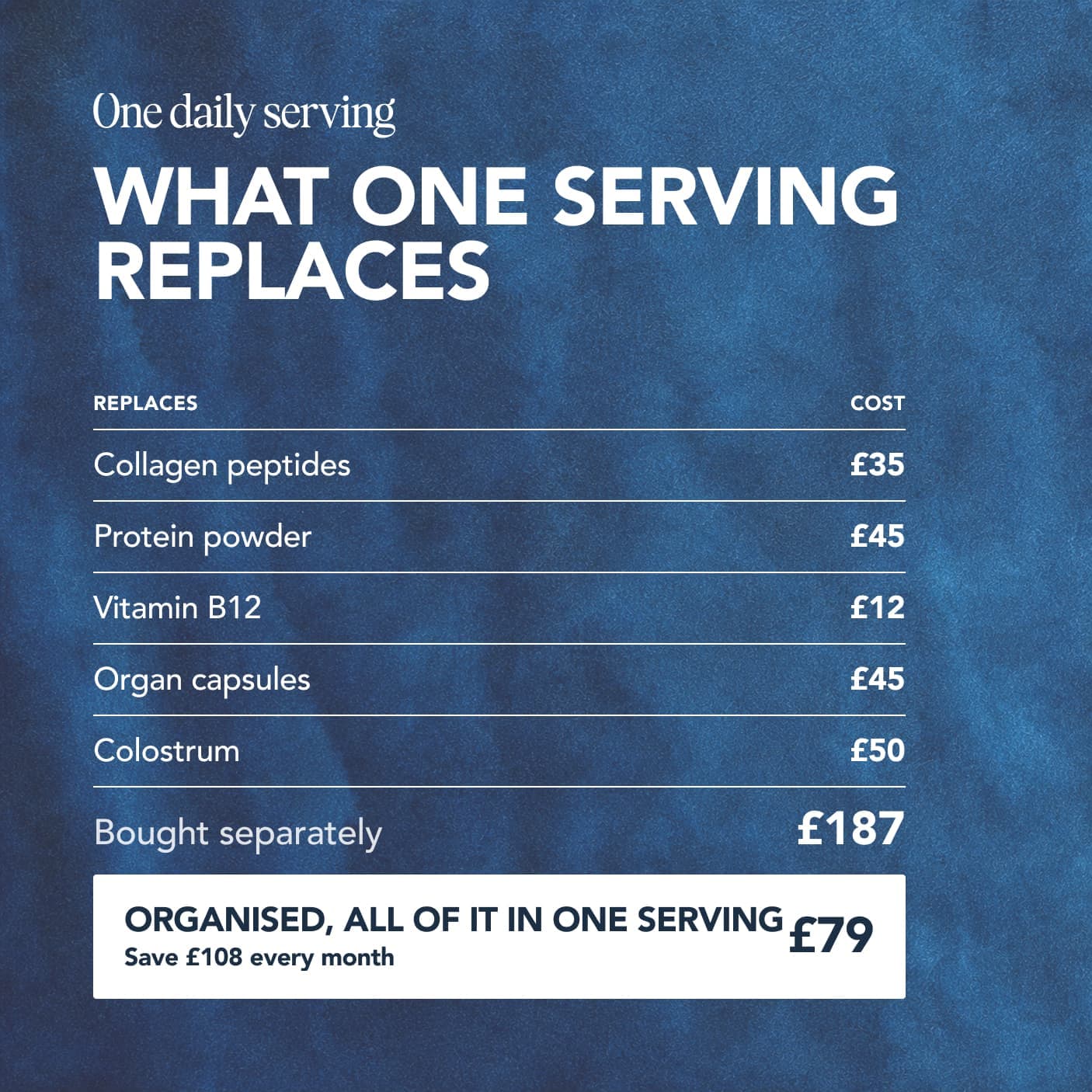
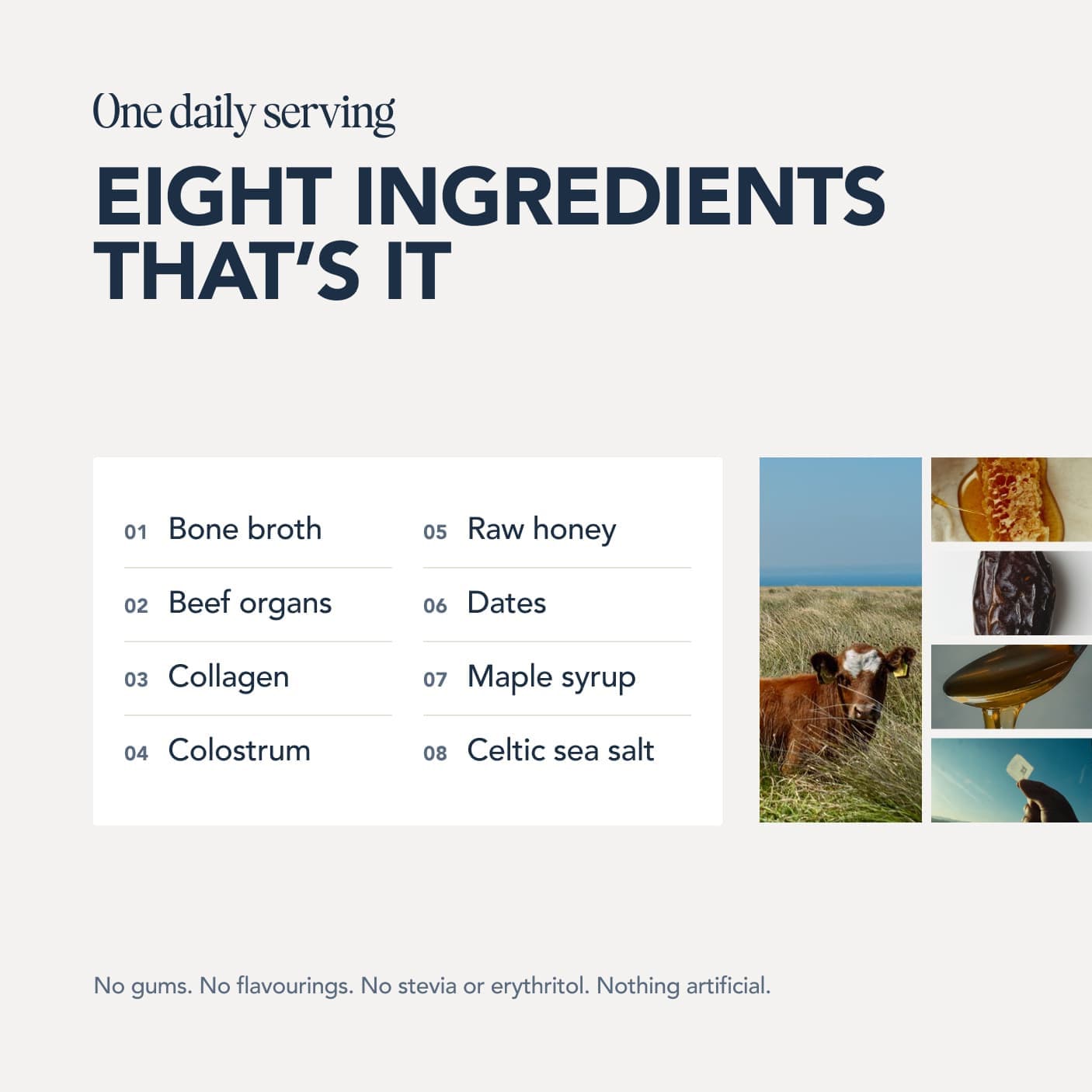
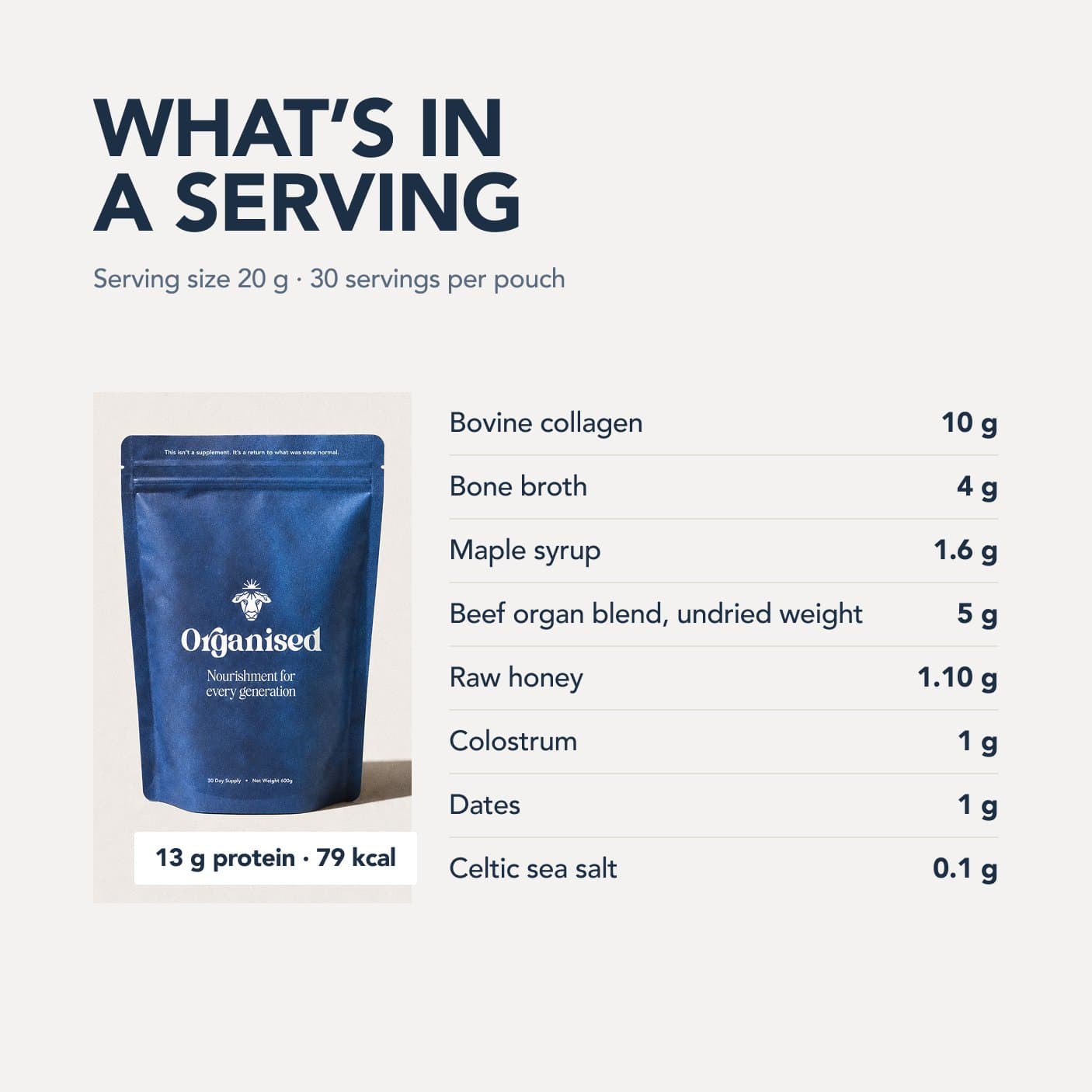
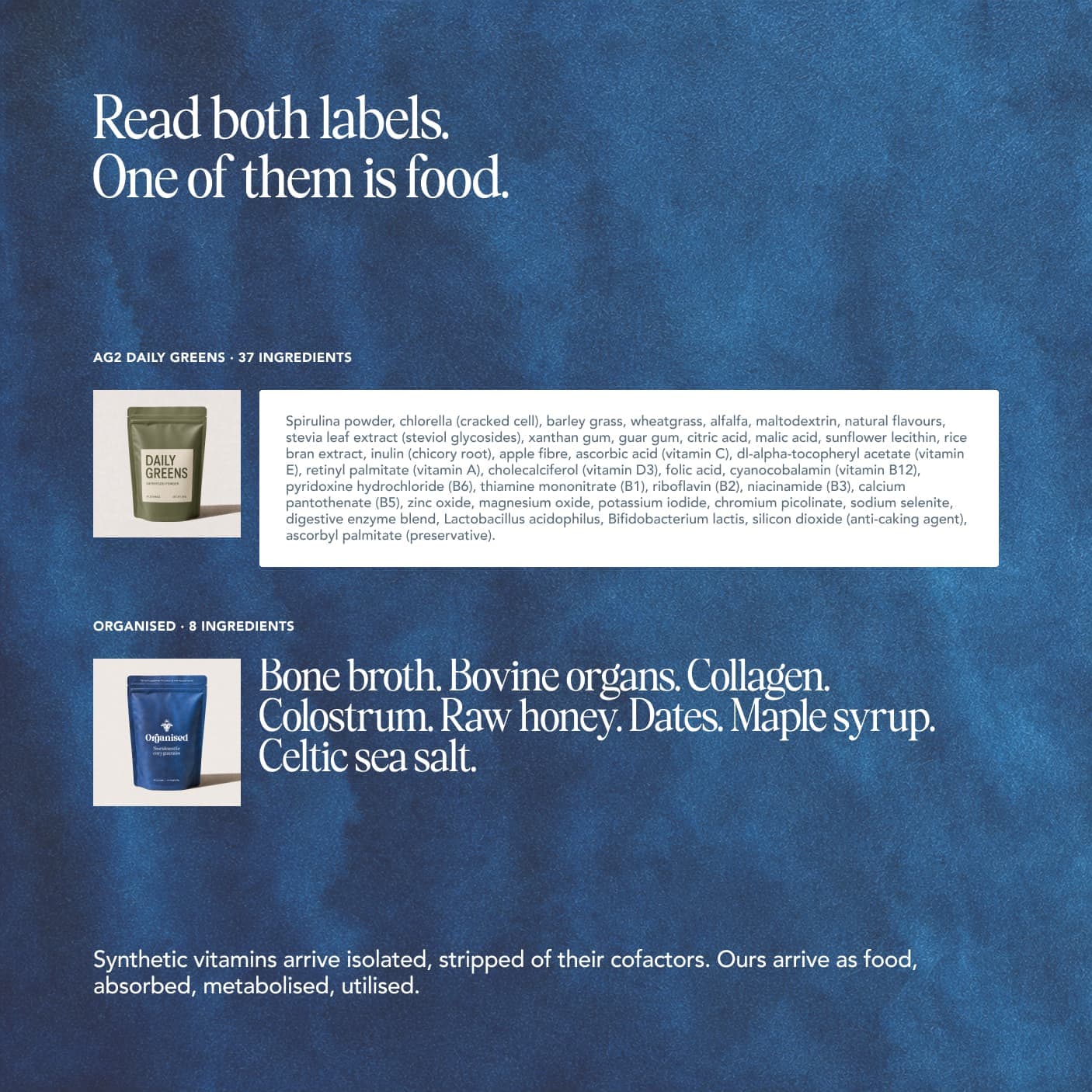
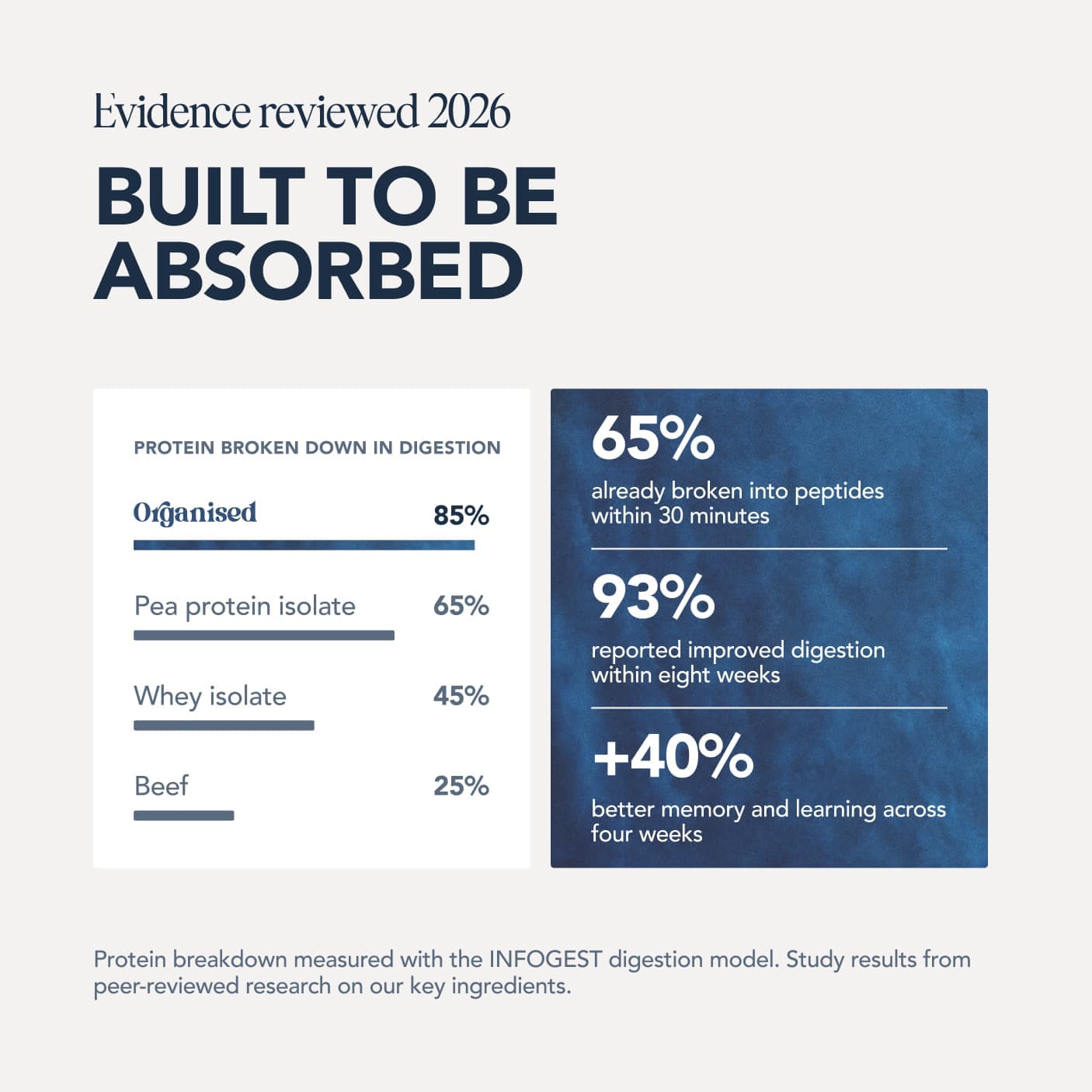
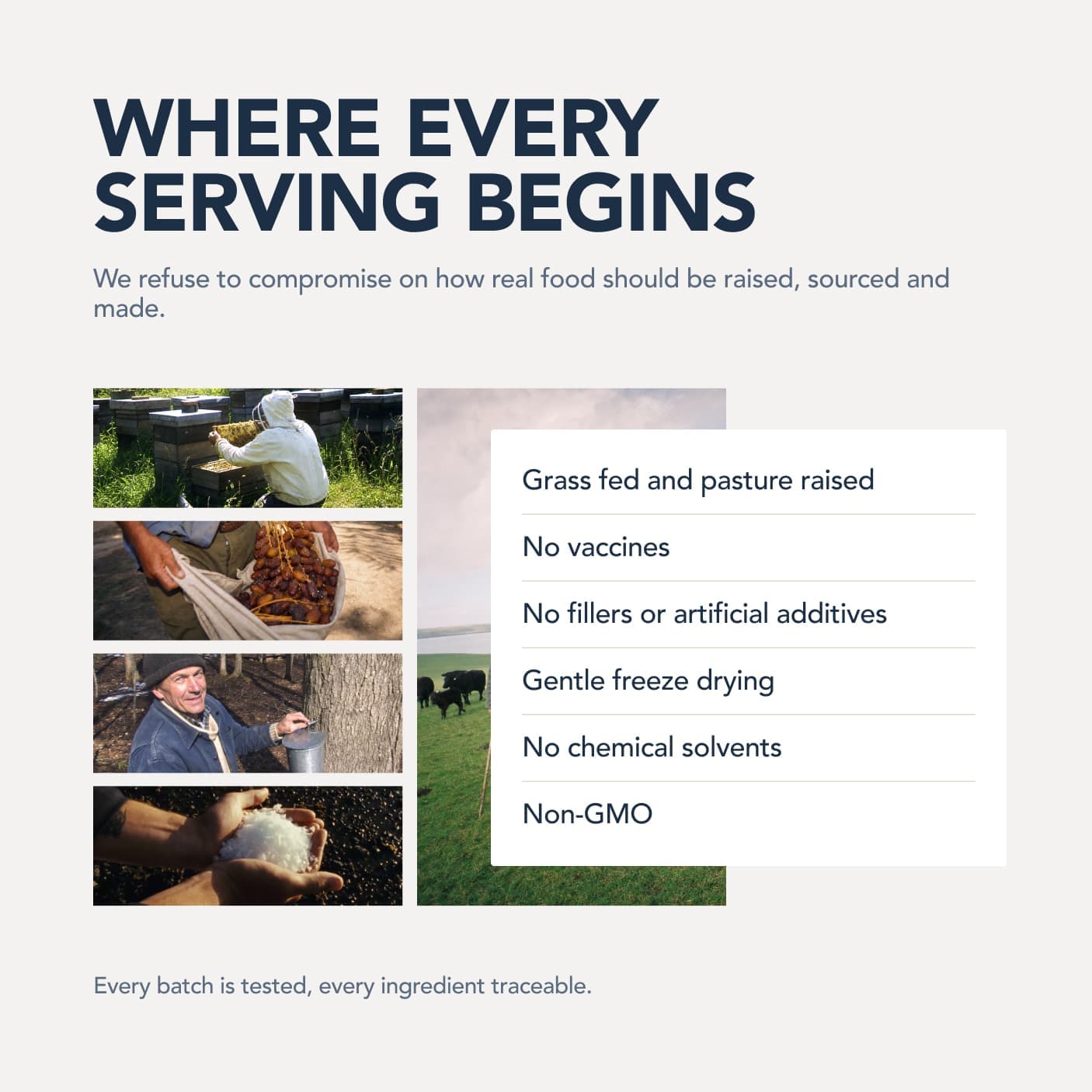
Eight real ingredients built around grass-fed beef organs, collagen and colostrum. Nothing synthetic added.
Free with your first order, worth £38. Plus £10 off the pouch with a subscription.


Free UK shipping · Made in England · 100 day money back guarantee on your first pouch · Skip, pause or cancel anytime
The satiety cascade and how to use it
Satiety isn't a single signal. It's a cascade of hormonal and neurological responses that tell your brain "you're satisfied now, stop eating." When nutrients are present in food, that cascade fires. When they're absent, it doesn't.
Your hypothalamus registers the arrival of specific amino acids, which triggers GLP-1 release. Your stomach stretches and releases cholecystokinin (CCK). Your pancreas detects glucose and secretes insulin. All of these signals combine to create the sensation of fullness and the desire to stop eating.
But here's the trap: you can trigger the stretch response (your stomach is full) without triggering the nutrient-sensing cascade. A large meal of low-nutrient processed food will make you feel physically stuffed for about 30 minutes. Then hunger returns immediately because your brain never received the nutrient signals. You eat again. You consume thousands of calories without ever satisfying your actual nutritional needs.
By contrast, a smaller meal of nutrient-dense whole food fires the entire satiety cascade. Your stomach is less stretched, but your brain is satisfied. You don't want more food for five or six hours. You eat less total volume while feeling more satisfied. This is why protein leverage works, and why whole foods beat calorie counting.
To use this knowledge practically: prioritise protein and fat at every meal (these trigger CCK and other satiety hormones).2 Include micronutrient-dense foods (organs, bone broth, vegetables) so your nutrient-sensing pathways fire. Avoid liquid calories (juice, smoothies, soft drinks) because they trigger volume-based satiety without nutrient-based satiety, leaving you hungry shortly after.
Overeating is often a sign you're under-fed. Eat nutrient-dense foods and watch your appetite normalise.
The bottom line
Overeating is almost always a symptom of under-nourishment. The solution isn't restriction. It's nutrient density. Add protein, minerals, and fat-soluble vitamins, and your appetite will self-regulate. Your body knows what it needs. It's been asking for it the whole time. Start listening.
References
Every source below was checked on 27 August 2026. Each PubMed, PMC and DOI identifier was resolved against NCBI or Crossref, and what it opens is printed under the citation, so you can see the link goes where the citation says without leaving the page. Where a citation and its identifier disagreed, the citation was corrected to the record or the reference was deleted along with the sentence marker that pointed at it, and where the resolved paper turned out not to support the sentence, the sentence was cut back to what it does support. Borrowed authority is worse than none, because it looks like rigour.
- Simpson SJ, Raubenheimer D. Obesity: the protein leverage hypothesis. Obes Rev. 2005. PMID 15836464.Checked 27 August 2026: PMID 15836464 opens Simpson SJ, Raubenheimer D, Obesity: the protein leverage hypothesis. Obes Rev 2005;6(2):133-42. PubMed indexes it as: Review.
- Liddle RA. Cholecystokinin: its role in health and disease. Curr Opin Endocrinol Diabetes Obes. 2024. PMID 38047550.Checked 27 August 2026: PMID 38047550 opens Eddins AJ, Bednar RM, Jana S et al, Truncation-Free Genetic Code Expansion with Tetrazine Amino Acids for Quantitative Protein Ligations. Bioconjug Chem 2023;34(12):2243-2254.
Who wrote and reviewed this guide
Niall Kiddle
Author · Founder, Organised
Niall is the founder of Organised. He started the company in 2024 after fixing his own health the slow way: in 2022 he swapped a cupboard of synthetic supplements for real food, raw milk, organ meats, bone broth and honey, and felt the difference within months.
Areas of expertise: Ancestral nutrition, Organ meats, Whole-food supplementation, Gut health, Regenerative sourcing
Read Niall's full profile
Pedro Rodrigues
Reviewer · Agronomist (farming and sourcing only)
Pedro is the agronomist Organised works with on farming and sourcing. His job on the guides is to keep the science honest: he reviews what we publish about soil health, regenerative agriculture, grazing and the way food is actually produced.
Areas of expertise: Regenerative agriculture, Agronomy, Soil health, Grass-fed farming, Food sourcing
Reviewed this guide on
Read Pedro's full profileBrowse the guides library
All guidesKeep reading

Health goals
Why Your Grandparents Ate Better Than You
Explore the nutritional shift since the 1970s. Your grandparents' whole-food diet contained far more nutrient density than modern food. Here's what changed.

Health goals
The Desk Worker's Guide to Staying Strong and Energised
Desk work erodes energy and muscle. This guide fixes it with protein timing, movement breaks, light exposure, and cortisol management.

Health goals
Perimenopause Nutrition: What Changes and What to Eat
Perimenopause isn't a deficiency disease. It's a transition requiring nutritional adjustment. Here's what changes and what to prioritise.
Real food, made effortless
Start my daily blendA few ways to use it
All recipes
How to Make Bone Marrow Butter
Roast grass-fed marrow bones, scoop the marrow, and mix with butter and herbs. A nutrient-dense spread with fat-soluble vitamins.

10 Ways to Use Organised That Aren't Just a Shake
Move beyond the basic shake. Discover 10 creative ways to use Organised in smoothie bowls, oats, yoghurt, baking, and more.

5-Minute High-Protein Breakfasts Using Organised
Quick, high-protein breakfast ideas using Organised. Five recipes you can make in minutes with real food. No fussing around.


 Join over 100,000+ members
Build a better food system with us
The Organised community is thousands of people choosing real food and backing the farmers who grow it, all of us trying to leave the world a little better than we found it. If that is what you care about too, you belong here.