How to Build Collagen Naturally Without Injections
Collagen injections are a temporary band-aid applied to a deeper problem: your body isn't making enough collagen. Fix that, and you don't need the injection.

By Niall Kiddle, Founder, Organised

Reviewed by Pedro Rodrigues, Agronomist (farming and sourcing only) ·
7 min read · Published · Updated · 5 cited sources
Makers of the Organised Daily blend, a grass-fed beef organ supplement from regenerative UK farms

Collagen production declines with age, but the rate of decline is entirely dependent on lifestyle and nutrition. Some people at 60 have the skin elasticity and joint mobility of a 40-year-old. Others at 40 look weathered and move like they're 60. The difference isn't genetics. It's what they've been eating and how they've been living.

Why collagen declines with age
Collagen synthesis requires specific conditions: adequate protein, vitamin C, minerals (copper, iron, zinc), and amino acids (particularly glycine and lysine). As people age, they often eat less of the foods that provide these nutrients. Portion sizes shrink. Appetite decreases. Organ meats become rarer in the diet. The body down-regulates collagen production in response to this reduced nutrient availability.
Add to this the cumulative effects of sun damage, oxidative stress from poor diet and lack of antioxidants, chronically elevated cortisol from stress, inadequate sleep (when collagen repair happens), and smoking, and collagen breaks down faster than it's rebuilt. By 40, most people have net collagen loss. By 50, it's substantial. The process is accelerating in younger people due to modern nutritional practices.
The solution isn't injecting collagen from outside. It's creating the conditions for the body to make its own collagen more efficiently from within.
Your body is designed to make collagen. Give it the materials and the signal, and it will.
Bone broth is the foundation
Bone broth made from real bones (not collagen powder mixed with water, not commercial broth from boxes, but genuine bone broth simmered for 12 to 24 hours) contains collagen, gelatin, glycine, proline, and minerals. The collagen breaks down during cooking into gelatin and peptides. The glycine and proline are amino acids that are building blocks for new collagen in your body.
Drinking bone broth provides a direct collagen source, but more importantly, it signals the body that collagen materials are available and abundant. This signal alone up-regulates your own collagen synthesis. The amino acids say to your body: now is a good time to invest in structural repair.
One cup of bone broth daily is the minimum. Two cups is better. If you're doing this specifically for skin health or joint recovery, consistency matters more than heroic quantities. A small, daily dose for months is superior to sporadic large volumes.
Connective tissue cuts matter
Oxtail, lamb neck, beef short ribs, chicken feet, and pig trotters are gelatinous cuts rich in natural collagen and gelatin. A meal containing one of these cuts once or twice weekly provides continuous collagen precursors. These cuts are also rich in minerals and fat-soluble vitamins that support collagen synthesis.
Unlike bone broth (which you drink), these cuts are complete meals. They provide protein, collagen, minerals, and fat all together. Your body gets not just the building blocks of collagen, but the nutritional context in which collagen is actually synthesised and used effectively.
Eating collagen-rich cuts signals the body more effectively than drinking collagen powder alone.
Vitamin C is non-negotiable
Collagen synthesis requires vitamin C as a cofactor. Without adequate vitamin C, even abundant collagen precursors cannot be assembled into new collagen tissue. This is not optional or negotiable. It's fundamental biochemistry.1
Vitamin C is abundant in fresh produce: citrus, berries, kiwis, peppers, broccoli, tomatoes, and leafy greens. A diet rich in colourful vegetables automatically supplies adequate vitamin C. If your diet is restricted or you're older (vitamin C absorption declines with age), supplementing 500 to 1000 mg daily becomes necessary.
The timing doesn't have to be perfect, but pairing collagen-rich foods with vitamin C-rich foods or drinking bone broth with fresh lemon juice amplifies the effect.
Glycine from whole foods
Glycine is the most abundant amino acid in collagen (about 33 percent of collagen is glycine).2 Your body can produce glycine, but it also needs it from dietary sources. Bone broth and connective tissue cuts are the richest sources. Red meat, organs, and eggs provide smaller amounts.
Someone eating bone broth daily, gelatinous cuts twice weekly, and red meat several times weekly is getting 10 to 15 grams of glycine daily from food. Someone eating chicken breast and low-fat dairy is getting almost none. The difference accumulates over time.
Copper and lysine support collagen
Copper is essential for cross-linking collagen molecules, making them strong and stable. Without adequate copper, newly synthesised collagen is weak and unstable.3 Lysine is an amino acid required for collagen structure. Both are deficient in modern diets.
Copper is found in organ meats (especially liver and kidneys), nuts, seeds, and seafood. Lysine is abundant in red meat, organs, dairy, and eggs. Neither requires supplementation if you're eating ancestral foods regularly, but both are absent if you're vegetarian or eating only lean muscle meat.
Sulfur for connective tissue
Sulfur (often called MSM, or methylsulfonylmethane) is integral to connective tissue health and collagen structure. Cruciferous vegetables (broccoli, cauliflower, Brussels sprouts, cabbage, kale) are the richest source. Garlic, onions, and eggs provide additional sulfur.
A diet rich in these vegetables plus adequate collagen precursors creates the optimal environment for collagen synthesis and connective tissue integrity. Skipping the vegetables while taking collagen powder is like building a house without a foundation.
Get health guides like this, free
Two short reads a week on eating for energy, gut health, skin, sleep and more.
By signing up you agree to receive emails from us. No spam, unsubscribe anytime.
Protein sufficiency is the ceiling
All of the above assumes adequate total protein intake. If you're eating fewer than 100 grams of protein daily, your body doesn't have enough amino acid substrate to build new collagen, regardless of how much bone broth you drink. The amino acids are committed to more urgent functions (hormone production, immune function, energy).
Collagen synthesis is only one of hundreds of processes demanding amino acids. Protein sufficiency must be the foundation. Once that's met, collagen-specific strategies (bone broth, gelatinous cuts, vitamin C, etc.) yield measurable results.
Collagen building is only possible if you have enough total protein to distribute to the task.
The timeline to see results
Skin is renewed over approximately 28 days. Deeper collagen remodelling takes longer. Most people who implement a collagen-building protocol (bone broth daily, connective tissue cuts twice weekly, abundant vitamin C, adequate total protein of 120 to 150 grams daily, adequate sleep of 7 to 9 hours nightly) report noticeable improvements in skin texture, firmness, and elasticity within 6 to 8 weeks.
Joint health (another collagen-dependent tissue) improves within 4 to 6 weeks. Hair and nails become stronger within 8 to 12 weeks. These timelines assume consistency. Sporadic supplementation yields sporadic results.
1 of 9
Daily blend
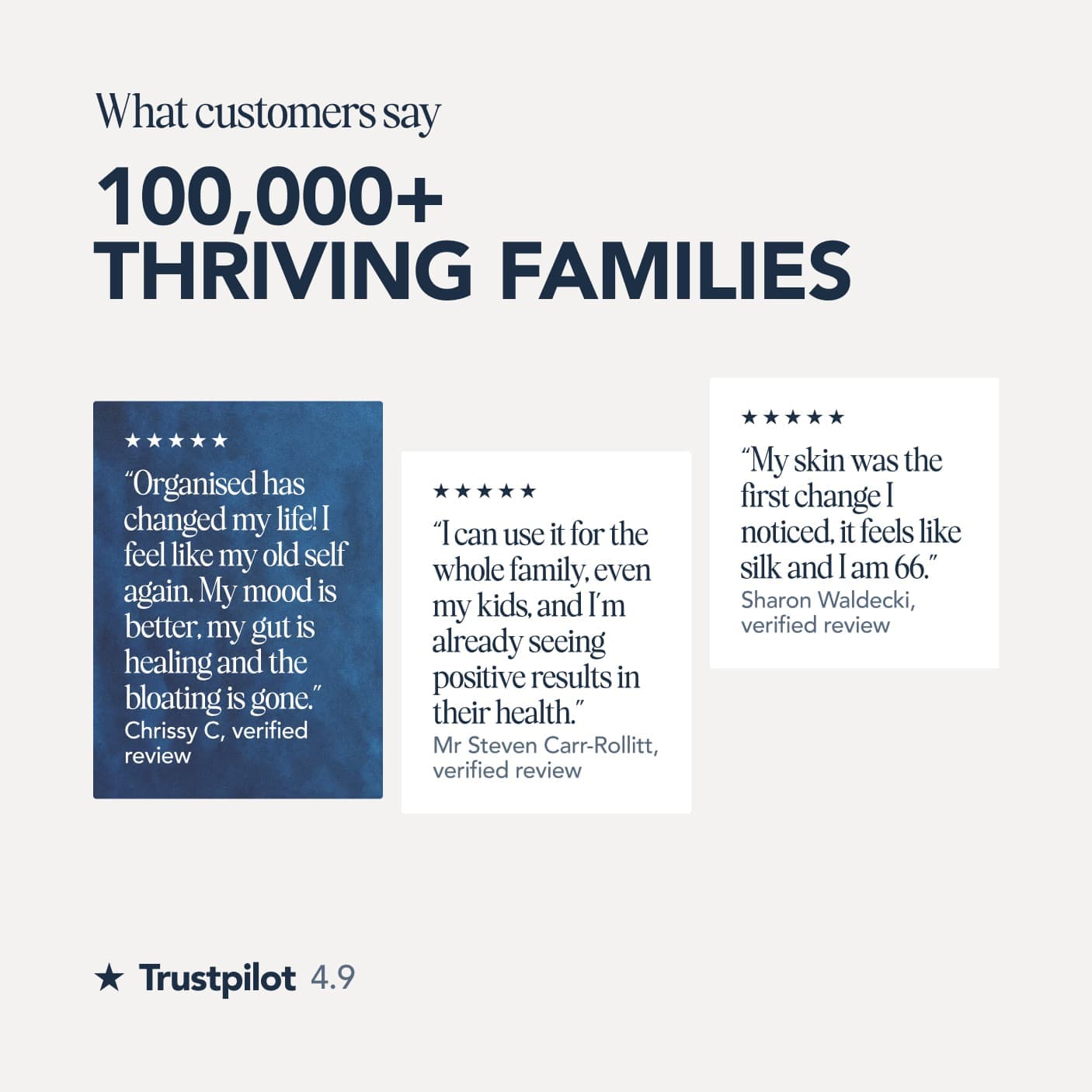
100,000+ thriving families4.9 on Trustpilot
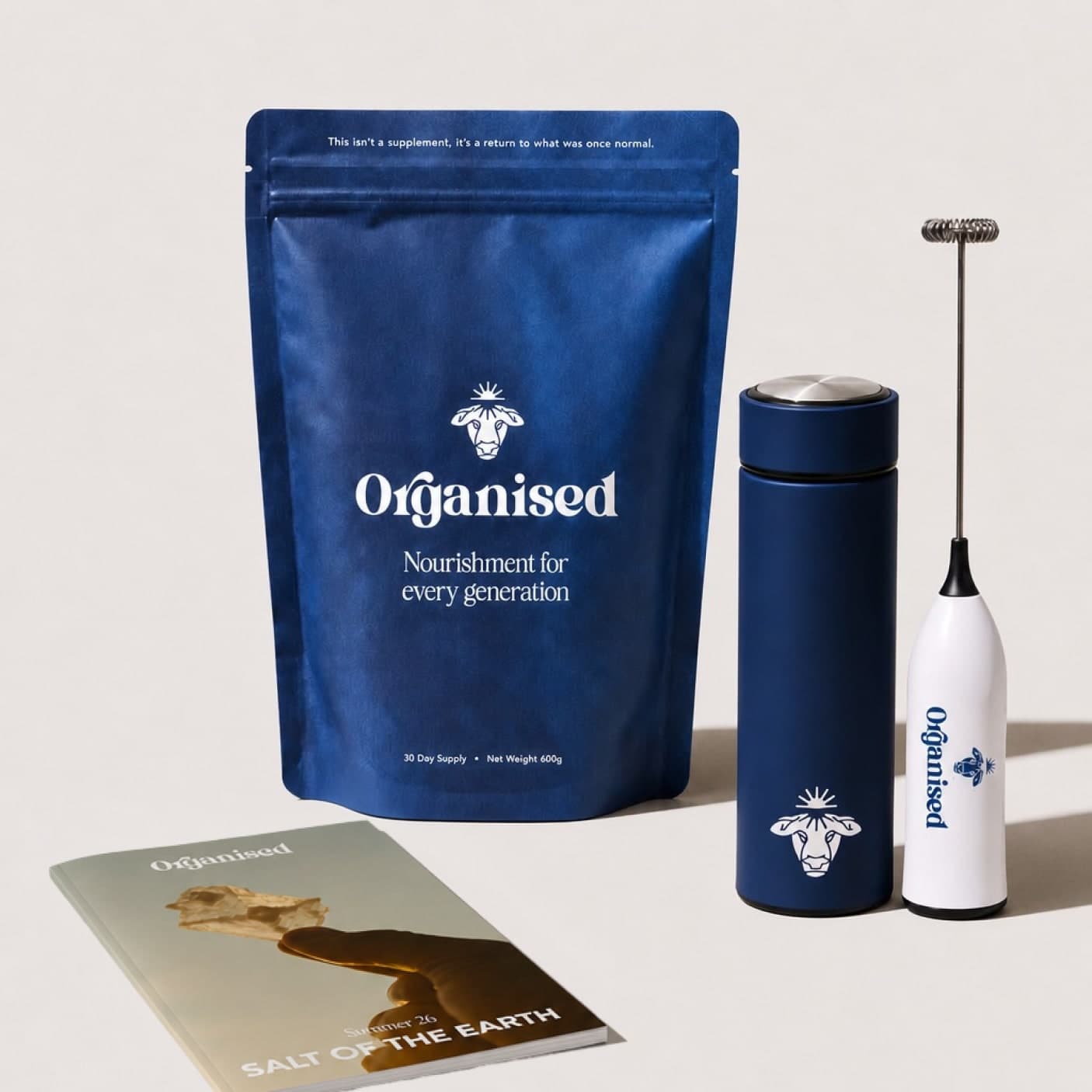
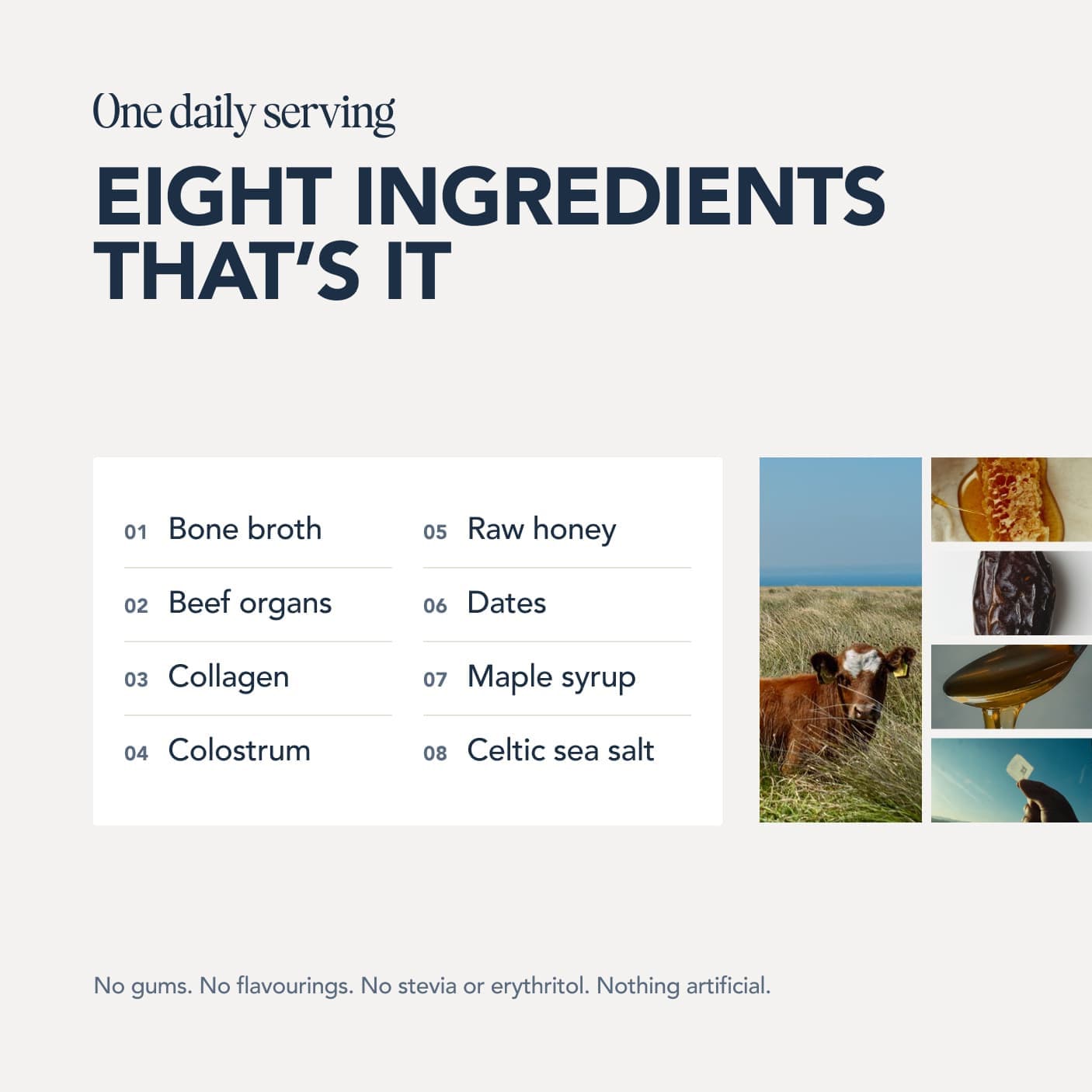
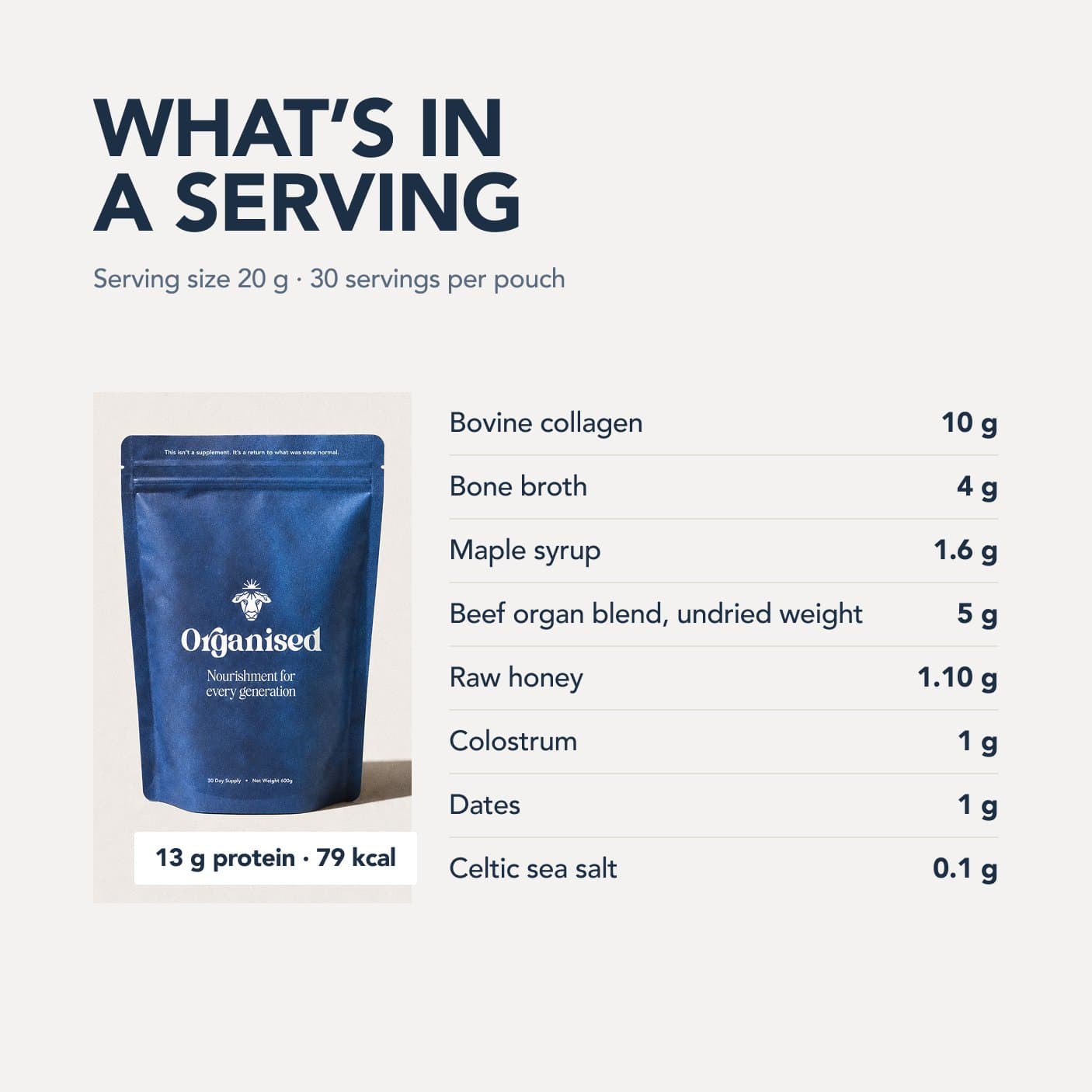
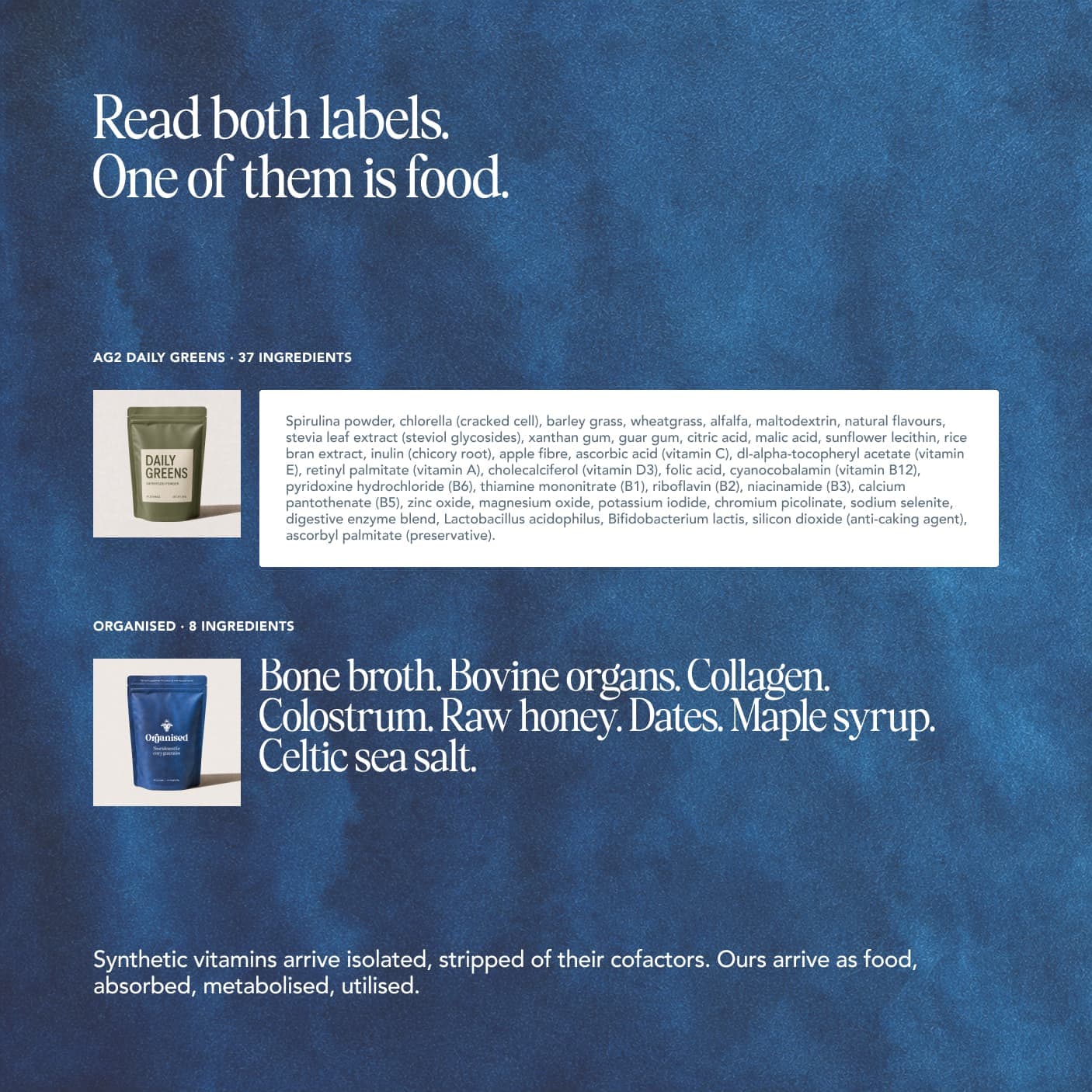
Eight real ingredients built around grass-fed beef organs, collagen and colostrum. Nothing synthetic added.
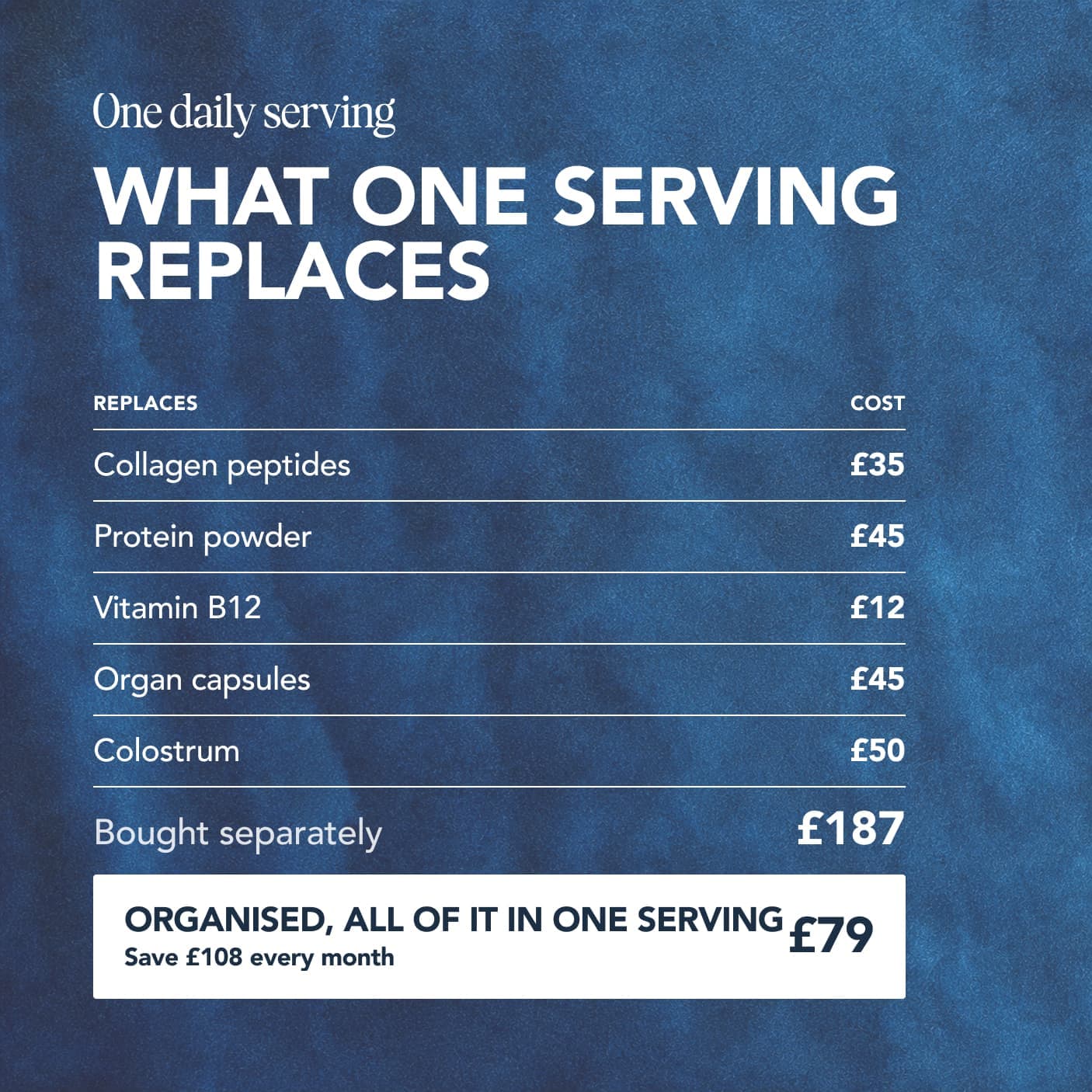
Free with your first order, worth £38. Plus £10 off the pouch with a subscription.


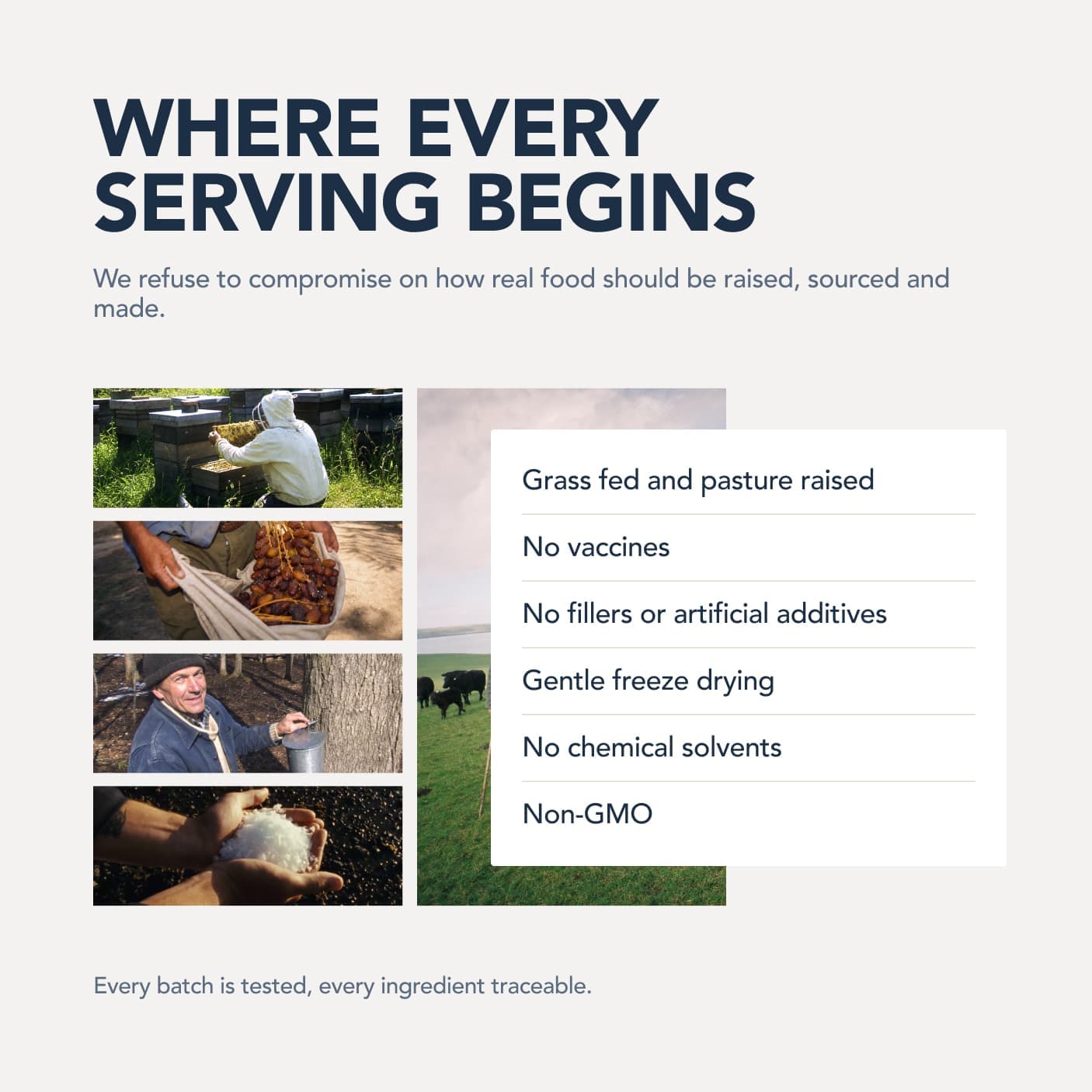
Free UK shipping · Made in England · 100 day money back guarantee on your first pouch · Skip, pause or cancel anytime
The collagen-skin-barrier relationship and why internal matters more than topical
Most people treat collagen as a topical problem. They buy collagen creams, hoping to rebuild collagen from the outside. It doesn't work. Topical collagen molecules are too large to penetrate the dermis (the layer where collagen actually lives).4 The cream sits on the surface, hydrating the epidermis temporarily, then absorbs or washes away.
Oral collagen (from bone broth or supplemental collagen powder) is different. When you consume collagen or collagen-precursor amino acids, your digestive system breaks them down. Your body then uses those amino acids to synthesise new collagen in the skin. This is demonstrably effective and backed by clinical research. People who consume oral collagen consistently show measurable improvements in skin elasticity, hydration, and thickness within 8-12 weeks.5
However, oral collagen works only if your digestive system is healthy enough to absorb it. If you have dysbiosis, poor stomach acid, or a permeable gut, you won't absorb the collagen effectively. This is why some people take collagen powder and see no results. Their gut isn't absorbing it. Fix the gut first, then add collagen, and the results become obvious.
Additionally, collagen synthesis requires vitamin C as a cofactor. Vitamin A regulates skin cell turnover. Zinc supports healing. So the complete protocol isn't just collagen intake. It's collagen intake plus the vitamins and minerals required to use that collagen. Eat bone broth or collagen, add foods rich in vitamin C (organ meats are rich in it, as are berries if tolerated), ensure adequate zinc from oysters or grass-fed beef, and give it 12 weeks of consistency. Your skin will visibly improve.
Collagen creams don't rebuild collagen. Oral collagen plus nutrient cofactors do. The beauty industry has spent billions convincing you otherwise.
The bottom line
Your body is capable of making collagen at a rate that keeps your skin youthful, your joints mobile, and your connective tissue strong, even as you age. This capacity declines not because of time, but because of nutrient deficiency. Give your body the materials it needs: bone broth, connective tissue cuts, protein, vitamin C, and whole foods rich in minerals and sulfur. Within two months, your skin will look better, feel different, and move more freely. That's not injections. That's biology when properly nourished.
References
Every source below was checked on 27 August 2026. Each PubMed, PMC and DOI identifier was resolved against NCBI or Crossref, and what it opens is printed under the citation, so you can see the link goes where the citation says without leaving the page. Where a citation and its identifier disagreed, the citation was corrected to the record or the reference was deleted along with the sentence marker that pointed at it, and where the resolved paper turned out not to support the sentence, the sentence was cut back to what it does support. Borrowed authority is worse than none, because it looks like rigour.
- National Institutes of Health, Office of Dietary Supplements. Vitamin C - Health Professional Fact Sheet. https://ods.od.nih.gov/factsheets/VitaminC-HealthProfessional/ [accessed May 2026].
- Ricard-Blum S. The Collagen Family. Cold Spring Harb Perspect Biol. https://pmc.ncbi.nlm.nih.gov/articles/PMC3003457/ [accessed May 2026].Checked 27 August 2026: PMC3003457 opens Ricard-Blum S, The collagen family. Cold Spring Harb Perspect Biol 2011;3(1):a004978. PubMed indexes it as: Review.
- National Institutes of Health, Office of Dietary Supplements. Copper - Health Professional Fact Sheet. https://ods.od.nih.gov/factsheets/Copper-HealthProfessional/ [accessed May 2026].
- Bolke L, Schlippe G, Gerss J, Voss W. A Collagen Supplement Improves Skin Hydration, Elasticity, Roughness, and Density: Results of a Randomized, Placebo-Controlled, Blind Study. Nutrients. https://www.mdpi.com/2072-6643/11/10/2494 [accessed May 2026].
- Proksch E, Segger D, Degwert J, et al. Oral supplementation of specific collagen peptides has beneficial effects on human skin physiology. Skin Pharmacol Physiol. https://pubmed.ncbi.nlm.nih.gov/23949208/ [accessed May 2026].Checked 27 August 2026: PMID 23949208 opens Proksch E, Segger D, Degwert J et al, Oral supplementation of specific collagen peptides has beneficial effects on human skin physiology: a double-blind, placebo-controlled study. Skin Pharmacol Physiol 2014;27(1):47-55. PubMed indexes it as: Randomized Controlled Trial.
Who wrote and reviewed this guide
Niall Kiddle
Author · Founder, Organised
Niall is the founder of Organised. He started the company in 2024 after fixing his own health the slow way: in 2022 he swapped a cupboard of synthetic supplements for real food, raw milk, organ meats, bone broth and honey, and felt the difference within months.
Areas of expertise: Ancestral nutrition, Organ meats, Whole-food supplementation, Gut health, Regenerative sourcing
Read Niall's full profile
Pedro Rodrigues
Reviewer · Agronomist (farming and sourcing only)
Pedro is the agronomist Organised works with on farming and sourcing. His job on the guides is to keep the science honest: he reviews what we publish about soil health, regenerative agriculture, grazing and the way food is actually produced.
Areas of expertise: Regenerative agriculture, Agronomy, Soil health, Grass-fed farming, Food sourcing
Reviewed this guide on
Read Pedro's full profileMore on skin
View all- How to Feed Your Skin from the Inside Out
- A Whole Food Skincare Routine: Morning to Night
- Collagen for Anti-Ageing: What the Clinical Trials Show
- Dark Circles Under Your Eyes? It Might Be a Nutrient Deficiency
- Eczema and Nutrition: What the Research Suggests
- How to Eat for a Natural Glow (Without Products)
- How Zinc, Copper and Selenium Work Together for Clear Skin
- Psoriasis and Nutrition: What Helps and What Hinders
- Retinol from Beef Liver vs Retinol in Skincare: Which Actually Works?
- Rosacea and Gut Health: Is There a Connection?
- The Foods That Age Your Skin Fastest
- Why Your Skin Looks Better When You Eat Organ Meats
Browse the guides library
All guidesKeep reading

Health goals
Why Your Grandparents Ate Better Than You
Explore the nutritional shift since the 1970s. Your grandparents' whole-food diet contained far more nutrient density than modern food. Here's what changed.

Health goals
Collagen Loading Protocol: When and How Much
How much collagen do you need and when should you take it? A clear collagen loading protocol for timing your dose around exercise for better results.

Health goals
How Long Should You Prepare Your Body Before Trying to Conceive?
Preconception nutrition matters more than most people realise. A 3 to 6-month prep window allows sperm and egg quality to optimise.
Real food, made effortless
Start my daily blendA few ways to use it
All recipes
Collagen-Rich Beef Stew: Slow-Cooked Nourishment
Beef stew that delivers collagen from connective tissue and bone broth. Winter comfort food that actually nourishes. Simple slow cooker recipe.

Energy Balls with Organised, Dates and Raw Honey
Make no-bake energy balls with Organised, dates, and raw honey. Perfect lunch box, pre-workout, or on-the-go snack. Simple recipe.

Ancestral Breakfast Ideas from Around the World
Traditional breakfast recipes from cultures that got nutrition right. Japanese, Turkish, Scottish, and more. Whole-food breakfast inspiration.


 Join over 100,000+ members
Build a better food system with us
The Organised community is thousands of people choosing real food and backing the farmers who grow it, all of us trying to leave the world a little better than we found it. If that is what you care about too, you belong here.