How to Feed Your Skin from the Inside Out
You're applying topical treatments to skin that's built from the inside out. Every twenty-eight days, your skin completely renews itself. That renewal is entirely dependent on the nutrients circulating in your blood. No cream can change what your cells are made from. But the right food can transform everything.

By Niall Kiddle, Founder, Organised

Reviewed by Pedro Rodrigues, Agronomist (farming and sourcing only) ·
9 min read · Published · Updated · 6 cited sources
Makers of the Organised Daily blend, a grass-fed beef organ supplement from regenerative UK farms
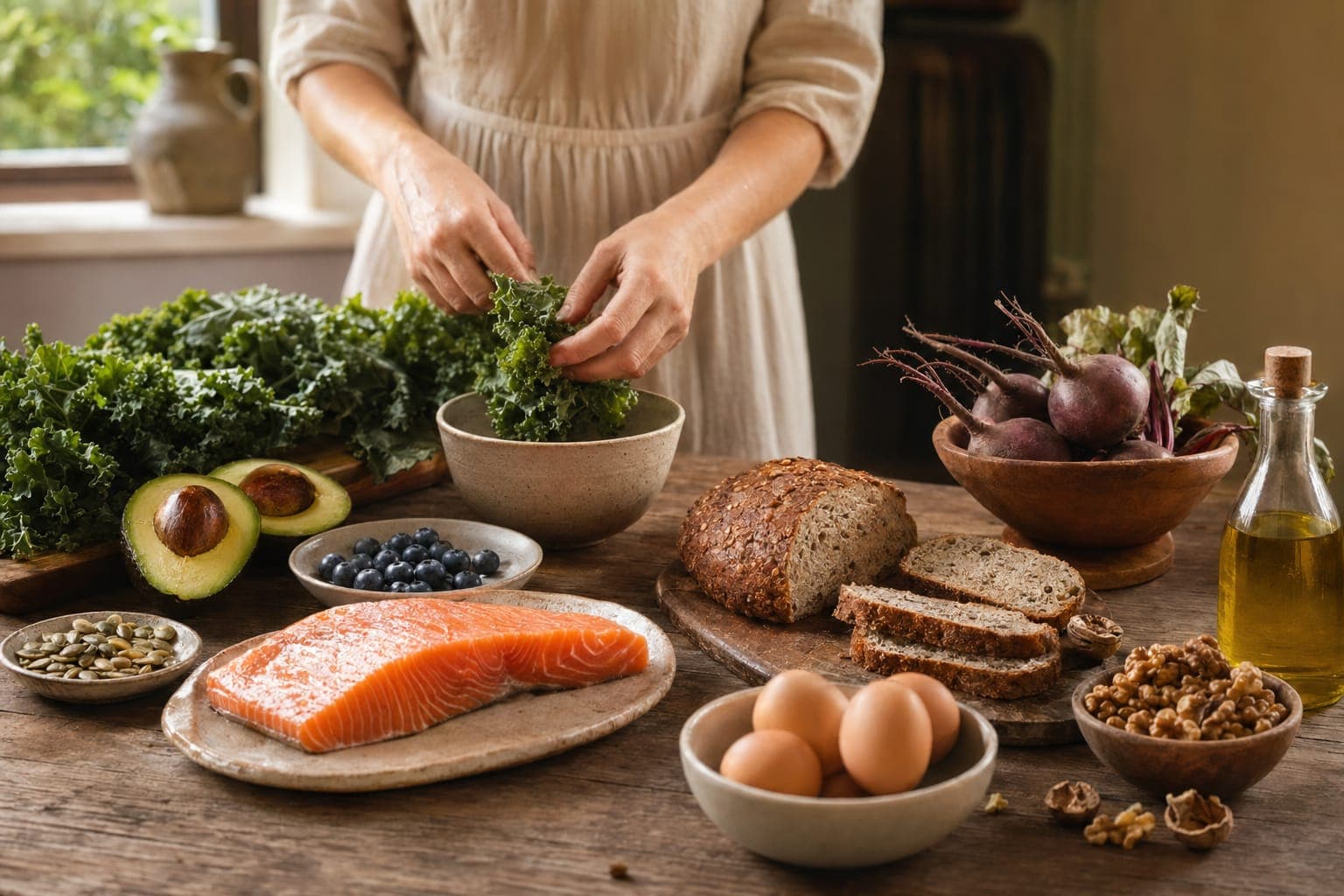
You're applying topical treatments to skin that's built from the inside out. The epidermis renews on the order of weeks, with turnover times reported around 28-40 days for healthy adults.1 That renewal is entirely dependent on the nutrients circulating in your blood. No cream can change what your cells are made from. But the right food can transform everything.
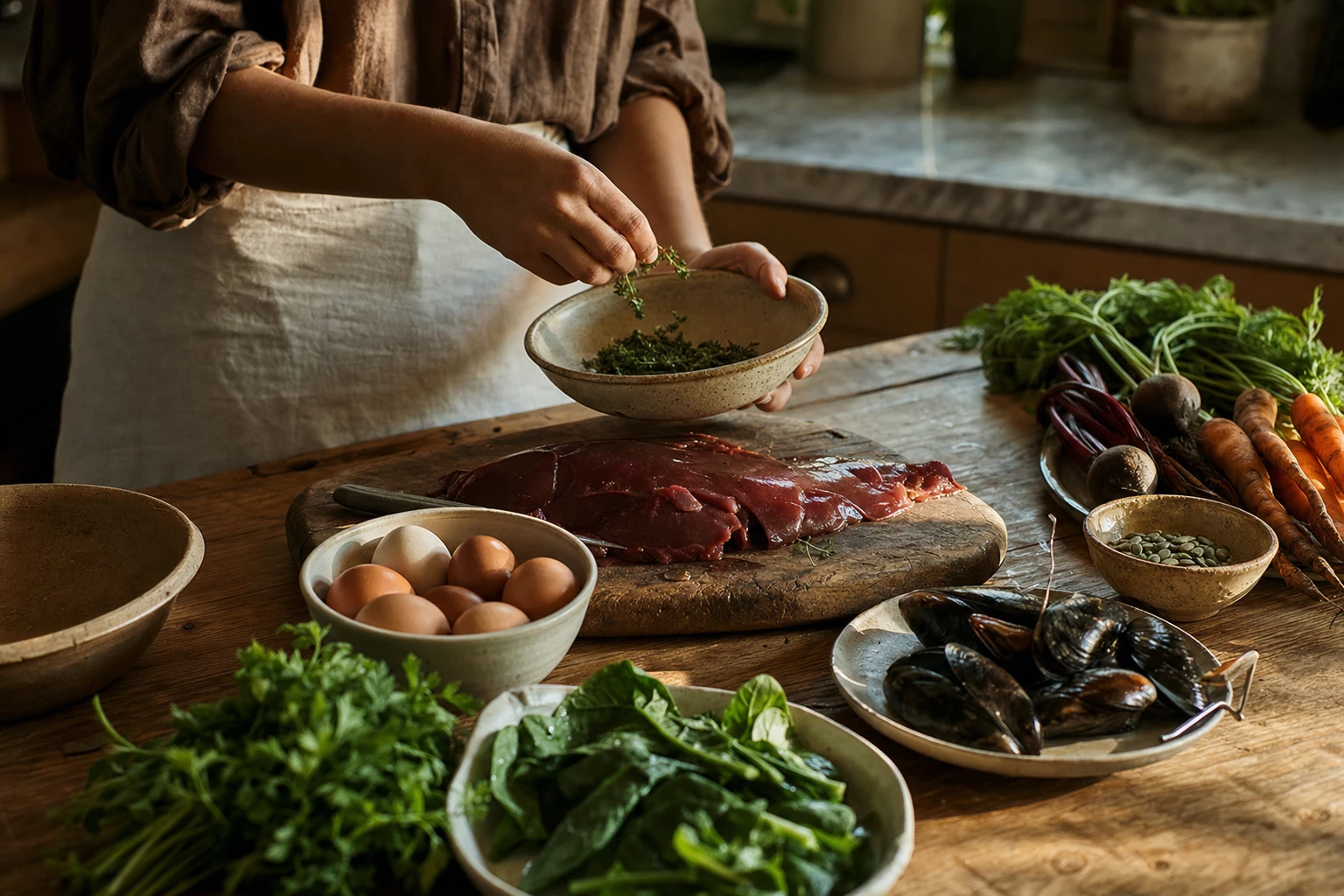
Why topicals fail without internal nutrition
Skin is an organ. Like your brain, liver, or heart, it's built from cells. Those cells die and are replaced continuously. If your blood is nutrient-poor, your new skin cells are nutrient-poor. A moisturiser can't fix that. Sunscreen can't fix that. An expensive serum can't fix that.
The most effective anti-ageing strategy isn't topical. It's nutritional. Feed your skin cells the raw materials they need to build strong, resilient, healthy tissue. The transformation often exceeds what any topical could achieve.
Your skin is a window into your nutritional status. If it looks dull, dry, or inflamed, your cells are telling you what your blood is missing.
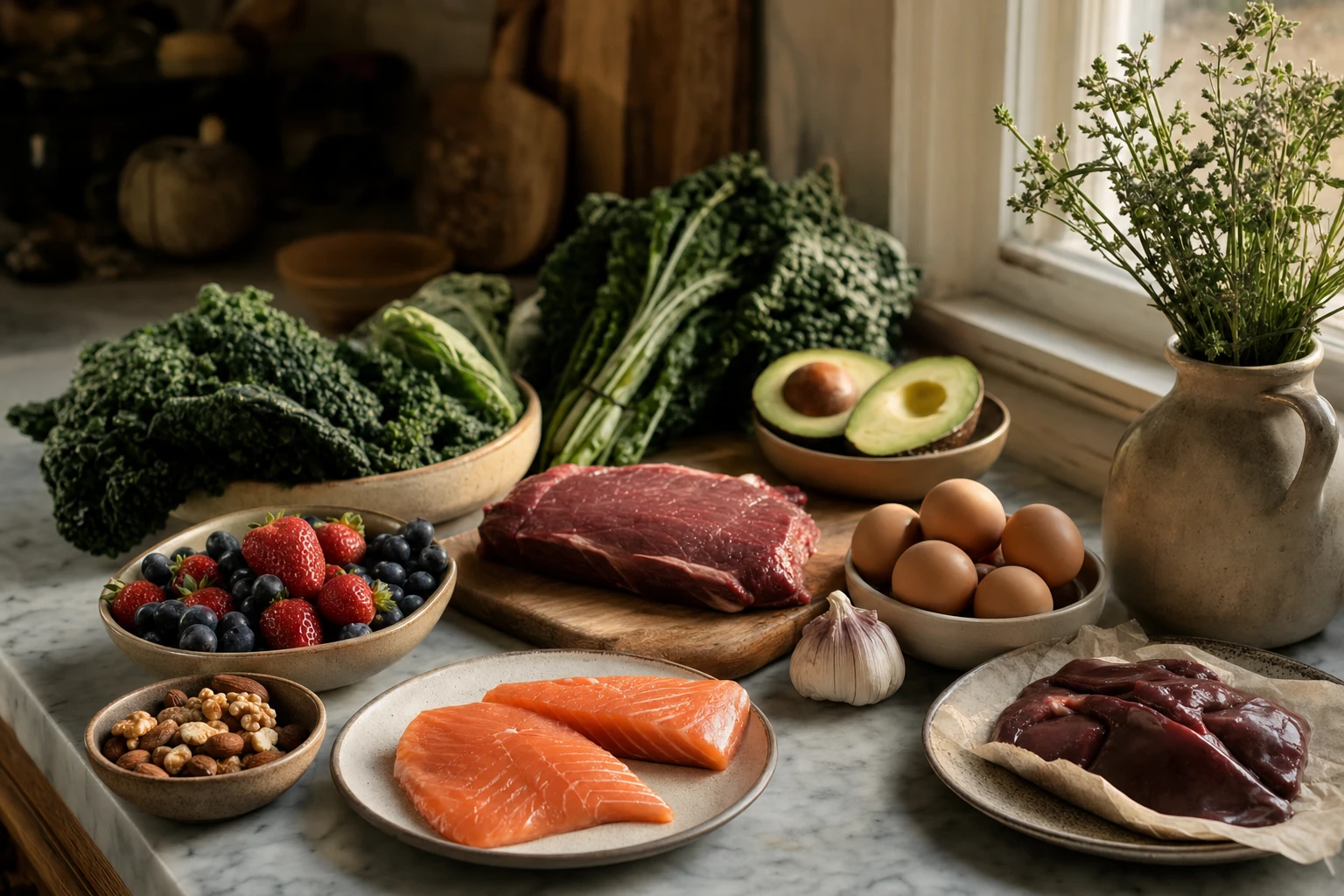
The primary nutrient categories
Skin health depends on four primary nutrient categories: structural proteins (collagen), signalling molecules (retinol), cofactors for collagen synthesis (vitamin C, copper, zinc), and barrier support (fatty acids, zinc, niacinamide).
Without all four, your skin improvement plateaus. You might see slight improvement from one nutrient, but dramatic transformation requires all of them working together.
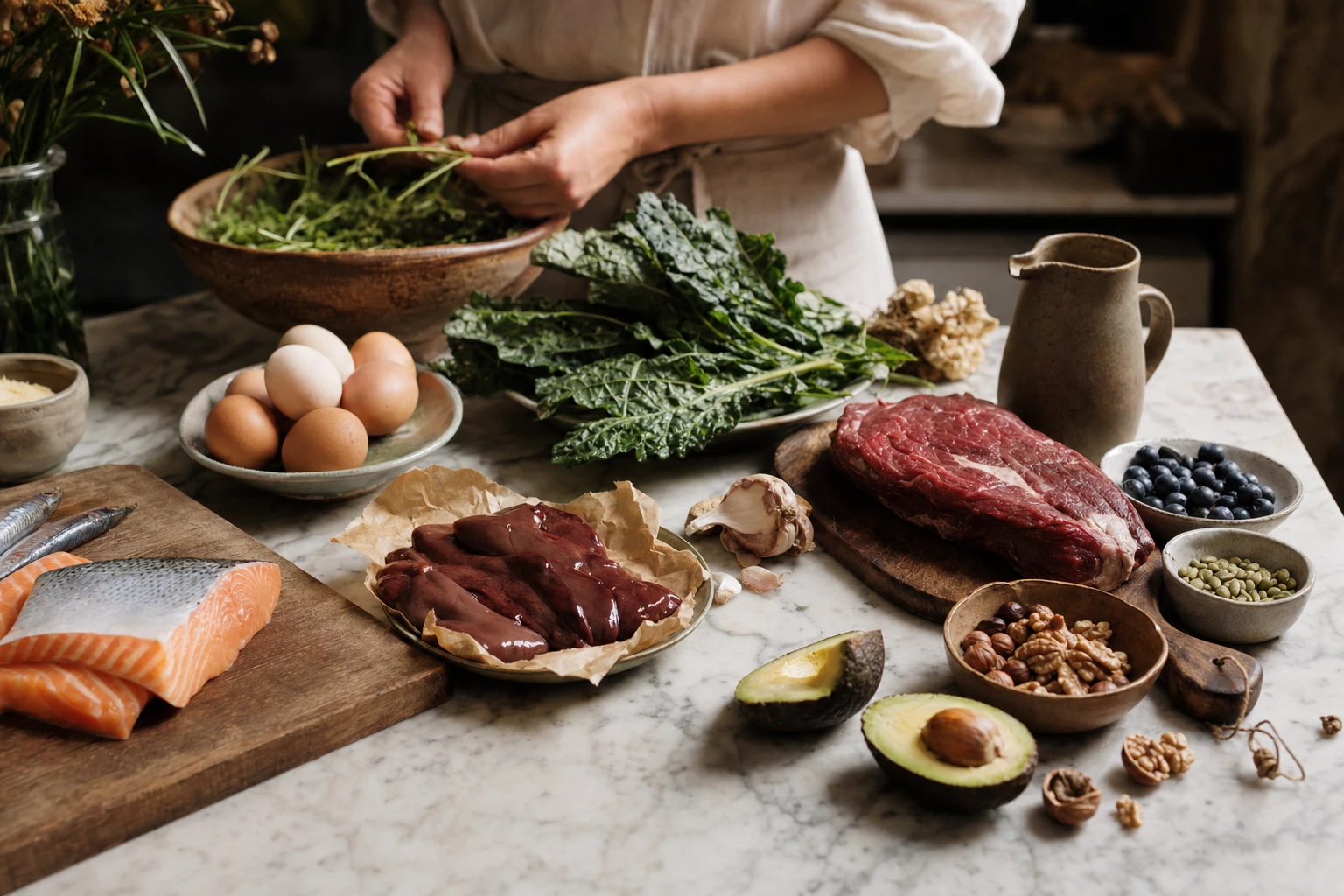
Retinol and vitamin A
Retinol (preformed vitamin A) is perhaps the single most powerful nutrient for skin transformation. It controls cell turnover, increases collagen synthesis, regulates sebaceous gland function, and strengthens the skin barrier.
How it works. Retinol binds to nuclear receptors in skin cells and activates genes responsible for collagen production and cell turnover.2 Topical retinol works, but requires months of use and causes irritation whilst skin acclimates. Dietary retinol works systemically, affecting all skin cells simultaneously, without irritation because your body regulates absorption.
The dosing question. Preformed vitamin A is found exclusively in animal products. Beef liver contains roughly 5000+ IU per gram. A single 85-gram serving of grass-fed beef liver provides a week's worth of vitamin A for most people. This is not a nutrient you need to supplement separately if you eat liver regularly.
The plant-based problem. Beta-carotene (the precursor to vitamin A found in plants like carrots and sweet potato) requires enzymatic conversion to retinol. The conversion rate is abysmal: NIH ODS uses conversion ratios of 12 mcg of dietary beta-carotene to 1 mcg retinol activity equivalent.2 Some people convert even less efficiently depending on genetics. For skin transformation, preformed retinol from animal sources is not optional. It's the difference between minimal results and dramatic ones.
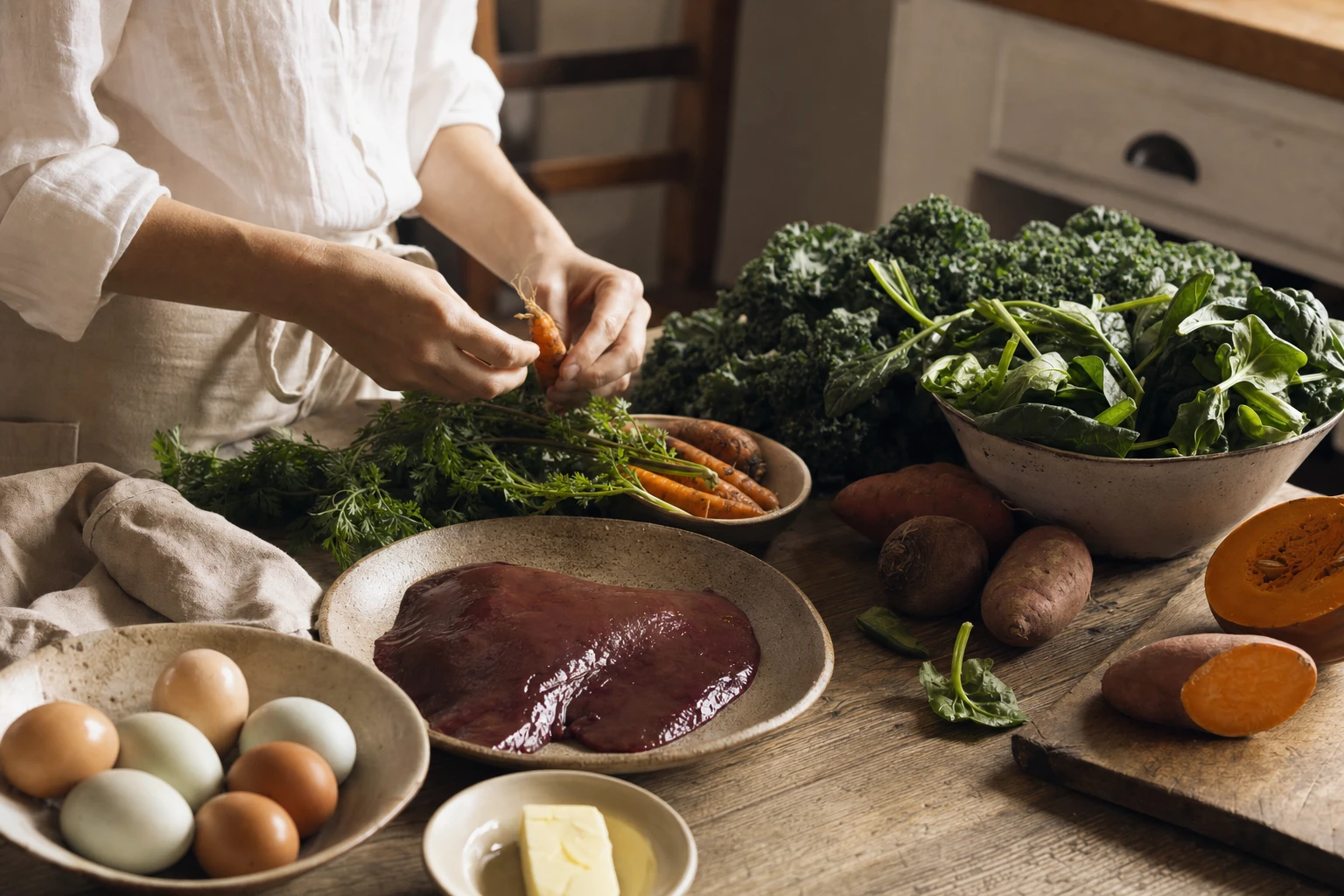
Food sources. Beef liver (the gold standard), lamb liver, pâté (if properly made from organ meats), egg yolks, grass-fed butter, wild-caught fish roe (salmon roe is particularly rich).
Collagen and its cofactors
Collagen is the most abundant protein in your skin. Types I and III collagen provide structural integrity and elasticity. As you age, collagen production decreases. Supplementing collagen helps, but it doesn't work without its cofactors.
The amino acids. Collagen is made primarily of glycine (roughly 35 percent), proline (roughly 12 percent), and hydroxyproline (roughly 10 percent). These are not synthesised efficiently from other amino acids. You need them directly from collagen or gelatin sources.
Vitamin C. Absolutely essential for collagen synthesis. It's a cofactor for prolyl hydroxylase and lysyl hydroxylase, the enzymes that cross-link collagen molecules.3 Without adequate vitamin C, your skin produces defective collagen that lacks tensile strength. Organ meats are an underrated source: beef liver contains 36mg per 100g. So do citrus, berries, and vegetables.
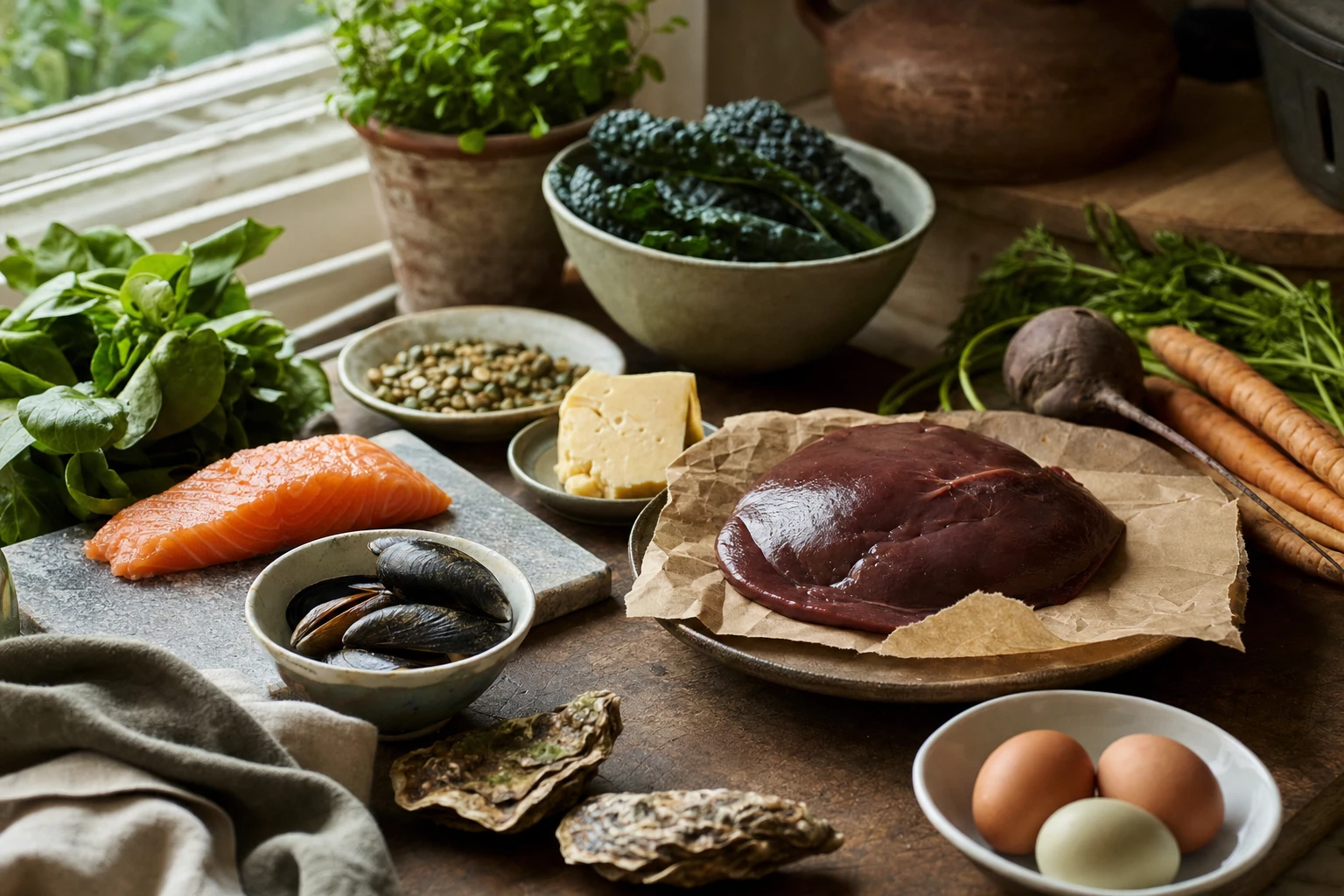
Copper. Required for lysyl oxidase, another enzyme essential for collagen cross-linking.4 Copper deficiency is common in modern diets because seed oils displace copper-rich foods, and mineral depletion in soil reduces dietary copper. Shellfish (especially oysters), organ meats, and dark chocolate (in moderation) are the richest sources.
The timeline for collagen remodelling. Your skin's collagen is continuously degraded and rebuilt. New collagen production increases within weeks of adequate nutrient intake, but full remodelling of existing collagen takes 3-6 months. This is why skin transformation accelerates between weeks 8-16 of consistent nutrition.
Food sources. Bone broth (home-made simmered 12-24 hours), gelatin, grass-fed beef, wild-caught fish, connective tissue from animals (skin, ligaments, tendon all contain collagen).
Zinc, copper, and mineral balance
Zinc is the second most abundant mineral in your body, after iron. It's essential for skin barrier integrity, wound healing, and immune function. Zinc deficiency causes skin to become thin, dry, and slow to heal.5
Copper and zinc compete for absorption. High zinc (from supplementation) without copper causes relative copper deficiency, which impairs collagen synthesis. The ratio matters.
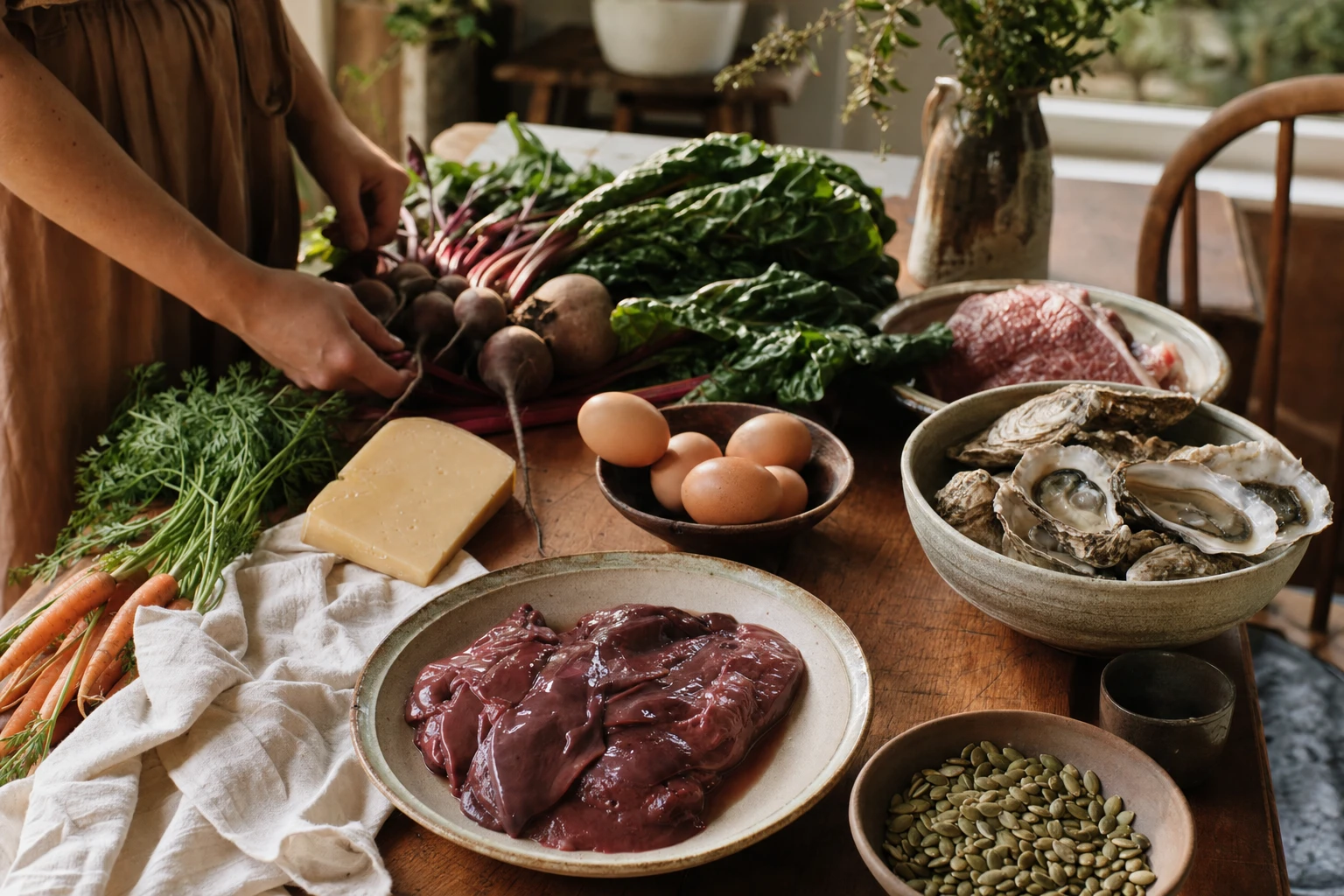
Zinc sources. Oysters (the most concentrated dietary source of zinc)5, grass-fed beef, pumpkin seeds, lamb, crab.
Copper sources. Shellfish, organ meats, nuts and seeds, cocoa, dark leafy greens. The bioavailability from animal sources is superior to plant sources.
The mineral base. Beyond zinc and copper, your skin depends on selenium (from meat and fish), iron (from liver and red meat), and iodine (from fish and seaweed). Eating one serving of organ meat per week often corrects multiple mineral deficiencies simultaneously.
Your skin is a mineral sink. If your diet is mineral-poor, your skin shows it first.
The gut-skin axis
Your skin and your gut are connected. Dysbiosis (imbalanced gut bacteria) and intestinal permeability trigger systemic inflammation that manifests as skin problems: acne, rosacea, eczema, psoriasis, or simply dull, congested skin.
The mechanism: dysbiosis increases lipopolysaccharides (LPS) in your bloodstream. LPS triggers immune activation. Your skin's immune cells respond with inflammation. Additionally, dysbiosis impairs the production of short-chain fatty acids (particularly butyrate), which are needed to maintain intestinal barrier integrity. Permeability increases. More LPS crosses into your bloodstream. Skin inflammation worsens.
The solution: feed your gut bacteria the same whole foods you're eating for skin nutrition. Fermented foods (sauerkraut, kimchi, aged cheeses) introduce beneficial bacteria. Fibre-rich foods (vegetables, resistant starch from underripe banana) feed the bacteria you want. Remove seed oils and ultra-processed foods that feed dysbiotic species.
Your skin often becomes noticeably clearer and more radiant once your gut is healed. This is not a coincidence.

Fatty acids and the skin barrier
Your skin barrier is made of lipids (fats). Ceramides, cholesterol, and free fatty acids form the mortar that holds skin cells together. If you're eating a low-fat diet or exclusively polyunsaturated fats (from seed oils), your skin barrier deteriorates.
Saturated fat is essential for healthy skin. It's a key component of skin barrier lipids alongside cholesterol and ceramides.1 Butter, ghee, coconut oil, lard from pastured animals, these provide the raw materials for skin barrier repair. Modern diet culture has demonised saturated fat, but your skin knows the truth: it needs it to function.
Additionally, omega-3 fatty acids from wild-caught fish (particularly fatty fish like salmon, mackerel, sardines) have anti-inflammatory properties that may improve skin inflammation.6 If you have rosacea, eczema, or persistent acne-like inflammation, wild-caught fish 3-4 times weekly often produces rapid improvement.
The barrier repair happens quite quickly. Some people report smoother, less reactive skin within 1-2 weeks of increasing good fats and eliminating seed oils.
Get health guides like this, free
Two short reads a week on eating for energy, gut health, skin, sleep and more.
By signing up you agree to receive emails from us. No spam, unsubscribe anytime.
The water and electrolyte base
Your skin cells are 70% water. Dehydration shows immediately: skin becomes dull, fine lines deepen, and dark circles appear. But simply drinking more water doesn't necessarily fix skin dehydration because water absorption depends on electrolytes (sodium, potassium, magnesium).
If you're eating processed foods (low sodium from salt), you're likely electrolyte-deficient. Salt your food generously with good sea salt. Include potassium-rich foods like sweet potato, avocado, and bone broth. Magnesium-rich foods like dark chocolate and leafy greens. These electrolytes allow your cells to retain water.
Additionally, adequate hydration supports lymphatic drainage (which removes inflammatory metabolites from your skin). This is a secondary benefit but a real one. Well-hydrated skin literally has better waste clearance.
The complete protocol
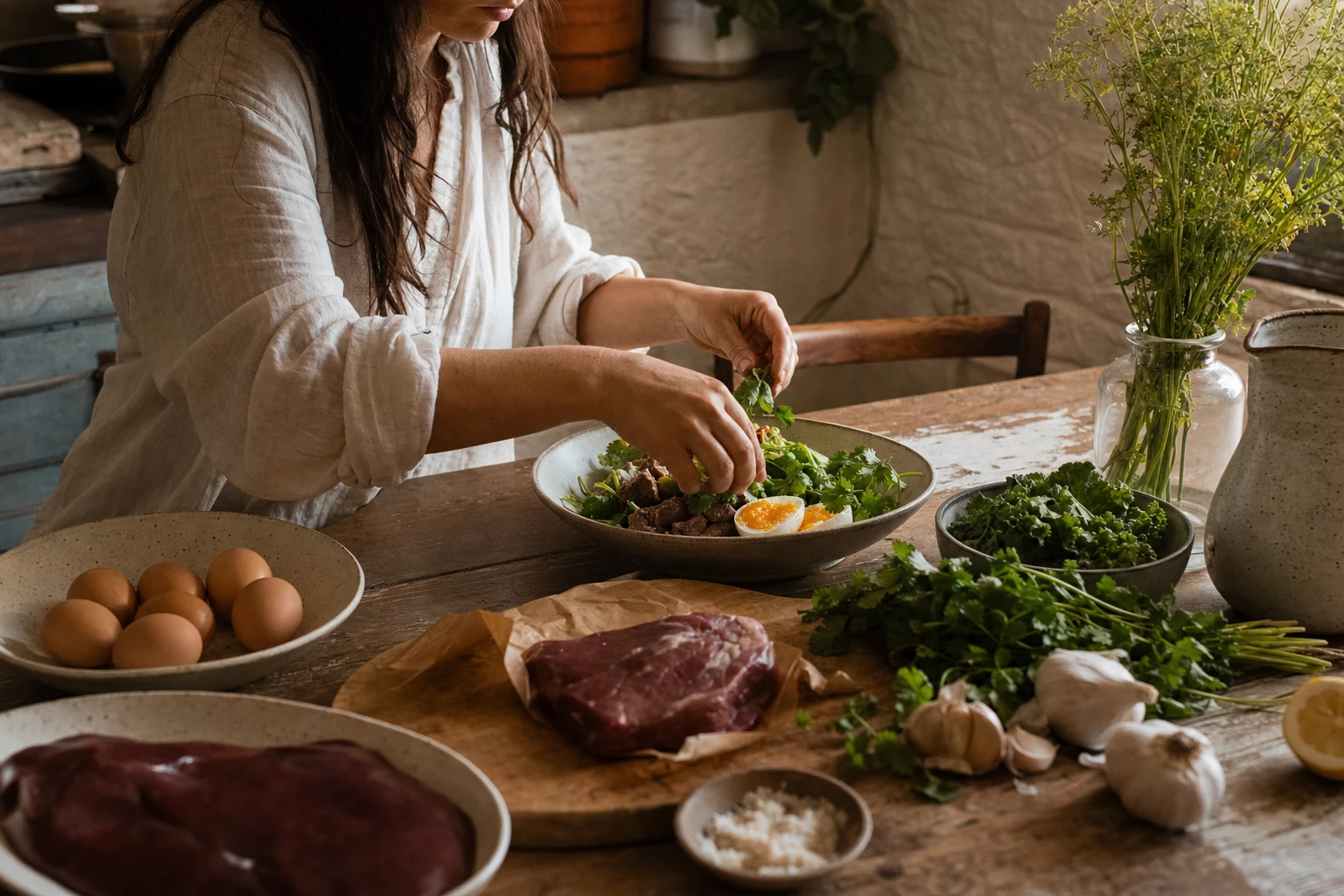
Daily priorities. Eat organ meats 2-3 times weekly (liver especially). Include bone broth daily (1-2 cups), or collagen powder if fresh broth isn't feasible. Choose full-fat, unprocessed dairy if tolerated (grass-fed butter, aged cheeses, whole milk). Eat eggs regularly (yolks contain lutein, zeaxanthin, and vitamin D). Include zinc-rich foods (oysters, beef, seeds) at least twice weekly.
Foods to eliminate. Seed oils (canola, soya, sunflower) completely. Ultra-processed foods. Artificial sweeteners. Excess sugar. These all impair nutrient absorption and promote dysbiosis.
Topical considerations. Once your nutrition is dialled in, your skin barrier often heals enough that you need less topical support. A simple routine (cleanser, moisturiser with hyaluronic acid, SPF) is sufficient for most people. If you're using retinoid creams, reduce frequency once you're consuming dietary retinol, as the combination can become irritating.

1 of 9
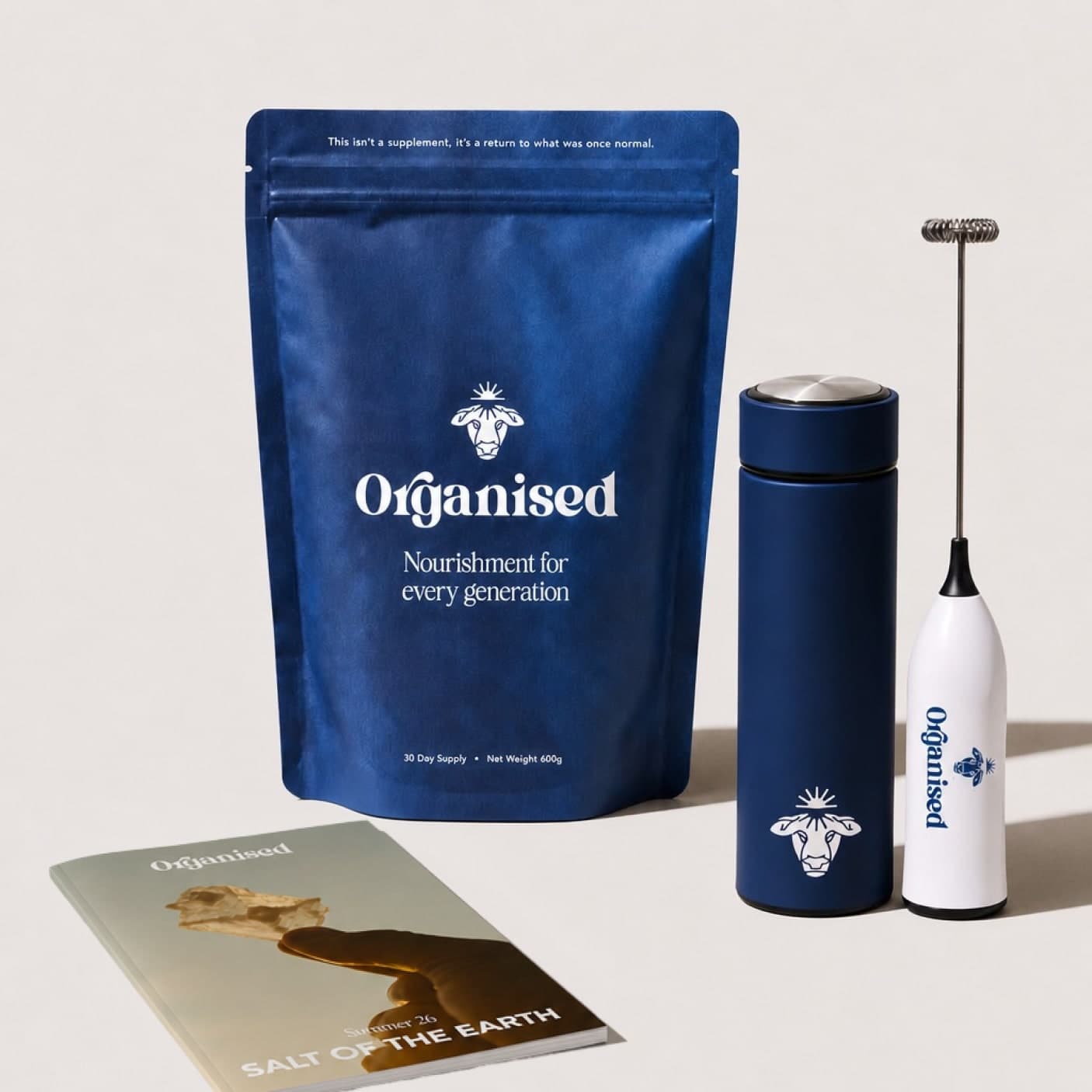
Daily blend
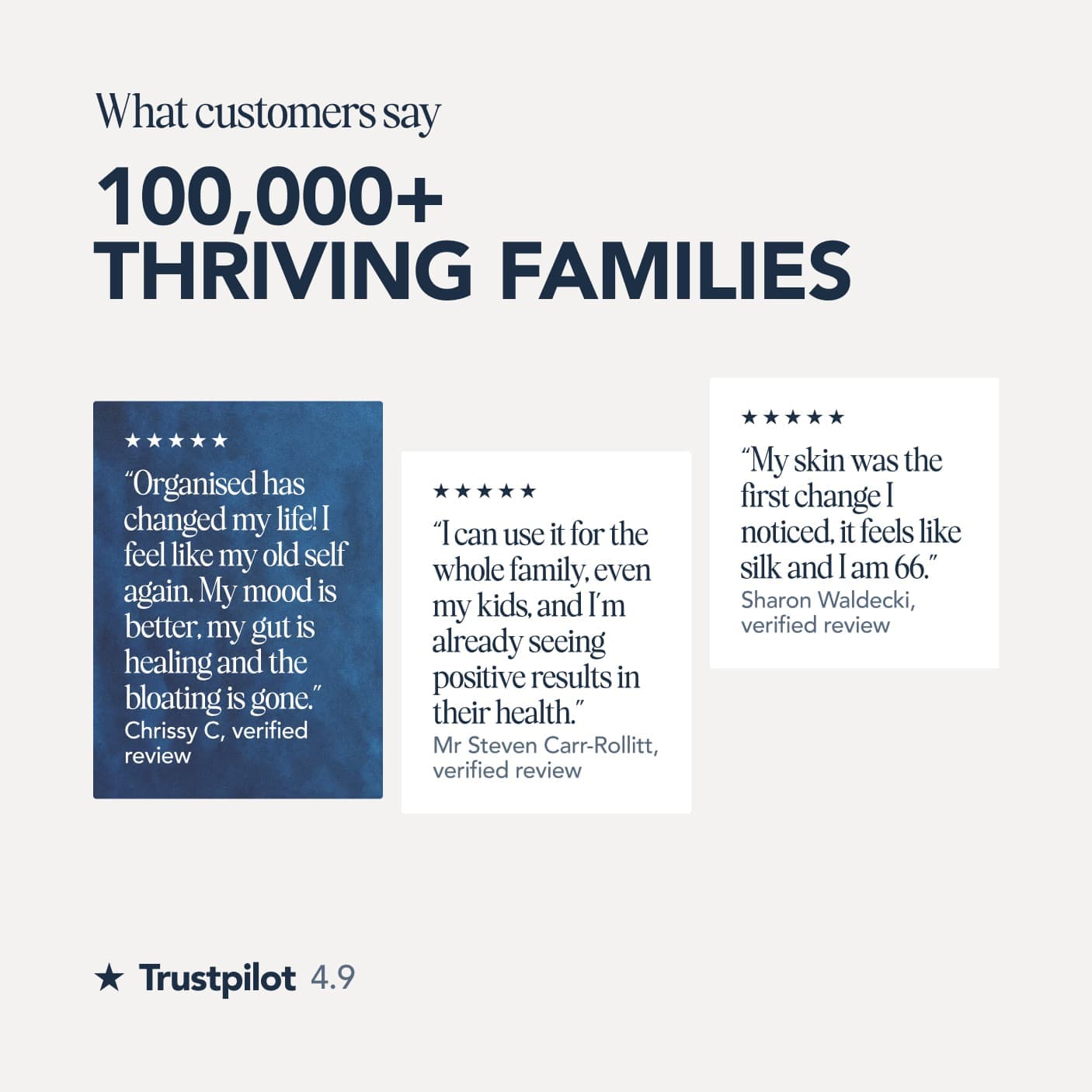
100,000+ thriving families4.9 on Trustpilot
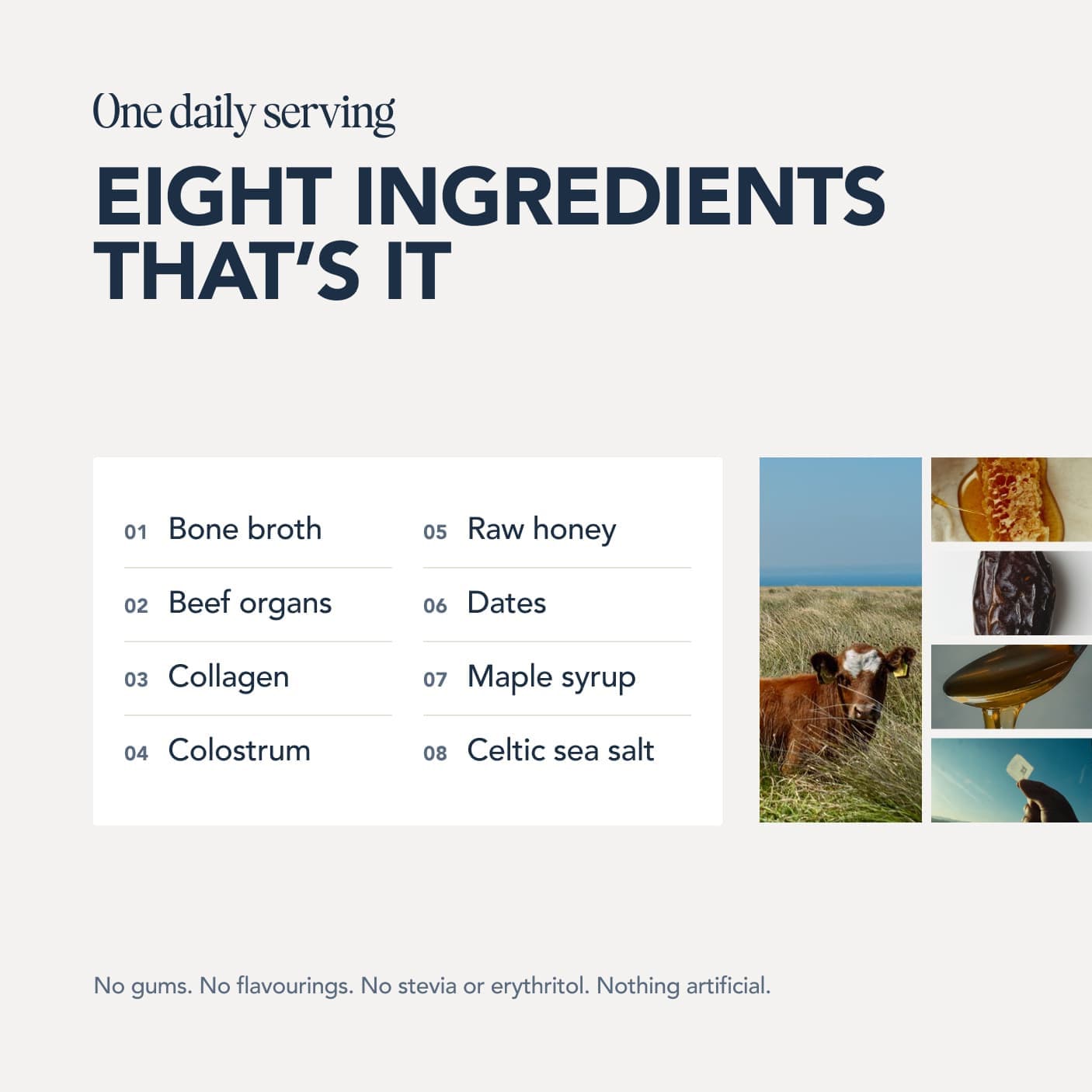
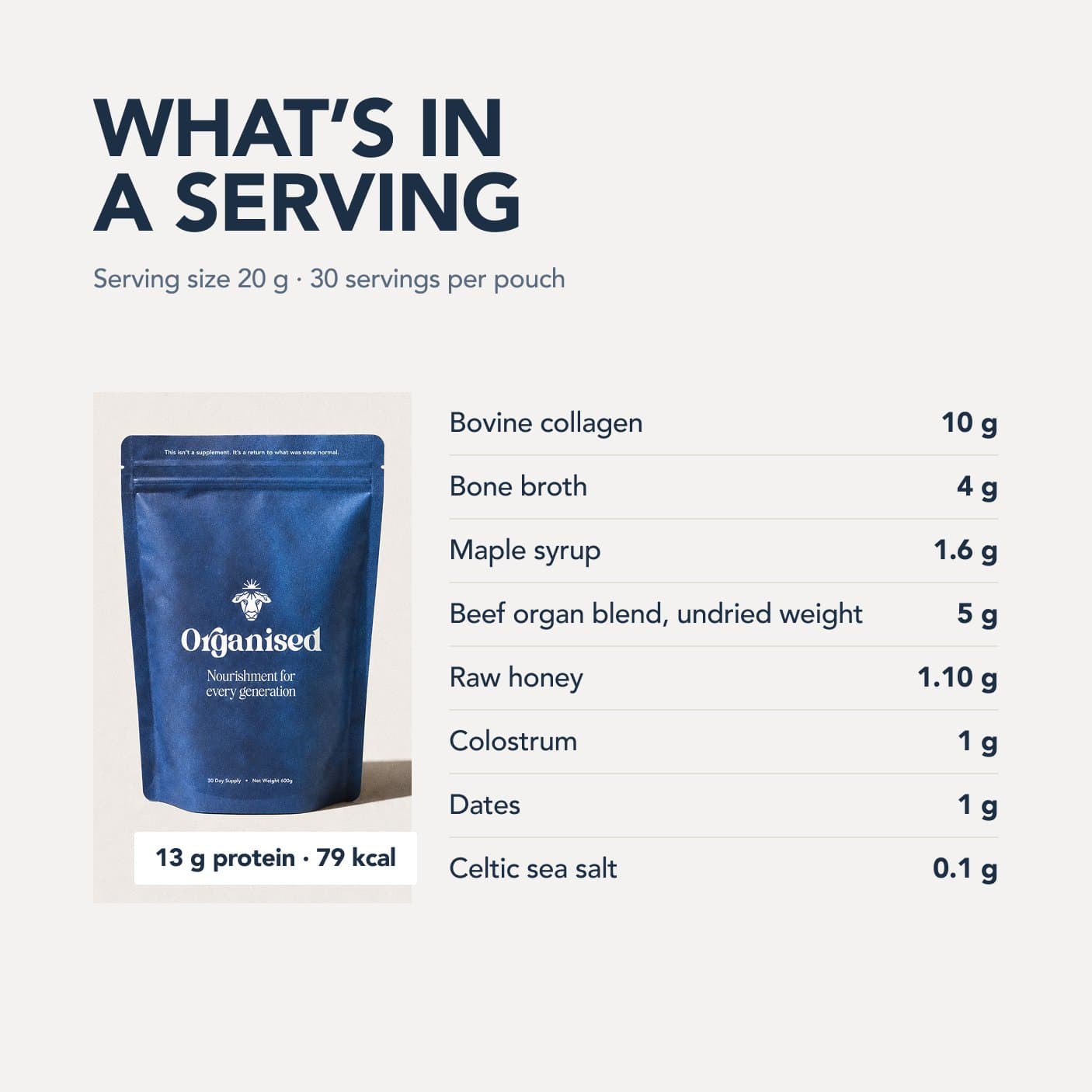
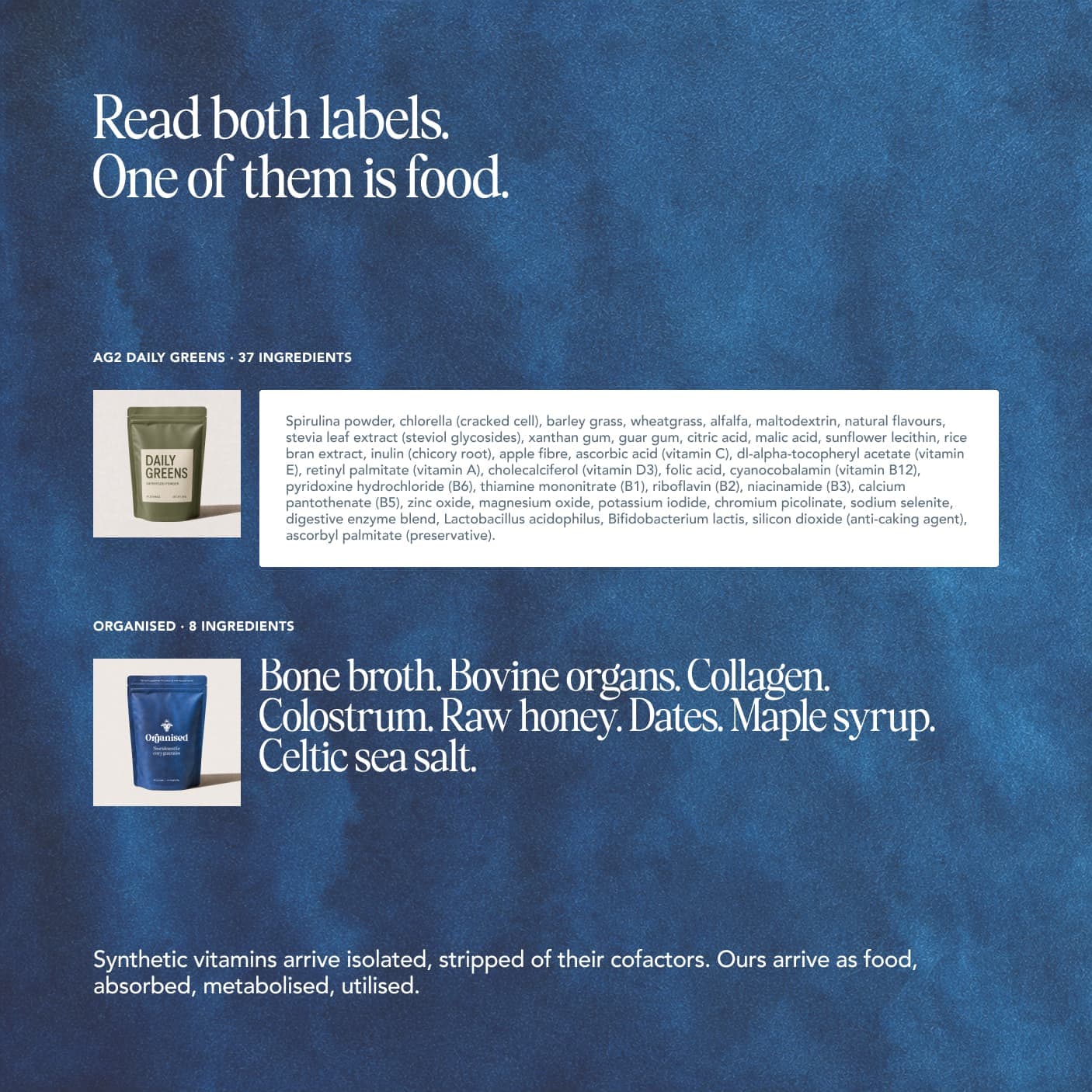
Eight real ingredients built around grass-fed beef organs, collagen and colostrum. Nothing synthetic added.
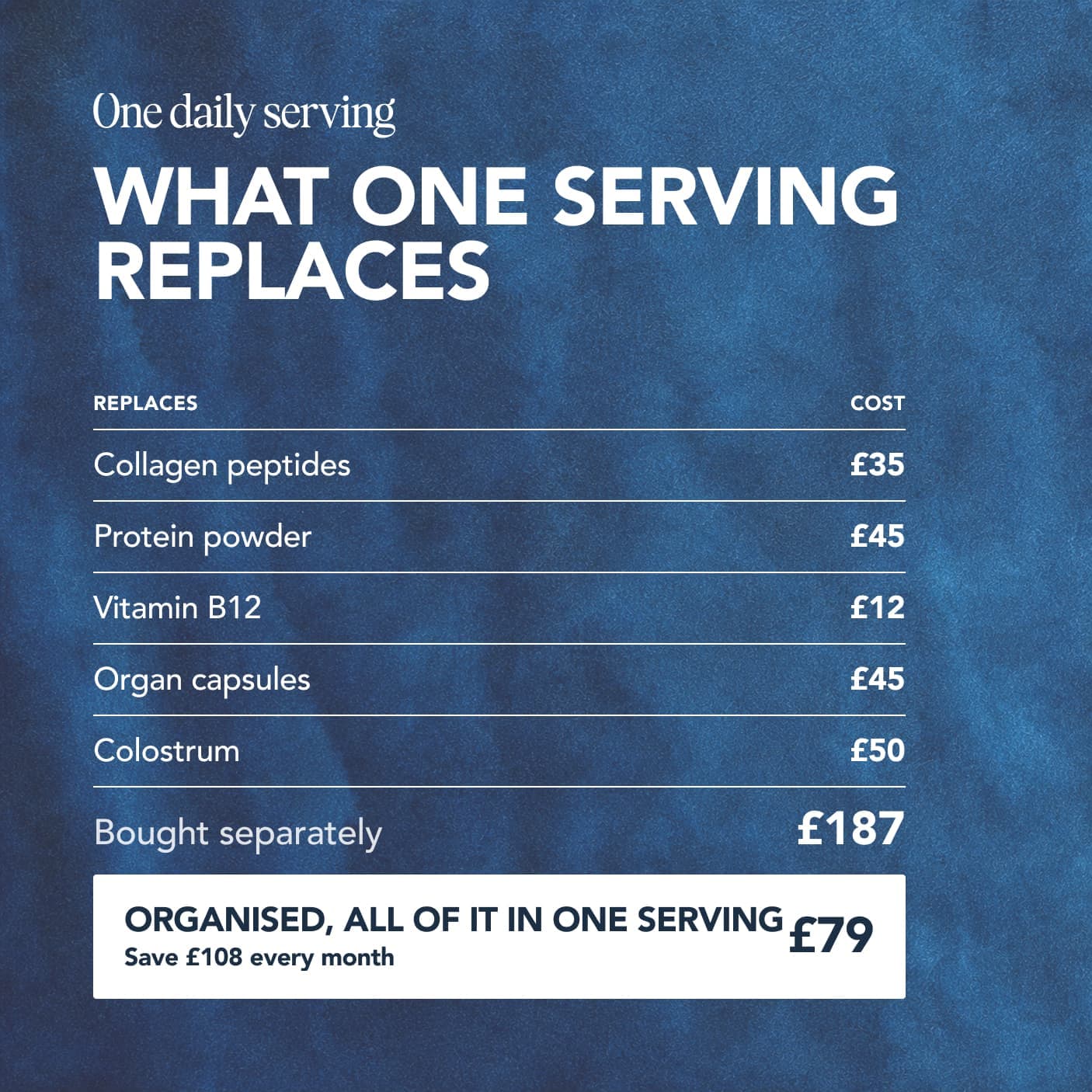
Free with your first order, worth £38. Plus £10 off the pouch with a subscription.
Free UK shipping · Made in England · 100 day money back guarantee on your first pouch · Skip, pause or cancel anytime
Seasonal variation and consistency
Your skin changes with seasons. Winter often brings dryness. Summer brings oil production changes and sun exposure. Rather than fighting these changes with different topicals seasonally, adjust your nutrition slightly.
Winter dryness is often due to reduced omega-3 intake (fewer seasonal fish) and reduced sun exposure (vitamin D deficiency). Increase wild-caught fish consumption. Consider sun exposure when weather permits. If dryness persists, increase fat intake slightly (butter, ghee, avocado).
Summer inflammation (including rosacea flares or acne worsens) is often due to increased sugar intake (ice cream, juices) and increased sun stress. Reduce sugar. Increase antioxidant foods (berries, dark chocolate). Support your skin barrier with adequate water and electrolytes.
The nutrition that works year-round is consistent: organ meats, bone broth, collagen cofactors, good fats, and minerals. Adjust quantities seasonally but stay consistent with food quality.
What realistic progress looks like
Week 1-2: Skin becomes noticeably hydrated. Puffiness (if present) decreases. This is because nutrient delivery to skin cells improves immediately.
Week 3-6: Acne often begins clearing. Texture improves. Fine lines soften slightly. Skin tone becomes more even. People often ask if you're using new skincare.
Week 8-12: Collagen remodelling accelerates. Fine lines and wrinkles become noticeably less pronounced. Skin elasticity improves. Most people see the most dramatic changes between week 8-16.
Month 4-6: The transformation is complete. Skin looks noticeably younger, clearer, and more radiant. This is what happens when cells are built from good materials for months continuously.
This assumes consistent nutrition, adequate sleep, stress management, and sun protection. If you're eating well but sleeping 5 hours nightly, your results plateau. Skin repairs primarily during sleep.
You can't out-supplement a bad diet or out-cream bad nutrition. Fix the input, and the output transforms.
Why skin investment pays dividends
Investing in skin nutrition might feel like a luxury or an indulgence. It's the opposite. It's the only investment in appearance that actually pays off. Topical skincare has diminishing returns. After a certain point, better serums don't produce better skin. But better nutrition produces measurably better skin indefinitely.
Additionally, the same nutrition that transforms your skin transforms your entire health. The organ meats that give you glowing skin also give you stable energy, sharp cognition, and resilient joints. The elimination of seed oils that clears your skin also resolves brain fog and joint pain. This isn't separate self-care. This is foundational health.
Once you've achieved the skin you want through nutrition, maintaining it requires considerably less effort than the initial transformation. One serving of organ meat weekly, consistent whole foods, and basic sun protection keep your skin beautiful long-term. The return on that minimal investment is disproportionate.
The bottom line
Beautiful skin is built, not applied. It requires structural proteins (collagen and its cofactors), signalling molecules (retinol from liver), minerals (zinc, copper, selenium, iron), healthy fats for barrier integrity, and a healthy gut to absorb them all. Feed your skin these inputs consistently for 8-12 weeks, and you'll see changes you couldn't achieve with any topical.
The transformation is worth the attention. Not because appearance is everything, but because a body this well-nourished feels different. It has more energy. It recovers faster. It resists illness. Your glowing skin is the visible marker of systemic health.
For deeper dives into specific aspects, we have guides on retinol from food vs skincare and collagen and anti-ageing research. The science is clear. Your next step is consistent action.
References
Every source below was checked on 27 August 2026. Each PubMed, PMC and DOI identifier was resolved against NCBI or Crossref, and what it opens is printed under the citation, so you can see the link goes where the citation says without leaving the page. Where a citation and its identifier disagreed, the citation was corrected to the record or the reference was deleted along with the sentence marker that pointed at it, and where the resolved paper turned out not to support the sentence, the sentence was cut back to what it does support. Borrowed authority is worse than none, because it looks like rigour.
- Iizaka S. Skin barrier and ageing: epidermal turnover. Skin Res Technol. 2017. PMID 27457139Checked 27 August 2026: PMID 27457139 opens no listed author, Monoamine oxidase inhibitors. Australas Psychiatry 2016;24(4):396.
- National Institutes of Health, Office of Dietary Supplements. Vitamin A and Carotenoids - Health Professional Fact Sheet. ods.od.nih.gov
- National Institutes of Health, Office of Dietary Supplements. Vitamin C - Health Professional Fact Sheet. ods.od.nih.gov
- National Institutes of Health, Office of Dietary Supplements. Copper - Health Professional Fact Sheet. ods.od.nih.gov
- National Institutes of Health, Office of Dietary Supplements. Zinc - Health Professional Fact Sheet. ods.od.nih.gov
- National Institutes of Health, Office of Dietary Supplements. Omega-3 Fatty Acids - Health Professional Fact Sheet. ods.od.nih.gov
Who wrote and reviewed this guide
Niall Kiddle
Author · Founder, Organised
Niall is the founder of Organised. He started the company in 2024 after fixing his own health the slow way: in 2022 he swapped a cupboard of synthetic supplements for real food, raw milk, organ meats, bone broth and honey, and felt the difference within months.
Areas of expertise: Ancestral nutrition, Organ meats, Whole-food supplementation, Gut health, Regenerative sourcing
Read Niall's full profile
Pedro Rodrigues
Reviewer · Agronomist (farming and sourcing only)
Pedro is the agronomist Organised works with on farming and sourcing. His job on the guides is to keep the science honest: he reviews what we publish about soil health, regenerative agriculture, grazing and the way food is actually produced.
Areas of expertise: Regenerative agriculture, Agronomy, Soil health, Grass-fed farming, Food sourcing
Reviewed this guide on
Read Pedro's full profileMore on skin
View all- How to Build Collagen Naturally Without Injections
- A Whole Food Skincare Routine: Morning to Night
- Collagen for Anti-Ageing: What the Clinical Trials Show
- Dark Circles Under Your Eyes? It Might Be a Nutrient Deficiency
- Eczema and Nutrition: What the Research Suggests
- How to Eat for a Natural Glow (Without Products)
- How Zinc, Copper and Selenium Work Together for Clear Skin
- Psoriasis and Nutrition: What Helps and What Hinders
- Retinol from Beef Liver vs Retinol in Skincare: Which Actually Works?
- Rosacea and Gut Health: Is There a Connection?
- The Foods That Age Your Skin Fastest
- Why Your Skin Looks Better When You Eat Organ Meats
Browse the guides library
All guidesKeep reading

Health goals
Retinol from Beef Liver vs Retinol in Skincare: Which Actually Works?
Retinol from liver vs skincare creams: get more bioavailable retinol from a single serving of beef liver. Here is why oral often beats topical for skin.

Health goals
Collagen for Anti-Ageing: What the Clinical Trials Show
What does the science actually show about collagen supplementation for anti-ageing? We review the key clinical trials and what they mean for your skin.

Health goals
How to Maintain Energy All Day Without Caffeine Dependency
Stop crashing after 3pm. Discover how to fuel sustained energy through the day using mitochondrial nutrition, stable blood sugar, and real food.
Real food, made effortless
Start my daily blendA few ways to use it
All recipes
Energy Balls with Organised, Dates and Raw Honey
Make no-bake energy balls with Organised, dates, and raw honey. Perfect lunch box, pre-workout, or on-the-go snack. Simple recipe.
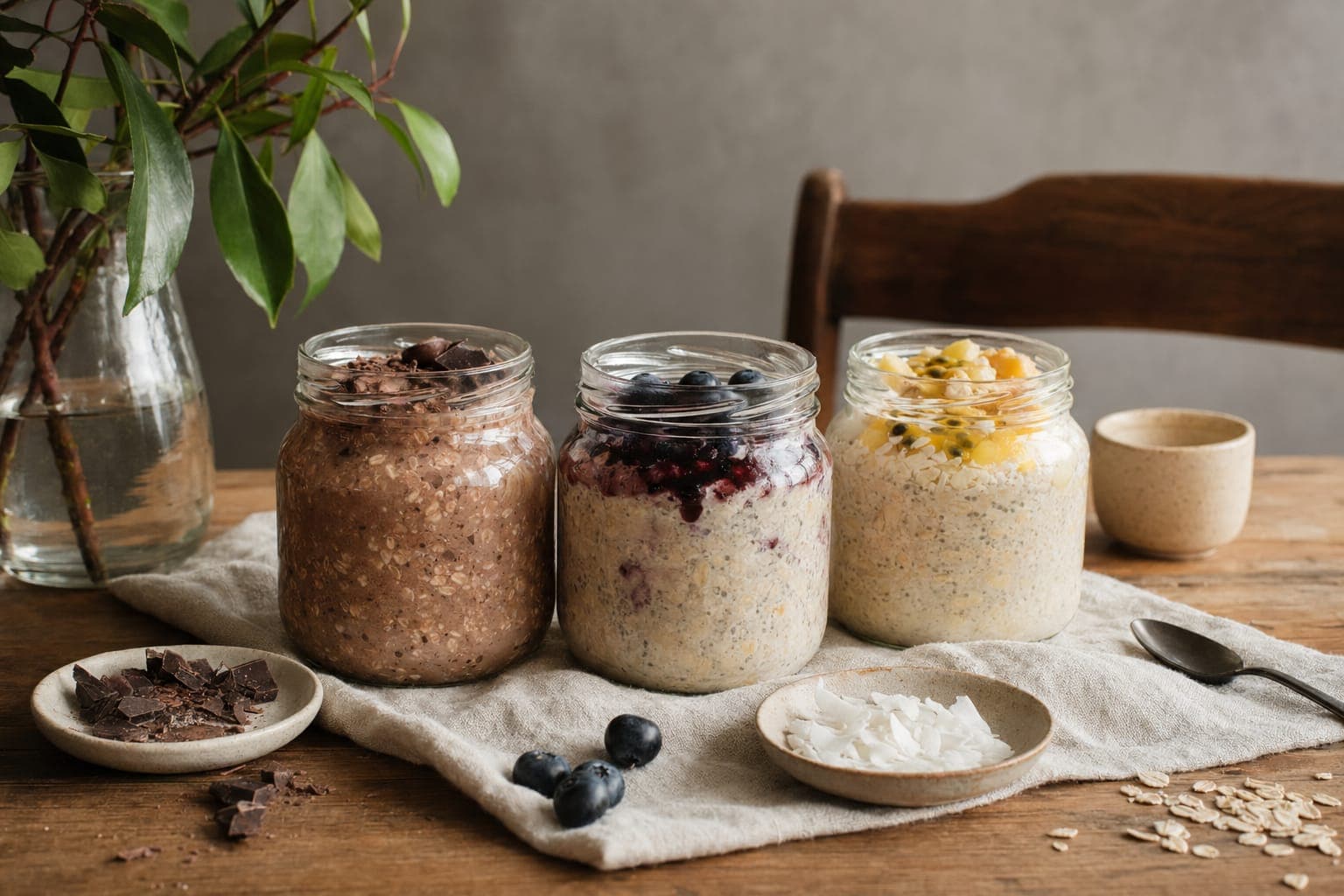
Organised Overnight Oats: 3 Variations
Three delicious overnight oats variations with Organised. Chocolate, berry, tropical flavours. Make them Sunday, eat them all week.
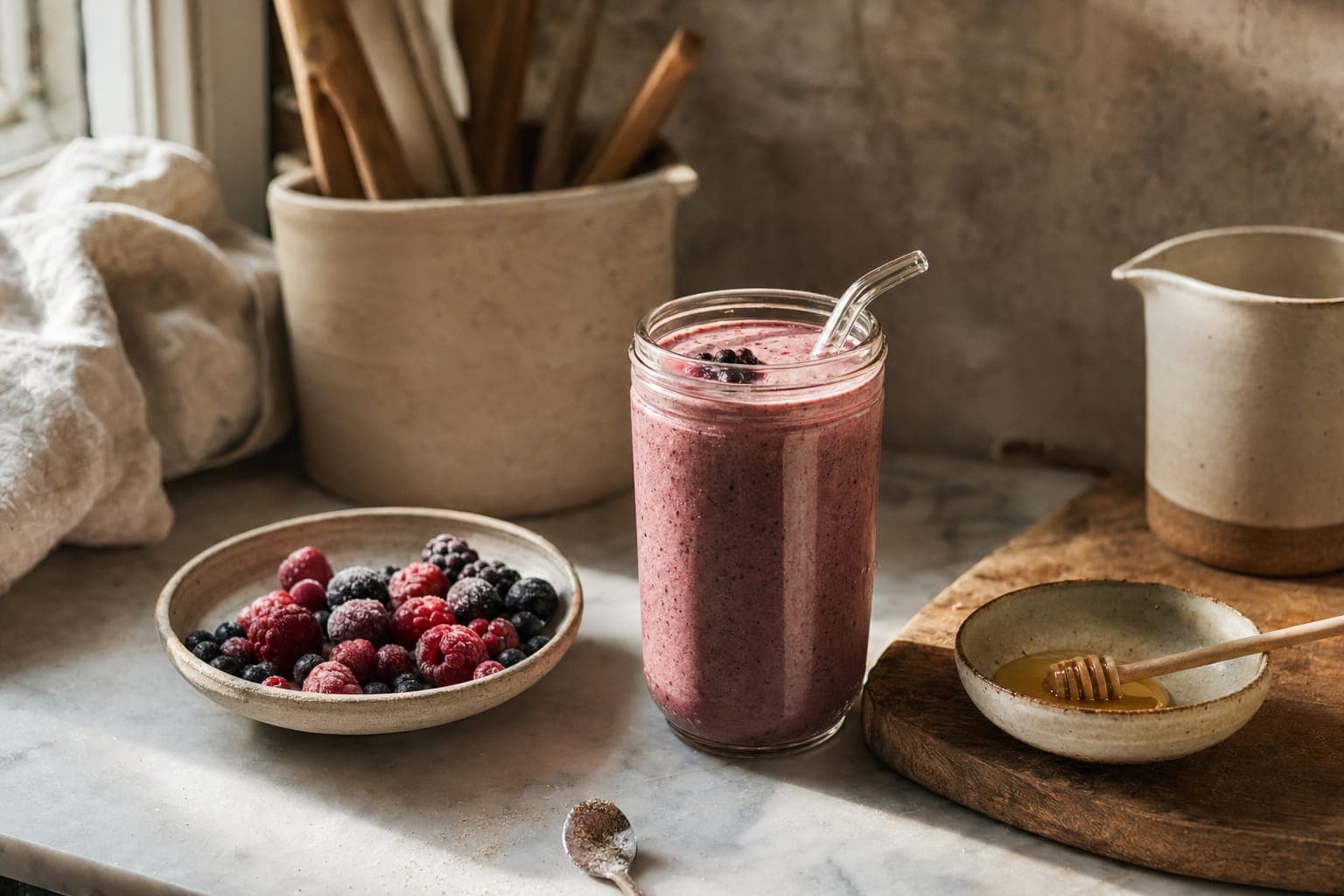
The Organised Recovery Smoothie for After Exercise
A recovery smoothie made with beef protein, raw milk, frozen berries, collagen, and honey. Optimal nutrition in the 30-minute window after exercise.


 Join over 100,000+ members
Build a better food system with us
The Organised community is thousands of people choosing real food and backing the farmers who grow it, all of us trying to leave the world a little better than we found it. If that is what you care about too, you belong here.