Retinol from Beef Liver vs Retinol in Skincare: Which Actually Works?
Retinol is the gold standard for skin ageing. Dermatologists prescribe it. The skincare industry is built around it. Yet the richest source is sitting in your butcher's case, ignored, for a fraction of the price.

By Niall Kiddle, Founder, Organised

Reviewed by Pedro Rodrigues, Agronomist (farming and sourcing only) ·
6 min read · Published · Updated · 2 cited sources
Makers of the Organised Daily blend, a grass-fed beef organ supplement from regenerative UK farms

You're spending hundreds of pounds on retinol creams when you could get 10 times the bioavailable retinol from a single 100-gram serving of beef liver.
Here's what nobody in the skincare industry wants you to know.

What retinol actually does to skin
Retinol (vitamin A) is essential for skin health. It regulates cell turnover, supports collagen production, normalises sebaceous gland function and supports epithelial integrity.1
Essentially, retinol tells your skin cells to behave like younger, healthier skin cells. It accelerates the removal of damaged, discoloured, aged cells and accelerates their replacement with fresh, healthy cells underneath.
This is why retinol works. Not because of magic. Because of biology.
The question isn't whether retinol works. The question is: what's the most efficient way to get the biological activity to where it matters? Is it a cream you apply to the surface? Or is it a nutrient you ingest?
The problem with topical retinol
Topical retinol has a fundamental problem: penetration.
Your skin is designed to keep things out. That's its job. When you apply a retinol cream to the surface, the vast majority of it never makes it through the stratum corneum, the outer dead layer of skin. The molecules are too large. The skin barrier is too effective.
Studies show that only about 10-20 percent of topically applied retinol penetrates past the outer layer. The rest sits on the surface or washes off.
To compensate, the skincare industry uses retinol derivatives. Retinyl palmitate. Retinaldehyde. Retinol esters. These are converted to active retinoic acid by the skin cells, but the conversion is inefficient. You're losing potency at every step.
And then there's the irritation problem. Because topical retinol is a direct source of vitamin A activity, and because your skin barrier is already disrupted, application causes redness, peeling, flaking, and irritation. The skincare industry calls this the "retinization phase." Your skin literally has to acclimate to being irritated by the product.
People tolerate this irritation because they've been told it's the price of efficacy. But they're actually tolerating a deeply inefficient delivery method with significant side effects.
You don't apply a drug to the surface and expect 80 percent of it to bounce off. Yet that's exactly what happens with topical retinol. And the skincare industry profits from your ignorance.
The bioavailability issue
Bioavailability matters profoundly. It's the percentage of a nutrient that your body can actually absorb and use.
Retinol from animal foods is highly bioavailable; the NIH ODS notes the body can absorb roughly 70–90% of preformed retinol from food, compared with only 10–30% absorption of beta-carotene.1
Retinol from topical application has near-zero bioavailability to the layers of skin where it actually matters. It sits on the surface. A fraction penetrates. And even what penetrates has to be converted by the skin cells into active forms.
The contrast is stark. Oral retinol: highly bioavailable, systemic distribution, no irritation, no acclimation phase. Topical retinol: very low bioavailability, local concentration that's inadequate, significant irritation, inefficient conversion.
Beef liver: the real retinol source
Beef liver is one of the densest dietary sources of preformed vitamin A. USDA FoodData Central lists raw beef liver as containing roughly 4,900 mcg RAE per 100 grams, far above any plant source.2 Unlike beta-carotene from plant foods, this is preformed retinol that does not require conversion.1
A typical retinol cream contains 0.3 to 1 percent retinol by concentration. That might sound like a lot, but applied to the face (roughly 2,000 square centimetres), a pea-sized amount (0.5 grams) contains approximately 5 micrograms of active retinol. Even accounting for the fact that you'll apply more than a pea-size, you're looking at 10-50 micrograms maximum at the application site, and perhaps 1-5 micrograms of actual penetration.
A single serving of liver delivers 5,000 micrograms of readily absorbable retinol.
You could eat liver once per week and your retinol status would be secure for life.
The dosage advantage
This is where the contrast becomes almost comical.
A 100-gram serving of beef liver supplies roughly 500 to 1,000 percent of the daily recommended intake of vitamin A. It's dense.
You'd need to use a retinol cream daily for months to approach the retinol activity you get from a single meal of liver.
And here's the thing: your skin becomes more beautiful from the inside out. Retinol that's absorbed into the bloodstream distributes to all of your skin simultaneously. Not just your face. Your neck. Your hands. Your chest. All of it gets the benefit.
A topical retinol cream works only on the area where it's applied. Everything else gets nothing.
You can address skin ageing across your entire body with nutrition. Or you can address your face only with an expensive cream that barely penetrates. The choice is obvious.
Get health guides like this, free
Two short reads a week on eating for energy, gut health, skin, sleep and more.
By signing up you agree to receive emails from us. No spam, unsubscribe anytime.
Why topical retinol seems to work
Topical retinol does produce results, but not because of the retinol. Or not primarily because of it.
First, retinol is irritating, and irritation triggers inflammation, which increases blood flow to the area. Increased blood flow means more oxygen, more nutrients, more cellular turnover. You see results not because of the retinol activity but because of the irritant effect. You'd get similar results from using a scrub or a chemical peel. The irritation is the mechanism, not the retinol.
Second, people using retinol creams tend to use them as part of a skincare routine. That routine usually includes cleanser, moisturiser, SPF. The benefits you're attributing to retinol might actually be coming from the other products, or from the psychological effect of having a ritual, or from the moisturiser counteracting the irritation the retinol caused.
Third, expectation bias is powerful. You paid a lot of money for this product. You're experiencing irritation. Your brain interprets irritation as efficacy. You're expecting to see results, so you see them. Studies show that skincare expectations significantly influence perceived outcomes, independent of the actual efficacy of the product.
Real, systemic changes to your skin require systemic nutrition. That means retinol from food.

1 of 9
Daily blend
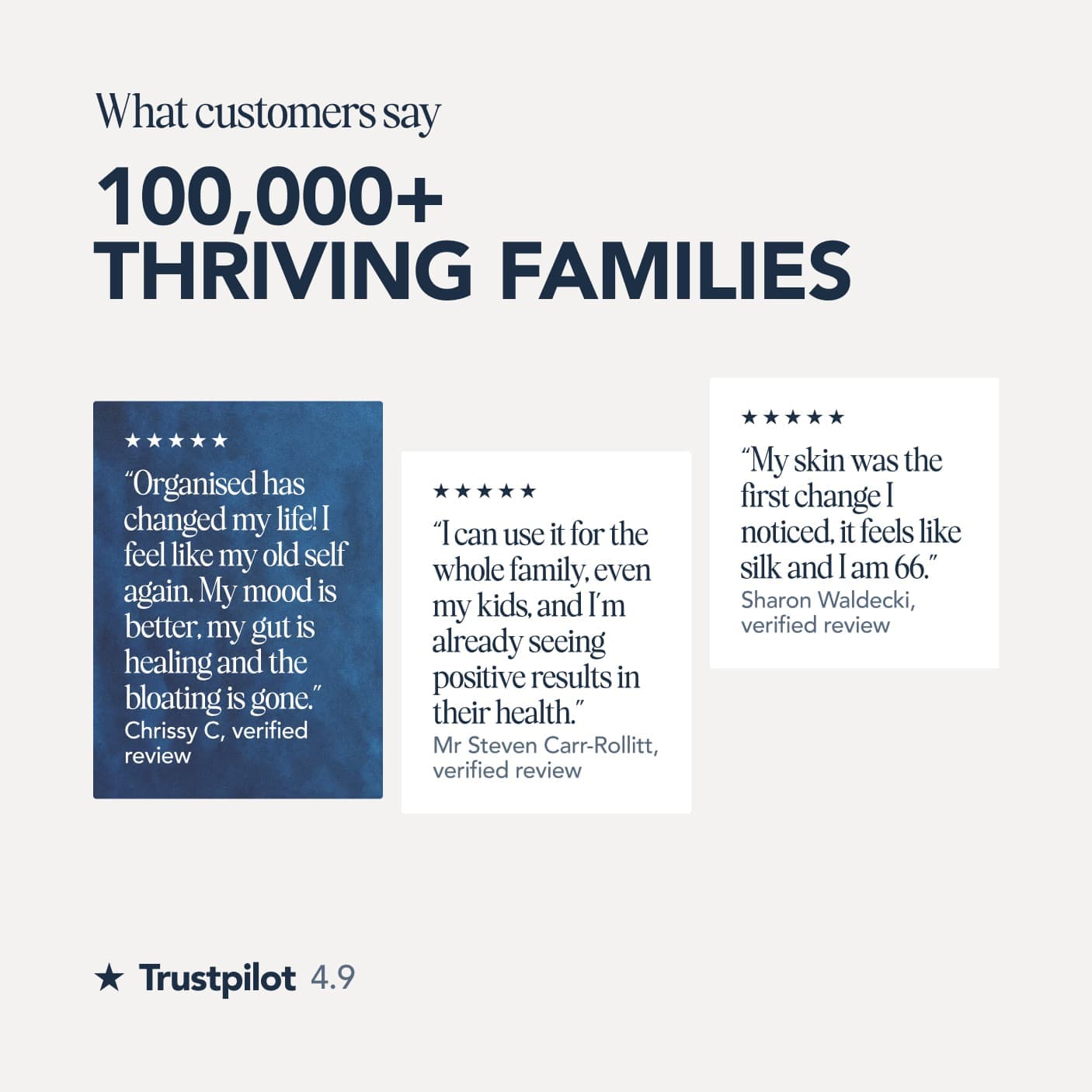
100,000+ thriving families4.9 on Trustpilot
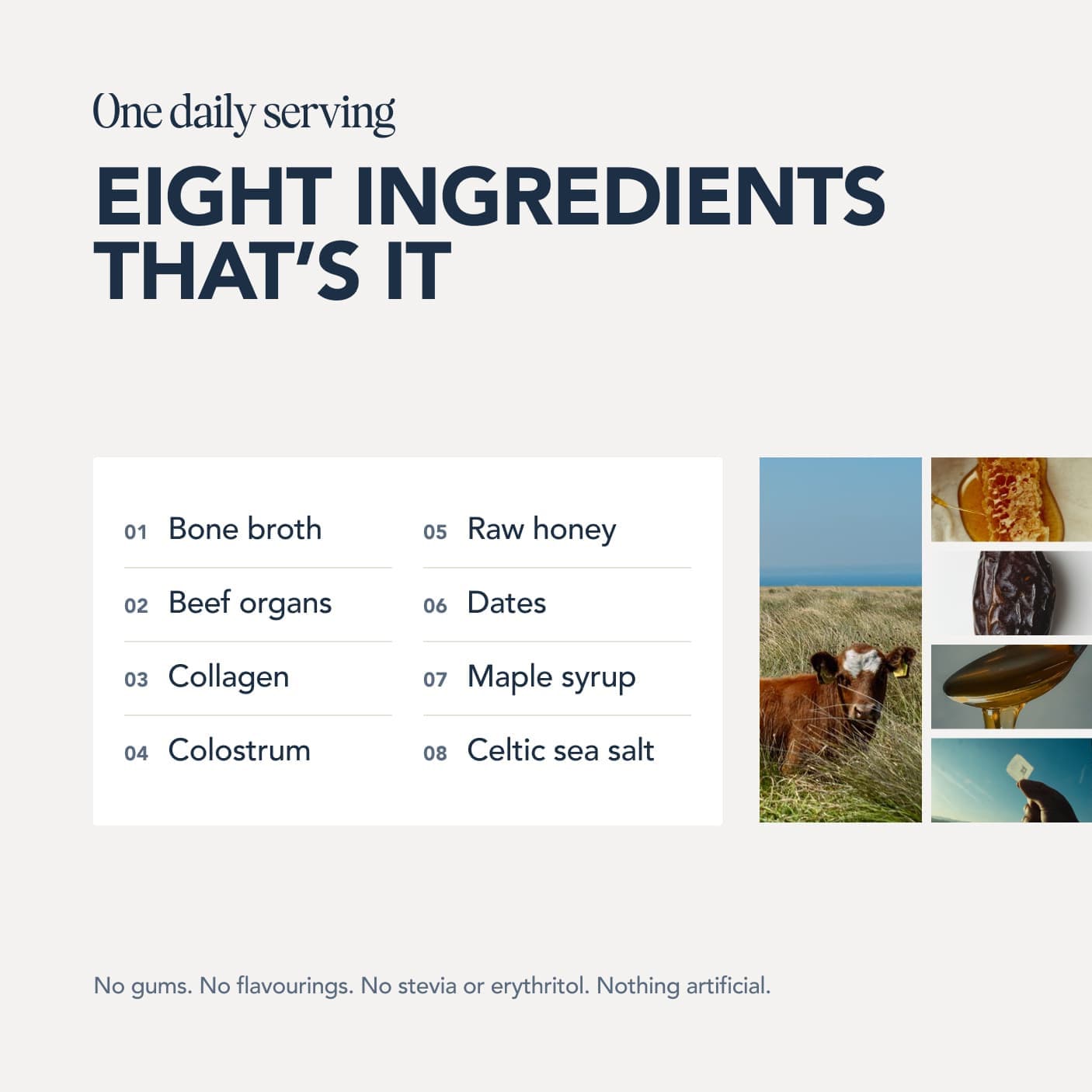
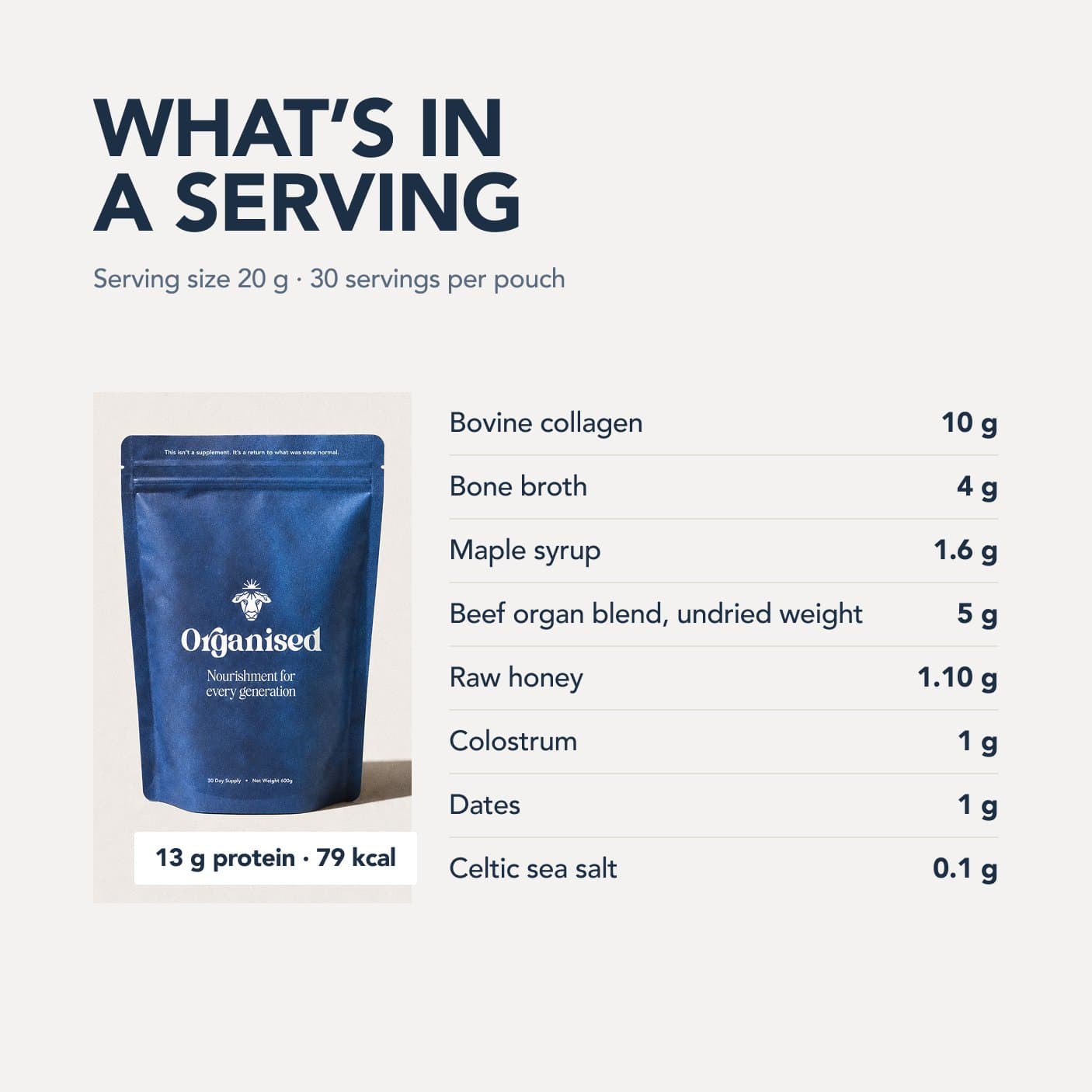
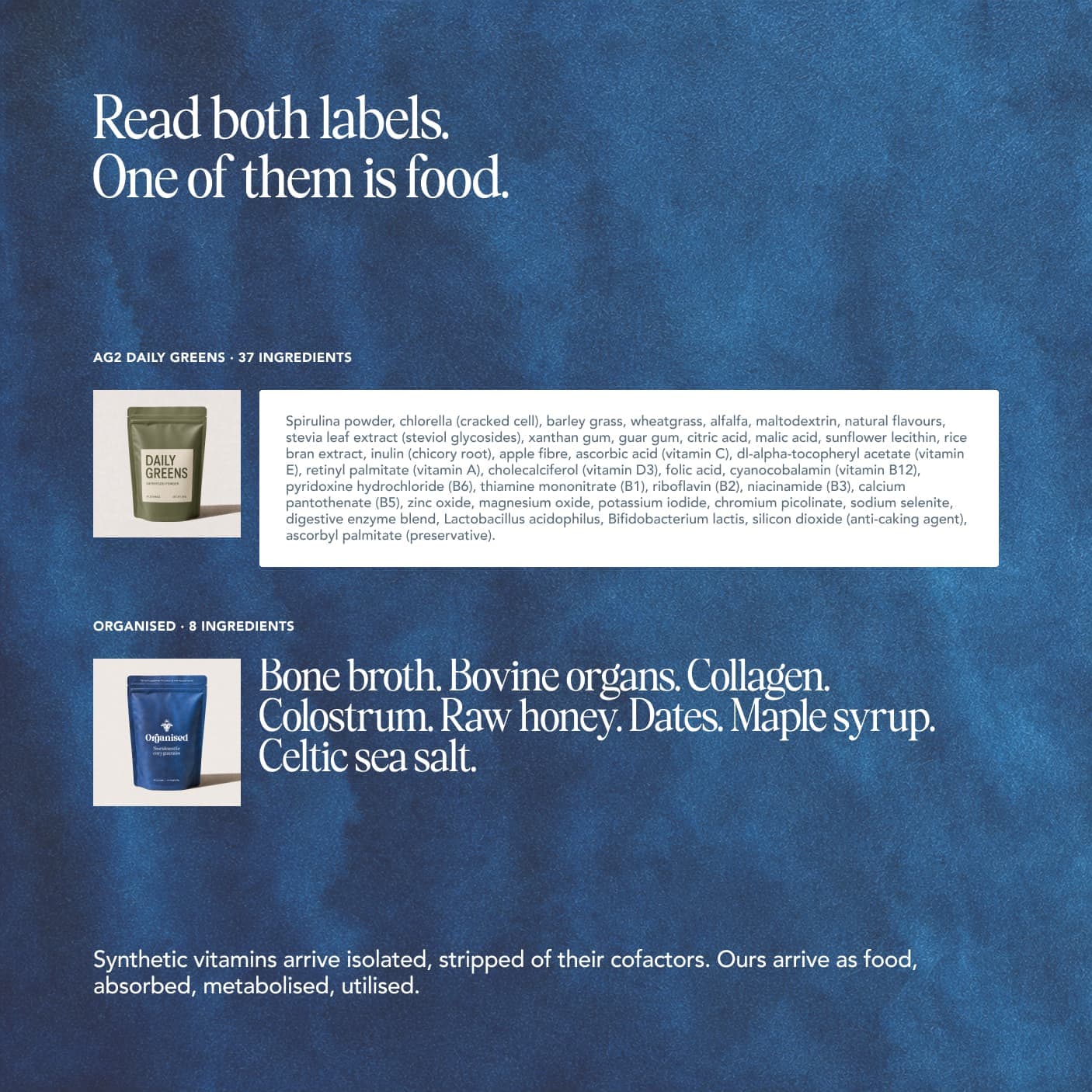
Eight real ingredients built around grass-fed beef organs, collagen and colostrum. Nothing synthetic added.
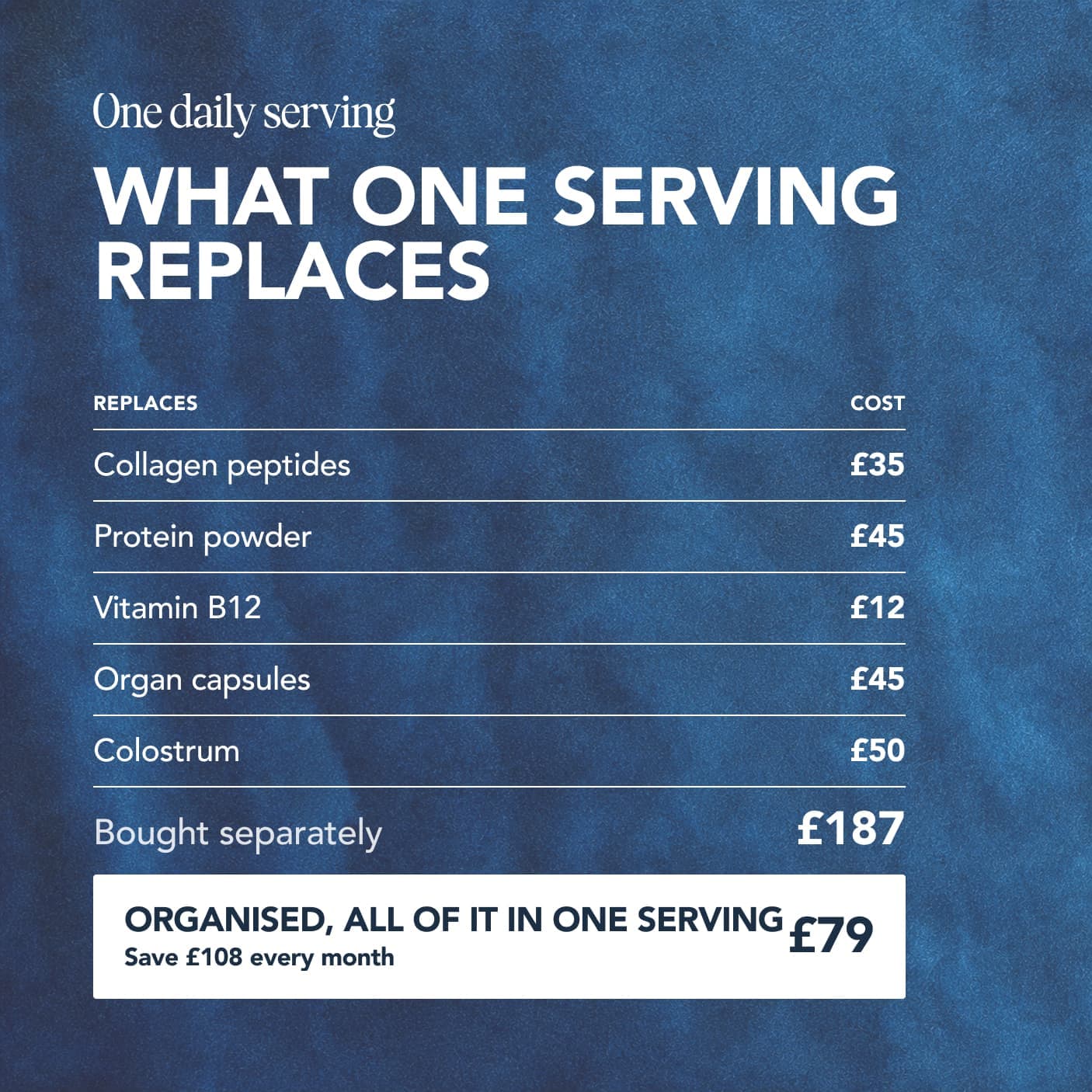
Free with your first order, worth £38. Plus £10 off the pouch with a subscription.
Free UK shipping · Made in England · 100 day money back guarantee on your first pouch · Skip, pause or cancel anytime
What actually happens when you eat liver
When you eat beef liver, retinol is absorbed into your bloodstream. Your body distributes it to cells across your entire body, including skin cells.
The retinol is converted to retinaldehyde and retinoic acid by your cells. Your skin cells use this retinoic acid to upregulate genes that increase collagen production, increase cell turnover, and increase sebaceous gland regulation.
Over weeks, this systemic change becomes visible. Your skin texture improves. Your complexion becomes more even. Fine lines soften. Pores normalise. Acne reduces. And the benefit extends across your entire body, not just your face.
You're not experiencing irritation. You're not experiencing peeling and flaking. You're not fighting your skin barrier. You're nourishing it from the inside.
Eat liver twice per week, and your retinol status is optimised. Add the other skin-supporting nutrients (zinc, copper, selenium, omega-3 fats, vitamin C) and you're giving your skin the full nutritional profile it needs to look young and healthy.
The skincare industry will never tell you this because you can't charge 100 pounds for a bottle of liver. But it's the truth.
Your skin is built from the inside. Treat it that way.
Stop spending on expensive topical retinols. Buy liver. Cook it. Eat it. Your skin will improve more than it ever did from any cream. And you'll spend a fraction of the money.
How to eat liver for skin results
You don't need to eat large quantities. A 100-gram serving twice weekly is sufficient. That's roughly 200 grams per month. A single pound of liver lasts you five weeks.
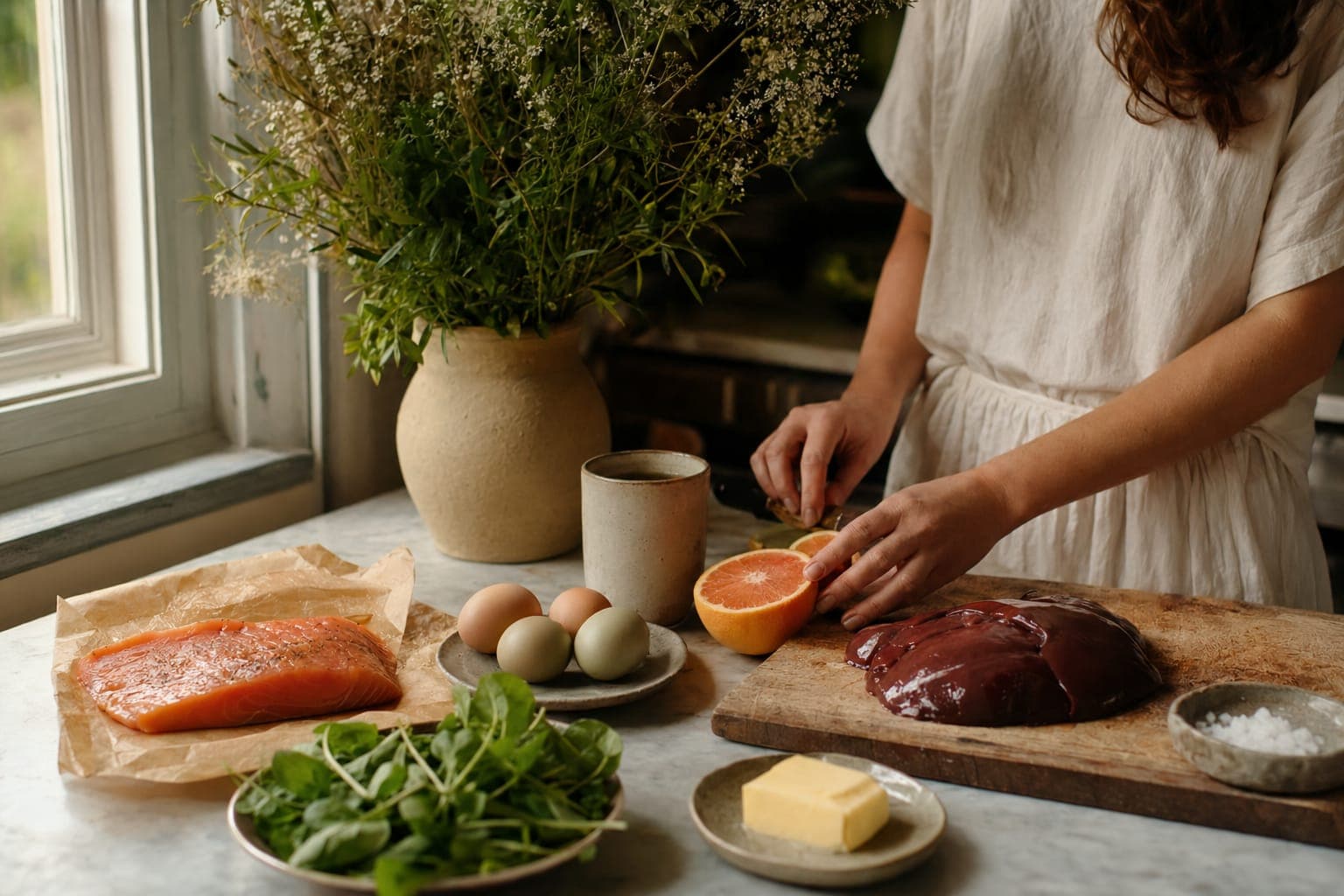
Cooking matters. Overcooked liver loses potency. Aim for a quick sear in a hot pan with butter, rare to medium-rare. Fifteen seconds per side if sliced thin. This preserves the heat-sensitive nutrients whilst making it palatable.
Flavour improvements: lemon juice, salt, freshly ground pepper. A simple sauce of mustard and butter. Pan-fry with onions. The flavour becomes more approachable with preparation. Most people who think they hate liver haven't had it cooked well.
Pair with vegetables for absorption. The retinol is fat-soluble, so consuming it with dietary fat enhances absorption. The butter you cook it in is perfect. Alternatively, serve with a salad dressed in olive oil.
Track your skin over four weeks. By week three, you should notice texture improvements. By week four, your complexion will shift noticeably. Clearer. More even. More luminous.
References
Every source below was checked on 27 August 2026. Each link was requested and read. Where a citation and its identifier disagreed, the citation was corrected to the record or the reference was deleted along with the sentence marker that pointed at it, and where the resolved paper turned out not to support the sentence, the sentence was cut back to what it does support. Borrowed authority is worse than none, because it looks like rigour.
- National Institutes of Health, Office of Dietary Supplements. Vitamin A and Carotenoids — Health Professional Fact Sheet. https://ods.od.nih.gov/factsheets/VitaminA-HealthProfessional/
- U.S. Department of Agriculture, FoodData Central. Beef, variety meats and by-products, liver, raw. https://fdc.nal.usda.gov/food-search/
Who wrote and reviewed this guide
Niall Kiddle
Author · Founder, Organised
Niall is the founder of Organised. He started the company in 2024 after fixing his own health the slow way: in 2022 he swapped a cupboard of synthetic supplements for real food, raw milk, organ meats, bone broth and honey, and felt the difference within months.
Areas of expertise: Ancestral nutrition, Organ meats, Whole-food supplementation, Gut health, Regenerative sourcing
Read Niall's full profile
Pedro Rodrigues
Reviewer · Agronomist (farming and sourcing only)
Pedro is the agronomist Organised works with on farming and sourcing. His job on the guides is to keep the science honest: he reviews what we publish about soil health, regenerative agriculture, grazing and the way food is actually produced.
Areas of expertise: Regenerative agriculture, Agronomy, Soil health, Grass-fed farming, Food sourcing
Reviewed this guide on
Read Pedro's full profileMore on skin
View all- How to Build Collagen Naturally Without Injections
- How to Feed Your Skin from the Inside Out
- A Whole Food Skincare Routine: Morning to Night
- Collagen for Anti-Ageing: What the Clinical Trials Show
- Dark Circles Under Your Eyes? It Might Be a Nutrient Deficiency
- Eczema and Nutrition: What the Research Suggests
- How to Eat for a Natural Glow (Without Products)
- How Zinc, Copper and Selenium Work Together for Clear Skin
- Psoriasis and Nutrition: What Helps and What Hinders
- Rosacea and Gut Health: Is There a Connection?
- The Foods That Age Your Skin Fastest
- Why Your Skin Looks Better When You Eat Organ Meats
Browse the guides library
All guidesKeep reading
Health goals
A Whole Food Skincare Routine: Morning to Night
Forget serums and moisturisers. Your skin's true routine happens three times a day, at the table. Here's the nutritional protocol that works.

Health goals
Eczema and Nutrition: What the Research Suggests
Eczema isn't just a skin condition. Research points to nutritional factors, gut health, and specific foods that reduce severity. Real customer stories inside.

Health goals
Endocrine Disruptors in Your Kitchen (And How to Avoid Them)
BPA, phthalates, and non-stick chemicals are hiding in your kitchen. Discover what they are, where they hide, and simple swaps that reduce your exposure.
Real food, made effortless
Start my daily blendA few ways to use it
All recipes
Organ Bolognese: The Family Dinner That Heals
Practical organ meat recipe using fresh beef liver and heart. Family-friendly bolognese that bridges supplements to whole food.
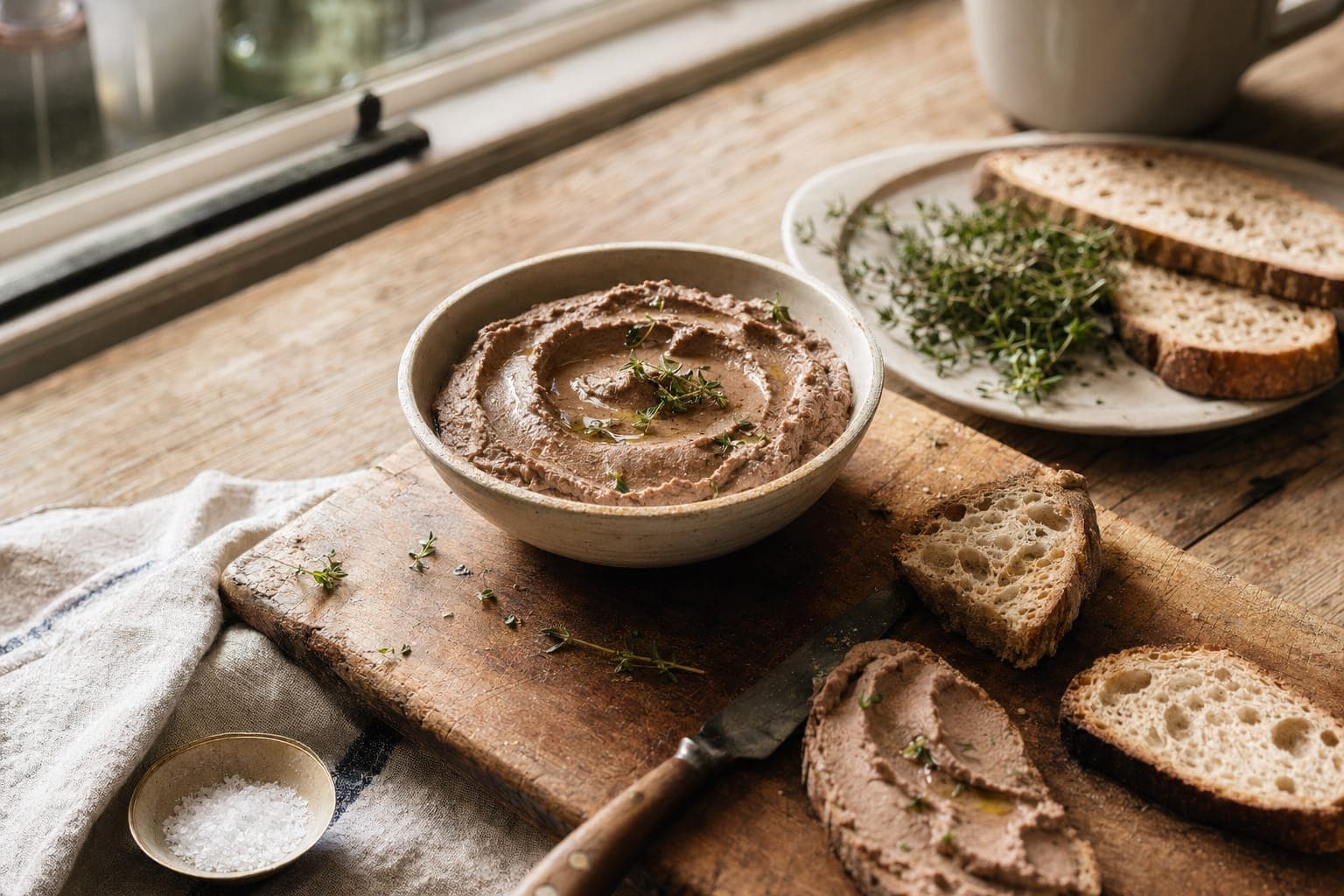
Liver Pate for Beginners: A Gentle Introduction to Organ Meats
Simple liver pate recipe to start eating organ meats. Chicken liver, butter, and herbs. Gentle introduction to nutrient-dense whole foods.
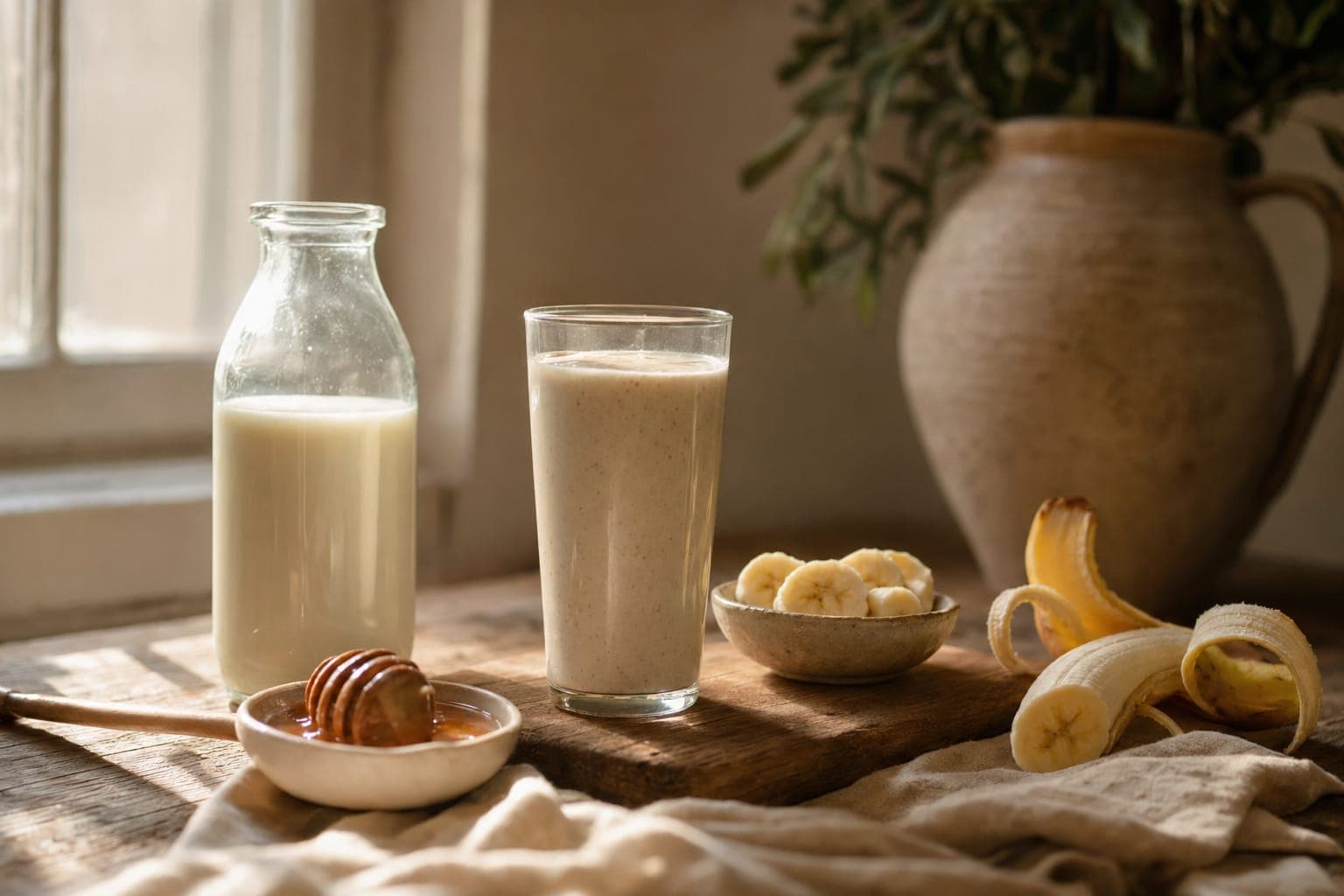
The Perfect Organised Morning Shake: Our Favourite Recipe
Our signature morning shake: Organised, raw milk, banana, honey. Simple, nourishing, and optimised for an empty stomach.


 Join over 100,000+ members
Build a better food system with us
The Organised community is thousands of people choosing real food and backing the farmers who grow it, all of us trying to leave the world a little better than we found it. If that is what you care about too, you belong here.