How to Maintain Energy All Day Without Caffeine Dependency
You know the pattern. Coffee at 7 AM gives you energy until 10. Then it fades. You have another cup. By 2 PM, you're fading again, reaching for another coffee or a sugary snack for a boost. By evening, you're wired, your sleep is fragmented, and the next morning you're tired and dependent on coffee just to function.
By Niall Kiddle, Founder, Organised

Reviewed by Pedro Rodrigues, Agronomist (farming and sourcing only) ·
6 min read · Published · Updated · 4 cited sources
Makers of the Organised Daily blend, a grass-fed beef organ supplement from regenerative UK farms

This isn't a willpower problem. It's a mitochondrial problem. And it's fixable.
The caffeine trap is a metabolic one
Caffeine doesn't create energy. It blocks adenosine receptors in your brain, preventing you from feeling tired.1 You're not actually more energetic. You're masking fatigue whilst simultaneously stressing your adrenals and spiking cortisol.
The problem compounds. Each caffeine hit suppresses adenosine signalling, so your body produces more adenosine to try to break through the blockade. You develop tolerance. You need more caffeine to get the same effect. By the time you're on your third or fourth cup, you're not drinking coffee for energy. You're drinking it to avoid withdrawal headaches and lethargy.
What you actually need isn't more caffeine. It's to fix the underlying energy production system: your mitochondria. That's where real energy comes from, not from stimulants.
Caffeine dependency is a sign that your cells aren't producing energy efficiently. Fix the cells and the dependency vanishes.
The trap deepens when you use caffeine to mask the fatigue from poor sleep, poor nutrition, or chronic stress. You're not addressing the root problem. You're just getting better at ignoring the signals your body is sending.

Your mitochondria are starving
Mitochondria are the power plants of your cells. They convert the nutrients you eat into ATP, the energy currency your body runs on. If you're chronically tired despite caffeine, it's because your mitochondria aren't functioning optimally.
CoQ10 (ubiquinone) is a coenzyme essential to the mitochondrial electron transport chain that supports ATP production.2 Your body produces CoQ10, but production declines with age and with poor nutrition. Most people eating processed food are severely deficient.
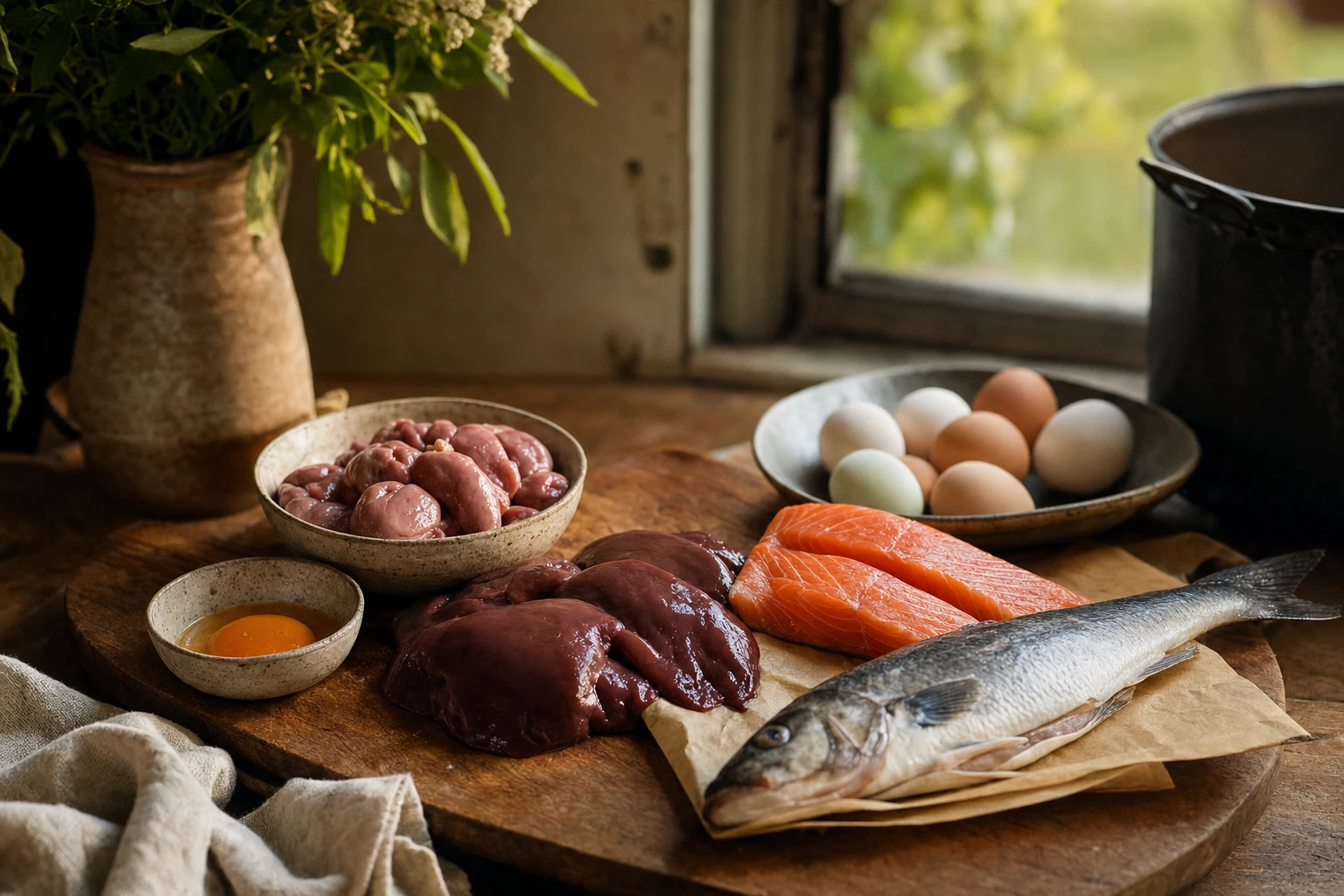
CoQ10 is found almost exclusively in animal foods: organ meats (liver, heart, kidney), grass-fed beef, wild-caught fish, and pastured eggs. If you're not eating these foods regularly, you're running low on CoQ10, and your mitochondria are operating at reduced capacity.
B vitamins are equally critical. B1, B2, B3, B5, and B12 are all essential cofactors in energy production. They're particularly concentrated in organ meats, red meat, eggs, and shellfish. The modern processed food diet is chronically B vitamin deficient.
Sustained energy comes from feeding your mitochondria the raw materials they need: CoQ10, B vitamins, iron, magnesium, and protein. These are found almost exclusively in animal foods.
Carnitine is essential for transporting long-chain fatty acids into mitochondria for energy production, and is most abundant in red meat.4 Vegetarians and vegans show markers of carnitine deficiency, which manifests as chronic fatigue and exercise intolerance.
Why breakfast determines your whole day
Your first meal sets your metabolic tone for the entire day. If you eat carbohydrates alone (toast, granola, juice, pastries), your blood sugar spikes, insulin shoots up, and your body goes into storage mode. Energy crashes within a couple of hours.
If you eat protein and fat with your carbohydrates (or just protein and fat, with no refined carbs), blood sugar rises gradually, insulin response is modest, and your body can access stored fat for energy when needed. You stay energetic and stable.
The difference between a person who crashes at 3 PM and someone who sustains energy all day is often just breakfast. Eggs, liver, meat, full-fat dairy, or fish with vegetables, herbs, and good fat. This combination provides protein, B vitamins, minerals, and a slow, steady glucose release.
If you skip breakfast or have a carbohydrate-heavy breakfast, you've already committed yourself to the caffeine treadmill. Your 3 PM energy crash was locked in at 7 AM.
Most people eating cereal, granola, or toast for breakfast are experiencing a blood sugar spike within 30 minutes, followed by a crash within 90 minutes. The body then signals for more carbs to restore blood sugar. This is why people who eat carb-heavy breakfasts are hungry again by 10 AM despite having eaten plenty of calories.

Get health guides like this, free
Two short reads a week on eating for energy, gut health, skin, sleep and more.
By signing up you agree to receive emails from us. No spam, unsubscribe anytime.
The B vitamins your energy runs on
B vitamins are water-soluble, meaning your body doesn't store them. You need them daily. They're essential for converting food into ATP, and they're critical for neurotransmitter production (which affects mood and mental energy as much as physical energy).
B1 (thiamine) is needed for glucose metabolism. B2 (riboflavin) is essential for the electron transport chain that powers ATP synthesis. B3 (niacin) is a coenzyme in energy metabolism. B5 (pantothenic acid) is essential for acetyl-CoA synthesis. B12 is needed for DNA synthesis and neurological function.3
These aren't optional. They're rate-limiting factors in energy production. If you're deficient in any of them, you cannot produce energy efficiently, no matter how much caffeine you drink. And most people on processed food diets are deficient in several of them.
Organ meats provide all B vitamins in meaningful amounts. So do red meat, eggs, and shellfish. Whole grains and legumes provide some B vitamins, but they also contain phytic acid, which binds and inhibits mineral absorption, offsetting the benefit.
B vitamins aren't luxuries or supplements. They're the infrastructure your cells need to produce energy. Without them, no amount of caffeine will help.
The problem deepens with processed food because refined grains have had B vitamins removed. Manufacturers add synthetic B vitamins back in (enrichment), but synthetic forms have poor bioavailability compared to natural sources. You're getting the label benefit without the actual cellular benefit.

Blood sugar is everything
Stable blood sugar is the foundation of sustained energy. When blood sugar swings wildly, so does energy and mood. Your body must choose between using glucose for energy now or storing it for later. Wild swings push it toward storage mode, which means fatigue and cravings.
Low glycaemic index eating (meat, fish, vegetables, whole grains without refined carbs, legumes, healthy fats) keeps glucose stable. Stable glucose means stable insulin, stable energy, and stable mood. The person eating this way doesn't need caffeine, because their energy is stable all day.
Refined carbohydrates, sugar, and processed foods cause rapid spikes followed by crashes. Each crash triggers the body to seek quick energy, which leads to more refined carbs, more spikes, more crashes. You're locked into an energy crisis.
Energy crashes aren't inevitable. They're the result of eating foods that crash your blood sugar. Eat stable, and your energy becomes stable.
This is why adding fat and protein to carbohydrates changes everything. A banana alone spikes blood sugar. A banana with almond butter and eggs stabilises it. The same carbs, but the presence of fat and protein slows the glucose release into the bloodstream, preventing the spike and the subsequent crash.

1 of 9
Daily blend
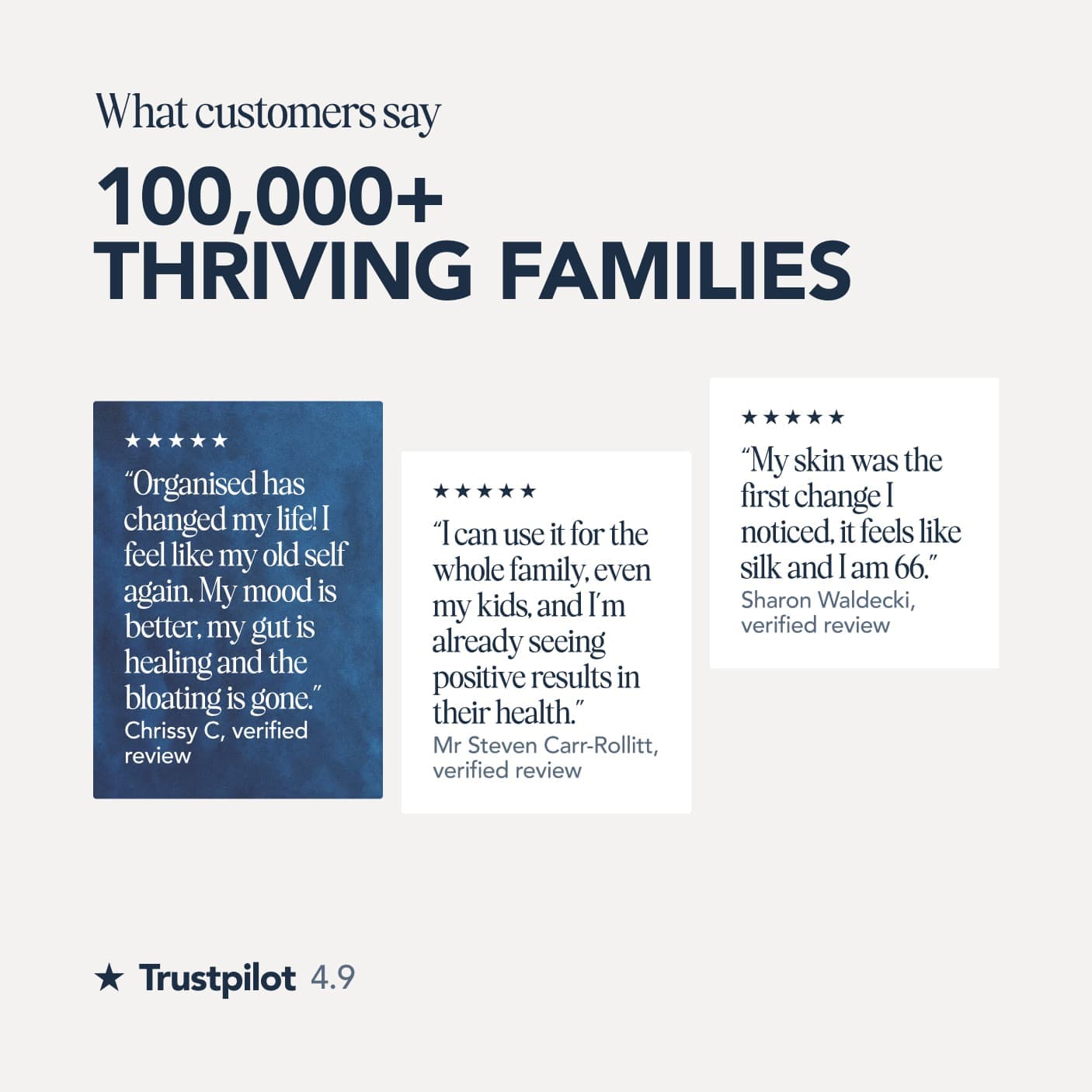
100,000+ thriving families4.9 on Trustpilot
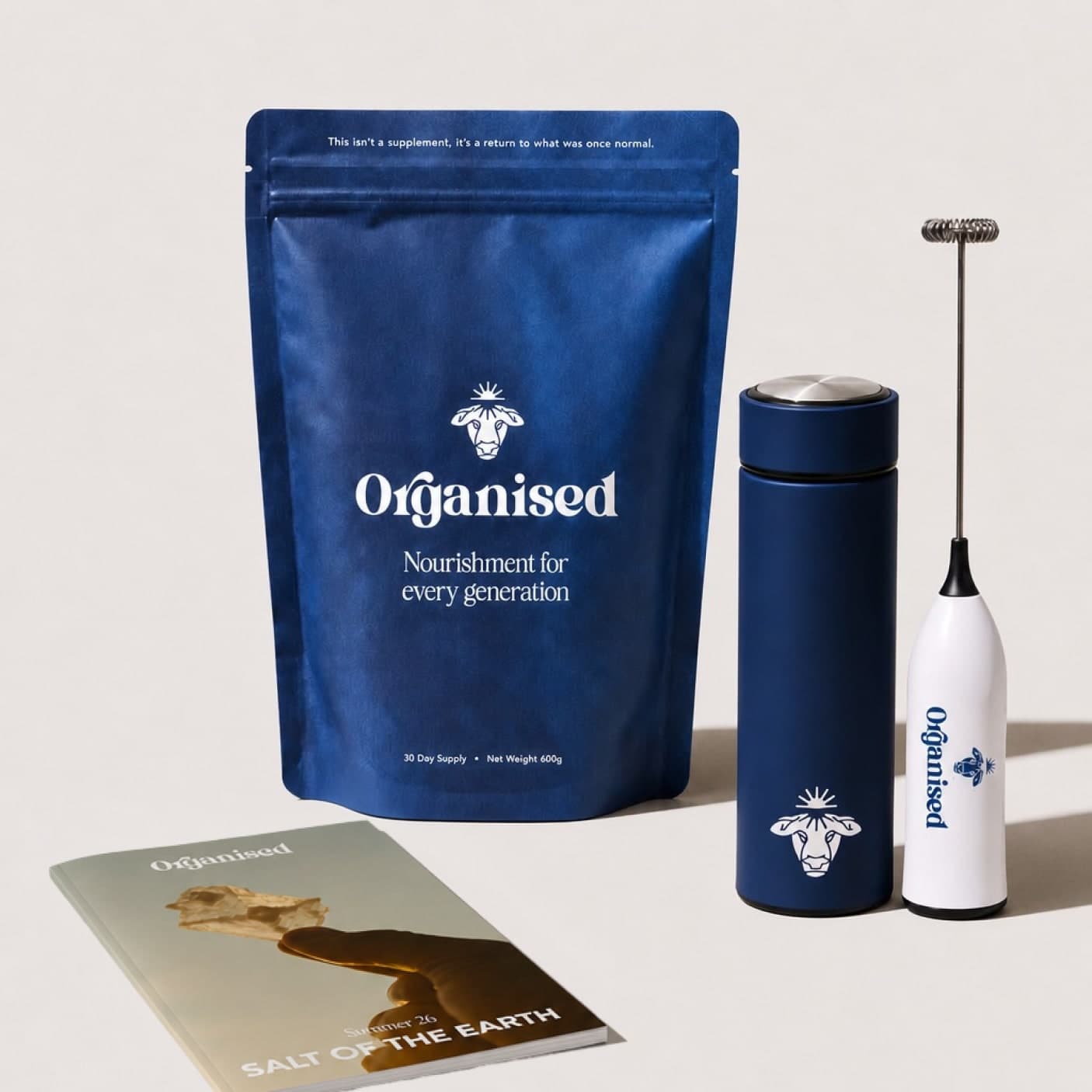
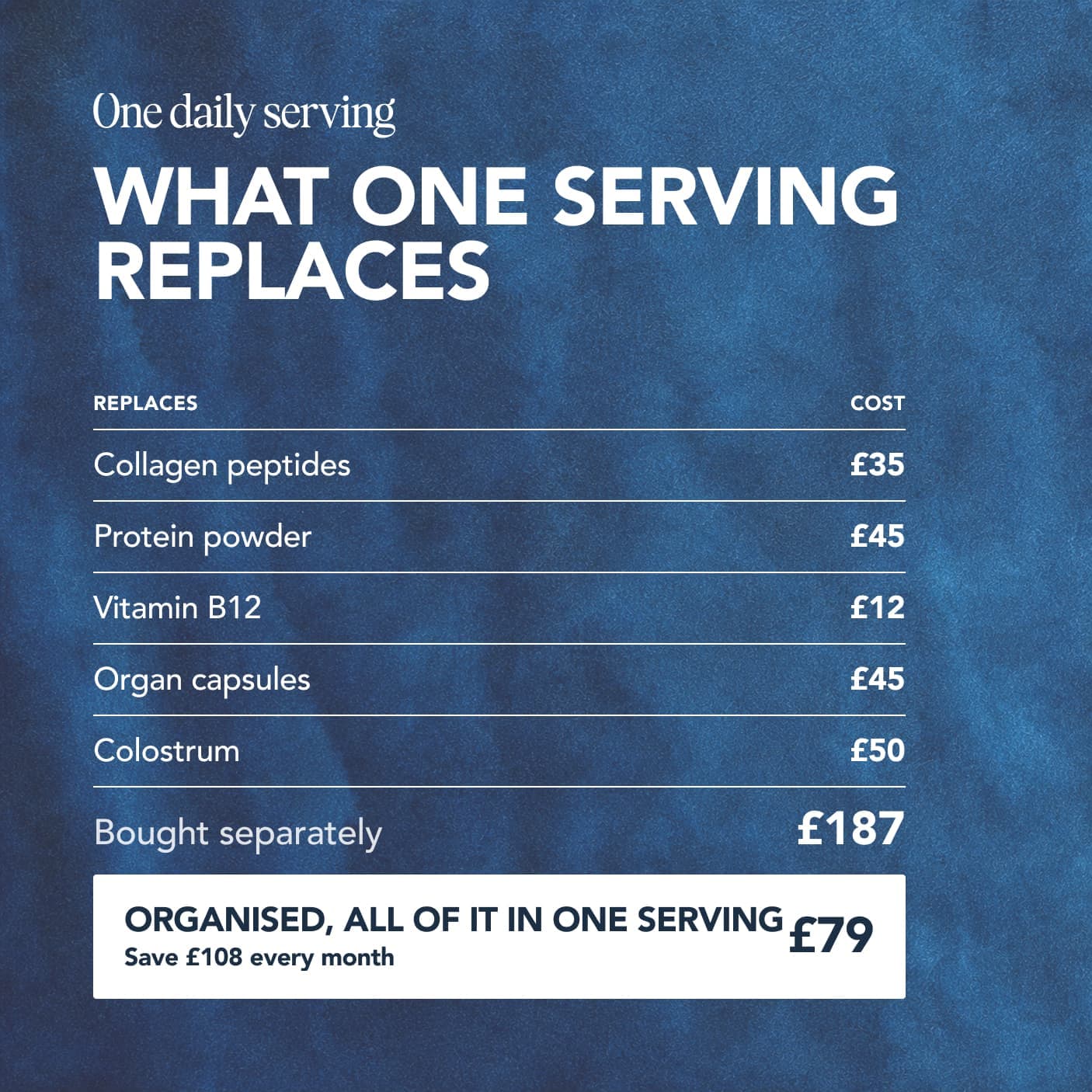
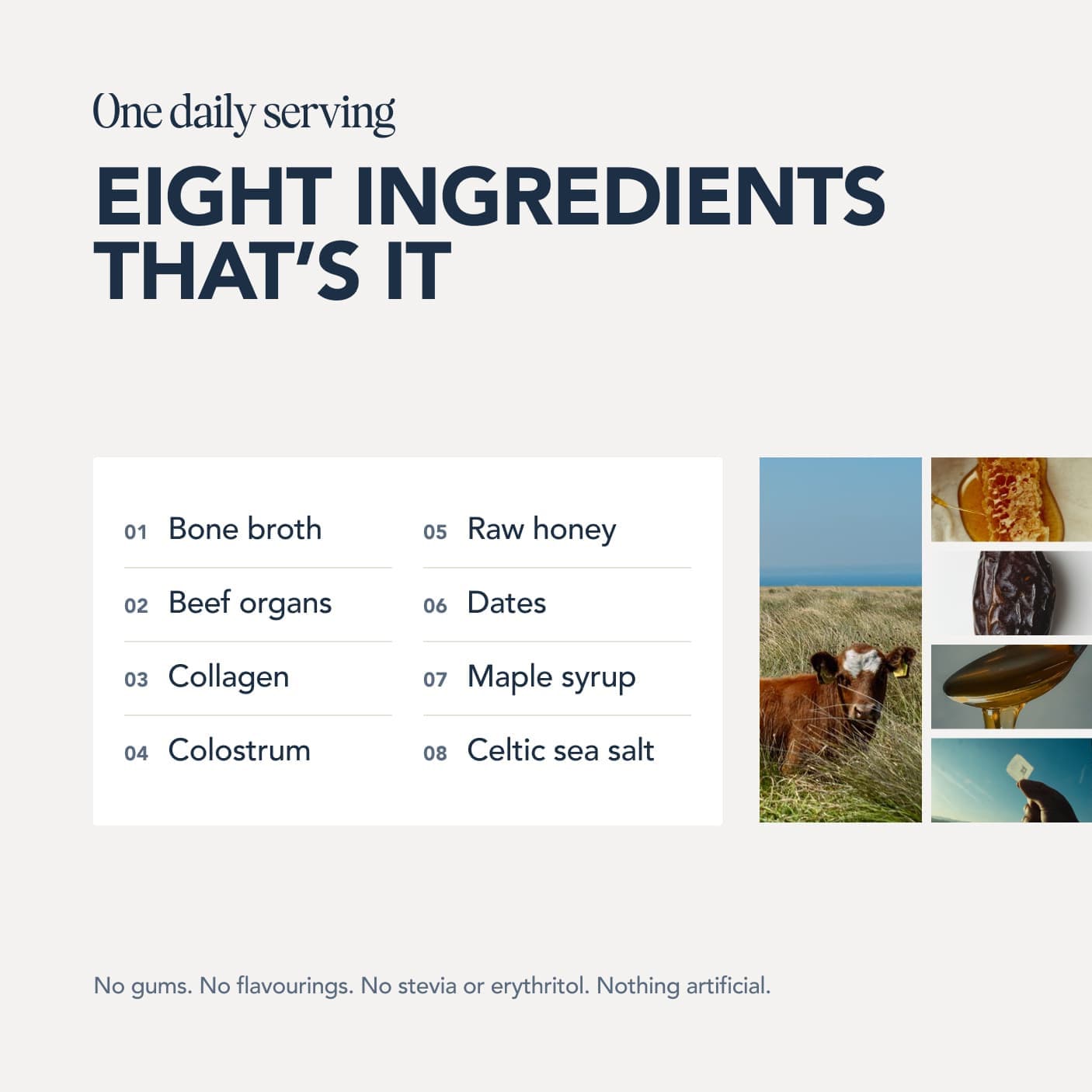
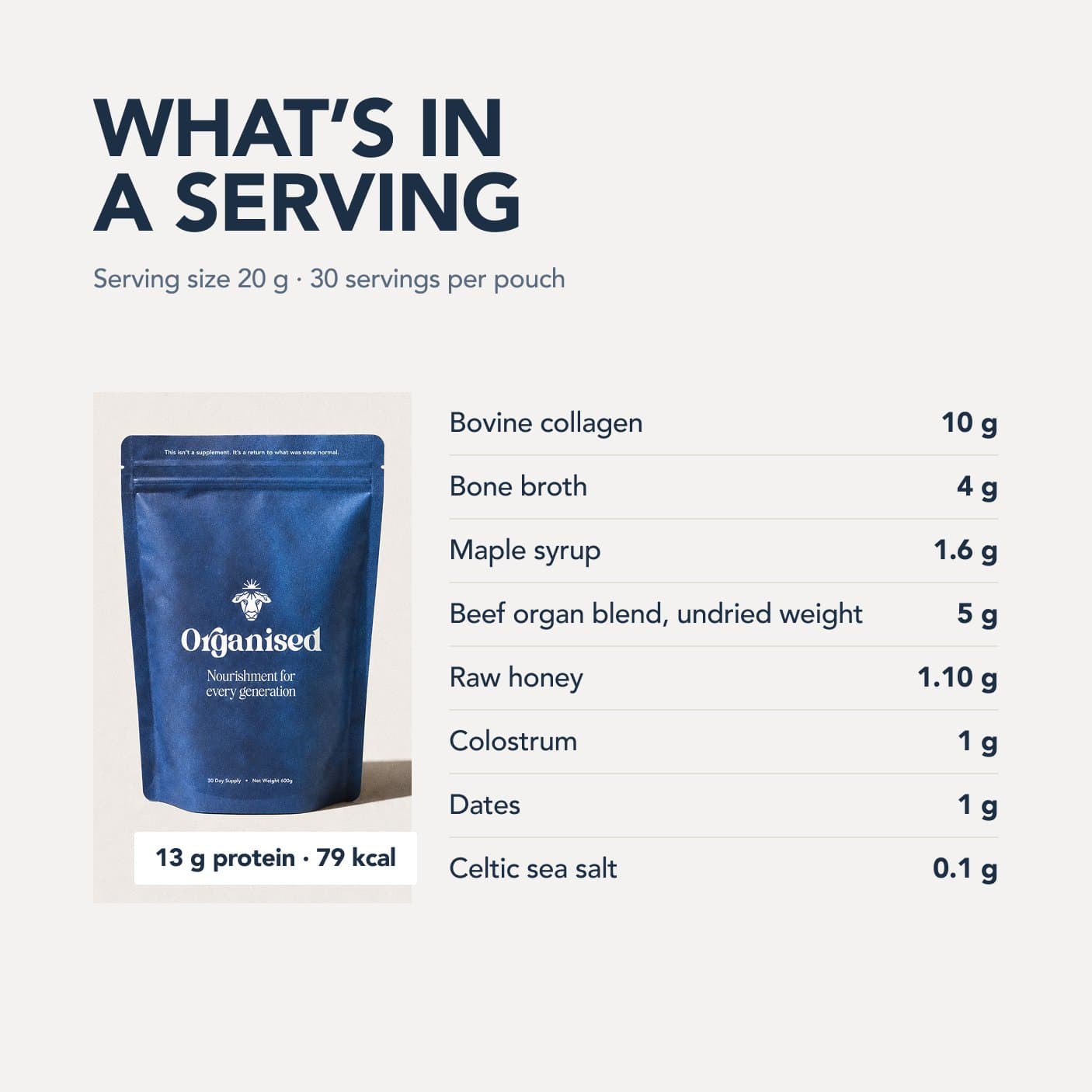
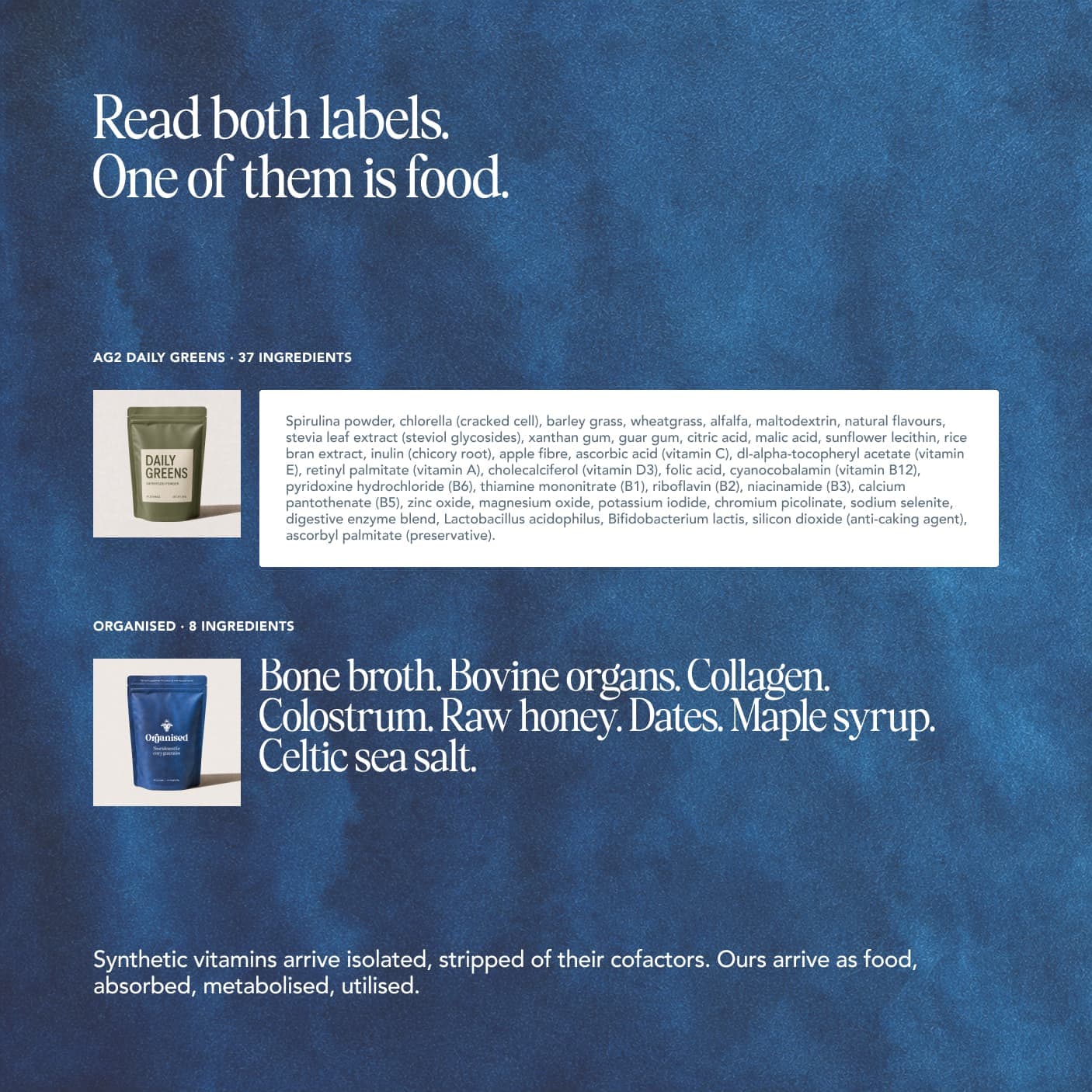
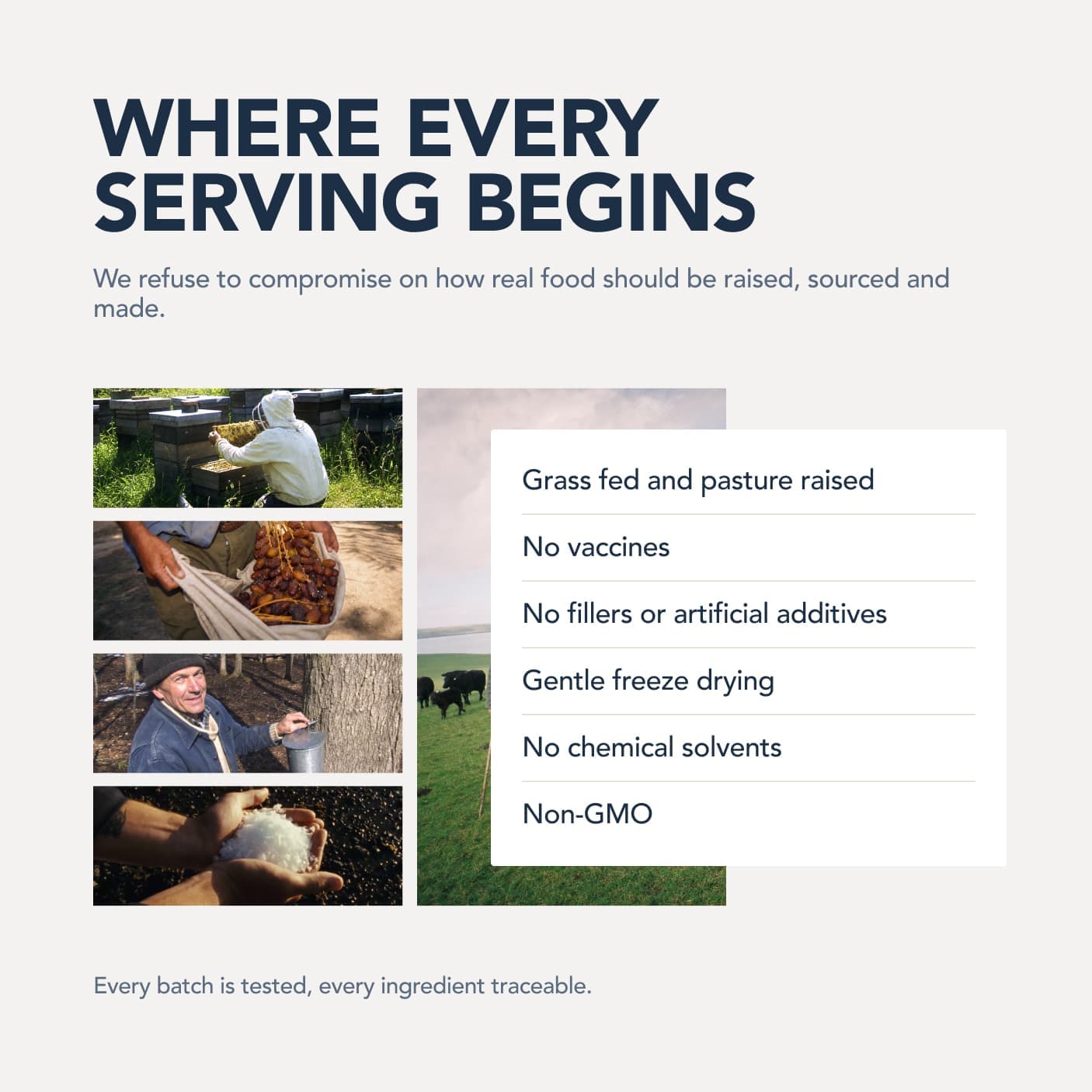
Eight real ingredients built around grass-fed beef organs, collagen and colostrum. Nothing synthetic added.
Free with your first order, worth £38. Plus £10 off the pouch with a subscription.
Free UK shipping · Made in England · 100 day money back guarantee on your first pouch · Skip, pause or cancel anytime
How to exit the caffeine spiral
The protocol is straightforward: change breakfast, stabilise blood sugar, feed your mitochondria, and caffeine dependency evaporates. Start with a protein and fat-rich breakfast: eggs, meat, fish, or dairy with vegetables and good fat. Skip refined carbs entirely for a week and observe your energy levels.
Within days, your afternoon energy crash should disappear. Within a week, you'll likely find you don't need caffeine at all. Your mitochondria, given the resources they need, start producing energy again. Adenosine signalling normalises. You don't need to block the fatigue signal because you're not actually fatigued.
Some people choose to continue with coffee, but now as a choice, not a dependency. One cup in the morning with food. No afternoon crashes, no evening wired feeling, no morning withdrawal. Coffee becomes a beverage you enjoy, not a drug you need.
The transformation usually takes 7-14 days. That's how quickly mitochondria respond when given the resources they need. If you've been on the caffeine treadmill for years, reclaiming sustained energy is one of the most powerful changes you can make.
References
Every source below was checked on 27 August 2026. Each PubMed, PMC and DOI identifier was resolved against NCBI or Crossref, and what it opens is printed under the citation, so you can see the link goes where the citation says without leaving the page. Where a citation and its identifier disagreed, the citation was corrected to the record or the reference was deleted along with the sentence marker that pointed at it, and where the resolved paper turned out not to support the sentence, the sentence was cut back to what it does support. Borrowed authority is worse than none, because it looks like rigour.
- Ribeiro JA, Sebastião AM. Caffeine and adenosine. J Alzheimers Dis. 2010;20 Suppl 1:S3-15. PMID 20164566Checked 27 August 2026: PMID 20164566 opens Ribeiro JA, Sebastião AM, Caffeine and adenosine. J Alzheimers Dis 2010;20 Suppl 1:S3-15. PubMed indexes it as: Review.
- Hernández-Camacho JD, et al. Coenzyme Q10 Supplementation in Aging and Disease. Front Physiol. 2018;9:44. PMC5807419Checked 27 August 2026: PMC5807419 opens Hernández-Camacho JD, Bernier M, López-Lluch G et al, Coenzyme Q(10) Supplementation in Aging and Disease. Front Physiol 2018;9:44. PubMed indexes it as: Review.
- National Institutes of Health, Office of Dietary Supplements. Vitamin B12 - Health Professional Fact Sheet. ods.od.nih.gov
- National Institutes of Health, Office of Dietary Supplements. Carnitine - Health Professional Fact Sheet. ods.od.nih.gov
Who wrote and reviewed this guide
Niall Kiddle
Author · Founder, Organised
Niall is the founder of Organised. He started the company in 2024 after fixing his own health the slow way: in 2022 he swapped a cupboard of synthetic supplements for real food, raw milk, organ meats, bone broth and honey, and felt the difference within months.
Areas of expertise: Ancestral nutrition, Organ meats, Whole-food supplementation, Gut health, Regenerative sourcing
Read Niall's full profile
Pedro Rodrigues
Reviewer · Agronomist (farming and sourcing only)
Pedro is the agronomist Organised works with on farming and sourcing. His job on the guides is to keep the science honest: he reviews what we publish about soil health, regenerative agriculture, grazing and the way food is actually produced.
Areas of expertise: Regenerative agriculture, Agronomy, Soil health, Grass-fed farming, Food sourcing
Reviewed this guide on
Read Pedro's full profileMore on energy
View all- Why You're Always Tired (And What to Eat About It)
- Adrenal Fatigue: Is It Real and What Can You Do About It?
- Always Tired? What Reddit Says to Eat (and What Actually Works)
- B12 Deficiency: Signs, Causes and the Fastest Way to Fix It
- Chronic Fatigue and Nutrient Deficiency: What Blood Tests to Ask For
- How Your Thyroid Affects Your Energy Levels
- Iron Deficiency: Why It's So Common and How Organs Can Help
- Metabolism Maxxing: How to Support Your Metabolic Rate with Real Food
- The Desk Worker's Guide to Staying Strong and Energised
- What Does Your Afternoon Slump Actually Mean?
- Why Intermittent Fasting Might Be Tanking Your Energy
Browse the guides library
All guidesKeep reading

Health goals
How Long Should You Prepare Your Body Before Trying to Conceive?
Preconception nutrition matters more than most people realise. A 3 to 6-month prep window allows sperm and egg quality to optimise.

Health goals
Why You're Always Tired (And What to Eat About It)
Tired all the time? Explore the nutrition behind low energy and how whole foods help rebuild stamina at the cellular level. Practical, food-first guidance.

Health goals
How to Stop Hair Shedding with Ancestral Nutrition
Hair shedding is a sign of nutritional deficiency. Learn the minerals that stop hair loss and the protocol that reverses it.
Real food, made effortless
Start my daily blendA few ways to use it
All recipes
Matcha Latte Gummies with Collagen and Gelatine
Make visually stunning matcha latte gummies infused with collagen and gelatine. Simple recipe for gut-healing sweets you'll actually want to eat.

Raw Milk Hot Chocolate with Collagen
A nourishing evening hot chocolate made with raw milk, grass-fed collagen, raw cacao, and honey. A nighttime ritual that supports sleep and gut health.

Bone Broth from Scratch: A Step-by-Step Guide
Step-by-step guide to making bone broth at home. Stovetop, slow cooker, and Instant Pot methods. Rich in collagen and gut-healing minerals.


 Join over 100,000+ members
Build a better food system with us
The Organised community is thousands of people choosing real food and backing the farmers who grow it, all of us trying to leave the world a little better than we found it. If that is what you care about too, you belong here.