How to Fuel a Workout Without Synthetic Supplements
You've been sold the idea that your workout needs to be supported by powders, drinks, and pills. Energy drinks before, protein powder after, amino acids during. But humans have been training and building strength for millennia without any of that. Your body doesn't need synthetic fuel. It needs real food, properly timed.
By Niall Kiddle, Founder, Organised

Reviewed by Pedro Rodrigues, Agronomist (farming and sourcing only) ·
6 min read · Published · Updated · 3 cited sources
Makers of the Organised Daily blend, a grass-fed beef organ supplement from regenerative UK farms


Why synthetic supplements miss the mark
The supplement industry exists because it's profitable, not because your muscles require synthetic amino acids or pre-formulated energy blends. The average pre-workout drink contains caffeine, taurine, citric acid, and various stimulants, none of which do anything your body can't get from real food.
The real problem with synthetic fuelling is that it's incomplete. A serving of dates gives you glucose, fibre, potassium, magnesium, and a dozen micronutrients your body recognises. A sports drink gives you glucose, fructose, some sodium, and a chemical you can't pronounce. Which do you think your body handles better?
Your digestive system evolved to extract energy and nutrients from whole food. Feed it whole food and it performs optimally. Feed it synthetic approximations and you're asking your gut to process something your system doesn't have a clear code for.
Your body is spectacularly efficient at extracting energy from real food. Stop paying for the simplified version.

Pre-workout fuelling with real food
The goal of pre-workout nutrition is simple: deliver glucose to your muscles without creating digestive stress. Dates do this perfectly. A medjool date contains roughly 16 grams of carbohydrate, fibre, and fructose that hits your bloodstream quickly.1 Eat three or four dates 20 to 30 minutes before training and your blood sugar rises smoothly. Your muscles have energy. No crash, no artificial ingredients.
If you prefer something sweet with more texture, raw honey mixed with sea salt works equally well. Two tablespoons of raw honey contains roughly 32 grams of carbohydrate and electrolytes from the salt, which improves absorption. Stir it into hot water and drink it before your session.
Some people prefer a small meal. A rice cake with honey and a pinch of sea salt, or a banana with a bit of butter. The timing matters more than the specific choice. You want carbohydrates hitting your system 15 to 30 minutes before you start. Not immediately before (where they might cause cramping) and not two hours before (where they'll be fully metabolised and you'll feel depleted).
If you're training within an hour of eating a full meal, pre-workout fuel isn't necessary. Your bloodstream already has glucose. If you're training after a three-hour fast, dates or honey are all you need.
Dates and honey are pre-workout supplements that happen to come from nature. That's literally all you need before training.

Post-workout recovery with whole foods
Post-workout, your muscles have depleted glucose and are primed to absorb amino acids. The window is real, though wider than supplement marketing suggests.2 Within a couple of hours of training, your body is in active repair mode.
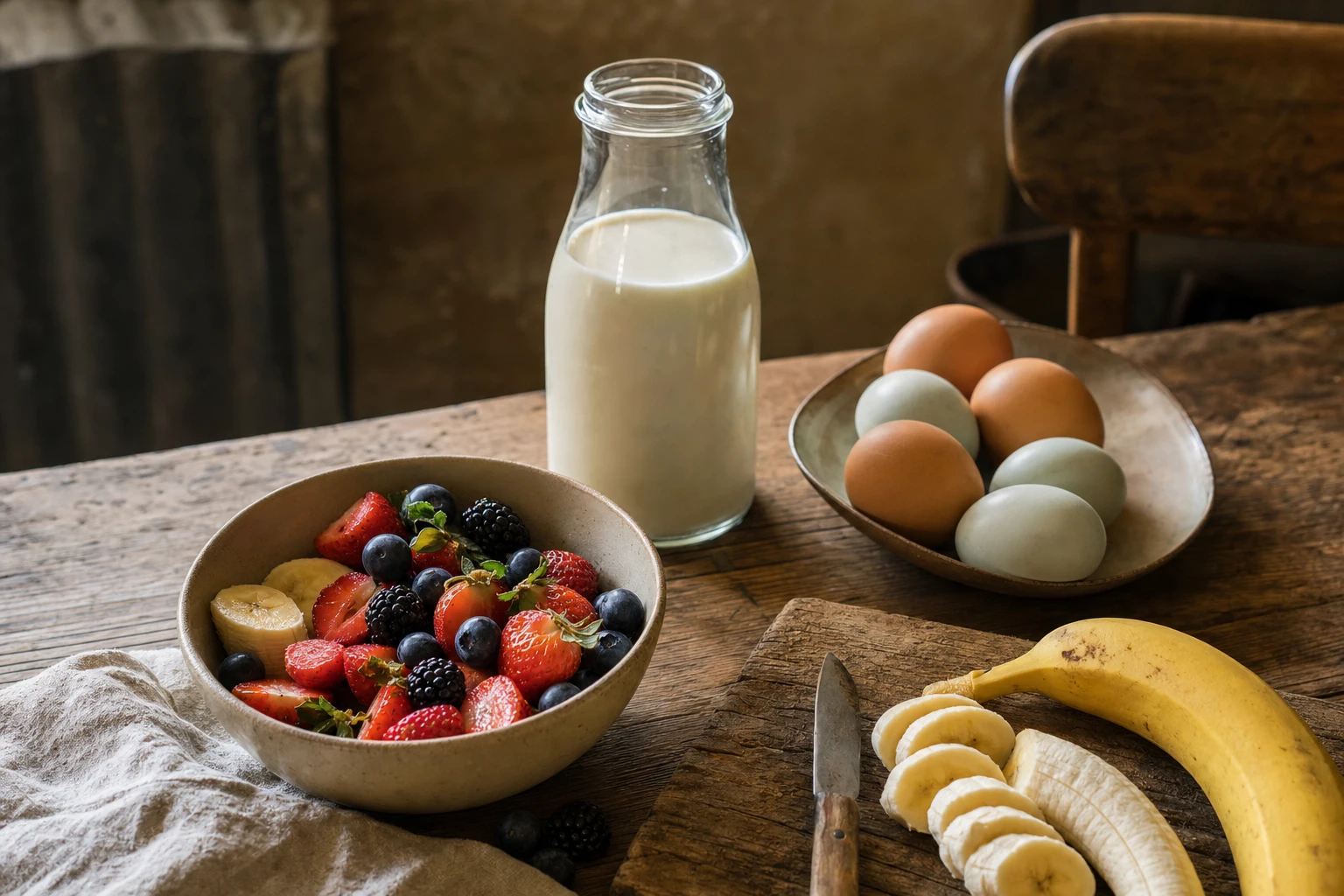
The single best post-workout recovery food is raw milk. If you have access to it (increasingly available in UK farmers' markets and farms), raw milk contains complete protein, lactose for glucose replenishment, fat for hormone support, and enzymes that aid absorption. One glass of raw milk has roughly 8 grams of protein, 12 grams of carbohydrate, and micronutrients intact.
If raw milk isn't available, pasteurised whole milk works nearly as well, followed by full-fat yoghurt. The key is that the fat and carbohydrates matter as much as the protein. A protein shake isolates protein and removes everything else. Real milk provides the ecosystem your body recognises.
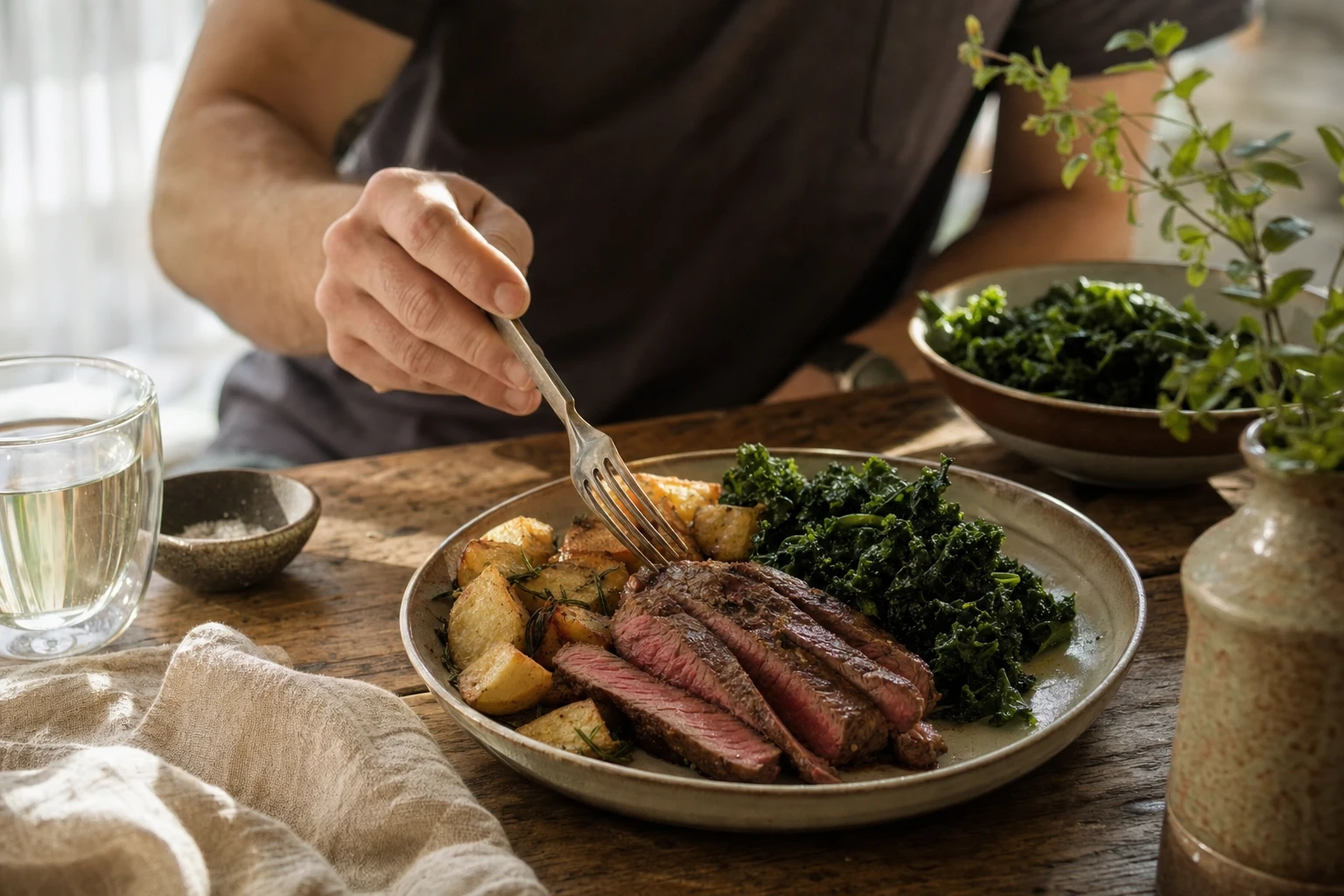
Follow that with a proper meal within 90 minutes. Eggs with white rice, or steak with potatoes and salt. Real food that combines protein, carbohydrate, and fat. That's your recovery protocol.
A glass of raw milk and a meal built on real protein, carbs, and fat beats any post-workout supplement formula.
The practical protocol
Here's what actually works for training on whole foods.
- Before training: If you're hungry, eat three to four medjool dates or a rice cake with honey and salt 20 to 30 minutes prior. If you've eaten within the last hour, skip it.
- During training: Water with a pinch of sea salt if you're training longer than 60 minutes. Nothing else.
- Immediately after: One glass of whole milk (raw or pasteurised) within 20 minutes.
- Post-workout meal: A complete meal (protein, carbs, fat) within 90 minutes. Red meat with potatoes, fish with rice, eggs with toast.
That's the entire protocol. No powders, no special timing beyond basic common sense, no complexity.
Get health guides like this, free
Two short reads a week on eating for energy, gut health, skin, sleep and more.
By signing up you agree to receive emails from us. No spam, unsubscribe anytime.
When simplicity outperforms complexity
The fitness industry makes its money on complexity. If you believed that pre-workout fuel was as simple as dates, post-workout recovery was as simple as a glass of milk, and overall nutrition was as simple as eating whole food, where would the supplement market be?
But the science is clear. When all variables are controlled, complex supplement regimens don't outperform thoughtful whole food fuelling. They're parallel paths. One costs nothing and works. The other costs hundreds monthly and works marginally better at best.
Your ancestors built strength and endurance on honey, bread, meat, and milk. You can too.
Carbohydrate timing for different workout types
The type of training you are doing shapes your carbohydrate needs. If you are doing short, intense resistance training (30 to 45 minutes), you probably don't need dedicated pre-workout fuel beyond what you have eaten that day. Your muscles can access the glucose your body produced from your last meal.
If you are doing longer aerobic work (running for an hour, cycling, rowing), your glycogen stores deplete. Pre-workout fuel becomes more important. Dates or honey becomes essential fuel, not optional. Three to four dates 20 to 30 minutes before a long effort is the difference between strong performance and hitting the wall.
Post-workout carbohydrates matter proportionally to how hard you trained. After a 30-minute weight session, you don't need extra carbohydrates beyond your regular meals. Your muscle glycogen depletion was modest. After a long run or intense conditioning session, carbohydrates immediately post-workout help your muscles recover faster. Milk provides these carbohydrates naturally, alongside protein and fat.
Your fuel needs vary with your training. Listen to your body. If you are hungry before training, eat. If you are depleted after, drink milk and eat a meal.
The key insight is that your body will tell you what it needs if you listen. Hunger before training means you need fuel. Extreme fatigue after training means your carbohydrate stores depleted. The synthetic supplement industry has convinced you that these signals need complicated solutions. They do not. They need real food and attention.


1 of 9
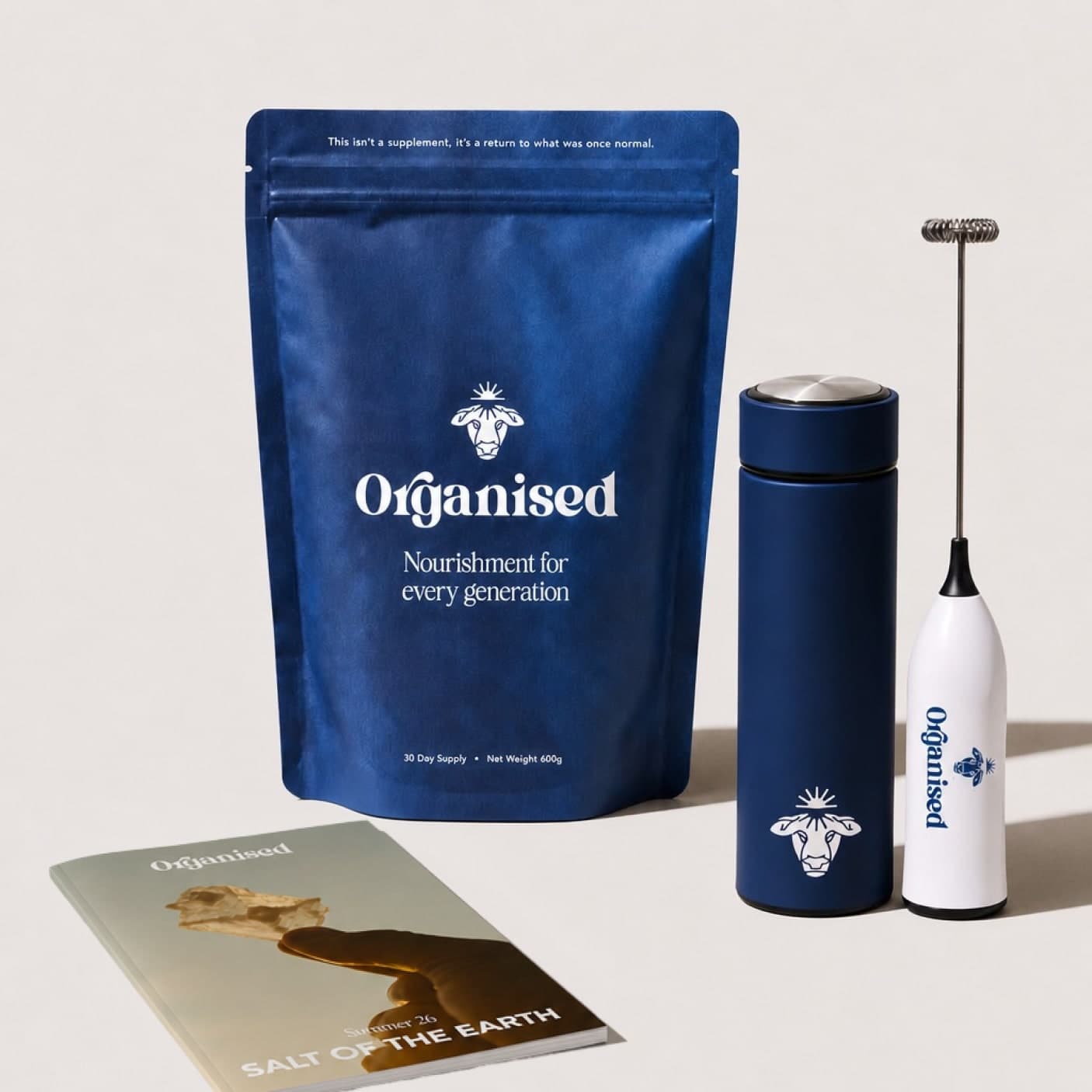
Daily blend
100,000+ thriving families4.9 on Trustpilot
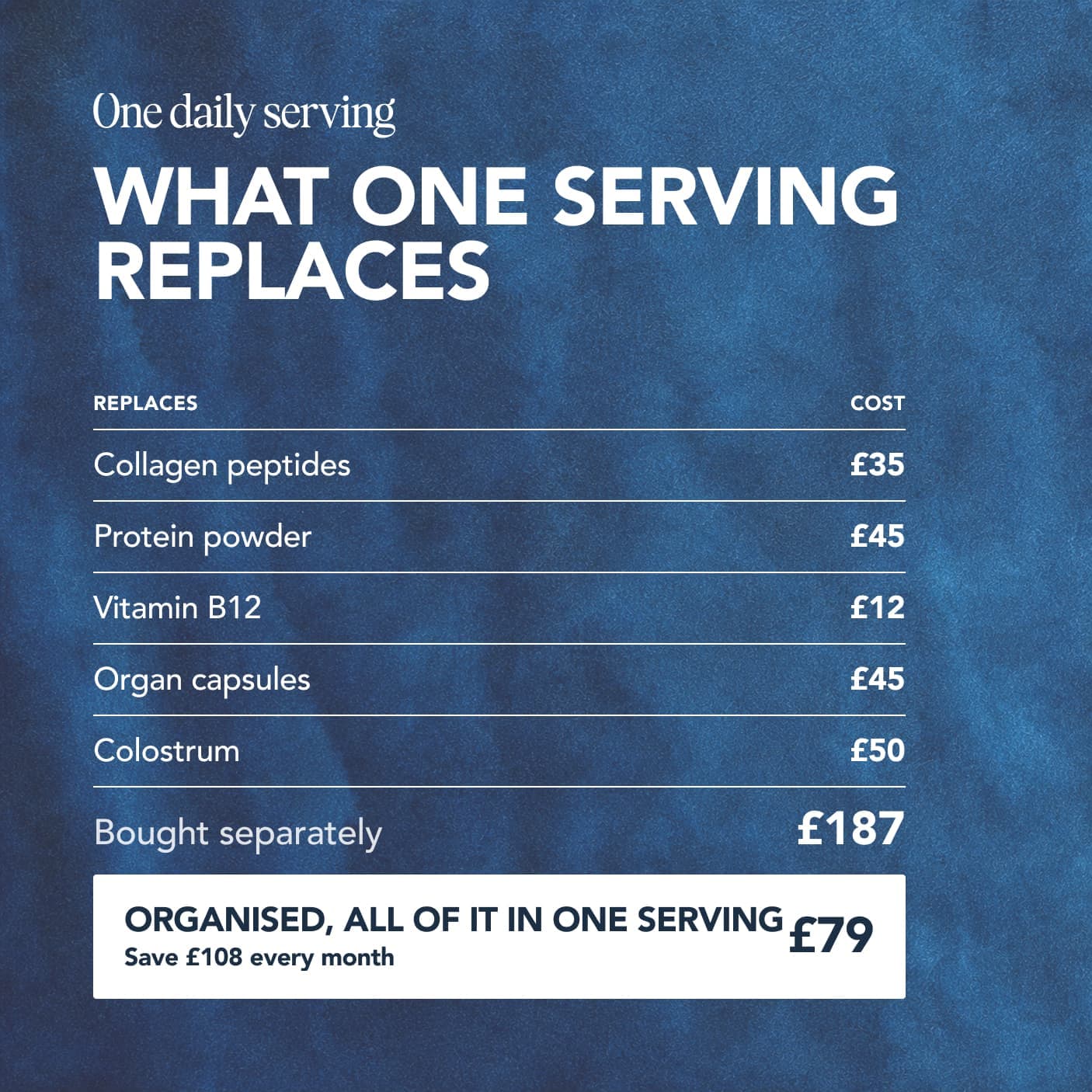
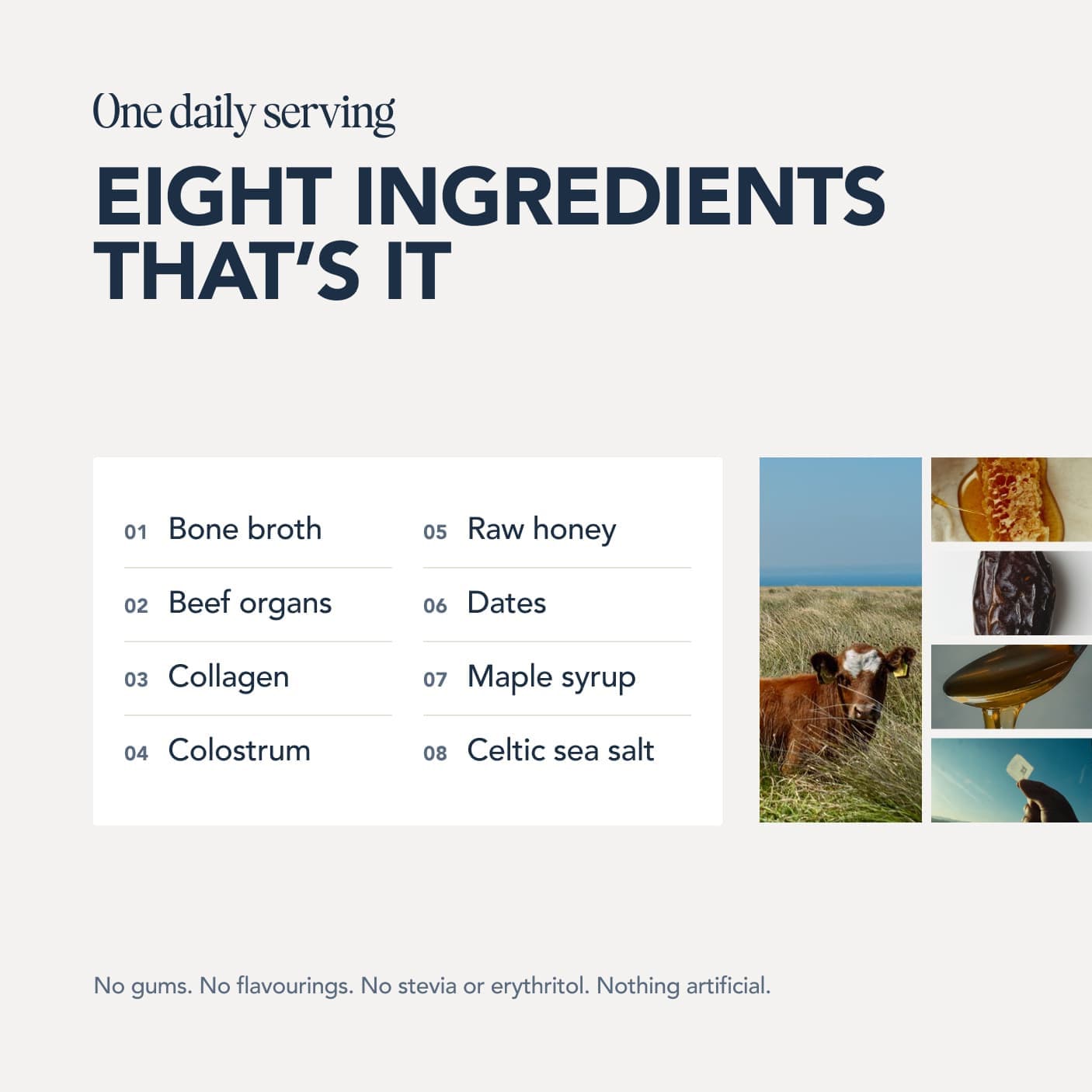
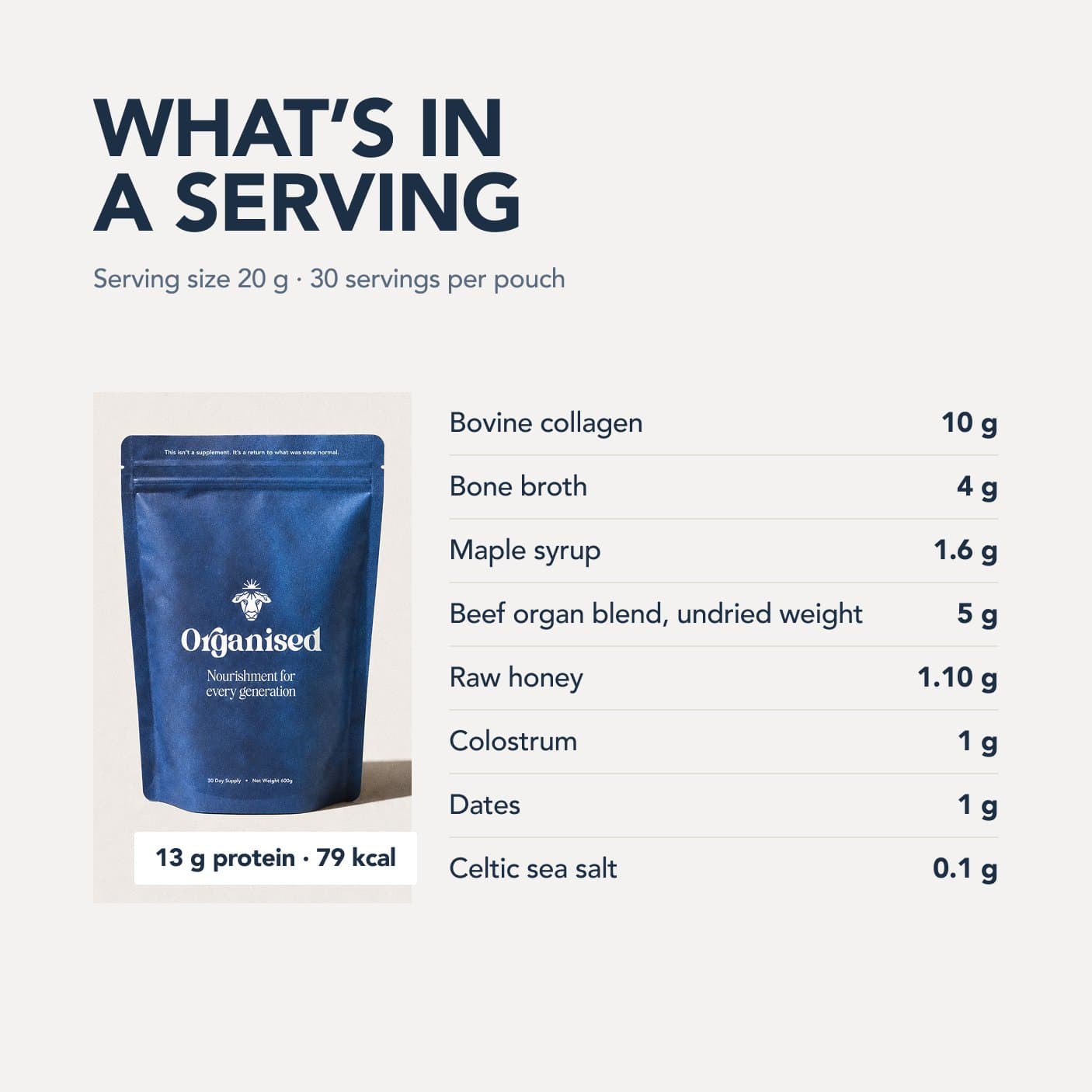
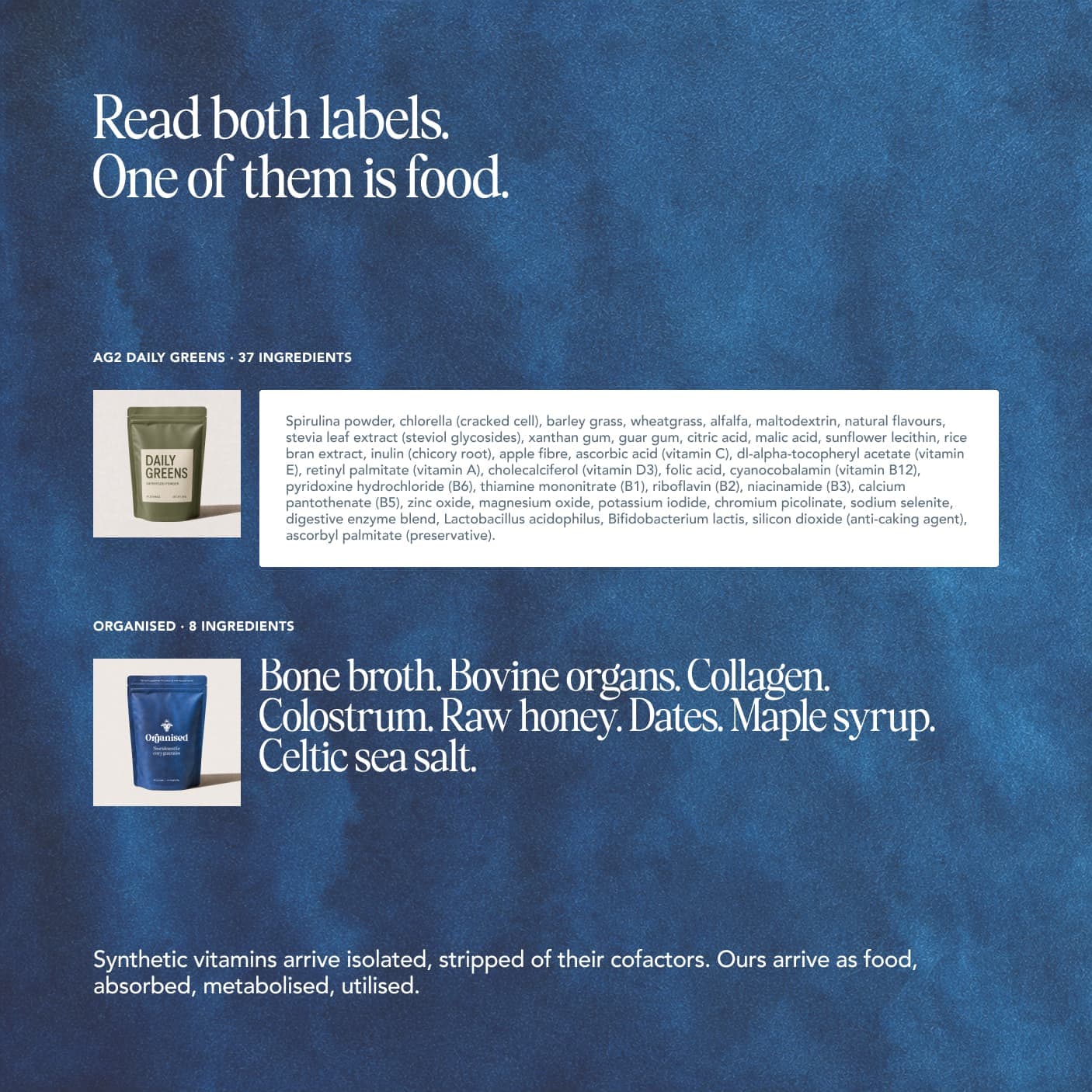
Eight real ingredients built around grass-fed beef organs, collagen and colostrum. Nothing synthetic added.
Free with your first order, worth £38. Plus £10 off the pouch with a subscription.


Free UK shipping · Made in England · 100 day money back guarantee on your first pouch · Skip, pause or cancel anytime
Hydration without sports drinks
One area where modern exercise science has made a genuine contribution is understanding electrolyte needs during intense training. However, this does not require expensive sports drinks. Water with sea salt does everything a sports drink does, minus the sugar and chemicals.
If you are training intensely for longer than an hour, your body loses electrolytes through sweat.3 Sodium supports hydration and muscle contraction. Potassium supports heart function and recovery. Rather than consuming these from a commercial drink, simply add a pinch of sea salt to your water. If you want additional carbohydrates during very long training sessions (over 90 minutes), drink the salt water and eat a piece of fruit or a few dates. That covers your needs completely.
For most training sessions under 60 minutes, water alone is sufficient. Your body is remarkably efficient at managing electrolyte balance. Only in prolonged exercise or hot environments does additional sodium become necessary. Even then, a pinch of salt in water is the cheapest and most effective solution.
Hydration is solved by water and a pinch of sea salt. Expensive sports drinks exist because they are profitable, not because they are superior.
The bottom line
Stop buying workout supplements. Eat dates before training. Drink milk after training. Eat real food all day. Build something that lasts. Your body doesn't need synthetic fuel. It needs ancestral simplicity and consistency.
References
Every source below was checked on 27 August 2026. Each PubMed, PMC and DOI identifier was resolved against NCBI or Crossref, and what it opens is printed under the citation, so you can see the link goes where the citation says without leaving the page. Where a citation and its identifier disagreed, the citation was corrected to the record or the reference was deleted along with the sentence marker that pointed at it, and where the resolved paper turned out not to support the sentence, the sentence was cut back to what it does support. Borrowed authority is worse than none, because it looks like rigour.
- USDA FoodData Central. Dates, medjool. https://fdc.nal.usda.gov/ [accessed May 2026].
- Aragon AA, Schoenfeld BJ. Nutrient timing revisited: is there a post-exercise anabolic window? J Int Soc Sports Nutr. https://pmc.ncbi.nlm.nih.gov/articles/PMC3577439/ [accessed May 2026].Checked 27 August 2026: PMC3577439 opens Aragon AA, Schoenfeld BJ, Nutrient timing revisited: is there a post-exercise anabolic window? J Int Soc Sports Nutr 2013;10(1):5.
- Sawka MN, Burke LM, Eichner ER, et al. American College of Sports Medicine position stand. Exercise and fluid replacement. Med Sci Sports Exerc. https://pubmed.ncbi.nlm.nih.gov/17277604/ [accessed May 2026].Checked 27 August 2026: PMID 17277604 opens American College of Sports Medicine, Sawka MN, Burke LM et al, American College of Sports Medicine position stand. Exercise and fluid replacement. Med Sci Sports Exerc 2007;39(2):377-90. PubMed indexes it as: Practice Guideline, Review.
Who wrote and reviewed this guide
Niall Kiddle
Author · Founder, Organised
Niall is the founder of Organised. He started the company in 2024 after fixing his own health the slow way: in 2022 he swapped a cupboard of synthetic supplements for real food, raw milk, organ meats, bone broth and honey, and felt the difference within months.
Areas of expertise: Ancestral nutrition, Organ meats, Whole-food supplementation, Gut health, Regenerative sourcing
Read Niall's full profile
Pedro Rodrigues
Reviewer · Agronomist (farming and sourcing only)
Pedro is the agronomist Organised works with on farming and sourcing. His job on the guides is to keep the science honest: he reviews what we publish about soil health, regenerative agriculture, grazing and the way food is actually produced.
Areas of expertise: Regenerative agriculture, Agronomy, Soil health, Grass-fed farming, Food sourcing
Reviewed this guide on
Read Pedro's full profileMore on sports & performance
View allBrowse the guides library
All guidesKeep reading

Health goals
What to Eat for Muscle Recovery (Beyond Protein Shakes)
Muscle recovery needs more than protein. Collagen and vitamin C for tendons, glycine for connective tissue, magnesium for repair. Bone broth, eggs, real food.

Health goals
How to Maintain Energy All Day Without Caffeine Dependency
Stop crashing after 3pm. Discover how to fuel sustained energy through the day using mitochondrial nutrition, stable blood sugar, and real food.
Health goals
Insulin Resistance: The Silent Metabolic Crisis
Insulin resistance develops quietly, but the damage is profound. Here's how it happens and the whole-food strategies that actually work.
Real food, made effortless
Start my daily blendA few ways to use it
All recipes
Organised Smoothie Bowl Recipes for Every Season
Four seasonal smoothie bowl recipes using Organised. Berry in summer, apple-cinnamon in autumn, tropical in spring, warming chocolate in winter.

How to Make Bone Marrow Butter
Roast grass-fed marrow bones, scoop the marrow, and mix with butter and herbs. A nutrient-dense spread with fat-soluble vitamins.
Gut-Healing Marshmallows with Collagen and Raw Honey
Learn to make gut-healing marshmallows with collagen and raw honey. A shareable treat that sneaks nutrition into every bite. Easy recipe with video tips.


 Join over 100,000+ members
Build a better food system with us
The Organised community is thousands of people choosing real food and backing the farmers who grow it, all of us trying to leave the world a little better than we found it. If that is what you care about too, you belong here.