How to Stop Hair Shedding with Ancestral Nutrition
You notice it in tiny, unsettling ways at first. A few more strands circling the shower drain. Your hair feeling thinner. Your part a little wider. And somewhere in there, you start wondering whether this is just how it is now.

By Niall Kiddle, Founder, Organised

Reviewed by Pedro Rodrigues, Agronomist (farming and sourcing only) ·
6 min read · Published · Updated · 5 cited sources
Makers of the Organised Daily blend, a grass-fed beef organ supplement from regenerative UK farms

Hair shedding is usually not genetic. It's nutritional. Your hair is made of protein, but it also requires specific minerals to grow and stay in the scalp. When you're deficient in those minerals, hair sheds. When you replenish them, it stops.

What causes hair shedding
Hair grows in cycles. Each strand spends two to six years in active growth, then moves into a resting phase, then sheds. This is normal. You shed 50 to 100 hairs daily without any issues.1 But when you're shedding visibly more than that, or when you're shedding in specific areas, something is triggering premature exit from the growth phase.
The most common cause is nutritional deficiency, specifically in minerals: iron, zinc, copper, and selenium. Hair follicles are metabolically expensive. They need these minerals to sustain growth. When you're deficient, your body prioritises essential functions (brain, heart, immune system) and sacrifices non-essential ones. Hair is non-essential. It sheds.
The second most common cause is stress, which depletes minerals and disrupts hormone balance. Chronic stress triggers a condition called telogen effluvium, where a large proportion of hairs are forced into the resting phase simultaneously.2 You shed dramatically for weeks or months until the stress resolves and new hairs cycle in.
The third cause is thyroid dysfunction. When thyroid hormone is insufficient, hair growth is affected. Hair sheds more, grows slower, and feels thinner. Thyroid function depends on specific nutrients: iodine, selenium, and zinc, all of which are also required for hair growth.5 Low thyroid and hair loss often go together.
Hair shedding is your body waving a flag. It's saying you're nutritionally deficient in something. Listen to that signal.
The nutrients that stop it
Iron
Iron is critical for hair growth. It's part of haemoglobin, the protein that carries oxygen throughout your body, including to your scalp and hair follicles. When iron is low, hair follicles get starved of oxygen. They exit the growth phase prematurely. You shed.
Iron deficiency is remarkably common, especially in women. Blood loss, low intake of iron-rich foods, or poor absorption from the gut can all cause it.3 Red meat, liver, and shellfish carry iron in a highly bioavailable form called heme iron. Plant sources carry non-heme iron, which your body doesn't absorb as efficiently.3
Zinc
Zinc is involved in the growth phase of hair.4 It's also involved in hormone metabolism. When zinc is deficient, hair growth slows and shedding increases. Zinc is particularly important for the male pattern of hair loss. Men with low zinc often see significant improvement when they restore zinc status through diet.
Copper and selenium
These minerals work together with zinc to support hair growth and prevent shedding. Copper is involved in melanin production and in collagen formation, which is the structural protein of hair. Selenium is involved in glutathione production, which protects hair follicles from oxidative damage.5
The key is getting all three minerals from food sources in balanced form. Isolated zinc supplementation can actually worsen hair loss by creating a copper deficiency. Whole food sources naturally provide them in balanced ratios.
Weekly organ intake protocol
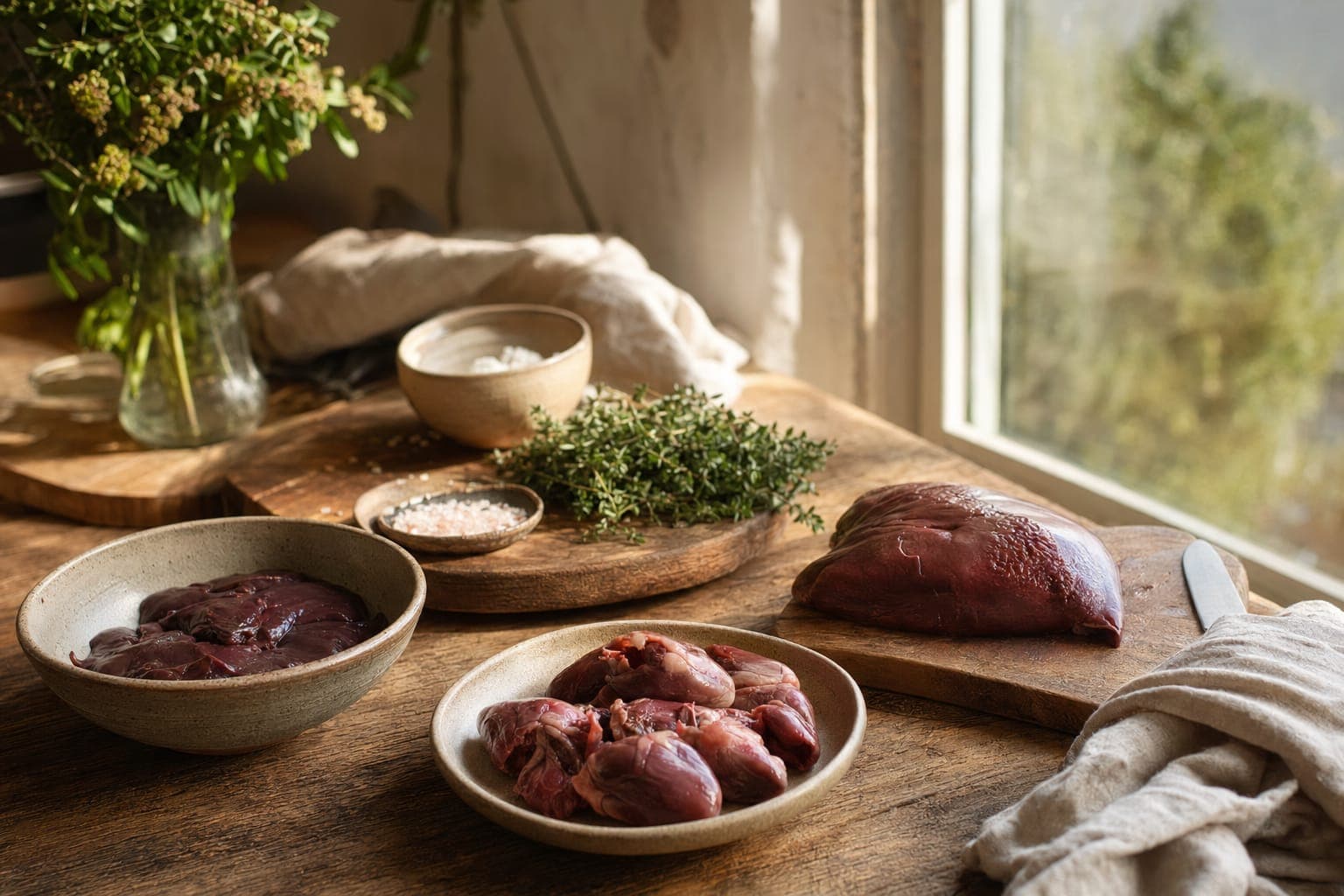
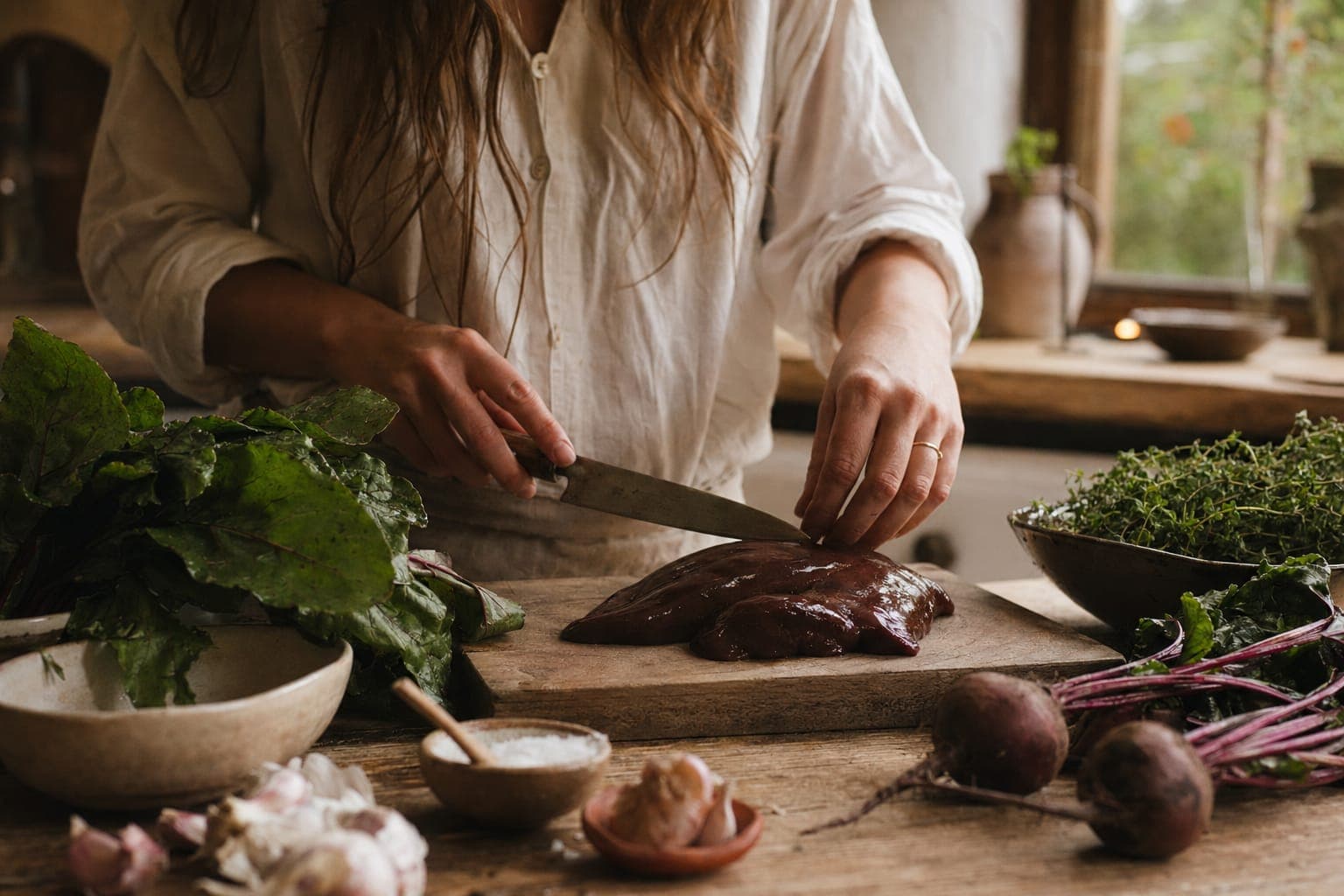
If you want to stop hair shedding, the single most effective intervention is eating organ meat once weekly. Beef liver is the gold standard. 150 to 200 grams once weekly provides iron, zinc, copper, selenium, retinol, and B vitamins, all of which support hair health.
Beef kidney is also excellent. It's rich in selenium and has a milder flavour than liver if liver feels strong to you. Beef heart is surprisingly palatable and carries similar nutrients, though in slightly lower concentrations.
If you can't tolerate whole organ meat, organ meat pâté works. A tablespoon or two mixed into butter or eaten on toast provides meaningful amounts of these nutrients. Freeze-dried organ powder mixed into smoothies or meals works too, though it's not ideal.
The weekly protocol
- Every seven days, eat 150 to 200 grams of organ meat, prepared however you find palatable
- Pair it with vegetables for additional minerals: beetroot, carrots, onions
- Cook at moderate temperature to preserve nutrients
- Include fat (butter, olive oil) for absorption of fat-soluble vitamins
This single change often stops visible shedding within eight to twelve weeks. People report that their hair feels thicker, sheds less, and grows faster.
Get health guides like this, free
Two short reads a week on eating for energy, gut health, skin, sleep and more.
By signing up you agree to receive emails from us. No spam, unsubscribe anytime.
Mineral-rich food patterns
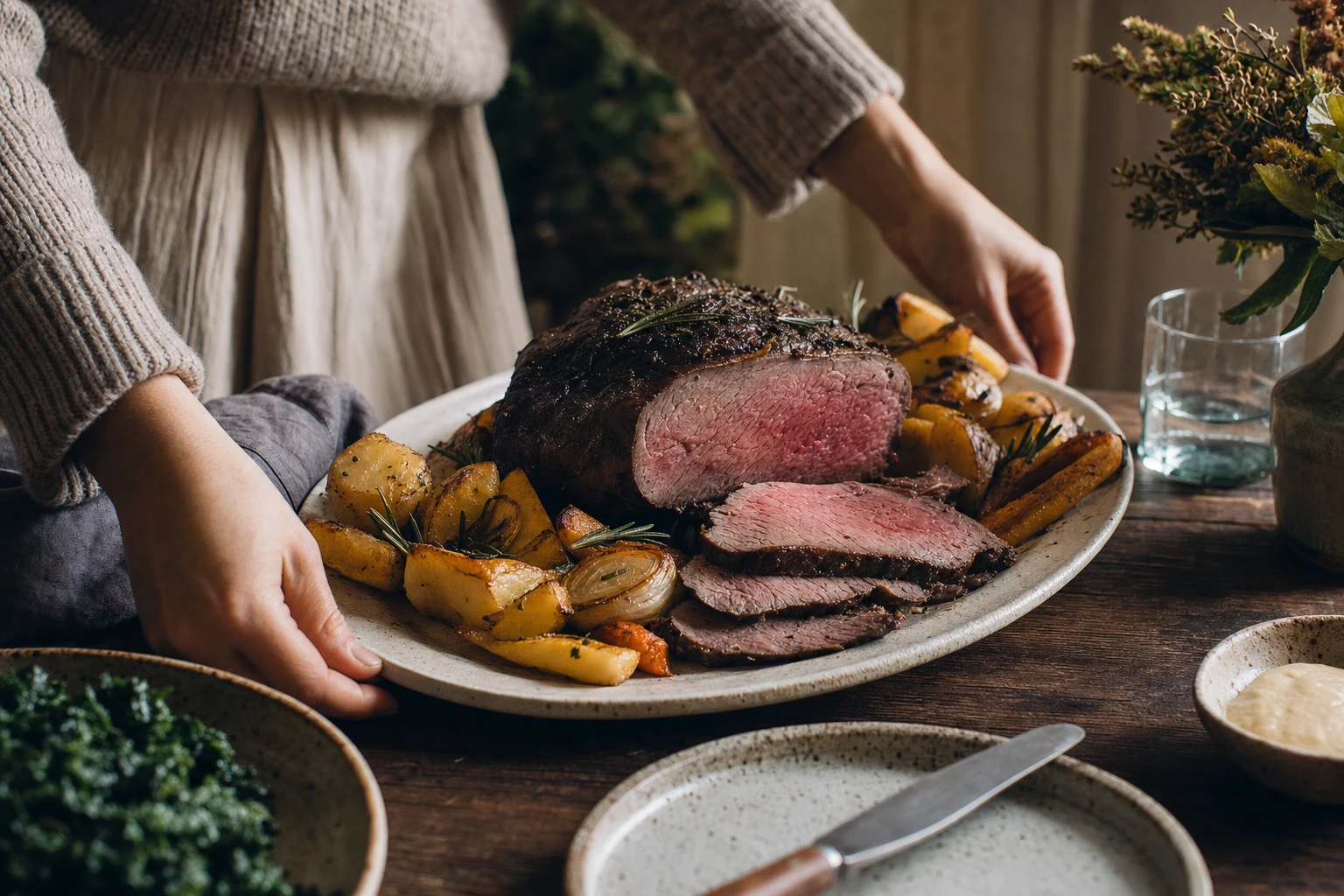
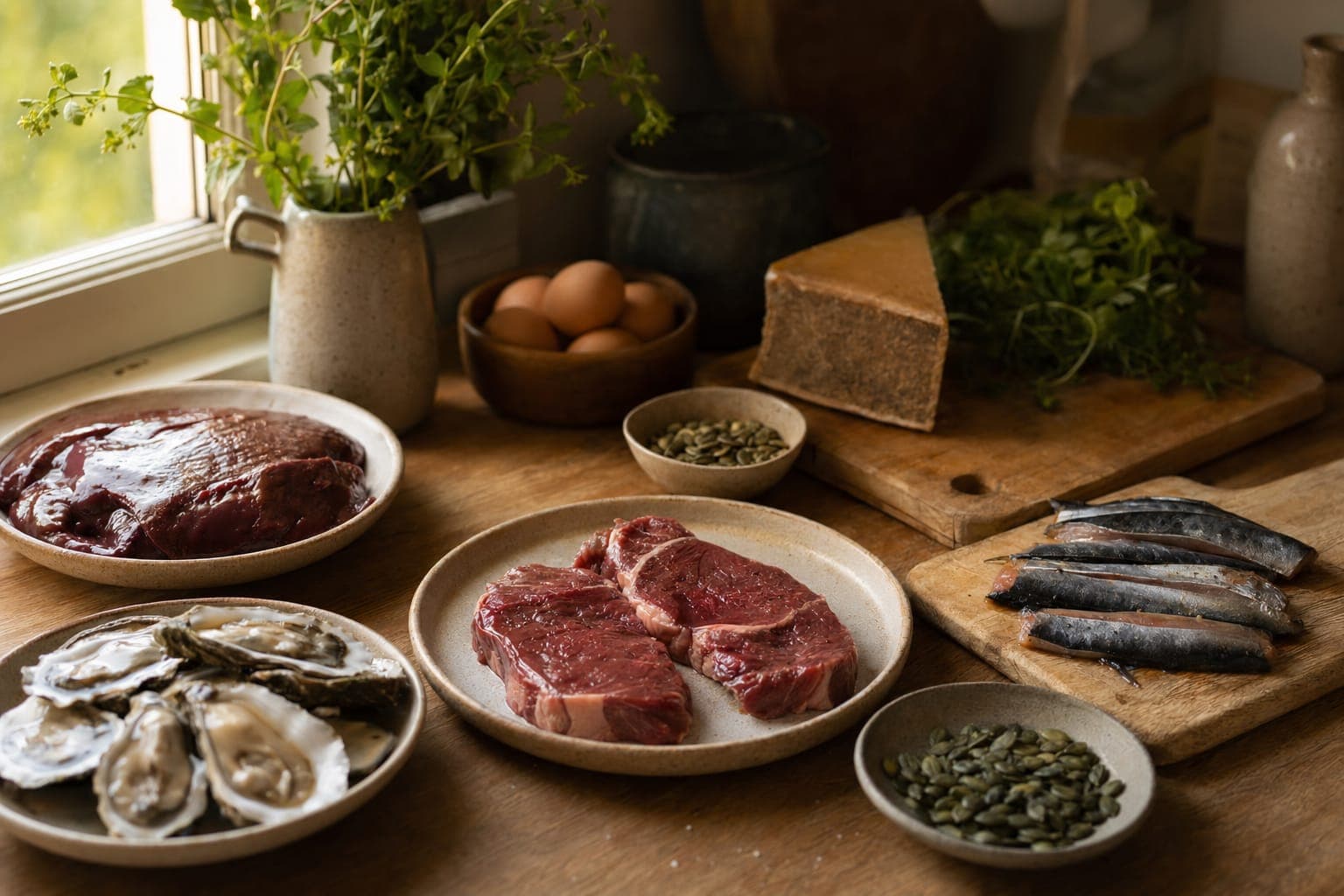
Beyond weekly organ meat, build a pattern of mineral-rich whole foods. Red meat four to five times weekly for iron and zinc. Shellfish or fatty fish once to twice weekly for selenium and iron. Eggs most days for choline and minerals. Full-fat dairy if you tolerate it, for calcium and minerals.
Vegetables matter too, but they're supportive rather than foundational. Beetroot carries minerals. Carrots carry beta-carotene. Leafy greens carry minerals, though plant minerals are less bioavailable than animal minerals. The pattern should be predominantly animal food with vegetables for variety and additional micronutrients.
If you're vegetarian or vegan and experiencing hair shedding, supplementation becomes more necessary because plant foods cannot provide iron and zinc in the quantities and bioavailability that animal foods do. But ideally, if hair health is a priority, you'd include at least some animal foods.
Scalp massage and blood flow
You can support hair growth from the inside through nutrition. But you can also support it from the outside through scalp massage. Hair follicles depend on blood flow. When blood flow to the scalp is inadequate, hair doesn't grow well. When blood flow is strong, hair grows faster and sheds less.
A simple scalp massage protocol: two to three minutes daily with your fingertips, applying moderate pressure in circular motions across the entire scalp. This increases blood flow locally and can be genuinely effective, especially when combined with nutritional changes.
Some people find that using a wooden scalp massager is more effective than fingertips. Others prefer a vibrating scalp massager. The specific tool doesn't matter. What matters is consistent massage, adequate pressure, and doing it regularly. Two to three minutes daily is enough.
1 of 9
Daily blend
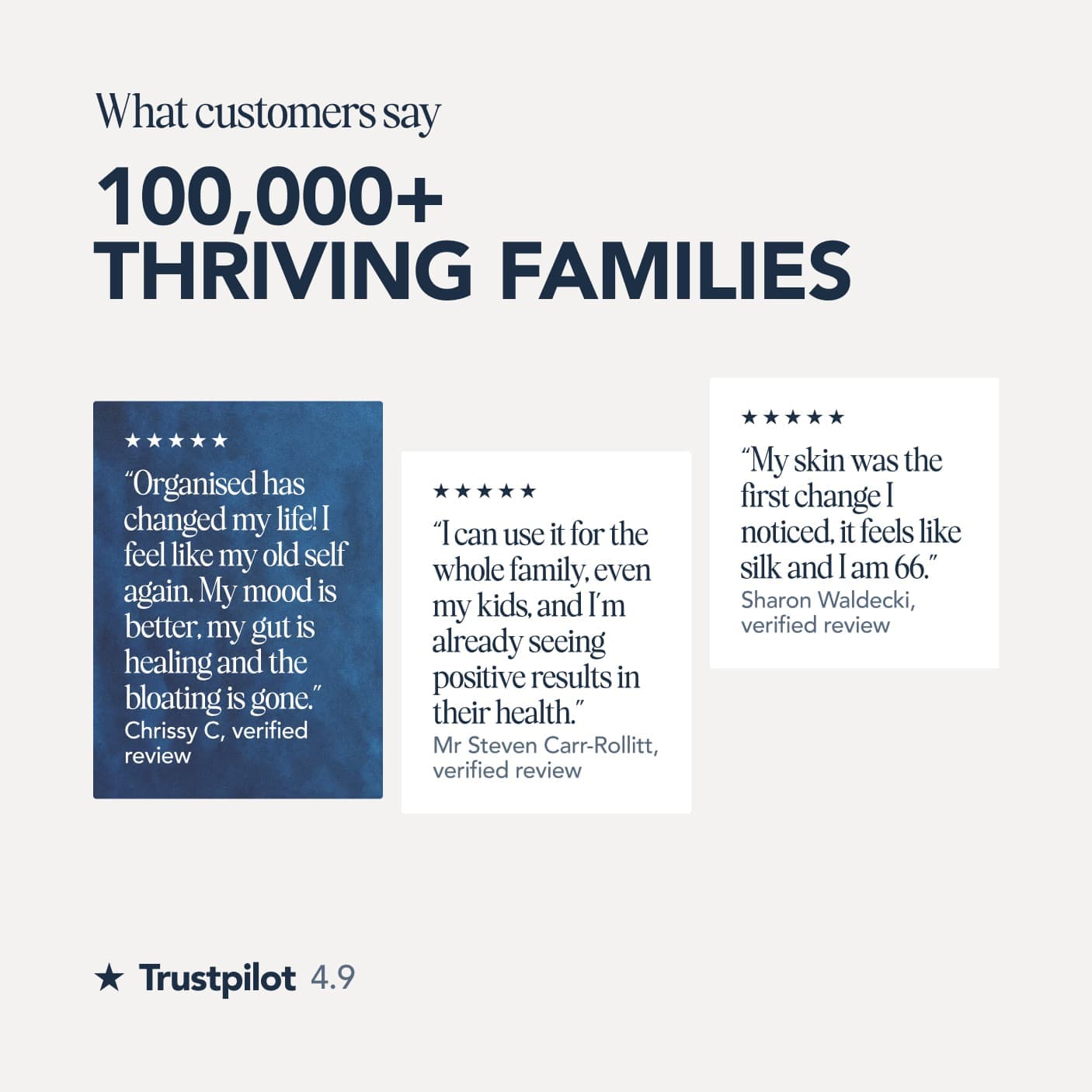
100,000+ thriving families4.9 on Trustpilot
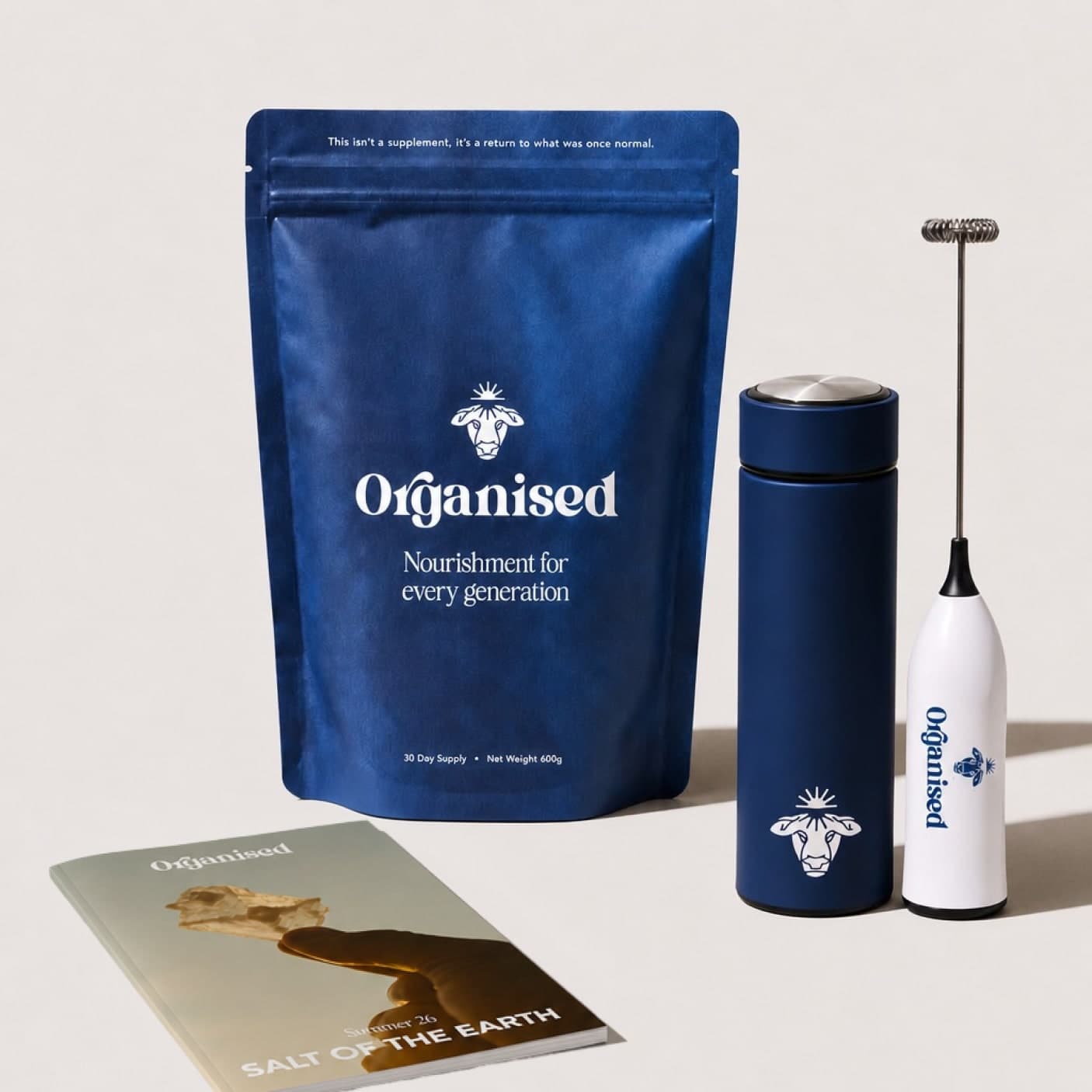
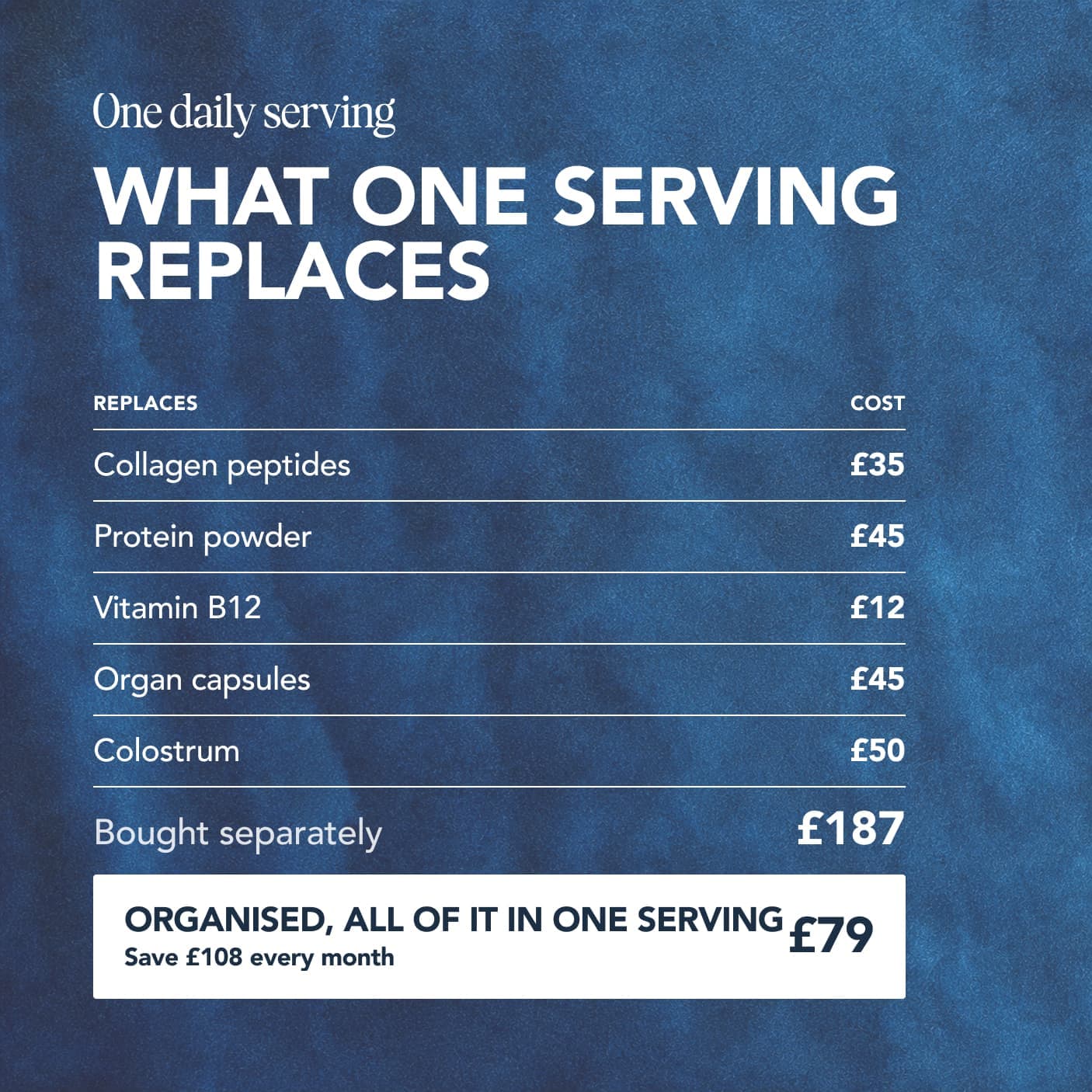
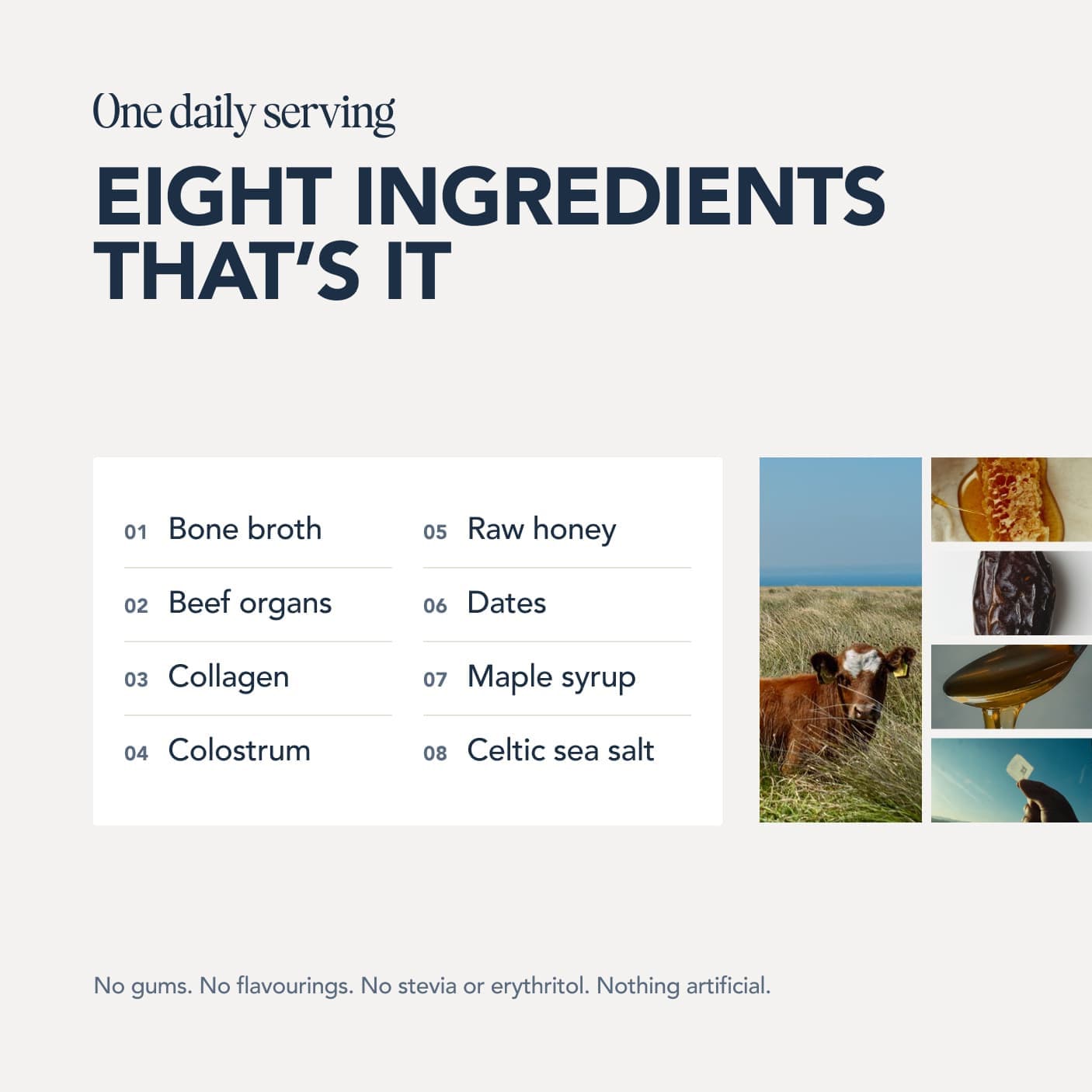
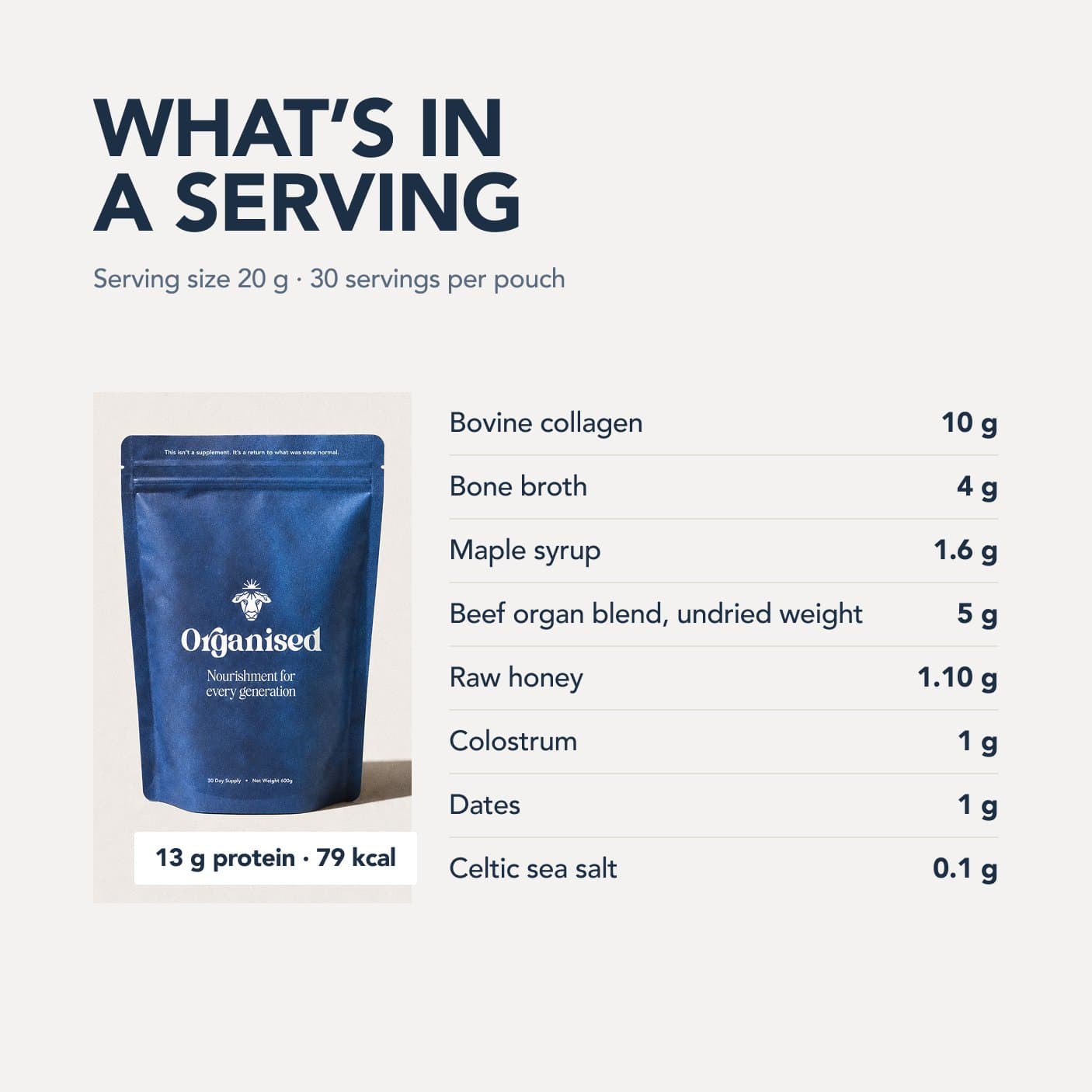
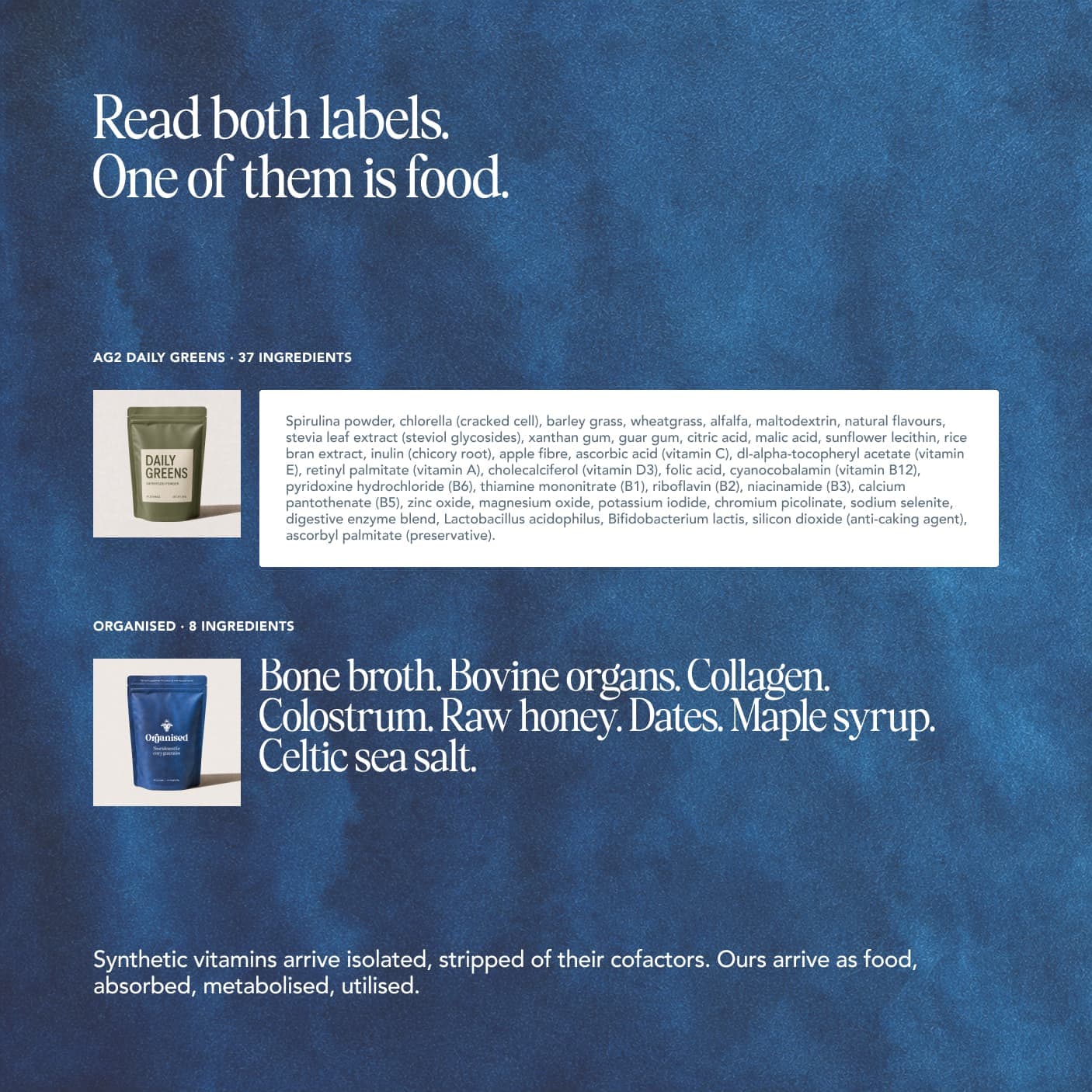
Eight real ingredients built around grass-fed beef organs, collagen and colostrum. Nothing synthetic added.
Free with your first order, worth £38. Plus £10 off the pouch with a subscription.
Free UK shipping · Made in England · 100 day money back guarantee on your first pouch · Skip, pause or cancel anytime
Timeline and expectations
Hair grows slowly. It takes time for new hairs to grow in and for shedding to slow. But the timeline is predictable and encouraging.
Week one to four: No obvious change. Your body is absorbing nutrients and restoring stores.
Week four to eight: Shedding begins to reduce noticeably. You might notice fewer hairs in the shower or on your pillow. Hair texture improves slightly.
Week eight to twelve: Visible improvement. Hair feels thicker. Part doesn't look as wide. New growth is visible if you look at your scalp closely.
Month four onwards: Sustained improvement. Hair is noticeably healthier. Shedding is back to normal levels. Hair quality has visibly improved.
The timeline is individual. Some people see changes faster. Some need longer. But the pattern is consistent. Nutritional restoration stops hair shedding, and the effects are visible within twelve weeks.
Hair takes time to respond. But it always responds to consistent nutrition. The timeline is predictable and encouraging.
A note on supplementation
You might be tempted to supplement iron or zinc to speed up the process. Resist that temptation unless you have blood test evidence of deficiency. Isolated supplementation, especially of zinc, can create mineral imbalances and make hair loss worse. Food sources are safer and more effective because they naturally provide minerals in balanced form.
If you've had blood tests and identified a specific deficiency (low ferritin, low zinc), then temporary supplementation whilst you shift your food intake makes sense. But as an ongoing strategy, whole food is superior.
The bottom line
Hair shedding is a sign that something is nutritionally off. The fix is straightforward: eat organ meat weekly, establish a pattern of mineral-rich whole foods, massage your scalp regularly, and give it time. Most people see meaningful improvement within eight to twelve weeks.
Your hair will respond. It always does, when you feed it properly. The strands you're losing now are a message. Listen to it and change what you're eating.
References
Every source below was checked on 27 August 2026. Each link was requested and read. Where a citation and its identifier disagreed, the citation was corrected to the record or the reference was deleted along with the sentence marker that pointed at it, and where the resolved paper turned out not to support the sentence, the sentence was cut back to what it does support. Borrowed authority is worse than none, because it looks like rigour.
- American Academy of Dermatology Association. Do you have hair loss or hair shedding?
- Hughes EC, Saleh D. Telogen Effluvium. StatPearls. NCBI Bookshelf.
- National Institutes of Health, Office of Dietary Supplements. Iron — Health Professional Fact Sheet.
- National Institutes of Health, Office of Dietary Supplements. Zinc — Health Professional Fact Sheet.
- National Institutes of Health, Office of Dietary Supplements. Selenium — Health Professional Fact Sheet.
Who wrote and reviewed this guide
Niall Kiddle
Author · Founder, Organised
Niall is the founder of Organised. He started the company in 2024 after fixing his own health the slow way: in 2022 he swapped a cupboard of synthetic supplements for real food, raw milk, organ meats, bone broth and honey, and felt the difference within months.
Areas of expertise: Ancestral nutrition, Organ meats, Whole-food supplementation, Gut health, Regenerative sourcing
Read Niall's full profile
Pedro Rodrigues
Reviewer · Agronomist (farming and sourcing only)
Pedro is the agronomist Organised works with on farming and sourcing. His job on the guides is to keep the science honest: he reviews what we publish about soil health, regenerative agriculture, grazing and the way food is actually produced.
Areas of expertise: Regenerative agriculture, Agronomy, Soil health, Grass-fed farming, Food sourcing
Reviewed this guide on
Read Pedro's full profileMore on hair
View all- The Nutritional Root Causes of Hair Loss
- Hair Loss in Men: Nutrition Beyond Finasteride
- Keratin Supplements Are a Waste of Money. Here's Why.
- Postpartum Hair Loss: Why It Happens and How to Recover
- Scalp Health: Why It Matters for Hair Growth
- The Best Foods for Thicker, Stronger Hair
- Thinning Hair After 40: What Your Body Is Trying to Tell You
Browse the guides library
All guidesKeep reading
Health goals
How Zinc, Copper and Selenium Work Together for Clear Skin
Isolated zinc supplements often backfire. Here's why these three minerals must work together, and how food sources keep them balanced.
Health goals
Why Your Skin Looks Better When You Eat Organ Meats
Organ meats are the most nutrient-dense foods on the planet. Here's exactly how they change your skin, from the inside out.
Health goals
How Liver Supports Oestrogen Detoxification
Your liver helps clear and balance oestrogen. Learn how this detoxification works, what can slow it down, and how to support healthy hormone balance.
Real food, made effortless
Start my daily blendA few ways to use it
All recipes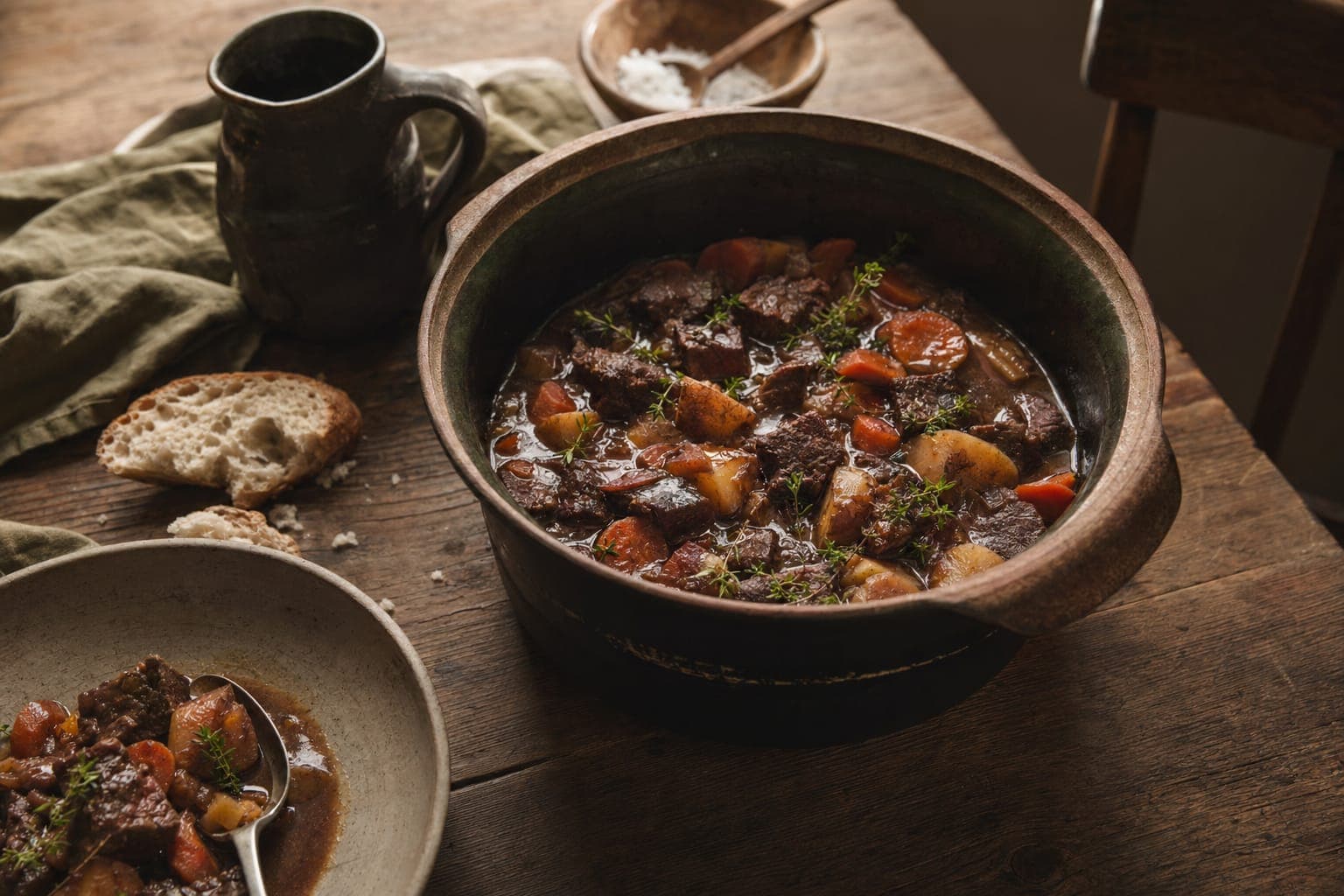
Collagen-Rich Beef Stew: Slow-Cooked Nourishment
Beef stew that delivers collagen from connective tissue and bone broth. Winter comfort food that actually nourishes. Simple slow cooker recipe.
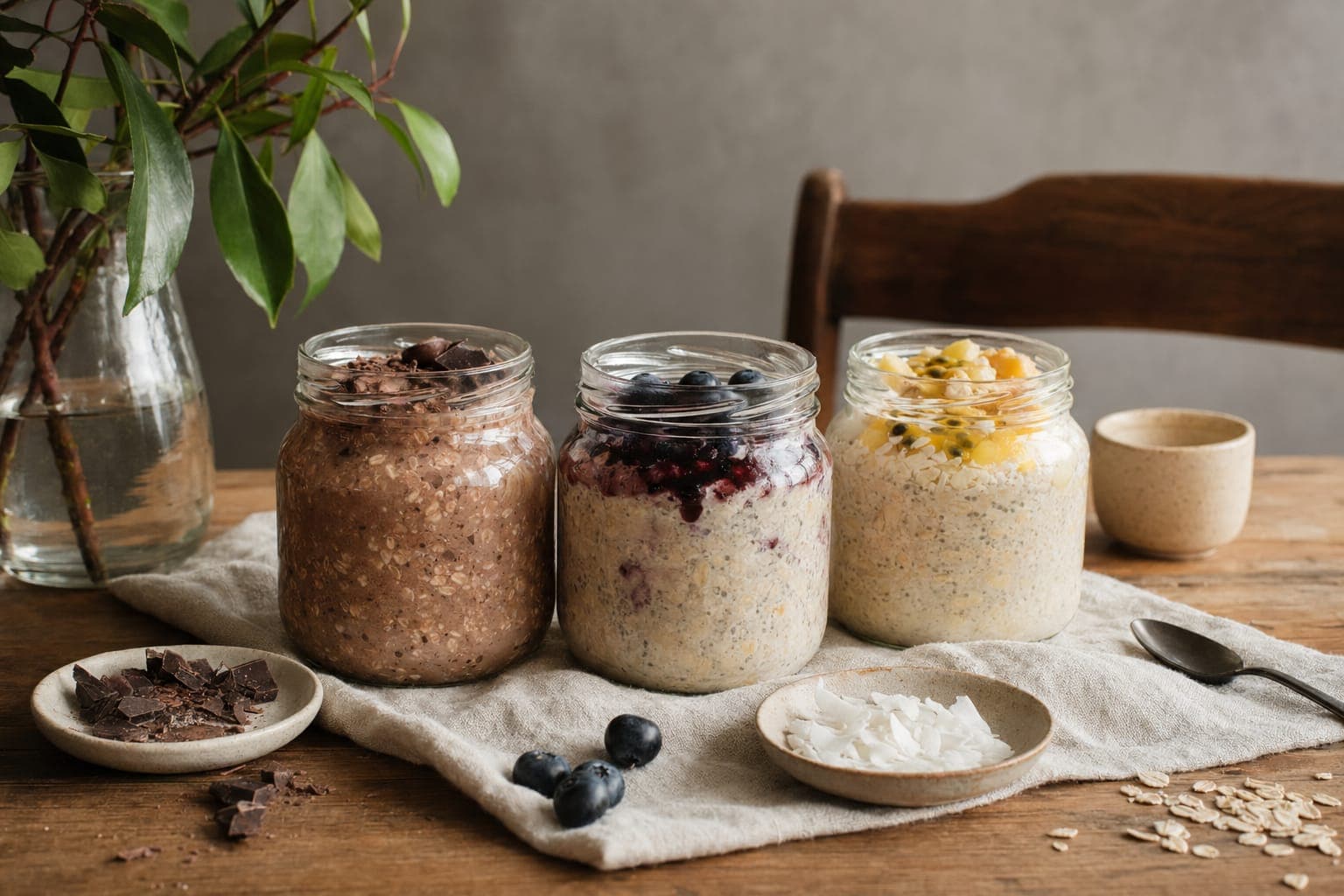
Organised Overnight Oats: 3 Variations
Three delicious overnight oats variations with Organised. Chocolate, berry, tropical flavours. Make them Sunday, eat them all week.
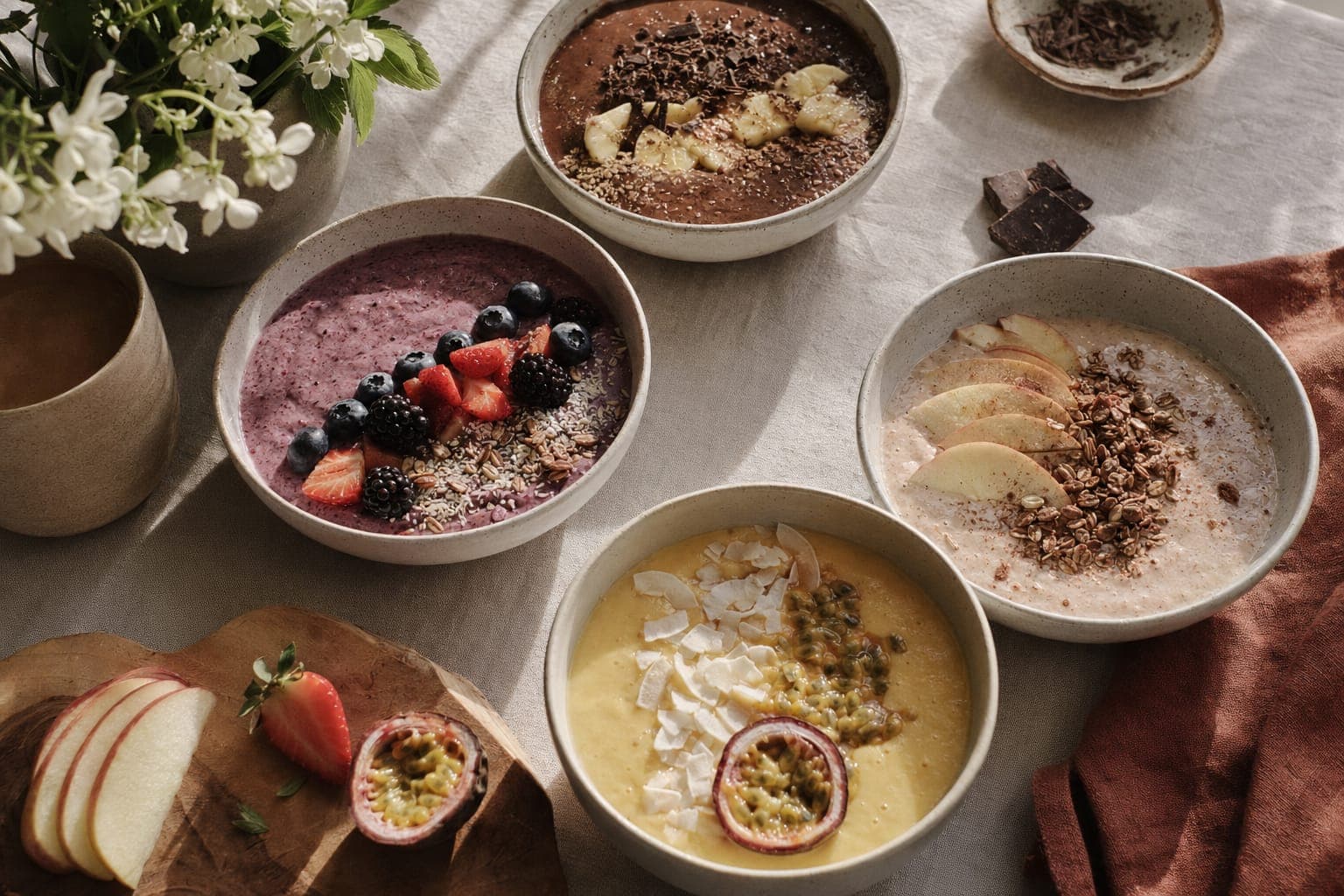
Organised Smoothie Bowl Recipes for Every Season
Four seasonal smoothie bowl recipes using Organised. Berry in summer, apple-cinnamon in autumn, tropical in spring, warming chocolate in winter.


 Join over 100,000+ members
Build a better food system with us
The Organised community is thousands of people choosing real food and backing the farmers who grow it, all of us trying to leave the world a little better than we found it. If that is what you care about too, you belong here.