How Your Thyroid Affects Your Energy Levels
You're getting eight hours of sleep. You're taking supplements. You're exercising. And yet, 3 PM hits and you hit a wall. If you're dragging through your day no matter what you do, there's a good chance your thyroid isn't working properly. Not in any way your doctor would flag on a standard test, but in the quiet way that leaves you exhausted.

By Niall Kiddle, Founder, Organised

Reviewed by Pedro Rodrigues, Agronomist (farming and sourcing only) ·
6 min read · Published · Updated · 4 cited sources
Makers of the Organised Daily blend, a grass-fed beef organ supplement from regenerative UK farms

If you're dragging through your day no matter what you do, there's a good chance your thyroid isn't working properly. Not in any way your doctor would flag on a standard test, but in the quiet way that leaves you exhausted.

The thyroid's actual job
Energy is made by mitochondria. They take glucose and oxygen and convert them to ATP, the currency your cells run on. Your thyroid doesn't make that energy directly. What it does is set the metabolic rate at which that energy gets produced.
The thyroid produces two main hormones: T4 (thyroxine) and T3 (triiodothyronine). T4 is the major circulating form and is converted to the metabolically active T3 in target tissues.1, and it's what tells every cell to speed up its metabolism. T3 binds to receptors on your cell membranes and essentially says, "Run faster."
When thyroid hormone is optimal, your mitochondria produce ATP efficiently. Your cells have fuel. Your brain works. You don't need coffee at 2 PM just to stay vertical.
A slow thyroid doesn't just make you tired. It slows everything. Your digestion. Your brain. Your ability to recover from exercise. Your mood.
Why subclinical matters
Here's what happens in modern medicine: your doctor runs a TSH test. TSH is the pituitary's signal to your thyroid telling it to make more hormone. If TSH is "normal," your doctor says your thyroid is fine.
But "normal" on a lab isn't the same as "optimal for you." You can have a TSH that's technically in range but functionally too high. Your cells might not be converting T4 to T3 efficiently. You might have thyroid antibodies silently attacking your gland. You might not have enough of the minerals your thyroid needs to even function.
This is subclinical hypothyroidism, and it's invisible on standard testing. The symptoms are real. The fatigue is real. The brain fog is real. But the tests say nothing's wrong. So you're told it's depression, or stress, or you're just not sleeping enough.
The nutritional approach works differently. Instead of waiting for your thyroid to fail completely, you address what it needs to work.

The nutrients thyroid needs
Iodine is essential for thyroid hormone synthesis — both T3 and T4 contain iodine atoms.2 Iodine is literally built into every T3 and T4 molecule. Most people in the modern world are iodine-deficient because we stopped salting our food heavily and switched to non-iodised salt. Sources: sea vegetables like nori, kelp, or dulse, fish (especially white fish), eggs, and iodised sea salt.
Selenium is required by deiodinase enzymes that convert T4 into active T3.3 Without enough selenium, you can produce plenty of thyroid hormone and still feel exhausted because your cells can't use it. It's also essential for protecting your thyroid from oxidative damage and autoimmune attack. Brazil nuts have more selenium than almost any other food, just two or three a day covers it. Beef, fish, and eggs also provide it.
Iron is required for thyroid peroxidase activity, the enzyme central to thyroid hormone synthesis.4 Iron deficiency is one of the most common nutritional drivers of hypothyroidism, and it's particularly common in women who menstruate. Your body needs enough iron not just for oxygen transport, but to produce the hormones that regulate your metabolism. Liver is by far the richest source of absorbable iron. Red meat, oysters, and eggs provide it too.
Zinc is a cofactor for multiple steps of thyroid hormone synthesis and conversion. It also regulates TSH and supports the immune system, which matters if you have autoimmune thyroiditis. Oysters have more zinc than any other food. Beef, pumpkin seeds, and egg yolks are good sources too.
Feed your thyroid: liver twice a week for selenium and iron, two Brazil nuts daily for selenium, oysters or beef once a week for zinc, and iodised salt or sea vegetables for iodine.
Get health guides like this, free
Two short reads a week on eating for energy, gut health, skin, sleep and more.
By signing up you agree to receive emails from us. No spam, unsubscribe anytime.
How to rebuild it
If you've been exhausted and your thyroid is underperforming, you're usually running multiple deficiencies at once. Fatigue itself depresses appetite and metabolism, so your body isn't absorbing nutrients well even if you're eating them. It's a cycle that needs interruption.
The fastest way to interrupt it is to eat foods so nutrient-dense that even compromised digestion can extract what you need. Organ meats, particularly liver, are non-negotiable. Liver contains iron, selenium, B vitamins (especially B12 and folate, both of which support thyroid function and energy), and copper, all in absorbable forms. Start with liver once a week if organ meats are new to you, build to twice a week.
Add bone broth, which provides the amino acids and minerals your body needs to rebuild. Add egg yolks, which are rich in choline and selenium. Add oysters if you can get them fresh or frozen. Add iodised sea salt or a pinch of sea vegetable powder to your meals.
Remove the foods that damage thyroid function: seed oils (which drive inflammation and oxidative damage), processed foods heavy in refined carbohydrates and sugar (which spike insulin and suppress thyroid hormone), and excessive goitrogens like raw cruciferous vegetables if you're already iodine-deficient (cooking deactivates the goitrogenic compounds anyway).
Expect noticeable shifts in energy by week 4 to 6. Brain fog typically improves first. Then afternoon crashes get less severe. Then your baseline energy starts to feel different. Real recovery, where you wake up without an alarm and feel ready, usually takes 8 to 12 weeks because your body needs time to rebuild stores.


1 of 9
Daily blend
100,000+ thriving families4.9 on Trustpilot
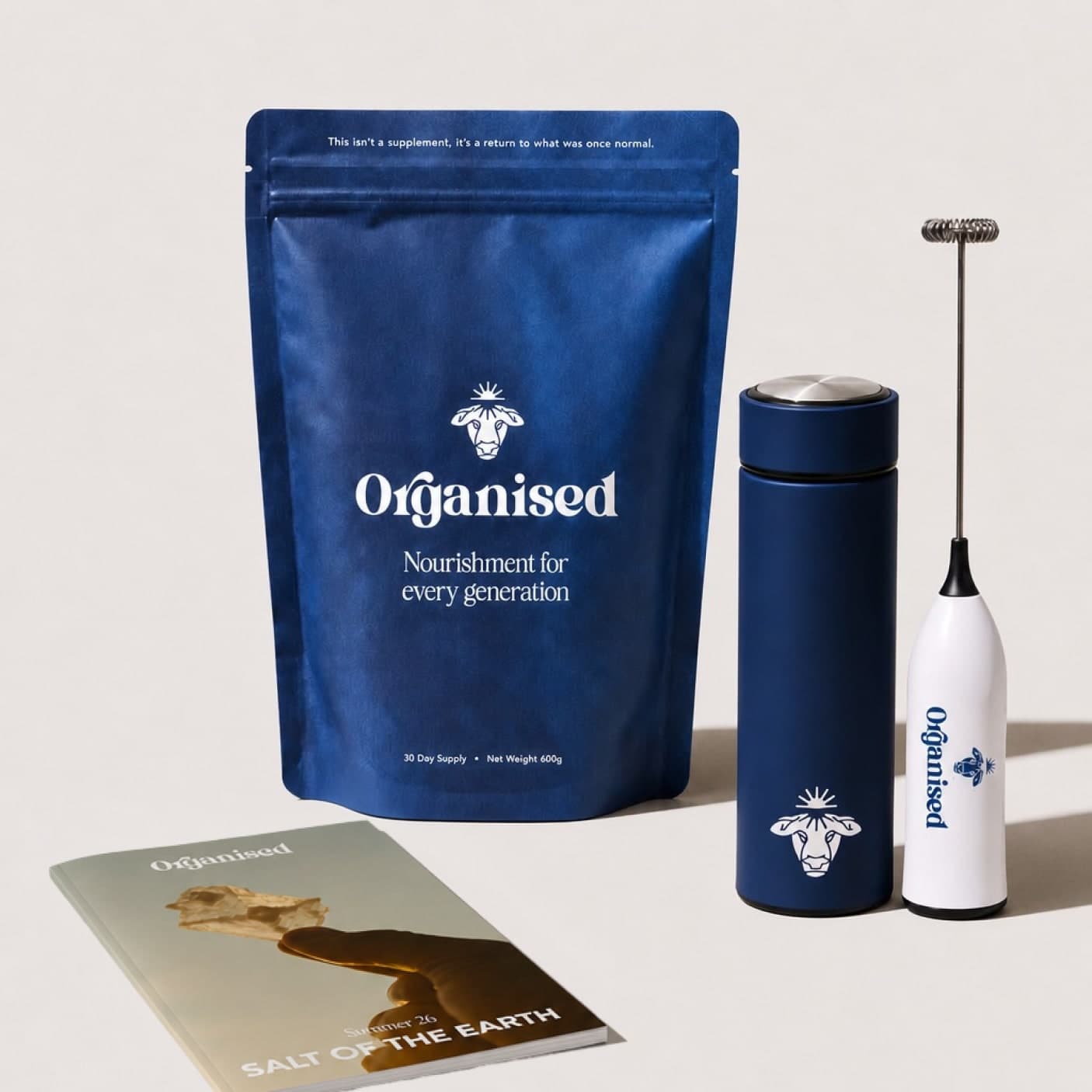
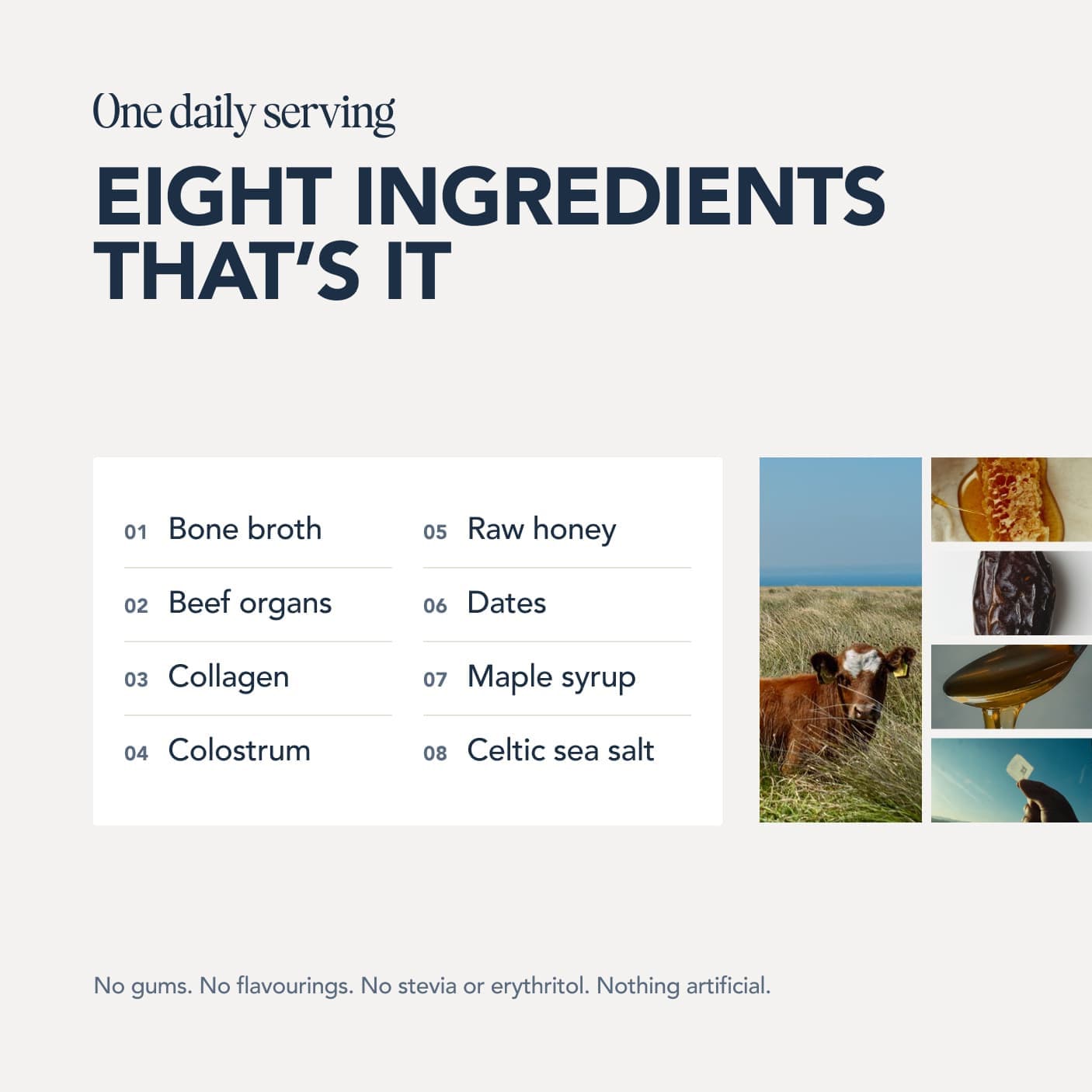
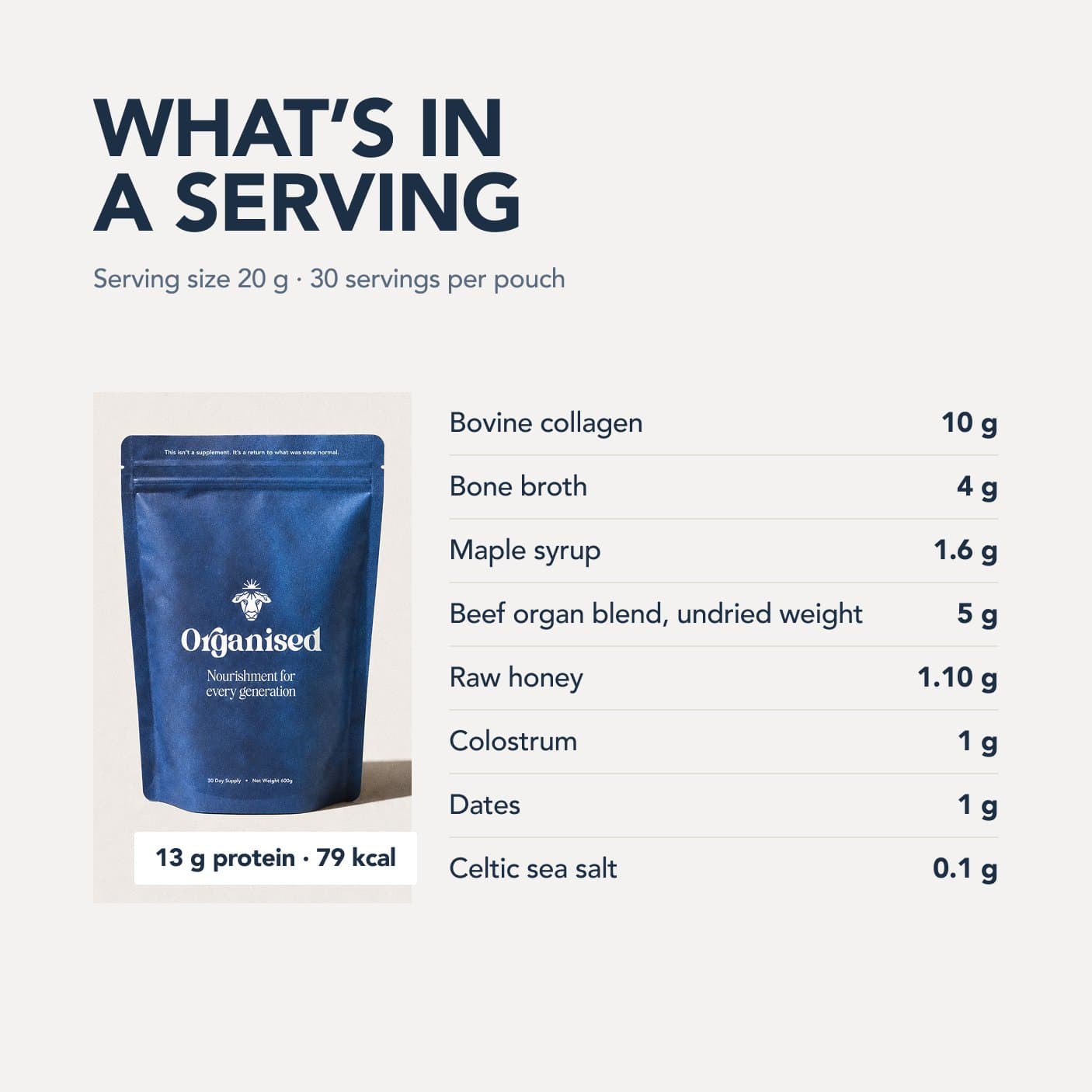
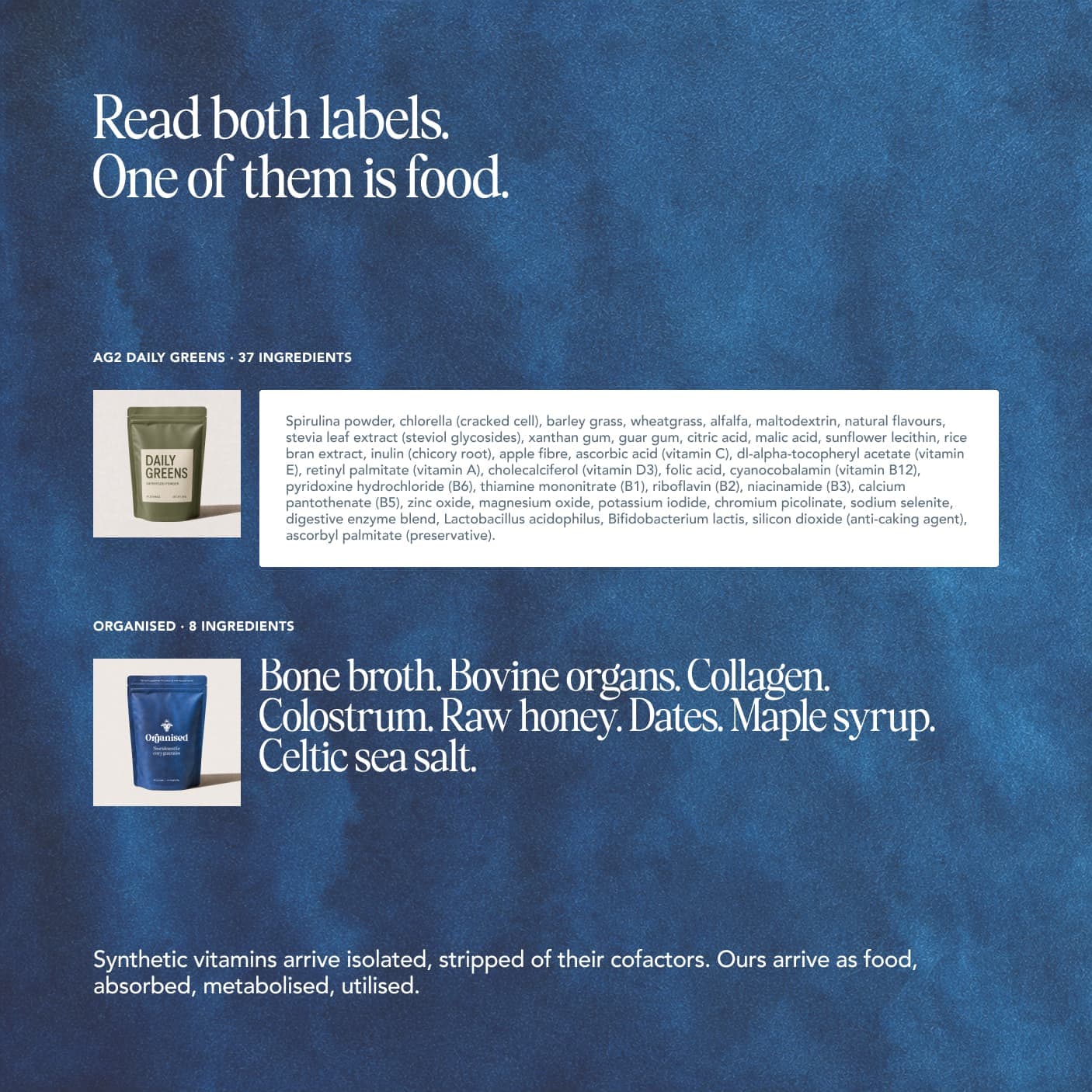
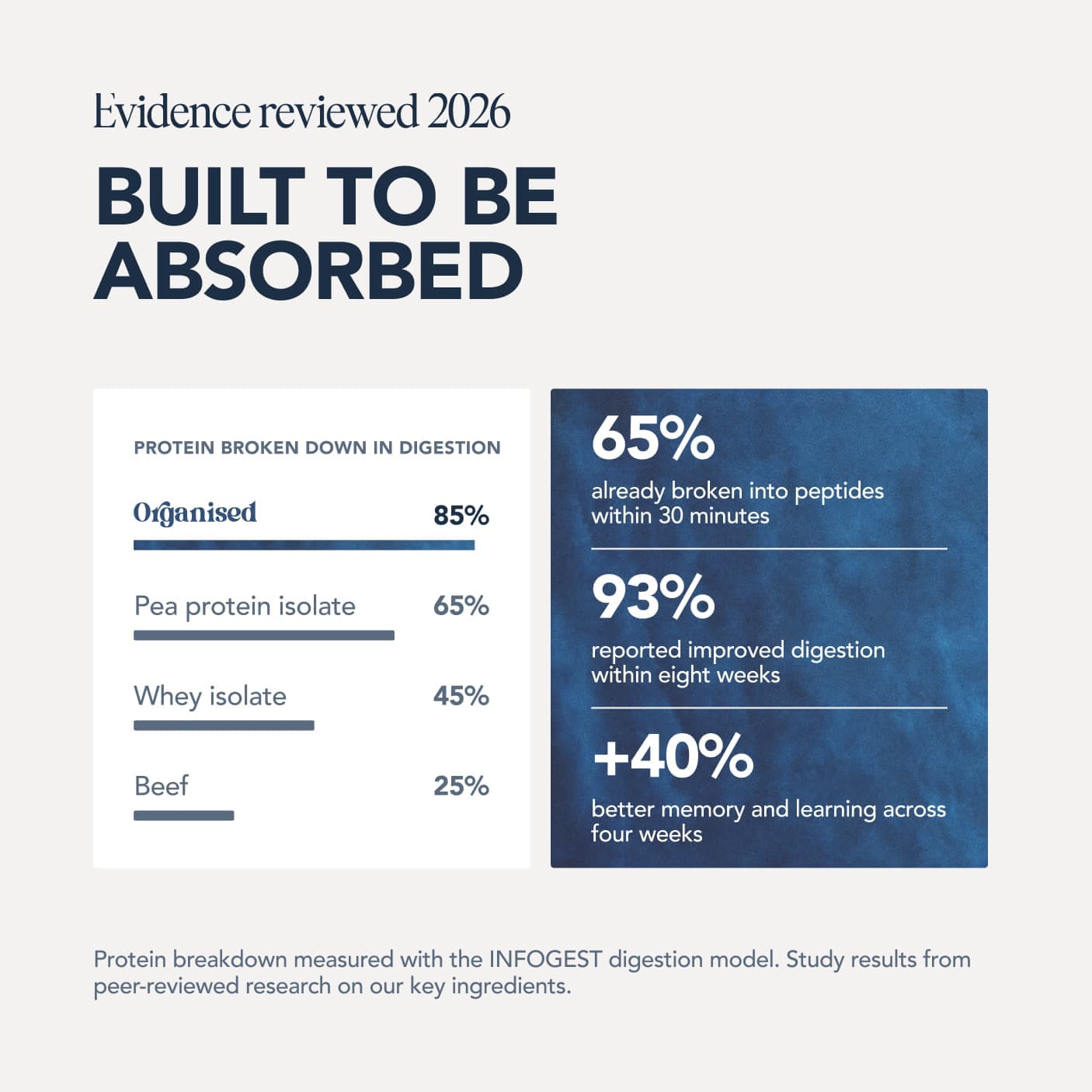
Eight real ingredients built around grass-fed beef organs, collagen and colostrum. Nothing synthetic added.
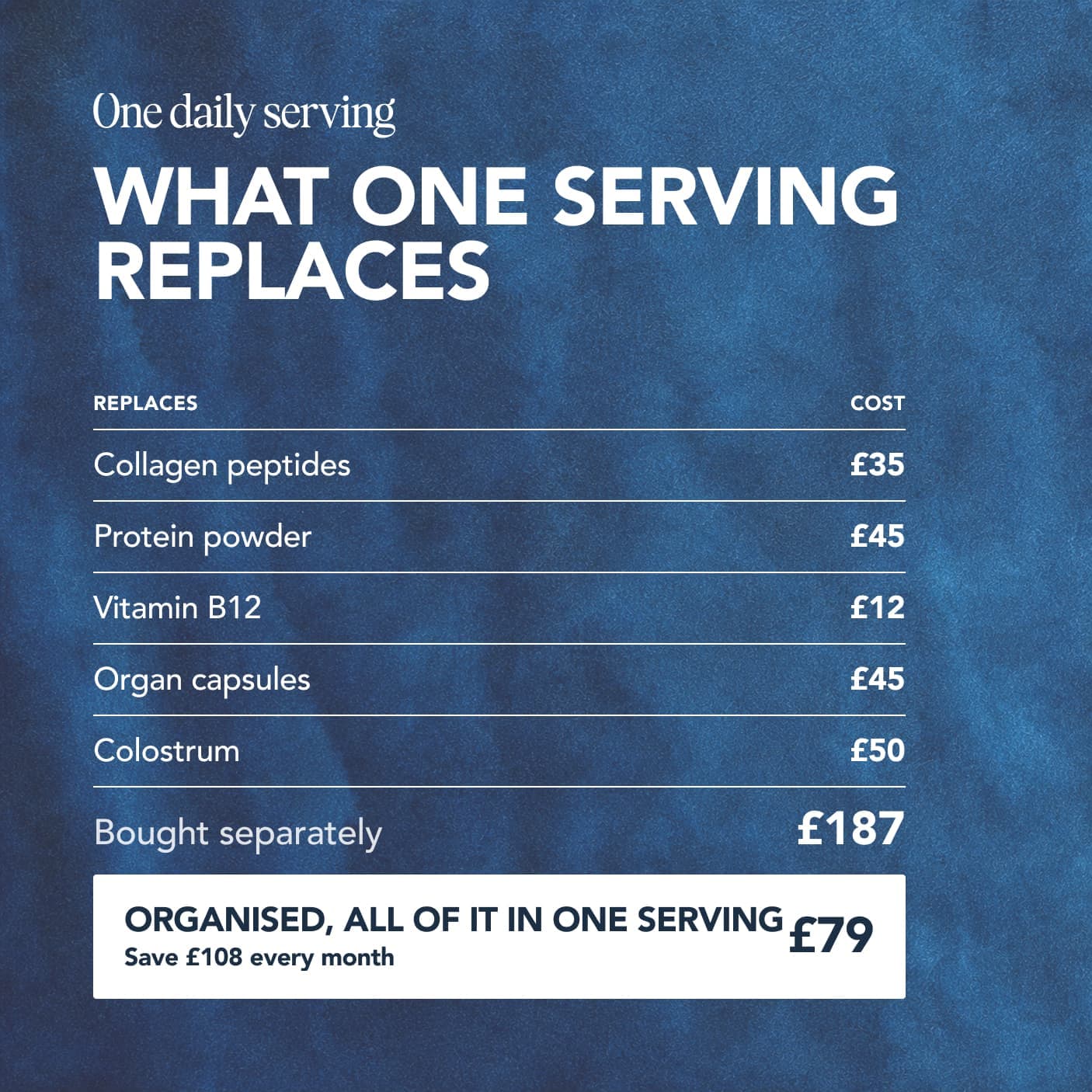
Free with your first order, worth £38. Plus £10 off the pouch with a subscription.


Free UK shipping · Made in England · 100 day money back guarantee on your first pouch · Skip, pause or cancel anytime
Identifying subclinical thyroid dysfunction
Your doctor runs a TSH test. If TSH is in the "normal" range (typically 0.4 to 4.0 mIU/L), you're told your thyroid is fine. But fine on a lab doesn't mean optimal for your energy.
A TSH at the upper end of the reference range may be associated with subclinical hypothyroid symptoms in some individuals, though clinical guidelines define hypothyroidism by TSH thresholds and free T4 levels.1 It means your pituitary is working hard to coax your thyroid to produce hormone. You might feel exhausted, brain-fogged, and struggling despite this "normal" result. Conversely, a TSH of 0.5 with adequate free T3 and T4 might leave you feeling energised even though some doctors would say it's abnormal.
If you're experiencing unexplained fatigue, request a full thyroid panel: TSH, free T4, free T3, and thyroid antibodies (TPO and thyroglobulin). This gives you a complete picture. If antibodies are elevated, you have autoimmune thyroiditis. If T3 is low despite normal T4, you have a conversion problem. If TSH is elevated, your thyroid is struggling.
The nutritional interventions (liver, Brazil nuts, sea salt, iodised foods) address all of these underlying nutrient pathways. They are complementary to clinical care, not a replacement. If you're already on thyroid replacement (levothyroxine, liothyronine or NDT), do not change or stop your dose without speaking to your prescriber; nutrition can support medication efficacy and sometimes reduces dose requirements over time, but that's a conversation to have with the clinician monitoring your thyroid status (TSH and fT4 are the standard NHS markers per NICE NG145; fT3 is added when symptoms persist despite normal TSH/fT4). The case the brand makes is that food and clinical management work together, not against each other.
The practical approach is eating liver twice weekly, taking two Brazil nuts daily, and ensuring adequate iodine. Most people notice energy improvement within 4 to 6 weeks. If you're still exhausted after 8 weeks of consistent attention, get tested. Your thyroid might need medical support alongside the nutritional foundation.
The bottom line
Your thyroid isn't broken. It's starving for the nutrients it needs to work. Feed it real food, specific nutrients, give it time. The energy you've forgotten you could have is on the other side of that.
References
Every source below was checked on 27 August 2026. Each PubMed, PMC and DOI identifier was resolved against NCBI or Crossref, and what it opens is printed under the citation, so you can see the link goes where the citation says without leaving the page. Where a citation and its identifier disagreed, the citation was corrected to the record or the reference was deleted along with the sentence marker that pointed at it, and where the resolved paper turned out not to support the sentence, the sentence was cut back to what it does support. Borrowed authority is worse than none, because it looks like rigour.
- Garber JR, et al. Clinical practice guidelines for hypothyroidism in adults. Endocr Pract. 2012;18(6):988-1028. PMID 23246686Checked 27 August 2026: PMID 23246686 opens Garber JR, Cobin RH, Gharib H et al, Clinical practice guidelines for hypothyroidism in adults: cosponsored by the American Association of Clinical Endocrinologists and the American Thyroid Association. Endocr Pract 2012;18(6):988-1028. PubMed indexes it as: Practice Guideline.
- National Institutes of Health, Office of Dietary Supplements. Iodine - Health Professional Fact Sheet. ods.od.nih.gov
- National Institutes of Health, Office of Dietary Supplements. Selenium - Health Professional Fact Sheet. ods.od.nih.gov
- National Institutes of Health, Office of Dietary Supplements. Iron - Health Professional Fact Sheet. ods.od.nih.gov
Who wrote and reviewed this guide
Niall Kiddle
Author · Founder, Organised
Niall is the founder of Organised. He started the company in 2024 after fixing his own health the slow way: in 2022 he swapped a cupboard of synthetic supplements for real food, raw milk, organ meats, bone broth and honey, and felt the difference within months.
Areas of expertise: Ancestral nutrition, Organ meats, Whole-food supplementation, Gut health, Regenerative sourcing
Read Niall's full profile
Pedro Rodrigues
Reviewer · Agronomist (farming and sourcing only)
Pedro is the agronomist Organised works with on farming and sourcing. His job on the guides is to keep the science honest: he reviews what we publish about soil health, regenerative agriculture, grazing and the way food is actually produced.
Areas of expertise: Regenerative agriculture, Agronomy, Soil health, Grass-fed farming, Food sourcing
Reviewed this guide on
Read Pedro's full profileMore on energy
View all- Why You're Always Tired (And What to Eat About It)
- Adrenal Fatigue: Is It Real and What Can You Do About It?
- Always Tired? What Reddit Says to Eat (and What Actually Works)
- B12 Deficiency: Signs, Causes and the Fastest Way to Fix It
- Chronic Fatigue and Nutrient Deficiency: What Blood Tests to Ask For
- How to Maintain Energy All Day Without Caffeine Dependency
- Iron Deficiency: Why It's So Common and How Organs Can Help
- Metabolism Maxxing: How to Support Your Metabolic Rate with Real Food
- The Desk Worker's Guide to Staying Strong and Energised
- What Does Your Afternoon Slump Actually Mean?
- Why Intermittent Fasting Might Be Tanking Your Energy
Browse the guides library
All guidesKeep reading

Health goals
Why You're Always Tired (And What to Eat About It)
Tired all the time? Explore the nutrition behind low energy and how whole foods help rebuild stamina at the cellular level. Practical, food-first guidance.

Health goals
Thyroid Health: The Nutrients Your Thyroid Needs to Function
Support healthy thyroid function with the right nutrition: iodine, selenium, zinc, and iron all matter. Learn which everyday whole foods deliver each one.

Health goals
Adrenal Fatigue: Is It Real and What Can You Do About It?
Adrenal fatigue is contested, but HPA axis dysregulation is real. Support cortisol rhythm with salt, protein, sleep, and blood sugar stability.
Real food, made effortless
Start my daily blendA few ways to use it
All recipes
The Organised Recovery Smoothie for After Exercise
A recovery smoothie made with beef protein, raw milk, frozen berries, collagen, and honey. Optimal nutrition in the 30-minute window after exercise.

Organised Smoothie Bowl Recipes for Every Season
Four seasonal smoothie bowl recipes using Organised. Berry in summer, apple-cinnamon in autumn, tropical in spring, warming chocolate in winter.

Raw Milk Hot Chocolate with Collagen
A nourishing evening hot chocolate made with raw milk, grass-fed collagen, raw cacao, and honey. A nighttime ritual that supports sleep and gut health.


 Join over 100,000+ members
Build a better food system with us
The Organised community is thousands of people choosing real food and backing the farmers who grow it, all of us trying to leave the world a little better than we found it. If that is what you care about too, you belong here.