Mitochondrial Health: The Key to Ageing Well
The difference between people who age well and people who age poorly isn't genetics. It's not luck. It's mitochondrial health. Your mitochondria are the power plants of your cells. When they function well, you feel energised, your metabolism runs cleanly, and your body repairs itself efficiently. When they decline, everything declines with them. This is the biology of ageing.
By Niall Kiddle, Founder, Organised

Reviewed by Pedro Rodrigues, Agronomist (farming and sourcing only) ·
7 min read · Published · Updated · 3 cited sources
Makers of the Organised Daily blend, a grass-fed beef organ supplement from regenerative UK farms

Your mitochondria are the power plants of your cells. When they function well, you feel energised, your metabolism runs cleanly, and your body repairs itself efficiently. When they decline, everything declines with them. This is the biology of ageing.

Mitochondria and the biology of ageing
Every cell in your body contains mitochondria. These organelles take the fuel you eat and convert it into ATP, the energy molecule that powers everything you do. Thinking, moving, healing, building muscle, fighting infection. All of it depends on mitochondrial function.
As you age, your mitochondria decline. They become less efficient. They produce less ATP. This is why elderly people feel fatigued, why metabolism slows, why recovery from exercise or illness becomes slower.
But here's the crucial part: this decline is not inevitable. It's not hard-wired. Mitochondrial function can be maintained and even improved through the right nutrition and lifestyle. People who have excellent mitochondrial health at 70 feel and function like people in their 40s.
The cells of a 25-year-old contain healthy, efficient mitochondria. The cells of a typical 65-year-old contain mitochondria that have accumulated damage and lost function. But the cells of a 65-year-old who has maintained mitochondrial health contain mitochondria that are nearly as efficient as a 25-year-old's.
Ageing is mitochondrial decline. If you slow mitochondrial decline, you slow ageing itself.
How mitochondrial dysfunction develops
Mitochondrial decline happens for several reasons, and they often compound. First, mitochondria accumulate DNA mutations over time. These mutations impair the proteins that mitochondria produce, which are essential for energy production. Second, the membranes of mitochondria accumulate oxidative damage from free radicals. This damage impairs their function. Third, mitochondria become clogged with dysfunctional organelles that should have been cleared away.
The process is accelerated by chronically poor nutrition, by chronic inflammation, by low-quality sleep, and by excessive oxidative stress from environmental toxins and poor food choices.
Modern processed food is particularly damaging to mitochondria. Seed oils create oxidative stress. Refined carbohydrates impair glucose metabolism and mitochondrial function. Sugar drives inflammation and free radical production. A diet of processed food is literally poisoning your mitochondria.
Energy production and the electron transport chain
Mitochondria produce ATP through oxidative phosphorylation, which depends on the electron transport chain in the inner mitochondrial membrane.1 It happens in a structure called the electron transport chain, located in the inner mitochondrial membrane. The electron transport chain is a series of proteins that move electrons through a cascade of reactions, ultimately producing ATP.
This process requires specific nutrients to function. CoQ10 is essential. It's an electron carrier within the transport chain. Without it, the chain cannot function properly. Iron is another critical nutrient. It's part of the cytochrome proteins that make up the chain. Magnesium is required as a cofactor for the enzyme that makes ATP.
When any of these nutrients are deficient, energy production falters. You feel tired. Your metabolism slows. Your cells don't repair themselves properly.
CoQ10 (ubiquinone/ubiquinol) is essential for electron transport, and tissue concentrations decline with age.2 Tissue CoQ10 concentrations decline with age, with reductions reported in heart, liver and other organs in older versus younger adults.2 By 80, they're a fraction of their youthful levels. This decline contributes significantly to age-related fatigue and metabolic slowdown.
Free radical damage and oxidative stress
The electron transport chain, in the process of making ATP, produces free radicals as a byproduct. In a healthy mitochondrion, these free radicals are quickly neutralised by antioxidants. But in a stressed mitochondrion, or in the presence of chronic oxidative stress, free radicals accumulate. They damage mitochondrial DNA, damage the membrane, and impair function.
Oxidative stress comes from many sources: processed food (especially foods cooked at high temperatures), seed oils (which are easily oxidised), chronic inflammation, pollution, blue light exposure, and excessive exercise. Modern life generates enormous oxidative stress.
Antioxidants combat this. Vitamin C, vitamin E, glutathione, and various polyphenols from vegetables all protect mitochondria from free radical damage. A diet rich in antioxidant foods, particularly colourful vegetables and berries, reduces oxidative stress and protects mitochondrial function.
Your mitochondria are under constant attack from free radicals. You can protect them with antioxidant-rich whole food, or you can watch them degrade.
Nutrient deficiency and mitochondrial decline
Beyond CoQ10, magnesium, and iron, mitochondria require B vitamins to function. B1, B2, B3, and B5 are essential cofactors for the enzymes that produce ATP. Deficiency in any of them impairs energy production.
Selenium and zinc are required for the antioxidant defences within mitochondria. When these minerals are deficient, free radical damage increases.
Carnitine is required for the transport of long-chain fatty acids across the mitochondrial inner membrane for fatty acid oxidation.3 When carnitine is low, fat oxidation is impaired, and energy production from fats decreases. This is particularly important in older people, who increasingly rely on fat oxidation for energy.
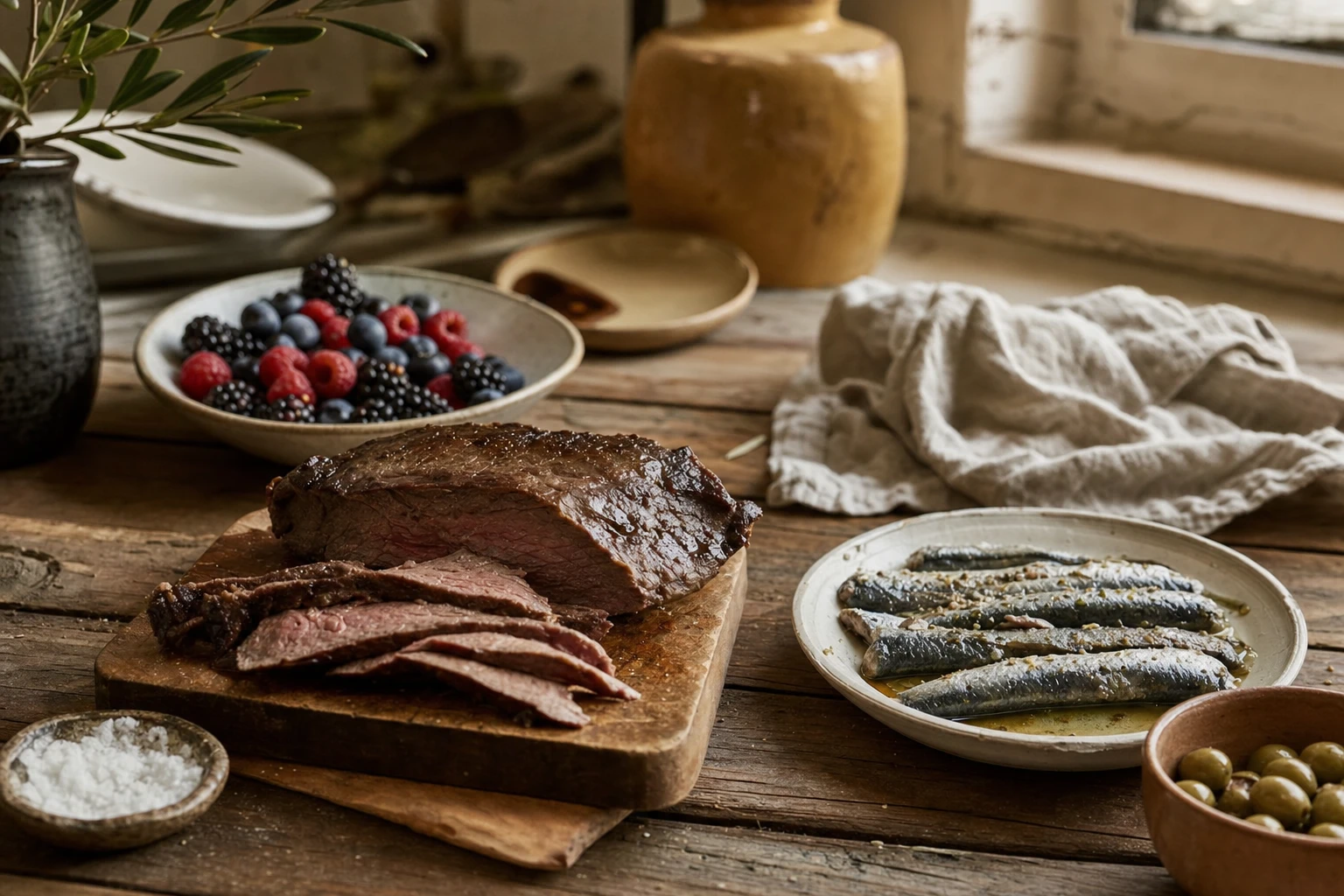
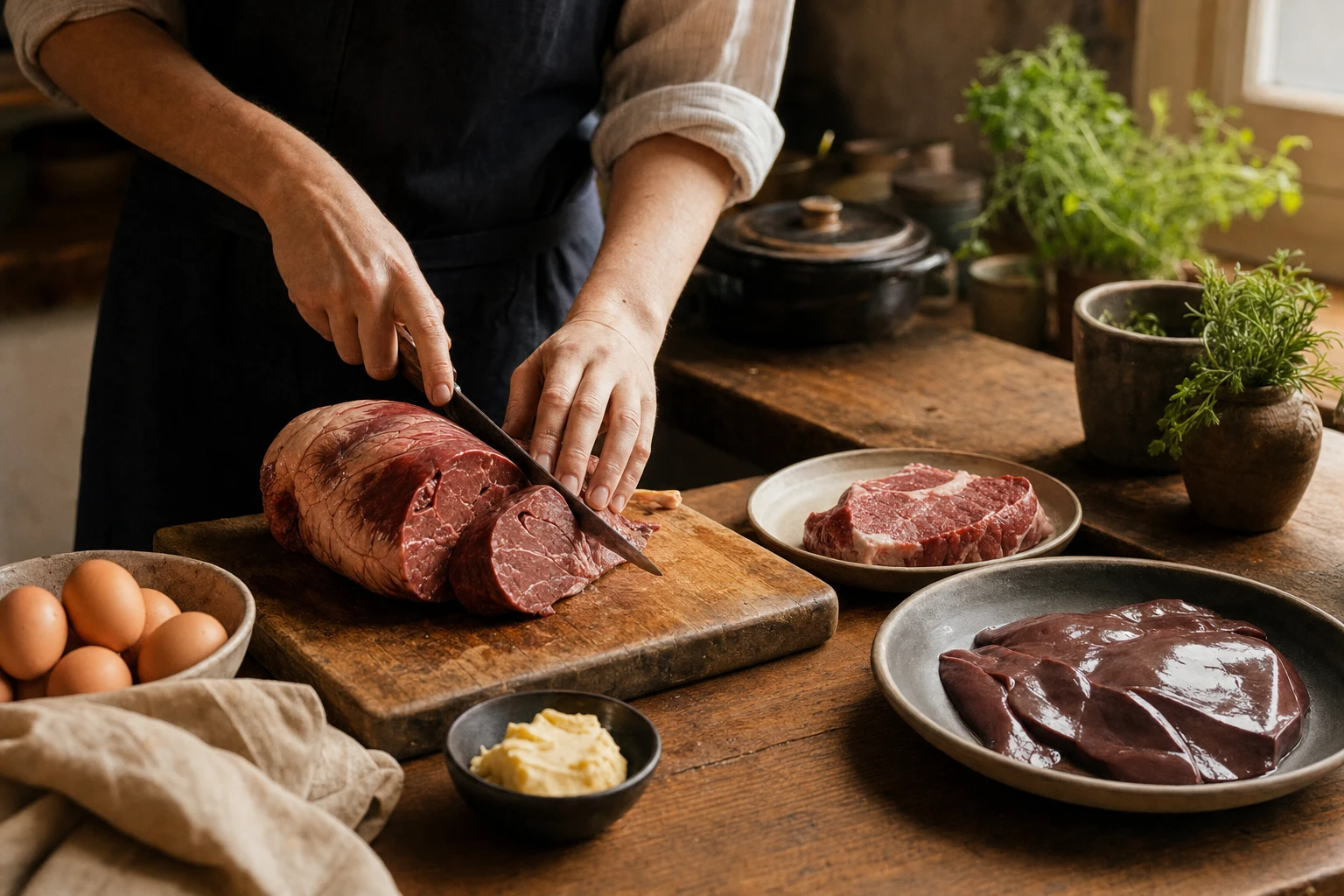
The organs richest in these mitochondrial nutrients are organ meats, especially beef heart, liver, and kidney. Beef heart contains exceptionally high levels of CoQ10. Sardines and other fatty fish contain selenium, CoQ10, and B vitamins. Red meat contains iron, zinc, B vitamins, and carnitine.
People on plant-based diets are almost always deficient in several of these nutrients, which is why they often report feeling more tired and ageing faster.
Get health guides like this, free
Two short reads a week on eating for energy, gut health, skin, sleep and more.
By signing up you agree to receive emails from us. No spam, unsubscribe anytime.
Rebuilding mitochondrial health
Start with nutrition. Prioritise whole foods that are naturally rich in mitochondrial cofactors. Eat liver or beef heart once a week. Eat red meat and fatty fish several times a week. Eat eggs daily. These foods provide the nutrients mitochondria need to function.
Remove the foods that damage mitochondria. Eliminate seed oils. Eliminate refined carbohydrates and processed sugar. These drive oxidative stress and impair mitochondrial function. Replace them with whole-food carbohydrates and natural fats.
Consider CoQ10 supplementation, especially if you're over 50. A dose of 200 to 300 milligrams daily supports mitochondrial function. Some research suggests ubiquinol, the reduced form, is more bioavailable than ubiquinone.
Sleep is critical for mitochondrial health. During sleep, damaged mitochondria are cleared away and replaced with new ones. Poor sleep means damaged mitochondria persist. Aim for 7 to 9 hours of consistent, high-quality sleep.
Exercise, especially resistance training, also maintains mitochondrial function. Muscle tissue is metabolically demanding. When you challenge your muscles with resistance work, you force your mitochondria to adapt and maintain their function. This is one of the reasons why resistance training is so powerful for longevity.
Mitochondrial health is the foundation of longevity. You can't age well without it. You can't feel energised, maintain a healthy weight, or repair yourself quickly without it.



1 of 9
Daily blend
100,000+ thriving families4.9 on Trustpilot
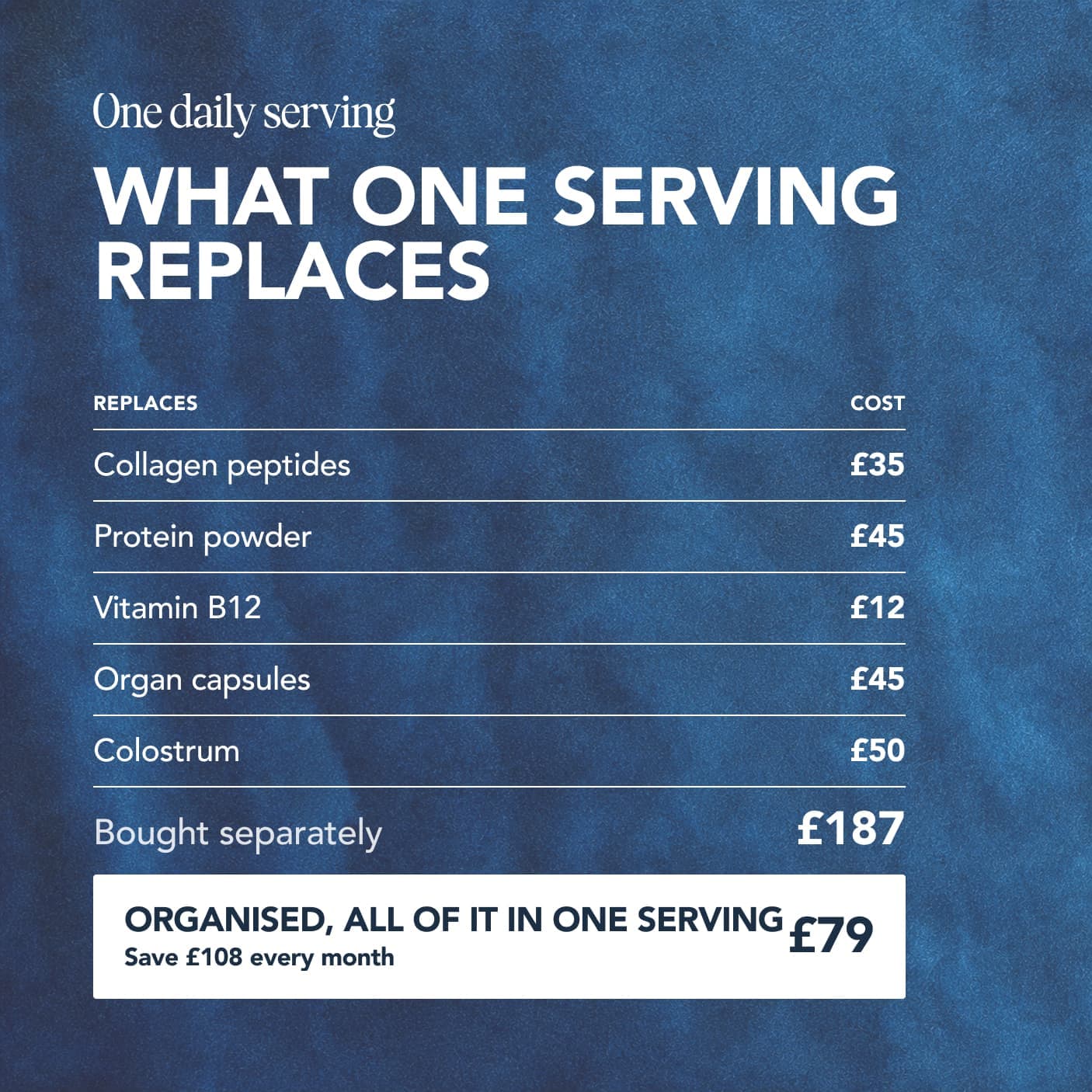
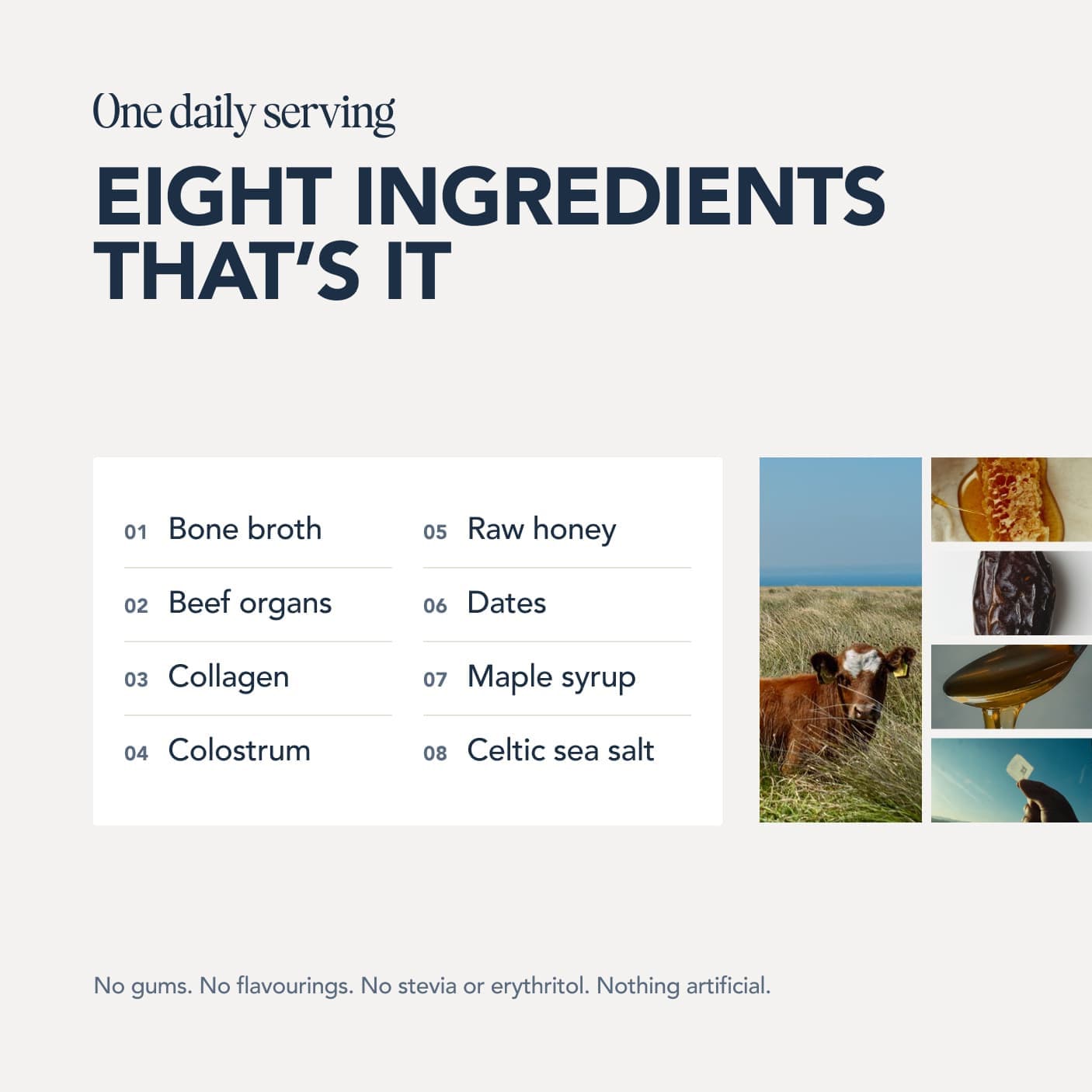
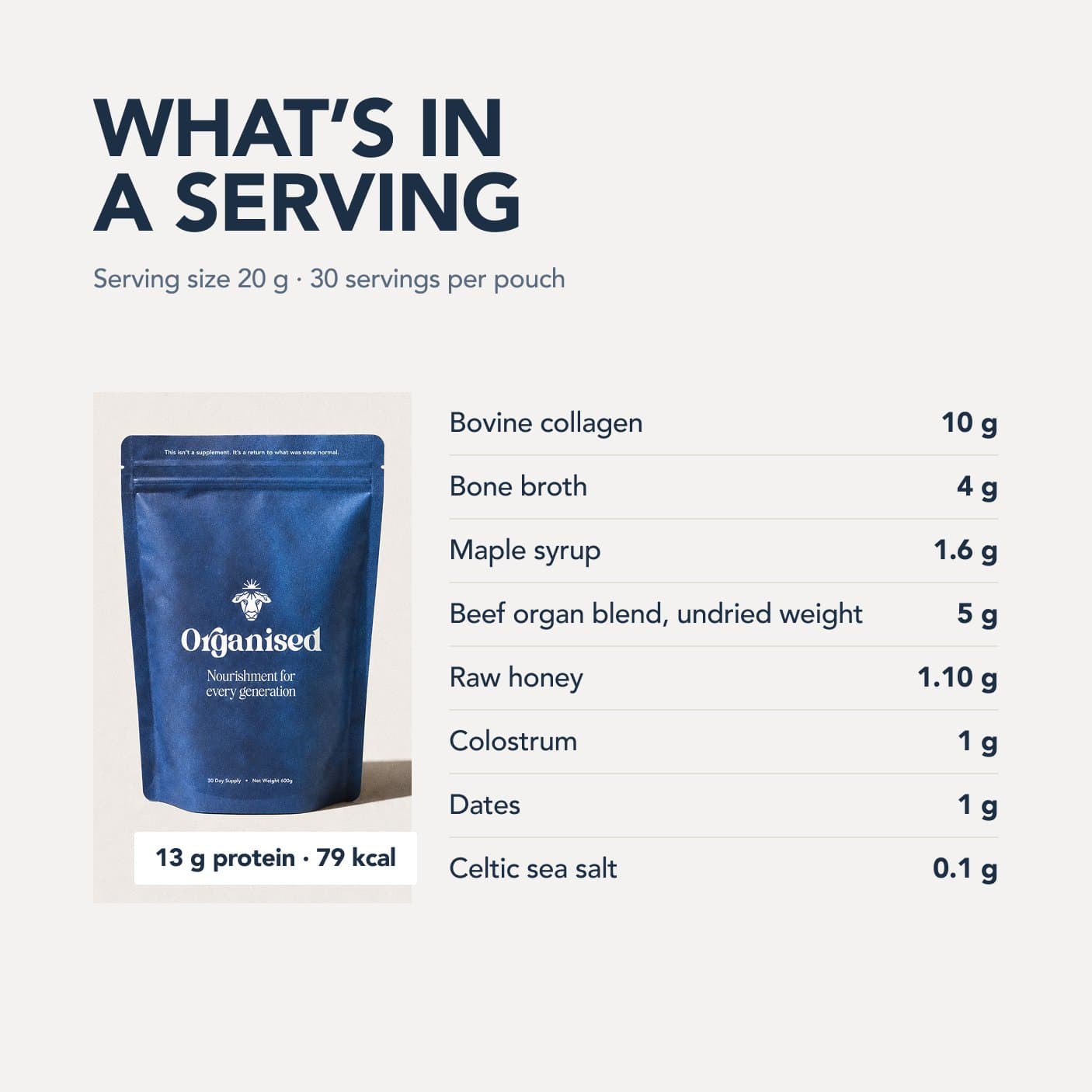
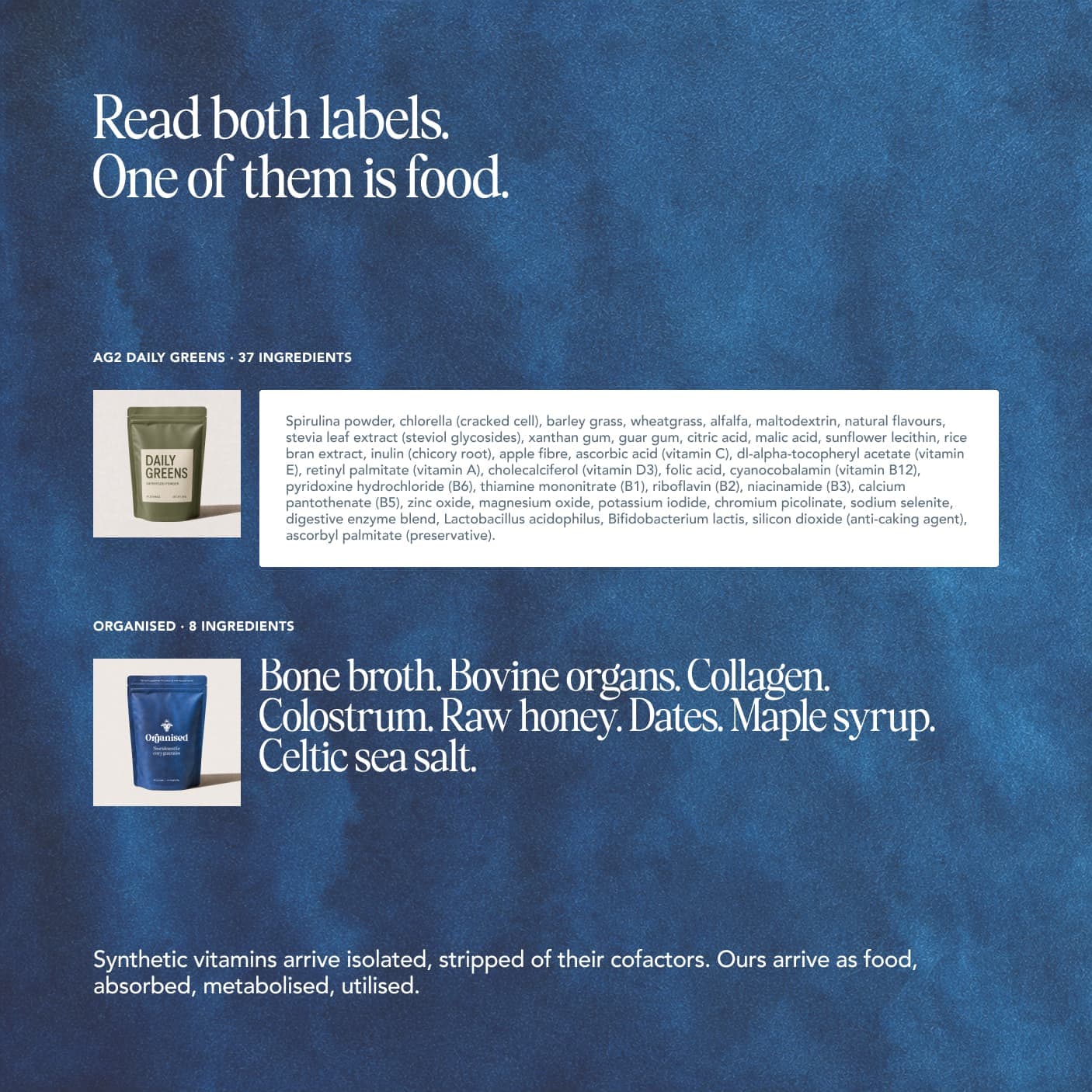
Eight real ingredients built around grass-fed beef organs, collagen and colostrum. Nothing synthetic added.
Free with your first order, worth £38. Plus £10 off the pouch with a subscription.



Free UK shipping · Made in England · 100 day money back guarantee on your first pouch · Skip, pause or cancel anytime
Why mitochondrial decline is the root cause of ageing
Every cell in your body contains mitochondria (except your red blood cells). These organelles produce ATP, the energy currency your cells use for everything. As you age, your mitochondria produce energy less efficiently. This is not inevitable. It is the result of cumulative damage that can be slowed dramatically through nutrition and behaviour.
Mitochondria are damaged by oxidative stress (excess free radicals) and by poor nutrition. A diet high in seed oils provides fuel for mitochondria that creates more free radicals, not less. A diet low in the micronutrients mitochondria need (magnesium, zinc, B vitamins, antioxidants) forces mitochondria to work harder with fewer resources.
Over time, damaged mitochondria accumulate. Your cells have less energy. Every system in your body slows. Your metabolism decreases. Your recovery slows. Your mental clarity fades. Wrinkles deepen. You age.
The good news is that mitochondrial health is responsive to dietary and lifestyle changes. Your cells can replace mitochondria (mitochondrial biogenesis). With adequate nutrition and consistent exercise, your mitochondrial density can actually increase. You can age younger if you deliberately support your mitochondria.
Mitochondrial decay is not destiny. It is the result of choices. Better choices create younger cells.
Beyond CoQ10: The full mitochondrial nutrient picture
Coenzyme Q10 (CoQ10) is crucial for mitochondrial energy production. It is found richly in beef heart (which is why our ancestors ate it), organ meats, and fatty fish. It is also synthesised by your body if your nutrient status is adequate.
But CoQ10 alone is not sufficient. Your mitochondria need a complete nutrient environment to function optimally. Carnitine (from red meat) transports fatty acids into mitochondria for energy production. B vitamins are essential cofactors in every step of energy production. Magnesium is required for ATP synthesis. Iron is necessary for electron transport.
This is why a nutrient-dense whole food diet outperforms a CoQ10 supplement. Real food provides the entire orchestra of nutrients your mitochondria need. Supplements provide a single instrument.
Additionally, antioxidants (from colourful vegetables, dark chocolate, green tea) protect mitochondria from oxidative damage. Removing the foods that increase oxidative stress (seed oils, sugar, processed foods) is as important as adding antioxidant foods.
Support your mitochondria with complete nutrition. Red meat, organs, fish, vegetables, and healthy fats provide everything your mitochondria need to produce energy efficiently.
Resistance training and consistent movement also signal your body to maintain and rebuild mitochondria. Sedentary people have poor mitochondrial density. Active people, regardless of age, have mitochondrial health similar to younger people. Exercise is mitochondrial medicine.
The bottom line
Ageing is optional. Not completely, but more than you'd expect. The primary driver of age-related decline is mitochondrial dysfunction. That dysfunction is caused by poor nutrition, oxidative stress, and sleep deprivation. Fix those three things and your mitochondria maintain function. Your energy stays high. Your metabolism stays efficient. Your body repairs itself. You age well.
References
Every source below was checked on 27 August 2026. Each PubMed, PMC and DOI identifier was resolved against NCBI or Crossref, and what it opens is printed under the citation, so you can see the link goes where the citation says without leaving the page. Where a citation and its identifier disagreed, the citation was corrected to the record or the reference was deleted along with the sentence marker that pointed at it, and where the resolved paper turned out not to support the sentence, the sentence was cut back to what it does support. Borrowed authority is worse than none, because it looks like rigour.
- Saraste M. Oxidative phosphorylation at the fin de siecle. Science. 1999;283(5407):1488-93. PMID 10066163Checked 27 August 2026: PMID 10066163 opens Saraste M, Oxidative phosphorylation at the fin de siècle. Science 1999;283(5407):1488-93. PubMed indexes it as: Review.
- Hernández-Camacho JD, et al. Coenzyme Q10 Supplementation in Aging and Disease. Front Physiol. 2018;9:44. PMC5807419Checked 27 August 2026: PMC5807419 opens Hernández-Camacho JD, Bernier M, López-Lluch G et al, Coenzyme Q(10) Supplementation in Aging and Disease. Front Physiol 2018;9:44. PubMed indexes it as: Review.
- National Institutes of Health, Office of Dietary Supplements. Carnitine - Health Professional Fact Sheet. ods.od.nih.gov
Who wrote and reviewed this guide
Niall Kiddle
Author · Founder, Organised
Niall is the founder of Organised. He started the company in 2024 after fixing his own health the slow way: in 2022 he swapped a cupboard of synthetic supplements for real food, raw milk, organ meats, bone broth and honey, and felt the difference within months.
Areas of expertise: Ancestral nutrition, Organ meats, Whole-food supplementation, Gut health, Regenerative sourcing
Read Niall's full profile
Pedro Rodrigues
Reviewer · Agronomist (farming and sourcing only)
Pedro is the agronomist Organised works with on farming and sourcing. His job on the guides is to keep the science honest: he reviews what we publish about soil health, regenerative agriculture, grazing and the way food is actually produced.
Areas of expertise: Regenerative agriculture, Agronomy, Soil health, Grass-fed farming, Food sourcing
Reviewed this guide on
Read Pedro's full profileMore on longevity & ageing
View allBrowse the guides library
All guidesKeep reading

Health goals
Ageing Well: The Nutrients That Support Healthy Longevity
Ageing well requires specific nutrients: collagen, B12, magnesium, K2, glutathione. Here's where to find them and why they matter.
Health goals
How Seed Oils Disrupt Your Hormones
Seed oils trigger oxidative stress and disrupt hormone production. Here's how to restore hormonal balance through real food.

Health goals
The Nutritional Root Causes of Hair Loss
Discover the nutritional causes of hair loss, from iron, zinc and biotin to thyroid health, and how nutrient-dense whole foods can help support regrowth.
Real food, made effortless
Start my daily blendA few ways to use it
All recipes
How to Make Bone Marrow Butter
Roast grass-fed marrow bones, scoop the marrow, and mix with butter and herbs. A nutrient-dense spread with fat-soluble vitamins.

Bone Broth from Scratch: A Step-by-Step Guide
Step-by-step guide to making bone broth at home. Stovetop, slow cooker, and Instant Pot methods. Rich in collagen and gut-healing minerals.
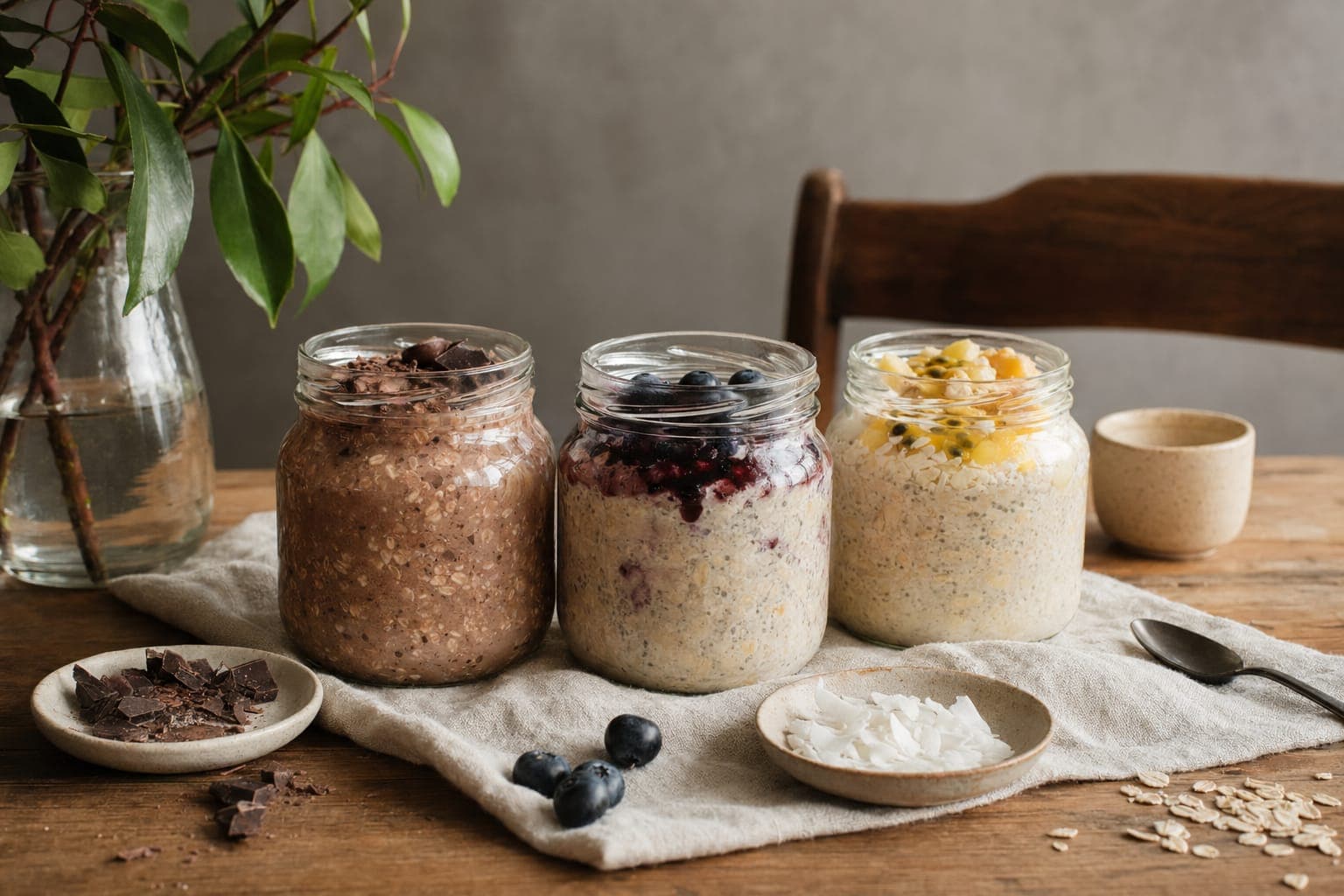
Organised Overnight Oats: 3 Variations
Three delicious overnight oats variations with Organised. Chocolate, berry, tropical flavours. Make them Sunday, eat them all week.


 Join over 100,000+ members
Build a better food system with us
The Organised community is thousands of people choosing real food and backing the farmers who grow it, all of us trying to leave the world a little better than we found it. If that is what you care about too, you belong here.