PCOS and Nutrition: A Whole Food Approach
PCOS isn't a pharmaceutical problem. It's a metabolic problem rooted in insulin resistance and inflammation. The standard medical response is birth control and metformin. Both suppress symptoms without addressing the root cause. Whole foods do something different. They fix it.
By Niall Kiddle, Founder, Organised

Reviewed by Pedro Rodrigues, Agronomist (farming and sourcing only) ·
6 min read · Published · Updated · 3 cited sources
Makers of the Organised Daily blend, a grass-fed beef organ supplement from regenerative UK farms

What PCOS actually is
Polycystic ovary syndrome shows up as irregular or absent cycles, acne, excess hair growth, hair loss from the scalp, difficulty losing weight, and often, infertility. The diagnosis is usually made by ultrasound, looking for multiple cysts on the ovaries, alongside hormonal markers showing elevated androgens.3
But PCOS is not actually a disease of the ovaries. It's a disease of metabolic dysfunction. The cysts are a symptom, not the problem. Fix the metabolism, and the cysts resolve. Fix the insulin sensitivity, and the androgens normalise. Fix the inflammation, and the cycle returns.
The conventional medical model treats the symptoms with hormonal contraceptives or insulin-sensitising drugs. These suppress the expression of PCOS without fixing its root cause. When you stop taking them, the problem returns.
The insulin resistance connection
Around 70% of women with PCOS have insulin resistance.1 Some of the remaining 30% have it too, just without clinical markers showing it yet.
Here's the mechanism: insulin resistance means your cells don't respond well to insulin. Your pancreas has to pump out more and more to get glucose into cells. High insulin in the bloodstream triggers the ovaries to produce excess androgens (testosterone and related hormones). Excess androgens suppress the hormones needed for normal ovulation. Your cycle breaks.
Weight gain follows, not because of calorie excess, but because high insulin drives fat storage and suppresses fat mobilisation. You eat normally but gain weight. Worse, the weight gain further worsens insulin resistance. It's a vicious cycle.
PCOS isn't about eating less. It's about eating foods that don't spike insulin and that restore insulin sensitivity.
The fix is straightforward: stop eating foods that spike insulin. Remove refined carbohydrates. Remove seed oils (they promote insulin resistance). Replace them with whole foods that stabilise blood sugar.
Why inflammation matters
Women with PCOS have elevated markers of systemic inflammation. CRP (C-reactive protein), IL-6, TNF-alpha. These aren't incidental. Chronic low-grade inflammation drives insulin resistance. It also directly stimulates the ovaries to produce excess androgens.
The sources of inflammation are usually: seed oils (high omega-6, pro-inflammatory), sugar and refined carbs (trigger inflammatory responses), processed foods (contain inflammatory additives), and the metabolic dysfunction itself (insulin resistance creates inflammation, which worsens insulin resistance).
Remove these sources and add anti-inflammatory foods (fatty fish, organ meats, colourful vegetables, bone broth), and inflammation markers drop within weeks. Women report clearer skin, less acne, reduced hair growth within 4-8 weeks.
The micronutrient deficiency piece
Women with PCOS are chronically deficient in specific micronutrients. Vitamin D is deficient in roughly 70% of PCOS cases. Chromium is low. Zinc is often low. Inositol (technically a carbohydrate, but functionally a micronutrient) is deficient.
These deficiencies worsen insulin resistance. Low vitamin D impairs insulin secretion and sensitivity. Low chromium worsens blood sugar regulation. Low inositol2 impairs the signalling that allows cells to respond to insulin.
The conventional approach is supplementation. But supplementation without food is like treating a symptom without addressing the cause. Eat whole foods rich in these nutrients, and you restore what's actually missing.
Vitamin D comes from fatty fish, eggs, organ meats. Chromium is highest in liver and nutritional yeast. Zinc is in oysters, beef, liver. Inositol is found in whole grains, legumes, and leafy greens.
If you've been eating processed foods for years, your micronutrient status is depleted. Switching to real food alone can take 8-12 weeks to restore status. Be patient. The body responds, but it needs time.
The real-food protocol
The PCOS diet is not complicated. It's the opposite of complicated. Real food.
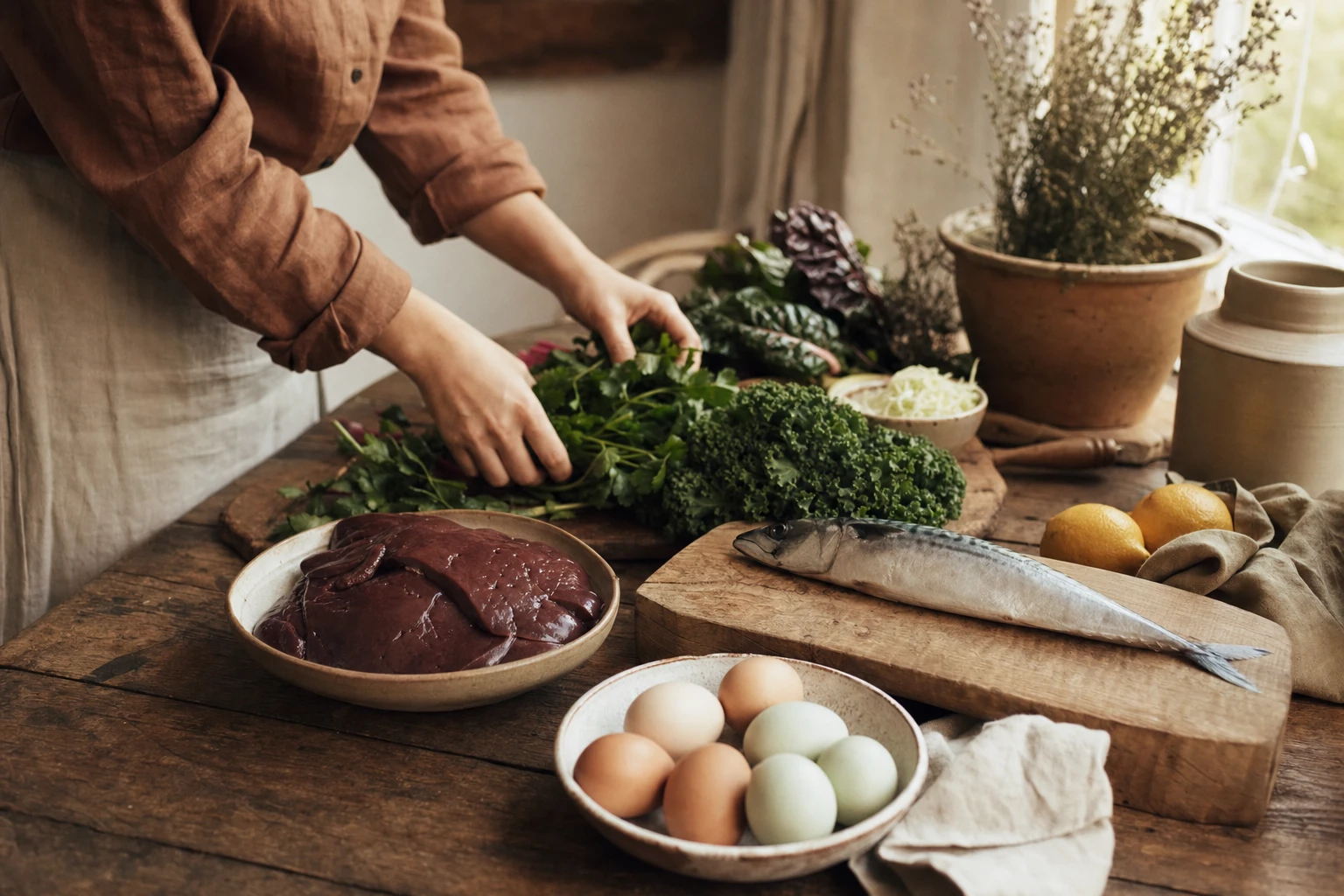
Eat animal foods. Beef, lamb, fish, oysters, eggs. These provide the protein, zinc, selenium, B vitamins, and vitamin D your endocrine system needs. Organ meats especially. Liver once or twice a week provides more micronutrients than a dozen supplement bottles.
Eat coloured vegetables. Not just green. Orange carrots (beta-carotene), red beets (folate and betalains), dark leafy greens (magnesium, vitamin K). Aim for variety. Colour indicates different phytonutrients. Different phytonutrients fight different inflammatory pathways.
Eat whole fruits. Yes, fruit has carbs. But whole fruit comes with fibre, polyphenols, and micronutrients that slow glucose absorption and fight inflammation. Berries are especially good. So are apples, pears, and citrus. Juice is out, whole fruit is in.
Eat whole grains and legumes sparingly, and always with fat and protein. The point isn't to cut all carbs. It's to eat carbs in a form that doesn't spike insulin. Whole grain oats with butter and eggs. Beans with olive oil and fish. Not naked carbs.
Eliminate seed oils entirely. Switch to butter, ghee, coconut oil, olive oil. This single change reduces inflammation measurably.
Eliminate refined sugar and processed foods. No debate here. They drive the entire problem.
Get health guides like this, free
Two short reads a week on eating for energy, gut health, skin, sleep and more.
By signing up you agree to receive emails from us. No spam, unsubscribe anytime.
The timeline
PCOS reversal follows a pattern. Week 1-2, women notice clearer skin and reduced acne. Week 3-4, energy improves. Week 4-8, hair growth slows (or reversal starts on scalp hair loss). Week 8-12, cycle regularises. Weight loss often starts around week 4-6 and accelerates as insulin sensitivity improves.
Blood markers improve faster than symptoms sometimes. Testosterone can drop significantly within 8 weeks. HOMA-IR (insulin resistance marker) improves within 4-6 weeks. But don't wait for blood work to know it's working. How you feel is the most honest feedback.
PCOS is reversible. Not manageable with medication. Reversible. Feed your body correctly, and it fixes itself.
Supplement support for accelerated recovery
Real food is the foundation, but some targeted supplementation can accelerate PCOS reversal. Inositol supplementation (myo-inositol and D-chiro-inositol) has research backing for improving insulin sensitivity and restoring ovulation. A typical dose is 2-4 grams daily. Most women see measurable improvements in testosterone levels and cycle regularity within 8-12 weeks.
Vitamin D supplementation is justified in most women with PCOS because dietary intake is rarely sufficient to restore depleted status. 2000-4000 IU daily is a reasonable maintenance dose once status is restored through blood testing.
N-acetyl cysteine (NAC) supports glutathione production and has been shown in research to improve insulin sensitivity and ovulation rates in PCOS. A dose of 1200-1800mg daily shows benefit.
These supplements are meant to support the real-food protocol, not replace it. Food is foundational. Supplements fill specific gaps once food is dialled in.
1 of 9
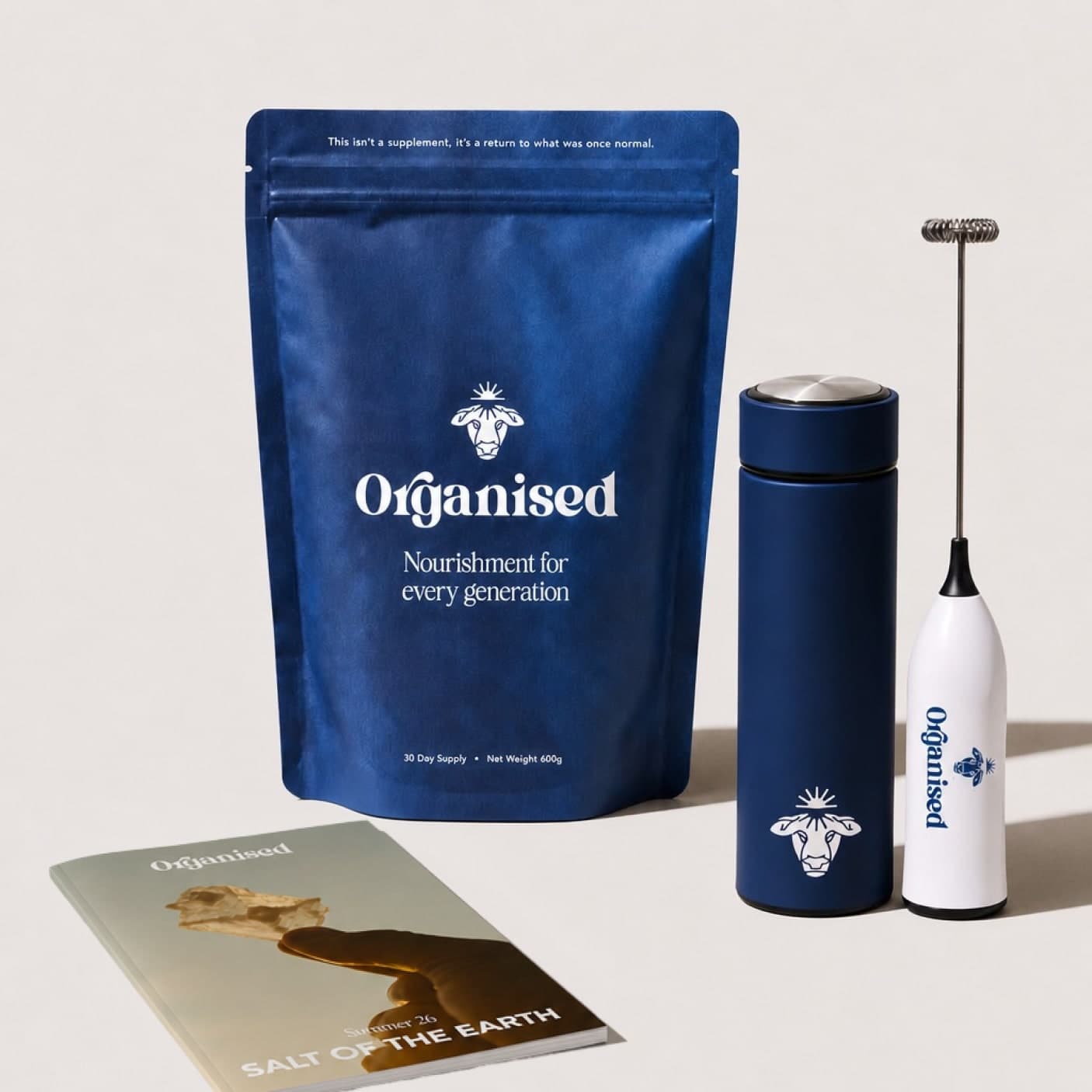
Daily blend
100,000+ thriving families4.9 on Trustpilot
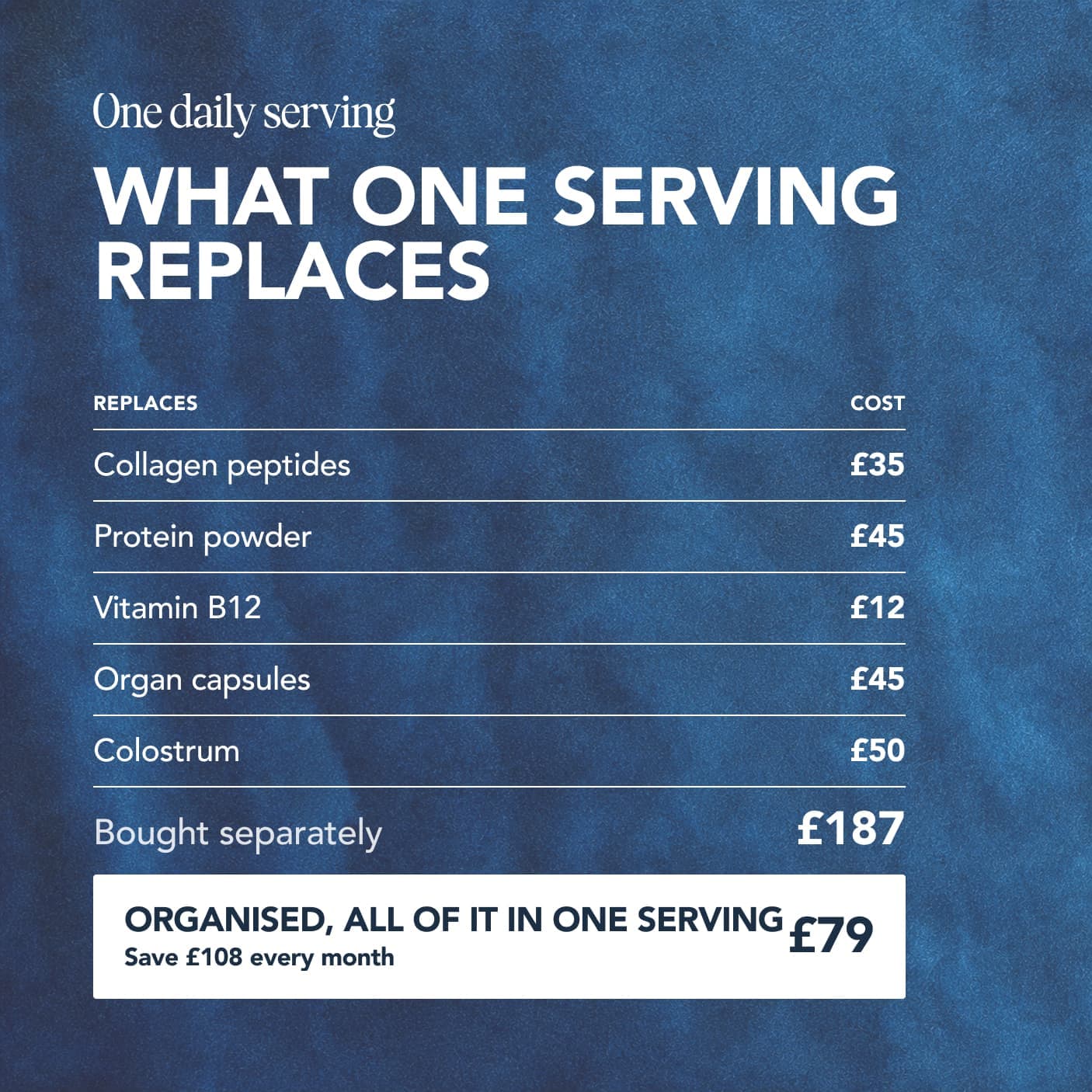
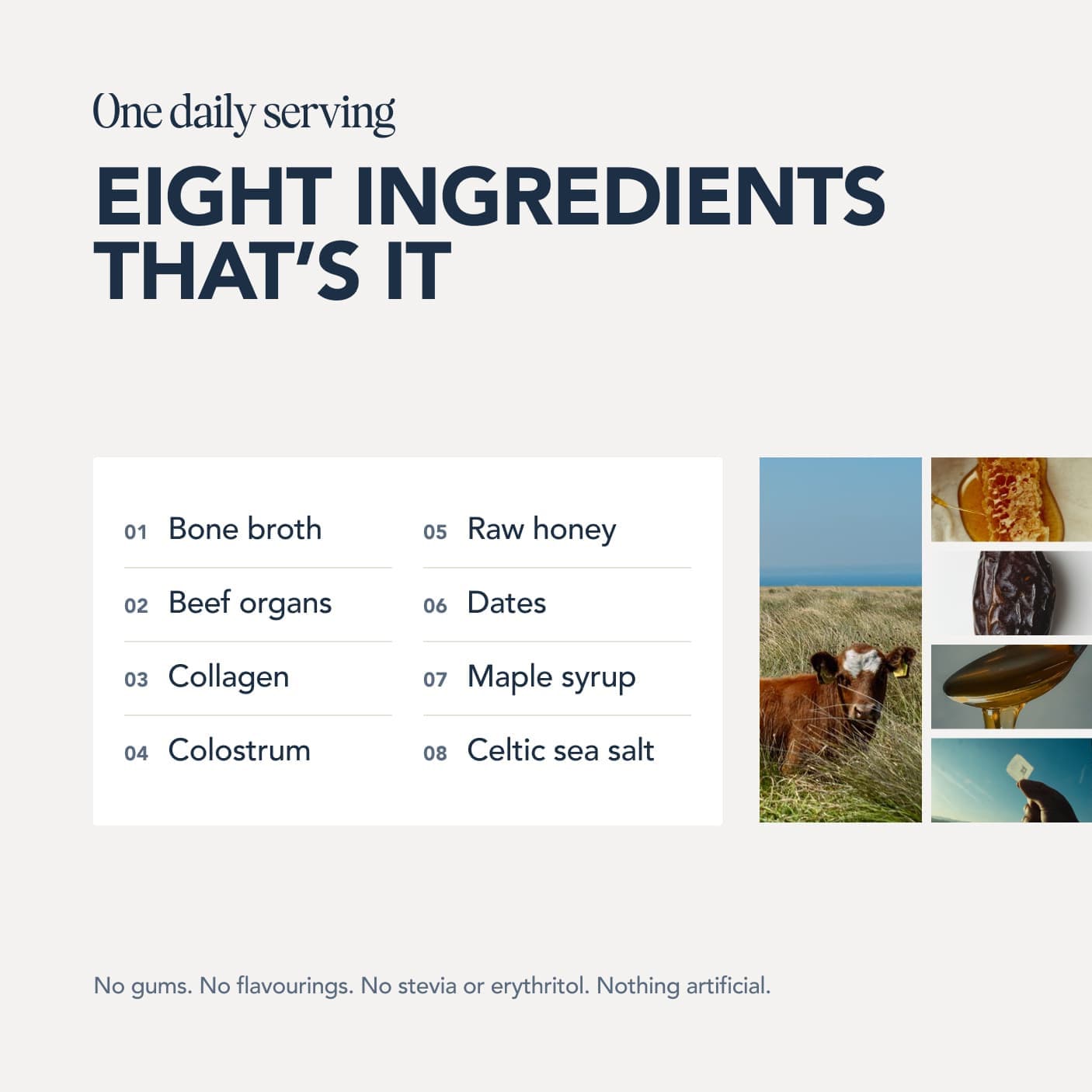
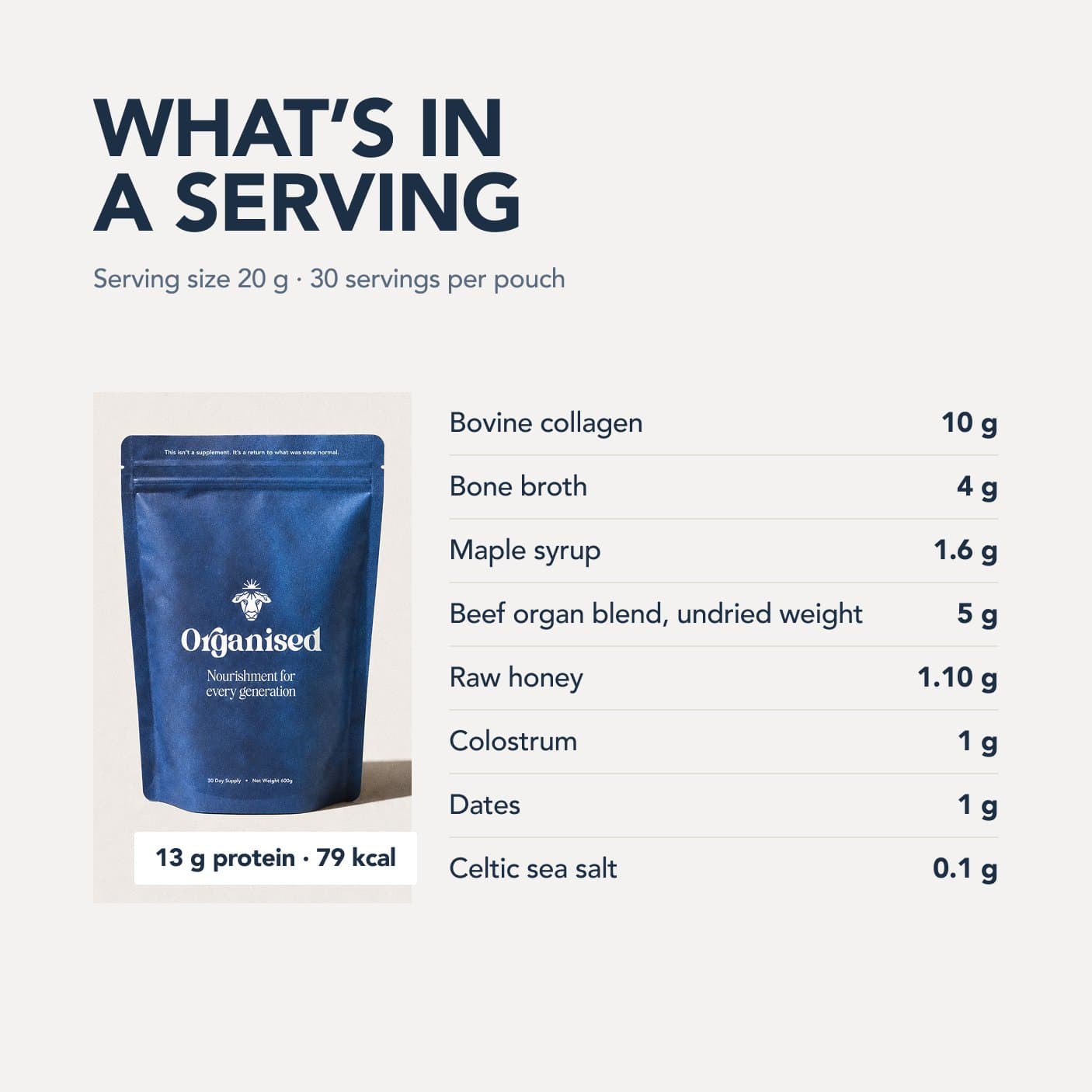
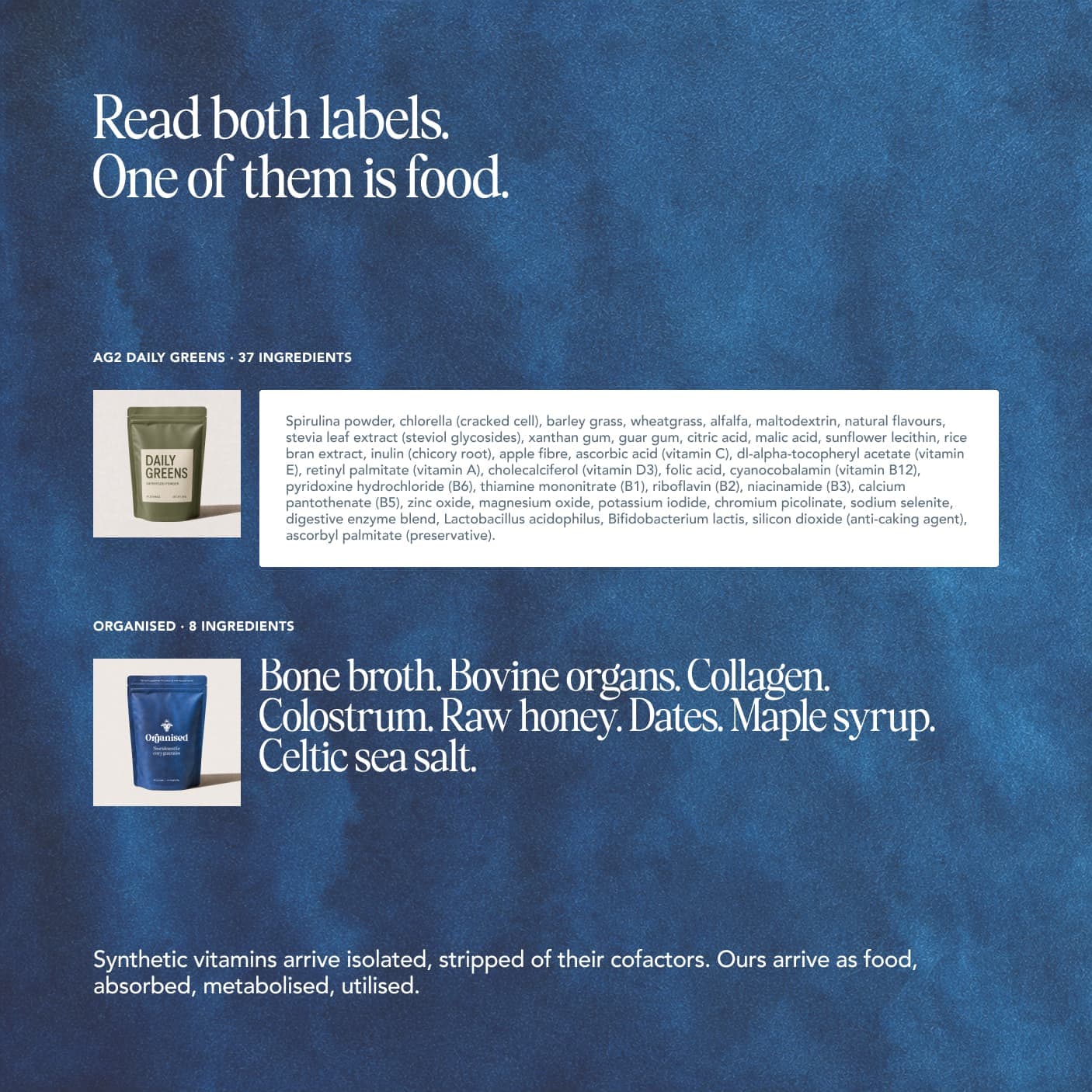
Eight real ingredients built around grass-fed beef organs, collagen and colostrum. Nothing synthetic added.
Free with your first order, worth £38. Plus £10 off the pouch with a subscription.
Free UK shipping · Made in England · 100 day money back guarantee on your first pouch · Skip, pause or cancel anytime
Stress management and metabolic health
PCOS is worsened by chronic stress. Elevated cortisol impairs insulin sensitivity, promotes weight gain, and worsens androgen excess. Managing stress isn't optional for PCOS reversal.
This doesn't mean meditation and yoga alone (though both help). It means reducing the root causes of stress if possible. Removing yourself from chronically stressful situations. Prioritising sleep (7-9 hours). Moving your body in ways you enjoy, not in ways that create stress. These matter as much as food.
Many women find that once they improve their diet and sleep, stress tolerance improves automatically. Better nutrition means better neurotransmitter production. Better sleep means better emotional regulation. The systems reinforce each other.
The mental shift required
The hardest part of reversing PCOS isn't the food changes. It's the mental shift. You've been told PCOS is a lifelong condition. That you'll manage it with medication. That it's your body's fault.
It's none of those things. PCOS is a signal that your metabolism is broken and your body is asking for help. Feed it correctly, and it responds. Your body isn't failing you. It's communicating. Listen. Respond. Heal.
This requires patience. It requires consistency. But the reward is profound: a cycle that works, hormones that are balanced, energy that is stable, and a sense that your body is on your side again.
The bottom line
PCOS is metabolic dysfunction expressed through the endocrine system. Fix the metabolism and the endocrine system heals. That means eating real food, removing inflammatory triggers, and restoring micronutrient density. It's not a cure that happens in a week. But it's reliable. Women have been reversing PCOS with nutrition for decades. You can too.
References
Every source below was checked on 27 August 2026. Each PubMed, PMC and DOI identifier was resolved against NCBI or Crossref, and what it opens is printed under the citation, so you can see the link goes where the citation says without leaving the page. Where a citation and its identifier disagreed, the citation was corrected to the record or the reference was deleted along with the sentence marker that pointed at it, and where the resolved paper turned out not to support the sentence, the sentence was cut back to what it does support. Borrowed authority is worse than none, because it looks like rigour.
- Diamanti-Kandarakis E, Dunaif A. Insulin resistance and the polycystic ovary syndrome revisited: an update on mechanisms and implications. Endocr Rev. 2012. PMID 23065822.Checked 27 August 2026: PMID 23065822 opens Diamanti-Kandarakis E, Dunaif A, Insulin resistance and the polycystic ovary syndrome revisited: an update on mechanisms and implications. Endocr Rev 2012;33(6):981-1030. PubMed indexes it as: Review.
- Greff D, et al. Inositol is an effective and safe treatment in polycystic ovary syndrome: a systematic review and meta-analysis of randomized controlled trials. Reprod Biol Endocrinol. 2023. PMC9878965.Checked 27 August 2026: PMC9878965 opens Greff D, Juhász AE, Váncsa S et al, Inositol is an effective and safe treatment in polycystic ovary syndrome: a systematic review and meta-analysis of randomized controlled trials. Reprod Biol Endocrinol 2023;21(1):10. PubMed indexes it as: Meta-Analysis, Systematic Review.The authors' own declaration, from the record: The authors declare that they have no competing interests.
- NHS. Polycystic ovary syndrome (PCOS): overview. nhs.uk/conditions/polycystic-ovary-syndrome-pcos.
Who wrote and reviewed this guide
Niall Kiddle
Author · Founder, Organised
Niall is the founder of Organised. He started the company in 2024 after fixing his own health the slow way: in 2022 he swapped a cupboard of synthetic supplements for real food, raw milk, organ meats, bone broth and honey, and felt the difference within months.
Areas of expertise: Ancestral nutrition, Organ meats, Whole-food supplementation, Gut health, Regenerative sourcing
Read Niall's full profile
Pedro Rodrigues
Reviewer · Agronomist (farming and sourcing only)
Pedro is the agronomist Organised works with on farming and sourcing. His job on the guides is to keep the science honest: he reviews what we publish about soil health, regenerative agriculture, grazing and the way food is actually produced.
Areas of expertise: Regenerative agriculture, Agronomy, Soil health, Grass-fed farming, Food sourcing
Reviewed this guide on
Read Pedro's full profileMore on hormones
View all- Hormonal Health Starts in the Kitchen: A Whole Food Guide
- Perimenopause Nutrition: What Changes and What to Eat
- Coming Off the Pill? How to Support Your Body's Transition
- Cortisol, Stress and Nutrition: Breaking the Cycle
- Eating for Each Phase of Your Menstrual Cycle
- How Blood Sugar Instability Wrecks Your Hormones
- How Liver Supports Oestrogen Detoxification
- How Seed Oils Disrupt Your Hormones
- Insulin Resistance: The Silent Metabolic Crisis
- Is Polyester Bad For Hormones? Your Guide To Hormone Safe Clothing
- Testosterone and Nutrition: What Men Need to Know
- Thyroid Health: The Nutrients Your Thyroid Needs to Function
Browse the guides library
All guidesKeep reading

Health goals
The Gut-Brain Axis: How Your Digestion Affects Your Mind
Understand the gut-brain connection and how your digestion shapes mood, anxiety, and focus, plus simple ways to support both your gut and mind together.

Health goals
Cortisol, Stress and Nutrition: Breaking the Cycle
Ongoing stress and high cortisol can deplete key nutrients. Learn the cortisol and stress nutrition steps that help you restore them and break the cycle.

Health goals
Postpartum Hair Loss: Why It Happens and How to Recover
Understand why hair loss happens after birth and how to restore thickness through iron repletion and nutrient-dense foods for new mothers.
Real food, made effortless
Start my daily blendA few ways to use it
All recipes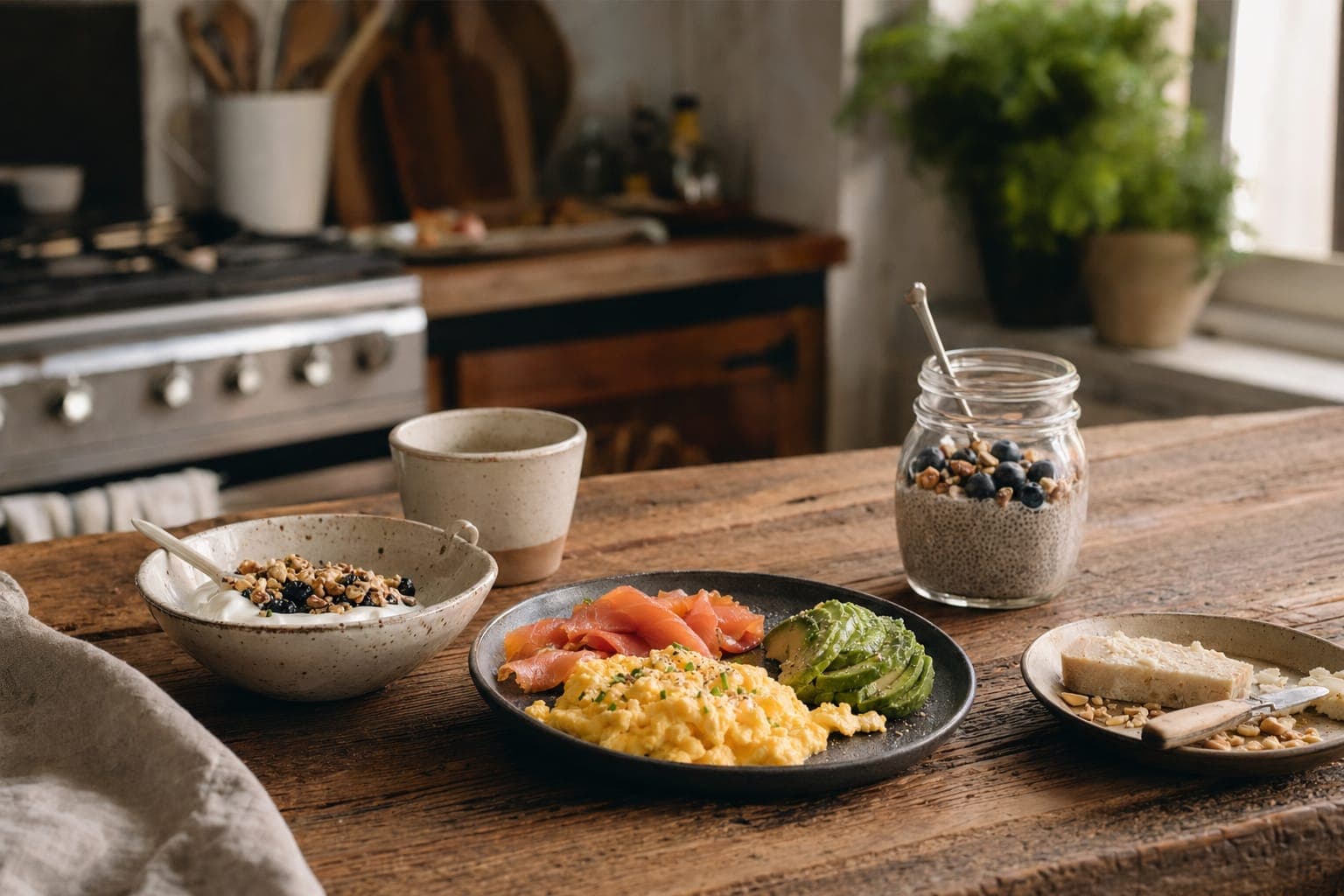
5-Minute High-Protein Breakfasts Using Organised
Quick, high-protein breakfast ideas using Organised. Five recipes you can make in minutes with real food. No fussing around.
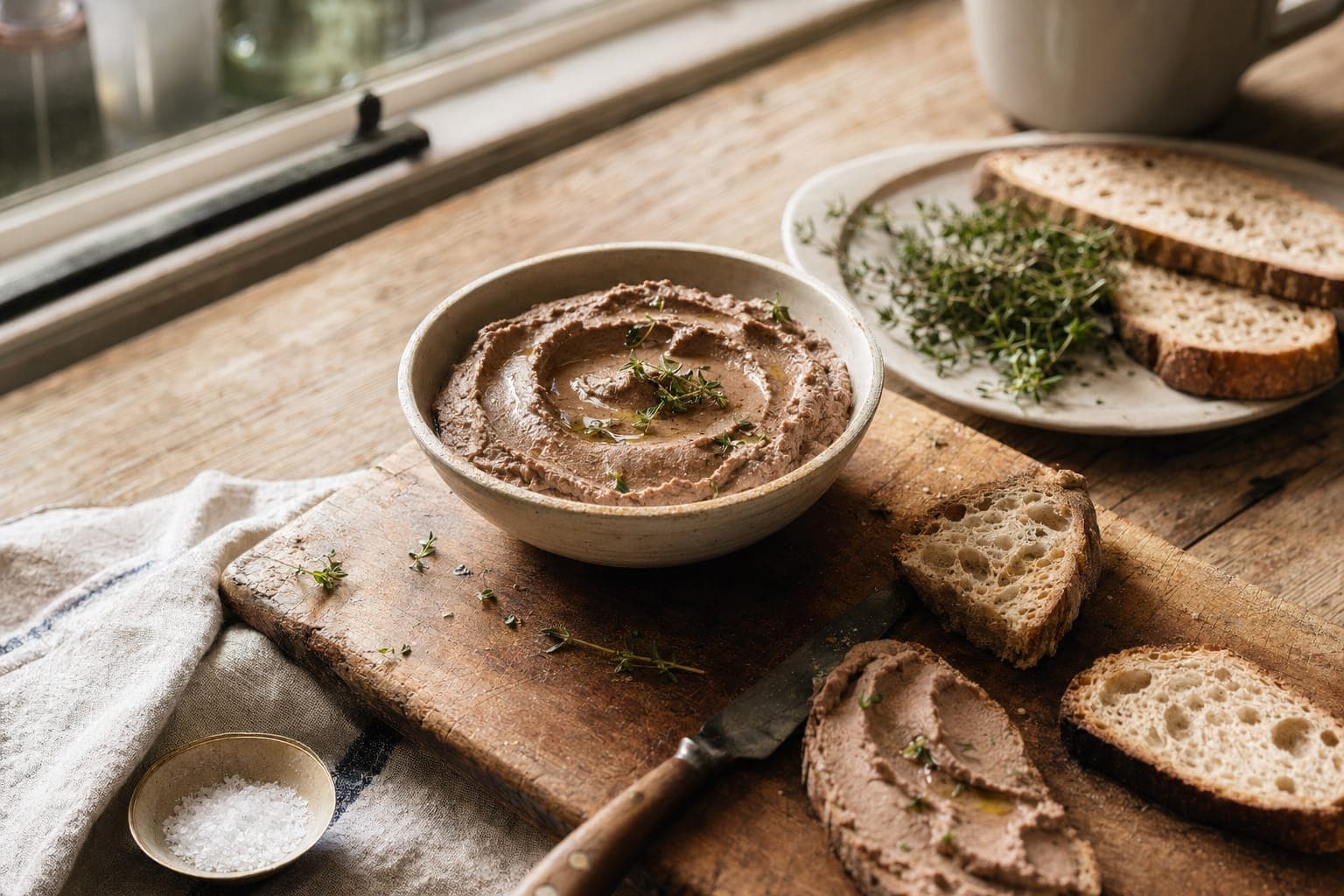
Liver Pate for Beginners: A Gentle Introduction to Organ Meats
Simple liver pate recipe to start eating organ meats. Chicken liver, butter, and herbs. Gentle introduction to nutrient-dense whole foods.
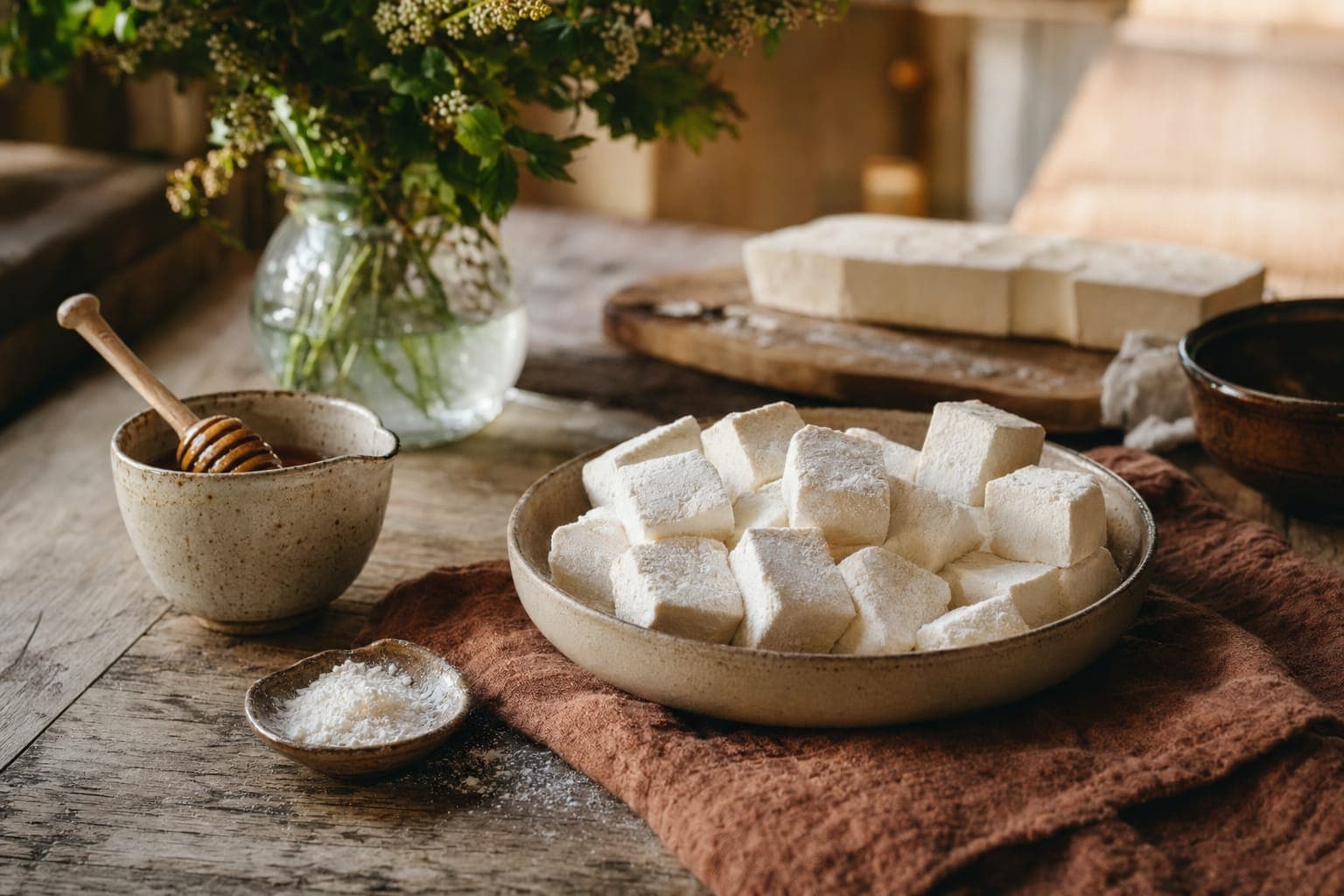
Gut-Healing Marshmallows with Collagen and Raw Honey
Learn to make gut-healing marshmallows with collagen and raw honey. A shareable treat that sneaks nutrition into every bite. Easy recipe with video tips.


 Join over 100,000+ members
Build a better food system with us
The Organised community is thousands of people choosing real food and backing the farmers who grow it, all of us trying to leave the world a little better than we found it. If that is what you care about too, you belong here.