Protein Timing: Does It Really Matter?
You finish your workout and rush to drink your protein shake within 30 minutes because you've been told that if you miss the anabolic window, you've wasted the effort. It's one of fitness culture's most persistent myths. And it's costing you unnecessary stress and marketing-driven supplement purchases.

By Niall Kiddle, Founder, Organised

Reviewed by Pedro Rodrigues, Agronomist (farming and sourcing only) ·
6 min read · Published · Updated · 2 cited sources
Makers of the Organised Daily blend, a grass-fed beef organ supplement from regenerative UK farms


The anabolic window myth
The idea is intuitive. You've just triggered muscle protein synthesis. Your body is primed to use amino acids. Consume protein immediately and it will flow into your muscles. Miss the window and it's gone. Simple.
Except the window is much wider than fitness marketing suggests. And more importantly, your total daily protein intake matters far more than the precise timing of individual meals.
The notion of a 30-minute anabolic window came from research in the 1990s examining very specific conditions: untrained individuals doing resistance training on an empty stomach.1 Even then, the effect was modest. As research has accumulated, the picture has become clearer. If you're eating adequate protein throughout the day, the timing of that protein becomes almost irrelevant.
The single most important predictor of muscle growth is total daily protein intake. How you distribute it across the day barely matters.
What the research actually shows
Multiple studies have examined this directly. Growing evidence suggests that for trained individuals, the timing of protein around a workout has negligible effect on muscle growth when total daily protein is adequate. Research examining trained lifters found that protein consumed within a two-hour window around training provided no advantage over protein consumed earlier in the day.
One study examined trained men completing resistance training on two occasions: once after consuming a protein meal immediately post-workout, once after consuming the same meal two hours later. The muscle protein synthesis response was nearly identical. The timing didn't matter.
Another analysis found that when total daily protein intake was controlled, the distribution of that protein across meals had almost no impact on muscle growth over an eight-week training block. What mattered was: did you eat enough protein throughout the day?
The research suggests that your body is far more sophisticated than the anabolic window model assumes. It's not a switch that turns on and off. It's a process that unfolds over hours and days, driven primarily by total nutrient availability.
If you're eating 0.8 to 1 gram of protein per pound of body weight daily, distributed across three to four meals, you're optimised for muscle growth. The timing of the post-workout protein is a rounding error.

Total daily protein matters infinitely more
Here's what actually predicts muscle growth: total daily protein intake. A trained male trying to build muscle needs roughly 0.8 to 1 gram per pound of body weight. A 180-pound man needs 144 to 180 grams daily. If he's hitting that, he's essentially optimised for muscle growth. The distribution of that protein barely changes the outcome.
Most people aren't even close to that target. They eat 60 grams of protein daily spread across two large meals, then wonder why their body composition doesn't shift. It's not the timing of the post-workout shake. It's that they're chronically deficient.
The practical implication is simple. Instead of obsessing over post-workout timing, obsess over hitting your daily target. Eat protein at every meal. Shoot for 30 to 40 grams per meal for most people, which is roughly a palm-sized portion of meat, fish, or dairy.
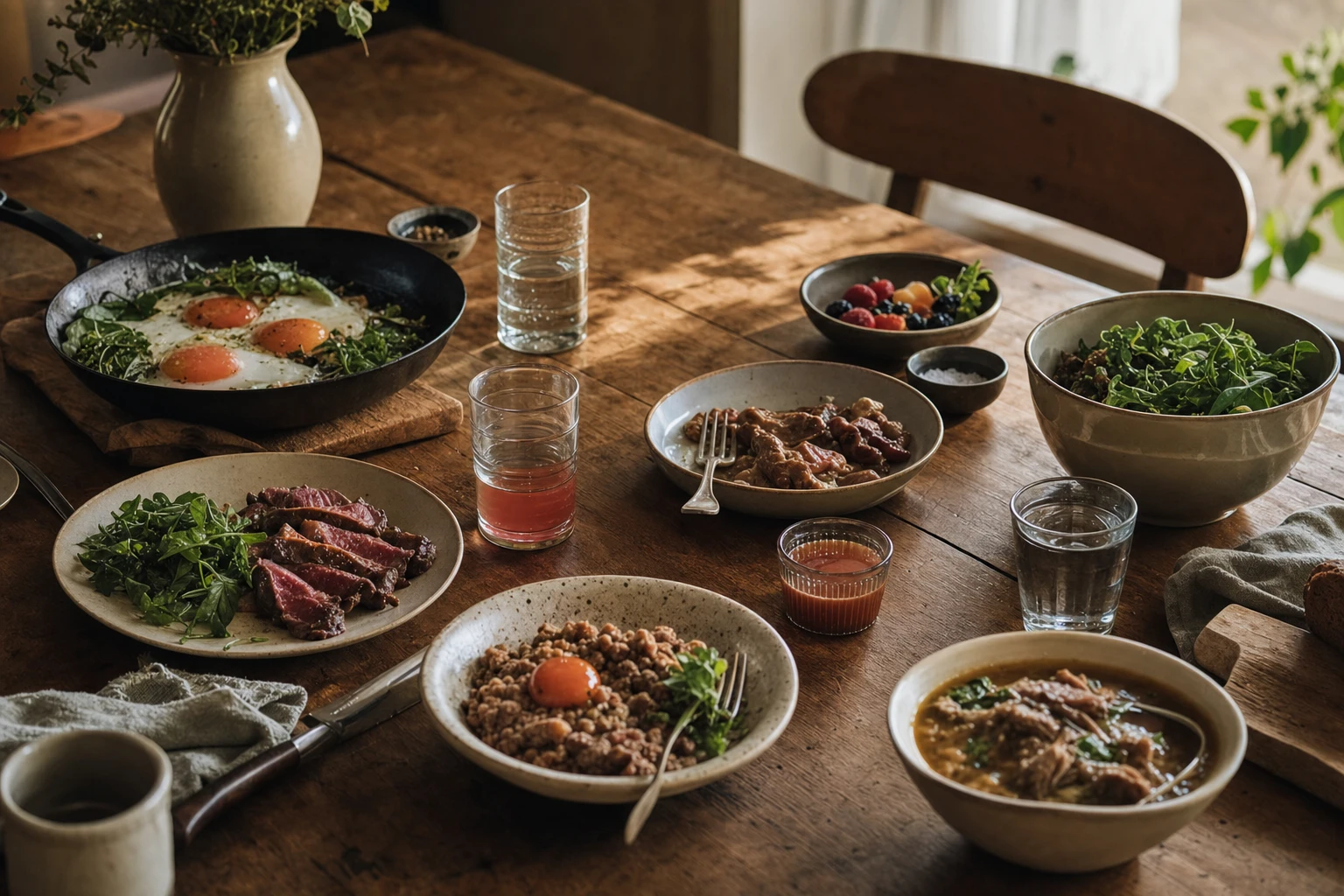
Breakfast: eggs and bacon (30 grams). Lunch: chicken and rice (35 grams). Dinner: steak and vegetables (40 grams). Snack: yoghurt and nuts (20 grams). That's 125 grams. Distribute it consistently and you're ahead of 90 percent of the population.
The secret to muscle growth isn't timing. It's consistency. Eat enough protein every day and your body will build muscle if you're training.
The real constraint on muscle building
If timing barely matters and total protein is the driver, what actually limits muscle growth? Three things: adequate stimulus (progressive resistance training), adequate protein (which we've covered), and adequate recovery.
Recovery includes sleep, which matters far more than post-workout timing. Your muscles grow when you're resting, not when you're training. If you're sleeping five hours and exercising hard, no amount of post-workout protein will compensate.
Recovery also includes overall caloric balance. You can't build muscle if you're in a severe caloric deficit. You need enough energy to support training and adaptation. This is where the obsession with timing actually becomes harmful. You spend energy stressing about the post-workout window and neglect the fundamentals.
For most people, the real limiting factor is that they don't eat enough total protein, they don't sleep enough, and they don't train with enough consistency. Fixing those three things yields 95 percent of the muscle-building results. Timing the protein shake yields maybe 5 percent more.
Get health guides like this, free
Two short reads a week on eating for energy, gut health, skin, sleep and more.
By signing up you agree to receive emails from us. No spam, unsubscribe anytime.
When timing genuinely matters
That said, there are narrow conditions where timing has a measurable effect. If you're training in a fasted state, which most people shouldn't, consuming protein immediately after helps. If you're eating a single large meal daily, which is suboptimal for muscle building, the timing of that meal relative to training matters more because you're not eating constantly.
For the vast majority of people training and eating normally throughout the day, timing is irrelevant. You've already consumed protein from previous meals. Your body is in a constant state of protein turnover and synthesis. Adding another meal within two hours of training provides no special advantage.
Consume protein within a reasonable window around training (a few hours is fine), but don't stress about 30 minutes exactly. Your total daily intake and training stimulus matter infinitely more.


1 of 9
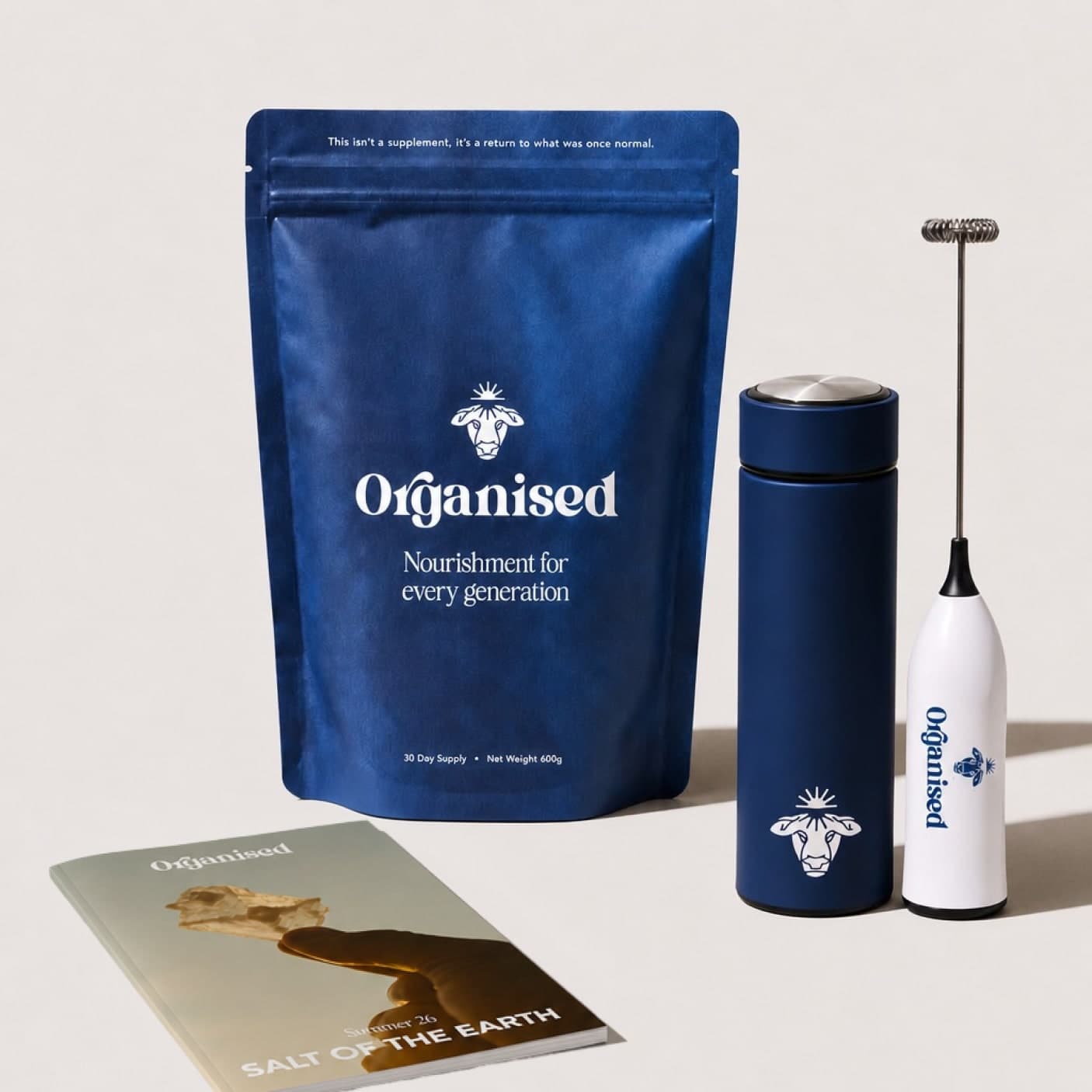
Daily blend
100,000+ thriving families4.9 on Trustpilot
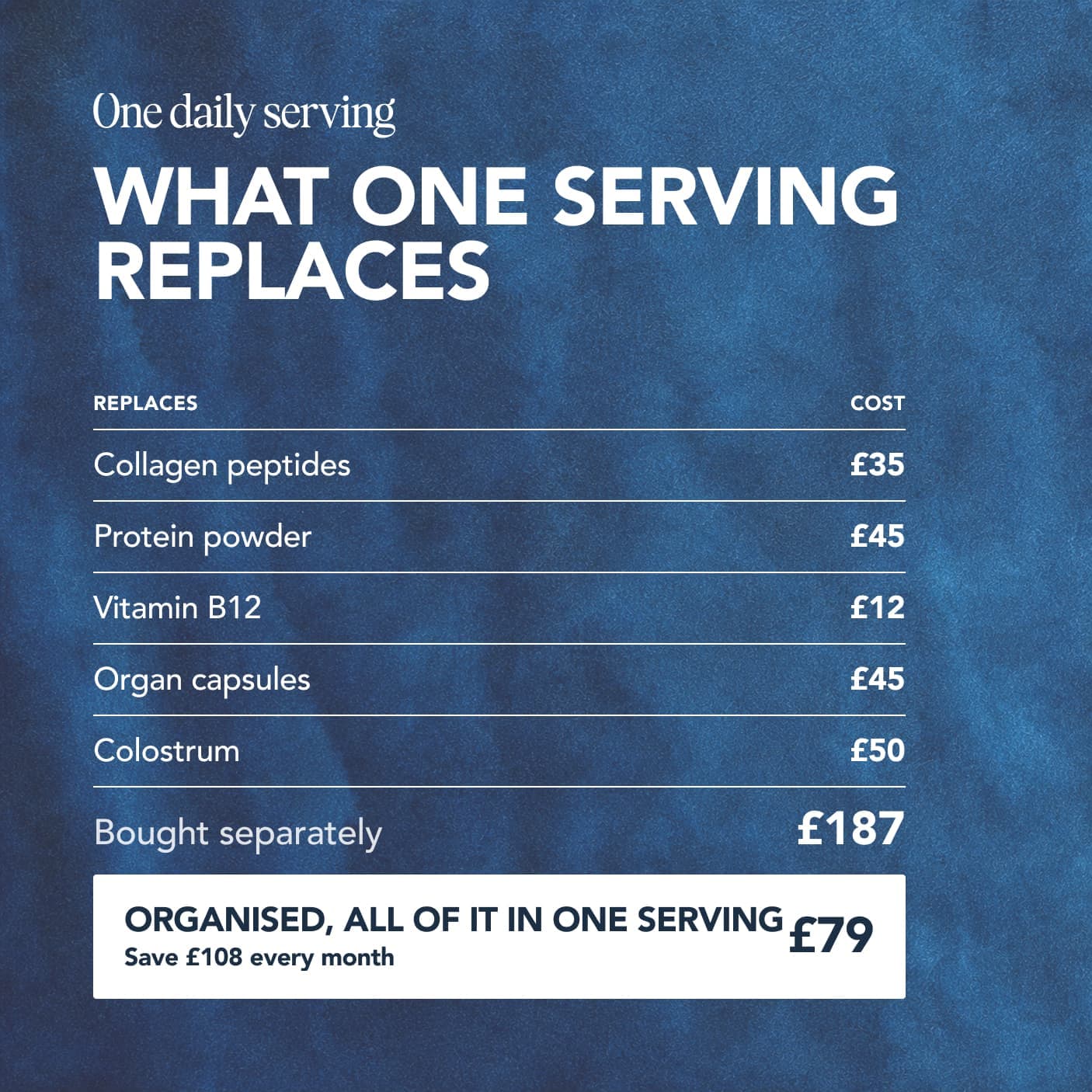
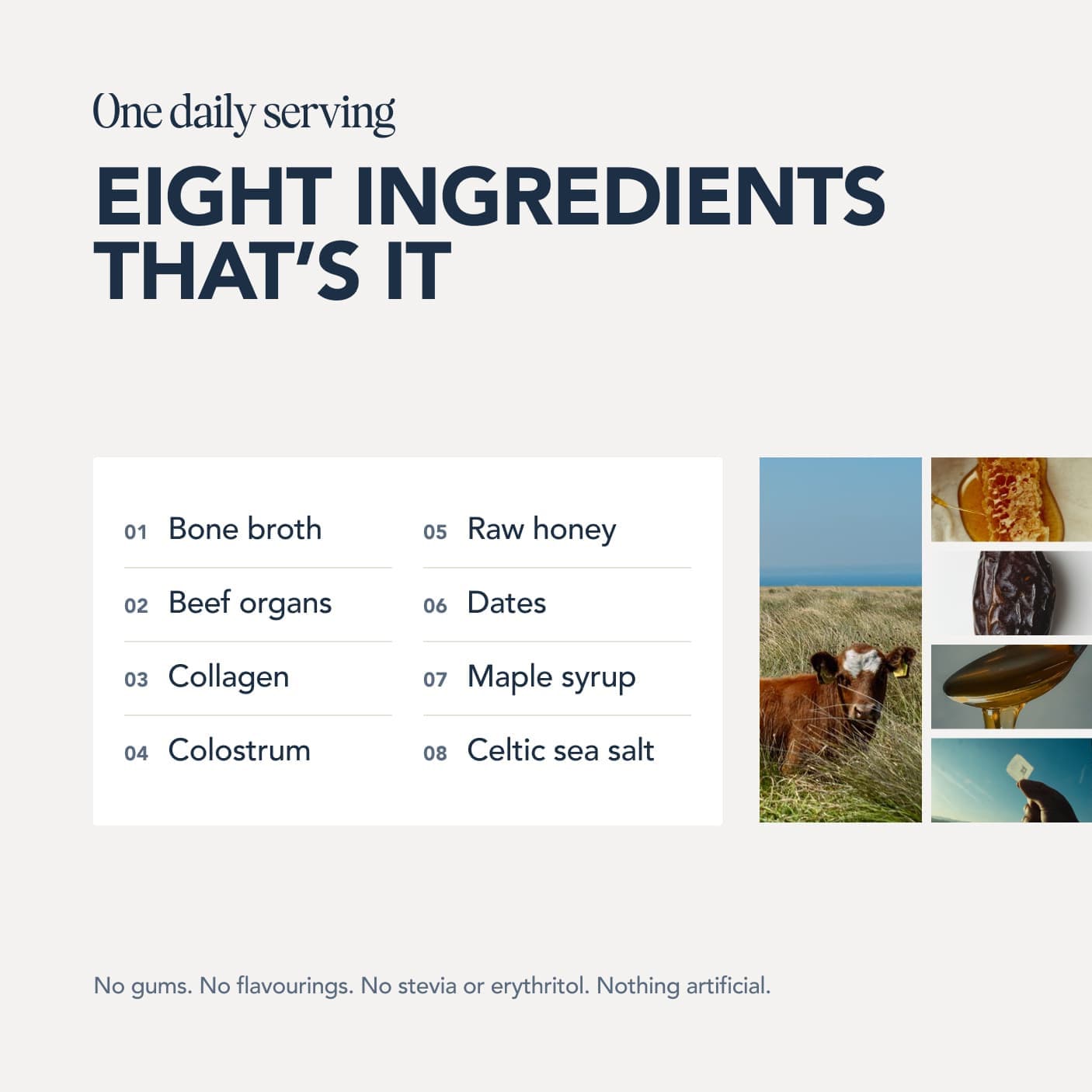
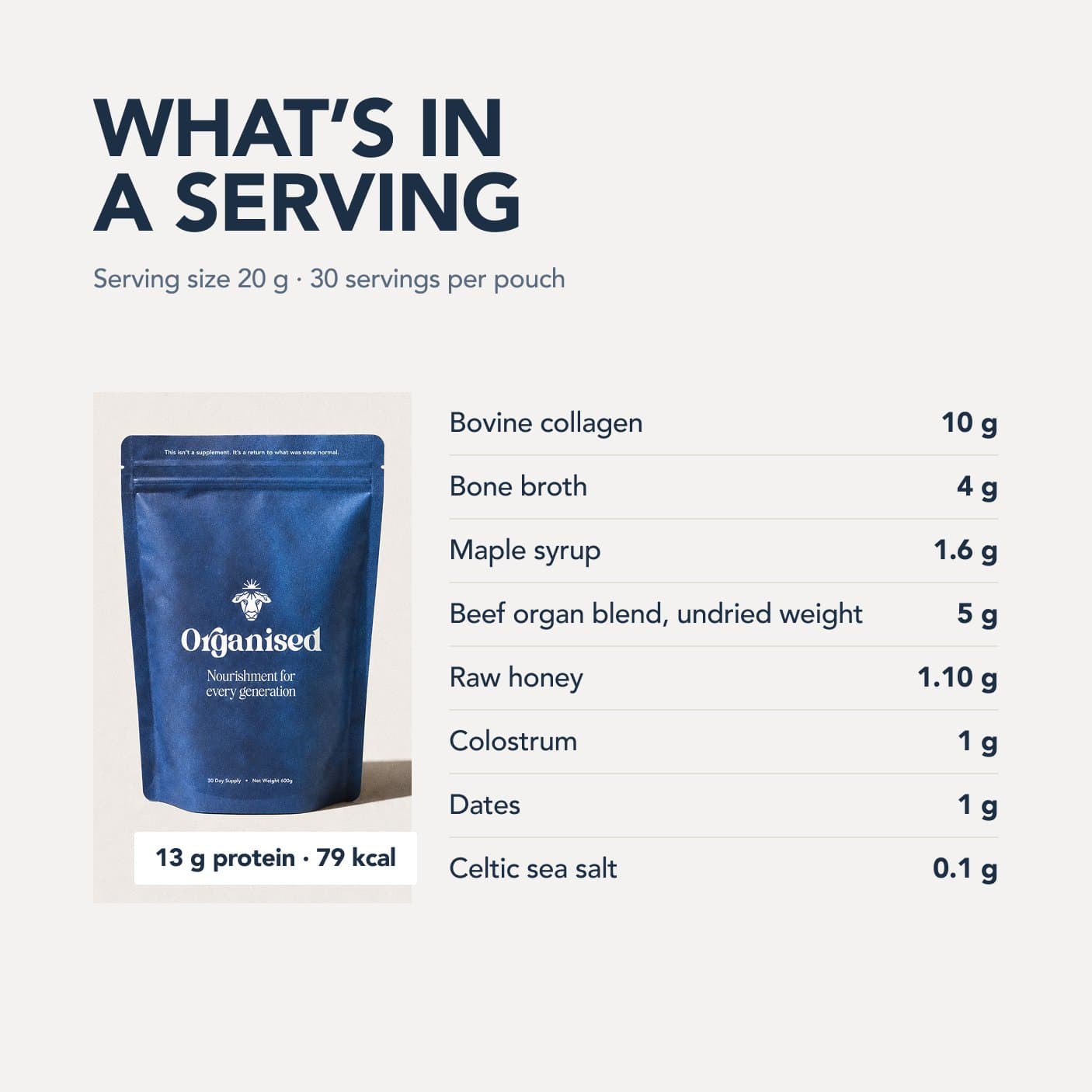
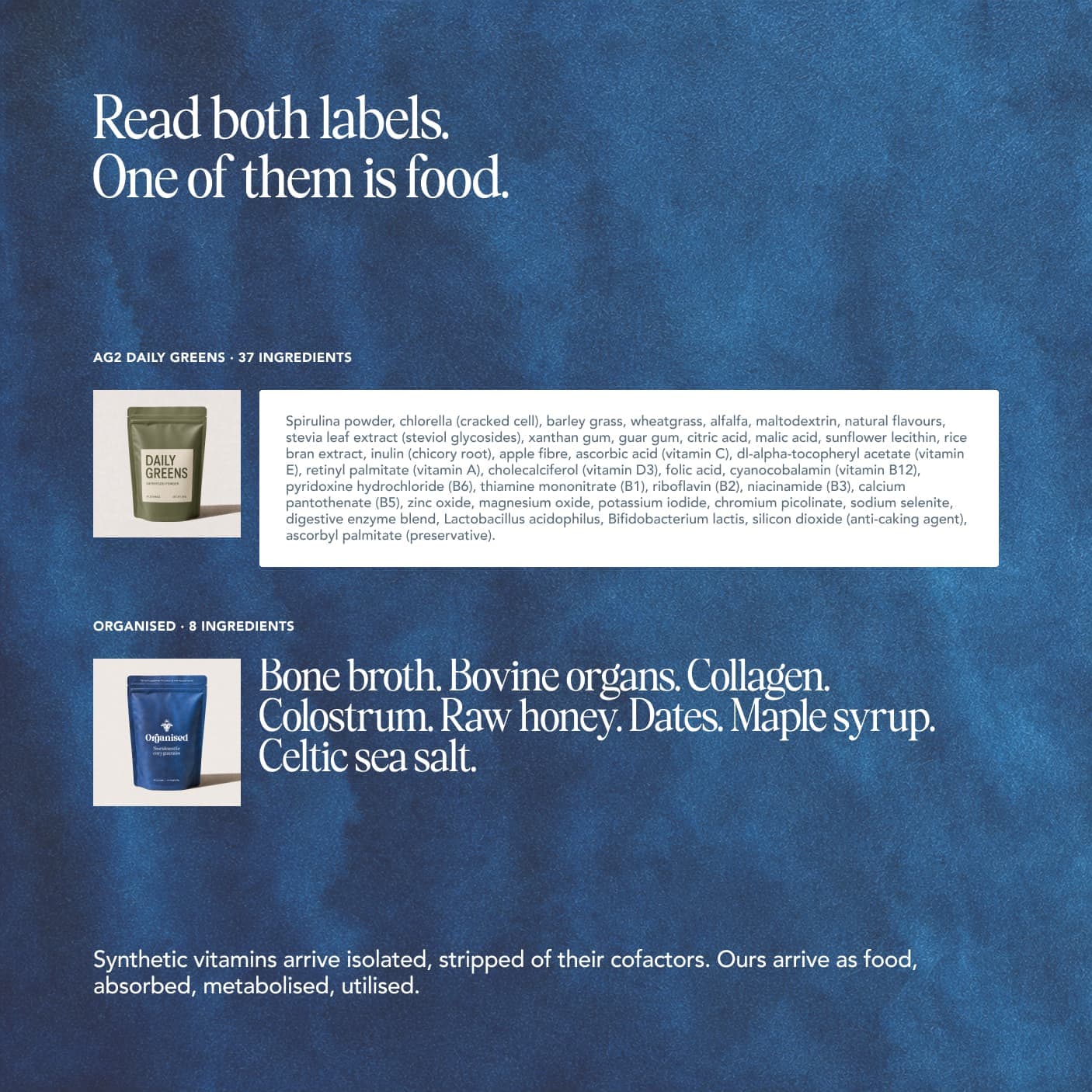
Eight real ingredients built around grass-fed beef organs, collagen and colostrum. Nothing synthetic added.
Free with your first order, worth £38. Plus £10 off the pouch with a subscription.

Free UK shipping · Made in England · 100 day money back guarantee on your first pouch · Skip, pause or cancel anytime
The protein quality question
Whilst timing barely matters, protein quality absolutely does. Your muscles can only build from amino acids your body can use. Not all protein sources are equal. Animal proteins (meat, fish, eggs, dairy) contain all nine essential amino acids in the ratios your body needs. Plant proteins are incomplete. If you are relying on plant proteins for muscle building, you are making the task harder.
This is where many people unintentionally sabotage their muscle growth. They hit their daily protein targets but do so with low-quality sources. They consume chicken breast, which is lean and efficient, but miss the micronutrients that come with fatty cuts. They eat processed protein powder instead of whole food. They wonder why they are not building muscle.
The practical implication is simple. Prioritise animal protein for your muscle building goals. Red meat, fish, eggs, and full-fat dairy provide complete amino acids plus the micronutrients that support muscle protein synthesis. Beef contains carnitine, which supports energy production. Eggs contain choline, which supports the nervous system that controls muscle contraction. These details matter.
The quality of your protein matters as much as the quantity. Prioritise whole animal foods over processed powders.
That doesn't mean plant-based people cannot build muscle. It means they need to combine plant proteins strategically and consume adequate total protein to compensate for lower absorption rates. A vegan eating beans, grains, nuts, and seeds can build muscle. It is simply a less efficient path than someone eating animal foods.
The bottom line
The anabolic window as fitness culture describes it is a myth. Your body isn't that fragile. Miss your post-workout shake by 20 minutes and you haven't ruined your gains. Consume your protein at any point within a few hours of training and you're fine.
What actually matters: eat enough protein daily (0.8 to 1 gram per pound)2, distribute it across three to four meals so you're hitting 30 to 40 grams per meal, train progressively, sleep adequately, and stay consistent. Do those five things and muscle growth will follow. Stop paying for expensive post-workout supplements marketed around a biological fiction.
References
Every source below was checked on 27 August 2026. Each PubMed, PMC and DOI identifier was resolved against NCBI or Crossref, and what it opens is printed under the citation, so you can see the link goes where the citation says without leaving the page. Where a citation and its identifier disagreed, the citation was corrected to the record or the reference was deleted along with the sentence marker that pointed at it, and where the resolved paper turned out not to support the sentence, the sentence was cut back to what it does support. Borrowed authority is worse than none, because it looks like rigour.
- Schoenfeld BJ, et al. The effect of protein timing on muscle strength and hypertrophy: a meta-analysis. J Int Soc Sports Nutr. 2013. PMID 24299050.Checked 27 August 2026: PMID 24299050 opens Schoenfeld BJ, Aragon AA, Krieger JW, The effect of protein timing on muscle strength and hypertrophy: a meta-analysis. J Int Soc Sports Nutr 2013;10(1):53.
- Morton RW, et al. A systematic review, meta-analysis and meta-regression of the effect of protein supplementation on resistance training-induced gains in muscle mass and strength in healthy adults. Br J Sports Med. 2018. PMID 28698222.Checked 27 August 2026: PMID 28698222 opens Morton RW, Murphy KT, McKellar SR et al, A systematic review, meta-analysis and meta-regression of the effect of protein supplementation on resistance training-induced gains in muscle mass and strength in healthy adults. Br J Sports Med 2018;52(6):376-384. PubMed indexes it as: Meta-Analysis, Systematic Review.The authors' own declaration, from the record: Competing interests: SMP has received grant support, travel expenses, and honoraria for presentations from the US National Dairy Council. This agency has supported trials reviewed in this analysis.
Who wrote and reviewed this guide
Niall Kiddle
Author · Founder, Organised
Niall is the founder of Organised. He started the company in 2024 after fixing his own health the slow way: in 2022 he swapped a cupboard of synthetic supplements for real food, raw milk, organ meats, bone broth and honey, and felt the difference within months.
Areas of expertise: Ancestral nutrition, Organ meats, Whole-food supplementation, Gut health, Regenerative sourcing
Read Niall's full profile
Pedro Rodrigues
Reviewer · Agronomist (farming and sourcing only)
Pedro is the agronomist Organised works with on farming and sourcing. His job on the guides is to keep the science honest: he reviews what we publish about soil health, regenerative agriculture, grazing and the way food is actually produced.
Areas of expertise: Regenerative agriculture, Agronomy, Soil health, Grass-fed farming, Food sourcing
Reviewed this guide on
Read Pedro's full profileMore on sports & performance
View all- Collagen for Runners: Protecting Your Joints and Tendons
- Connective Tissue Health for Athletes: Beyond Just Muscles
- How to Fuel a Workout Without Synthetic Supplements
- Pre-Workout Nutrition Without the Chemicals
- What to Eat for Muscle Recovery (Beyond Protein Shakes)
- Why Athletes Are Turning to Organ Meats
Browse the guides library
All guidesKeep reading

Health goals
What to Eat for Muscle Recovery (Beyond Protein Shakes)
Muscle recovery needs more than protein. Collagen and vitamin C for tendons, glycine for connective tissue, magnesium for repair. Bone broth, eggs, real food.
Health goals
Insulin Resistance: The Silent Metabolic Crisis
Insulin resistance develops quietly, but the damage is profound. Here's how it happens and the whole-food strategies that actually work.

Health goals
How Long Should You Prepare Your Body Before Trying to Conceive?
Preconception nutrition matters more than most people realise. A 3 to 6-month prep window allows sperm and egg quality to optimise.
Real food, made effortless
Start my daily blendA few ways to use it
All recipes
10 Ways to Use Organised That Aren't Just a Shake
Move beyond the basic shake. Discover 10 creative ways to use Organised in smoothie bowls, oats, yoghurt, baking, and more.

Bone Broth from Scratch: A Step-by-Step Guide
Step-by-step guide to making bone broth at home. Stovetop, slow cooker, and Instant Pot methods. Rich in collagen and gut-healing minerals.

How to Make Your Own Gelatine Gummies
A simple recipe for homemade gelatine gummies using grass-fed gelatine, fresh juice, and raw honey. Better than shop-bought, kids love them.


 Join over 100,000+ members
Build a better food system with us
The Organised community is thousands of people choosing real food and backing the farmers who grow it, all of us trying to leave the world a little better than we found it. If that is what you care about too, you belong here.