A Whole Food Skincare Routine: Morning to Night
Your morning routine starts with a serum. Your skincare routine costs a hundred pounds per month. Meanwhile, the nutrients your skin actually needs are cheaper and sit in your kitchen.

By Niall Kiddle, Founder, Organised

Reviewed by Pedro Rodrigues, Agronomist (farming and sourcing only) ·
6 min read · Published · Updated · 2 cited sources
Makers of the Organised Daily blend, a grass-fed beef organ supplement from regenerative UK farms
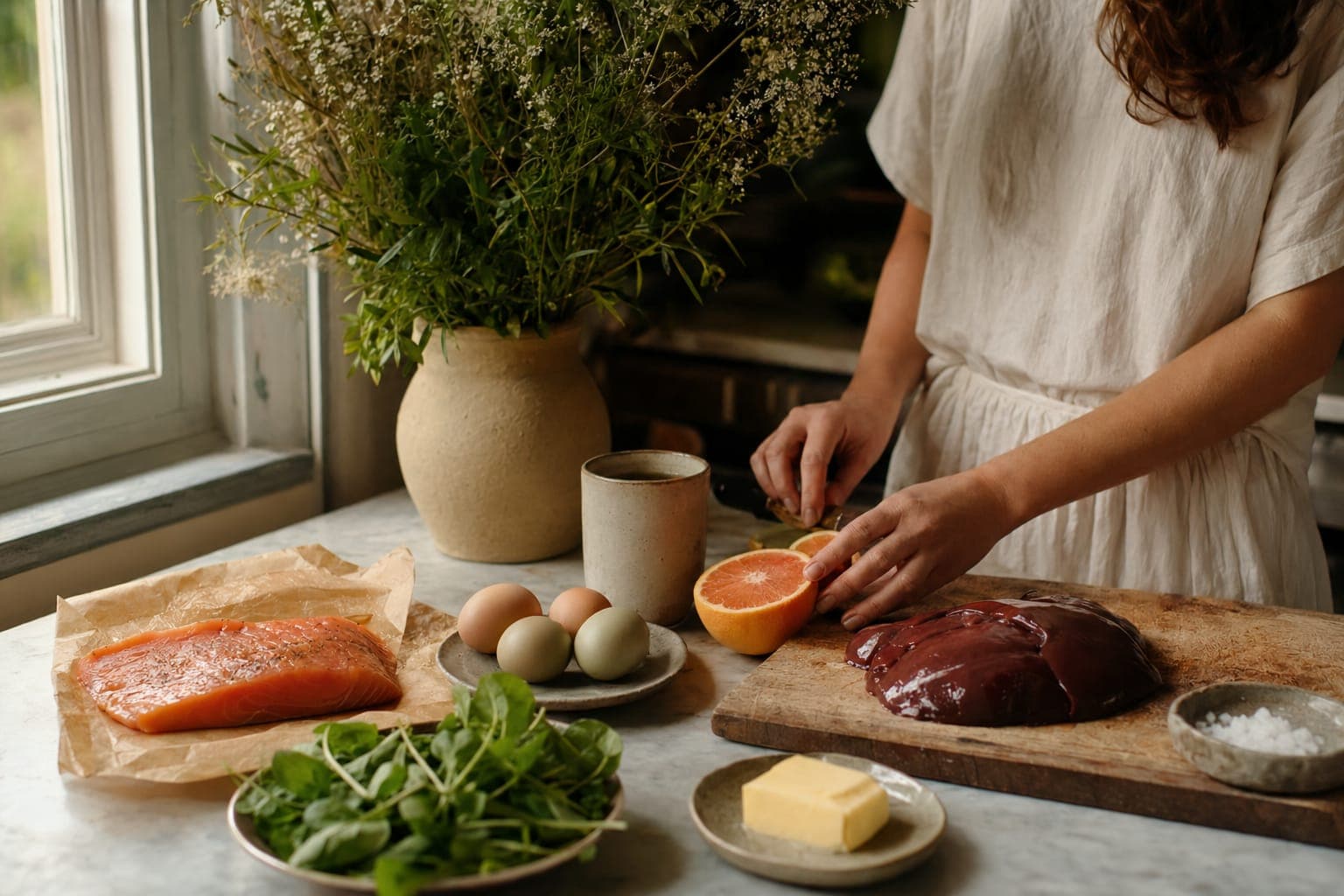
Here's the truth nobody wants to say out loud: your skin doesn't care what you put on it. It cares what you put in it.
You cannot out-skincare a bad diet. You cannot out-moisturise nutrient deficiency. You cannot out-antioxidant a diet full of processed foods.
Your real skincare routine happens at the table, three times a day.
The skincare deception
The skincare industry has built a multi-billion pound business on one false premise: that the solution to skin problems is topical.
Take this serum for collagen. Take this moisturiser for hydration. Take this vitamin C serum for brightness. Take this retinol for ageing. The industry has trained us to believe that beautiful skin is applied, not built.
But your skin is built from the inside. Every skin cell is constructed from nutrients. Every repair process depends on amino acids, vitamins, and minerals. Every anti-inflammatory response depends on fats and polyphenols.
If you're deficient in these things, no amount of topical application will fix it.
Your skin is the last place your body prioritises nutrients. If your skin looks bad, it's because your body is telling you it's going without something essential.
Morning: prioritise collagen and vitamin C
Your morning sets the stage for the day. This is where you establish your collagen and vitamin C intake.
Start with a warm beverage. Tea is optimal. Green tea is packed with EGCG, a polyphenol with profound anti-inflammatory and antioxidant effects. Black tea has theaflavins. Herbal teas like chamomile and rooibos have their own polyphenol profiles. The warmth aids digestion and the ritual creates a calm start.
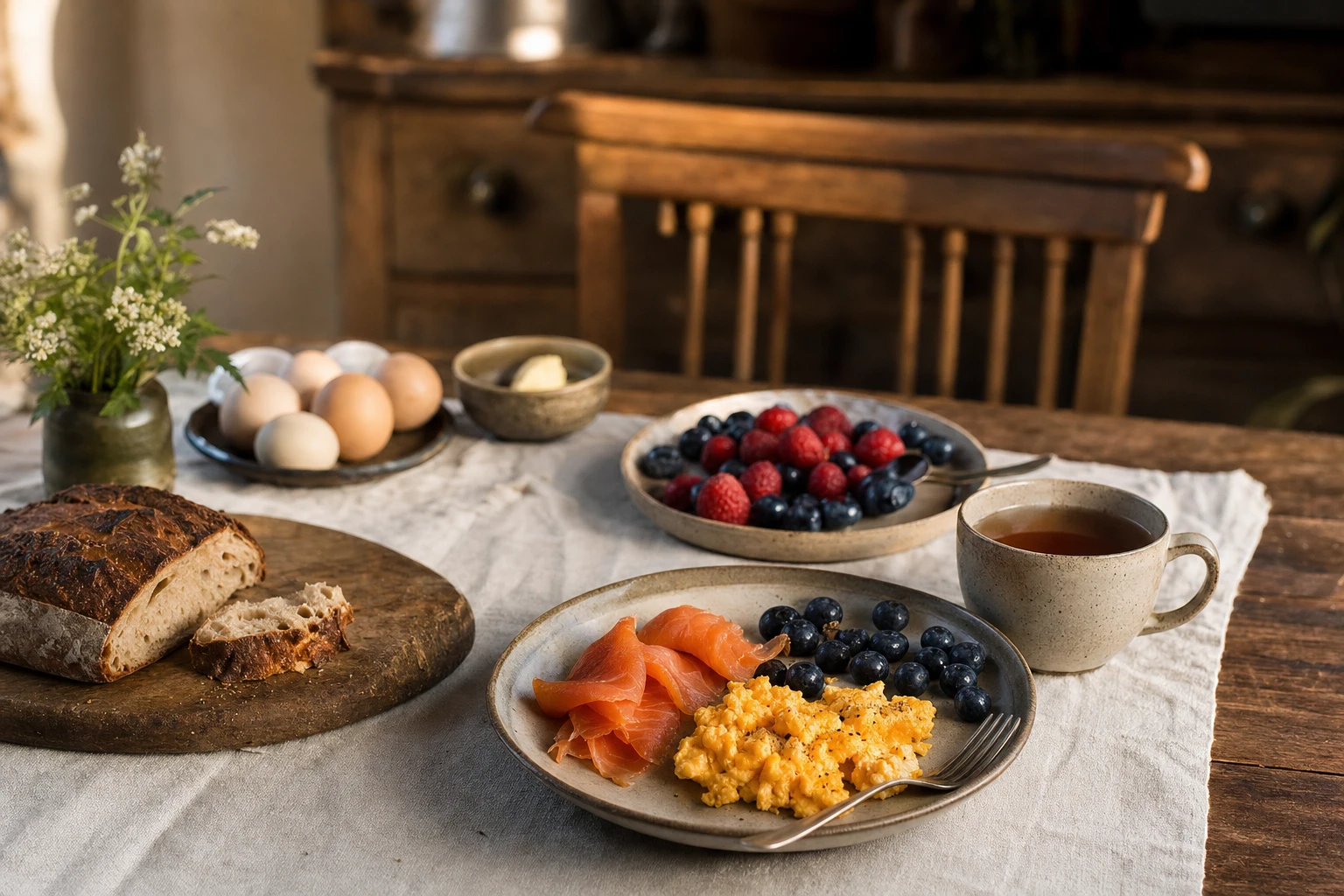
Then breakfast. This is where collagen comes in. Bone broth is optimal. A mug of warm bone broth, ideally made from bones you simmered for 12+ hours, provides gelatine, collagen breakdown products, minerals, and amino acids that directly support skin structure.
If you don't have bone broth, eggs are your second choice. Particularly the yolk, which is rich in choline (for cell membrane health), lutein (for skin luminosity), and cholesterol (the precursor for hormones that support skin). Cooked in butter or lard, not seed oils.
Then vitamin C. Not a supplement. Actual food. A small handful of berries, some citrus, or a serving of kiwi. Fresh vitamin C is absorbed readily by your body and is essential for collagen synthesis. Without adequate vitamin C, your body cannot build collagen, no matter how much collagen peptides you consume.
The combination: warm tea, bone broth or eggs, fresh fruit rich in vitamin C. That's your morning skincare routine.
Midday: minerals and antioxidants
Midday is about minerals. Skin is dependent on zinc, copper, selenium, and iron. These minerals regulate cell turnover, support antioxidant defence, and maintain structural integrity.
Lunch should revolve around a mineral-rich protein. Red meat is optimal. The richest sources of bioavailable iron, zinc, and copper. Shellfish is excellent for zinc and copper. Fish provides selenium and omega-3 fats.2
Paired with vegetables, particularly the colourful ones. The colours in vegetables come from polyphenols. Red and purple vegetables (beetroot, red cabbage, red peppers) are rich in anthocyanins, powerful antioxidants. Orange and yellow vegetables (carrots, sweet potato) contain carotenoids. Green vegetables contain lutein and other protective compounds.
These aren't just pretty. These polyphenols cross the blood-brain barrier and protect your skin at the cellular level.
Then a small amount of healthy fat. Olive oil, butter, avocado. Fat-soluble vitamins (A, D, E, K) require fat for absorption. Without fat at your meal, you absorb none of them.
If your lunch doesn't include a protein source rich in minerals, colourful vegetables, and healthy fat, your skin is being neglected.
Evening: fats and retinol
Evening is where you complete the nutritional protocol. Fats and retinol.
Dinner should centre on a fattier protein. Beef liver is optimal. The most nutrient-dense food on the planet, with preformed vitamin A (retinol), B vitamins, iron, copper, and choline. A 100-gram serving provides your entire week's vitamin A needs.
If you don't like liver, fatty fish works: salmon, mackerel, sardines. Rich in omega-3 fats, vitamin D, selenium, and astaxanthin (the antioxidant that makes salmon pink).
Cooked in an animal fat and served with vegetables. The fat is crucial. It facilitates the absorption of fat-soluble vitamins. It provides energy for skin cell function. It's the precursor for hormones that regulate skin health.
After dinner, no further eating. Your body repairs and rebuilds during sleep. A full digestive load during sleep disrupts this process. Finish eating 3-4 hours before bed.
Before sleep, a small amount of magnesium if you're deficient (which most people are). Magnesium supports sleep quality and is essential for cellular repair. Topical magnesium spray or an oral supplement of 300-400mg.
Sleep itself is the final component of your skincare routine. Growth hormone surges during deep sleep. Skin repair accelerates. Inflammation reduces. You literally become more beautiful whilst sleeping.
Get health guides like this, free
Two short reads a week on eating for energy, gut health, skin, sleep and more.
By signing up you agree to receive emails from us. No spam, unsubscribe anytime.
The weekly ritual
On top of the daily routine, a weekly focus.
Once per week, make bone broth or consume a large serving of liver. Once per week, eat organ meats beyond liver: kidney, heart, tongue. These provide different micronutrient profiles and expose you to a broader spectrum of nutrients.
Once per week, do a 12-hour fasting window. Not a 16-hour fast or a 24-hour fast. Twelve hours. This gives your digestive system a break and allows your body to shift into a repair and recycling mode called autophagy.
Your skin literally gets rebuilt more efficiently during fasting. Old, damaged cells are cleared. New cells are prioritised.
Once per week, prioritise foods you know support your skin specifically. If your skin needs more zinc, eat more oysters or red meat. If it needs more collagen support, eat more bone broth or citrus (for the vitamin C). Listen to what your skin is telling you.

1 of 9
Daily blend
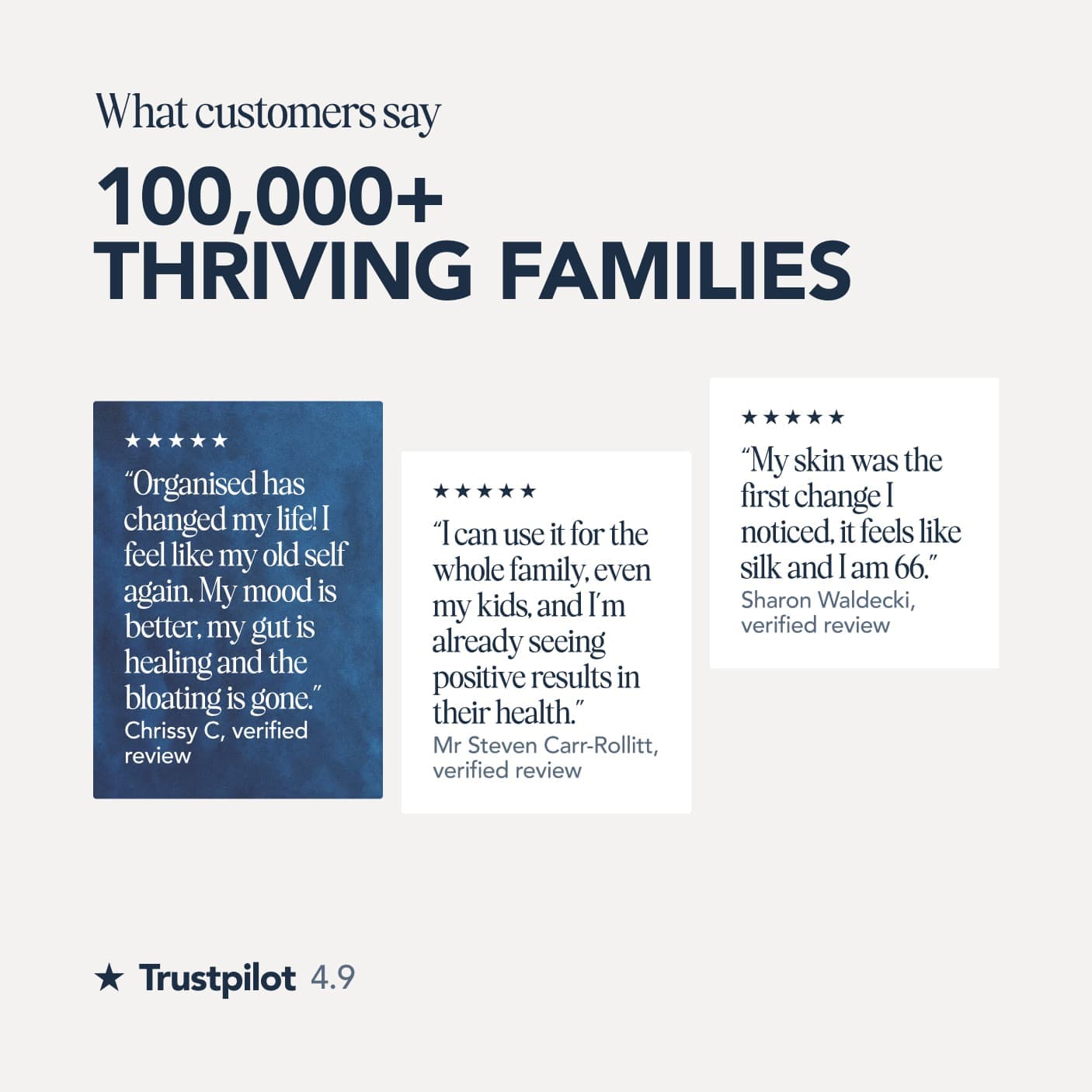
100,000+ thriving families4.9 on Trustpilot
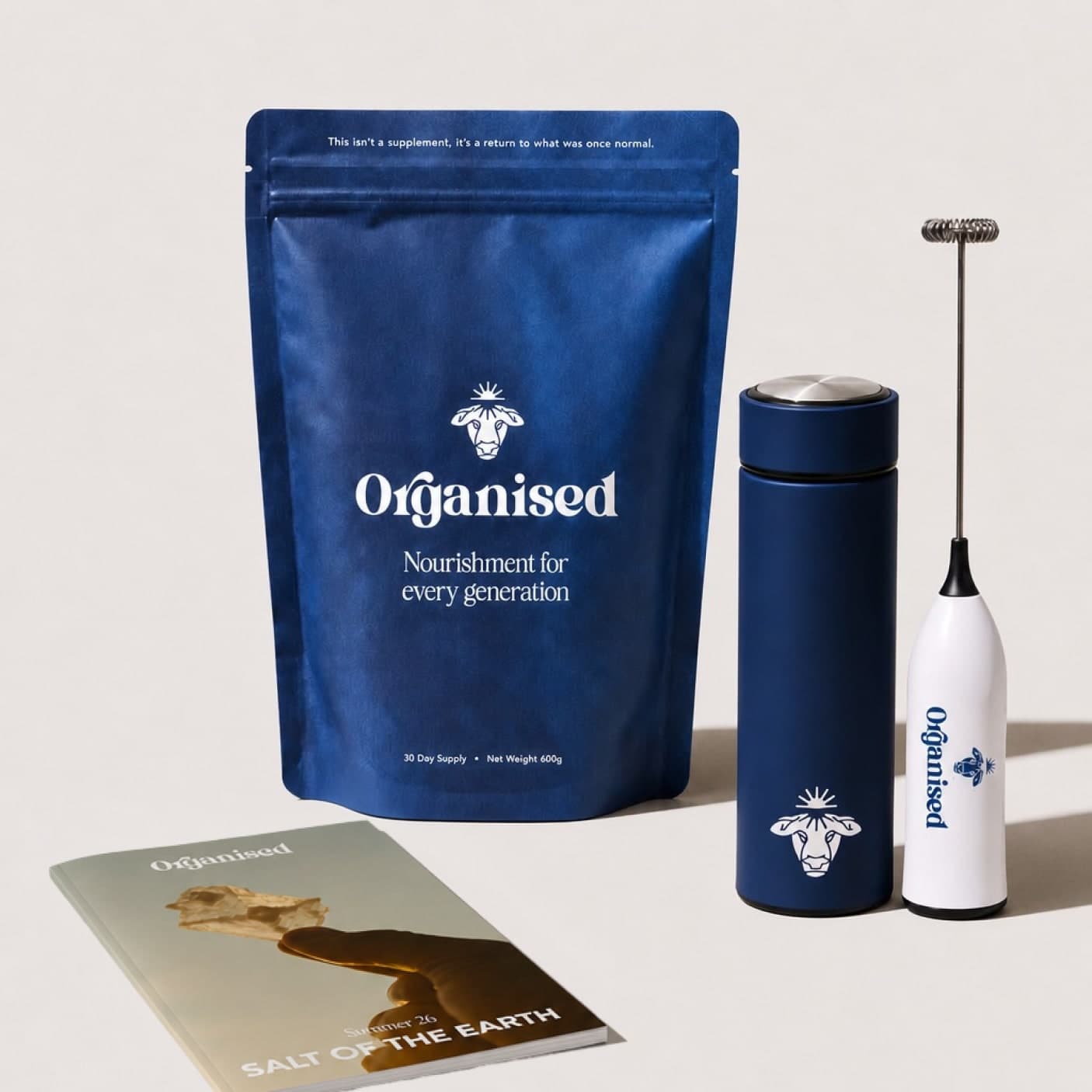
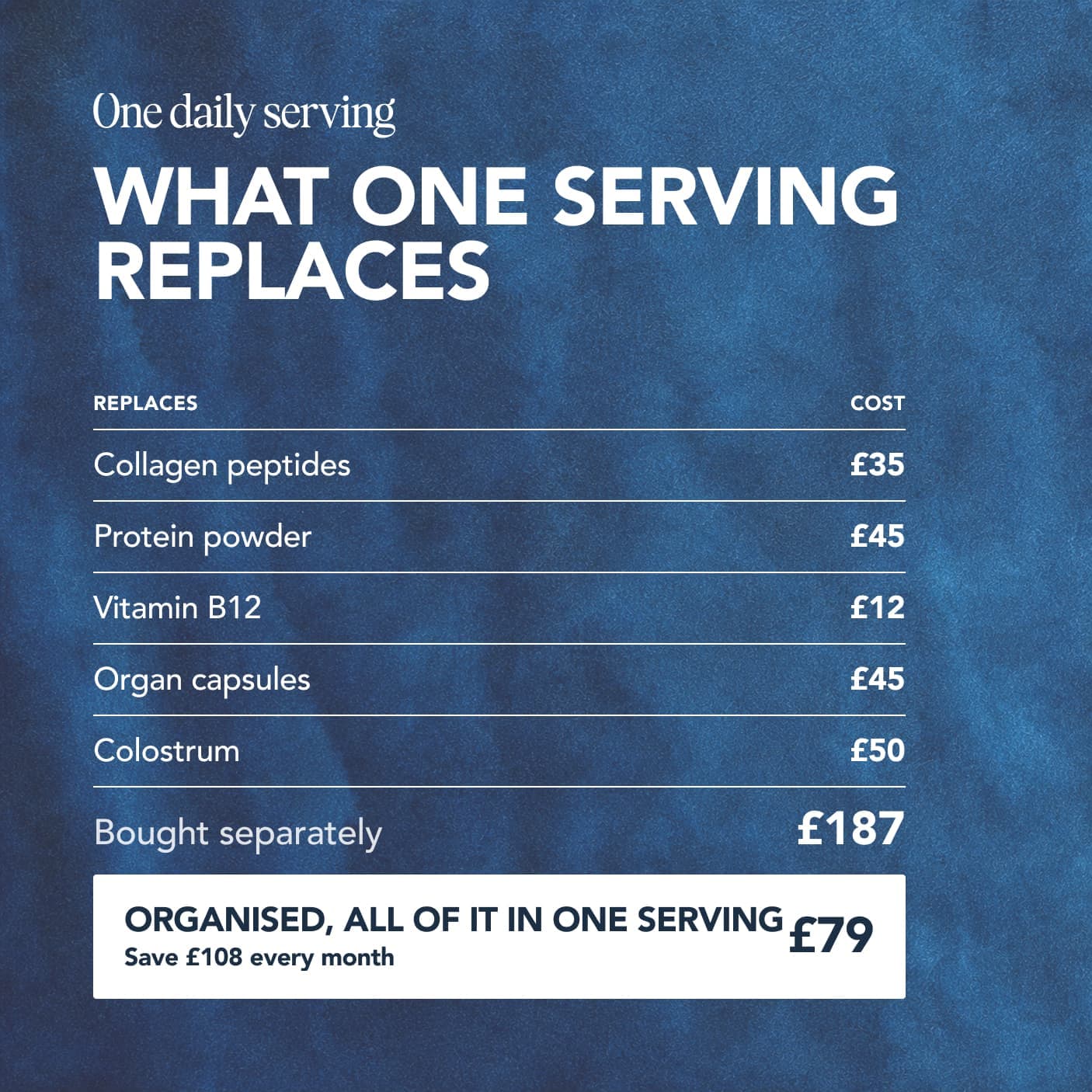
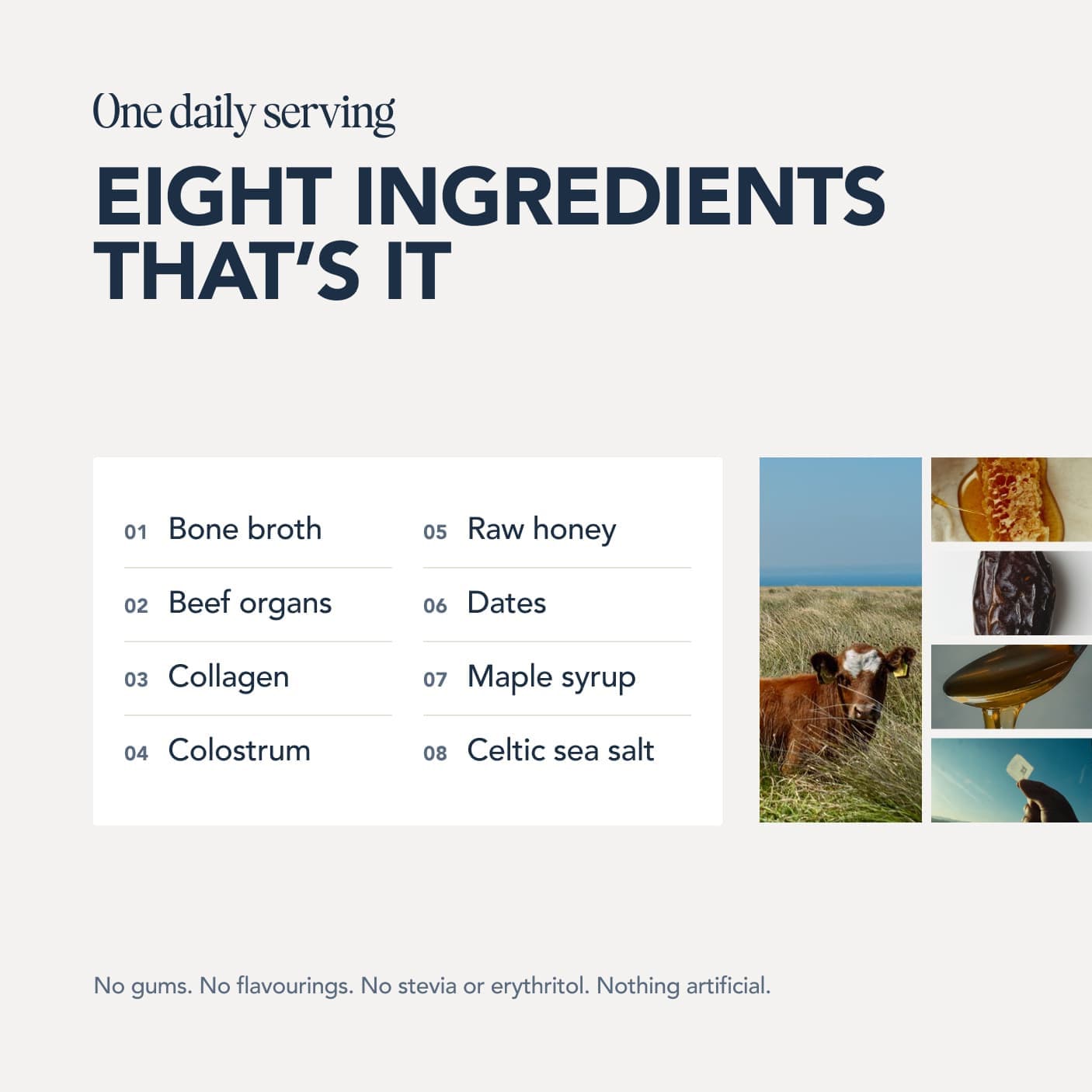
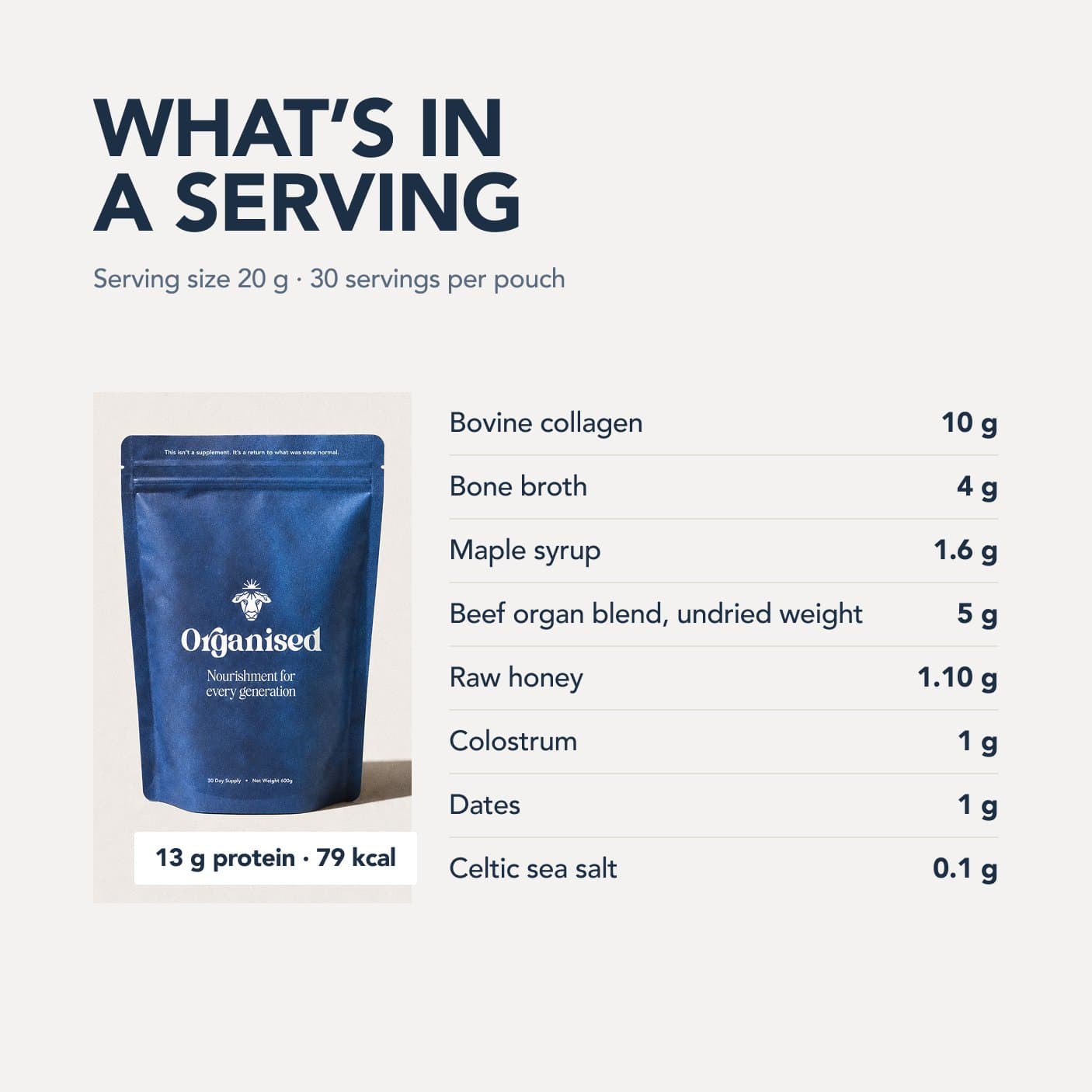
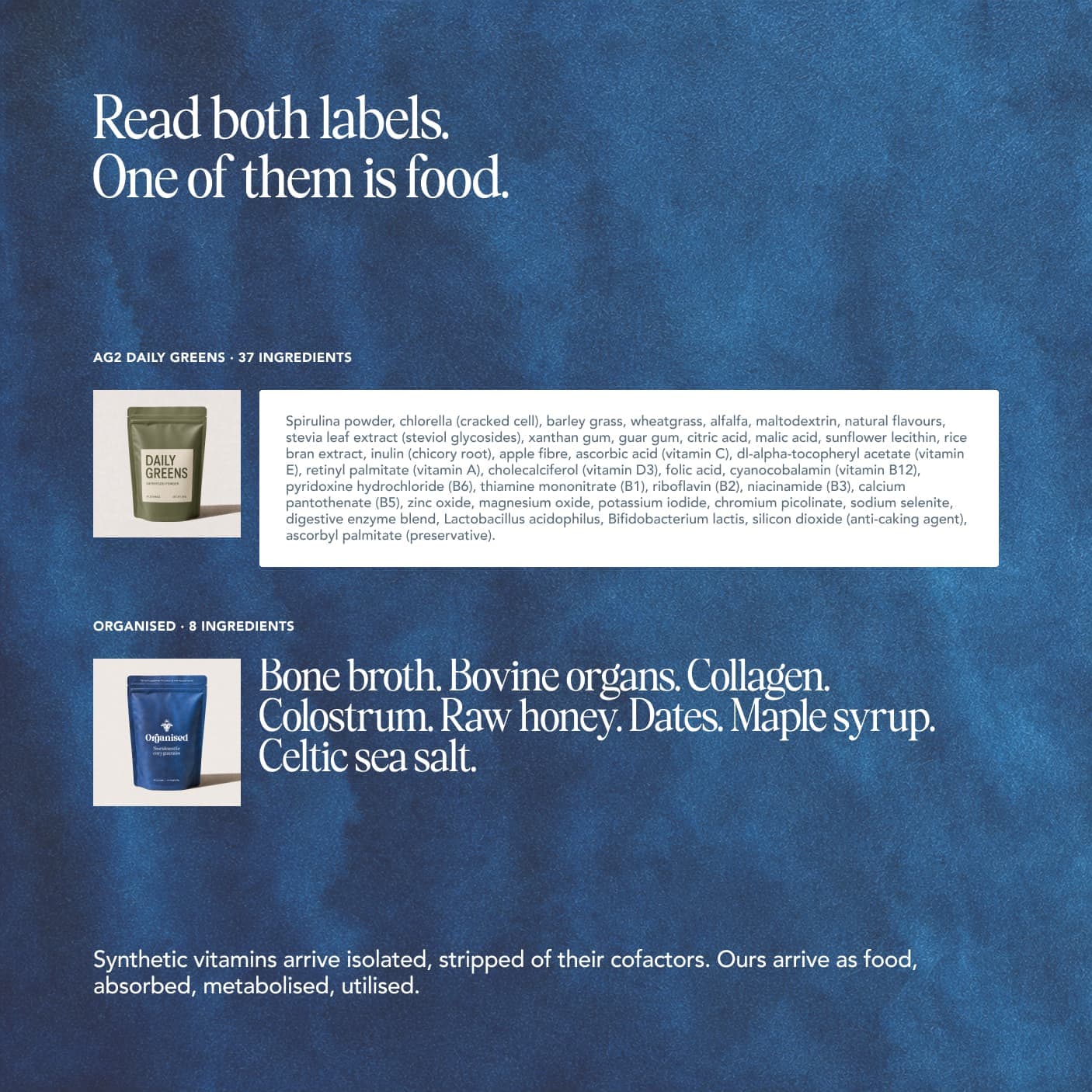
Eight real ingredients built around grass-fed beef organs, collagen and colostrum. Nothing synthetic added.
Free with your first order, worth £38. Plus £10 off the pouch with a subscription.

Free UK shipping · Made in England · 100 day money back guarantee on your first pouch · Skip, pause or cancel anytime
Tracking what works
This protocol is foundational. But individual needs vary.
Some people need more retinol. Some need more vitamin C. Some need more minerals. Some need more fats. Pay attention.
Keep a simple log. What did you eat? How did your skin look and feel that day? After four weeks, patterns will emerge.
If you ate liver and your skin cleared, you need retinol.1 If you eat citrus and your skin looks luminous, you're vitamin C responsive. If you eat fish and your skin glows, you benefit from omega-3s.
This isn't complicated. Your skin is talking to you. Listen.
Your skincare routine is your fork, not your bathroom cabinet.
Common obstacles and fixes
Most people hit a wall around week two. Your skin might look worse before it looks better. This is normal. Your body is clearing out inflammation. Existing congestion is being purged. This phase lasts 1-2 weeks maximum. Push through it.
If you dislike eating organs, start small. A 50-gram serving of liver once per week is enough to make a difference. Gradually increase as your palate adapts. Most people find that when liver is cooked well, resistance disappears.
If you're sensitive to dairy, replace it with other fat sources. Avocado. Olive oil. Fish. Coconut oil. The key is the whole-food nutrient profile, not the specific source.
If you're a vegetarian, eggs become your primary protein. Yolks specifically, for choline and lutein. Pair with adequate fat sources to absorb fat-soluble vitamins. Your results will be slower than with animal foods, but they will still improve.
The morning bone broth, the midday mineral-rich meal, the evening retinol source. Repeat daily. Adjust based on what your skin tells you. Sleep well. Avoid the foods that damage your skin (processed foods, seed oils, sugar, inflammatory additions).
Your skin will transform. Not because you finally found the right serum. Because you finally gave your body the nutrients it needs to build beautiful skin from the inside out.
References
Every source below was checked on 27 August 2026. Each link was requested and read. Where a citation and its identifier disagreed, the citation was corrected to the record or the reference was deleted along with the sentence marker that pointed at it, and where the resolved paper turned out not to support the sentence, the sentence was cut back to what it does support. Borrowed authority is worse than none, because it looks like rigour.
- NIH Office of Dietary Supplements. Vitamin A and carotenoids fact sheet. ods.od.nih.gov/factsheets/VitaminA-HealthProfessional.
- NIH Office of Dietary Supplements. Omega-3 fatty acids fact sheet. ods.od.nih.gov/factsheets/Omega3FattyAcids-HealthProfessional.
Who wrote and reviewed this guide
Niall Kiddle
Author · Founder, Organised
Niall is the founder of Organised. He started the company in 2024 after fixing his own health the slow way: in 2022 he swapped a cupboard of synthetic supplements for real food, raw milk, organ meats, bone broth and honey, and felt the difference within months.
Areas of expertise: Ancestral nutrition, Organ meats, Whole-food supplementation, Gut health, Regenerative sourcing
Read Niall's full profile
Pedro Rodrigues
Reviewer · Agronomist (farming and sourcing only)
Pedro is the agronomist Organised works with on farming and sourcing. His job on the guides is to keep the science honest: he reviews what we publish about soil health, regenerative agriculture, grazing and the way food is actually produced.
Areas of expertise: Regenerative agriculture, Agronomy, Soil health, Grass-fed farming, Food sourcing
Reviewed this guide on
Read Pedro's full profileMore on skin
View all- How to Build Collagen Naturally Without Injections
- How to Feed Your Skin from the Inside Out
- Collagen for Anti-Ageing: What the Clinical Trials Show
- Dark Circles Under Your Eyes? It Might Be a Nutrient Deficiency
- Eczema and Nutrition: What the Research Suggests
- How to Eat for a Natural Glow (Without Products)
- How Zinc, Copper and Selenium Work Together for Clear Skin
- Psoriasis and Nutrition: What Helps and What Hinders
- Retinol from Beef Liver vs Retinol in Skincare: Which Actually Works?
- Rosacea and Gut Health: Is There a Connection?
- The Foods That Age Your Skin Fastest
- Why Your Skin Looks Better When You Eat Organ Meats
Browse the guides library
All guidesKeep reading

Health goals
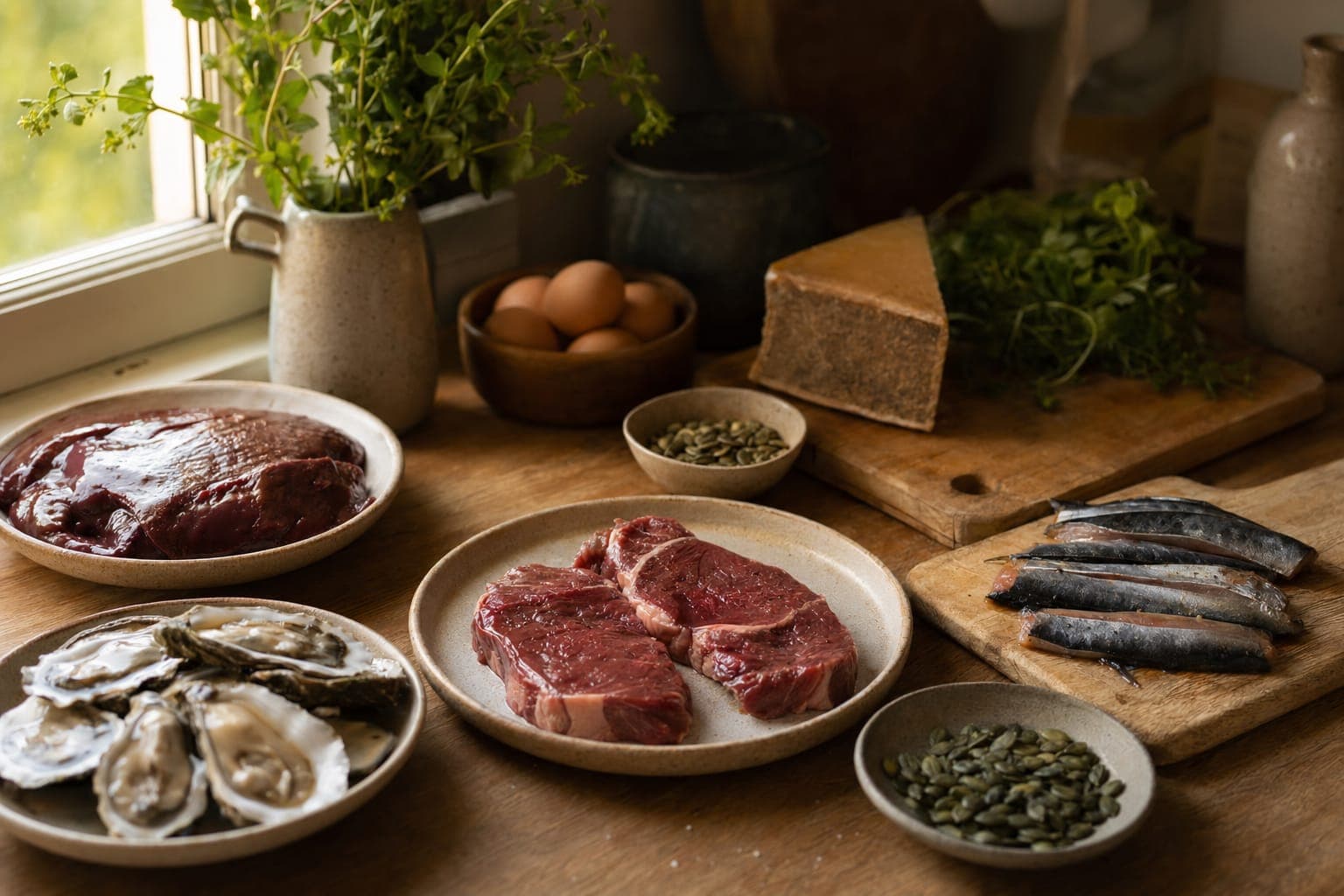
Retinol from Beef Liver vs Retinol in Skincare: Which Actually Works?
Retinol from liver vs skincare creams: get more bioavailable retinol from a single serving of beef liver. Here is why oral often beats topical for skin.
Health goals
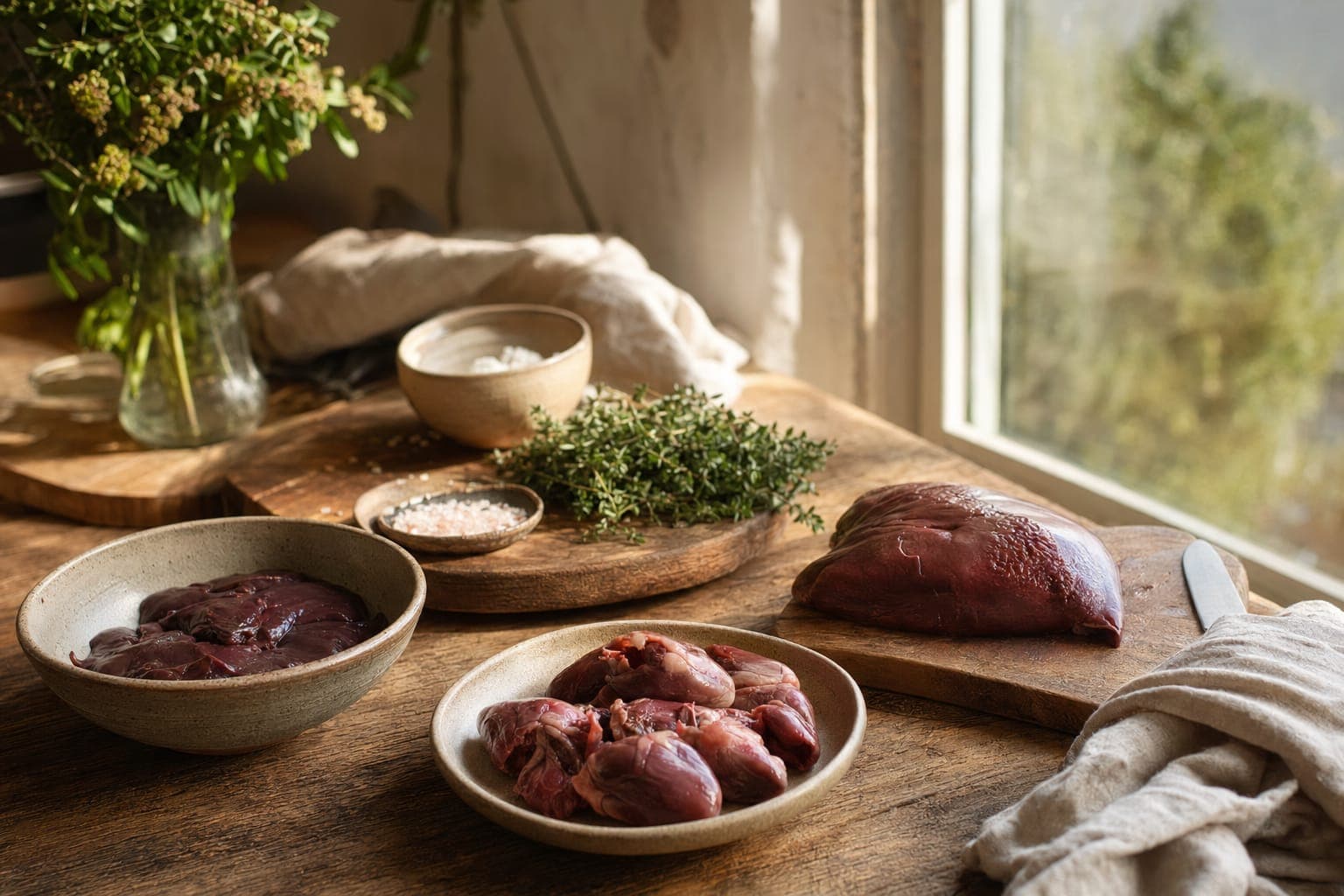
How Zinc, Copper and Selenium Work Together for Clear Skin
Isolated zinc supplements often backfire. Here's why these three minerals must work together, and how food sources keep them balanced.
Health goals
Why Your Skin Looks Better When You Eat Organ Meats
Organ meats are the most nutrient-dense foods on the planet. Here's exactly how they change your skin, from the inside out.
Real food, made effortless
Start my daily blendA few ways to use it
All recipes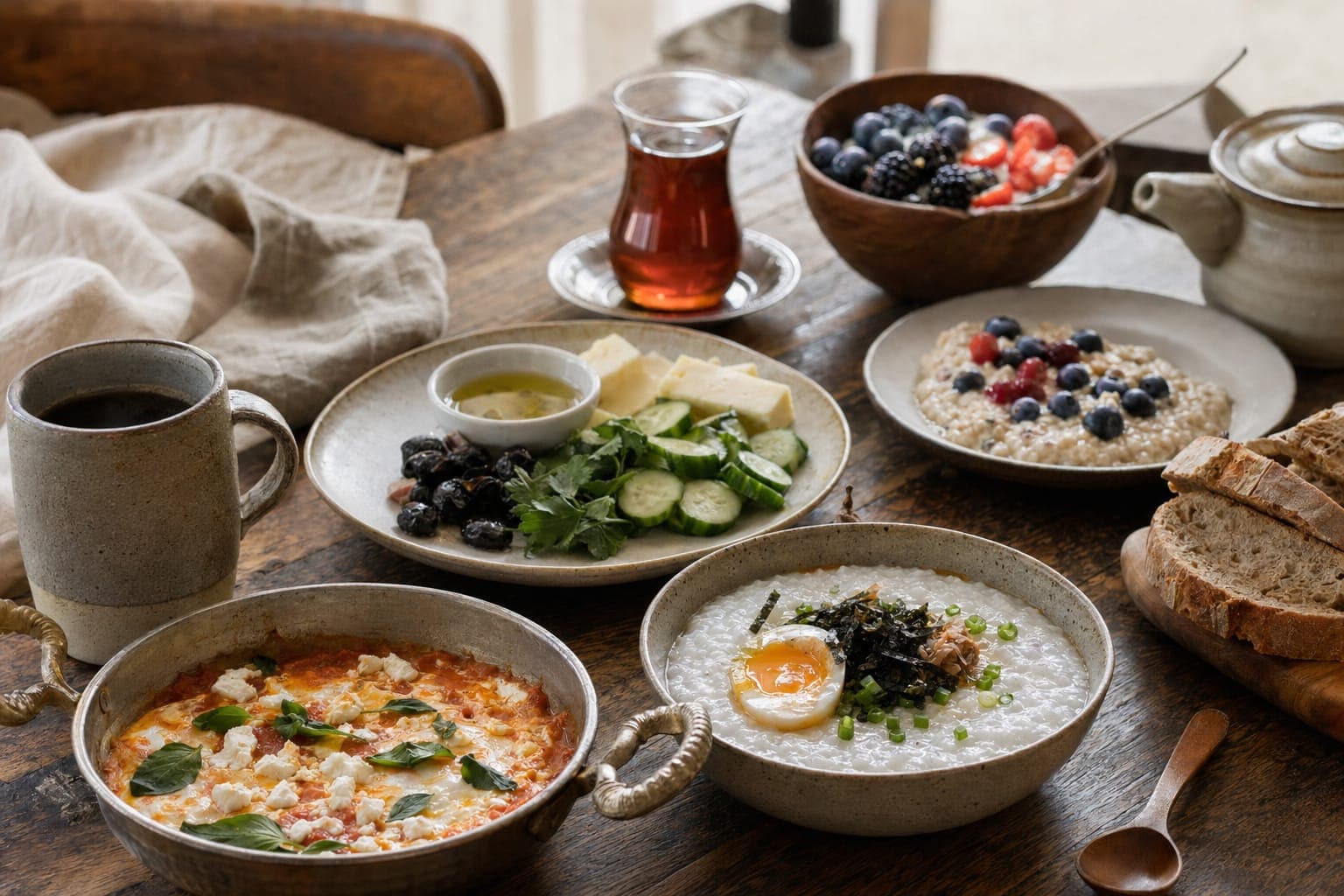
Ancestral Breakfast Ideas from Around the World
Traditional breakfast recipes from cultures that got nutrition right. Japanese, Turkish, Scottish, and more. Whole-food breakfast inspiration.
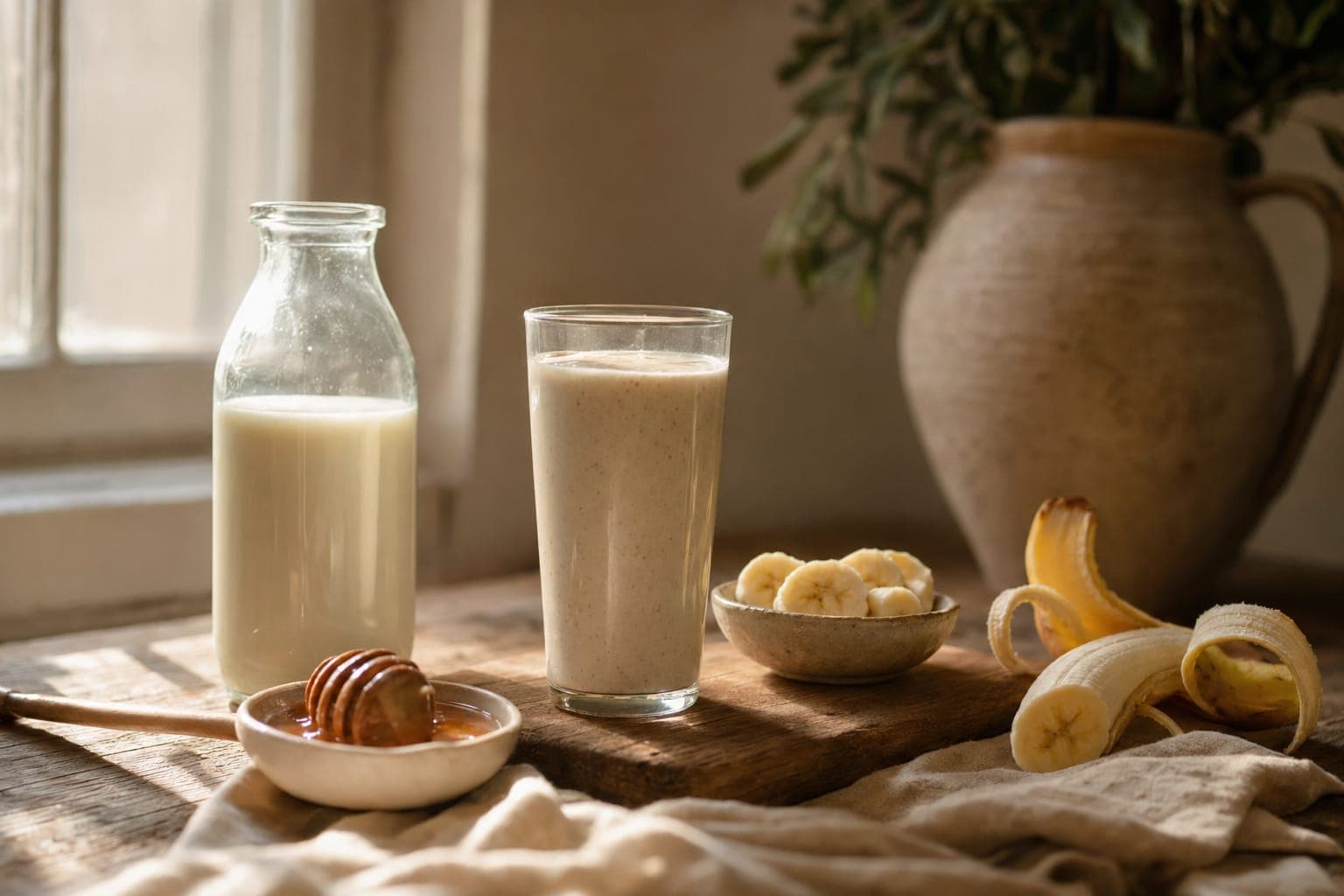
The Perfect Organised Morning Shake: Our Favourite Recipe
Our signature morning shake: Organised, raw milk, banana, honey. Simple, nourishing, and optimised for an empty stomach.

Organised Protein Pancakes: A Weekend Favourite
A high-protein pancake recipe using beef protein, eggs, and raw milk. Cooked in cast iron, naturally sweetened with banana and honey. Real food breakfast.


 Join over 100,000+ members
Build a better food system with us
The Organised community is thousands of people choosing real food and backing the farmers who grow it, all of us trying to leave the world a little better than we found it. If that is what you care about too, you belong here.