The Nutrients That Help You Sleep Deeper
You fall asleep fine. But then, like clockwork, your eyes snap open at 2 AM. You lie there for an hour. Maybe two. Your mind is active. Your body is tense. You're not actually awake. You're stuck in light sleep, never reaching the deep, restorative stages your body needs.

By Niall Kiddle, Founder, Organised

Reviewed by Pedro Rodrigues, Agronomist (farming and sourcing only) ·
7 min read · Published · Updated · 5 cited sources
Makers of the Organised Daily blend, a grass-fed beef organ supplement from regenerative UK farms


Why you're not sleeping deeply
Sleep isn't a single state. It's a cycle of stages. Light sleep, deeper sleep, REM sleep. Your body needs to cycle through all of them multiple times a night. If you're getting stuck in light sleep, it's usually because your nervous system can't fully relax and your body temperature can't drop enough to trigger deep sleep.
The culprits are usually the same: magnesium deficiency (blocks muscle relaxation), poor gut health (impairs serotonin production), excessive cortisol (keeps nervous system activated), or inadequate amino acids for neurotransmitter synthesis.
The fix isn't sleeping pills. It's feeding your body what it needs to sleep deeply on its own.
Magnesium: the muscle relaxant
Magnesium is responsible for over 300 enzymatic reactions in the body. It's particularly critical for muscle relaxation.1 Without adequate magnesium, your muscles stay tense. Your nervous system stays activated. You're physiologically incapable of deep sleep.
Magnesium deficiency is rampant. Soil depletion means vegetables have less magnesium than they did decades ago. Stress depletes magnesium. Processed food is magnesium-poor. Most people in the modern world are running low.
The symptoms are obvious: muscle tension, irritability, anxiety, poor sleep quality, inability to relax, migraine headaches. All of these improve dramatically when magnesium is restored.
Food sources: dark leafy greens, nuts, seeds, whole grains, legumes, fish, and organ meats. Pumpkin seeds are extraordinarily rich. A handful provides roughly 200 mg. Almonds, cashews, dark chocolate, spinach. Realistically, many people need to supplement magnesium, especially if they're chronically stressed or have poor gut health.
Magnesium supplementation is safe. Start with 200-300 mg in the evening.1 You'll notice sleep depth improving within 3-5 days. If you're very deficient, it might take a week or two, but the shift is profound once it happens.
You cannot sleep deeply if your muscles are tense. Magnesium is the nutrient that allows tension to release.
Glycine: the body temperature drop
Glycine is a simple amino acid. Your body makes some, but typically not enough.5 It serves a critical function in sleep: it helps your body temperature drop by promoting vasodilation (opening of blood vessels, especially in hands and feet).
Deep sleep requires a drop in core body temperature. Your body signals sleep onset partly through temperature reduction. If your core temperature stays elevated, deep sleep is suppressed. You stay in light sleep.
Glycine also has direct effects on the nervous system. It binds to glycine receptors in the spinal cord and central nervous system, promoting relaxation.2 It's one of the few amino acids that actually reduces nervous system excitation.
Glycine is found primarily in animal foods, especially collagen-rich foods. Bone broth is extraordinarily rich in glycine. A single serving of good bone broth contains 1-2 grams. Skin, connective tissue, gelatinous cuts of meat. These are glycine sources.
If you're not eating bone broth or collagen-rich foods regularly, you're probably deficient in glycine. The result is poor sleep quality and inability to regulate body temperature properly.
Supplemental glycine (3-5 grams before bed) is safe and effective. Or, drink bone broth daily and you're covered. Both work. Bone broth also provides minerals and other amino acids that support sleep.

B6 and neurotransmitter balance
B6 (pyridoxine) is a cofactor for the enzymes that synthesise neurotransmitters. Serotonin, GABA, melatonin. All of these require B6.4
Low B6 shows up as poor sleep quality, mood instability, and waking too early. You're not making enough neurotransmitters to sleep deeply and stay asleep.
B6 is found in animal foods, nuts, seeds, and whole grains. Liver is extraordinarily rich. Fish, chickpeas, potatoes. If you're eating varied whole foods, B6 deficiency is rare. But if you're eating processed food, B6 is usually low.
B6 supplementation at 50-100 mg can improve sleep quality. Combined with magnesium and glycine, it's a powerful combination. But food is better. Eat liver once a week and you're well-covered.
The serotonin-sleep connection
Serotonin is the precursor to melatonin. About 95% of your body's serotonin is made in the gut. If your gut health is poor, serotonin production is suppressed. If serotonin is low, melatonin is low. If melatonin is low, you can't initiate sleep properly.
The gut bacteria that produce serotonin depend on a healthy gut lining and a diverse microbial community. Dysbiosis (imbalanced microbiota) suppresses serotonin-producing bacteria. Gut inflammation impairs serotonin absorption and metabolism.
The fix: heal the gut. Bone broth, fermented foods, prebiotic foods (garlic, onions, chicory), colourful vegetables, and adequate fibre. Most people's sleep improves noticeably within 4-6 weeks of addressing gut health.
The amino acid tryptophan is the precursor to serotonin. It's found in animal foods, nuts, seeds, and whole grains. But simply eating tryptophan doesn't guarantee serotonin production. Your gut health and B6 status are equally important.
The cortisol-sleep feedback loop
Cortisol is your stress hormone. It's supposed to be high in the morning and drop through the day, hitting its lowest point around midnight. If cortisol stays elevated at night, sleep is impossible. You'll either struggle to fall asleep or wake in the early morning hours (2-3 AM is classic elevated night-time cortisol).
The nutrients that support cortisol regulation are the same ones we've discussed. Magnesium, B vitamins, sufficient carbohydrate (signals safety to the nervous system), adequate salt and minerals. Also critical: consistent sleep schedule, no bright light after sunset, and stress management.
If your cortisol is chronically elevated (from stress, under-eating, excessive exercise, or chronically poor sleep), fixing sleep requires addressing these inputs. Feed your body correctly, reduce stress, and sleep improves.

Get health guides like this, free
Two short reads a week on eating for energy, gut health, skin, sleep and more.
By signing up you agree to receive emails from us. No spam, unsubscribe anytime.
Putting it together
Deep sleep is a physiological state. You can't think your way into it. You can't force it. But you can create the nutritional and environmental conditions that allow it.
Start with magnesium. Add glycine (via bone broth or supplementation). Eat liver or other B-rich foods. Heal your gut. Manage cortisol through stress reduction and proper nutrition. Sleep depth will improve measurably within weeks.
Don't expect overnight change. Your body has to rebuild its nutrient stores. But consistency works. By week four, most people notice they're sleeping more deeply, waking less often, and feeling more rested in the morning. By week eight, the shift is profound.
The nutrients are the foundation. Environment is the walls. Together, they create a space where deep sleep naturally happens.
The supplement question
Can you fix sleep with supplements alone? Rarely. Supplements are tools, not replacements for food. If you're eating processed food, your supplements will have limited effect. But if you're eating well and still struggling, supplementation can be the final piece.
Magnesium supplementation is generally safe and effective. Glycine supplementation is safe. B-complex vitamins are safe. Bone broth is food, so it's the best source of both glycine and minerals. If you're starting from a place of real deficiency, supplementation can speed the process. But food is always the foundation.
The environment matters
Nutrition is the interior piece. But sleep also depends on environment: darkness, coolness, quiet. If you're in a bright bedroom, exposed to blue light from screens, your melatonin production is suppressed no matter what you eat. If your room is warm, your body temperature won't drop properly. If there's noise, your nervous system stays activated.
Feed the body the nutrients it needs and create the environment where sleep can happen. The combination is powerful.

1 of 9
Daily blend
100,000+ thriving families4.9 on Trustpilot
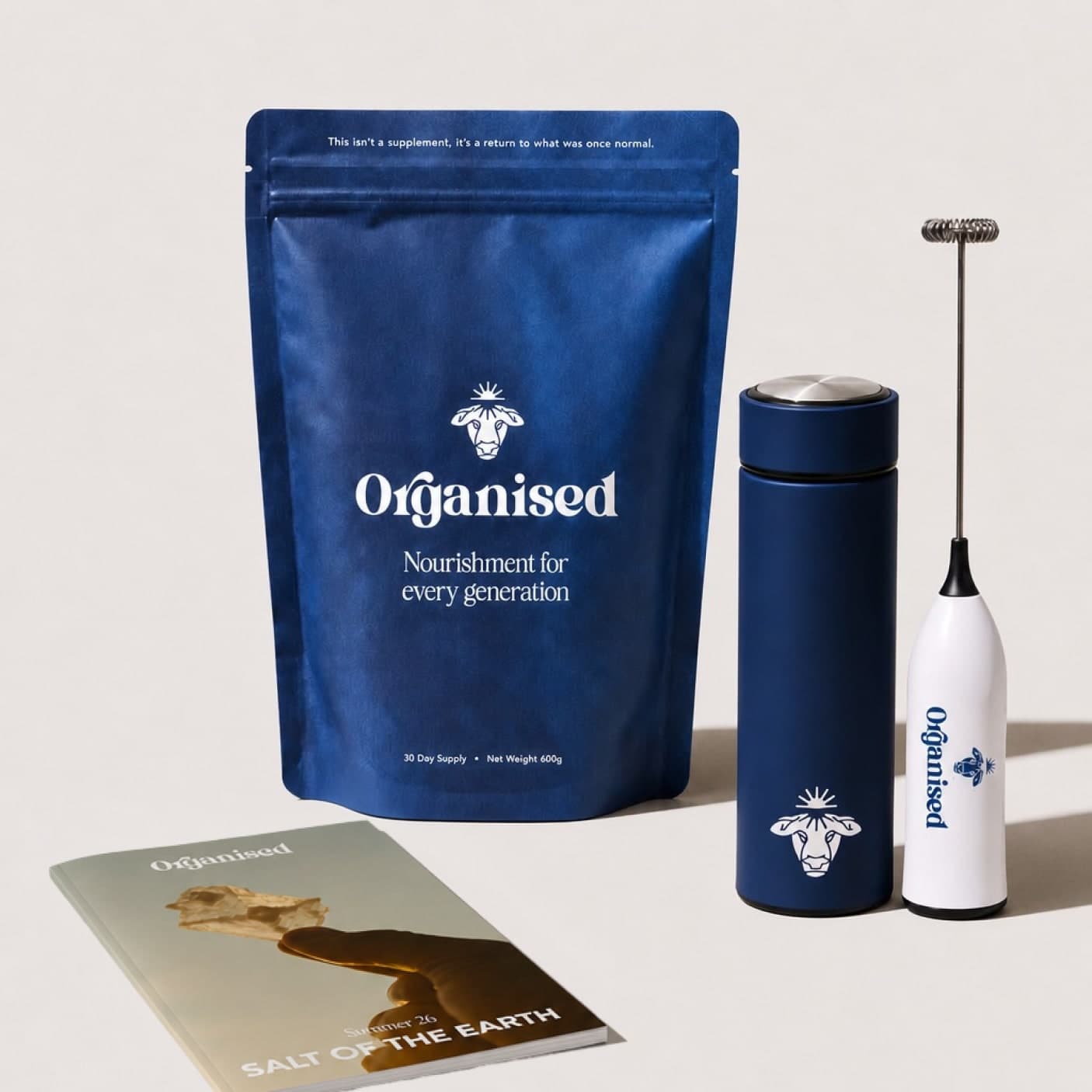
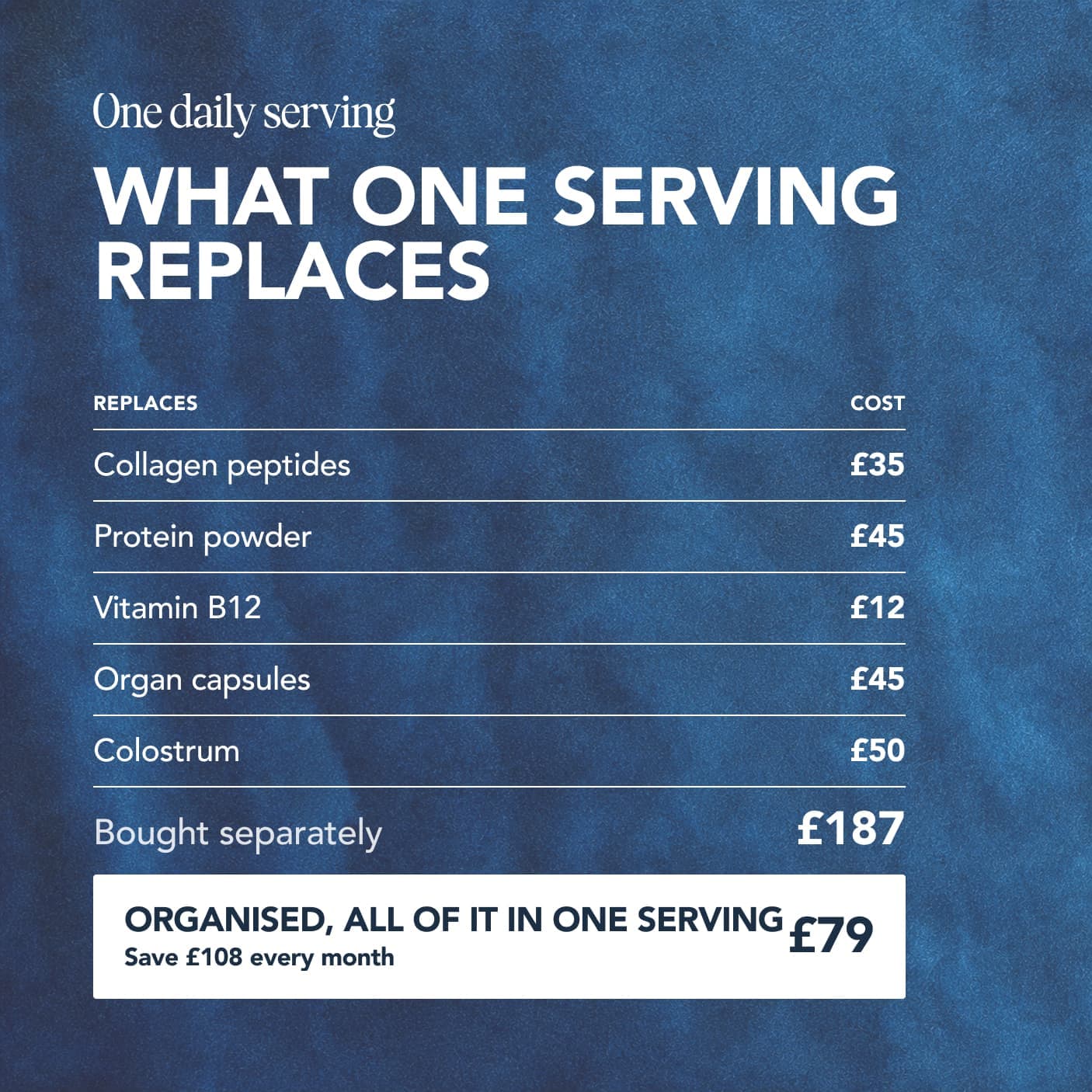
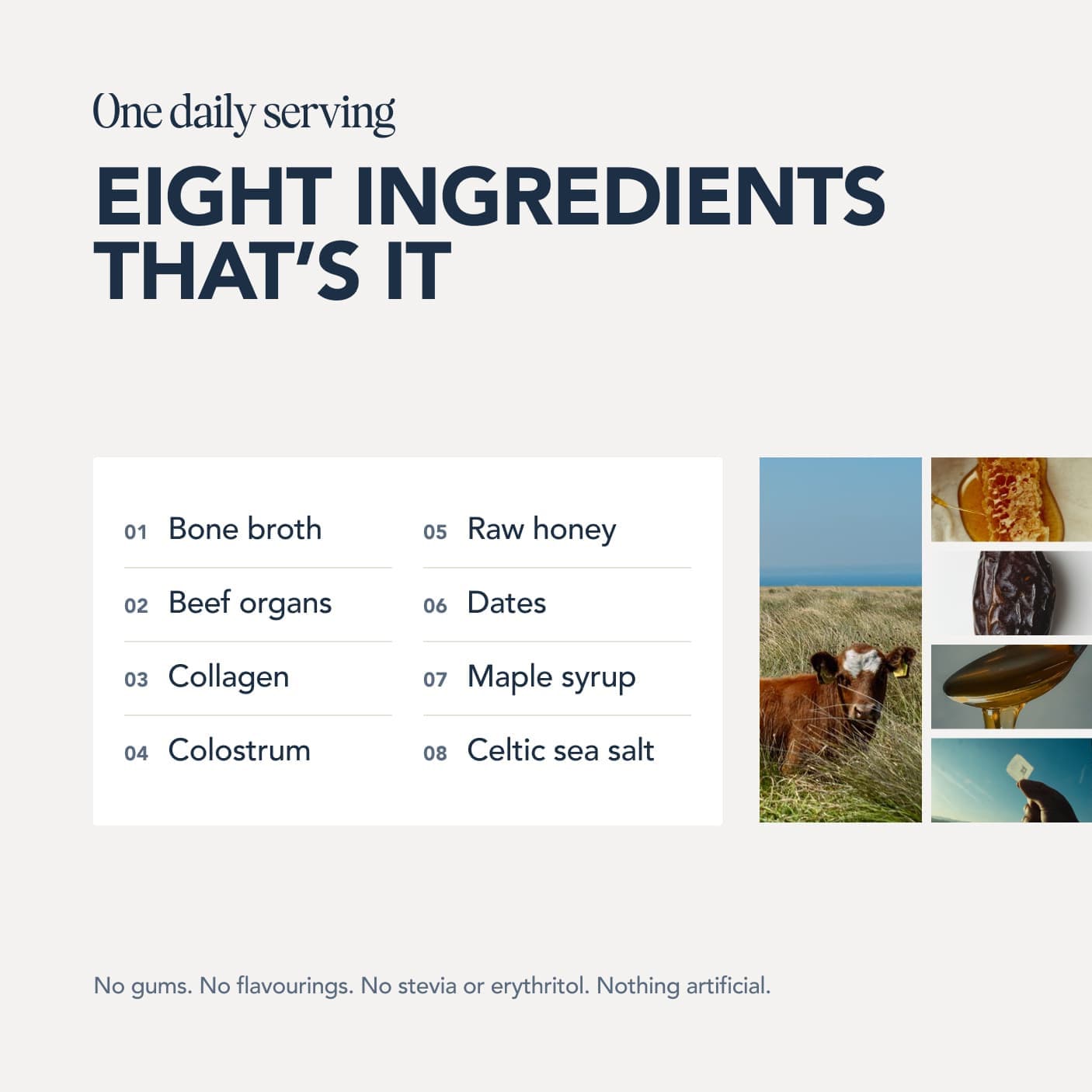
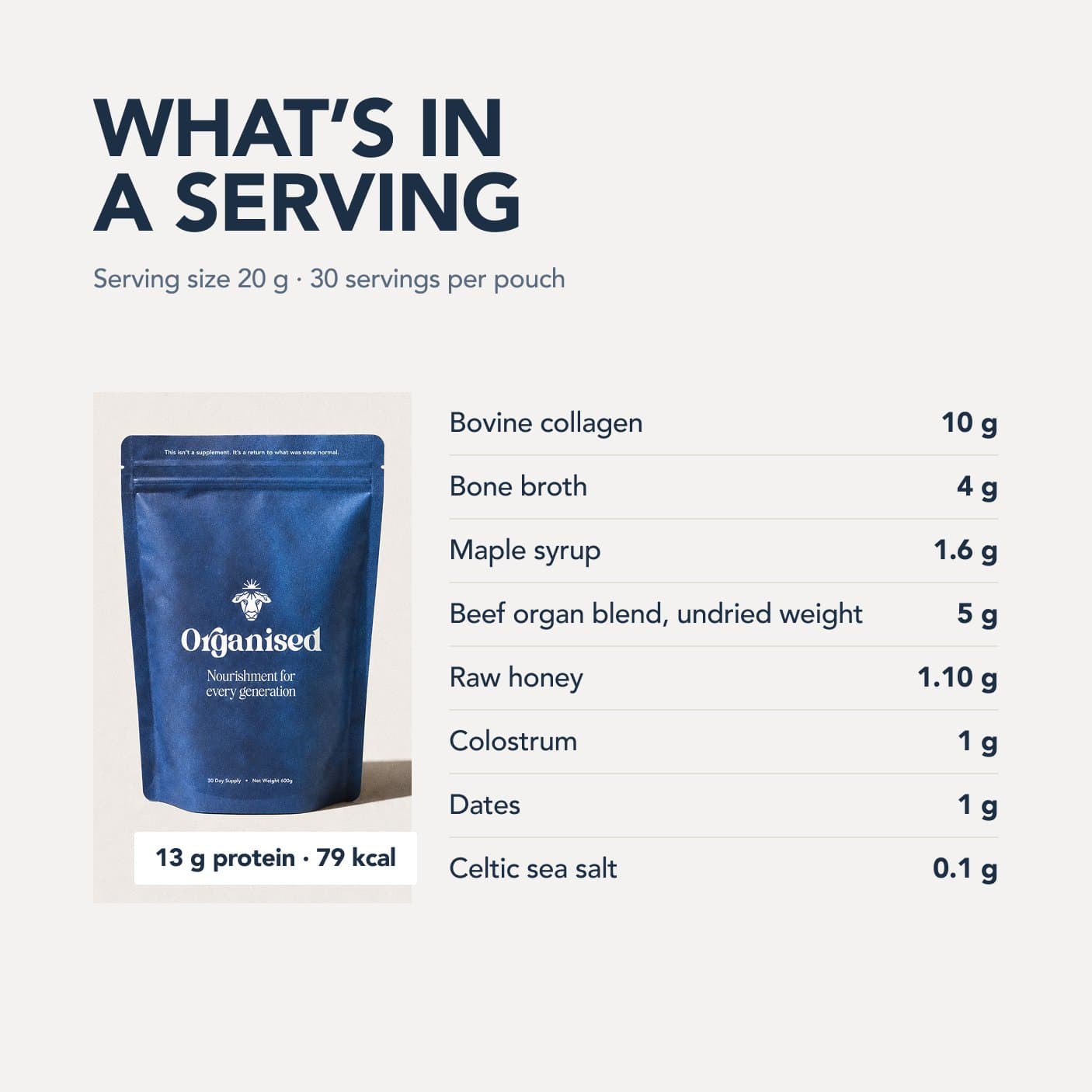
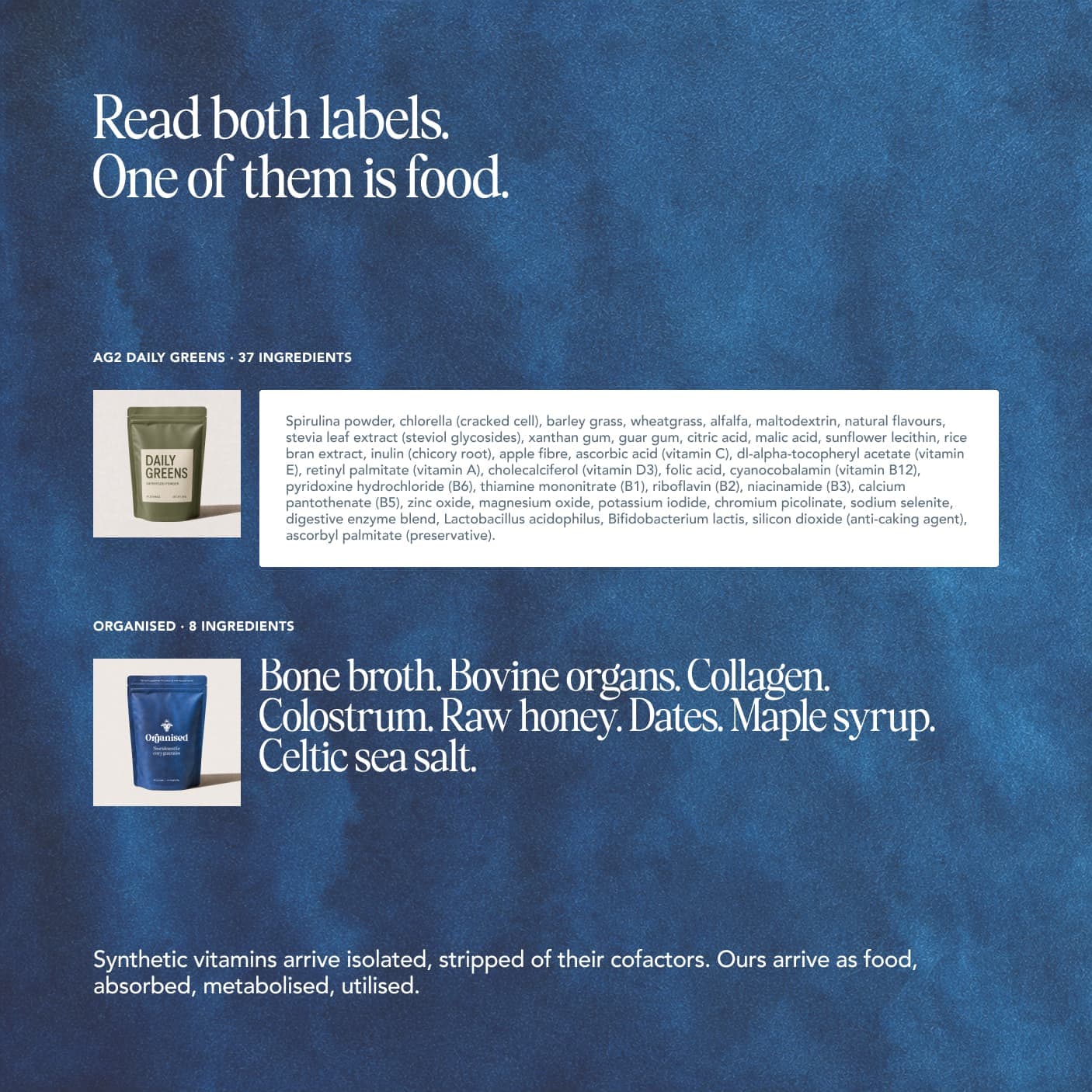
Eight real ingredients built around grass-fed beef organs, collagen and colostrum. Nothing synthetic added.
Free with your first order, worth £38. Plus £10 off the pouch with a subscription.

Free UK shipping · Made in England · 100 day money back guarantee on your first pouch · Skip, pause or cancel anytime
Nutrient timing and absorption for sleep
Taking magnesium at 9 PM is less effective than taking it at dinner or even with breakfast, because your digestive system processes nutrients more efficiently during active hours. Magnesium competes with calcium and zinc for absorption, so timing and meal composition matter significantly.
The best approach is distributing sleep-supporting nutrients throughout the day rather than cramming them into a pre-bed supplement. Eat collagen-rich foods (bone broth, fish skin) at breakfast or lunch so your body has glycine available when you need it. Include protein and fat at dinner to slow gastric emptying and maintain steady amino acid availability through the night.
Magnesium is absorbed better when taken with food that contains some carbohydrate, as the insulin response helps drive mineral uptake into cells. So a magnesium supplement with dinner (which includes carbs from vegetables or roots) works better than magnesium in isolation before bed. Similarly, B vitamins are water-soluble and absorbed better when eaten with a meal.
The irony is that trying to perfect supplement timing often creates more stress than it solves. If you're eating whole foods consistently, you're getting these nutrients. The simpler approach: eat nutrient-dense whole foods across your meals, and your nutrient status will reflect that consistency. Sleep quality improves naturally.
You don't need the perfect supplement protocol. You need consistent whole food nutrition and a calm nervous system.
The bottom line
You don't have to accept poor sleep as your baseline. Your body isn't broken. It's undernourished. Feed it magnesium, glycine, B6, and the building blocks for serotonin. Heal your gut. Manage your stress. Create an environment where sleep can happen. And it will. Deep, restorative sleep is your birthright. You've just been deprived of the nutrients that make it possible.
References
Every source below was checked on 27 August 2026. Each PubMed, PMC and DOI identifier was resolved against NCBI or Crossref, and what it opens is printed under the citation, so you can see the link goes where the citation says without leaving the page. Where a citation and its identifier disagreed, the citation was corrected to the record or the reference was deleted along with the sentence marker that pointed at it, and where the resolved paper turned out not to support the sentence, the sentence was cut back to what it does support. Borrowed authority is worse than none, because it looks like rigour.
- National Institutes of Health, Office of Dietary Supplements. Magnesium: Fact Sheet for Health Professionals. https://ods.od.nih.gov/factsheets/Magnesium-HealthProfessional/ [accessed May 2026].
- Bannai M, Kawai N. New therapeutic strategy for amino acid medicine: glycine improves the quality of sleep. Journal of Pharmacological Sciences. 2012;118(2):145-148. https://pubmed.ncbi.nlm.nih.gov/22293292/Checked 27 August 2026: PMID 22293292 opens Bannai M, Kawai N, New therapeutic strategy for amino acid medicine: glycine improves the quality of sleep. J Pharmacol Sci 2012;118(2):145-8. PubMed indexes it as: Review.
- Kawai N, Sakai N, Okuro M, et al. The sleep-promoting and hypothermic effects of glycine are mediated by NMDA receptors in the suprachiasmatic nucleus. Neuropsychopharmacology. 2015;40(6):1405-1416. https://pmc.ncbi.nlm.nih.gov/articles/PMC4397399/Checked 27 August 2026: PMC4397399 opens Kawai N, Sakai N, Okuro M et al, The sleep-promoting and hypothermic effects of glycine are mediated by NMDA receptors in the suprachiasmatic nucleus. Neuropsychopharmacology 2015;40(6):1405-16.
- National Institutes of Health, Office of Dietary Supplements. Vitamin B6: Fact Sheet for Health Professionals. https://ods.od.nih.gov/factsheets/VitaminB6-HealthProfessional/ [accessed May 2026].
- Melendez-Hevia E, De Paz-Lugo P, Cornish-Bowden A, Cardenas ML. A weak link in metabolism: the metabolic capacity for glycine biosynthesis does not satisfy the need for collagen synthesis. Journal of Biosciences. 2009;34(6):853-872. https://pubmed.ncbi.nlm.nih.gov/20093739/Checked 27 August 2026: PMID 20093739 opens Meléndez-Hevia E, De Paz-Lugo P, Cornish-Bowden A et al, A weak link in metabolism: the metabolic capacity for glycine biosynthesis does not satisfy the need for collagen synthesis. J Biosci 2009;34(6):853-72.
Who wrote and reviewed this guide
Niall Kiddle
Author · Founder, Organised
Niall is the founder of Organised. He started the company in 2024 after fixing his own health the slow way: in 2022 he swapped a cupboard of synthetic supplements for real food, raw milk, organ meats, bone broth and honey, and felt the difference within months.
Areas of expertise: Ancestral nutrition, Organ meats, Whole-food supplementation, Gut health, Regenerative sourcing
Read Niall's full profile
Pedro Rodrigues
Reviewer · Agronomist (farming and sourcing only)
Pedro is the agronomist Organised works with on farming and sourcing. His job on the guides is to keep the science honest: he reviews what we publish about soil health, regenerative agriculture, grazing and the way food is actually produced.
Areas of expertise: Regenerative agriculture, Agronomy, Soil health, Grass-fed farming, Food sourcing
Reviewed this guide on
Read Pedro's full profileMore on sleep
View allBrowse the guides library
All guidesKeep reading

Health goals
Glycine and Sleep: How Collagen Might Help You Rest Better
Glycine and sleep are closely linked: it lowers core body temperature and supports NREM sleep. See how collagen-rich foods can help you rest better.

Health goals
The Connection Between Gut Health and Insomnia
95% of serotonin is made in the gut. When your gut is damaged, serotonin production collapses. Melatonin and sleep follow.

Health goals
Seasonal Illness: A Whole Food Survival Kit
Build natural immune support before cold and flu season hits. Discover the whole-food kit that aids recovery, from bone broth to nutrient-dense organ meats.
Real food, made effortless
Start my daily blendA few ways to use it
All recipes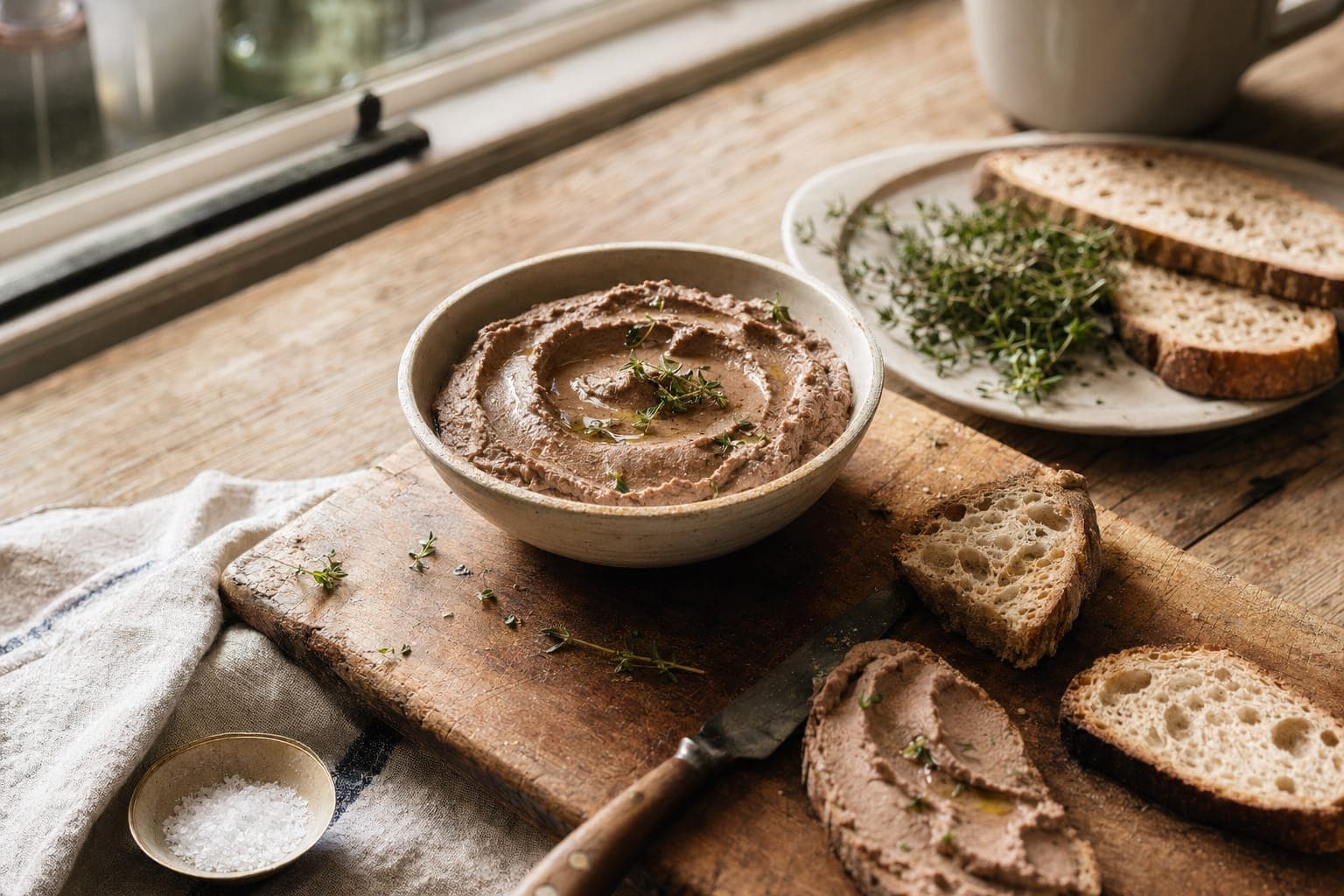
Liver Pate for Beginners: A Gentle Introduction to Organ Meats
Simple liver pate recipe to start eating organ meats. Chicken liver, butter, and herbs. Gentle introduction to nutrient-dense whole foods.
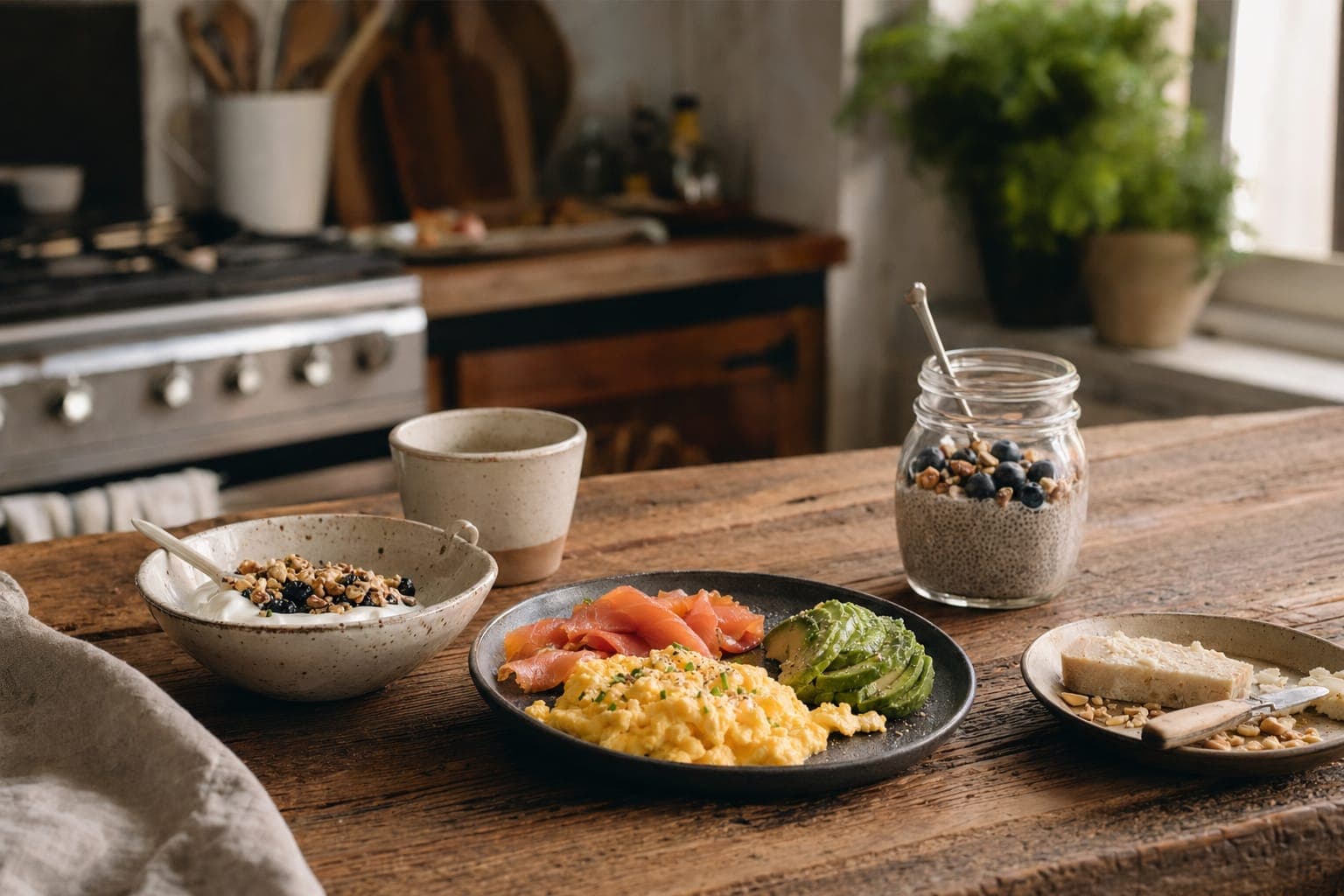
5-Minute High-Protein Breakfasts Using Organised
Quick, high-protein breakfast ideas using Organised. Five recipes you can make in minutes with real food. No fussing around.

Organised Protein Pancakes: A Weekend Favourite
A high-protein pancake recipe using beef protein, eggs, and raw milk. Cooked in cast iron, naturally sweetened with banana and honey. Real food breakfast.


 Join over 100,000+ members
Build a better food system with us
The Organised community is thousands of people choosing real food and backing the farmers who grow it, all of us trying to leave the world a little better than we found it. If that is what you care about too, you belong here.