How Stress Destroys Your Gut (And What to Do About It)
Your gut lining is under constant vigilance. It decides, moment by moment, what gets through and what stays out. Stress hijacks that decision-making process. It tells your gut to open doors that should stay shut.
By Niall Kiddle, Founder, Organised

Reviewed by Pedro Rodrigues, Agronomist (farming and sourcing only) ·
6 min read · Published · Updated · 4 cited sources
Makers of the Organised Daily blend, a grass-fed beef organ supplement from regenerative UK farms

The result is leaky gut. Not as a diagnosis you'll hear from your GP. But as a real physiological problem with real consequences. Inflammation. Poor digestion. Immune dysfunction. Food sensitivities. All traceable back to a nervous system that won't calm down.
The gut as a gatekeeper
Your gut lining is a single layer of cells. That's it. One cell thick, it separates the contents of your digestive tract from your bloodstream.
This is miraculous and terrifying in equal measure. Miraculous because it allows nutrients through. Terrifying because it's also separating you from bacteria, undigested food particles, and compounds you don't want in your blood.
Those cells are held together by tight junctions, literally protein structures that zip adjacent cells together.1 Under normal conditions, these tight junctions are selective and controlled. Nutrients through. Pathogens and undigested food particles stay out.
Under stress, those tight junctions open.
Your nervous system doesn't think about your gut. But it controls your gut completely.
The mechanism is surprisingly direct. When your nervous system is in a stressed state, it downregulates digestion. It prioritises survival: get ready to fight or run. The muscles need blood. The digestive system can wait. Tight junctions relax. Permeability increases.
In short bursts, this is fine. Your nervous system calms down, tight junctions tighten up, gut function normalises. But modern life isn't short bursts. It's chronically elevated stress. Chronically elevated cortisol. Chronically open gut lining.
The vagus nerve and the gut-brain axis
The vagus nerve is the main highway between your brain and your gut. It runs from your brain stem all the way down to your digestive tract, carrying signals in both directions.
From brain to gut: it carries the signal about whether you're stressed or calm. In a calm state, the vagus nerve tells your gut to produce stomach acid, digestive enzymes, and healthy gut motility. It tells your gut that it's safe to digest and absorb.
From gut to brain: it carries information about what's happening in your digestive tract. This information profoundly influences your mood, your anxiety levels, even your decision-making.3
This is the gut-brain axis. It's not metaphorical. It's a literal two-way communication system.
Your gut isn't responding to stress. Your gut is responding to signals from your brain, delivered through the vagus nerve, that tell it the world is threatening.
When that signal is chronic, the gut is in a chronic state of "prepare for threat". Tight junctions loosen. Inflammation increases. The microbiome shifts toward pathogenic organisms. The lining breaks down.
Cortisol and tight junction failure
Cortisol, the stress hormone, has a direct effect on tight junction integrity. At moderate levels, it's fine. But chronically elevated cortisol, the state most modern people live in, actively damages tight junctions.
Research shows that chronically elevated cortisol increases intestinal permeability. The tight junctions quite literally become more permeable. Zonulin, a protein that regulates tight junction tightness, increases. The junctions open.2
Once the lining is compromised, it's a cascade. Foreign compounds enter the bloodstream. Your immune system sees them as threats. Inflammation results. That inflammation damages more of the lining. A self-reinforcing cycle.
This is why stressed people get gut problems. Not because they're eating worse (though they often are). But because their nervous system has told their gut lining to open.

How modern stress breaks the system
Your ancestors experienced stress acutely. A threat appeared. The nervous system activated. When the threat passed, the nervous system calmed. Cortisol returned to baseline.
Modern stress is different. It's chronic. You wake up and check email before your eyes have adjusted to light. You scroll news engineered to agitate. You sit in traffic. You carry the weight of digital relationships that never fully switch off. Your nervous system is never fully calm.
Cortisol, meant to spike and drop, instead remains elevated. The gut, receiving the chronic signal that the world is threatening, stops maintaining its protective barrier.
The cascade compounds. Poor digestion means poor nutrient absorption. Poor nutrient absorption means weaker immune function and slower healing. The cycle accelerates.
Get health guides like this, free
Two short reads a week on eating for energy, gut health, skin, sleep and more.
By signing up you agree to receive emails from us. No spam, unsubscribe anytime.
The HPA axis and survival mode
The HPA axis is the hypothalamic-pituitary-adrenal axis. It's the system that controls cortisol production and release. It's meant to be responsive and flexible.
Under chronic stress, the HPA axis becomes dysregulated. Cortisol doesn't drop when it should. It stays elevated. Sometimes it crashes too low. Either way, the system is dysfunctional.
A dysregulated HPA axis means a nervous system stuck in threat mode. And a nervous system in threat mode means a gut that's constantly in a state of low-grade permeability and inflammation.
You cannot heal your gut while your nervous system thinks you're in danger.
This is the critical insight. Healing the gut doesn't start with diet. It starts with calming the nervous system. Once the vagus nerve is signalling safety again, tight junctions can tighten. Inflammation can reduce. The healing becomes possible.
Practical stress reduction
You can't eliminate stress. But you can reduce chronically elevated stress. Here are the interventions that actually work:
- Cold water immersion: 30 seconds to 2 minutes in cold water (shower, plunge, ocean) activates the parasympathetic nervous system. It's a controlled stress that trains your vagus nerve to activate the calming response.
- Slow breathing: 5 to 6 breaths per minute, with a longer exhale than inhale, directly activates the parasympathetic nervous system.3 Ten minutes daily has measurable effects on cortisol and HPA axis function.
- Walking: 20 to 30 minutes daily, at a pace where conversation is possible but not comfortable. Not intense. Not leisurely. This activates the parasympathetic nervous system without the stress of intense exercise.
- Removing blue light after sunset: Blue light tells your brain it's daytime. In modern life, you're exposed to it until bedtime. Removing it (wearing blue light blocking glasses, turning off screens) allows melatonin to rise and cortisol to fall.
- Not checking email or news first thing: This single change, more than any other, reduces morning cortisol spike.
- Adequate sleep: Sleep is when the nervous system restores itself. Poor sleep means the HPA axis never gets to fully reset.

Foods that support repair
Once you've begun calming your nervous system, food can support gut lining repair. But food alone won't fix a dysregulated nervous system.
Bone broth, rich in gelatin and glycine, supports collagen synthesis in the gut lining. Fermented foods like sauerkraut, kefir, and sourdough rebuild beneficial bacteria.4 Gelatinous cuts of meat provide the same glycine. Leafy greens provide the nutrients needed for tight junction integrity.
But here's the thing that matters: you could eat the perfect diet and still not heal if your nervous system is in chronic threat mode. The vagal signals tell your gut not to absorb, not to heal, not to function normally. The food can't override that signal.
Healing the gut means healing the nervous system first. Food follows.
The hierarchy is: calm the nervous system, then feed the gut what it needs to repair. Both are necessary. Neither is sufficient alone.

1 of 9
Daily blend
100,000+ thriving families4.9 on Trustpilot
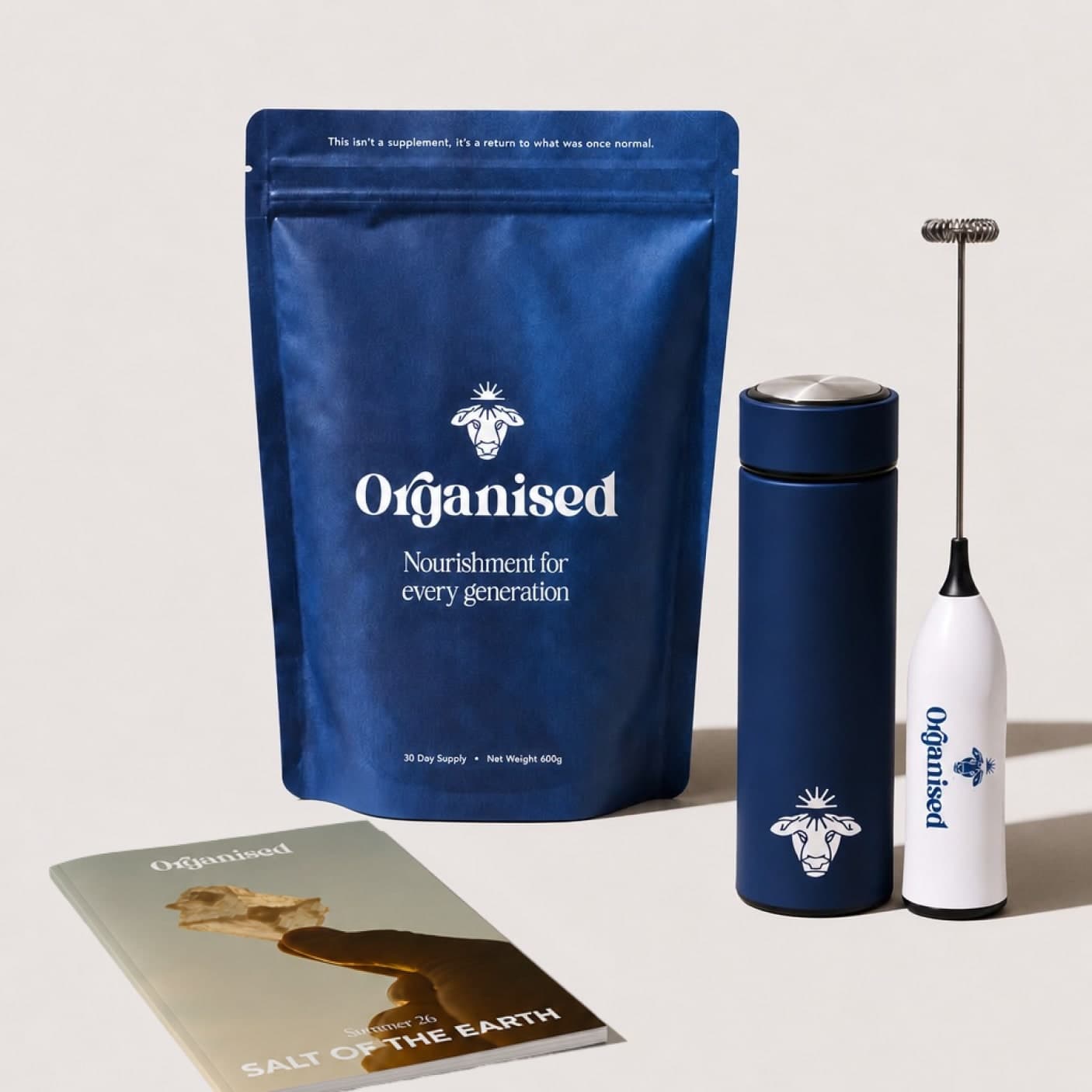
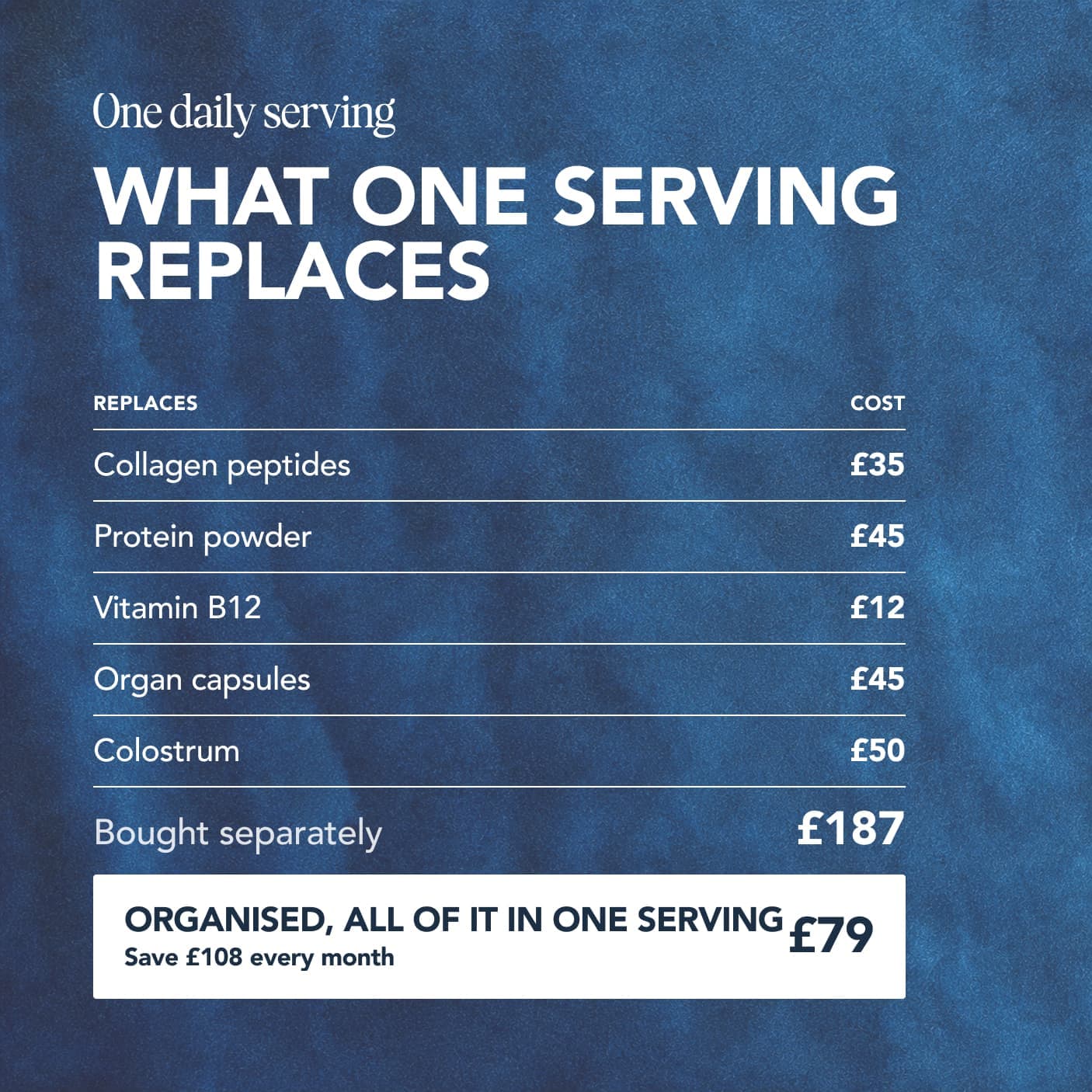
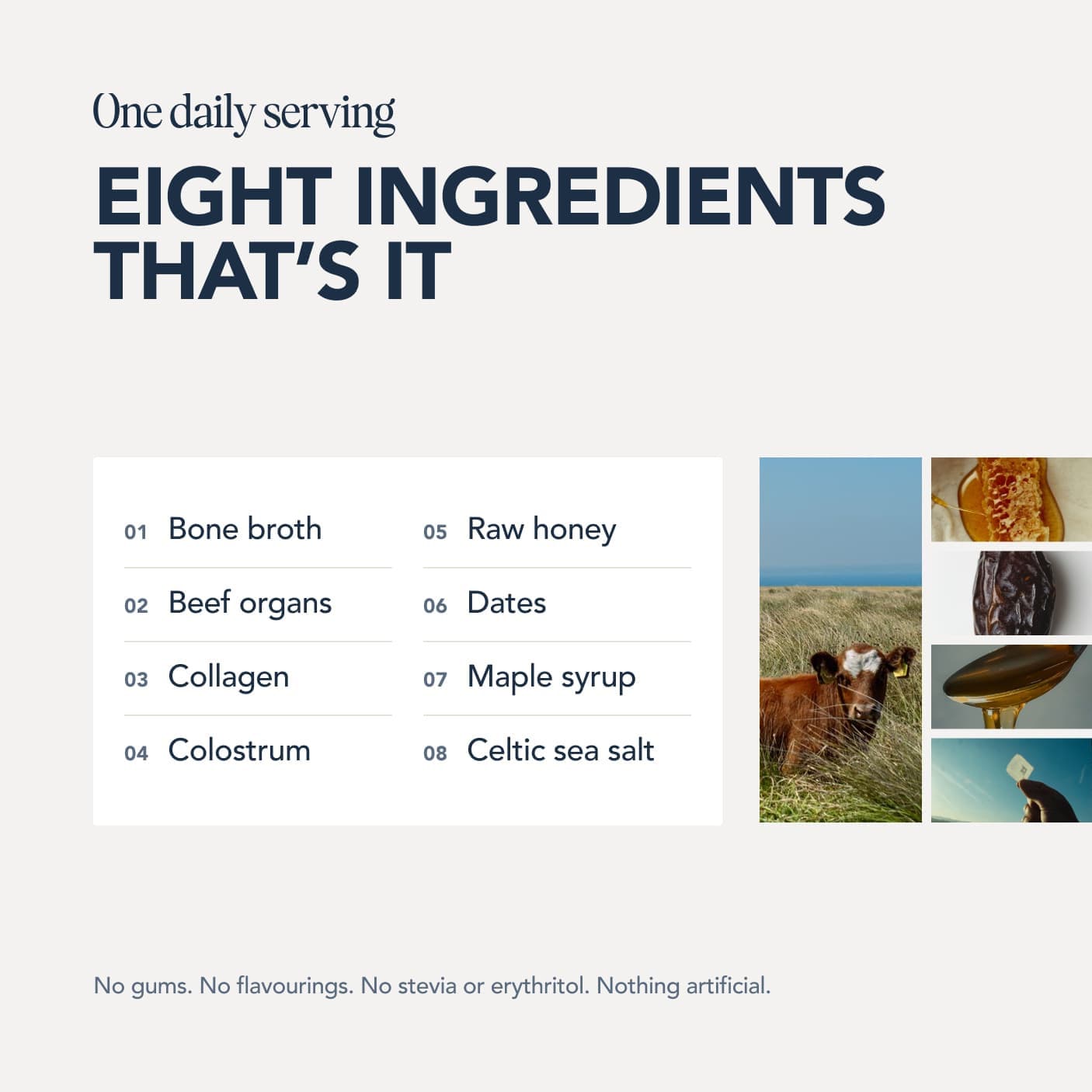
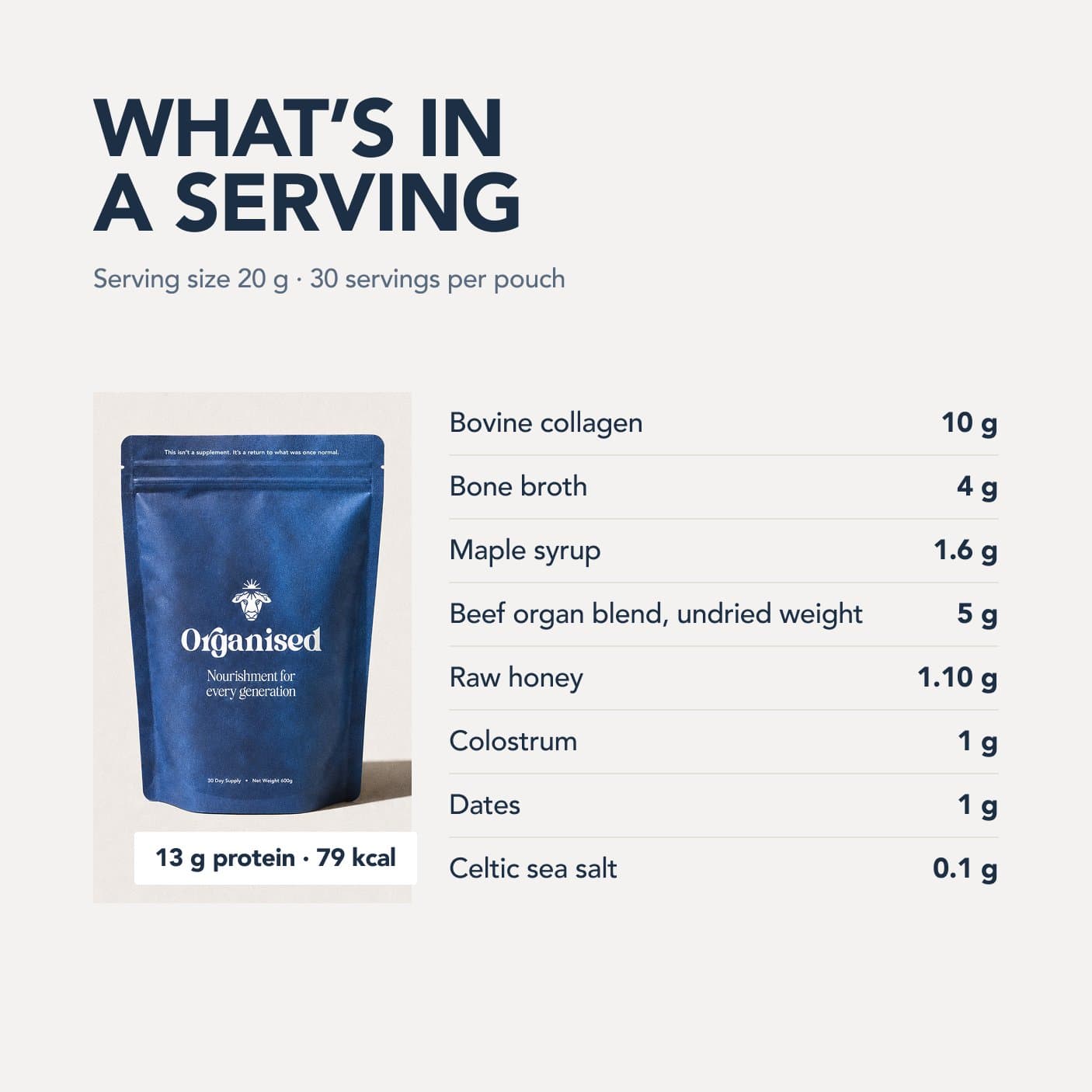
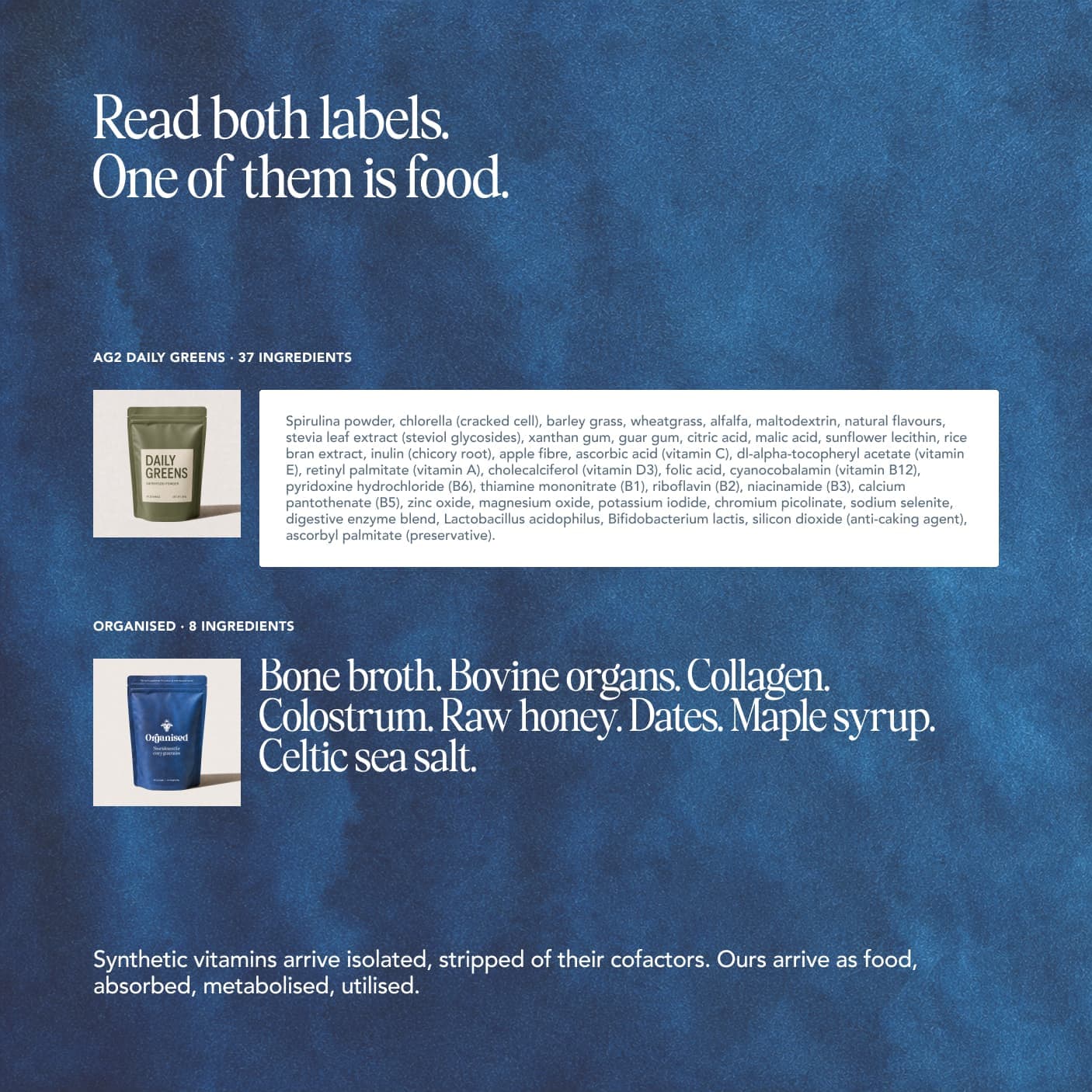
Eight real ingredients built around grass-fed beef organs, collagen and colostrum. Nothing synthetic added.
Free with your first order, worth £38. Plus £10 off the pouch with a subscription.

Free UK shipping · Made in England · 100 day money back guarantee on your first pouch · Skip, pause or cancel anytime
The bottom line
Your gut isn't broken. Your nervous system is telling it to act broken. Stress, chronically elevated, has convinced your gut lining that it needs to open.
Healing means shifting your nervous system from threat mode to safety mode. Slow breathing. Cold exposure. Walking. Removing digital stress. Adequate sleep. These aren't optional wellness measures. They're the foundation everything else is built on.
Once your nervous system believes the world is safe again, your gut will heal itself. The tight junctions will tighten. Inflammation will reduce. Digestion will normalise. Your gut-brain axis will work the way it's meant to.
References
Every source below was checked on 27 August 2026. Each PubMed, PMC and DOI identifier was resolved against NCBI or Crossref, and what it opens is printed under the citation, so you can see the link goes where the citation says without leaving the page. Where a citation and its identifier disagreed, the citation was corrected to the record or the reference was deleted along with the sentence marker that pointed at it, and where the resolved paper turned out not to support the sentence, the sentence was cut back to what it does support. Borrowed authority is worse than none, because it looks like rigour.
- Suzuki T. Regulation of the intestinal barrier by nutrients: the role of tight junctions. Animal Science Journal. 2020;91(1):e13357. https://onlinelibrary.wiley.com/doi/10.1111/asj.13357Checked 27 August 2026: doi:10.1111/asj.13357 opens Suzuki T, Regulation of the intestinal barrier by nutrients: The role of tight junctions Animal Science Journal 2020;91(1).
- Vanuytsel T, van Wanrooy S, Vanheel H, et al. Psychological stress and corticotropin-releasing hormone increase intestinal permeability in humans by a mast cell-dependent mechanism. Gut. 2014;63(8):1293-1299. See also Karl JP, et al. Psychosocial stress-induced intestinal permeability in healthy humans: what is the evidence? Comprehensive Psychoneuroendocrinology. 2023. https://pmc.ncbi.nlm.nih.gov/articles/PMC10569989/Checked 27 August 2026: PMC10569989 opens La Torre D, Van Oudenhove L, Vanuytsel T et al, Psychosocial stress-induced intestinal permeability in healthy humans: What is the evidence? Neurobiol Stress 2023;27:100579. PubMed indexes it as: Review.The authors' own declaration, from the record: Authors D.L.T., L.V.O., T.V., and K.V. declare none.
- Breit S, Kupferberg A, Rogler G, Hasler G. Vagus nerve as modulator of the brain-gut axis in psychiatric and inflammatory disorders. Frontiers in Psychiatry. 2018;9:44. https://pmc.ncbi.nlm.nih.gov/articles/PMC5859128/Checked 27 August 2026: PMC5859128 opens Breit S, Kupferberg A, Rogler G et al, Vagus Nerve as Modulator of the Brain-Gut Axis in Psychiatric and Inflammatory Disorders. Front Psychiatry 2018;9:44. PubMed indexes it as: Review.
- Chen Q, Chen O, Martins IM, et al. Collagen peptides ameliorate intestinal epithelial barrier dysfunction in immunostimulatory Caco-2 cell monolayers via enhancing tight junctions. Food & Function. 2017;8(3):1144-1151. https://pubmed.ncbi.nlm.nih.gov/28174772/Checked 27 August 2026: PMID 28174772 opens Chen Q, Chen O, Martins IM et al, Collagen peptides ameliorate intestinal epithelial barrier dysfunction in immunostimulatory Caco-2 cell monolayers via enhancing tight junctions. Food Funct 2017;8(3):1144-1151.
Corrections
What this page used to say, and why it no longer says it. Corrections are dated and are never removed, because deleting the record of an error is a second error. Every guide we have corrected is listed at our corrections log.
- 27 August 2026. Reference 2 attributed the linked permeability review to Karl et al. in a journal it was not published in. It is by La Torre, Van Oudenhove, Vanuytsel and Verbeke, in Neurobiology of Stress 2023.
Who wrote and reviewed this guide
Niall Kiddle
Author · Founder, Organised
Niall is the founder of Organised. He started the company in 2024 after fixing his own health the slow way: in 2022 he swapped a cupboard of synthetic supplements for real food, raw milk, organ meats, bone broth and honey, and felt the difference within months.
Areas of expertise: Ancestral nutrition, Organ meats, Whole-food supplementation, Gut health, Regenerative sourcing
Read Niall's full profile
Pedro Rodrigues
Reviewer · Agronomist (farming and sourcing only)
Pedro is the agronomist Organised works with on farming and sourcing. His job on the guides is to keep the science honest: he reviews what we publish about soil health, regenerative agriculture, grazing and the way food is actually produced.
Areas of expertise: Regenerative agriculture, Agronomy, Soil health, Grass-fed farming, Food sourcing
Reviewed this guide on
Read Pedro's full profileMore on gut health
View all- The Complete Guide to Healing Your Gut with Whole Foods
- Why Your Gut Health Affects Everything (Not Just Digestion)
- 5 Foods You Think Are Healthy (But Are Secretly Ruining Your Gut)
- Acid Reflux and Low Stomach Acid: A Nutritional Perspective
- Bloating After Eating: Common Causes and Whole Food Solutions
- Bone Broth for Gut Health: What the Science Says
- Candida Overgrowth: What It Is and How Nutrition Can Help
- Histamine Intolerance: Could Your Gut Be the Cause?
- How Colostrum and Collagen Work Together to Repair the Gut Lining
- How to Recognise the Early Signs of Poor Gut Health
- How to Reset Your Gut After Antibiotics
- IBS and Nutrition: A Whole Food Approach
Browse the guides library
All guidesKeep reading

Health goals
You Don't Need Another Probiotic. You Need to Fix the Foundation.
Most people take the wrong probiotic for the wrong reason. Here's what your gut actually needs to heal, and why probiotics alone will never fix it.

Health goals
Choline and Brain Development: From Pregnancy to Old Age
Choline powers brain development from the womb onwards. Why 90% are deficient and how to get enough from real food sources.

Health goals
Glycine and Sleep: How Collagen Might Help You Rest Better
Glycine and sleep are closely linked: it lowers core body temperature and supports NREM sleep. See how collagen-rich foods can help you rest better.
Real food, made effortless
Start my daily blendA few ways to use it
All recipes
Raw Milk Hot Chocolate with Collagen
A nourishing evening hot chocolate made with raw milk, grass-fed collagen, raw cacao, and honey. A nighttime ritual that supports sleep and gut health.

Whole Food Snacks for Busy Days
Practical whole food snacks that travel well and sustain energy. No refined carbs, no seed oils. Real food options for when you're busy.
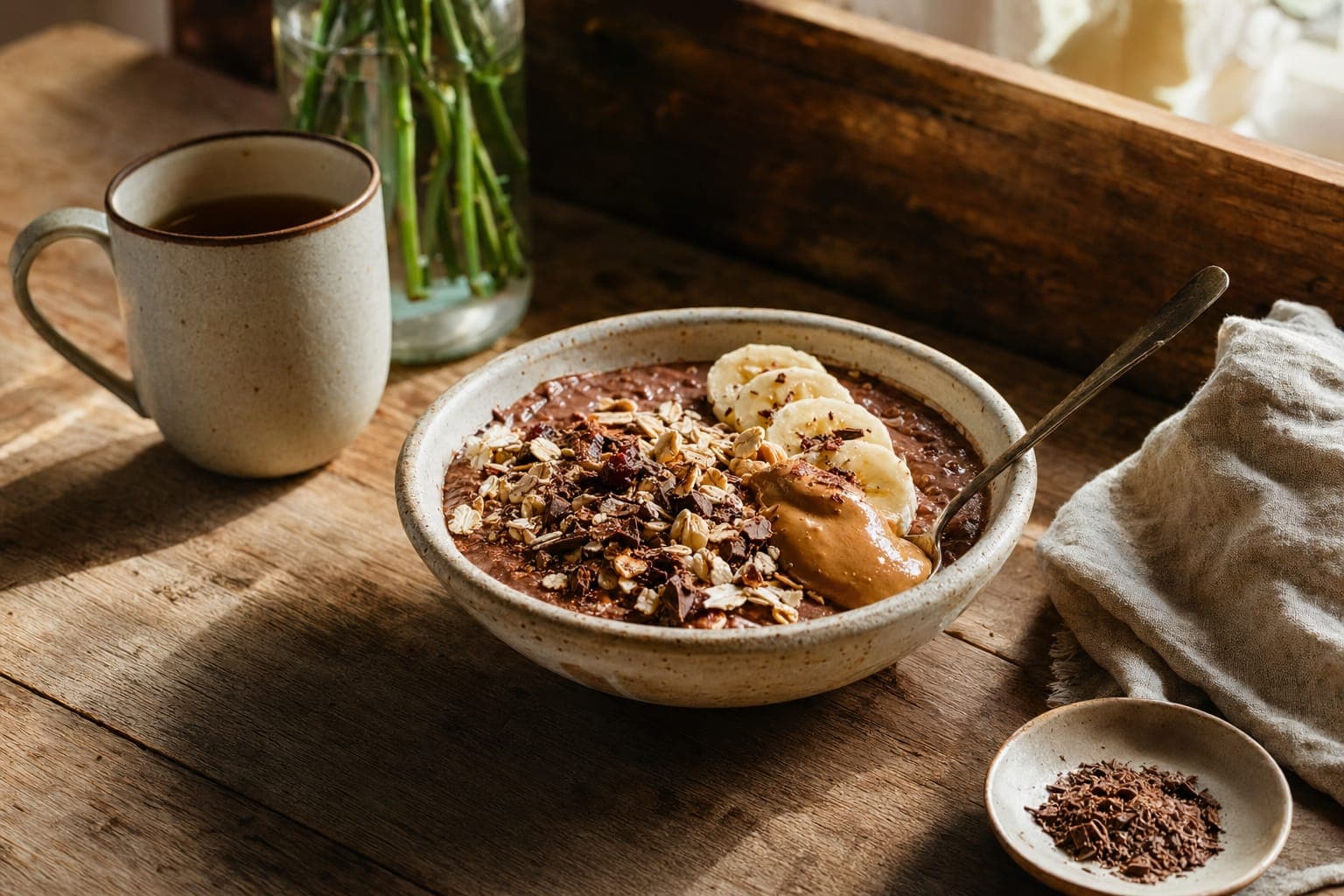
10 Ways to Use Organised That Aren't Just a Shake
Move beyond the basic shake. Discover 10 creative ways to use Organised in smoothie bowls, oats, yoghurt, baking, and more.


 Join over 100,000+ members
Build a better food system with us
The Organised community is thousands of people choosing real food and backing the farmers who grow it, all of us trying to leave the world a little better than we found it. If that is what you care about too, you belong here.