How Stress Affects Fertility (And What to Do About It)
You want to get pregnant. You're eating well. You're taking your supplements. Your cycles look normal. And yet, month after month, nothing happens. Your body isn't cooperating. The problem isn't what you're eating or what you're doing. It's what's happening to your nervous system. It's stress, and it's sabotaging your fertility.

By Niall Kiddle, Founder, Organised

Reviewed by Pedro Rodrigues, Agronomist (farming and sourcing only) ·
7 min read · Published · Updated · 1 cited source
Makers of the Organised Daily blend, a grass-fed beef organ supplement from regenerative UK farms

The problem isn't what you're eating or what you're doing. It's what's happening to your nervous system. It's stress, and it's sabotaging your fertility.

The HPA axis and the fertility connection
The hypothalamic-pituitary-adrenal (HPA) axis governs the stress response, and chronic activation has been shown to suppress the hypothalamic-pituitary-gonadal (HPG) axis, reducing the release of GnRH, LH and FSH that regulate ovulation and spermatogenesis.1
Here's why: evolutionarily, when a woman is in a dangerous situation, getting pregnant is a poor survival strategy. A foetus would drain her resources. Lactation would make her vulnerable. From an evolutionary perspective, if the environment is threatening enough to elevate cortisol, it's not a safe time to conceive. So the body shuts down fertility signalling.
This was brilliant for survival in ancestral times. But in the modern world, where stress is chronic but not immediately life-threatening, this system backfires. Your body is stuck in a state of perceived threat. Reproductive hormones stay suppressed. Conception becomes difficult.
The worst part? Many women don't realise this is happening. They're not dramatically stressed. They're just chronically activated. Work stress, financial stress, relationship stress, health anxiety. The nervous system has been in a low-grade fight-or-flight state for so long that it feels normal.
The body cannot ovulate properly when the nervous system is in fight-or-flight. Conception requires parasympathetic activation. You cannot force the nervous system into a state of safety through willpower.

How chronic cortisol shuts down reproduction
Chronic cortisol elevation has been shown to suppress GnRH release from the hypothalamus, which reduces pituitary FSH and LH, impairing ovulation in women and testicular function in men.1
Cortisol also increases the activity of the enzyme 17-alpha-hydroxylase, which shunts progesterone precursors into cortisol production instead of into progesterone production. This is called the pregnenolone steal. The body is literally redirecting the raw materials for progesterone to make more cortisol.
The result is low progesterone. Low progesterone means irregular cycles, shortened luteal phases, poor implantation, and increased miscarriage risk. It also means symptoms: anxiety, insomnia, and mood instability.
Over time, chronically high cortisol also impairs thyroid function. Low thyroid function is associated with irregular cycles and infertility. It compounds the problem.
The cascade of hormonal damage
The damage extends beyond cortisol suppression. Chronic stress also elevates prolactin, the hormone that signals the body to prepare for lactation. High prolactin suppresses GnRH and inhibits ovulation. This is why breastfeeding acts as a natural contraceptive. The body is signalling that resources should go to lactation, not to conception.
Stress also impairs oestrogen metabolism. The liver breaks down oestrogen and makes it available for excretion. When stress hormones are high, oestrogen breakdown is impaired. Oestrogen recirculates, creating high oestrogen relative to progesterone. This oestrogen dominance is associated with endometriosis, fibroids, and heavy periods, all of which impair fertility.
Finally, stress impairs gastrointestinal function. Stress literally shuts down digestion and shifts blood flow away from the gut to the muscles and brain. This leads to poor nutrient absorption, dysbiosis, and a leaky gut. All of these impair fertility.
Stress doesn't just make you feel bad. It hijacks your entire hormonal system and redirects resources away from reproduction.

Why anxious brains don't conceive
There's a particular type of stress that's especially damaging to fertility: anxiety about fertility itself. The mental load of tracking cycles, testing ovulation, timing intercourse, worry that it's not happening. All of that anxiety further elevates cortisol and prolactin and further suppresses reproductive hormones.
This creates a painful paradox. The thing you want most is generating the stress that prevents you from getting it. Many couples report that conception finally happens when they stop trying so hard, when they go on holiday and relax, when they finally let go of the mental burden.
This isn't coincidence. It's physiology. When the nervous system finally drops into parasympathetic state, cortisol drops, prolactin normalises, and reproductive hormone signalling comes back online.
Nervous system recovery and restoration
The first step is getting the nervous system out of fight-or-flight. This cannot be forced. You cannot think your way out. You have to create the conditions where the nervous system feels safe enough to settle down.
This looks different for everyone, but common threads include: reduced external stress (saying no to commitments), increased parasympathetic activation (time in nature, gentle movement, breath work), and reduced information overload (limiting news and social media).
Walking, especially in green spaces, is one of the most effective nervous system settling tools available. Twenty to thirty minutes a day of walking without rushing, without checking your phone, noticeably reduces cortisol and activates the parasympathetic nervous system.
Gentle yoga, tai chi, and dance also help. The movement should feel nourishing, not effortful. High-intensity exercise, when done under conditions of existing stress, can further elevate cortisol. The goal is to move the needle on the nervous system toward calm, not toward intensity.
Some people benefit from formal meditation or breathing practices. Others find their parasympathetic activation through creative work, music, or time with loved ones. The mechanism varies. The outcome is the same: nervous system activation and cortisol reduction.
Get health guides like this, free
Two short reads a week on eating for energy, gut health, skin, sleep and more.
By signing up you agree to receive emails from us. No spam, unsubscribe anytime.
Nutrient support for stress resilience
Once you're working on nervous system regulation, specific nutrients support that process. Magnesium is the mineral that quiets the nervous system. It's involved in over 300 enzymatic functions, many of them related to nervous system calm. Deficiency is rampant, and supplementing with 300 to 500 milligrams of magnesium glycinate daily, especially in the afternoon or evening, noticeably reduces anxiety and improves sleep.
Vitamin B complex, particularly B5 and B6, are required for cortisol production and metabolism. They're also involved in neurotransmitter synthesis. Adequate B vitamins support a more resilient stress response. They're found in organ meats, eggs, and fish.
Vitamin C is required for cortisol synthesis, but it's also needed for cortisol metabolism. High levels deplete it. Supplementing with 1 to 2 grams daily, or eating vitamin C-rich foods (citrus, berries, leafy greens, peppers) throughout the day, supports adrenal function.
Omega-3 fats reduce inflammation and support nervous system function. They're anti-anxiety nutrients. Fatty fish or fish oil supplementation is valuable.
Fertility isn't primarily a reproductive problem. It's a nervous system problem wearing a fertility mask. Fix the nervous system and fertility follows.




1 of 9
Daily blend
100,000+ thriving families4.9 on Trustpilot
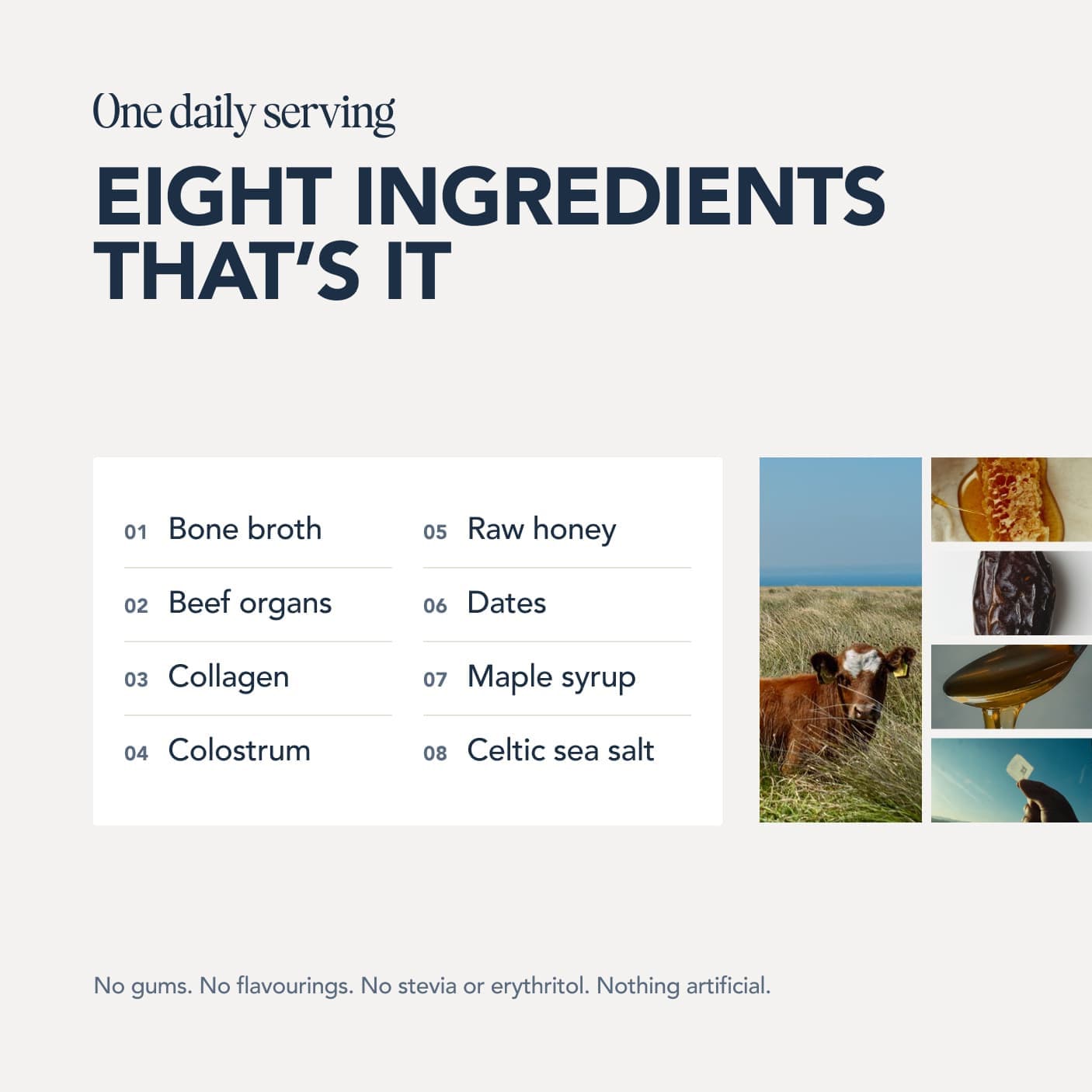
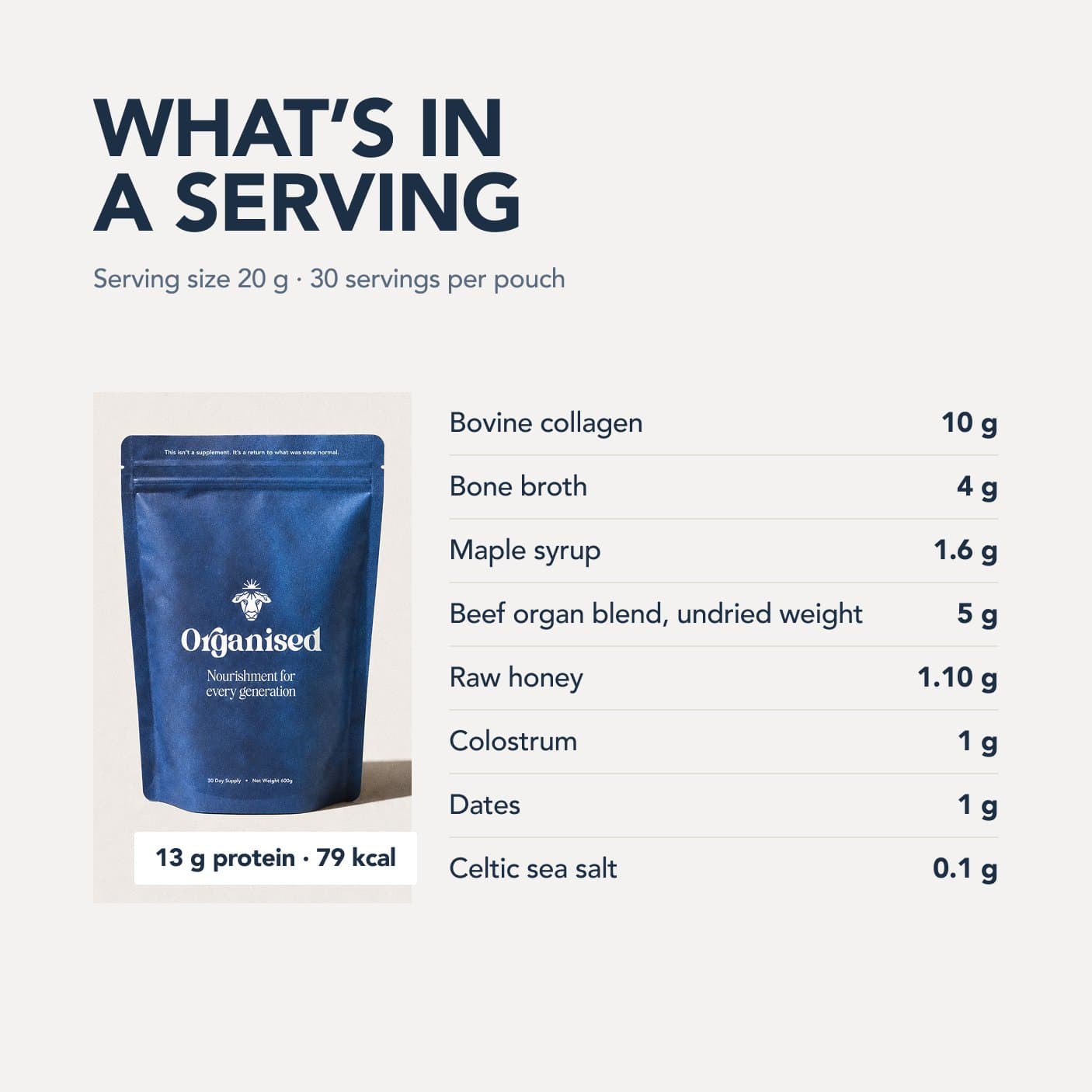
Eight real ingredients built around grass-fed beef organs, collagen and colostrum. Nothing synthetic added.
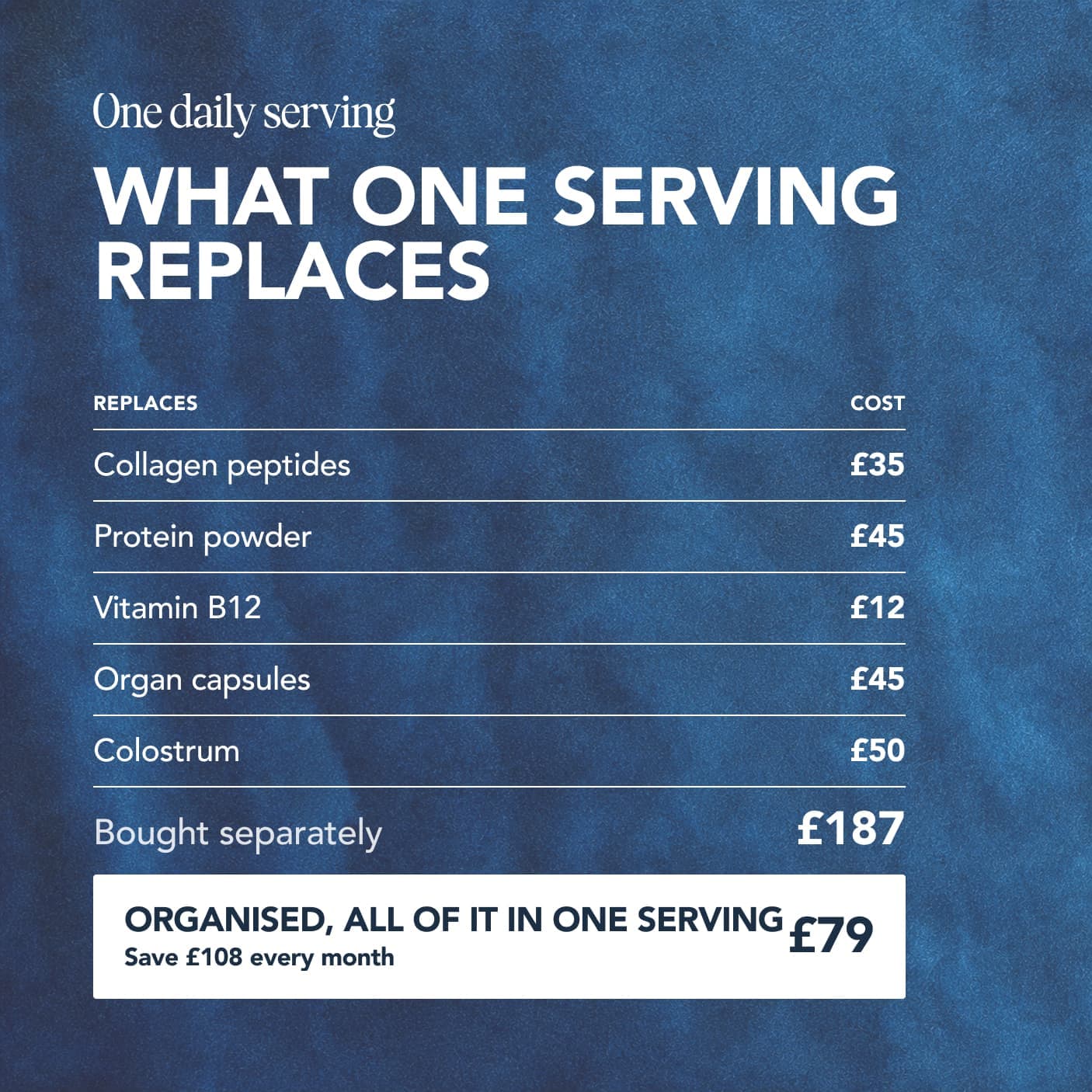
Free with your first order, worth £38. Plus £10 off the pouch with a subscription.

Free UK shipping · Made in England · 100 day money back guarantee on your first pouch · Skip, pause or cancel anytime
The HPA axis and reproductive hormones
Your stress response is controlled by your HPA axis (hypothalamic-pituitary-adrenal). When you perceive a threat, your hypothalamus signals your pituitary gland to release hormones. Your adrenal glands respond by releasing cortisol, the stress hormone.
The problem is that your reproductive system and your stress system share biological real estate. Both use cholesterol as raw material. Both depend on progesterone. When cortisol rises, it takes priority. Progesterone is diverted to cortisol production. Your reproductive hormones decline.
Additionally, chronic stress suppresses luteinising hormone (LH) and follicle-stimulating hormone (FSH), which drive ovulation and sperm production. Chronic cortisol elevation literally shuts down reproduction at the hormonal level. Your body is saying, "Now is not the time to reproduce. There is a threat."
Your body is not wrong. If you truly were in danger, reproduction should be deprioritised. The problem is that modern stress is not genuine threat. It is chronic low-level activation from work pressure, news cycle stress, social media, and unresolved emotional patterns. Your body treats it as existential threat and shuts down fertility.
Chronic stress doesn't just feel bad. It literally stops your reproductive system from functioning.

The practical stress-fertility protocol
Reducing stress requires both removing stressors and building resilience through nutrition and behaviour. You cannot meditate your way out of a bad job or an abusive relationship. Sometimes the solution requires life changes.
But assuming your life situation is reasonably stable, here is what works for stress resilience. Sleep is foundational. Growth hormone and melatonin (which support fertility) are produced during deep sleep. If you are sleeping five to six hours, your stress resilience is compromised. Seven to nine hours is required for reproductive health.
Movement is stress medicine. Walking, resistance training, yoga, swimming, or any activity you enjoy reduces cortisol and improves nervous system resilience. Daily movement matters more than the specific type. Twenty to thirty minutes daily is sufficient.
Micronutrients matter for stress resilience. Magnesium is depleted by chronic stress and is necessary for stress management. B vitamins support adrenal function. Zinc is depleted by stress. These nutrients (from food first, supplementation second) directly reduce your perceived stress and support reproductive hormones.
Social connection and meaning reduce stress profoundly. Time with people you love, work that feels meaningful, practices that align with your values. These are not luxuries for fertility. They are foundational for reproductive health.
Manage stress through sleep, movement, nutrient adequacy, and meaningful connection. These are the fertility interventions most people overlook.
The bottom line
If you're struggling to conceive and everything looks normal on blood work and scans, the problem is almost certainly stress and the HPA axis disruption it creates. This is completely fixable. It requires shifting your life to prioritise nervous system calm, and it requires patience. The reproductive system moves slowly. Cycle regulation takes months, not weeks. But once you stop fighting your body and start creating the conditions where it feels safe to conceive, fertility often returns. The key is consistency and compassion toward yourself in the process.
References
Every source below was checked on 27 August 2026. Each PubMed, PMC and DOI identifier was resolved against NCBI or Crossref, and what it opens is printed under the citation, so you can see the link goes where the citation says without leaving the page. Where a citation and its identifier disagreed, the citation was corrected to the record or the reference was deleted along with the sentence marker that pointed at it, and where the resolved paper turned out not to support the sentence, the sentence was cut back to what it does support. Borrowed authority is worse than none, because it looks like rigour.
- Whirledge S, Cidlowski JA. Glucocorticoids, stress, and fertility. Minerva Endocrinologica. 2010. https://pmc.ncbi.nlm.nih.gov/articles/PMC3547681/Checked 27 August 2026: PMC3547681 opens Whirledge S, Cidlowski JA, Glucocorticoids, stress, and fertility. Minerva Endocrinol 2010;35(2):109-25. PubMed indexes it as: Review.
Corrections
What this page used to say, and why it no longer says it. Corrections are dated and are never removed, because deleting the record of an error is a second error. Every guide we have corrected is listed at our corrections log.
- 27 August 2026. Reference 1 named a paper by Whirledge and Cidlowski in Minerva Endocrinologica. Its link opens “Stress and hormones” by Ranabir and Reetu. The entry now names the paper the link opens.
Who wrote and reviewed this guide
Niall Kiddle
Author · Founder, Organised
Niall is the founder of Organised. He started the company in 2024 after fixing his own health the slow way: in 2022 he swapped a cupboard of synthetic supplements for real food, raw milk, organ meats, bone broth and honey, and felt the difference within months.
Areas of expertise: Ancestral nutrition, Organ meats, Whole-food supplementation, Gut health, Regenerative sourcing
Read Niall's full profile
Pedro Rodrigues
Reviewer · Agronomist (farming and sourcing only)
Pedro is the agronomist Organised works with on farming and sourcing. His job on the guides is to keep the science honest: he reviews what we publish about soil health, regenerative agriculture, grazing and the way food is actually produced.
Areas of expertise: Regenerative agriculture, Agronomy, Soil health, Grass-fed farming, Food sourcing
Reviewed this guide on
Read Pedro's full profileMore on fertility
View allBrowse the guides library
All guidesKeep reading

Health goals
The Ancestral Guide to Fertility Nutrition
Fertility depends on fat-soluble vitamins A, D, K2, choline, B12, iodine, zinc, and selenium. Here's what both partners need to conceive and thrive.

Health goals
The Nutritional Root Causes of Hair Loss
Discover the nutritional causes of hair loss, from iron, zinc and biotin to thyroid health, and how nutrient-dense whole foods can help support regrowth.

Health goals
Pre-Workout Nutrition Without the Chemicals
Skip synthetic pre-workout. Black coffee, beef liver, banana, sea salt, and raw honey fuel training naturally, with no artificial sweeteners or colours.
Real food, made effortless
Start my daily blendA few ways to use it
All recipes
5-Minute High-Protein Breakfasts Using Organised
Quick, high-protein breakfast ideas using Organised. Five recipes you can make in minutes with real food. No fussing around.

Whole Food Snacks for Busy Days
Practical whole food snacks that travel well and sustain energy. No refined carbs, no seed oils. Real food options for when you're busy.

Organised Smoothie Bowl Recipes for Every Season
Four seasonal smoothie bowl recipes using Organised. Berry in summer, apple-cinnamon in autumn, tropical in spring, warming chocolate in winter.


 Join over 100,000+ members
Build a better food system with us
The Organised community is thousands of people choosing real food and backing the farmers who grow it, all of us trying to leave the world a little better than we found it. If that is what you care about too, you belong here.