The Blood Sugar Roller Coaster: Why Stable Energy Beats Calorie Restriction
You've been taught that weight is about willpower and calories in, calories out. Eat less, move more, shrink yourself down. But your body isn't a furnace. It's a system governed by hormones, and the most fundamental hormone is insulin. Stabilise your blood sugar, stabilise your insulin, and everything else follows. Ignore it, and no amount of restriction will work.

By Niall Kiddle, Founder, Organised

Reviewed by Pedro Rodrigues, Agronomist (farming and sourcing only) ·
7 min read · Published · Updated · 4 cited sources
Makers of the Organised Daily blend, a grass-fed beef organ supplement from regenerative UK farms


The blood sugar problem
Your blood sugar isn't stable. For most people on modern food, it's a roller coaster. You eat a bowl of cereal or a bagel. Glucose spikes rapidly. Your pancreas releases insulin to bring it down. Insulin does its job well. Your blood sugar crashes. A few hours later, you're starving.
This cycle happens multiple times daily. Breakfast spike and crash. Mid-morning hunger. Lunch spike and crash. Afternoon energy crash. Dinner, and then the evening munchies when your blood sugar has stabilised too much.
The volatility is the problem. Not the calories. Not the food itself. The up and down of your glucose levels is what drives hunger, cravings, and ultimately poor food choices.
Stable blood sugar beats willpower every time. A body with stable glucose doesn't crave junk food. It simply doesn't want it.

How blood sugar crashes create hunger and cravings
Here's the mechanism. When blood sugar drops, your body perceives a threat. If glucose is low, your brain needs fuel. Your body releases cortisol and adrenaline to trigger glucose release from your liver.1 That adrenaline surge creates acute hunger and a desperate craving for fast carbohydrates.
You reach for the things that will spike your blood sugar fastest. Sugar, bread, processed carbohydrates. They provide temporary relief. Your blood sugar rises. You feel better. Temporarily. Then the cycle repeats.
This isn't weakness. This is your body's survival mechanism working perfectly. When it perceives glucose depletion, it creates hunger and cravings. Ignore it through willpower and you're fighting your own neurobiology.
The craving for sweets isn't a moral failure. It's a signal that your blood sugar is unstable. Fix the instability and the cravings vanish. No willpower required.
Cravings aren't character flaws. They're your body telling you your blood sugar is crashing.

Why calorie restriction fails
The calorie restriction approach assumes that if you eat less, you'll weigh less. The maths seems sound. But it ignores the hormonal reality. When you restrict calories severely, especially by cutting fat and protein and subsisting on processed carbohydrates, you're creating constant blood sugar instability in a state of deprivation.
Your hunger goes through the roof. Your cravings intensify. Your energy crashes. You white-knuckle through restriction for weeks, then inevitably binge when the psychological pressure becomes too much. You end up right back where you started, having proven to yourself that you lack willpower.
You don't lack willpower. The strategy was broken. You were trying to fight biology with discipline. Biology wins.
Worse, calorie restriction actually slows your metabolism. Chronically eating below your needs puts your body in scarcity mode.3 Your thyroid function drops. Your cortisol rises. Your metabolic rate decreases. You become more efficient at storing fat, not less.
Calorie restriction fails because it ignores the hormonal drivers of eating behaviour. Fix the hormones and the calories take care of themselves.
The real solution: stable blood sugar
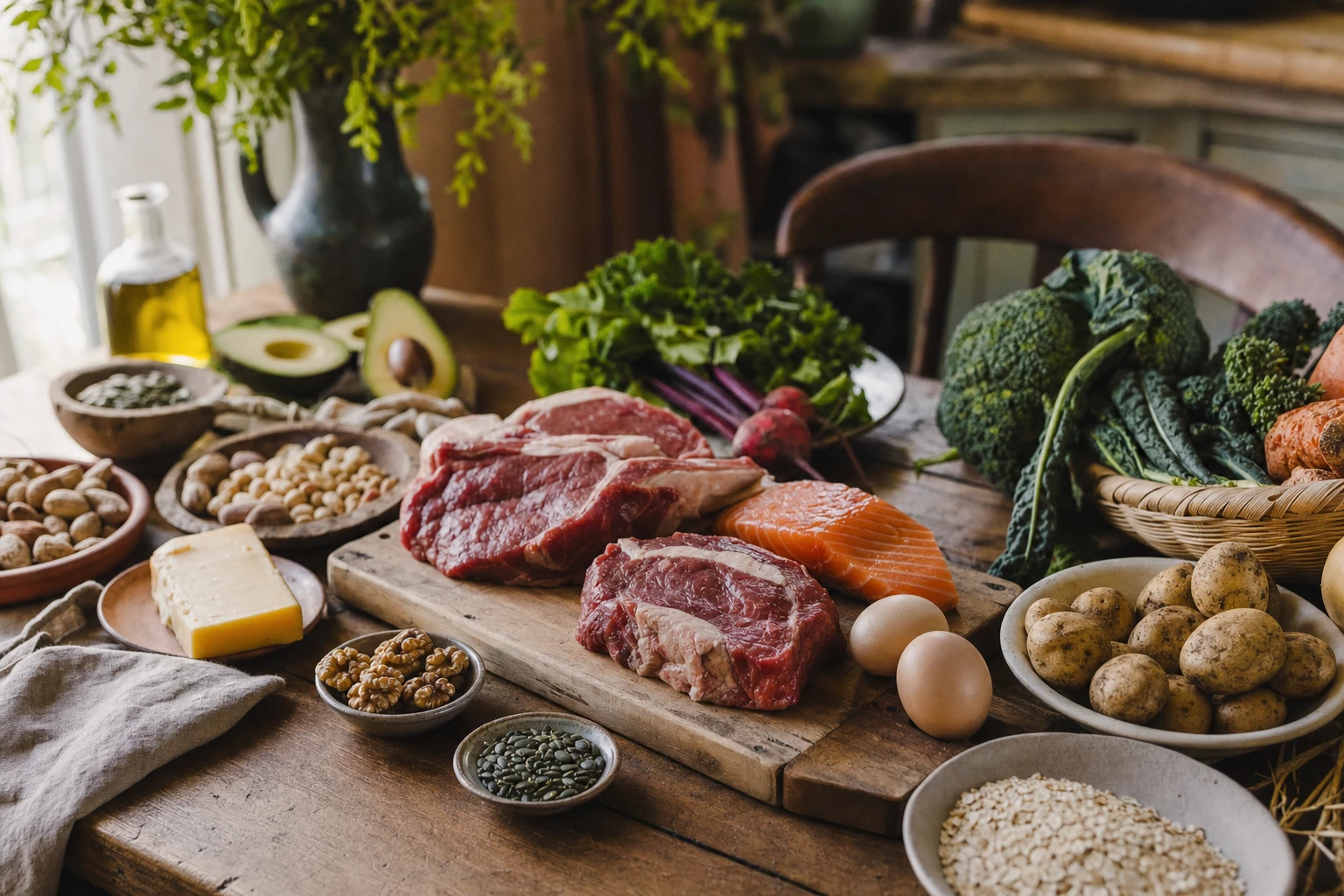
The solution is radically simpler: eat food that stabilises your blood sugar. This means protein and fat at every meal. Protein slows glucose absorption. Fat extends satiety. Together, they buffer the blood sugar spike that carbohydrates alone would create.
A breakfast of toast alone spikes blood sugar then crashes. A breakfast of eggs and toast with butter spikes blood sugar gently and sustains you for hours. Same carbohydrate. Completely different metabolic effect because of the protein and fat.4
The carbohydrates themselves aren't the problem. Potato, rice, bread, fruit are all fine foods. But they need to be eaten with adequate protein and fat. That's the rule. No carbohydrate without protein and fat. No protein without carbohydrate and fat. No fat without protein and carbohydrate.
When you structure your eating this way, something remarkable happens. Your blood sugar stabilises. Your hunger decreases without you trying. Your energy becomes steady throughout the day. The afternoon crash disappears. The late-night cravings vanish.
Eating patterns that stabilise glucose
Here's what actually works. Eat three complete meals daily, each containing protein, fat, and carbohydrate.
- Breakfast: Eggs (protein and fat) with toast and butter (carbs and fat). Or porridge with full-fat milk and fruit.
- Lunch: Red meat or fish (protein and fat) with white rice or potatoes (carbs) and vegetables.
- Dinner: Chicken or beef (protein) with vegetables and a fat source like olive oil or butter (fat and carbs).
That's the pattern. Consistency matters more than perfection. Eat this way for three weeks and notice what shifts. Your hunger will decrease. Your energy will stabilise. Your cravings will diminish.
Stable blood sugar is the foundation of sustainable weight management. Everything else is noise.

Get health guides like this, free
Two short reads a week on eating for energy, gut health, skin, sleep and more.
By signing up you agree to receive emails from us. No spam, unsubscribe anytime.
The cost of chronic blood sugar instability
Beyond hunger and cravings, chronically unstable blood sugar accelerates ageing and disease. Each glucose spike triggers an insulin response. Each spike damages your blood vessels (through a process called glycation where glucose bonds to proteins and damages them).2 Each crash stresses your adrenal system, releasing cortisol.
Over months and years, this repeated stress accumulates. Your blood vessels stiffen. Your arteries narrow. Your insulin sensitivity decreases (your cells become less responsive to insulin, requiring more and more to achieve the same effect). Your metabolism slows. You develop metabolic syndrome, pre-diabetes, or type 2 diabetes.
Your skin ages faster under chronic hyperglycaemia (high blood sugar). Collagen becomes glycated and fragmented. Wrinkles deepen. Your hair greens thin. Your joints stiffen. Your gut lining becomes permeable. Your inflammation accelerates. This is not ageing. This is metabolic disease expressing through your entire body.
The good news is that this process is reversible. Stable blood sugar reverses the damage. Within weeks, your skin improves. Your energy stabilises. Your mental clarity sharpens. Within months, blood markers improve. Within a year on stable blood sugar, many people reverse pre-diabetes entirely.
Blood sugar instability is not just about hunger. It is about whether you are ageing slowly or rapidly, whether you are building health or disease.

The specific foods that destabilise blood sugar
Not all carbohydrates create the same blood sugar response. Processed carbohydrates (white bread, breakfast cereals, biscuits, cakes, pastries, fruit juices) are stripped of fibre and nutrients. They absorb rapidly. They spike blood sugar dramatically. A bowl of shop-bought cereal hits your bloodstream in minutes, creating a sharp spike and inevitable crash.
The same carbohydrate from whole foods (oats, white rice, potatoes, whole grain bread) absorbs more slowly because the fibre slows absorption. Add protein and fat (which further slow glucose entry into the bloodstream) and the same carbohydrate creates a gentle rise instead of a spike.
Seed oils deserve special mention because they are inflammatory. Omega-6 polyunsaturated fats (found abundantly in vegetable oil, sunflower oil, canola oil) create systemic inflammation when consumed in large quantities, which worsens insulin resistance. Replacing seed oil with butter, coconut oil, olive oil, or animal fat improves metabolic health directly.
Artificial sweeteners create a separate problem. They trigger insulin release without providing calories, leaving you blood sugar low and hungry. They also damage your gut bacteria, which plays a critical role in metabolism. Diet drinks are worse for metabolic health than regular sugar, despite having zero calories.
The specific foods to avoid: processed carbohydrates, seed oils, artificial sweeteners, and anything marketed as low-fat (which usually means high-sugar).




1 of 9
Daily blend
100,000+ thriving families4.9 on Trustpilot
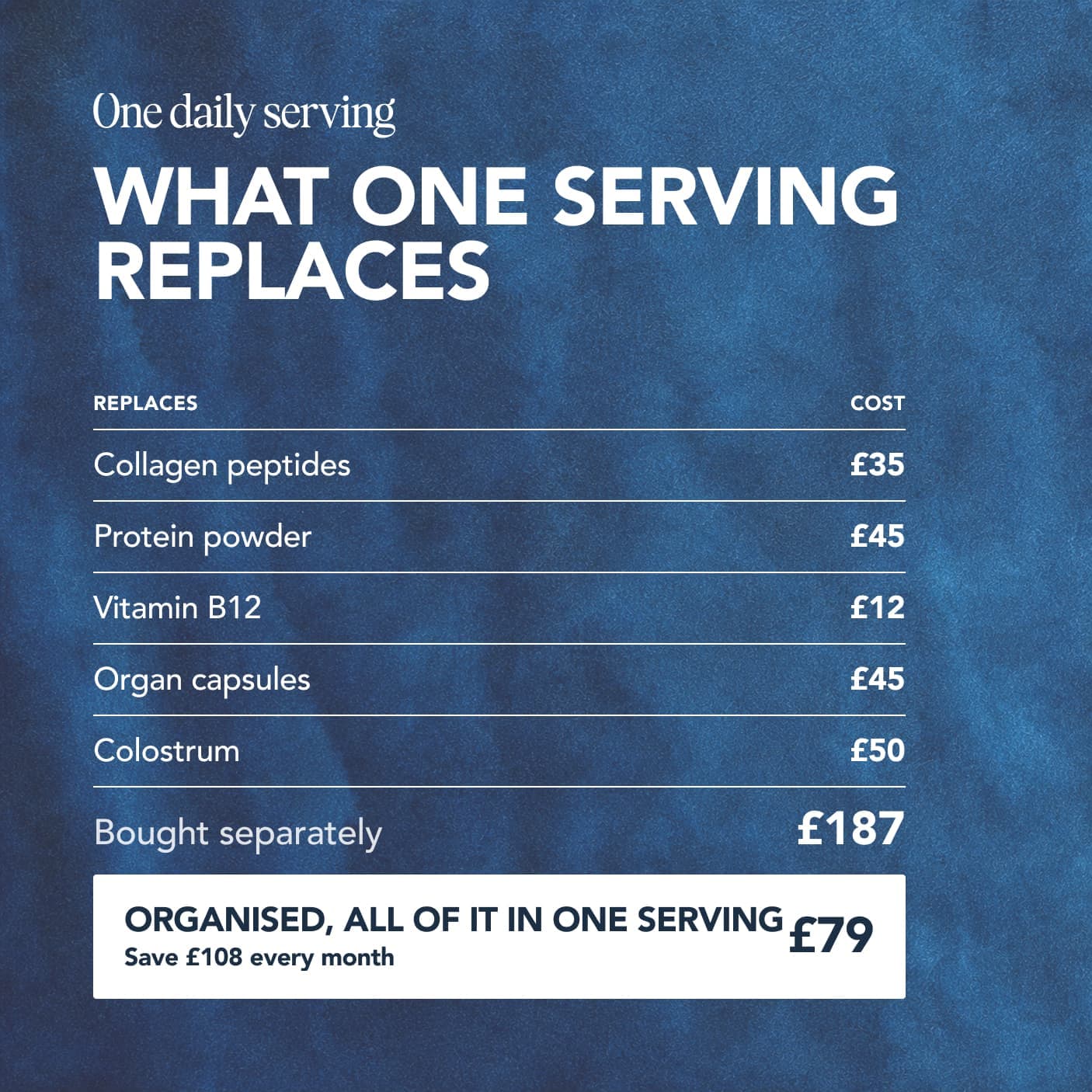
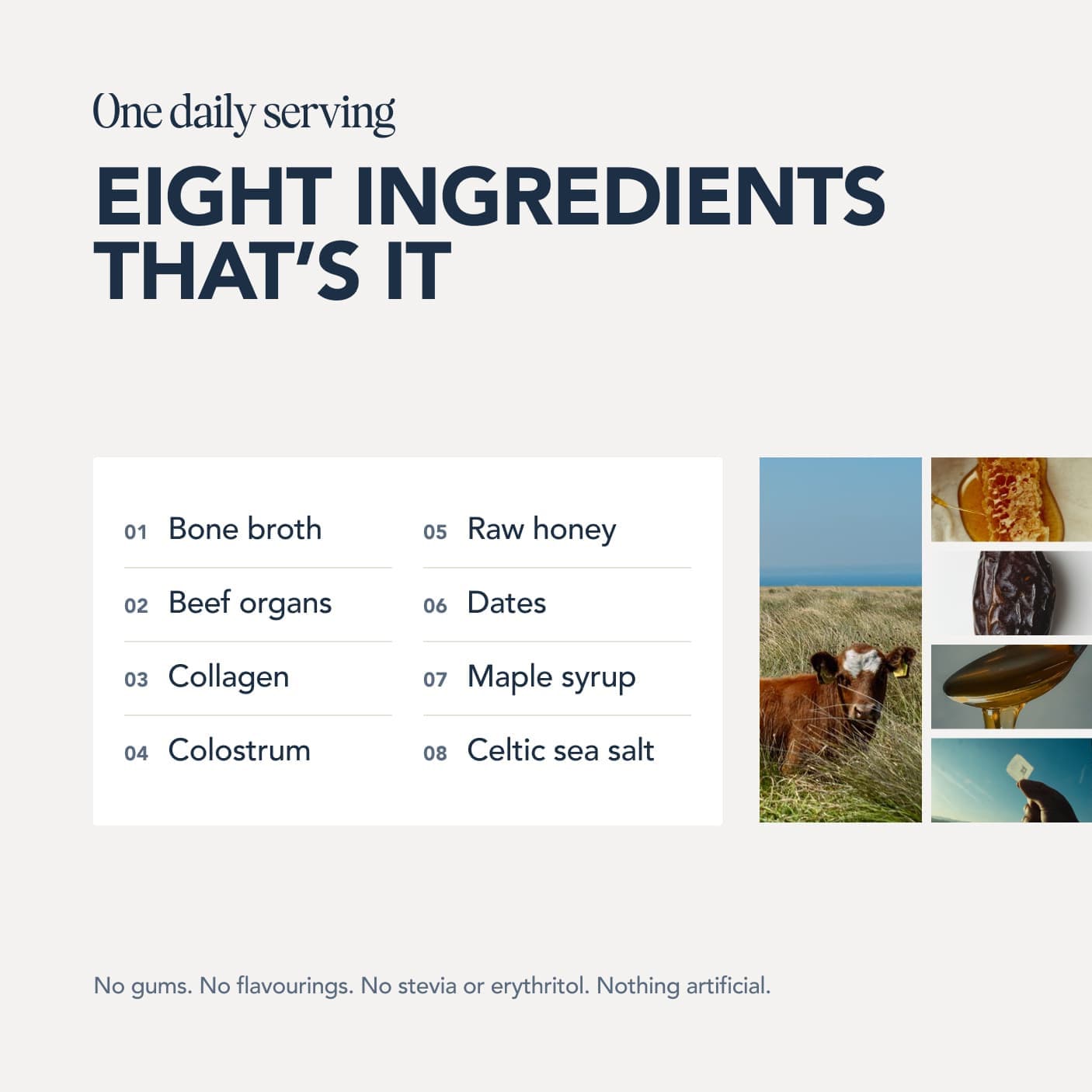
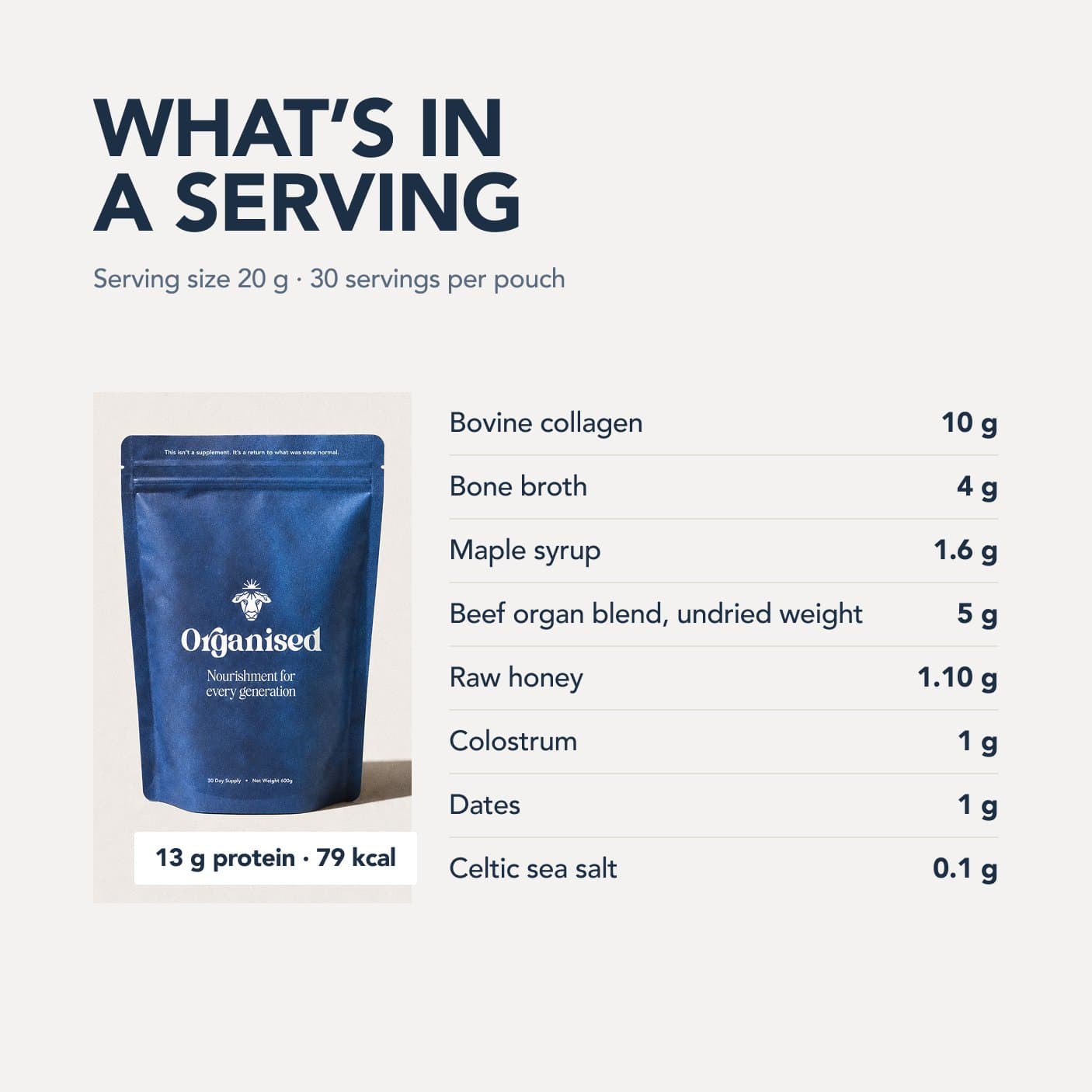
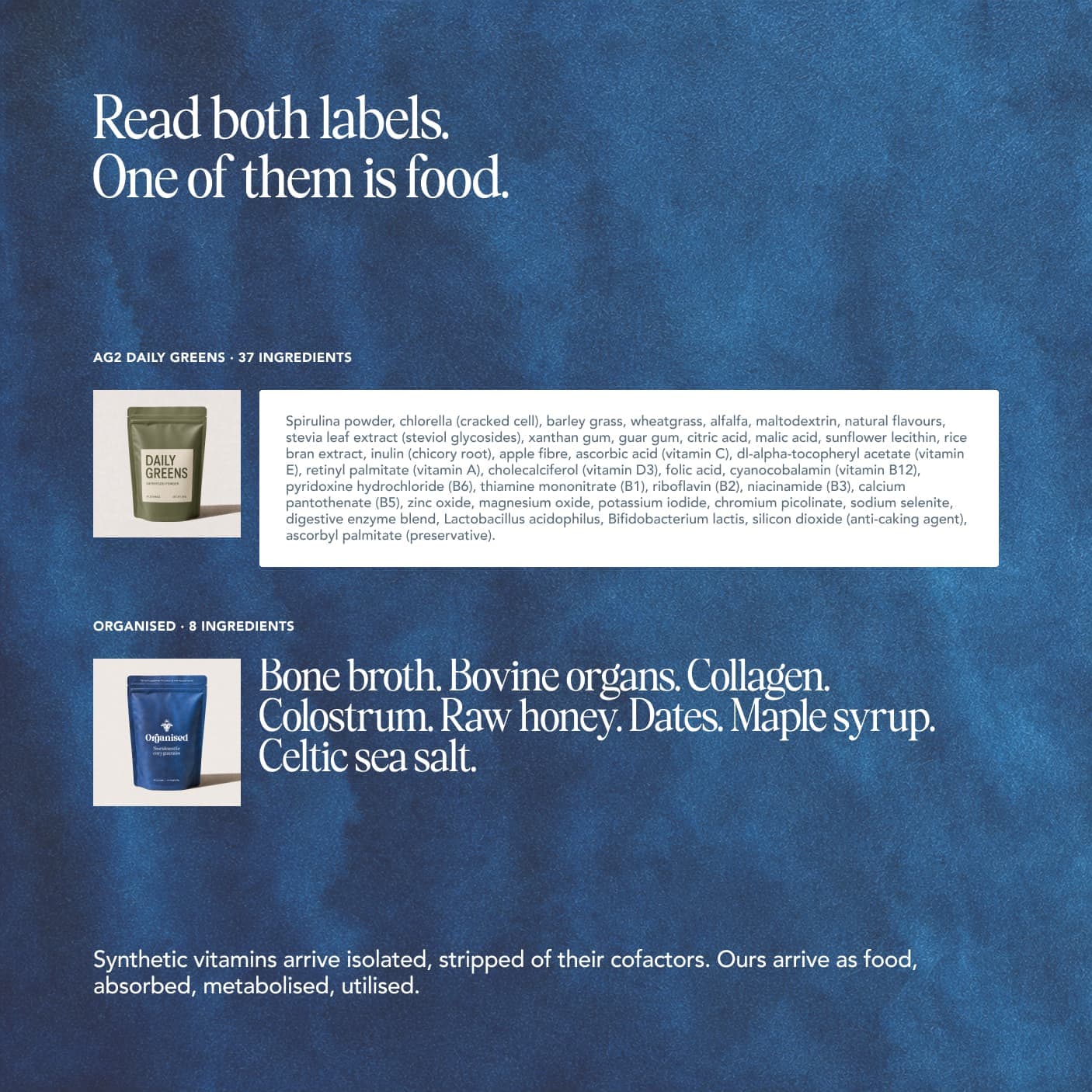
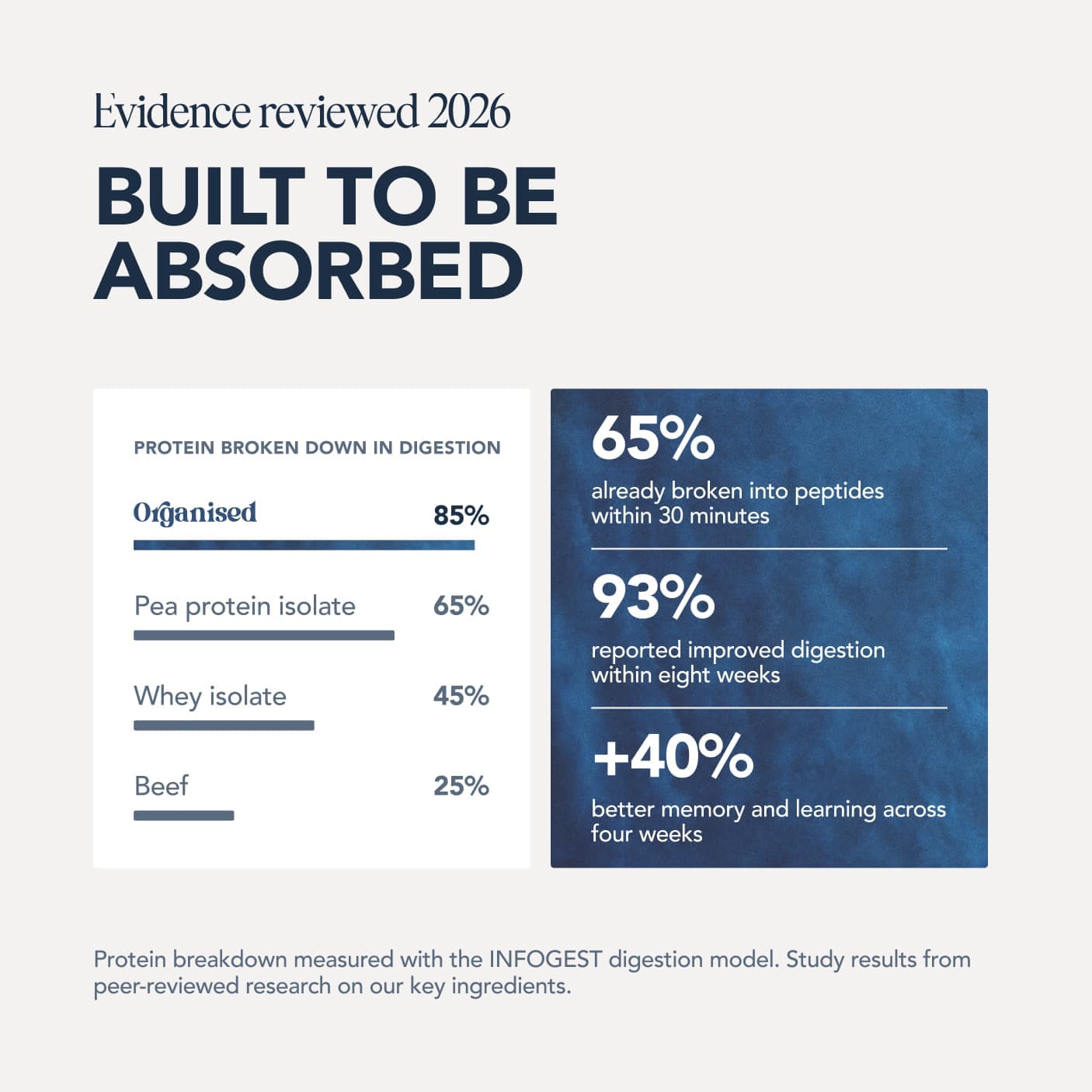
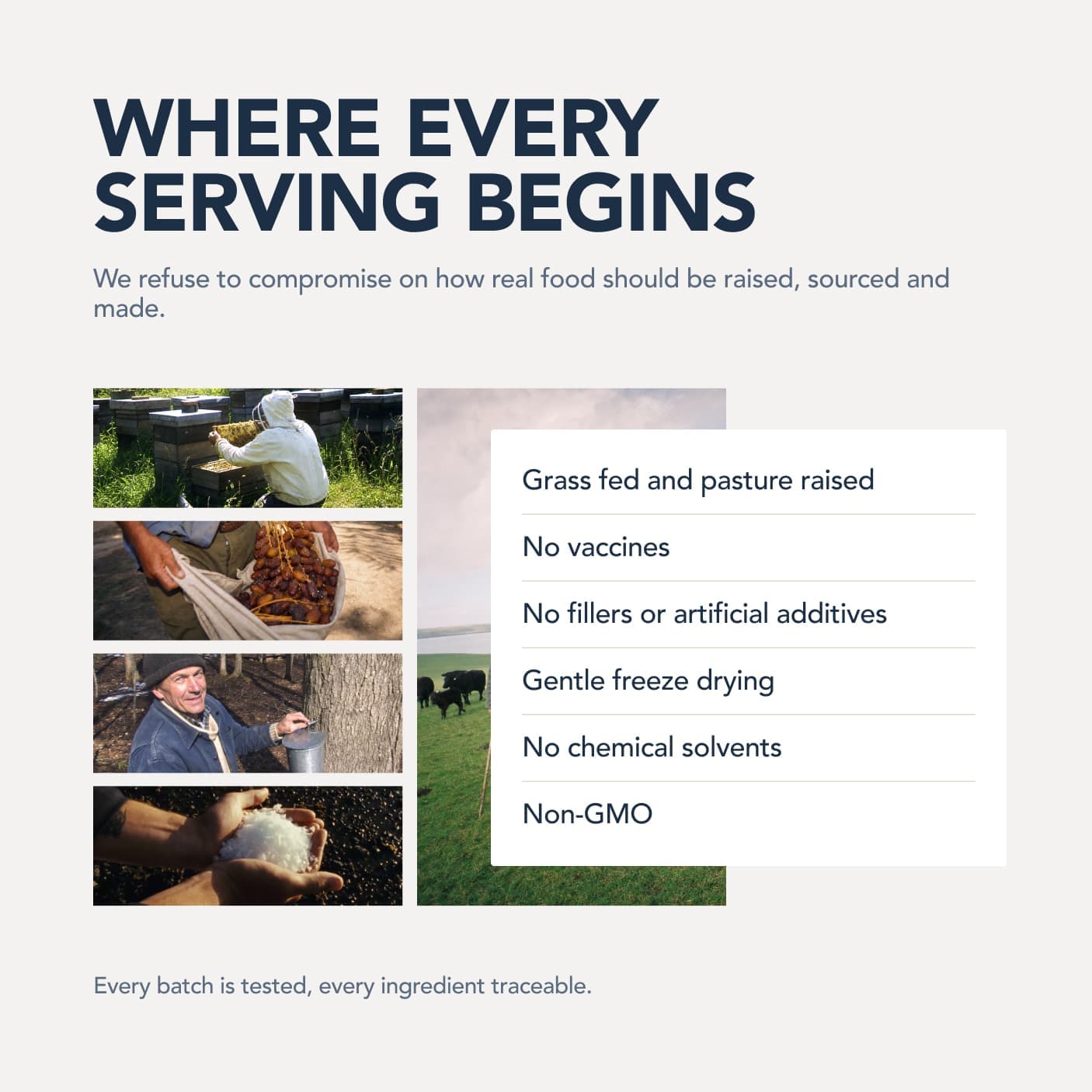
Eight real ingredients built around grass-fed beef organs, collagen and colostrum. Nothing synthetic added.
Free with your first order, worth £38. Plus £10 off the pouch with a subscription.


Free UK shipping · Made in England · 100 day money back guarantee on your first pouch · Skip, pause or cancel anytime
How long until you feel the shift
The timeline matters because it shapes your commitment. Most people trying to stabilise blood sugar expect immediate results. They want to feel perfect after one week. That is not realistic.
Within 24 to 48 hours of eliminating processed foods and eating protein and fat with carbohydrates, blood sugar stabilisation begins. Within three to five days, the acute cravings decrease significantly. Within two to three weeks, you notice steady energy throughout the day and diminished appetite. This is genuinely remarkable if you have lived with blood sugar chaos.
Within six to eight weeks, your digestion improves, your skin clears, your sleep deepens, and your mental clarity sharpens. These changes feel like healing because they are healing. Your body is no longer fighting metabolic chaos. It has resources to repair.
Full metabolic adaptation takes months. Your insulin sensitivity improves gradually. Your body fat redistributes. Your body composition improves even if your weight stays the same (muscle is denser than fat). By three to six months, most people barely recognise their former energy levels.
Give stable blood sugar two weeks and you will notice enough change to commit to it. Give it three months and you will wonder how you ever lived any other way.
The bottom line
Stop counting calories. Stop fighting hunger. Stop relying on willpower. Instead, stabilise your blood sugar by eating protein, fat, and carbohydrate together at every meal. Your body will regulate itself. Your appetite will normalise. Your energy will stabilise. And you'll spend zero mental energy fighting your own biology.
References
Every source below was checked on 27 August 2026. Each PubMed, PMC and DOI identifier was resolved against NCBI or Crossref, and what it opens is printed under the citation, so you can see the link goes where the citation says without leaving the page. Where a citation and its identifier disagreed, the citation was corrected to the record or the reference was deleted along with the sentence marker that pointed at it, and where the resolved paper turned out not to support the sentence, the sentence was cut back to what it does support. Borrowed authority is worse than none, because it looks like rigour.
- Thau L, Gandhi J, Sharma S. Physiology, Cortisol. StatPearls [Internet]. https://www.ncbi.nlm.nih.gov/books/NBK538239/
- Singh R, Barden A, Mori T, Beilin L. Advanced glycation end-products: a review. Diabetologia. 2001;44(2):129-146. https://pubmed.ncbi.nlm.nih.gov/11270668/Checked 27 August 2026: PMID 11270668 opens Singh R, Barden A, Mori T et al, Advanced glycation end-products: a review. Diabetologia 2001;44(2):129-46. PubMed indexes it as: Review.
- Muller MJ, Enderle J, Pourhassan M, et al. Metabolic adaptation to caloric restriction and subsequent refeeding: the Minnesota Starvation Experiment revisited. American Journal of Clinical Nutrition. 2015;102(4):807-819. https://pubmed.ncbi.nlm.nih.gov/26399868/Checked 27 August 2026: PMID 26399868 opens Müller MJ, Enderle J, Pourhassan M et al, Metabolic adaptation to caloric restriction and subsequent refeeding: the Minnesota Starvation Experiment revisited. Am J Clin Nutr 2015;102(4):807-19. PubMed indexes it as: Randomized Controlled Trial.
- Berry SE, Valdes AM, Drew DA, et al. Human postprandial responses to food and potential for precision nutrition. Nature Medicine. 2020;26(6):964-973. https://pubmed.ncbi.nlm.nih.gov/32528151/Checked 27 August 2026: PMID 32528151 opens Berry SE, Valdes AM, Drew DA et al, Human postprandial responses to food and potential for precision nutrition. Nat Med 2020;26(6):964-973.The authors' own declaration, from the record: Conflict of interest statement: TD Spector, SE Berry, AM Valdes, F Asnicar, PW Franks, LM Delahanty, N Segata, are consultants to Zoe Global Ltd (“Zoe”). J Wolf, G Hadjigeorgiou, R Davies, H Al Khatib, J Capdevila, C Bonnett, S Ganesh, E Bakker, P Wyatt and I Linenberg are or have been employees of Zoe. Other authors have no conflict of interest to declare.
Who wrote and reviewed this guide
Niall Kiddle
Author · Founder, Organised
Niall is the founder of Organised. He started the company in 2024 after fixing his own health the slow way: in 2022 he swapped a cupboard of synthetic supplements for real food, raw milk, organ meats, bone broth and honey, and felt the difference within months.
Areas of expertise: Ancestral nutrition, Organ meats, Whole-food supplementation, Gut health, Regenerative sourcing
Read Niall's full profile
Pedro Rodrigues
Reviewer · Agronomist (farming and sourcing only)
Pedro is the agronomist Organised works with on farming and sourcing. His job on the guides is to keep the science honest: he reviews what we publish about soil health, regenerative agriculture, grazing and the way food is actually produced.
Areas of expertise: Regenerative agriculture, Agronomy, Soil health, Grass-fed farming, Food sourcing
Reviewed this guide on
Read Pedro's full profileBrowse the guides library
All guidesKeep reading

Health goals
Can Beef Organ Supplements Support Weight Loss?
Beef organ supplements may support weight loss through satiety and nutrient sufficiency. No magic bullet, but a useful tool in a broader strategy.

Health goals
What Does Your Afternoon Slump Actually Mean?
That 3pm energy crash isn't random. It's your body telling you something about your breakfast. Discover what it means and how to fix it.
Health goals
How to Feed Your Skin from the Inside Out
The complete guide to skin nutrition. Learn which nutrients transform your skin and the specific food sources to eat them from.
Real food, made effortless
Start my daily blendA few ways to use it
All recipes
Gut-Healing Marshmallows with Collagen and Raw Honey
Learn to make gut-healing marshmallows with collagen and raw honey. A shareable treat that sneaks nutrition into every bite. Easy recipe with video tips.

The Perfect Organised Morning Shake: Our Favourite Recipe
Our signature morning shake: Organised, raw milk, banana, honey. Simple, nourishing, and optimised for an empty stomach.

Raw Milk Hot Chocolate with Collagen
A nourishing evening hot chocolate made with raw milk, grass-fed collagen, raw cacao, and honey. A nighttime ritual that supports sleep and gut health.


 Join over 100,000+ members
Build a better food system with us
The Organised community is thousands of people choosing real food and backing the farmers who grow it, all of us trying to leave the world a little better than we found it. If that is what you care about too, you belong here.