What Does Your Afternoon Slump Actually Mean?
It's 3 PM. Your energy is gone. You're reaching for coffee or sugar, anything to push through until dinner. This is so normal that most people accept it as inevitable. But it's not. Your afternoon slump is your body talking. The question is what it's actually saying.
By Niall Kiddle, Founder, Organised

Reviewed by Pedro Rodrigues, Agronomist (farming and sourcing only) ·
5 min read · Published · Updated · 2 cited sources
Makers of the Organised Daily blend, a grass-fed beef organ supplement from regenerative UK farms

The afternoon crash isn't caused by low energy. It's caused by hormonal swings that started at breakfast.
The post-prandial blood sugar crash
Post-prandial means after eating. What you ate at 7 or 8 AM is affecting your energy at 3 PM. Here's how the mechanism works.
If you ate a high-carbohydrate breakfast (cereal, toast, pastry, granola, juice), your blood glucose rose, your pancreas released insulin, and refined carbohydrates without fibre, fat or protein produced larger postprandial glucose excursions. In some people, this can result in reactive (postprandial) hypoglycaemia.1
When blood glucose drops below what your brain needs, your body signals for energy. You feel hungry again by 10 AM despite eating a calorie-dense breakfast. You have a snack (more carbs, usually). Blood sugar spikes again. Insulin rises again. By noon, your metabolic system is exhausted from the constant up and down. By 3 PM, you crash hard.
Your afternoon slump started at breakfast. If you ate refined carbs with no protein or fat, you spent the day on a blood sugar roller coaster.
The key phrase is post-prandial dysglycaemia. It means your blood sugar is swinging wildly after meals instead of remaining stable. The larger the swing, the harder the crash. Refined carbohydrates without fat or protein create the largest swings. This is basic glucose physiology, but it's rarely explained to people who are struggling with energy.

Your morning cortisol rhythm is being disrupted
Cortisol follows a diurnal rhythm in healthy people: levels peak roughly 30–45 minutes after waking (the "cortisol awakening response") and decline through the day to their lowest values around midnight.2
But here's what happens when you eat a high-carb breakfast: the insulin spike suppresses cortisol's natural morning peak. Your body responds to reactive hypoglycaemia by releasing cortisol to counteract the blood sugar drop. This is a stress response, and it's exhausting.
By afternoon, cortisol has been activated multiple times throughout the day in response to blood sugar crashes. It's elevated when it should be declining. Your circadian rhythm is disrupted. This contributes to afternoon fatigue, difficulty focusing, and evening insomnia despite daytime exhaustion.
The person eating a protein and fat-based breakfast has a stable blood sugar all morning. Cortisol follows its natural rhythm. By afternoon, cortisol is naturally declining (as it should be), supporting a gentle wind-down. But they're still energetic because blood sugar is stable.
Cortisol isn't the villain. It's your alarm system. When you eat foods that crash your blood sugar, you're triggering false alarms all day.
This is why some people crash hard at 3 PM whilst others coast through the afternoon comfortably. It's not because one person is lazier or less disciplined. It's because one person's circadian rhythm and blood sugar are intact, and the other person's have been disrupted by breakfast choices.

What breakfast reveals about your afternoon
Your 3 PM energy state is almost entirely determined by breakfast. Think of it as a predictive test.
If you feel alert at 3 PM, your breakfast contained adequate protein and fat. Your blood sugar remained stable. Your cortisol rhythm wasn't disrupted. If you're crashing at 3 PM, your breakfast failed to stabilise your glucose. Your day was spent fighting reactive hypoglycaemia.
This is reproducible. Eat toast and juice for breakfast and observe your 3 PM energy. Then eat eggs and vegetables and butter. The difference is usually dramatic within a single day. Some people report they feel the shift within two hours. The afternoon that follows a good breakfast is night and day compared to the afternoon following a carb-heavy breakfast.
Your afternoon slump is feedback. Your body is telling you that breakfast was inadequate. Most people ignore this feedback and reach for caffeine or sugar to suppress the signal. But if you listen to the signal and fix the breakfast, the afternoon slump disappears.
You cannot separate your afternoon energy from your morning meal. They're the same phenomenon, eight hours apart.
This is why people who shift to low-carb or carnivore diets often report that their afternoons transform. They're not doing anything special at 3 PM. They've simply fixed breakfast, and the afternoon takes care of itself.

Get health guides like this, free
Two short reads a week on eating for energy, gut health, skin, sleep and more.
By signing up you agree to receive emails from us. No spam, unsubscribe anytime.
Protein and fat are the answer
A stabilising breakfast contains protein and fat. These macronutrients slow gastric emptying (the rate food leaves your stomach) and blunt the glucose rise when carbohydrates are consumed. More importantly, they provide sustained energy for hours.
Eggs, meat, fish, dairy, or any animal protein source, combined with vegetables, herbs, and good fat (butter, olive oil, tallow, coconut oil). This combination provides a slow, steady release of glucose, stable insulin, and stable energy through the afternoon.
The timing matters less than the composition. Some people eat breakfast at 6 AM, others at 9 AM. The person eating a protein and fat breakfast at 6 AM will likely be energetic at 3 PM. The person eating toast at 9 AM will crash by 2 PM.
Portion size matters too, but less than people think. A small breakfast high in protein and fat outperforms a large breakfast high in refined carbs. The macronutrient composition determines the hormonal response far more than total calories.
Your perfect breakfast is probably smaller than you'd expect, but denser in protein and fat. Skip the grains and cereals entirely and focus on animal foods and vegetables.
Common protein amounts: two to four eggs, 150-200 grams of meat, a tin of fish, or equivalent dairy. Combined with vegetables, salt, and fat. This is not complicated, but it requires departing from the everyday breakfast narrative of granola, juice, and toast.



1 of 9
Daily blend
100,000+ thriving families4.9 on Trustpilot
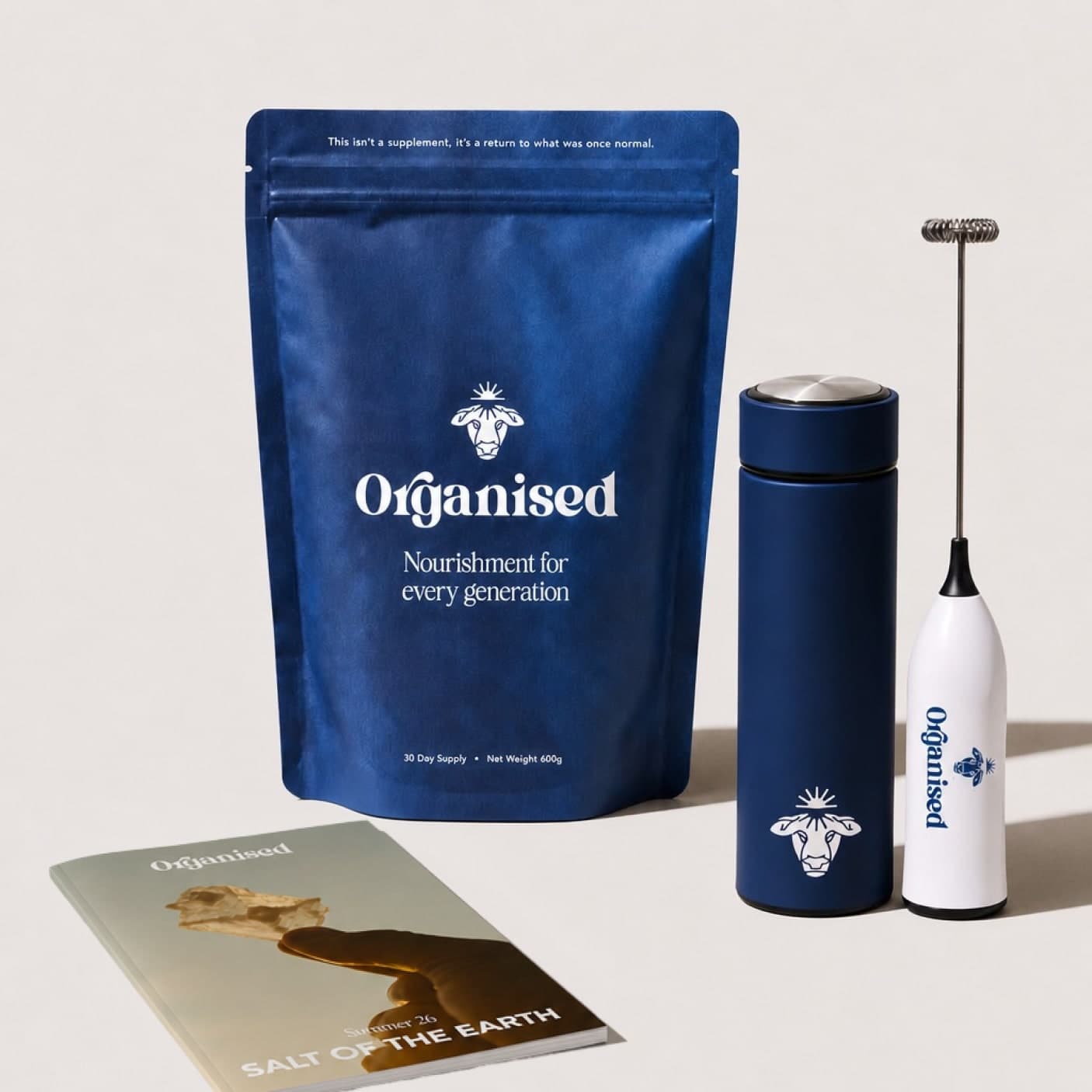
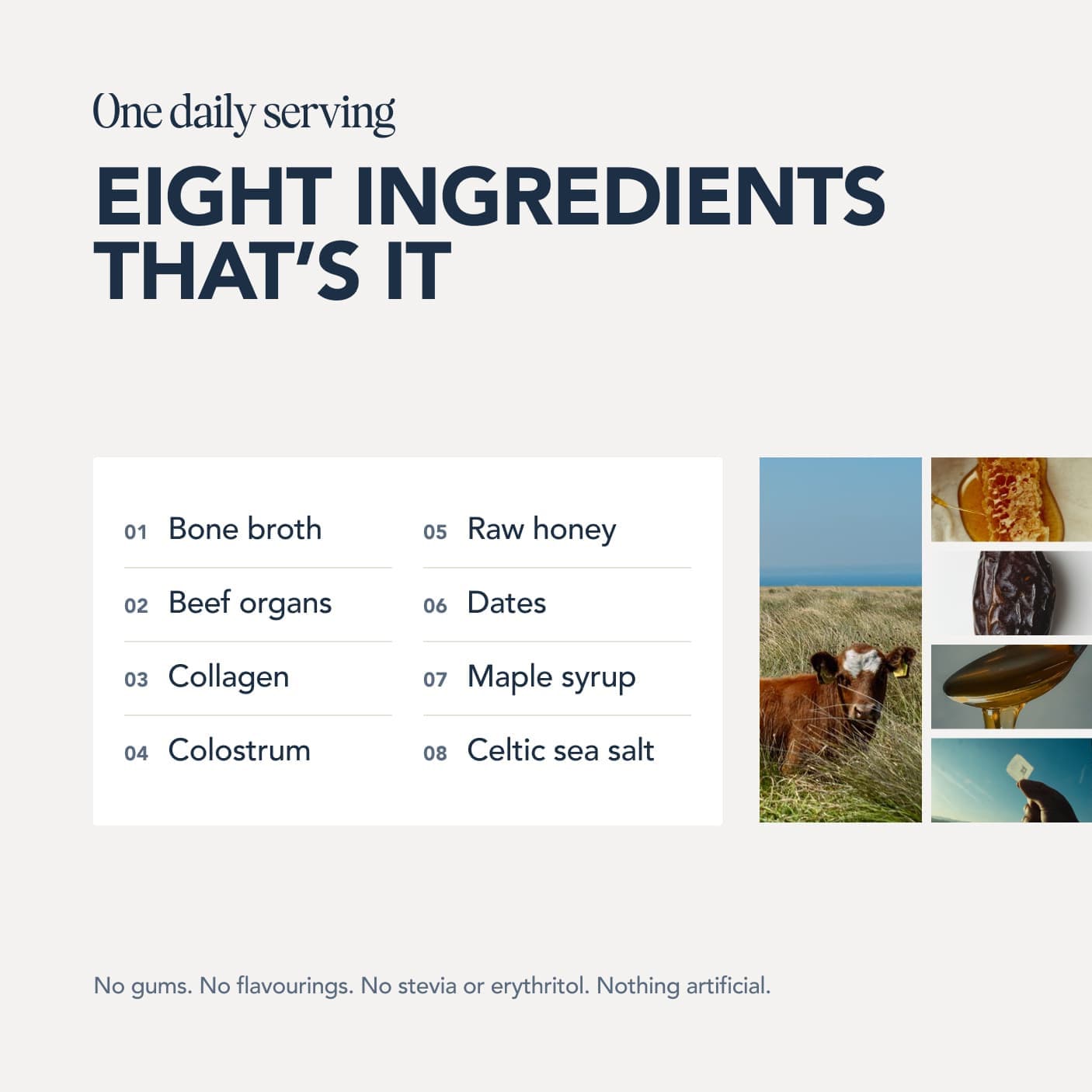
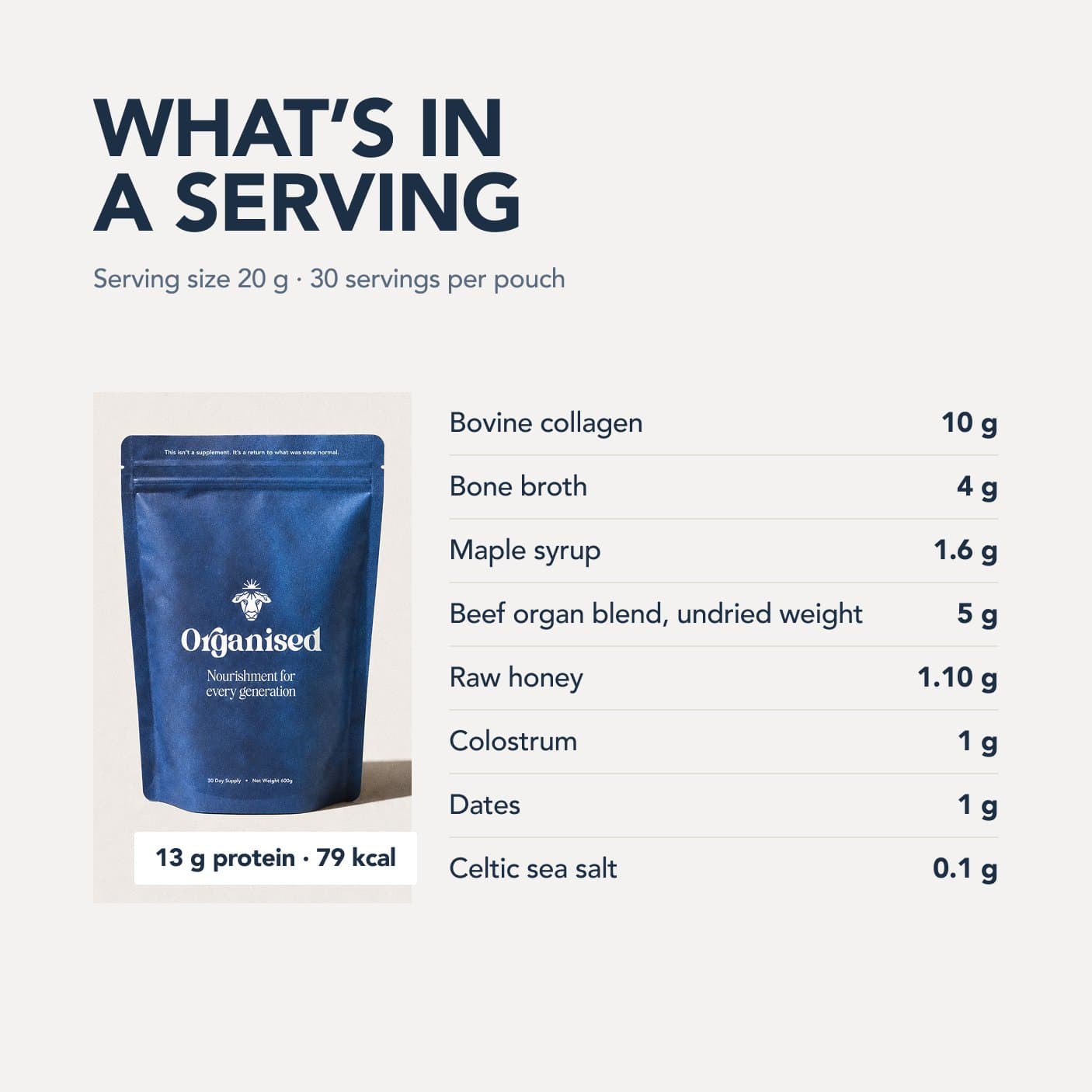
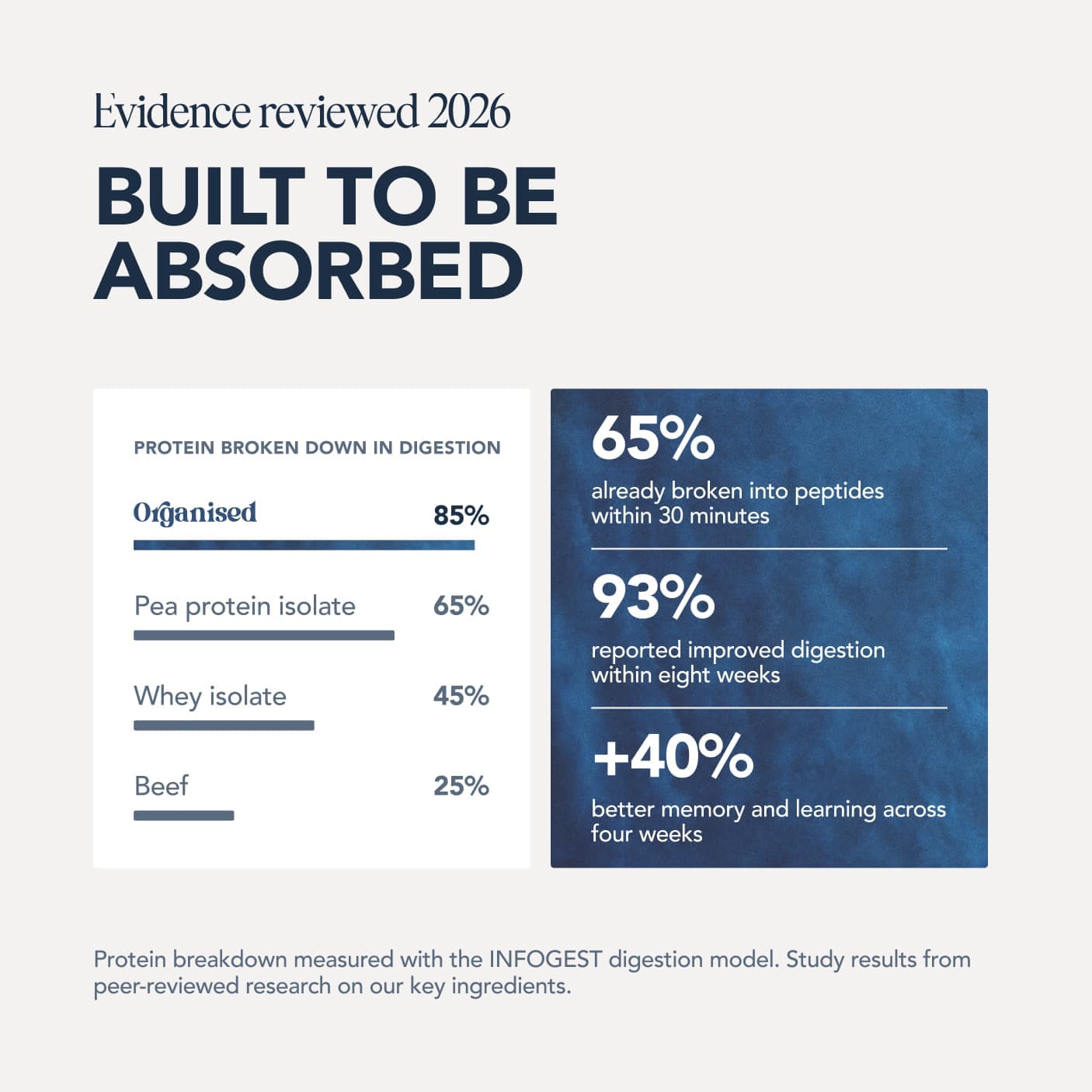
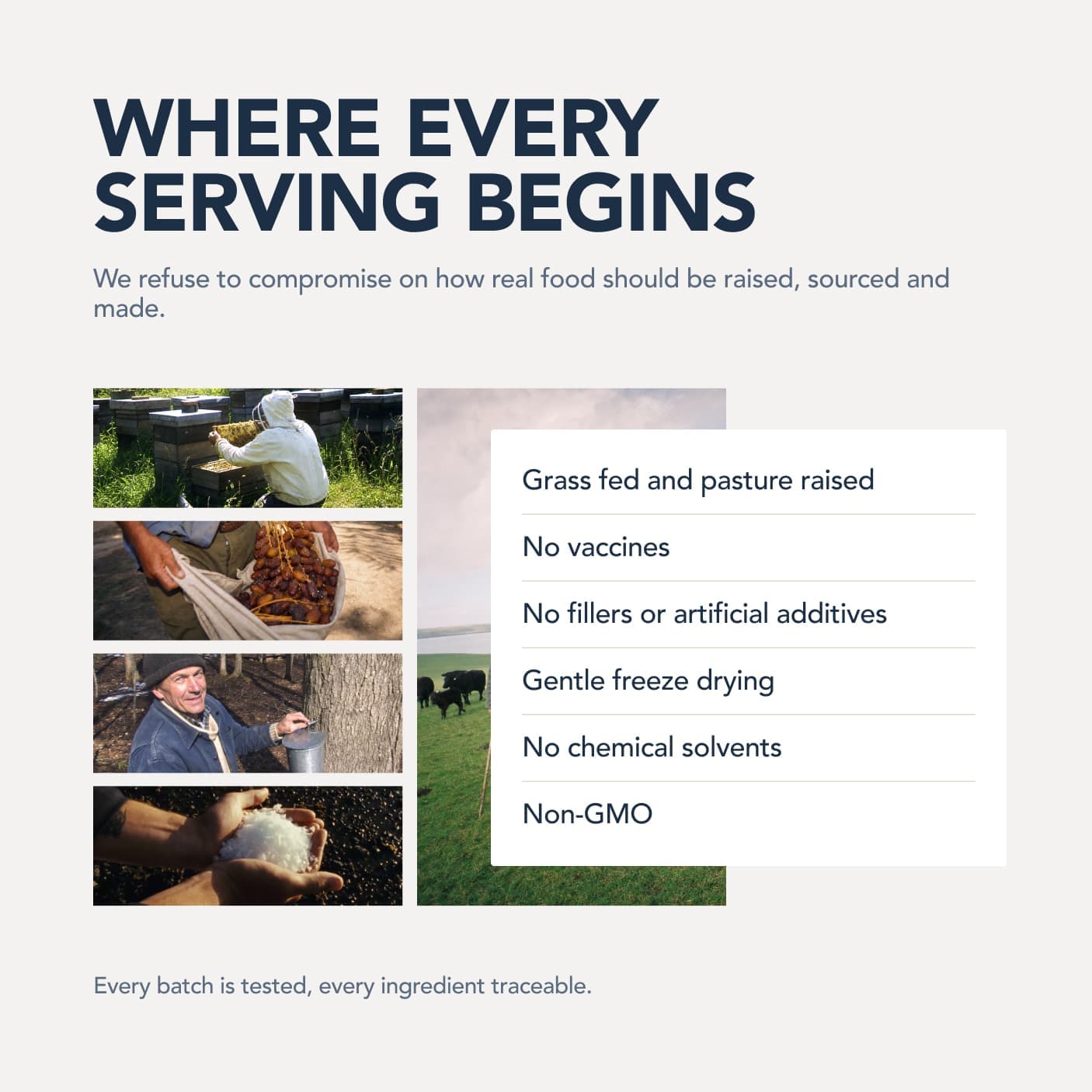
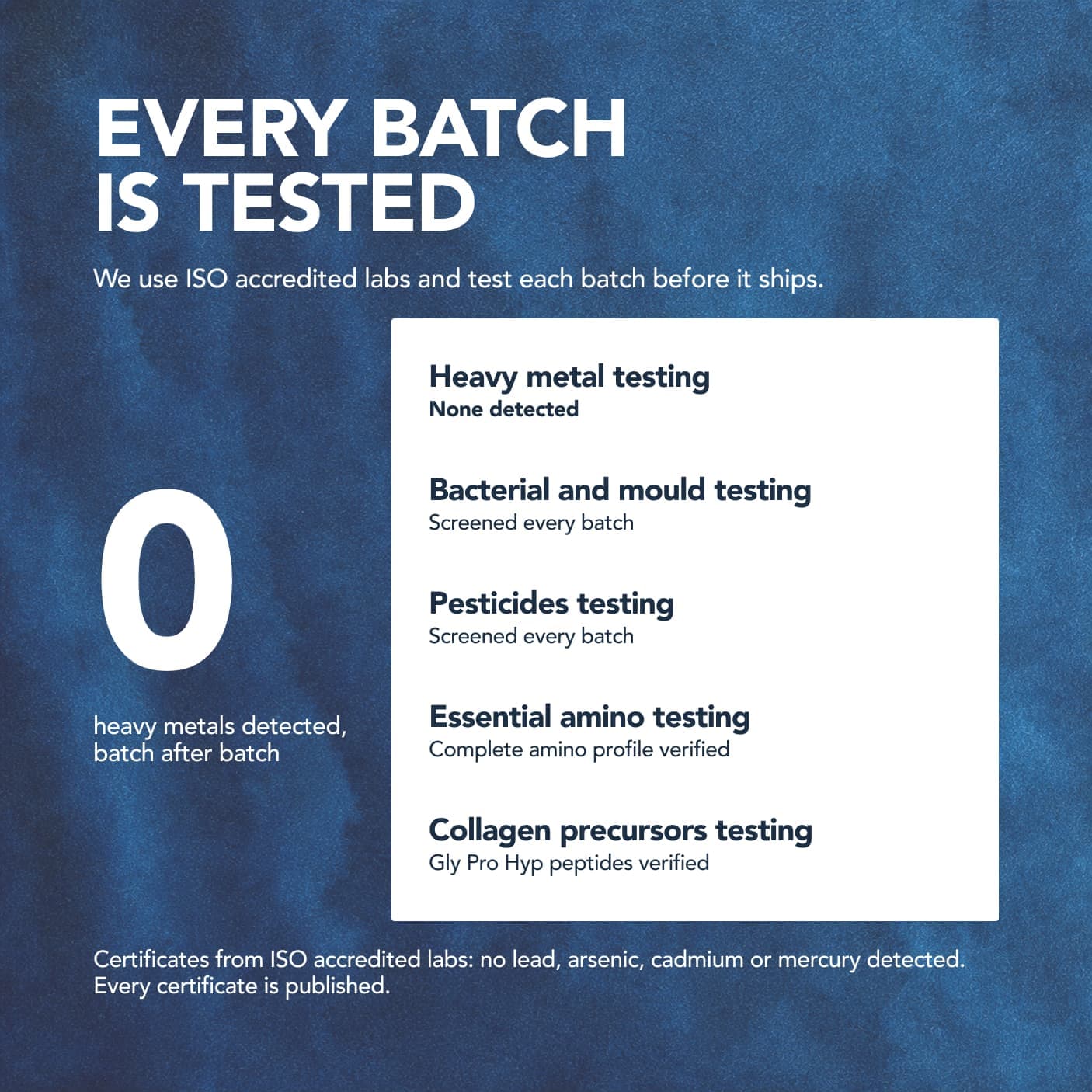
Eight real ingredients built around grass-fed beef organs, collagen and colostrum. Nothing synthetic added.
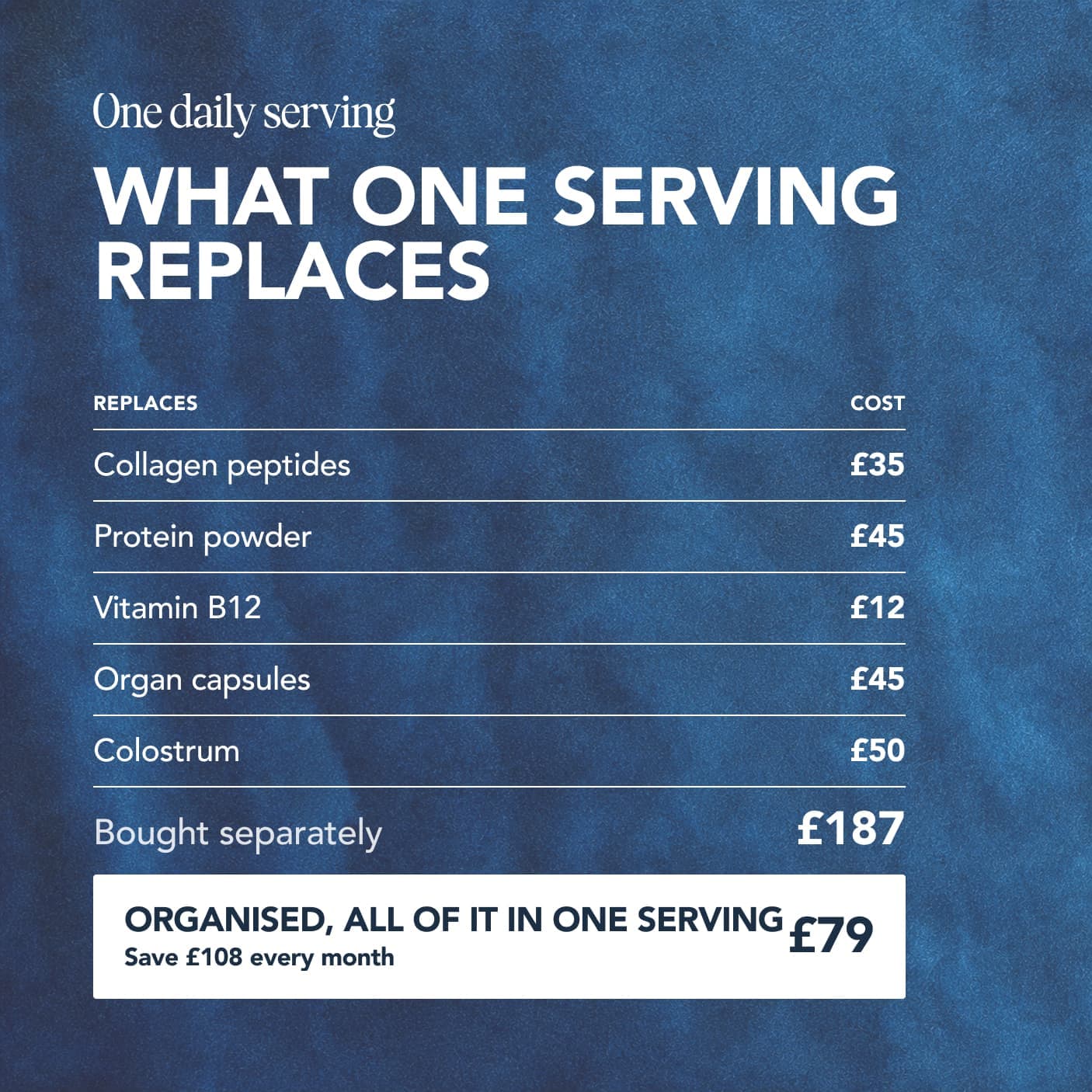
Free with your first order, worth £38. Plus £10 off the pouch with a subscription.


Free UK shipping · Made in England · 100 day money back guarantee on your first pouch · Skip, pause or cancel anytime
Why the pastry breakfast sabotages you
A pastry or sweet breakfast is the worst possible choice for stable afternoon energy. It's refined carbohydrates (rapid glucose absorption), combined with sugar (even more glucose), often with vegetable oils (pro-inflammatory and oxidation-prone), and minimal protein and fibre.
The blood sugar spike is immediate and severe. The insulin response is equally severe. The reactive hypoglycaemia that follows is profound. By 11 AM, you're hungry again despite having eaten 500+ calories. By 3 PM, you've experienced multiple cycles of spike and crash. Your cortisol system is exhausted from responding to false blood sugar emergencies.
The reason pastries are so popular is that they taste good and they're convenient. But they're metabolically toxic. They're engineered to spike blood sugar maximally (which creates a brief dopamine reward) and then crash hard (creating the need for another one). It's a food-industry business model masquerading as breakfast.
Pastries aren't food. They're a metabolic stressor packaged to look convenient. Eat them and your afternoon is already determined.
The afternoon slump isn't inevitable. It's chosen at breakfast. Choose protein and fat, and your afternoon chooses itself: stable, energetic, focused. Choose refined carbs and sugar, and you've already committed yourself to the 3 PM crash.
References
Every source below was checked on 27 August 2026. Each PubMed, PMC and DOI identifier was resolved against NCBI or Crossref, and what it opens is printed under the citation, so you can see the link goes where the citation says without leaving the page. Where a citation and its identifier disagreed, the citation was corrected to the record or the reference was deleted along with the sentence marker that pointed at it, and where the resolved paper turned out not to support the sentence, the sentence was cut back to what it does support. Borrowed authority is worse than none, because it looks like rigour.
- Brun JF, Fedou C, Mercier J. Postprandial reactive hypoglycemia. Diabetes & Metabolism. 2000. https://pubmed.ncbi.nlm.nih.gov/11119013/Checked 27 August 2026: PMID 11119013 opens Brun JF, Fedou C, Mercier J, Postprandial reactive hypoglycemia. Diabetes Metab 2000;26(5):337-51. PubMed indexes it as: Review.
- Clow A, Hucklebridge F, Stalder T, Evans P, Thorn L. The cortisol awakening response: more than a measure of HPA axis function. Neuroscience & Biobehavioral Reviews. 2010. https://pubmed.ncbi.nlm.nih.gov/20026350/Checked 27 August 2026: PMID 20026350 opens Clow A, Hucklebridge F, Stalder T et al, The cortisol awakening response: more than a measure of HPA axis function. Neurosci Biobehav Rev 2010;35(1):97-103. PubMed indexes it as: Review.
Who wrote and reviewed this guide
Niall Kiddle
Author · Founder, Organised
Niall is the founder of Organised. He started the company in 2024 after fixing his own health the slow way: in 2022 he swapped a cupboard of synthetic supplements for real food, raw milk, organ meats, bone broth and honey, and felt the difference within months.
Areas of expertise: Ancestral nutrition, Organ meats, Whole-food supplementation, Gut health, Regenerative sourcing
Read Niall's full profile
Pedro Rodrigues
Reviewer · Agronomist (farming and sourcing only)
Pedro is the agronomist Organised works with on farming and sourcing. His job on the guides is to keep the science honest: he reviews what we publish about soil health, regenerative agriculture, grazing and the way food is actually produced.
Areas of expertise: Regenerative agriculture, Agronomy, Soil health, Grass-fed farming, Food sourcing
Reviewed this guide on
Read Pedro's full profileMore on energy
View all- Why You're Always Tired (And What to Eat About It)
- Adrenal Fatigue: Is It Real and What Can You Do About It?
- Always Tired? What Reddit Says to Eat (and What Actually Works)
- B12 Deficiency: Signs, Causes and the Fastest Way to Fix It
- Chronic Fatigue and Nutrient Deficiency: What Blood Tests to Ask For
- How to Maintain Energy All Day Without Caffeine Dependency
- How Your Thyroid Affects Your Energy Levels
- Iron Deficiency: Why It's So Common and How Organs Can Help
- Metabolism Maxxing: How to Support Your Metabolic Rate with Real Food
- The Desk Worker's Guide to Staying Strong and Energised
- Why Intermittent Fasting Might Be Tanking Your Energy
Browse the guides library
All guidesKeep reading
Health goals
How Seed Oils Disrupt Your Hormones
Seed oils trigger oxidative stress and disrupt hormone production. Here's how to restore hormonal balance through real food.

Health goals
Collagen Loading Protocol: When and How Much
How much collagen do you need and when should you take it? A clear collagen loading protocol for timing your dose around exercise for better results.

Health goals
Protein, Satiety and Why Diets Fail
Most diets fail because they ignore how protein controls hunger. Learn the protein leverage hypothesis and why 30g per meal matters.
Real food, made effortless
Start my daily blendA few ways to use it
All recipes
Bone Broth from Scratch: A Step-by-Step Guide
Step-by-step guide to making bone broth at home. Stovetop, slow cooker, and Instant Pot methods. Rich in collagen and gut-healing minerals.

Organ Bolognese: The Family Dinner That Heals
Practical organ meat recipe using fresh beef liver and heart. Family-friendly bolognese that bridges supplements to whole food.

Organised Smoothie Bowl Recipes for Every Season
Four seasonal smoothie bowl recipes using Organised. Berry in summer, apple-cinnamon in autumn, tropical in spring, warming chocolate in winter.


 Join over 100,000+ members
Build a better food system with us
The Organised community is thousands of people choosing real food and backing the farmers who grow it, all of us trying to leave the world a little better than we found it. If that is what you care about too, you belong here.