The Connection Between Gut Health and Insomnia
The reason you can't sleep is more often in your gut than people realise, but the mechanism is more nuanced than the popular version. Most of the body's serotonin is made in the small intestine, but peripheral serotonin doesn't cross the blood-brain barrier. The real link between the gut and sleep runs through tryptophan availability, vagal signalling, microbial metabolites and inflammation.
By Niall Kiddle, Founder, Organised

Reviewed by Pedro Rodrigues, Agronomist (farming and sourcing only) ·
6 min read · Published · Updated · 3 cited sources
Makers of the Organised Daily blend, a grass-fed beef organ supplement from regenerative UK farms

The gut-brain-sleep axis
Your gut and your brain are intimately connected through multiple pathways: the vagus nerve, shared neurotransmitter systems, the immune system, and the microbial metabolites produced by your gut bacteria.3
Serotonin is one of the most important molecules in this axis. It's made by specialised cells in your gut called enterochromaffin cells.1 These cells are studded throughout your intestinal lining. When they function well, they produce serotonin locally and modulate gut motility, secretion and vagal signalling. Brain serotonin and pineal melatonin are made separately, inside the central nervous system, from tryptophan that does cross the blood-brain barrier.
The process looks like this: your gut bacteria produce short-chain fatty acids (acetate, propionate, butyrate) through the fermentation of dietary fibre.2 These fatty acids regulate enterochromaffin cell signalling, vagal afferents and inflammatory tone. Through those routes (not via gut-serotonin crossing into the brain), the state of the gut influences the central nervous system's ability to make and time melatonin in response to darkness. You sleep when the upstream environment is right.
The pineal gland makes its own serotonin from tryptophan inside the brain, then converts it to melatonin in response to darkness. Tryptophan availability for that brain pool depends on competing amino acids, on insulin signalling around meals, and on whether the gut is in an inflamed state that diverts tryptophan into the kynurenine pathway instead. This is where gut health enters the sleep picture.
If any step breaks down, sleep breaks down.
How the microbiome makes serotonin
Your gut bacteria don't directly make serotonin, but they create the conditions for your gut cells to make it. Specifically, certain bacteria produce metabolites that signal to the enterochromaffin cells.2 When your microbiome is healthy and diverse, this signalling is constant and strong. Serotonin production is high.
But dysbiosis (bacterial imbalance) disrupts this. If pathogenic bacteria or fungi overgrow, they outcompete the beneficial bacteria that produce serotonin-promoting metabolites. Serotonin production plummets. Melatonin production falls. Sleep becomes elusive.
Dysbiosis is caused by: prolonged antibiotic use, high sugar and processed food intake, chronic stress, insufficient dietary fibre, and infections. Modern life is essentially a dysbiosis factory.
You can't sleep if your gut bacteria aren't there to tell your cells to make serotonin. Fix the bacteria, fix the sleep.
Dysbiosis and sleep loss
When dysbiosis develops, the first sign is usually digestive: bloating, gas, irregular bowel movements, or digestive pain. But the sleep effects come right alongside. Insomnia, unrefreshing sleep, waking in the early morning hours.
Women often notice this after a course of antibiotics. The antibiotics wipe out their beneficial bacteria. Dysbiosis develops within days. Within a week or two, sleep deteriorates. It can take months for the microbiome to recover without specific intervention.
The mechanism, stated carefully: dysbiosis raises gut inflammation and depletes microbial metabolites that support healthy vagal and HPA-axis tone, and can shunt tryptophan away from the serotonin-melatonin pathway and into the kynurenine pathway. Less serotonin substrate reaching the brain means less pineal melatonin, and sleep suffers.
The fix is to restore the bacteria. This takes time. Your microbiome isn't rebuilt in a week. It takes weeks to months of consistent feeding the good bacteria whilst eliminating the foods that feed the bad ones.
Leaky gut and neuroinflammation
Beyond dysbiosis, another common gut problem disrupts sleep: leaky gut (intestinal permeability). When the lining of your intestines becomes inflamed or damaged, tight junctions loosen. Large molecules that shouldn't cross into the bloodstream do. Your immune system responds with inflammation.
This systemic inflammation reaches your brain. It triggers neuroinflammation, inflammation inside the central nervous system. Neuroinflammation suppresses serotonin production and interferes with melatonin signalling. Even if your bacteria are producing the right metabolites, your inflamed gut lining can't absorb and use them properly.
Leaky gut is caused by: seed oils and inflammatory foods, dysbiosis itself, chronic stress, and inadequate nutrient intake (especially zinc and vitamin A, both crucial for gut barrier integrity).
Healing a leaky gut requires eliminating inflammatory triggers and rebuilding the gut lining. Bone broth, gelatinous animal foods (collagen), and elimination of seed oils are the foundation. Most people see measurable improvement in digestive symptoms within 2-3 weeks and in sleep within 4-6 weeks of committed gut healing.
Get health guides like this, free
Two short reads a week on eating for energy, gut health, skin, sleep and more.
By signing up you agree to receive emails from us. No spam, unsubscribe anytime.
How to rebuild
Gut healing is methodical, not glamorous. Start by removing what's damaging the gut: seed oils, sugar, processed foods, and any foods you're intolerant to (common culprits are grains and dairy for some people, though not universally).
Add back what heals: bone broth, gelatinous meats, fermented foods (sauerkraut, kimchi, kefir if tolerated), colourful vegetables, whole fruits, adequate fat from healthy sources. The goal is to feed your beneficial bacteria and repair the intestinal lining simultaneously.
Fermented foods are particularly important. The bacteria in them, along with their metabolic byproducts, help restore a healthy microbiome. A tablespoon of sauerkraut daily is more effective than most probiotics (though quality probiotics can help too).
Prebiotic foods (foods that feed beneficial bacteria) are also critical: garlic, onions, chicory, asparagus, leafy greens. These foods provide the fibre that your good bacteria ferment into serotonin-promoting metabolites.
Healing the gut isn't about adding supplements. It's about removing damage and feeding the bacteria you want to do well.
The timeline
Gut healing is a process. Enterochromaffin cells turn over roughly every 3-5 days, so changes can be fast. But the microbiome rebuilds more slowly. Most people see sleep improvement within 3-4 weeks of consistent gut healing. Sustained improvement takes 8-12 weeks.
Digestive symptoms usually improve first. Bloating and gas clear within 1-2 weeks. Sleep quality improves within 2-4 weeks. Mood stabilisation and mental clarity follow.
Be consistent. One week of good food followed by a week of pizza and processed meals won't work. Your microbiome responds to patterns. Consistency over time is what matters.
Probiotics alone won't fix it
Many people assume that probiotic supplements are the answer to dysbiosis. They're part of the answer, but only part. A probiotic without dietary change is like trying to fill a bucket with a hole in the bottom. You're adding good bacteria, but if you're still eating the foods that feed bad bacteria, the good bacteria won't take root.
The real fix is: remove the foods that feed dysbiosis (sugar, processed food, seed oils), add the foods that feed beneficial bacteria (fibre, polyphenols, whole foods), and then consider probiotic support. In that order. Food first. Probiotics second. This sequencing matters.
1 of 9
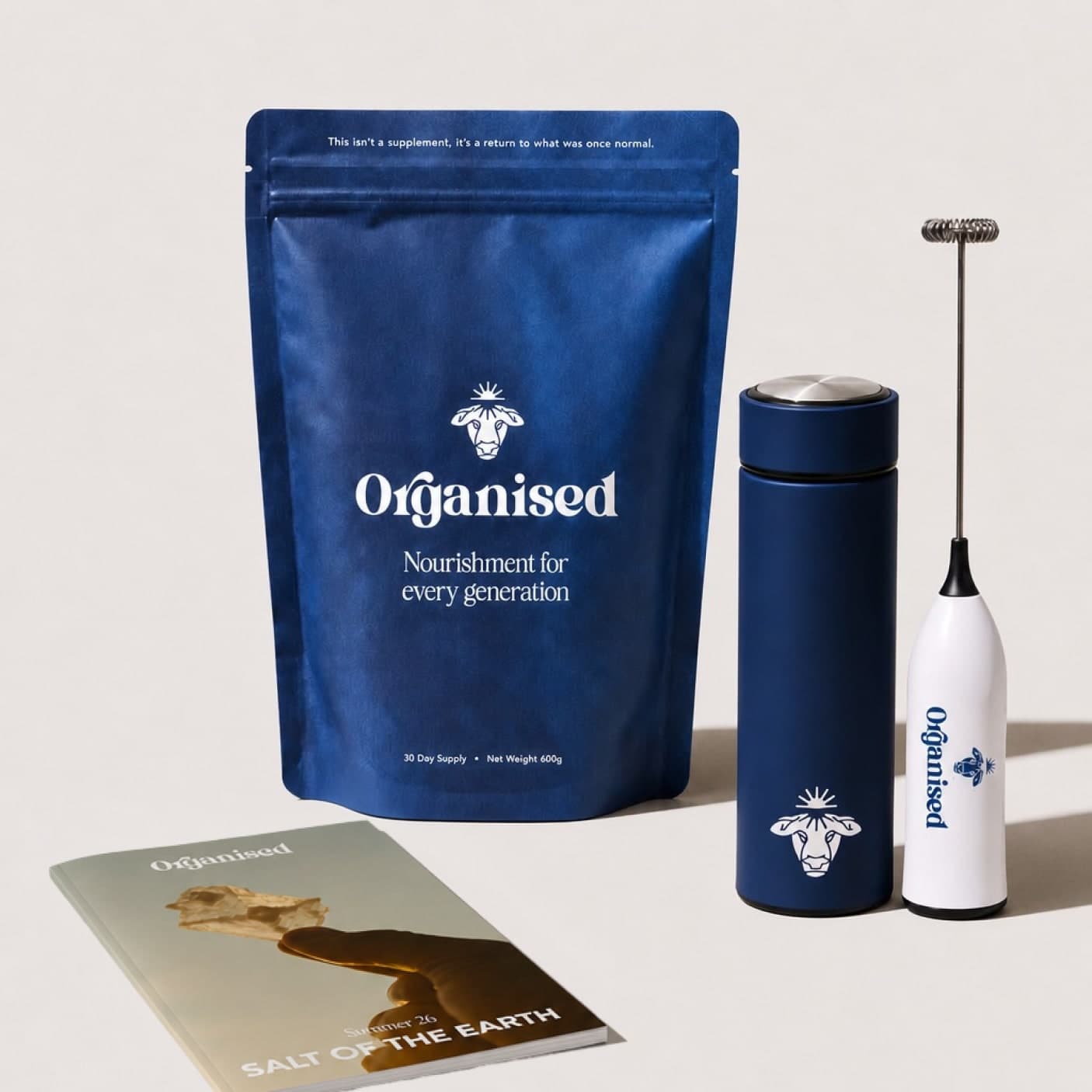
Daily blend
100,000+ thriving families4.9 on Trustpilot
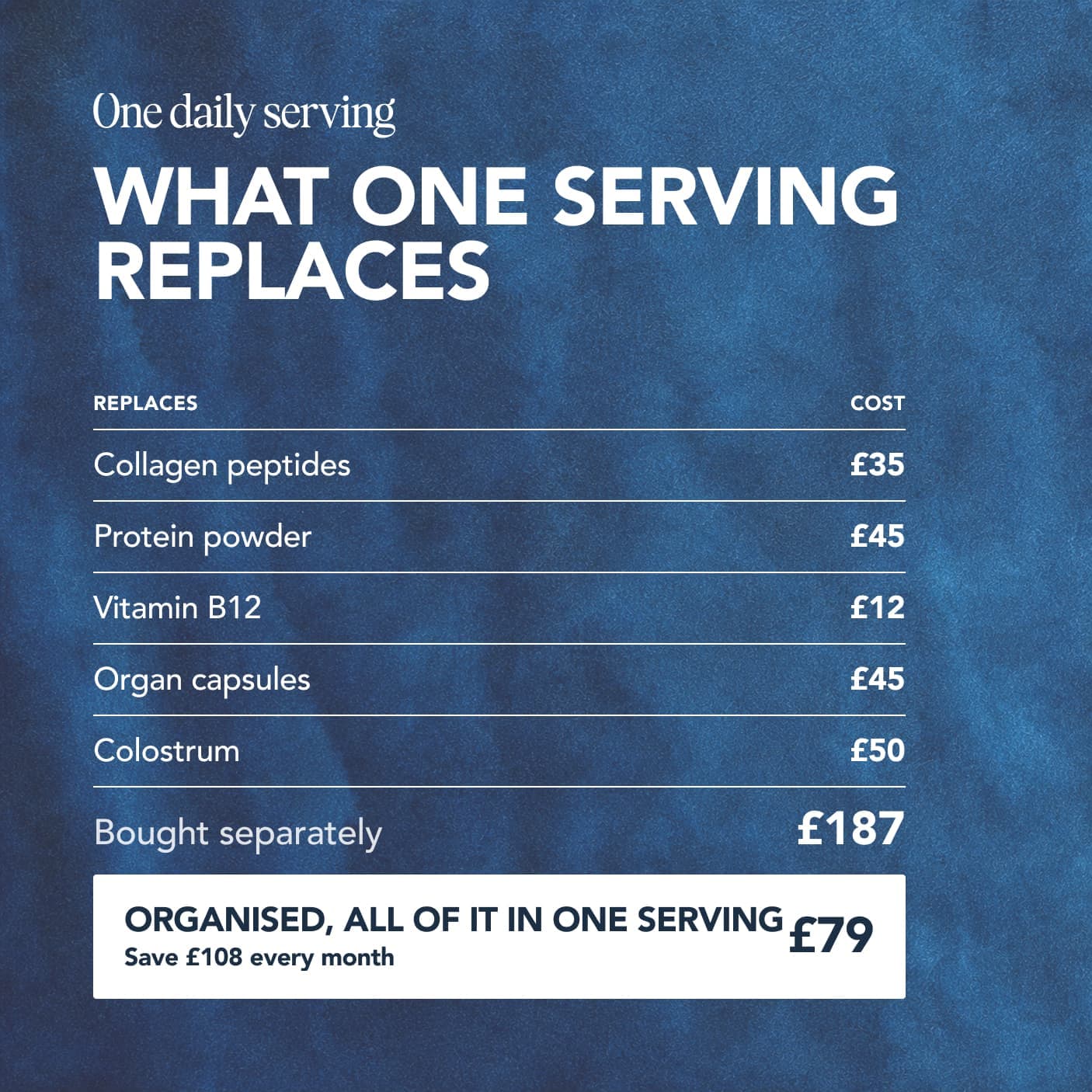
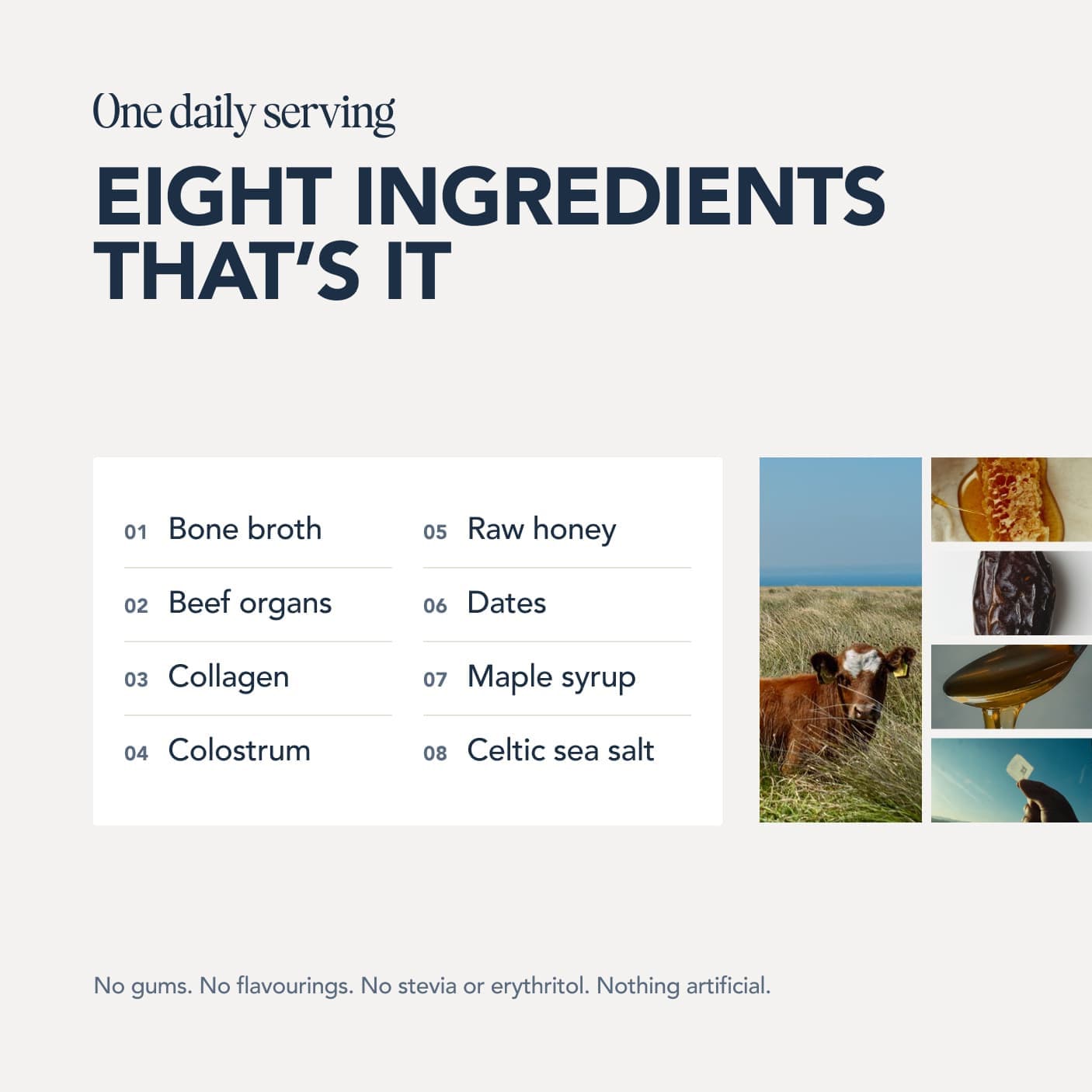
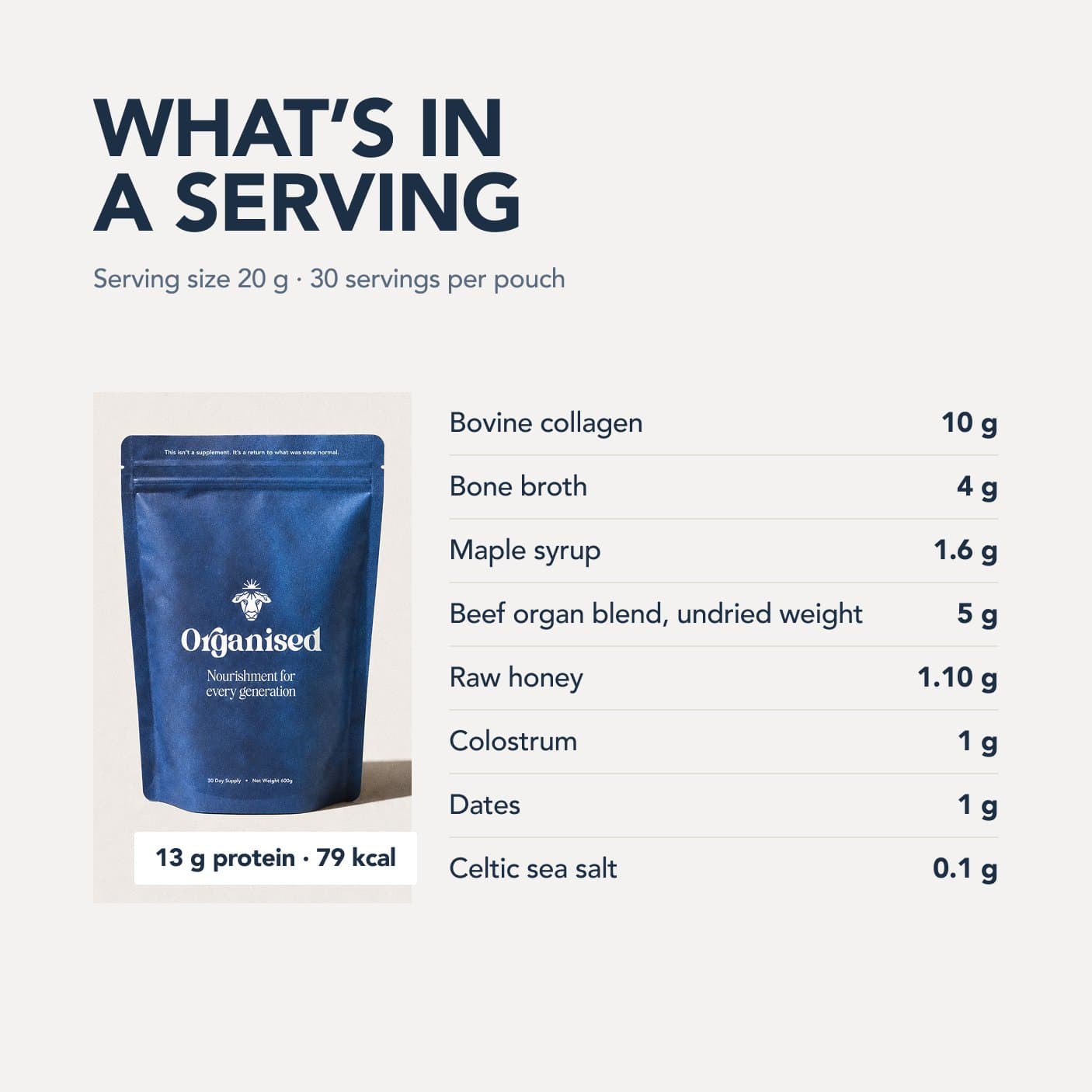
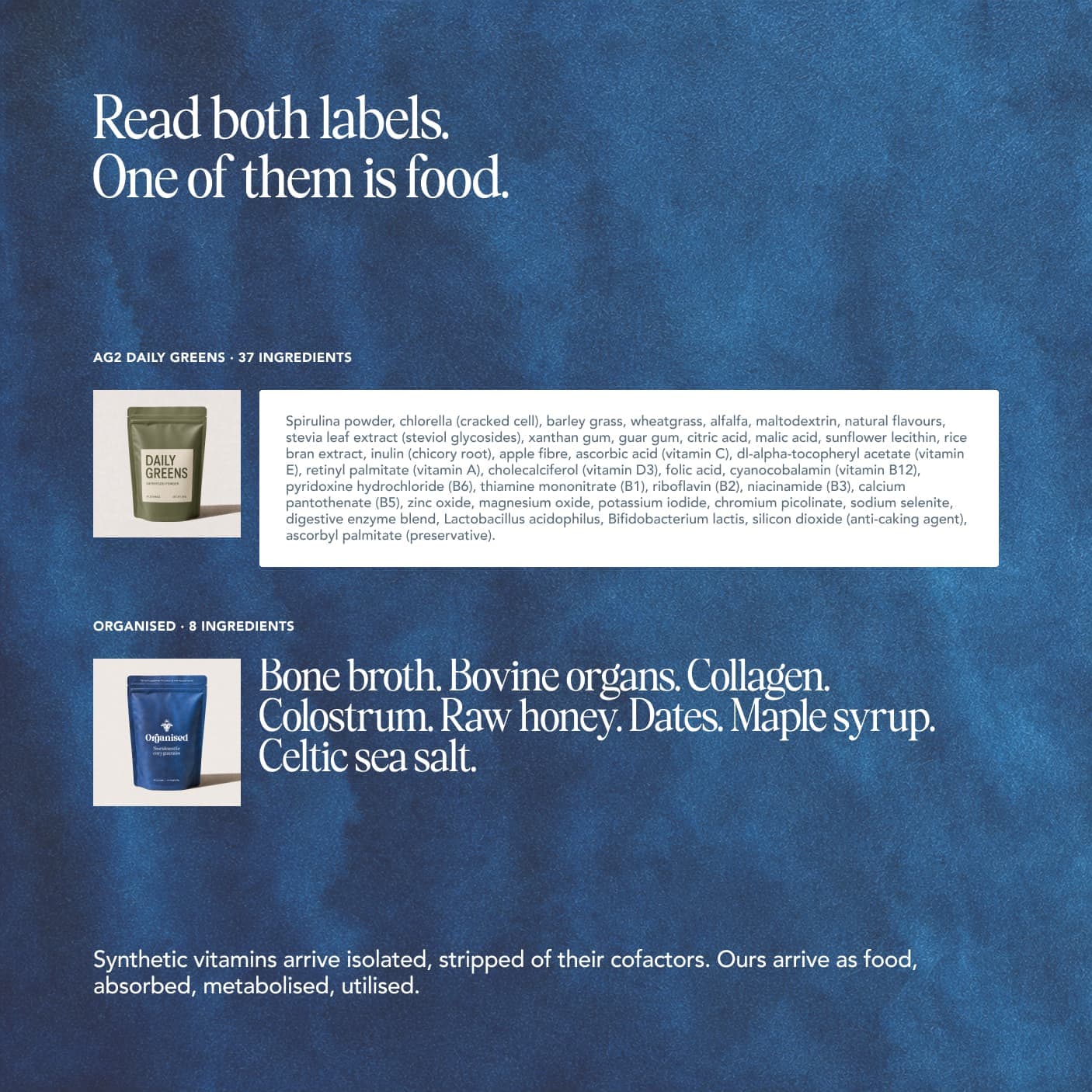
Eight real ingredients built around grass-fed beef organs, collagen and colostrum. Nothing synthetic added.
Free with your first order, worth £38. Plus £10 off the pouch with a subscription.
Free UK shipping · Made in England · 100 day money back guarantee on your first pouch · Skip, pause or cancel anytime
The dysbiosis-insomnia loop and how to break it
When you have dysbiosis, your microbiota produce fewer metabolites like butyrate and propionate. These short-chain fatty acids strengthen the intestinal barrier and reduce systemic inflammation.2 Without them, your gut becomes more permeable. Bacterial endotoxin (LPS) leaks into the bloodstream. Your immune system mounts a low-grade inflammatory response that lasts all night.
Low-grade systemic inflammation impairs your ability to produce and respond to melatonin. Your core body temperature regulation becomes erratic. You might fall asleep easily but wake at 2 or 3 AM. You might lie awake because your body temperature won't drop. You're not tired, because your immune system is in low-grade alarm mode.
Fixing dysbiosis is therefore one of the most underrated insomnia treatments. It typically takes 4-6 weeks of consistent fermented foods and whole-food nutrition before dysbiosis shifts enough to improve sleep. But when it does, the sleep improvement is often dramatic. People who've struggled for years suddenly sleep through the night again.
The practical steps: eliminate foods that feed dysbiosis (seed oils, refined sugar, ultra-processed foods). Add fermented foods daily (sauerkraut, kimchi, aged cheese, unpasteurised kefir). Include prebiotic foods that feed beneficial bacteria (onion, garlic, underripe banana, resistant starch from cooled potato). Do this consistently for at least eight weeks before concluding dysbiosis isn't your sleep culprit.
If you've tried every sleep supplement and still can't sleep, your microbiome might be the missing link.
The bottom line
Insomnia isn't a mystery. It's a symptom of a broken gut-brain-sleep axis. Your gut bacteria aren't producing the signals for serotonin synthesis. Your gut lining is inflamed and isn't absorbing what is being made. The result is no melatonin and no sleep. Fix the gut, and sleep returns. It's reliable, it's testable, and it works.
References
Every source below was checked on 27 August 2026. Each PubMed, PMC and DOI identifier was resolved against NCBI or Crossref, and what it opens is printed under the citation, so you can see the link goes where the citation says without leaving the page. Where a citation and its identifier disagreed, the citation was corrected to the record or the reference was deleted along with the sentence marker that pointed at it, and where the resolved paper turned out not to support the sentence, the sentence was cut back to what it does support. Borrowed authority is worse than none, because it looks like rigour.
- Bertrand PP, Bertrand RL. Serotonin release and uptake in the gastrointestinal tract. Auton Neurosci. PMC4048923.Checked 27 August 2026: PMC4048923 opens Mawe GM, Hoffman JM, Serotonin signalling in the gut--functions, dysfunctions and therapeutic targets. Nat Rev Gastroenterol Hepatol 2013;10(8):473-86. PubMed indexes it as: Review.The authors' own declaration, from the record: Conflicts of interest The authors have no conflicts to disclose.
- Yano JM et al. Indigenous bacteria from the gut microbiota regulate host serotonin biosynthesis. Cell. PMC4393509.Checked 27 August 2026: PMC4393509 opens Yano JM, Yu K, Donaldson GP et al, Indigenous bacteria from the gut microbiota regulate host serotonin biosynthesis. Cell 2015;161(2):264-76.
- Carabotti M et al. The gut-brain axis: interactions between enteric microbiota, central and enteric nervous systems. Ann Gastroenterol. PMC4367209.Checked 27 August 2026: PMC4367209 opens Carabotti M, Scirocco A, Maselli MA et al, The gut-brain axis: interactions between enteric microbiota, central and enteric nervous systems. Ann Gastroenterol 2015;28(2):203-209.The authors' own declaration, from the record: Conflict of Interest: None
Who wrote and reviewed this guide
Niall Kiddle
Author · Founder, Organised
Niall is the founder of Organised. He started the company in 2024 after fixing his own health the slow way: in 2022 he swapped a cupboard of synthetic supplements for real food, raw milk, organ meats, bone broth and honey, and felt the difference within months.
Areas of expertise: Ancestral nutrition, Organ meats, Whole-food supplementation, Gut health, Regenerative sourcing
Read Niall's full profile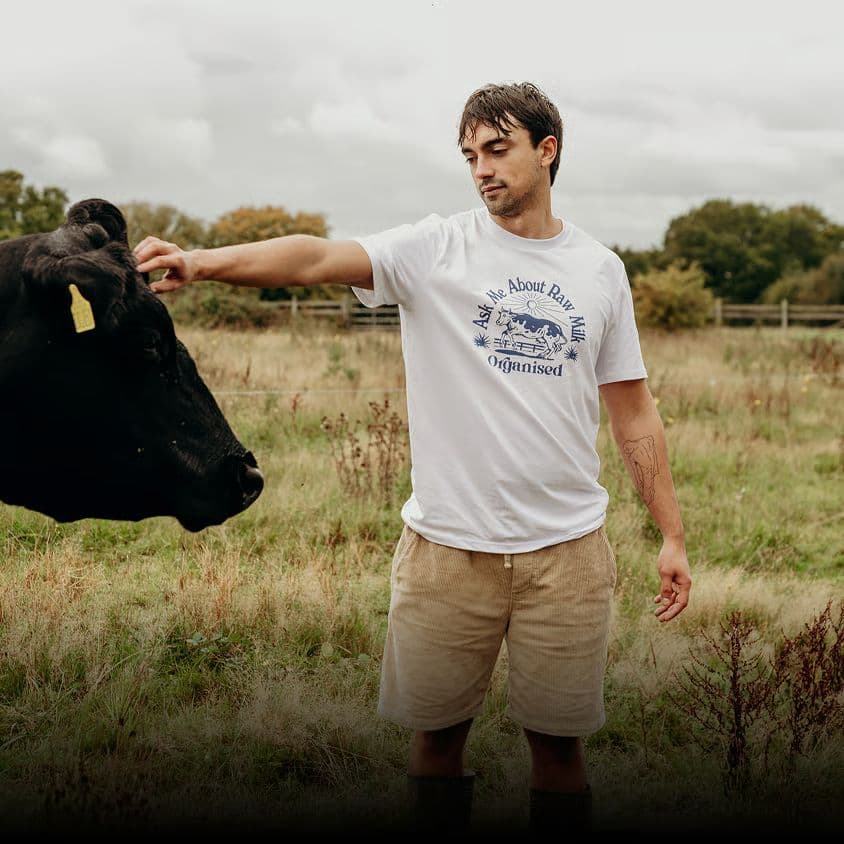
Pedro Rodrigues
Reviewer · Agronomist (farming and sourcing only)
Pedro is the agronomist Organised works with on farming and sourcing. His job on the guides is to keep the science honest: he reviews what we publish about soil health, regenerative agriculture, grazing and the way food is actually produced.
Areas of expertise: Regenerative agriculture, Agronomy, Soil health, Grass-fed farming, Food sourcing
Reviewed this guide on
Read Pedro's full profileMore on sleep
View allBrowse the guides library
All guidesKeep reading
Health goals
Mitochondrial Health: The Key to Ageing Well
Ageing is mitochondrial decline. Here's how to keep your powerhouse cells working and what that means for longevity and vitality.

Health goals
How Stress Destroys Your Gut (And What to Do About It)
Chronic stress opens your gut lining. The vagus nerve controls gut function. Cortisol damages tight junctions. Practical stress reduction for gut repair.

Health goals
Brain Fog: Nutritional Causes and How to Clear It
Brain fog isn't your fault. B12 deficiency, iron, blood sugar dysregulation, poor sleep, and gut dysfunction often hide behind the mental haze.
Real food, made effortless
Start my daily blendA few ways to use it
All recipes
Whole Food Snacks for Busy Days
Practical whole food snacks that travel well and sustain energy. No refined carbs, no seed oils. Real food options for when you're busy.
Bone Broth from Scratch: A Step-by-Step Guide
Step-by-step guide to making bone broth at home. Stovetop, slow cooker, and Instant Pot methods. Rich in collagen and gut-healing minerals.
Matcha Latte Gummies with Collagen and Gelatine
Make visually stunning matcha latte gummies infused with collagen and gelatine. Simple recipe for gut-healing sweets you'll actually want to eat.


 Join over 100,000+ members
Build a better food system with us
The Organised community is thousands of people choosing real food and backing the farmers who grow it, all of us trying to leave the world a little better than we found it. If that is what you care about too, you belong here.