The Foods That Age Your Skin Fastest
Ageing skin isn't inevitable. Genetics set the baseline. But your daily choices set the trajectory. Some foods actively accelerate ageing. They damage collagen, trigger inflammation, and create compounds that cross-link proteins and stiffen tissue. If you're going to prioritise your health in one area, your diet is the leverage point where everything changes.
By Niall Kiddle, Founder, Organised

Reviewed by Pedro Rodrigues, Agronomist (farming and sourcing only) ·
6 min read · Published · Updated · 4 cited sources
Makers of the Organised Daily blend, a grass-fed beef organ supplement from regenerative UK farms
If you're going to prioritise your health in one area, your diet is the leverage point where everything changes.

How food ages your skin
Your skin is made of collagen and elastin. These are structural proteins that keep skin plump, elastic, and youthful. Collagen degrades naturally over time, but dietary choices dramatically accelerate this process.
Inflammation accelerates collagen breakdown. Elevated blood sugar triggers glycation, which cross-links collagen molecules and makes them brittle and inflexible. Oxidative stress damages collagen directly. The foods that trigger these three mechanisms are the ones that visibly age your skin.
You're not trying to stop ageing. You're trying to slow the rate at which collagen degrades and the rate at which inflammatory damage accumulates in your skin.
Sugar: the glycation accelerator
Elevated blood sugar triggers a process called glycation: glucose molecules bond to proteins (including collagen) without enzymatic control, forming compounds called advanced glycation end products (AGEs).1 This cross-linking stiffens collagen, reduces elasticity, and accelerates visible ageing.1
This isn't theoretical. People with chronically elevated blood sugar (whether they're diabetic or pre-diabetic) show visible signs of accelerated ageing: thicker, less elastic skin, more pronounced lines, a dull complexion. This effect is reversible in the early stages: stabilise blood sugar and your skin often recovers its glow within weeks.
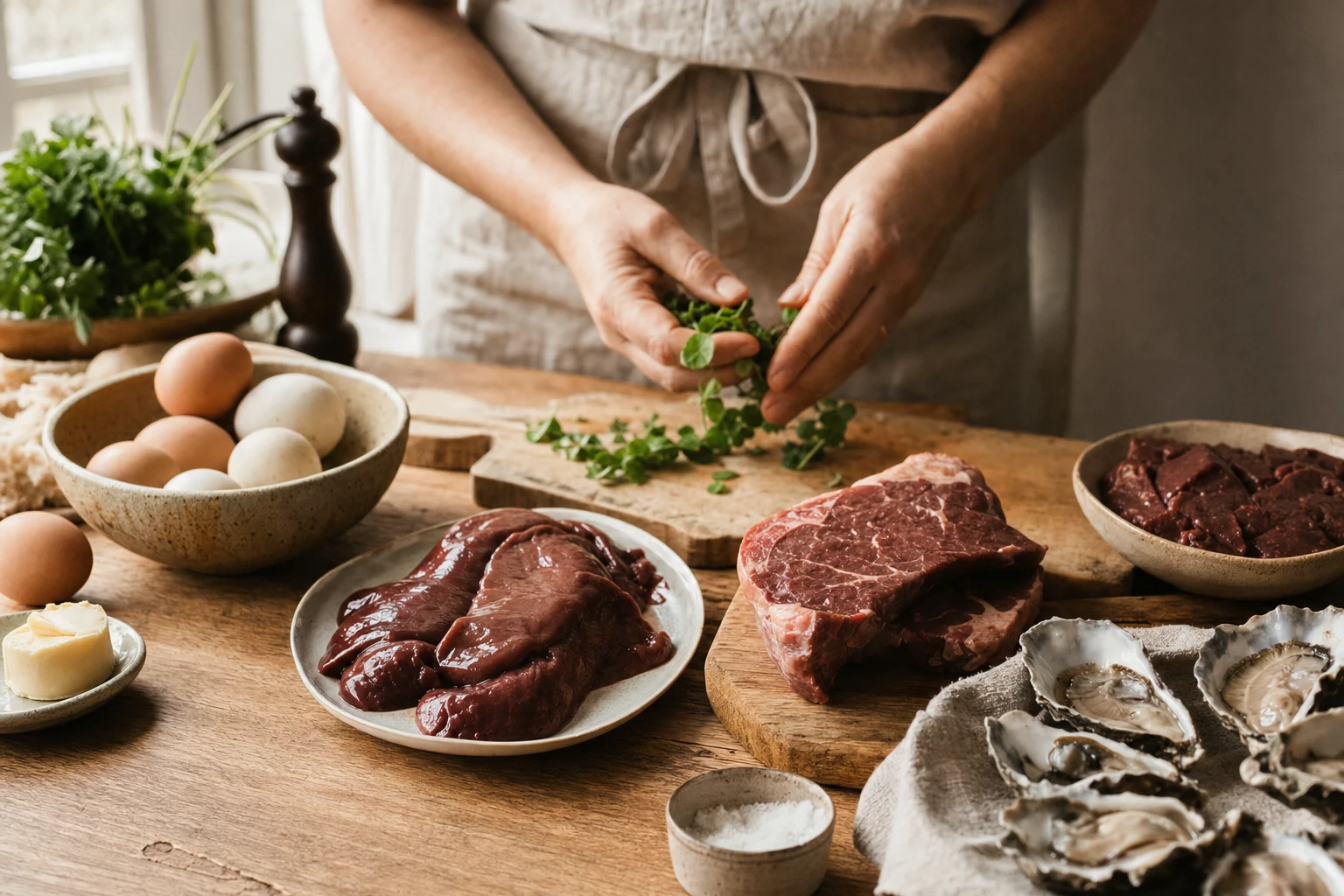
The foods most likely to spike blood sugar: sugar itself, refined carbohydrates (white bread, white rice, pastries, breakfast cereals), sweetened beverages, juices, and desserts. These are the ageing foods. Remove them first.
You don't need to eliminate carbohydrates entirely. Eat carbohydrates that are slow-digesting: whole grains, legumes, root vegetables, fruit. Pair carbohydrates with protein and fat, which slow glucose absorption and prevent blood sugar spikes. Yams with butter and eggs will not age you the way white toast will.
Seed oils: oxidation and inflammation
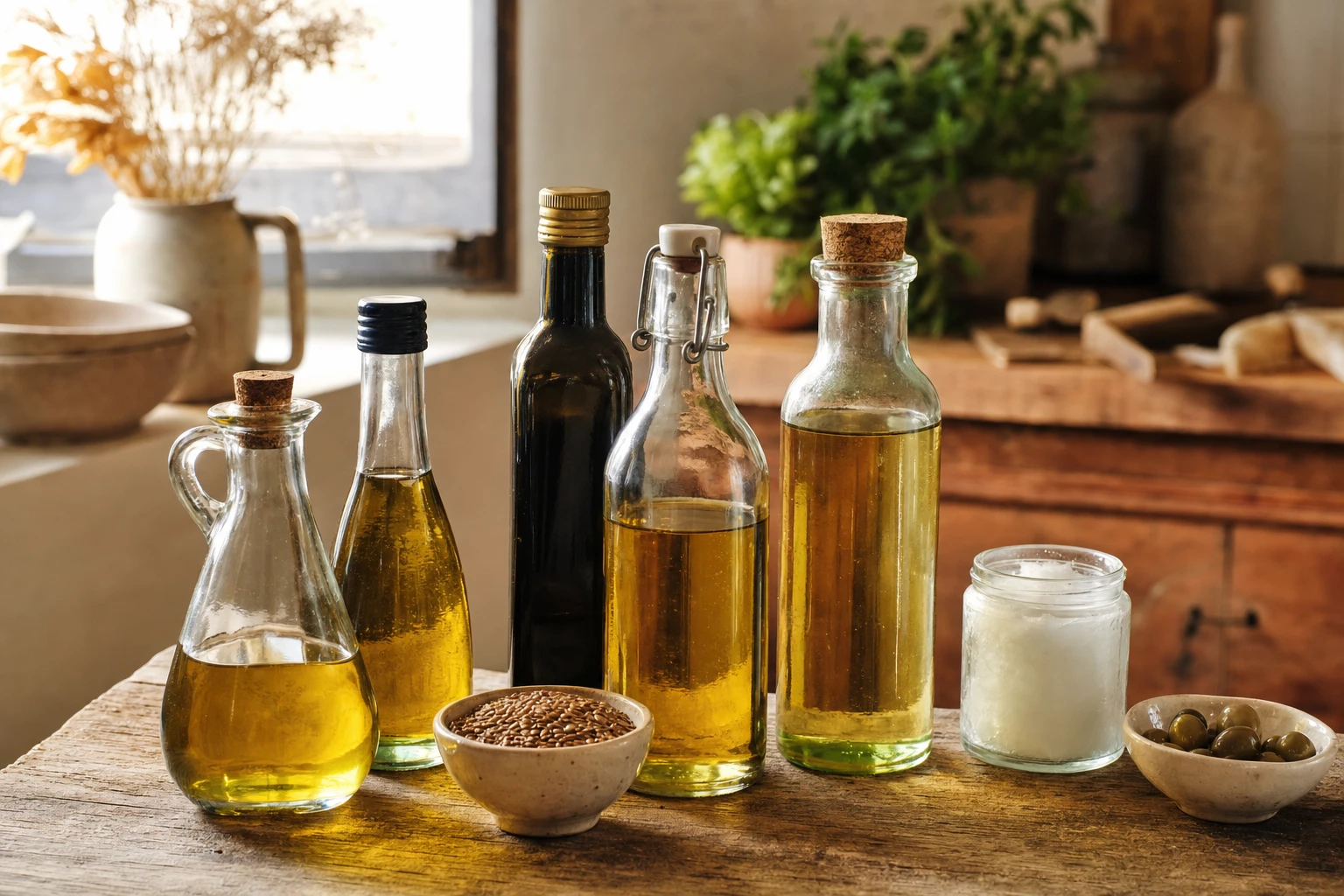
Seed oils (sunflower, safflower, soy, corn, canola) are polyunsaturated fats. They're unstable. They oxidise easily, especially when heated.2 Oxidised oils are inflammatory. They trigger systemic inflammation, which cascades into skin inflammation, collagen breakdown, and accelerated ageing.
The inflammation from seed oils is insidious because it's low-grade. You don't notice it acutely. But after months or years of daily consumption, your skin becomes inflamed, red, irritated, and your collagen deteriorates faster.
Additionally, seed oils are ubiquitous in processed foods: baked goods, fried foods, salad dressings, spreads, mayonnaise, even fish oil supplements (often made with seed oil to dilute expense). A person eating ultraprocessed foods is consuming oxidised seed oil constantly.
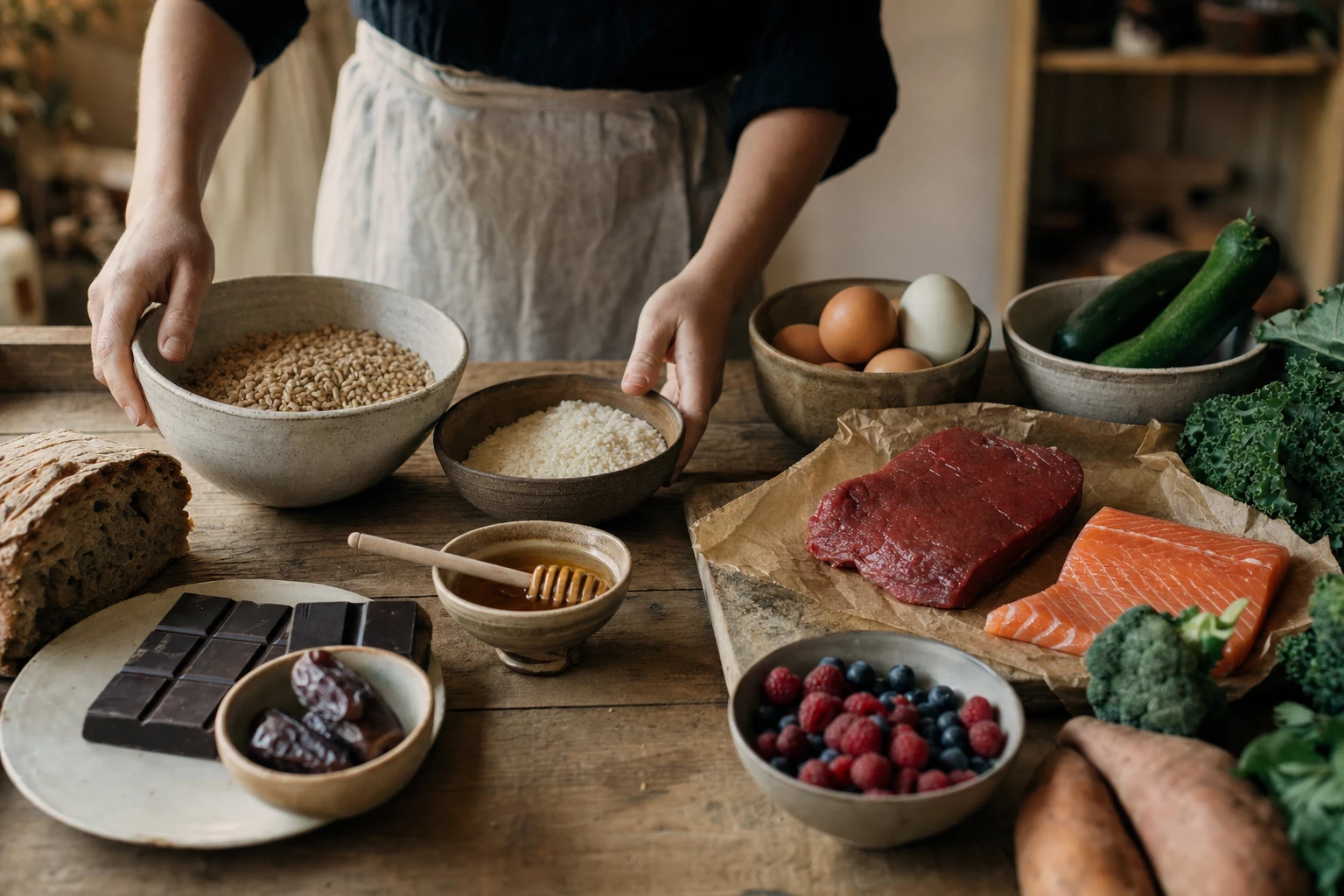
Eliminate seed oils entirely. Use only: olive oil (cold-pressed, for dressings), avocado oil (for cooking), ghee, butter, and coconut oil. Your skin will thank you. Most people report that their skin becomes less inflamed, less red, and more luminous within 4-6 weeks of removing seed oils.
Seed oils didn't exist 100 years ago. Your skin evolved to handle fat from animals and plants, not industrial polyunsaturated oils. Stop feeding your skin a food it doesn't know how to process.
Alcohol: the dehydrator and inflammatory
Alcohol dehydrates your entire body, including your skin. Dehydrated skin looks dull, wrinkled, and tired. Alcohol also triggers inflammation and increases cortisol, which breaks down collagen.
You don't have to eliminate alcohol entirely. But more than one drink daily for women, two for men, visibly accelerates ageing. If you want your skin to stay youthful, limit alcohol. When you do drink, hydrate heavily and pair alcohol with anti-inflammatory foods (fish, salad, vegetables).
Ultraprocessed foods: the compounding damage
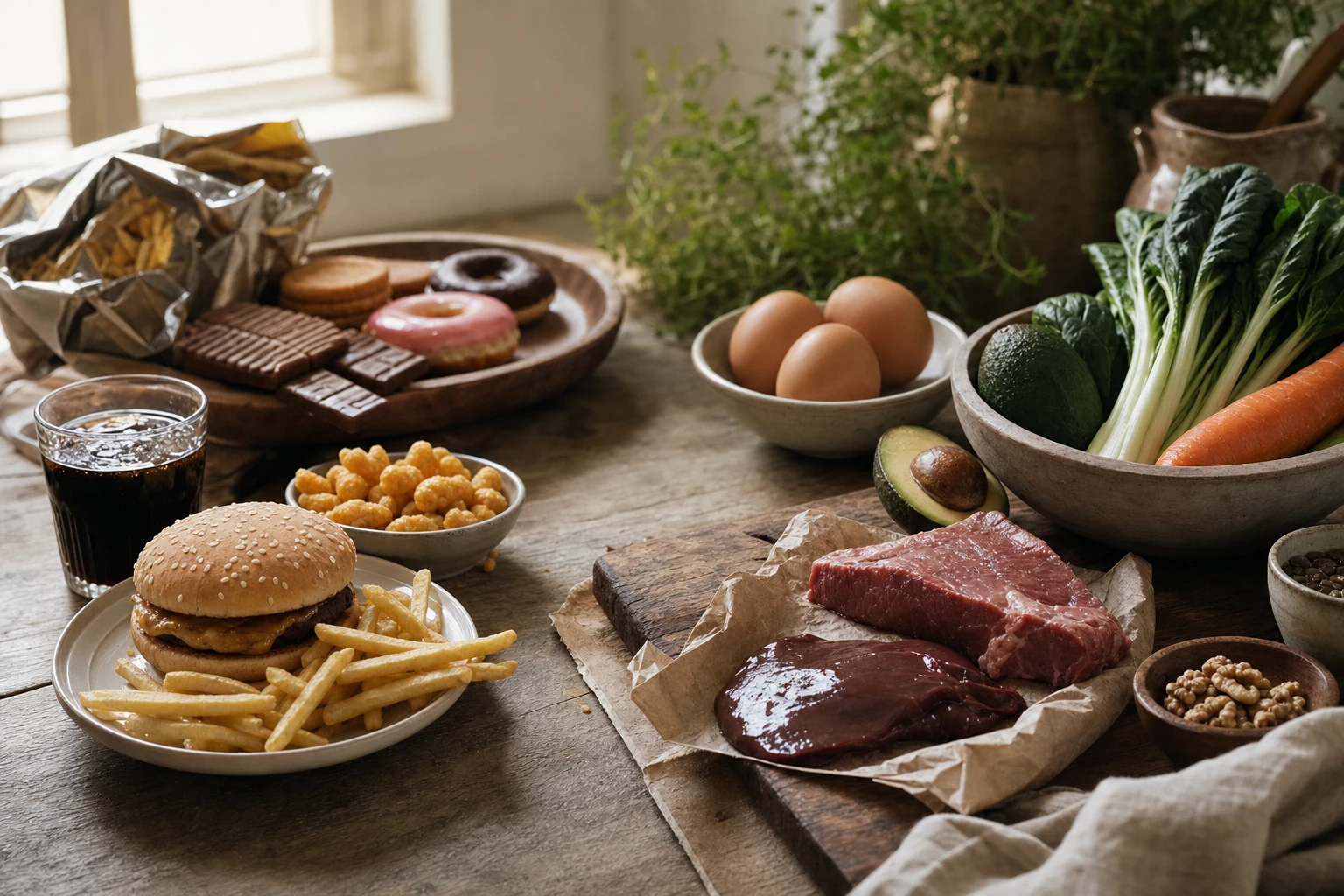
Ultraprocessed foods combine all the ageing mechanisms in one package: sugar, refined flour, seed oils, additives, and inflammatory compounds. A single serving of ultraprocessed food isn't catastrophic. But daily consumption compounds into visible ageing.
The more processed your diet, the faster your skin ages. Real food is the anti-ageing intervention.
Smoking: the non-negotiable accelerator
Smoking accelerates skin ageing faster than any food. It damages collagen directly, impairs wound healing, and causes chronic inflammation.3 A person who smokes ages visibly faster than an identical person who doesn't.
If you smoke, this is the single highest-leverage intervention for your skin (and your health broadly). Everything else you do nutritionally will be dampened if you're still smoking.
Get health guides like this, free
Two short reads a week on eating for energy, gut health, skin, sleep and more.
By signing up you agree to receive emails from us. No spam, unsubscribe anytime.
What to remove vs what to add
You're not eating for abstract health. You're eating for your skin specifically. Remove these:
- Sugar and refined carbohydrates (ageing through glycation)
- Seed oils (ageing through oxidative stress and inflammation)
- Alcohol beyond moderate amounts (ageing through dehydration and inflammation)
- Ultraprocessed foods (ageing through multiple mechanisms)
Add these:
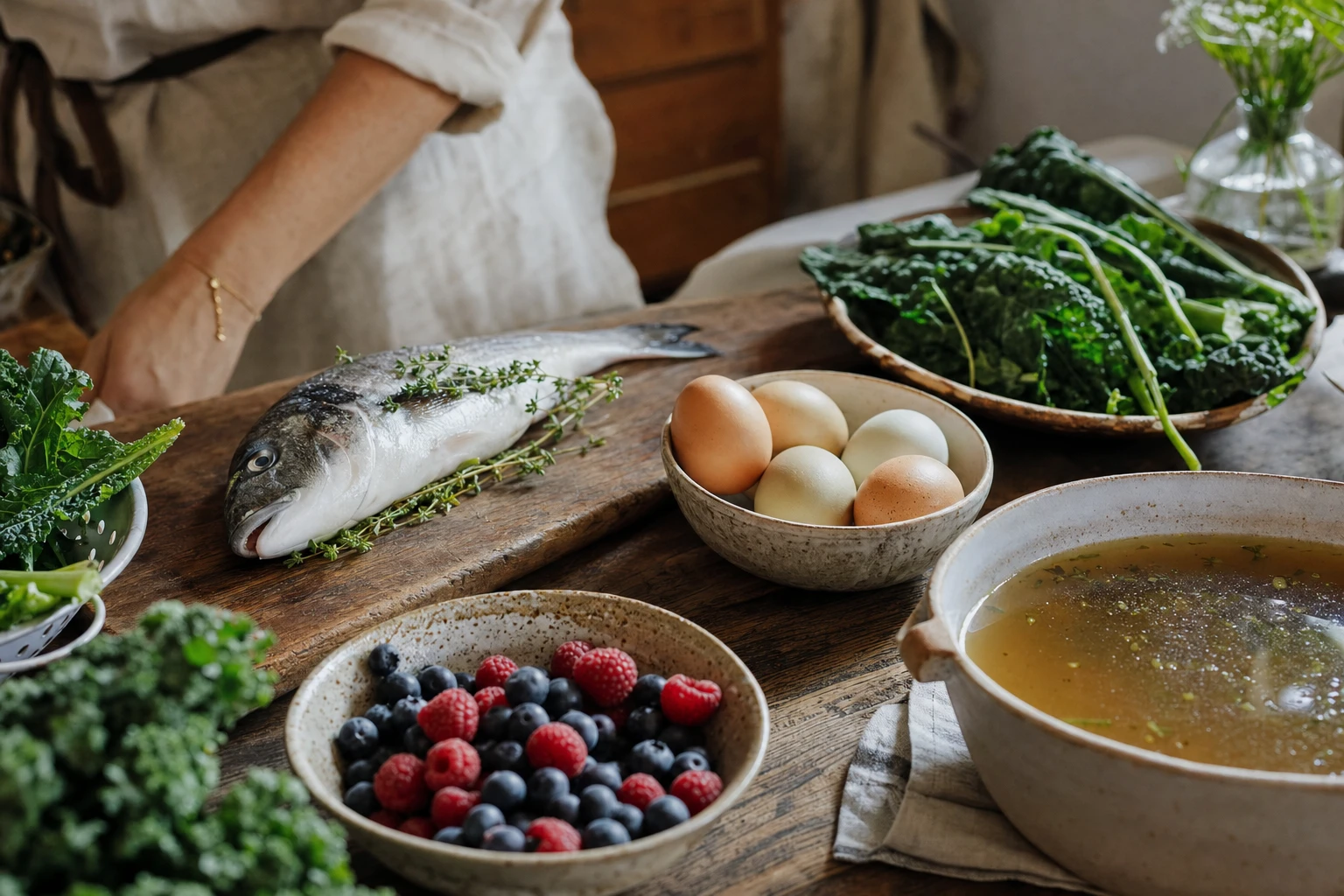
- Fatty fish (salmon, mackerel, sardines) omega-3, anti-inflammatory, collagen support
- Egg yolks lutein, zeaxanthin, choline, collagen precursors
- Bone broth collagen, gelatin, glycine, amino acids that rebuild skin tissue
- Collagen peptides (if bone broth isn't feasible) 10-20g daily shows measurable improvement in skin elasticity within 8 weeks4
- Berries (especially blueberries) anthocyanins, antioxidants, protect against oxidative damage
- Leafy greens vitamin K, folate, antioxidants, anti-inflammatory
- Olive oil polyphenols, antioxidants, protect against oxidative damage
Youthful skin isn't the result of topical creams. It's the result of stable blood sugar, low inflammation, adequate collagen substrate, and antioxidant protection. Food creates all of these. Creams create none of them.
Food and skincare: working together
This article focuses on food because food is the leverage point. But skincare matters too. You're not choosing between nutrition and topical care. You're doing both, with nutrition as the foundation.
When your diet is optimal (stable blood sugar, adequate collagen substrate, low inflammation), your skin becomes resilient and responsive. At that point, simple skincare products work better. Your skin barrier is functional. Transepidermal water loss is low. Irritation is rare.
When your diet is poor, even expensive skincare struggles. Your skin is inflamed from within. No topical product can overcome that. You're fighting physiology with cosmetics, which rarely works.
The practical approach is diet first, skincare second. Spend your money on real food before you spend it on serums and creams. Once your diet is optimised, a basic skincare routine (cleanser, moisturiser, sunscreen, perhaps a retinoid at night) is usually sufficient. Your skin will be clearer, more radiant, and more resilient than it would be with expensive products and a poor diet.
Additionally, your age matters less than you think. A 50-year-old eating real food and sleeping well often has better skin than a 30-year-old eating processed food and sleep-deprived. The visible difference is striking. Ageing skin isn't inevitable. It's a consequence of choices.

1 of 9
Daily blend
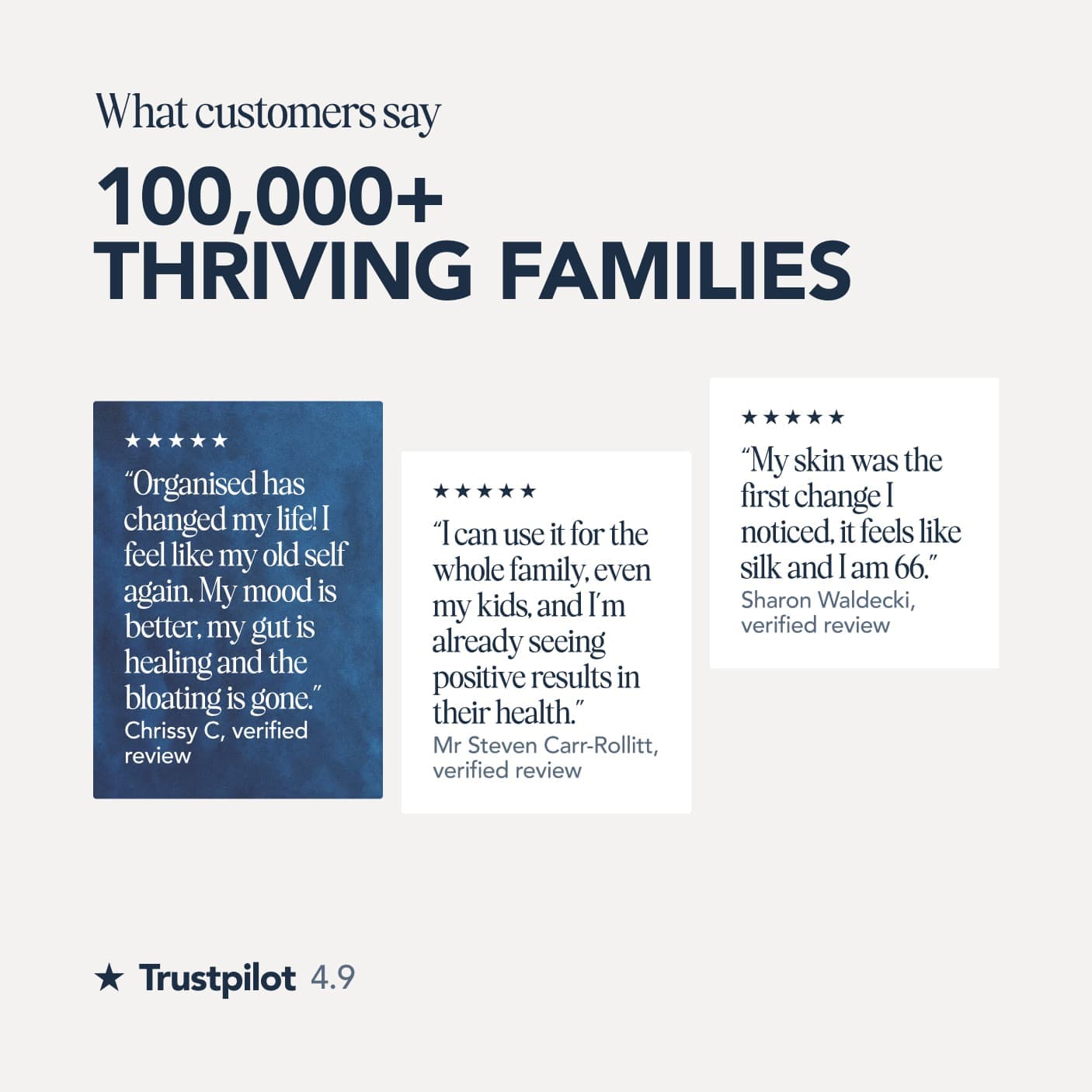
100,000+ thriving families4.9 on Trustpilot
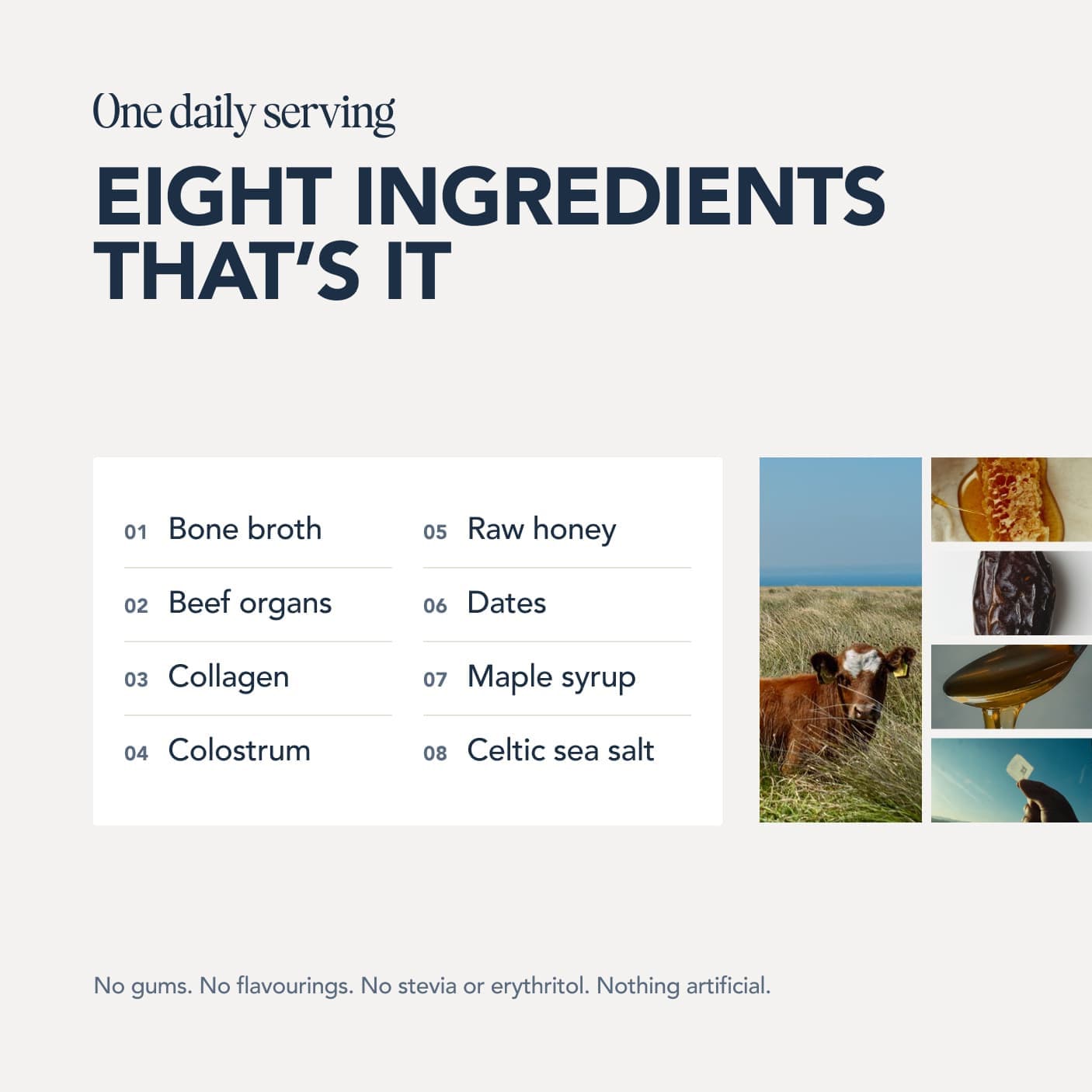
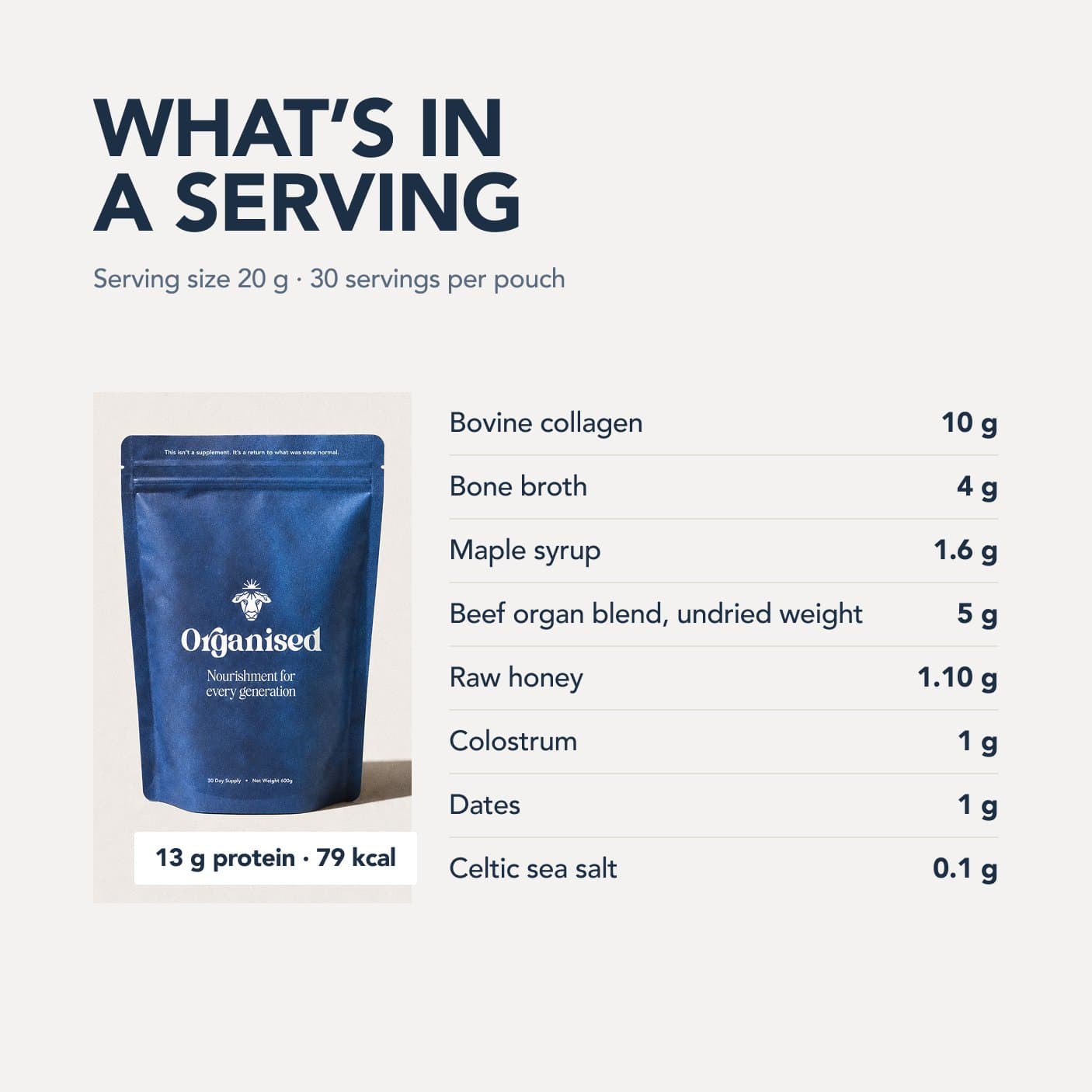
Eight real ingredients built around grass-fed beef organs, collagen and colostrum. Nothing synthetic added.
Free with your first order, worth £38. Plus £10 off the pouch with a subscription.
Free UK shipping · Made in England · 100 day money back guarantee on your first pouch · Skip, pause or cancel anytime
The role of antioxidants in skin defence
Your skin faces constant oxidative stress from sun exposure, pollution, and dietary inflammatory compounds. Antioxidants from food neutralise this damage before it damages collagen. The richest sources are coloured vegetables (particularly dark leafy greens and berries), herbs and spices (turmeric, oregano, cinnamon), nuts, and seafood.
Antioxidants work synergistically. Vitamin C protects vitamin E. Vitamin E protects lipids. Polyphenols from plants protect multiple damage pathways. This is why eating a variety of coloured whole foods is more powerful than supplementing single antioxidants.
Your skin's appearance is a direct reflection of the antioxidant load you consume. Eat colour. Your skin will show it within weeks.
The bottom line
Your skin is a reflection of your diet from 4-6 weeks prior. The collagen in your skin today was built from the amino acids you consumed two months ago. The inflammation in your skin today is the cumulative effect of food choices from the past weeks. This is actually good news. It means you can see results quickly. Remove ageing foods, add skin-supporting foods, and within one month your skin will noticeably improve.
You don't need expensive creams or procedures. You need stable blood sugar, low inflammation, adequate protein, and antioxidant protection. All of which come from food choices.
References
Every source below was checked on 27 August 2026. Each PubMed, PMC and DOI identifier was resolved against NCBI or Crossref, and what it opens is printed under the citation, so you can see the link goes where the citation says without leaving the page. Where a citation and its identifier disagreed, the citation was corrected to the record or the reference was deleted along with the sentence marker that pointed at it, and where the resolved paper turned out not to support the sentence, the sentence was cut back to what it does support. Borrowed authority is worse than none, because it looks like rigour.
- Gkogkolou P, Bohm M. Advanced glycation end products: Key players in skin aging? Dermatoendocrinol. PMC3583887.Checked 27 August 2026: PMC3583887 opens Gkogkolou P, Böhm M, Advanced glycation end products: Key players in skin aging? Dermatoendocrinol 2012;4(3):259-70.
- DiNicolantonio JJ, O'Keefe JH. Omega-6 vegetable oils as a driver of coronary heart disease: the oxidized linoleic acid hypothesis. Open Heart. PMC6196963.Checked 27 August 2026: PMC6196963 opens DiNicolantonio JJ, O'Keefe JH, Omega-6 vegetable oils as a driver of coronary heart disease: the oxidized linoleic acid hypothesis. Open Heart 2018;5(2):e000898.The authors' own declaration, from the record: Competing interests: JD is the author of The Salt Fix and Superfuel and operates the website thesaltfix.com. JHO has an ownership interest in CardioTabs, a nutraceutical company.
- Morita A. Tobacco smoke causes premature skin aging. J Dermatol Sci. PubMed PMID: 17951030.Checked 27 August 2026: PMID 17951030 opens Morita A, Tobacco smoke causes premature skin aging. J Dermatol Sci 2007;48(3):169-75. PubMed indexes it as: Review.
- Choi FD et al. Oral Collagen Supplementation: A Systematic Review of Dermatological Applications. J Drugs Dermatol. PubMed PMID: 30681787.Checked 27 August 2026: PMID 30681787 opens Choi FD, Sung CT, Juhasz ML et al, Oral Collagen Supplementation: A Systematic Review of Dermatological Applications. J Drugs Dermatol 2019;18(1):9-16. PubMed indexes it as: Systematic Review.
Who wrote and reviewed this guide
Niall Kiddle
Author · Founder, Organised
Niall is the founder of Organised. He started the company in 2024 after fixing his own health the slow way: in 2022 he swapped a cupboard of synthetic supplements for real food, raw milk, organ meats, bone broth and honey, and felt the difference within months.
Areas of expertise: Ancestral nutrition, Organ meats, Whole-food supplementation, Gut health, Regenerative sourcing
Read Niall's full profile
Pedro Rodrigues
Reviewer · Agronomist (farming and sourcing only)
Pedro is the agronomist Organised works with on farming and sourcing. His job on the guides is to keep the science honest: he reviews what we publish about soil health, regenerative agriculture, grazing and the way food is actually produced.
Areas of expertise: Regenerative agriculture, Agronomy, Soil health, Grass-fed farming, Food sourcing
Reviewed this guide on
Read Pedro's full profileMore on skin
View all- How to Build Collagen Naturally Without Injections
- How to Feed Your Skin from the Inside Out
- A Whole Food Skincare Routine: Morning to Night
- Collagen for Anti-Ageing: What the Clinical Trials Show
- Dark Circles Under Your Eyes? It Might Be a Nutrient Deficiency
- Eczema and Nutrition: What the Research Suggests
- How to Eat for a Natural Glow (Without Products)
- How Zinc, Copper and Selenium Work Together for Clear Skin
- Psoriasis and Nutrition: What Helps and What Hinders
- Retinol from Beef Liver vs Retinol in Skincare: Which Actually Works?
- Rosacea and Gut Health: Is There a Connection?
- Why Your Skin Looks Better When You Eat Organ Meats
Browse the guides library
All guidesKeep reading
Health goals
Psoriasis and Nutrition: What Helps and What Hinders
Manage psoriasis with targeted nutrition: vitamin D, omega-3 balance, zinc, elimination trials. Complementary to medical care.

Health goals
Dark Circles Under Your Eyes? It Might Be a Nutrient Deficiency
Dark circles signal iron, B12, or folate deficiency. Or allergies, liver congestion, or poor sleep. Investigate before assuming exhaustion.

Health goals
Cortisol, Stress and Nutrition: Breaking the Cycle
Ongoing stress and high cortisol can deplete key nutrients. Learn the cortisol and stress nutrition steps that help you restore them and break the cycle.
Real food, made effortless
Start my daily blendA few ways to use it
All recipes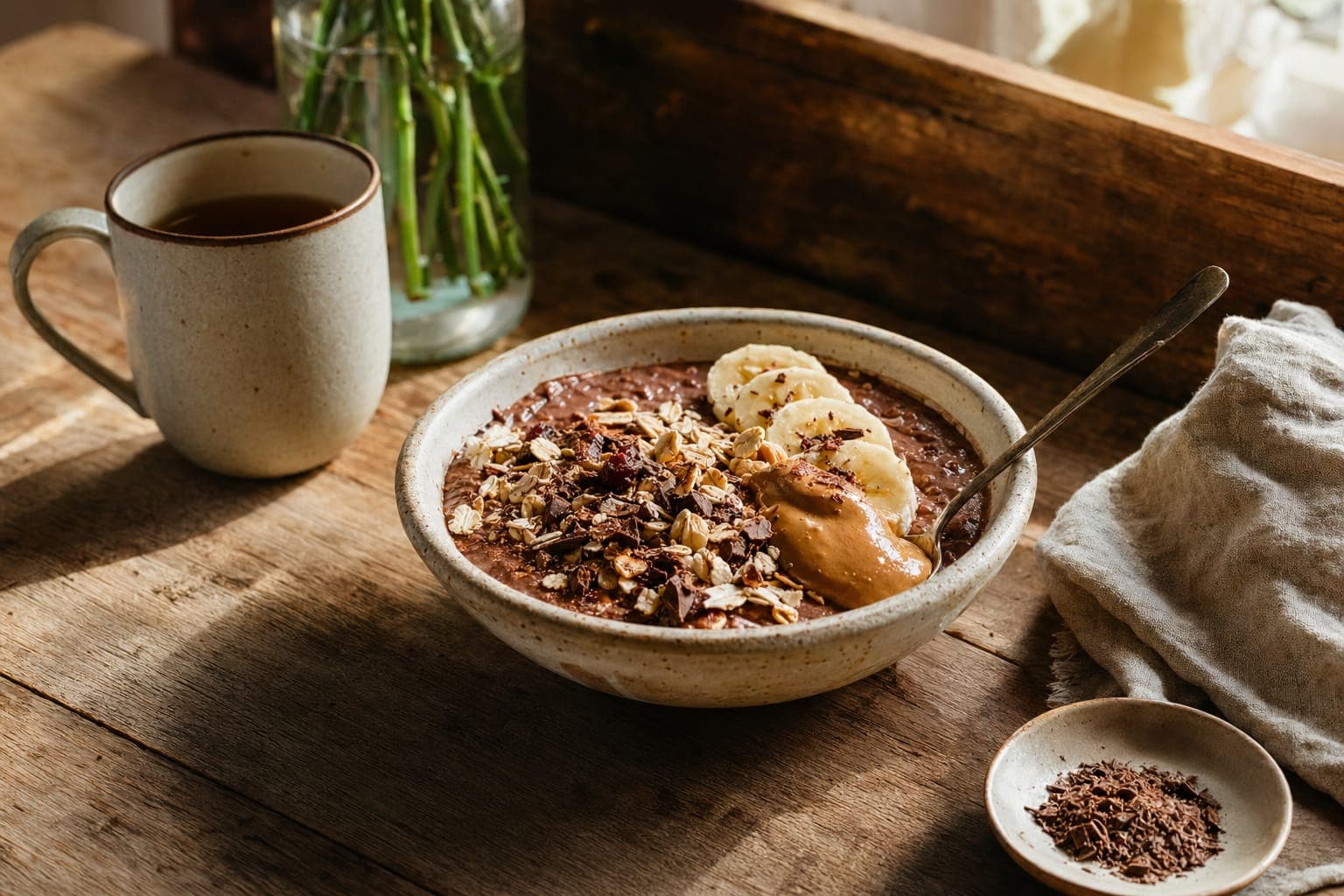
10 Ways to Use Organised That Aren't Just a Shake
Move beyond the basic shake. Discover 10 creative ways to use Organised in smoothie bowls, oats, yoghurt, baking, and more.

Bone Broth from Scratch: A Step-by-Step Guide
Step-by-step guide to making bone broth at home. Stovetop, slow cooker, and Instant Pot methods. Rich in collagen and gut-healing minerals.
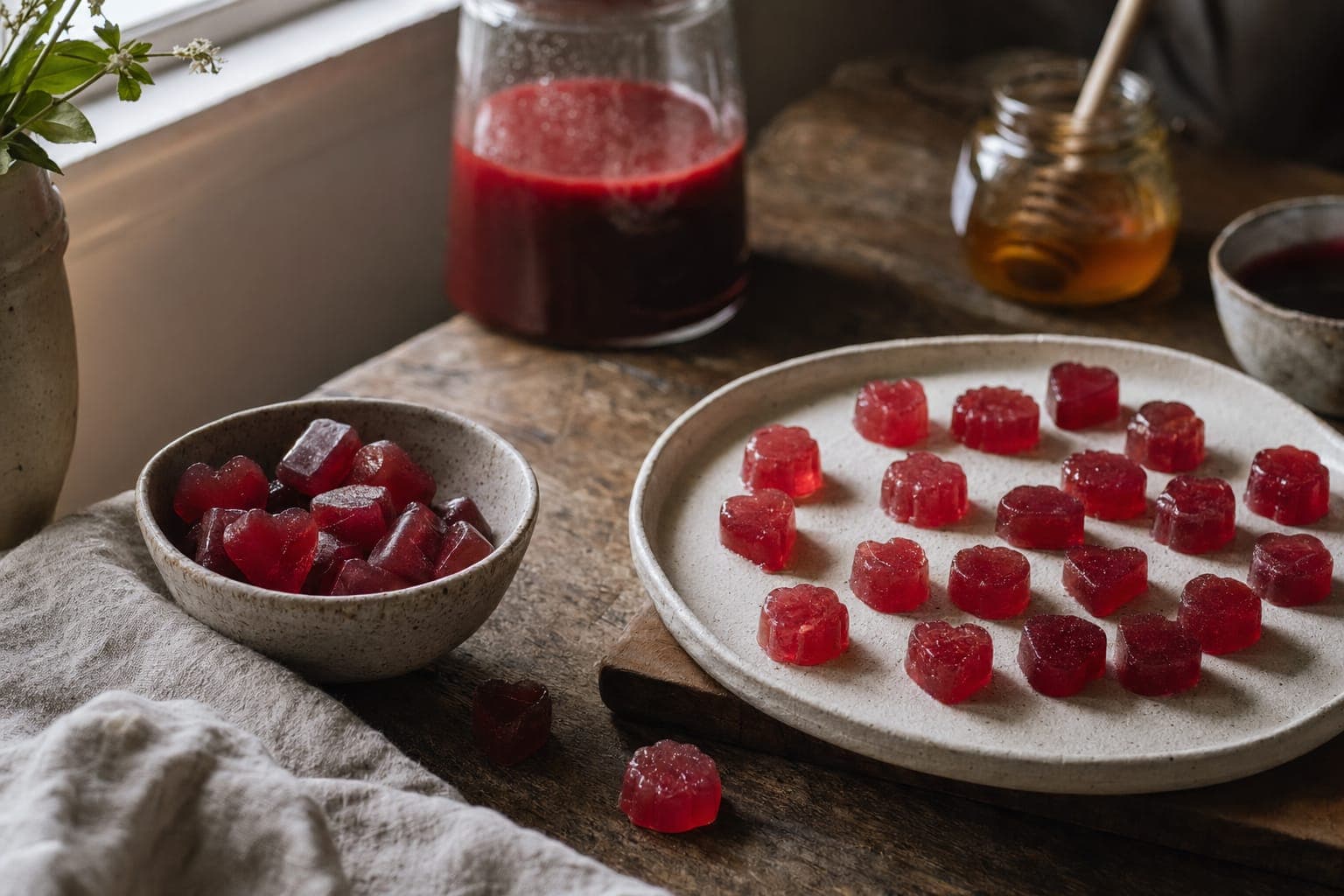
How to Make Your Own Gelatine Gummies
A simple recipe for homemade gelatine gummies using grass-fed gelatine, fresh juice, and raw honey. Better than shop-bought, kids love them.


 Join over 100,000+ members
Build a better food system with us
The Organised community is thousands of people choosing real food and backing the farmers who grow it, all of us trying to leave the world a little better than we found it. If that is what you care about too, you belong here.