Thyroid Health: The Nutrients Your Thyroid Needs to Function
Your thyroid controls your metabolism. It controls how fast you age, how much energy you have, how well your body burns fat, how stable your mood is. If your thyroid is broken, nothing else works. And 90% of thyroid problems aren't thyroid problems at all. They're nutrient problems.
By Niall Kiddle, Founder, Organised

Reviewed by Pedro Rodrigues, Agronomist (farming and sourcing only) ·
6 min read · Published · Updated · 6 cited sources
Makers of the Organised Daily blend, a grass-fed beef organ supplement from regenerative UK farms

The thyroid cascade
Your thyroid produces two main hormones: T4 (thyroxine) and T3 (triiodothyronine). T4 is the storage form. T3 is the active form. Your body produces mostly T4 and converts it to T3 as needed.
The problem: if conversion is broken, you can have normal T4 on a blood test and still feel hypothyroid. Exhausted, cold, gaining weight, mood flat, skin dry, hair thinning. The hormone is present. Your body just can't use it.
Conversion happens primarily in the liver and in the intestines. It depends on specific enzymes. Those enzymes require specific micronutrients to function. Leave out the micronutrients, and the cascade stalls.
A normal TSH blood test doesn't mean your thyroid is fine. It means your pituitary is signalling your thyroid correctly. Whether your thyroid can actually respond depends on whether you're fed it what it needs.
Iodine: the structural foundation
Iodine is literally incorporated into thyroid hormones. T4 has four iodine atoms. T3 has three. Without iodine, your thyroid can't make the hormones at all.1
Iodine deficiency is rare in developed countries because of iodised salt, but it's not gone. Some people avoid salt deliberately (a mistake). Some live in regions where soil iodine is depleted. Some take supplements or medications that interfere with iodine absorption.
Food sources of iodine are actually limited. Seafood and seaweed are rich (seaweed especially, though quality varies wildly). Dairy and eggs have modest amounts (depending on what the animals eat). Most land plants are poor sources unless the soil is iodine-rich.
Sea salt has negligible iodine unless it's fortified. Regular salt (which is processed) has iodine added. Some people see better thyroid function with iodised salt than without.
If you're eating fish and seafood regularly, you're probably fine. If you're not, adding seaweed (in modest amounts, since too much can suppress thyroid function) or using iodised salt helps. Target around 150 micrograms daily for adults.
Selenium: the conversion enzyme
Selenium is the critical cofactor for the enzymes that convert T4 to T3. Without it, you have normal T4 but poor T3 conversion. You feel hypothyroid despite normal blood tests.2
Selenium is also critical for glutathione production, your body's master antioxidant. The thyroid is particularly susceptible to oxidative stress. Low selenium means poor antioxidant defences and a thyroid that's constantly inflamed.
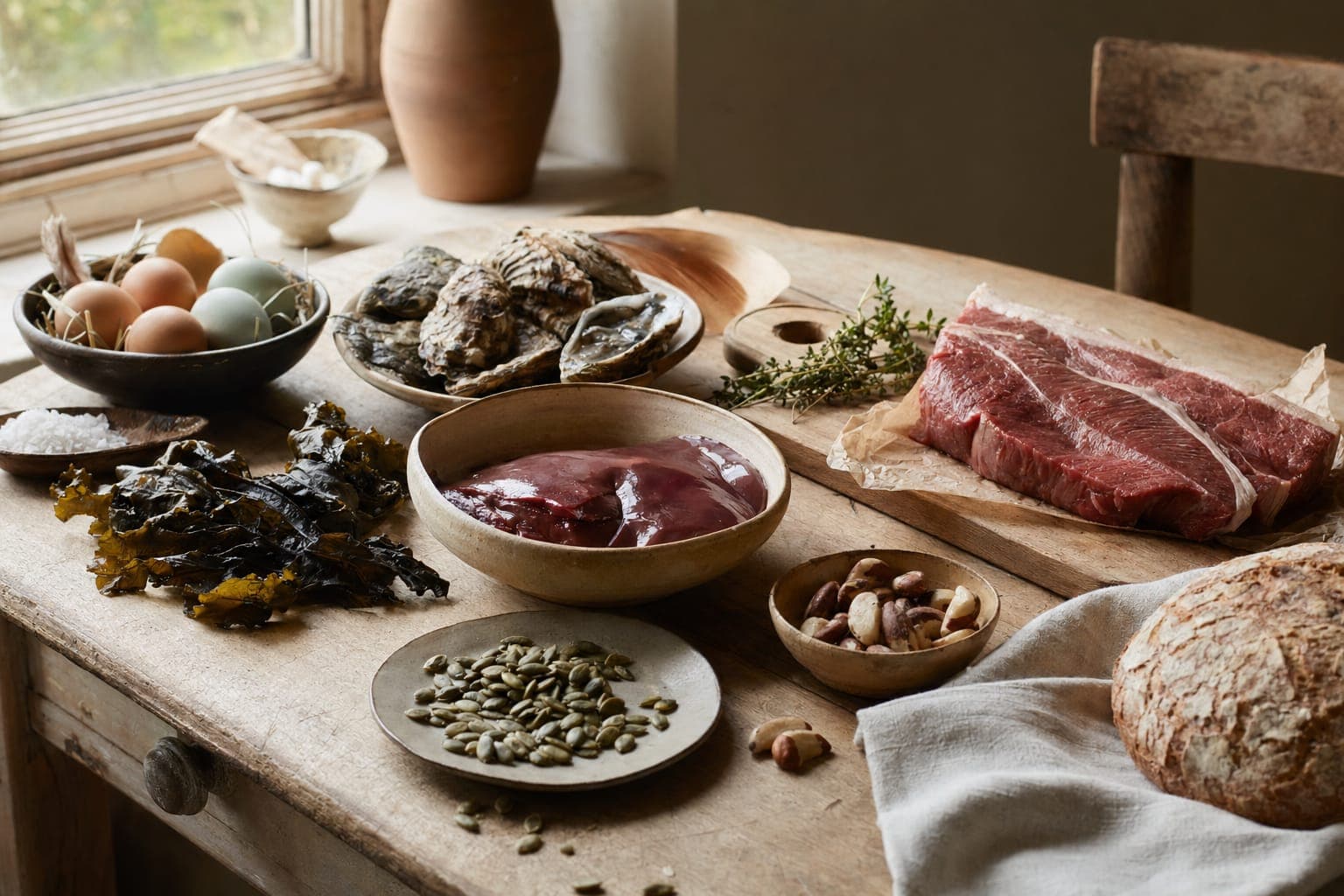
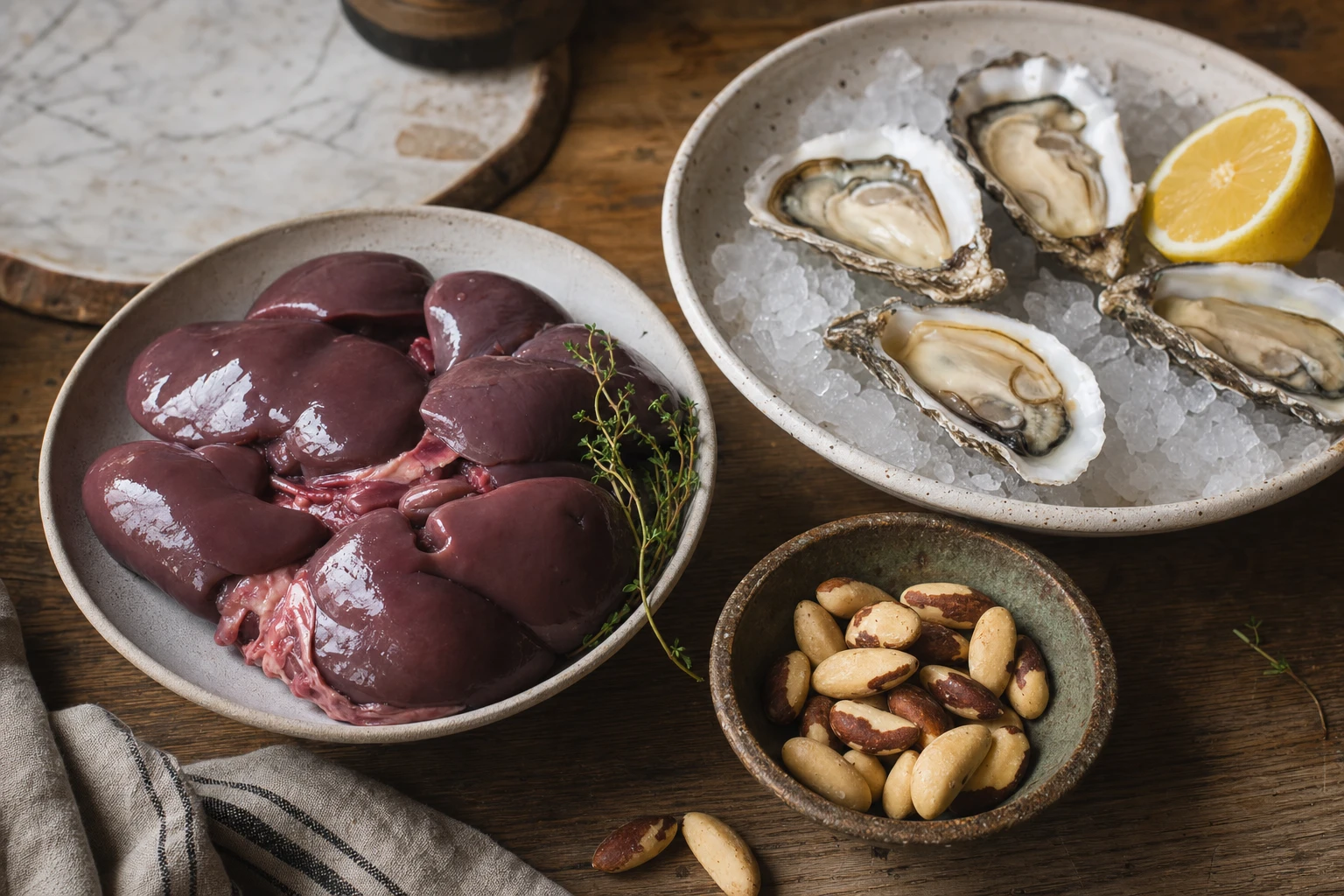
Food sources are concentrated in organ meats. Beef kidney is extraordinary selenium content. A single serving covers your entire daily need. Seafood, especially oysters and clams, is also rich. Brazil nuts have selenium, though amounts vary depending on soil content.
Most people are mildly deficient in selenium. Adding organ meats to your diet even once a week can shift thyroid function measurably within 4-6 weeks.
More isn't better here. Above 400 micrograms daily, selenium becomes toxic. Don't supplement aggressively. Eat organ meats and seafood, and you're covered.
Zinc: the hormone receptor
Thyroid hormone has to bind to receptors on your cells to exert its effect. Zinc is essential for the function of those receptors.3 Low zinc means your cells don't respond well to thyroid hormone, even if you have plenty of it.
Zinc also supports immune tolerance. Much hypothyroidism is actually autoimmune (Hashimoto's thyroiditis). Zinc is critical for preventing autoimmune thyroid destruction. It's particularly important for intestinal barrier function and gut immune tolerance.
Beef, lamb, oysters, liver, pumpkin seeds. These are zinc sources. Animal sources are more bioavailable than plant sources. If you're eating animal foods regularly, zinc is usually not a limiting nutrient. If you're avoiding them, it often is.
Target 8-11 mg daily for adult women, 11 mg for adult men. One oyster provides 5-7 mg. A serving of beef provides 5-10 mg depending on cut. Not hard to hit if you eat animal foods.
Iron: the oxygen carrier
Iron is essential for the enzymes that synthesise and metabolise thyroid hormone. Low iron shows up as hypothyroid symptoms: fatigue, weakness, cold intolerance, and poor hair/skin health.4
Women are especially prone to iron deficiency because of menstrual loss. The irony is that low iron worsens thyroid function, which worsens menstrual health, which worsens iron status. A vicious cycle.
Red meat, liver, oysters, clams. These are bioavailable iron. Pair them with vitamin C (citrus, tomatoes, sauerkraut) to enhance absorption. Avoid tea and coffee with meals (they suppress iron absorption).
Target 8 mg daily for adult men, 18 mg for premenopausal women. Get blood work to know where you stand. Supplementing iron without knowing your status can be problematic, but eating iron-rich foods is always safe.
Get health guides like this, free
Two short reads a week on eating for energy, gut health, skin, sleep and more.
By signing up you agree to receive emails from us. No spam, unsubscribe anytime.
Copper and the balancing act
Copper is needed for thyroid peroxidase, the enzyme that incorporates iodine into thyroid hormones. It's also essential for iron absorption and metabolism.5 High zinc without adequate copper creates a relative copper deficiency.
This is why supplementing individual nutrients aggressively can backfire. If you take high-dose zinc without considering copper, you might worsen thyroid function. The solution is to get these nutrients from food, where they come in balanced ratios.
Organ meats, shellfish, nuts, and seeds all contain the right ratio of copper to zinc. One serving of liver or a handful of oysters provides both in the proportion your body needs.
The autoimmune angle
Most hypothyroidism in developed countries is autoimmune. Your immune system is attacking your thyroid. The usual culprit is Hashimoto's thyroiditis.6
Autoimmune thyroid disease is driven by intestinal permeability and dysbiosis. A compromised gut lining lets bacterial lipopolysaccharides and food antigens across. Your immune system responds by attacking. The thyroid happens to share structural similarity with some of these antigens, so the immune response includes thyroid destruction.
The nutrients that rebuild gut barrier function are the same ones we've discussed. Zinc, selenium, iron. Also important: gelatin and glycine from bone broth, omega-3 fatty acids from fish, and the colourful polyphenols from vegetables.
If you have autoimmune thyroiditis, the nutritional approach is even more important. You can take thyroid medication for years without improvement if your gut is still permeable and your nutrients are still deficient.
Putting it together
Thyroid health is a symphony. Iodine, selenium, zinc, iron, and other cofactors all work together. Missing one creates bottlenecks in the whole system.
The good news is that these nutrients are concentrated in foods. You don't need a supplement protocol. You need beef, seafood, organ meats, and whole foods. Eat these regularly and your thyroid has what it needs to function.
If you've been eating processed food for years, expect thyroid recovery to take 8-12 weeks as nutrient stores replenish. But it's reliable. Women report energy returning, temperature regulation improving, weight loss becoming easier, mood stabilising. These aren't small shifts. They're profound.
Your thyroid doesn't need medication if it's being starved of nutrients. It needs food. Real food. Feed it correctly, and it works.
1 of 9
Daily blend
100,000+ thriving families4.9 on Trustpilot
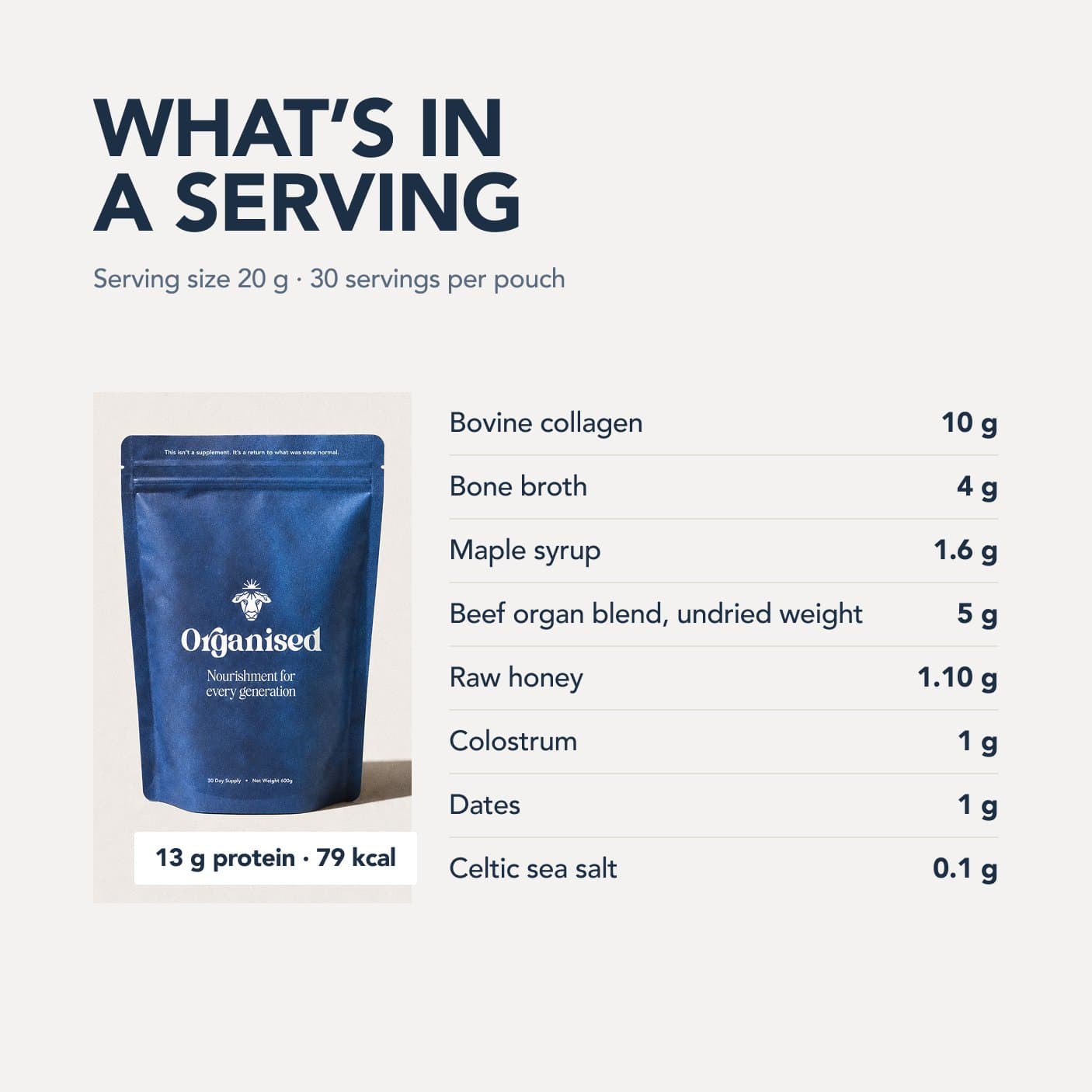
Eight real ingredients built around grass-fed beef organs, collagen and colostrum. Nothing synthetic added.
Free with your first order, worth £38. Plus £10 off the pouch with a subscription.
Free UK shipping · Made in England · 100 day money back guarantee on your first pouch · Skip, pause or cancel anytime
Supplementation is secondary to food
Many people with thyroid problems take L-thyroxine (synthetic T4 replacement). Thyroid replacement can be necessary and appropriate. But if it's not working well, if you're still exhausted despite "normal" TSH, the issue is usually not the medication. It's that your body can't convert or utilise it properly.
That's where nutrition comes in. If you're on thyroid medication and still feel symptomatic, address the nutrients first. Add organ meats, seafood, and whole foods rich in the cofactors for thyroid function. Often, people find their medication becomes more effective once their nutrient status is restored. Some eventually need less medication. Others find their symptoms resolve where medication alone failed.
The bottom line
Thyroid disease is often thyroid nutrient deficiency wearing a thyroid label. You can take all the thyroid medication in the world, but if your body can't convert it, can't transport it, or can't make it in the first place, you'll feel sick. Eat organ meats. Eat seafood. Eat real food. Give your thyroid the raw materials it needs, and it will serve you well.
References
Every source below was checked on 27 August 2026. Each PubMed, PMC and DOI identifier was resolved against NCBI or Crossref, and what it opens is printed under the citation, so you can see the link goes where the citation says without leaving the page. Where a citation and its identifier disagreed, the citation was corrected to the record or the reference was deleted along with the sentence marker that pointed at it, and where the resolved paper turned out not to support the sentence, the sentence was cut back to what it does support. Borrowed authority is worse than none, because it looks like rigour.
- National Institutes of Health, Office of Dietary Supplements. Iodine - Health Professional Fact Sheet. https://ods.od.nih.gov/factsheets/Iodine-HealthProfessional/ [accessed May 2026].
- National Institutes of Health, Office of Dietary Supplements. Selenium - Health Professional Fact Sheet. https://ods.od.nih.gov/factsheets/Selenium-HealthProfessional/ [accessed May 2026].
- Severo JS, Morais JBS, de Freitas TEC, et al. The Role of Zinc in Thyroid Hormones Metabolism. Int J Vitam Nutr Res. https://pubmed.ncbi.nlm.nih.gov/30982439/ [accessed May 2026].Checked 27 August 2026: PMID 30982439 opens Severo JS, Morais JBS, de Freitas TEC et al, The Role of Zinc in Thyroid Hormones Metabolism. Int J Vitam Nutr Res 2019;89(1-2):80-88.
- Soppi E. Iron Deficiency Without Anemia - Common, Important, Neglected. https://pmc.ncbi.nlm.nih.gov/articles/PMC6014073/ [accessed May 2026].Checked 27 August 2026: PMC6014073 opens Isa M, Sugiyanto FX, Susilowati I, Community resilience to floods in the coastal zone for disaster risk reduction. Jamba 2018;10(1):356. PubMed indexes it as: Review.The authors' own declaration, from the record: The authors declare that they have no financial or personal relationships that may have inappropriately influenced them in writing this article.
- National Institutes of Health, Office of Dietary Supplements. Copper - Health Professional Fact Sheet. https://ods.od.nih.gov/factsheets/Copper-HealthProfessional/ [accessed May 2026].
- NHS. Underactive thyroid (hypothyroidism). https://www.nhs.uk/conditions/underactive-thyroid-hypothyroidism/ [accessed May 2026].
Who wrote and reviewed this guide
Niall Kiddle
Author · Founder, Organised
Niall is the founder of Organised. He started the company in 2024 after fixing his own health the slow way: in 2022 he swapped a cupboard of synthetic supplements for real food, raw milk, organ meats, bone broth and honey, and felt the difference within months.
Areas of expertise: Ancestral nutrition, Organ meats, Whole-food supplementation, Gut health, Regenerative sourcing
Read Niall's full profile
Pedro Rodrigues
Reviewer · Agronomist (farming and sourcing only)
Pedro is the agronomist Organised works with on farming and sourcing. His job on the guides is to keep the science honest: he reviews what we publish about soil health, regenerative agriculture, grazing and the way food is actually produced.
Areas of expertise: Regenerative agriculture, Agronomy, Soil health, Grass-fed farming, Food sourcing
Reviewed this guide on
Read Pedro's full profileMore on hormones
View all- Hormonal Health Starts in the Kitchen: A Whole Food Guide
- Perimenopause Nutrition: What Changes and What to Eat
- Coming Off the Pill? How to Support Your Body's Transition
- Cortisol, Stress and Nutrition: Breaking the Cycle
- Eating for Each Phase of Your Menstrual Cycle
- How Blood Sugar Instability Wrecks Your Hormones
- How Liver Supports Oestrogen Detoxification
- How Seed Oils Disrupt Your Hormones
- Insulin Resistance: The Silent Metabolic Crisis
- Is Polyester Bad For Hormones? Your Guide To Hormone Safe Clothing
- PCOS and Nutrition: A Whole Food Approach
- Testosterone and Nutrition: What Men Need to Know
Browse the guides library
All guidesKeep reading

Health goals
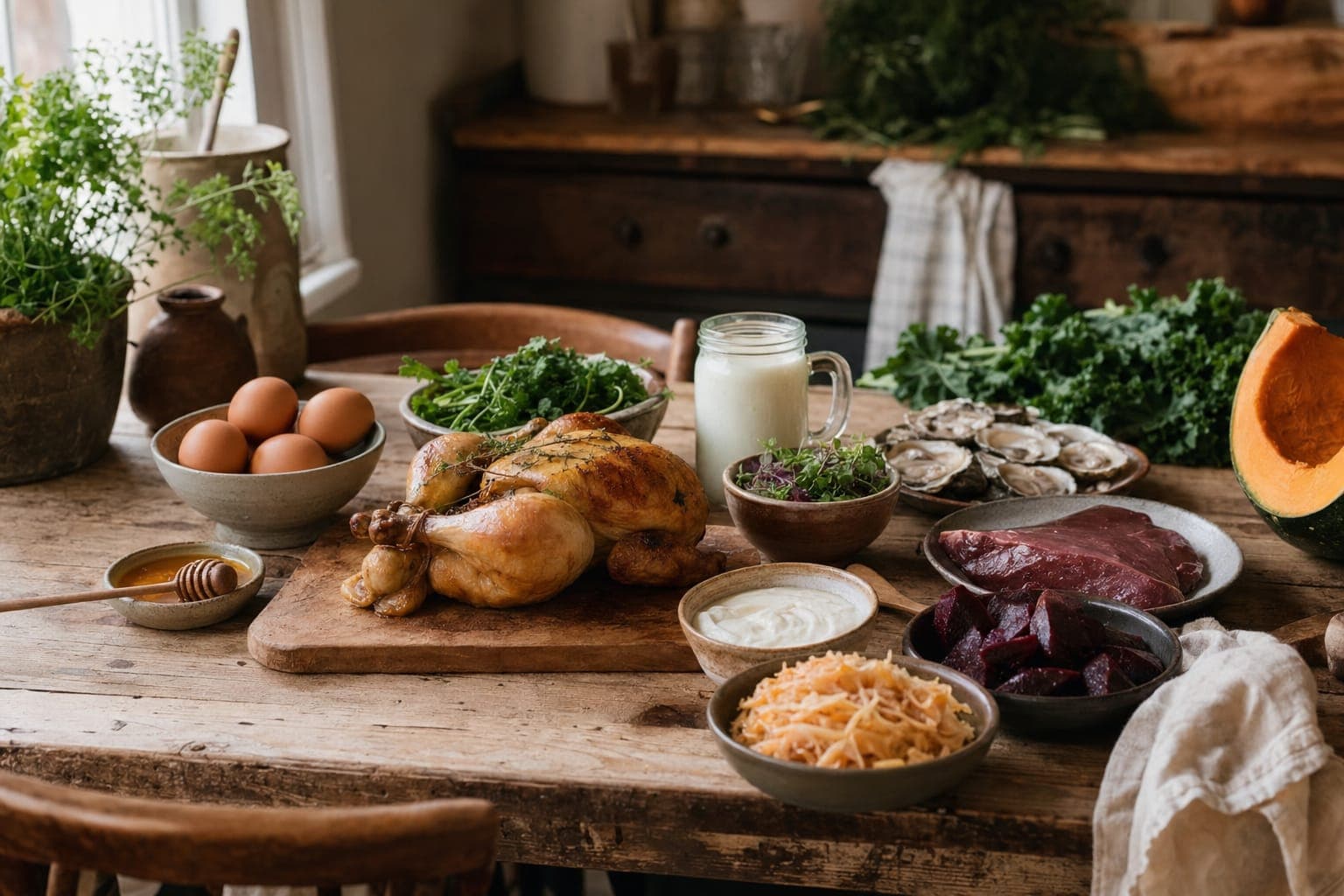
How Your Thyroid Affects Your Energy Levels
Learn how your thyroid drives every cell's energy output and how the right nutrition can help tackle fatigue at its source, so you feel steadier all day.
Health goals
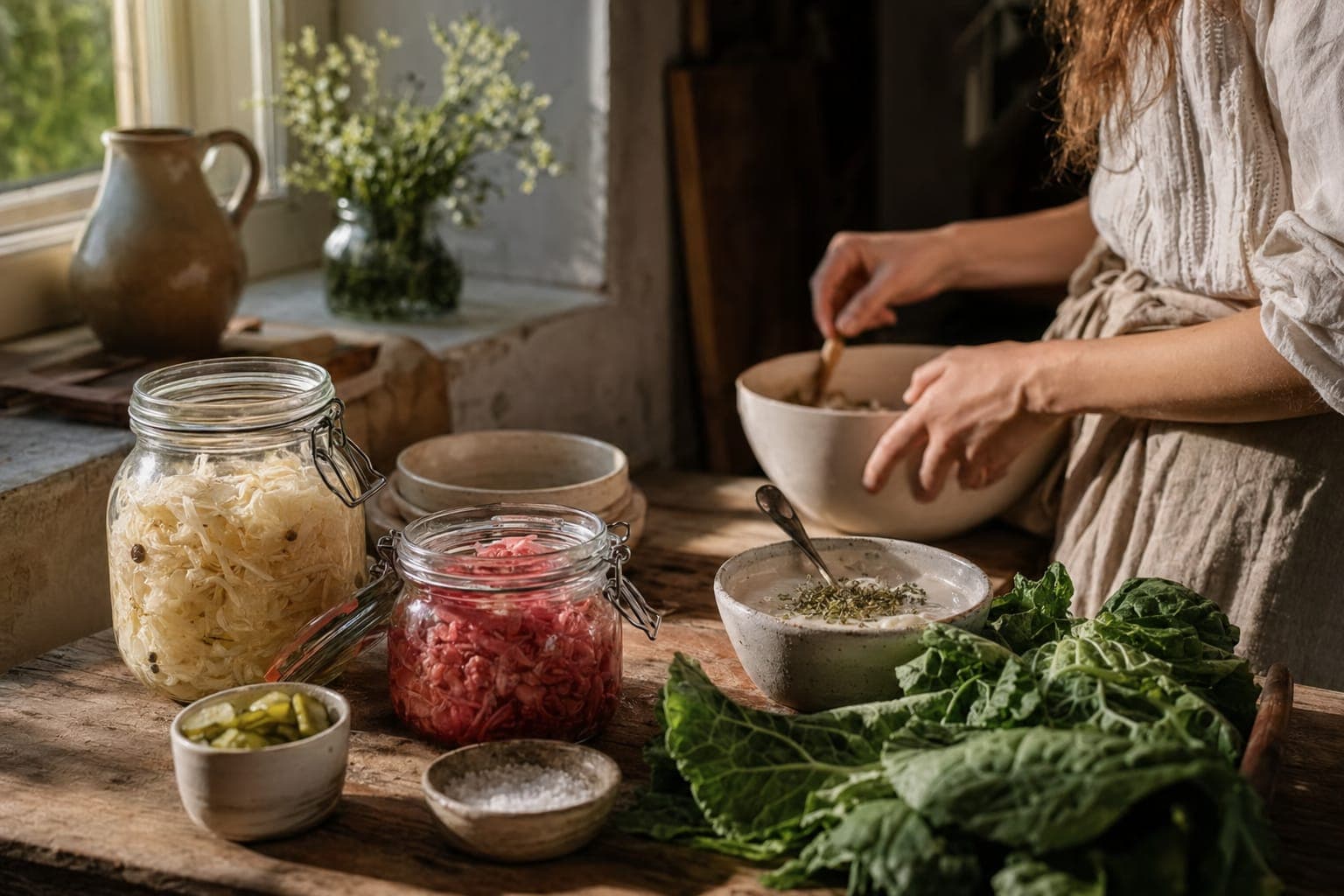
Building Immune Resilience with Whole Food Nutrition
Build lasting immune resilience through whole food nutrition. We explain how vitamin A, zinc, colostrum and gut health work together to support your defences.
Health goals
Rosacea and Gut Health: Is There a Connection?
Explore the link between rosacea and gut health, what current research suggests about the connection, and the nutrition steps that may help calm your skin.
Real food, made effortless
Start my daily blendA few ways to use it
All recipes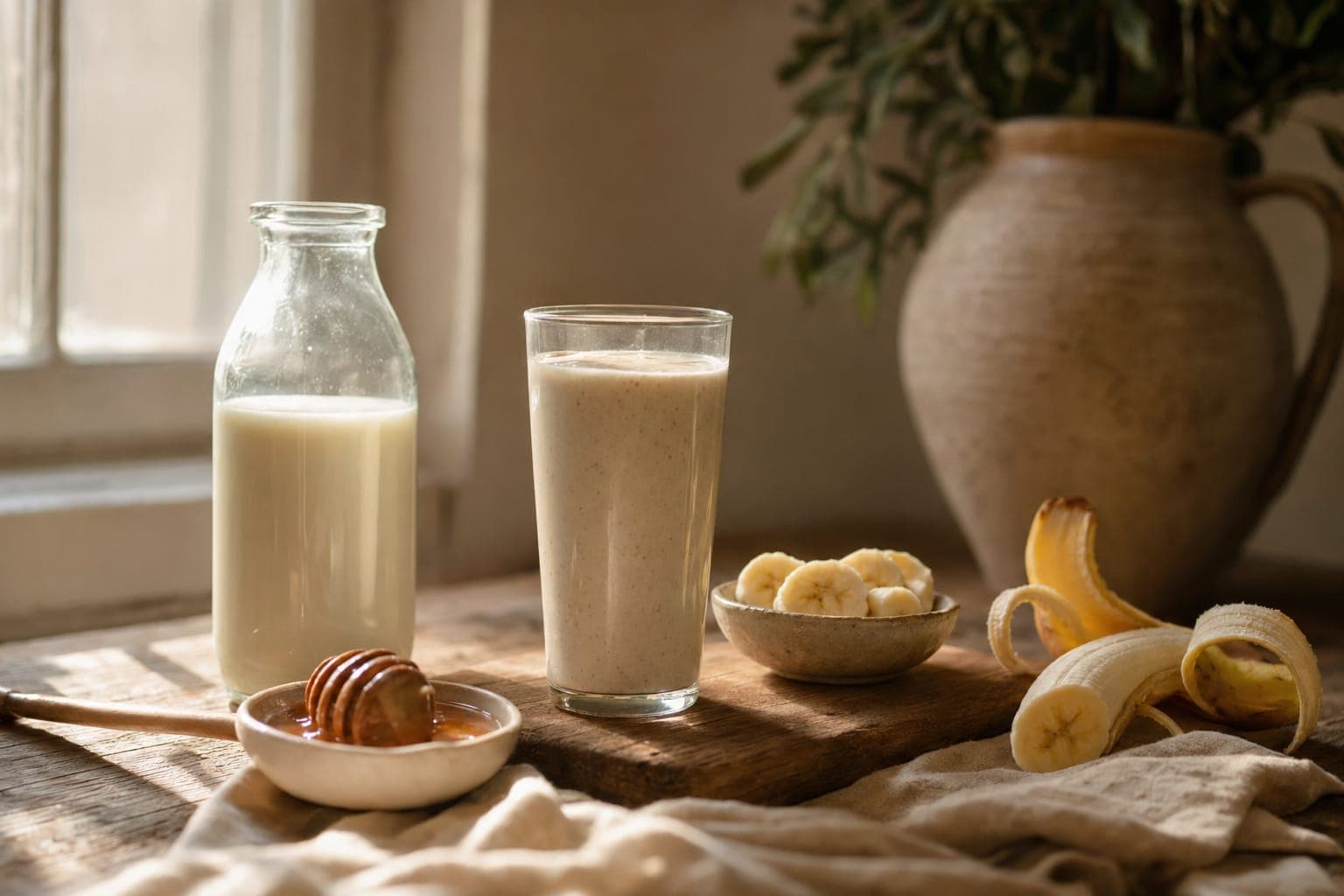
The Perfect Organised Morning Shake: Our Favourite Recipe
Our signature morning shake: Organised, raw milk, banana, honey. Simple, nourishing, and optimised for an empty stomach.
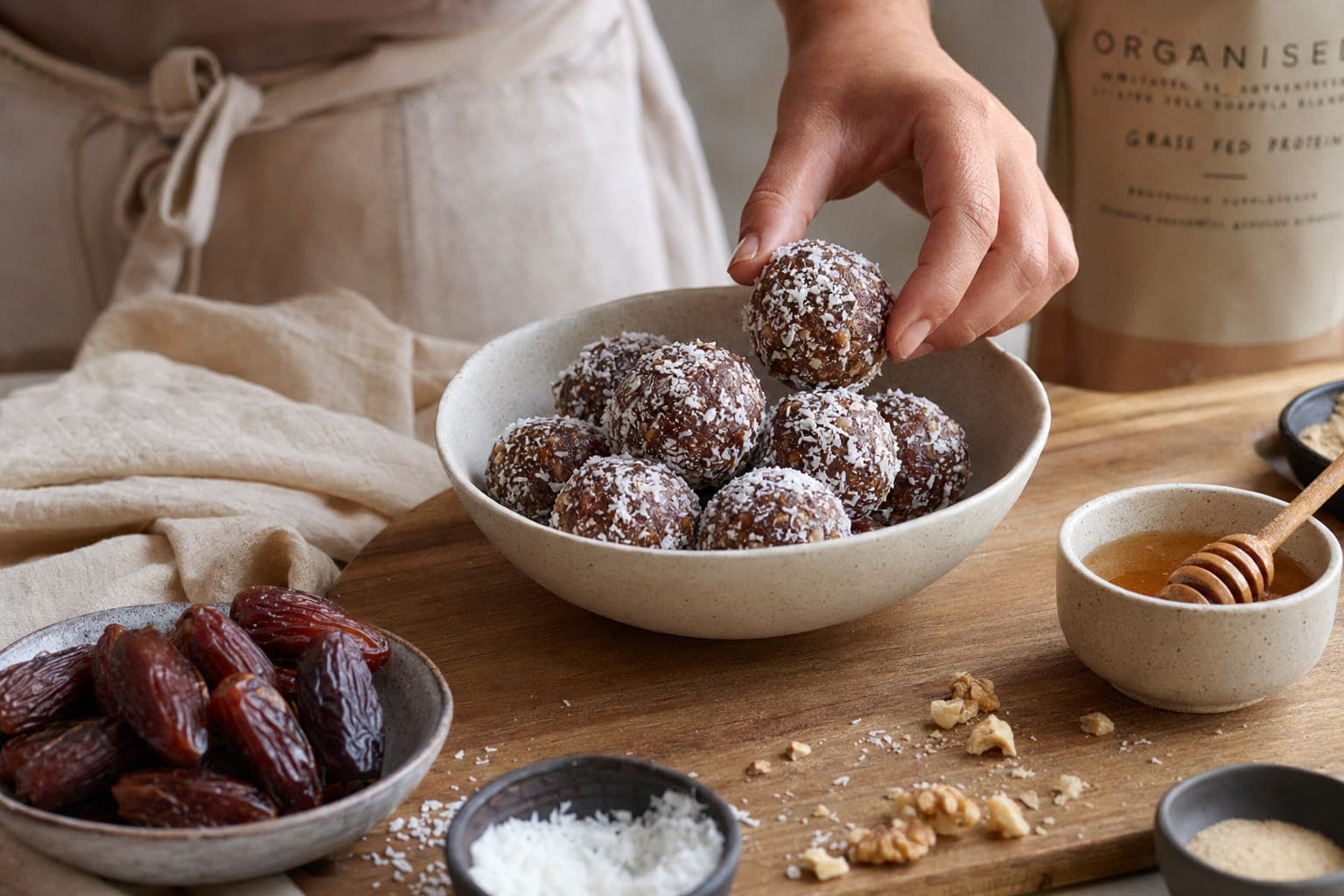
Energy Balls with Organised, Dates and Raw Honey
Make no-bake energy balls with Organised, dates, and raw honey. Perfect lunch box, pre-workout, or on-the-go snack. Simple recipe.
Gut-Healing Marshmallows with Collagen and Raw Honey
Learn to make gut-healing marshmallows with collagen and raw honey. A shareable treat that sneaks nutrition into every bite. Easy recipe with video tips.


 Join over 100,000+ members
Build a better food system with us
The Organised community is thousands of people choosing real food and backing the farmers who grow it, all of us trying to leave the world a little better than we found it. If that is what you care about too, you belong here.