Traditional Fertility Foods from Around the World
Every culture that survived centuries of human reproduction did so because they recognised which foods actually supported fertility. These weren't accidents. They were carefully observed, passed down through generations, and they worked.
By Niall Kiddle, Founder, Organised

Reviewed by Pedro Rodrigues, Agronomist (farming and sourcing only) ·
6 min read · Published · Updated · 6 cited sources
Makers of the Organised Daily blend, a grass-fed beef organ supplement from regenerative UK farms
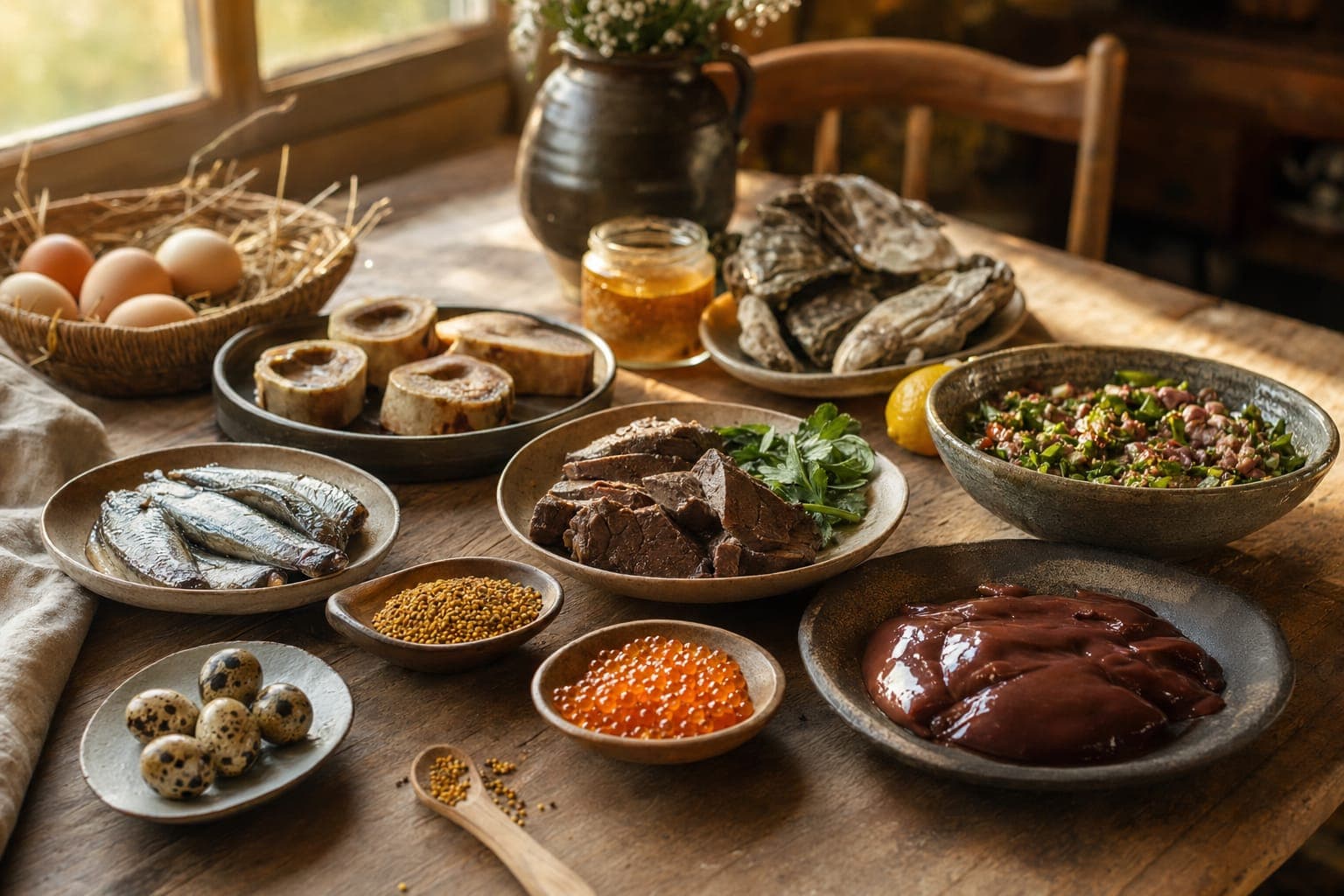
Modern nutritional science is now catching up to what traditional cultures already knew. The foods most revered for fertility across vastly different regions share a striking pattern: they're all extraordinarily nutrient-dense, specifically rich in the micronutrients required for reproductive health.
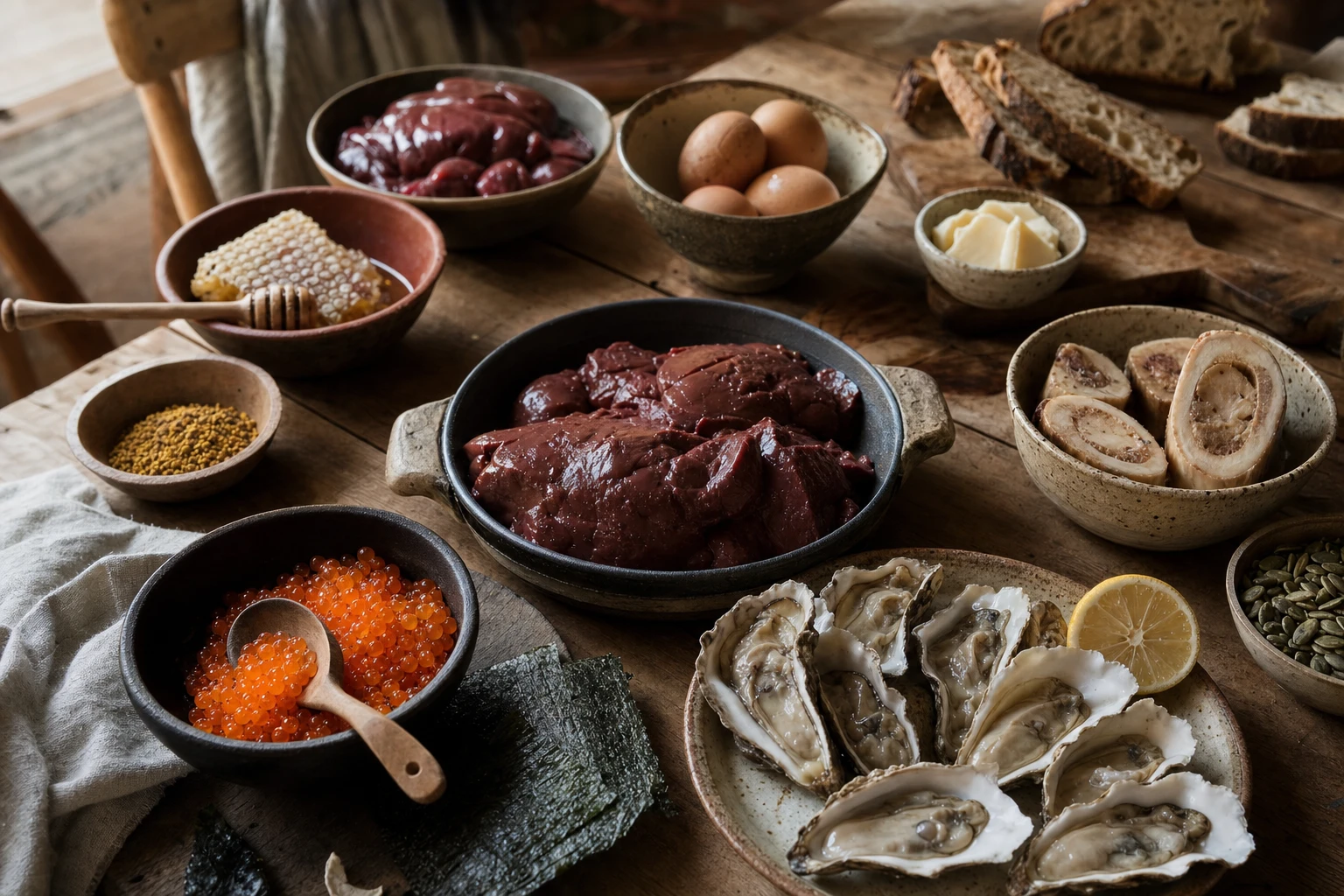
What traditional cultures understood
In every region where humans thrived, fertility was sacred. It meant survival of the community. So the foods that supported it became sacred too.
There's no written instruction manual that says "eat this for fertility". Instead, traditional cultures observed. A woman eating a particular food became pregnant. Her daughter ate the same food and also thrived. Within a few generations, that food became woven into the culture as the fertility food.
The genius of this is that these cultures didn't need to know the mechanism. They didn't need to understand micronutrients or hormone signalling. They just needed to observe the pattern and pass it on.
The foods most cultures chose for fertility are identical to the foods modern reproductive endocrinologists would recommend based on blood work and research.
This isn't coincidence. It's evidence that ancestral wisdom has nutritional teeth.
Fish eggs in Japanese tradition
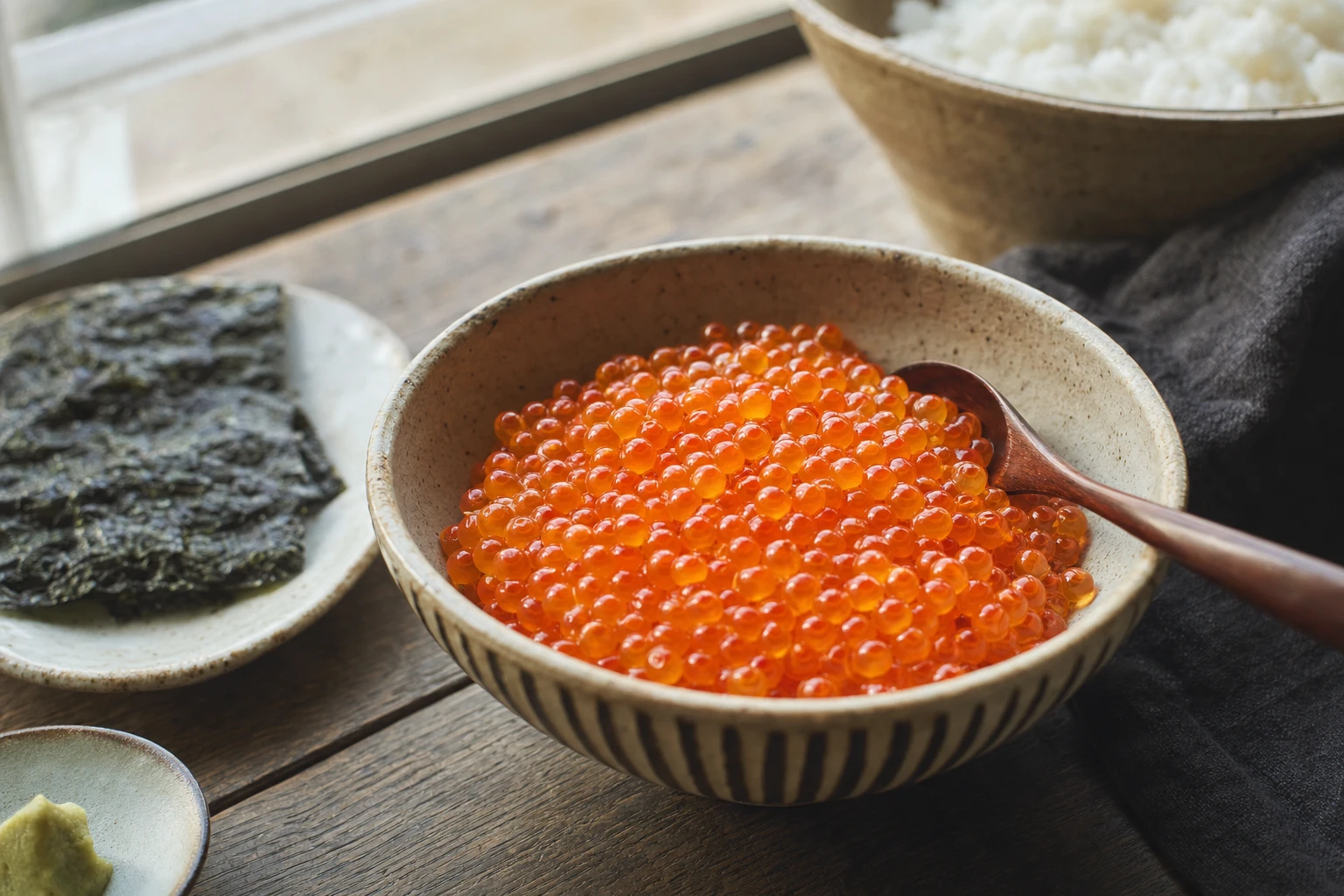
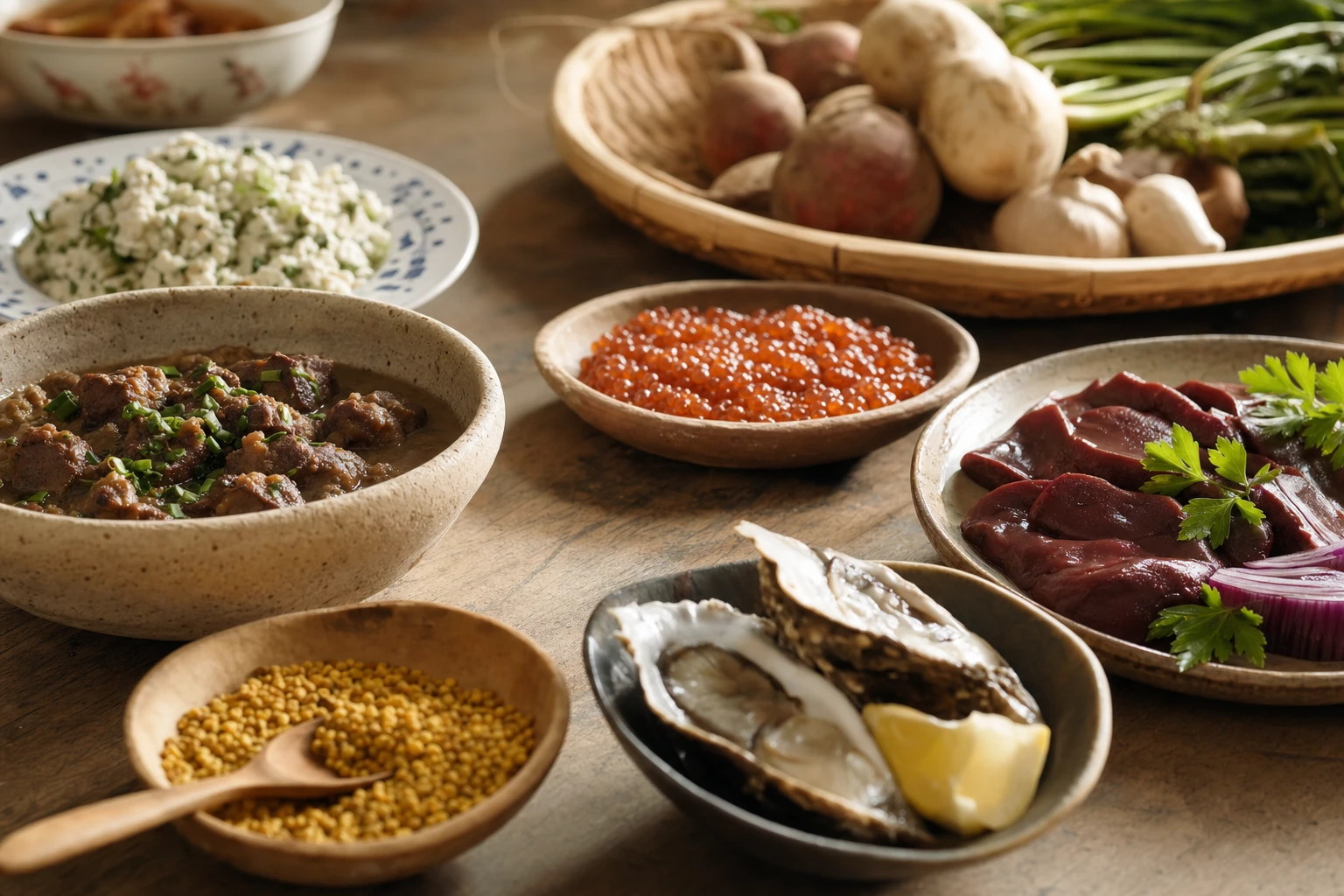
In Japan, fish eggs, or ikura, held a specific place in fertility traditions. They were eaten by women of reproductive age, particularly those hoping to conceive.
The nutrient profile explains why. Fish eggs are extraordinarily rich in omega-3 fatty acids, the long-chain EPA and DHA forms that directly support follicle development and hormone production. They're also rich in choline, critical for fetal neural development.12
But what's less obvious is the vitamin D content. Salmon roe, in particular, is one of the few animal foods providing significant vitamin D, the hormone-like compound essential for regulating calcium, bone health, and fertility signalling.
Japanese women eating fish eggs weren't just eating protein. They were consuming a perfect storm of nutrients that directly support ovulation, egg quality, and early pregnancy.
Organ meats across Africa
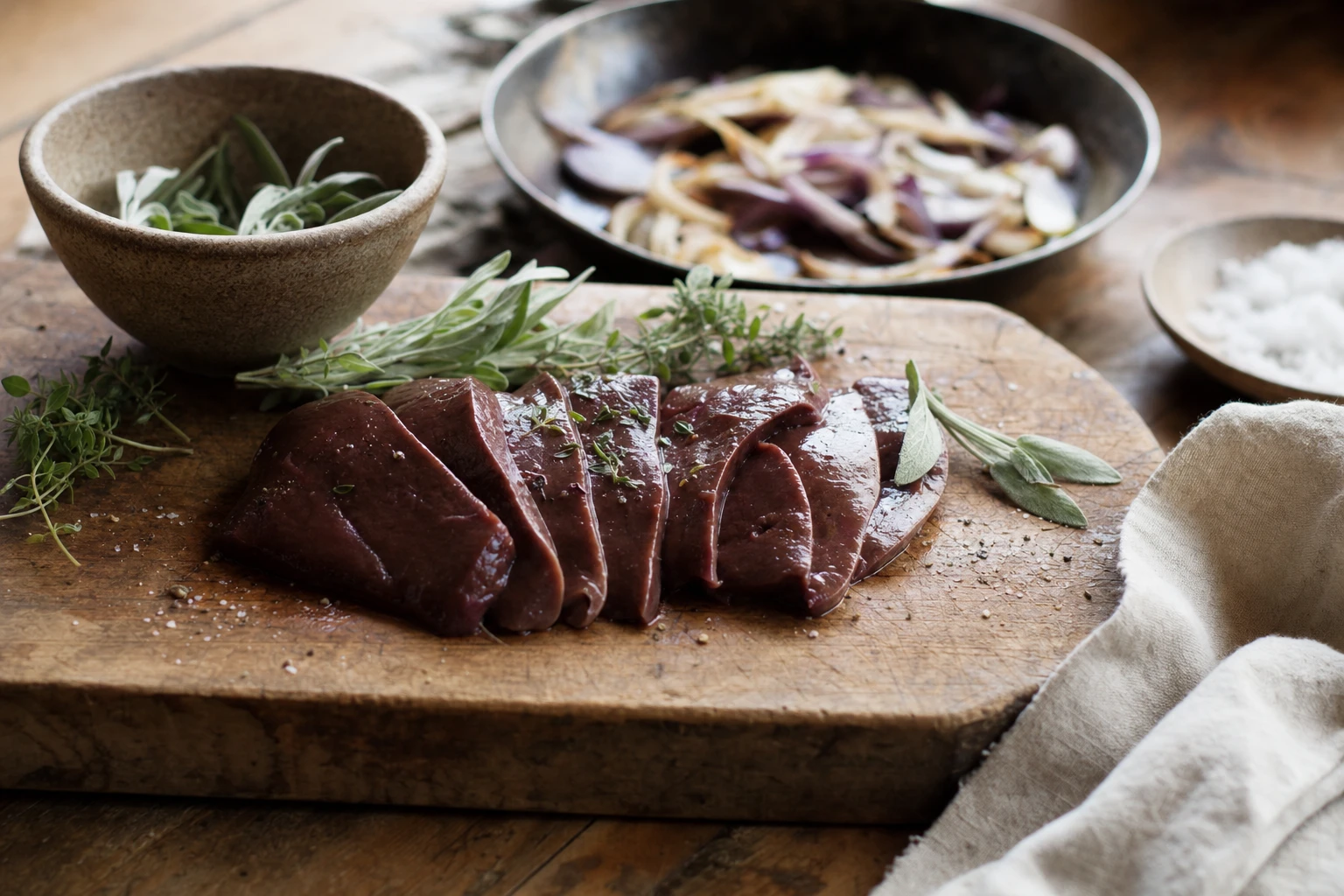
Across African cultures, organ meats were revered. Liver especially. Not as occasional consumption, but as deliberate nutrition for women of reproductive age.
Liver is perhaps the single most nutrient-dense food on the planet. It's packed with iron, the oxygen-carrying mineral essential for preventing anemia, which is devastatingly common in women and profoundly compromises fertility.3 It's rich in B vitamins, particularly folate, the precursor to folic acid that prevents neural tube defects.4
But the nutrient that makes liver a fertility superfood is its density of fat-soluble vitamins. Liver contains vitamin A in a form your body can use immediately, without conversion.5 Vitamin A is absolutely critical for follicle development. Deficiency is linked to poor ovulation. Excess supplementation can be toxic, but dietary vitamin A from liver is self-regulating.
An ounce of liver contains more bioavailable iron, folate, and vitamin A than most people consume in a week.
Other organs held specific roles too. Kidney, rich in CoQ10, the mitochondrial nutrient that supports egg quality. Heart, rich in taurine and carnitine, supporting cellular energy. The parts we now discard were treated as the most valuable.
Liver in Russian wellness
In Russia, particularly in older generations, liver was part of the wellness toolkit. It was eaten by women who were trying to conceive, by women during pregnancy, by women postpartum recovering from blood loss.
The Russian understanding was less about "fertility food" and more about blood and vitality. Liver builds blood. Blood carries oxygen. Oxygen supports everything.
This is elemental wisdom, but it's accurate. Anaemia and poor iron status are silent saboteurs of fertility. A woman might look healthy, feel mostly fine, and still be running on insufficient iron. Her energy crashes. Her period becomes heavier. Her fertility declines.
Liver, eaten regularly, prevents this. It rebuilds iron stores without the side effects of supplementation. It provides the cofactors your body needs to absorb and utilise that iron.
Bee pollen, globally
Across cultures as different as ancient Egypt, traditional Chinese medicine, and European folk wisdom, bee pollen held a place in fertility traditions.
Bee pollen is one of the few foods that contains all nine essential amino acids. It's rich in B vitamins, particularly B6, which is required for progesterone synthesis. It contains trace minerals including zinc and selenium, both critical for reproductive health.6
What's remarkable is that different cultures discovered this independently. There's no trade route that explains why both Egyptian and Chinese traditions revered bee pollen. They simply observed that it worked.
Bee pollen is a complete nutritional package in a single food. That's rare enough to be worth noticing.
Modern research confirms what these traditions knew: bee pollen supports energy, hormonal balance, and reproductive function. The mechanism appears to be both nutritional (the amino acids and minerals) and possibly hormonal signalling through compounds in the pollen itself.
Get health guides like this, free
Two short reads a week on eating for energy, gut health, skin, sleep and more.
By signing up you agree to receive emails from us. No spam, unsubscribe anytime.
The nutrient pattern behind them
Step back from the specific foods and look at the pattern.
The foods chosen for fertility across cultures share these characteristics: they're animal-based or animal-derived. They're micronutrient-dense. They're rich in fat-soluble vitamins, iron, and minerals. They're not processed. They're not diluted with grains or fillers.
What they're not: they're not vegetarian. They're not plant-based. They're not lean. They're not low-fat. Not a single traditional fertility food fits modern diet dogma.
This tells you something important. The nutrients required for fertility are found primarily in animal foods. That's not ideology. That's biochemistry.
- Vitamin A: Needed for follicle development. Highest in liver, egg yolks, fish oils. Plant forms (beta-carotene) convert poorly in many people.
- Iron: Needed for oxygen transport and mitochondrial function. Haem iron from red meat is absorbed far more readily than plant-based iron.
- B vitamins: Needed for methylation, hormone synthesis, energy production. Animal foods contain the active forms; plant foods contain precursors.
- Fat-soluble vitamins: Vitamins A, D, E, K2 are only available in animal foods or animal fats. They're not optional for fertility.
- Minerals: Zinc, selenium, iodine, chromium. Animal foods contain these in forms your body readily absorbs.
1 of 9
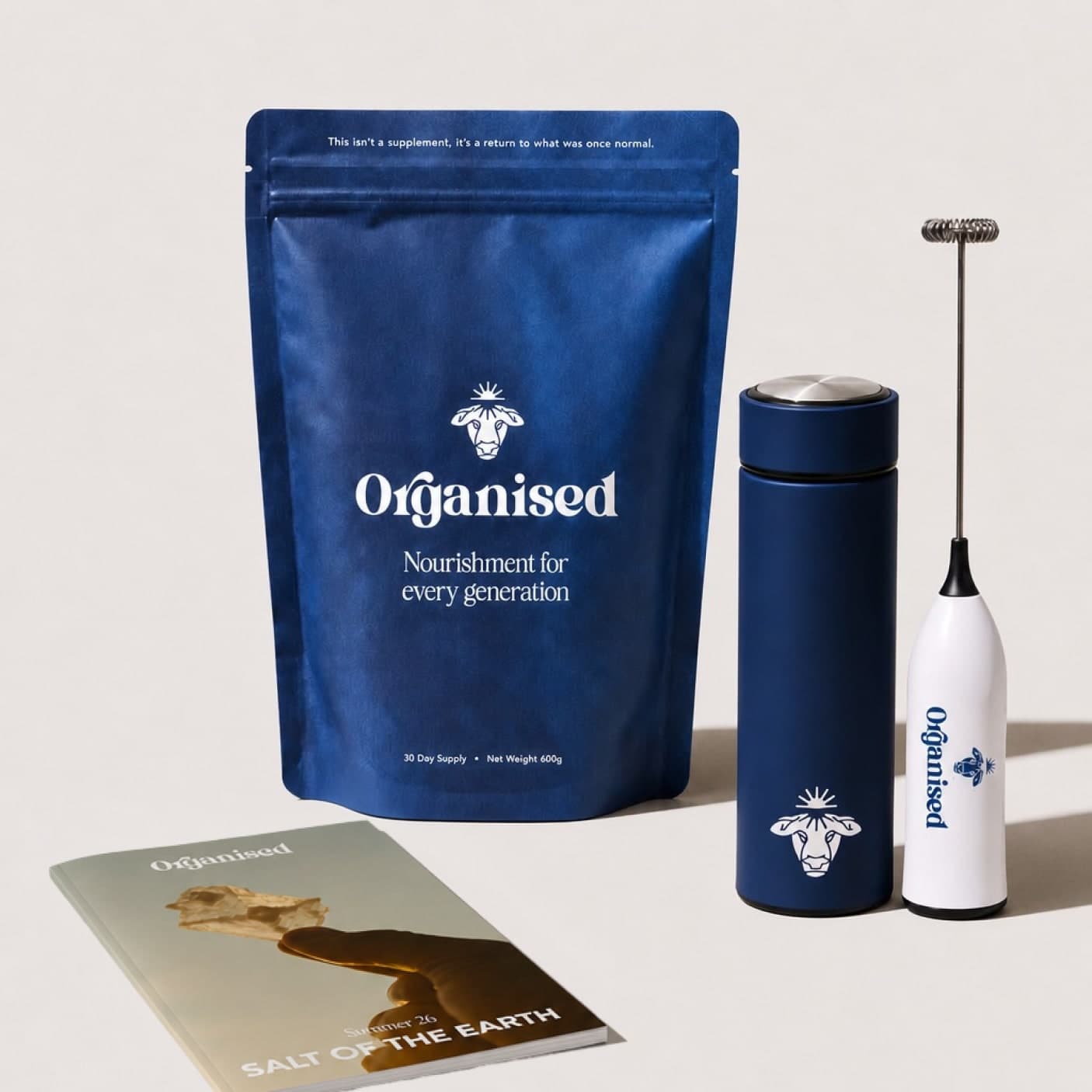
Daily blend
100,000+ thriving families4.9 on Trustpilot
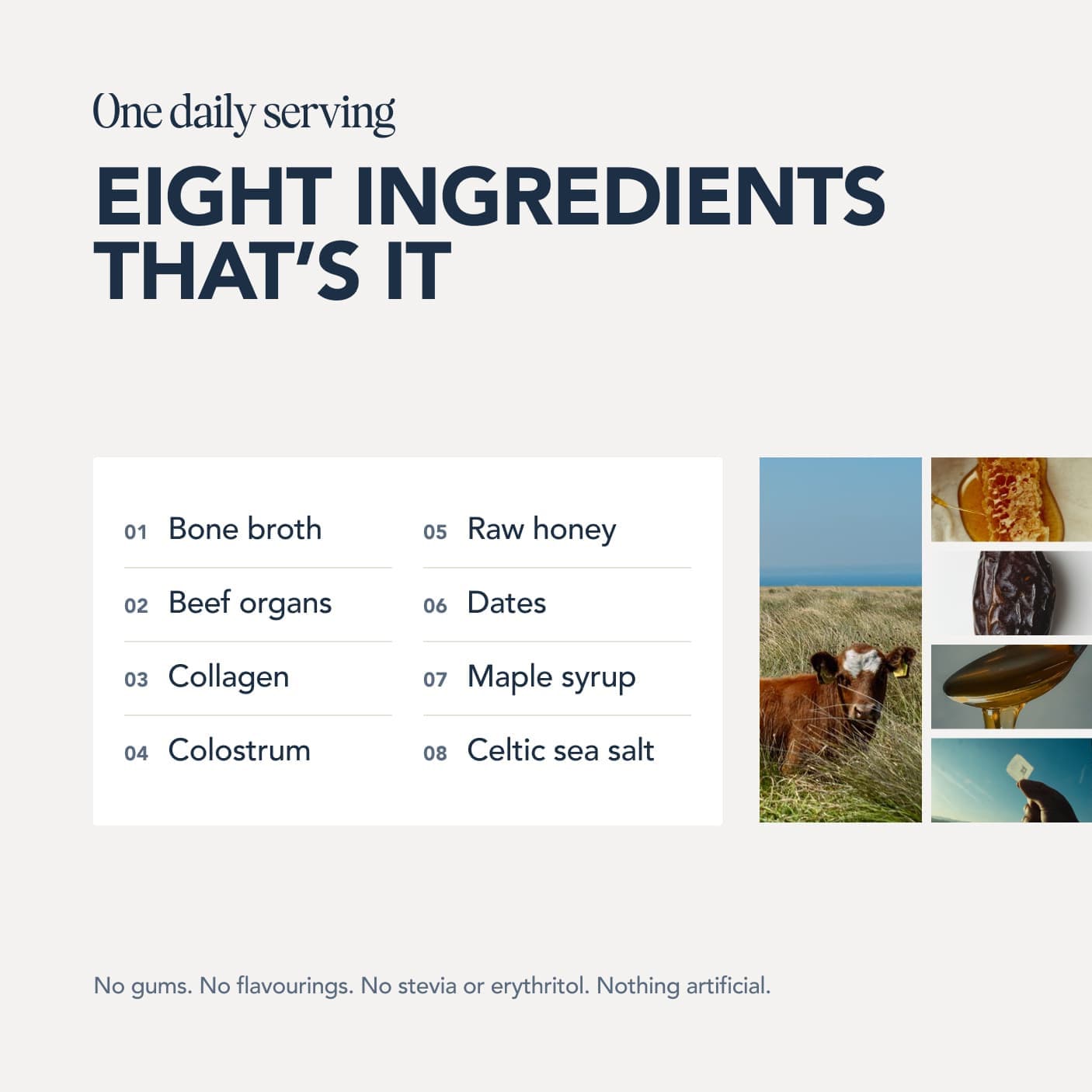
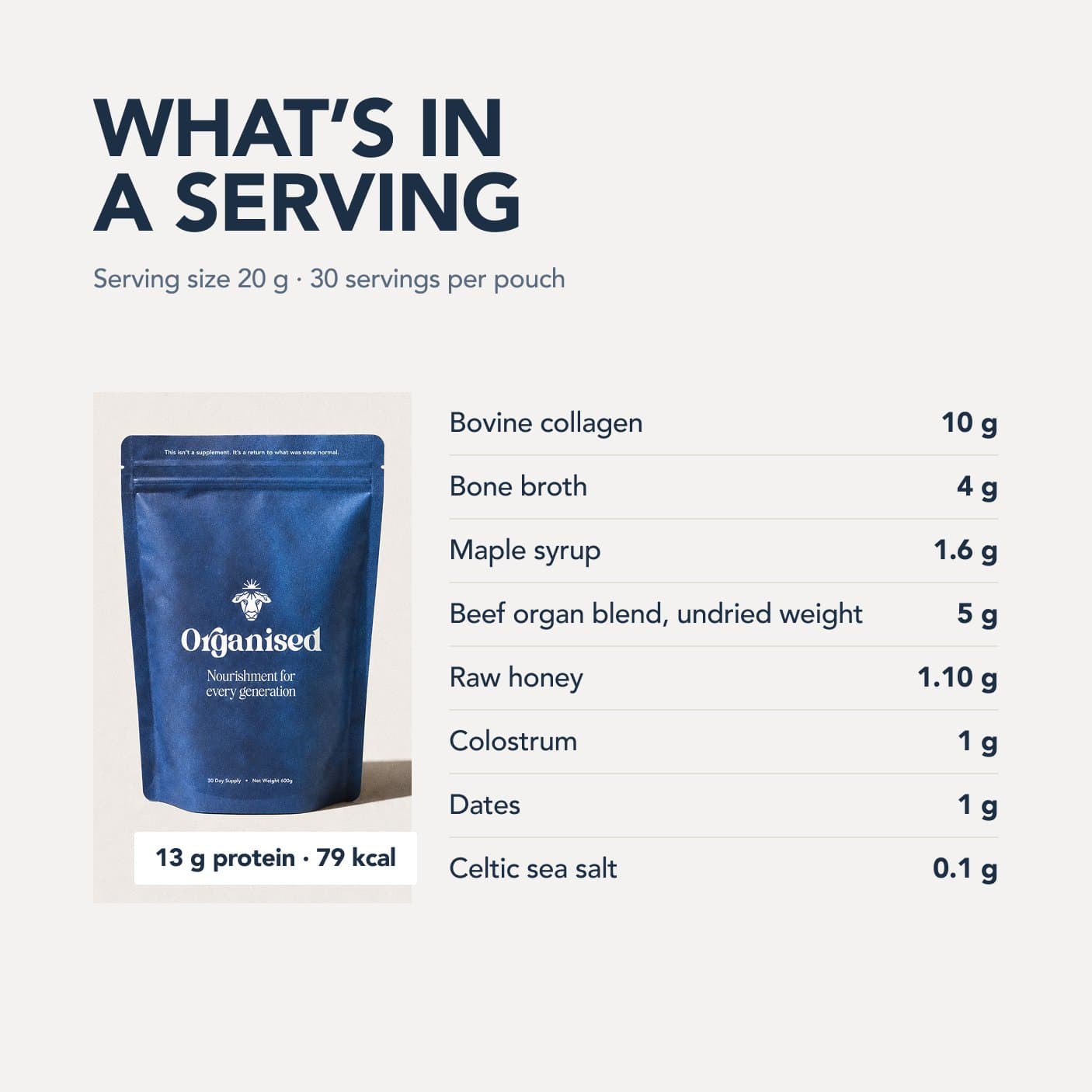
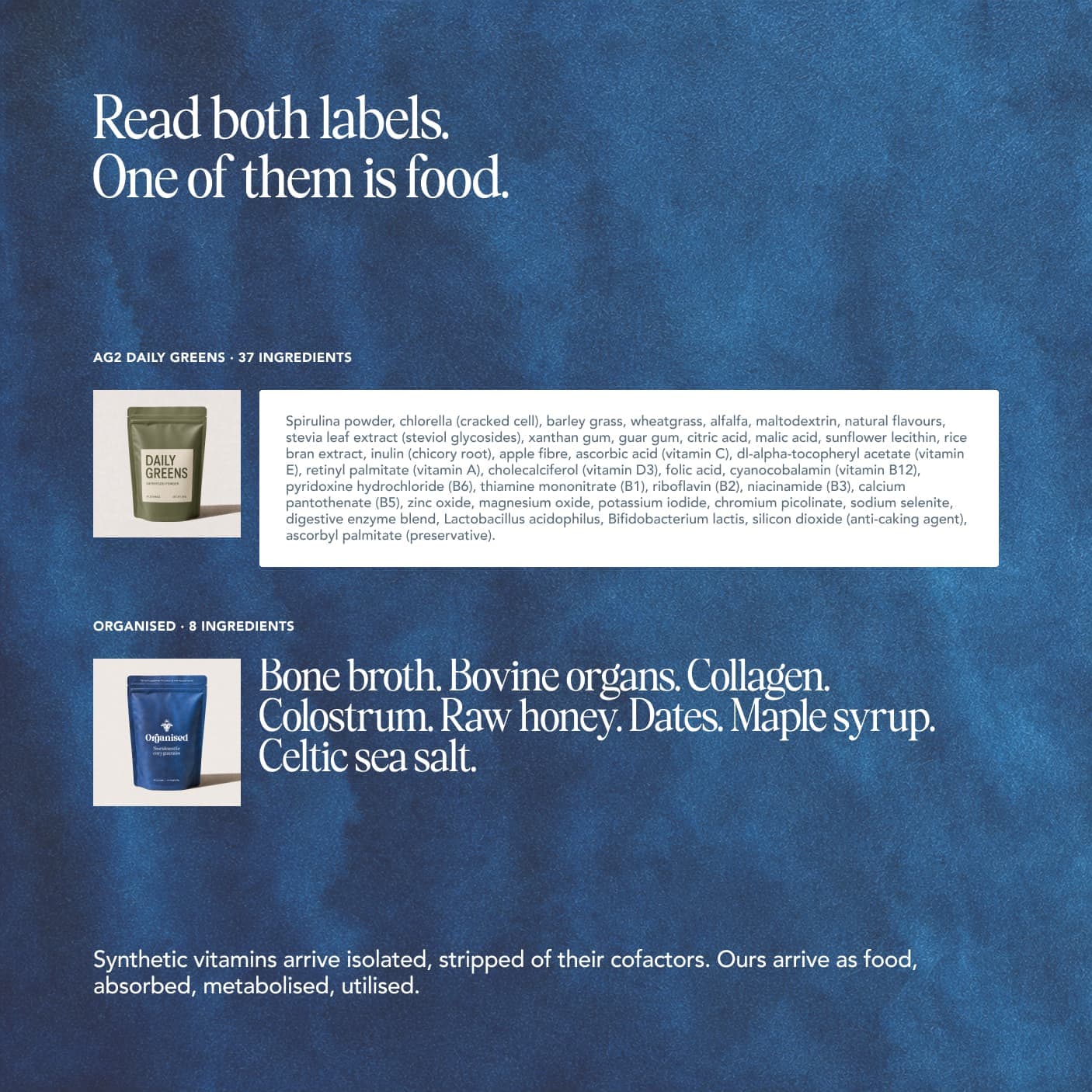
Eight real ingredients built around grass-fed beef organs, collagen and colostrum. Nothing synthetic added.
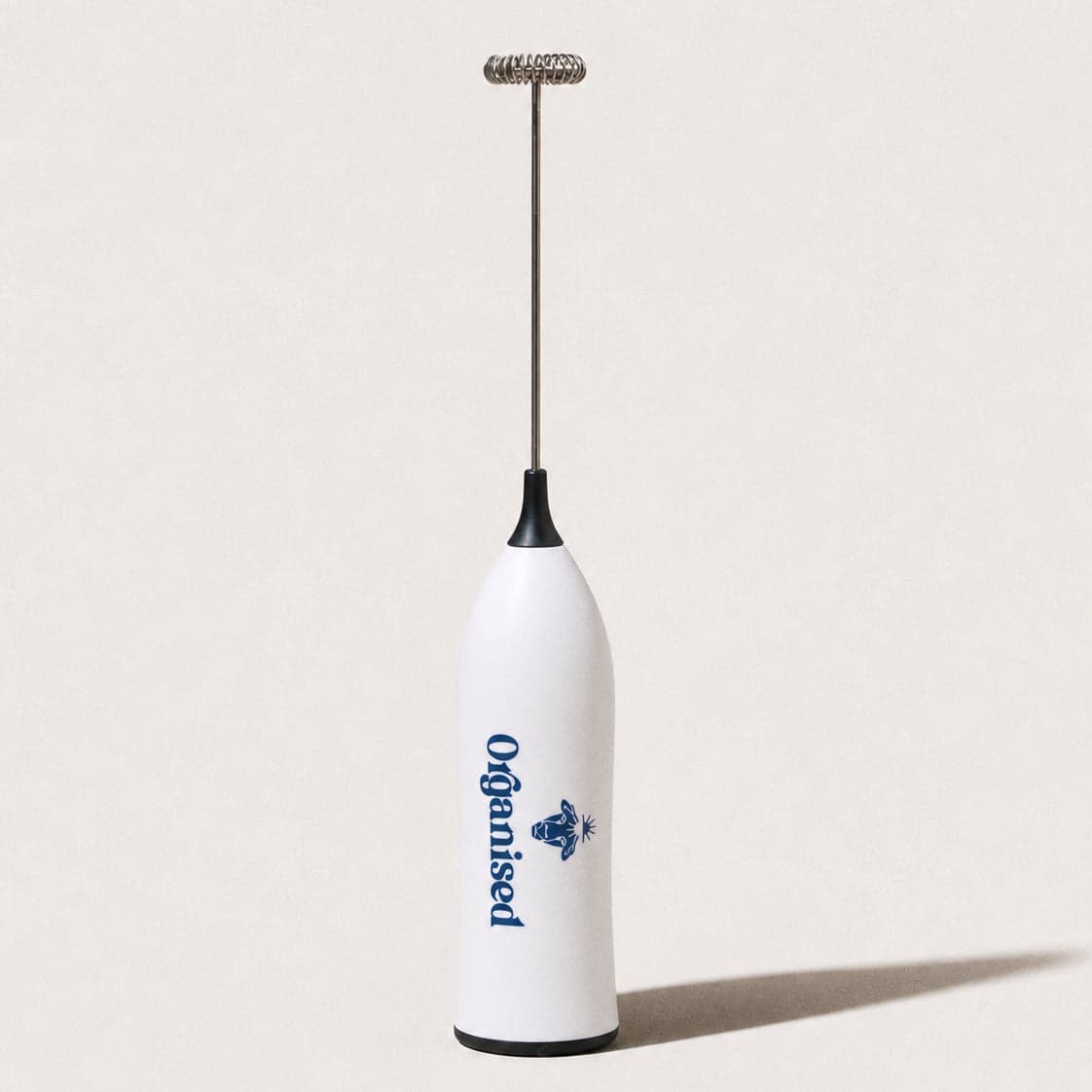
Free with your first order, worth £38. Plus £10 off the pouch with a subscription.
Free UK shipping · Made in England · 100 day money back guarantee on your first pouch · Skip, pause or cancel anytime
Bringing tradition into modern eating
You don't need to follow any single cultural tradition. But you can learn from the pattern.
If you're trying to conceive, or supporting someone who is, these foods are worth deliberately including:
- Liver: Once or twice per week. Beef liver, chicken liver, lamb liver. Fried in butter with onions if you find the flavour challenging.
- Other organs: Kidney, heart, tongue. Less frequently, but valuable.
- Fish eggs: Salmon roe, caviar, or other roe as you can source them. Even frozen is nutritionally valuable.
- Whole eggs: The yolk particularly, which contains choline, vitamin A, and selenium.
- Bee pollen: A small amount daily, around a teaspoon, if you can find it from a reputable local beekeeper.
- Full-fat dairy: Milk, cheese, butter from grass-fed cows. The fat carries the fat-soluble vitamins.
- Red meat: Particularly grass-fed. Rich in iron, carnitine, and CoQ10.
Fertility isn't just about calories or macronutrients. It's about the specific micronutrients that signal to your body that the environment is safe enough for reproduction.
Modern culture treats these foods as optional, exotic, or indulgent. Traditional cultures treated them as non-negotiable. There's a reason for that.
If you're eating the standard modern diet of lean chicken, low-fat everything, and carbohydrate-heavy meals, your body is receiving a signal of scarcity. Not enough fat. Not enough micronutrients. Not enough minerals. That signal suppresses fertility.
Adding these foods back in sends a different signal. Abundance. Safety. Nutrient density. Your hormones respond accordingly.
References
Every source below was checked on 27 August 2026. Each PubMed, PMC and DOI identifier was resolved against NCBI or Crossref, and what it opens is printed under the citation, so you can see the link goes where the citation says without leaving the page. Where a citation and its identifier disagreed, the citation was corrected to the record or the reference was deleted along with the sentence marker that pointed at it, and where the resolved paper turned out not to support the sentence, the sentence was cut back to what it does support. Borrowed authority is worse than none, because it looks like rigour.
- National Institutes of Health, Office of Dietary Supplements. Omega-3 Fatty Acids: Fact Sheet for Health Professionals.
- National Institutes of Health, Office of Dietary Supplements. Choline: Fact Sheet for Health Professionals.
- National Institutes of Health, Office of Dietary Supplements. Iron: Fact Sheet for Health Professionals.
- National Institutes of Health, Office of Dietary Supplements. Folate: Fact Sheet for Health Professionals.
- National Institutes of Health, Office of Dietary Supplements. Vitamin A and Carotenoids: Fact Sheet for Health Professionals.
- Khalifa SAM et al. Bee pollen: current status and therapeutic potential. Nutrients. 2021;13(6):1876.Checked 27 August 2026: PMC8230257 opens Khalifa SAM, Elashal MH, Yosri N et al, Bee Pollen: Current Status and Therapeutic Potential. Nutrients 2021;13(6). PubMed indexes it as: Review.The authors' own declaration, from the record: The authors declare no conflict of interest.
Who wrote and reviewed this guide
Niall Kiddle
Author · Founder, Organised
Niall is the founder of Organised. He started the company in 2024 after fixing his own health the slow way: in 2022 he swapped a cupboard of synthetic supplements for real food, raw milk, organ meats, bone broth and honey, and felt the difference within months.
Areas of expertise: Ancestral nutrition, Organ meats, Whole-food supplementation, Gut health, Regenerative sourcing
Read Niall's full profile
Pedro Rodrigues
Reviewer · Agronomist (farming and sourcing only)
Pedro is the agronomist Organised works with on farming and sourcing. His job on the guides is to keep the science honest: he reviews what we publish about soil health, regenerative agriculture, grazing and the way food is actually produced.
Areas of expertise: Regenerative agriculture, Agronomy, Soil health, Grass-fed farming, Food sourcing
Reviewed this guide on
Read Pedro's full profileMore on nutrition
View allBrowse the guides library
All guidesKeep reading
Health goals
The Fertility Diet: What to Eat When Trying to Conceive
A practical fertility diet guide on what to eat when trying to conceive, with the foods that support reproductive health for both partners. Start here.

Health goals
Protein Timing: Does It Really Matter?
Does protein timing really matter? We unpack the anabolic window myth and what research says about timing protein for muscle, so you can train smarter.
Health goals
Ageing Well: The Nutrients That Support Healthy Longevity
Ageing well requires specific nutrients: collagen, B12, magnesium, K2, glutathione. Here's where to find them and why they matter.
Real food, made effortless
Start my daily blendA few ways to use it
All recipes
10 Ways to Use Organised That Aren't Just a Shake
Move beyond the basic shake. Discover 10 creative ways to use Organised in smoothie bowls, oats, yoghurt, baking, and more.
5-Minute High-Protein Breakfasts Using Organised
Quick, high-protein breakfast ideas using Organised. Five recipes you can make in minutes with real food. No fussing around.
How to Make Your Own Gelatine Gummies
A simple recipe for homemade gelatine gummies using grass-fed gelatine, fresh juice, and raw honey. Better than shop-bought, kids love them.


 Join over 100,000+ members
Build a better food system with us
The Organised community is thousands of people choosing real food and backing the farmers who grow it, all of us trying to leave the world a little better than we found it. If that is what you care about too, you belong here.