Adrenal Fatigue and Salt Cravings: What Your Body Is Telling You
If you're craving salt, your body isn't being weak or irrational. It's signalling that your adrenals are exhausted and your sodium-potassium balance is compromised. Your body knows what it needs. The question is whether you'll listen.
By Niall Kiddle, Founder, Organised

Reviewed by Pedro Rodrigues, Agronomist (farming and sourcing only) ·
5 min read · Published · Updated · 3 cited sources
Makers of the Organised Daily blend, a grass-fed beef organ supplement from regenerative UK farms

We've been taught that salt cravings are a character flaw. They're not. They're information.
Why salt cravings happen
Your body maintains a delicate electrolyte balance. Sodium, potassium, magnesium, and calcium exist in precise ratios. When that balance is disrupted, your body generates cravings to pull you toward foods that will restore it.
If you're chronically under-eating salt, or if you're in a prolonged stress state that depletes minerals, your body will start signalling for salt. This isn't weakness. It's biology.
The problem is that most nutritional advice tells you to ignore this signal. "Eat less salt." "Sodium is bad for you." These messages are oversimplified and, in the context of adrenal exhaustion, actively harmful.
Aldosterone: the mineral-regulating hormone
Aldosterone is a hormone produced by your adrenal glands (the same glands that produce cortisol).1 Aldosterone's job is to regulate your sodium and potassium balance. When your blood sodium is low, aldosterone rises, telling your kidneys to conserve sodium and excrete potassium.1
When you're in a prolonged stress state, your adrenals are working overtime producing cortisol. This suppresses aldosterone production. The result: your body can't hold onto sodium properly. You start losing minerals through your urine and sweat.
Your body senses this loss and generates salt cravings. It's not a bug; it's a feature. Your body is trying to correct a real electrolyte imbalance.
Sodium and potassium: the cellular battery
Every cell in your body has a sodium-potassium pump. This pump maintains the electrical gradient that powers your nervous system, your muscles, and your heart.2 Sodium is outside the cell, potassium is inside, and that gradient is what creates nerve and muscle function.
When you're chronically deficient in either sodium or potassium, this pump starts to fail. Your nervous system becomes less efficient. Your muscles weaken. Your recovery slows. Your energy crashes.
Most modern nutrition tells you to reduce sodium. But if you're already deficient (which you likely are if you have salt cravings), further reducing sodium will worsen the problem. You're trying to run a battery that's already low.
Salt cravings are your body saying it needs sodium to maintain basic cellular function. Listen to your body.
Cortisol rhythm and circadian health
Your cortisol follows a circadian rhythm. It should be high in the morning (to wake you up) and low at night (to let you sleep).3 This rhythm is essential for health.
When you're in chronic stress, your cortisol rhythm flattens. It stays elevated all day and all night. This disrupts everything: your immune function, your sleep, your mineral balance, your metabolism.
One of the first casualties of a disrupted cortisol rhythm is your ability to regulate sodium and potassium. You start losing minerals continuously. You start craving salt because your body is actually deficient.
Adding adequate salt (from a quality source) can help restore your circadian rhythm by giving your body the minerals it needs to function. It's not the full solution (sleep, stress management, and movement matter too), but it's a critical piece.

Real salt vs table salt
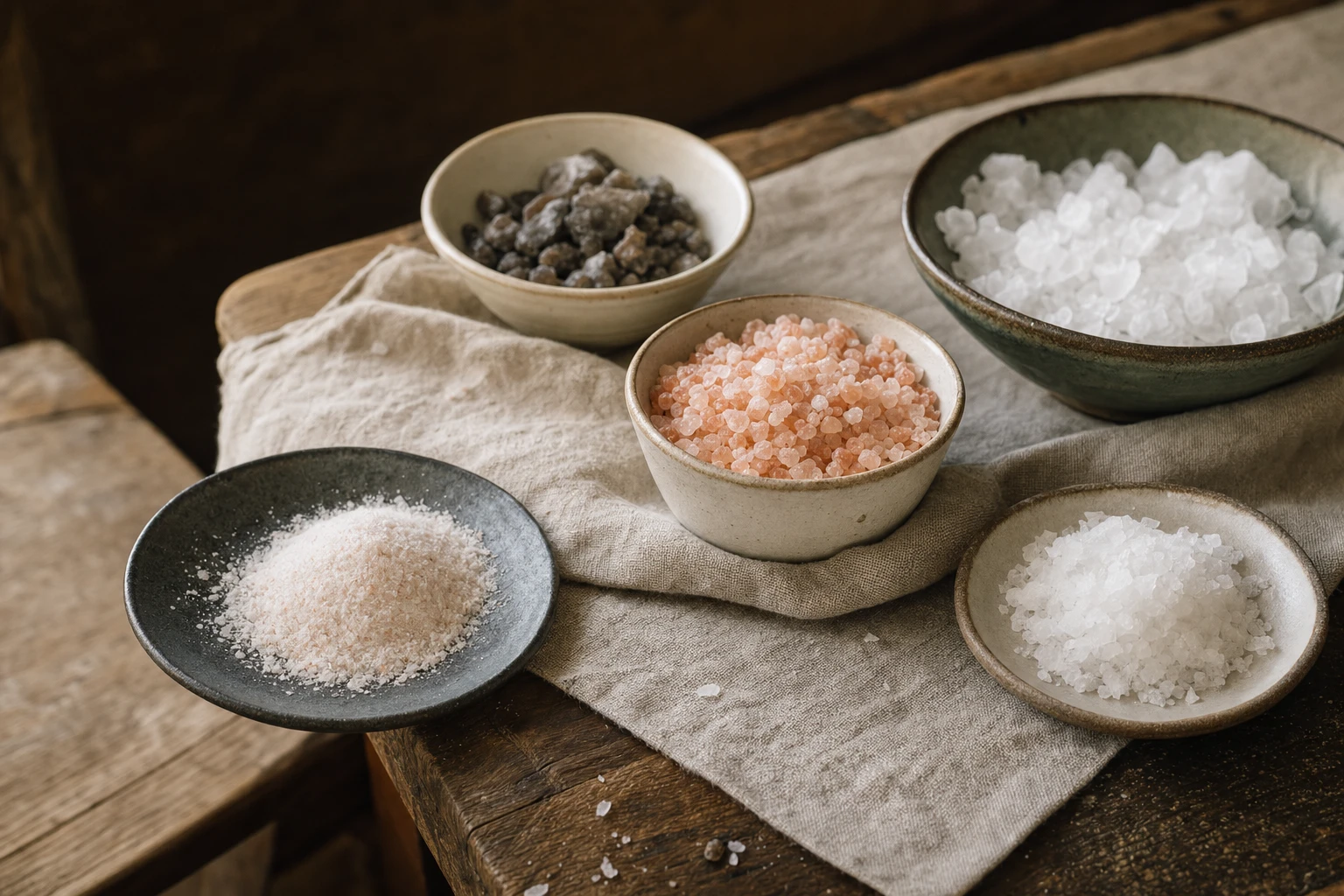
Not all salt is created equal. Table salt is sodium chloride plus anti-caking agents and often iodine. It's highly refined and stripped of other minerals.
Real salt (sea salt, Himalayan salt, Celtic salt) contains trace minerals alongside sodium: potassium, magnesium, calcium, and dozens of others. When you eat real salt, you're getting the mineral complex your body actually needs.
The difference matters. When you eat table salt, your body absorbs the sodium but has to work harder to maintain electrolyte balance. When you eat real salt with trace minerals, you're giving your body the full mineral profile it's asking for.
Get ingredient guides like this, free
Two short reads a week on the ingredients that matter and how to actually use them.
By signing up you agree to receive emails from us. No spam, unsubscribe anytime.
How to respond to salt cravings
Don't ignore them. Your body is communicating a real need. Salt cravings in the context of fatigue, poor recovery, or stress are a sign that you're genuinely deficient.
Use real salt. Switch from table salt to sea salt, Himalayan salt, or Celtic salt. These contain the trace minerals your body is signalling for.
Add salt to meals liberally. If you've been restricting salt, increase it. Your nervous system and your recovery will improve almost immediately.
Support circadian rhythm. Salt is part of the solution, but so is sleep, stress management, and light exposure. Address the cortisol rhythm dysfunction that's driving the mineral loss in the first place.
Balance with potassium. Don't just add salt; ensure you're getting adequate potassium too. Leafy greens, coconut water, and avocados are potassium-rich foods that pair well with adequate salt intake.
Salt is not the enemy. It's the signal that your body is under stress and needs electrolyte support to function.
Mineralocorticoid hormones and electrolytes
Your adrenal glands produce aldosterone, a hormone that regulates sodium and potassium balance. When your adrenals are exhausted, aldosterone production drops, causing sodium loss and mineral depletion. Your body craves salt because it genuinely needs it to survive.
Celtic sea salt vs refined table salt
Refined salt is just sodium chloride with anti-caking agents. Celtic sea salt contains trace minerals (magnesium, potassium, calcium) that your depleted adrenals need to recover. Using Celtic sea salt instead of refined salt directly supports adrenal recovery.
1 of 9
Daily blend
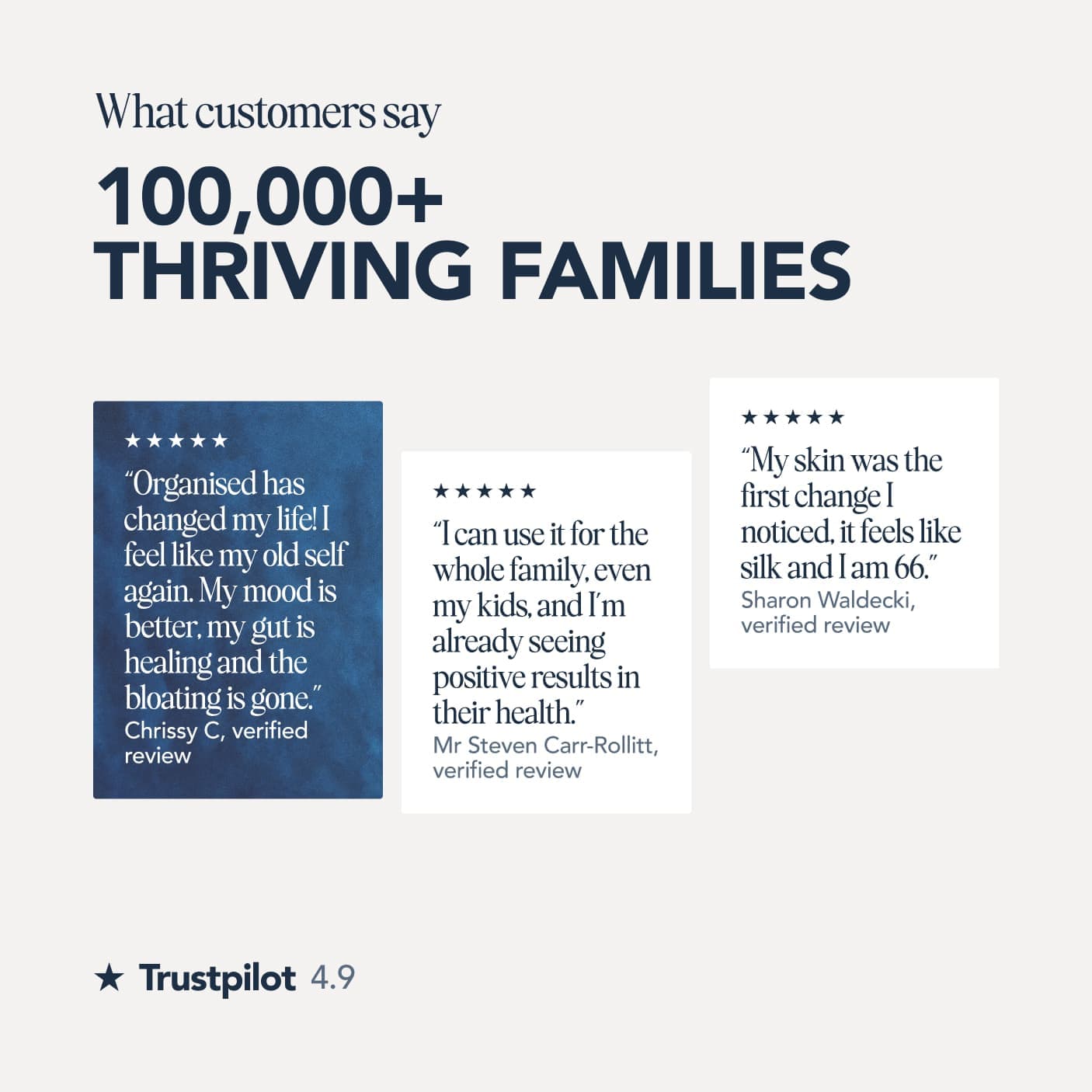
100,000+ thriving families4.9 on Trustpilot
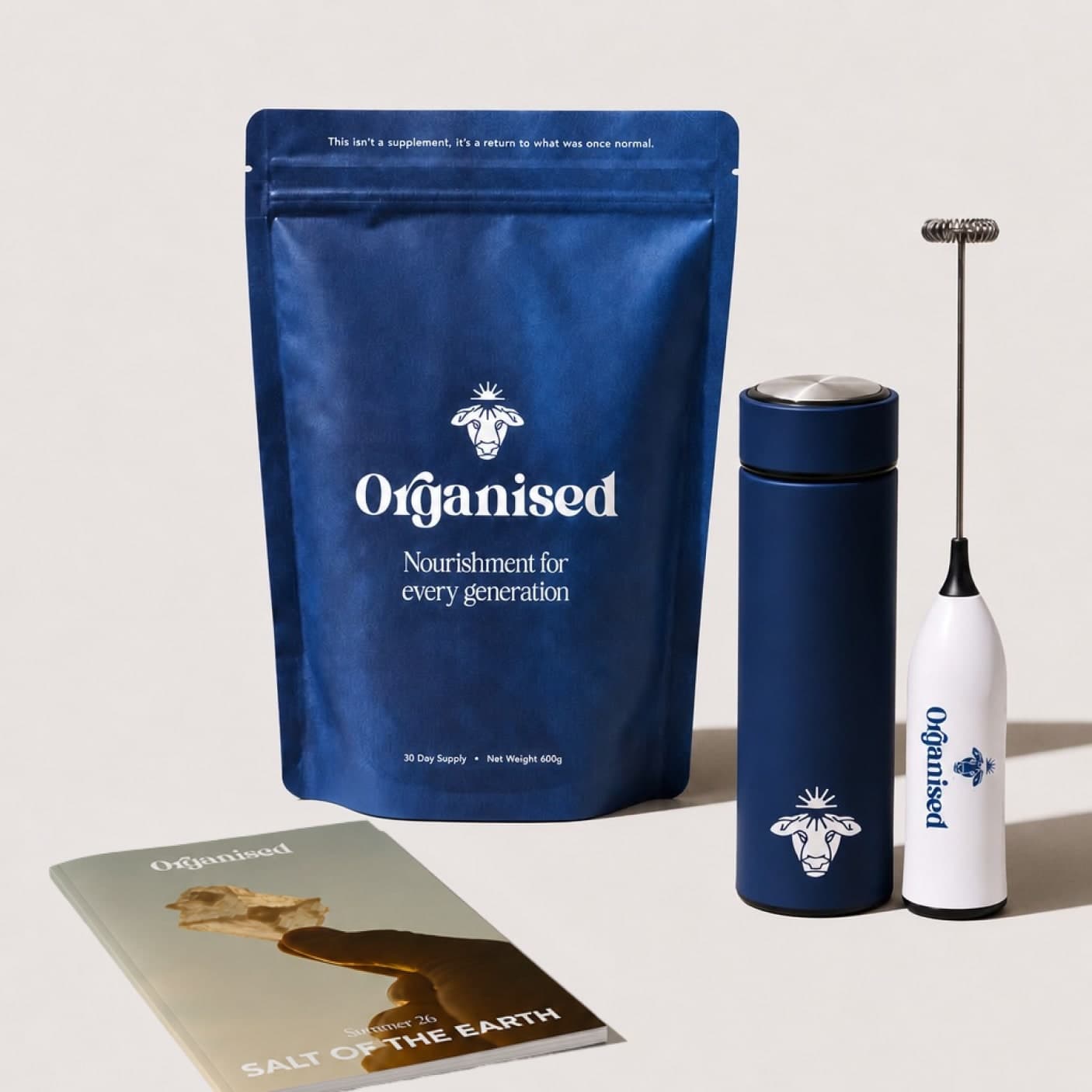
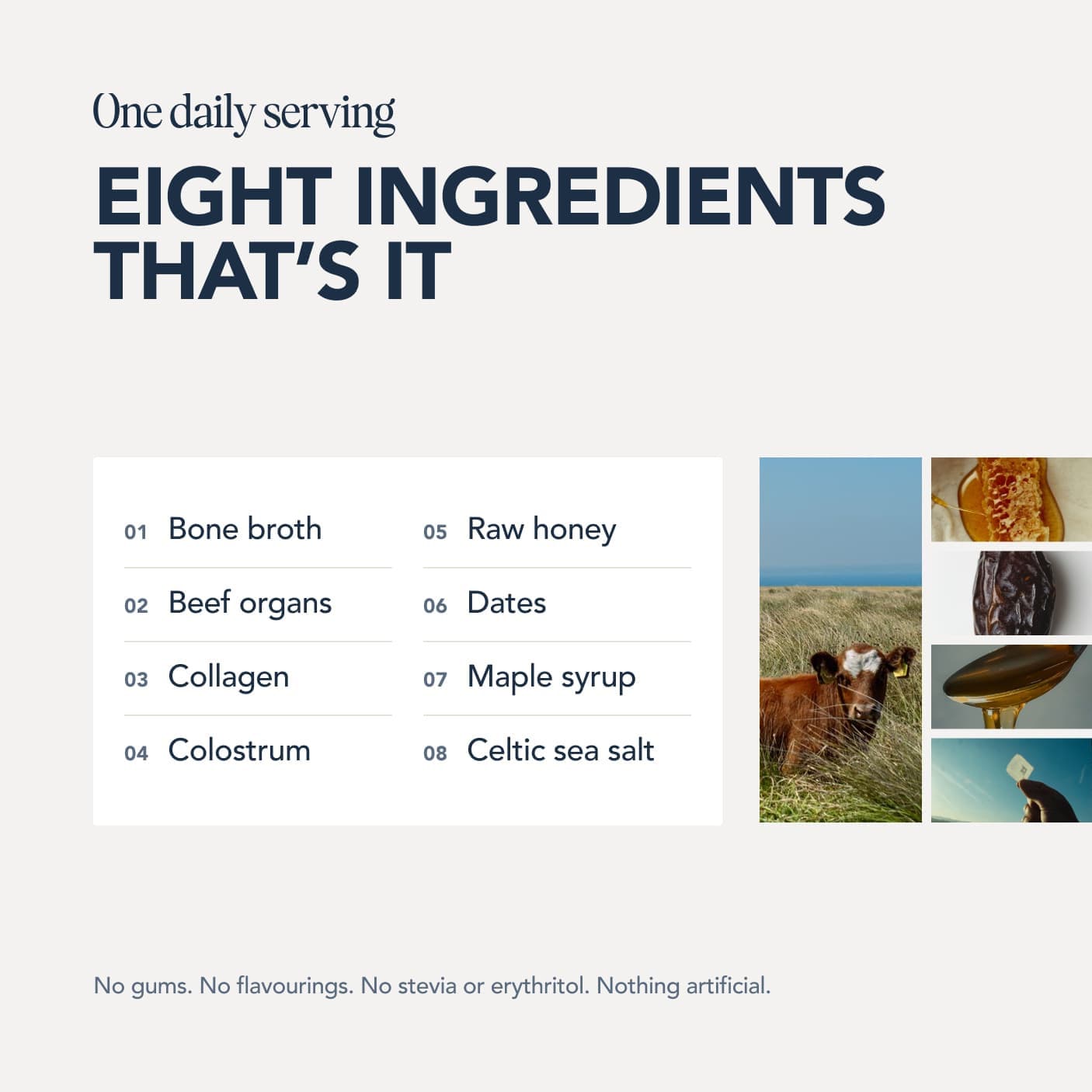
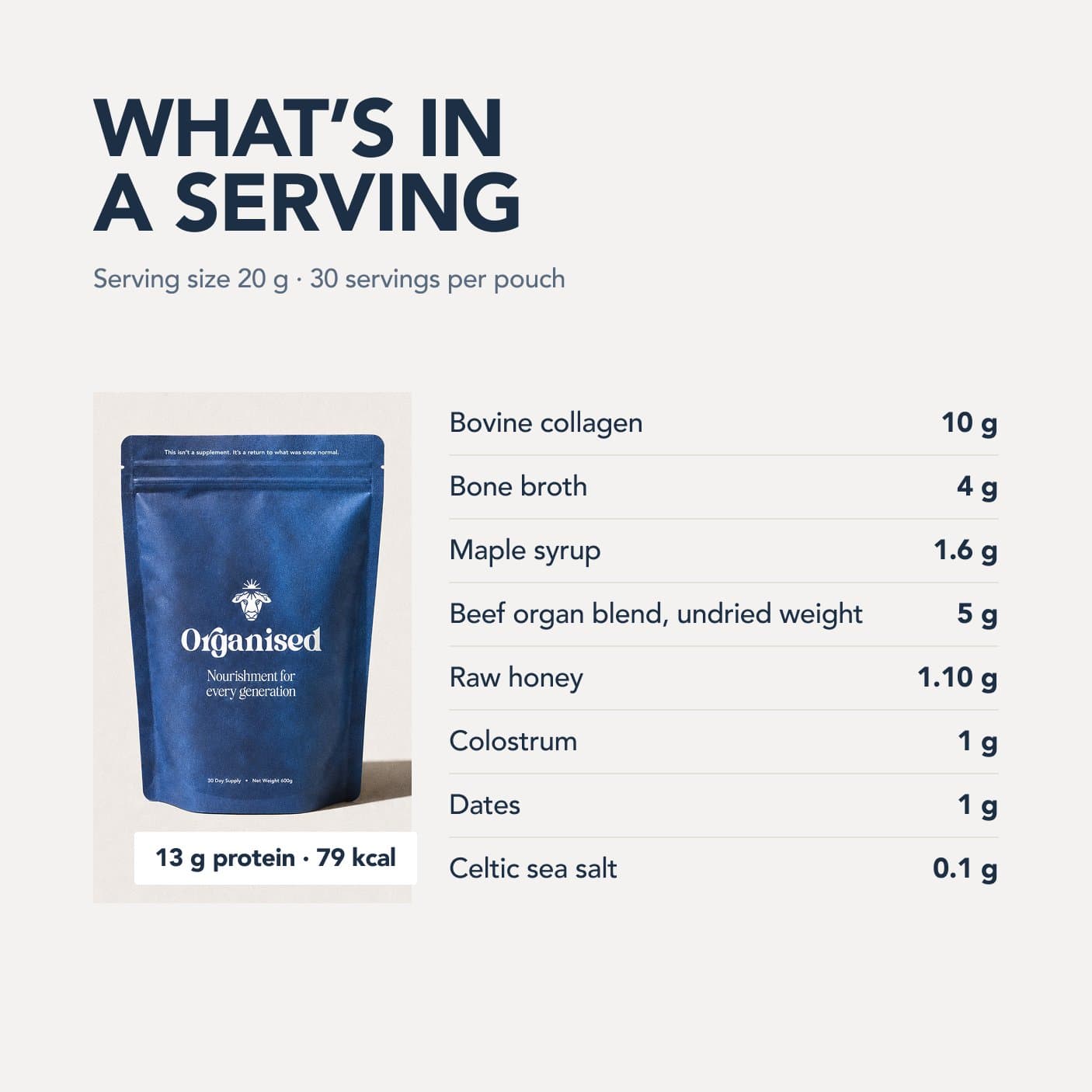
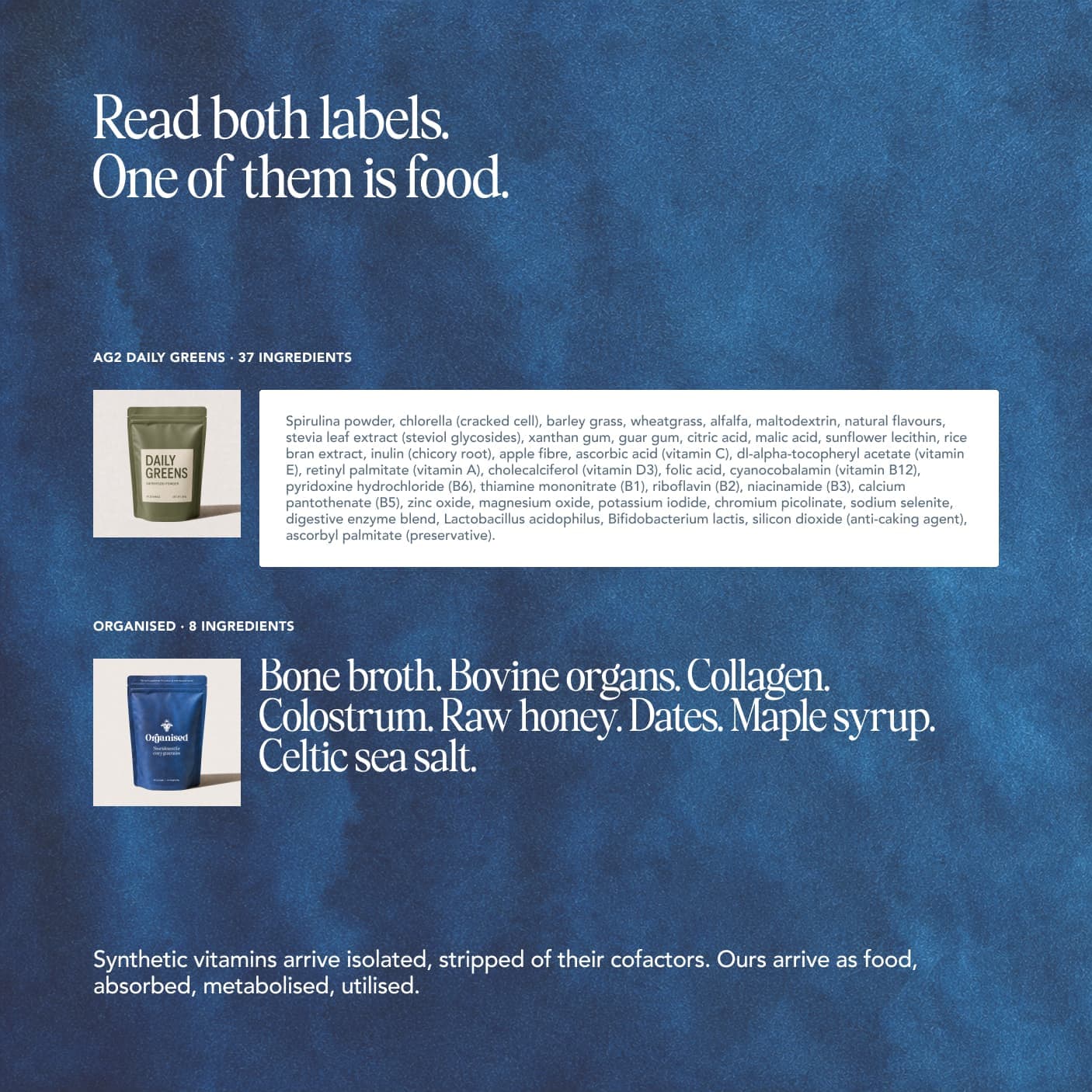
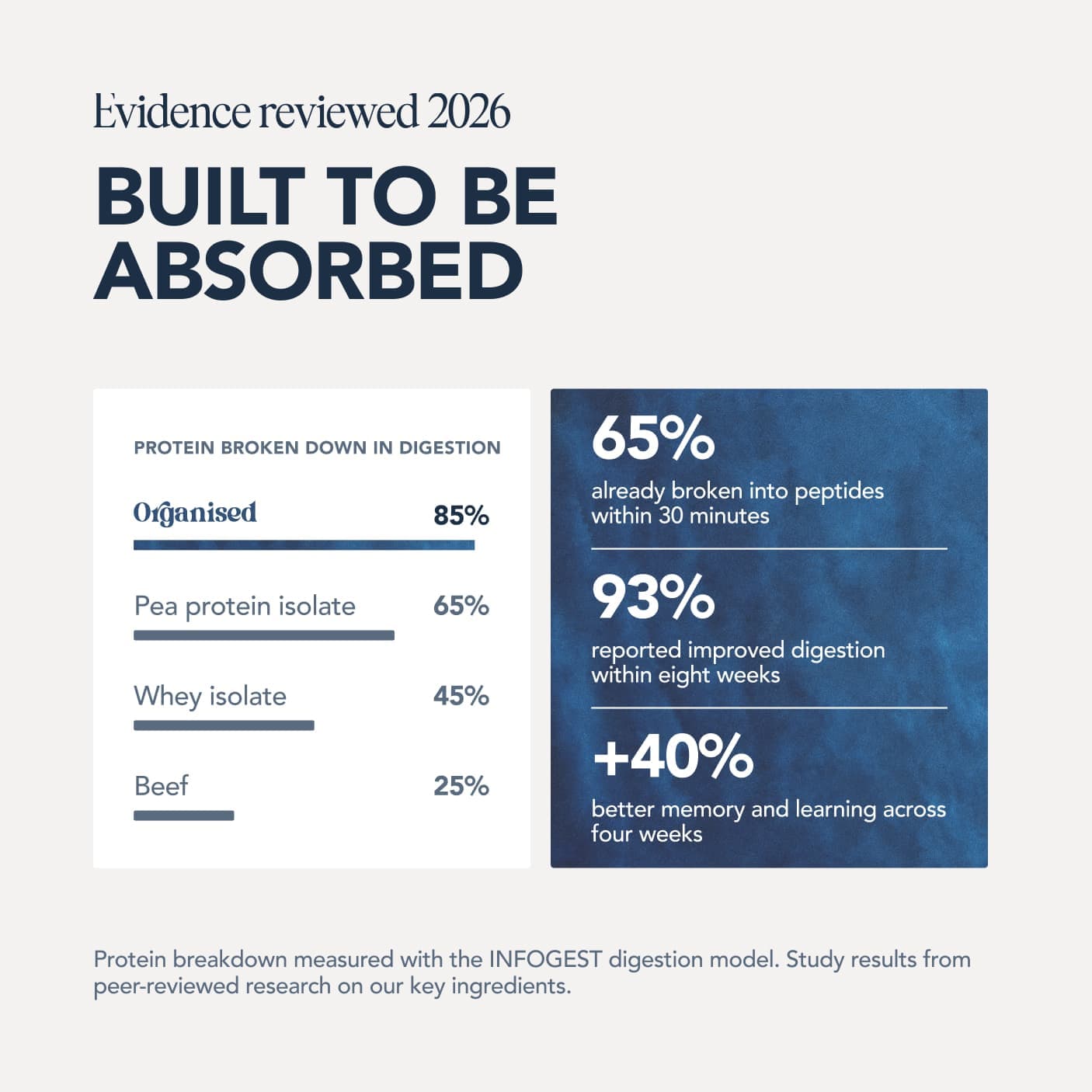
Eight real ingredients built around grass-fed beef organs, collagen and colostrum. Nothing synthetic added.
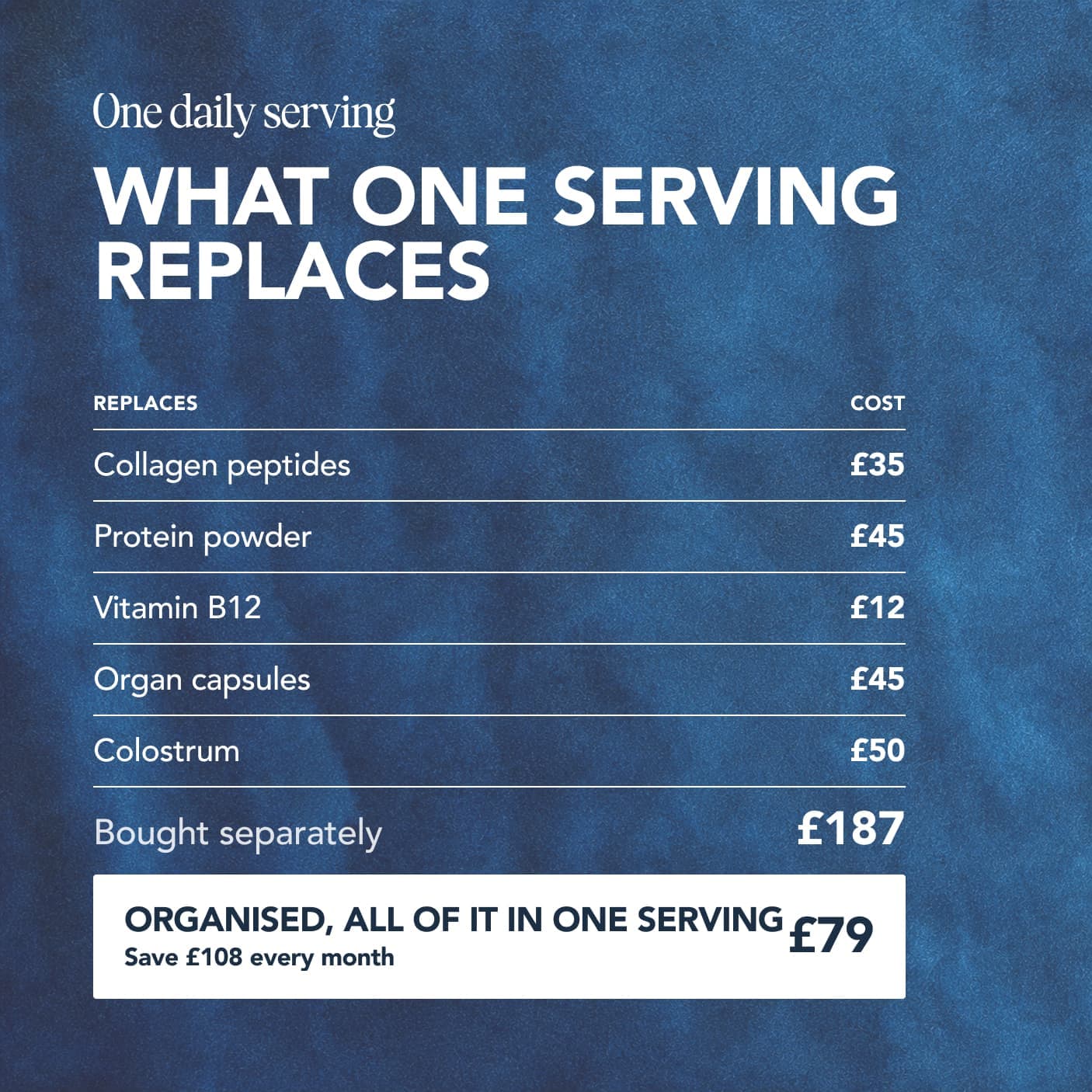
Free with your first order, worth £38. Plus £10 off the pouch with a subscription.
Free UK shipping · Made in England · 100 day money back guarantee on your first pouch · Skip, pause or cancel anytime
Electrolyte strategy for recovery
If you're experiencing salt cravings alongside fatigue, boost electrolytes strategically: salt your food generously with Celtic sea salt, drink mineral-rich bone broth, eat electrolyte-dense foods (meat, seafood, leafy greens). This supports aldosterone signalling and accelerates adrenal recovery.
Distinguishing true adrenal fatigue from deficiency
Adrenal fatigue (chronic stress leading to exhausted cortisol and aldosterone production) is different from simple electrolyte deficiency. Both cause salt cravings, but true adrenal fatigue also causes afternoon energy crashes, brain fog, poor recovery, and difficulty handling stress.
If salt supplementation alone doesn't improve your energy and symptoms, you likely have deeper adrenal compromise that requires rest, stress management, and sometimes targeted nutrients (magnesium, B vitamins, adaptogenic herbs).
Complete recovery protocol
Salt cravings alongside adrenal fatigue improve fastest with a multi-pronged approach: adequate salt and minerals, consistent sleep, stress reduction, wholefood nutrition rich in B vitamins and magnesium, and gentle movement (not intense exercise initially). Within 4-8 weeks of consistent application, most people see significant improvement in energy and recovery.
The bottom line
If you're craving salt, you're probably not being weak or indulgent. You're probably genuinely deficient because your adrenals are exhausted and your cortisol rhythm is disrupted.
Listen to your body. Use real salt. Add it liberally to your food. Your nervous system, your energy, and your recovery will improve. The salt craving will persist because your body is still in stress, but at least you'll be giving it what it needs to function at its best despite the stress.
References
Every source below was checked on 27 August 2026. Each PubMed, PMC and DOI identifier was resolved against NCBI or Crossref, and what it opens is printed under the citation, so you can see the link goes where the citation says without leaving the page. Where a citation and its identifier disagreed, the citation was corrected to the record or the reference was deleted along with the sentence marker that pointed at it, and where the resolved paper turned out not to support the sentence, the sentence was cut back to what it does support. Borrowed authority is worse than none, because it looks like rigour.
- Scott JH, Menouar MA, Dunn RJ. Physiology, Aldosterone. StatPearls. NCBI Bookshelf NBK470339.
- Pirahanchi Y, Jessu R, Aeddula NR. Physiology, Sodium Potassium Pump. StatPearls. NCBI Bookshelf NBK537088.
- Herman JP et al. Regulation of the hypothalamic-pituitary-adrenocortical stress response. Compr Physiol. PMC4867107.Checked 27 August 2026: PMC4867107 opens Herman JP, McKlveen JM, Ghosal S et al, Regulation of the Hypothalamic-Pituitary-Adrenocortical Stress Response. Compr Physiol 2016;6(2):603-21. PubMed indexes it as: Review.
Who wrote and reviewed this guide
Niall Kiddle
Author · Founder, Organised
Niall is the founder of Organised. He started the company in 2024 after fixing his own health the slow way: in 2022 he swapped a cupboard of synthetic supplements for real food, raw milk, organ meats, bone broth and honey, and felt the difference within months.
Areas of expertise: Ancestral nutrition, Organ meats, Whole-food supplementation, Gut health, Regenerative sourcing
Read Niall's full profile
Pedro Rodrigues
Reviewer · Agronomist (farming and sourcing only)
Pedro is the agronomist Organised works with on farming and sourcing. His job on the guides is to keep the science honest: he reviews what we publish about soil health, regenerative agriculture, grazing and the way food is actually produced.
Areas of expertise: Regenerative agriculture, Agronomy, Soil health, Grass-fed farming, Food sourcing
Reviewed this guide on
Read Pedro's full profileBrowse the guides library
All guidesKeep reading
Ingredients
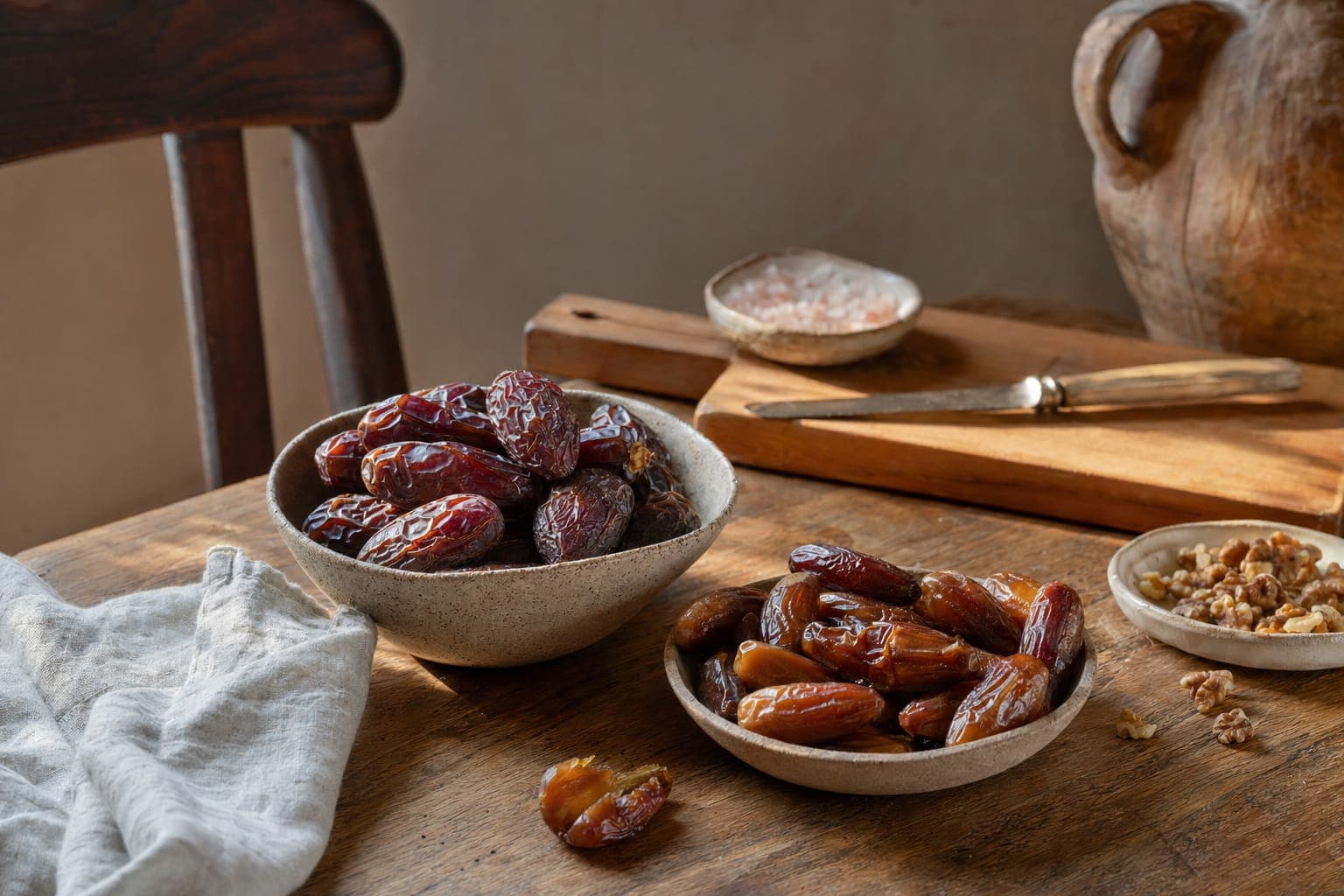
How Dates Provide Sustained Energy Without the Crash
Want energy without the sugar crash? See how the fibre and polyphenols in dates slow glucose release, plus how Medjool and Deglet Noor compare.

Ingredients
Collagen and Hair Growth: Separating Fact from Hype
Does collagen really help hair growth? We unpack what the research shows about collagen, hair thickness and hair loss, so you can decide if it is worth it.
Ingredients
Colostrum for Athletes: Recovery, Immunity and Performance
How colostrum supports athletic recovery, prevents exercise-induced immune suppression, restores gut permeability, and optimises performance.
Real food, made effortless
Try the organ blendA few ways to use it
All recipes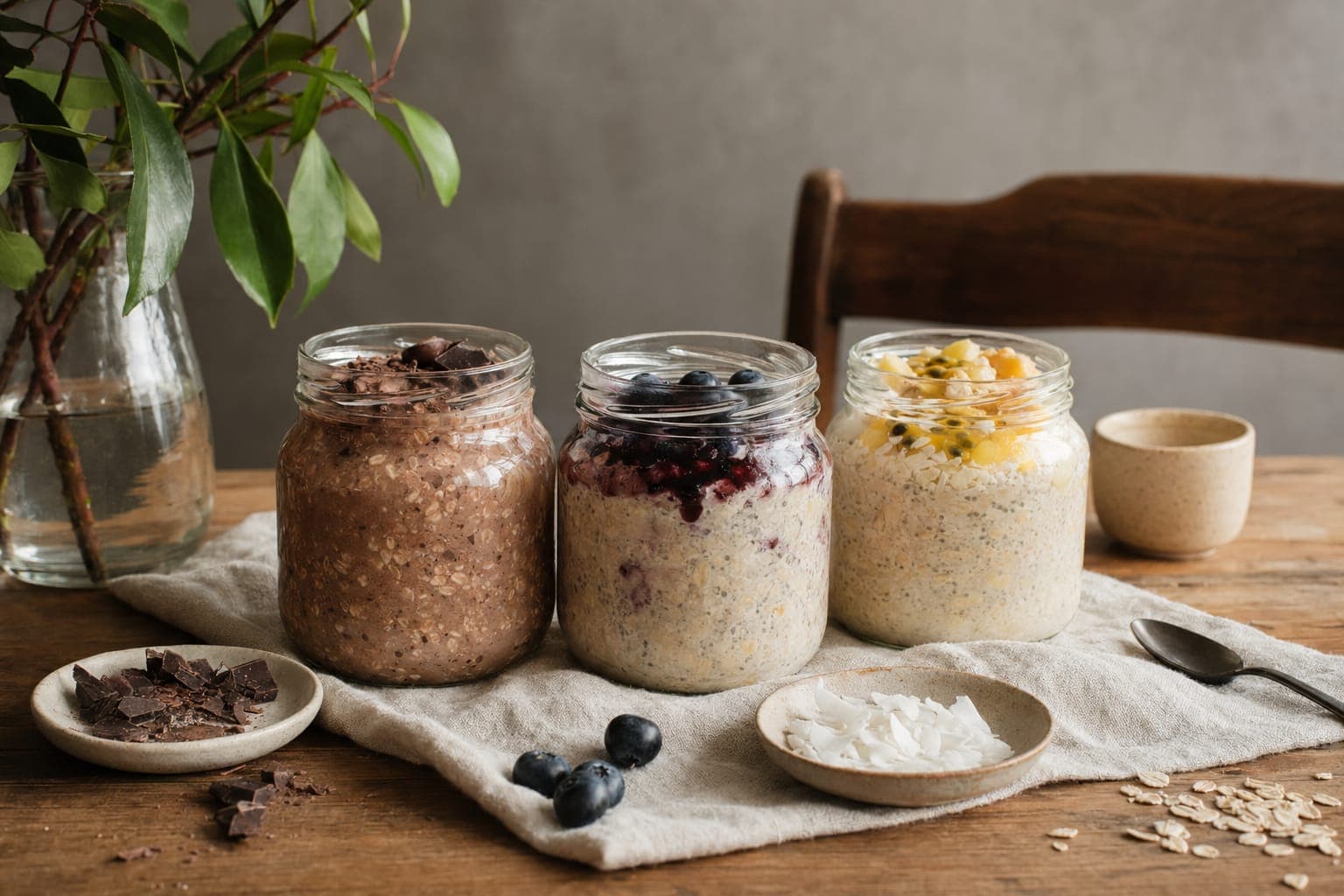
Organised Overnight Oats: 3 Variations
Three delicious overnight oats variations with Organised. Chocolate, berry, tropical flavours. Make them Sunday, eat them all week.
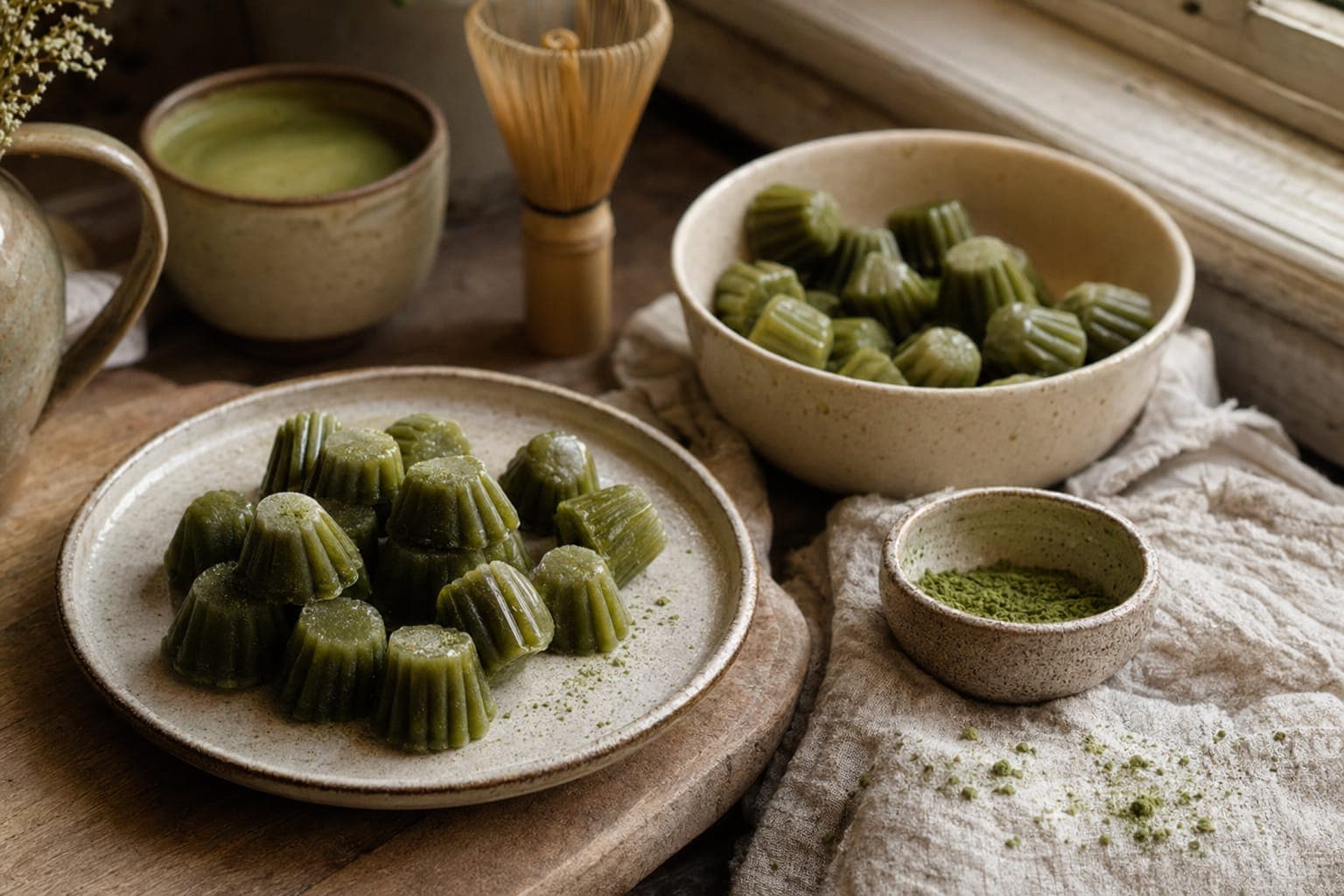
Matcha Latte Gummies with Collagen and Gelatine
Make visually stunning matcha latte gummies infused with collagen and gelatine. Simple recipe for gut-healing sweets you'll actually want to eat.
Gut-Healing Marshmallows with Collagen and Raw Honey
Learn to make gut-healing marshmallows with collagen and raw honey. A shareable treat that sneaks nutrition into every bite. Easy recipe with video tips.


 Join over 100,000+ members
Build a better food system with us
The Organised community is thousands of people choosing real food and backing the farmers who grow it, all of us trying to leave the world a little better than we found it. If that is what you care about too, you belong here.