Does Collagen Actually Work for Skin? What the Research Says
Collagen is the most talked-about supplement for skin. You've seen the ads. Everybody's selling it. But does it actually work, or is it another wellness myth? The answer is more nuanced than the marketing suggests.

By Niall Kiddle, Founder, Organised

Reviewed by Pedro Rodrigues, Agronomist (farming and sourcing only) ·
7 min read · Published · Updated · 6 cited sources
Makers of the Organised Daily blend, a grass-fed beef organ supplement from regenerative UK farms

Here's the uncomfortable part: the skin barrier cares very little what you take by mouth. Your skin doesn't know whether something came from a collagen supplement or a chicken thigh. But that doesn't mean collagen supplements are useless. It just means they work differently than the marketing implies.
What collagen actually is
Collagen is a protein. It's the most abundant protein in your body, making up about 30 percent of your total protein content.1 It forms the structural scaffold of your skin, tendons, ligaments, bone, and organs. It gives skin its firmness, elasticity, and that smooth quality that people associate with youth.
When you eat collagen (whether as a supplement or from bone broth, gelatinous cuts of meat, or skin), your digestive system breaks it down into amino acids and dipeptides and tripeptides. Some of those peptides are absorbed intact. Others are broken down further. What reaches your bloodstream is essentially raw material, not collagen itself.
Here's the critical bit: your body doesn't just transport that material to your skin and say, "Build more collagen here." Your body is far more complicated than a vending machine. It takes those building blocks and decides where to send them based on its own priorities.
Why the logic seems sound
The logic behind collagen supplementation is seductive. Skin contains collagen. Collagen declines with age. Therefore, eating more collagen should replace the lost collagen and restore youthful skin.
It sounds perfect. It's intuitive. And that's precisely why it's such an effective marketing narrative. But the human body doesn't work on such straightforward cause-and-effect principles.
Collagen itself doesn't reach your skin. Your body breaks it down into amino acids and then decides what to do with them.
Consider this: your body also needs collagen in your joints, your gut lining, your blood vessels, and your hair. When you provide extra collagen precursors, your body distributes them based on where the need is greatest, not on your aesthetic intentions.

What the research actually shows
Several clinical trials have examined oral collagen supplementation, and the findings are actually encouraging, though with caveats.
A 2019 systematic review in the journal Nutrients found that hydrolysed collagen peptides showed promise for skin hydration and elasticity in several studies. Participants who took collagen peptides reported improvements in skin elasticity, and some studies measured increased skin hydration. The effect sizes were modest but measurable.2
The mechanism appears to involve those intact dipeptides and tripeptides. Some research suggests that specific collagen peptides (particularly those rich in glycine and proline) can stimulate fibroblasts, the cells that produce collagen, to work harder. They may also help downregulate enzymes that break down collagen in the first place.3
However, here's what the research doesn't show: that collagen supplements rebuild skin collagen directly. Instead, they appear to signal your body to support its own collagen production, or they protect existing collagen from degradation. That's a genuinely useful biological signal. It's just not the same as topping up your collagen stores like you're refilling a reservoir.
The studies that showed benefits typically ran for 8 to 12 weeks and involved doses of 10 grams daily.4 Cheaper, lower-dose collagen powders may not deliver the same effect. The type matters. Hydrolysed collagen (broken down into smaller peptides) works better than unhydrolysed collagen because your gut can absorb more of it.
Oral collagen vs topical collagen
Topical collagen is almost useless. Collagen molecules are enormous. Your skin barrier is designed to keep large molecules out. A collagen face cream might temporarily plump the skin with moisture, but the collagen itself isn't penetrating to where the structural collagen lives.
Oral collagen, by contrast, bypasses the barrier entirely. What you absorb reaches your bloodstream and has a genuine shot at influencing your skin's collagen biology. That said, you won't notice results as quickly as with a moisturiser because you're not applying it topically. You're influencing your body's own processes, which takes time.
Topical collagen sits on the surface. Oral collagen reaches your bloodstream and can actually influence skin biology.

The real way to support your skin's collagen
Here's what matters far more than any supplement: whether you're actually giving your body the raw materials and the chemical environment it needs to make collagen in the first place.
Your body manufactures collagen using vitamin C, which acts as a cofactor for the enzymes that stabilise and cross-link collagen fibres.5 Without adequate vitamin C, collagen production stalls. Vitamin C is found richly in liver, citrus fruits, berries, and bell peppers. Most people aren't deficient, but if you're eating a processed diet, you might be.
You also need adequate protein intake. Not just collagen. Any protein. Glycine, proline, lysine, and arginine are the core amino acids in collagen, but your body can synthesise most of them from other dietary proteins. If you're chronically under-eating protein, no supplement will fix that.
Copper and zinc matter too. Copper is essential for lysyl oxidase, an enzyme that cross-links collagen fibres and makes them structurally sound.6 Zinc supports the entire protein synthesis machinery. Red meat, shellfish, and liver are the richest sources.
And then there's sleep. Collagen production ramps up during sleep, particularly during deep sleep. If you're sleeping poorly, you're suppressing your collagen synthesis regardless of what you're eating.
Sun exposure damages collagen through UV radiation and oxidative stress. Ironically, one of the most effective things you can do for skin collagen is simply to reduce how much sun damage you're accumulating. That's not sexy to market, but it works.
Collagen supplements work best when you've already built a foundation: adequate sleep, protein, vitamin C, copper, and sun protection.
Get ingredient guides like this, free
Two short reads a week on the ingredients that matter and how to actually use them.
By signing up you agree to receive emails from us. No spam, unsubscribe anytime.
The collagen dose that actually matters
The clinical studies showing benefits used 10 grams of hydrolysed collagen daily. That's important. Many consumer-facing collagen powders contain 5 grams per serving, which is half the dose tested in research. At that lower dose, you're unlikely to see measurable benefits.
You also need consistency. The studies ran for 8 to 12 weeks. Taking collagen sporadically or running it for only 2 to 3 weeks won't give your body time to respond. If you're going to try it, commit to at least 8 weeks at the full dose.
Additionally, the source matters. Grass-fed bovine collagen contains higher micronutrient profiles and better amino acid ratios than grain-fed sources. Marine collagen (from fish) is absorbed slightly faster but is less extensively researched. Bovine collagen has more research supporting its use for skin specifically.
The timing of collagen intake might matter too. Some research suggests taking it with vitamin C (which supports collagen cross-linking) enhances results. Others suggest taking it with a source of carbohydrate increases absorption. These are small optimisations, but they indicate that collagen isn't just a random supplement you can throw back without thinking.
So should you take collagen?
If you're eating well, sleeping properly, and getting adequate vitamin C and minerals, a hydrolysed collagen supplement at a dose of around 10 grams daily might offer a modest boost to skin hydration and elasticity over 8 to 12 weeks. It won't transform your skin. It won't replace a skincare routine. But it's unlikely to harm you either.
If you're under-sleeping, eating processed food, and deficient in basic nutrients, a collagen supplement will do almost nothing for your skin. You'd be better served by addressing the foundations first.
Gelatinous cuts of meat, bone broth, and chicken skin contain collagen naturally. If you're eating these regularly, you're already getting collagen and all the associated minerals and amino acids in a whole-food context. A supplement becomes optional at that point.
The honest truth is that collagen supplements sit somewhere between genuine supplement (something that fills a gap your diet leaves) and beauty product (something that offers incremental cosmetic benefit if conditions are ideal). The research supports modest benefits for skin elasticity and hydration. The marketing supports something far more dramatic. You're looking for the truth somewhere in the middle.

1 of 9
Daily blend
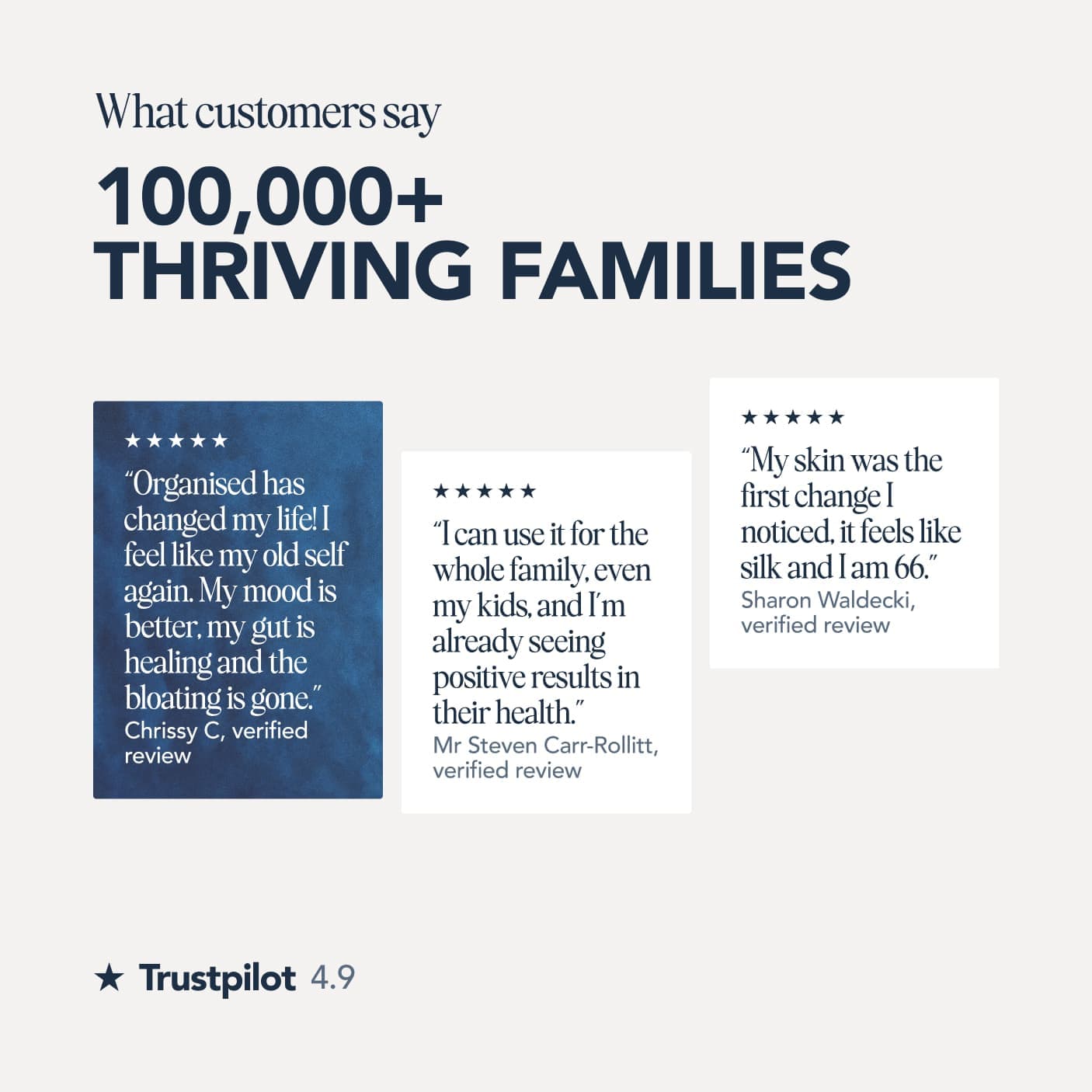
100,000+ thriving families4.9 on Trustpilot
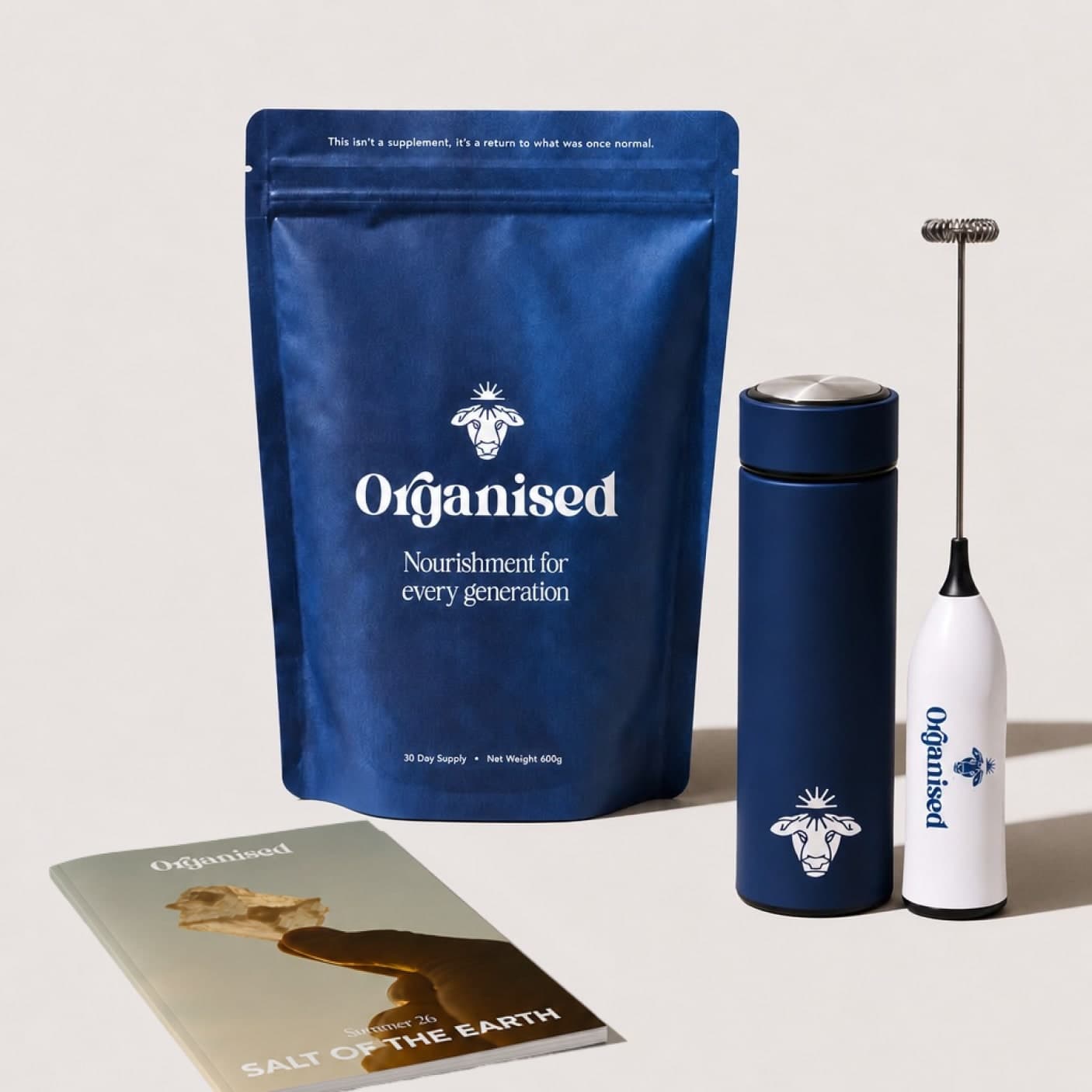
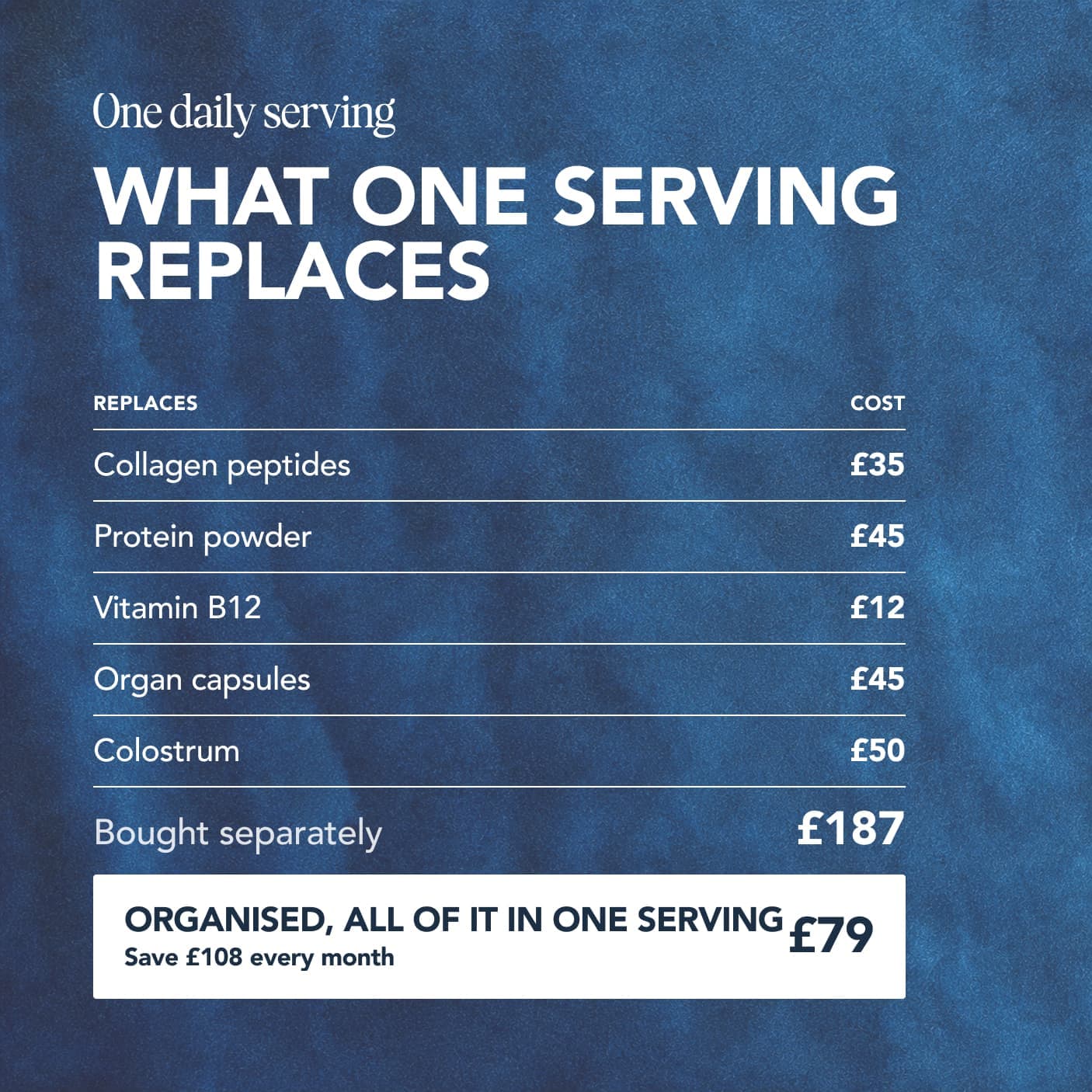
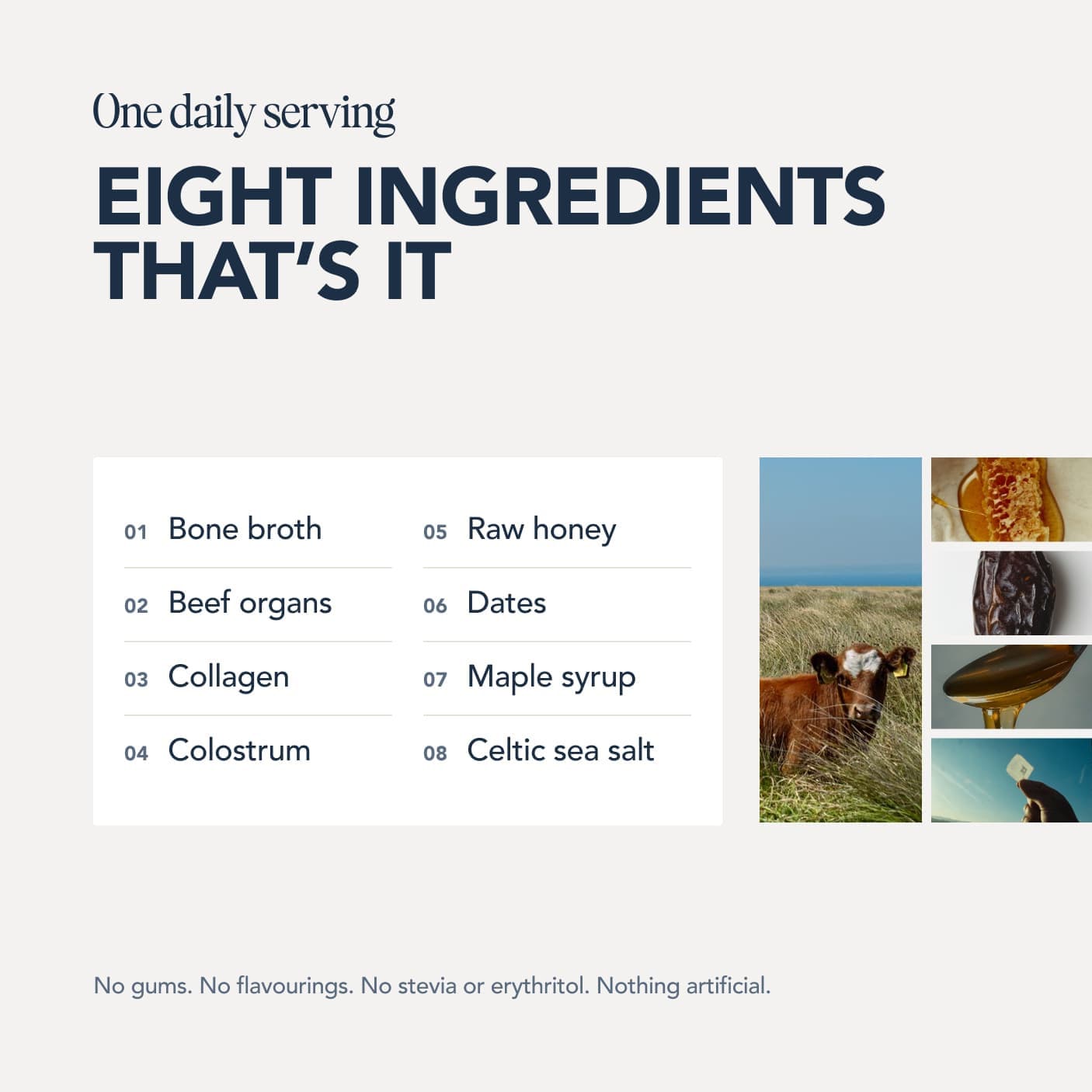
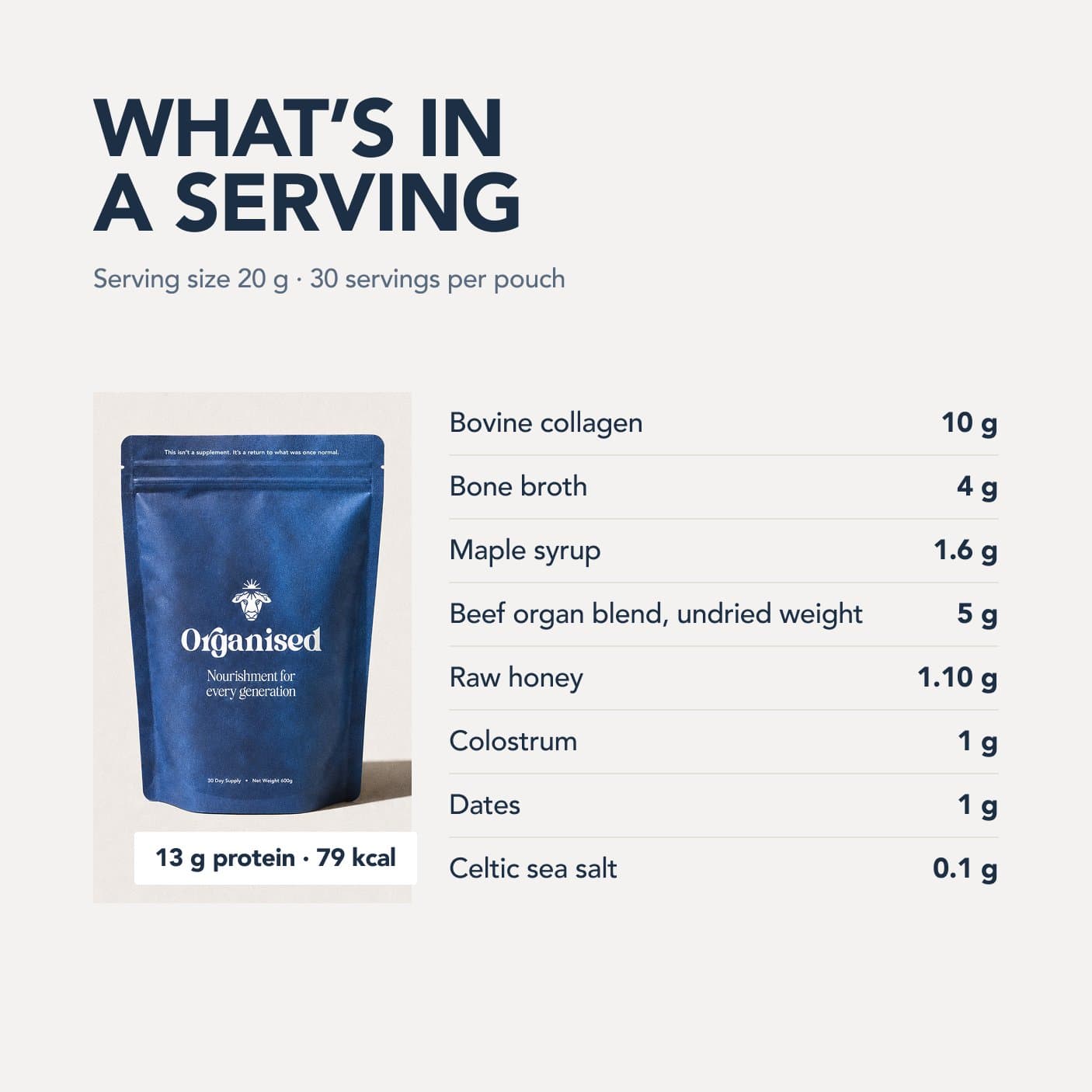
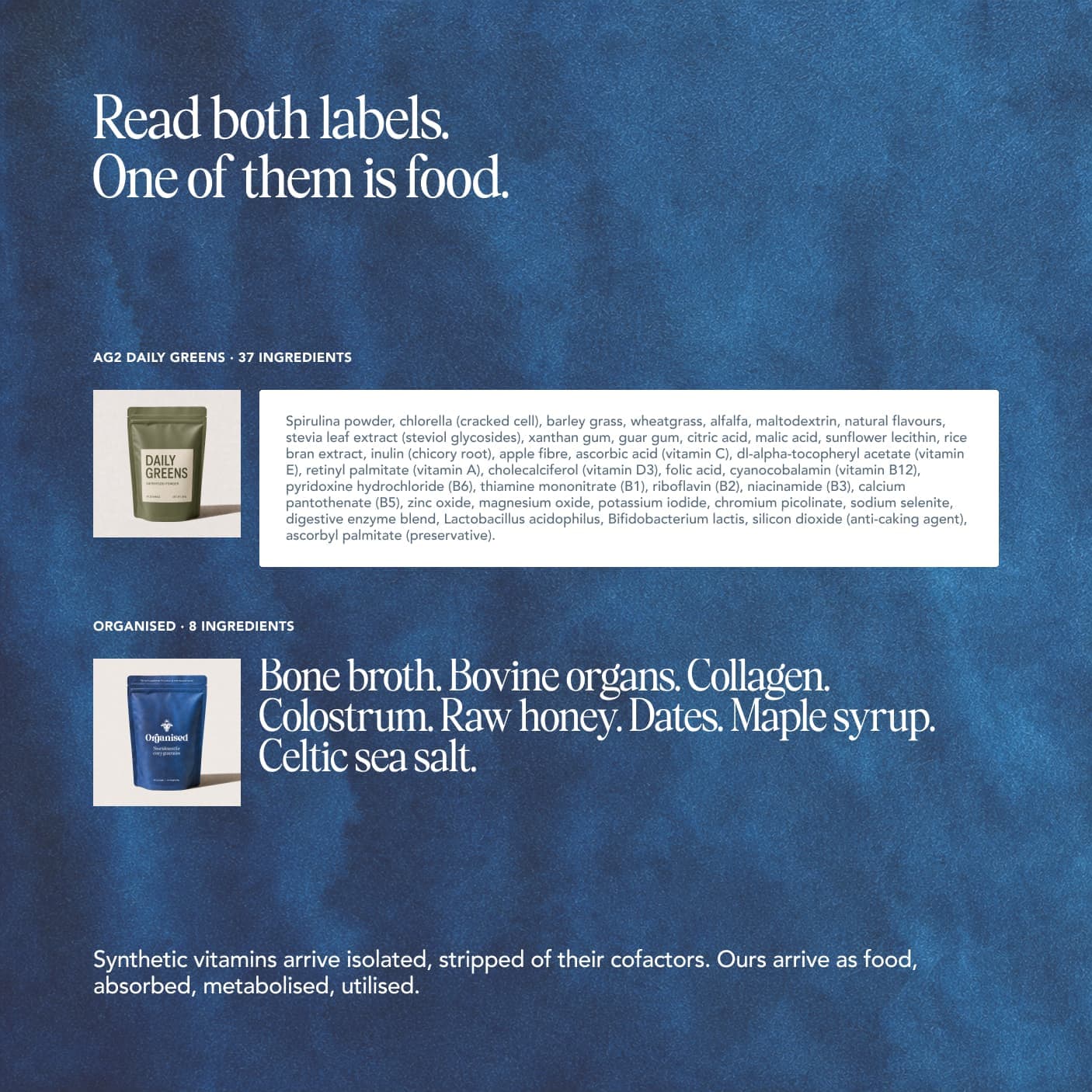
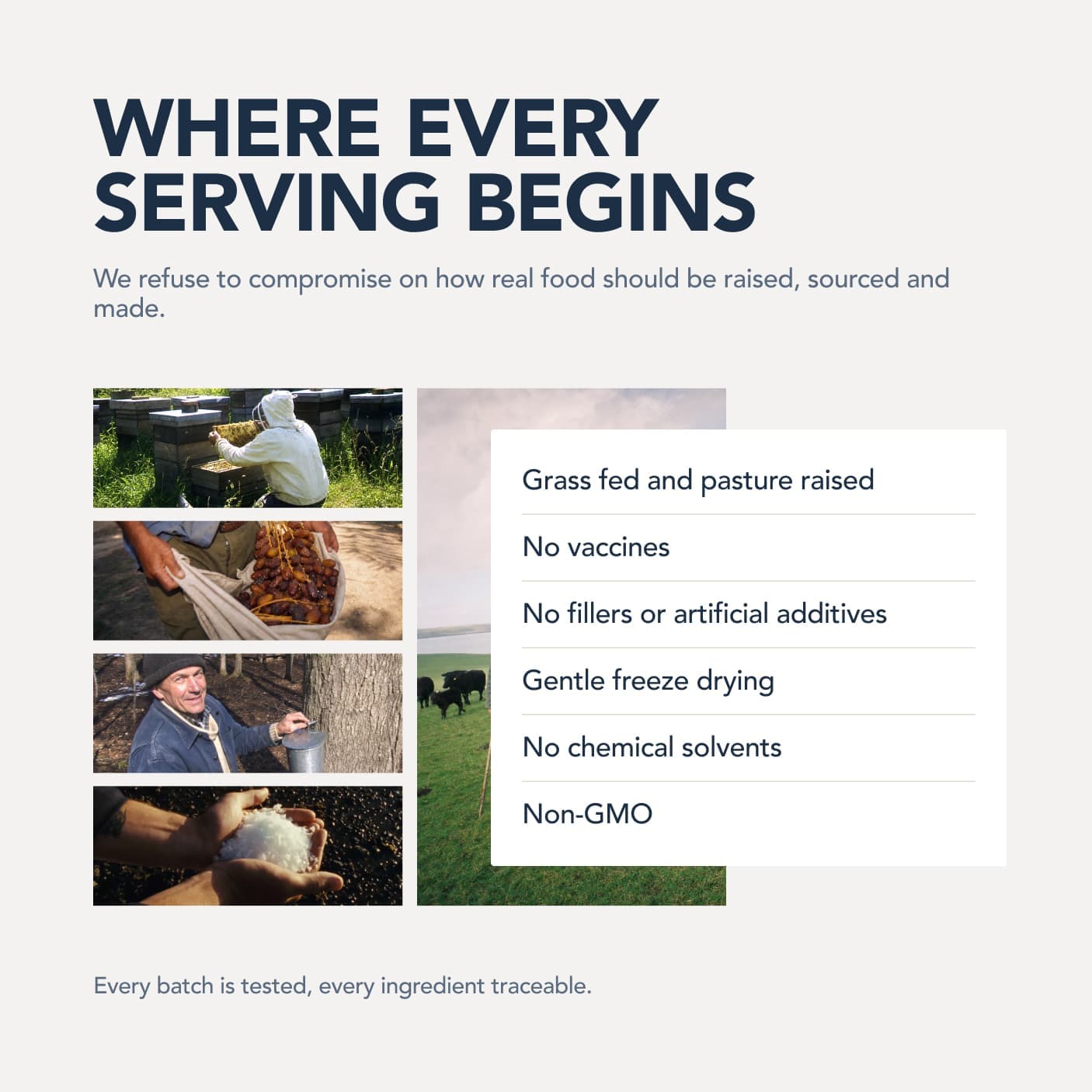
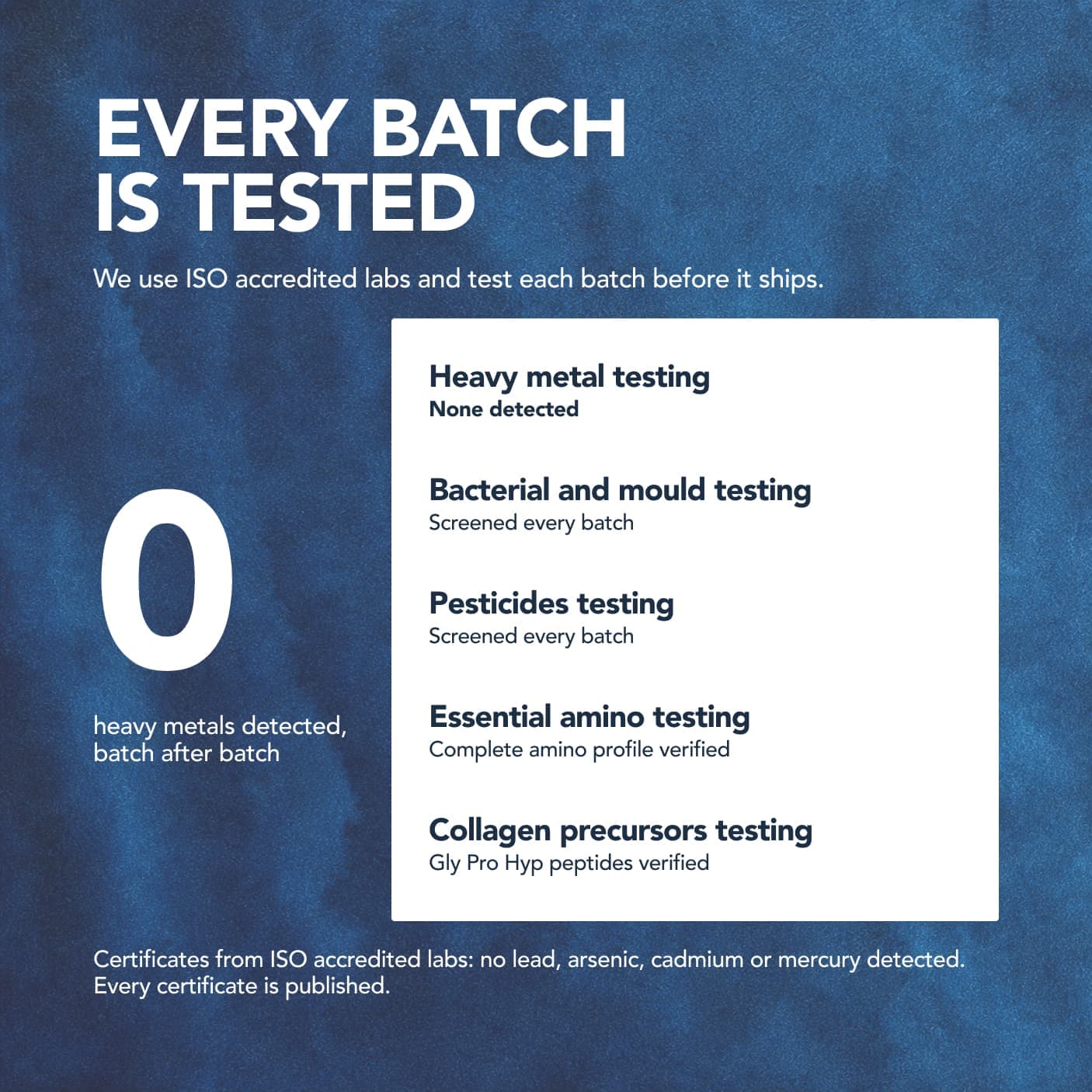
Eight real ingredients built around grass-fed beef organs, collagen and colostrum. Nothing synthetic added.
Free with your first order, worth £38. Plus £10 off the pouch with a subscription.

Free UK shipping · Made in England · 100 day money back guarantee on your first pouch · Skip, pause or cancel anytime
The bottom line
Collagen supplements work, but not the way the ads suggest. They don't rebuild your skin's collagen directly. Instead, they appear to support your body's own collagen production and may help protect existing collagen from breakdown. The research is genuine, but the effects are modest. A 10-gram daily dose of hydrolysed collagen may improve skin hydration and elasticity over 8 to 12 weeks, but only if you've already built a foundation of adequate sleep, protein, vitamin C, minerals, and sun protection. Start with the basics. The supplement becomes useful only after that.
References
Every source below was checked on 27 August 2026. Each PubMed, PMC and DOI identifier was resolved against NCBI or Crossref, and what it opens is printed under the citation, so you can see the link goes where the citation says without leaving the page. Where a citation and its identifier disagreed, the citation was corrected to the record or the reference was deleted along with the sentence marker that pointed at it, and where the resolved paper turned out not to support the sentence, the sentence was cut back to what it does support. Borrowed authority is worse than none, because it looks like rigour.
- Ricard-Blum S. The Collagen Family. Cold Spring Harbor Perspectives in Biology, 2011. PMC3003457.Checked 27 August 2026: PMC3003457 opens Ricard-Blum S, The collagen family. Cold Spring Harb Perspect Biol 2011;3(1):a004978. PubMed indexes it as: Review.
- de Miranda RB et al. Effects of hydrolyzed collagen supplementation on skin aging: a systematic review and meta-analysis. International Journal of Dermatology, 2021. PMID 33742704.Checked 27 August 2026: PMID 33742704 opens de Miranda RB, Weimer P, Rossi RC, Effects of hydrolyzed collagen supplementation on skin aging: a systematic review and meta-analysis. Int J Dermatol 2021;60(12):1449-1461. PubMed indexes it as: Meta-Analysis, Systematic Review.
- Shigemura Y, Iwai K et al. Effect of prolyl-hydroxyproline (Pro-Hyp), a food-derived collagen peptide in human blood, on growth of fibroblasts from mouse skin. Journal of Agricultural and Food Chemistry, 2009. PMID 19128041.Checked 27 August 2026: PMID 19128041 opens Shigemura Y, Iwai K, Morimatsu F et al, Effect of Prolyl-hydroxyproline (Pro-Hyp), a food-derived collagen peptide in human blood, on growth of fibroblasts from mouse skin. J Agric Food Chem 2009;57(2):444-9.
- Proksch E et al. Oral supplementation of specific collagen peptides has beneficial effects on human skin physiology: a double-blind, placebo-controlled study. Skin Pharmacology and Physiology, 2014. PMID 23949208.Checked 27 August 2026: PMID 23949208 opens Proksch E, Segger D, Degwert J et al, Oral supplementation of specific collagen peptides has beneficial effects on human skin physiology: a double-blind, placebo-controlled study. Skin Pharmacol Physiol 2014;27(1):47-55. PubMed indexes it as: Randomized Controlled Trial.
- National Institutes of Health, Office of Dietary Supplements. Vitamin C — Health Professional Fact Sheet.
- National Institutes of Health, Office of Dietary Supplements. Copper — Health Professional Fact Sheet.
Corrections
What this page used to say, and why it no longer says it. Corrections are dated and are never removed, because deleting the record of an error is a second error. Every guide we have corrected is listed at our corrections log.
- 27 August 2026. The page described “a 2019 systematic review in the journal Nutrients”. Its footnote opens de Miranda, Weimer and Rossi in the International Journal of Dermatology, 2021: wrong year, wrong journal, and no 2019 Nutrients review exists in the reference list. The paragraph now describes the review the link actually opens, with its size, its population and its industry funding.
Who wrote and reviewed this guide
Niall Kiddle
Author · Founder, Organised
Niall is the founder of Organised. He started the company in 2024 after fixing his own health the slow way: in 2022 he swapped a cupboard of synthetic supplements for real food, raw milk, organ meats, bone broth and honey, and felt the difference within months.
Areas of expertise: Ancestral nutrition, Organ meats, Whole-food supplementation, Gut health, Regenerative sourcing
Read Niall's full profile
Pedro Rodrigues
Reviewer · Agronomist (farming and sourcing only)
Pedro is the agronomist Organised works with on farming and sourcing. His job on the guides is to keep the science honest: he reviews what we publish about soil health, regenerative agriculture, grazing and the way food is actually produced.
Areas of expertise: Regenerative agriculture, Agronomy, Soil health, Grass-fed farming, Food sourcing
Reviewed this guide on
Read Pedro's full profileMore on collagen
View all- Collagen Peptides: A Complete Guide to Types, Sources and Benefits
- Can You Get Enough Collagen from Food Alone?
- Collagen and Hair Growth: Separating Fact from Hype
- Collagen for Gut Health: Rebuilding Your Intestinal Lining
- Collagen for Joint Pain: What Does the Evidence Say?
- Collagen Supplements on Reddit: Do They Actually Work?
- The Amino Acids in Collagen and Why They Matter
- What Happens When You Take Collagen Every Day for 90 Days?
- When Does Your Body Start Losing Collagen? (And What to Do About It)
Browse the guides library
All guidesKeep reading
Ingredients
Collagen Peptides: A Complete Guide to Types, Sources and Benefits
Complete guide to collagen peptides. What they are, why type I and III matter, grass-fed vs marine, and the research behind them.

Ingredients
The Antimicrobial Power of Raw Honey
Learn how the antimicrobial properties of raw honey, like hydrogen peroxide and MGO, set it apart from processed honey, and why it is a real whole food.

Ingredients
Bovine Colostrum: The Complete Guide to Nature's First Food
Explore bovine colostrum benefits for gut and immune health. This complete guide covers immunoglobulins, sensible dosing, and safety for adults.
Real food, made effortless
Try the organ blendA few ways to use it
All recipes
Bone Broth from Scratch: A Step-by-Step Guide
Step-by-step guide to making bone broth at home. Stovetop, slow cooker, and Instant Pot methods. Rich in collagen and gut-healing minerals.
10 Ways to Use Organised That Aren't Just a Shake
Move beyond the basic shake. Discover 10 creative ways to use Organised in smoothie bowls, oats, yoghurt, baking, and more.

Ancestral Breakfast Ideas from Around the World
Traditional breakfast recipes from cultures that got nutrition right. Japanese, Turkish, Scottish, and more. Whole-food breakfast inspiration.


 Join over 100,000+ members
Build a better food system with us
The Organised community is thousands of people choosing real food and backing the farmers who grow it, all of us trying to leave the world a little better than we found it. If that is what you care about too, you belong here.