Beef Protein vs Whey Protein: A Whole Food Perspective
Whey protein has dominated the supplement industry for 30 years. But it's not the best protein. It's just the cheapest to produce and easiest to market. Here's the honest comparison.
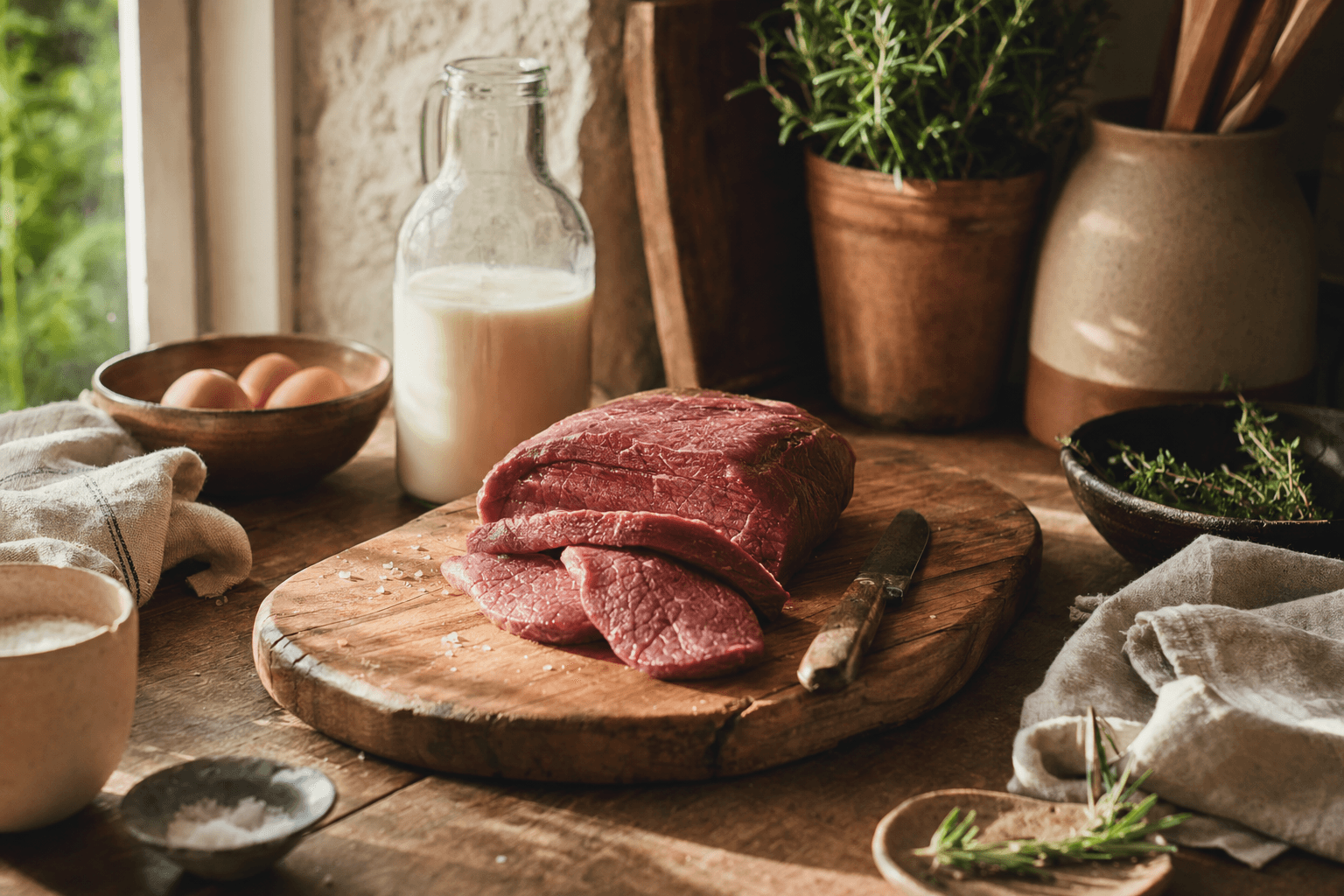

What they actually are
Whey protein is a byproduct of cheese-making. When milk curdles, the liquid left behind (whey) is collected, processed, and dried into powder.3 It's a dairy byproduct, not a whole food.
Beef protein is muscle tissue from a cow, hydrolysed into small peptides, and dried into powder. It's a whole food, processed minimally.
The philosophical difference matters. Whey is an industrial byproduct that was worthless until someone figured out how to market it as a supplement. Beef protein is actual meat, processed into a convenient form.
Sourcing and food quality
Whey sourcing: Whey comes from whatever dairy produced the cheese. That dairy is usually industrial: cows confined indoors, fed grain (not their natural food), often treated with antibiotics and hormones. The milk quality reflects the animal's living conditions. Poor quality milk makes poor quality whey.
Beef sourcing: Quality beef protein comes from grass-fed, pasture-raised cattle. The animals ate their natural food, moved freely, and weren't treated with antibiotics or hormones. The muscle tissue reflects the animal's health and living conditions. Higher quality beef makes higher quality protein.
From a food quality perspective, grass-fed beef protein is in a different category from whey.
Digestibility and gut health
Whey and dairy sensitivity: Whey is dairy. If you're sensitive to lactose (even in small amounts), casein, or other dairy proteins, whey will trigger symptoms: bloating, gas, cramping, or worse. Even people without overt dairy sensitivity often find whey harder to digest than they expect.
Beef protein and digestion: Beef protein is non-dairy and hydrolysed. It's absorbed quickly and doesn't trigger immune reactions in people sensitive to dairy. It's gentler on the gut lining and supports gut health rather than aggravating it.
For people with sensitive digestion, compromised gut health, or any dairy sensitivity, beef protein is superior.
Whey works for dairy-tolerant people. For everyone else, beef is better. And beef is at least as good for dairy-tolerant people anyway.
Micronutrient density
This is where the comparison becomes lopsided.
Whey protein: Provides protein and essentially nothing else. A serving might have trace amounts of calcium and some B vitamins, but the micronutrient content is minimal. You're paying for protein and nothing more.
Beef protein (grass-fed): Provides protein plus vitamin A, all the B vitamins, zinc, copper, selenium, carnosine, and bioactive peptides. You're getting a micronutrient package alongside the protein.
The difference is enormous. A serving of grass-fed beef protein provides roughly 10-20% of your daily needs for multiple micronutrients. Whey provides almost none.
This matters practically. If you're supplementing protein whilst your micronutrient status is marginal, beef protein supports you. Whey leaves you hanging.
Cost and practicality
Whey is cheaper to produce. It's a byproduct, nearly free to obtain. Manufacturers can sell it cheaply and still profit. This is why whey dominates: it's the highest profit margin with the lowest consumer cost.
Beef protein is more expensive. Quality beef is expensive, and extracting and hydrolysing protein requires more processing. Beef protein powders typically cost more per serving than whey.
But the cost difference isn't as large as it appears. If you factor in that beef protein provides micronutrients alongside protein, you're getting more nutritional value per pound spent. You might also need fewer supplements overall because beef protein is addressing multiple needs.
For serious athletes or people investing in their health, the cost difference is negligible compared to the benefit.
The practical decision
Choose whey if:
- You tolerate dairy without symptoms
- You're price-conscious and only concerned with protein
- You're already taking a multivitamin and getting adequate micronutrients
- You're purely focused on muscle building and don't care about other health markers
Choose beef protein if:
- You have any dairy sensitivity
- You have compromised gut health
- You're concerned with overall micronutrient status
- You want the ancestral nutrition approach (whole foods, minimal processing)
- You want a supplement that addresses multiple health markers, not just muscle protein synthesis
For health-conscious people, beef protein is better. For pure convenience and cost, whey is adequate if you tolerate it.
Histamine and protein digestion
Whey protein is a dairy product, and dairy products (particularly those that have been processed or stored) can accumulate histamine. For people with histamine sensitivity, whey can trigger reactions: headaches, flushing, gut distress, or worse.
Beef protein, being fresh muscle tissue (not fermented or aged), has minimal histamine content. If you've had reactions to whey but want to continue supplementing protein, beef protein is often the solution. You get the protein without the histamine load.
This matters more than most people realise. Many people attribute their digestive issues to protein itself, when the real culprit is histamine in the whey product. Switching to beef protein often resolves the issue entirely.
The performance angle
For muscle building, both whey and beef provide the amino acids needed for muscle protein synthesis. The amino acid profile is similar: both are leucine-rich (leucine being the primary amino acid that triggers muscle protein synthesis), and both provide all nine essential amino acids.1
The difference is in what happens beyond muscle building. Beef protein provides carnosine and anserine, dipeptides that buffer muscle acidity during intense exercise and support muscle endurance.2 Whey provides none of these compounds.
For strength athletes, this difference is measurable: beef protein supports better performance during high-intensity efforts by buffering muscle acidity and supporting recovery. Whey is adequate for muscle building but doesn't provide the performance support that beef does.
The gut health angle
Your gut lining is made of collagen (types I and III) and is protected by a layer of mucus that's rich in glycoprotein compounds. Beef protein provides collagen-specific amino acids (glycine, proline, hydroxyproline) that support gut barrier integrity.4
Whey provides these amino acids too, but because beef protein is easier to digest overall, it places less stress on a compromised gut during the digestive process. If your gut is already inflamed, whey (which some people find harder to digest) can aggravate the condition. Beef protein is gentler.
For people with leaky gut, IBS, or other digestive disorders, beef protein is often the better choice not just for the nutrients it provides but for the reduced digestive stress.
Real-world application
If you're healthy, tolerate dairy, and just want to build muscle: Whey is adequate. It's cheaper, it works for muscle building, and you'll do fine.
If you have any digestive issues, dairy sensitivity, or concern with recovery: Beef protein is worth the switch. You'll likely feel better immediately.
If you're an athlete focused on performance, not just muscle size: Beef protein's carnosine content gives you a measurable performance advantage.
If you're concerned with total health, not just muscle building: Beef protein's micronutrient density and bioactive compound profile makes it the obvious choice.
Whey processing: what gets lost
Whey protein is a byproduct of cheese making. Raw whey is processed heavily (filtration, concentration, drying) to create whey protein powder. This processing destroys heat-sensitive compounds and removes nutrients that might support digestion.
Beef protein, being whole muscle tissue, requires gentler processing (simply dehydrating and powdering). More nutrients survive.
Lactose and digestive sensitivity
Most whey protein powders still contain small amounts of lactose, enough to cause bloating or GI distress in sensitive individuals.3 Beef protein is completely lactose-free and gentler on the gut, especially for people with compromised digestion.
Recovery and performance outcomes
Athletes supplementing with beef protein report faster recovery, better muscle definition, and improved strength gains compared to equivalent whey dosing. This is likely due to the complete micronutrient package (carnitine, creatine, carnosine) that comes with beef protein but not with isolated whey.
Making the switch from whey to beef
If you've been using whey protein and experience bloating or GI symptoms, switching to beef protein often resolves these issues immediately. The cost difference is minimal (beef costs ~10-15% more), but the reduction in digestive distress makes it worthwhile for most people. Start with 25-30 grams daily and assess how your body responds.
Long-term health implications
Beyond immediate performance, beef protein supports better long-term health outcomes. It doesn't trigger the inflammatory response that whey does in some people. It contains creatine naturally (supporting cognitive function and mitochondrial health). It provides carnosine and anserine (neuroprotective compounds). These aren't just sports nutrition benefits, they're longevity benefits that matter across your entire lifespan.
The bottom line
Whey protein works for muscle building in healthy people who tolerate dairy. But it's not the best choice for most people. Beef protein is easier to digest, higher in micronutrients, sourced from better quality animals, and supports overall health and recovery alongside muscle building.
If you're currently using whey and you have any digestive sensitivity, dairy intolerance, histamine sensitivity, or concern with micronutrient status, the switch to beef protein is worth the cost difference. You'll likely feel better, recover faster, and notice improvements in skin, energy, digestion, and performance.
The supplement industry won't tell you this because whey is more profitable and more convenient to market. But from a health perspective, beef protein is the superior choice for most people. Give it 4 weeks and judge by how you feel, not by the marketing.
References
- 1. Devries MC, Phillips SM. Native whey protein with high levels of leucine results in similar post-exercise muscular anabolic responses as regular whey protein: a randomized controlled trial. JISSN. PMC5697397.
- 2. Boldyrev AA et al. Carnosine and anserine as specialized pH-buffers - hydrogen ion carriers. PubMed PMID: 1467351.
- 3. Hoffman JR, Falvo MJ. Protein - Which is best? J Sports Sci Med. PMC3905294.
- 4. Li P, Wu G. Roles of dietary glycine, proline, and hydroxyproline in collagen synthesis and animal growth. PubMed PMID: 28929384.

- Ingredients Deep DivesGrass-Fed Beef Protein Isolate: What Makes It DifferentWhy grass-fed beef protein isolate is different. Digestion, micronutrient content, and how it compares to whey protein.
- Ingredients Deep DivesThe Nutritional Profile of Dates and Why They Beat Processed SugarDates contain fibre, minerals, and polyphenols alongside sugar. Processed sugar is isolated carbohydrate. The difference transforms how your body processes sweetness.
- Ingredients Deep DivesCollagen Peptides: A Complete Guide to Types, Sources and BenefitsComplete guide to collagen peptides. What they are, why type I and III matter, grass-fed vs marine, and the research behind them.
Nourishment, without the taste.
Try grass-fed beef protein for a month. If you've been using whey, you'll notice the difference immediately.