The Nutritional Profile of Dates and Why They Beat Processed Sugar
You know that sugar is bad for you. But you still eat it because the alternative tastes like penance. What if the alternative actually tasted better? What if it was cheaper? What if it provided nutrients instead of empty calories? Dates. A Medjool date contains roughly the same amount of carbohydrate as a tablespoon of sugar. But that's where the similarity ends. One is isolation. One is integration. Your body feels the difference.

By Niall Kiddle, Founder, Organised

Reviewed by Pedro Rodrigues, Agronomist (farming and sourcing only) ·
5 min read · Published · Updated · 3 cited sources
Makers of the Organised Daily blend, a grass-fed beef organ supplement from regenerative UK farms
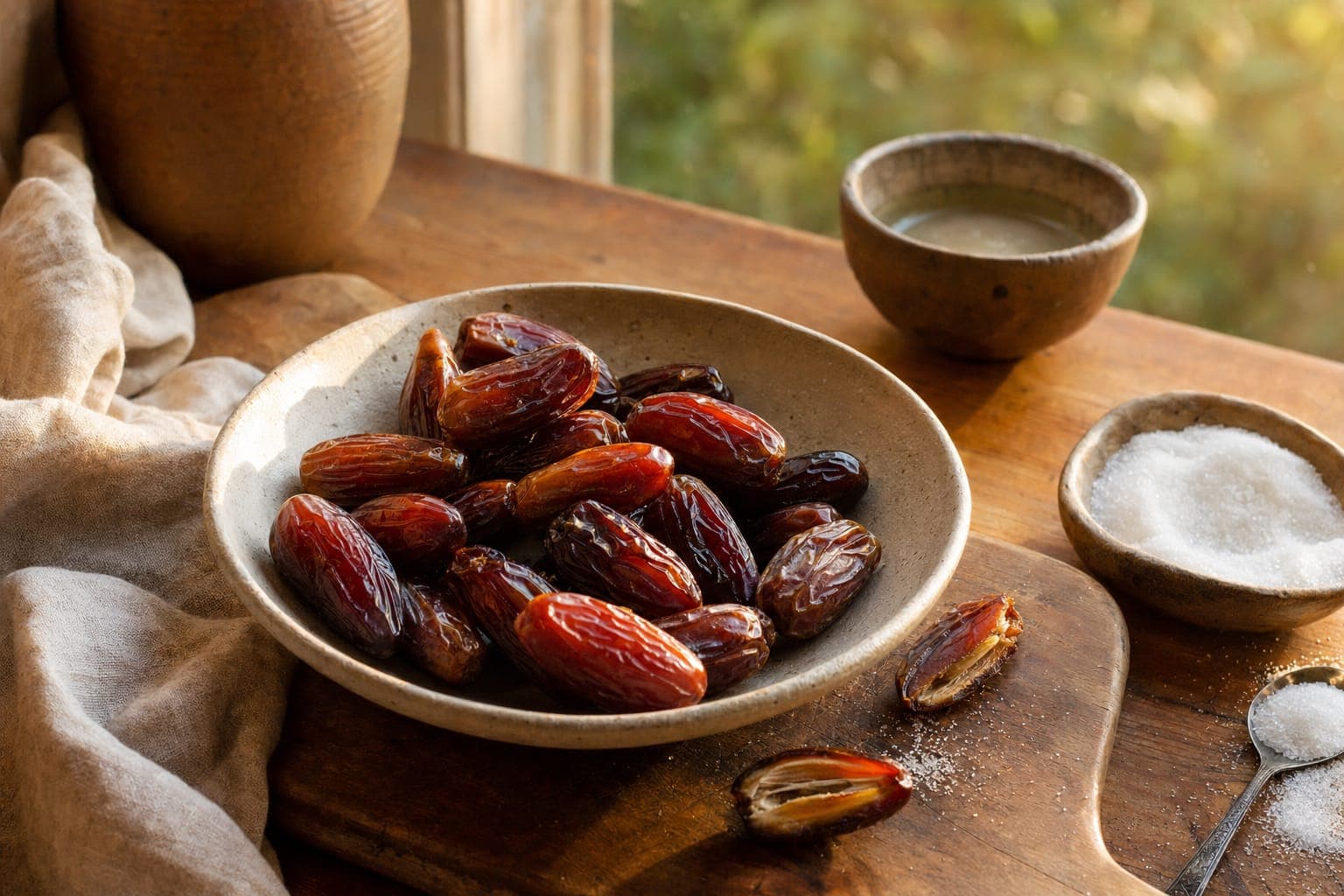
This isn't about framing bad food as less bad. This is about recognising that dates are not sugar with a health halo. They're a completely different food. The same carbohydrate content. Fundamentally different impact.
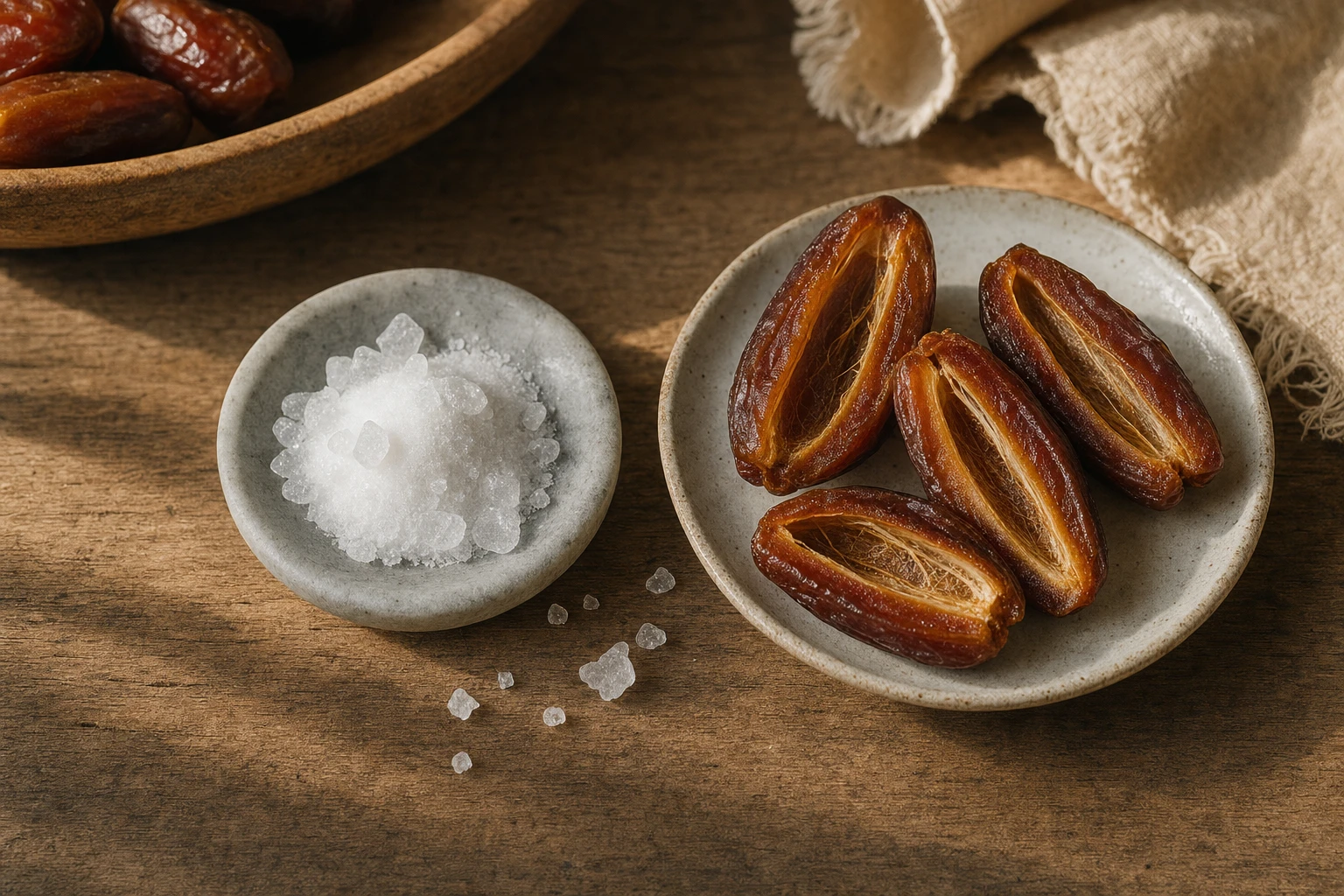
Why sugar is not just sugar
Refined sugar is sucrose. That's it. Sucrose molecules and essentially nothing else. No fibre. No minerals. No vitamins. No polyphenols. No enzymes. Pure carbohydrate. A tablespoon contains roughly 12 grams of carbohydrate and essentially zero nutrients.
A Medjool date also contains roughly 18 grams of carbohydrate, but it contains it packaged with everything else. It's not just the sugar. It's the sugar and the context in which that sugar exists. That context is everything.
When you eat refined sugar, you're eating a molecule. When you eat a date, you're eating a food. They both contain carbohydrate, but the carbohydrate is processed by your body in completely different ways because the context is different.
Two foods can contain the same amount of sugar and produce completely different effects in your body. The difference is what comes alongside the sugar. In dates, everything comes alongside it. In refined sugar, nothing does.
The fibre matrix of dates
A Medjool date contains roughly 6 to 8 grams of fibre per 100 grams of fruit.1 That's roughly 2 grams per date. That fibre is not an optional component. It's woven through the entire structure of the date. The sugars don't exist in isolation. They exist within a matrix of soluble and insoluble fibre.
When you eat a date, you can't absorb the sugar at the same speed you can absorb sugar from a spoon of refined sugar. The fibre slows absorption. The sugar enters your bloodstream gradually. Your blood glucose rises slowly, peaks slowly, and falls slowly. Your pancreas doesn't have to dump a massive amount of insulin. Your cells don't have to sponge up sugar frantically. The whole process is gentler, slower, more controlled.
Refined sugar has no fibre. The sucrose hits your small intestine and is absorbed as fast as your body can absorb it. Blood glucose spikes. Insulin surges. Then the glucose is cleared, your blood glucose plummets, and you're left tired, hungry, and reaching for more sugar.
The same carbohydrate content. Completely different trajectory. The fibre matrix changes everything.

Minerals in dates versus empty sugar
A Medjool date contains roughly 54 milligrams of magnesium, 200 milligrams of potassium, 65 milligrams of calcium, 1 milligram of copper, and trace amounts of zinc, manganese, and selenium.1 These minerals are not accidental. They're concentrated in the date because the fruit was designed to feed the seed and to be nutritious to anyone who ate it.
A tablespoon of refined sugar contains approximately zero grams of minerals. Not trace amounts. Zero. Sugar is extracted from cane or beet and then crystallised. Any mineral that clung to the sugar molecules is removed in the refining process.
Your body doesn't just need energy. It needs the minerals that allow it to use that energy. When you eat dates, you get both. When you eat refined sugar, you get energy, but your body still has to find the minerals it needs to process that energy. Those minerals come from your tissues. Over time, chronic refined sugar consumption depletes mineral stores.
Dates replenish them. Sugar depletes them. They're not equivalent.
The polyphenol advantage
Dates also contain polyphenols, a class of plant compounds with significant antioxidant and anti-inflammatory effects. The concentration varies by date variety, but Medjool dates contain a meaningful amount of polyphenols.2
Polyphenols do several things. They reduce oxidative stress, which is implicated in ageing and chronic disease. They support healthy inflammation levels. They feed beneficial gut bacteria. They improve insulin sensitivity. They can even improve postprandial glycaemia, the way your body responds to glucose, which means the blood sugar spike from dates is even gentler than the fibre content alone would suggest.3
Refined sugar contains zero polyphenols. Not trace. Zero. Nothing. Sugar is so thoroughly stripped during refining that it contains nothing but the molecule itself.
Dates come with antioxidants and anti-inflammatory compounds that protect your body from the very processes that too much refined sugar accelerates. They're not just less harmful. They're actively protective.
Get ingredient guides like this, free
Two short reads a week on the ingredients that matter and how to actually use them.
By signing up you agree to receive emails from us. No spam, unsubscribe anytime.
How your body processes each differently
When you eat a date, your body does this: It breaks down the fibre. That fibre feeds beneficial gut bacteria. As you chew and digest the date, you're breaking down a complex food. The sugars are released gradually, mixed with minerals, cofactors, and polyphenols. Your liver processes this sugar in context. Your pancreas releases insulin proportionally. Your cells absorb the glucose smoothly. Your blood sugar stays stable. Your energy stays steady.
When you eat refined sugar, your body does this: The sucrose hits your small intestine and is broken into glucose and fructose immediately. There's no fibre to slow it. No minerals to cofactor the process. No polyphenols to improve insulin sensitivity. Glucose floods your bloodstream. Fructose goes straight to your liver, where it's processed immediately into fat or glycogen. Your pancreas panics and dumps insulin. Your blood glucose spikes. Insulin clears the glucose. Your blood glucose crashes. You're tired. You're hungry. You reach for more sugar.
The difference is not subtle. It's fundamental. The same carbohydrate content, processed through completely different metabolic pathways, producing completely different outcomes.

1 of 9
Daily blend
100,000+ thriving families4.9 on Trustpilot
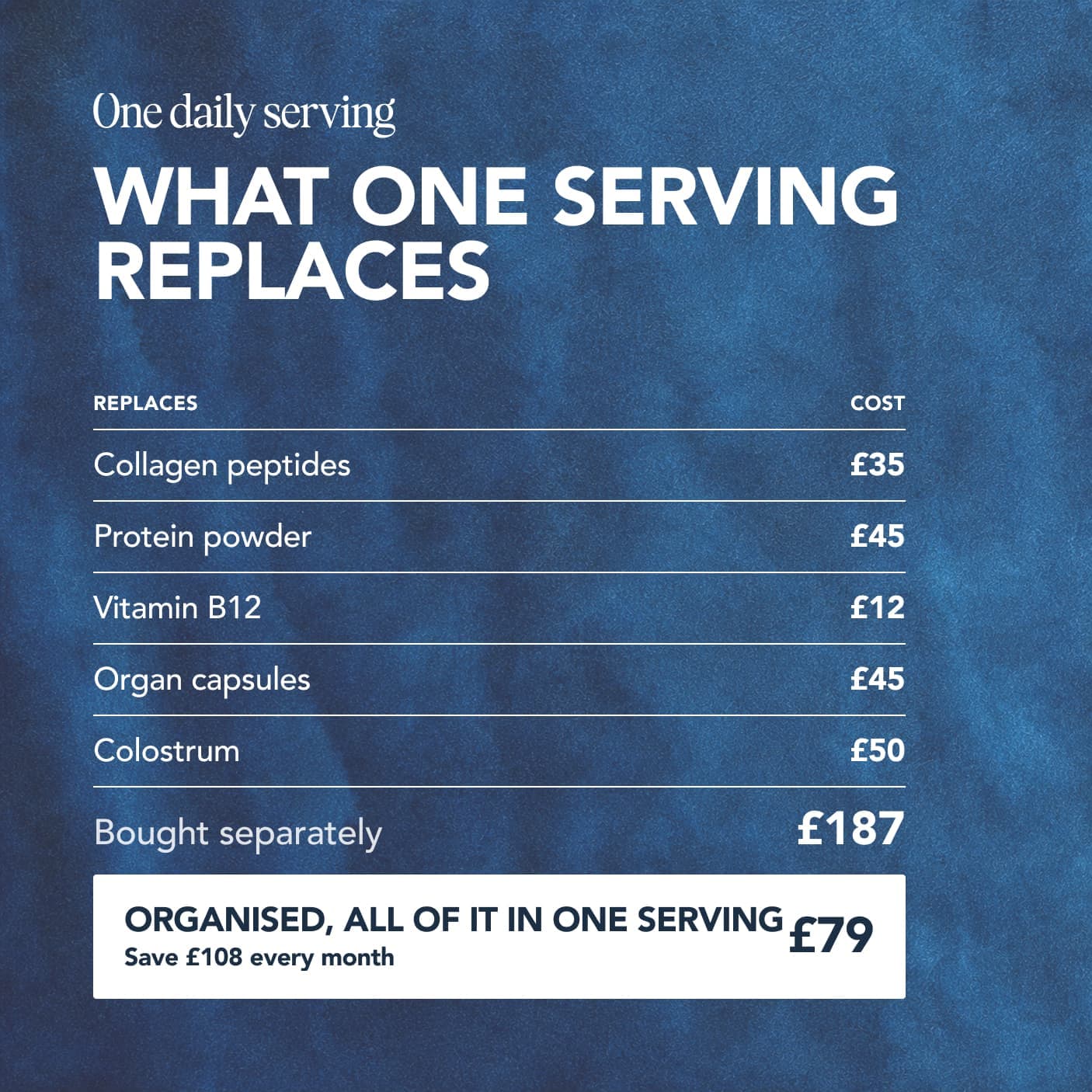
Eight real ingredients built around grass-fed beef organs, collagen and colostrum. Nothing synthetic added.
Free with your first order, worth £38. Plus £10 off the pouch with a subscription.

Free UK shipping · Made in England · 100 day money back guarantee on your first pouch · Skip, pause or cancel anytime
The practical difference
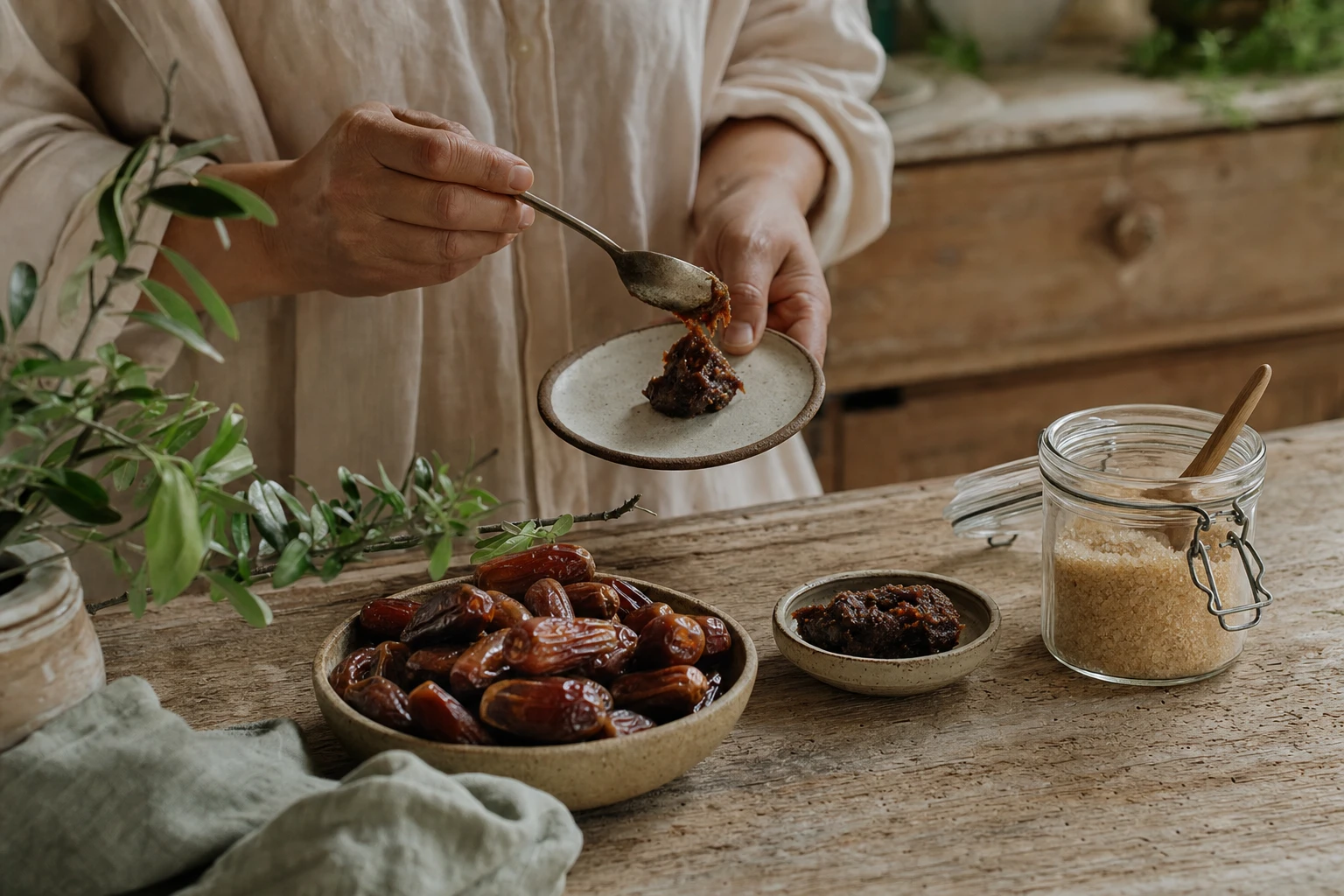
Here's what this means in real life. If you're choosing between a spoonful of refined sugar and a Medjool date, choose the date. You'll get the sweetness you want. You'll get the carbohydrate your body needs. You'll get minerals. You'll get polyphenols. You'll get fibre. You'll feel satisfied with one date instead of reaching for more. Your blood sugar will stay stable. Your energy will stay steady. You won't crash.
If you're baking or cooking, use date paste or date powder instead of refined sugar. The flavour is richer. The sweetness is softer. And you'll get the full nutritional benefit instead of empty calories.
A Medjool date costs roughly the same as a teaspoon of sugar. It weighs more. It satisfies more. It provides actual nutrition. There is no scenario in which refined sugar is the better choice if whole food dates are available.
The bottom line
Refined sugar is a pure carbohydrate. Dates are a food. That distinction transforms how your body responds. The same amount of carbohydrate in a date is processed entirely differently than the same carbohydrate from refined sugar because everything about the context is different.
Your body doesn't just crave sugar. It craves the minerals, the energy, the satiation that whole foods provide. When you eat refined sugar, you satisfy the craving for sweetness but not the craving for nourishment. Your body stays hungry. You eat more.
When you eat a date, both cravings are satisfied. You feel full. Your energy stays stable. Your health moves in the right direction instead of declining.
Stop thinking of dates as a healthier sugar. Think of them as the food that replaced sugar entirely. Once you do, the choice becomes obvious.
References
Every source below was checked on 27 August 2026. Each PubMed, PMC and DOI identifier was resolved against NCBI or Crossref, and what it opens is printed under the citation, so you can see the link goes where the citation says without leaving the page. Where a citation and its identifier disagreed, the citation was corrected to the record or the reference was deleted along with the sentence marker that pointed at it, and where the resolved paper turned out not to support the sentence, the sentence was cut back to what it does support. Borrowed authority is worse than none, because it looks like rigour.
- USDA FoodData Central. Dates, medjool. FoodData Central
- Al-Farsi M, Lee CY. Nutritional and functional properties of dates: a review. Crit Rev Food Sci Nutr. 2008;48(10):877-87. PMID 18949591Checked 27 August 2026: PMID 18949591 opens Al-Farsi MA, Lee CY, Nutritional and functional properties of dates: a review. Crit Rev Food Sci Nutr 2008;48(10):877-87. PubMed indexes it as: Comparative Study, Review.
- Alkaabi JM, et al. Glycemic indices of five varieties of dates in healthy and diabetic subjects. Nutr J. 2011;10:59. PMID 21619670Checked 27 August 2026: PMID 21619670 opens Alkaabi JM, Al-Dabbagh B, Ahmad S et al, Glycemic indices of five varieties of dates in healthy and diabetic subjects. Nutr J 2011;10:59. PubMed indexes it as: Clinical Trial, Comparative Study.
Who wrote and reviewed this guide
Niall Kiddle
Author · Founder, Organised
Niall is the founder of Organised. He started the company in 2024 after fixing his own health the slow way: in 2022 he swapped a cupboard of synthetic supplements for real food, raw milk, organ meats, bone broth and honey, and felt the difference within months.
Areas of expertise: Ancestral nutrition, Organ meats, Whole-food supplementation, Gut health, Regenerative sourcing
Read Niall's full profile
Pedro Rodrigues
Reviewer · Agronomist (farming and sourcing only)
Pedro is the agronomist Organised works with on farming and sourcing. His job on the guides is to keep the science honest: he reviews what we publish about soil health, regenerative agriculture, grazing and the way food is actually produced.
Areas of expertise: Regenerative agriculture, Agronomy, Soil health, Grass-fed farming, Food sourcing
Reviewed this guide on
Read Pedro's full profileBrowse the guides library
All guidesKeep reading

Ingredients
Why We Stopped Being Afraid of Salt (And You Should Too)
The war on salt was built on flawed research. Your body needs sodium. Here's why quality salt matters and how to get your mineral balance right.

Ingredients
Colostrum for Gut Health: How Immunoglobulins Repair the Gut Lining
Learn how colostrum's immunoglobulins and growth factors repair intestinal permeability and restore gut barrier integrity.

Ingredients
The Antimicrobial Power of Raw Honey
Learn how the antimicrobial properties of raw honey, like hydrogen peroxide and MGO, set it apart from processed honey, and why it is a real whole food.
Real food, made effortless
Try the organ blendA few ways to use it
All recipes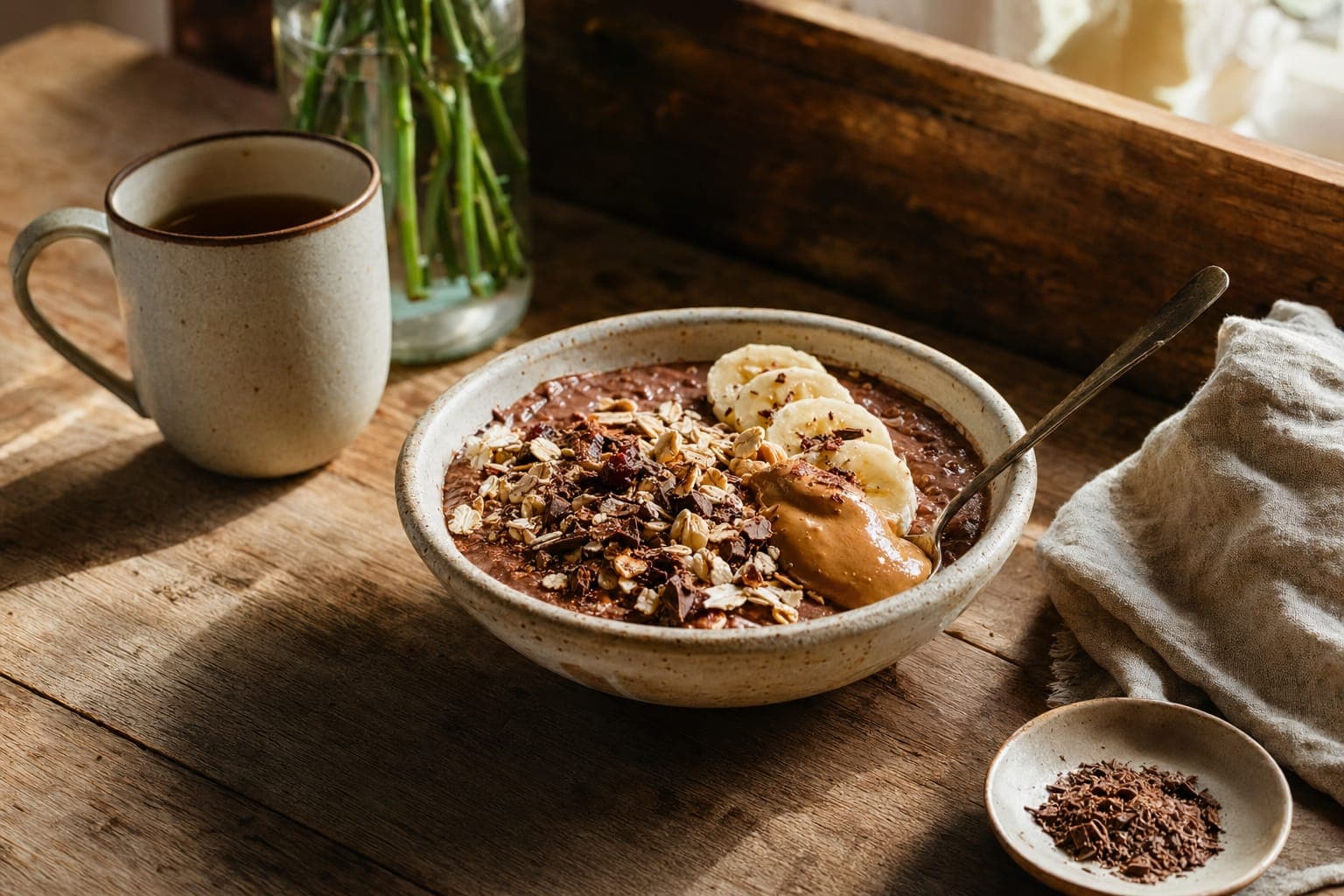
10 Ways to Use Organised That Aren't Just a Shake
Move beyond the basic shake. Discover 10 creative ways to use Organised in smoothie bowls, oats, yoghurt, baking, and more.

Raw Milk Hot Chocolate with Collagen
A nourishing evening hot chocolate made with raw milk, grass-fed collagen, raw cacao, and honey. A nighttime ritual that supports sleep and gut health.
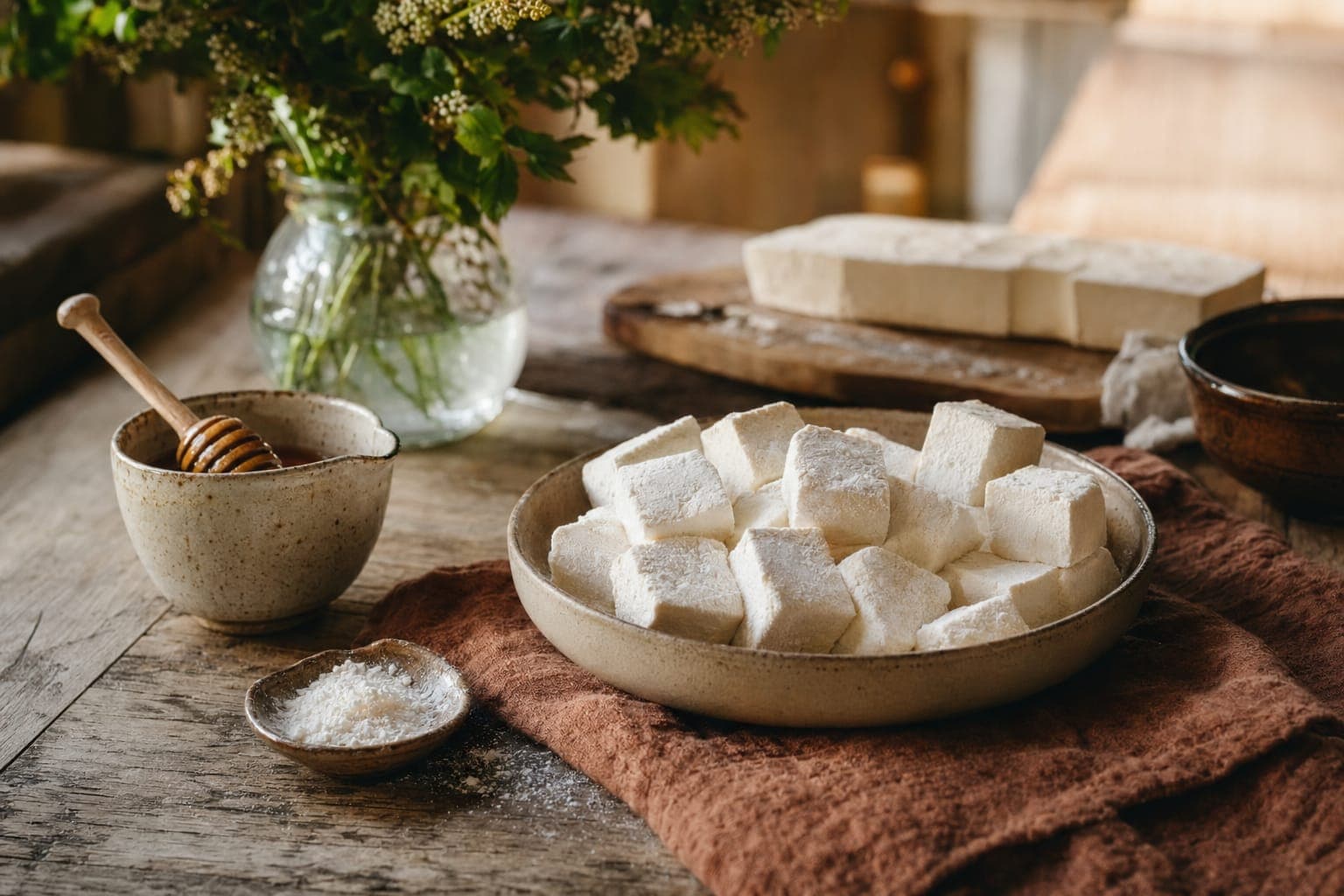
Gut-Healing Marshmallows with Collagen and Raw Honey
Learn to make gut-healing marshmallows with collagen and raw honey. A shareable treat that sneaks nutrition into every bite. Easy recipe with video tips.


 Join over 100,000+ members
Build a better food system with us
The Organised community is thousands of people choosing real food and backing the farmers who grow it, all of us trying to leave the world a little better than we found it. If that is what you care about too, you belong here.