Collagen Peptides: A Complete Guide to Types, Sources and Benefits
Collagen is the most abundant protein in your body. Your skin, joints, connective tissue, gut lining, and blood vessels all depend on it. But somewhere around your late twenties, your body starts making less of it. That's where collagen peptides come in.

By Niall Kiddle, Founder, Organised

Reviewed by Pedro Rodrigues, Agronomist (farming and sourcing only) ·
9 min read · Published · Updated · 5 cited sources
Makers of the Organised Daily blend, a grass-fed beef organ supplement from regenerative UK farms


What collagen actually is
Collagen is a fibrous protein that provides structure and elasticity to connective tissue. It's not unique to animals; it's found in meat, bones, skin, and cartilage. It's not a single molecule, either; collagen is a family of proteins with subtly different structures and functions.
Your body makes collagen from amino acids (primarily glycine, proline, and hydroxyproline) plus vitamin C, copper, and iron. When these building blocks are available, your body continuously produces new collagen to replace old, damaged collagen. When these building blocks are scarce, production slows and degeneration accelerates.
Collagen exists in types. There are at least 28 types, but only a few matter for human health. Types I, II, III, and IV make up the vast majority of collagen in your body.
Type I and Type III: the ones that matter
Type I collagen is the most abundant. It's the structural foundation of skin (80% of your dermis is type I), tendons, ligaments, and bones. It's responsible for skin firmness, elasticity, and strength. When you're concerned with skin quality, joint health, or connective tissue integrity, type I is what you're addressing.
Type III collagen is the second most abundant. It's found alongside type I in skin, blood vessels, and the gastrointestinal tract. It's particularly important for skin elasticity and gut health. The ratio of type I to type III matters: young skin has more type III (which is why it's more elastic), but as you age, type III declines faster than type I, leading to reduced elasticity and increased wrinkles.
Type II collagen is the primary collagen in cartilage. If you're supplementing specifically for joint health, you want type II. But type I and III are foundational for everything else.
Bovine collagen is primarily type I and III, making it the most versatile for skin, joints, gut, and connective tissue health. Marine collagen is predominantly type I, which is why it's marketed for skin specifically.
For a complete collagen approach, you want both types I and III. Grass-fed bovine collagen provides both. Marine collagen provides mainly type I.

Why peptides? The hydrolysis advantage
Raw collagen (the collagen in bone broth, for instance) is large and structurally intact. It's useful, but your digestive system has to break it down before absorption. This process is inefficient; much of the collagen passes through undigested.
Collagen peptides are created through hydrolysis: collagen is treated with heat and enzymes to break the protein chains into smaller, bioavailable pieces. These smaller peptides are absorbed far more efficiently than intact collagen. Studies show absorption rates of 90%+ for hydrolysed collagen peptides, versus much lower rates for whole collagen.
This is why collagen supplements work better than bone broth. It's not that bone broth lacks collagen; it's that the collagen in bone broth is harder to absorb. Hydrolysed peptides get into your system quickly and efficiently.
Additionally, the peptides are small enough to cross the intestinal barrier and accumulate in skin and joint tissue. They don't directly rebuild collagen (your body still has to do that work), but they provide the raw materials and they trigger signalling pathways that upregulate collagen production.
Grass-fed bovine collagen vs marine collagen
Both are legitimate, but they're optimised for different outcomes.
Grass-fed bovine collagen contains types I and III, making it ideal for skin health, joint support, gut health, and overall connective tissue integrity. Grass-fed beef carries higher micronutrient density (vitamin A, B vitamins, minerals) than grain-fed, and these cofactors support collagen synthesis. It's more sustainable and more ecological than marine sources. It's also typically cheaper.
Marine collagen is primarily type I, making it optimised for skin-specific outcomes. It's also absorbed rapidly and is often marketed aggressively. The downside: marine collagen doesn't provide type III (which matters for elasticity), and marine sources are less sustainable. Fish farming practices are often questionable, and wild-caught fish collagen can accumulate microplastics.
If you're choosing one, grass-fed bovine wins on sustainability, completeness, and cost. Marine collagen is valid if you're specifically targeting skin and can't find grass-fed bovine.
Avoid collagen from unspecified sources or from animals raised on grain. The micronutrient density of grass-fed collagen matters.

What the research actually shows
The evidence for collagen supplementation is legitimate but honest about scope.
Multiple studies show that collagen peptide supplementation increases skin hydration, elasticity, and firmness over 8-12 weeks of consistent use.1 It's not dramatic, but it's measurable. The effect is stronger in older adults and people with compromised skin health.
For joint health, the evidence is similarly positive. Studies on athletes and people with joint pain show that collagen peptide supplementation reduces joint pain and supports recovery.3 Again, the effect size is moderate, not miraculous.
For gut health, the mechanism is sound: glycine and proline (the primary amino acids in collagen) are crucial for gut barrier integrity.4 The research is less robust than for skin and joints, but the logic is solid and anecdotal reports are strong.
What collagen doesn't do: it doesn't directly rebuild your collagen structures. Your body has to do that work. Collagen provides the building blocks and the amino acid signature that triggers collagen-building pathways, but the actual reconstruction happens through your body's own synthesis, supported by vitamin C, copper, and lysine.

Who benefits from collagen supplementation
People over 30. Collagen production declines with age, accelerating after your thirties. If you're concerned with skin quality, joint health, or connective tissue integrity, supplementing collagen preventatively makes sense.
Athletes and active people. Intensive training creates micro-damage to connective tissue. Collagen peptides support repair. Combined with adequate vitamin C and rest, collagen supplementation can improve recovery.
People with gut health concerns. If you have a compromised gut lining or inflammatory bowel issues, collagen's amino acids support barrier integrity. It's not a cure, but it's a useful foundational tool.
People concerned with skin health. If wrinkles, elasticity, or skin firmness matter to you, collagen is one of the few supplements with solid research backing its effectiveness. Results take 8-12 weeks and are moderate, not transformative, but they're real.
People recovering from injury. Collagen supports healing of ligaments, tendons, and connective tissue. Combined with rest and proper rehabilitation, collagen peptides can accelerate recovery.
Collagen works best when you're also getting adequate vitamin C, copper, zinc, and lysine from food. It's not a standalone supplement; it's part of a complete nutritional approach.
Get ingredient guides like this, free
Two short reads a week on the ingredients that matter and how to actually use them.
By signing up you agree to receive emails from us. No spam, unsubscribe anytime.
Type I vs Type III collagen: what's the difference
Collagen comes in 28 different types, but only two matter for most people: Type I and Type III.
Type I collagen makes up roughly 90% of your skin, hair, nails, and bones. It's the structural protein that gives these tissues strength and resilience. When people talk about "collagen for skin," they're usually referring to Type I. Type I is also found throughout your connective tissues, tendons, and ligaments.
Type III collagen makes up roughly 10% of your skin and is especially concentrated in younger skin. It provides elasticity and flexibility. As you age, Type III declines faster than Type I, which is why skin becomes less elastic with age.
Most grass-fed bovine collagen supplements contain both Type I and Type III in ratios roughly matching natural skin (9:1). Marine collagen is primarily Type I, which is why it's popular for skin but less useful for overall connective tissue health.
For complete skin, bone, and connective tissue support, you need both Type I and Type III. Grass-fed bovine collagen provides both in optimal ratios.
Dosing and timeline: how much collagen, how long to see results
Most collagen studies use 10-20 grams per day. This seems like a lot, but it's essential for seeing real results.
For skin health: 10-15 grams daily. Results appear within 8-12 weeks in most people.2 Your skin becomes noticeably smoother, more hydrated, and more resilient to sun damage. Fine lines soften.
For joint and bone health: 15-20 grams daily. Results take longer (12-16 weeks), but joint pain decreases and bone density may improve measurably.
Consistency matters more than the exact dose. Daily is better than sporadic mega-doses. Most people see results only if they take collagen consistently for at least 8 weeks.
Bioavailability: why hydrolysed collagen works better
Raw collagen is a massive protein molecule that your digestive system struggles to break down. Your gut can absorb only tiny fragments, which limits the benefit.
Hydrolysed collagen (also called collagen peptides) is collagen that's been broken down using enzymes or heat into much smaller chains of amino acids. Your gut can absorb these peptides easily and completely. The bioavailability jumps from roughly 30-40% (for whole collagen) to 90%+ (for hydrolysed peptides).
This is why virtually all collagen supplements are hydrolysed. It's not because hydrolysis destroys the collagen, it's because hydrolysis makes it usable.
When you consume hydrolysed collagen peptides, your body absorbs the amino acids (especially glycine, proline, and hydroxyproline) and uses them to synthesise new collagen in your skin, bones, and joints. The amino acids are specific enough that your body prioritises them for collagen-building tasks.
Grass-fed bovine vs marine vs plant collagen
Not all collagen supplements are created equal. The source matters enormously.
Grass-fed bovine collagen (from beef skin and bones) provides Types I and III in natural ratios. It's also more sustainable than marine collagen and supports nose-to-tail eating philosophy. The cost is mid-range.
Marine collagen (from fish skin) is primarily Type I, with minimal Type III. It has excellent marketing ("from pristine oceans") but provides less complete support for whole-body collagen. Also raises sustainability concerns with overfishing.
Plant-based collagen doesn't actually exist. There is no collagen in plants (collagen is an animal-specific protein). "Plant collagen" is usually pea or other plant protein, which lacks the specific amino acid profile of actual collagen. Don't waste money on plant collagen.
For most people, grass-fed bovine collagen peptides are the best choice. Type I and III, complete nutrient profile, sustainable sourcing.



1 of 9
Daily blend
100,000+ thriving families4.9 on Trustpilot
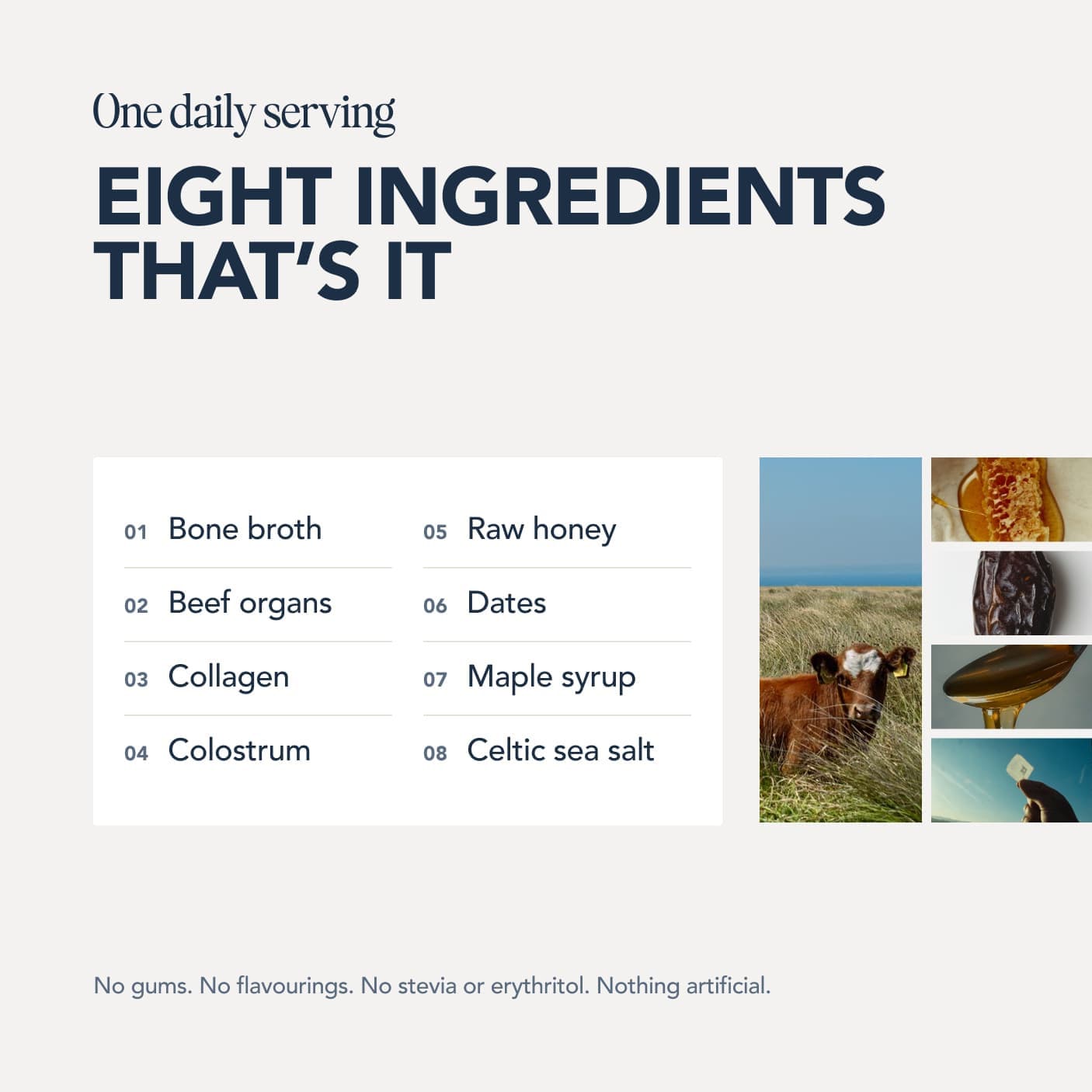
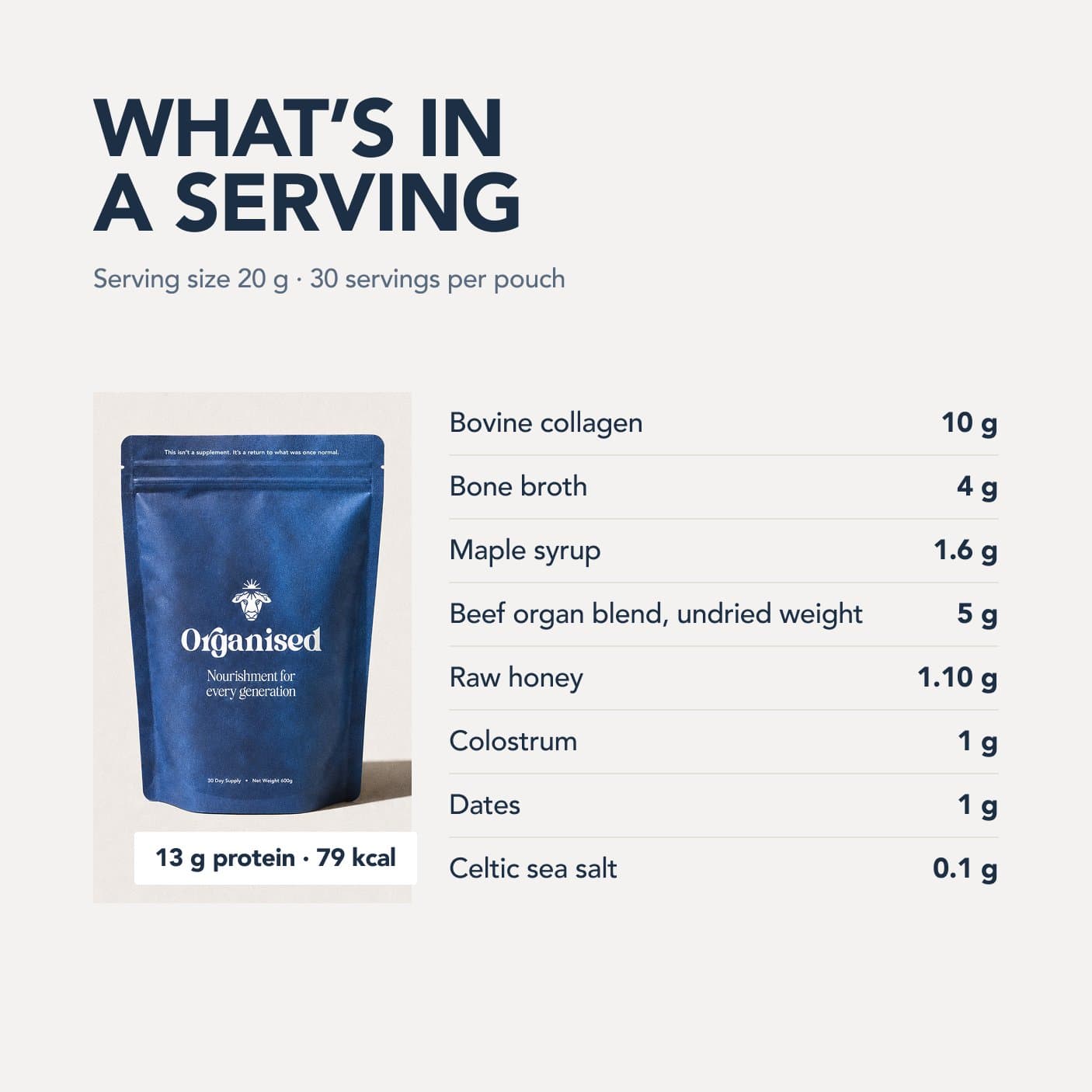
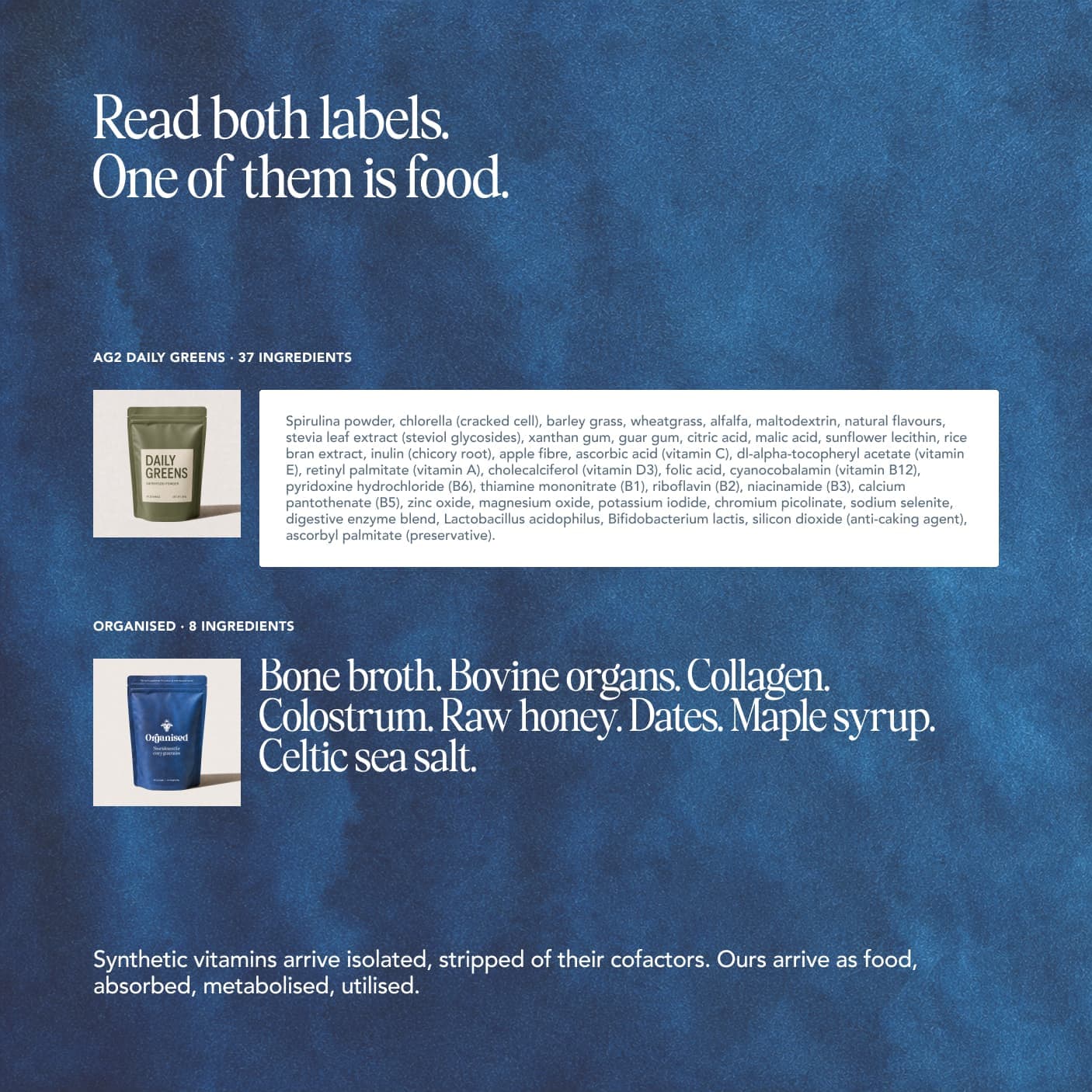
Eight real ingredients built around grass-fed beef organs, collagen and colostrum. Nothing synthetic added.
Free with your first order, worth £38. Plus £10 off the pouch with a subscription.

Free UK shipping · Made in England · 100 day money back guarantee on your first pouch · Skip, pause or cancel anytime
Storage and absorption tips
Collagen peptides should be stored in a cool, dry place. Mix with warm (not boiling) water, coffee, or broth. Take with vitamin C for optimal synthesis.
The bottom line
Collagen peptides are not a miracle supplement, but they're one of the few supplements with solid research showing they actually work for the claims made about them. They support skin health, joint integrity, gut barrier function, and recovery from training or injury.
Start with grass-fed bovine collagen, hydrolysed peptides, at around 10-15 grams daily. Give it 8-12 weeks to see results. Pair it with adequate vitamin C (from food or supplement) and consistent movement, and you'll likely notice improvements in skin, joints, and recovery.
Collagen is not a shortcut. It's a tool that works when everything else is in place: good nutrition, adequate sleep, movement, and stress management. But in that context, it genuinely moves the needle.
Research consistently shows that collagen peptide supplementation improves skin elasticity, reduces joint pain, and strengthens bones within 12 weeks when dosed consistently at 10-20 grams daily.5 The effect compounds over time, benefits are most dramatic after 6 months of consistent use.References
Every source below was checked on 27 August 2026. Each PubMed, PMC and DOI identifier was resolved against NCBI or Crossref, and what it opens is printed under the citation, so you can see the link goes where the citation says without leaving the page. Where a citation and its identifier disagreed, the citation was corrected to the record or the reference was deleted along with the sentence marker that pointed at it, and where the resolved paper turned out not to support the sentence, the sentence was cut back to what it does support. Borrowed authority is worse than none, because it looks like rigour.
- Proksch E, et al. Oral supplementation of specific collagen peptides has beneficial effects on human skin physiology: a double-blind, placebo-controlled study. Skin Pharmacol Physiol. 2014. PMID 23949208.Checked 27 August 2026: PMID 23949208 opens Proksch E, Segger D, Degwert J et al, Oral supplementation of specific collagen peptides has beneficial effects on human skin physiology: a double-blind, placebo-controlled study. Skin Pharmacol Physiol 2014;27(1):47-55. PubMed indexes it as: Randomized Controlled Trial.
- Kim DU, et al. Oral intake of low-molecular-weight collagen peptide improves hydration, elasticity, and wrinkling in human skin: a randomized, double-blind, placebo-controlled study. Nutrients. 2018. PMID 29949889.Checked 27 August 2026: PMID 29949889 opens Kim DU, Chung HC, Choi J et al, Oral Intake of Low-Molecular-Weight Collagen Peptide Improves Hydration, Elasticity, and Wrinkling in Human Skin: A Randomized, Double-Blind, Placebo-Controlled Study. Nutrients 2018;10(7). PubMed indexes it as: Randomized Controlled Trial.The authors' own declaration, from the record: The authors and the company, Newtree Co., Ltd., declare no conflict of interest to any extent.
- de Miranda RB, et al. Effects of hydrolyzed collagen supplementation on skin aging: a systematic review and meta-analysis. Int J Dermatol. 2021. PMID 33742704.Checked 27 August 2026: PMID 33742704 opens de Miranda RB, Weimer P, Rossi RC, Effects of hydrolyzed collagen supplementation on skin aging: a systematic review and meta-analysis. Int J Dermatol 2021;60(12):1449-1461. PubMed indexes it as: Meta-Analysis, Systematic Review.
- Wang W, et al. Glycine metabolism in animals and humans: implications for nutrition and health. Amino Acids. 2013. PMID 23615880.Checked 27 August 2026: PMID 23615880 opens Wang W, Wu Z, Dai Z et al, Glycine metabolism in animals and humans: implications for nutrition and health. Amino Acids 2013;45(3):463-77. PubMed indexes it as: Review.
- Pu SY, et al. Effects of Oral Collagen for Skin Anti-Aging: A Systematic Review and Meta-Analysis. Nutrients. 2023. PMC10180699.Checked 27 August 2026: PMC10180699 opens Pu SY, Huang YL, Pu CM et al, Effects of Oral Collagen for Skin Anti-Aging: A Systematic Review and Meta-Analysis. Nutrients 2023;15(9). PubMed indexes it as: Meta-Analysis, Systematic Review.The authors' own declaration, from the record: The authors declare no conflict of interest. The funders had no role in the design of the study; in the collection, analyses, or interpretation of data; in the writing of the manuscript; or in the decision to publish the results.
Corrections
What this page used to say, and why it no longer says it. Corrections are dated and are never removed, because deleting the record of an error is a second error. Every guide we have corrected is listed at our corrections log.
- 27 August 2026. Reference 5 carried no authors. The record's authors were added.
- 27 August 2026. Reference 3 named the de Miranda meta-analysis and linked a different one. It now links de Miranda's own record (PMID 33742704).
Who wrote and reviewed this guide
Niall Kiddle
Author · Founder, Organised
Niall is the founder of Organised. He started the company in 2024 after fixing his own health the slow way: in 2022 he swapped a cupboard of synthetic supplements for real food, raw milk, organ meats, bone broth and honey, and felt the difference within months.
Areas of expertise: Ancestral nutrition, Organ meats, Whole-food supplementation, Gut health, Regenerative sourcing
Read Niall's full profile
Pedro Rodrigues
Reviewer · Agronomist (farming and sourcing only)
Pedro is the agronomist Organised works with on farming and sourcing. His job on the guides is to keep the science honest: he reviews what we publish about soil health, regenerative agriculture, grazing and the way food is actually produced.
Areas of expertise: Regenerative agriculture, Agronomy, Soil health, Grass-fed farming, Food sourcing
Reviewed this guide on
Read Pedro's full profileMore on collagen
View all- Can You Get Enough Collagen from Food Alone?
- Collagen and Hair Growth: Separating Fact from Hype
- Collagen for Gut Health: Rebuilding Your Intestinal Lining
- Collagen for Joint Pain: What Does the Evidence Say?
- Collagen Supplements on Reddit: Do They Actually Work?
- Does Collagen Actually Work for Skin? What the Research Says
- The Amino Acids in Collagen and Why They Matter
- What Happens When You Take Collagen Every Day for 90 Days?
- When Does Your Body Start Losing Collagen? (And What to Do About It)
Browse the guides library
All guidesKeep reading

Ingredients
When Does Your Body Start Losing Collagen? (And What to Do About It)
When does your body start losing collagen? Learn what age decline begins, the signs to watch for, and practical ways to slow it and protect your skin.

Ingredients
Collagen for Gut Health: Rebuilding Your Intestinal Lining
Discover how collagen supports gut health by supplying glycine, proline and the amino acids your intestinal lining draws on to repair and stay resilient.

Ingredients
Does Collagen Actually Work for Skin? What the Research Says
Discover what research actually shows about collagen for skin health. We cut through the marketing to reveal what's proven and what's emerging science.
Real food, made effortless
Try the organ blendA few ways to use it
All recipes
Organised Protein Pancakes: A Weekend Favourite
A high-protein pancake recipe using beef protein, eggs, and raw milk. Cooked in cast iron, naturally sweetened with banana and honey. Real food breakfast.

Bone Broth from Scratch: A Step-by-Step Guide
Step-by-step guide to making bone broth at home. Stovetop, slow cooker, and Instant Pot methods. Rich in collagen and gut-healing minerals.

Raw Milk Hot Chocolate with Collagen
A nourishing evening hot chocolate made with raw milk, grass-fed collagen, raw cacao, and honey. A nighttime ritual that supports sleep and gut health.


 Join over 100,000+ members
Build a better food system with us
The Organised community is thousands of people choosing real food and backing the farmers who grow it, all of us trying to leave the world a little better than we found it. If that is what you care about too, you belong here.