Grass-Fed Beef Protein Isolate: What Makes It Different
Whey protein owns the market. But beef protein is quietly becoming better. Easier to digest, higher micronutrient density, and sourced from animals that were actually fed the way cattle should be fed.

By Niall Kiddle, Founder, Organised

Reviewed by Pedro Rodrigues, Agronomist (farming and sourcing only) ·
7 min read · Published · Updated · 4 cited sources
Makers of the Organised Daily blend, a grass-fed beef organ supplement from regenerative UK farms

What beef protein isolate actually is
Beef protein isolate is derived from grass-fed beef, hydrolysed into small amino acid chains, and processed into a powder. The result is a protein source with minimal fat and carbohydrates, leaving you with ~90% pure protein.
The hydrolysis process is important. Raw beef protein is large and structurally intact. Hydrolysis breaks it into smaller peptides, making it easier to absorb and digest. This is why hydrolysed beef protein works better than raw beef for supplementation: your digestive system doesn't have to do as much work.
Beef protein isolate is different from whey in sourcing and processing. Whey is a byproduct of cheese-making, extracted from milk, and usually processed via ion exchange or microfiltration. Beef protein is extracted directly from muscle tissue, hydrolysed gently, and processed minimally.
Why grass-fed sourcing matters
Grass-fed beef carries dramatically higher levels of fat-soluble vitamins (A, D, K2), omega-3 fatty acids, and minerals than grain-fed beef.1 The micronutrient density is higher because the cow's diet is more nutritionally complete.
A grass-fed beef protein isolate retains these micronutrients through the hydrolysis process (unlike whey, which strips them away). You're getting protein, yes, but also vitamin A, B vitamins, zinc, copper, and selenium.
Grain-fed beef is inferior. The cow is fed corn and soy (heavily subsidised grains, not cow food), which creates a nutritionally inferior product. Grass-fed is non-negotiable if beef protein is your choice.
The sourcing makes the supplement. Grass-fed beef protein isolate is an entirely different product from grain-fed or feedlot beef protein.
Digestion and gut tolerance
One of beef protein's biggest advantages is digestibility. Hydrolysed beef protein is easier to digest than whey for most people, particularly those with sensitive stomachs or compromised digestive systems.
Whey can cause bloating, gas, and digestive distress in people with lactose sensitivity, casein sensitivity, or general dairy intolerance. Even people without overt dairy issues often find whey harder to digest than they expect.
Beef protein, being non-dairy and hydrolysed, bypasses these issues entirely. It's absorbed quickly, it doesn't trigger immune reactions in people sensitive to dairy proteins, and it's gentler on the gut lining.
For athletes with sensitive stomachs, people recovering from illness, or anyone with compromised digestion, beef protein is superior to whey.

The micronutrient advantage
This is where beef protein really separates from whey. Whey is essentially a protein isolate with minimal additional nutrients. Beef protein retains the micronutrient profile of the muscle tissue it came from.
A serving of grass-fed beef protein isolate (typically 25-30 grams of protein) provides:
- Vitamin A: Roughly 10-15% of daily requirements4
- B vitamins: B12, B6, niacin, riboflavin
- Zinc: 10-20% of daily requirements
- Copper: Essential for collagen synthesis and immune function
- Selenium: Antioxidant and thyroid support
- Carnosine and anserine: Dipeptides with anti-inflammatory and antioxidant properties
Whey provides protein and not much else. Beef protein provides protein plus the micronutrient support system that makes protein useful.
Amino acid profile comparison
Both beef and whey have complete amino acid profiles (all nine essential amino acids). Both are leucine-rich, which is important for muscle protein synthesis. So far, they're similar.
The difference is in the supporting dipeptides and tripeptides. Beef contains carnosine, anserine, and other bioactive peptides that have anti-inflammatory and antioxidant properties. Whey doesn't. These compounds support recovery beyond what the amino acids alone provide.
For muscle building, both work. For overall recovery and inflammation management, beef has an advantage.
Amino acid profiles are similar. The advantage beef has is the supporting micronutrient ecosystem and bioactive peptides.

The practical angle
If you're choosing a protein powder, here's the decision tree:
Gut sensitive to dairy? Beef protein wins. No dairy, easier digestion.
Want maximum micronutrient density? Beef protein wins. The vitamin and mineral content is significantly higher.
Vegetarian or vegan? Whey is your only option, unless you go plant-based.
Concerned with overall recovery and inflammation? Beef protein wins. The bioactive peptides support recovery beyond protein synthesis.
Price-conscious and just want protein? Whey might edge out, but grass-fed beef protein is increasingly competitive on price.
Processing method matters significantly
Not all beef protein isolates are created equal. The processing method determines what you're actually getting.
Hydrolysed beef protein (the form worth using) is created by breaking down whole beef protein into smaller peptide chains through enzymatic hydrolysis or acid hydrolysis. This process makes the protein easier to digest and absorb. The small peptides pass through the intestinal barrier quickly and efficiently. Bioavailability is excellent.
Spray-dried beef protein (sometimes marketed as isolate but less ideal) is heated during processing, which can damage some of the thermolabile nutrients and peptides. Heating can also damage certain amino acids, reducing their bioavailability.
Ion exchange processed beef protein (common in cheaper products) is processed through chemical extraction, which often strips away micronutrients in the process. You're left with isolated protein and minimal micronutrient content, making it closer to whey in terms of nutrient density.
The best beef protein isolates are cold-processed, gently hydrolysed, and minimally treated. This preserves micronutrients, maintains amino acid integrity, and retains bioactive peptides. This is the difference between a therapeutic supplement and a commodity protein powder.
Get ingredient guides like this, free
Two short reads a week on the ingredients that matter and how to actually use them.
By signing up you agree to receive emails from us. No spam, unsubscribe anytime.
Carnosine and anserine: the recovery angle
Carnosine is a dipeptide (two amino acids linked together) found abundantly in muscle tissue. It's a powerful antioxidant and buffering agent.3 During intense exercise, your muscles produce lactate and hydrogen ions, creating an acidic environment. Carnosine buffers this acidity, allowing your muscles to continue contracting effectively.3
Additionally, carnosine is neuroprotective. It reduces inflammation in the nervous system and supports brain health. Some research suggests carnosine may be protective against neurodegeneration, though this is still being studied.
Anserine is a similar dipeptide found in muscle tissue, with similar antioxidant and buffering properties. Both are much more concentrated in red muscle (beef) than in white muscle (poultry) or in plant foods (where they're essentially absent).
When you consume beef protein isolate, you're getting these bioactive peptides alongside your amino acids. Whey protein has essentially none of these compounds. This is a significant functional difference for athletes and anyone concerned with recovery and neurological health.
Sourcing considerations: grass-fed is non-negotiable
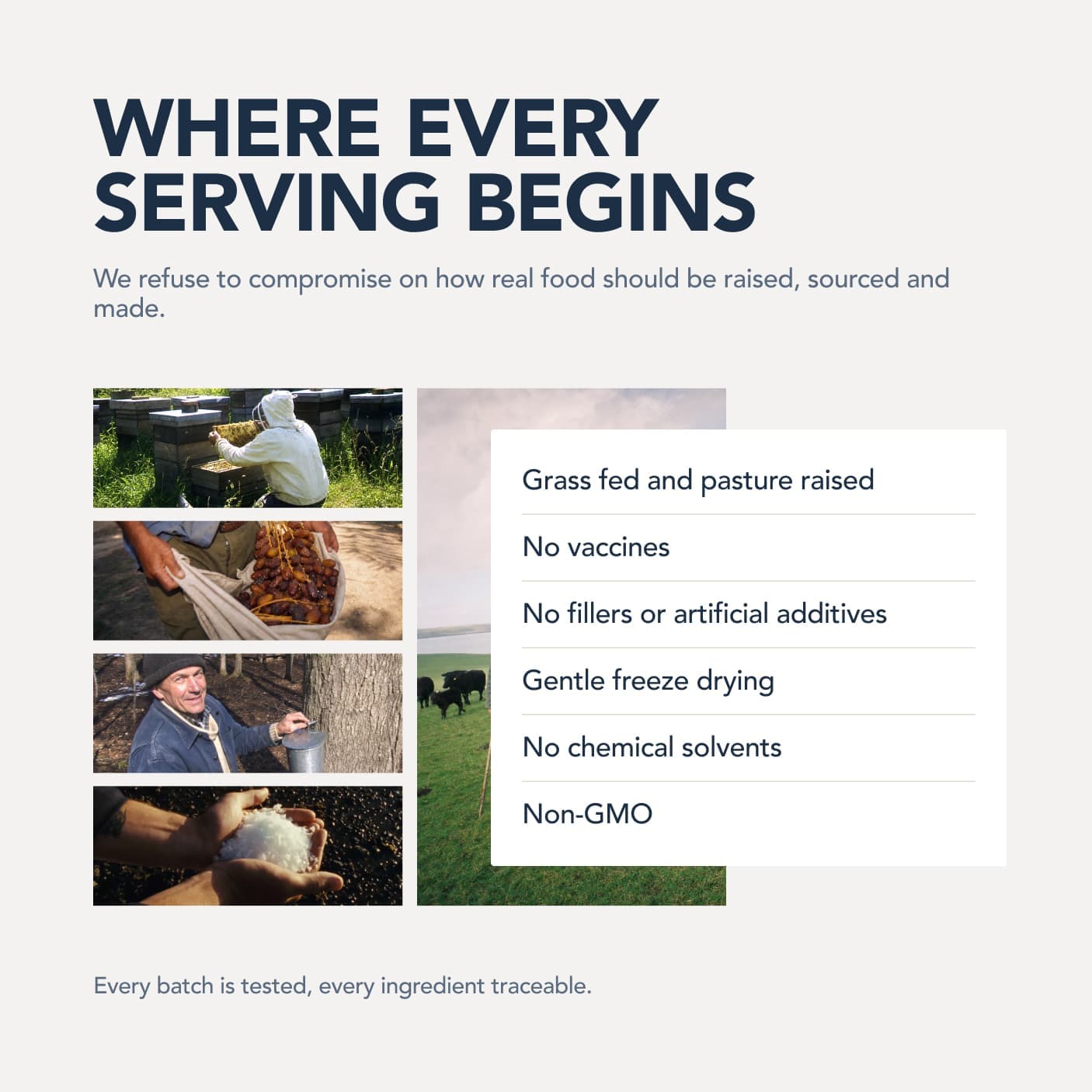
The quality of the protein directly reflects the quality of the animal's life and diet. Grass-fed beef comes from cattle that ate their natural diet (grass), moved freely on pasture, and lived in conditions that support their physiology. The muscle tissue reflects this: it's nutrient-dense, rich in fat-soluble vitamins, and contains higher levels of bioactive compounds.
Grain-fed beef comes from cattle confined in feedlots, fed corn and soy (heavily subsidised grains, not cattle food), often treated with antibiotics, and frequently injected with hormones. The muscle tissue reflects this compromised state: it's lower in micronutrients, lower in fat-soluble vitamins, and lower in bioactive compounds.
If you're going to supplement protein, sourcing matters enormously. Grass-fed beef protein isolate is a whole food in powder form. Grain-fed beef protein isolate is a processed commodity.
The comparison to whey in detail
Whey provides approximately 25 grams of protein per serving and minimal else. Grass-fed beef protein isolate provides approximately 25 grams of protein plus vitamin A, B12, B6, zinc, copper, selenium, carnosine, anserine, and other bioactive peptides.
Cost-wise, whey is cheaper per gram of protein. But when you factor in the micronutrient density, beef protein becomes competitively priced. You're essentially getting a protein supplement plus a micronutrient supplement in one product.
Digestibility-wise, beef protein is superior for most people, particularly those with dairy sensitivity, lactose intolerance, or compromised digestion. Whey is a viable option for people who tolerate dairy without issues.

1 of 9
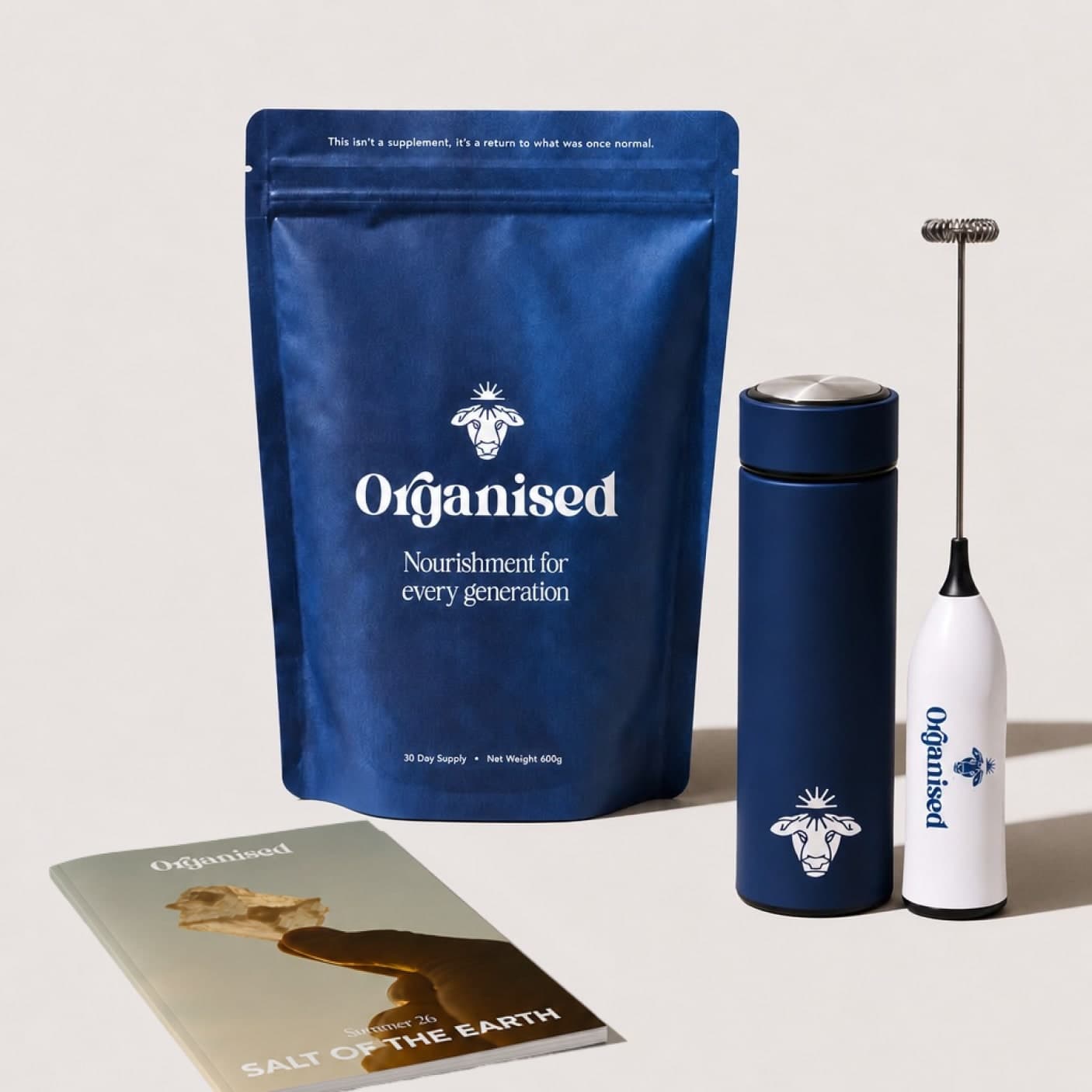
Daily blend
100,000+ thriving families4.9 on Trustpilot
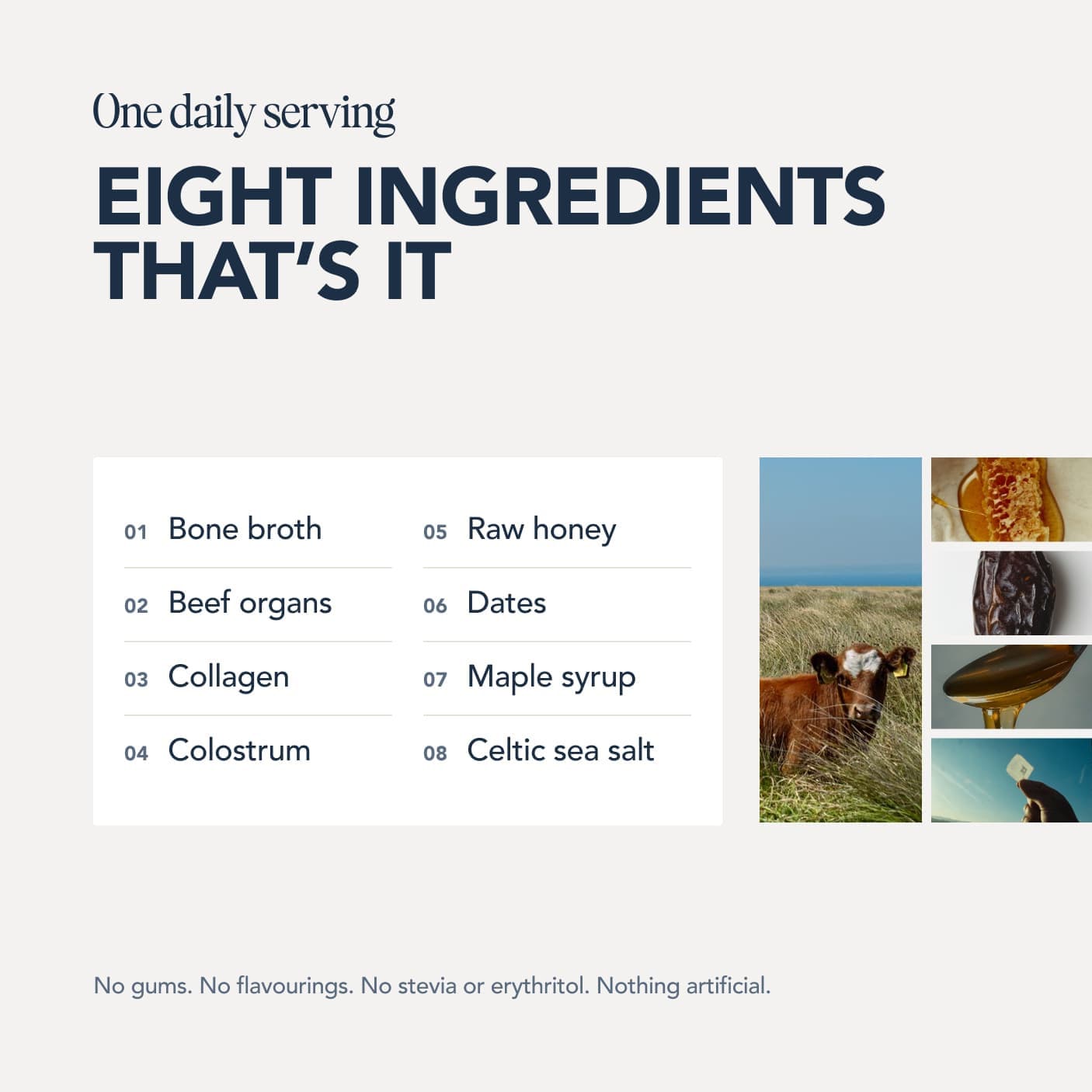
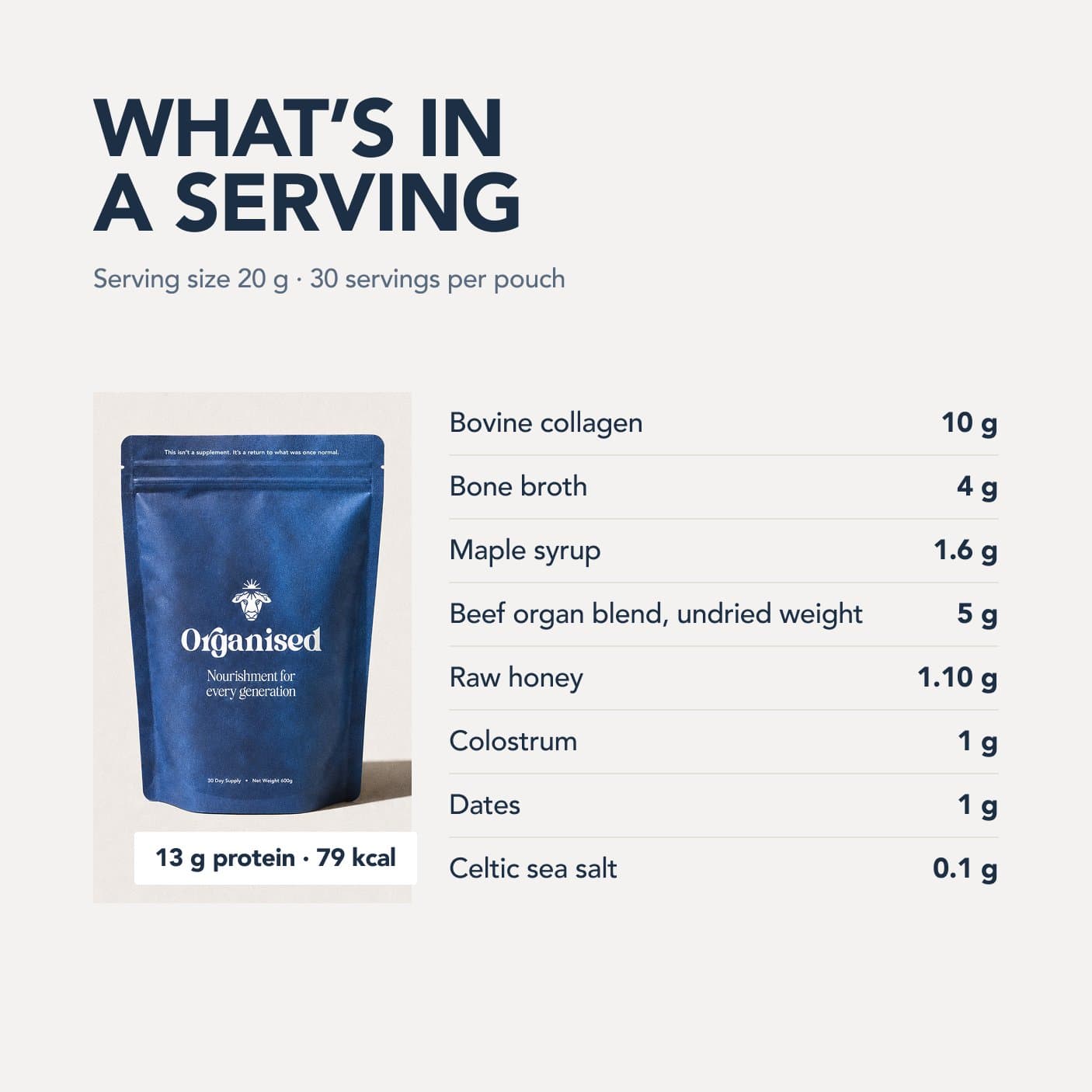
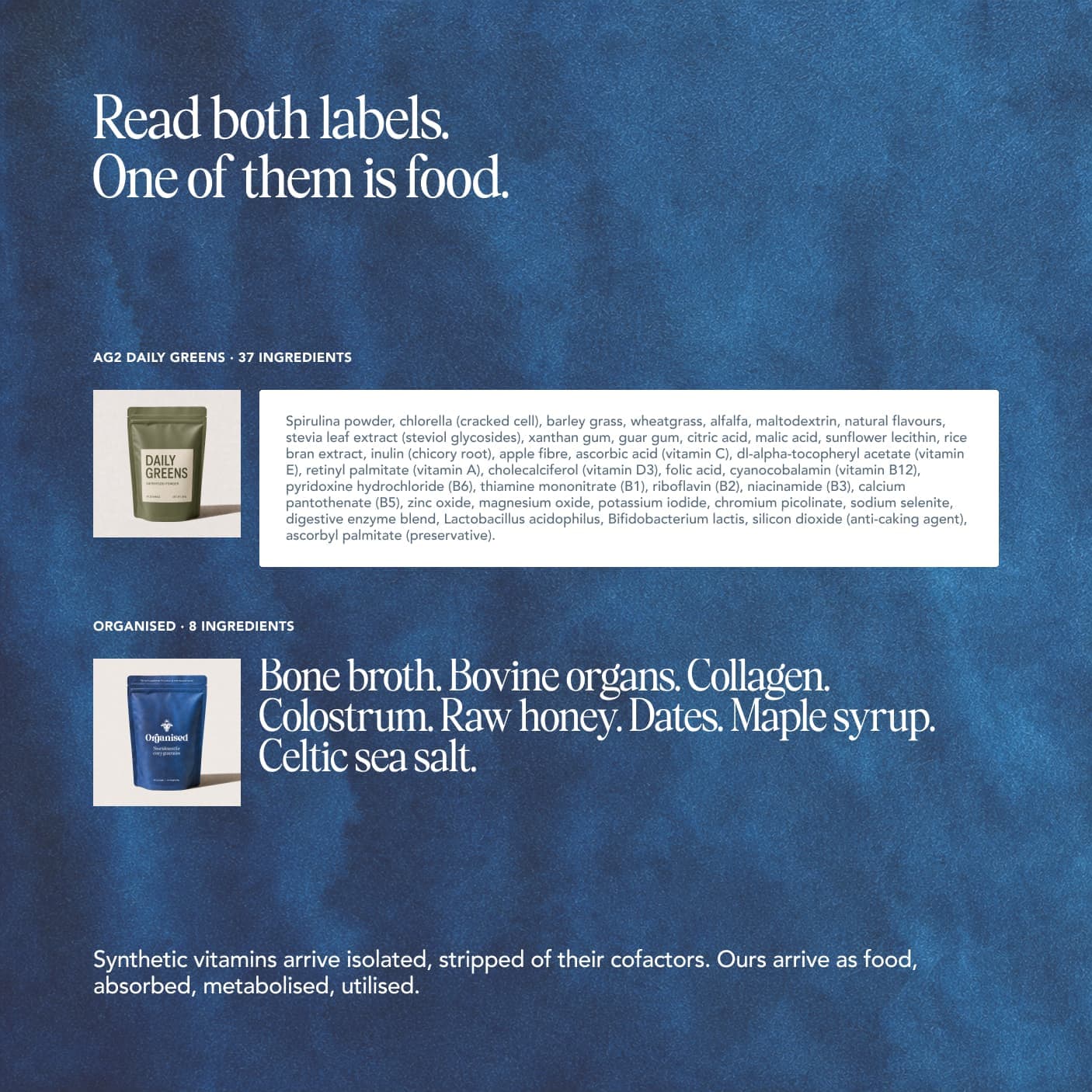
Eight real ingredients built around grass-fed beef organs, collagen and colostrum. Nothing synthetic added.
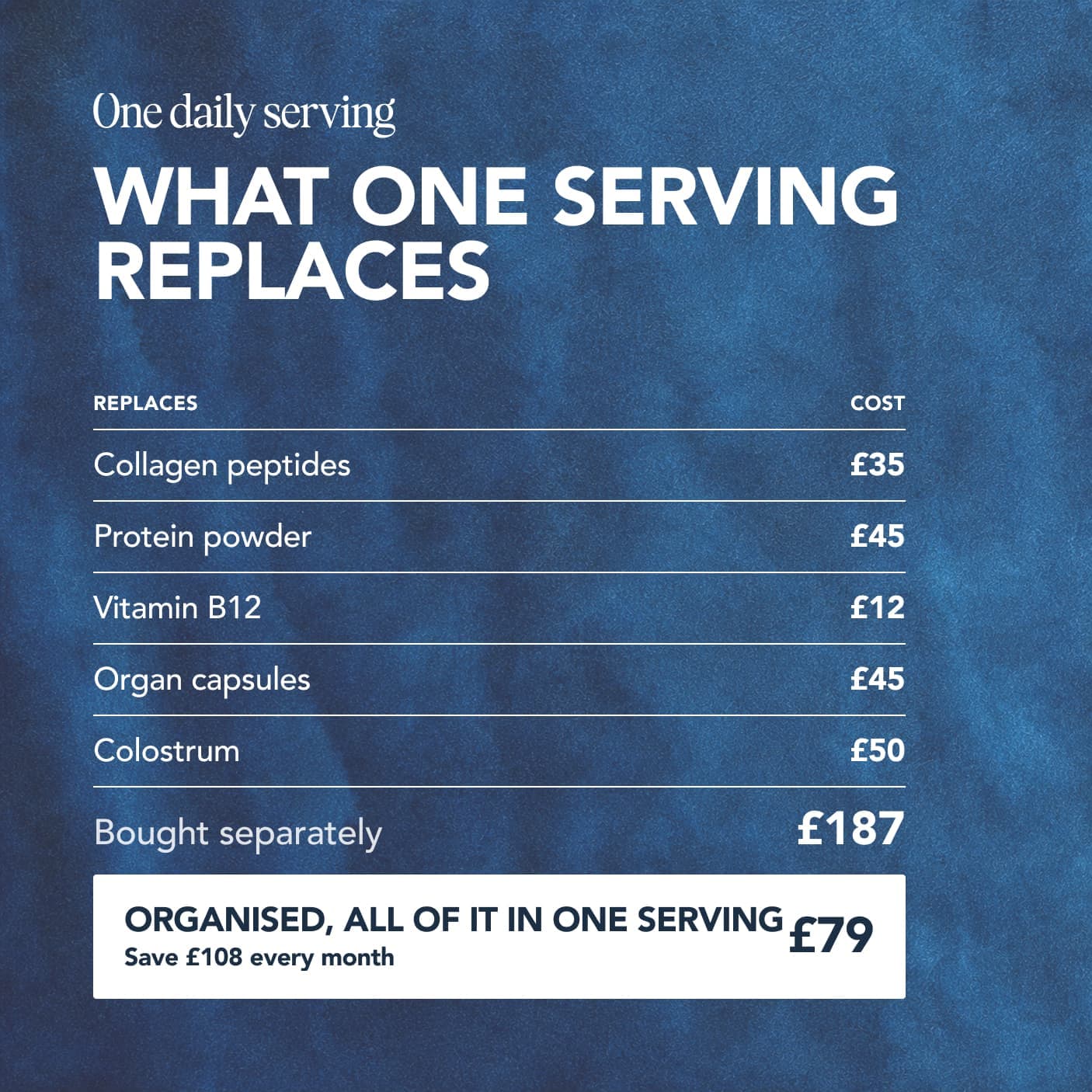
Free with your first order, worth £38. Plus £10 off the pouch with a subscription.

Free UK shipping · Made in England · 100 day money back guarantee on your first pouch · Skip, pause or cancel anytime
Amino acid profile: complete and bioavailable
Beef protein is a complete protein containing all nine essential amino acids. More importantly, the amino acid ratios are optimised for muscle building and recovery.
Beef protein is particularly high in leucine, the amino acid that triggers mTOR signalling (muscle protein synthesis).2 It also contains creatine naturally, carnosine, and anserine, compounds that support muscle strength and neurological function. Plant proteins and whey lack these performance-supporting compounds.
Bioavailability compared to whey and plant proteins
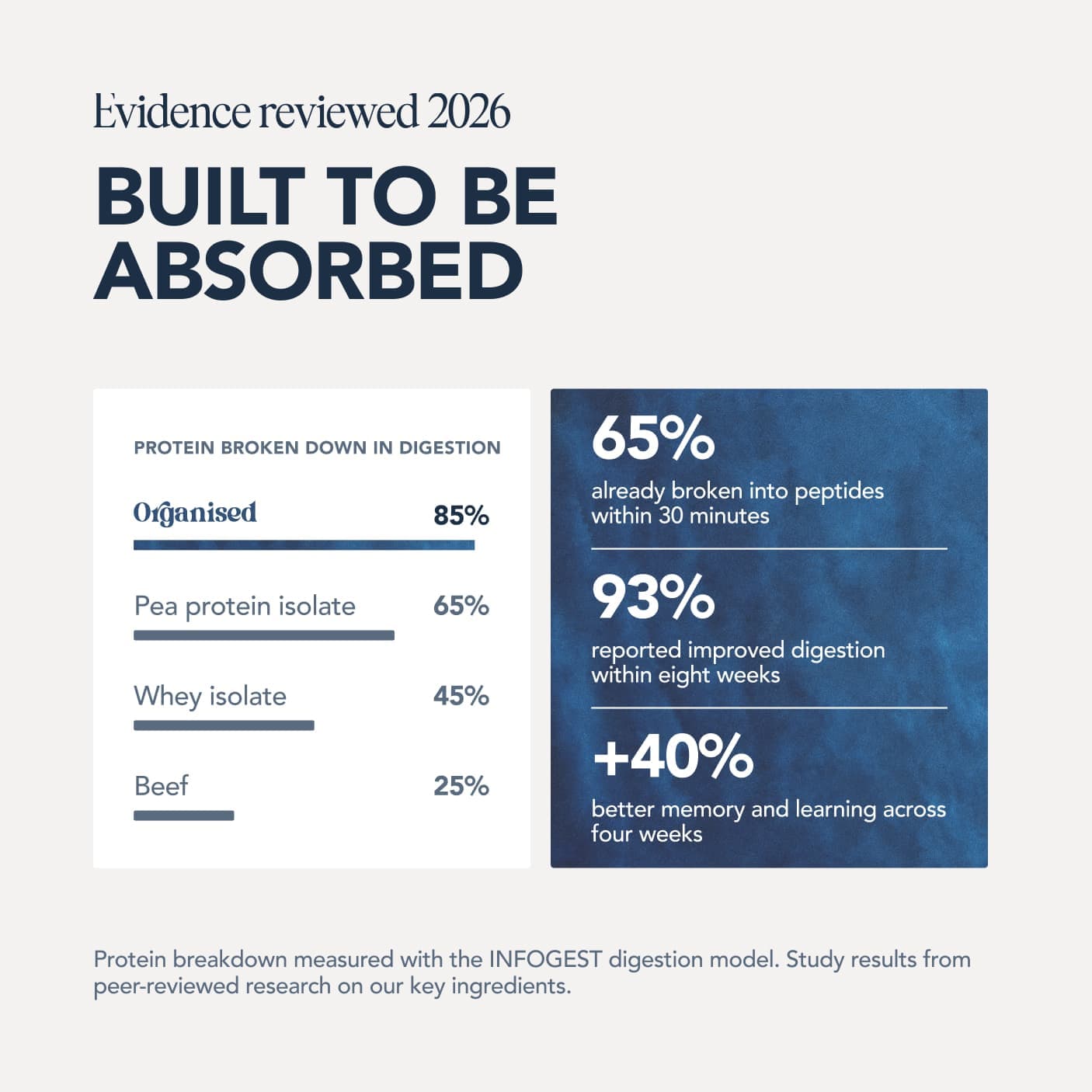
Beef protein is absorbed efficiently and completely by your digestive system. It doesn't cause the bloating or digestive upset that whey protein does in some people. The bioavailability is essentially identical to eating actual beef, you're just consuming concentrated powder.
Practical dosing and usage
Most people use 20-40 grams of beef protein powder post-workout or as a meal replacement. This provides 15-30 grams of complete protein with minimal carbohydrates. It mixes easily into water, bone broth, or milk, and doesn't foam excessively like whey.
Price and sustainability comparison
Beef protein costs slightly more than whey (typically £30-50 per kilogram) but less than plant-based alternatives. Given the superior amino acid profile and digestive tolerance, it's excellent value. Sourcing beef protein from nose-to-tail producers supports sustainable farming practices.
The bottom line
Beef protein isolate, sourced from grass-fed cattle and properly hydrolysed, is a genuinely superior protein source to whey for most people. It's easier to digest, it carries significant micronutrient density, it contains bioactive peptides that support recovery, and it's sourced from animals nourished more completely.
If you have any sensitivity to dairy, compromised digestion, concern with micronutrient intake, or interest in optimal recovery and performance, beef protein is worth the switch. You're not just getting protein; you're getting the micronutrient ecosystem and bioactive compound profile that makes protein useful.
Choose grass-fed, hydrolysed, and processed minimally. That's the difference between a supplement and a whole food in powder form. For athletes, for people in recovery, and for anyone serious about nutritional quality, beef protein is the obvious choice.
References
Every source below was checked on 27 August 2026. Each PubMed, PMC and DOI identifier was resolved against NCBI or Crossref, and what it opens is printed under the citation, so you can see the link goes where the citation says without leaving the page. Where a citation and its identifier disagreed, the citation was corrected to the record or the reference was deleted along with the sentence marker that pointed at it, and where the resolved paper turned out not to support the sentence, the sentence was cut back to what it does support. Borrowed authority is worse than none, because it looks like rigour.
- Daley CA et al. A review of fatty acid profiles and antioxidant content in grass-fed and grain-fed beef. Nutrition Journal, 2010. PMID 20219103.Checked 27 August 2026: PMID 20219103 opens Daley CA, Abbott A, Doyle PS et al, A review of fatty acid profiles and antioxidant content in grass-fed and grain-fed beef. Nutr J 2010;9:10. PubMed indexes it as: Review.
- Drummond MJ, Rasmussen BB. Leucine-Enriched Nutrients and the Regulation of mTOR Signalling and Human Skeletal Muscle Protein Synthesis. Current Opinion in Clinical Nutrition, 2008. PMID 18403916.Checked 27 August 2026: PMID 18403916 opens Drummond MJ, Rasmussen BB, Leucine-enriched nutrients and the regulation of mammalian target of rapamycin signalling and human skeletal muscle protein synthesis. Curr Opin Clin Nutr Metab Care 2008;11(3):222-6. PubMed indexes it as: Review.
- Boldyrev AA, Aldini G, Derave W. Physiology and pathophysiology of carnosine. Physiological Reviews, 2013. PMID 24137022.Checked 27 August 2026: PMID 24137022 opens Boldyrev AA, Aldini G, Derave W, Physiology and pathophysiology of carnosine. Physiol Rev 2013;93(4):1803-45. PubMed indexes it as: Review.
- National Institutes of Health, Office of Dietary Supplements. Vitamin A and Carotenoids — Health Professional Fact Sheet.
Who wrote and reviewed this guide
Niall Kiddle
Author · Founder, Organised
Niall is the founder of Organised. He started the company in 2024 after fixing his own health the slow way: in 2022 he swapped a cupboard of synthetic supplements for real food, raw milk, organ meats, bone broth and honey, and felt the difference within months.
Areas of expertise: Ancestral nutrition, Organ meats, Whole-food supplementation, Gut health, Regenerative sourcing
Read Niall's full profile
Pedro Rodrigues
Reviewer · Agronomist (farming and sourcing only)
Pedro is the agronomist Organised works with on farming and sourcing. His job on the guides is to keep the science honest: he reviews what we publish about soil health, regenerative agriculture, grazing and the way food is actually produced.
Areas of expertise: Regenerative agriculture, Agronomy, Soil health, Grass-fed farming, Food sourcing
Reviewed this guide on
Read Pedro's full profileMore on beef protein
View allBrowse the guides library
All guidesKeep reading
Comparisons
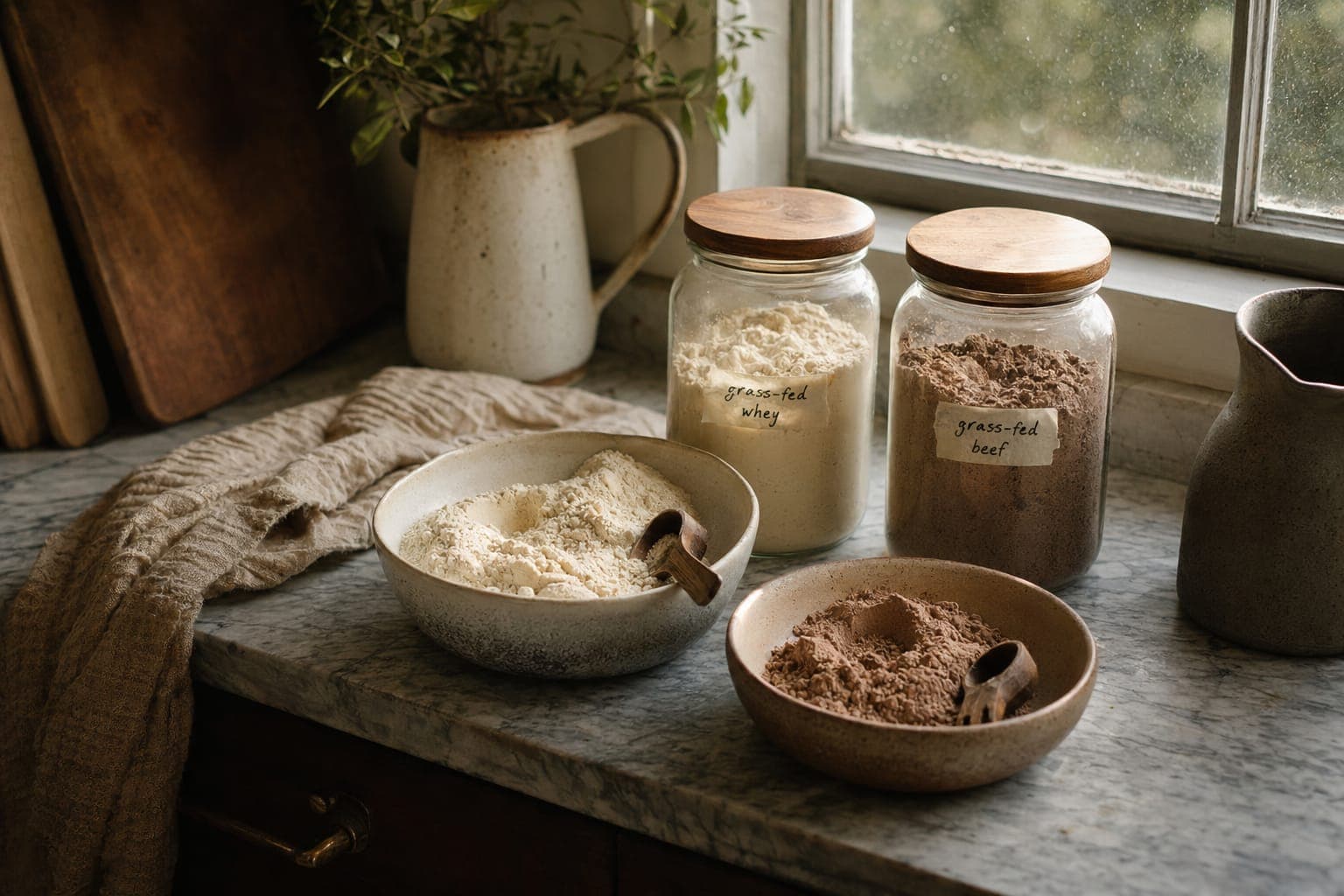
Grass-Fed Whey vs Grass-Fed Beef Protein: Which Absorbs Better?
Both score well on DIAAS. Whey is faster. Beef is slower. Learn when you need speed and when you need sustained amino acid delivery.
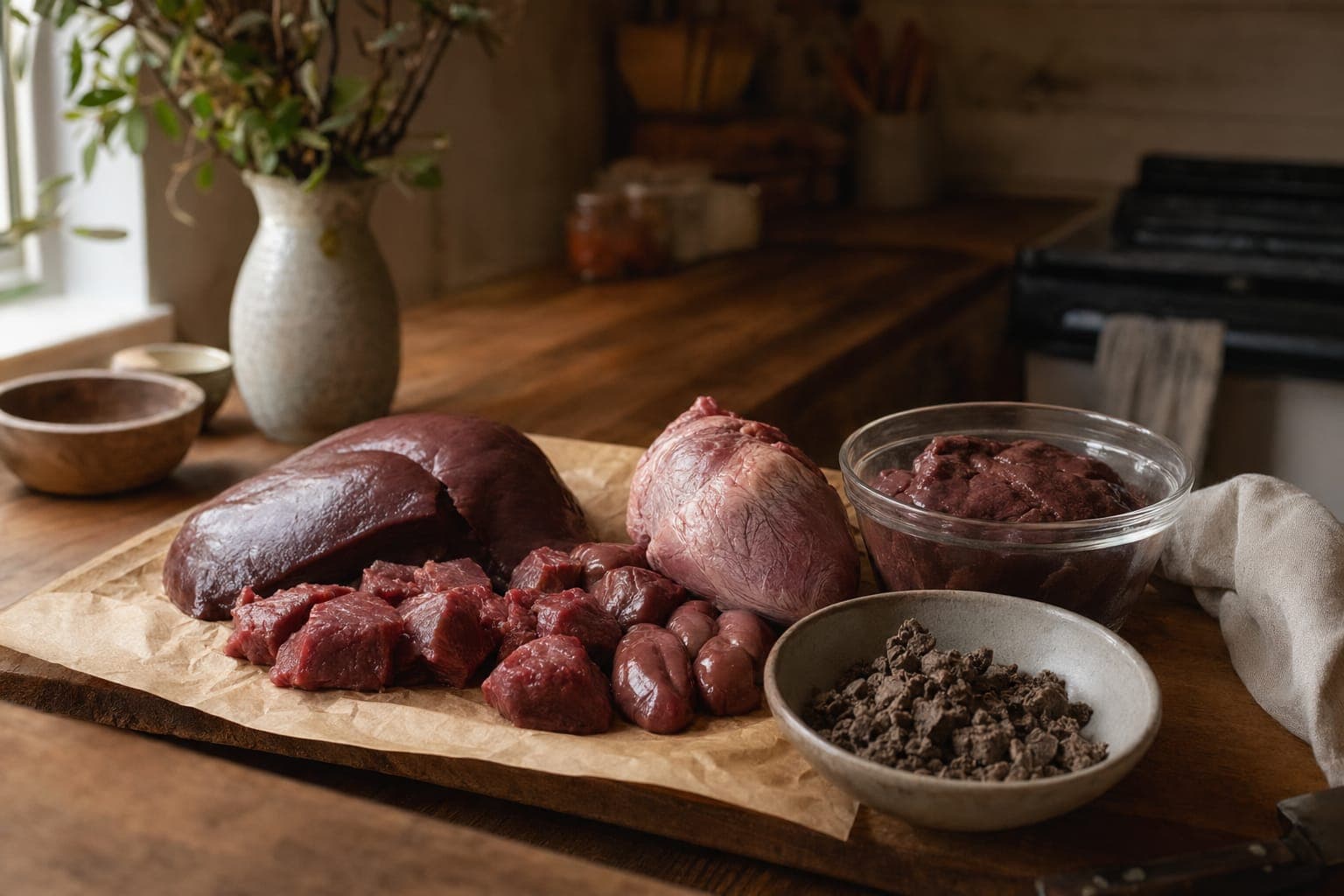
Ingredients
Freeze-Dried vs Fresh Organs: Does the Method Matter?
Freeze-dried or fresh organ meat? See which method best preserves nutrients, how convenience compares, and when to choose each for your kitchen.

Ingredients
The Antioxidant Content of Pure Maple Syrup
Pure maple syrup is more than sugar. Research links its 24-plus maple syrup antioxidants, including polyphenols, to lower inflammation. See the detail.
Real food, made effortless
Try the organ blendA few ways to use it
All recipes
How to Make Your Own Gelatine Gummies
A simple recipe for homemade gelatine gummies using grass-fed gelatine, fresh juice, and raw honey. Better than shop-bought, kids love them.

Bone Broth from Scratch: A Step-by-Step Guide
Step-by-step guide to making bone broth at home. Stovetop, slow cooker, and Instant Pot methods. Rich in collagen and gut-healing minerals.

Liver Pate for Beginners: A Gentle Introduction to Organ Meats
Simple liver pate recipe to start eating organ meats. Chicken liver, butter, and herbs. Gentle introduction to nutrient-dense whole foods.


 Join over 100,000+ members
Build a better food system with us
The Organised community is thousands of people choosing real food and backing the farmers who grow it, all of us trying to leave the world a little better than we found it. If that is what you care about too, you belong here.