Celtic Sea Salt: 80+ Trace Minerals Your Body Actually Needs
You've been told salt is bad. Your blood pressure will rise. Your kidneys will suffer. Eat less salt. This is the worst nutritional advice of the last 50 years. Salt isn't your enemy. The wrong kind of salt is. And understanding the difference will change how you think about one of the most essential minerals in your body.

By Niall Kiddle, Founder, Organised

Reviewed by Pedro Rodrigues, Agronomist (farming and sourcing only) ·
7 min read · Published · Updated · 4 cited sources
Makers of the Organised Daily blend, a grass-fed beef organ supplement from regenerative UK farms
Your body is roughly 60 percent water. That water exists inside cells and outside cells. Salt controls where that water goes. Salt is essential for nerve function, muscle contraction, blood pressure regulation, and the electrical gradient that allows your heart to beat. You cannot live without it.
What salt actually does
Sodium is essential. It's one of the electrolytes that maintain your fluid balance, nervous system function, and blood pressure.1 Your body regulates it obsessively. Your kidneys reabsorb sodium to keep levels constant. Your adrenal glands release hormones (aldosterone) to control how much you retain.
The relationship between salt and blood pressure is not straightforward. Yes, eating salt raises blood pressure temporarily. That's exactly what's supposed to happen. If you're dehydrated or mineral-depleted, your blood pressure drops. Salt brings it back up. This is a feature, not a bug.
The research showing salt causes hypertension is largely epidemiological (observational) and confounded by other factors. The few randomised controlled trials show minimal blood pressure effects from salt restriction.2 People who eat adequate salt don't have higher blood pressures than people who restrict it, contrary to decades of public health messaging.
What does raise blood pressure is stress, refined carbohydrates, vegetable oil, and mineral deficiency. Salt in isolation doesn't cause hypertension. Nutrient-poor diets with low mineral content do.
Table salt versus sea salt
Table salt is refined salt. It's mined from ancient salt deposits, then heated to very high temperatures and bleached. Anti-caking agents are added so it pours. Iodine is added to prevent deficiency. The result is nearly pure sodium chloride. Everything else has been removed.
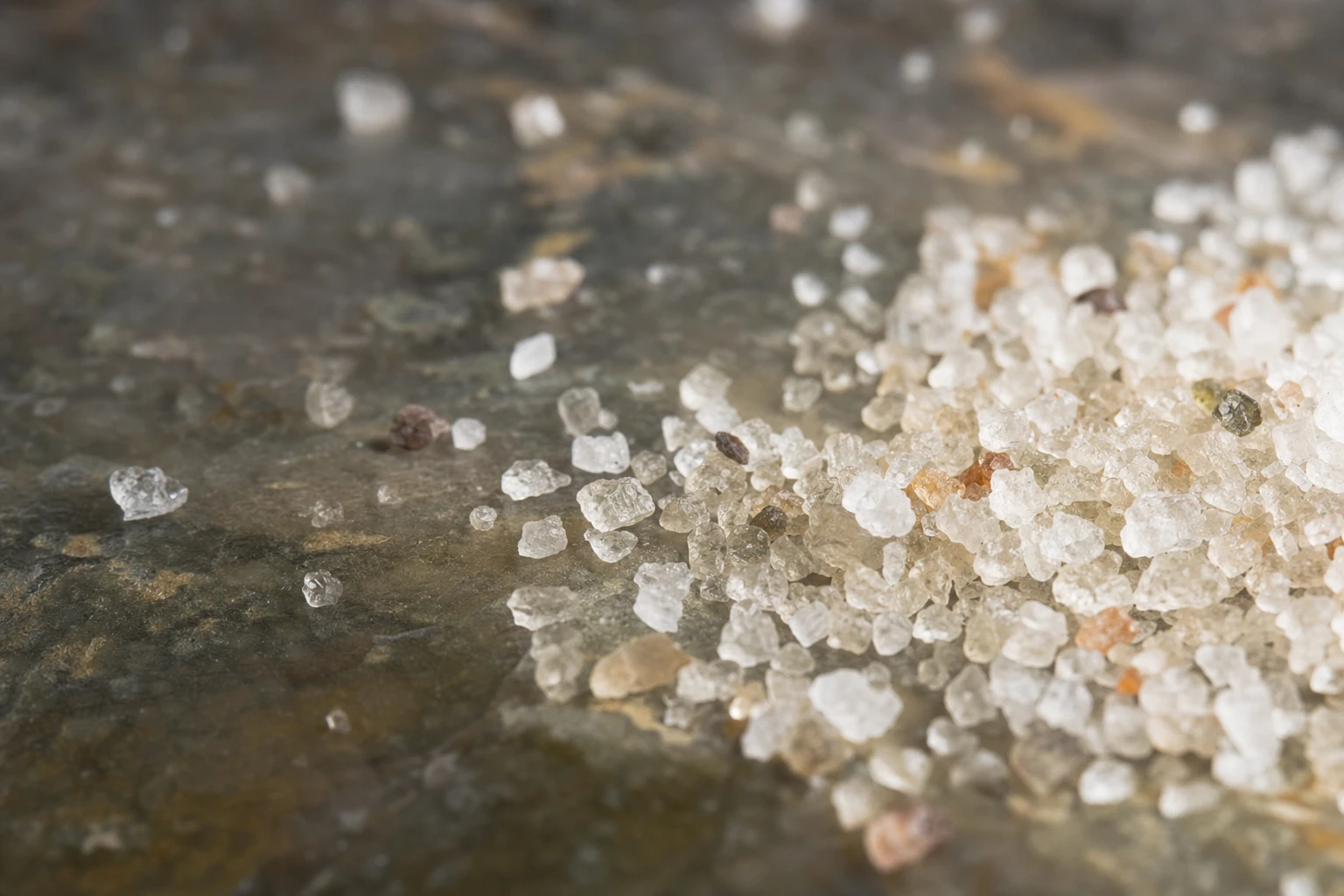
The problem isn't sodium chloride. The problem is that salt in nature isn't just sodium chloride. Unrefined sea salt contains not just sodium and chloride but 80-plus trace minerals: magnesium, potassium, calcium, sulphate, bromide, boron, zinc, iron, manganese, and dozens more.
Your body doesn't just need sodium. It needs the full profile of minerals. When you consume refined salt, you're getting sodium without the supporting cast of minerals that help you use it. This creates an imbalance. Your body compensates, but compensation is metabolically expensive.
Table salt is 99.9% sodium chloride. Sea salt is sodium chloride plus 80 trace minerals your body needs.
Celtic sea salt is harvested from the Atlantic coast of Brittany, France. The water is evaporated in shallow ponds, and the salt is harvested by hand. No heating. No bleaching. No anti-caking agents. The mineral profile remains intact.
The trace mineral profile
Celtic sea salt contains not just the major electrolytes (sodium, potassium, magnesium, calcium) but trace minerals that are rarely discussed and often deficient in modern diets.
Magnesium is essential for over 300 enzymatic reactions.3 Muscle relaxation, nervous system function, sleep quality, carbohydrate metabolism. Modern diets are notoriously low in magnesium because processed foods don't contain it and soil depletion means vegetables contain less than they did historically. Sea salt provides supplemental magnesium.
Potassium is essential for heart rhythm, muscle contraction, and cellular electrical potential. It works in opposition to sodium. You need both. If you eat sodium without adequate potassium, you create an imbalance. Sea salt provides both.
Sulphate is essential for joint health, connective tissue integrity, and detoxification pathways. It's found in bone broth and sea salt. Most people are deficient.
Iodine is essential for thyroid function.4 Refined salt is supplemented with iodine to prevent deficiency. Sea salt contains iodine naturally, from the ocean water it came from. You don't need much. A small amount of unrefined salt provides the iodine your thyroid needs.
Bromide is present in seawater and in sea salt. It has mild sedative properties and may support sleep. Trace amounts in salt probably don't matter much, but the pattern is clear: sea salt contains what your body needs. Refined salt contains what was convenient to isolate.
Why minerals matter
Your cells require minerals to function. Every cellular process depends on mineral cofactors. Magnesium, zinc, copper, selenium, iron, manganese. These aren't optional. They're foundational.
Modern diets are notoriously mineral-poor. Soil depletion means crops contain fewer minerals. Processing removes minerals. Refined salt contains only sodium chloride. You're chronically deficient in the minerals your cells need to function optimally.
The result is creeping dysfunction. Your muscles don't relax well (magnesium). Your thyroid doesn't function optimally (iodine, selenium). Your joints ache (sulphate). Your sleep is poor (magnesium). Your digestion is sluggish (trace minerals in stomach acid). You're not diseased. You're just running on minimal mineral reserves.
Consuming unrefined salt is a simple way to add minerals back into your diet without any effort. You're already salting your food. You might as well salt it with something that contains minerals instead of something that's been stripped bare.
Get ingredient guides like this, free
Two short reads a week on the ingredients that matter and how to actually use them.
By signing up you agree to receive emails from us. No spam, unsubscribe anytime.
How to use salt properly
The amount of salt your body needs depends on how much you exercise, how much you sweat, and how much water you drink. More activity and more water means more salt is required. Sedentary office workers need less. Athletes need more.
A reasonable baseline is about half a teaspoon of unrefined salt daily. That sounds like nothing, but it's more than most people realise they're consuming. If you're exercising heavily or living somewhere hot, 1 to 2 teaspoons is reasonable. If you're eating processed foods, you're getting salt there (too much of the refined kind).
The key is consistency. Your body regulates sodium closely. Eating very high sodium one day then very low the next creates stress for your kidneys. Moderate, consistent salt intake is what your body is designed for.
Half a teaspoon to a teaspoon of unrefined salt daily, depending on activity and climate. Consistency matters more than quantity.
Use Celtic sea salt or other unrefined sea salt (Himalayan pink salt also works, though it comes from ancient salt deposits and has a slightly different mineral profile). Sprinkle it on food after cooking (heat doesn't destroy minerals, but for the sake of enzymes and heat-sensitive compounds, adding salt last is nice). Use it in the water you drink if you're hydrating heavily.

The salt paradox
The paradox is that low-salt diets often make people feel worse: more fatigue, more headaches, more muscle cramps, more blood pressure dysregulation. This is because adequate salt is essential for all those functions. When you restrict it, your body compensates through stress hormone elevation, which is expensive and unsustainable.
High-salt diets (from processed foods with refined salt) are also problematic. They create imbalance without providing the supporting minerals. You get sodium without magnesium. Chloride without sulphate. This creates metabolic stress.
The solution isn't low salt or high salt. It's adequate, unrefined salt. Your body knows what to do with it. Your kidneys handle it without stress. Your nerves and muscles work properly. Your blood pressure stays regulated.
The research on salt and longevity is clearer than the headlines suggest. Populations that live longest (Mediterranean, Japanese, Alpine) all consume adequate salt. What they don't do is consume processed food with refined salt. They consume whole foods with natural, unrefined salt content.


1 of 9
Daily blend
100,000+ thriving families4.9 on Trustpilot
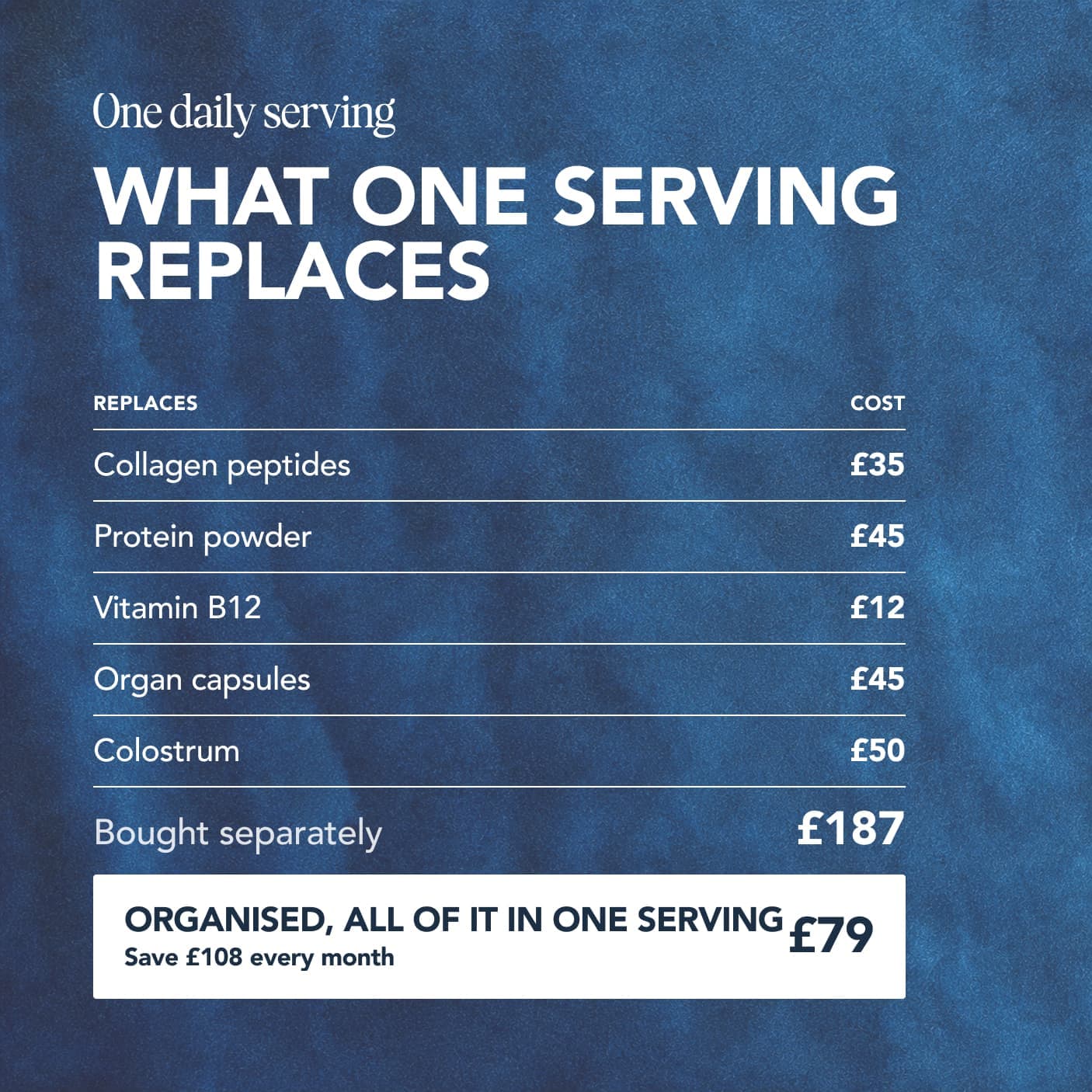
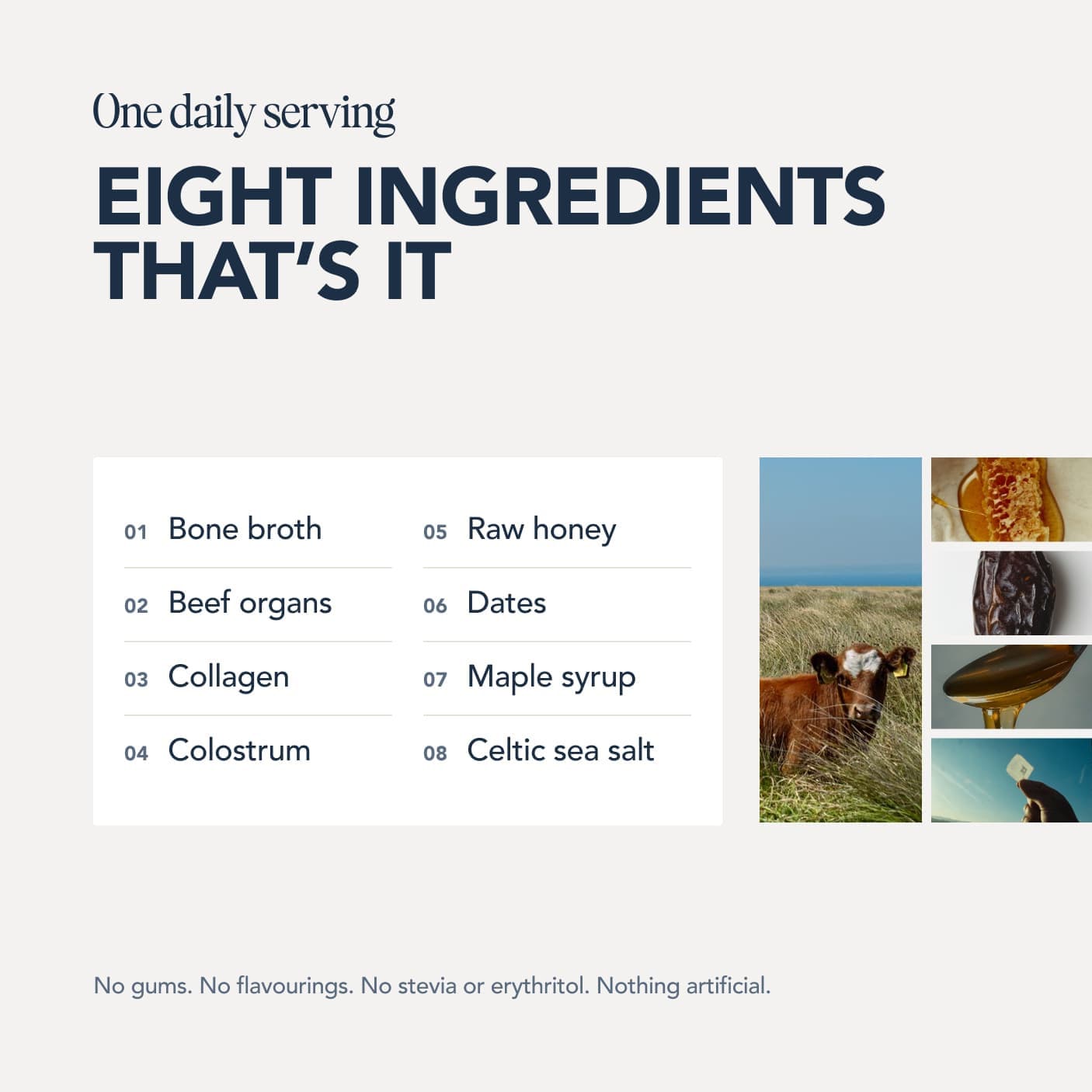
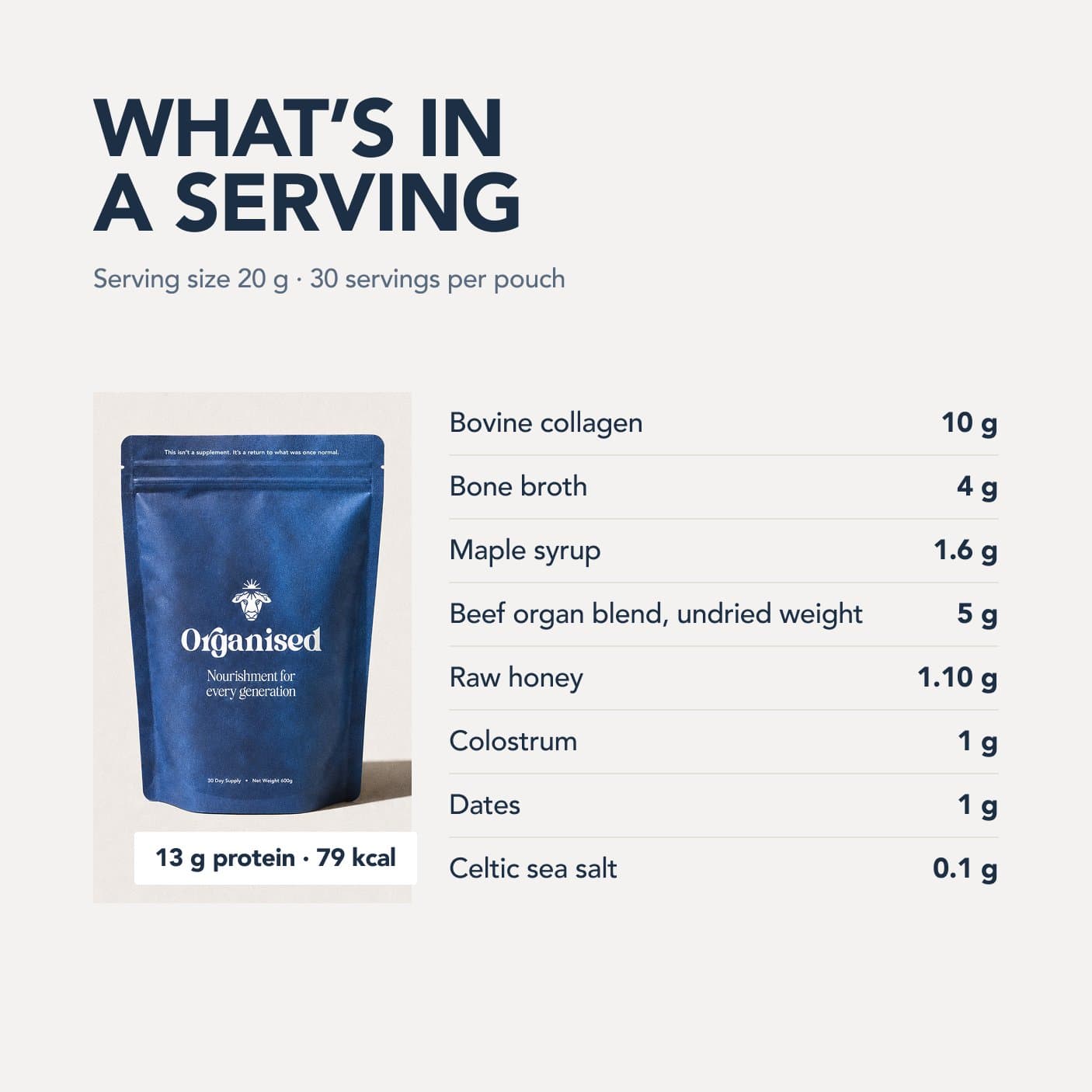
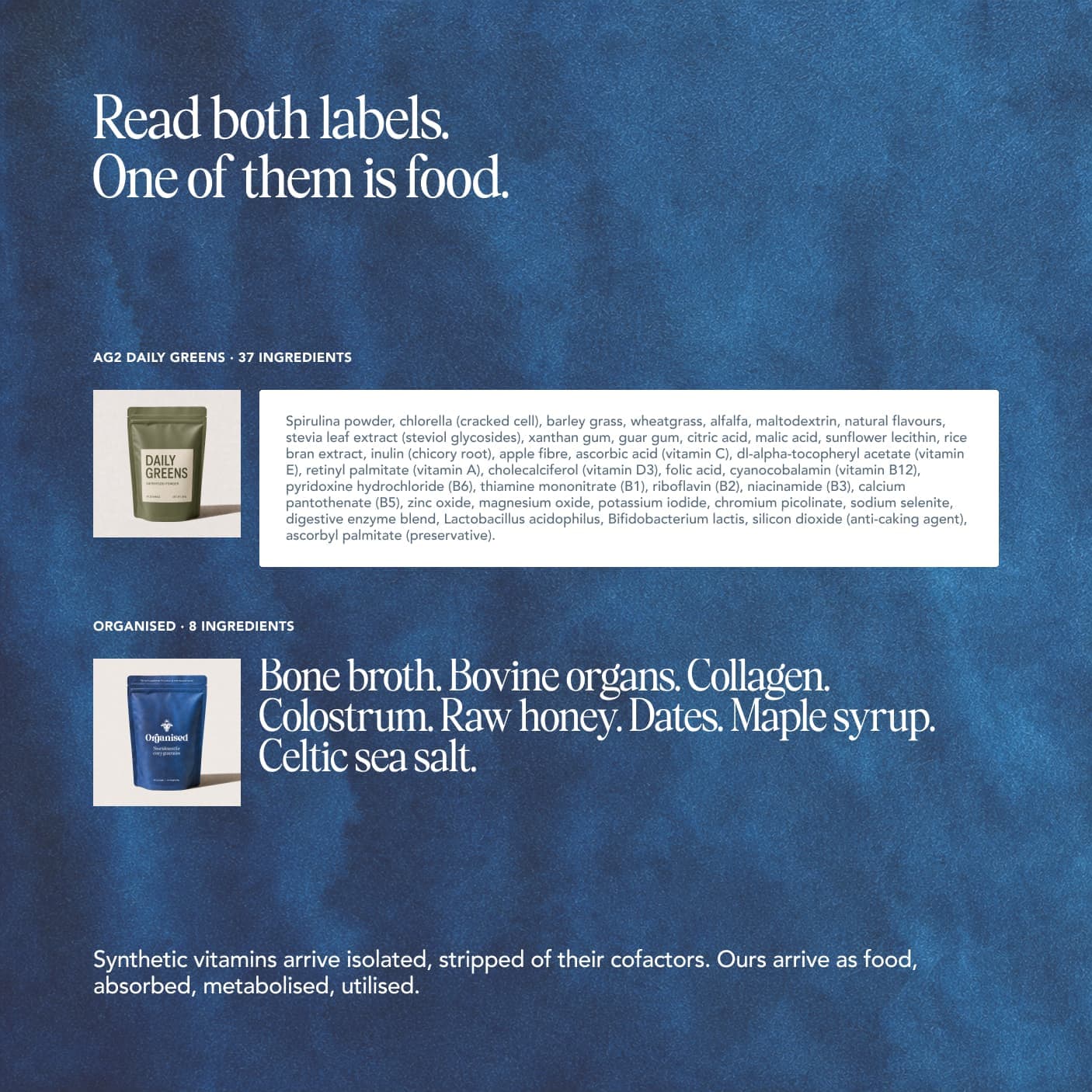
Eight real ingredients built around grass-fed beef organs, collagen and colostrum. Nothing synthetic added.
Free with your first order, worth £38. Plus £10 off the pouch with a subscription.


Free UK shipping · Made in England · 100 day money back guarantee on your first pouch · Skip, pause or cancel anytime
Where mineral deficiency comes from
Modern agricultural practices deplete soil minerals. Crops grown in mineral-poor soil contain fewer minerals. Industrial processing removes minerals at every step. Refined salt represents the endpoint of that removal process: nearly pure sodium chloride, stripped of everything else.
The result is a population chronically deficient in trace minerals. Magnesium deficiency causes muscle cramps, poor sleep, and cardiovascular stress. Zinc deficiency impairs immune function and wound healing. Selenium deficiency compromises thyroid function. Sulphate deficiency contributes to joint pain and connective tissue fragility.
Adding unrefined salt back into your diet is a simple way to begin addressing mineral deficiency. You can't fix a depleted food system with salt alone. You also need to eat nose-to-tail (organs are mineral-rich), include mineral water if available, and ideally source food from farmers who prioritise soil health. But unrefined salt is the lowest-barrier intervention. It's inexpensive. It requires no lifestyle change beyond swapping your salt. And the mineral return is real.
The bottom line
Salt is essential. Your body cannot function without it. Refined table salt provides sodium without minerals. Unrefined sea salt like Celtic sea salt provides sodium plus 80 trace minerals your body needs. You're not choosing between salt and no salt. You're choosing between stripped-bare sodium chloride and nutrient-complete salt. The choice is obvious. Use unrefined salt. Use it consistently. Your muscles, your nervous system, and your electrolyte balance will thank you.
References
Every source below was checked on 27 August 2026. Each PubMed, PMC and DOI identifier was resolved against NCBI or Crossref, and what it opens is printed under the citation, so you can see the link goes where the citation says without leaving the page. Where a citation and its identifier disagreed, the citation was corrected to the record or the reference was deleted along with the sentence marker that pointed at it, and where the resolved paper turned out not to support the sentence, the sentence was cut back to what it does support. Borrowed authority is worse than none, because it looks like rigour.
- NIH Office of Dietary Supplements. Sodium fact sheet. ods.od.nih.gov/factsheets/Sodium-HealthProfessional.
- Graudal NA, et al. Effects of low sodium diet versus high sodium diet on blood pressure, renin, aldosterone, catecholamines, cholesterol, and triglyceride. Cochrane Database Syst Rev. 2017. PMC8094404.Checked 27 August 2026: PMC8094404 opens Graudal NA, Hubeck-Graudal T, Jurgens G, Effects of low sodium diet versus high sodium diet on blood pressure, renin, aldosterone, catecholamines, cholesterol, and triglyceride. Cochrane Database Syst Rev 2020;12(12):CD004022. PubMed indexes it as: Meta-Analysis, Systematic Review. doi:10.1002/14651858.cd004022.pub4 opens Graudal NA, Hubeck-Graudal T, Jurgens G, Effects of low sodium diet versus high sodium diet on blood pressure, renin, aldosterone, catecholamines, cholesterol, and triglyceride Cochrane Database of Systematic Reviews 2017.The authors' own declaration, from the record: None.
All authors are employed at public institutions. None of the authors has any connection with or receives funds from the food and salt industries or has commercial interests that might bear on this article.
- NIH Office of Dietary Supplements. Magnesium fact sheet. ods.od.nih.gov/factsheets/Magnesium-HealthProfessional.
- NIH Office of Dietary Supplements. Iodine fact sheet. ods.od.nih.gov/factsheets/Iodine-HealthProfessional.
Who wrote and reviewed this guide
Niall Kiddle
Author · Founder, Organised
Niall is the founder of Organised. He started the company in 2024 after fixing his own health the slow way: in 2022 he swapped a cupboard of synthetic supplements for real food, raw milk, organ meats, bone broth and honey, and felt the difference within months.
Areas of expertise: Ancestral nutrition, Organ meats, Whole-food supplementation, Gut health, Regenerative sourcing
Read Niall's full profile
Pedro Rodrigues
Reviewer · Agronomist (farming and sourcing only)
Pedro is the agronomist Organised works with on farming and sourcing. His job on the guides is to keep the science honest: he reviews what we publish about soil health, regenerative agriculture, grazing and the way food is actually produced.
Areas of expertise: Regenerative agriculture, Agronomy, Soil health, Grass-fed farming, Food sourcing
Reviewed this guide on
Read Pedro's full profileMore on celtic sea salt
View allBrowse the guides library
All guidesKeep reading
Ingredients
Why Beef Protein Is Easier to Digest Than You Think
Beef protein is more digestible than its reputation suggests. See how its amino acid profile and natural enzymes make it a highly bioavailable protein.

Ingredients
Freeze-Dried vs Fresh Organs: Does the Method Matter?
Freeze-dried or fresh organ meat? See which method best preserves nutrients, how convenience compares, and when to choose each for your kitchen.
Ingredients
Medjool Dates: Nature's Energy Bar
Discover the benefits of Medjool dates: fibre, potassium, and natural sugars for steady energy. See why whole dates beat processed bars and sugary drinks.
Real food, made effortless
Try the organ blendA few ways to use it
All recipes
Raw Milk Ice Cream with Organised
Make raw milk ice cream at home with Organised for a seasonal, nutrient-dense treat. Three simple flavours to try whenever the craving strikes.

How to Make Bone Marrow Butter
Roast grass-fed marrow bones, scoop the marrow, and mix with butter and herbs. A nutrient-dense spread with fat-soluble vitamins.

Whole Food Snacks for Busy Days
Practical whole food snacks that travel well and sustain energy. No refined carbs, no seed oils. Real food options for when you're busy.


 Join over 100,000+ members
Build a better food system with us
The Organised community is thousands of people choosing real food and backing the farmers who grow it, all of us trying to leave the world a little better than we found it. If that is what you care about too, you belong here.