Freeze-Dried vs Fresh Organs: Does the Method Matter?
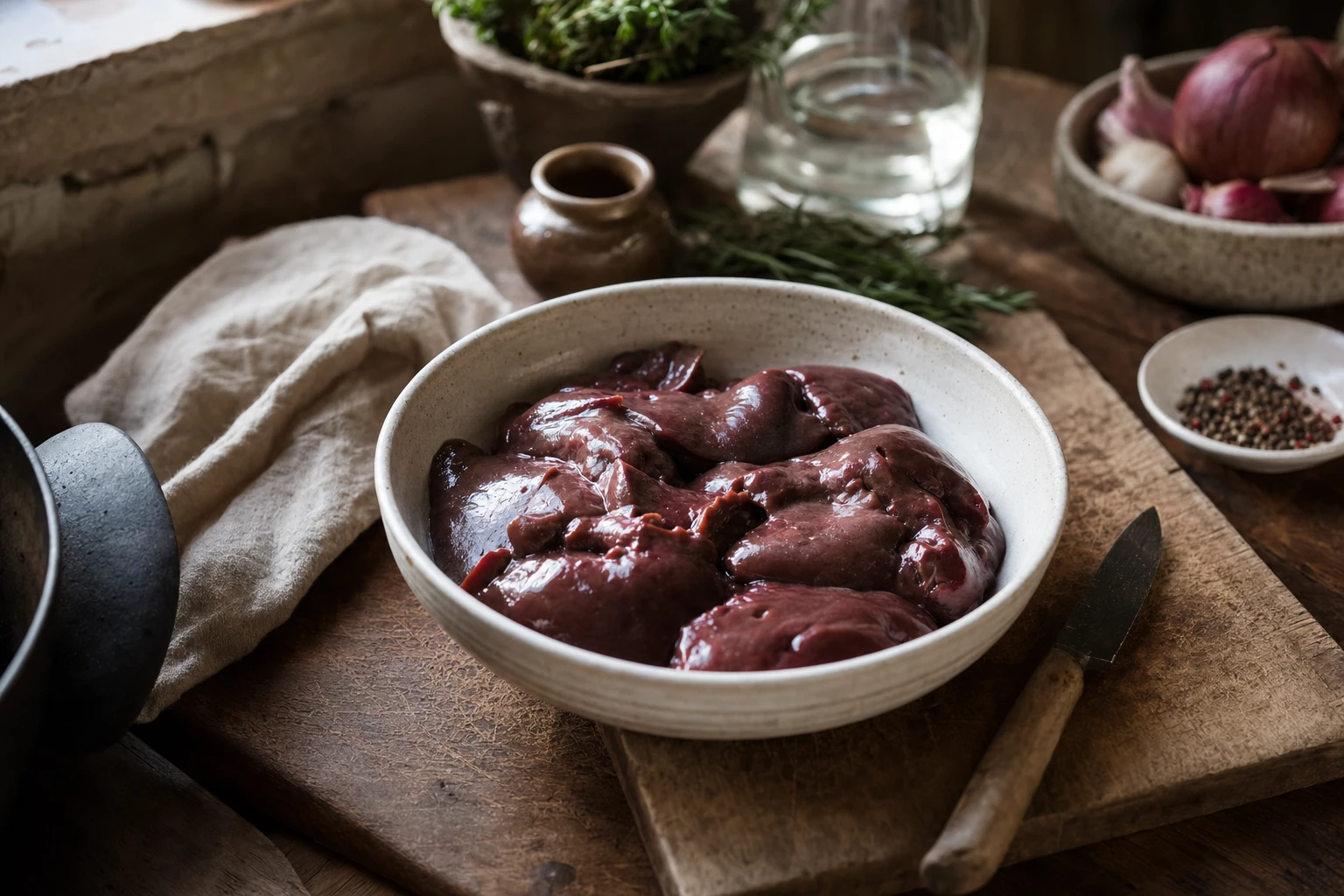
You're standing in your kitchen holding two options. Fresh liver from the farmers market, sitting in its paper. Or a capsule of freeze-dried liver powder from a supplement brand. Both claim to be nutrient-dense. One costs twice as much as the other. Which one actually wins?
By Niall Kiddle, Founder, Organised

Reviewed by Pedro Rodrigues, Agronomist (farming and sourcing only) ·
6 min read · Published · Updated · 2 cited sources
Makers of the Organised Daily blend, a grass-fed beef organ supplement from regenerative UK farms
The answer depends on what you prioritise. But the good news is that you're not choosing between gold and sawdust. Both work. The method does matter, but not in the way the marketing suggests.
How freeze-drying actually works
Freeze-drying is a gentle preservation method. The process starts with fresh meat (usually from pasture-raised animals, sometimes grass-fed, depending on the brand). The meat is frozen at extremely low temperatures. Then, in a vacuum chamber, the ice is removed directly from solid to vapour, bypassing the liquid stage. The result is a shelf-stable powder with 95 percent of the water removed but the nutrient structure largely intact.1
The key advantage is that freeze-drying works at low temperatures. There's no heat. Heat is the enemy of delicate nutrients, particularly fat-soluble vitamins like A and D, and heat-sensitive amino acids like carnitine and taurine. Freeze-drying avoids that damage entirely.2
Fresh organ meat, by contrast, begins to degrade the moment it's removed from the animal. Oxidation starts. Enzymes begin breaking down proteins. If you're not eating it within days, you're losing nutrient density. Most people who buy fresh liver eat it within a week. Some freeze it at home, which introduces its own ice crystal damage that occurs during the thawing process.
The nutrient retention question
Studies comparing fresh and freeze-dried meat show that freeze-drying preserves a high proportion of the nutrient content.1 Vitamins A, B12, iron, copper, selenium, zinc. All are retained at levels comparable to fresh meat. The exceptions are vitamin C (which is low in organ meat anyway) and some of the more delicate phytonutrients in plants, but organ meat doesn't contain many of those.
Fresh meat retains 100 percent of its nutrients at the moment of slaughter. But by the time you cook it, you've lost heat-sensitive nutrients. Additionally, fresh liver oxidises during storage. Fat-soluble vitamins degrade when exposed to oxygen.2 A freeze-dried powder stored in an airtight container is actually more stable long-term than fresh liver sitting in your fridge.
Freeze-dried organ meat retains 90 to 95 percent of nutrients and is more stable during storage than fresh organ meat.
The key distinction is whether you're comparing fresh-and-immediately-eaten organ meat (very high nutrient density) versus fresh-and-stored organ meat (lower nutrient density) versus freeze-dried powder (retained nutrients in stable form).
Heat damage and gentle processing
Here's where the story gets interesting. Some freeze-dried supplements are made using gentle, low-temperature methods. Others are made using cheaper processing that includes brief heating steps. You can't tell from the label.
A truly gently processed freeze-dried organ supplement will preserve amino acids like taurine, carnitine, and the intact peptides that contribute to collagen and joint health. A cheaply made product that uses heat acceleration will lose some of these. This is why quality matters more than the method itself.
When you cook fresh organ meat (which most people do, either by frying, braising, or stewing), you're applying sustained heat, typically 60 to 80 degrees Celsius, for 15 to 30 minutes. This is significantly more heat damage than gentle freeze-drying. If your choice is between cooked fresh liver and freeze-dried liver powder, the freeze-dried product may actually preserve more heat-sensitive nutrients.
Raw organ meat has the highest nutrient density, but most people won't eat it raw. There are food safety considerations. And the smell and texture are challenging for many. So the real comparison is cooked fresh organs versus freeze-dried powder.
Bioavailability and absorption
Nutrient content is one question. Absorption is another. Your digestive system needs to break down the structure of the food to access the nutrients.
Fresh organ meat, when cooked, has a structure that's relatively easy to break down. Your stomach acid and proteases (protein-digesting enzymes) make quick work of it. Absorption is efficient.
Freeze-dried powder is lightweight and concentrated. A capsule of freeze-dried beef liver contains the nutrients of several hundred grams of fresh liver. Your digestive system still has to break down the dehydrated protein structure. In theory, it should be absorbed efficiently. In practice, some people report better digestion with whole food than with powder supplements. This is likely individual variation and depends on your digestive health.
Fresh organ meat and freeze-dried powder are absorbed similarly, though some people feel better with whole food.
If you have compromised digestive health or poor stomach acid, you might absorb fresh organ meat more efficiently than powder. If your digestion is robust, absorption is likely equivalent. The sensible approach is to try both and notice how you feel.
Get ingredient guides like this, free
Two short reads a week on the ingredients that matter and how to actually use them.
By signing up you agree to receive emails from us. No spam, unsubscribe anytime.
Cost and practicality
Fresh organ meat is usually cheaper, particularly if you source it from a farm or a butcher who specialises in nose-to-tail eating. A kilogram of fresh liver typically costs less than a month's supply of freeze-dried supplement.
But fresh organ meat requires effort. You have to source it. You have to cook it or eat it raw (which most people won't do). You have to eat it within days or freeze it at home. It has a strong flavour that many people don't enjoy. The logistics are real.
Freeze-dried powder is convenient. A capsule at breakfast. No preparation. No smell. No texture issues. For someone with a busy life, or someone who finds the taste of organ meat genuinely unappealing, the convenience factor is worth something.
The ideal approach is some combination of both. Eat fresh organ meat several times a week when you can source and prepare it. Fill the gaps with freeze-dried supplements when fresh isn't practical. You'll get consistent nutrition without the perfectionism.
Quality markers
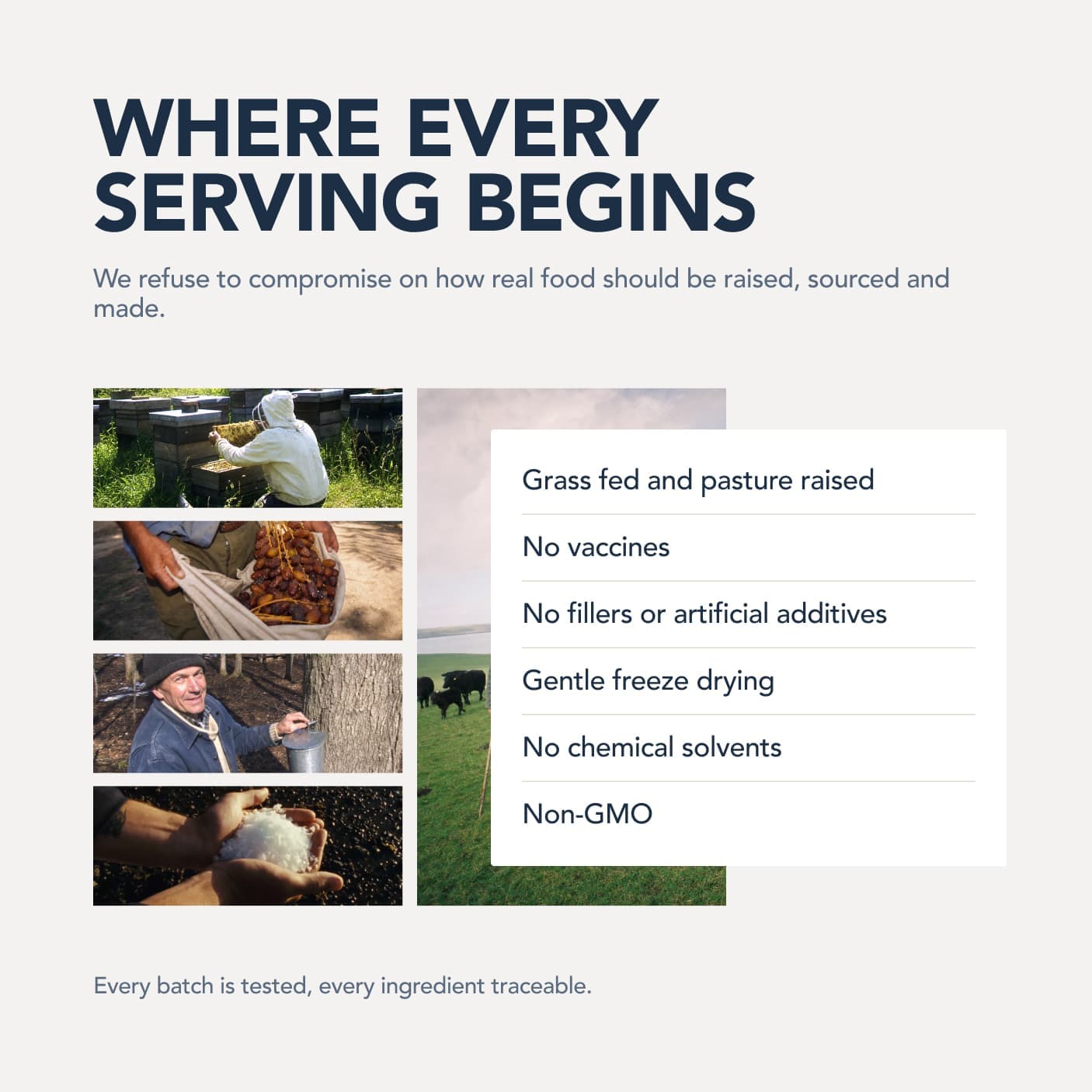
Whether you choose fresh or freeze-dried, the source matters far more than the processing method. Organ meat from grass-fed, pasture-raised animals contains higher levels of omega-3 fatty acids, fat-soluble vitamins, and micronutrients than organ meat from grain-fed animals.
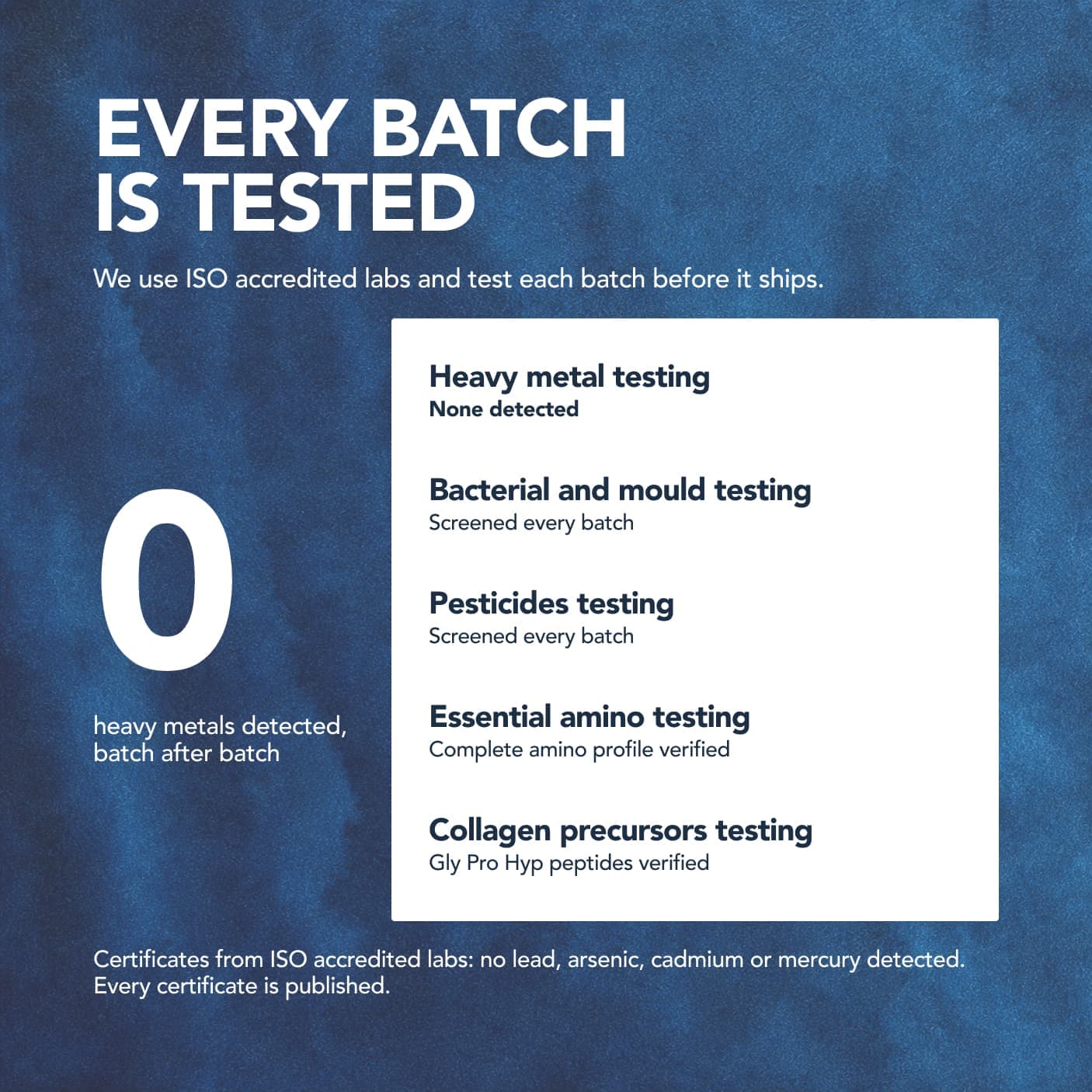
If you're buying freeze-dried supplements, look for these markers: single-ingredient products (just freeze-dried liver, nothing else), third-party tested for heavy metals (a real concern with organ meat concentration), and sourcing from grass-fed or pasture-raised animals. Cheap freeze-dried organ supplements often use grain-fed sources and skip the testing.
The source matters more than the processing method. Choose grass-fed, pasture-raised, tested for purity.

1 of 9
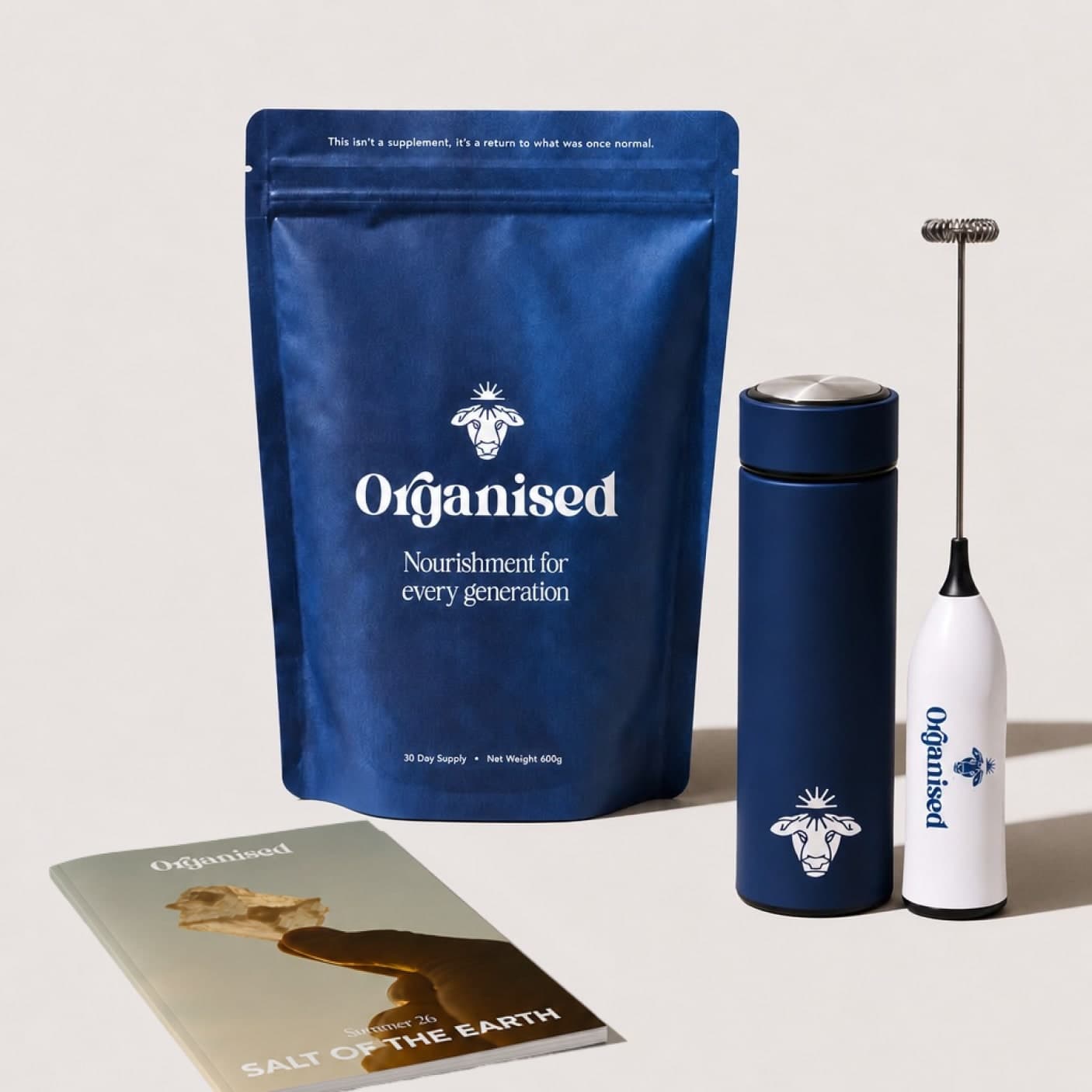
Daily blend
100,000+ thriving families4.9 on Trustpilot
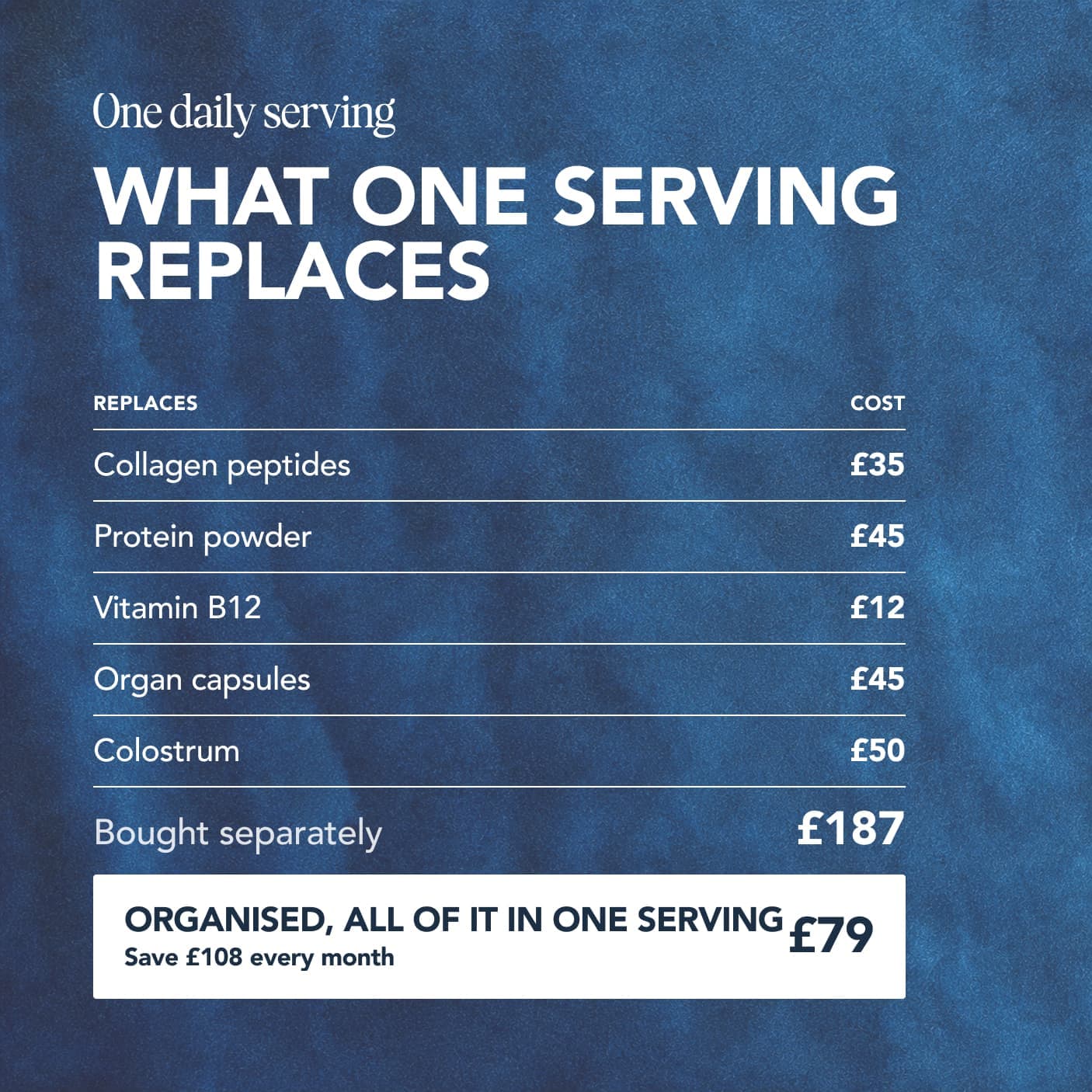
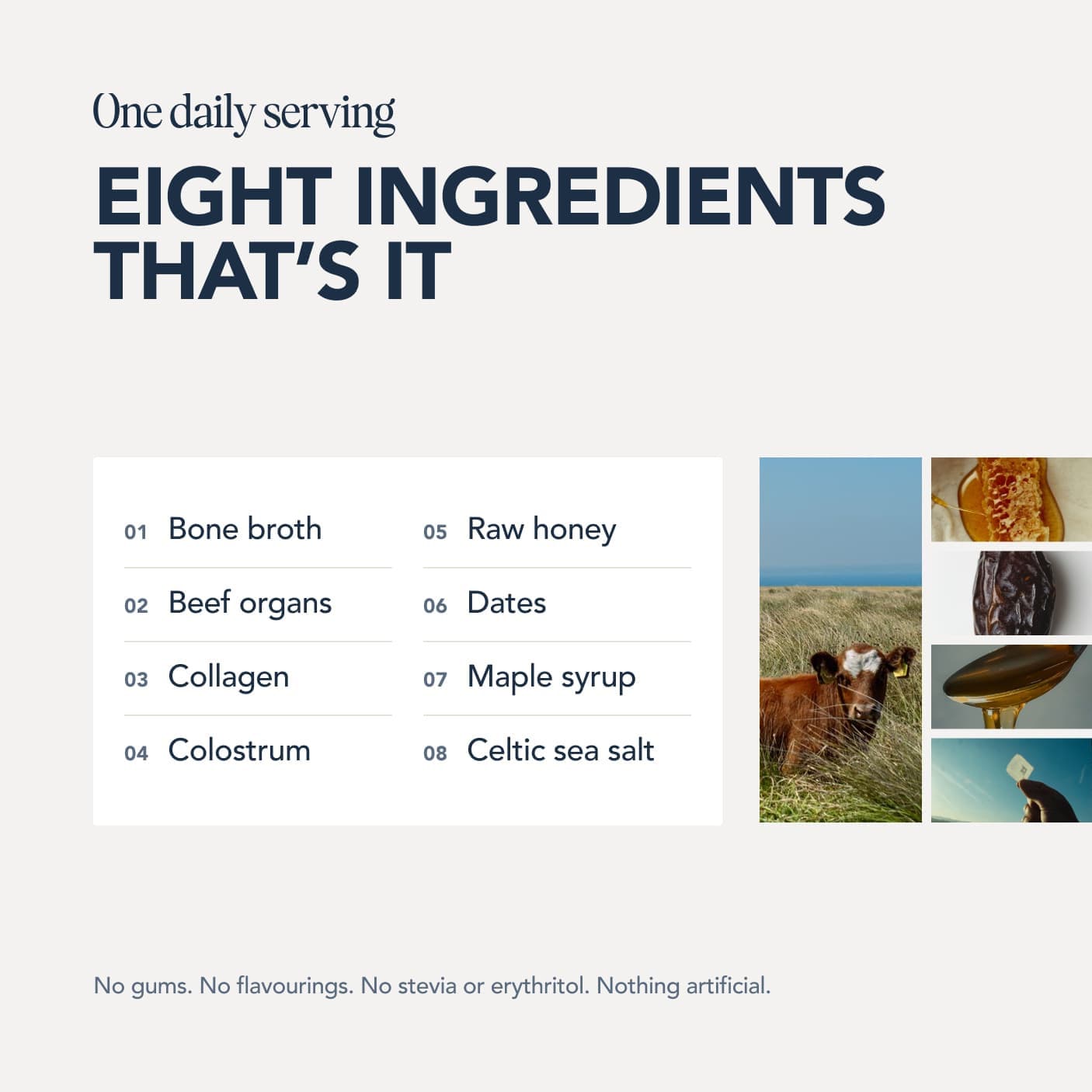
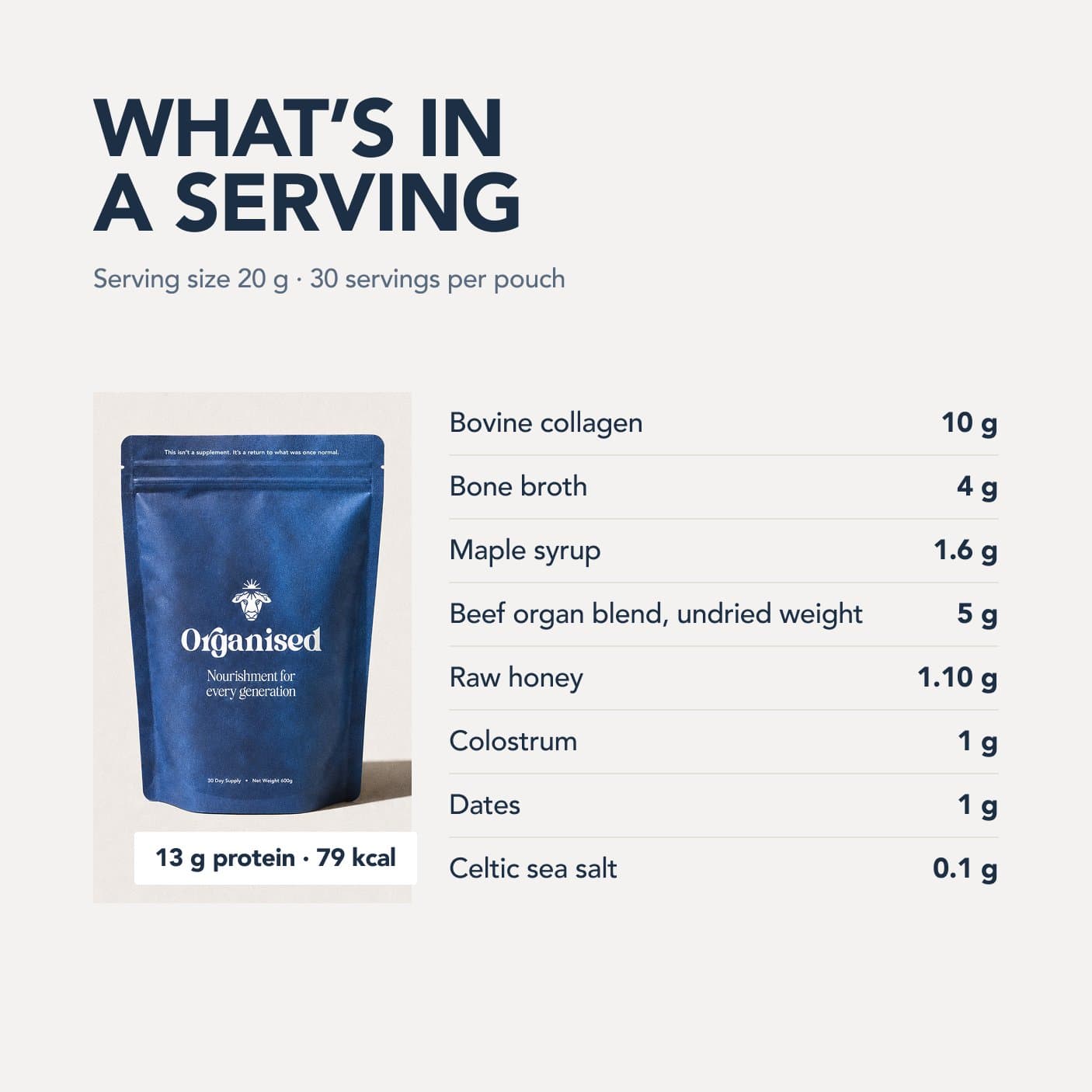
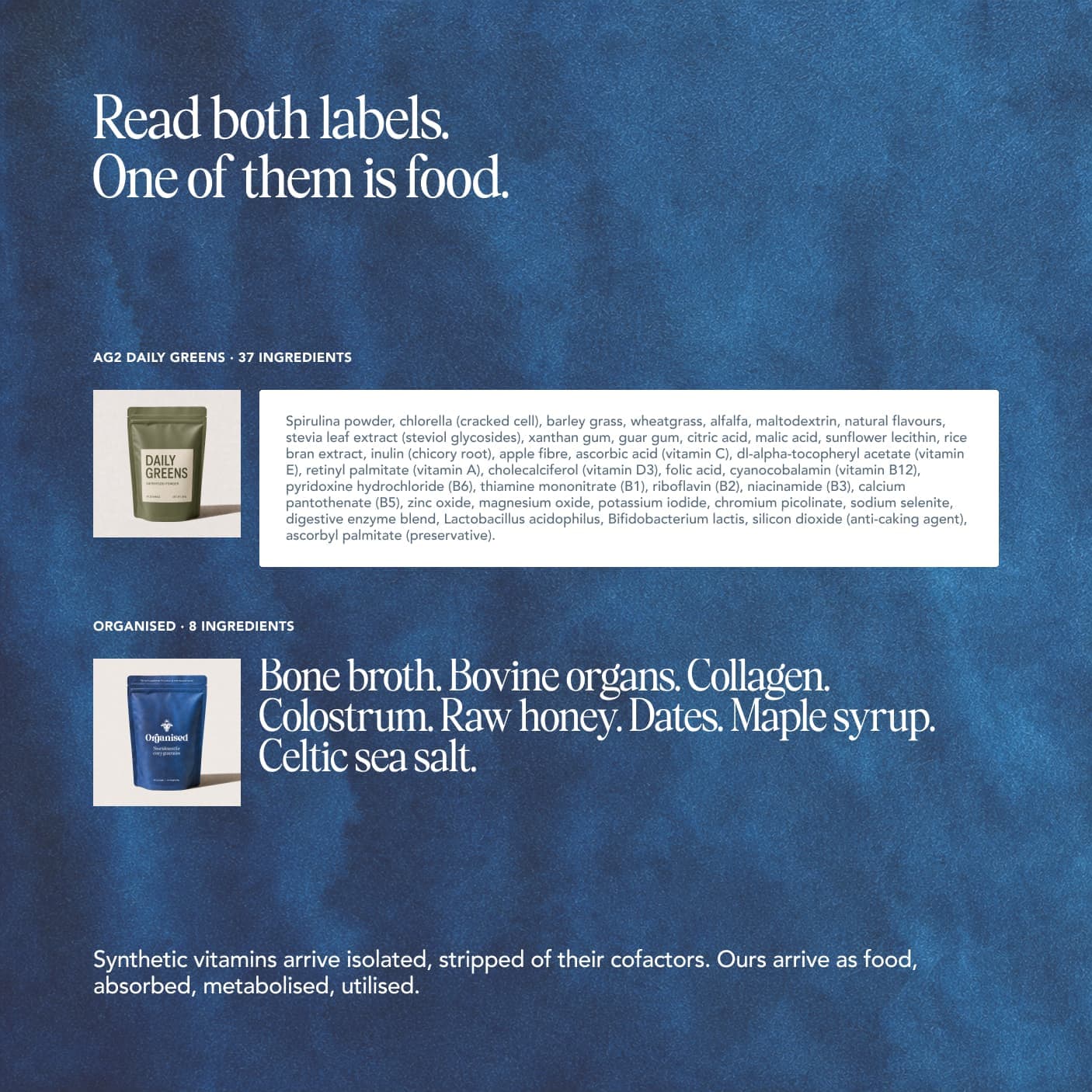
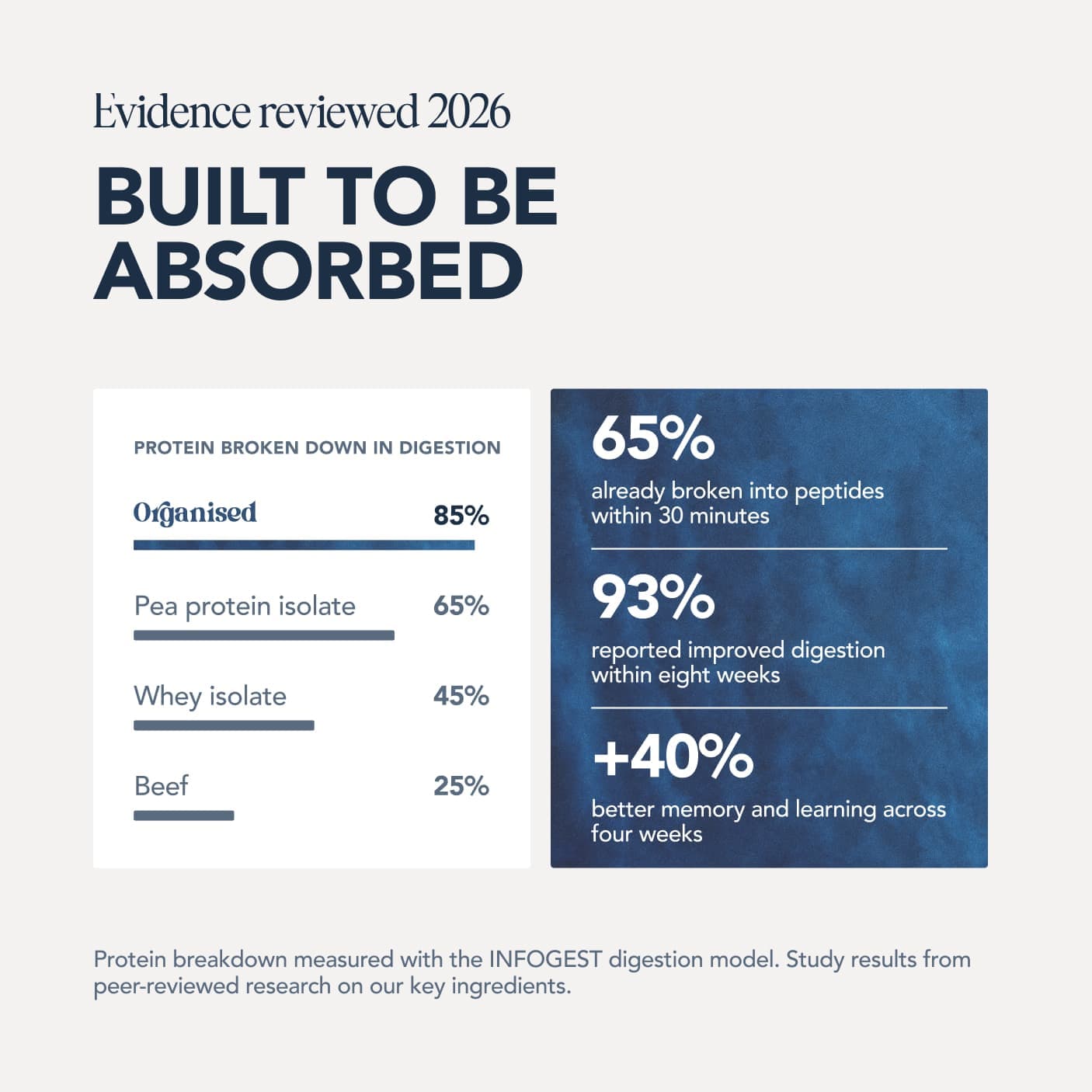
Eight real ingredients built around grass-fed beef organs, collagen and colostrum. Nothing synthetic added.
Free with your first order, worth £38. Plus £10 off the pouch with a subscription.
Free UK shipping · Made in England · 100 day money back guarantee on your first pouch · Skip, pause or cancel anytime
The storage consideration
Fresh organ meat deteriorates quickly. If you buy it and don't use it within three to four days, you're losing nutrient density every day. Some people freeze it at home to extend the shelf life, but home freezing creates ice crystals that damage cell structures. Commercial freezing is gentler, but you still lose some nutrient density during the thawing and cooking process.
Freeze-dried powder, stored correctly (cool, dark, airtight container), remains stable for years. If you travel, if you have an unpredictable schedule, if you can't reliably source fresh organs weekly, freeze-dried becomes the more practical choice. A practical supplement you take consistently beats the perfect supplement you never get around to consuming.
The metabolic cost of oxidation and degradation in fresh organs over days is real. A freeze-dried supplement stored carefully is preserved in a more stable state than fresh organ meat that's been sitting in your fridge for a week.
The bottom line
Freeze-drying preserves nutrients better than cooking fresh organ meat. Fresh organ meat retains more initial nutrients than freeze-dried but degrades quickly once removed from the animal. If you eat fresh organ meat within days and don't overcook it, you win on nutrient density. If you source quality freeze-dried supplements and take them consistently, you win on practicality and, possibly, long-term nutrient stability. The method matters less than the source and your ability to actually consume it. A freeze-dried supplement you take consistently beats fresh organ meat you keep meaning to cook but never do.
References
Every source below was checked on 27 August 2026. Each PubMed, PMC and DOI identifier was resolved against NCBI or Crossref, and what it opens is printed under the citation, so you can see the link goes where the citation says without leaving the page. Where a citation and its identifier disagreed, the citation was corrected to the record or the reference was deleted along with the sentence marker that pointed at it, and where the resolved paper turned out not to support the sentence, the sentence was cut back to what it does support. Borrowed authority is worse than none, because it looks like rigour.
- Bhatta S, Stevanovic Janezic T, Ratti C. Freeze-Drying of Plant-Based Foods. Foods. 2020;9(1):87. PMC7022747Checked 27 August 2026: PMC7022747 opens Bhatta S, Stevanovic Janezic T, Ratti C, Freeze-Drying of Plant-Based Foods. Foods 2020;9(1). PubMed indexes it as: Review.The authors' own declaration, from the record: The authors declare no conflict of interest.
- Liu Y, Zhang Z, Hu L. High efficient freeze-drying technology in food industry. Critical Reviews in Food Science and Nutrition. 2022. PMID:33393368Checked 27 August 2026: PMID 33393368 opens Liu Y, Zhang Z, Hu L, High efficient freeze-drying technology in food industry. Crit Rev Food Sci Nutr 2022;62(12):3370-3388. PubMed indexes it as: Review.
Corrections
What this page used to say, and why it no longer says it. Corrections are dated and are never removed, because deleting the record of an error is a second error. Every guide we have corrected is listed at our corrections log.
- 27 August 2026. Reference 2 named a 2022 freeze-drying review in Critical Reviews in Food Science and Nutrition, but its identifier opened Ma et al., Saudi Journal of Biological Sciences 2018. The entry now names the paper the link opens.
Who wrote and reviewed this guide
Niall Kiddle
Author · Founder, Organised
Niall is the founder of Organised. He started the company in 2024 after fixing his own health the slow way: in 2022 he swapped a cupboard of synthetic supplements for real food, raw milk, organ meats, bone broth and honey, and felt the difference within months.
Areas of expertise: Ancestral nutrition, Organ meats, Whole-food supplementation, Gut health, Regenerative sourcing
Read Niall's full profile
Pedro Rodrigues
Reviewer · Agronomist (farming and sourcing only)
Pedro is the agronomist Organised works with on farming and sourcing. His job on the guides is to keep the science honest: he reviews what we publish about soil health, regenerative agriculture, grazing and the way food is actually produced.
Areas of expertise: Regenerative agriculture, Agronomy, Soil health, Grass-fed farming, Food sourcing
Reviewed this guide on
Read Pedro's full profileMore on beef organs
View all- The Complete Guide to Beef Organ Supplements
- Are Beef Organs Safe? Everything You Need to Know
- Beef Heart: The Organ Your Mitochondria Have Been Waiting For
- Beef Lung: What It Contains and Why It Matters
- Benefits of Beef Organ Supplements: Nature's Multivitamins
- Choline: The Essential Nutrient Almost Nobody Gets Enough Of
- How Much Vitamin A Is in Beef Liver? (And Is It Too Much?)
- Is Beef Liver Good for You? 7 Benefits of Eating Beef Liver
- Spleen: The Forgotten Organ That Powers Your Immune System
- The Nutrients You Can Only Get from Organ Meats
- What Does Beef Liver Actually Do for Your Body?
- Why Beef Kidney Deserves a Place in Your Daily Routine
Browse the guides library
All guidesKeep reading
Ingredients
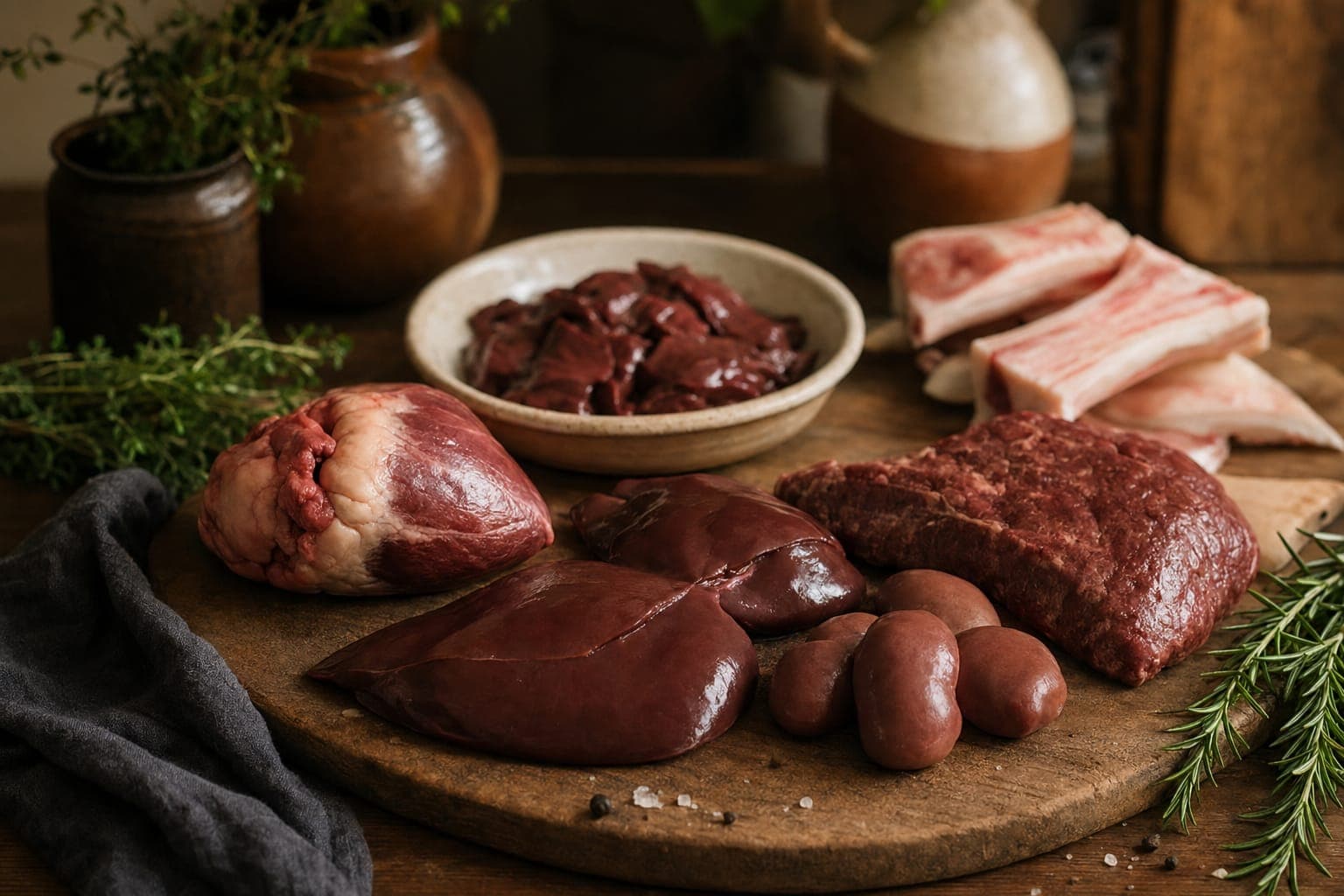
The Complete Guide to Beef Organ Supplements
Beef organ supplements explained from the composition data: what each organ carries, how they compare to muscle meat, and the vitamin A ceiling that limits the dose.
Ingredients
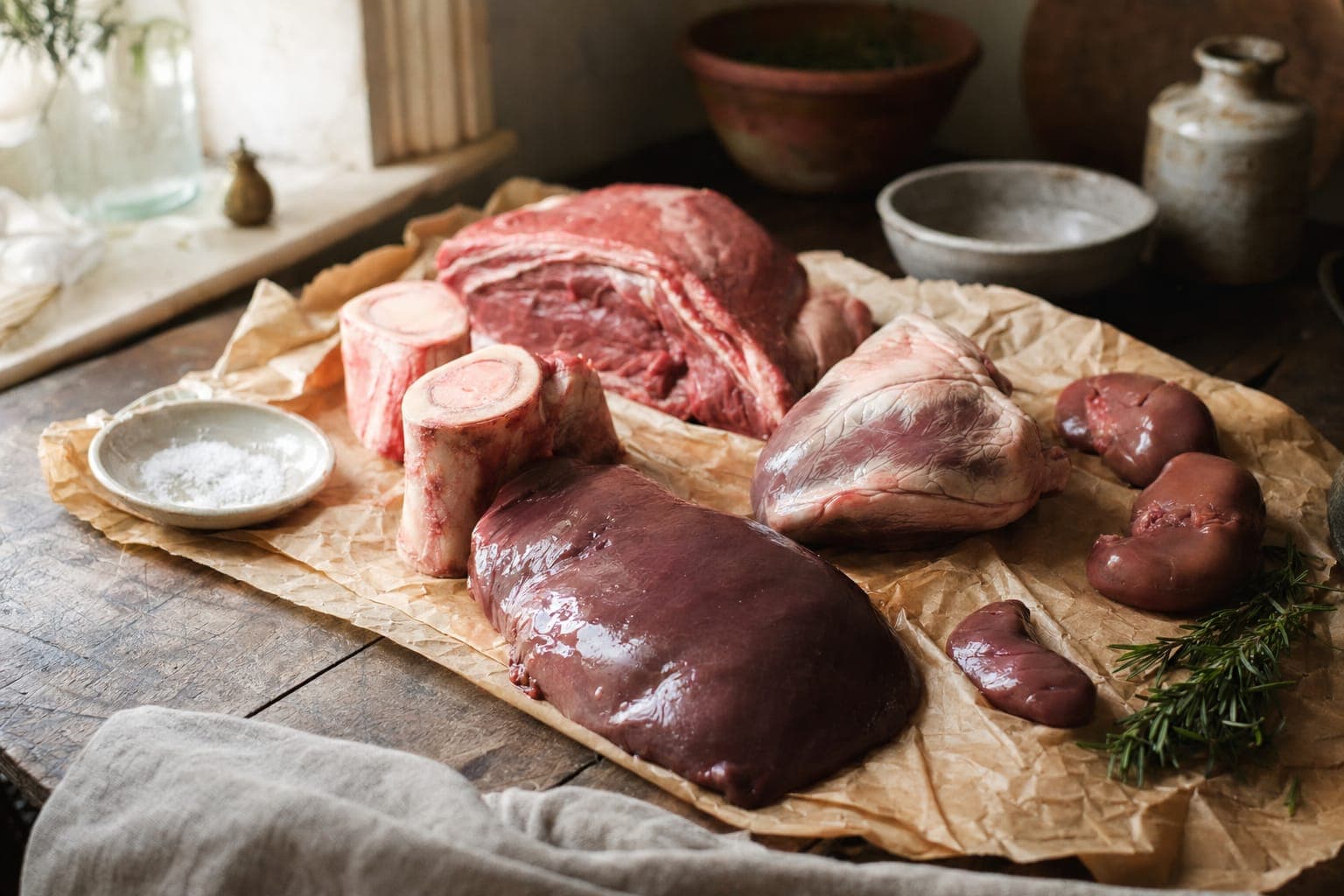
The Nutrients You Can Only Get from Organ Meats
Nutrients found almost exclusively in organ meats: retinol, CoQ10, choline, DAO enzyme. Why muscle meat can't replace them.
Ingredients
Grass-Fed Beef Protein Isolate: What Makes It Different
See what sets grass-fed beef protein isolate apart, from easy digestion to micronutrient content, and how it really compares with whey protein for daily use.
Real food, made effortless
Try the organ blendA few ways to use it
All recipes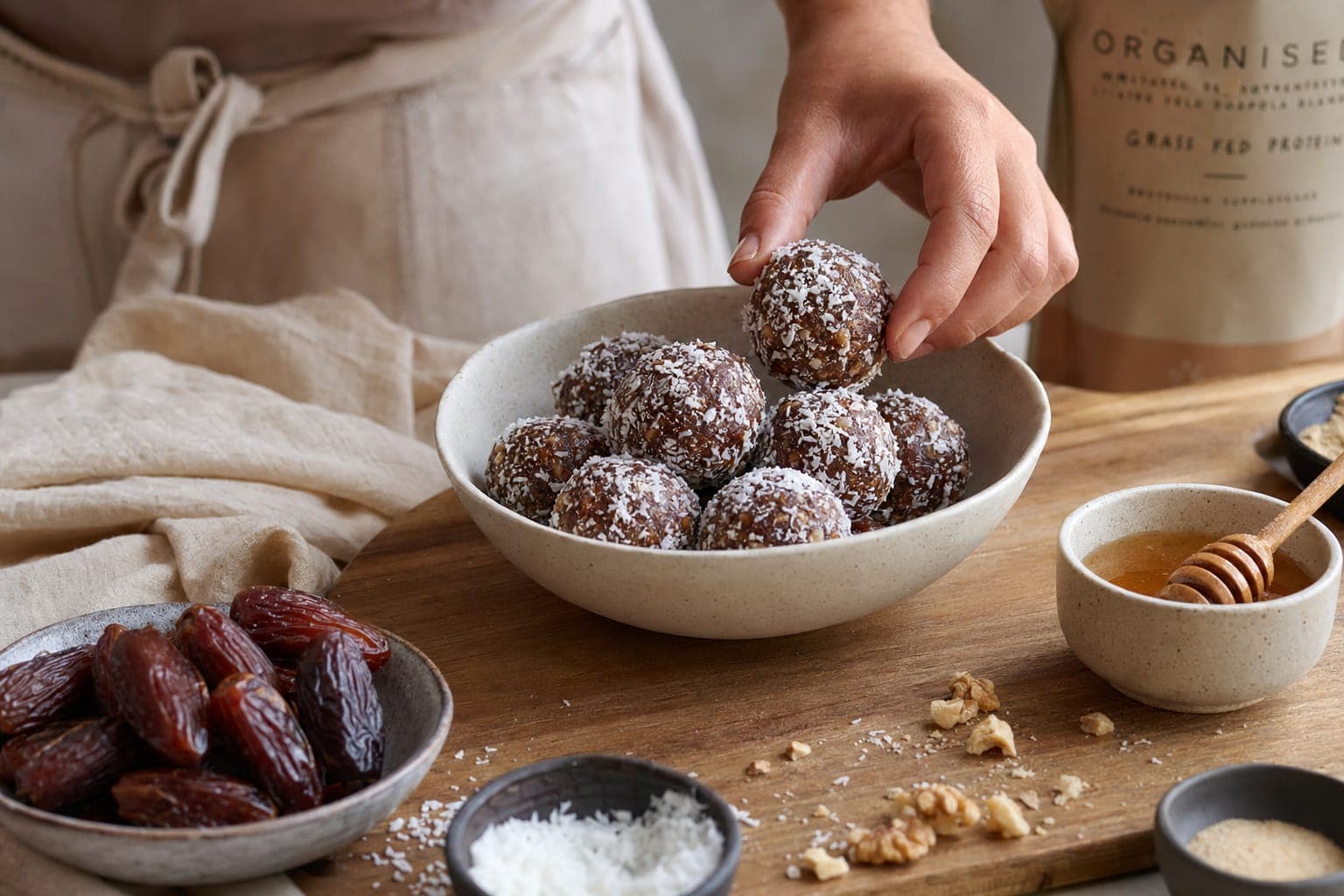
Energy Balls with Organised, Dates and Raw Honey
Make no-bake energy balls with Organised, dates, and raw honey. Perfect lunch box, pre-workout, or on-the-go snack. Simple recipe.
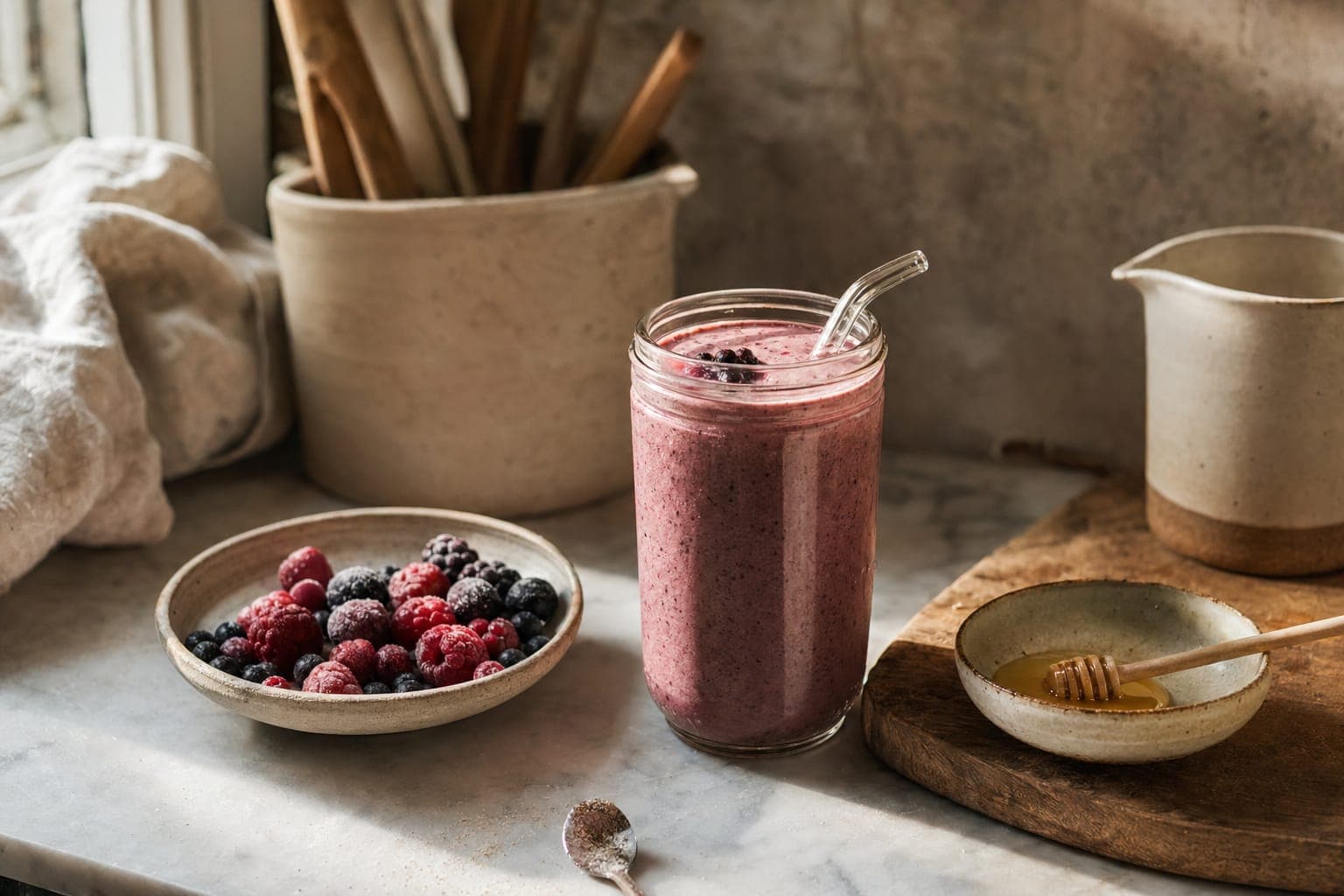
The Organised Recovery Smoothie for After Exercise
A recovery smoothie made with beef protein, raw milk, frozen berries, collagen, and honey. Optimal nutrition in the 30-minute window after exercise.
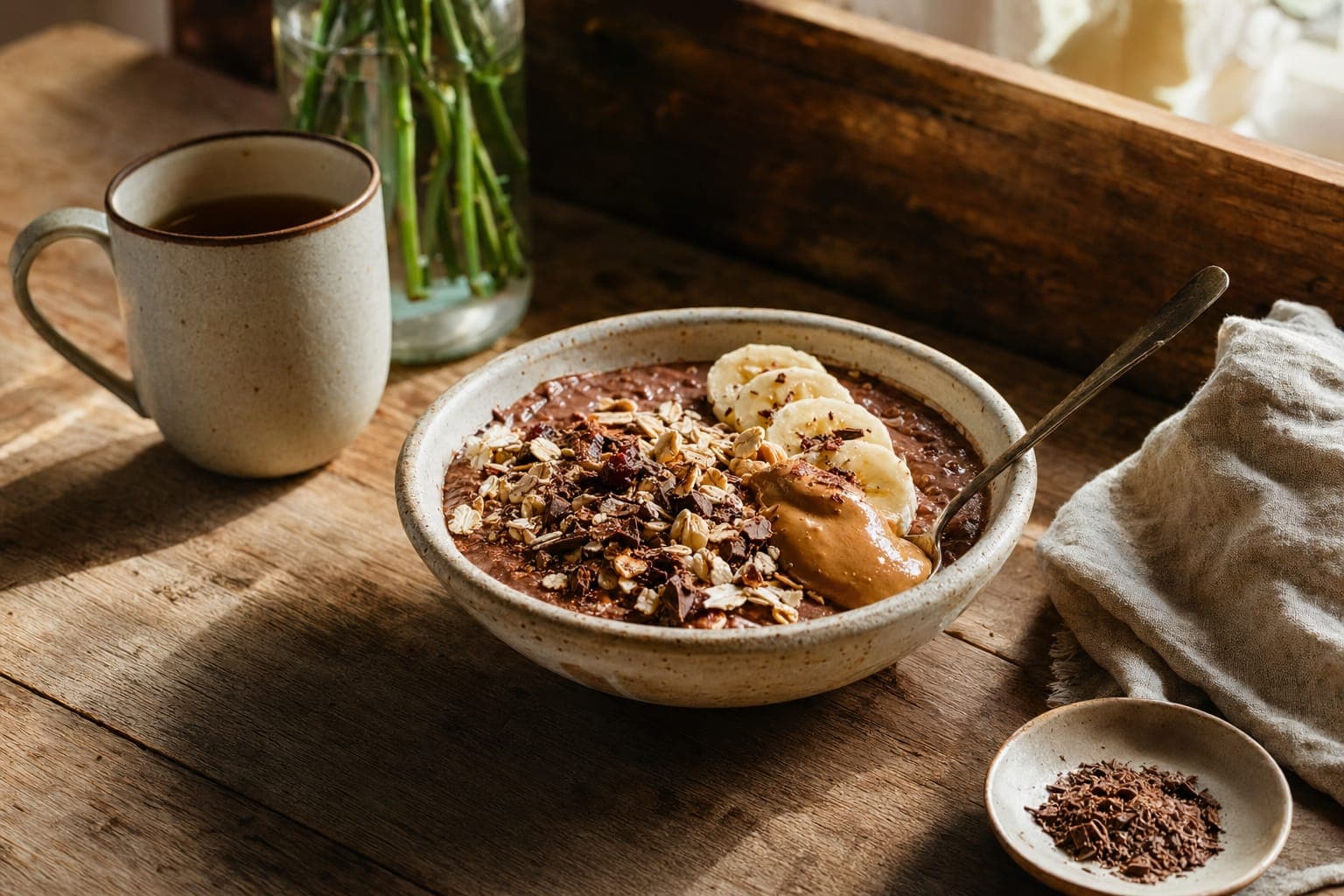
10 Ways to Use Organised That Aren't Just a Shake
Move beyond the basic shake. Discover 10 creative ways to use Organised in smoothie bowls, oats, yoghurt, baking, and more.


 Join over 100,000+ members
Build a better food system with us
The Organised community is thousands of people choosing real food and backing the farmers who grow it, all of us trying to leave the world a little better than we found it. If that is what you care about too, you belong here.