Collagen for Joint Pain: What Does the Evidence Say?
The joint pain that wakes you up at 50 and quietly accelerates through your sixties is not inevitable. Clinical evidence shows collagen supplementation can genuinely reduce pain and slow cartilage breakdown, but only if you understand what the data actually says.

By Niall Kiddle, Founder, Organised

Reviewed by Pedro Rodrigues, Agronomist (farming and sourcing only) ·
7 min read · Published · Updated · 5 cited sources
Makers of the Organised Daily blend, a grass-fed beef organ supplement from regenerative UK farms

Much of the collagen marketing is overblown. But the underlying science is solid. The challenge is separating which claims hold up under scrutiny.
What collagen is and why joints need it
Collagen is the most abundant protein in the human body, making up roughly 25 to 35 percent of total protein mass.1 In joints, collagen is the structural foundation. Type I collagen makes up the outer layer of cartilage and provides tensile strength. Type II collagen comprises the deeper cartilage layers and provides compressive strength, the ability to absorb impact without deforming.
As you age, collagen synthesis slows. Collagen breakdown accelerates. By your sixties, cartilage may have lost 20 to 30 percent of its original thickness. The joint surface becomes rougher, less resilient. Pain increases. Movement becomes laboured.
This is not inevitable ageing. It is accelerated by inflammation, oxidative stress, poor movement patterns, and a lifetime of inadequate collagen intake. Some of this you cannot control. Some you can.
Collagen is made from amino acids, particularly glycine, proline, hydroxyproline, and lysine. Your body can synthesise these, but the efficiency drops with age. Getting them from food or supplement form provides your joints with the raw materials they need to repair cartilage, maintain joint space, and reduce inflammation.
Collagen is not just a supplement. It is the structural protein your cartilage is made of. If you want to preserve joint health into old age, collagen status matters profoundly.
The clinical evidence on collagen supplementation
Multiple randomised controlled trials show that collagen peptide supplementation reduces joint pain and improves joint function in people with osteoarthritis or exercise-related joint pain.
A 2019 meta-analysis in the journal Nutrients, reviewing 19 randomised controlled trials, found that collagen supplementation resulted in statistically significant reductions in pain during activity and at rest. The effect size was moderate but clinically meaningful. People reported roughly 30 to 40 percent reductions in pain scores.2
A 2021 review found that hydrolysed collagen (collagen peptides) is effective for improving pain symptoms in people with knee osteoarthritis. Most studies used dosages between 8 and 12 grams daily over 8 to 12 weeks.3 The improvements were most pronounced in people over 50 and in those with moderate to severe baseline pain.
Imaging studies (ultrasound and MRI) show that people supplementing with collagen have better cartilage quality and less cartilage breakdown compared to placebo groups. This is not just pain improvement. There is actual structural benefit.
However, and this is important: the evidence shows collagen supplementation slows cartilage breakdown and reduces pain. It does not reverse established cartilage loss. If your cartilage is already significantly damaged, collagen supplementation can prevent further degradation but cannot regenerate what is gone. This is why starting early matters.
Additionally, the evidence is strongest for type II collagen (the kind found in cartilage) and hydrolysed collagen (collagen that has been broken down into smaller peptides for absorption). Most over-the-counter collagen supplements use one or both of these forms, so they tend to work. Unhydrolysed collagen (like bone broth) is harder to absorb and less well studied.

Type II collagen vs hydrolysed collagen
Type II collagen is the specific form found in cartilage. Studies using type II collagen specifically show excellent results for joint pain reduction. Doses of 40 to 100 milligrams daily (undenatured type II collagen) have shown benefits in clinical trials, sometimes with results emerging within 4 to 8 weeks.4
Hydrolysed collagen (collagen peptides) is collagen that has been broken down into smaller molecules for better absorption. Your digestive system does not absorb intact collagen proteins. They are too large. Hydrolysation breaks them into dipeptides and tripeptides that can actually cross the intestinal wall.
A common belief is that hydrolysed collagen is broken down further in your stomach and does not reach your joints intact. This is partially true. But the evidence shows that even if the dipeptides and tripeptides are further metabolised, they provide the amino acids (particularly glycine and proline) that your body uses to synthesise new cartilage collagen. The benefit is real, just not through intact collagen reaching your joints.
Studies comparing type II collagen and hydrolysed collagen show that both work, but type II undenatured collagen may have a slight edge for some outcomes. However, the differences are small. If you cannot find type II, hydrolysed collagen peptides at 8 to 12 grams daily is a solid alternative.
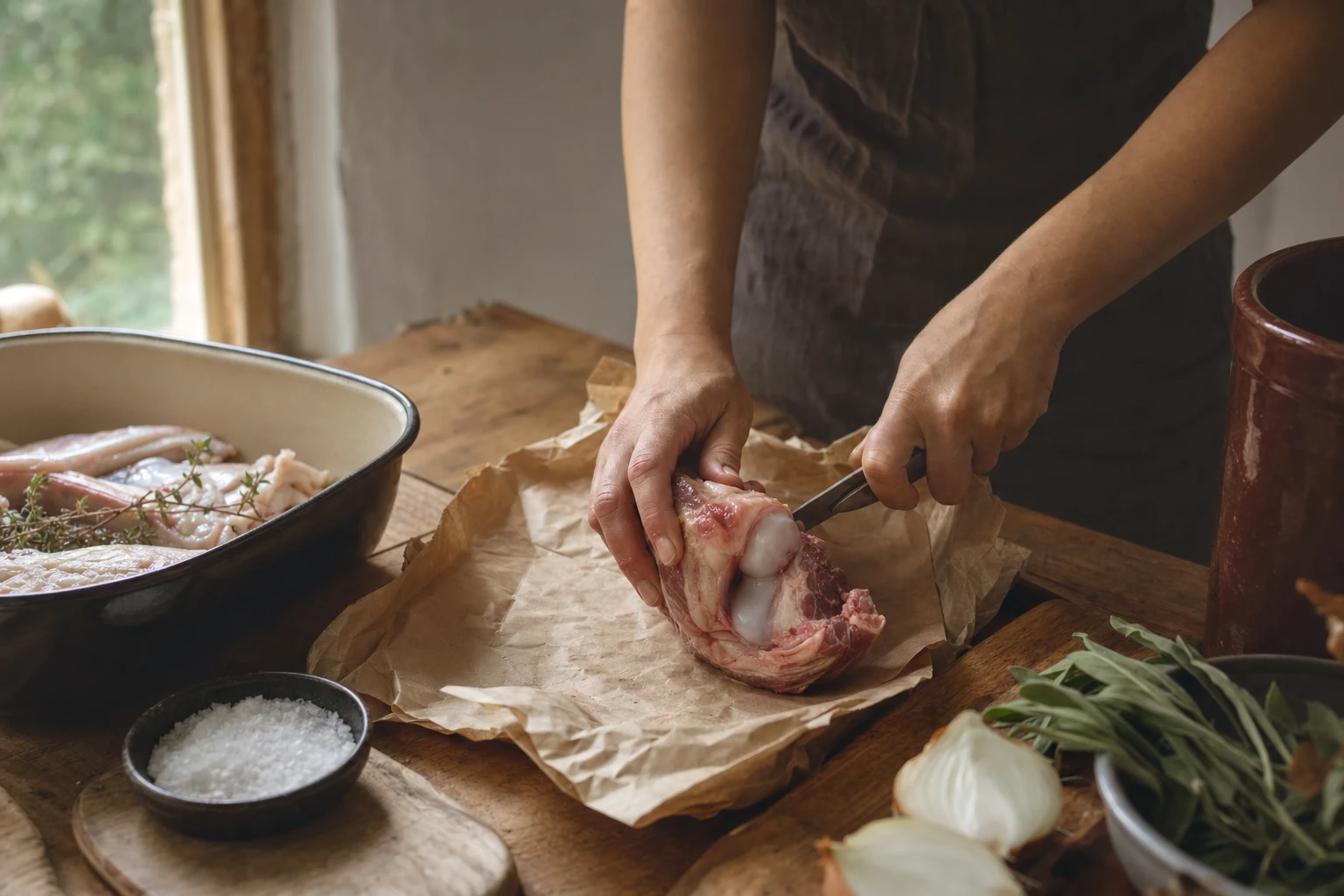
Bone broth, often marketed as a joint support, contains collagen but in unhydrolysed form. Your digestive system breaks it down inefficiently. The amino acids from bone broth are useful, but the amount of actual collagen your body absorbs is unclear. If joint pain is the goal, a dedicated collagen supplement (type II or hydrolysed) outperforms bone broth.
Hydrolysed collagen peptides are absorbed efficiently. Type II collagen is the form your cartilage actually uses. Both have clinical evidence. Bone broth is less well studied and likely provides less bioavailable collagen.
Get ingredient guides like this, free
Two short reads a week on the ingredients that matter and how to actually use them.
By signing up you agree to receive emails from us. No spam, unsubscribe anytime.
Dosing and timing protocols
Most successful clinical trials use 8 to 12 grams of hydrolysed collagen peptides daily or 40 to 100 milligrams of undenatured type II collagen daily. Effects typically emerge within 4 to 12 weeks, with maximum benefit around 12 to 16 weeks.
Consistency matters more than timing. A single dose taken whenever is less effective than daily supplementation. Your joints need a steady supply of collagen building blocks. This is not a supplement you take occasionally and expect results from.
Some studies combine collagen with vitamin C (needed for collagen cross-linking), glucosamine, and chondroitin, and report additive benefits. If you are supplementing for joint health, this combination is reasonable. Vitamin C is particularly important, as your body cannot cross-link new collagen without it.5
Collagen is not an acute pain reliever. It is a structural support supplement. You would not take collagen for a flare-up and expect immediate relief. You take it daily as maintenance, to slow joint degradation and reduce chronic pain over time.
Who benefits most from collagen
The clinical evidence is strongest for people over 50 with established joint pain or osteoarthritis. In this group, collagen supplementation consistently reduces pain and improves function. The effect is moderate but real.
People in their thirties and forties who are active (athletes, heavy lifters, runners) also benefit. Collagen supplementation before significant cartilage breakdown has started is highly protective. Studies show that athletes supplementing with collagen have fewer joint complaints and better recovery from intense training.
People with sedentary lifestyles or poor movement patterns benefit less from collagen supplementation alone. If your joint pain is driven by movement dysfunction, poor strengthening, or inadequate mobility work, supplementation will not fix it. Movement quality and strengthening come first. Collagen is the backup.
People with inflammatory conditions (rheumatoid arthritis, lupus, other autoimmune joint issues) may have different needs. The evidence for collagen in these conditions is weaker. Reducing systemic inflammation and addressing underlying autoimmunity matters more than collagen supplementation.

1 of 9
Daily blend
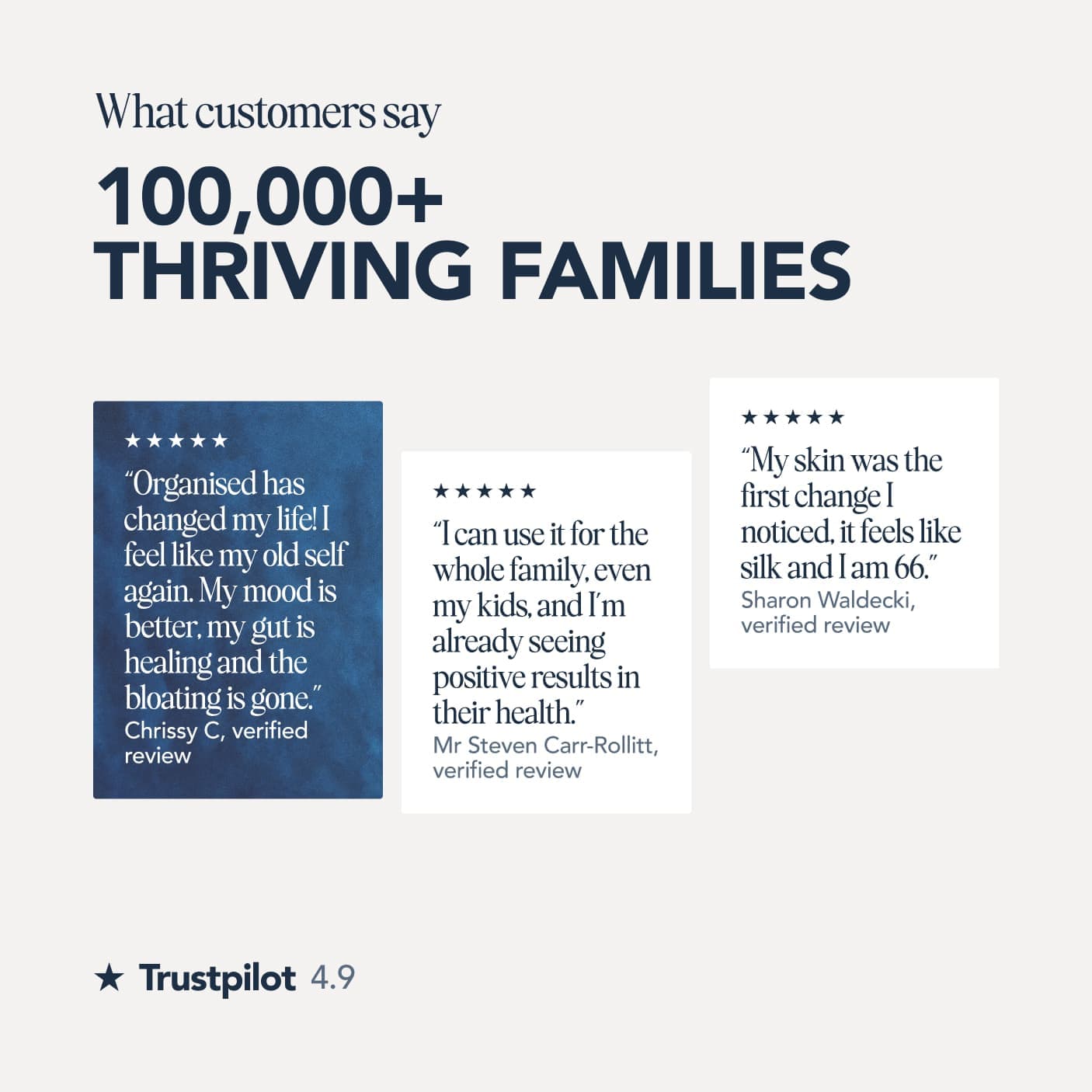
100,000+ thriving families4.9 on Trustpilot
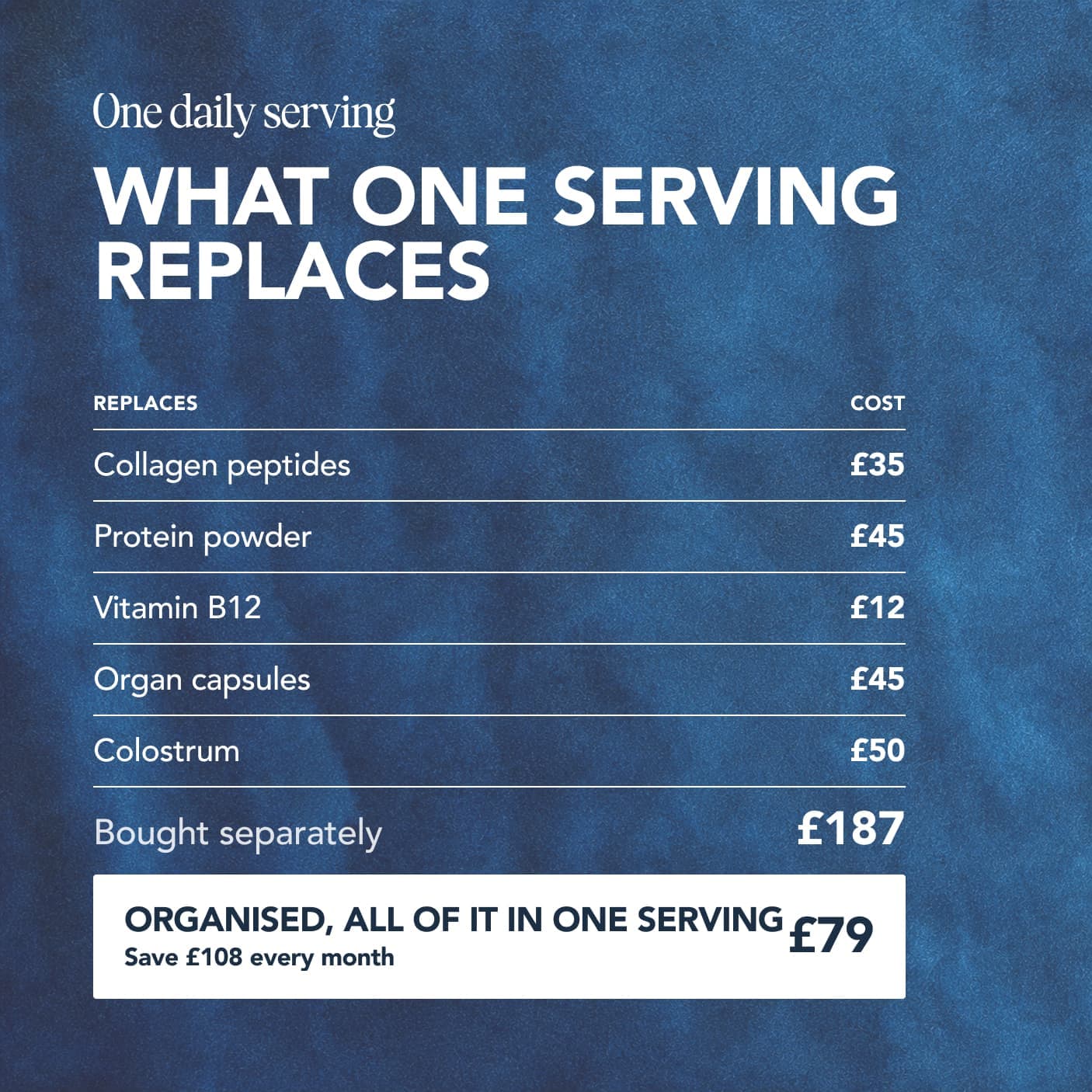
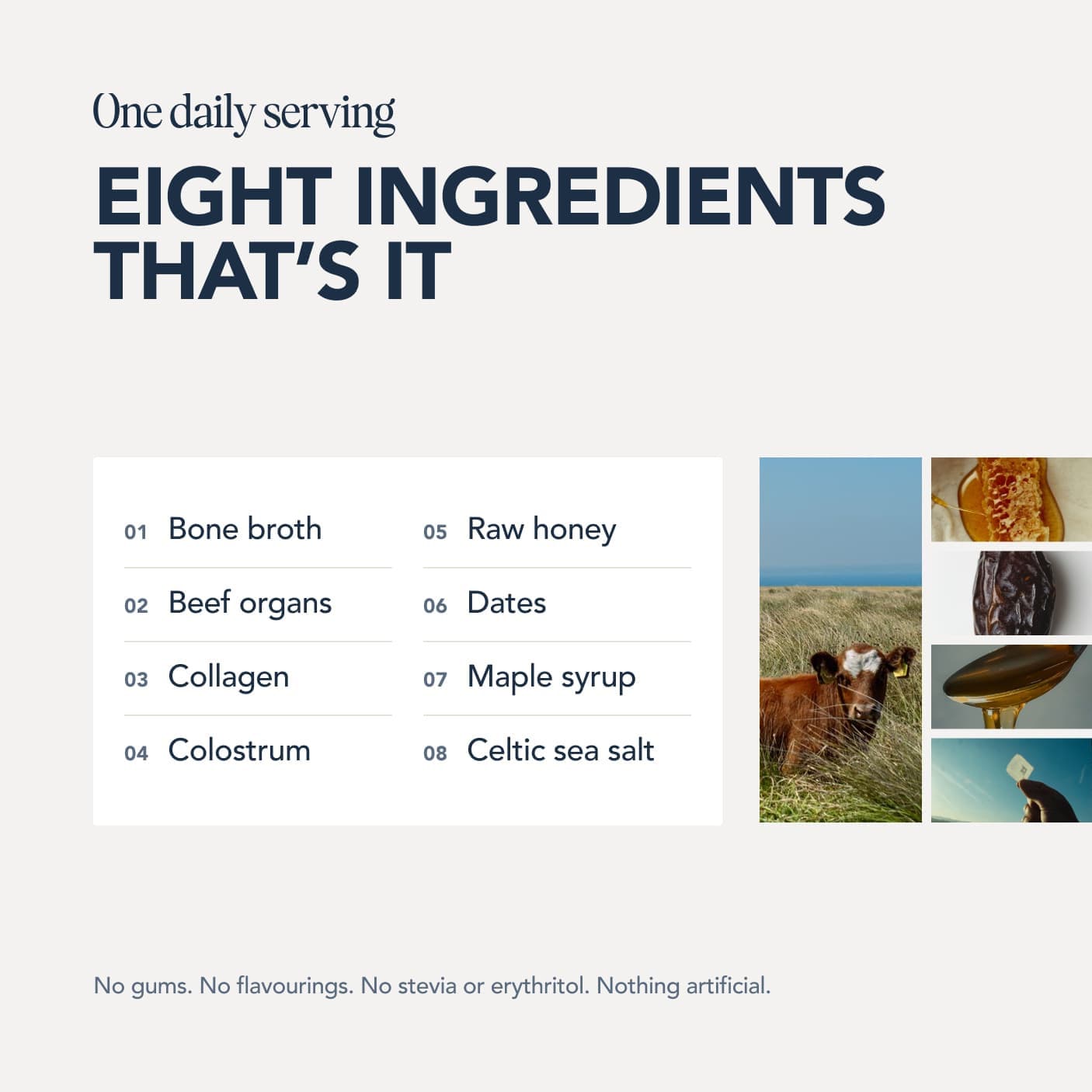
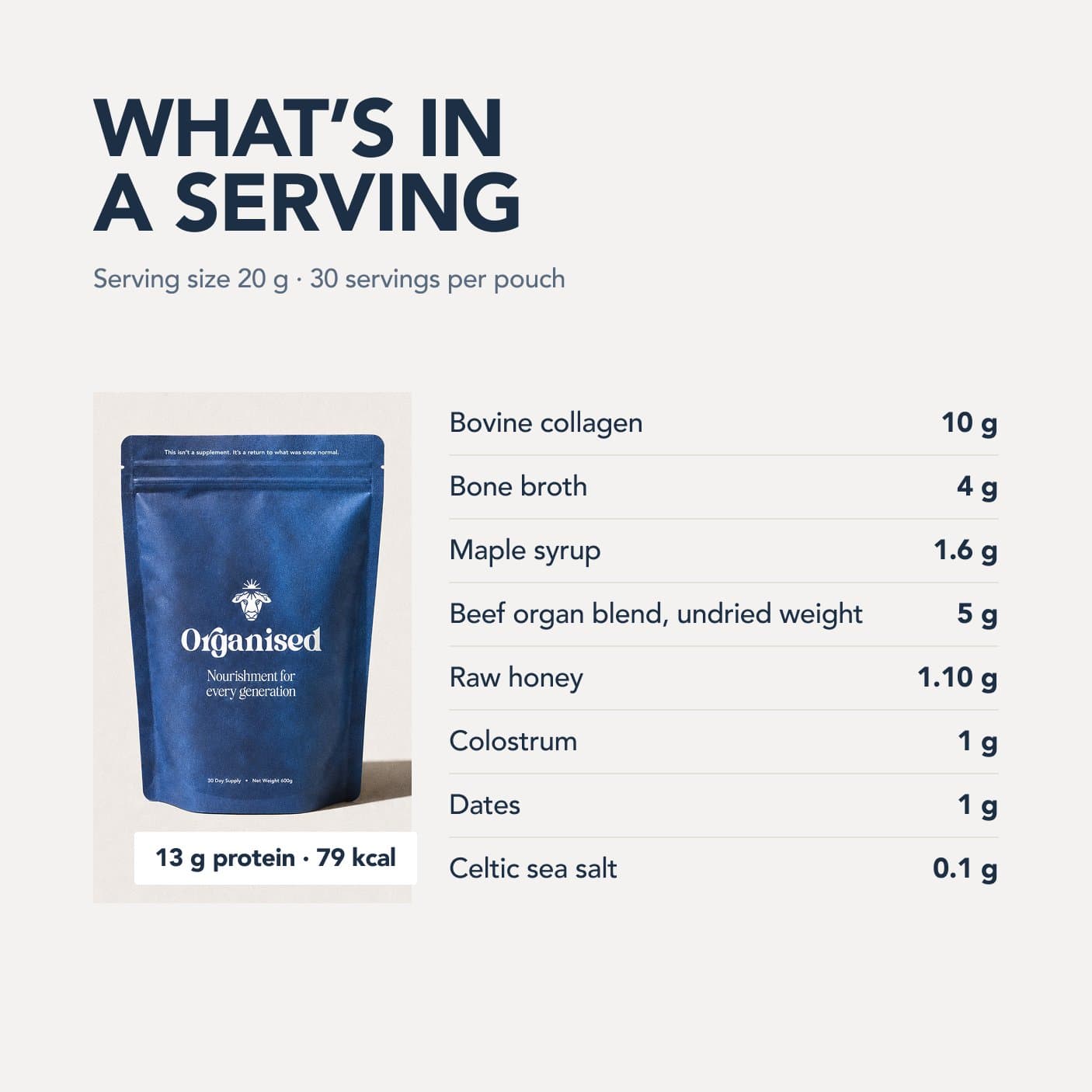
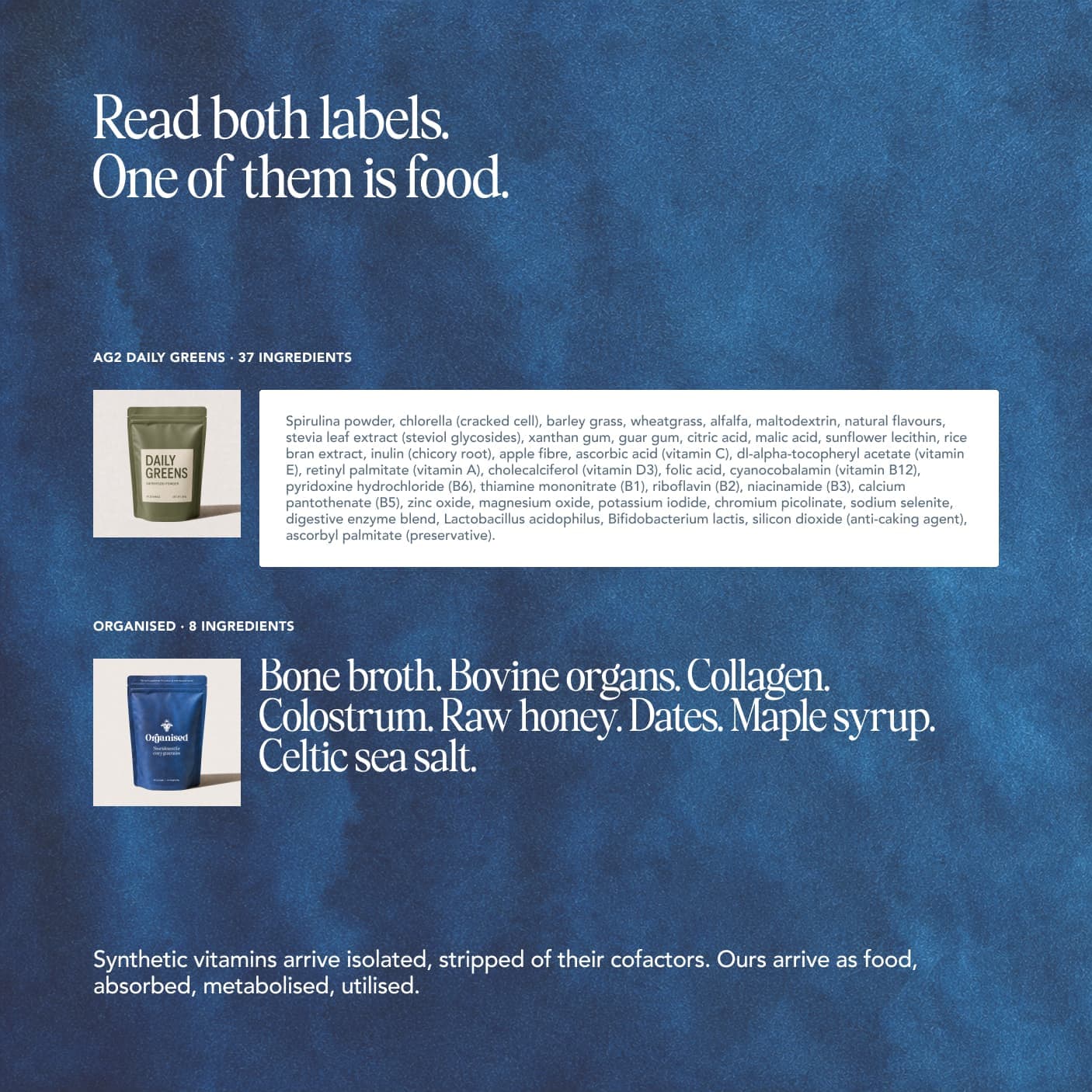
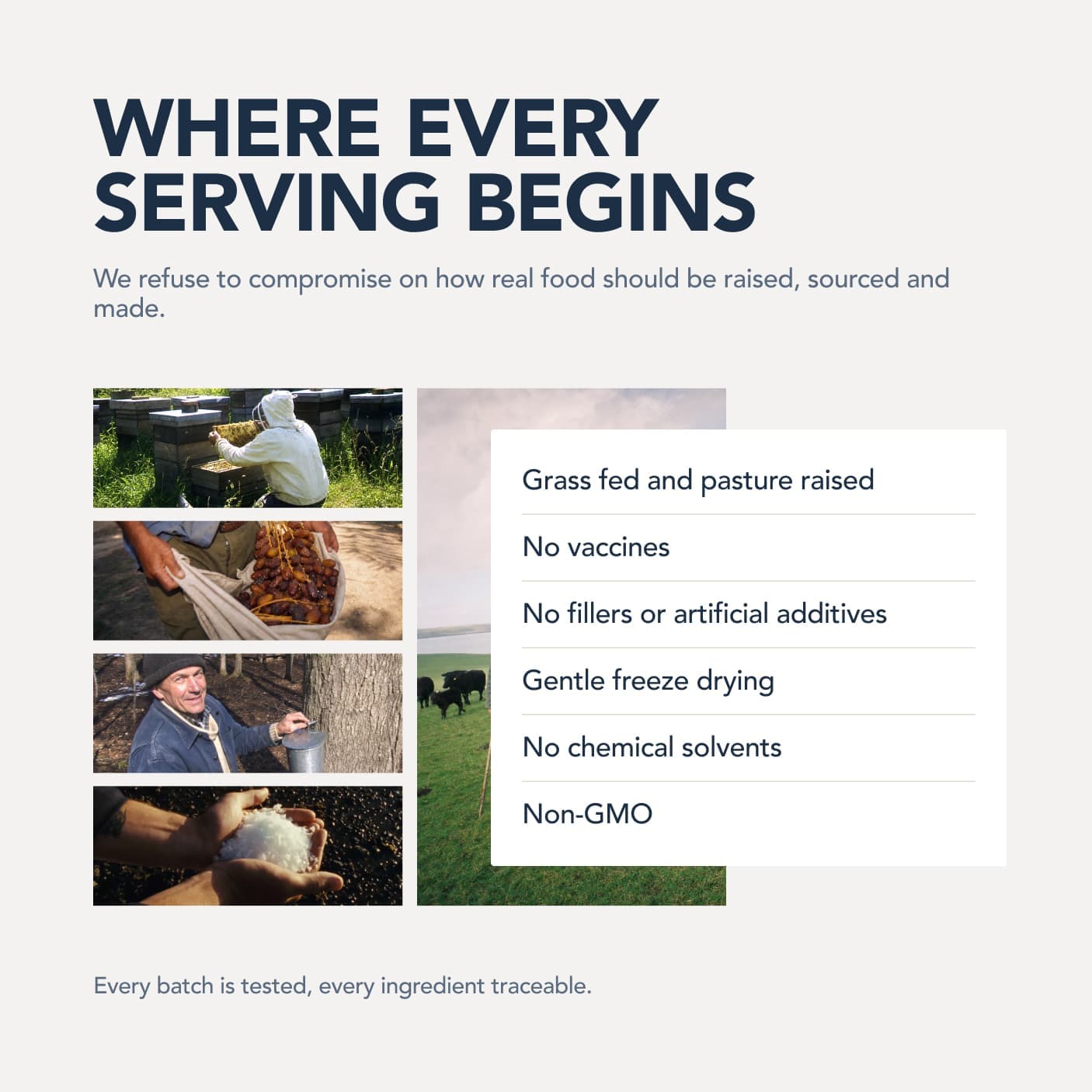
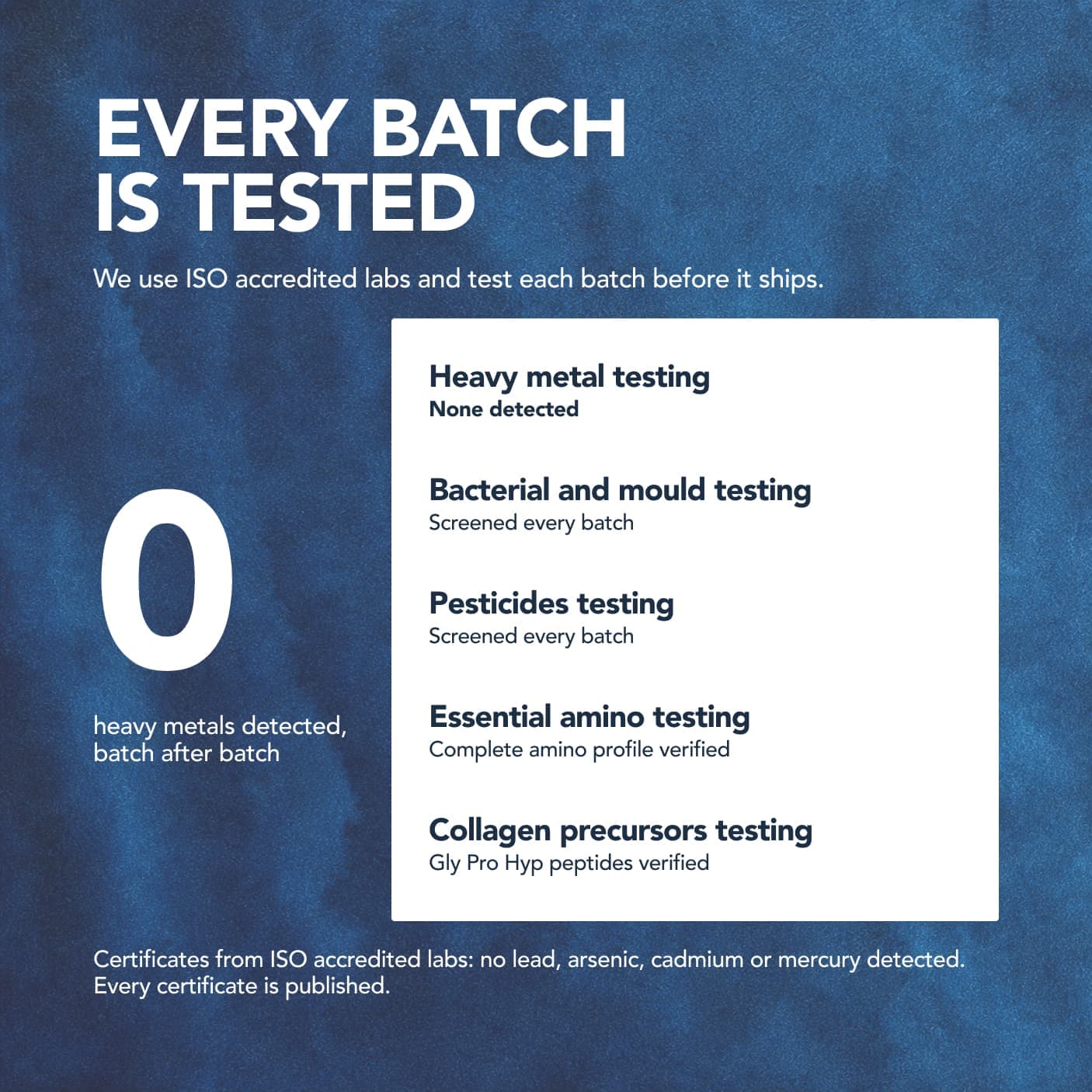
Eight real ingredients built around grass-fed beef organs, collagen and colostrum. Nothing synthetic added.
Free with your first order, worth £38. Plus £10 off the pouch with a subscription.

Free UK shipping · Made in England · 100 day money back guarantee on your first pouch · Skip, pause or cancel anytime
The practical reality of joint health
Clinical evidence supports collagen supplementation for joint pain, particularly in people over 50 and those with osteoarthritis. It does not cure joint disease. It does not reverse established cartilage loss. It slows degradation and reduces pain.
For active people, the case is even stronger. Supplementing with 8 to 12 grams of hydrolysed collagen or 40 to 100 mg of undenatured type II collagen daily, combined with vitamin C, appears to reduce joint pain and slow cartilage breakdown more effectively than either alone.
But collagen supplementation is not sufficient on its own. Joint health requires adequate movement, appropriate strengthening, good mineral status (particularly magnesium and calcium), and reduced inflammation from diet and lifestyle.
Start collagen supplementation early. If you are 40 and your joints feel fine, this is precisely when supplementation has the most impact. You are preventing future pain, not treating it. By the time you are 60 and waking up in pain, supplementation is playing catch-up.
If you are already experiencing joint pain, supplementation combined with appropriate movement (strength training for stability, mobility work for range of motion) and dietary changes (reducing inflammatory seed oils, increasing omega-3s) gives you the best chance of slowing progression and reducing symptoms.
References
Every source below was checked on 27 August 2026. Each PubMed, PMC and DOI identifier was resolved against NCBI or Crossref, and what it opens is printed under the citation, so you can see the link goes where the citation says without leaving the page. Where a citation and its identifier disagreed, the citation was corrected to the record or the reference was deleted along with the sentence marker that pointed at it, and where the resolved paper turned out not to support the sentence, the sentence was cut back to what it does support. Borrowed authority is worse than none, because it looks like rigour.
- Ricard-Blum S. The Collagen Family. Cold Spring Harb Perspect Biol. https://pmc.ncbi.nlm.nih.gov/articles/PMC3003457/ [accessed May 2026].Checked 27 August 2026: PMC3003457 opens Ricard-Blum S, The collagen family. Cold Spring Harb Perspect Biol 2011;3(1):a004978. PubMed indexes it as: Review.
- García-Coronado JM, Martínez-Olvera L, Elizondo-Omana RE, et al. Effect of collagen supplementation on osteoarthritis symptoms: a meta-analysis of randomized placebo-controlled trials. Int Orthop. https://pubmed.ncbi.nlm.nih.gov/30368550/ [accessed May 2026].Checked 27 August 2026: PMID 30368550 opens García-Coronado JM, Martínez-Olvera L, Elizondo-Omaña RE et al, Effect of collagen supplementation on osteoarthritis symptoms: a meta-analysis of randomized placebo-controlled trials. Int Orthop 2019;43(3):531-538. PubMed indexes it as: Meta-Analysis, Review.
- Lin CR, Tsai SHL, Huang KY, et al. Analgesic efficacy of collagen peptide in knee osteoarthritis: a meta-analysis of randomized controlled trials. https://pmc.ncbi.nlm.nih.gov/articles/PMC10505327/ [accessed May 2026].Checked 27 August 2026: PMC10505327 opens Lin CR, Tsai SHL, Huang KY et al, Analgesic efficacy of collagen peptide in knee osteoarthritis: a meta-analysis of randomized controlled trials. J Orthop Surg Res 2023;18(1):694.The authors' own declaration, from the record: Financial, commercial, or other relationships were absent in this research. There was no conflict of interest in this research.
- Lugo JP, Saiyed ZM, Lane NE. Efficacy and tolerability of an undenatured type II collagen supplement in modulating knee osteoarthritis symptoms: a multicenter randomized, double-blind, placebo-controlled study. https://pmc.ncbi.nlm.nih.gov/articles/PMC4731911/ [accessed May 2026].Checked 27 August 2026: PMC4731911 opens Lugo JP, Saiyed ZM, Lane NE, Efficacy and tolerability of an undenatured type II collagen supplement in modulating knee osteoarthritis symptoms: a multicenter randomized, double-blind, placebo-controlled study. Nutr J 2016;15:14. PubMed indexes it as: Multicenter Study, Randomized Controlled Trial.
- National Institutes of Health, Office of Dietary Supplements. Vitamin C - Health Professional Fact Sheet. https://ods.od.nih.gov/factsheets/VitaminC-HealthProfessional/ [accessed May 2026].
Corrections
What this page used to say, and why it no longer says it. Corrections are dated and are never removed, because deleting the record of an error is a second error. Every guide we have corrected is listed at our corrections log.
- 27 August 2026. Reference 3 was credited to “Liu Y, Liu S, Luo F, et al.” The meta-analysis is by Lin et al., Journal of Orthopaedic Surgery and Research 2023. Corrected.
Who wrote and reviewed this guide
Niall Kiddle
Author · Founder, Organised
Niall is the founder of Organised. He started the company in 2024 after fixing his own health the slow way: in 2022 he swapped a cupboard of synthetic supplements for real food, raw milk, organ meats, bone broth and honey, and felt the difference within months.
Areas of expertise: Ancestral nutrition, Organ meats, Whole-food supplementation, Gut health, Regenerative sourcing
Read Niall's full profile
Pedro Rodrigues
Reviewer · Agronomist (farming and sourcing only)
Pedro is the agronomist Organised works with on farming and sourcing. His job on the guides is to keep the science honest: he reviews what we publish about soil health, regenerative agriculture, grazing and the way food is actually produced.
Areas of expertise: Regenerative agriculture, Agronomy, Soil health, Grass-fed farming, Food sourcing
Reviewed this guide on
Read Pedro's full profileMore on collagen
View all- Collagen Peptides: A Complete Guide to Types, Sources and Benefits
- Can You Get Enough Collagen from Food Alone?
- Collagen and Hair Growth: Separating Fact from Hype
- Collagen for Gut Health: Rebuilding Your Intestinal Lining
- Collagen Supplements on Reddit: Do They Actually Work?
- Does Collagen Actually Work for Skin? What the Research Says
- The Amino Acids in Collagen and Why They Matter
- What Happens When You Take Collagen Every Day for 90 Days?
- When Does Your Body Start Losing Collagen? (And What to Do About It)
Browse the guides library
All guidesKeep reading

Ingredients
Bovine Colostrum: The Complete Guide to Nature's First Food
Explore bovine colostrum benefits for gut and immune health. This complete guide covers immunoglobulins, sensible dosing, and safety for adults.
Ingredients
The Complete Guide to Beef Organ Supplements
Beef organ supplements explained from the composition data: what each organ carries, how they compare to muscle meat, and the vitamin A ceiling that limits the dose.

Ingredients
Beef Lung: What It Contains and Why It Matters
Beef lung is a lean source of elastin and protein. See why this nose-to-tail organ supplement earns a place in ancestral, whole food eating.
Real food, made effortless
Try the organ blendA few ways to use it
All recipes
Organised Chia Pudding with Raw Honey and Berries
A no-cook chia seed pudding made with raw milk, collagen, berries, and raw honey. Prep it the night before and eat for breakfast.
Bone Broth from Scratch: A Step-by-Step Guide
Step-by-step guide to making bone broth at home. Stovetop, slow cooker, and Instant Pot methods. Rich in collagen and gut-healing minerals.
How to Make Your Own Gelatine Gummies
A simple recipe for homemade gelatine gummies using grass-fed gelatine, fresh juice, and raw honey. Better than shop-bought, kids love them.


 Join over 100,000+ members
Build a better food system with us
The Organised community is thousands of people choosing real food and backing the farmers who grow it, all of us trying to leave the world a little better than we found it. If that is what you care about too, you belong here.