When Does Your Body Start Losing Collagen? (And What to Do About It)
Your skin, joints, and connective tissue start declining long before you notice. The process begins earlier than you think and accelerates faster than most people realise.

By Niall Kiddle, Founder, Organised

Reviewed by Pedro Rodrigues, Agronomist (farming and sourcing only) ·
6 min read · Published · Updated · 6 cited sources
Makers of the Organised Daily blend, a grass-fed beef organ supplement from regenerative UK farms


The timeline: when collagen starts declining
Ages 0-30: Peak collagen production. Your body is producing collagen faster than it's breaking down. Your skin is plump, elastic, and resilient. Your joints are robust. Healing is fast. This is the window when you have the most margin for error.
Age 30: The inflection point. Around 30, collagen production begins to decline. Nothing dramatic happens. You don't wake up at 30 and feel old. But biomarkers show that collagen synthesis has started to slow. You're now producing roughly 1% less collagen per year.
Ages 30-40: Subtle decline. The decline is still slow enough that most people don't notice. By 35, you might have slightly drier skin. By 40, you might notice the first fine lines or that your joints aren't quite as bouncy. But the changes are subtle.
Ages 40-50: Accelerating decline. By 40, you've lost roughly 10% of your total collagen. This is when changes become visible. Fine lines deepen. Skin becomes noticeably less elastic. Joints creak. Hair thins. It's not dramatic, but it's undeniable.
Ages 50+: Steep decline. After 50, women experience accelerated collagen loss due to the decline in oestrogen, which supports collagen production. By 60, you've lost roughly 30% of your total collagen. The changes are significant and visible.
Collagen decline starts at 30, accelerates at 40, and becomes rapid after 50, particularly in women after menopause.

Why collagen production slows
Genetic programming. Your body is programmed to produce less collagen as you age. This is partly evolutionary (conserving resources as reproductive years end) and partly biological (cells accumulate damage and function declines).
Declining growth hormone. Growth hormone (particularly in men) supports collagen synthesis. As GH declines with age, collagen production declines alongside it.
Declining oestrogen. In women, oestrogen supports collagen production. When oestrogen declines at menopause, collagen production drops accordingly.6
Mitochondrial decline. Your mitochondria (the power plants of your cells) decline with age. Collagen synthesis is metabolically expensive. When mitochondria function declines, collagen synthesis becomes harder.
Accumulating cellular damage. Over time, DNA damage accumulates. Cells lose their ability to function optimally. Collagen-producing fibroblasts become less efficient.
What accelerates collagen loss
Sun on a seed-oil-loaded skin. UV radiation breaks down collagen, but the dose-response is heavily modified by what is stored in your skin lipids. Diets high in industrial seed oils saturate the skin with linoleic acid, which oxidises under sunlight and amplifies the damage. Sensible sun, built up gradually without burning, is part of human biology. The accelerator is the inflammatory diet underneath the sunlight, not the sunlight itself.
Chronic inflammation. Inflammatory cytokines break down collagen. If your gut is inflamed, your diet is inflammatory, or your stress is chronic, collagen is being broken down faster than it can be rebuilt.
Poor sleep. Collagen synthesis happens primarily during sleep. Chronic sleep deprivation means less time for collagen repair.
High cortisol. Cortisol breaks down collagen. Chronic stress literally dissolves your connective tissue.
Poor nutrition. Collagen synthesis requires vitamin C, copper, zinc, and iron. If you're deficient in any of these, your body can't rebuild collagen as fast as it's breaking down.4
Smoking. Smoking directly damages collagen and impairs collagen synthesis. Smokers show visibly accelerated skin aging compared to non-smokers of the same age.2

The prevention strategy
Start early (before 35). The best time to prevent collagen loss is before it becomes visible. If you're under 35 and you notice you have fine lines or your skin is dry, address it now. Prevention is easier than repair.
Eliminate seed oils first. Linoleic acid stored in skin lipids is what makes UV genuinely dangerous; clear that out and the relationship between sun and skin returns to something closer to ancestral. Build a tan slowly through the spring rather than burning. Cover up or seek shade at peak intensity. A heavy daily reliance on chemical sunscreen is not the prevention you have been told it is.
Manage inflammation. Eliminate seed oils, reduce sugar, and address gut health. Chronic inflammation is a collagen killer.
Sleep. Aim for 7-9 hours consistently. Collagen synthesis happens during sleep.
Manage stress. Cortisol breaks down collagen. Stress management is directly collagen preservation.
Adequate nutrition. Vitamin C from food or supplement, copper from beef and shellfish, zinc from beef and pumpkin seeds, iron from beef organs. These are non-negotiable for collagen synthesis.
Collagen supplementation. If you're over 35, particularly if you're past 40, collagen peptides (10-15 grams daily) can slow or partially reverse the decline.
Collagen loss is inevitable with age, but the rate of loss is manageable. Prevention starting early is easier than correction later.
Get ingredient guides like this, free
Two short reads a week on the ingredients that matter and how to actually use them.
By signing up you agree to receive emails from us. No spam, unsubscribe anytime.
The mechanics of collagen decline
Your body is constantly breaking down old collagen and building new collagen. In youth, the building process outpaces the breakdown. By roughly age 25, the equilibrium tips, and you start losing more collagen than you build.
This happens for three reasons: your fibroblasts (the cells that make collagen) become less active with age, your body produces less of the cofactors needed to cross-link collagen molecules (particularly vitamin C), and your collagen is increasingly damaged by oxidative stress and inflammation.5
Age 25 marks the invisible threshold where your collagen production starts losing to collagen breakdown. This is why prevention is easier than reversal.
Prevention: the strategies that work
The best time to prevent collagen loss is before it accelerates. Start in your 20s if possible, but it's never too late.
Eliminate seed oils, get sensible sun without burning, eat a whole-food diet rich in vitamin C (needed to synthesise collagen), manage stress, sleep well, and avoid smoking. These six things slow collagen decline more than any supplement.
Supplementing collagen after age 25 makes sense because your body will need external support. But supplementing cannot override a lifestyle of sun damage, sugar, and stress.
What accelerates collagen loss (besides age)
Age is inevitable, but several modifiable factors dramatically accelerate collagen decline.
Ultraviolet (UV) light damages collagen in the skin directly. UV exposure triggers matrix metalloproteinases (enzymes that break down collagen) and generates free radicals that oxidise existing collagen.1 This is why sun damage is the single biggest contributor to premature skin ageing.
Sugar and processed foods damage collagen through glycation. When blood glucose is chronically elevated, glucose molecules bind to collagen fibres permanently, creating advanced glycation end products (AGEs). This cross-linking damages collagen's elasticity and makes it brittle.3
Smoking accelerates collagen breakdown by increasing oxidative stress and impairing the enzyme systems that synthesise new collagen.
Stress and poor sleep elevate cortisol, which suppresses collagen synthesis and increases breakdown enzymes. Chronic stress literally ages your skin faster than age itself in some cases.
Inflammatory diet (seed oils, excess omega-6) triggers systemic inflammation, which activates collagen-degrading enzymes throughout your body.
The good news is that most of these are controllable. Limiting sun exposure, eating whole foods, sleeping well, and managing stress all slow collagen decline dramatically.



1 of 9
Daily blend
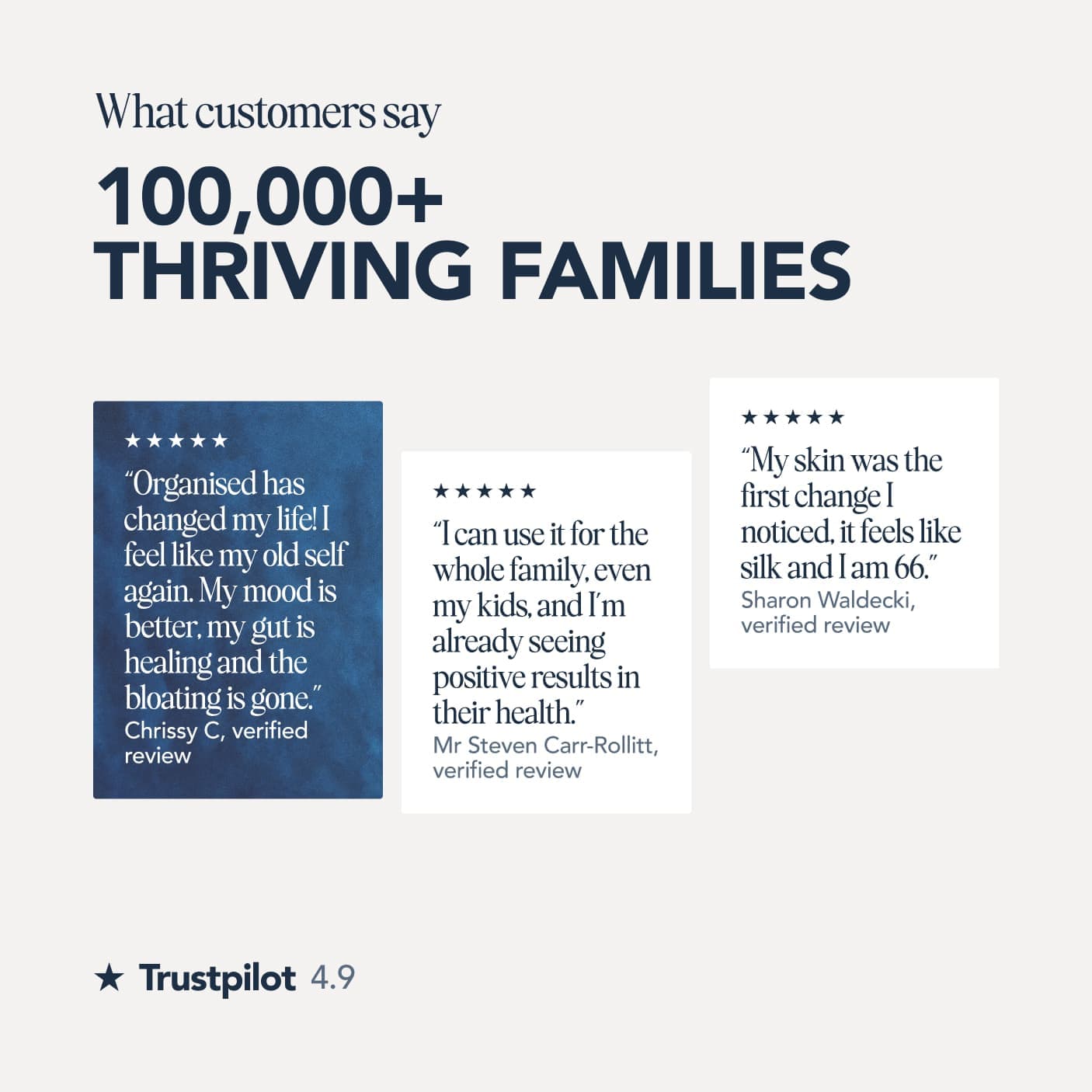
100,000+ thriving families4.9 on Trustpilot
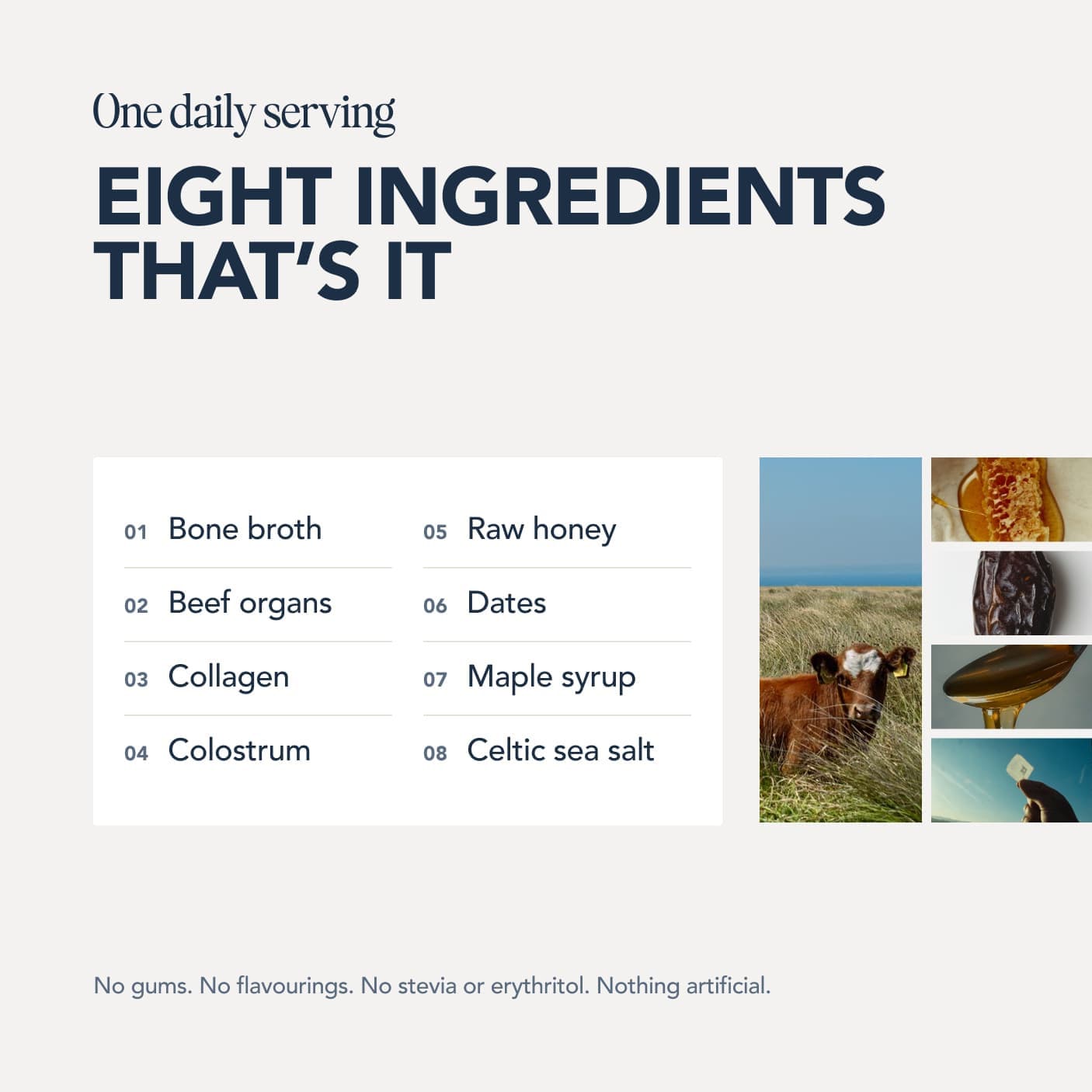
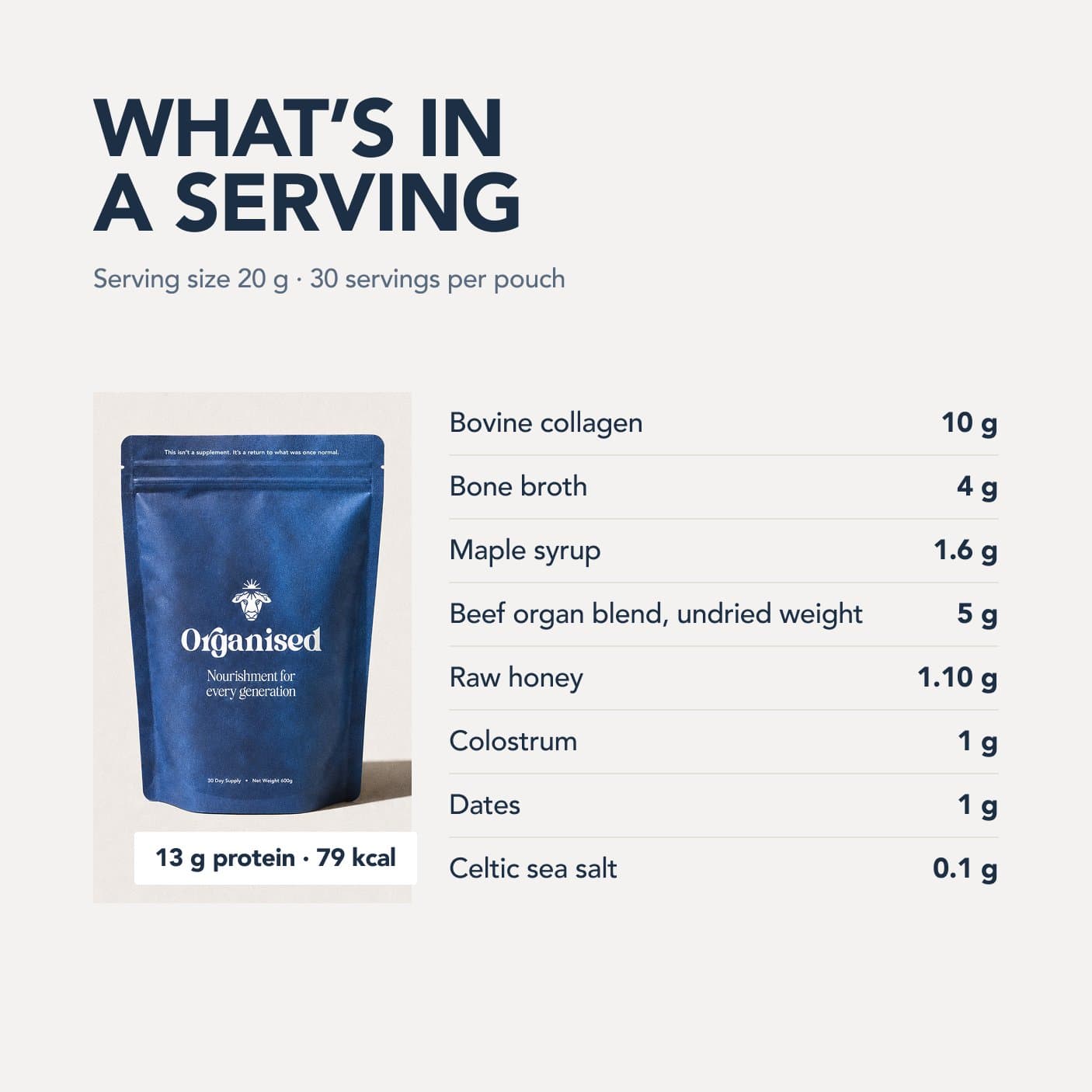
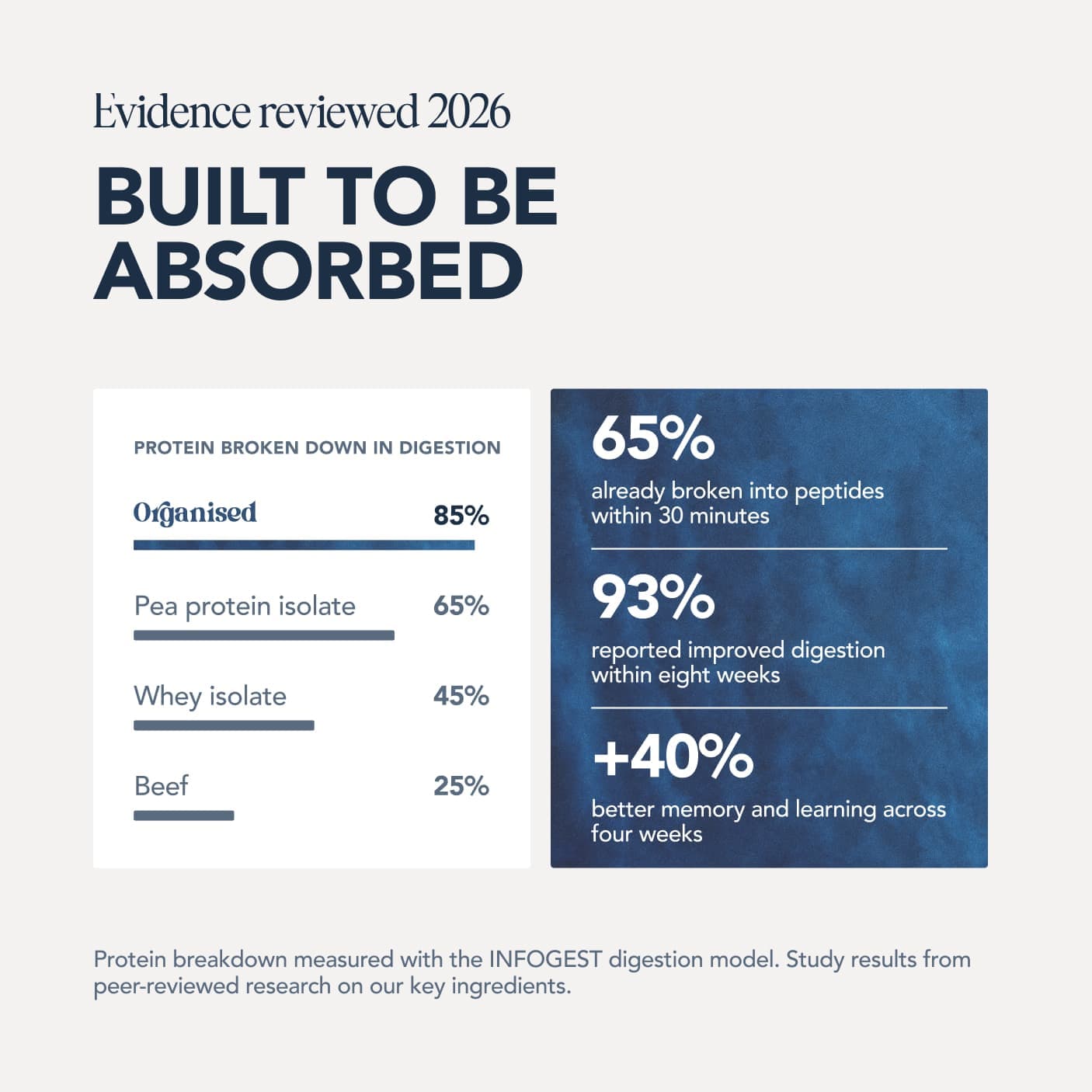
Eight real ingredients built around grass-fed beef organs, collagen and colostrum. Nothing synthetic added.
Free with your first order, worth £38. Plus £10 off the pouch with a subscription.

Free UK shipping · Made in England · 100 day money back guarantee on your first pouch · Skip, pause or cancel anytime
Starting your collagen protocol
If you're over 25, adding collagen supplementation to your routine is straightforward. Start with 10 grams daily and adjust based on results after 12 weeks.
The bottom line
Collagen production peaks at 30 and declines 1% per year thereafter. By 40, you've lost 10%. By 60, you've lost 30%. The decline is accelerated by sun exposure, inflammation, poor sleep, stress, and poor nutrition.
The best time to start collagen preservation is before 30. The second-best time is today, whenever you're reading this. Eliminating seed oils, sensible sun, sleep, stress management, and good nutrition are foundational. Collagen supplementation can help if you're past 40 or dealing with visible decline.
Start now. Prevention is easier and cheaper than correction.
Collagen decline accelerates after 40, which is why most anti-ageing strategies focus on that decade. But prevention starts in your 20s and 30s when you still have high collagen production. The time to act is now, not when damage is already visible.References
Every source below was checked on 27 August 2026. Each PubMed, PMC and DOI identifier was resolved against NCBI or Crossref, and what it opens is printed under the citation, so you can see the link goes where the citation says without leaving the page. Where a citation and its identifier disagreed, the citation was corrected to the record or the reference was deleted along with the sentence marker that pointed at it, and where the resolved paper turned out not to support the sentence, the sentence was cut back to what it does support. Borrowed authority is worse than none, because it looks like rigour.
- Pittayapruek P, Meephansan J, Prapapan O, Komine M, Ohtsuki M. Role of Matrix Metalloproteinases in Photoaging and Photocarcinogenesis. https://pmc.ncbi.nlm.nih.gov/articles/PMC4926402/ [accessed May 2026].Checked 27 August 2026: PMC4926402 opens Pittayapruek P, Meephansan J, Prapapan O et al, Role of Matrix Metalloproteinases in Photoaging and Photocarcinogenesis. Int J Mol Sci 2016;17(6). PubMed indexes it as: Review.
- Morita A. Tobacco smoke causes premature skin aging. J Dermatol Sci. https://pubmed.ncbi.nlm.nih.gov/17951030/ [accessed May 2026].Checked 27 August 2026: PMID 17951030 opens Morita A, Tobacco smoke causes premature skin aging. J Dermatol Sci 2007;48(3):169-75. PubMed indexes it as: Review.
- Gkogkolou P, Böhm M. Advanced glycation end products: key players in skin aging? Dermatoendocrinol. https://pmc.ncbi.nlm.nih.gov/articles/PMC3583887/ [accessed May 2026].Checked 27 August 2026: PMC3583887 opens Gkogkolou P, Böhm M, Advanced glycation end products: Key players in skin aging? Dermatoendocrinol 2012;4(3):259-70.
- National Institutes of Health, Office of Dietary Supplements. Vitamin C - Health Professional Fact Sheet. https://ods.od.nih.gov/factsheets/VitaminC-HealthProfessional/ [accessed May 2026].
- Varani J, Dame MK, Rittie L, et al. Decreased Collagen Production in Chronologically Aged Skin. https://pmc.ncbi.nlm.nih.gov/articles/PMC1606623/ [accessed May 2026].Checked 27 August 2026: PMC1606623 opens Varani J, Dame MK, Rittie L et al, Decreased collagen production in chronologically aged skin: roles of age-dependent alteration in fibroblast function and defective mechanical stimulation. Am J Pathol 2006;168(6):1861-8.
- Thornton MJ. Estrogens and aging skin. Dermatoendocrinol. https://pmc.ncbi.nlm.nih.gov/articles/PMC3772914/ [accessed May 2026].Checked 27 August 2026: PMC3772914 opens Thornton MJ, Estrogens and aging skin. Dermatoendocrinol 2013;5(2):264-70. PubMed indexes it as: Review.
Who wrote and reviewed this guide
Niall Kiddle
Author · Founder, Organised
Niall is the founder of Organised. He started the company in 2024 after fixing his own health the slow way: in 2022 he swapped a cupboard of synthetic supplements for real food, raw milk, organ meats, bone broth and honey, and felt the difference within months.
Areas of expertise: Ancestral nutrition, Organ meats, Whole-food supplementation, Gut health, Regenerative sourcing
Read Niall's full profile
Pedro Rodrigues
Reviewer · Agronomist (farming and sourcing only)
Pedro is the agronomist Organised works with on farming and sourcing. His job on the guides is to keep the science honest: he reviews what we publish about soil health, regenerative agriculture, grazing and the way food is actually produced.
Areas of expertise: Regenerative agriculture, Agronomy, Soil health, Grass-fed farming, Food sourcing
Reviewed this guide on
Read Pedro's full profileMore on collagen
View all- Collagen Peptides: A Complete Guide to Types, Sources and Benefits
- Can You Get Enough Collagen from Food Alone?
- Collagen and Hair Growth: Separating Fact from Hype
- Collagen for Gut Health: Rebuilding Your Intestinal Lining
- Collagen for Joint Pain: What Does the Evidence Say?
- Collagen Supplements on Reddit: Do They Actually Work?
- Does Collagen Actually Work for Skin? What the Research Says
- The Amino Acids in Collagen and Why They Matter
- What Happens When You Take Collagen Every Day for 90 Days?
Browse the guides library
All guidesKeep reading

Ingredients
Collagen Peptides: A Complete Guide to Types, Sources and Benefits
Complete guide to collagen peptides. What they are, why type I and III matter, grass-fed vs marine, and the research behind them.

Ingredients
Spleen: The Forgotten Organ That Powers Your Immune System
Explore beef spleen benefits for immune health, from tuftsin and immune peptides to highly absorbable iron, in one of the most overlooked organ meats.

Ingredients
Collagen for Gut Health: Rebuilding Your Intestinal Lining
Discover how collagen supports gut health by supplying glycine, proline and the amino acids your intestinal lining draws on to repair and stay resilient.
Real food, made effortless
Try the organ blendA few ways to use it
All recipes
5-Minute High-Protein Breakfasts Using Organised
Quick, high-protein breakfast ideas using Organised. Five recipes you can make in minutes with real food. No fussing around.

Whole Food Snacks for Busy Days
Practical whole food snacks that travel well and sustain energy. No refined carbs, no seed oils. Real food options for when you're busy.
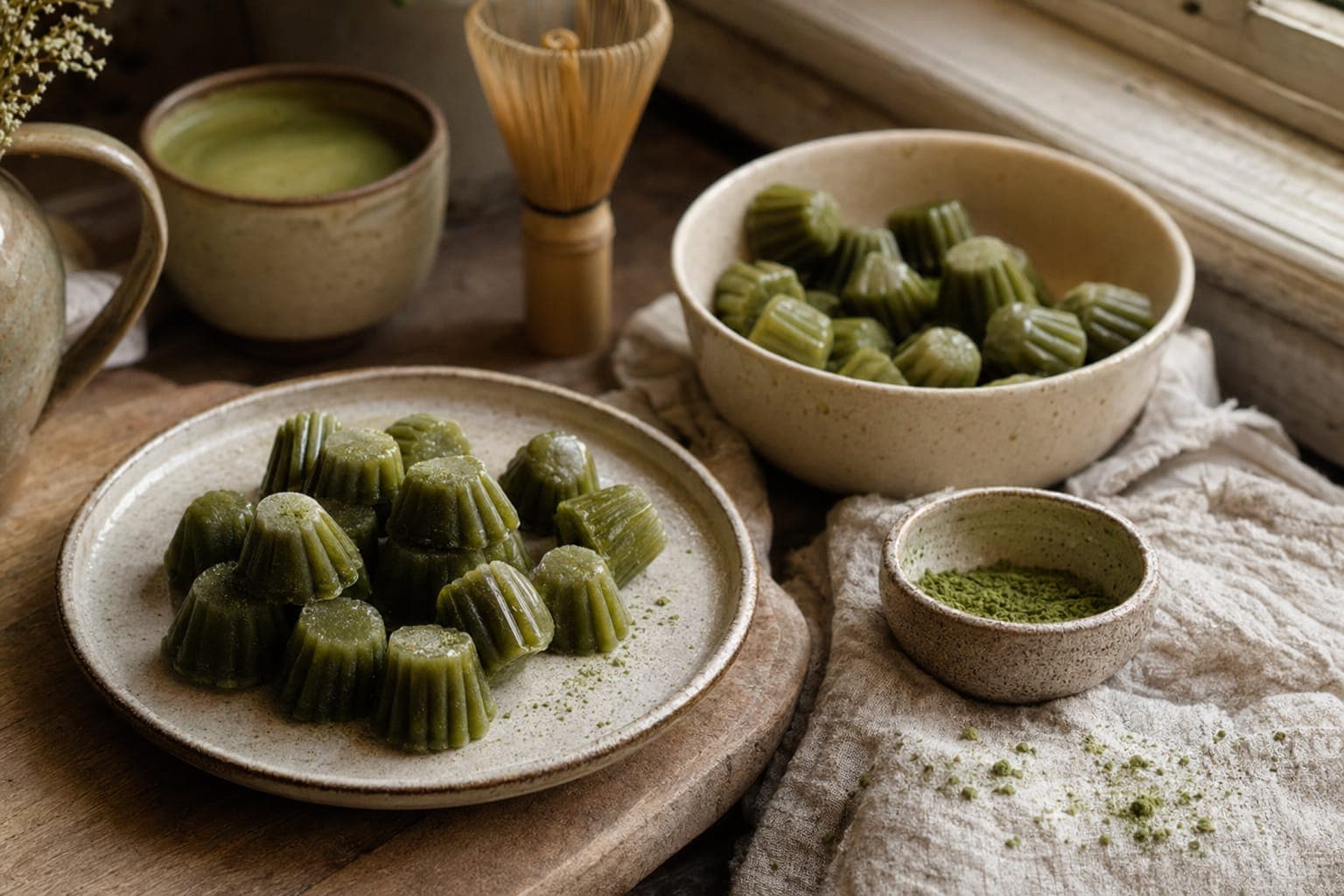
Matcha Latte Gummies with Collagen and Gelatine
Make visually stunning matcha latte gummies infused with collagen and gelatine. Simple recipe for gut-healing sweets you'll actually want to eat.


 Join over 100,000+ members
Build a better food system with us
The Organised community is thousands of people choosing real food and backing the farmers who grow it, all of us trying to leave the world a little better than we found it. If that is what you care about too, you belong here.