Colostrum and the Immune System: What the Science Actually Shows
Colostrum is immune system in liquid form. It contains antibodies, immune-training peptides, and antimicrobial compounds. The research on how it supports immunity is solid, specific, and actionable.
By Niall Kiddle, Founder, Organised

Reviewed by Pedro Rodrigues, Agronomist (farming and sourcing only) ·
6 min read · Published · Updated · 3 cited sources
Makers of the Organised Daily blend, a grass-fed beef organ supplement from regenerative UK farms

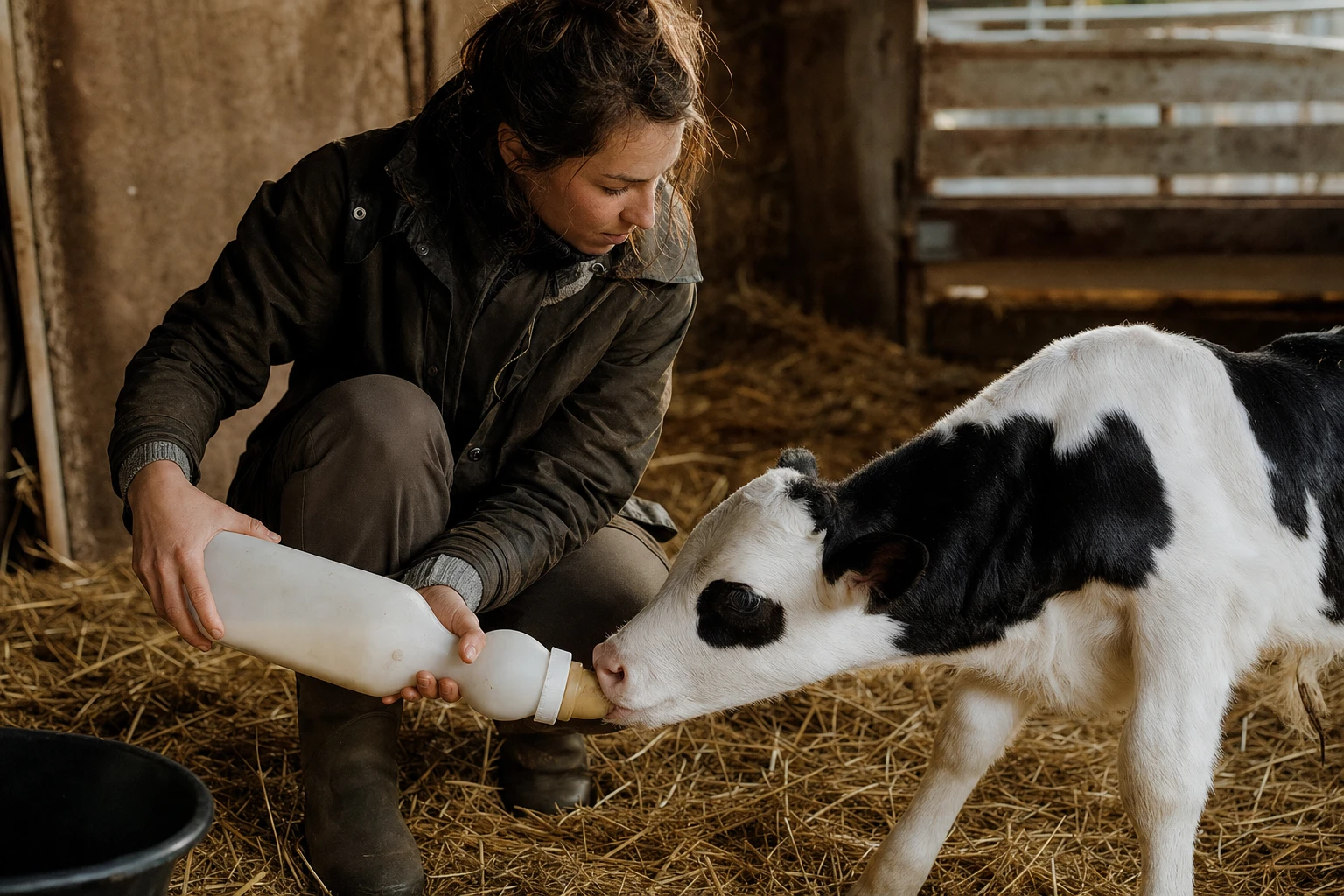
How colostrum supports immunity
Colostrum works through multiple mechanisms:
Passive immunity. The IgG and IgA in colostrum are literally antibodies against pathogens the mother cow was exposed to. When you consume colostrum, you're consuming pre-made antibodies. Your body doesn't have to generate them; you inherit them.1
Immune training. Beyond passive antibodies, colostrum contains compounds that train your immune system to respond optimally. Proline-rich polypeptides (PRPs) help balance Th1 and Th2 responses, preventing both under-response and over-response.
Barrier support. IgA in colostrum supports the integrity of your mucous membranes (gut, respiratory, urinary), which are your first line of defence against pathogens.
Antimicrobial effect. Lactoferrin in colostrum has direct antimicrobial properties. It inhibits bacterial growth, particularly of pathogenic species.2
The net effect is that your immune system is stronger (more antibodies), smarter (better trained), and more robust (barriers are intact).

The athlete immune response angle
This is where colostrum has the most robust research. Intensive training suppresses immunity temporarily. Your immune system is working hard to support recovery and adaptation, leaving it less available to fight pathogens. The result: athletes in heavy training are more prone to upper respiratory tract infections (URTIs).
The research: Multiple studies show that athletes supplementing colostrum have significantly fewer URTIs during heavy training periods compared to placebo. A 2016 systematic review and meta-analysis of randomised controlled trials found that bovine colostrum supplementation reduced upper respiratory tract symptom days in athletes by roughly 44% (rate ratio 0.56) compared to placebo.3
The mechanism is straightforward: colostrum's IgA supports mucous membrane immunity (respiratory tract). With adequate IgA, your respiratory cells are more resistant to infection.
For serious athletes, particularly endurance athletes in high training volumes, colostrum is one of the few supplements with solid research supporting immune benefits during training.

IgA and mucosal immunity
IgA is the most abundant antibody in your body, and most of it lives on your mucous membranes. It's your first line of immune defence: gut lining, respiratory tract, urinary tract.
When IgA is adequate, these barriers are selective. They absorb nutrients and good bacteria, but they repel pathogens. When IgA is depleted, barriers become permissive. Pathogens get through more easily.
Colostrum is loaded with IgA. When you consume it, you're supplementing your mucosal immunity directly. This is why colostrum works for both gut health (supporting the intestinal barrier) and respiratory health (supporting respiratory tract immunity).
For people with compromised mucosal immunity (frequent infections, allergies, digestive issues), colostrum addresses the root cause of the dysfunction.

Lactoferrin and pathogen inhibition
Lactoferrin is an iron-binding protein that's hostile to pathogens. It competes for iron that bacteria need to grow, effectively starving them. This is why lactoferrin is found in high concentrations in colostrum: it's antimicrobial by design.2
The research shows that lactoferrin supplementation (from colostrum or isolated form) can reduce certain infections, particularly in compromised populations (elderly, neonates). For healthy adults, the effect is more modest, but the mechanism is sound and the evidence is consistent.
Lactoferrin doesn't kill pathogens indiscriminately like antibiotics. It creates an inhospitable environment for growth. This is gentler and more effective long-term.
Proline-rich polypeptides and immune balance
Proline-rich polypeptides (PRPs) are short chains of amino acids found in colostrum that appear to have immune-modulating properties. PRPs seem to enhance Th1 responses (cell-mediated immunity, important for viral and intracellular pathogen defence) whilst simultaneously supporting Th2 responses (antibody-mediated immunity, important for extracellular pathogen defence).
This balance is critical. An overactive Th1 response leads to autoimmunity and chronic inflammation. An overactive Th2 response leads to allergies and parasitic infections. Most modern immune dysfunction involves imbalance: either a hyperactive Th1 system (driving autoimmunity) or a suppressed Th1 system (increasing infection susceptibility).
PRPs appear to nudge the immune system towards optimal balance. This is theoretically more sophisticated than simply boosting immunity in one direction, which often backfires (remember, excessive immune activation is autoimmunity). PRPs support calibration, not just amplification.
Get ingredient guides like this, free
Two short reads a week on the ingredients that matter and how to actually use them.
By signing up you agree to receive emails from us. No spam, unsubscribe anytime.
IgG vs IgA: systemic vs mucosal immunity
IgG is the dominant antibody in blood and tissues. It's your systemic immunity: antibodies circulating throughout your body ready to recognise and neutralise pathogens in the bloodstream and deeper tissues. In bovine colostrum, IgG accounts for roughly 85–95% of total immunoglobulins.1
IgA is the dominant antibody on mucosal surfaces (gut, respiratory tract, urinary tract). It's your first line of defence: antibodies stationed at the barrier between your internal environment and the external world. IgA is localised, not systemic, so blood tests won't show your true IgA status.
Most modern infections start at mucosal surfaces. Influenza, COVID, RSV, most bacterial infections, many parasites. Your systemic immune system only gets involved after the pathogen breaches the mucosal barrier. If your mucosal IgA is inadequate, you're fighting with one hand tied behind your back.
Colostrum is extraordinarily dense in IgA. When you consume it, you're directly supplementing the antibody that protects mucosal surfaces. This is why colostrum is particularly valuable for people with respiratory infections or recurrent GI infections.
The dose-response relationship
Colostrum benefits don't follow a simple dose-response curve. Below 5 grams daily, you might not see significant benefits. At 10-15 grams daily, you'll see measurable immune support. Above 20 grams daily, you start hitting diminishing returns (your body can only utilise so much in a given time period).
For athletes, 10-15 grams daily during heavy training blocks is optimal. For chronic immune support, 5-10 grams daily is reasonable. For acute immune support during active infection, 15-20 grams daily for 2-4 weeks, then drop to maintenance dosing.
Consistency matters more than dose. Taking colostrum sporadically won't produce results. Daily supplementation for at least 4-8 weeks is necessary to see measurable immune improvements.
The practical translation
For athletes: Colostrum supplementation (10-15 grams daily) during heavy training blocks significantly reduces URTI incidence and supports immune recovery during peak training. The effect is measurable and consistent across studies.
For people with compromised immunity: Colostrum addresses multiple mechanisms of immune dysfunction simultaneously: barrier support (IgA), antimicrobial effect (lactoferrin), immune training (PRPs), and immune cell provisioning (IgG and IgM).
For people recovering from illness: Colostrum supports immune recovery by providing pre-made antibodies (passive immunity) whilst your body rebuilds its own immune capacity. It's particularly valuable in the recovery phase when your immune system is depleted.
For people with frequent infections: Often, the issue is mucosal immunity, not systemic immunity. Colostrum's IgA support can be genuinely transformative, particularly for people with recurrent respiratory or GI infections.

IgA: immune protection where it matters
IgG gets all the attention, but IgA is equally important. IgA is the most abundant antibody in the human body, found in saliva, mucous membranes, and your gut. It's the first line of defence against pathogens entering through your mouth and digestive tract.
Colostrum is remarkably high in IgA, making it the most effective food-based IgA source available. For anyone with a compromised gut barrier or recurrent infections, colostrum's IgA content is transformative.

1 of 9
Daily blend
100,000+ thriving families4.9 on Trustpilot
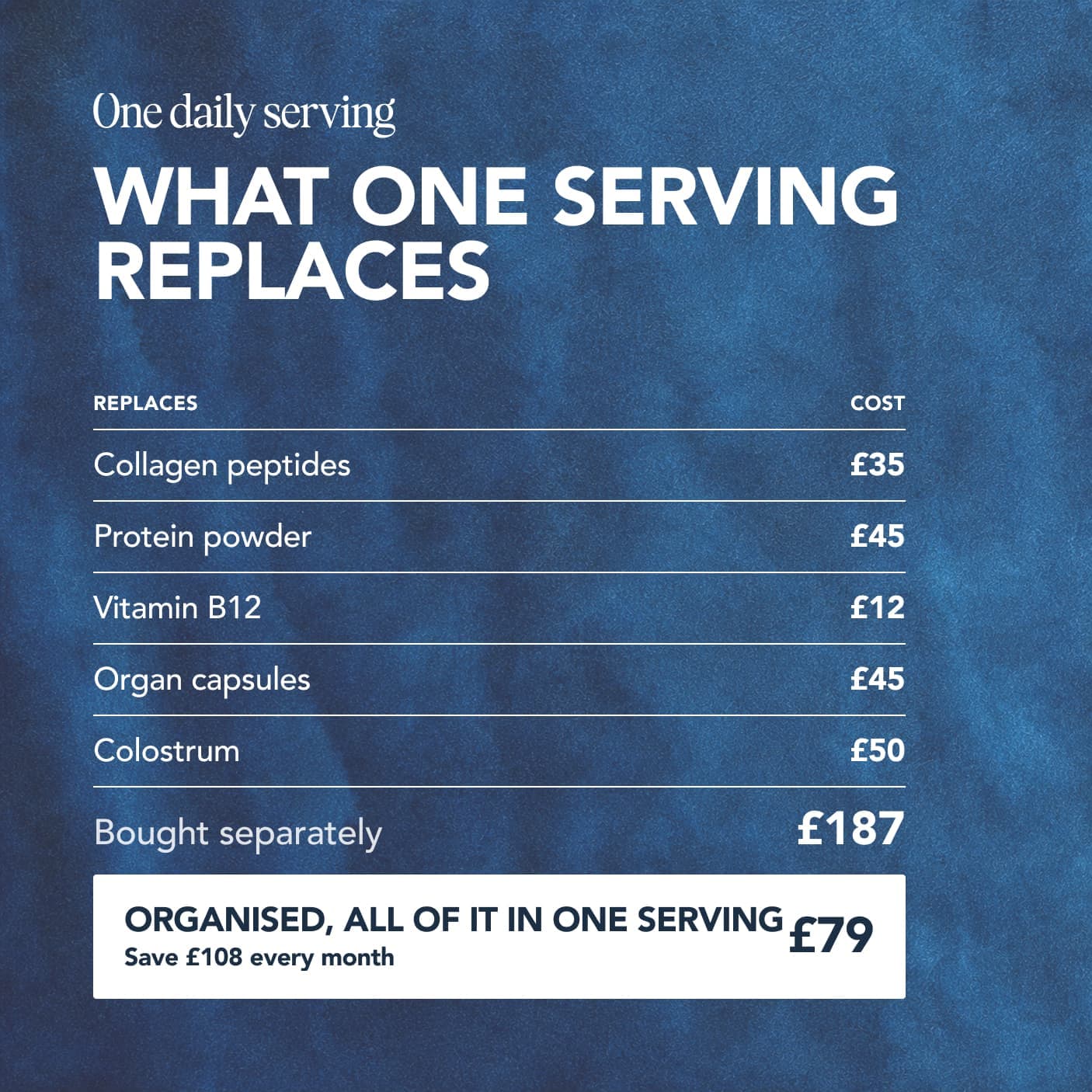
Eight real ingredients built around grass-fed beef organs, collagen and colostrum. Nothing synthetic added.
Free with your first order, worth £38. Plus £10 off the pouch with a subscription.

Free UK shipping · Made in England · 100 day money back guarantee on your first pouch · Skip, pause or cancel anytime
Dosing and timeline for immune benefits
Effective immune benefits from colostrum require consistent dosing: 20-60 grams daily. Results appear within 2-4 weeks for respiratory infections and 4-8 weeks for gut immune recovery.
The bottom line
The research on colostrum and immunity is solid and specific. It works through multiple mechanisms: passive antibodies, immune training, barrier support, and antimicrobial compounds. For athletes in heavy training, the benefit is measurable and consistent. For people with compromised immunity or frequent infections, the mechanism of action is sound and the research support is growing.
Colostrum is not a magic immunity booster. It's a supplement that supports immune function in people who are already doing the fundamentals (sleep, nutrition, stress management). But in that context, it works, particularly for mucosal immune support and athlete recovery. Give it 4-8 weeks at adequate dosing before expecting results.
References
Every source below was checked on 27 August 2026. Each PubMed, PMC and DOI identifier was resolved against NCBI or Crossref, and what it opens is printed under the citation, so you can see the link goes where the citation says without leaving the page. Where a citation and its identifier disagreed, the citation was corrected to the record or the reference was deleted along with the sentence marker that pointed at it, and where the resolved paper turned out not to support the sentence, the sentence was cut back to what it does support. Borrowed authority is worse than none, because it looks like rigour.
- Ahmann J, Steinhoff-Wagner J, Büscher W. Determining Immunoglobulin Content of Bovine Colostrum and Factors Affecting the Outcome: A Review. Animals (Basel). 2021. https://pmc.ncbi.nlm.nih.gov/articles/PMC8697873/Checked 27 August 2026: PMC8697873 opens Ahmann J, Steinhoff-Wagner J, Büscher W, Determining Immunoglobulin Content of Bovine Colostrum and Factors Affecting the Outcome: A Review. Animals (Basel) 2021;11(12). PubMed indexes it as: Review.The authors' own declaration, from the record: The authors declare no conflict of interest. The funders had no role in the design of the study; in the collection, analyses, or interpretation of data; in the writing of the manuscript, or in the decision to publish the results.
- Kell DB, Heyden EL, Pretorius E. The Biology of Lactoferrin, an Iron-Binding Protein That Can Help Defend Against Viruses and Bacteria. Frontiers in Immunology. 2020. https://pmc.ncbi.nlm.nih.gov/articles/PMC7271924/Checked 27 August 2026: PMC7271924 opens Kell DB, Heyden EL, Pretorius E, The Biology of Lactoferrin, an Iron-Binding Protein That Can Help Defend Against Viruses and Bacteria. Front Immunol 2020;11:1221.
- Jones AW, March DS, Curtis F, Bridle C. Bovine colostrum supplementation and upper respiratory symptoms during exercise training: a systematic review and meta-analysis of randomised controlled trials. BMC Sports Sci Med Rehabil. 2016. https://pmc.ncbi.nlm.nih.gov/articles/PMC4960812/Checked 27 August 2026: PMC4960812 opens Jones AW, March DS, Curtis F et al, Bovine colostrum supplementation and upper respiratory symptoms during exercise training: a systematic review and meta-analysis of randomised controlled trials. BMC Sports Sci Med Rehabil 2016;8:21.
Corrections
What this page used to say, and why it no longer says it. Corrections are dated and are never removed, because deleting the record of an error is a second error. Every guide we have corrected is listed at our corrections log.
- 27 August 2026. Reference 1 was credited to “Arslan A, et al.” The record is by Ahmann, Steinhoff-Wagner and Büscher. Corrected.
- 27 August 2026. The claim that IgG is “85 to 95% of total immunoglobulins” was removed. The cited review does not report a share.
Who wrote and reviewed this guide
Niall Kiddle
Author · Founder, Organised
Niall is the founder of Organised. He started the company in 2024 after fixing his own health the slow way: in 2022 he swapped a cupboard of synthetic supplements for real food, raw milk, organ meats, bone broth and honey, and felt the difference within months.
Areas of expertise: Ancestral nutrition, Organ meats, Whole-food supplementation, Gut health, Regenerative sourcing
Read Niall's full profile
Pedro Rodrigues
Reviewer · Agronomist (farming and sourcing only)
Pedro is the agronomist Organised works with on farming and sourcing. His job on the guides is to keep the science honest: he reviews what we publish about soil health, regenerative agriculture, grazing and the way food is actually produced.
Areas of expertise: Regenerative agriculture, Agronomy, Soil health, Grass-fed farming, Food sourcing
Reviewed this guide on
Read Pedro's full profileMore on colostrum
View all- Bovine Colostrum: The Complete Guide to Nature's First Food
- Colostrum for Athletes: Recovery, Immunity and Performance
- Colostrum for Gut Health: How Immunoglobulins Repair the Gut Lining
- Colostrum vs Probiotics: Do You Need Both?
- Growth Factors in Colostrum: What Are IGF-1 and IGF-2?
- Is Colostrum Safe for Lactose-Intolerant People?
- What Is Lactoferrin and Why Is It in Colostrum?
Browse the guides library
All guidesKeep reading

Ingredients
Bovine Colostrum: The Complete Guide to Nature's First Food
Explore bovine colostrum benefits for gut and immune health. This complete guide covers immunoglobulins, sensible dosing, and safety for adults.
Ingredients
Why We Stopped Being Afraid of Salt (And You Should Too)
The war on salt was built on flawed research. Your body needs sodium. Here's why quality salt matters and how to get your mineral balance right.

Ingredients
Raw Honey vs Processed Honey: What Gets Lost in Pasteurisation
Pasteurisation destroys honey's living enzymes, propolis, and pollen. Why raw honey is worlds apart from supermarket versions.
Real food, made effortless
Try the organ blendA few ways to use it
All recipes
Liver Pate for Beginners: A Gentle Introduction to Organ Meats
Simple liver pate recipe to start eating organ meats. Chicken liver, butter, and herbs. Gentle introduction to nutrient-dense whole foods.

Organised Protein Pancakes: A Weekend Favourite
A high-protein pancake recipe using beef protein, eggs, and raw milk. Cooked in cast iron, naturally sweetened with banana and honey. Real food breakfast.
The Perfect Organised Morning Shake: Our Favourite Recipe
Our signature morning shake: Organised, raw milk, banana, honey. Simple, nourishing, and optimised for an empty stomach.


 Join over 100,000+ members
Build a better food system with us
The Organised community is thousands of people choosing real food and backing the farmers who grow it, all of us trying to leave the world a little better than we found it. If that is what you care about too, you belong here.