Raw Honey vs Processed Honey: What Gets Lost in Pasteurisation
Walk into any supermarket and look at the honey aisle. That clear, perfect honey sitting quietly on the shelf isn't actually honey in the form your ancestors knew. It's been heated, filtered, and processed into a product that looks identical but is fundamentally different.
By Niall Kiddle, Founder, Organised

Reviewed by Pedro Rodrigues, Agronomist (farming and sourcing only) ·
6 min read · Published · Updated · 5 cited sources
Makers of the Organised Daily blend, a grass-fed beef organ supplement from regenerative UK farms
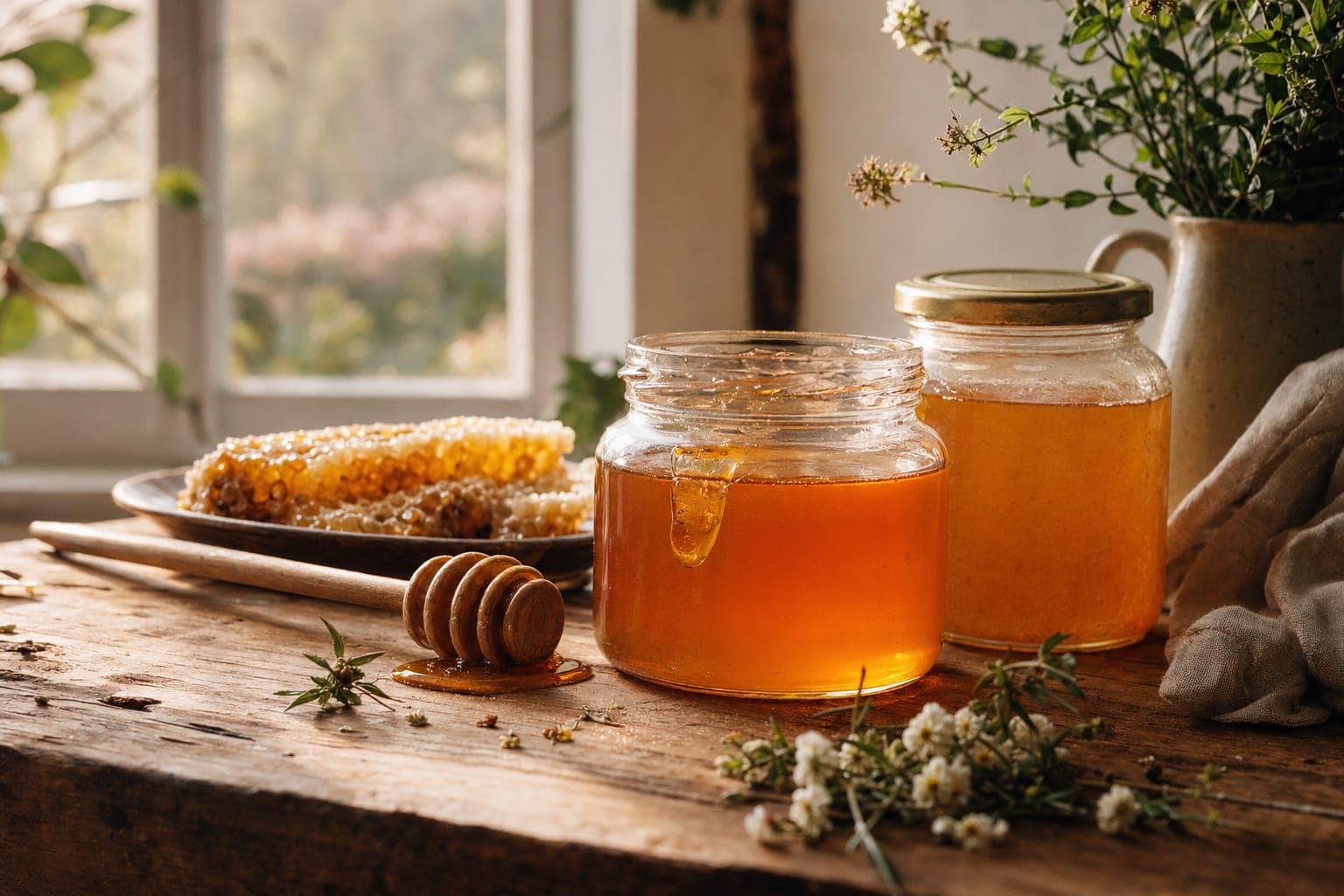
Real honey is a living food. Supermarket honey is what's left after the life is removed.
What pasteurisation actually does to honey
Honey is naturally shelf-stable. It doesn't rot. It doesn't spoil. A jar of honey can sit for decades and remain unchanged. So why do commercial producers pasteurise it?
For several reasons: to make it flow better through processing equipment, to kill any chance of crystallisation (which consumers mistake for spoilage), to ensure a perfectly clear appearance, and to extend shelf life in ways that have nothing to do with safety and everything to do with cost and marketability.
Pasteurisation means heating honey to 60-70 degrees Celsius for 30 minutes or higher. This kills bacteria, yes, but it also denatures the delicate proteins and enzymes that make honey valuable in the first place.1
Enzymes: the living part of honey
Raw honey contains at least a dozen enzymes that your digestive system uses to break down food: amylase (for carbohydrates), invertase (for sucrose), and protease (for proteins), amongst others.
When honey is pasteurised, these enzymes are destroyed. Not all of them, but most of them.1 You're left with the sweetness of honey without the enzymatic support that makes it useful for digestion.
This matters because enzymes aren't just passive ingredients. They're biological catalysts that your body needs to extract nutrients from food. Raw honey doesn't just provide glucose; it provides the enzymatic machinery to metabolise that glucose efficiently.
Raw honey is a living food. Pasteurised honey is sugar with the life removed.
People who eat raw honey report better energy stability and improved digestion compared to pasteurised honey, even in equivalent amounts. That's not marketing. That's the difference between living food and denatured food.
Propolis and pollen: the immune system
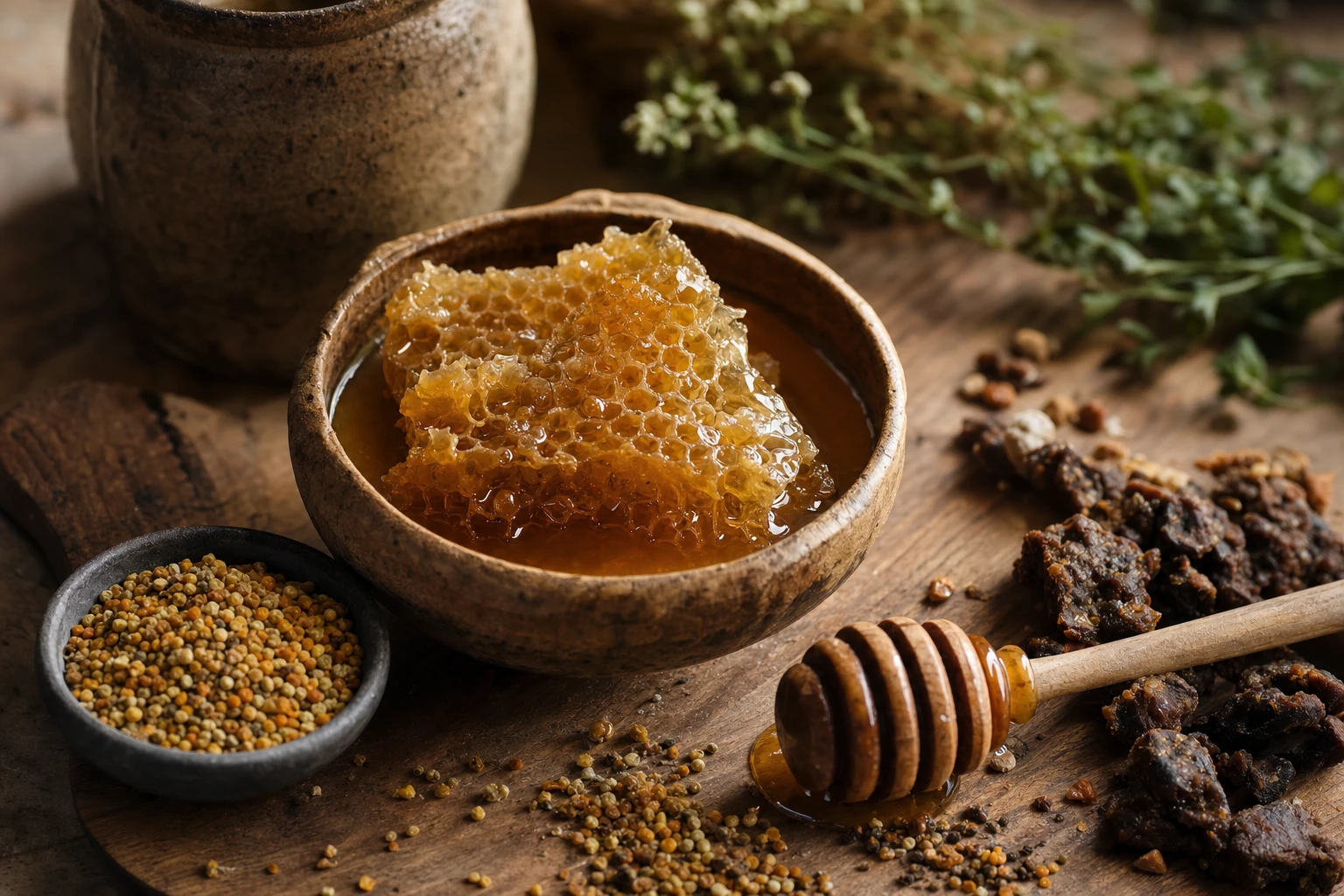
Real honey also contains propolis, a resinous compound that bees produce to protect the hive. Propolis is loaded with polyphenols and has demonstrated antimicrobial, antifungal, and antiviral properties. It's genuinely immune-supportive.3
Honey also contains bee pollen, the protein-rich powder that bees collect from flowers. This pollen carries enzymes, minerals, and compounds specific to whatever flowers were blooming when the honey was made. It's a concentrated botanical snapshot.
When honey is heavily filtered (which most commercial processing does), propolis and pollen are removed. The finished product is clear and uniform, but you've stripped out the compounds that give honey its actual health benefits.
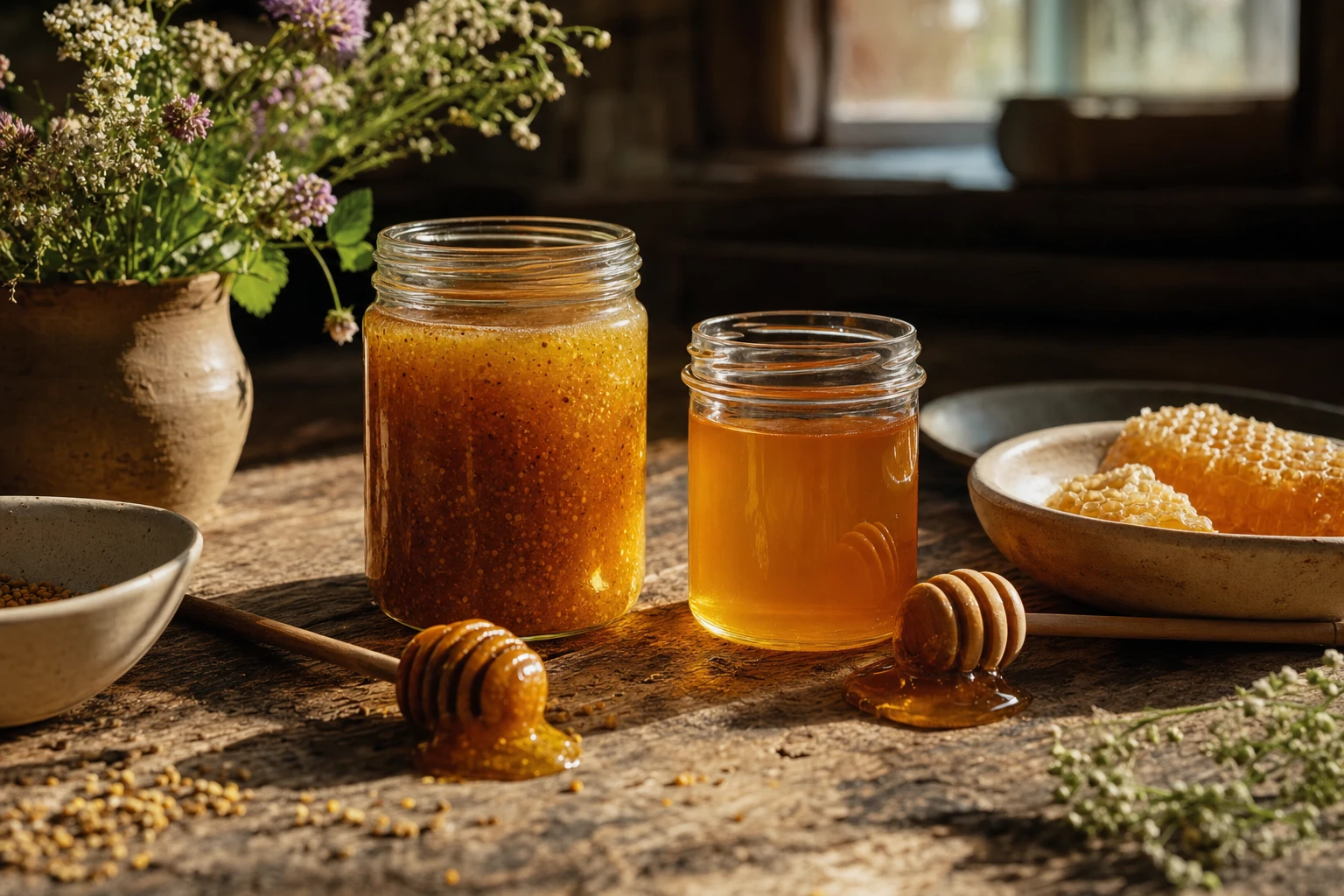
Raw, unfiltered honey will have visible particles and often a cloudy appearance. This isn't contamination. It's propolis and pollen, the very compounds that make honey genuinely useful.
The HMF problem in heated honey
HMF (hydroxymethylfurfural) is a compound that forms when honey is heated above certain temperatures. It's not dangerous in small amounts, but it's a marker of processing damage.
Raw honey contains almost no HMF. Pasteurised honey from supermarkets often contains measurable amounts, and ultra-processed honey (which has been heated multiple times during production and storage) can contain significant levels.2
HMF is a sign that the heat treatment has degraded the original compounds in the honey. It's not the HMF itself you're worried about; it's what its presence tells you about what's been lost.
Why supermarket surveillance matters
Here's where it gets murky: supermarket honey is often not what it claims to be. A significant portion of "honey" on supermarket shelves is actually blended with corn syrup or rice syrup, with minimal actual honey content.
This isn't always labelled clearly. "Honey blend" might be 30% honey. "Pure honey" should be 100%, but enforcement is weak and testing is inconsistent. In the EU, adulteration is more closely monitored, but it still happens.
When you buy raw honey from a local beekeeper or a trusted source, you know what you're getting. When you buy from a supermarket, you're relying on the integrity of a global supply chain where corners are often cut.
Get ingredient guides like this, free
Two short reads a week on the ingredients that matter and how to actually use them.
By signing up you agree to receive emails from us. No spam, unsubscribe anytime.
How to find real raw honey
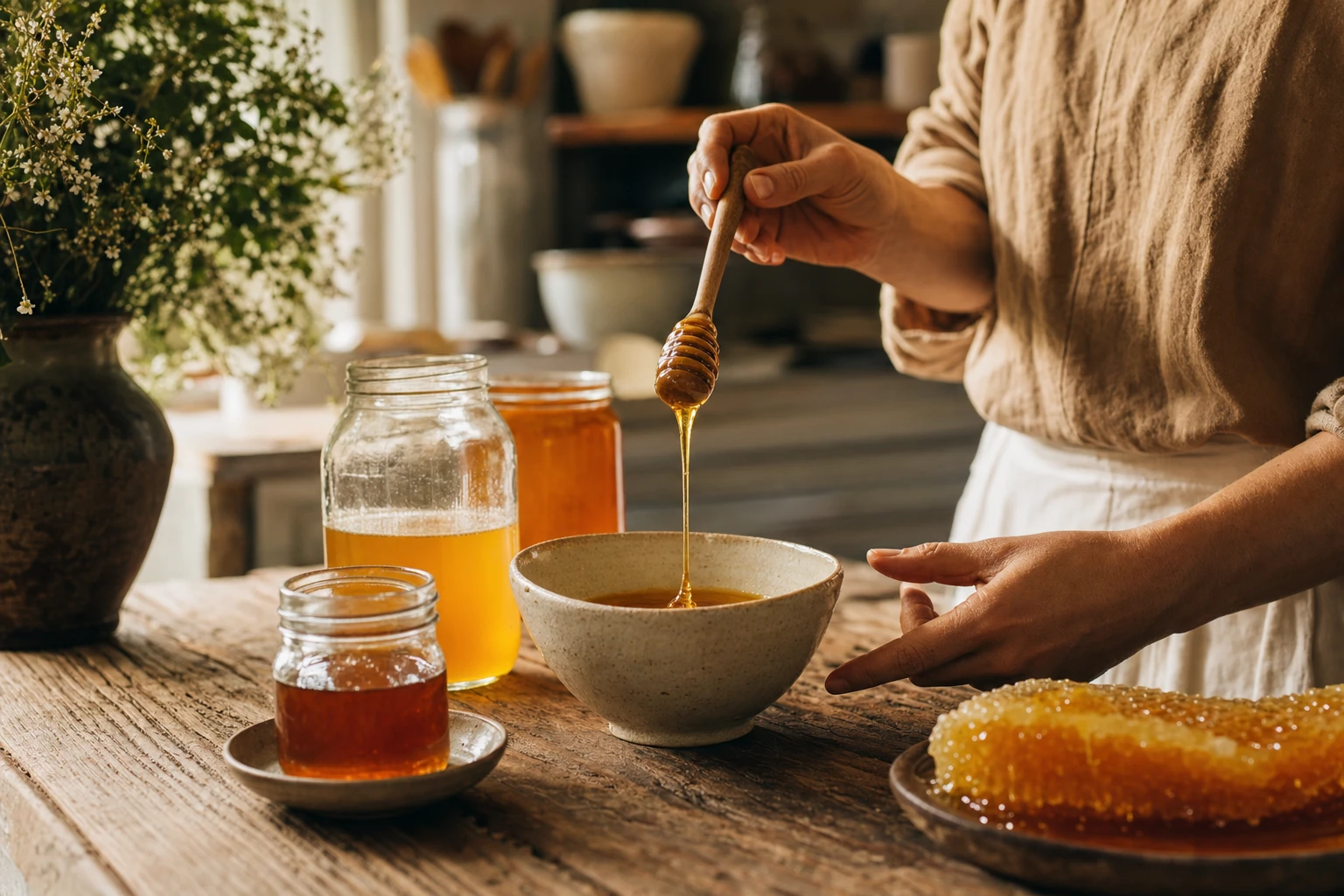
Look for local beekeepers. Farmers markets, local honey producers, direct from the hive. You can ask questions and know who produced it.
Check the label for "raw" and "unfiltered." If it says "pure honey" but not raw, it's been processed. If it says "raw but processed," that's a contradiction; move on.
Expect crystallisation. Real raw honey will crystallise over time. This is normal and desirable. It means nothing has been done to prevent it.
Accept the cloudiness. Raw honey is often cloudy or opaque. The particles are propolis and pollen. That's the point.
Expect to pay more. Raw honey costs more because minimal processing has happened. If it's cheap, it's probably been processed or adulterated or both.
Raw honey from a local source is not a luxury. It's the only form of honey worth eating.
Enzyme preservation in raw honey
Raw honey contains several enzymes (amylase, glucose oxidase, invertase) that are destroyed by pasteurisation at even modest temperatures. These enzymes support digestion, reduce inflammation, and have antimicrobial properties.
When you consume pasteurised honey, you're getting glucose and fructose with some minerals, but you've lost the enzymes that made honey valuable in the first place.
Pollen and local immunity
Raw honey from local beehives contains pollen from local plants. Consuming small amounts of this pollen regularly (immunotherapy principle) can reduce seasonal allergy symptoms. Pasteurisation removes the pollen, eliminating this benefit entirely.
Choosing and using raw honey
Buy raw honey from local beekeepers when possible. Store it at room temperature (never refrigerate). Use it in tea or on food after cooking, heating destroys the enzymes you're trying to preserve.
Distinguishing raw from raw-ish
Commercial labels can be misleading. "Unpasteurised" doesn't necessarily mean raw, some honey is warmed but not technically pasteurised. "Raw" honey should never be heated above 40-45°C. Look for beekeepers who certify their honey as cold-extracted or raw-processed.
Safety considerations and crystallisation
Raw honey can crystallise naturally (this is normal and indicates purity). Simply warm gently (not above 40°C) to de-crystallise. Raw honey is safe for everyone except infants under 12 months (due to botulism spore risk).4 For adults and children over 1 year, raw honey is safer than pasteurised because it retains its antimicrobial enzymes.
Buy from local beekeepers when possible, or certified raw sources. The cost difference is minimal (usually 20-30% more than supermarket honey) and worth every penny for the nutritional benefit.
Medicinal uses of raw honey beyond sweetening
Raw honey has been used medicinally for thousands of years. Modern research confirms its antimicrobial properties (effective against drug-resistant bacteria), anti-inflammatory effects, and wound-healing acceleration.5 A spoonful of raw honey can soothe cough, support immunity during illness, and accelerate wound healing when applied topically. These benefits are lost entirely in pasteurised honey.
1 of 9
Daily blend
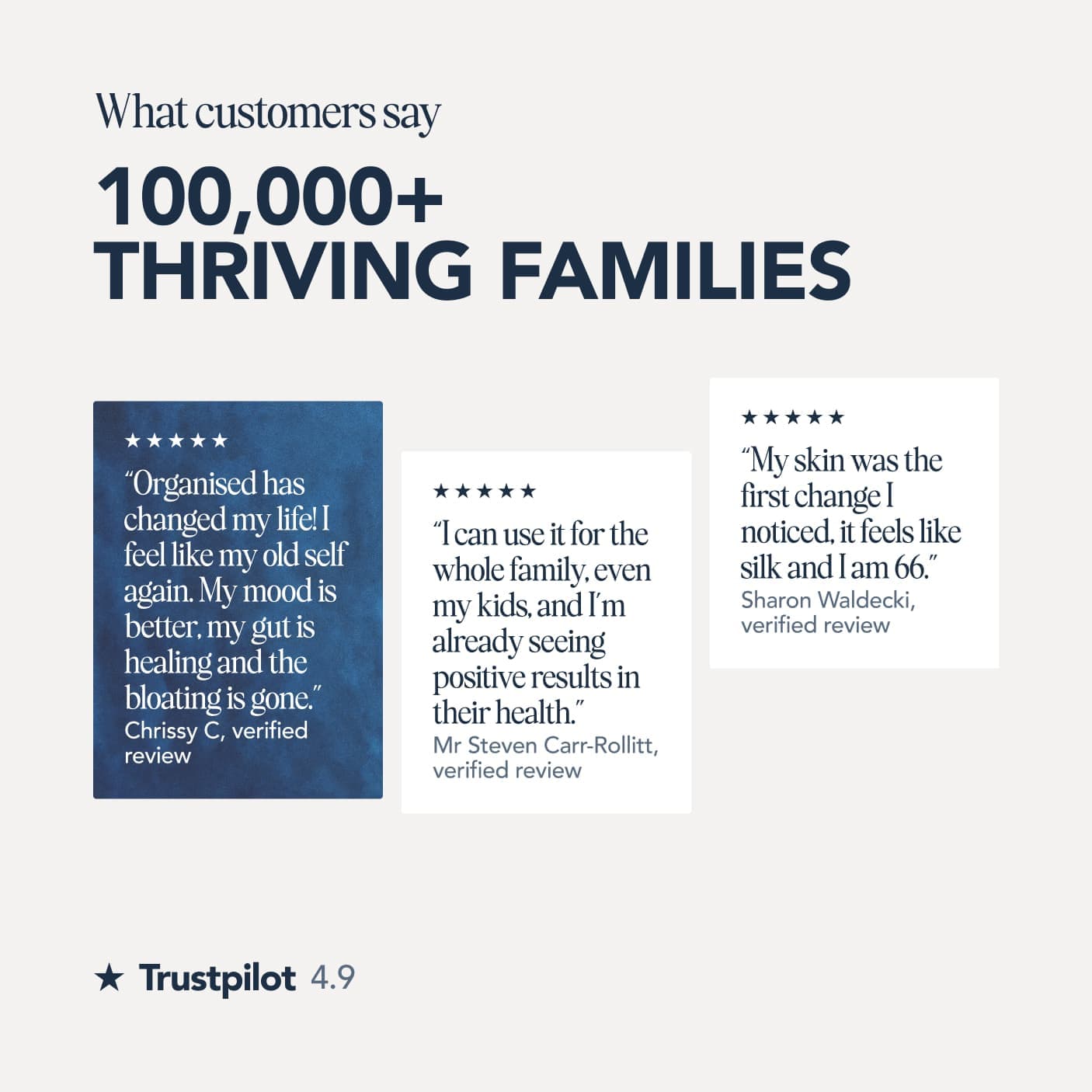
100,000+ thriving families4.9 on Trustpilot
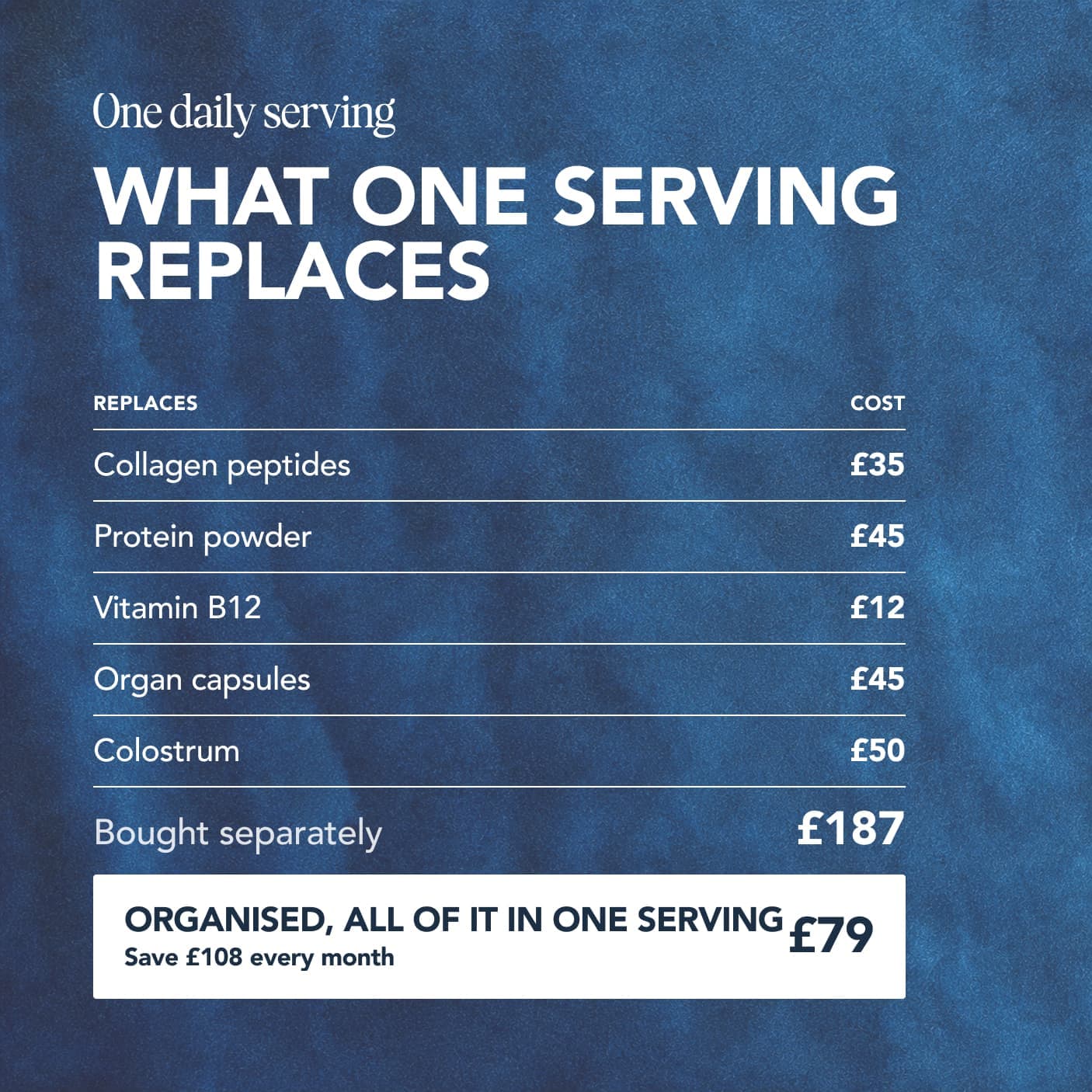
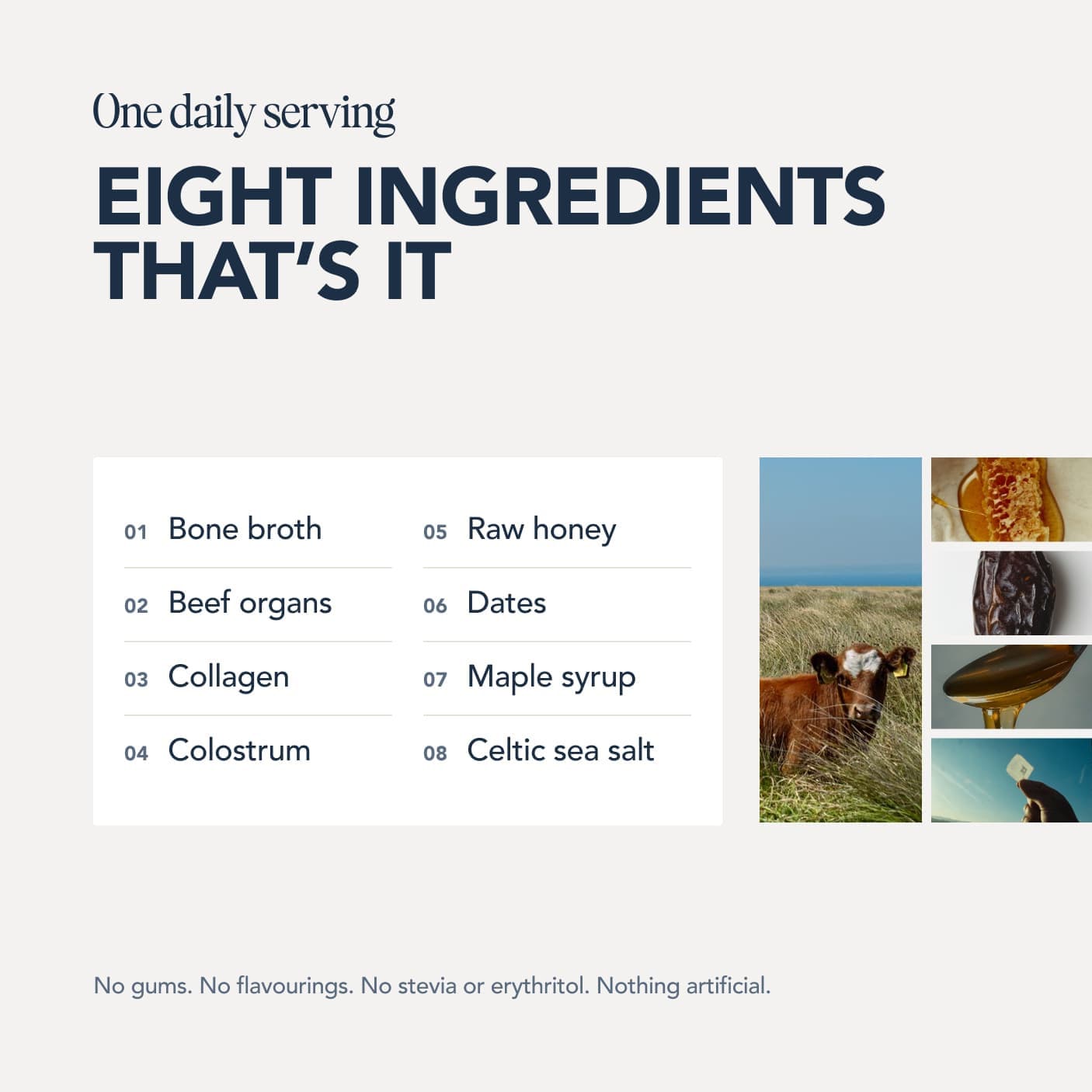
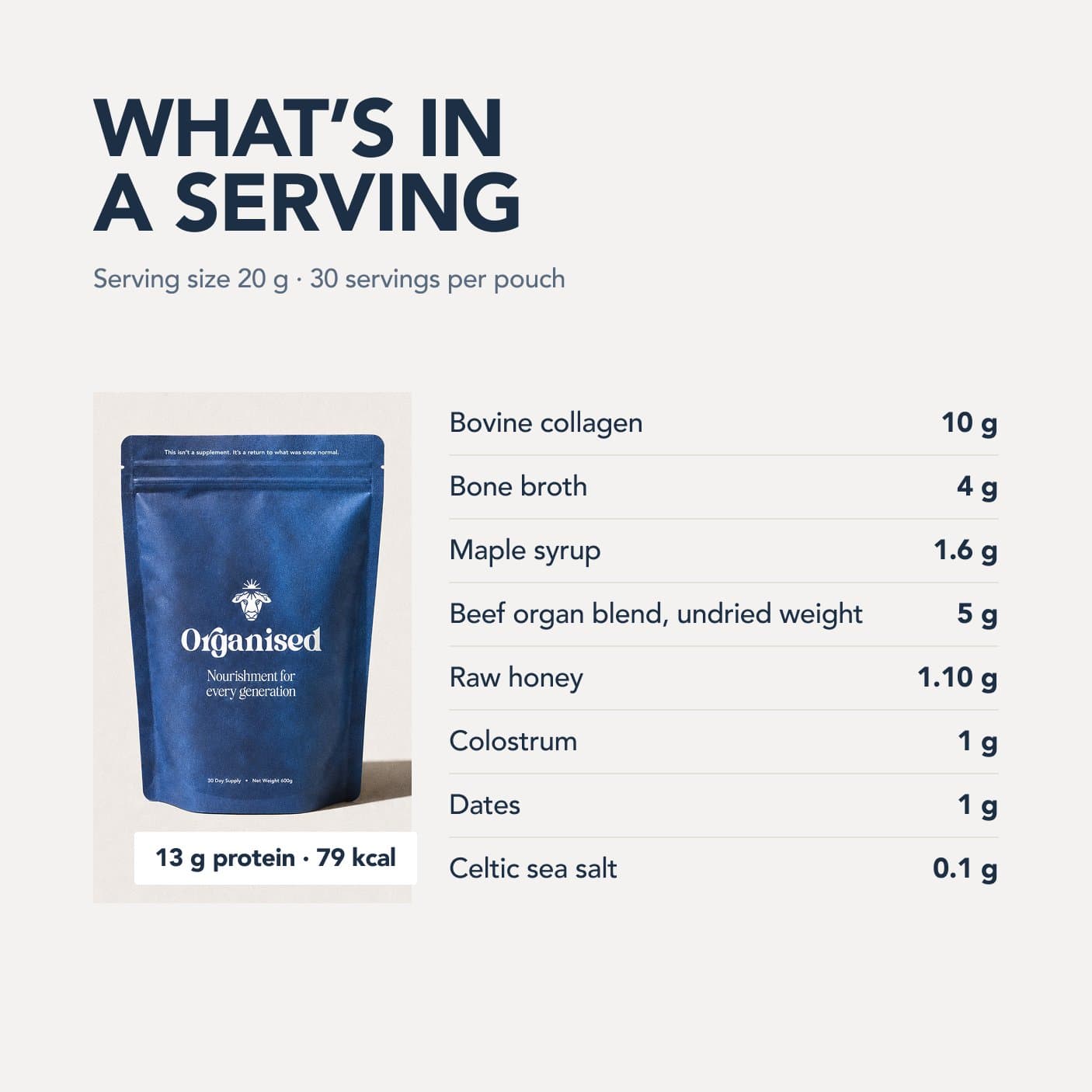
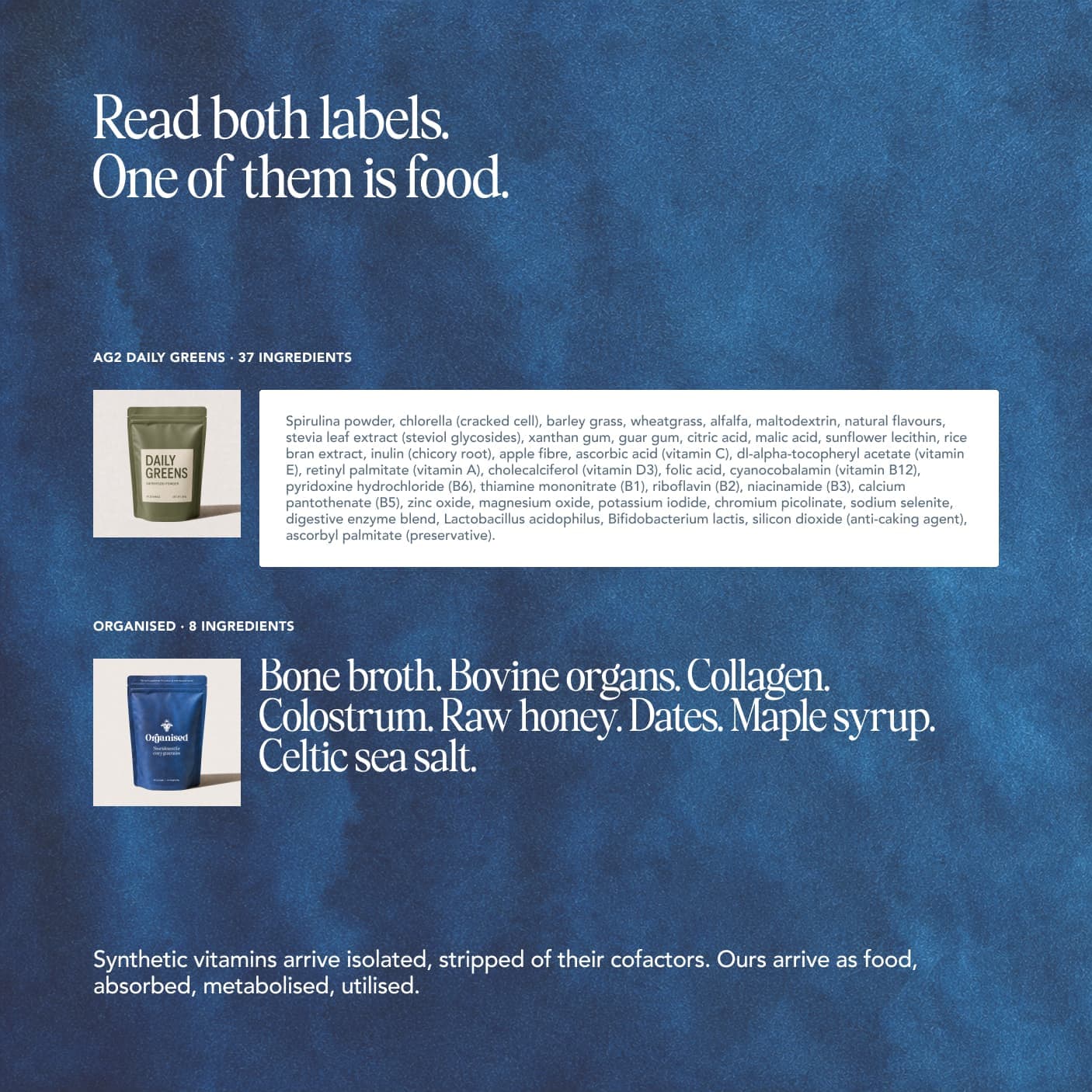
Eight real ingredients built around grass-fed beef organs, collagen and colostrum. Nothing synthetic added.
Free with your first order, worth £38. Plus £10 off the pouch with a subscription.
Free UK shipping · Made in England · 100 day money back guarantee on your first pouch · Skip, pause or cancel anytime
The bottom line
Honey is a genuinely nutritious food when it's raw and unfiltered. It contains enzymes, propolis, pollen, and dozens of compounds that your body recognises and uses. Pasteurised supermarket honey is mostly just glucose and fructose with the living components removed.
If you eat honey, eat raw honey from a known source. It will crystallise, it will be cloudy, and it will cost more. That's all good. That's the sign that you've got the real thing.
References
Every source below was checked on 27 August 2026. Each PubMed, PMC and DOI identifier was resolved against NCBI or Crossref, and what it opens is printed under the citation, so you can see the link goes where the citation says without leaving the page. Where a citation and its identifier disagreed, the citation was corrected to the record or the reference was deleted along with the sentence marker that pointed at it, and where the resolved paper turned out not to support the sentence, the sentence was cut back to what it does support. Borrowed authority is worse than none, because it looks like rigour.
- Sahin H, Kolayli S, Beykaya M. Investigation of variations of invertase and glucose oxidase degrees against heating and timing options in raw honeys. Journal of Chemistry. 2020;2020:5398062. https://onlinelibrary.wiley.com/doi/10.1155/2020/5398062Checked 27 August 2026: doi:10.1155/2020/5398062 opens Sahin H, Kolayli S, Beykaya M, Investigation of Variations of Invertase and Glucose Oxidase Degrees against Heating and Timing Options in Raw Honeys Journal of Chemistry 2020;2020:1-7.
- Shapla UM, Solayman M, Alam N, Khalil MI, Gan SH. 5-Hydroxymethylfurfural (HMF) levels in honey and other food products: effects on bees and human health. BMC Chemistry. 2018;12:35. https://pmc.ncbi.nlm.nih.gov/articles/PMC5884753/Checked 27 August 2026: PMC5884753 opens Shapla UM, Solayman M, Alam N et al, 5-Hydroxymethylfurfural (HMF) levels in honey and other food products: effects on bees and human health. Chem Cent J 2018;12(1):35. PubMed indexes it as: Review.
- Pasupuleti VR, Sammugam L, Ramesh N, Gan SH. Honey, propolis, and royal jelly: a comprehensive review of their biological actions and health benefits. Oxidative Medicine and Cellular Longevity. 2017;2017:1259510. https://pmc.ncbi.nlm.nih.gov/articles/PMC5549483/Checked 27 August 2026: PMC5549483 opens Pasupuleti VR, Sammugam L, Ramesh N et al, Honey, Propolis, and Royal Jelly: A Comprehensive Review of Their Biological Actions and Health Benefits. Oxid Med Cell Longev 2017;2017:1259510. PubMed indexes it as: Review.
- National Health Service (NHS). Foods to avoid giving babies and young children. https://www.nhs.uk/conditions/baby/weaning-and-feeding/foods-to-avoid-giving-babies-and-young-children/ [accessed May 2026].
- Jull AB, Cullum N, Dumville JC, Westby MJ, Deshpande S, Walker N. Honey as a topical treatment for wounds. Cochrane Database of Systematic Reviews. 2015;3:CD005083. https://pubmed.ncbi.nlm.nih.gov/25742878/Checked 27 August 2026: PMID 25742878 opens Jull AB, Cullum N, Dumville JC et al, Honey as a topical treatment for wounds. Cochrane Database Syst Rev 2015;2015(3):CD005083. PubMed indexes it as: Meta-Analysis, Systematic Review.The authors' own declaration, from the record: Andrew Jull, Natalie Walker and Anthony Rodgers were investigators in the Honey as Adjuvant Leg ulcer Treatment (HALT) trial (ISRCTN 06161544), one of the trials included in this review. The Clinical Trials Research Unit, which employed Andrew Jull, Natalie Walker and Antony Rodgers received a small, unconditional cash contribution from a manufacturer of honey dressings for the conduct of the HALT trial.
 Dr … (abridged; the full declaration is on the record)
Who wrote and reviewed this guide
Niall Kiddle
Author · Founder, Organised
Niall is the founder of Organised. He started the company in 2024 after fixing his own health the slow way: in 2022 he swapped a cupboard of synthetic supplements for real food, raw milk, organ meats, bone broth and honey, and felt the difference within months.
Areas of expertise: Ancestral nutrition, Organ meats, Whole-food supplementation, Gut health, Regenerative sourcing
Read Niall's full profile
Pedro Rodrigues
Reviewer · Agronomist (farming and sourcing only)
Pedro is the agronomist Organised works with on farming and sourcing. His job on the guides is to keep the science honest: he reviews what we publish about soil health, regenerative agriculture, grazing and the way food is actually produced.
Areas of expertise: Regenerative agriculture, Agronomy, Soil health, Grass-fed farming, Food sourcing
Reviewed this guide on
Read Pedro's full profileMore on sweeteners & syrups
View allBrowse the guides library
All guidesKeep reading
Ingredients
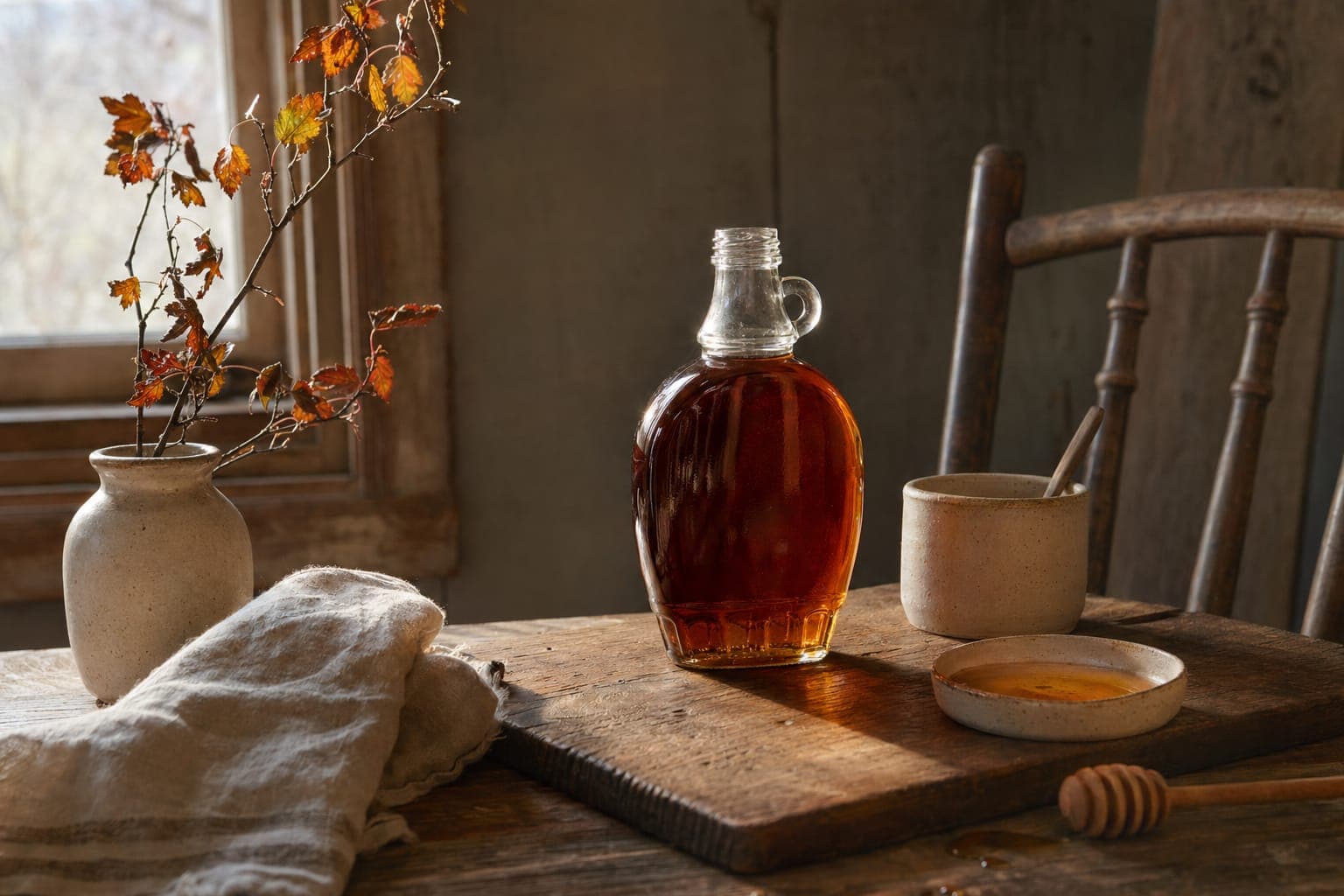
The Antioxidant Content of Pure Maple Syrup
Pure maple syrup is more than sugar. Research links its 24-plus maple syrup antioxidants, including polyphenols, to lower inflammation. See the detail.

Ingredients
Collagen and Hair Growth: Separating Fact from Hype
Does collagen really help hair growth? We unpack what the research shows about collagen, hair thickness and hair loss, so you can decide if it is worth it.
Ingredients
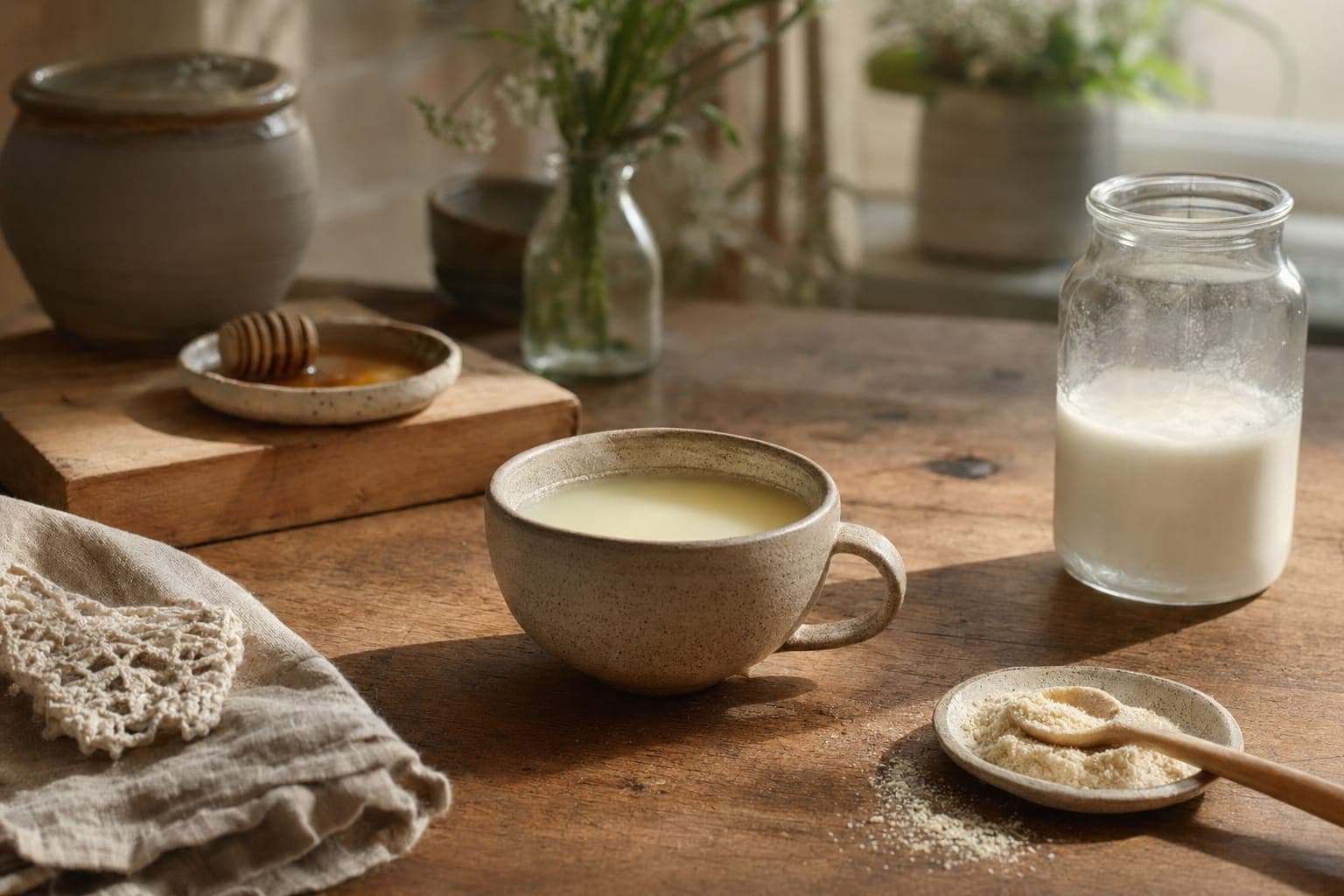
Is Colostrum Safe for Lactose-Intolerant People?
Find out if colostrum is safe when you are lactose intolerant. We compare its lactose content to milk, flag casein concerns, and who should be cautious.
Real food, made effortless
Try the organ blendA few ways to use it
All recipes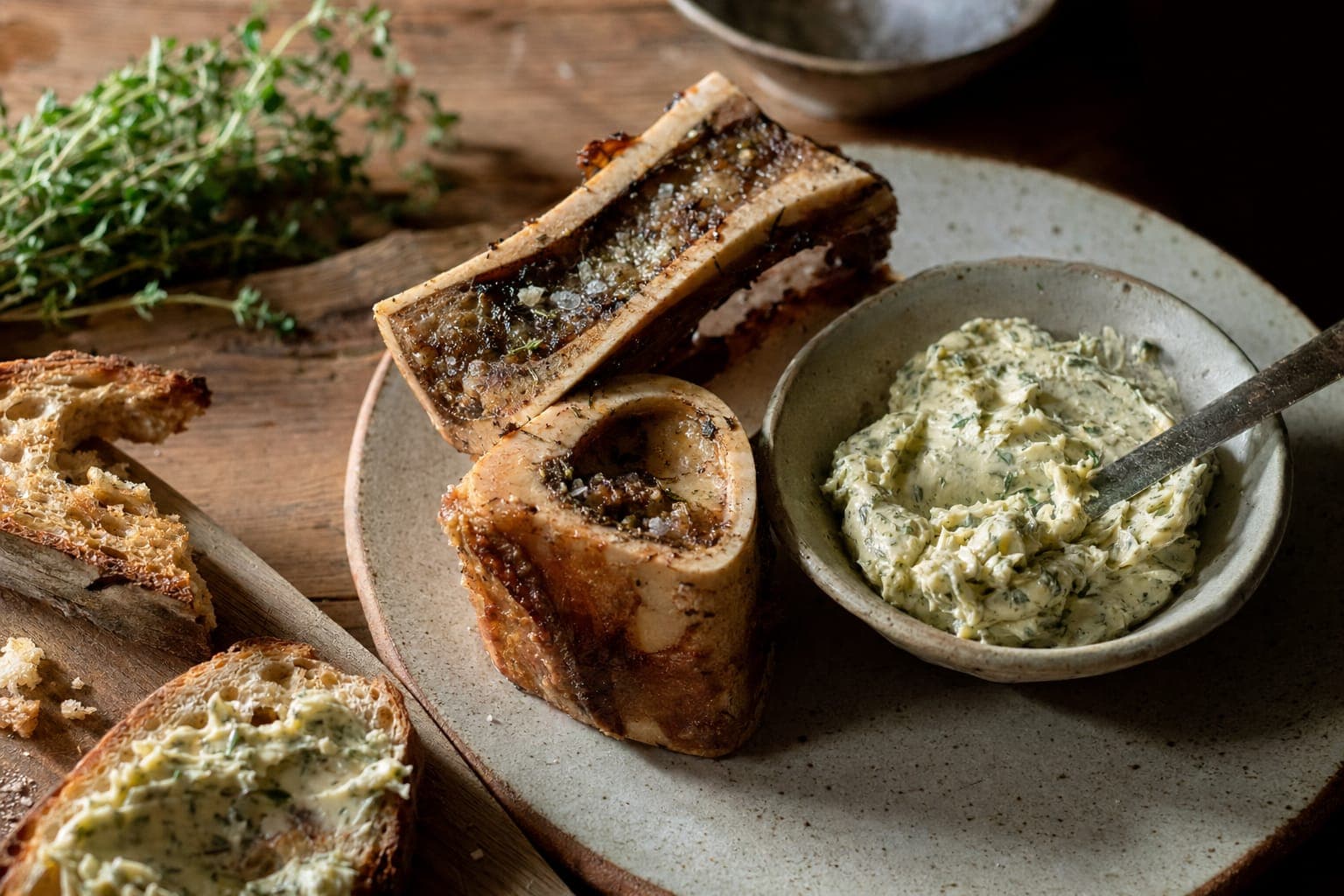
How to Make Bone Marrow Butter
Roast grass-fed marrow bones, scoop the marrow, and mix with butter and herbs. A nutrient-dense spread with fat-soluble vitamins.
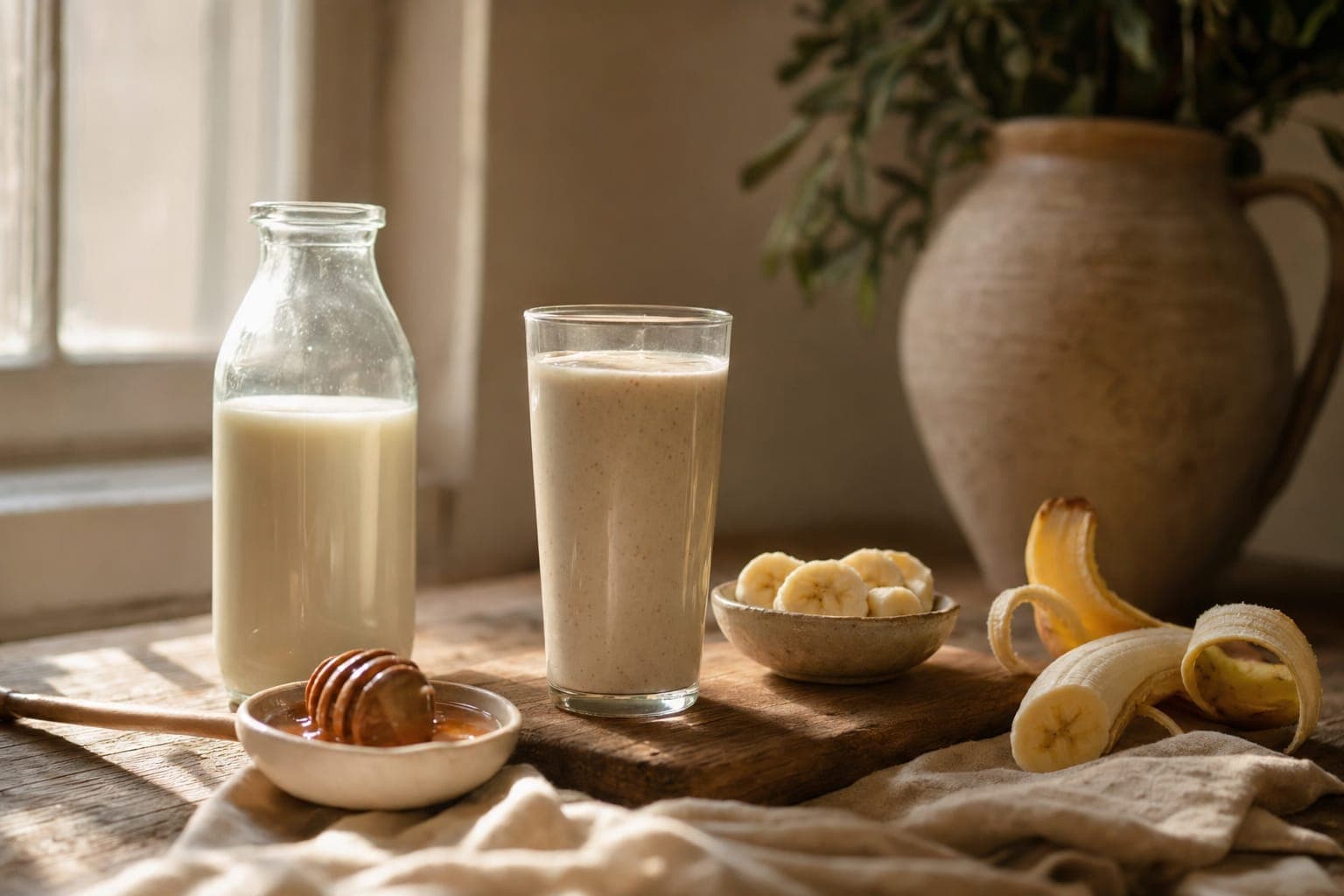
The Perfect Organised Morning Shake: Our Favourite Recipe
Our signature morning shake: Organised, raw milk, banana, honey. Simple, nourishing, and optimised for an empty stomach.
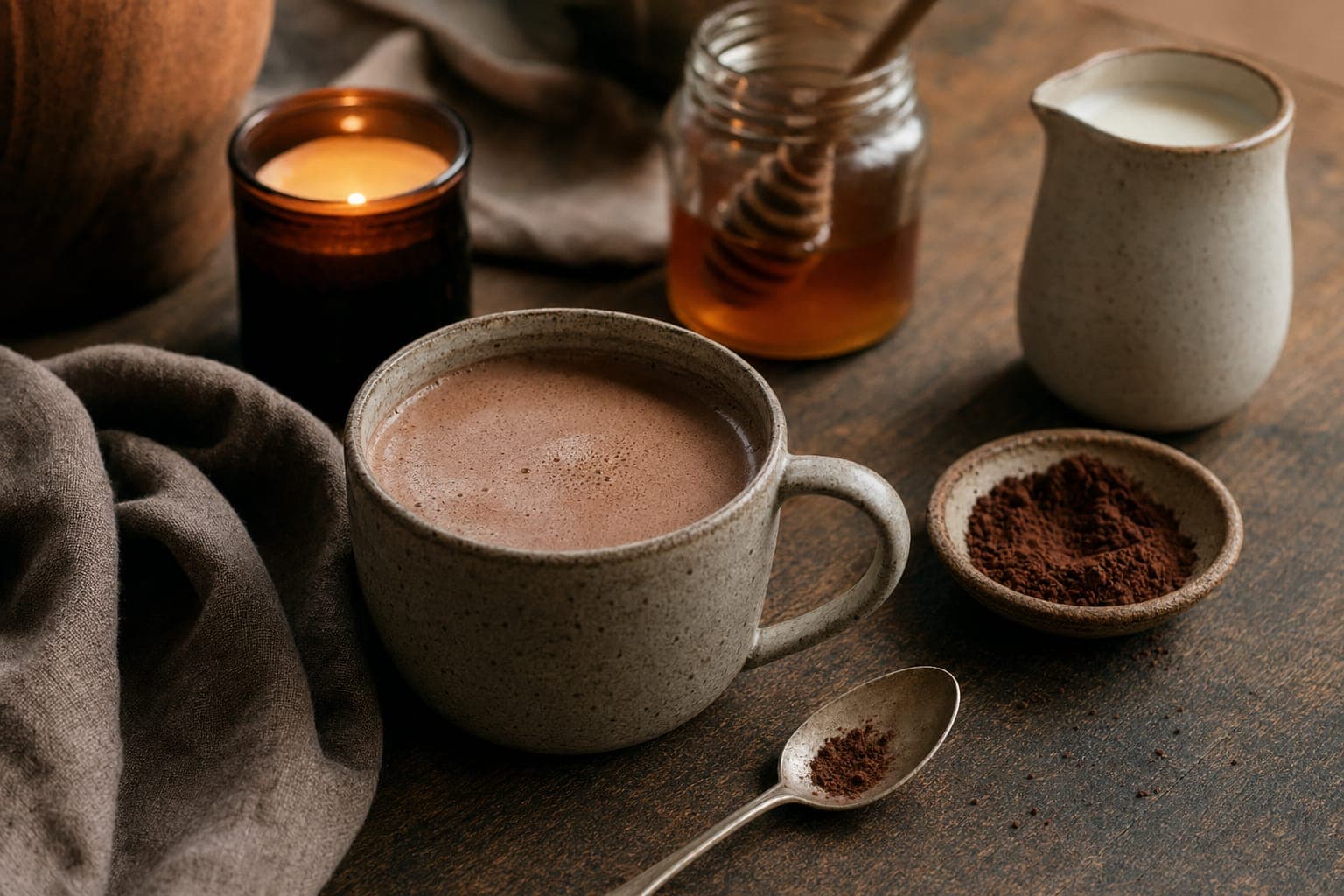
Raw Milk Hot Chocolate with Collagen
A nourishing evening hot chocolate made with raw milk, grass-fed collagen, raw cacao, and honey. A nighttime ritual that supports sleep and gut health.


 Join over 100,000+ members
Build a better food system with us
The Organised community is thousands of people choosing real food and backing the farmers who grow it, all of us trying to leave the world a little better than we found it. If that is what you care about too, you belong here.