Colostrum vs Probiotics: Do You Need Both?
You've read about probiotics. You've probably taken them. Now you're hearing about colostrum and wondering if they're the same thing. They're not. They work on completely different parts of your gut. And whether you need both depends on the state of your gut health.
By Niall Kiddle, Founder, Organised

Reviewed by Pedro Rodrigues, Agronomist (farming and sourcing only) ·
6 min read · Published · Updated · 4 cited sources
Makers of the Organised Daily blend, a grass-fed beef organ supplement from regenerative UK farms
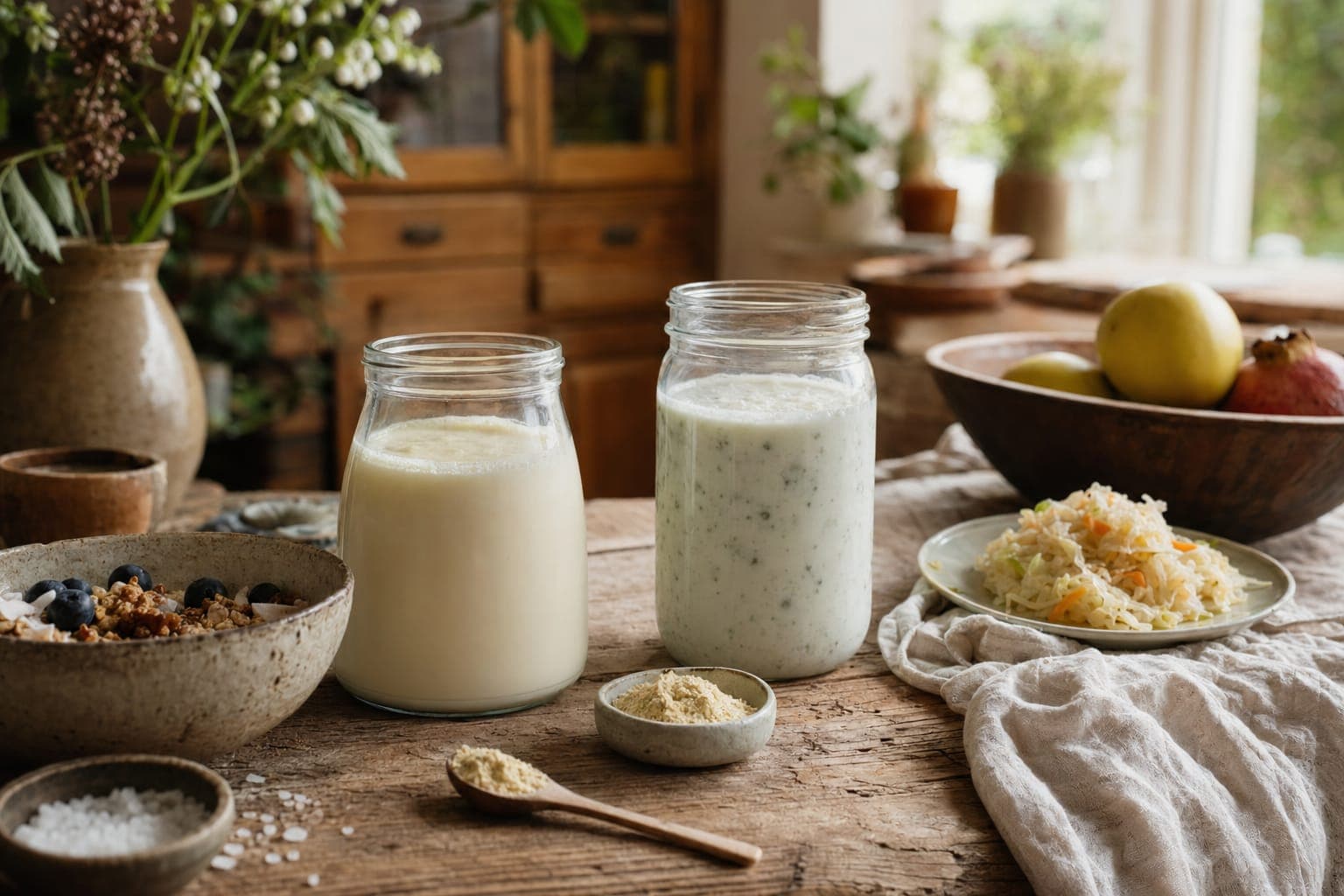
Here's a useful metaphor: your microbiome is a house. Probiotics are the furniture and decoration. Colostrum is the foundation and the walls. You can furnish a house with no foundation, but it won't stand. You can fix the foundation without furniture, but you won't want to live there.
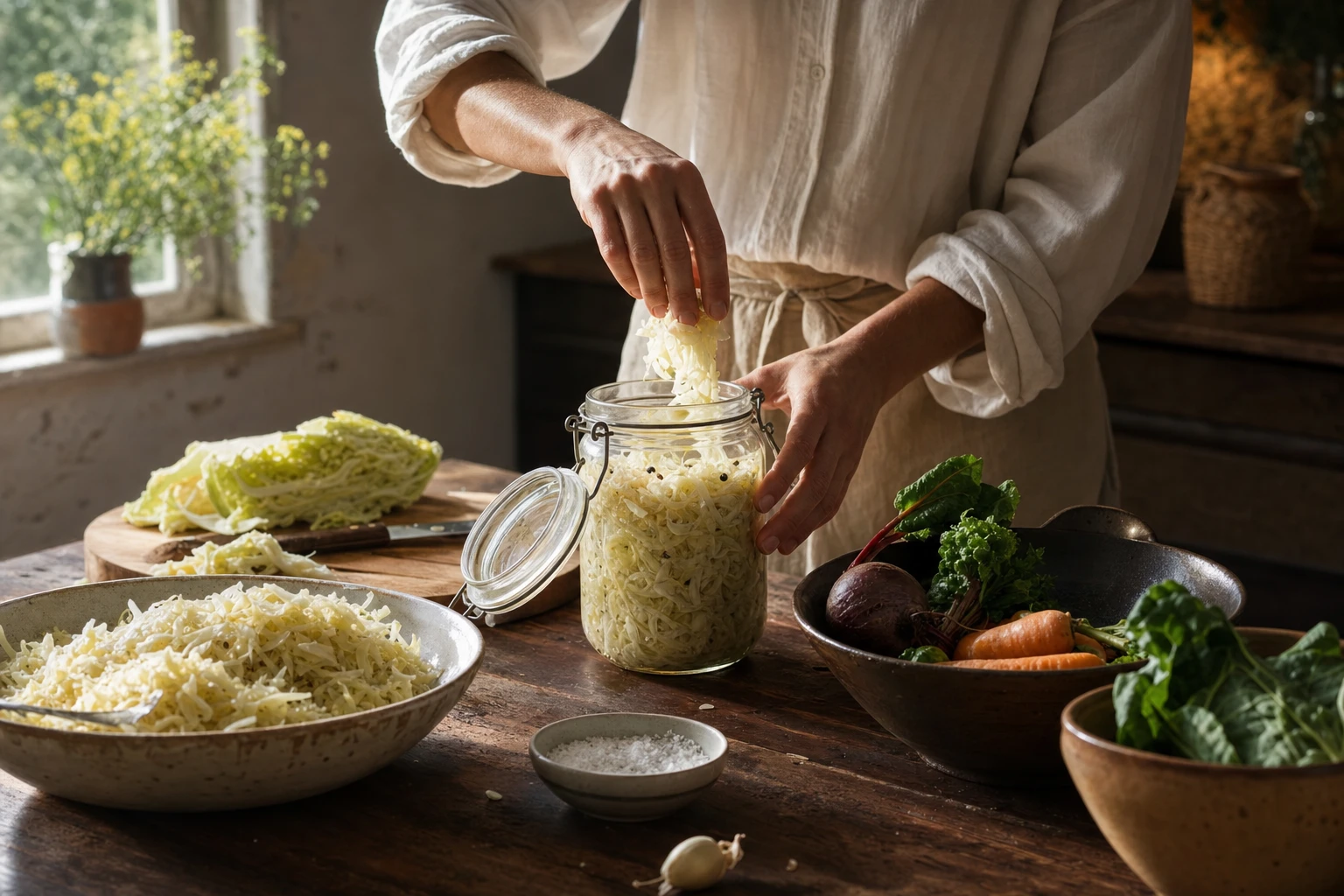
What probiotics actually do
Probiotics are live bacteria. When you take them, you're introducing beneficial microorganisms into your gut. They colonise your microbiome (in theory), compete with pathogenic bacteria for resources, produce short-chain fatty acids like butyrate, and influence your immune and nervous system signalling.1
The research on probiotics is mixed. Some strains show genuine benefit. Many show little to no effect.1 The quality and strain matter enormously. A cheap multi-strain probiotic is unlikely to colonise your gut successfully. A high-quality, strain-specific probiotic can shift your microbiome measurably.
Probiotics work best when you already have a functioning gut barrier. If your intestinal lining is intact and your tight junctions are healthy, probiotics can establish themselves. If your gut barrier is compromised (leaky gut), pathogenic bacteria dominate, and your environment is hostile, new probiotics struggle to survive.
You can take probiotics for years and see no benefit if the foundation isn't solid.
What colostrum actually does
Colostrum is not a probiotic. It contains no live bacteria. Instead, it's concentrated immune factors, antibodies, growth factors, and amino acids designed to repair your gut barrier and establish immune tolerance.
Colostrum contains immunoglobulin G (IgG), which directly tags and neutralises pathogenic bacteria. It contains growth factors like epidermal growth factor (EGF) that stimulate repair of the intestinal lining.2 It contains amino acids that fuel that repair. It's structural and immune support for your barrier, not bacterial population support.
Colostrum works whether your barrier is damaged or not. But if your barrier is genuinely compromised, it's the higher priority. Repairing the house before furnishing it makes sense.

Why they're not interchangeable
Colostrum and probiotics address entirely different physiological systems. A damaged gut barrier is different from a dysbiotic microbiome. You can have a leaky gut with good bacterial diversity. You can have dysbiosis with an intact barrier.
Colostrum's strength is barrier repair and immune protection. Probiotics' strength is bacterial balance and microbiome ecosystem restoration.3 They're not competitors. They're different tools solving different problems.
Colostrum repairs the barrier. Probiotics populate it. They solve different problems.
If you take probiotics when your barrier is severely compromised, you're introducing new bacteria into a leaky gut. Those bacteria can cross into the bloodstream and trigger inflammation. Colostrum should come first. Once the barrier is sealed, probiotics become effective.
When you need colostrum
Colostrum is the priority if you have one or more of these:
- Diagnosed leaky gut or intestinal permeability (confirmed via testing or clinical presentation)
- Inflammatory bowel disease (Crohn's, ulcerative colitis)
- Food sensitivities that developed after a period of normal digestion
- Chronic bloating, gas, and digestive discomfort that doesn't improve with dietary change
- Undigested food visible in your stool
- Systemic inflammation (joint pain, skin issues, brain fog) that improves when you restrict foods
If you have any of these, start with colostrum. Run it for 8 to 12 weeks at 5 to 10 grams daily. Then introduce probiotics once your barrier has begun to heal and your symptoms have calmed.
When you need probiotics
Probiotics are the priority if you have one or more of these:
- A history of antibiotic use that wiped out your microbiome
- Dysbiosis confirmed via stool testing
- Constipation or diarrhoea without obvious barrier damage
- Whole-food digestion that's fine, but your microbiome hasn't recovered from antibiotics or poor diet
- A desire to restore microbiome diversity after a period of restricted eating
If your barrier is intact but your microbiome is depleted, a quality probiotic makes sense. Look for multi-strain or strain-specific products (not broad-spectrum generics) with clinical evidence behind the specific strains. CFU counts matter less than strain selection and brand quality.
Get ingredient guides like this, free
Two short reads a week on the ingredients that matter and how to actually use them.
By signing up you agree to receive emails from us. No spam, unsubscribe anytime.
Can you take both?
Yes. In fact, if you have both barrier damage and dysbiosis (the combination is common), taking both makes sense. The sequence matters: start with colostrum, let it do the barrier repair work for 4 to 8 weeks, then introduce probiotics. Once the barrier is more stable and less inflamed, probiotics colonise more effectively.
You don't need to take them at the same time. Colostrum on an empty stomach in the morning. Probiotics with a meal in the evening. They won't interfere with each other. You're solving two different problems in parallel.
If you have both barrier damage and dysbiosis, start with colostrum, then add probiotics after 4 to 8 weeks.
Some people find that once their barrier heals and their microbiome stabilises, they don't need either supplement ongoing. Others find that continuing a quality probiotic or occasional colostrum doses keeps them stable. This is individual and depends on your diet, stress, sleep, and lifestyle.
Real limitations of probiotics
Probiotics are genuinely helpful for some people and in some contexts. But they're not a magic solution. If you take a probiotic whilst eating processed food, your gut environment remains hostile to those bacteria. They'll struggle to colonise. They'll have minimal effect.
If your gut barrier is damaged (leaky gut), introducing new bacteria into a permeable system can cause inflammation before they have a chance to establish themselves. This is why colostrum-first makes sense. Seal the barrier, then introduce bacteria.
Additionally, most probiotic supplements contain strains that are convenient to culture and sell, not strains that are most relevant to human health. The strains with the most clinical support (like specific Lactobacillus and Bifidobacterium species) are harder to source and more expensive. Cheap probiotics often contain strains with minimal research support.
The quality and strain specificity of your probiotic matters enormously. A single-strain Lactobacillus rhamnosus GG (which has extensive clinical research) is more likely to help than a 20-strain multi-strain product with no specific evidence behind any individual strain.4
The practical recommendation
If your digestion is fine and you're eating well, you need neither. Whole food sources provide prebiotics and postbiotics that support your microbiome naturally. Bone broth and gelatinous meats provide colostrum's amino acids and growth factors in edible form.
If your digestion is struggling, start by identifying the primary problem. Is it barrier damage or dysbiosis? (Or both.) Colostrum if it's barrier damage. Probiotics if it's microbiome depletion. Both if it's both, sequenced correctly.
View them as therapeutic interventions for specific problems, not as daily vitamins you take forever. The goal is to restore function such that you don't need supplements. Most people can get there with the right sequencing and a solid foundational diet.
1 of 9
Daily blend
100,000+ thriving families4.9 on Trustpilot
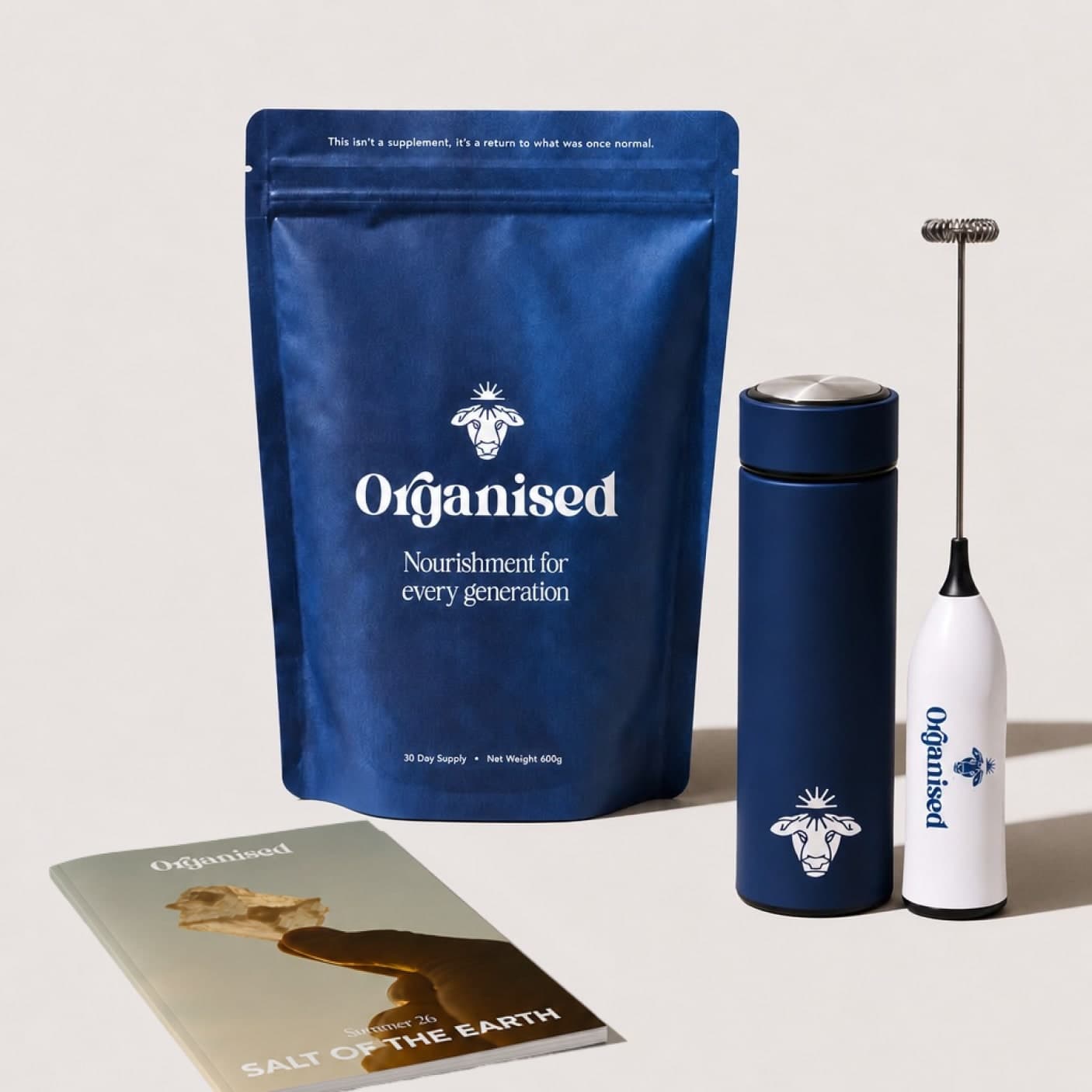
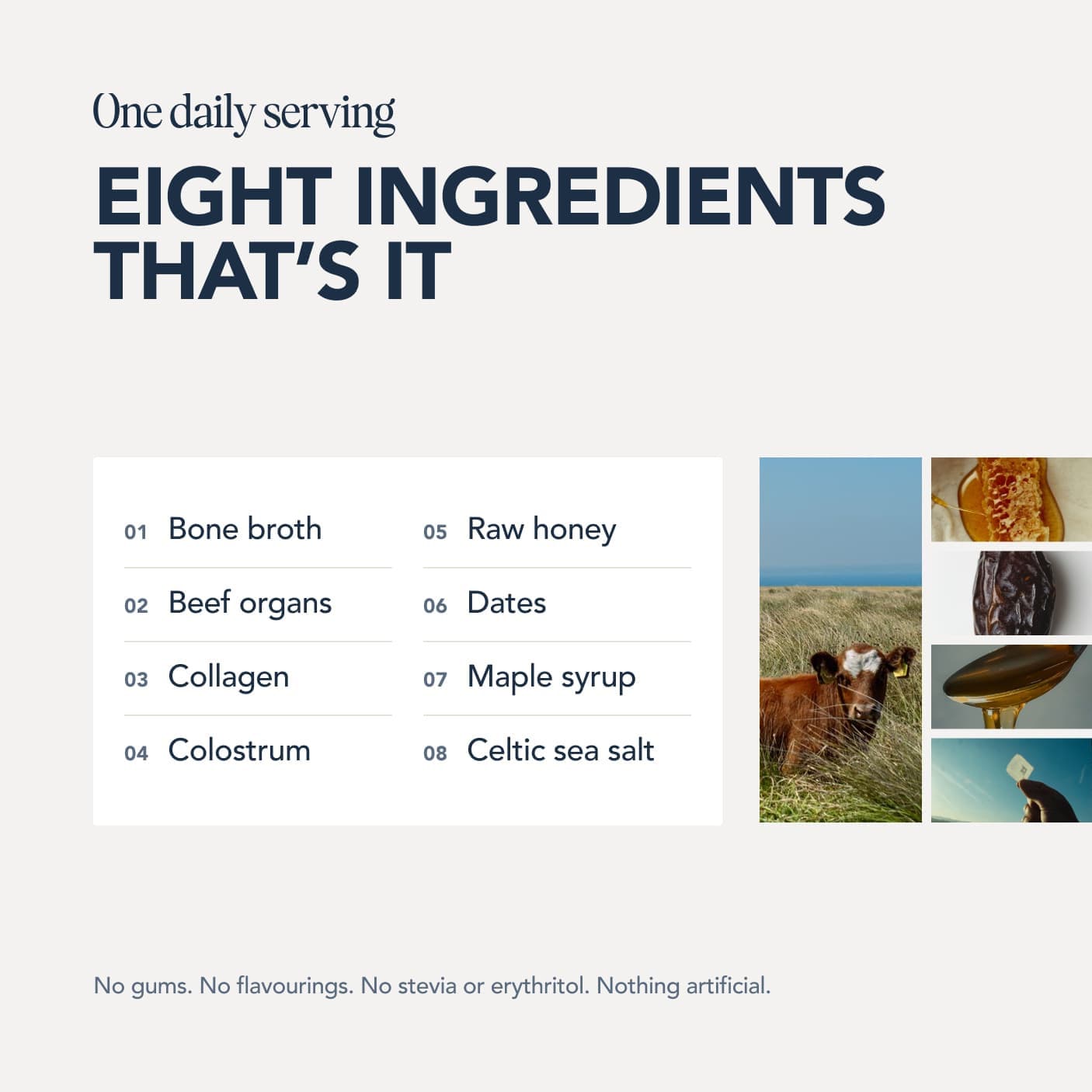
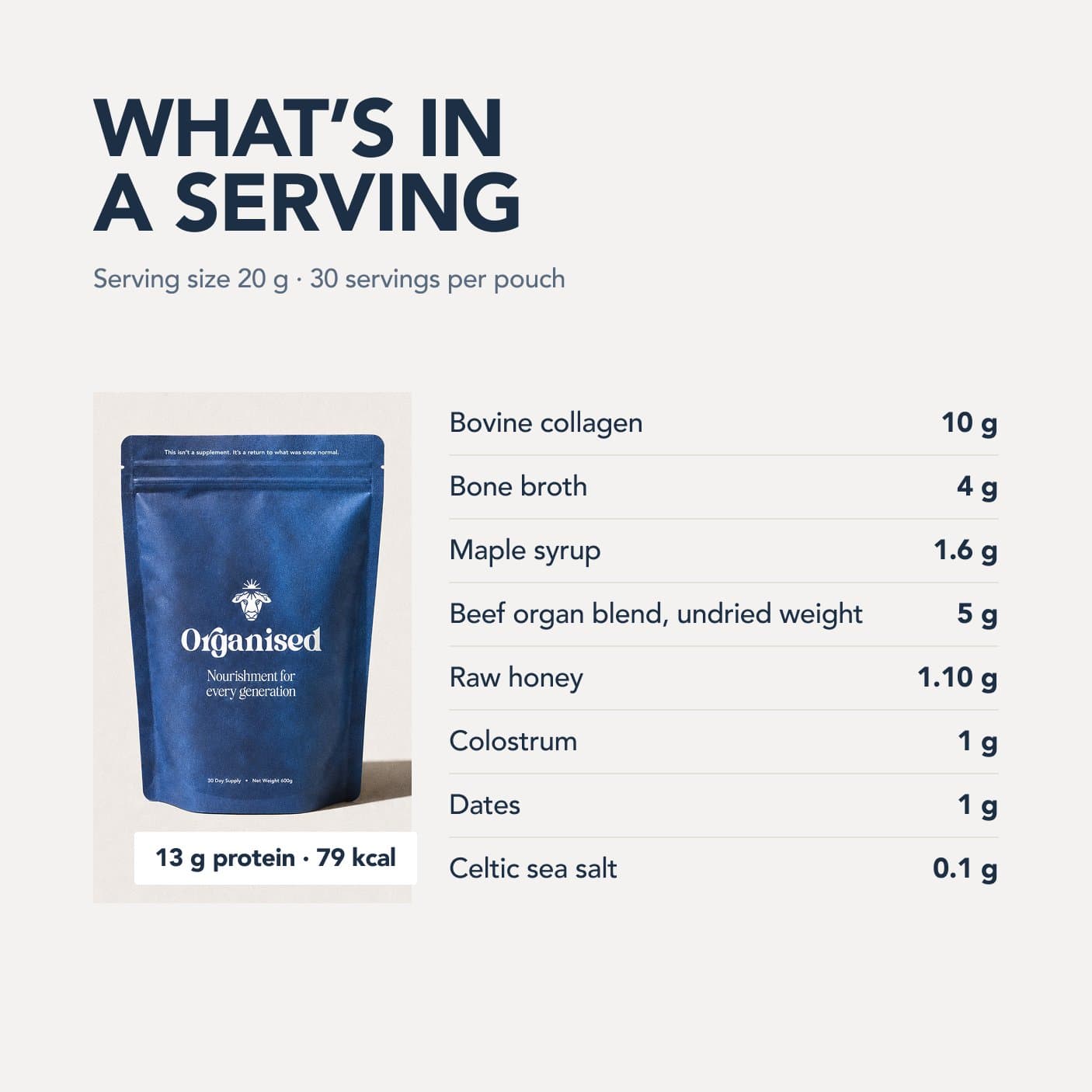
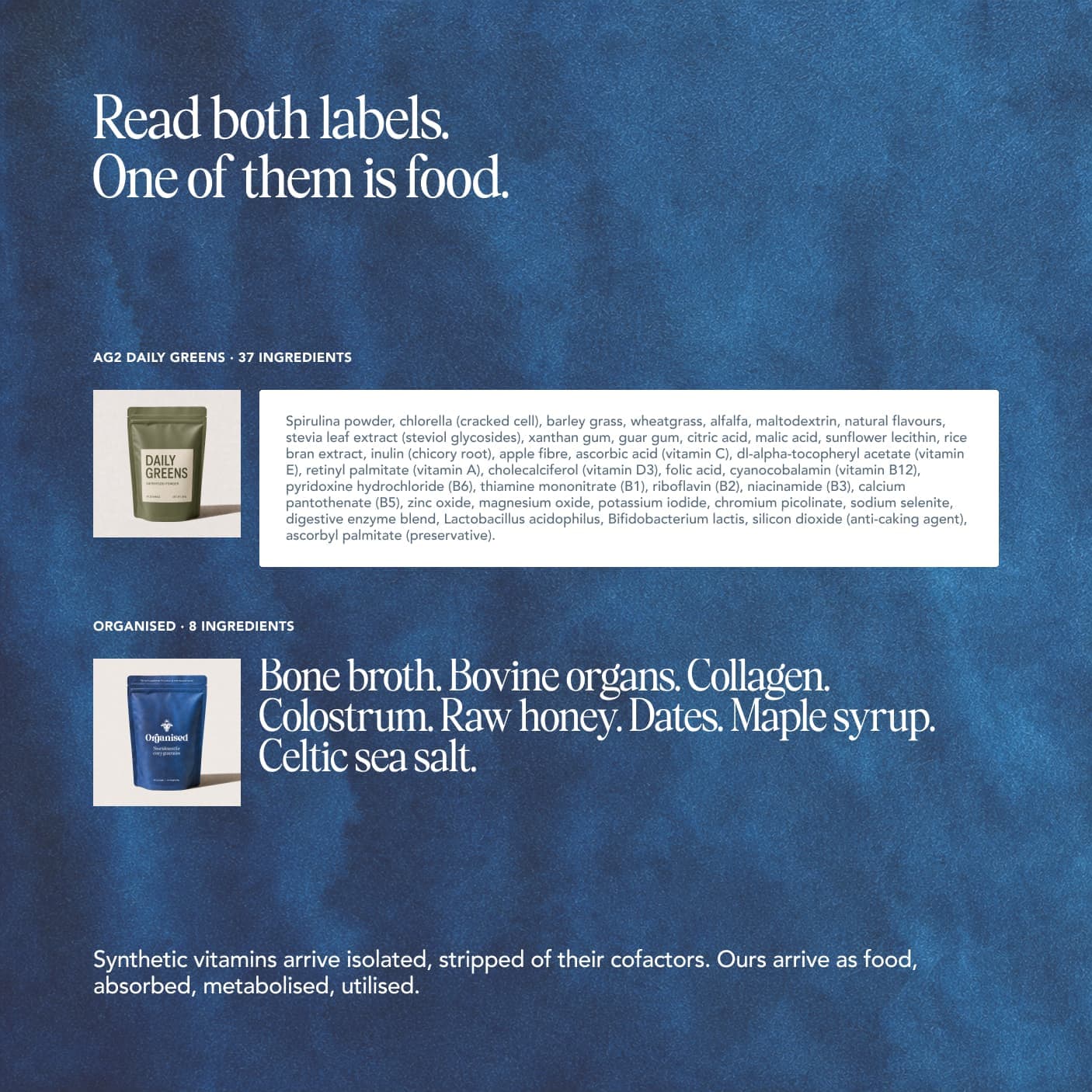
Eight real ingredients built around grass-fed beef organs, collagen and colostrum. Nothing synthetic added.
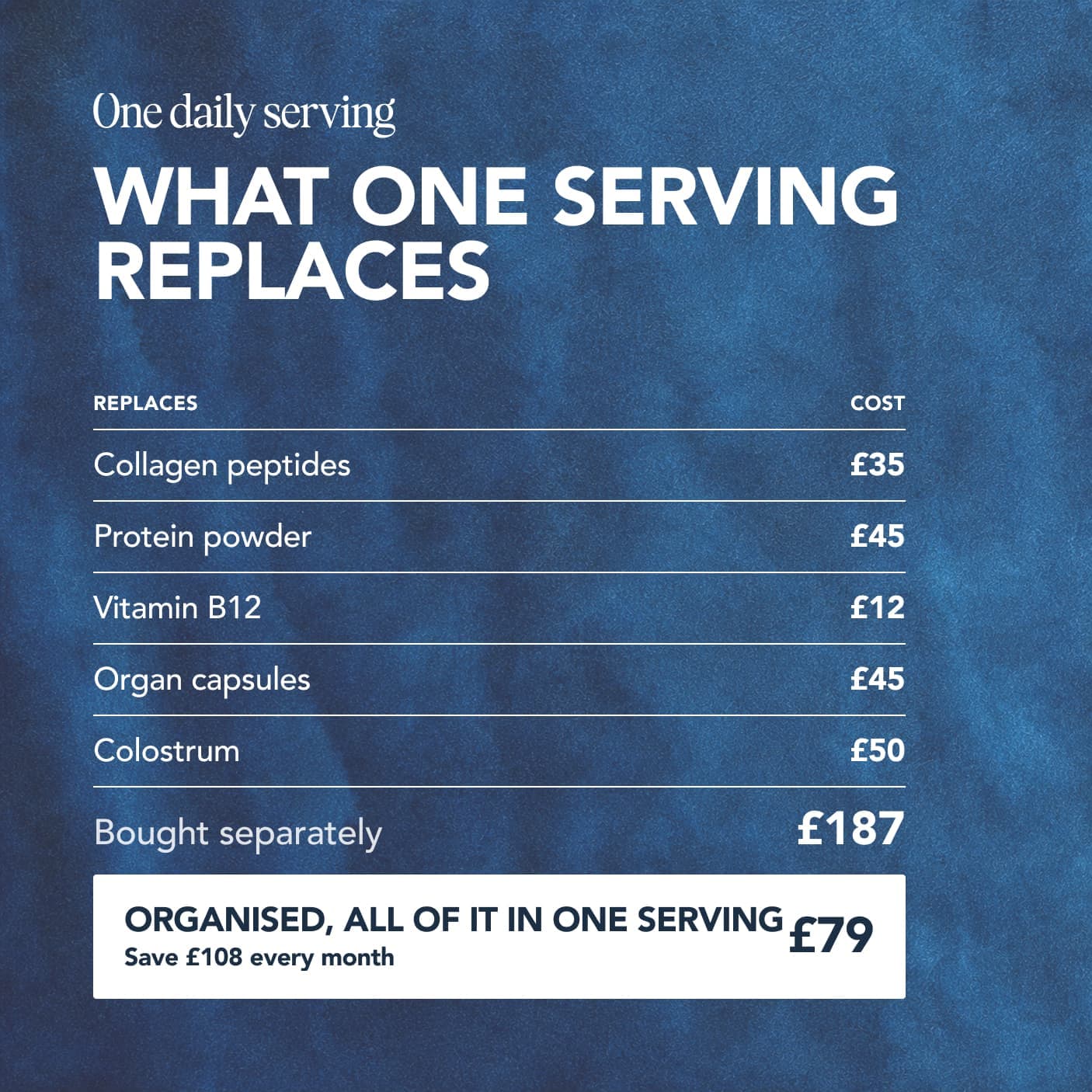
Free with your first order, worth £38. Plus £10 off the pouch with a subscription.
Free UK shipping · Made in England · 100 day money back guarantee on your first pouch · Skip, pause or cancel anytime
The bottom line
Colostrum and probiotics work on different systems. Colostrum repairs your intestinal barrier through immune factors and growth signals. Probiotics restore bacterial diversity and microbiome function. If your barrier is leaky, colostrum comes first. If your microbiome is depleted, probiotics make sense. If you have both problems (common), sequence them: colostrum first, probiotics after 4 to 8 weeks. Neither is a daily forever supplement. Both are tools for specific problems. Use them that way.
References
Every source below was checked on 27 August 2026. Each PubMed, PMC and DOI identifier was resolved against NCBI or Crossref, and what it opens is printed under the citation, so you can see the link goes where the citation says without leaving the page. Where a citation and its identifier disagreed, the citation was corrected to the record or the reference was deleted along with the sentence marker that pointed at it, and where the resolved paper turned out not to support the sentence, the sentence was cut back to what it does support. Borrowed authority is worse than none, because it looks like rigour.
- National Institutes of Health, Office of Dietary Supplements. Probiotics - Health Professional Fact Sheet. https://ods.od.nih.gov/factsheets/Probiotics-HealthProfessional/ [accessed May 2026].
- Playford RJ, Weiser MJ. Bovine Colostrum: Its Constituents and Uses. Nutrients. https://pmc.ncbi.nlm.nih.gov/articles/PMC7831509/ [accessed May 2026].Checked 27 August 2026: PMC7831509 opens Playford RJ, Weiser MJ, Bovine Colostrum: Its Constituents and Uses. Nutrients 2021;13(1). PubMed indexes it as: Review.The authors' own declaration, from the record: PanTheryx Inc supply BC to U.S., European, and Asia-Pacific markets. This does not affect our adherence to the Nutrients policies regarding sharing data and materials.
- Halasa M, Maciejewska D, Baskiewicz-Halasa M, et al. Oral Supplementation with Bovine Colostrum Decreases Intestinal Permeability. Nutrients. https://pmc.ncbi.nlm.nih.gov/articles/PMC5409709/ [accessed May 2026].Checked 27 August 2026: PMC5409709 opens Hałasa M, Maciejewska D, Baśkiewicz-Hałasa M et al, Oral Supplementation with Bovine Colostrum Decreases Intestinal Permeability and Stool Concentrations of Zonulin in Athletes. Nutrients 2017;9(4). PubMed indexes it as: Randomized Controlled Trial.The authors' own declaration, from the record: The authors declare no conflict of interest. The founding sponsors had no role in the design of the study; in the collection, analyses, or interpretation of data; in the writing of the manuscript, and in the decision to publish the results.
- Capurso L. Thirty Years of Lactobacillus rhamnosus GG: A Review. J Clin Gastroenterol. https://pubmed.ncbi.nlm.nih.gov/30741841/ [accessed May 2026].Checked 27 August 2026: PMID 30741841 opens Capurso L, Thirty Years of Lactobacillus rhamnosus GG: A Review. J Clin Gastroenterol 2019;53 Suppl 1:S1-S41. PubMed indexes it as: Review.
Who wrote and reviewed this guide
Niall Kiddle
Author · Founder, Organised
Niall is the founder of Organised. He started the company in 2024 after fixing his own health the slow way: in 2022 he swapped a cupboard of synthetic supplements for real food, raw milk, organ meats, bone broth and honey, and felt the difference within months.
Areas of expertise: Ancestral nutrition, Organ meats, Whole-food supplementation, Gut health, Regenerative sourcing
Read Niall's full profile
Pedro Rodrigues
Reviewer · Agronomist (farming and sourcing only)
Pedro is the agronomist Organised works with on farming and sourcing. His job on the guides is to keep the science honest: he reviews what we publish about soil health, regenerative agriculture, grazing and the way food is actually produced.
Areas of expertise: Regenerative agriculture, Agronomy, Soil health, Grass-fed farming, Food sourcing
Reviewed this guide on
Read Pedro's full profileMore on colostrum
View all- Bovine Colostrum: The Complete Guide to Nature's First Food
- Colostrum and the Immune System: What the Science Actually Shows
- Colostrum for Athletes: Recovery, Immunity and Performance
- Colostrum for Gut Health: How Immunoglobulins Repair the Gut Lining
- Growth Factors in Colostrum: What Are IGF-1 and IGF-2?
- Is Colostrum Safe for Lactose-Intolerant People?
- What Is Lactoferrin and Why Is It in Colostrum?
Browse the guides library
All guidesKeep reading
Ingredients
Bovine Colostrum: The Complete Guide to Nature's First Food
Explore bovine colostrum benefits for gut and immune health. This complete guide covers immunoglobulins, sensible dosing, and safety for adults.
Ingredients
Collagen Supplements on Reddit: Do They Actually Work?
What Reddit really says about collagen supplements, from r/Supplements to r/SkincareAddiction, checked against the actual evidence on skin, joints and dosing.
Ingredients
What Is Lactoferrin and Why Is It in Colostrum?
Discover lactoferrin, the iron-binding protein in colostrum that modulates immunity, fights pathogens, and supports gut health.
Real food, made effortless
Try the organ blendA few ways to use it
All recipes
5-Minute High-Protein Breakfasts Using Organised
Quick, high-protein breakfast ideas using Organised. Five recipes you can make in minutes with real food. No fussing around.

Organ Bolognese: The Family Dinner That Heals
Practical organ meat recipe using fresh beef liver and heart. Family-friendly bolognese that bridges supplements to whole food.
10 Ways to Use Organised That Aren't Just a Shake
Move beyond the basic shake. Discover 10 creative ways to use Organised in smoothie bowls, oats, yoghurt, baking, and more.


 Join over 100,000+ members
Build a better food system with us
The Organised community is thousands of people choosing real food and backing the farmers who grow it, all of us trying to leave the world a little better than we found it. If that is what you care about too, you belong here.