Is Colostrum Safe for Lactose-Intolerant People?
The most common question we get about colostrum: "Isn't colostrum dairy? Won't it make me sick?" The answer is more nuanced than you might expect.

By Niall Kiddle, Founder, Organised

Reviewed by Pedro Rodrigues, Agronomist (farming and sourcing only) ·
5 min read · Published · Updated · 3 cited sources
Makers of the Organised Daily blend, a grass-fed beef organ supplement from regenerative UK farms
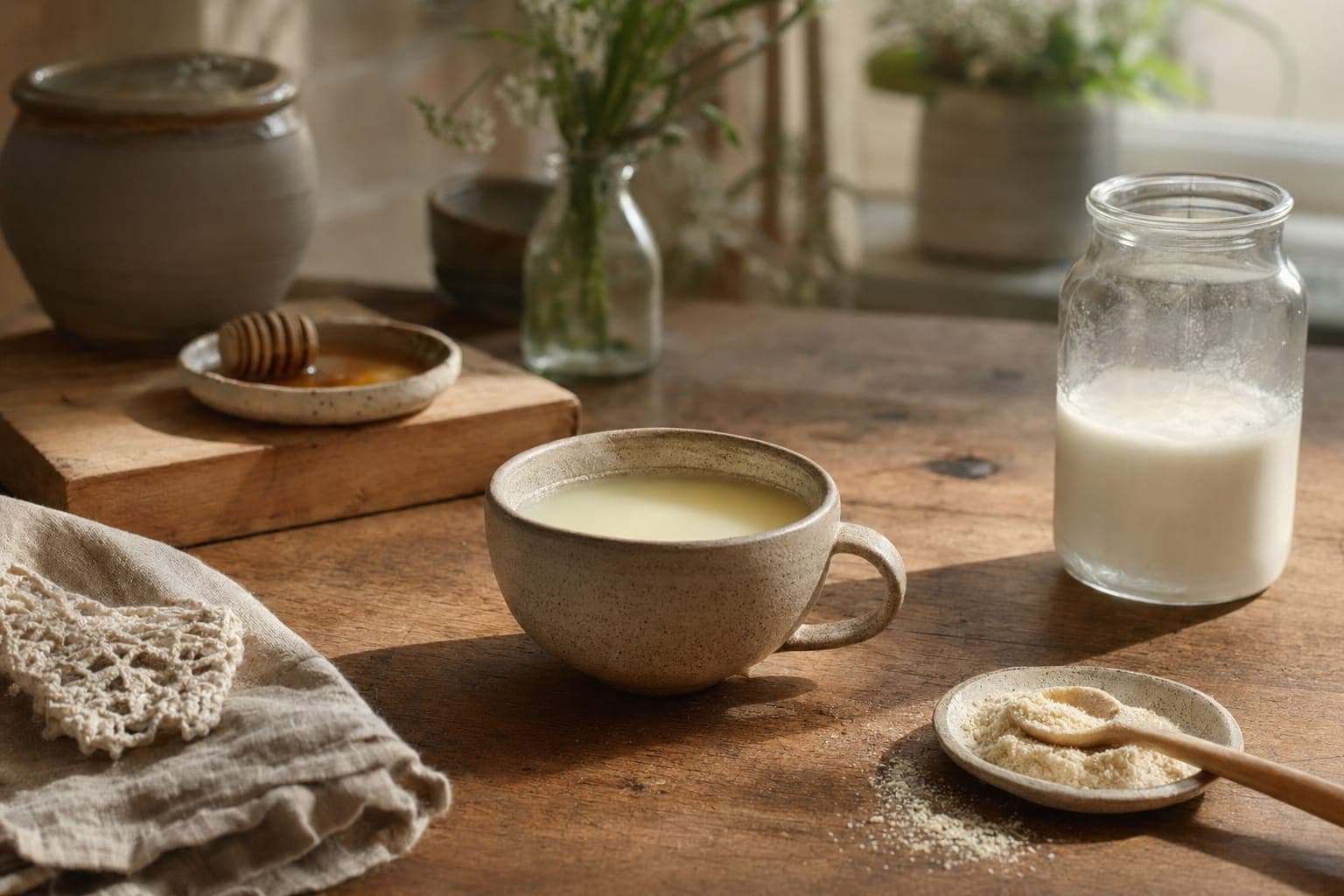

Colostrum vs milk: the lactose difference
Colostrum and milk are not the same. The lactose content tells you why.
Mature milk contains approximately 4-5 grams of lactose per 100 millilitres.1 A typical cup of milk (250 ml) contains 12-13 grams of lactose. This is enough to trigger symptoms in most lactose-intolerant people.
Colostrum contains roughly 2-3 grams of lactose per 100 millilitres.1 A typical colostrum supplement serving (15 grams of powder, which is roughly 150 ml reconstituted) contains approximately 30-45 mg of lactose. This is roughly 250-400 times less lactose than a cup of milk.
Colostrum has such low lactose content that even people with severe lactose intolerance often tolerate it without symptoms.
This is the first reason why colostrum-intolerant people can usually tolerate colostrum: the lactose load is simply too small to trigger symptoms in most people.
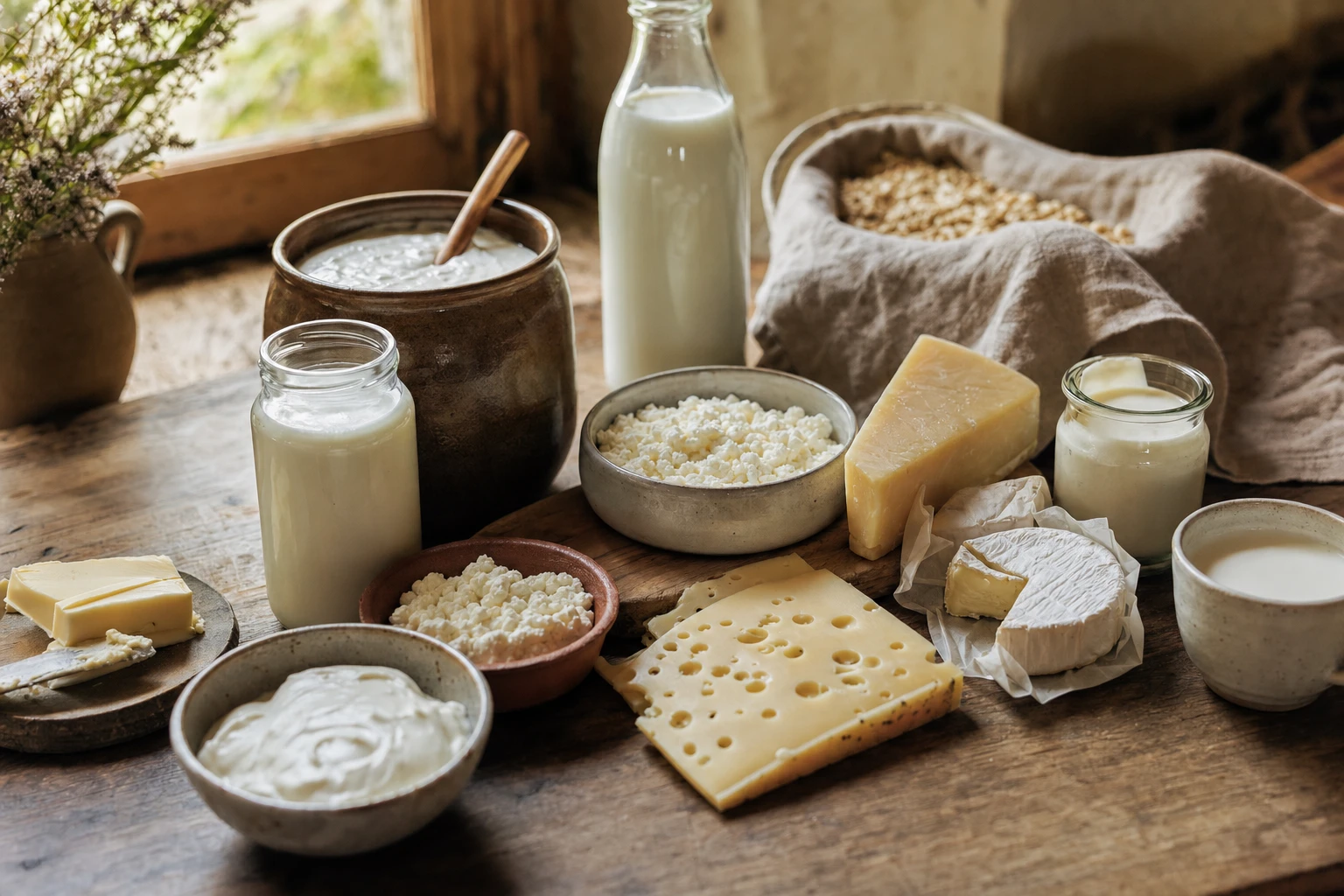
What actually causes dairy intolerance
Lactose intolerance is a single thing: a deficiency of the enzyme lactase, which breaks down lactose.2 If you're lactose-intolerant, it's because your intestines produce insufficient lactase to break down the lactose in milk.
But dairy intolerance is broader. Some people react to casein (a milk protein), not lactose. Some people react to whey. Some people have histamine reactions to aged dairy. Some people react to hormones or antibiotics in conventional dairy.
Colostrum contains casein, so if you have a casein-specific intolerance, colostrum might trigger symptoms. But if you're purely lactose-intolerant, colostrum's low lactose content usually isn't an issue.
Why most lactose-intolerant people tolerate colostrum
The lactose threshold for symptoms varies by individual. Some people start experiencing symptoms at 1-2 grams of lactose. Others can tolerate up to 10-12 grams without symptoms. Most people can tolerate 5 grams without significant issues.2
A typical colostrum serving (15 grams of powder) contains roughly 0.3-0.45 grams of lactose. This is below the threshold for most lactose-intolerant people. Unless you have severe lactose intolerance (symptoms triggered by very small amounts), colostrum is likely fine.
There's an additional factor: colostrum's IgA content. IgA directly supports lactase production and gut barrier integrity. By consuming colostrum, you're actually improving your ability to tolerate lactose. Regular colostrum supplementation can gradually increase your lactose tolerance over time.
So the paradox: colostrum is so low in lactose that it doesn't trigger symptoms, AND it actually improves your lactose tolerance over time. For lactose-intolerant people, colostrum can be a gateway back to tolerating more dairy if you want to go that direction.

The casein question
Casein is a milk protein that some people react to separately from lactose.3 If you have a casein-specific intolerance, colostrum might trigger symptoms because it contains casein (though at lower concentrations than milk).
How to tell the difference: if you react to lactose-free milk, you likely have a casein issue, not a lactose issue. In that case, colostrum might also be problematic.
If you're purely lactose-intolerant (you can tolerate hard cheeses, which are low in lactose, fine, but react to milk), then colostrum is very likely fine.
Lactose intolerance and casein intolerance are different. Most lactose-intolerant people tolerate colostrum. People with casein sensitivity should test carefully or avoid colostrum.
Get ingredient guides like this, free
Two short reads a week on the ingredients that matter and how to actually use them.
By signing up you agree to receive emails from us. No spam, unsubscribe anytime.
Testing for colostrum tolerance
If you're unsure, test it carefully:
- Start with a very small amount: 5 grams of colostrum powder mixed into water or tea
- Take it on an empty stomach in the morning
- Wait 30 minutes to 2 hours. Do you experience bloating, gas, cramping, or digestive distress?
- If no symptoms, try 10 grams the next day
- If that's fine, increase to your full serving (15 grams) on day three
If at any point you experience symptoms, you likely have a casein-specific issue or unusually severe lactose intolerance. Stop and find an alternative.
But most people will move straight from 5 grams to 15 grams with no issues, because the lactose load is simply so low.
Dairy protein content and casein sensitivity
Beyond lactose, some people react to casein (milk protein). Colostrum contains casein, though in lower concentrations than mature milk. If you have true casein sensitivity (not lactose intolerance), colostrum might still trigger symptoms.
The difference: lactose intolerance causes digestive symptoms (bloating, gas). Casein sensitivity often causes immune reactions (sinus congestion, skin breakouts). Colostrum's low lactose makes it safe for intolerance but may not help with sensitivity.
Getting colostrum if you're sensitive
If you're concerned about any dairy sensitivity, start with a small dose (5-10 grams) and observe for 48 hours. Most people tolerate it without issue. If symptoms appear, stop and consult your healthcare provider. The good news: quality bovine colostrum is one of the gentlest dairy supplements available, specifically because lactose content is so low.
Timing considerations for maximum benefit
Take colostrum first thing in the morning or between meals if possible, away from high-heat foods that might damage its bioactive compounds. Cold or room-temperature water is ideal. If taken with food, combine with fat (olive oil, butter) to enhance immunoglobulin absorption.

1 of 9
Daily blend
100,000+ thriving families4.9 on Trustpilot
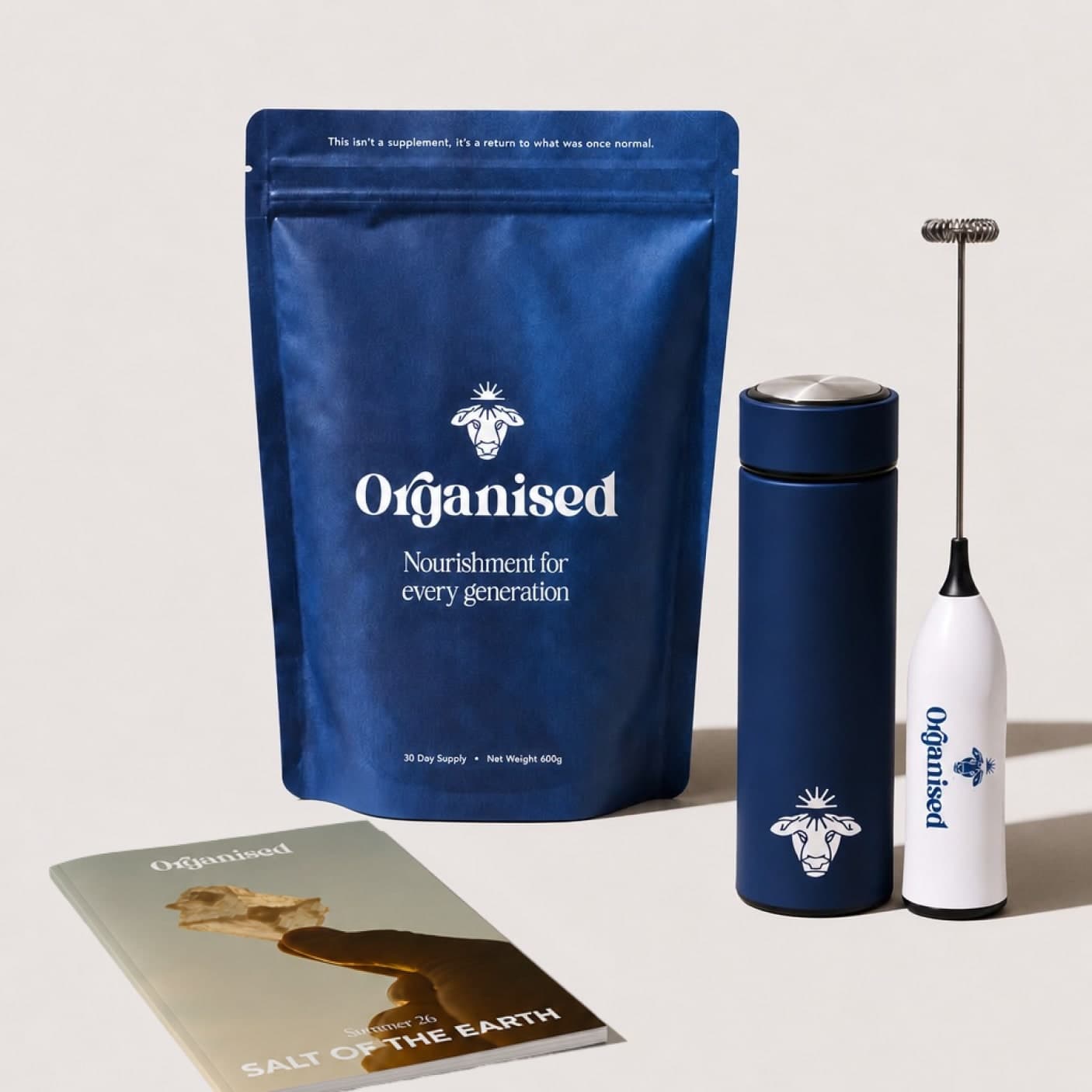
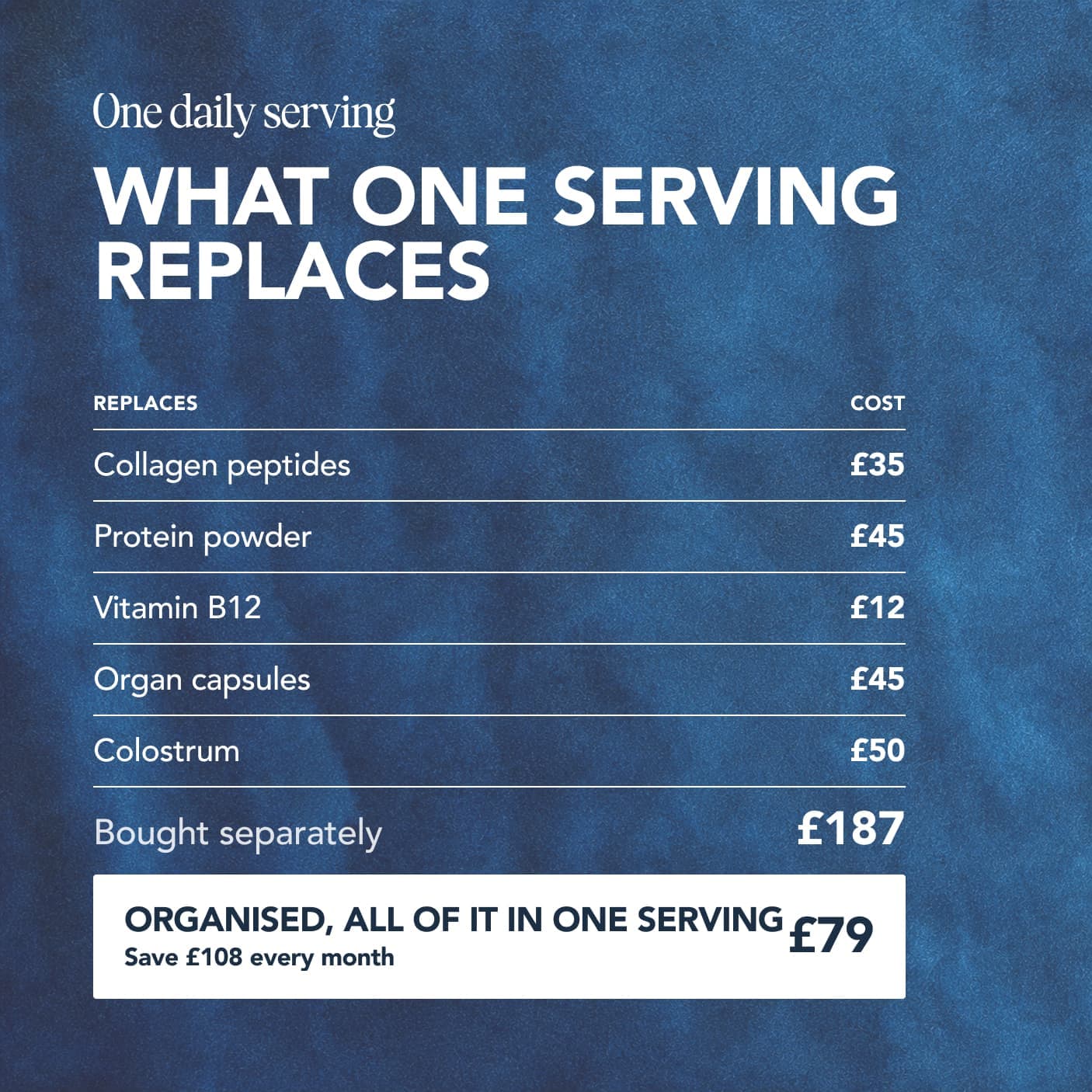
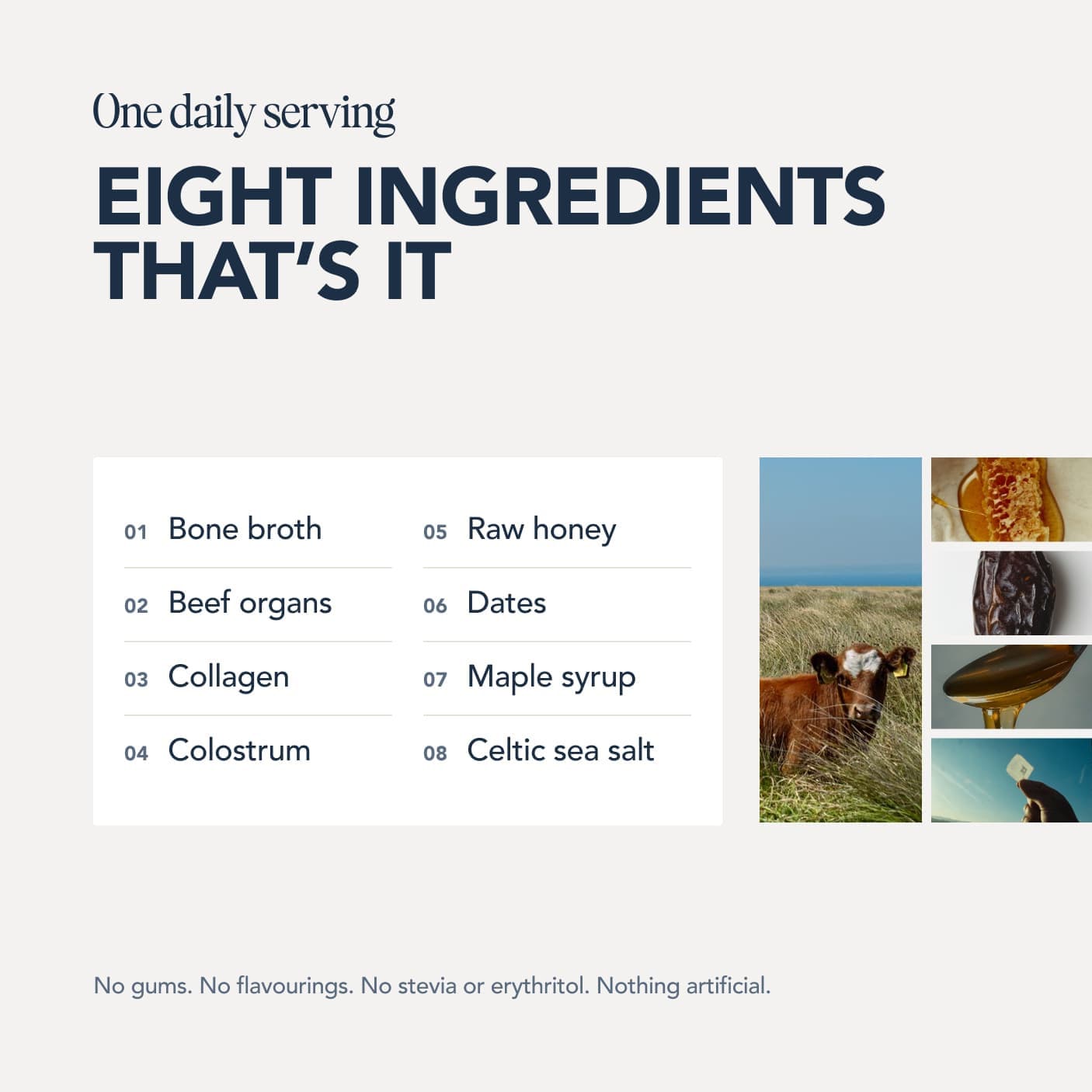
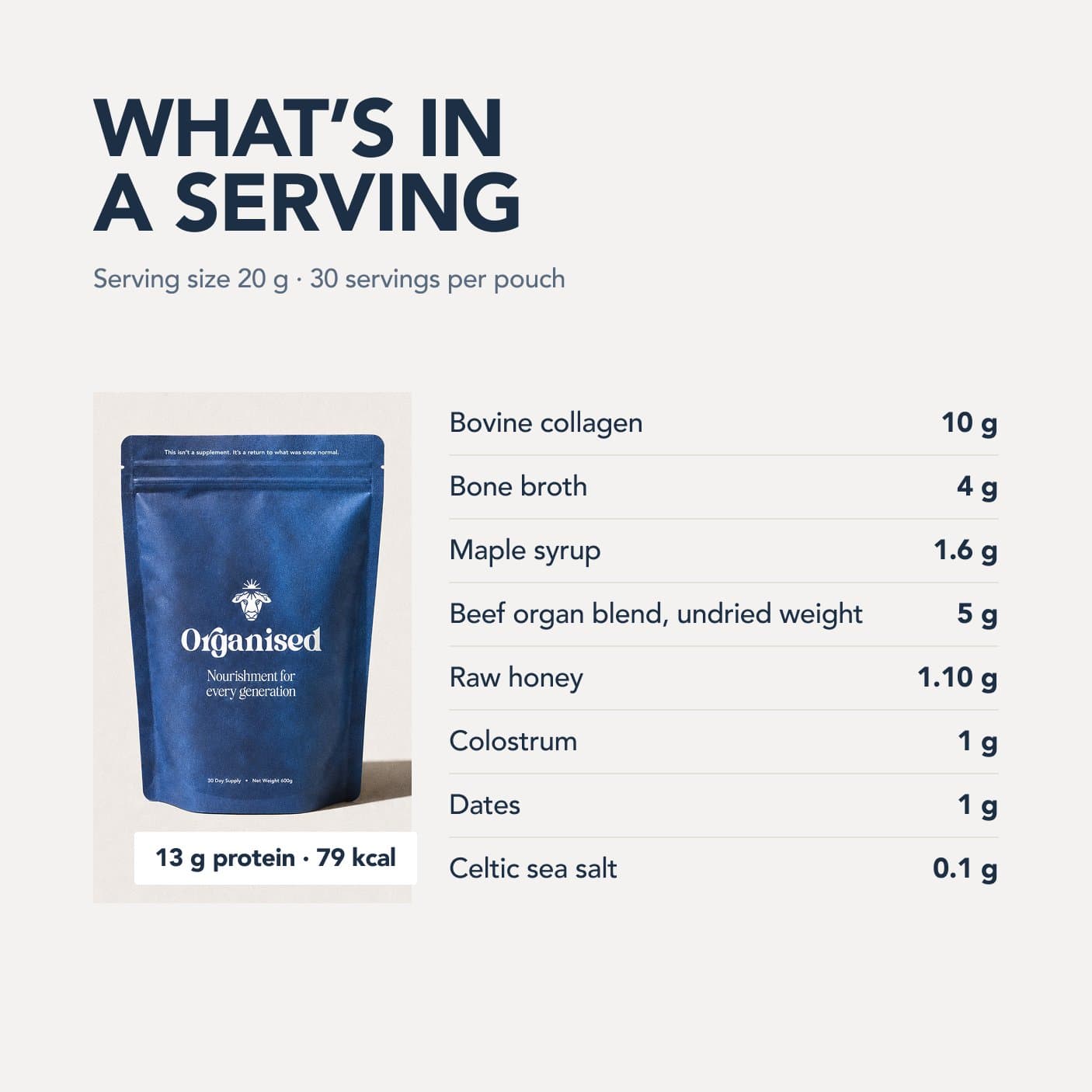
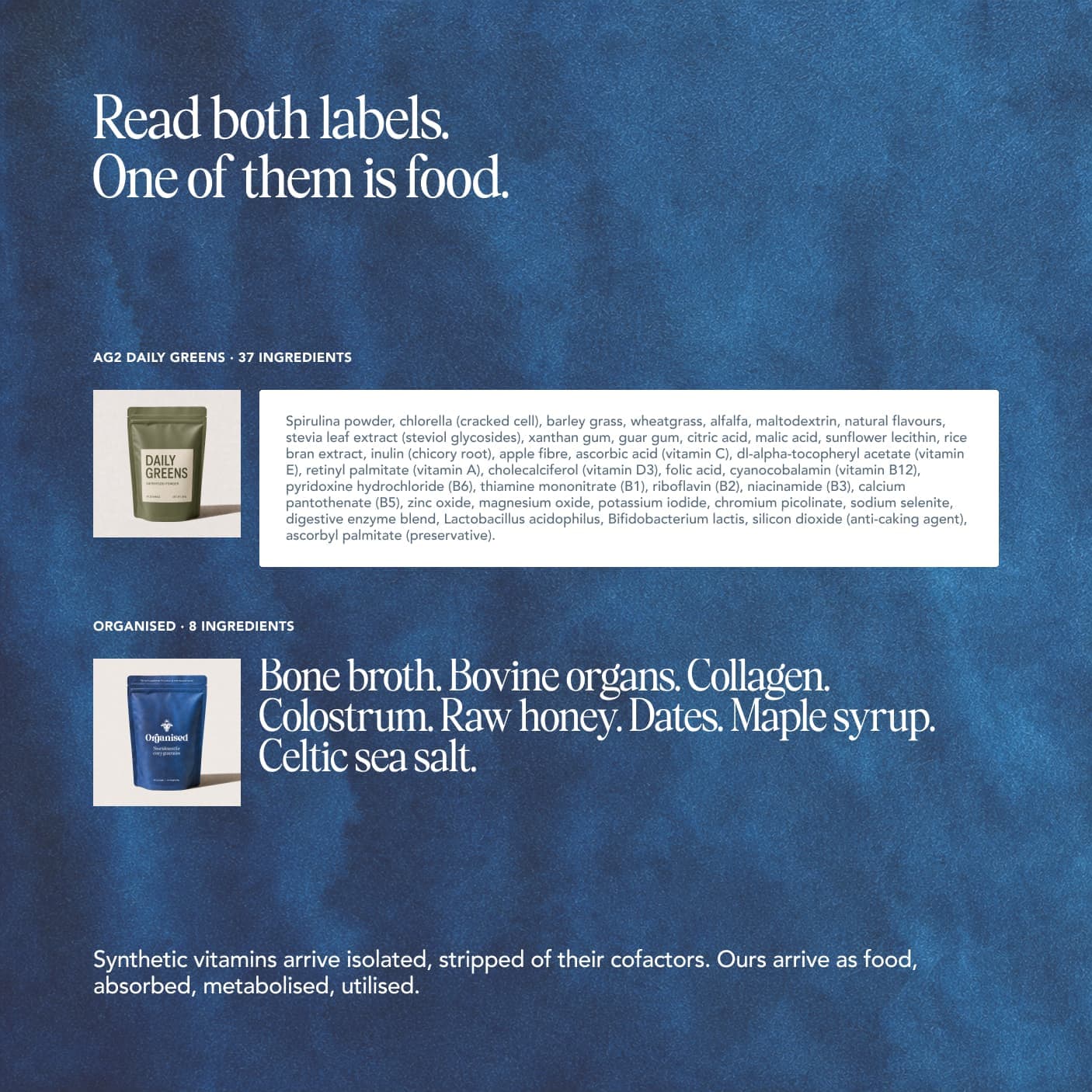
Eight real ingredients built around grass-fed beef organs, collagen and colostrum. Nothing synthetic added.
Free with your first order, worth £38. Plus £10 off the pouch with a subscription.


Free UK shipping · Made in England · 100 day money back guarantee on your first pouch · Skip, pause or cancel anytime
Individual variation and tolerance testing
While colostrum is extraordinarily safe and well-tolerated, individual responses vary. Some people with severe dairy sensitivity experience mild symptoms even with colostrum's low lactose. The solution: start with 5-10 grams daily and build up over 1-2 weeks. Your digestive system will adapt, and most symptoms (if any) resolve by week 2.
True hypersensitivity to colostrum is rare. Most people experience improvement in digestion, immunity, and recovery within weeks of starting, even if they've struggled with other dairy products.
The bottom line
Colostrum contains so little lactose (30-45 mg per serving) that most lactose-intolerant people tolerate it without symptoms. If you're purely lactose-intolerant, colostrum is probably fine. If you have a casein-specific issue, be cautious and test carefully.
The irony: colostrum's IgA content can actually improve your lactose tolerance over time. You might find that after regular colostrum supplementation, you can tolerate more dairy than you could before.
Start small (5 grams), test your tolerance, and increase from there. If you tolerate it, colostrum is one of the most useful supplements available for gut health, regardless of your lactose intolerance status.
References
Every source below was checked on 27 August 2026. Each PubMed, PMC and DOI identifier was resolved against NCBI or Crossref, and what it opens is printed under the citation, so you can see the link goes where the citation says without leaving the page. Where a citation and its identifier disagreed, the citation was corrected to the record or the reference was deleted along with the sentence marker that pointed at it, and where the resolved paper turned out not to support the sentence, the sentence was cut back to what it does support. Borrowed authority is worse than none, because it looks like rigour.
- Playford RJ, Weiser MJ. Bovine colostrum: its constituents and uses. Nutrients. 2021. PMC7831509.Checked 27 August 2026: PMC7831509 opens Playford RJ, Weiser MJ, Bovine Colostrum: Its Constituents and Uses. Nutrients 2021;13(1). PubMed indexes it as: Review.The authors' own declaration, from the record: PanTheryx Inc supply BC to U.S., European, and Asia-Pacific markets. This does not affect our adherence to the Nutrients policies regarding sharing data and materials.
- NHS. Lactose intolerance: overview. nhs.uk/conditions/lactose-intolerance.
- NHS. Food allergy: cow's milk allergy. nhs.uk/conditions/food-allergy.
Who wrote and reviewed this guide
Niall Kiddle
Author · Founder, Organised
Niall is the founder of Organised. He started the company in 2024 after fixing his own health the slow way: in 2022 he swapped a cupboard of synthetic supplements for real food, raw milk, organ meats, bone broth and honey, and felt the difference within months.
Areas of expertise: Ancestral nutrition, Organ meats, Whole-food supplementation, Gut health, Regenerative sourcing
Read Niall's full profile
Pedro Rodrigues
Reviewer · Agronomist (farming and sourcing only)
Pedro is the agronomist Organised works with on farming and sourcing. His job on the guides is to keep the science honest: he reviews what we publish about soil health, regenerative agriculture, grazing and the way food is actually produced.
Areas of expertise: Regenerative agriculture, Agronomy, Soil health, Grass-fed farming, Food sourcing
Reviewed this guide on
Read Pedro's full profileMore on colostrum
View all- Bovine Colostrum: The Complete Guide to Nature's First Food
- Colostrum and the Immune System: What the Science Actually Shows
- Colostrum for Athletes: Recovery, Immunity and Performance
- Colostrum for Gut Health: How Immunoglobulins Repair the Gut Lining
- Colostrum vs Probiotics: Do You Need Both?
- Growth Factors in Colostrum: What Are IGF-1 and IGF-2?
- What Is Lactoferrin and Why Is It in Colostrum?
Browse the guides library
All guidesKeep reading

Ingredients
Bovine Colostrum: The Complete Guide to Nature's First Food
Explore bovine colostrum benefits for gut and immune health. This complete guide covers immunoglobulins, sensible dosing, and safety for adults.

Ingredients
Grass-Fed Beef Protein Isolate: What Makes It Different
See what sets grass-fed beef protein isolate apart, from easy digestion to micronutrient content, and how it really compares with whey protein for daily use.
Ingredients
Collagen for Gut Health: Rebuilding Your Intestinal Lining
Discover how collagen supports gut health by supplying glycine, proline and the amino acids your intestinal lining draws on to repair and stay resilient.
Real food, made effortless
Try the organ blendA few ways to use it
All recipes
5-Minute High-Protein Breakfasts Using Organised
Quick, high-protein breakfast ideas using Organised. Five recipes you can make in minutes with real food. No fussing around.

Organised Protein Pancakes: A Weekend Favourite
A high-protein pancake recipe using beef protein, eggs, and raw milk. Cooked in cast iron, naturally sweetened with banana and honey. Real food breakfast.

Organised Smoothie Bowl Recipes for Every Season
Four seasonal smoothie bowl recipes using Organised. Berry in summer, apple-cinnamon in autumn, tropical in spring, warming chocolate in winter.


 Join over 100,000+ members
Build a better food system with us
The Organised community is thousands of people choosing real food and backing the farmers who grow it, all of us trying to leave the world a little better than we found it. If that is what you care about too, you belong here.