Raw Honey: Why Unprocessed Honey Is a Whole Different Food
That golden liquid in the plastic bear bottle is not honey. It's sweetened water. Real honey is something entirely different. It has enzymes. It has living cultures. It has antimicrobial properties that raw food doesn't usually have. Once you understand what processing does to honey, you'll understand why the cheap version isn't actually food.

By Niall Kiddle, Founder, Organised

Reviewed by Pedro Rodrigues, Agronomist (farming and sourcing only) ·
7 min read · Published · Updated · 5 cited sources
Makers of the Organised Daily blend, a grass-fed beef organ supplement from regenerative UK farms
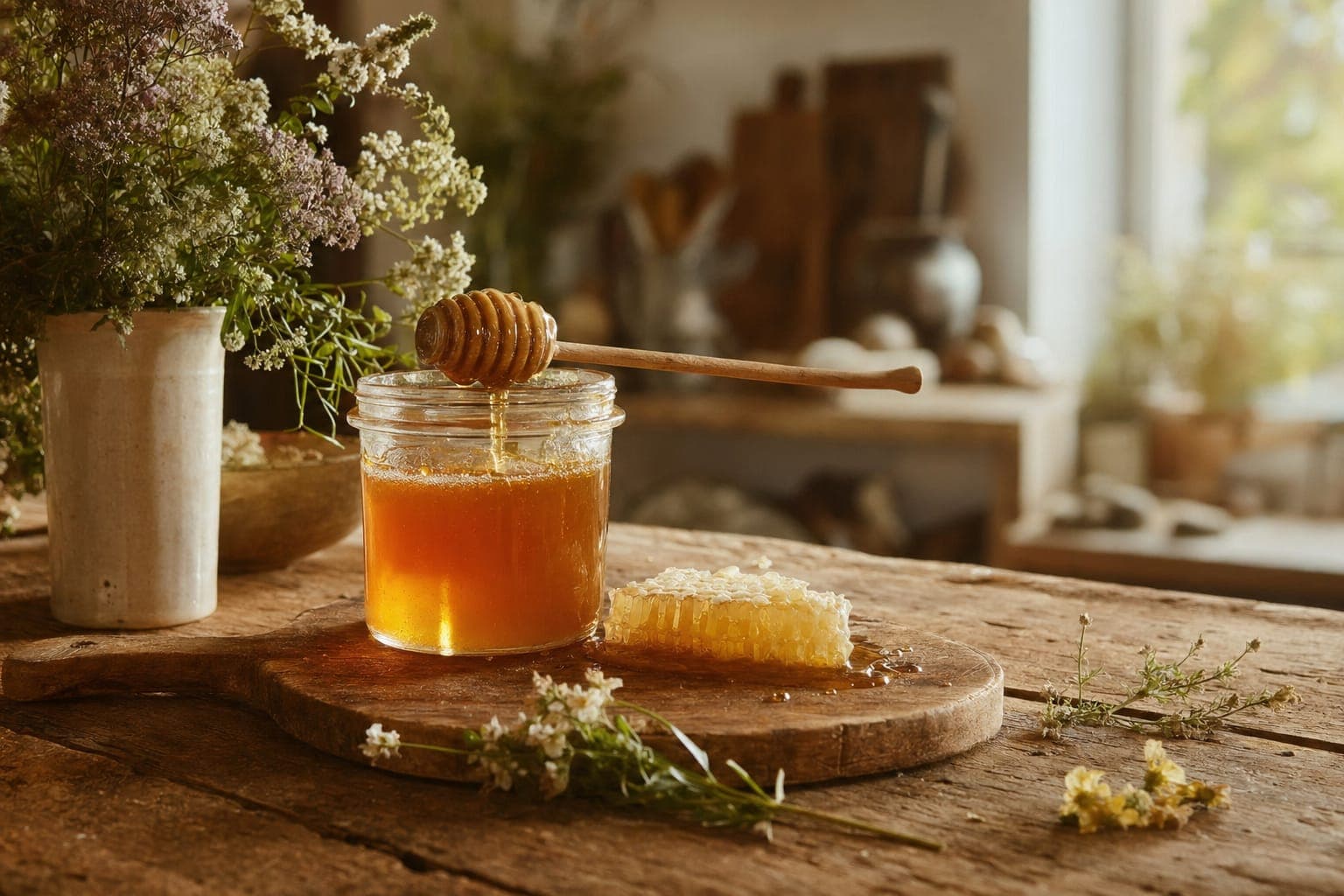
Supermarket honey and raw honey are made from the same starting material, bees and flowers. But what happens between the hive and your spoon is a completely different story.
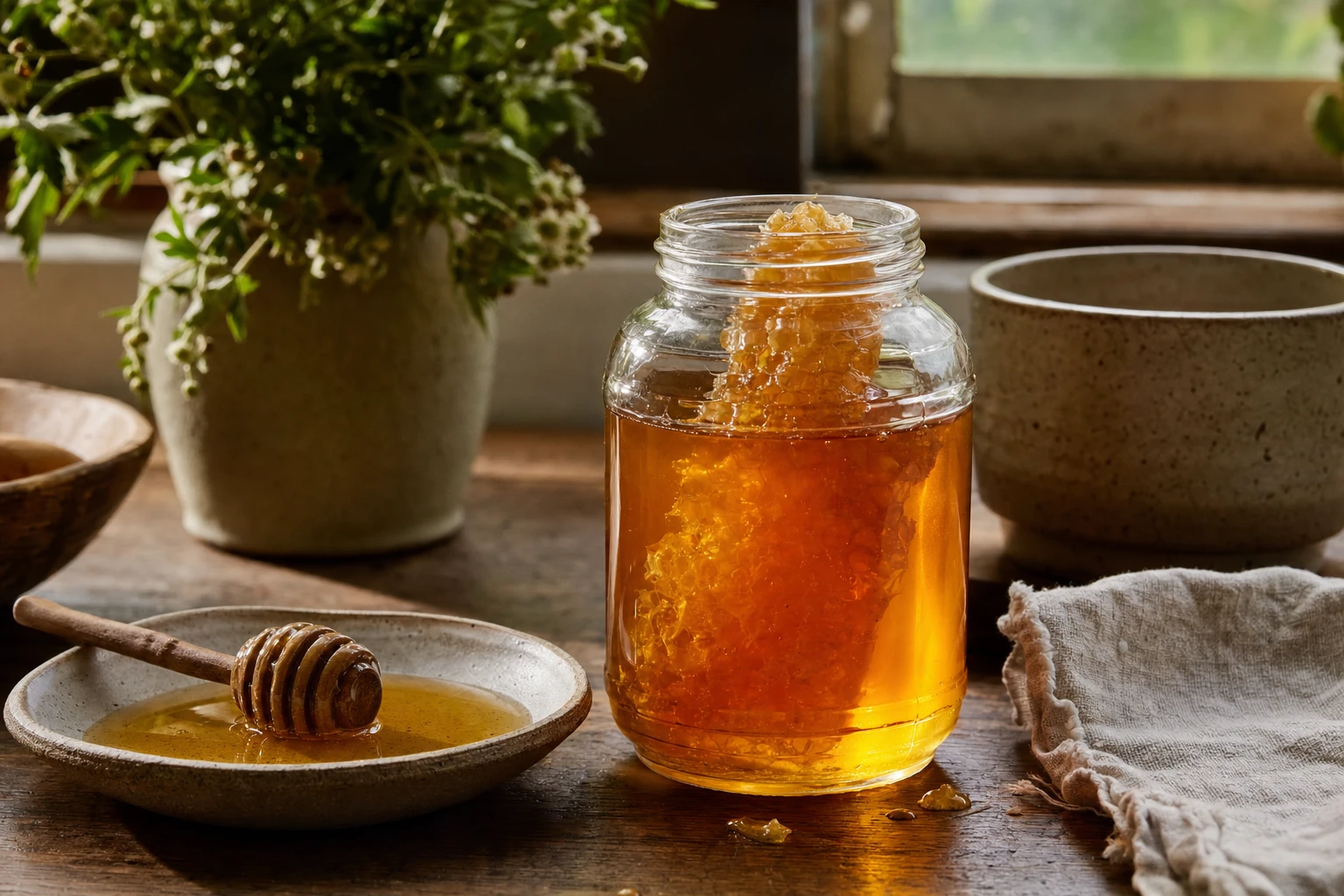
What happens during processing
Raw honey is strained but not heated. Bees produce it. You harvest it. You strain out the large debris (beeswax, dead bees, obvious solids). You bottle it. That's raw honey.
Supermarket honey is heated to 70 to 80 degrees Celsius, sometimes higher, to keep it liquid and prevent crystallisation (which consumers apparently find off-putting). It's filtered aggressively to remove pollen, propolis, and fine particles. This aggressive filtering removes much of what makes honey valuable. The heating destroys heat-sensitive compounds.
Some mass-market honey is cut with other syrups (rice syrup, corn syrup) and relabelled. Some is ultra-filtered to the point where it's almost unrecognisable as food. You can't easily tell by looking. The label says honey. It isn't, really.
The difference between raw honey and processed honey is similar to the difference between whole milk and ultra-processed milk powder. Technically made from the same starting material. Nutritionally, fundamentally different.
The enzyme story
Raw honey contains enzymes. The primary one is glucose oxidase, which breaks down glucose in the presence of oxygen and produces gluconic acid and hydrogen peroxide. That hydrogen peroxide is part of what gives honey its antimicrobial properties.1
Heat destroys glucose oxidase. Heating honey to even 40 degrees Celsius begins to degrade it. By the time commercial honey is heated to 70 degrees or higher, the enzyme is essentially gone. You're left with sweetness and some minerals. You've lost the enzymatic activity.2
Enzymes matter because they help you digest food. They're part of how your body extracts and utilises nutrients. Honey contains enzymes that support the digestion of honey itself. Once you remove those enzymes, honey becomes just another sugar source.
Raw honey contains living enzymes that support digestion and create antimicrobial compounds. Heated honey is just sugar.
Some raw honeys also contain small amounts of lactobacillus and other beneficial bacteria, though these aren't present in all raw honeys and levels vary. The enzyme content is the consistent differentiator.
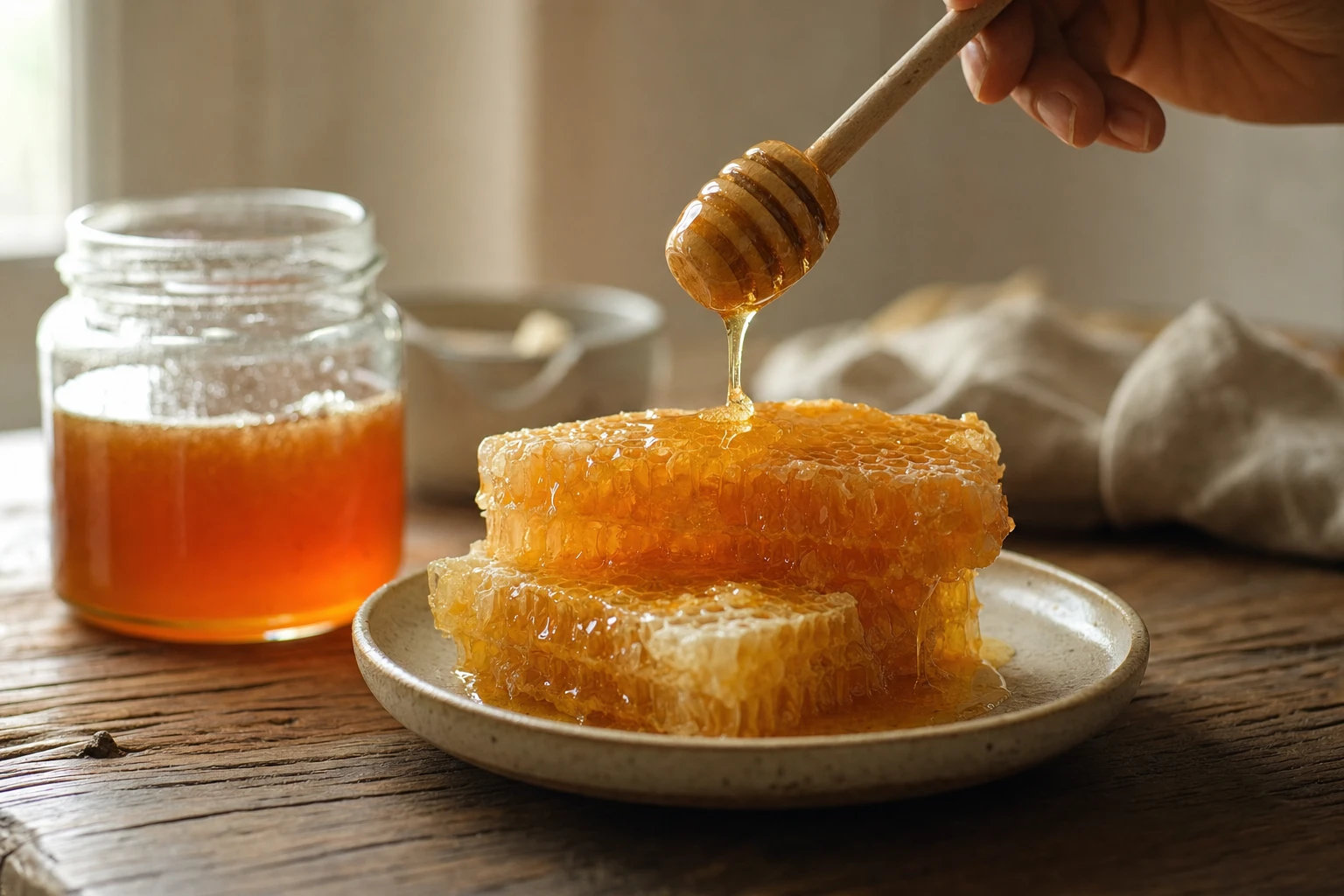
Antimicrobial and antioxidant compounds
Honey's antimicrobial properties come from multiple sources: the hydrogen peroxide produced by glucose oxidase, the high osmolarity (the saltiness of the solution that dehydrates bacteria), the low pH, and a range of polyphenolic compounds that vary depending on the flowers the bees visited.3
Polyphenols are plant compounds with antioxidant and anti-inflammatory properties. Different flowers produce different polyphenol profiles. Manuka honey (from the manuka tree in New Zealand) is particularly high in methylglyoxal, a compound with particularly strong antimicrobial effects.4 Buckwheat honey is high in other polyphenols. Raw local honey contains whatever polyphenols the local wildflowers produce.
Heat and aggressive filtering remove both the hydrogen peroxide-producing enzymes and many of the polyphenols. You're left with osmolarity and low pH, which are weak antimicrobial factors on their own. The honey becomes just a sugar source with mild antimicrobial properties from basic chemistry, not from the active compounds bees built into it.
In vitro studies show that raw honey has measurable antimicrobial activity against many pathogens. Processed honey shows minimal activity. This is why traditional medicine systems used raw honey as a wound dressing and immune support. The processing removes the compounds that made it useful.
Pollen, propolis, and bee products
Raw honey contains bee pollen (not allergenic flower pollen, but bee-processed pollen that's been deactivated). It contains propolis, a resinous compound bees collect from tree buds and use to seal the hive. Both are present in raw honey at low concentrations. Both are removed by aggressive filtering in commercial honey.
Bee pollen contains amino acids, B vitamins, and minerals. It's nutrient-dense per gram. Raw honey from bees that foraged heavily on specific flowers will have higher pollen content and therefore slightly higher nutrient density.
Propolis is antimicrobial and anti-inflammatory in its own right. It's been used in traditional medicine for centuries. It's active in raw honey and removed in processed honey.
These components are present in small amounts. They don't make honey into a superfood. But they're present in raw honey and absent from processed honey. This is why even a modest amount of raw honey (one to two tablespoons daily) might offer biological effects that processed honey won't.
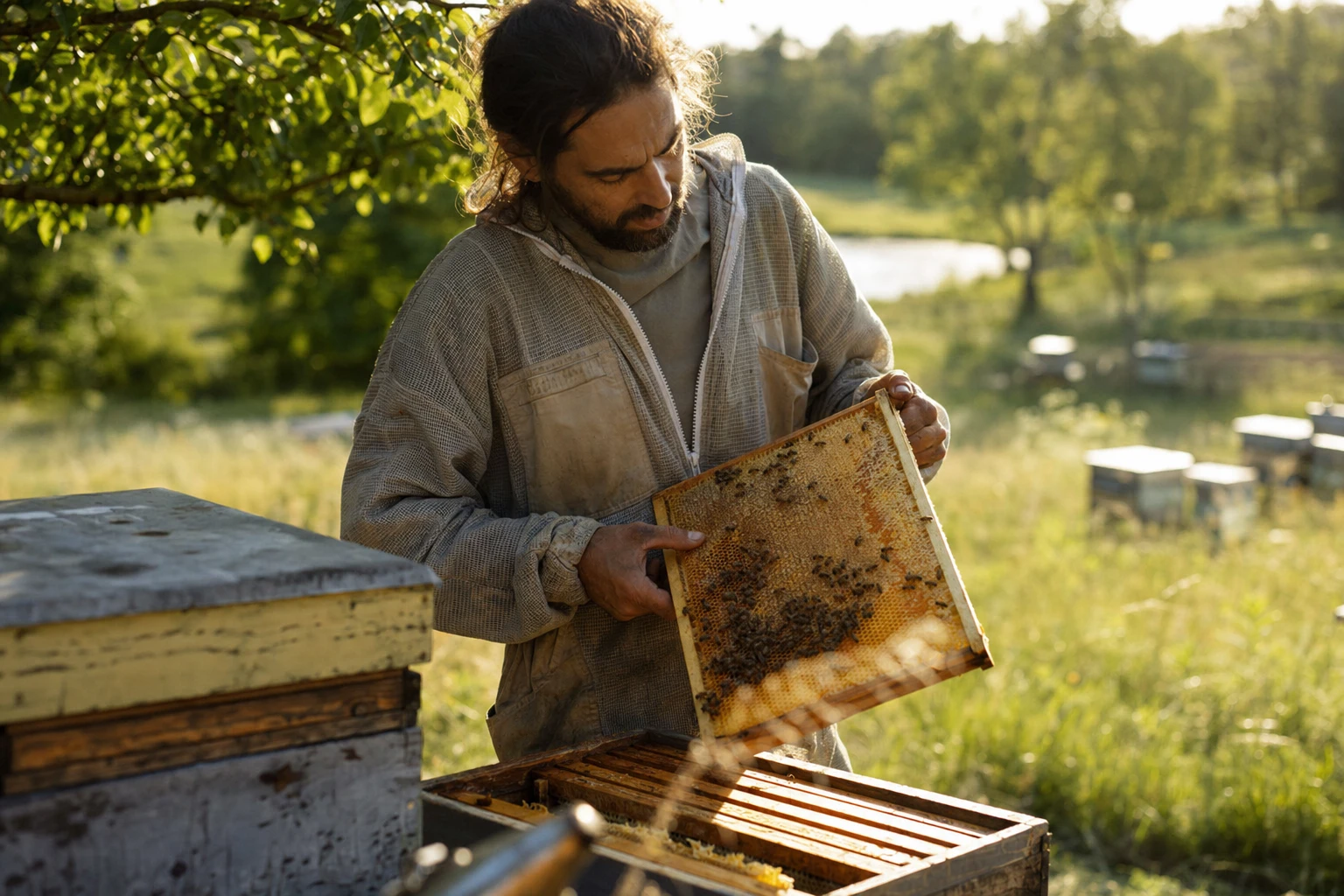
Crystallisation and storage
Raw honey crystallises. This is normal. It means the glucose has separated from the liquid and formed crystals. It doesn't mean the honey has gone bad. It means the processing step that kept supermarket honey liquid (heat and ultra-filtering) wasn't applied.
Crystallised honey is less convenient to use. You warm it gently to liquefy it. But the warming should be gentle (below 40 degrees ideally, certainly below 50 degrees) to preserve the enzymes. A warm water bath works. A microwave works if you're careful. A stovetop doesn't.
Raw honey stores indefinitely if kept in an airtight container away from direct sunlight and heat. The antimicrobial properties mean it doesn't spoil. Honey found in Egyptian tombs thousands of years old was still edible. This is partly because of the antimicrobial compounds and partly because of the low water content.
Get ingredient guides like this, free
Two short reads a week on the ingredients that matter and how to actually use them.
By signing up you agree to receive emails from us. No spam, unsubscribe anytime.
How to source and store raw honey
Look for honey labelled "raw and unfiltered" or "raw and unpasteurised." If the label says "pure honey" without mentioning raw or unfiltered, it's been processed. If it's crystal-clear and has been stored for months, it's likely been heated or ultra-filtered. Real raw honey will eventually crystallise.
Local raw honey from a beekeeper you can talk to is ideal. You know the source. You know it hasn't been heated or blended. Local honey also contains pollen from local flowers, which some people theorise helps with local seasonal allergies (the evidence is mixed, but the hypothesis is reasonable).
Quality raw honey costs more than supermarket honey. A kilogram of raw local honey might cost two to three times the price of a bottle of supermarket honey. You're paying for the fact that it hasn't been processed to death and that it actually contains the antimicrobial and enzymatic compounds that make honey useful.
Real raw honey crystallises, costs more, and tastes different because it still contains the active compounds bees built into it.
Store raw honey in a cool, dark place or in the refrigerator. Some people store it at room temperature in an opaque container. The key is consistent, cool temperature and protection from light. Avoid warming it repeatedly (warm it once to use it, not multiple times).
Honey and blood glucose
The concern people often have is that honey will spike blood glucose. Raw honey has a glycaemic index (GI) of around 58, which is moderate. Processed sugar has a GI of around 65. Whole-grain bread has a GI around 50 to 60. Raw honey is not uniquely glucose-spiking. A tablespoon (about 20 grams) raises blood glucose modestly compared to other foods.5
Additionally, the glucose in honey is paired with fructose in roughly equal amounts.5 Fructose has a much lower glycaemic index than glucose. The combination moderates the overall glucose impact. You're not getting a pure glucose hit. You're getting mixed sugars that your body metabolises through different pathways.
For people with type 2 diabetes or genuine glucose intolerance, even moderate honey is worth monitoring. For people with healthy glucose regulation, a tablespoon or two of honey daily won't meaningfully impact blood glucose control. The antimicrobial and enzymatic compounds offer enough benefit to justify the modest glucose load.
How much and how often
A tablespoon of raw honey daily provides enzyme content, antimicrobial compounds, and minerals without a huge glucose load. Two tablespoons is reasonable if you're using it as your primary sweetener. More than that and you're just adding calories.
In food preparation, use raw honey in dishes that won't be heated (drizzled on porridge, stirred into water, blended into smoothies, used as a glaze added after cooking). If you're baking with it, the heat will destroy the enzymes anyway, so supermarket honey would work equally well (though raw honey will still have some polyphenols).
Some people take a spoonful of raw honey before sleep. The glucose supports sleep neurotransmitter production. The antimicrobial compounds might support immunity overnight. The evidence is anecdotal, but the mechanism is plausible and the harm is minimal.


1 of 9
Daily blend
100,000+ thriving families4.9 on Trustpilot
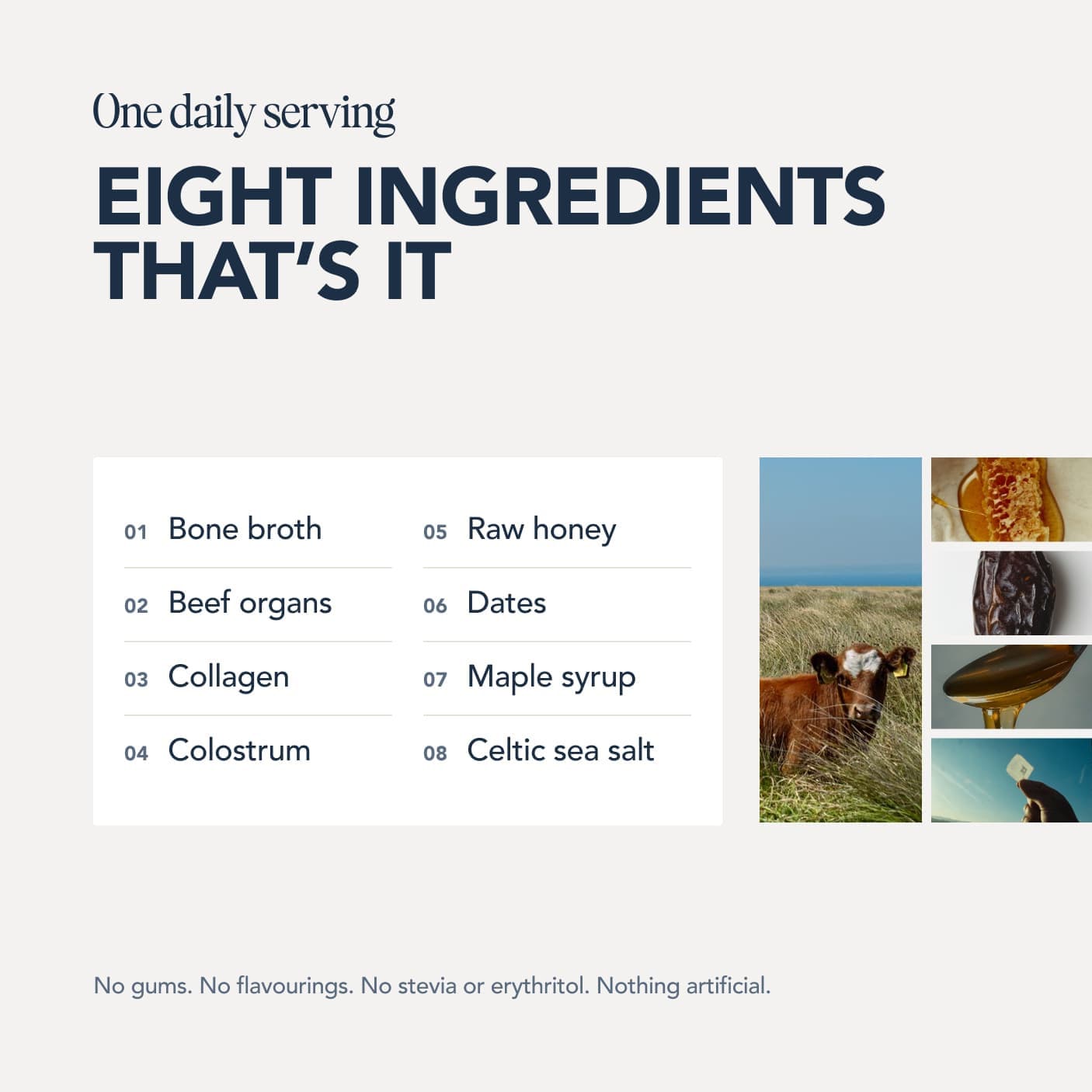
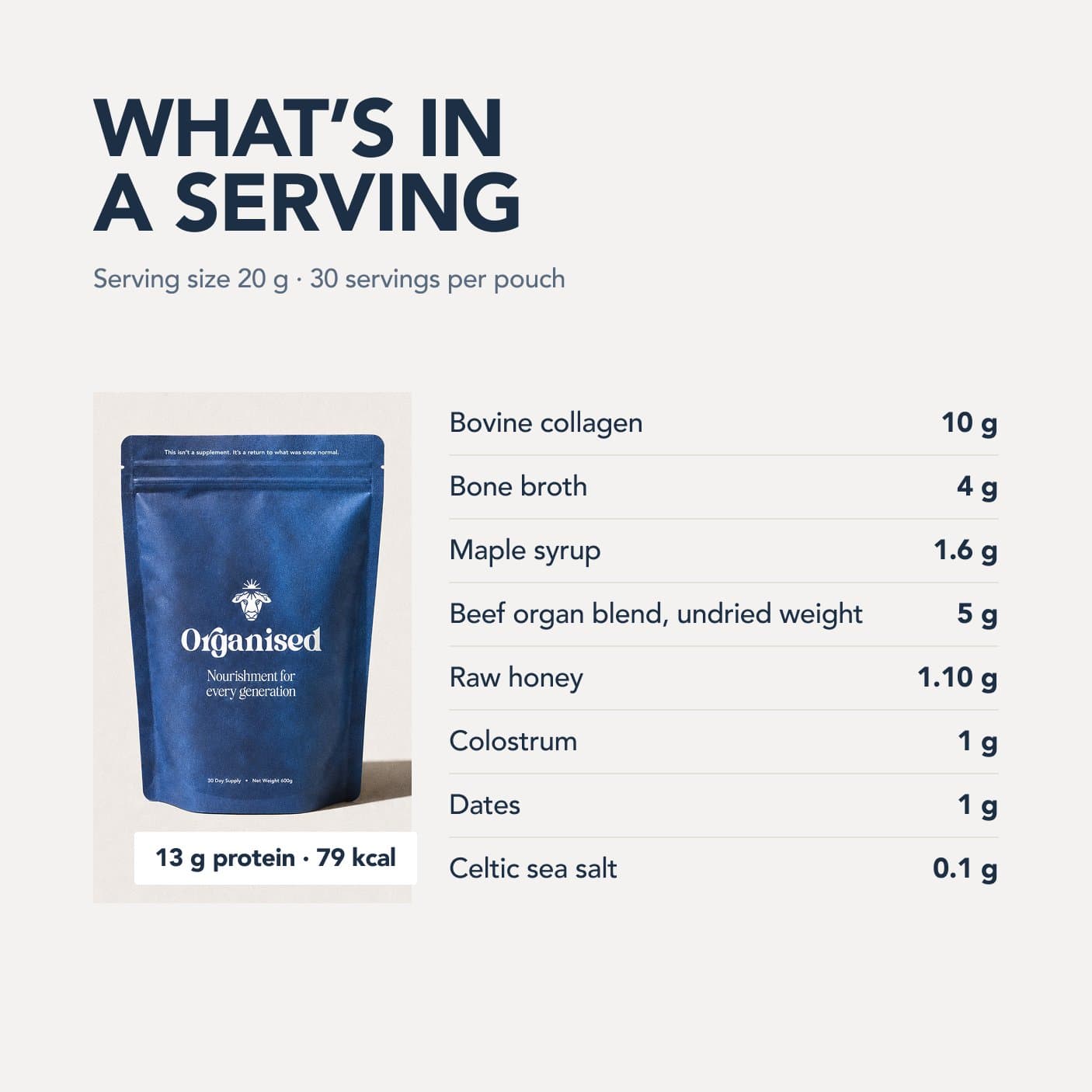
Eight real ingredients built around grass-fed beef organs, collagen and colostrum. Nothing synthetic added.
Free with your first order, worth £38. Plus £10 off the pouch with a subscription.

Free UK shipping · Made in England · 100 day money back guarantee on your first pouch · Skip, pause or cancel anytime
The bottom line
Raw honey and processed honey are functionally different foods. Raw honey contains enzymes, living microorganisms, and antimicrobial compounds that create a genuinely functional food. Processed honey is sweetness and some minerals. The difference isn't minor. It's the difference between a supplement and a condiment. If you're using honey at all, raw and unfiltered is the version that actually does something. Cost more, crystallises, requires slightly more effort. Worth the trade-off.
References
Every source below was checked on 27 August 2026. Each PubMed, PMC and DOI identifier was resolved against NCBI or Crossref, and what it opens is printed under the citation, so you can see the link goes where the citation says without leaving the page. Where a citation and its identifier disagreed, the citation was corrected to the record or the reference was deleted along with the sentence marker that pointed at it, and where the resolved paper turned out not to support the sentence, the sentence was cut back to what it does support. Borrowed authority is worse than none, because it looks like rigour.
- Bucekova M, Valachova I, Kohutova L, Prochazka E, Klaudiny J, Majtan J. Honeybee glucose oxidase—its expression in honeybee workers and comparative analyses of its content and H2O2-mediated antibacterial activity in natural honeys. Naturwissenschaften. 2014;101(8):661-670. https://pubmed.ncbi.nlm.nih.gov/24969731/Checked 27 August 2026: PMID 24969731 opens Bucekova M, Valachova I, Kohutova L et al, Honeybee glucose oxidase--its expression in honeybee workers and comparative analyses of its content and H2O2-mediated antibacterial activity in natural honeys. Naturwissenschaften 2014;101(8):661-70.
- Sahin H, Kolayli S, Beykaya M. Investigation of variations of invertase and glucose oxidase degrees against heating and timing options in raw honeys. Journal of Chemistry. 2020;2020:5398062. https://onlinelibrary.wiley.com/doi/10.1155/2020/5398062Checked 27 August 2026: doi:10.1155/2020/5398062 opens Sahin H, Kolayli S, Beykaya M, Investigation of Variations of Invertase and Glucose Oxidase Degrees against Heating and Timing Options in Raw Honeys Journal of Chemistry 2020;2020:1-7.
- Albaridi NA. Antibacterial potency of honey. International Journal of Microbiology. 2019;2019:2464507. https://onlinelibrary.wiley.com/doi/10.1155/2019/2464507 See also Mandal MD, Mandal S. Honey: its medicinal property and antibacterial activity. Asian Pacific Journal of Tropical Biomedicine. 2011;1(2):154-160. https://pmc.ncbi.nlm.nih.gov/articles/PMC3609166/Checked 27 August 2026: PMC3609166 opens Mandal MD, Mandal S, Honey: its medicinal property and antibacterial activity. Asian Pac J Trop Biomed 2011;1(2):154-60. PubMed indexes it as: Review. doi:10.1155/2019/2464507 opens Albaridi NA, Antibacterial Potency of Honey International Journal of Microbiology 2019;2019:1-10.The authors' own declaration, from the record: Conflict of interest statement: We declare that we have no conflict of interest.
- Mavric E, Wittmann S, Barth G, Henle T. Identification and quantification of methylglyoxal as the dominant antibacterial constituent of Manuka (Leptospermum scoparium) honeys from New Zealand. Molecular Nutrition & Food Research. 2008;52(4):483-489. https://onlinelibrary.wiley.com/doi/abs/10.1002/mnfr.200700282Checked 27 August 2026: doi:10.1002/mnfr.200700282 opens Mavric E, Wittmann S, Barth G et al, Identification and quantification of methylglyoxal as the dominant antibacterial constituent of Manuka ( <i>Leptospermum scoparium)</i> honeys from New Zealand Molecular Nutrition & Food Research 2008;52(4):483-489.
- Bogdanov S, Jurendic T, Sieber R, Gallmann P. Honey for nutrition and health: a review. Journal of the American College of Nutrition. 2008;27(6):677-689. https://pubmed.ncbi.nlm.nih.gov/19155427/Checked 27 August 2026: PMID 19155427 opens Bogdanov S, Jurendic T, Sieber R et al, Honey for nutrition and health: a review. J Am Coll Nutr 2008;27(6):677-89. PubMed indexes it as: Review.
Who wrote and reviewed this guide
Niall Kiddle
Author · Founder, Organised
Niall is the founder of Organised. He started the company in 2024 after fixing his own health the slow way: in 2022 he swapped a cupboard of synthetic supplements for real food, raw milk, organ meats, bone broth and honey, and felt the difference within months.
Areas of expertise: Ancestral nutrition, Organ meats, Whole-food supplementation, Gut health, Regenerative sourcing
Read Niall's full profile
Pedro Rodrigues
Reviewer · Agronomist (farming and sourcing only)
Pedro is the agronomist Organised works with on farming and sourcing. His job on the guides is to keep the science honest: he reviews what we publish about soil health, regenerative agriculture, grazing and the way food is actually produced.
Areas of expertise: Regenerative agriculture, Agronomy, Soil health, Grass-fed farming, Food sourcing
Reviewed this guide on
Read Pedro's full profileMore on raw honey
View allBrowse the guides library
All guidesKeep reading

Ingredients
Collagen and Hair Growth: Separating Fact from Hype
Does collagen really help hair growth? We unpack what the research shows about collagen, hair thickness and hair loss, so you can decide if it is worth it.
Ingredients
The Complete Guide to Beef Organ Supplements
Beef organ supplements explained from the composition data: what each organ carries, how they compare to muscle meat, and the vitamin A ceiling that limits the dose.
Ingredients
Are Beef Organs Safe? Everything You Need to Know
Wondering if beef organs are safe to eat? See what modern lab testing shows about heavy metals and toxins in liver, so you can choose sources with confidence.
Real food, made effortless
Try the organ blendA few ways to use it
All recipes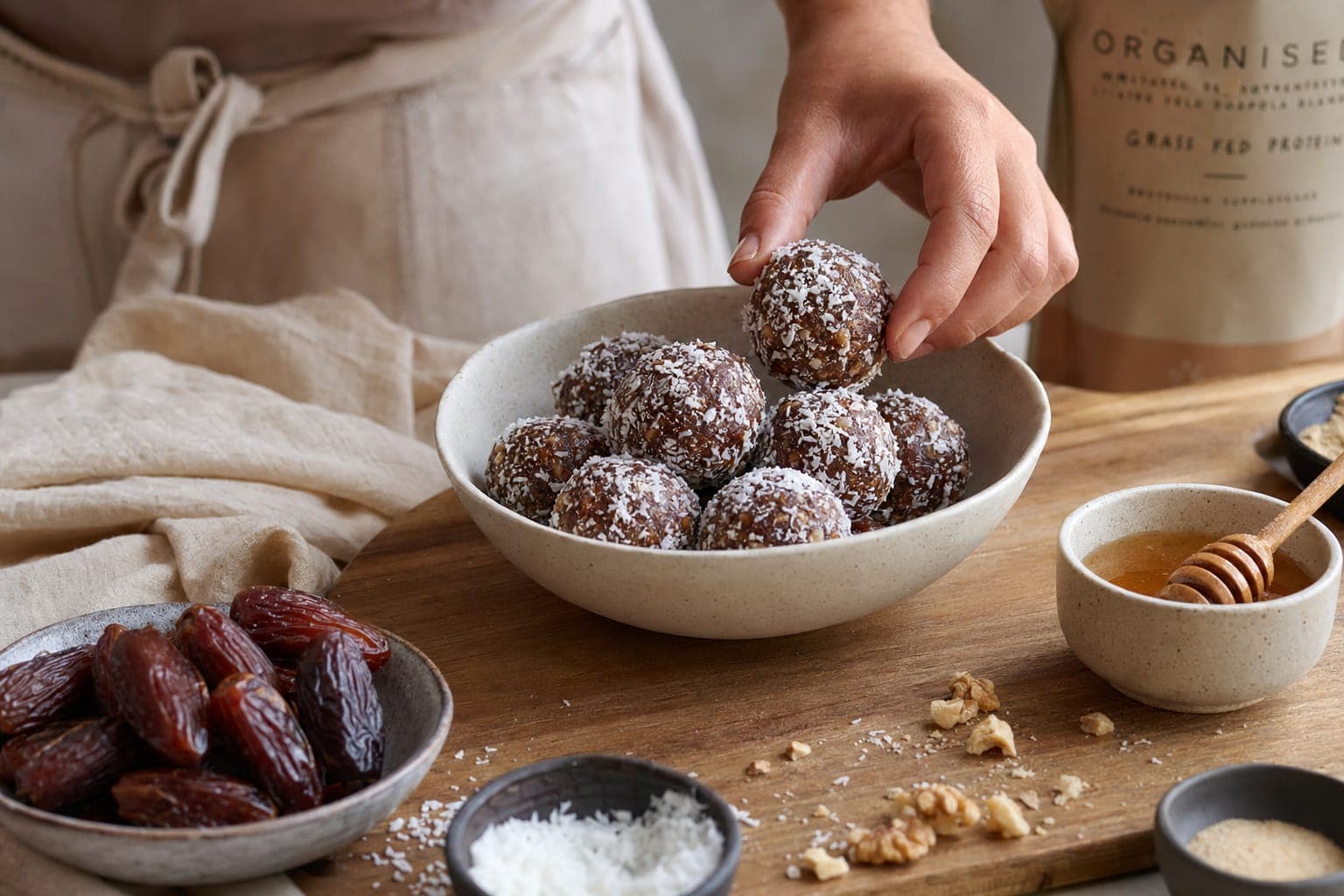
Energy Balls with Organised, Dates and Raw Honey
Make no-bake energy balls with Organised, dates, and raw honey. Perfect lunch box, pre-workout, or on-the-go snack. Simple recipe.
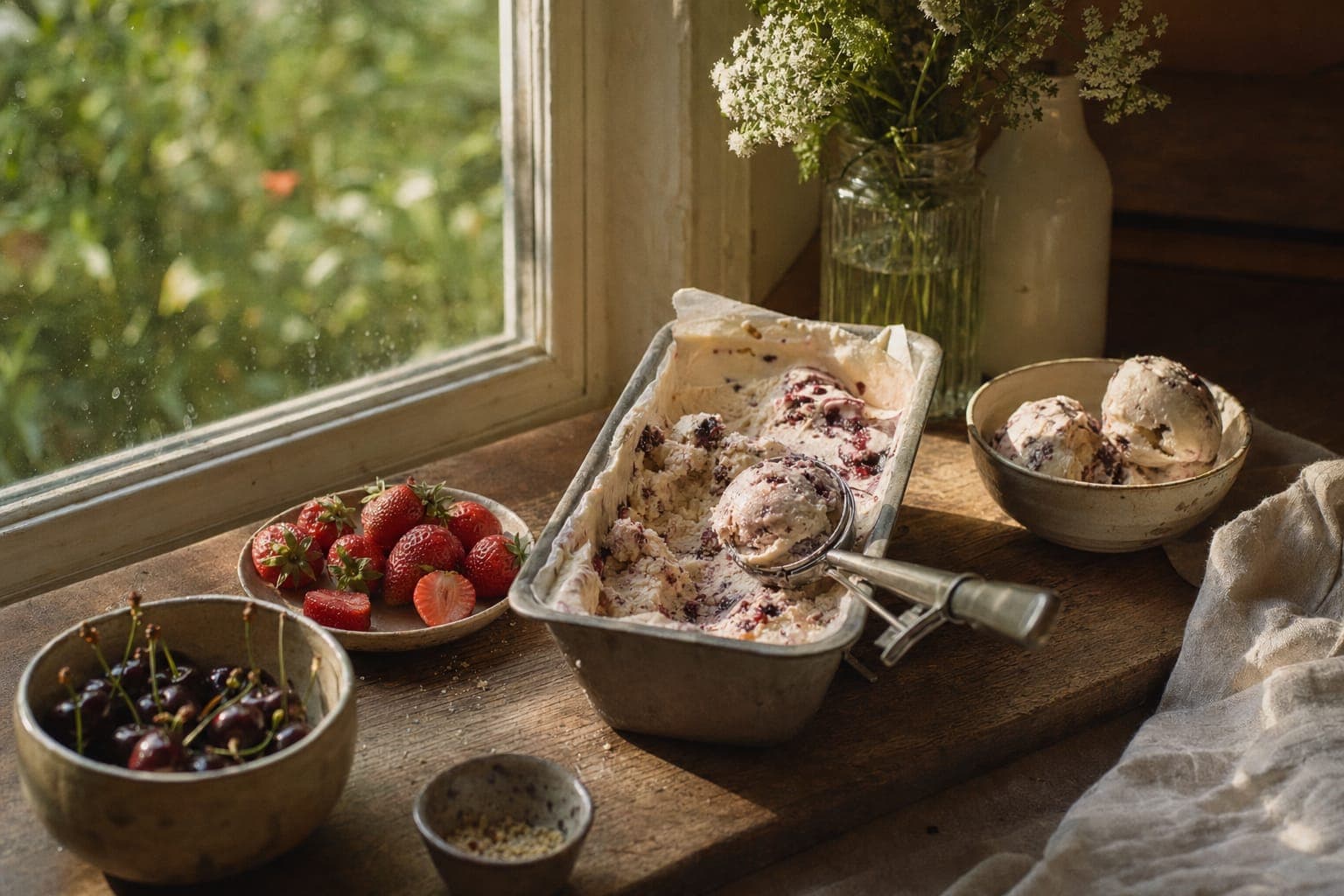
Raw Milk Ice Cream with Organised
Make raw milk ice cream at home with Organised for a seasonal, nutrient-dense treat. Three simple flavours to try whenever the craving strikes.

Organised Protein Pancakes: A Weekend Favourite
A high-protein pancake recipe using beef protein, eggs, and raw milk. Cooked in cast iron, naturally sweetened with banana and honey. Real food breakfast.


 Join over 100,000+ members
Build a better food system with us
The Organised community is thousands of people choosing real food and backing the farmers who grow it, all of us trying to leave the world a little better than we found it. If that is what you care about too, you belong here.