Building Strong Bones in Childhood: Beyond Just Milk
You've been told that milk builds strong bones. Your child drinks milk. But their bones are still weak and they fracture easily. You're missing three nutrients that milk doesn't provide. Without them, all the milk in the world won't build a strong skeleton.
By Niall Kiddle, Founder, Organised

Reviewed by Pedro Rodrigues, Agronomist (farming and sourcing only) ·
6 min read · Published · Updated · 4 cited sources
Makers of the Organised Daily blend, a grass-fed beef organ supplement from regenerative UK farms
Bone health in childhood determines bone health in adulthood. The skeleton you build from birth to age 20 is the skeleton you're stuck with for life. Getting this right now means fewer fractures, better sports performance, and lower risk of osteoporosis decades from now.
Why milk alone is not enough
Milk provides calcium and some protein. This is useful. But calcium without vitamin K2 and vitamin D is like a brick without mortar. It sits there inert. The body cannot properly incorporate it into the bone matrix.
Milk does not provide vitamin K2, which activates the proteins that organise calcium into the crystalline structure of bone. Milk provides some vitamin D, but not consistently and not reliably. Milk provides magnesium, but in amounts insufficient for optimal bone development.
Milk is a partial solution. On its own, it builds weaker bones than a diet that includes the complete spectrum of bone-building nutrients.
The research on childhood bone development is clear: calcium alone does not predict bone strength. Bone strength is predicted by the presence of vitamin K2, adequate vitamin D, sufficient magnesium, adequate protein, and regular weight-bearing movement. Milk provides some of these. You need to provide the rest.
Vitamin K2 as the forgotten nutrient
Vitamin K (including the menaquinone forms found in fermented foods, dairy fat and animal products) is required to gamma-carboxylate osteocalcin and matrix Gla protein, two proteins involved in bone mineralisation and inhibition of soft-tissue calcification.1
A child deficient in vitamin K2 can have adequate calcium intake and still develop weak bones. A child with sufficient vitamin K2 and less calcium can develop stronger bones. The nutrient hierarchy matters more than the absolute calcium dose.
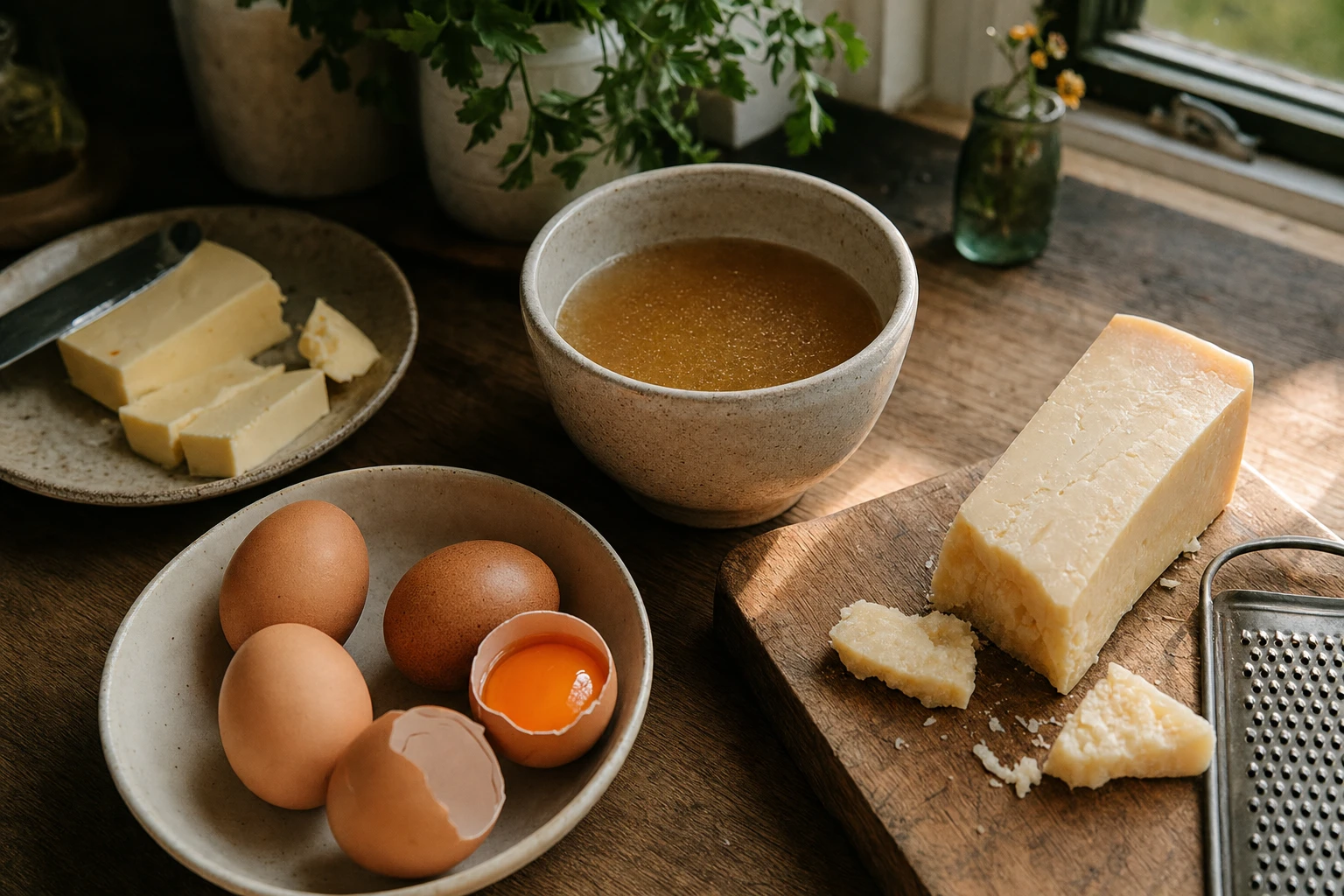
Sources of vitamin K2 include grass-fed butter, full-fat cheese from grass-fed cows, egg yolks from pastured hens, and natto (fermented soybean). Of these, egg yolks and grass-fed butter are the easiest to include in a child's diet.
- Egg yolks: The yolk contains K2, choline, and lutein. One to two eggs per day provides a meaningful K2 dose.
- Grass-fed butter: On toast, on vegetables, or in cooking. Visible fat carries K2.
- Full-fat cheese: From grass-fed cows. Cheddar, Gruyere, and other aged cheeses are higher in K2.
- Natto: If your child will eat it. An extreme K2 source, but requires acquired taste.
An egg yolk per day is one of the single best investments in a child's bone health. The nutrients are perfectly packaged for development.
Vitamin K2 deficiency is common in children eating conventional diets. The correction is simple: eggs and grass-fed butter become dietary staples, not occasional foods.
Vitamin D and magnesium work as a team
Vitamin D regulates active intestinal calcium absorption; magnesium is a cofactor in more than 300 enzyme systems and contributes to bone mineralisation. Both are required for healthy childhood bone development.23
Vitamin D comes from sun exposure, fatty fish, egg yolks, and supplementation. In the UK, sun exposure in winter is insufficient. A child spending most of their time indoors is almost certainly deficient. Vitamin D3 supplementation of 1,000 to 2,000 IU per day is reasonable for most children, though some will need more depending on sun exposure and baseline status.
Magnesium comes from nuts, seeds, whole grains, leafy greens, and particularly from dark chocolate. A child eating a varied whole-food diet usually gets adequate magnesium. But a child eating processed foods is almost certainly deficient.
Vitamin D enables calcium absorption. Magnesium enables calcium incorporation into bone. You need both, and you need them in balance.
The practical approach: ensure sun exposure in summer and spring, supplement vitamin D in winter, and prioritise magnesium-rich foods year-round. A square of dark chocolate at the end of dinner serves both the magnesium need and the morale of a young child.
Protein scaffolding for bone matrix
Bone is not just mineral. It's a composite material: mineral provides hardness, collagen provides flexibility. Collagen is a protein, and your child needs adequate protein to build it.
The Recommended Dietary Allowance for protein is 19 g/day for children aged 4–8 and 34 g/day for children aged 9–13.4
Sources include meat, fish, eggs, dairy, legumes, and nuts. A child eating two eggs for breakfast, a portion of chicken or fish for lunch, and meat or fish for dinner easily meets these requirements. A child eating cereal, sandwiches, and pasta falls short.
A weak bone in a child eating low protein is not calcium deficiency. It's structural insufficiency. The matrix itself is weak.
Protein should be visible at every meal. Not hidden in sauces or processed foods. Real protein from recognisable sources: eggs, meat, fish, cheese, milk.
Get life-stage nutrition guides, free
Two short reads a week on eating well through pregnancy, childhood and older age.
By signing up you agree to receive emails from us. No spam, unsubscribe anytime.
Weight-bearing movement shapes bone
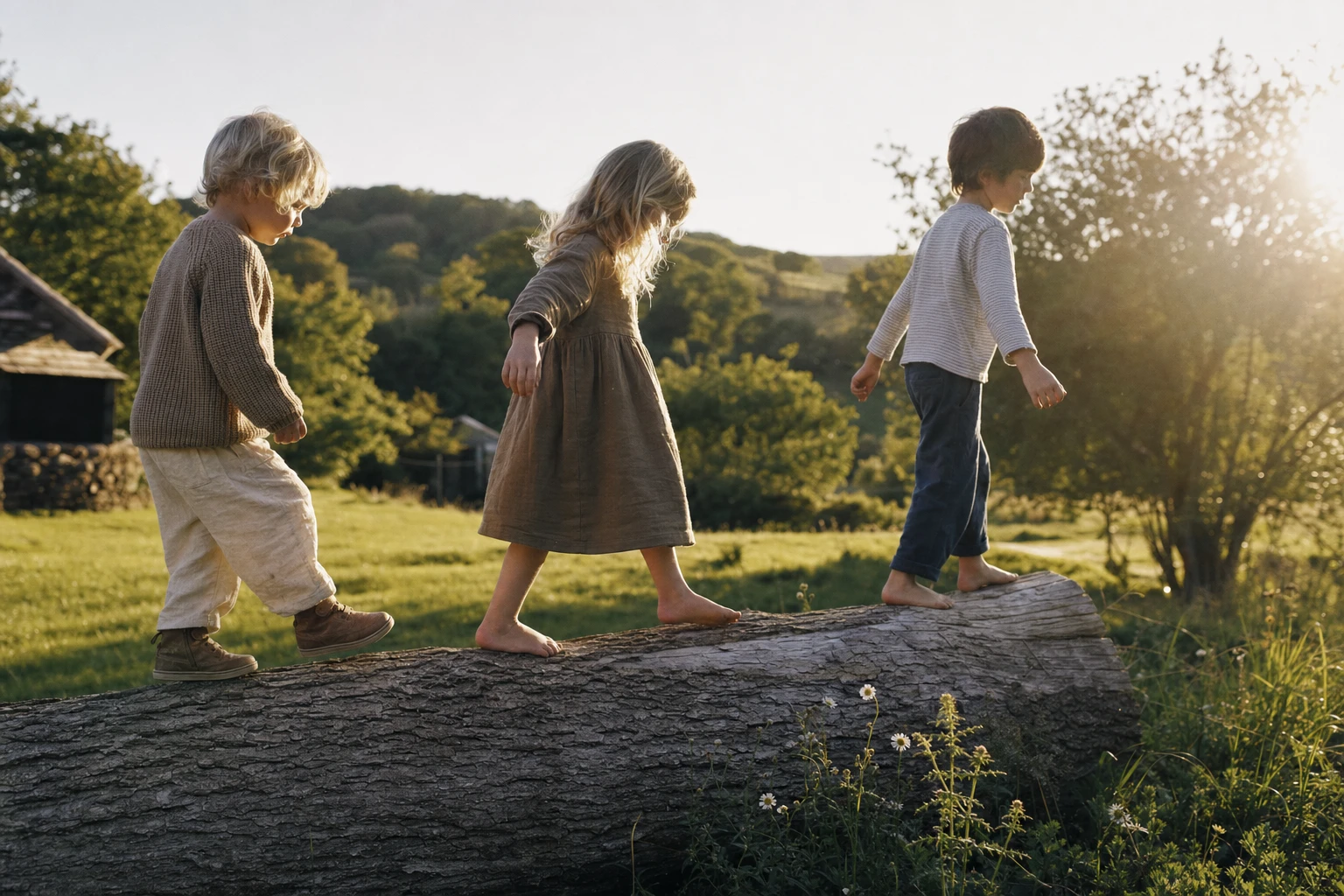
Bone responds to physical stress by becoming stronger. When a child runs, jumps, or climbs, mechanical stress triggers the body to mineralise bone and increase bone density. A sedentary child, even with perfect nutrition, develops weaker bones than an active child with adequate nutrition.
The ideal childhood activity is weight-bearing and impact: running, jumping, climbing, sports. Swimming is excellent for overall health but does not provide the impact stress that shapes bone density. A child who swims but does not run is missing the stimulus for bone strength.
The research is clear: children who play outdoors, run around, and engage in impact activity develop measurably stronger bones than sedentary children. This is separate from nutrition. Together, they're powerful.
Bone strength is built through the combination of good nutrition and regular impact activity. You cannot substitute one for the other.
Get your child running. Not competitive sports if they don't want them. Just regular unstructured play that involves running and jumping. Skateboarding, climbing, skipping rope, football, gymnastics. Something that involves impact on the skeleton multiple times per week.
1 of 9
Daily blend
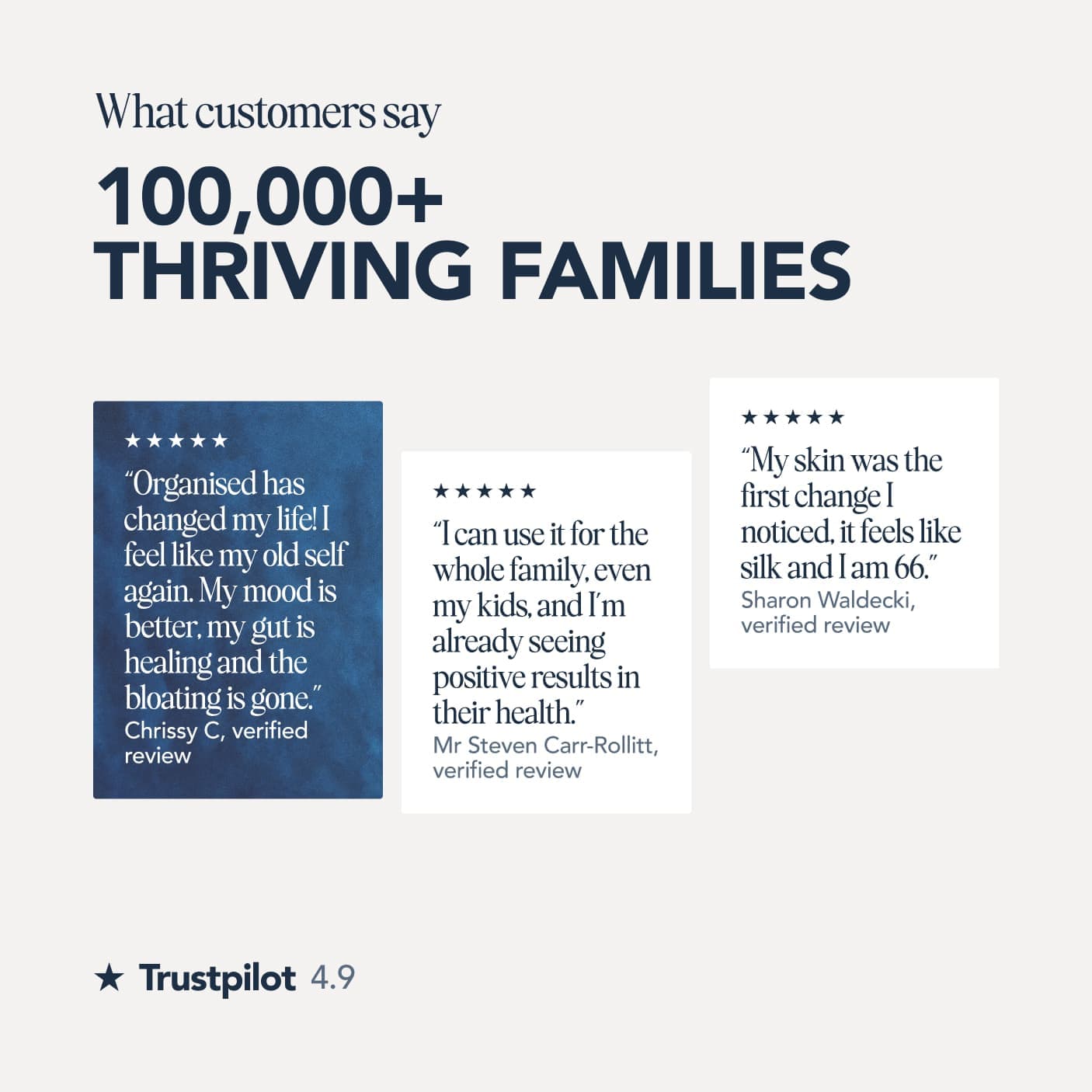
100,000+ thriving families4.9 on Trustpilot
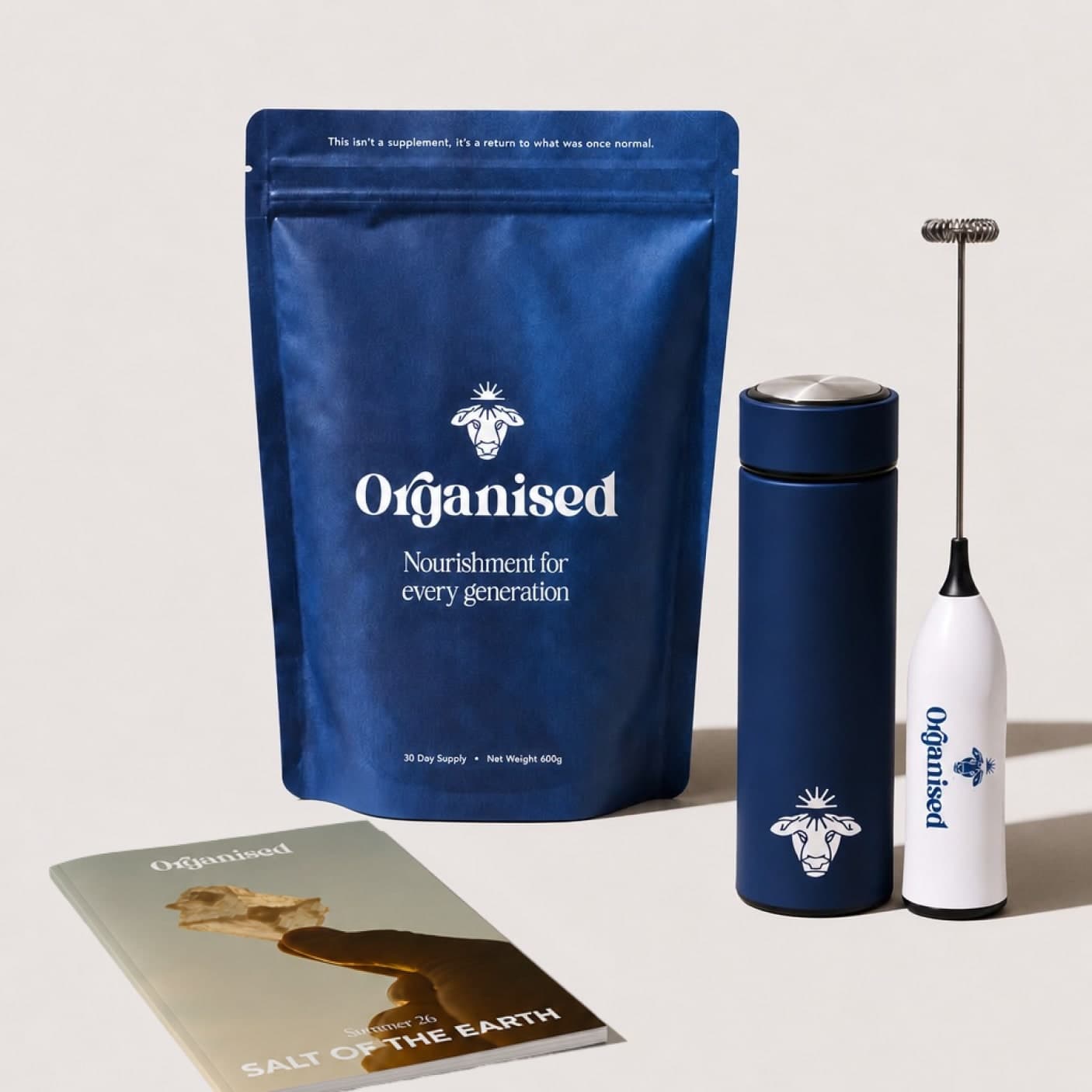
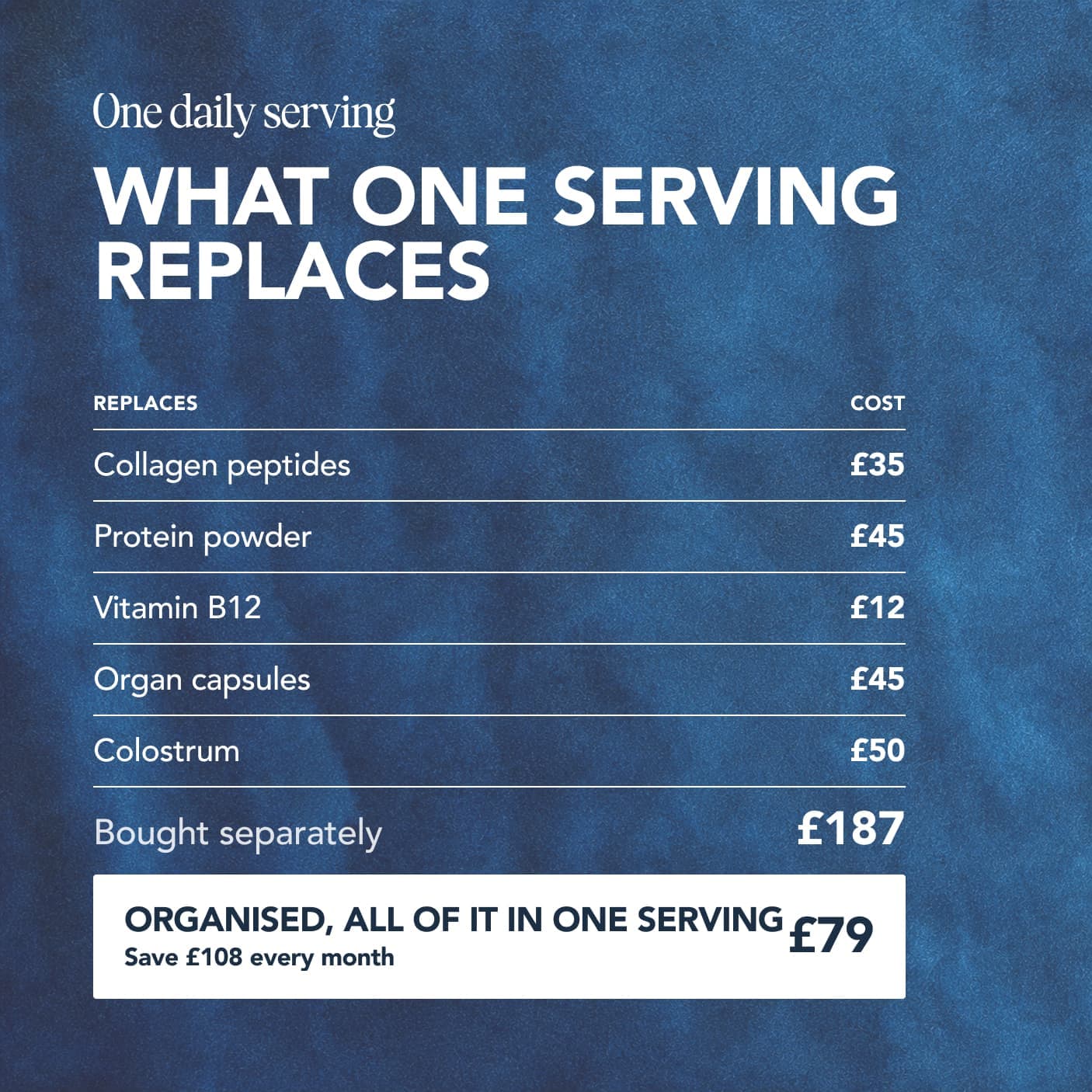
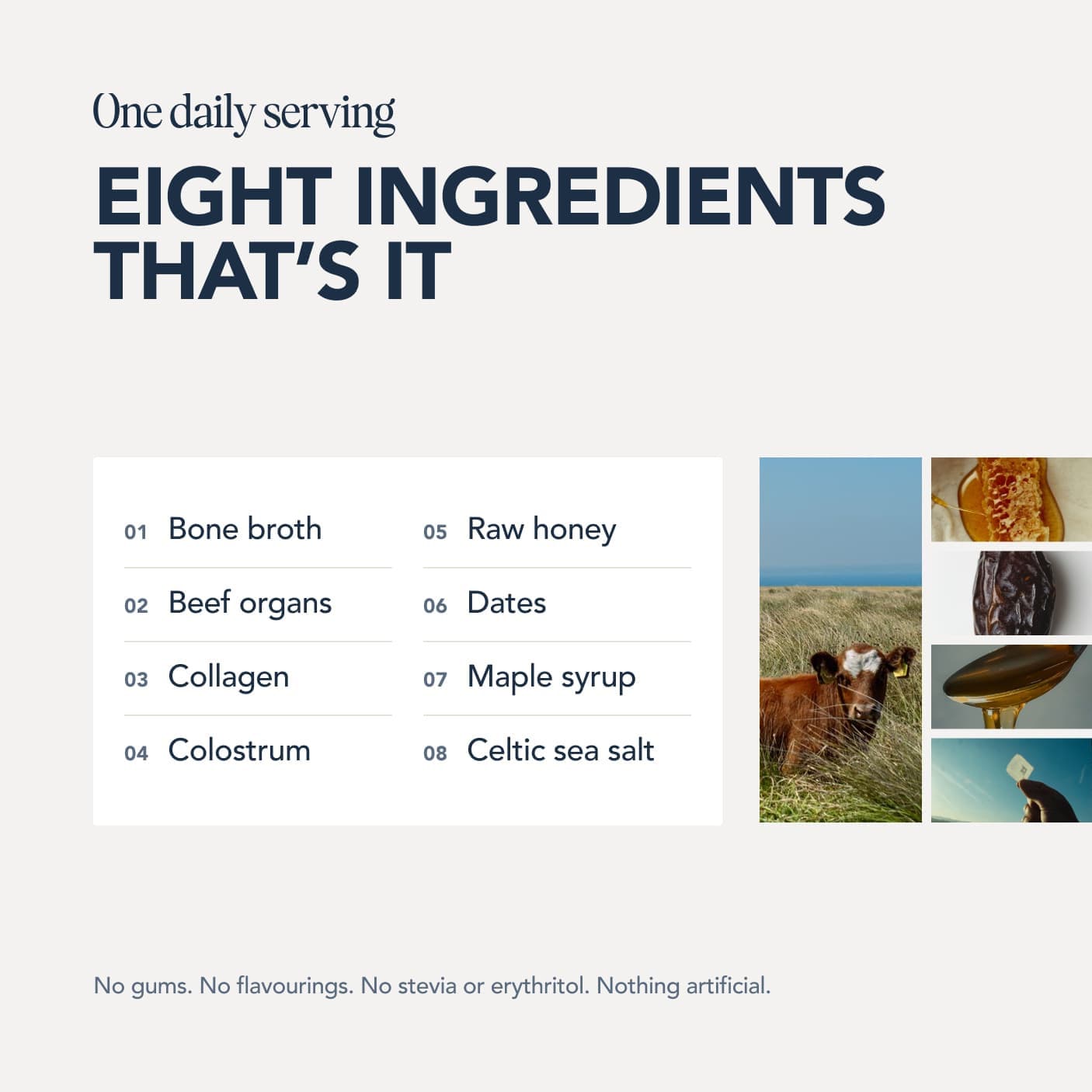
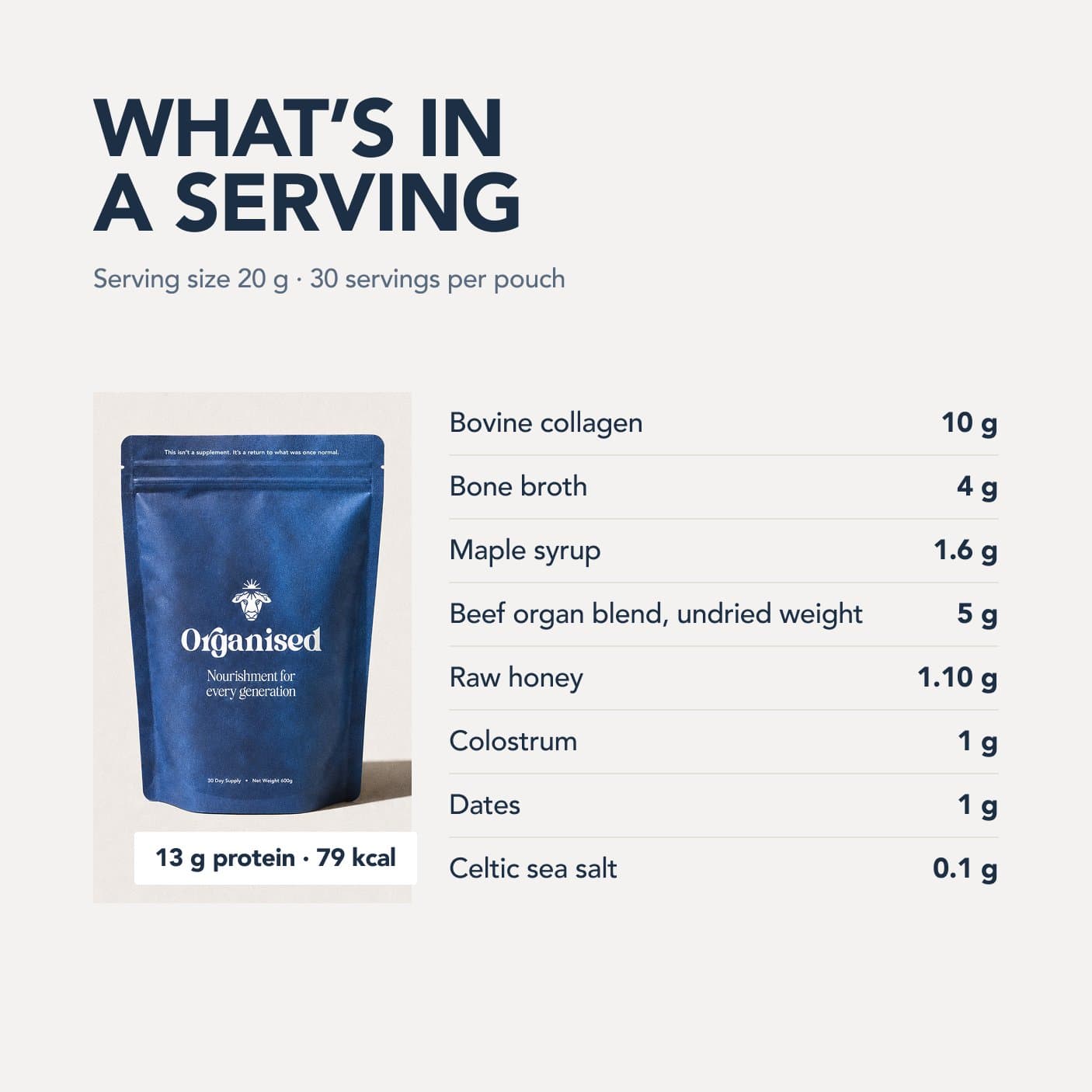
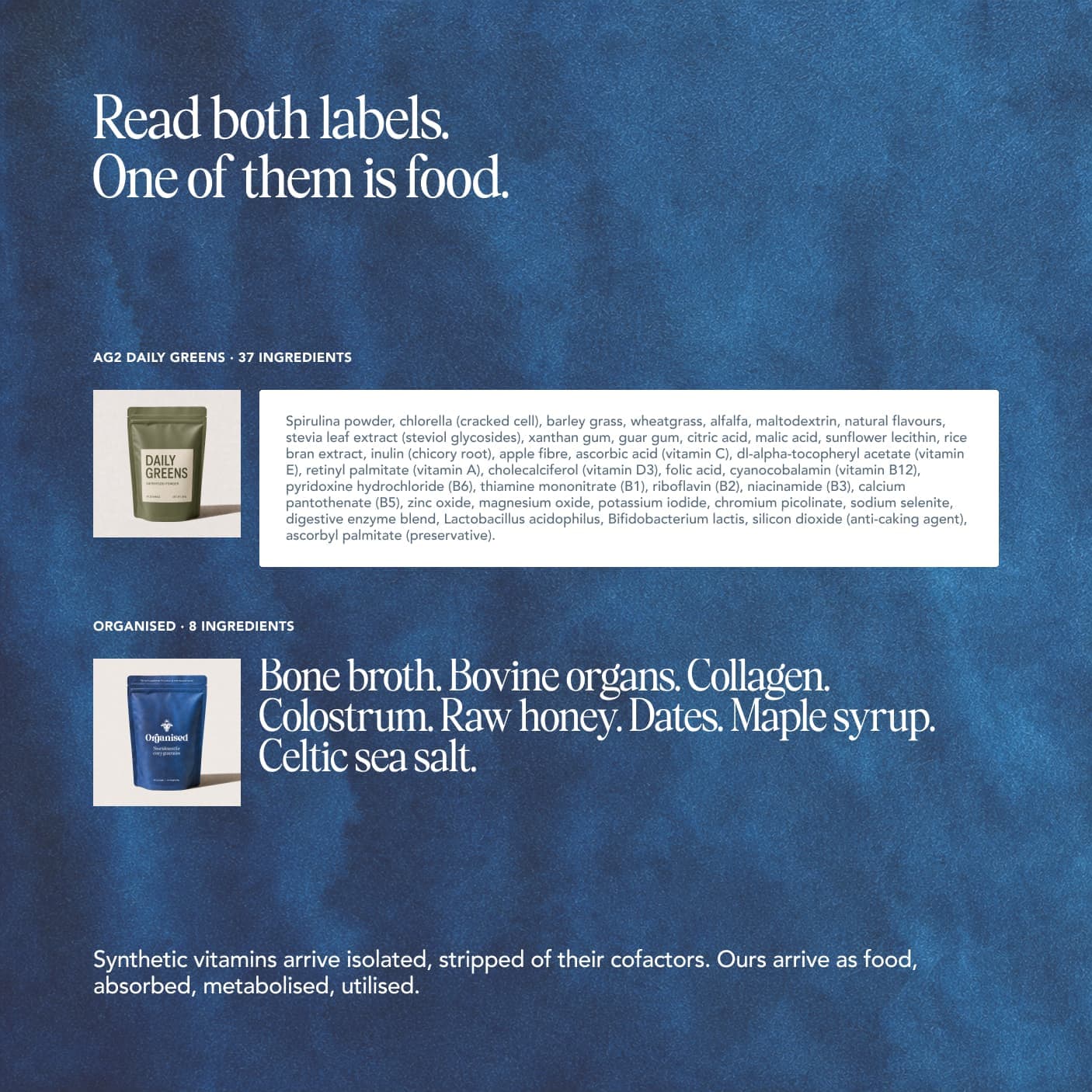
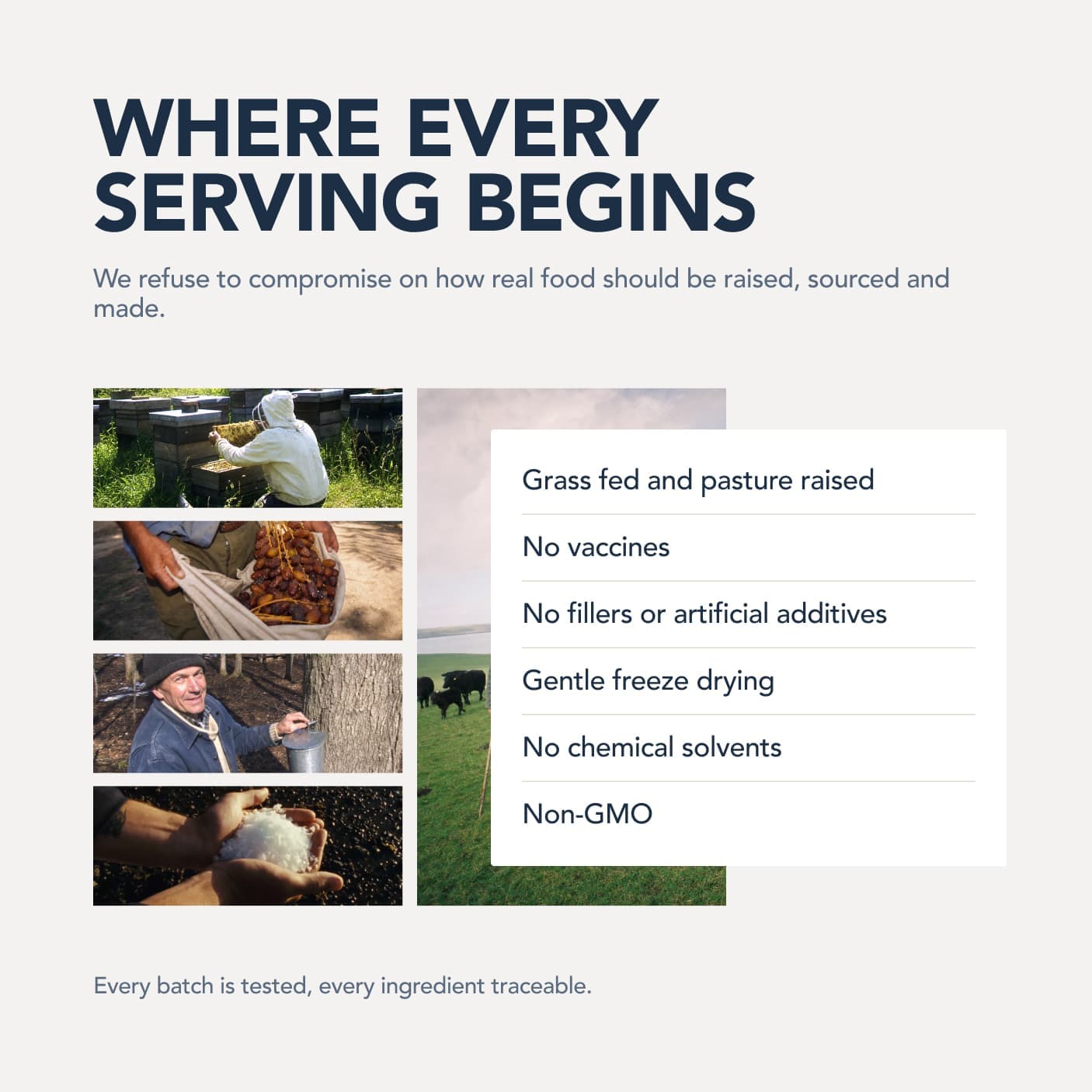
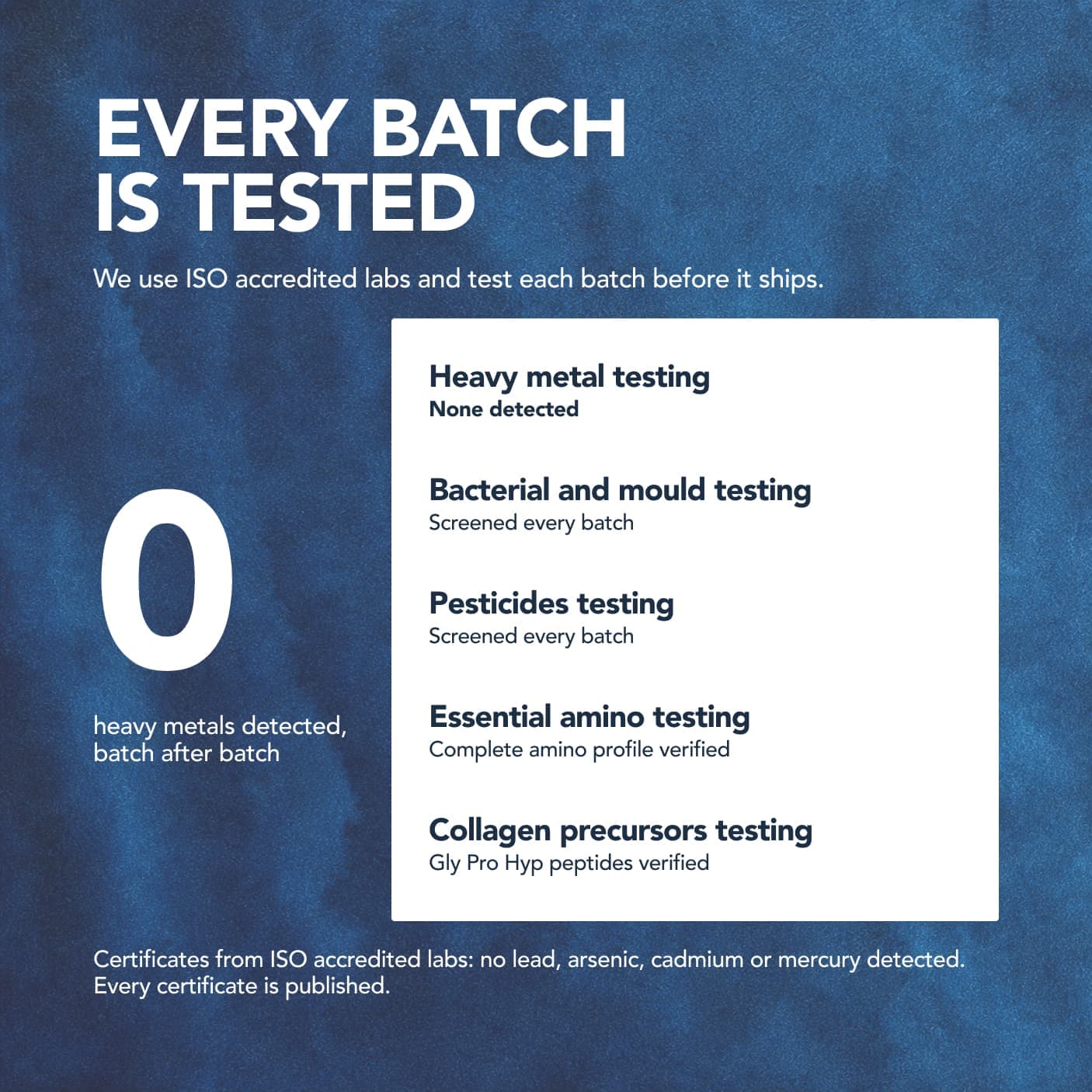
Eight real ingredients built around grass-fed beef organs, collagen and colostrum. Nothing synthetic added.
Free with your first order, worth £38. Plus £10 off the pouch with a subscription.
Free UK shipping · Made in England · 100 day money back guarantee on your first pouch · Skip, pause or cancel anytime
Foods that actually build bones
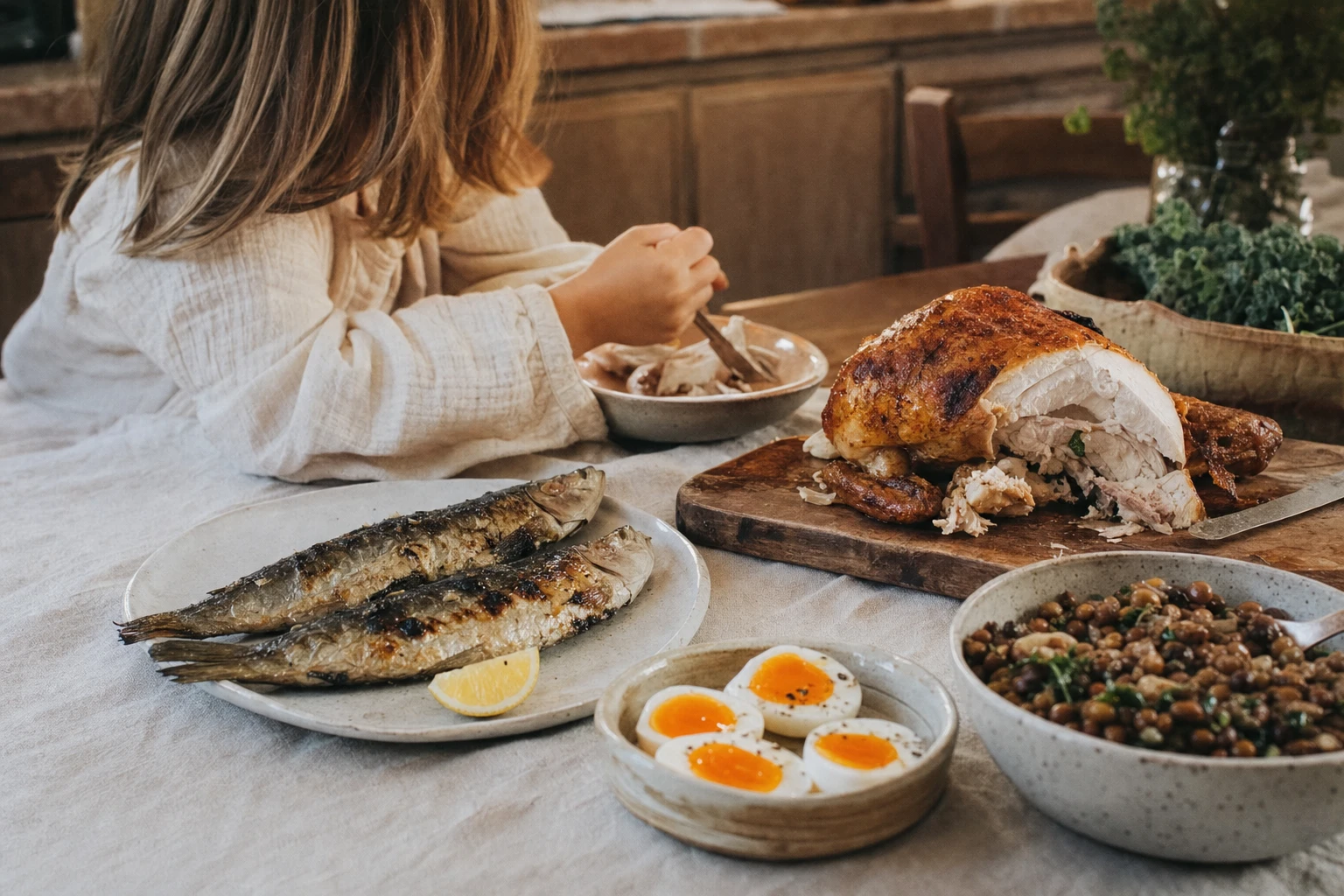
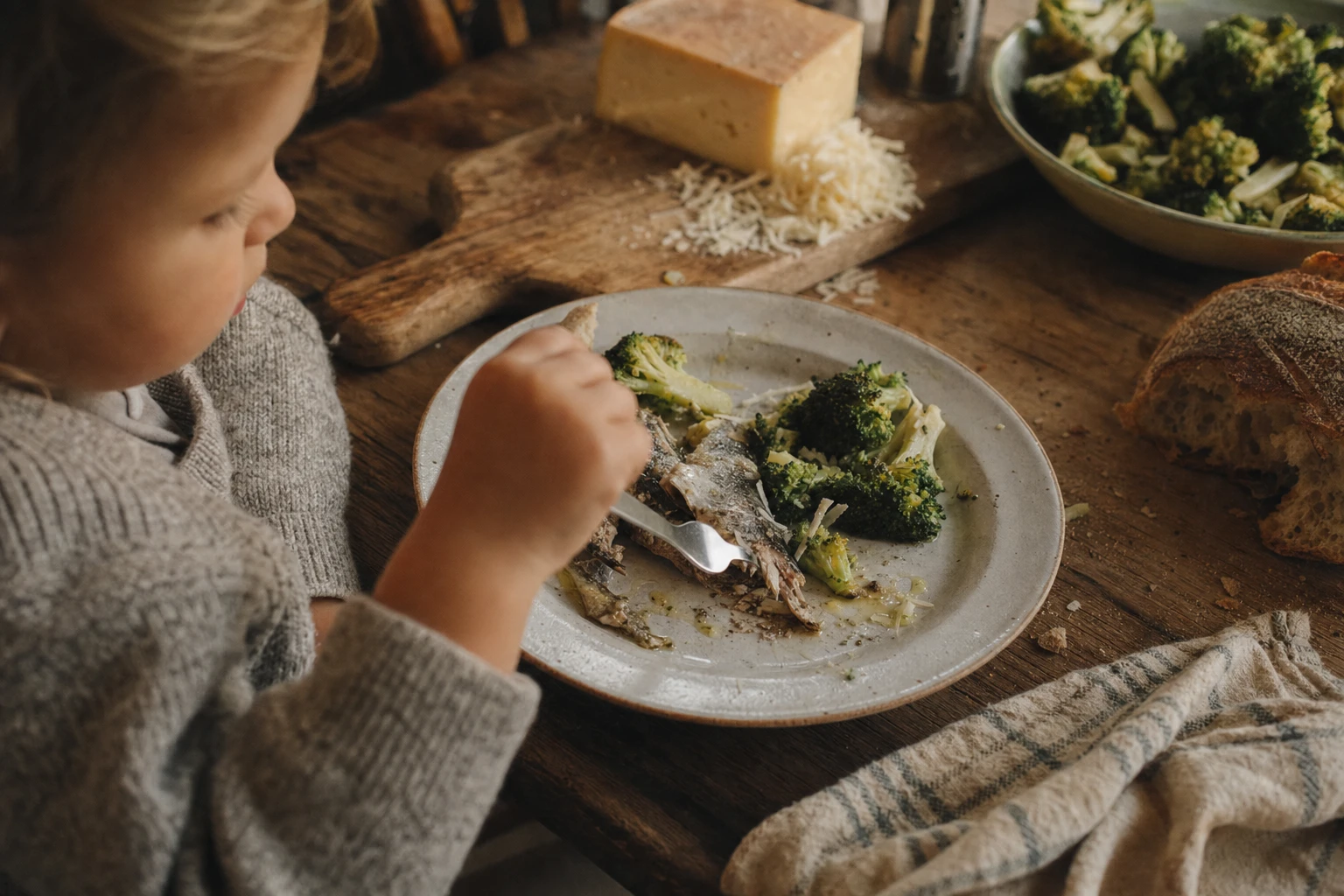
A bone-building child's diet has certain staples: eggs, grass-fed butter, full-fat cheese, fatty fish like sardines with bones, green vegetables, nuts and seeds, fruit, and whole grains.
- Sardines: The bones are edible and rich in calcium. Combined with the K2 in the fish fat, this is superior to milk for bone development.
- Egg yolks: Daily. The K2, choline, and lutein are non-negotiable for development.
- Grass-fed butter: On vegetables, on toast, in cooking. The fat carries K2.
- Cheese: Full-fat from grass-fed cows. Cheddar and Gruyere are particularly high in K2.
- Dark chocolate: For magnesium and morale. 70 percent or higher.
- Green vegetables: Broccoli, bok choy, kale for calcium and magnesium.
These are not special or expensive foods. They're whole foods your child's body knows how to use. The difference in bone development between a child eating these foods regularly and a child eating processed alternatives is measurable and significant.
The foundation that lasts
The skeleton your child builds now is the skeleton they're stuck with for life. Poor bone development in childhood leads to higher fracture risk in adolescence and osteoporosis risk in adulthood. Good bone development now is an investment that pays dividends for decades.
This is not difficult. It's not expensive. It's food. Eggs, butter, cheese, fish, and movement. These are not supplements or special formulations. They're basic foods. Include them regularly and your child's bones will develop into a strong, resilient structure that will serve them well.
References
Every source below was checked on 27 August 2026. Each link was requested and read. Where a citation and its identifier disagreed, the citation was corrected to the record or the reference was deleted along with the sentence marker that pointed at it, and where the resolved paper turned out not to support the sentence, the sentence was cut back to what it does support. Borrowed authority is worse than none, because it looks like rigour.
- National Institutes of Health, Office of Dietary Supplements. Vitamin K — Health Professional Fact Sheet. https://ods.od.nih.gov/factsheets/VitaminK-HealthProfessional/
- National Institutes of Health, Office of Dietary Supplements. Vitamin D — Health Professional Fact Sheet. https://ods.od.nih.gov/factsheets/VitaminD-HealthProfessional/
- National Institutes of Health, Office of Dietary Supplements. Magnesium — Health Professional Fact Sheet. https://ods.od.nih.gov/factsheets/Magnesium-HealthProfessional/
- U.S. National Academies of Sciences, Engineering, and Medicine. Dietary Reference Intakes for Energy, Carbohydrate, Fiber, Fat, Fatty Acids, Cholesterol, Protein, and Amino Acids (2002/2005). https://www.ncbi.nlm.nih.gov/books/NBK56068/
Who wrote and reviewed this guide
Niall Kiddle
Author · Founder, Organised
Niall is the founder of Organised. He started the company in 2024 after fixing his own health the slow way: in 2022 he swapped a cupboard of synthetic supplements for real food, raw milk, organ meats, bone broth and honey, and felt the difference within months.
Areas of expertise: Ancestral nutrition, Organ meats, Whole-food supplementation, Gut health, Regenerative sourcing
Read Niall's full profile
Pedro Rodrigues
Reviewer · Agronomist (farming and sourcing only)
Pedro is the agronomist Organised works with on farming and sourcing. His job on the guides is to keep the science honest: he reviews what we publish about soil health, regenerative agriculture, grazing and the way food is actually produced.
Areas of expertise: Regenerative agriculture, Agronomy, Soil health, Grass-fed farming, Food sourcing
Reviewed this guide on
Read Pedro's full profileMore on children & teens
View all- Feeding Children for Optimal Growth and Development
- Teenage Nutrition: Fuelling Growth Spurts and Brain Development
- Can Children Take Beef Organ Supplements?
- How to Introduce Organ Meats to Children
- Picky Eaters: How to Sneak Nutrient-Dense Foods Into Family Meals
- Protein for Young Athletes: How Much Do Teenagers Actually Need?
- Screen Time, Sleep and Nutrition: The Triangle That Affects Every Child
- Sugar, Screens and Soil: Raising Healthy Children in a Modern World
- Teenage Athletes: Protein and Nutrient Needs for Growing Bodies
- The Nutrients Children Need Most (And Aren't Getting)
- Why Children Need More Nutrient-Dense Food (Not More Vitamins)
- Why Teenage Girls Are at the Highest Risk of Iron Deficiency
Browse the guides library
All guidesKeep reading
Life stage
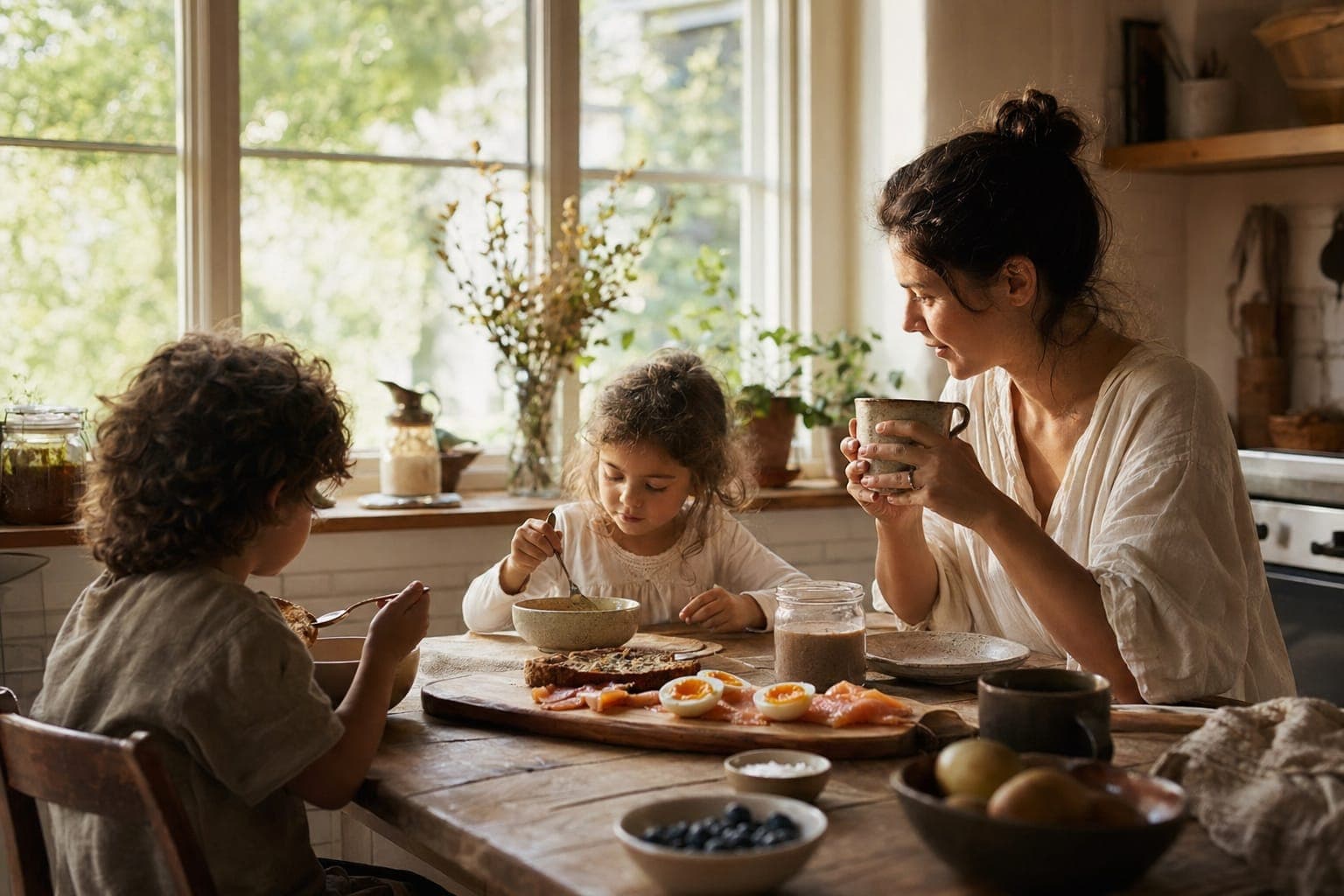
Morning Routines That Set Your Family Up for the Day
A protein-first breakfast, morning sunshine, no screens, and calm. These four habits transform how children think, learn, and behave all day.
Life stage
Menopause and Bone Density: Protecting Your Skeleton
Oestrogen drop in menopause accelerates bone loss. Calcium plus K2 plus D plus adequate protein plus resistance training prevents fracture risk.
Life stage
Postpartum Recovery Nutrition: Rebuilding After Birth
Postpartum recovery nutrition: iron restoration, collagen, bone broth, and breastfeeding nutrition. Practical recovery foods for new mothers.
Real food, made effortless
Find my daily blendA few ways to use it
All recipes
Ancestral Breakfast Ideas from Around the World
Traditional breakfast recipes from cultures that got nutrition right. Japanese, Turkish, Scottish, and more. Whole-food breakfast inspiration.
10 Ways to Use Organised That Aren't Just a Shake
Move beyond the basic shake. Discover 10 creative ways to use Organised in smoothie bowls, oats, yoghurt, baking, and more.
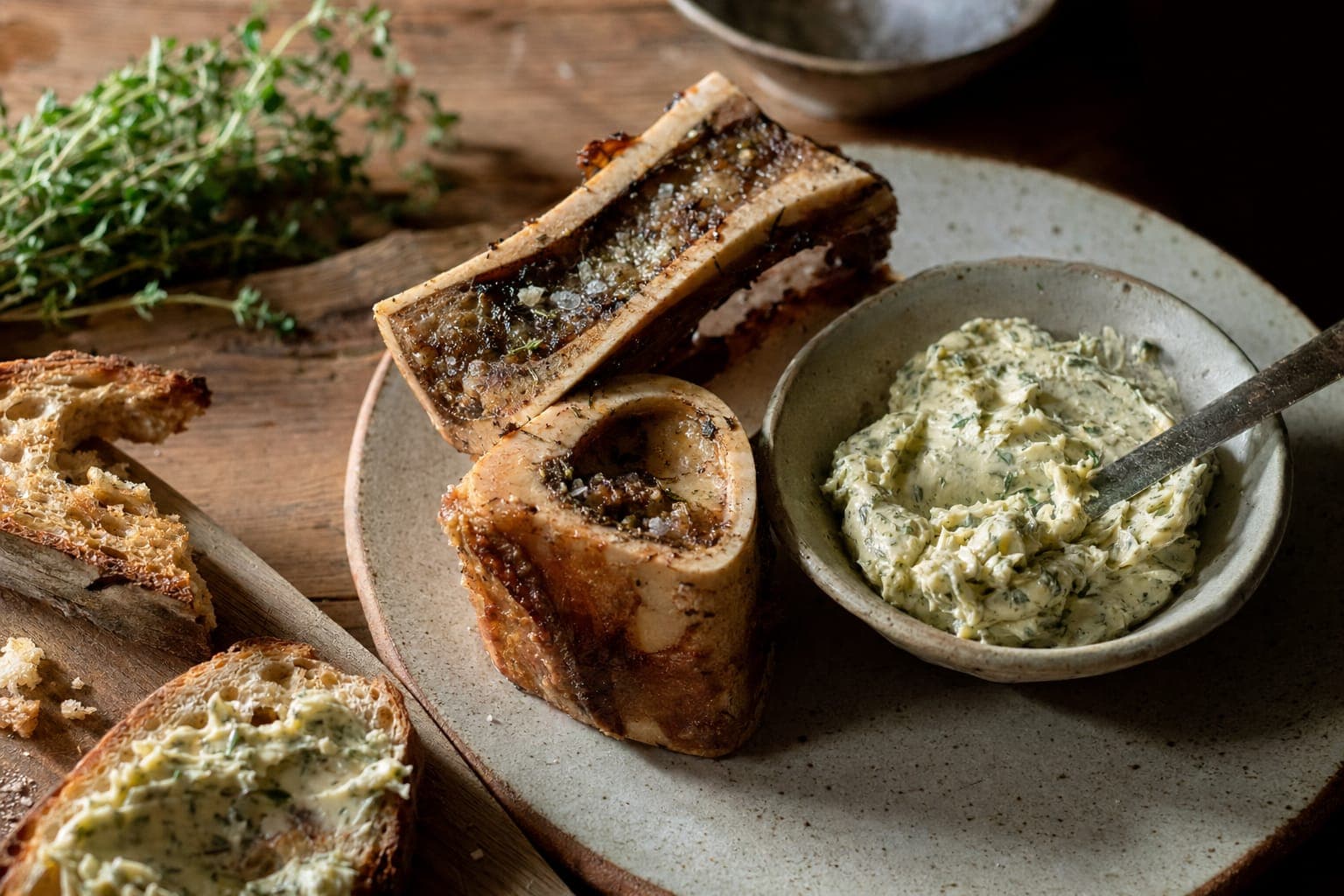
How to Make Bone Marrow Butter
Roast grass-fed marrow bones, scoop the marrow, and mix with butter and herbs. A nutrient-dense spread with fat-soluble vitamins.


 Join over 100,000+ members
Build a better food system with us
The Organised community is thousands of people choosing real food and backing the farmers who grow it, all of us trying to leave the world a little better than we found it. If that is what you care about too, you belong here.