What to Pack for Lunch When You Work at a Desk All Day
You're staring at your lunch wondering why you're still hungry. The salad looked good at home. Now it's a depressing pile of limp lettuce. The real food is at home. You've been packing the wrong things. Here's what actually works.
By Niall Kiddle, Founder, Organised

Reviewed by Pedro Rodrigues, Agronomist (farming and sourcing only) ·
5 min read · Published · Updated · 2 cited sources
Makers of the Organised Daily blend, a grass-fed beef organ supplement from regenerative UK farms
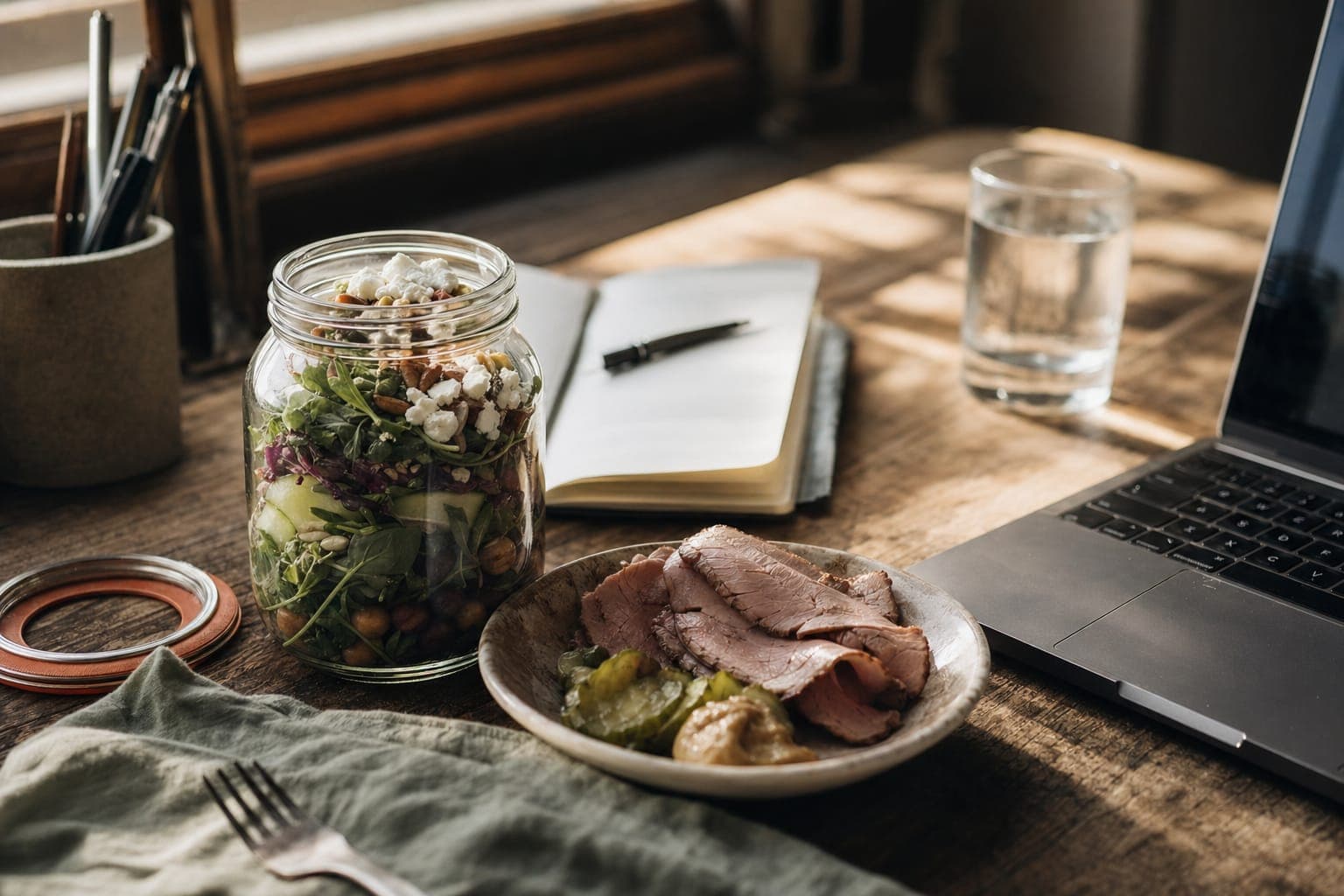
A desk lunch needs three things: protein, fat, and enough volume to satisfy. Lettuce and tomatoes deliver none of these. Here's what works.
Why desk salads don't work
A salad of lettuce, tomatoes, and vinaigrette is roughly 50-100 calories. Your body will process it in an hour and you'll be hungry. Additionally, it's mostly water and fibre with minimal protein or fat, so it creates no satiety signal. You'll feel empty an hour later regardless of the volume.
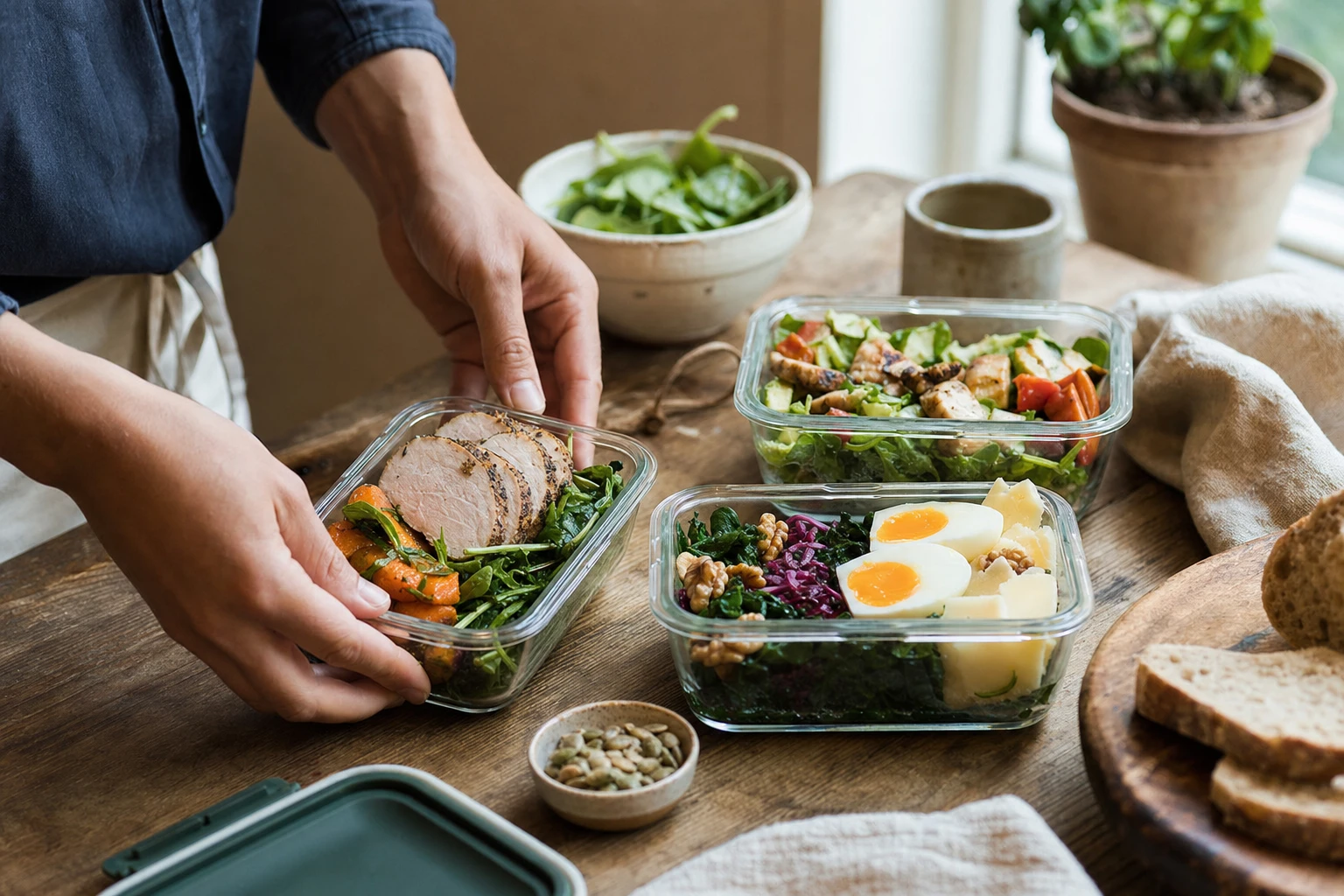
Salads work only when they're built around protein and fat. Lettuce with grilled chicken, olive oil, and cheese. Spinach with sardines, walnuts, and olive oil. Those are meals. The vegetables are the supporting act, not the main course.
Most desk workers make the mistake of treating salad as the meal and the dressing as the flavouring, when it should be the opposite: the protein and fat are the meal, and the vegetables add texture and nutrients.

The protein-first principle
Whatever you pack, start with protein. Grilled chicken, cold beef, tinned tuna or sardines, hard-boiled eggs, cold pork, smoked salmon. Aim for 30-40 grams of protein at lunch — within the leucine threshold range that supports muscle protein synthesis at a single meal.1 This is non-negotiable. Without it, you will not stay full.
Add fat. Olive oil, butter, cheese, avocado, nuts. Dietary fat slows gastric emptying, increases satiety, and aids absorption of fat-soluble vitamins (A, D, E, K).2 A salad with olive oil dressing is sustaining. A salad with balsamic vinegar alone is not.
Add carbohydrate in the form of whole foods. White rice, sweet potato, sourdough bread, roasted root vegetables, beans. These provide energy and stabilise blood sugar so you don't crash mid-afternoon.
Add vegetables if you want, but they're optional. If you're eating 150g of meat, a handful of greens, and some fat, you have a complete meal. The vegetables add micronutrients and texture. They're not the foundation.
Mason jar salads that stay fresh
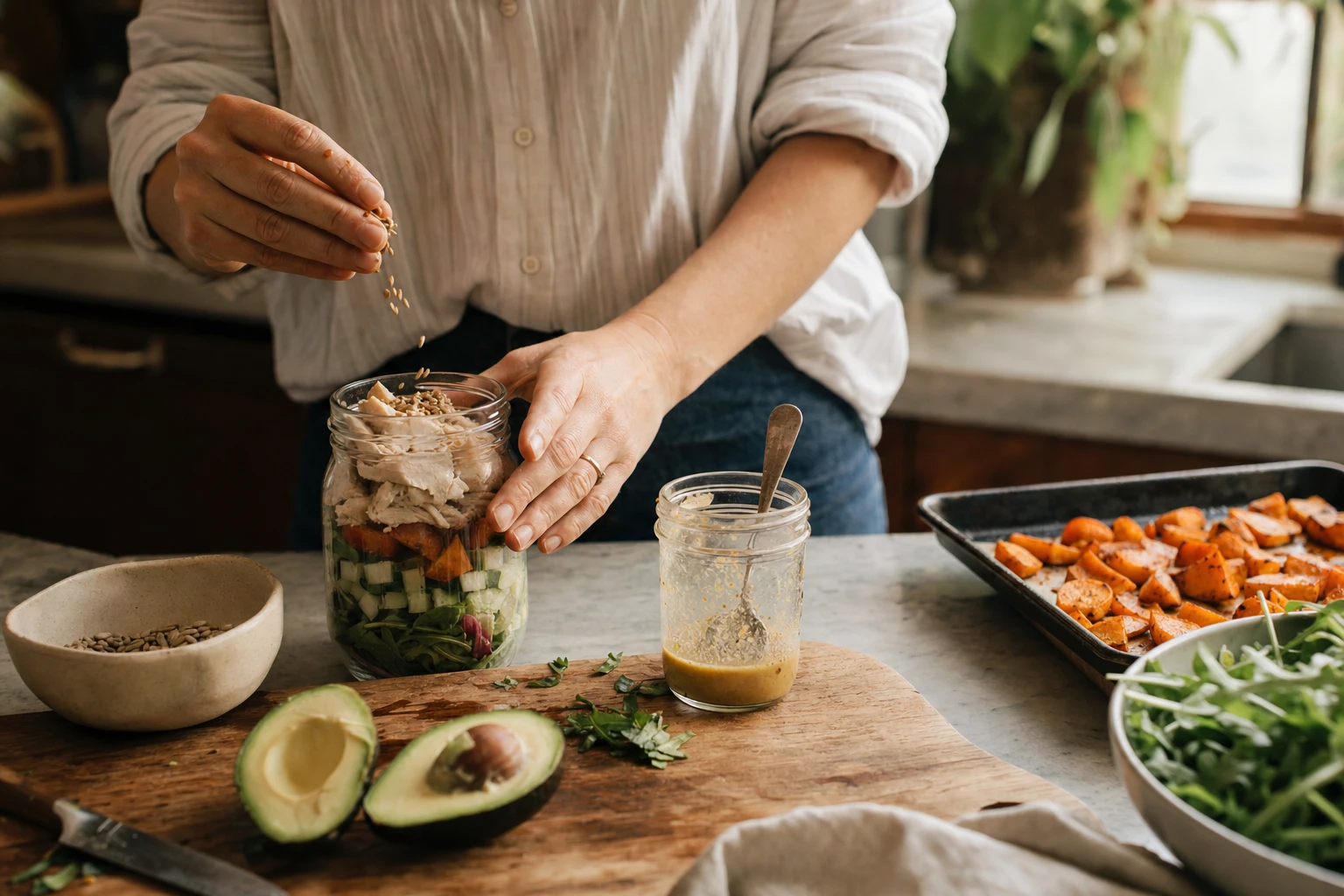
If you like salads, pack them in mason jars. The key is layering so the greens don't get soggy. Start with dressing on the bottom (a mix of olive oil, vinegar, and salt). Then add hard vegetables (cucumber, tomato, capsicum). Then add grains (white rice, barley, couscous) or beans. Then protein (chicken, tinned fish, hard-boiled eggs). Top with tender greens (spinach, lettuce). Cap tightly.
When you're ready to eat, shake the jar to distribute dressing, dump it into a bowl, and eat. The greens stay fresh because they're separated from the dressing until you're eating. And the whole thing is balanced: it has protein, fat, carbohydrate, and vegetables.
You can prep three or four of these on Sunday and eat them throughout the week. Or prep the components (cooked rice, grilled chicken, chopped vegetables) and assemble the morning you're eating them, which takes five minutes.
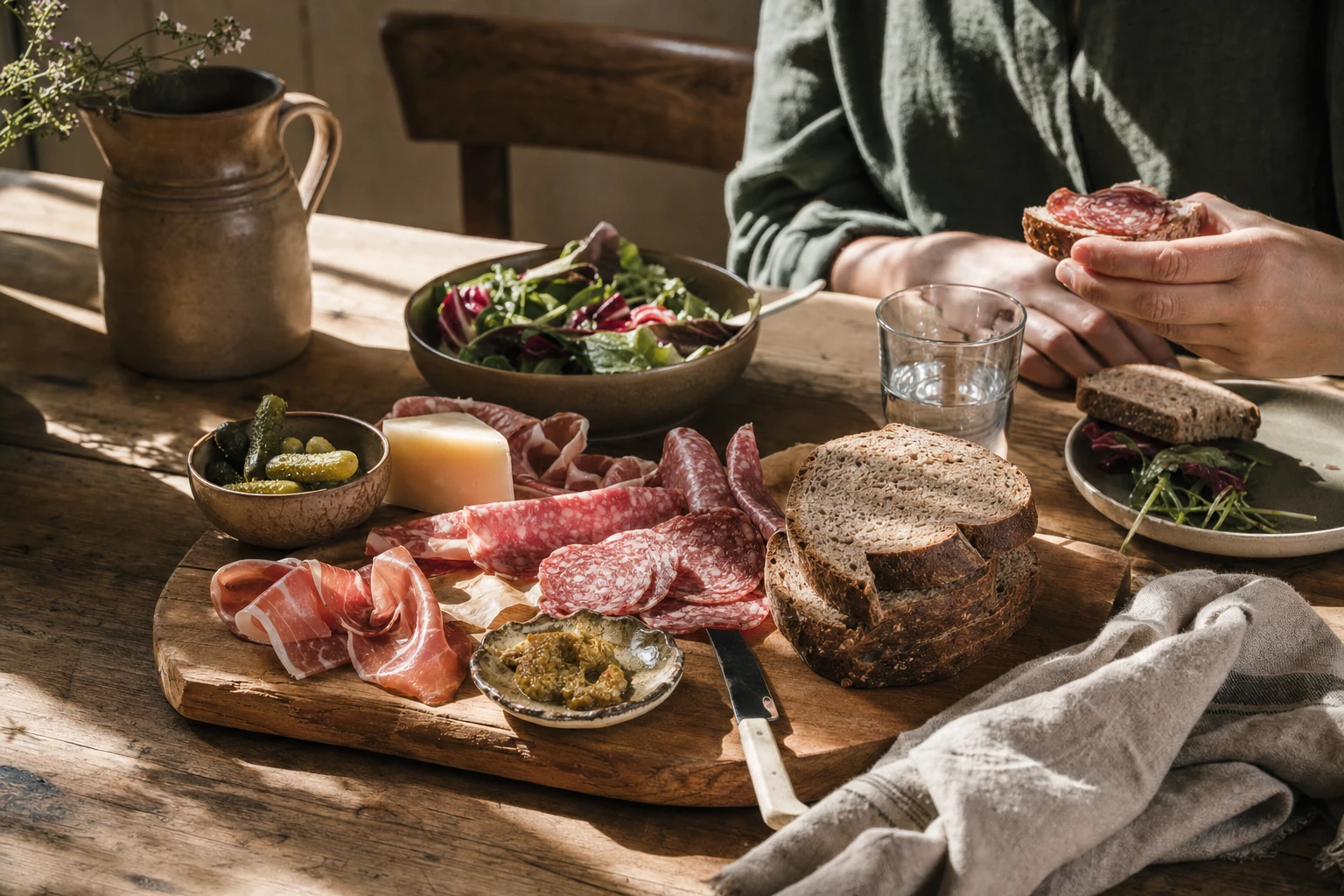
Cold meat and cheese combinations
This is the simplest sustainable lunch: cold meat, cheese, and bread. Buy good quality deli meat (prosciutto, roast beef, smoked turkey). Buy real cheese, not processed slices. Buy decent bread (sourdough, wholegrain). Pack them separately so the bread doesn't get soggy.
At lunch: assemble a simple plate of meat, cheese, bread, maybe some fruit on the side. You've got protein, fat, carbohydrate, and you're satisfied for hours. This is not fancy. It is extremely sustainable and tastes good.
Variation: add vegetables if you want. Sliced tomato, cucumber, lettuce on the side or layered into the sandwich. Still takes two minutes to assemble and it's a complete meal.
This lunch costs less than buying from a cafe, tastes better, and sustains better. Batch-buy meat and cheese on your weekly shopping trip and you're set for the week.
Get life-stage nutrition guides, free
Two short reads a week on eating well through pregnancy, childhood and older age.
By signing up you agree to receive emails from us. No spam, unsubscribe anytime.
Leftovers: the most underrated lunch option
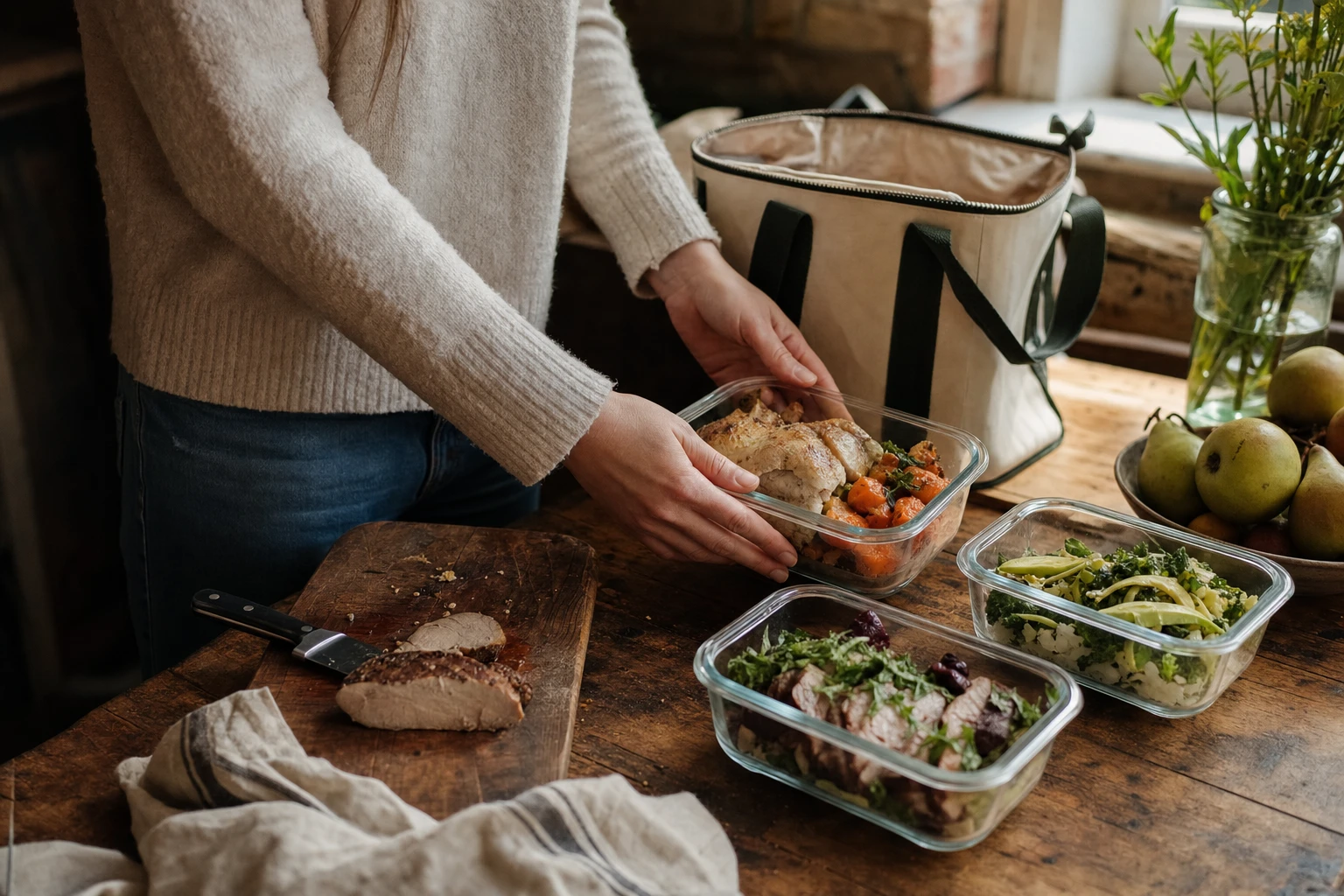
The best lunch is last night's dinner in a container. Roasted chicken with roasted vegetables and white rice. Beef stew with bread. Grilled fish with roasted potatoes. Slow-cooked pork with beans. These are actual meals that sustained you once, and they'll sustain you again the next day.
Cook extra dinner deliberately. Put half in containers immediately. Label them. The next morning, grab one, bring it to work, reheat or eat cold. If you eat it cold, bring it to room temperature first for better digestion.
This is the easiest lunch strategy. You're not preparing anything special. You're just eating yesterday's dinner. It's nutritionally complete, it's satisfying, and you'll actually feel full afterwards.
If you're cooking once and want lunches for the week, batch-cook a large batch of protein (roasted chicken, slow-cooked beef) on Sunday, portion it into containers, and mix with different sides throughout the week. Monday: chicken with rice and greens. Tuesday: same chicken with sweet potato and greens. Wednesday: same chicken with beans and greens. Different enough to not feel repetitive, easy enough that you're not cooking daily.
1 of 9
Daily blend
100,000+ thriving families4.9 on Trustpilot
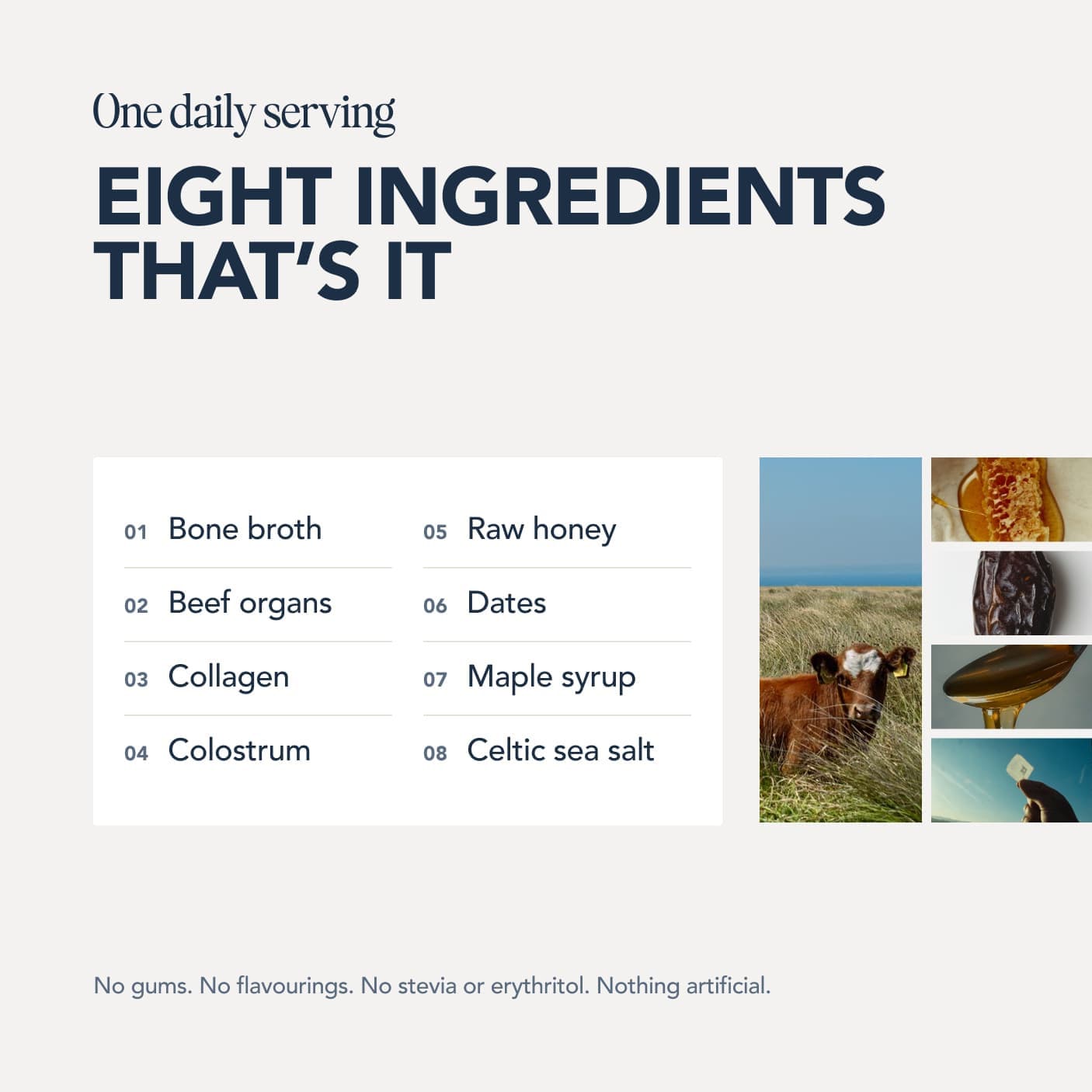
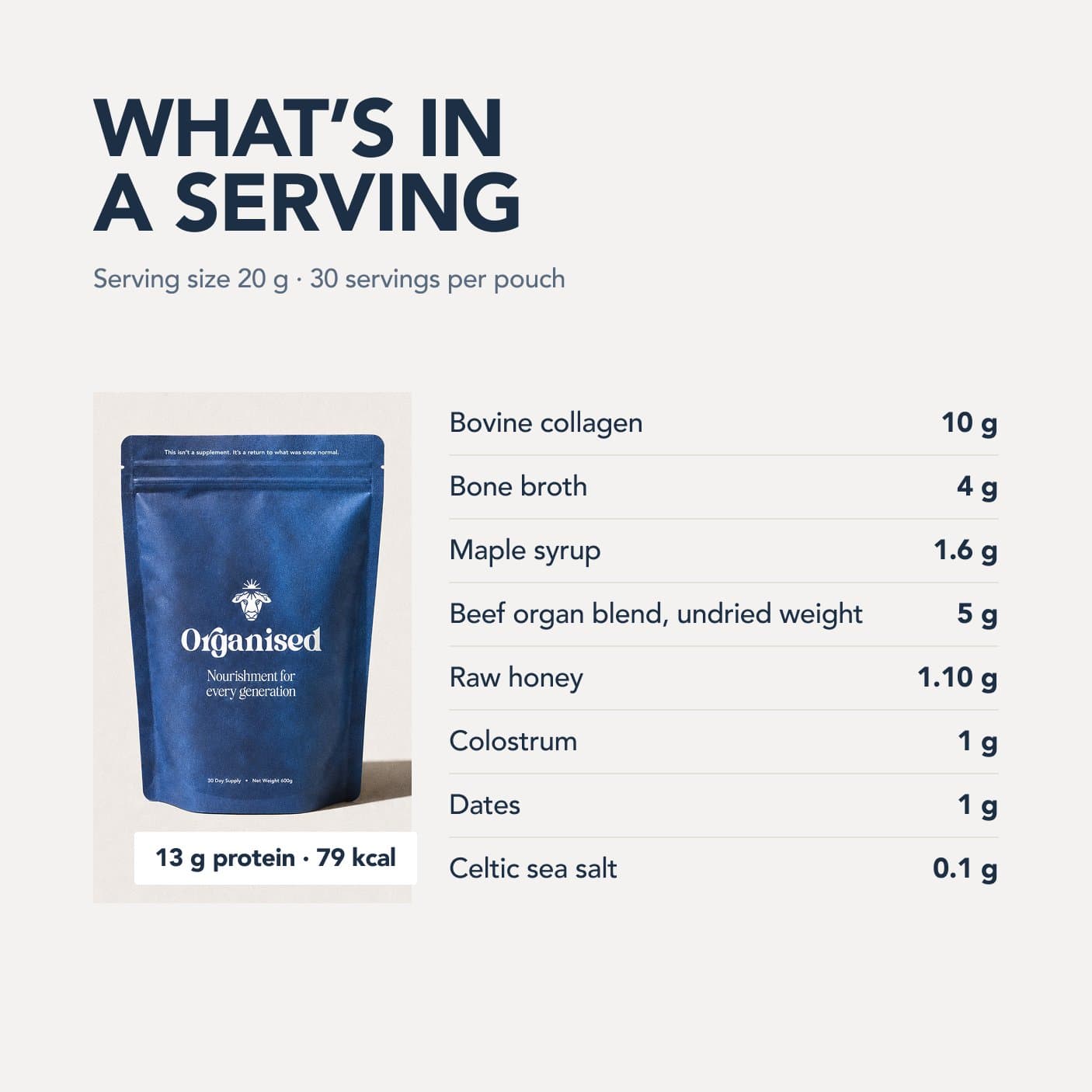
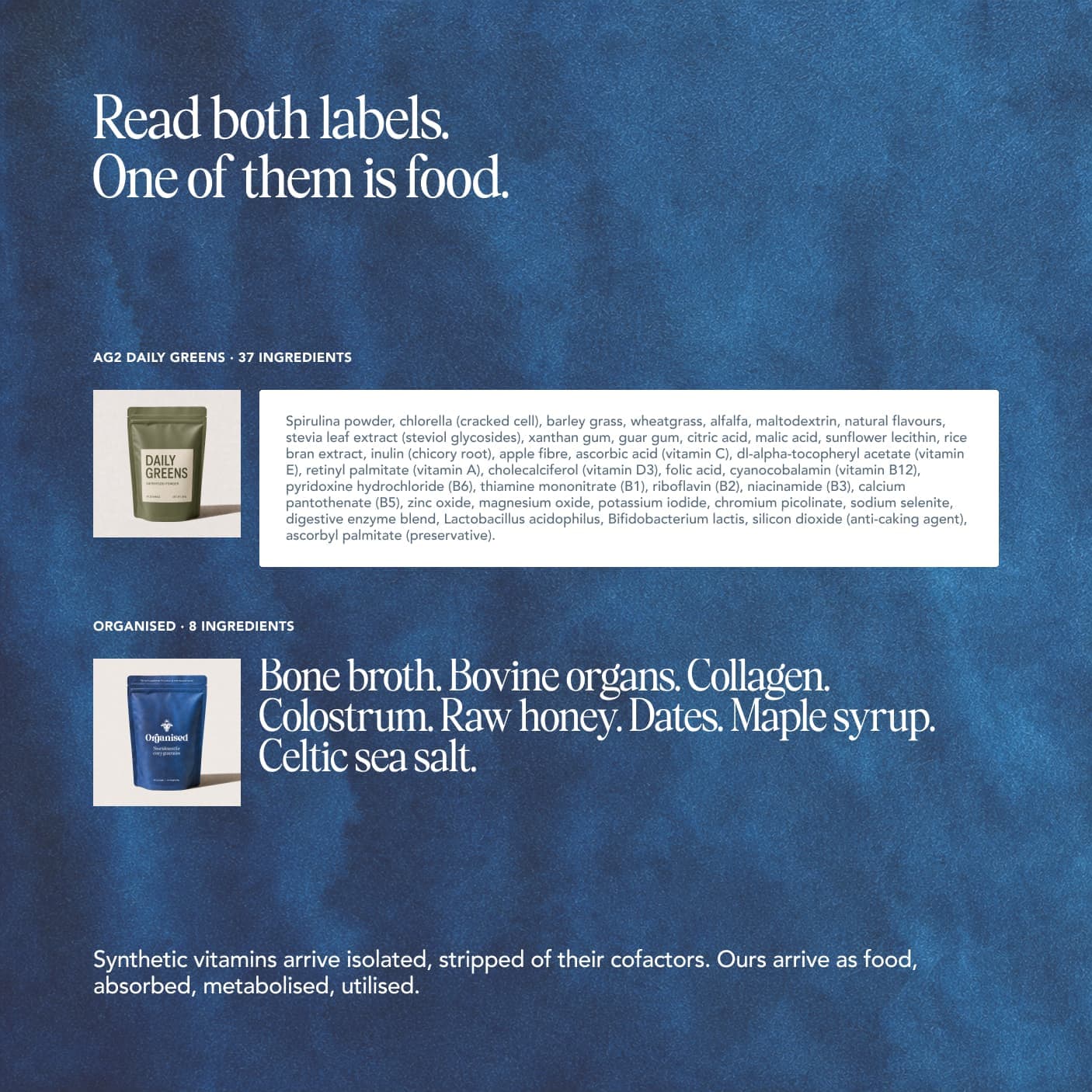
Eight real ingredients built around grass-fed beef organs, collagen and colostrum. Nothing synthetic added.
Free with your first order, worth £38. Plus £10 off the pouch with a subscription.



Free UK shipping · Made in England · 100 day money back guarantee on your first pouch · Skip, pause or cancel anytime
Batch cooking on weekends
Sunday meal prep doesn't have to be complicated. Cook one large protein (a whole roasted chicken, a slow-cooked beef joint, a tray of salmon fillets). Cook one or two carbohydrate bases (rice, sweet potatoes, roasted root vegetables). Prep some vegetables (chop salad greens, steam broccoli, roast capsicums). On weekdays, assemble combinations.
The whole process takes 90 minutes on Sunday and gives you lunches for the week. If you have five work days, five lunches are made. You spend maybe 10 minutes on each weekday assembling from the prep components.
If you're time-constrained, start simpler: buy a rotisserie chicken, buy tinned fish, buy quality deli meat. Assemble with bread, cheese, and fruit. This takes no cooking and still gives you sustaining lunches.
The bottom line
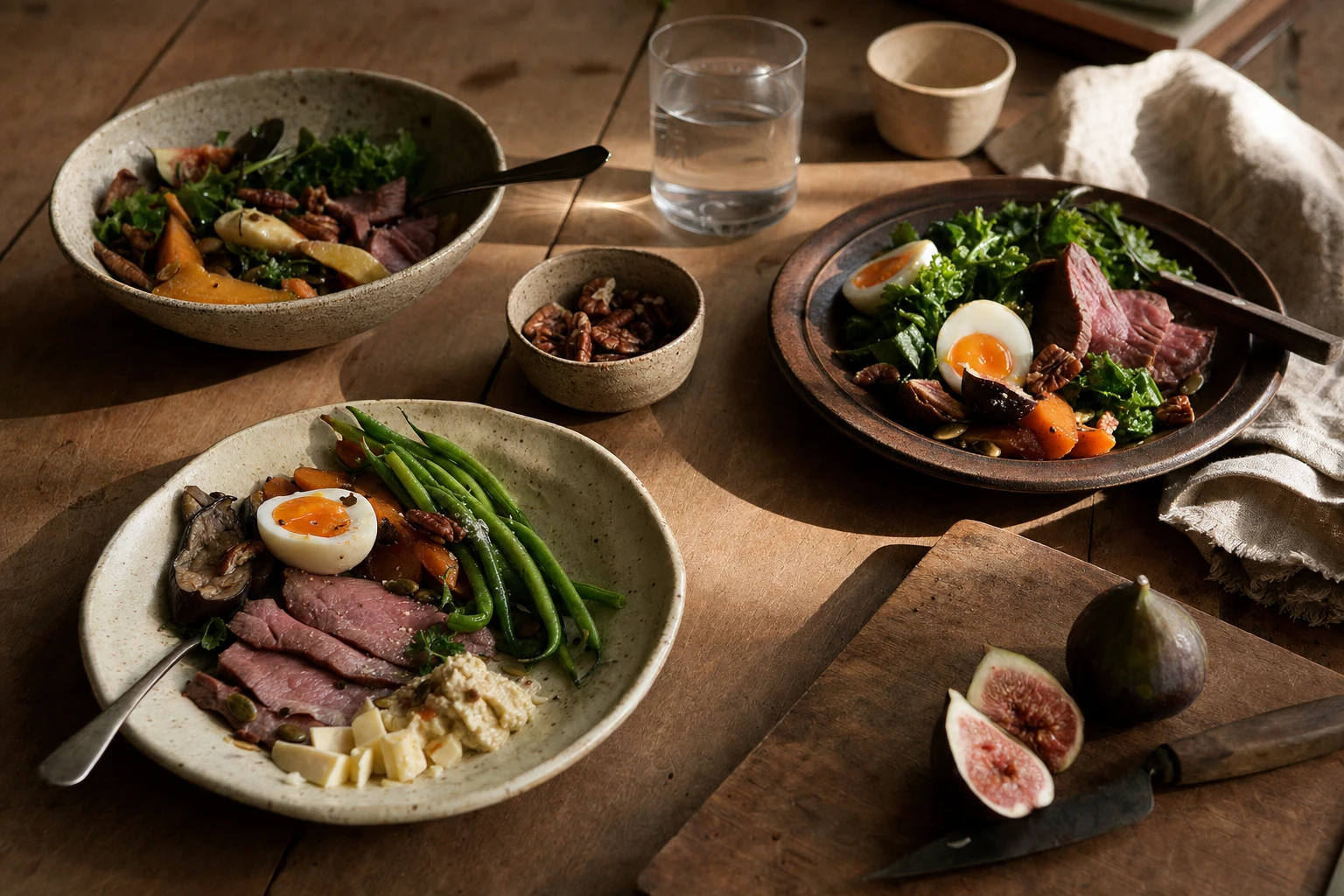
Pack protein first: meat, fish, or eggs. Add fat: olive oil, cheese, or nuts. Add carbohydrate: rice, bread, or roasted vegetables. Add vegetables if you want. Eat it all. You'll be full, you'll have energy for the afternoon, and you won't reach for biscuits at 3 PM. That's the whole formula. Build your lunch on it, prep it Sunday, and you're done.
References
Every source below was checked on 27 August 2026. Each PubMed, PMC and DOI identifier was resolved against NCBI or Crossref, and what it opens is printed under the citation, so you can see the link goes where the citation says without leaving the page. Where a citation and its identifier disagreed, the citation was corrected to the record or the reference was deleted along with the sentence marker that pointed at it, and where the resolved paper turned out not to support the sentence, the sentence was cut back to what it does support. Borrowed authority is worse than none, because it looks like rigour.
- Morton RW, et al. A systematic review, meta-analysis and meta-regression of the effect of protein supplementation on resistance training-induced gains in muscle mass and strength in healthy adults. Br J Sports Med. 2018;52(6):376-384. PMID 28698222Checked 27 August 2026: PMID 28698222 opens Morton RW, Murphy KT, McKellar SR et al, A systematic review, meta-analysis and meta-regression of the effect of protein supplementation on resistance training-induced gains in muscle mass and strength in healthy adults. Br J Sports Med 2018;52(6):376-384. PubMed indexes it as: Meta-Analysis, Systematic Review.The authors' own declaration, from the record: Competing interests: SMP has received grant support, travel expenses, and honoraria for presentations from the US National Dairy Council. This agency has supported trials reviewed in this analysis.
- National Institutes of Health, Office of Dietary Supplements. Vitamin A and Carotenoids - Health Professional Fact Sheet (fat-soluble vitamin absorption). ods.od.nih.gov
Who wrote and reviewed this guide
Niall Kiddle
Author · Founder, Organised
Niall is the founder of Organised. He started the company in 2024 after fixing his own health the slow way: in 2022 he swapped a cupboard of synthetic supplements for real food, raw milk, organ meats, bone broth and honey, and felt the difference within months.
Areas of expertise: Ancestral nutrition, Organ meats, Whole-food supplementation, Gut health, Regenerative sourcing
Read Niall's full profile
Pedro Rodrigues
Reviewer · Agronomist (farming and sourcing only)
Pedro is the agronomist Organised works with on farming and sourcing. His job on the guides is to keep the science honest: he reviews what we publish about soil health, regenerative agriculture, grazing and the way food is actually produced.
Areas of expertise: Regenerative agriculture, Agronomy, Soil health, Grass-fed farming, Food sourcing
Reviewed this guide on
Read Pedro's full profileMore on occupational nutrition
View allBrowse the guides library
All guidesKeep reading

Life stage
The Office Worker's Guide to All-Day Energy and Focus
Afternoon slumps are avoidable. Master protein at breakfast, stable blood sugar, and strategic snacking to maintain your energy and focus at your desk.

Life stage
5 Metabolism-Killing Habits of Desk Workers (And How to Fix Them)
Sitting, skipping breakfast, constant snacking, coffee before food, no sunlight. These five habits tank your metabolism. Here's how to reverse them all.

Life stage
One Pouch, Every Generation: How Real Families Use Organised
See how real families use Organised across different ages and life stages, from kids to grandparents, and what multi-generational nutrition looks like daily.
Real food, made effortless
Find my daily blendA few ways to use it
All recipes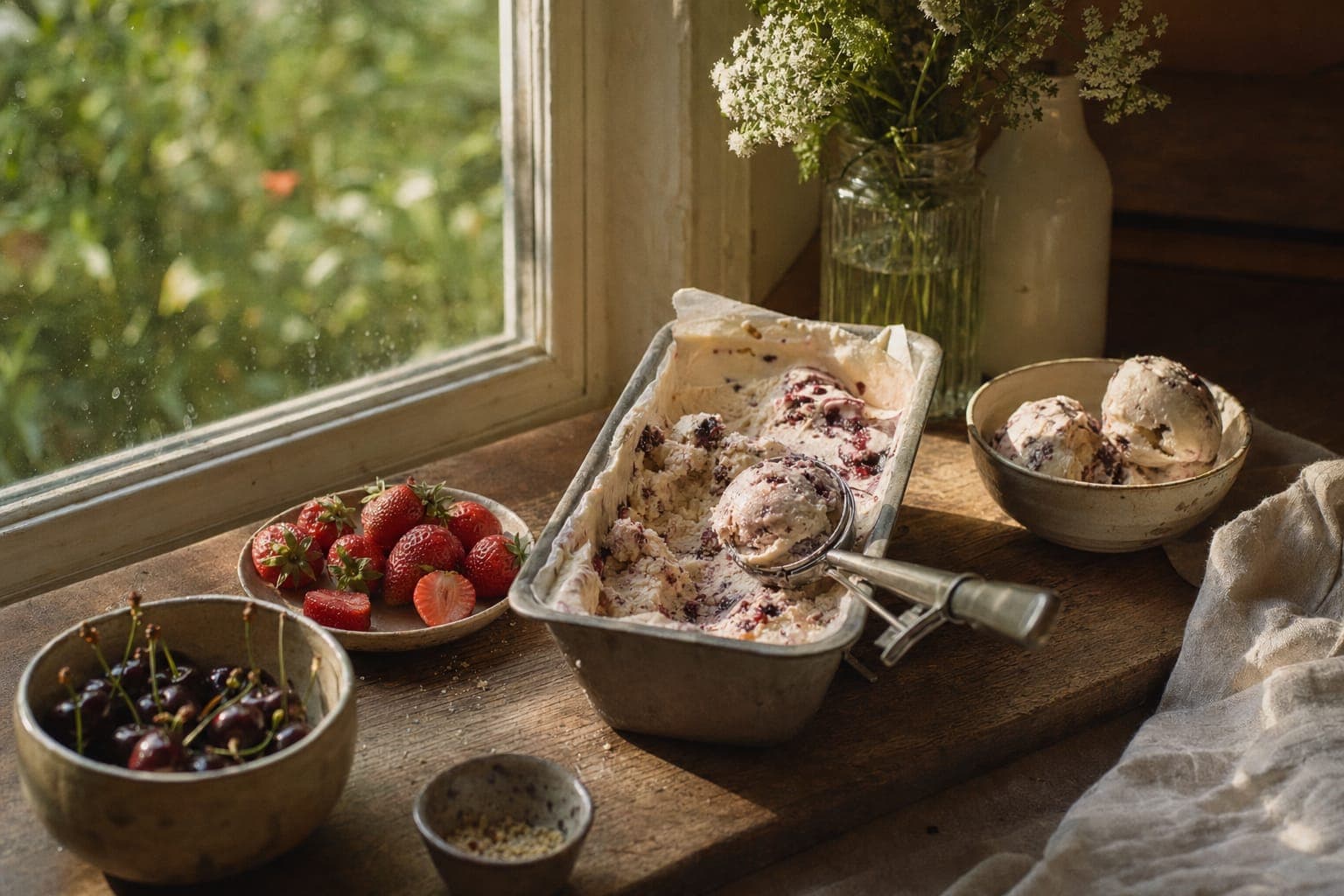
Raw Milk Ice Cream with Organised
Make raw milk ice cream at home with Organised for a seasonal, nutrient-dense treat. Three simple flavours to try whenever the craving strikes.
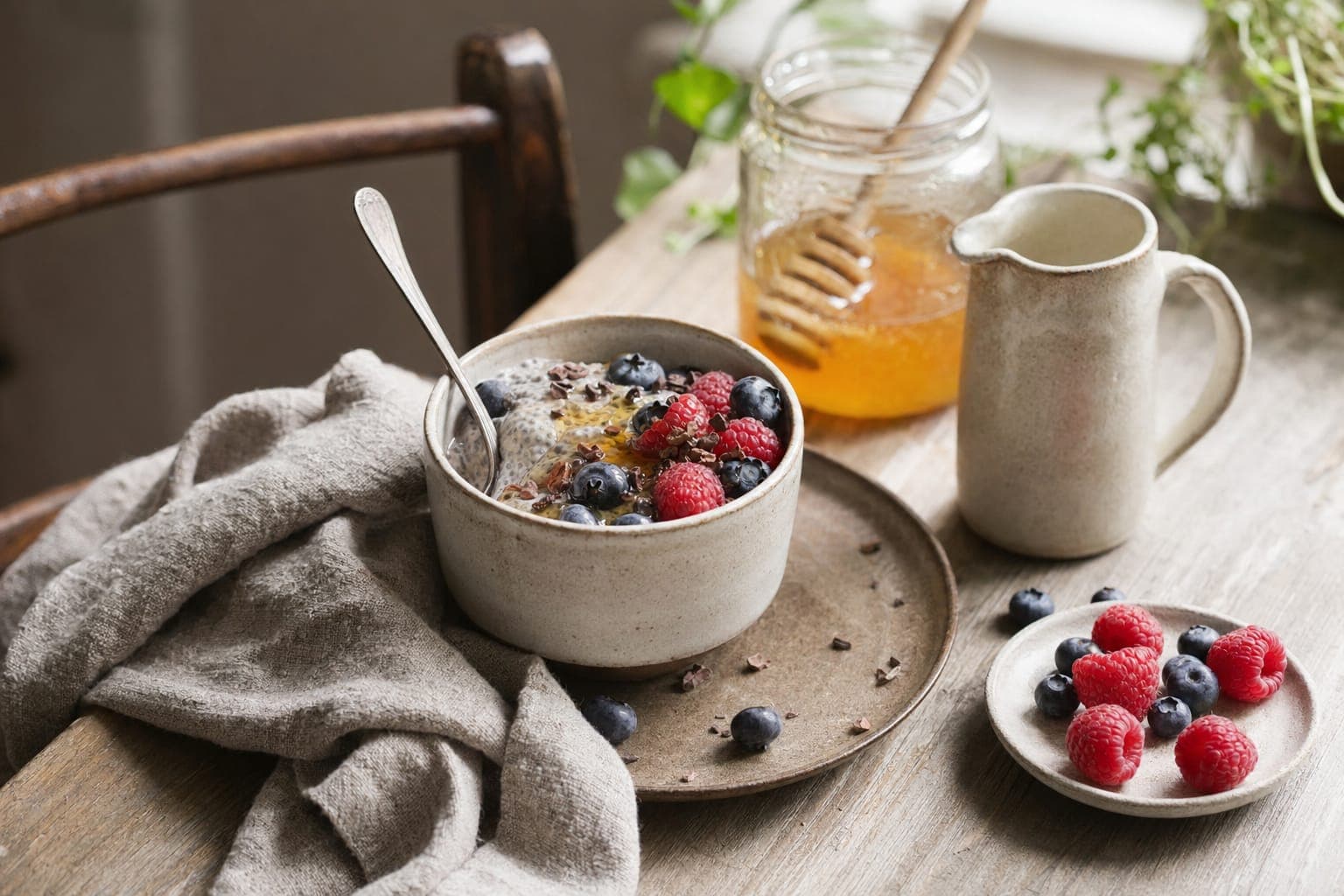
Organised Chia Pudding with Raw Honey and Berries
A no-cook chia seed pudding made with raw milk, collagen, berries, and raw honey. Prep it the night before and eat for breakfast.

The Perfect Organised Morning Shake: Our Favourite Recipe
Our signature morning shake: Organised, raw milk, banana, honey. Simple, nourishing, and optimised for an empty stomach.


 Join over 100,000+ members
Build a better food system with us
The Organised community is thousands of people choosing real food and backing the farmers who grow it, all of us trying to leave the world a little better than we found it. If that is what you care about too, you belong here.