One Pouch, Every Generation: How Real Families Use Organised
One pouch. A grandmother rebuilding iron after birth at 42. Her daughter, at 29, nursing and depleted. Her six-year-old grandson, refusing vegetables. One solution. Three generations. One story.
By Niall Kiddle, Founder, Organised

Reviewed by Pedro Rodrigues, Agronomist (farming and sourcing only) ·
5 min read · Published · Updated · 2 cited sources
Makers of the Organised Daily blend, a grass-fed beef organ supplement from regenerative UK farms

This isn't marketing fiction. These are the conversations we have with families who are using Organised. And the pattern keeps emerging: one product, radically different applications across different life stages, all working because the nutrition is the same: nutrient-dense whole food in a form everyone will actually use.
The grandmother's story: rebuilding after birth
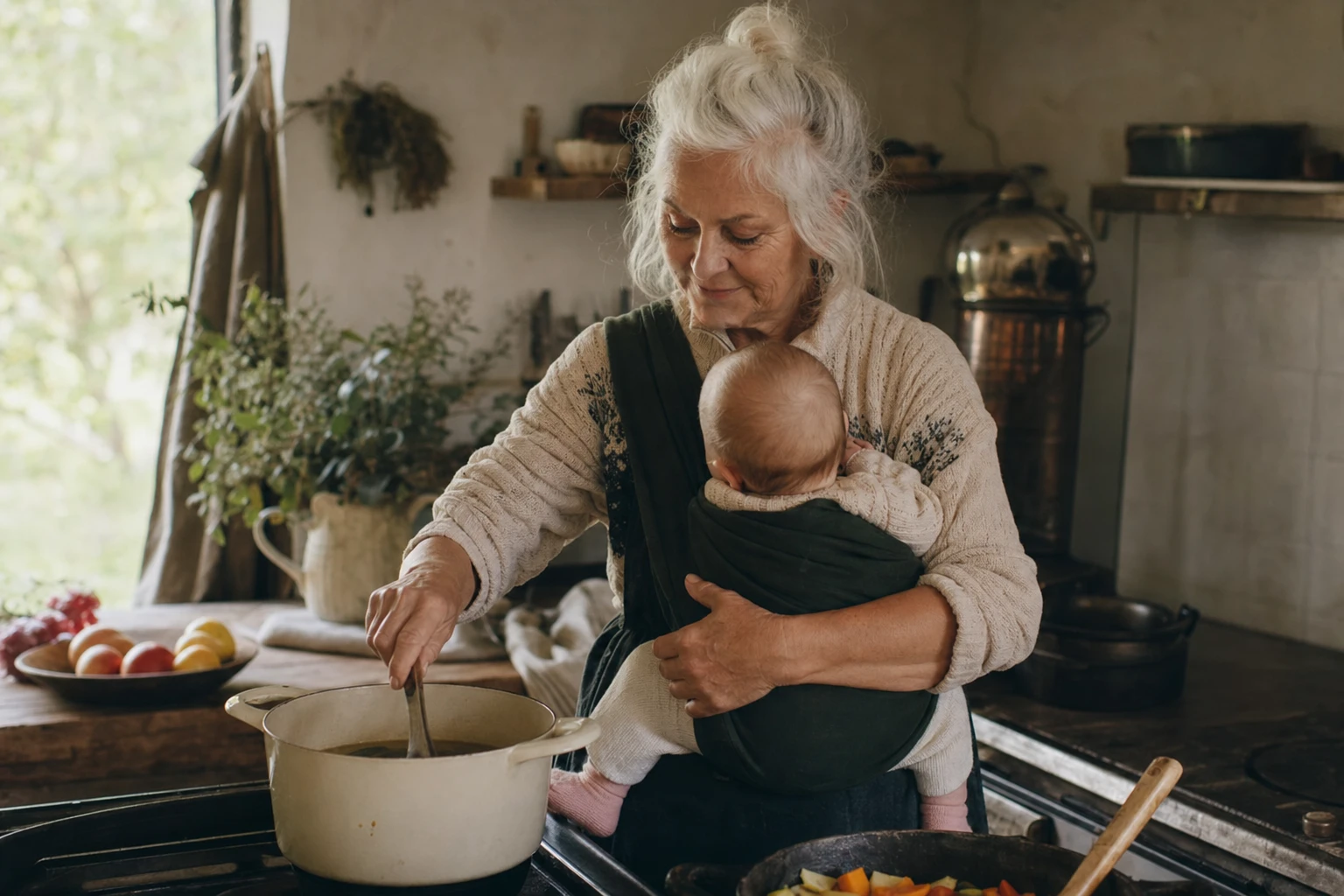
Sarah had her fourth baby at 42. She thought she was prepared for recovery. She'd done this three times before. She wasn't prepared for how physically shattered she felt after a postpartum haemorrhage at delivery. By week three postpartum, she couldn't climb stairs without dizziness and heart palpitations. Her mood was flat, numb. She felt like a ghost of herself. She'd lost 800ml of blood during delivery, which depleted her iron stores catastrophically.1 Her ferritin likely sat below 20.
Iron supplementation (ferrous sulphate tablets) made her constipated and nauseous within hours. She tried eating more beef but found preparing complicated meals while caring for a newborn and three other children aged 4, 7, and 9 nearly impossible. She was barely functional. One morning, her 29-year-old daughter Emma suggested stirring Organised into her morning coffee once it had cooled a little. Just a serving, stirred in. Mild and naturally sweet, it simply disappears into the flavour. No thinking about it. Done.
Sarah was sceptical. One product isn't going to fix catastrophic postpartum depletion after haemorrhage. But desperation breeds willingness to try. She tried it. Within three days, her dizziness improved noticeably. Within two weeks, her mood shifted from flat to functional. Within a month, she felt human again. The heme iron was replacing what birth had stolen. The B vitamins (particularly B12 and folate) were rebuilding her depleted nervous system. And she wasn't thinking about nutrition protocol. She was just recovering naturally, consistently, without the nausea that had made her previous attempts fail.
The mother's story: thriving while nursing
Sarah's daughter, Emma, watched her mother's recovery happen. She was 29, nursing her first baby exclusively, and bleeding through her postpartum pads far longer than anyone told her would happen (typical is 4 to 6 weeks; she was heavy bleeding at 8 weeks). She was completely exhausted. She was leaking milk constantly onto her clothes. She was losing hair in clumps in the shower. Her body was being consumed by milk production (lactation requires 500+ additional calories daily and prioritises milk nutrient content over maternal nutrient status). She felt depleted in a way that sleep and rest couldn't fix.
Watching her mother recover with one simple addition, Emma started the same protocol. A serving in the morning with breakfast. A serving at lunch. It provided heme iron (critical while nursing and still bleeding heavily, since milk doesn't contain much iron and her bleeding was depleting stores), B vitamins (all depleted by milk production), zinc (critical for immune function and wound healing postpartum), and the full spectrum of nutrients that her body was losing through breast milk every single day.
She didn't feel dramatically different in the first week, which tempered her expectations. By week three, the hair loss had completely stopped. By week six, she had energy to play with her newborn without exhaustion crashing her. By three months, she wasn't consumed by fatigue anymore. She was actually recovering and thriving whilst sustaining a human entirely through her own body.
What surprised Emma was that breastfeeding itself improved. Her supply, which had been inconsistent, stabilised at a comfortable level. Her let-down became less painfully intense. Her body had the nutrients it needed to produce milk efficiently without cannibalising her own stores.
One product. Two different needs. Same foundation: nutrient density that both mother and body could actually use.
Get life-stage nutrition guides, free
Two short reads a week on eating well through pregnancy, childhood and older age.
By signing up you agree to receive emails from us. No spam, unsubscribe anytime.
The child's story: nutrition without the battle
Emma's son, Oscar, was six when this was happening. He was a "beige food child." Pasta, rice, chicken nuggets, toast. Vegetables triggered a meltdown. Eggs were refused. Meat was suspect.
Emma wasn't going to force nutrition on him. She also wasn't going to accept a diet devoid of actual nutrients. She remembered reading about hidden nutrition strategies and picky eaters.
She started stirring Organised into his chocolate milk. A teaspoon at first, mixed in thoroughly. Oscar didn't notice. He drank his chocolate milk daily. What he was actually getting was the organ nutrients (iron, zinc, B12) that his picky diet was missing. No battle. No arguments. No food refusal.
Within weeks, his energy improved. He was less prone to infections. His mood was more stable. His body was getting the nutrients it needed while his mind remained unbothered about vegetables.
Emma wasn't hiding nutrition indefinitely. But this bought time. His eating range expanded gradually over a year. By seven, he was tolerating some foods he'd previously rejected. The nutrients provided by the supplement supported his development while she played the long game of teaching him to eat real food.
1 of 9
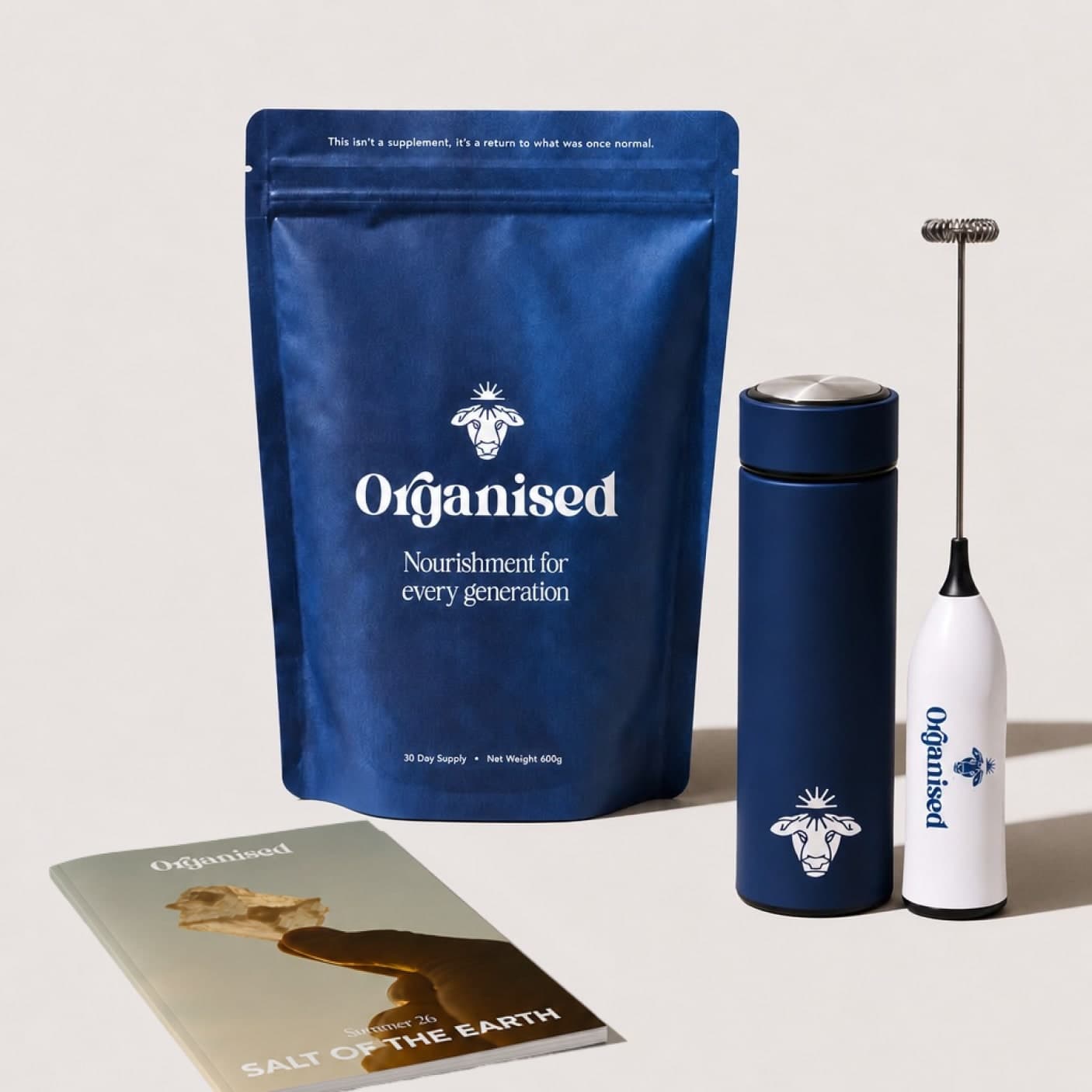
Daily blend
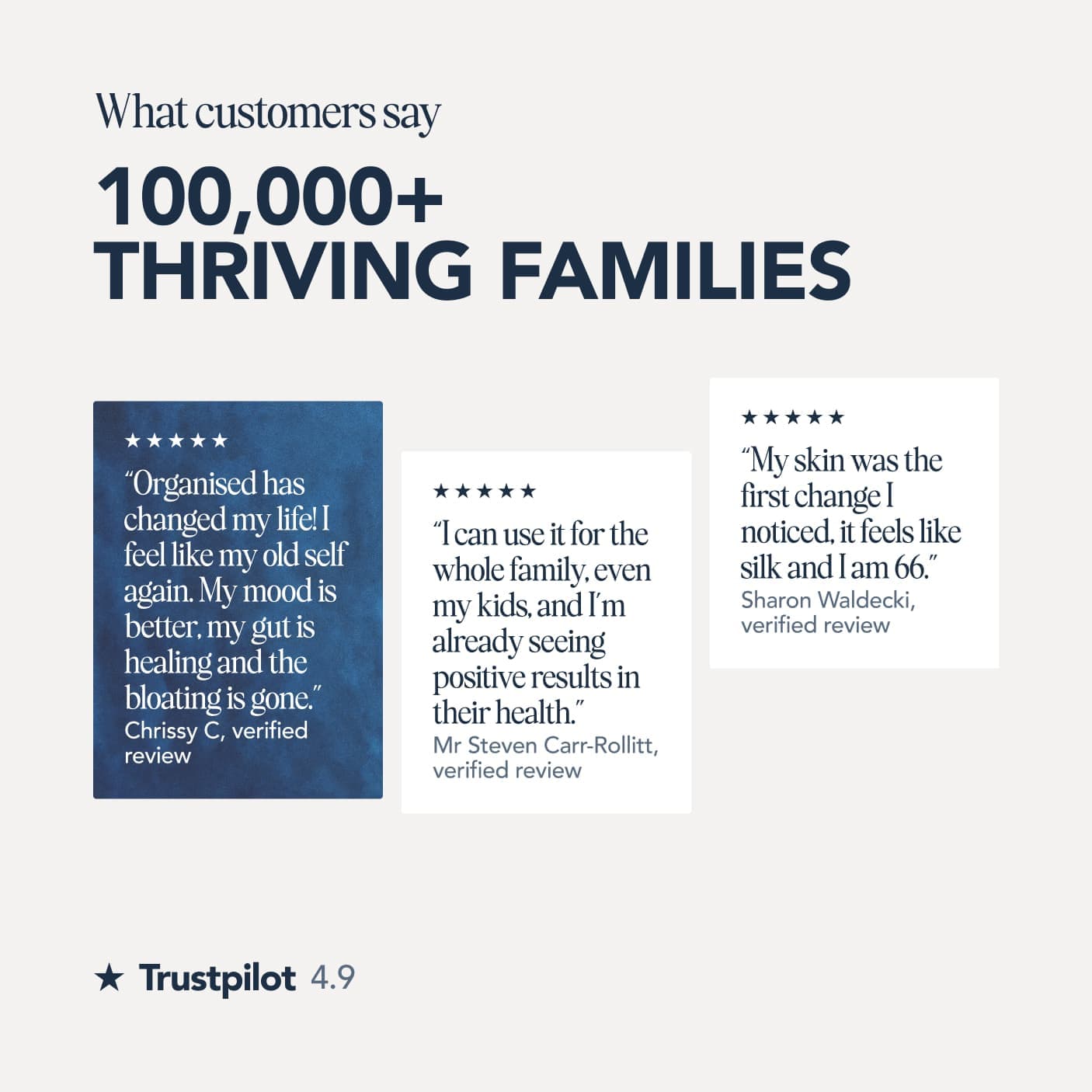
100,000+ thriving families4.9 on Trustpilot
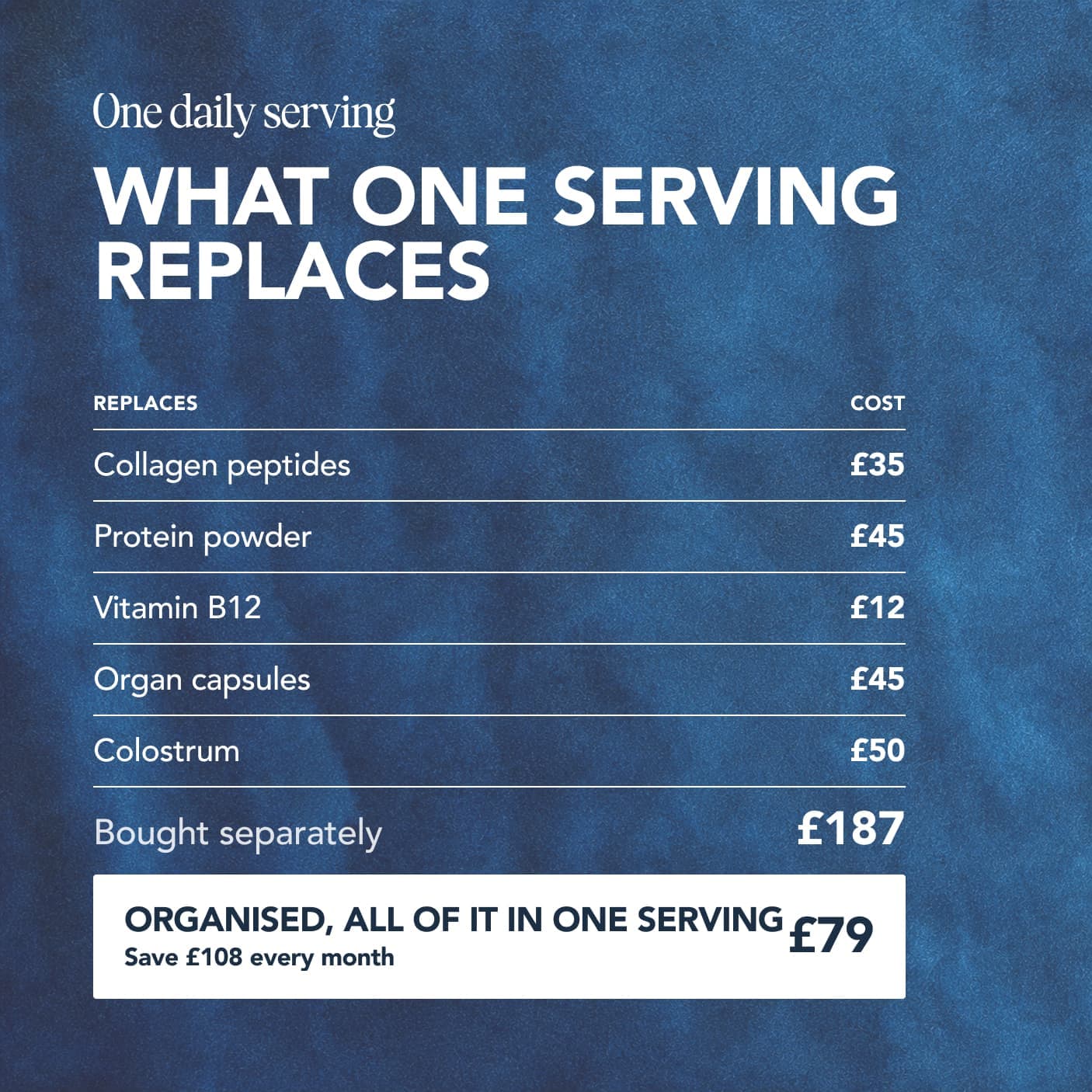
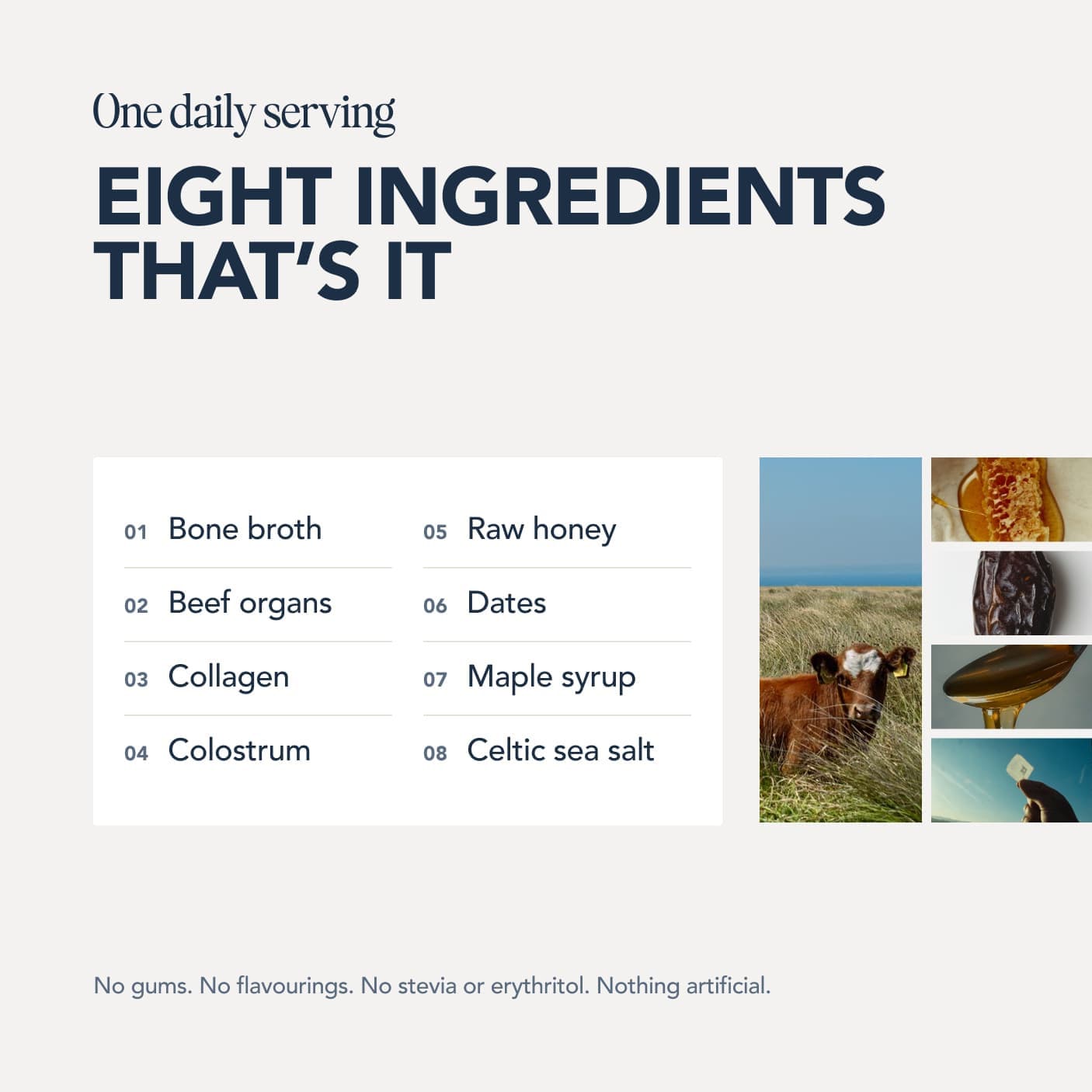
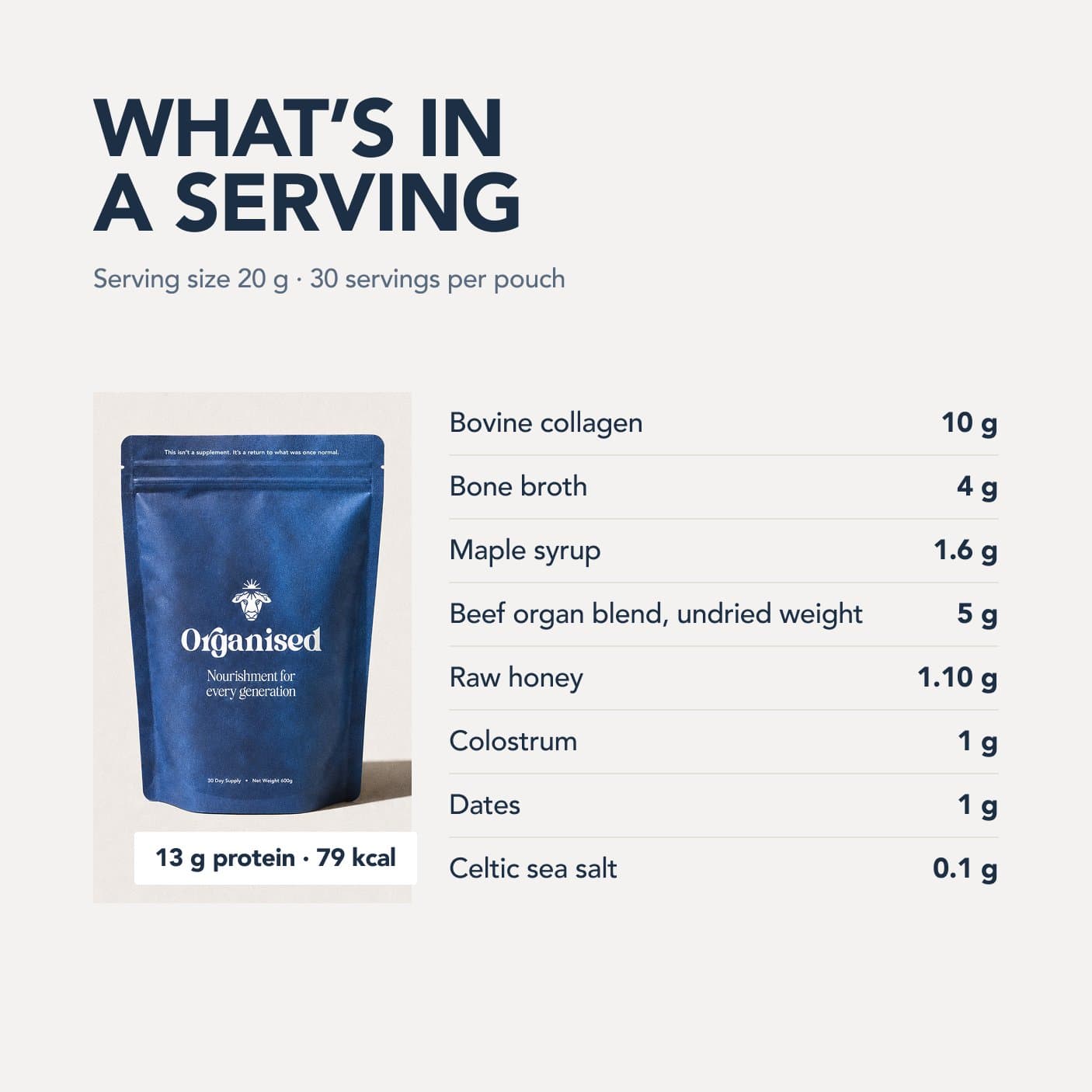
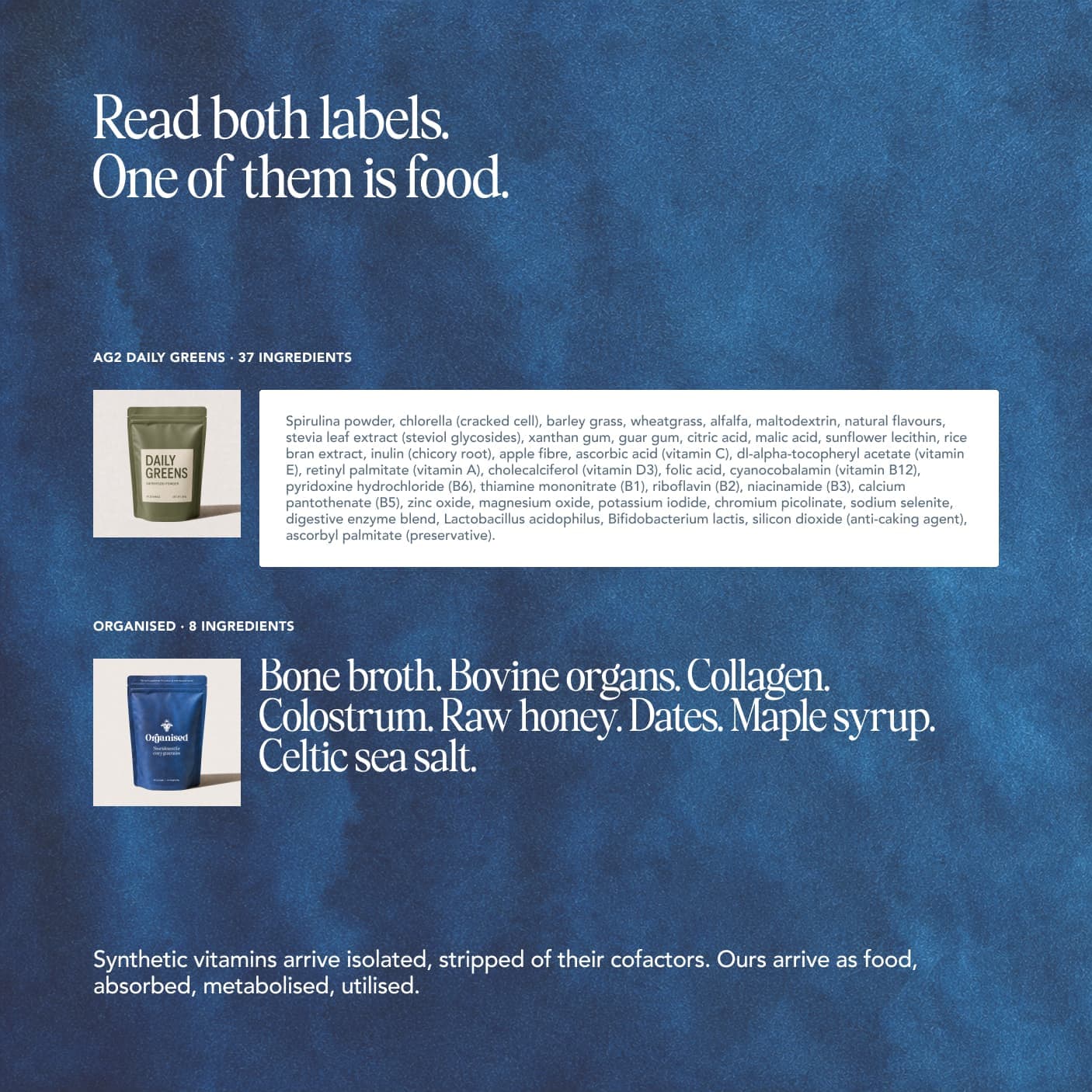
Eight real ingredients built around grass-fed beef organs, collagen and colostrum. Nothing synthetic added.
Free with your first order, worth £38. Plus £10 off the pouch with a subscription.

Free UK shipping · Made in England · 100 day money back guarantee on your first pouch · Skip, pause or cancel anytime
Making it work across life stages
Sarah mixes hers in coffee. Emma mixes hers into breakfast. Oscar mixes his into chocolate milk. Same product. Three different delivery mechanisms for three different people with three different needs and preferences.
This is what works in real families. Not a supplement that tastes terrible and feels like medicine. Not a nutrient so expensive you have to ration it. Something people will actually use consistently, in a form that fits their life.
For a grandmother rebuilding after birth, it's recovery nutrition in her coffee. For a nursing mother, it's milk production support in her meals. For a picky child, it's hidden nutrition in something they already enjoy.
What these families found
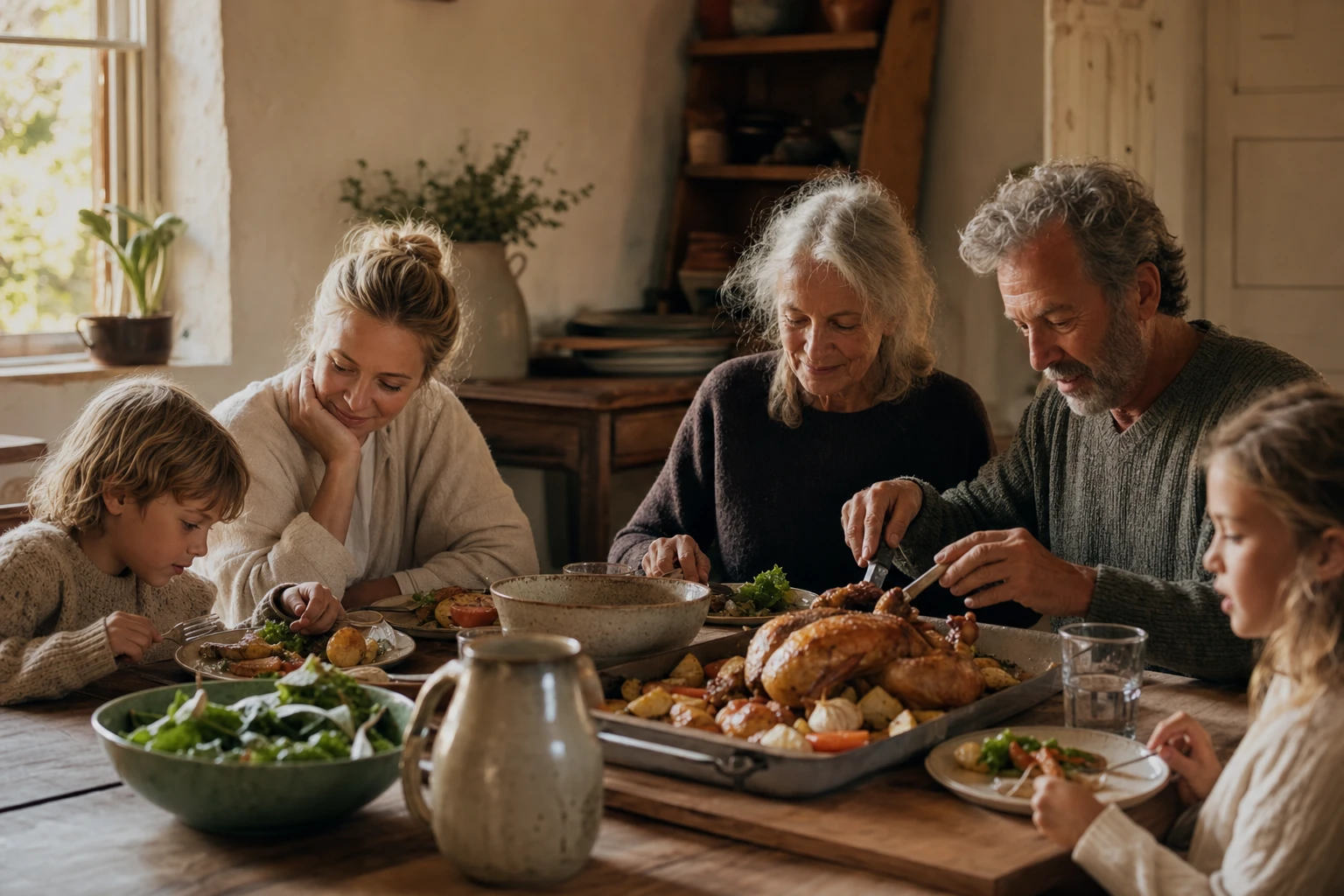
Energy returned. Mood stabilised. Hair stopped falling out. Infections decreased. Picky eating started to shift (with time and patience, not force). The family didn't have to overhaul their lives. They didn't have to cook complicated protocols. They added one thing consistently and let nutrition do the work.
They also found that talking about nutrition stopped feeling like a battle. Instead of "eat your vegetables," it became "your body is getting what it needs." For the child, it took the shame out of picky eating. For the mothers, it removed the guilt about recovery. For the grandmother, it made the invisible visible. Recovery was happening.
Real families don't need perfect nutrition. They need consistent nutrition delivered in a form they'll actually use, across the life stages they're actually living.
The bottom line
Nutrition doesn't have to be complicated. One product, used across three generations, each person using it in the way that serves them. A grandmother recovering from birth.2 A mother sustaining milk production. A child getting nutrients his diet is missing. This is what nutrition looks like in real families. Simple. Consistent. Working.
References
Every source below was checked on 27 August 2026. Each link was requested and read. Where a citation and its identifier disagreed, the citation was corrected to the record or the reference was deleted along with the sentence marker that pointed at it, and where the resolved paper turned out not to support the sentence, the sentence was cut back to what it does support. Borrowed authority is worse than none, because it looks like rigour.
- Royal College of Obstetricians and Gynaecologists. Prevention and management of postpartum haemorrhage. Green-top Guideline No. 52. 2016. rcog.org.uk/guidance.
- NIH Office of Dietary Supplements. Iron fact sheet for health professionals. ods.od.nih.gov/factsheets/Iron-HealthProfessional.
Who wrote and reviewed this guide
Niall Kiddle
Author · Founder, Organised
Niall is the founder of Organised. He started the company in 2024 after fixing his own health the slow way: in 2022 he swapped a cupboard of synthetic supplements for real food, raw milk, organ meats, bone broth and honey, and felt the difference within months.
Areas of expertise: Ancestral nutrition, Organ meats, Whole-food supplementation, Gut health, Regenerative sourcing
Read Niall's full profile
Pedro Rodrigues
Reviewer · Agronomist (farming and sourcing only)
Pedro is the agronomist Organised works with on farming and sourcing. His job on the guides is to keep the science honest: he reviews what we publish about soil health, regenerative agriculture, grazing and the way food is actually produced.
Areas of expertise: Regenerative agriculture, Agronomy, Soil health, Grass-fed farming, Food sourcing
Reviewed this guide on
Read Pedro's full profileBrowse the guides library
All guidesKeep reading
Life stage
How to Nourish Your Whole Family with Real Food
Discover how real food nutrition can feed your whole family across different ages and tastes with one simple approach, plus practical tips to make it stick.

Life stage
The Family Subscription: Nourishing Every Generation Under One Roof
One simple approach to family nutrition for babies, toddlers, children, teenagers, and parents. See how to nourish every generation under one roof.
Life stage
Zinc During Pregnancy: An Overlooked Essential
Learn why zinc during pregnancy matters: low levels are linked to higher miscarriage risk and slower fetal development. Here is what you need to know.
Real food, made effortless
Find my daily blendA few ways to use it
All recipes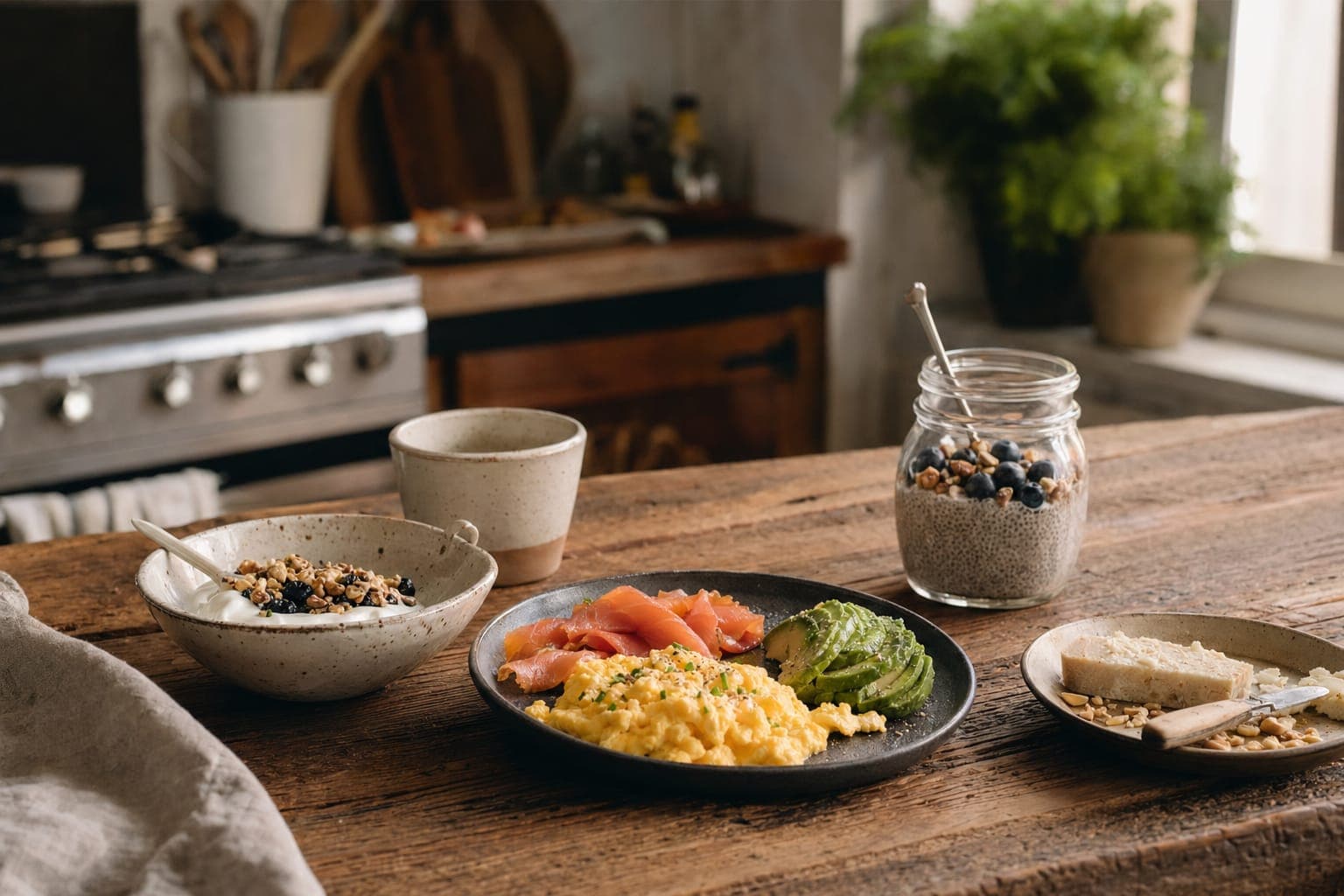
5-Minute High-Protein Breakfasts Using Organised
Quick, high-protein breakfast ideas using Organised. Five recipes you can make in minutes with real food. No fussing around.
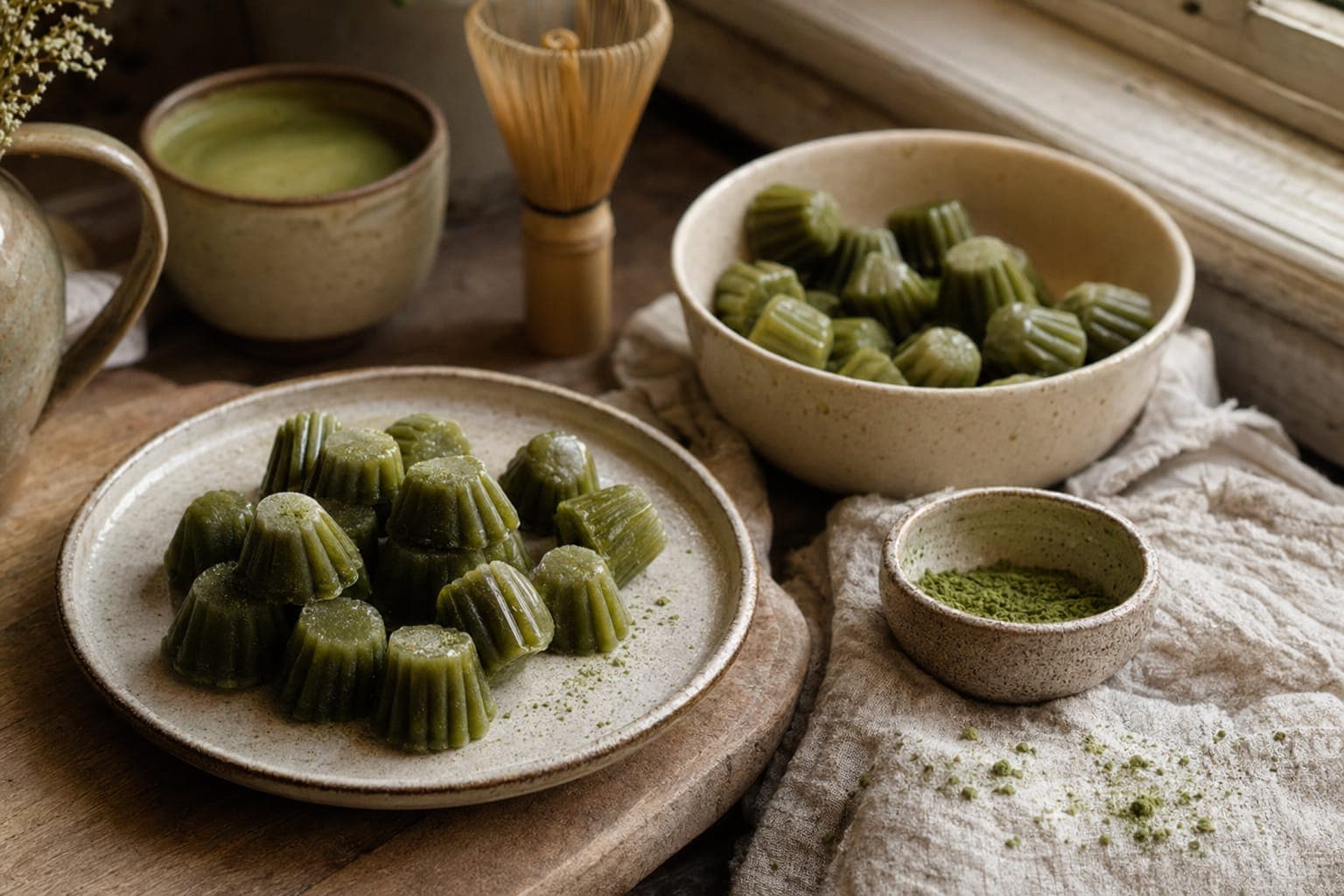
Matcha Latte Gummies with Collagen and Gelatine
Make visually stunning matcha latte gummies infused with collagen and gelatine. Simple recipe for gut-healing sweets you'll actually want to eat.

Organised Protein Pancakes: A Weekend Favourite
A high-protein pancake recipe using beef protein, eggs, and raw milk. Cooked in cast iron, naturally sweetened with banana and honey. Real food breakfast.


 Join over 100,000+ members
Build a better food system with us
The Organised community is thousands of people choosing real food and backing the farmers who grow it, all of us trying to leave the world a little better than we found it. If that is what you care about too, you belong here.