The Office Worker's Guide to All-Day Energy and Focus
It's 3 PM. Your eyes are blurring at the screen. You've had two coffees and a muffin for breakfast, a desk salad for lunch, and now nothing sounds good except a sugary snack and a nap. You're not lazy. You're underfed.
By Niall Kiddle, Founder, Organised

Reviewed by Pedro Rodrigues, Agronomist (farming and sourcing only) ·
7 min read · Published · Updated · 4 cited sources
Makers of the Organised Daily blend, a grass-fed beef organ supplement from regenerative UK farms

Office work is metabolically undemanding in one sense: you're sitting still. But cognitively, it's demanding constantly. Your brain is working hard. It's consuming glucose steadily. And if you've fed it poorly in the morning and around lunch, by mid-afternoon your blood sugar is crashing, your cortisol is rising to compensate, and you're fighting your own biology trying to stay focused.
This is not a willpower problem. This is a nutrition timing problem. Fix the nutrition and your energy transforms.

The blood sugar crash of a carb-heavy breakfast
A typical office worker breakfast is a carb-only affair: toast, cereal, a muffin, a bagel, juice. Maybe a croissant. High carbohydrate, minimal protein, minimal fat. Blood sugar spikes sharply. The pancreas releases insulin. Blood glucose drops rapidly. By 10 AM, you're exhausted and craving more carbs to bring blood sugar back up. By noon, you've crashed again.
This cycle repeats throughout the day. Each spike and crash exhausts your nervous system and leaves you depleted. You'll feel perpetually tired and increasingly irritable as the day progresses. And you'll attribute it to the work being mentally taxing. Actually, it's your blood sugar dysregulation.
The cascade looks like this: carb spike triggers insulin release, blood sugar drops below baseline, cortisol and adrenaline spike to compensate and raise blood sugar again, you get a brief energy lift before the next crash. By day's end, you're chronically stressed, your adrenals are fatigued, and your metabolism is confused.
The afternoon slump is not inevitable. It's the result of breakfast and lunch that don't stabilise your blood sugar. Change that and your energy changes.
Why protein at breakfast matters
Protein stabilises blood sugar because it's digested slowly, releasing amino acids gradually. It triggers glucagon, the hormone that stabilises glucose levels.1 It activates satiety signals, so you stay full longer.4 A breakfast with adequate protein (25-35 grams) prevents the blood sugar spike and subsequent crash.
This doesn't mean a huge meal. Three eggs, a slice of buttered toast, and a cup of tea is a complete breakfast. It's protein, fat, and carbohydrate in a ratio that stabilises. The eggs provide protein and fat. The toast provides carbohydrate. The butter provides additional fat for absorption and satiety.
Alternatively: full-fat Greek yoghurt with berries and granola, or a tin of sardines with wholemeal toast and butter, or leftovers from dinner (chicken and roasted vegetables with rice). The key is protein first. Aim for 25-35 grams of protein at breakfast.
Compare this to the standard breakfast of toast and jam (carbs only) or cereal and milk (mostly carbs, modest protein). The difference in how you feel by 10 AM is dramatic. You're stable. You're focused. You're not ravenous.

Lunch that actually sustains you
A desk salad is not lunch. Lettuce, tomatoes, and dressing is a garnish. If you eat that and nothing else, you'll be ravenous by 2 PM.
Lunch needs protein, fat, and complex carbohydrate. A tin of tuna mixed with olive oil and white beans on sourdough. Roasted chicken, roasted potatoes, and greens. Leftovers from last night's dinner: beef stew with bread and butter. These meals are balanced. They sustain energy and focus for the afternoon.
The mistake is treating lunch as a light meal because "I'm sitting at a desk." Actually, you need energy for mental work just as much as you need it for physical work. And if you skip it or eat lightly, your afternoon productivity suffers and your cortisol rises as your body panics thinking it's being starved.
Bring lunch from home if you can. It's cheaper, you control the quality, and you can batch-cook on weekends so lunch is effortless on workdays. If you're buying lunch, prioritise places that serve real food: a deli with meat and vegetables, a proper restaurant, somewhere that doesn't sell exclusively processed food.

The afternoon slump is a nutrient problem
If you eat a balanced breakfast and a proper lunch, the 3 PM crash doesn't appear. If it does, it's because one or both meals were insufficient in protein or fat.
If you need a snack, make it protein and fat. A handful of almonds and a piece of fruit. A tin of sardines. Cheese and an apple. Full-fat yoghurt. A hard-boiled egg. These are filling, they stabilise blood sugar, they don't cause the energy crash of a biscuit or a sweet bar.
Avoid the office biscuits, the sweets in the kitchen, the sugary snacks that everyone walks past. These spike your blood sugar temporarily, then crash it deeper than before. You'll feel more exhausted after them than you did before you ate them.
If your workplace culture is heavy on sugar and processed snacks, bring your own. Almonds, cheese, fruit, jerky. Have them visible and accessible. You'll be more likely to eat them if they're in front of you.

Get life-stage nutrition guides, free
Two short reads a week on eating well through pregnancy, childhood and older age.
By signing up you agree to receive emails from us. No spam, unsubscribe anytime.
Screen time and nutrient depletion
Screen time depletes magnesium and B vitamins in your eyes and nervous system. Staring at a screen for hours without a break increases cortisol, the stress hormone. Blue light from screens suppresses melatonin, which later interferes with sleep and recovery.2
This isn't about ditching screens. It's about mitigating the cost. Take a walking break every hour. Five minutes away from the screen, ideally outside in natural light. This resets your cortisol rhythm, lets your eyes relax, and provides a space for your nervous system to downshift momentarily.
If you can, have your lunch away from your desk. Or at least take a 10-minute break mid-lunch to step outside. These small breaks aren't productivity losses; they're investments. You'll focus better after them.
Ensure you're eating enough magnesium (leafy greens, nuts, seeds) and enough B vitamins (meat, fish, eggs, whole grains). These support eye health and stress resilience when you're under chronic screen strain.

Practical swaps for the desk worker
Instead of toast and jam for breakfast, eat eggs with toast and butter. Or yoghurt with berries and nuts. Or yesterday's dinner leftovers. Two minutes longer to prepare, massive difference in how you feel.
Instead of a desk salad, bring chicken with vegetables and olive oil. Or tuna with white beans. Or roasted beef with roasted potatoes. These are real meals. They sustain you.
Instead of coffee on an empty stomach, have it after food. Or better yet, have tea or water first, then coffee with breakfast. Caffeine on an empty stomach spikes cortisol and depletes magnesium further.3
Instead of skipping snacks, bring protein-and-fat snacks. Cheese, nuts, jerky, hard-boiled eggs. Keep them in your desk drawer or locker.
Instead of working through lunch, take 20 minutes to actually eat. Sit, focus on the food, digest properly. Your afternoon work will be better for it.
Energy at your desk is not about willpower or coffee. It's about feeding your brain with balanced meals, especially breakfast, and taking small movement breaks throughout the day.
Hydration and electrolytes at your desk
Water is fine, but hydration alongside electrolytes (sodium, potassium, magnesium) is better. A desk worker sipping plain water all day isn't hydrating optimally because water without electrolytes doesn't hold in your cells properly. You urinate most of it away.
Bone broth sipped warm provides hydration and electrolytes. A sprinkle of sea salt in your water provides sodium. Eating foods with potassium (white potatoes, bananas, fish) alongside your meals helps too.
The effect is subtle but real. Proper hydration and electrolyte status improves focus and reduces fatigue more than water alone. Your brain cells need minerals to function. Feed them.
1 of 9
Daily blend
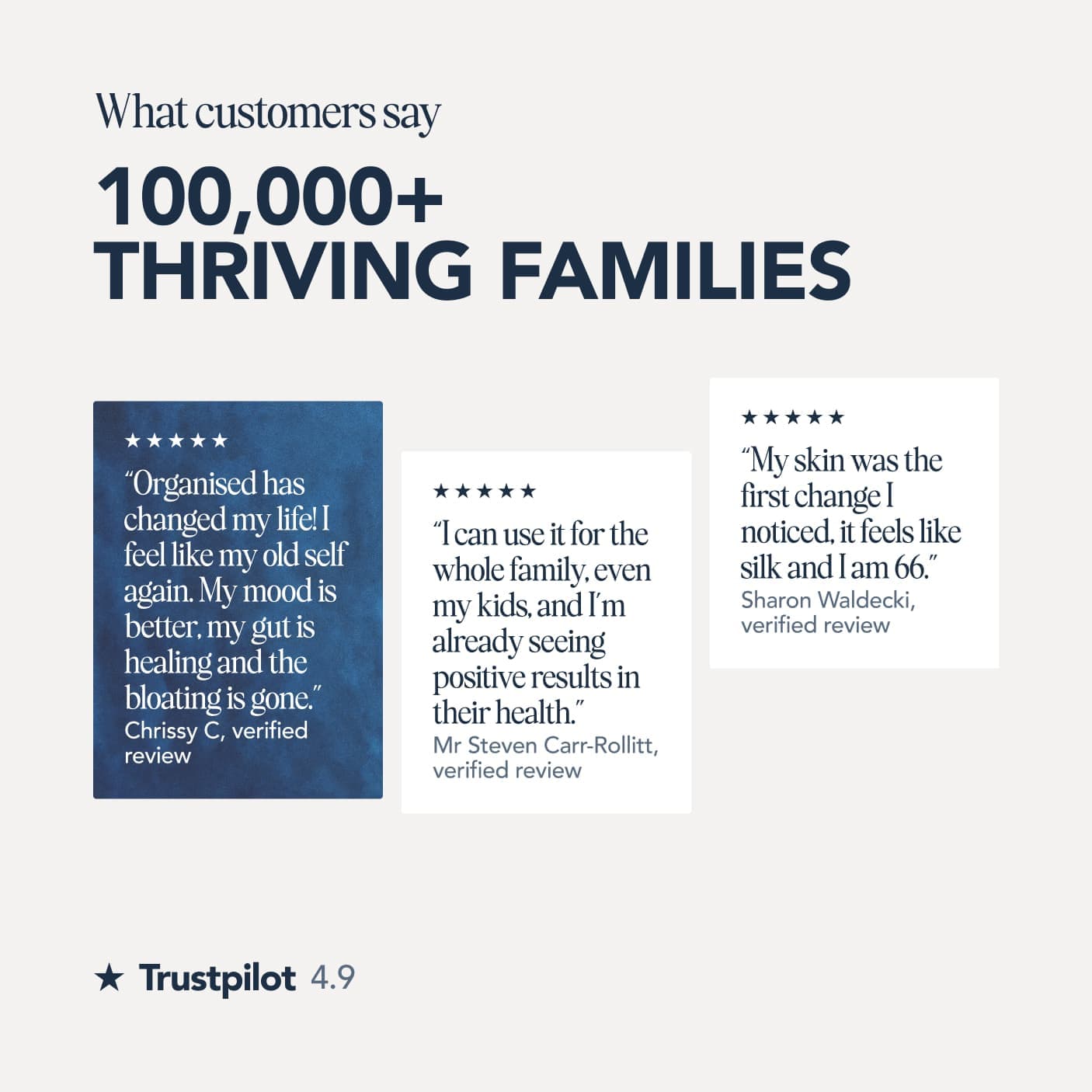
100,000+ thriving families4.9 on Trustpilot
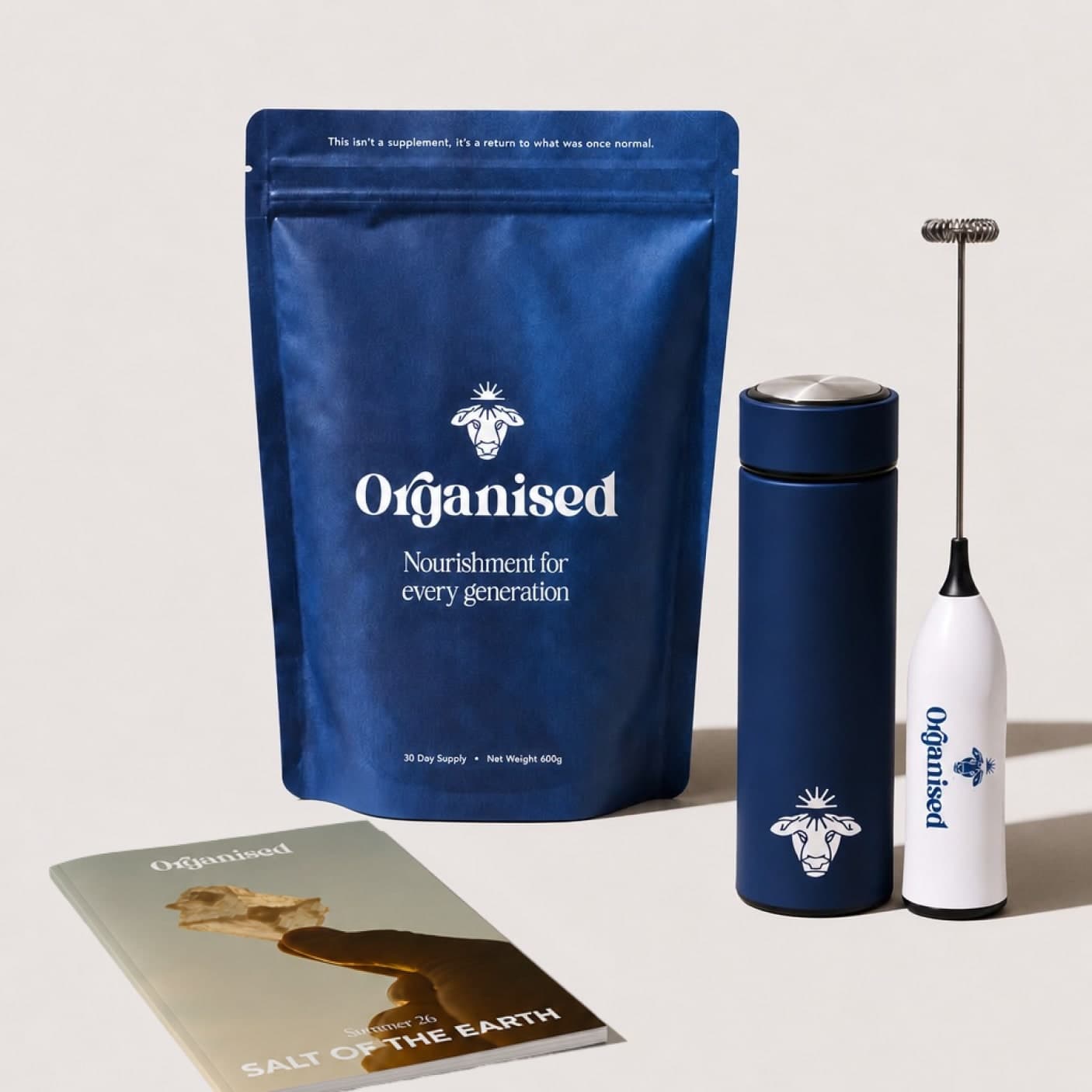
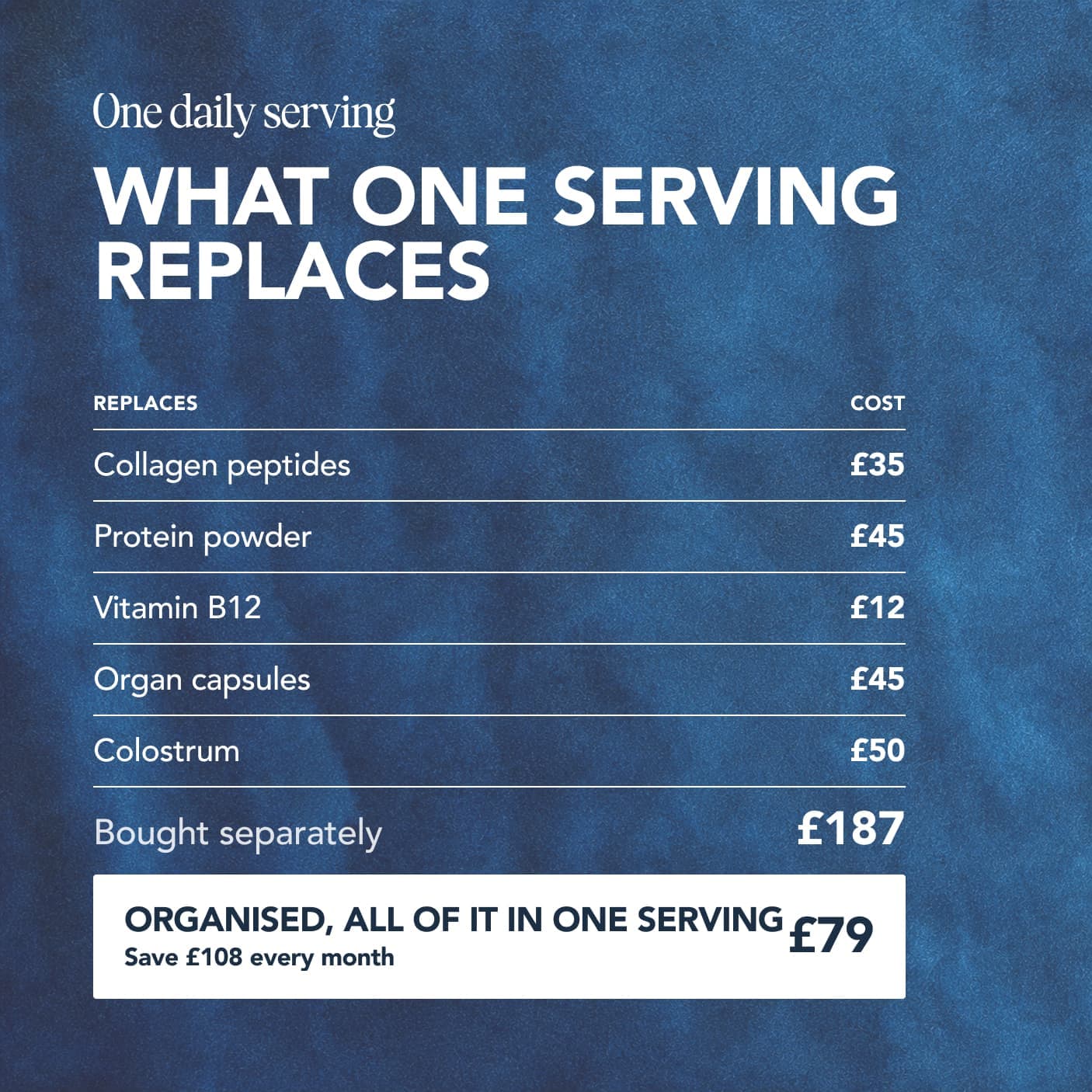
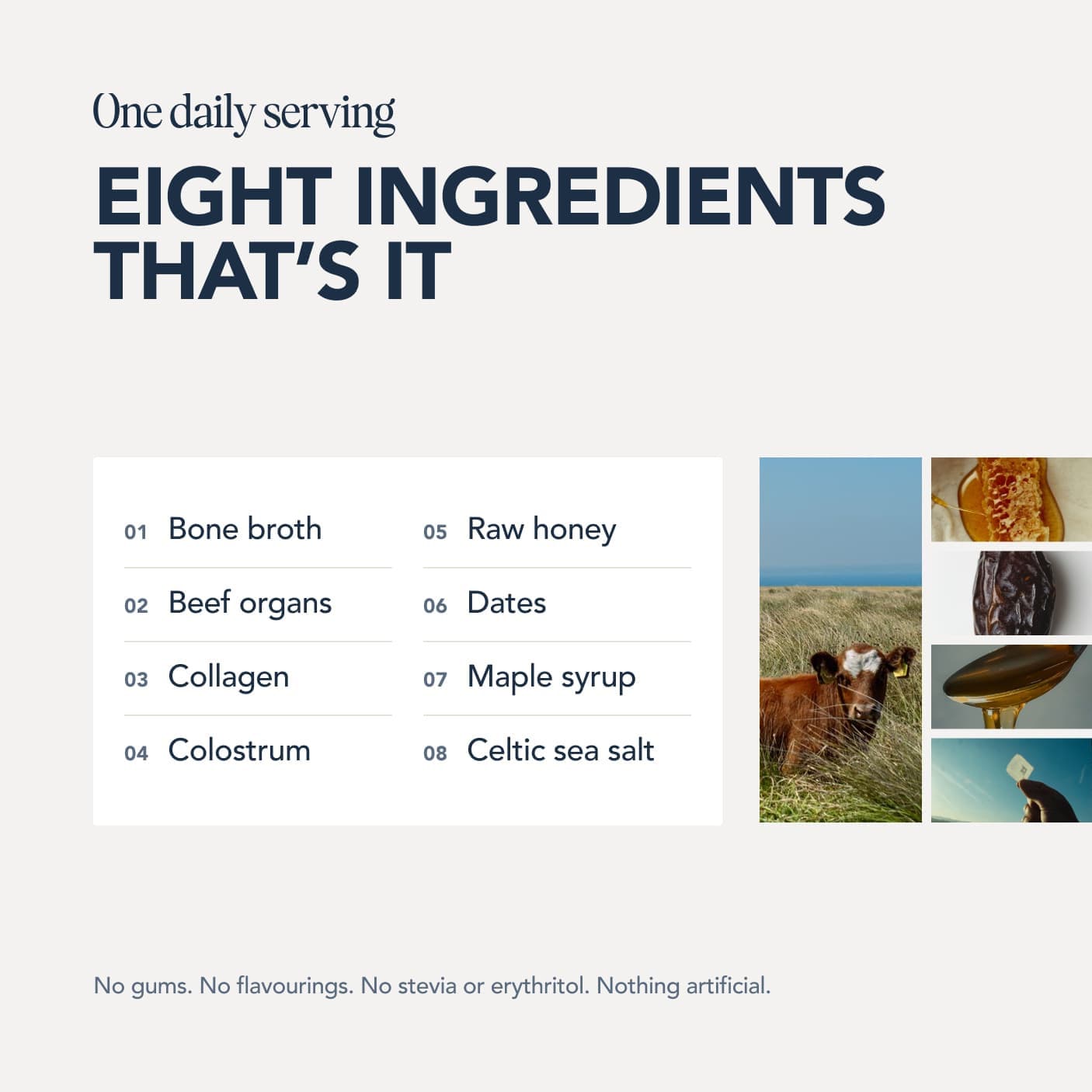
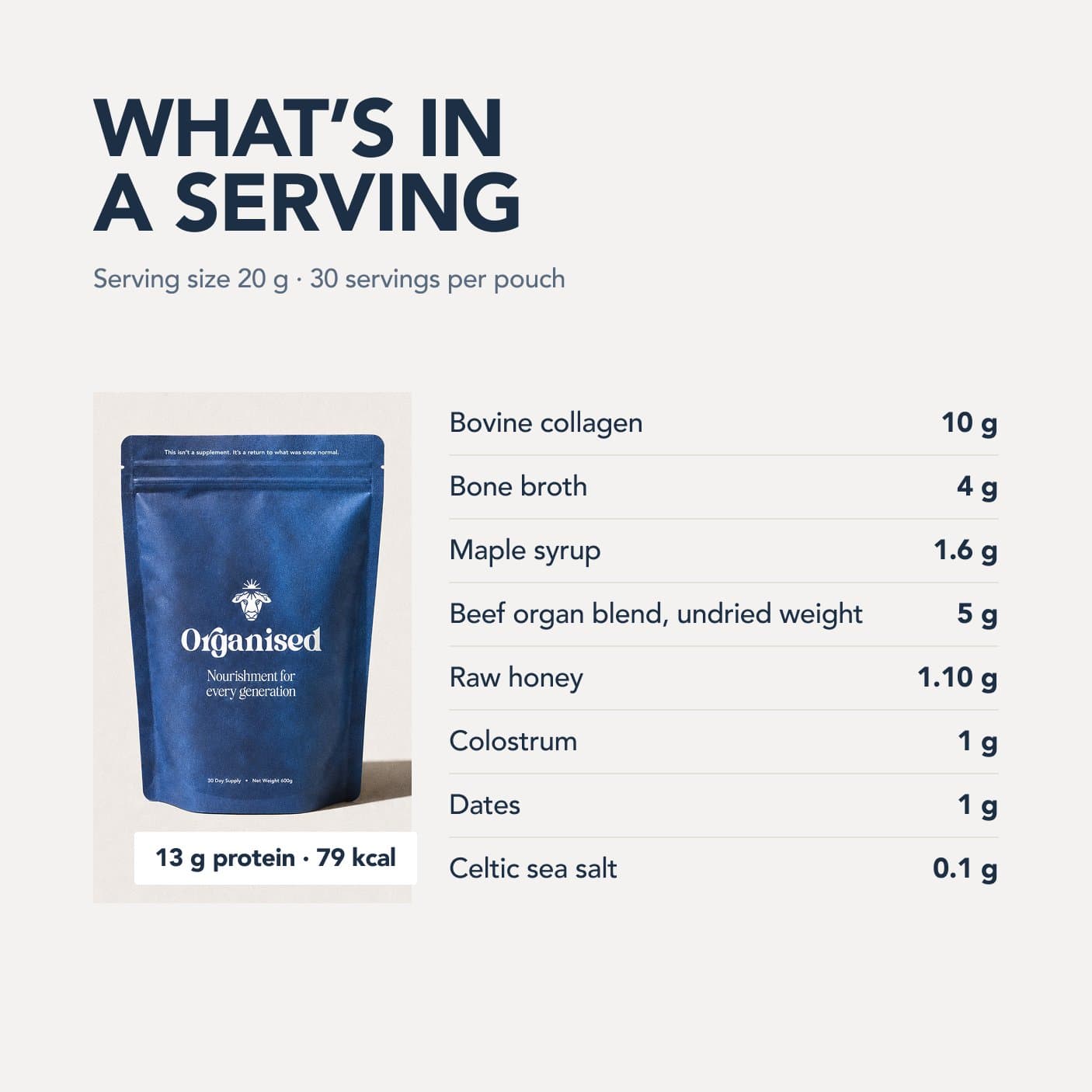
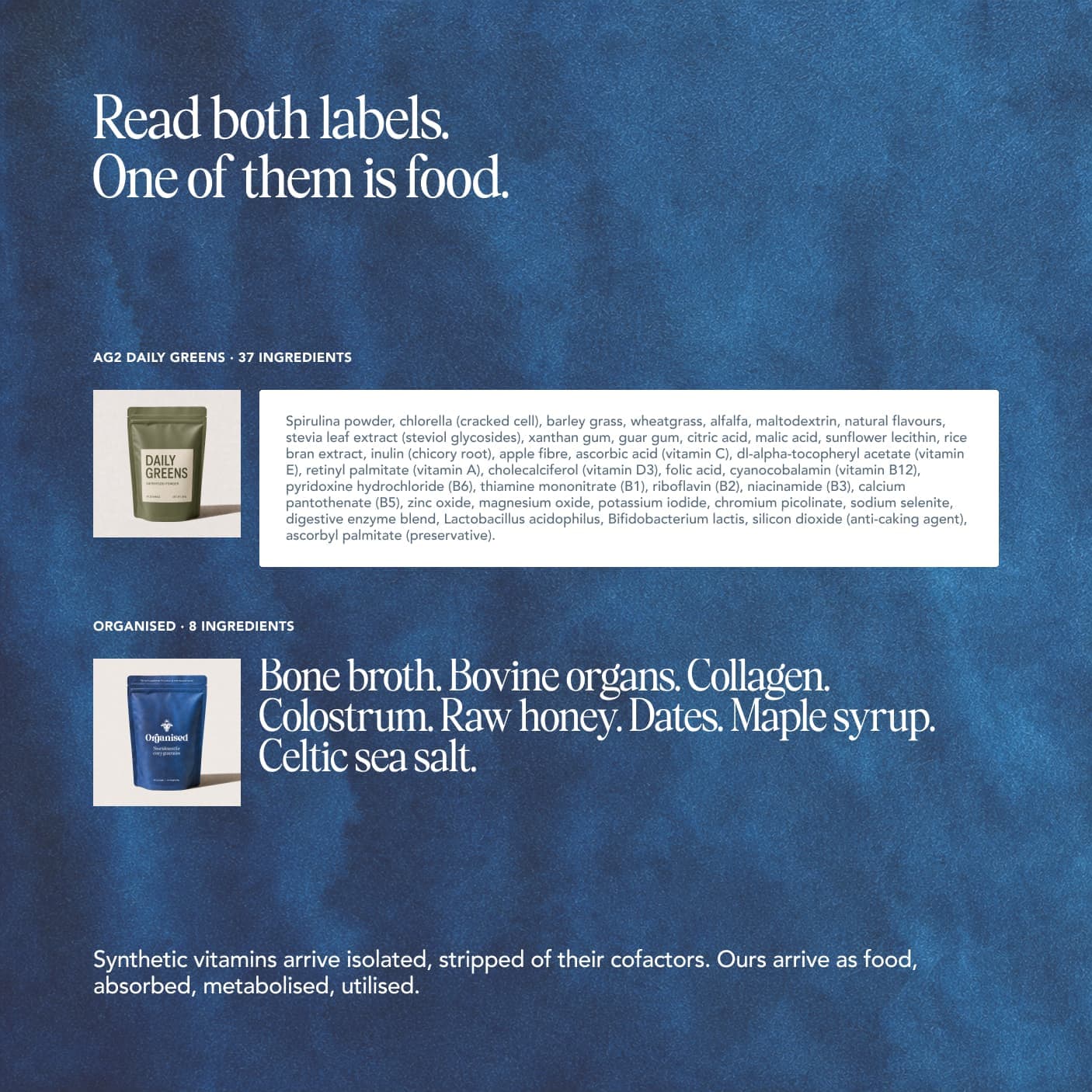
Eight real ingredients built around grass-fed beef organs, collagen and colostrum. Nothing synthetic added.
Free with your first order, worth £38. Plus £10 off the pouch with a subscription.


Free UK shipping · Made in England · 100 day money back guarantee on your first pouch · Skip, pause or cancel anytime
What happens when you prioritise nutrition at your desk
A week of protein-forward breakfasts shifts your energy measurably. By mid-morning you're not ravenous. By 3 PM you're not crashing. Your focus is steadier. Your irritability decreases. You notice it immediately because the alternative has been baseline for so long.
Within a month of consistent nutrition, your concentration deepens. You can focus for longer stretches. You make fewer mistakes. You finish work with energy left instead of completely drained.
Within three months, your overall energy stabilises. You don't have the afternoon slump at all. You finish your day genuinely tired in a good way, not exhausted in a broken way. That's the difference nutrition makes.
This isn't about willpower. This is about feeding your brain properly so it can do its job. Your office work demands cognition. Cognition requires fuel. Fuel yourself adequately and your work improves alongside your energy.
The bottom line
Start with breakfast: 25-35 grams of protein, whole carbohydrate, and fat. Eat a proper lunch away from your desk if possible. Snack on protein and fat if you need to. Take a five-minute break away from the screen every hour. Your afternoon will transform. You'll focus better, you'll be less irritable, and you'll actually finish the day with energy left. That's not luck. That's nutrition done intentionally.
References
Every source below was checked on 27 August 2026. Each PubMed, PMC and DOI identifier was resolved against NCBI or Crossref, and what it opens is printed under the citation, so you can see the link goes where the citation says without leaving the page. Where a citation and its identifier disagreed, the citation was corrected to the record or the reference was deleted along with the sentence marker that pointed at it, and where the resolved paper turned out not to support the sentence, the sentence was cut back to what it does support. Borrowed authority is worse than none, because it looks like rigour.
- Layman DK. The role of leucine in weight loss diets and glucose homeostasis. J Nutr. PubMed PMID: 12514305.Checked 27 August 2026: PMID 12514305 opens Layman DK, The role of leucine in weight loss diets and glucose homeostasis. J Nutr 2003;133(1):261S-267S. PubMed indexes it as: Review.
- Tosini G et al. Effects of blue light on the circadian system and eye physiology. Mol Vis. PMC4734149.Checked 27 August 2026: PMC4734149 opens Tosini G, Ferguson I, Tsubota K, Effects of blue light on the circadian system and eye physiology. Mol Vis 2016;22:61-72. PubMed indexes it as: Review.
- Lovallo WR et al. Cortisol responses to mental stress, exercise, and meals following caffeine intake in men and women. Pharmacol Biochem Behav. PMC2249754.Checked 27 August 2026: PMC2249754 opens Lovallo WR, Farag NH, Vincent AS et al, Cortisol responses to mental stress, exercise, and meals following caffeine intake in men and women. Pharmacol Biochem Behav 2006;83(3):441-7. PubMed indexes it as: Comparative Study, Randomized Controlled Trial.
- Westerterp-Plantenga MS et al. Dietary protein, weight loss, and weight maintenance. Annu Rev Nutr. PubMed PMID: 19400750.Checked 27 August 2026: PMID 19400750 opens Westerterp-Plantenga MS, Nieuwenhuizen A, Tomé D et al, Dietary protein, weight loss, and weight maintenance. Annu Rev Nutr 2009;29:21-41. PubMed indexes it as: Review.
Who wrote and reviewed this guide
Niall Kiddle
Author · Founder, Organised
Niall is the founder of Organised. He started the company in 2024 after fixing his own health the slow way: in 2022 he swapped a cupboard of synthetic supplements for real food, raw milk, organ meats, bone broth and honey, and felt the difference within months.
Areas of expertise: Ancestral nutrition, Organ meats, Whole-food supplementation, Gut health, Regenerative sourcing
Read Niall's full profile
Pedro Rodrigues
Reviewer · Agronomist (farming and sourcing only)
Pedro is the agronomist Organised works with on farming and sourcing. His job on the guides is to keep the science honest: he reviews what we publish about soil health, regenerative agriculture, grazing and the way food is actually produced.
Areas of expertise: Regenerative agriculture, Agronomy, Soil health, Grass-fed farming, Food sourcing
Reviewed this guide on
Read Pedro's full profileMore on occupational nutrition
View allBrowse the guides library
All guidesKeep reading

Life stage
5 Metabolism-Killing Habits of Desk Workers (And How to Fix Them)
Sitting, skipping breakfast, constant snacking, coffee before food, no sunlight. These five habits tank your metabolism. Here's how to reverse them all.
Life stage
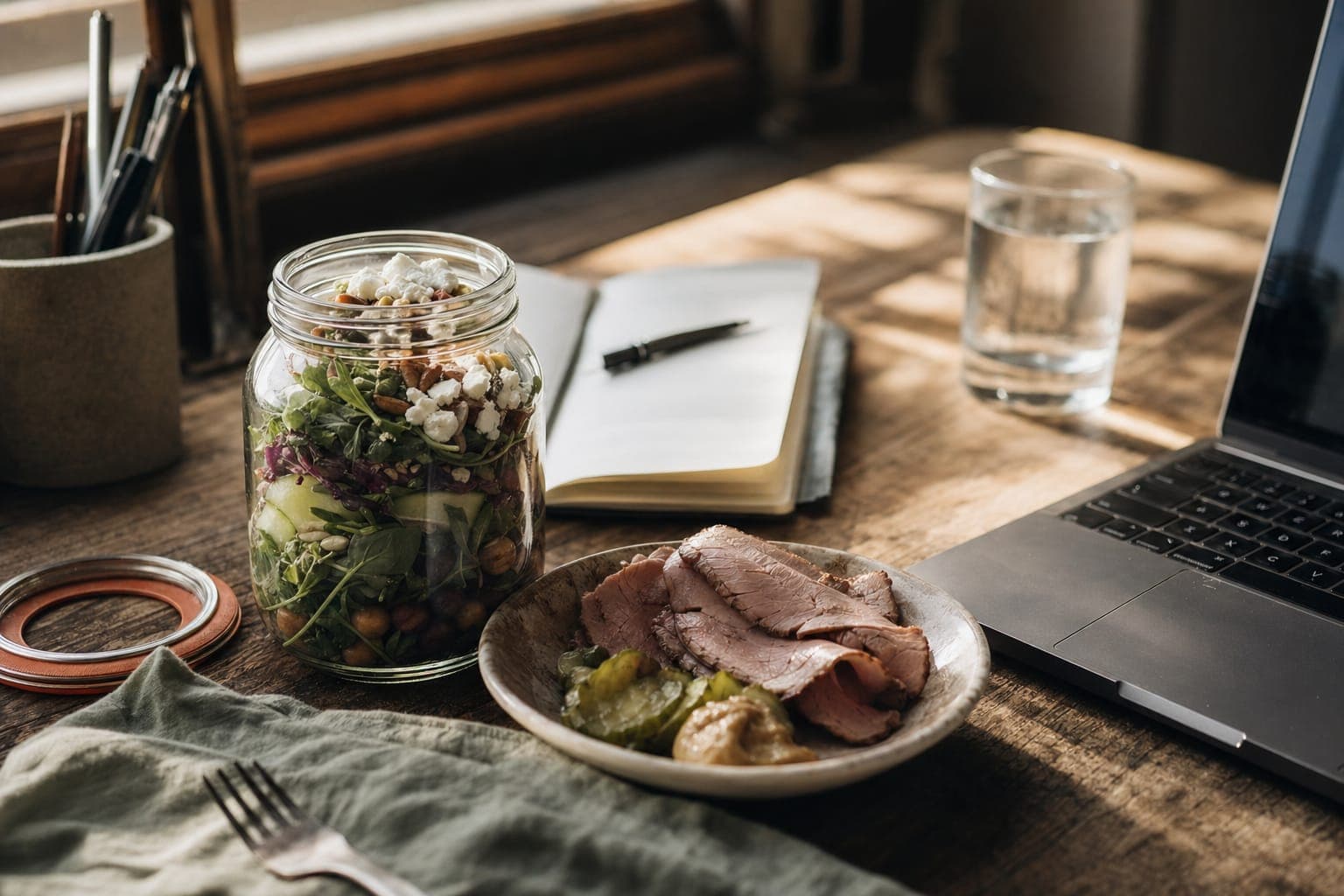
What to Pack for Lunch When You Work at a Desk All Day
Your office lunch should sustain energy until evening. Mason jar salads, cold meats, and leftovers with fat. What actually works for desk workers.

Life stage
Iron and Energy: Why So Many Women Feel Exhausted
Constant tiredness is not laziness. For many women it is iron deficiency. Learn what low iron does to your energy and the steps that can help you fix it.
Real food, made effortless
Find my daily blendA few ways to use it
All recipes
Gut-Healing Marshmallows with Collagen and Raw Honey
Learn to make gut-healing marshmallows with collagen and raw honey. A shareable treat that sneaks nutrition into every bite. Easy recipe with video tips.

Ancestral Breakfast Ideas from Around the World
Traditional breakfast recipes from cultures that got nutrition right. Japanese, Turkish, Scottish, and more. Whole-food breakfast inspiration.

How to Make Your Own Gelatine Gummies
A simple recipe for homemade gelatine gummies using grass-fed gelatine, fresh juice, and raw honey. Better than shop-bought, kids love them.


 Join over 100,000+ members
Build a better food system with us
The Organised community is thousands of people choosing real food and backing the farmers who grow it, all of us trying to leave the world a little better than we found it. If that is what you care about too, you belong here.