5 Metabolism-Killing Habits of Desk Workers (And How to Fix Them)
You sit for eight hours. You skip breakfast then drink coffee. You graze on ultra-processed snacks. You never see sunlight. By 3 PM, your metabolism is gasping for air. This isn't laziness. This is a chain of deliberate habits slowly wrecking how your body processes food.

By Niall Kiddle, Founder, Organised

Reviewed by Pedro Rodrigues, Agronomist (farming and sourcing only) ·
6 min read · Published · Updated · 4 cited sources
Makers of the Organised Daily blend, a grass-fed beef organ supplement from regenerative UK farms

Here are the five metabolism-killing habits that desk workers fall into almost automatically, and how to undo them.

1. Sitting all day without movement breaks
Your metabolism is built for movement. When you sit motionless for hours, several things happen. Your muscles stop contracting, so they stop burning glucose. Your insulin sensitivity decreases, meaning your cells resist insulin and blood sugar stays elevated.1 Your lymphatic system, which has no pump like the heart does, depends on muscle movement to circulate. Without it, fluid stagnates.
Additionally, sustained sitting increases cortisol and suppresses NEAT (non-exercise activity thermogenesis), the calories your body burns simply from moving around.2 Over months, this calorie burn deficit adds up substantially.
The fix: move every hour. A five-minute walk. Stairs up and down in the building. A conversation standing rather than sitting. Stretching at your desk. Even these small interruptions prevent the metabolic stagnation that sitting creates. If you can, use a standing desk for part of the day, or a walking meeting.
Sitting is not neutral. It is actively metabolically suppressive. Every hour you sit continuously, your insulin sensitivity drops and your metabolism slows. Move deliberately to counteract it.
2. Skipping breakfast then drinking coffee
Breakfast is metabolically foundational. Eating in the morning restarts your digestive system, initiates fat burning, and sets your cortisol and glucose rhythms for the day. Skipping breakfast and eating late in the day does the opposite: it suppresses your metabolic rate, throws your circadian rhythm off, and forces your body to rely on cortisol spikes to manage energy.
Women who skip breakfast are particularly vulnerable: their metabolic rate drops more acutely, and if they're menstruating, their iron needs make the skipped breakfast an iron loss they cannot afford.
The fix is simple: eat something within an hour of waking. It does not have to be large. Eggs and toast. Yoghurt and berries. A tin of sardines and bread. Something with protein and a small amount of carbohydrate. This single change normalises your metabolic rate and stabilises your energy throughout the day.

3. Grazing on ultra-processed foods
The office biscuits, the snack bars, the crisps, the sweets. These are hyper-palatable engineered foods designed to create cravings, not satiety. They spike blood sugar, trigger insulin, and then leave you hungry again an hour later. Eating them frequently keeps you in a state of metabolic chaos, constantly spiking and crashing, never reaching actual satiety.
Ultra-processed foods also displace whole foods. If you're snacking on biscuits at 10 AM, you're not eating nuts, or fruit, or cheese. And you're unlikely to eat a proper lunch because you're not actually hungry (just chasing the blood sugar high).
The fix: stop bringing them into the office. Or if they're there, don't buy them. If others bring them and leave them in the kitchen, stay away. The moment you remove the temptation from proximity, you'll make different choices. Bring whole-food snacks instead: almonds, cheese, fruit, jerky. These satisfy and stabilise rather than dysregulate.
4. Coffee on an empty stomach
Caffeine on an empty stomach spikes cortisol acutely. Your body interprets it as a stress signal.3 Cortisol rises, adrenaline rises, and you get an energy lift. But you're also burning magnesium (which caffeine depletes), and you're setting your nervous system into a sympathetic (stressed) state before you've even started your day.
Additionally, caffeine suppresses hunger signals. You drink coffee first thing, suppress your appetite, and then you're not hungry for breakfast. But your body still needs the nutrition. You're just overriding the signal.
The fix: eat something first. Even something small. Then have coffee 30-60 minutes later, after you've had a meal with protein and fat. The food buffers the caffeine spike, prevents the cortisol surge, and prevents the appetite suppression. You'll still get the caffeine benefit without the metabolic cost.

Get life-stage nutrition guides, free
Two short reads a week on eating well through pregnancy, childhood and older age.
By signing up you agree to receive emails from us. No spam, unsubscribe anytime.
5. No exposure to natural light
Natural light synchronises your circadian rhythm.4 Your cortisol should be high in the morning (to wake you up), drop steadily throughout the day, and be low at night (to let you sleep). Melatonin should be low in the morning, rising as the sun sets.
If you work in an office with fluorescent lighting and never go outside, your circadian rhythm becomes confused. Your cortisol may not peak properly in the morning, leaving you fatigued. It may not drop properly at night, leaving you wired at bedtime. This dysregulation affects everything: your appetite, your sleep, your energy, your metabolism.
Additionally, sunlight exposure optimises vitamin D production, supports immune function, and enhances mood. Working indoors all day deprives you of all of these benefits.
The fix: get outside for at least 15-20 minutes in the morning, ideally within the first hour after waking. This resets your cortisol and circadian rhythm for the entire day. If you can, take your breaks or lunch outside. If you genuinely cannot get outside, sit by a window with natural light. The difference in how you feel is substantial.

How to reverse the damage
Start with one change. Add a five-minute walk at lunch. Or eat breakfast tomorrow morning. Or get outside for 15 minutes when you arrive at work. Do one change for a week, notice how you feel, then add the next one.
The cascade of fixes looks like this: light exposure in the morning resets your cortisol, breakfast stabilises your blood sugar, movement throughout the day improves insulin sensitivity, avoiding ultra-processed foods prevents the constant spiking and crashing, and skipping coffee-before-food prevents the cortisol spike and appetite suppression.
Together, these changes will restore your metabolism. You'll have more energy, more stable moods, better digestion, and you'll likely lose weight without restricting. Your metabolism will normalise because you're finally giving it the conditions it needs to function properly.






1 of 9
Daily blend
100,000+ thriving families4.9 on Trustpilot
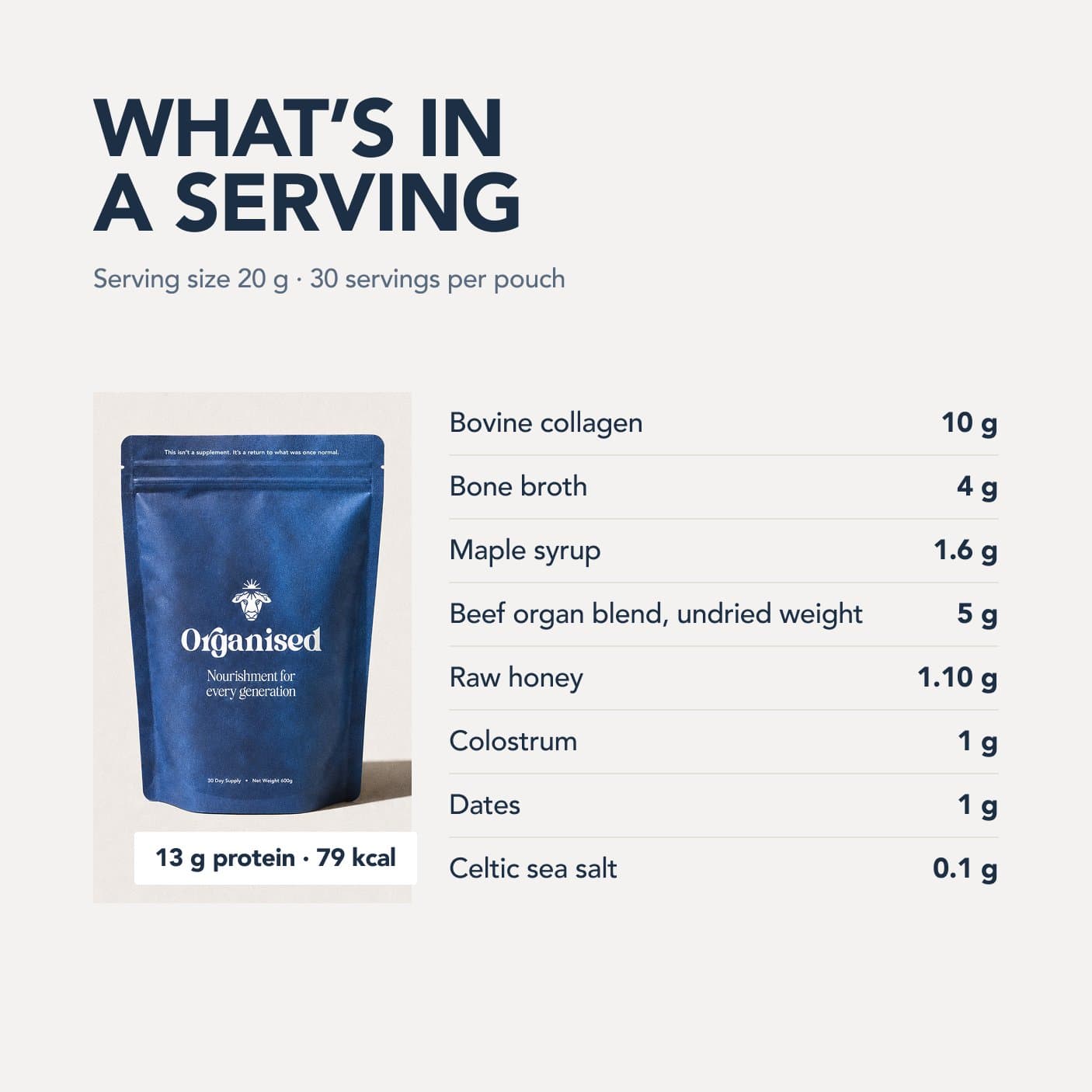
Eight real ingredients built around grass-fed beef organs, collagen and colostrum. Nothing synthetic added.
Free with your first order, worth £38. Plus £10 off the pouch with a subscription.


Free UK shipping · Made in England · 100 day money back guarantee on your first pouch · Skip, pause or cancel anytime
How to actually fix these five habits
The good news is that each of these five metabolism-killing habits is reversible. Skip breakfast and replace it with eggs and bacon. Your blood sugar stabilises within days. Stop excessive coffee and add a proper meal. Your energy crashes initially, then stabilises at a sustainable level. Start moving every 30 minutes. Your circulation improves, your digestion improves, your mental clarity improves.
The key is consistency. One week of fixing these habits won't undo years of damage. But three months of consistently eating breakfast, reducing coffee, adding movement, and prioritising whole foods will transform how you feel, how you look, and how your body functions. Your metabolism isn't broken or permanently damaged. It's just been neglected and chronically overstimulated by the wrong inputs. Fix these five habits consistently and watch your energy, body composition, and mental clarity transform.
The bottom line
You don't have a slow metabolism. You have metabolic suppression caused by these five habits. Reverse them: move every hour, eat breakfast, eliminate ultra-processed snacks, eat before coffee, and get outside for natural light. Your metabolism will respond. You've just been asking it to work properly while systematically undermining it. Stop that, and watch what changes.
References
Every source below was checked on 27 August 2026. Each PubMed, PMC and DOI identifier was resolved against NCBI or Crossref, and what it opens is printed under the citation, so you can see the link goes where the citation says without leaving the page. Where a citation and its identifier disagreed, the citation was corrected to the record or the reference was deleted along with the sentence marker that pointed at it, and where the resolved paper turned out not to support the sentence, the sentence was cut back to what it does support. Borrowed authority is worse than none, because it looks like rigour.
- Dunstan DW et al. Breaking up prolonged sitting reduces postprandial glucose and insulin responses. Diabetes Care. 2012;35(5):976-83. PMID: 22374636.Checked 27 August 2026: PMID 22374636 opens Dunstan DW, Kingwell BA, Larsen R et al, Breaking up prolonged sitting reduces postprandial glucose and insulin responses. Diabetes Care 2012;35(5):976-83. PubMed indexes it as: Randomized Controlled Trial.
- Levine JA. Non-exercise activity thermogenesis (NEAT). Best Pract Res Clin Endocrinol Metab. 2002;16(4):679-702. PMID: 12468415.Checked 27 August 2026: PMID 12468415 opens Levine JA, Non-exercise activity thermogenesis (NEAT). Best Pract Res Clin Endocrinol Metab 2002;16(4):679-702. PubMed indexes it as: Review.
- Lovallo WR et al. Cortisol responses to mental stress, exercise, and meals following caffeine intake in men and women. Pharmacol Biochem Behav. 2006;83(3):441-7. PMID: 16631247.Checked 27 August 2026: PMID 16631247 opens Lovallo WR, Farag NH, Vincent AS et al, Cortisol responses to mental stress, exercise, and meals following caffeine intake in men and women. Pharmacol Biochem Behav 2006;83(3):441-7. PubMed indexes it as: Comparative Study, Randomized Controlled Trial.
- Wright KP Jr et al. Entrainment of the human circadian clock to the natural light-dark cycle. Curr Biol. 2013;23(16):1554-8. PMID: 23910656.Checked 27 August 2026: PMID 23910656 opens Wright KP Jr, McHill AW, Birks BR et al, Entrainment of the human circadian clock to the natural light-dark cycle. Curr Biol 2013;23(16):1554-8.
Who wrote and reviewed this guide
Niall Kiddle
Author · Founder, Organised
Niall is the founder of Organised. He started the company in 2024 after fixing his own health the slow way: in 2022 he swapped a cupboard of synthetic supplements for real food, raw milk, organ meats, bone broth and honey, and felt the difference within months.
Areas of expertise: Ancestral nutrition, Organ meats, Whole-food supplementation, Gut health, Regenerative sourcing
Read Niall's full profile
Pedro Rodrigues
Reviewer · Agronomist (farming and sourcing only)
Pedro is the agronomist Organised works with on farming and sourcing. His job on the guides is to keep the science honest: he reviews what we publish about soil health, regenerative agriculture, grazing and the way food is actually produced.
Areas of expertise: Regenerative agriculture, Agronomy, Soil health, Grass-fed farming, Food sourcing
Reviewed this guide on
Read Pedro's full profileMore on occupational nutrition
View allBrowse the guides library
All guidesKeep reading

Life stage
The Office Worker's Guide to All-Day Energy and Focus
Afternoon slumps are avoidable. Master protein at breakfast, stable blood sugar, and strategic snacking to maintain your energy and focus at your desk.

Life stage
What to Pack for Lunch When You Work at a Desk All Day
Your office lunch should sustain energy until evening. Mason jar salads, cold meats, and leftovers with fat. What actually works for desk workers.

Life stage
The Nutrients Children Need Most (And Aren't Getting)
The nutrients children are deficient in: iron, zinc, B12, choline, DHA, K2. Food sources and why modern diets miss them.
Real food, made effortless
Find my daily blendA few ways to use it
All recipes
How to Make Bone Marrow Butter
Roast grass-fed marrow bones, scoop the marrow, and mix with butter and herbs. A nutrient-dense spread with fat-soluble vitamins.

Gut-Healing Marshmallows with Collagen and Raw Honey
Learn to make gut-healing marshmallows with collagen and raw honey. A shareable treat that sneaks nutrition into every bite. Easy recipe with video tips.

Energy Balls with Organised, Dates and Raw Honey
Make no-bake energy balls with Organised, dates, and raw honey. Perfect lunch box, pre-workout, or on-the-go snack. Simple recipe.


 Join over 100,000+ members
Build a better food system with us
The Organised community is thousands of people choosing real food and backing the farmers who grow it, all of us trying to leave the world a little better than we found it. If that is what you care about too, you belong here.