Digestive Changes After 50: How to Maintain Gut Health
Your digestion is different at 52 than it was at 32, and you feel it. Food sits heavier. You're bloated after meals that never used to bother you. You might be constipated one week and loose the next. Your energy dips because you're not absorbing nutrients like you used to. That's not weakness. That's physiology.
By Niall Kiddle, Founder, Organised

Reviewed by Pedro Rodrigues, Agronomist (farming and sourcing only) ·
5 min read · Published · Updated · 3 cited sources
Makers of the Organised Daily blend, a grass-fed beef organ supplement from regenerative UK farms

After 50, your digestive system undergoes measurable changes. These are predictable. They're well-studied. And they're almost universally ignored by doctors who tell you it's just ageing. It's not. It's maldigestion. It's fixable. And it starts with understanding what's actually changing.
What actually changes in your digestive system
Three things shift. Your stomach produces less hydrochloric acid, or HCl. Your pancreas produces fewer digestive enzymes. And your intestinal lining becomes less efficient at moving nutrients across it. These aren't dramatic crashes. They're gradual declines that compound.
Studies show that by 60, roughly 10-30% of people have severely reduced stomach acid production, a condition called achlorhydria or hypochlorhydria.1 Most people experience some decline. This is normal. It's also a problem.
Stomach acid does more than just break down food. It signals your pancreas to release enzymes. It kills pathogens that might otherwise colonise your gut. It helps your body absorb minerals like iron, calcium, and zinc. When acid production drops, all of these processes become less efficient.
Antacids and acid-suppressing medications are the worst possible response to this change. They're the opposite of what your ageing digestion needs.
Why stomach acid matters more than anyone admits
After 50, if you're bloated and uncomfortable after meals, your instinct is probably to take an antacid. Your GP might prescribe a proton pump inhibitor. This is backwards. If you have low acid production, blocking what little acid you have makes digestion worse, not better.
Low stomach acid causes the exact same symptoms as high stomach acid: bloating, discomfort, a feeling of fullness. The difference is in what's actually happening. High acid produces a sharp, burning pain in the chest. Low acid produces a dull bloating that sits in your upper abdomen for hours after eating.
If you're reaching for antacids regularly after 50, the first step is to confirm whether your stomach acid is actually elevated. Most of the time it isn't. Your acid is low, and you're treating it by blocking what little you have left.
Instead, support acid production. Apple cider vinegar before meals. Bitters. Ginger and lemon. These are old remedies that work because they signal your stomach to produce more acid, not less.
The enzyme problem after 50
Your pancreas produces enzymes that break down protein, fat, and carbohydrates. After 50, pancreatic enzyme output begins to decline. It's a slow decline, but it's measurable.
This means a meal of protein becomes harder to break down. A large meal of fat becomes harder to digest. Carbohydrates move through your gut more slowly. Your microbiota are then eating this partially digested food, fermenting it, producing gas and bloating.
You feel this as fullness for hours after eating, as bloating that gets worse throughout the day, as energy crashes because your food isn't being broken down to glucose efficiently.
The solution isn't to eat less. It's to eat smaller meals and prioritise foods your body can digest easily.

How nutrient absorption shifts
Iron, calcium, zinc, and B vitamins all require adequate stomach acid for absorption.3 Vitamin B12 specifically requires intrinsic factor, a compound produced in your stomach.2 As acid production drops and B12 absorption becomes less efficient, many people over 50 develop B12 insufficiency without obvious reasons.
Iron absorption falls too. A 65-year-old eating the same amount of iron as a 35-year-old absorbs less of it. You develop iron insufficiency, feel chronically tired, and your GP might put you on an iron supplement, which you can't absorb properly because your stomach acid is low.
This is why whole food matters more after 50, not less. A tablet of iron is worthless without adequate acid. A piece of beef liver, eaten with something acidic, is still bioavailable because it arrives with supporting nutrients that help absorption.
Get life-stage nutrition guides, free
Two short reads a week on eating well through pregnancy, childhood and older age.
By signing up you agree to receive emails from us. No spam, unsubscribe anytime.
Foods that support digestion after 50
Bone broth is foundational. It's been partially broken down already (through long cooking), so your digestive system has less work to do. It contains amino acids like glycine that support stomach acid production. Collagen is pre-broken-down, so it doesn't sit in your stomach fermenting.
Slow-cooked meats. Beef braised for hours becomes soft and easier to digest than a grilled steak. The long cooking process partially breaks down the protein. Your stomach acid and enzymes then finish the job more easily.
Fermented foods: sauerkraut, kefir, aged cheese, miso. These arrive partially pre-digested. The fermentation process breaks down some of the protein and fibre, making your job easier. They also feed beneficial bacteria that support digestion.
Full-fat dairy if tolerated. The fat slows digestion slightly, which actually helps nutrient absorption. Fat-soluble vitamins like A and D need fat to be absorbed. Whole milk, full-fat yoghurt, and butter all support digestion and nutrient uptake.
- Bone broth as a base for soups and sauces daily, or consumed on its own
- Slow-cooked beef or lamb, braised or stewed, three to four times weekly
- Fish, particularly white fish, which is easier to digest than red meat
- Eggs, boiled or scrambled, which are easier to digest than raw or fried
- Fermented vegetables, a small portion alongside each meal
- Ginger and lemon in warm water before meals, to stimulate digestive secretions
- Apple cider vinegar, one tablespoon in water before meals
Avoid large meals. Eat three moderate meals instead of two large ones. Avoid difficult-to-digest foods: tough meat fibres, high-fibre vegetables if your digestion is weak, excessive fat in a single meal. These all increase the workload on a system that's already less efficient.
1 of 9
Daily blend
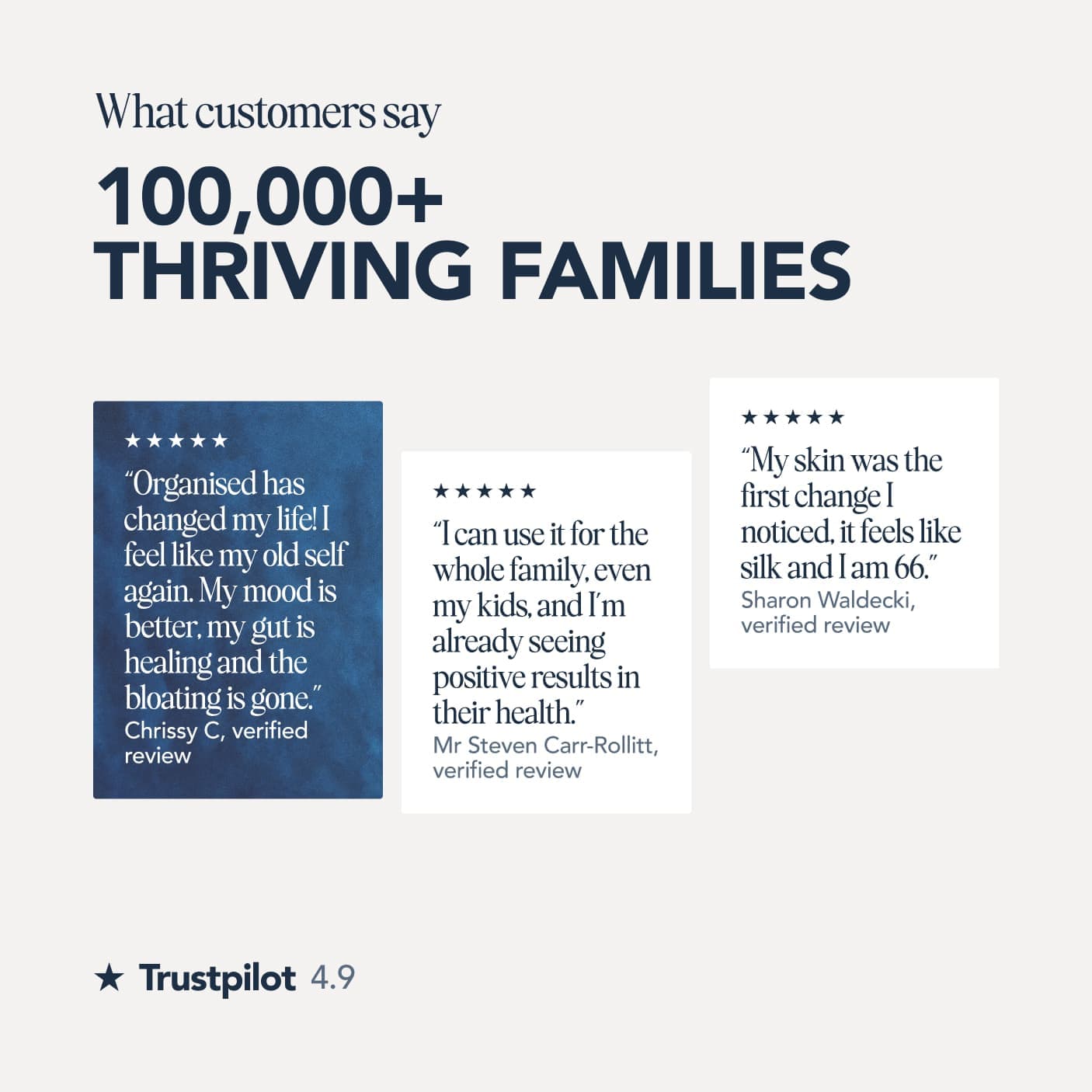
100,000+ thriving families4.9 on Trustpilot
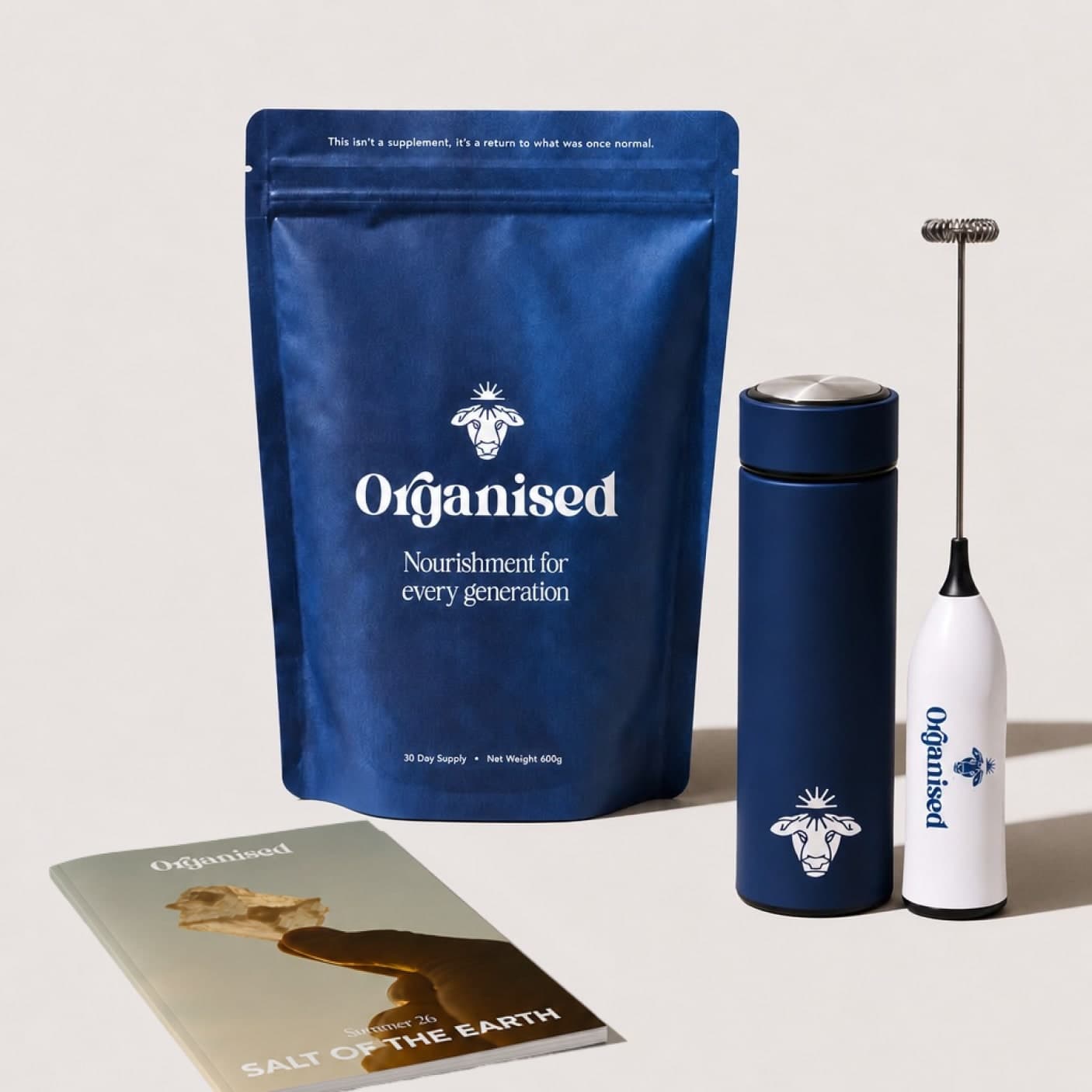
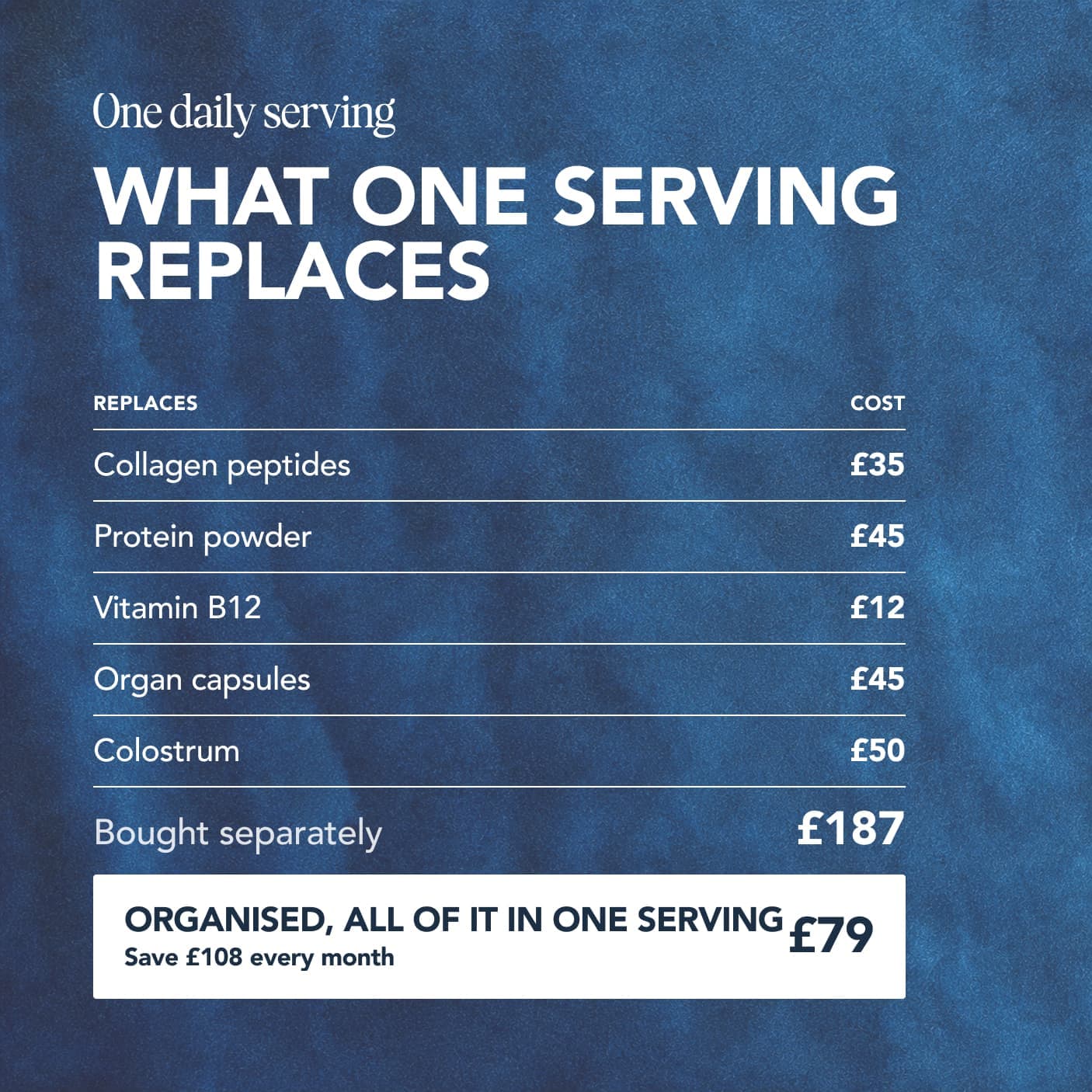
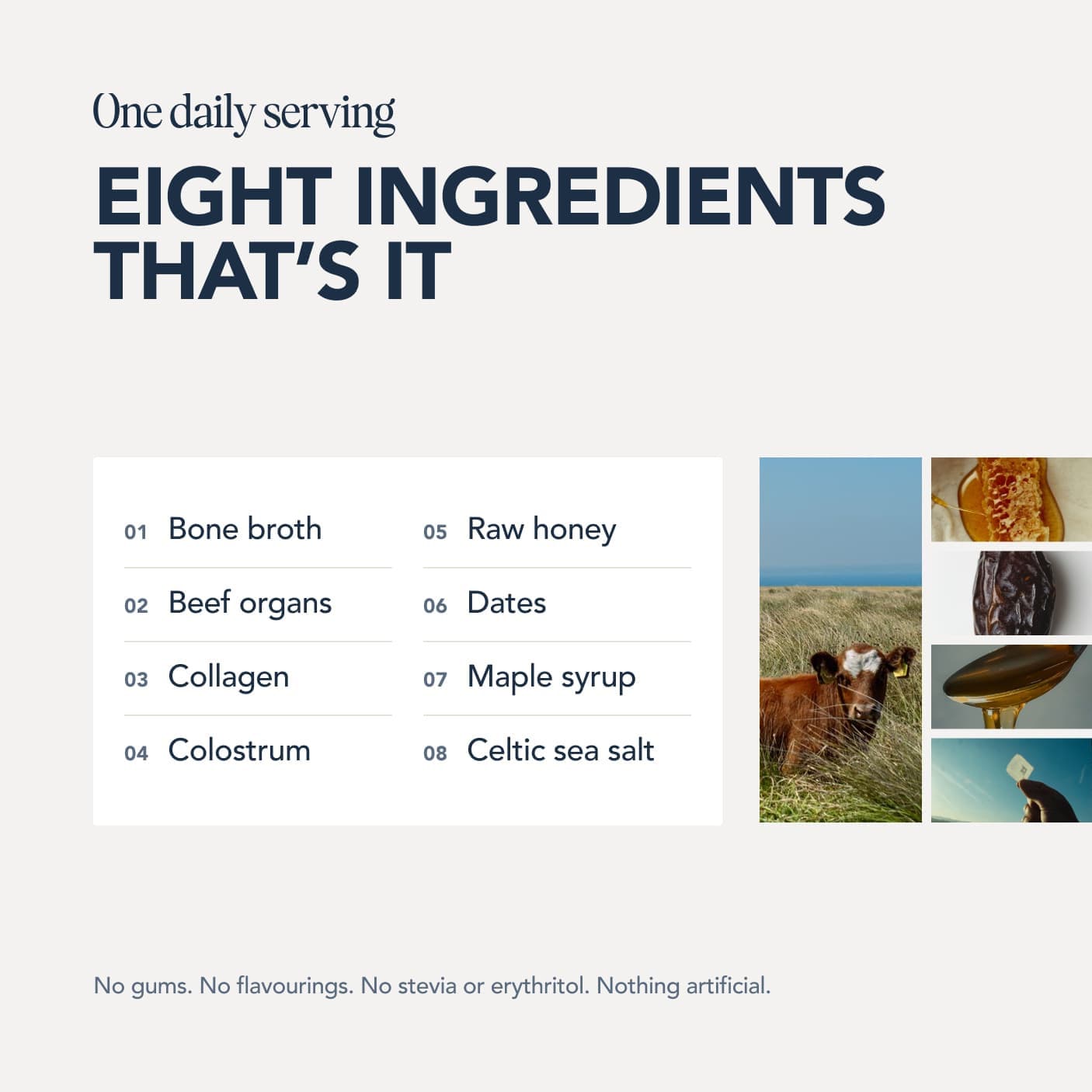
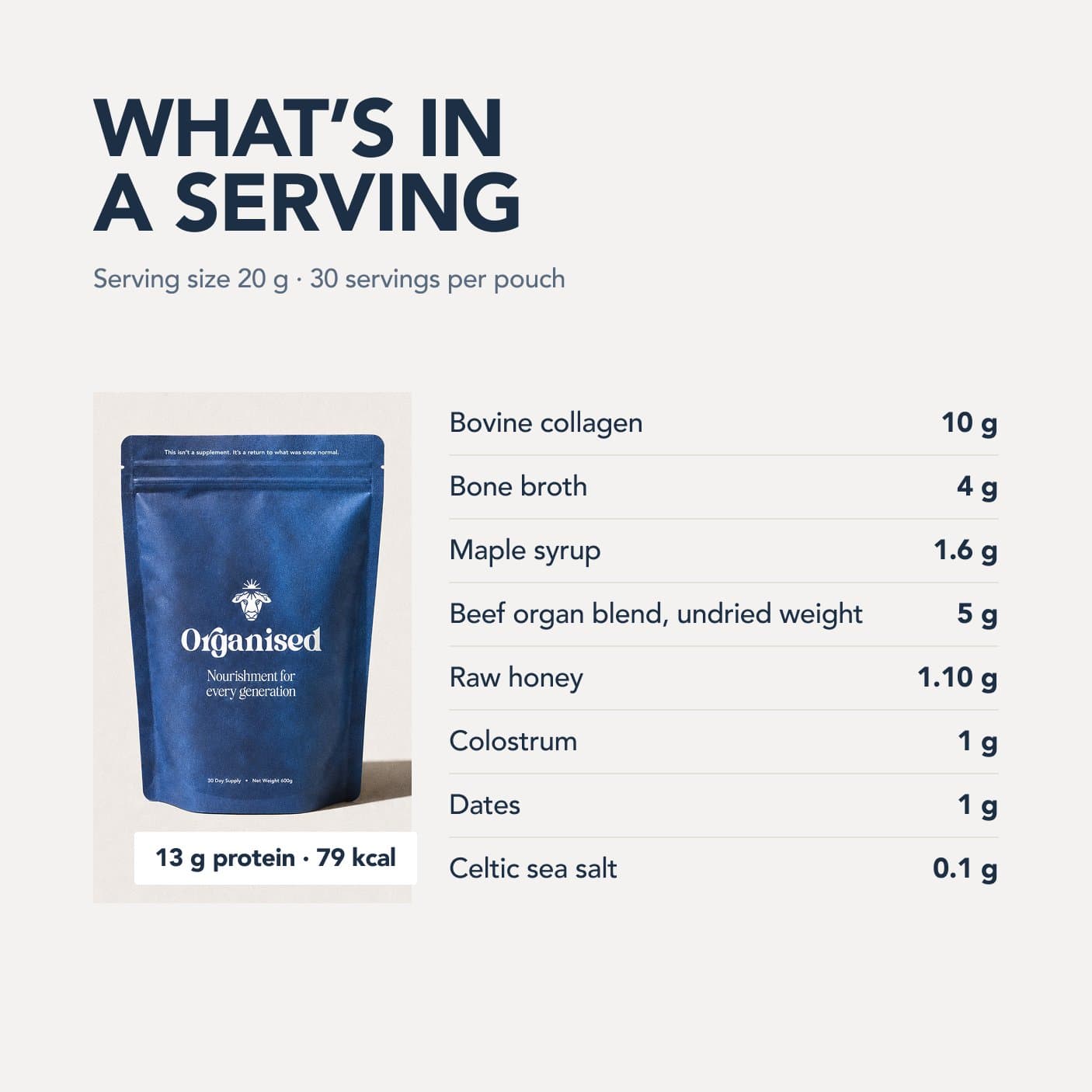
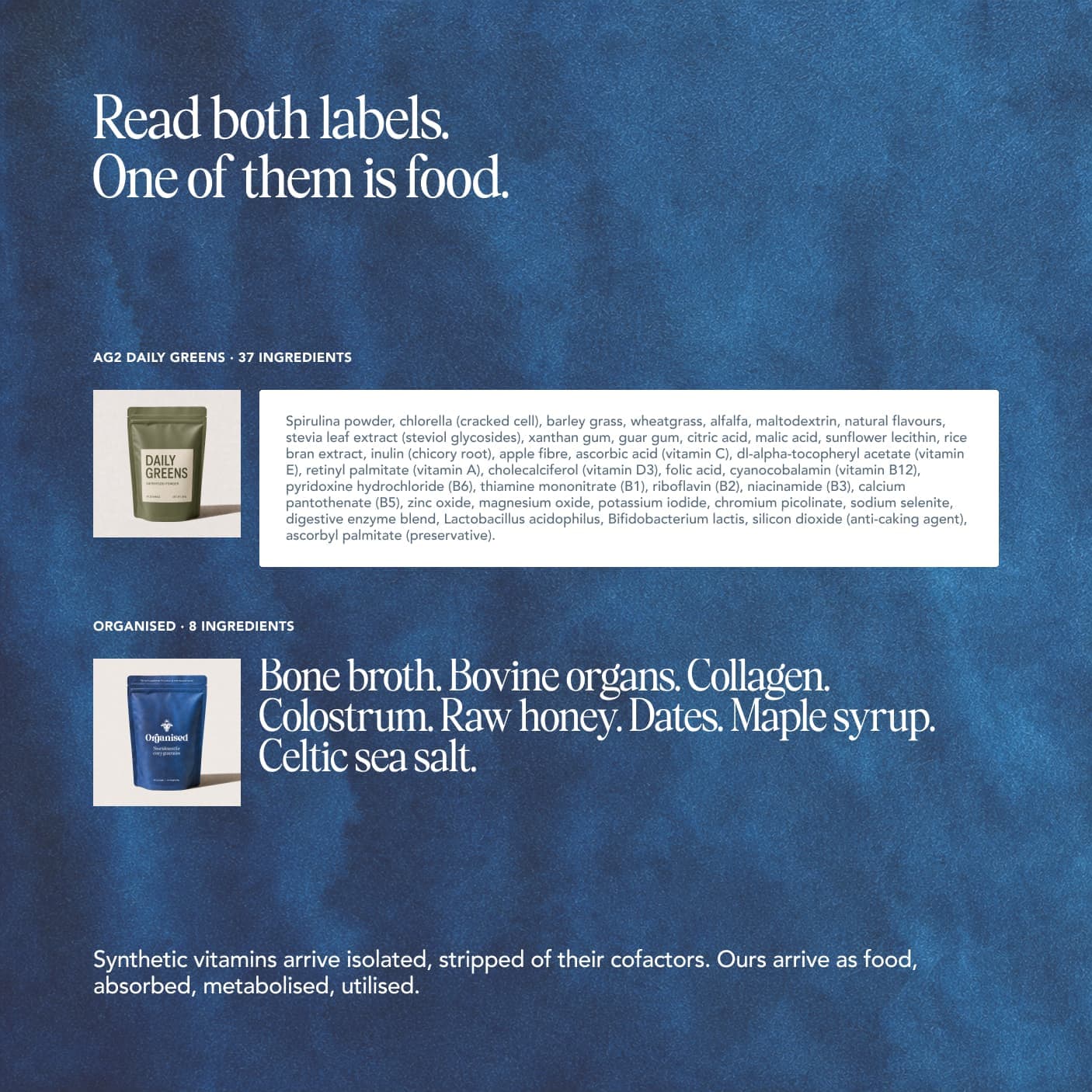
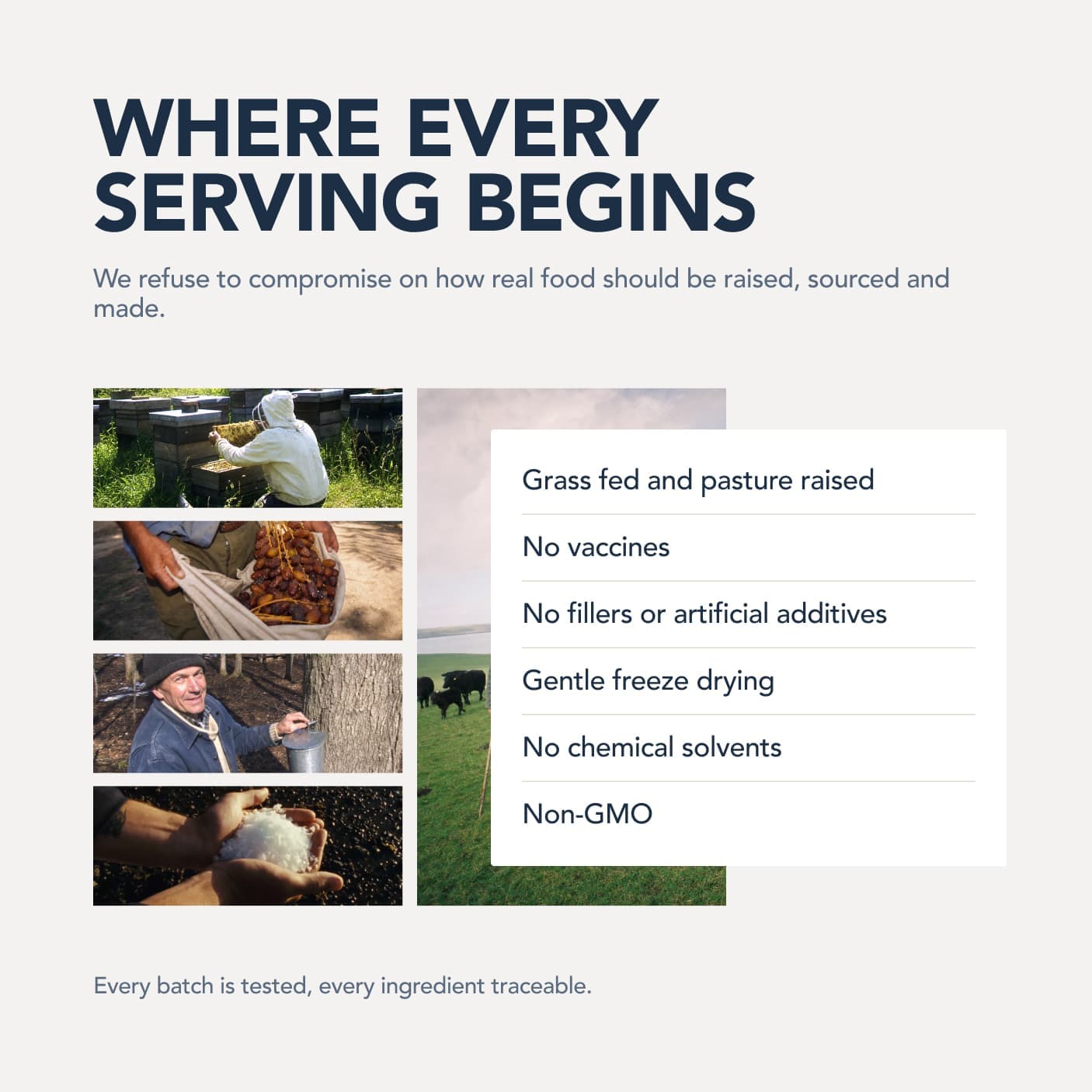
Eight real ingredients built around grass-fed beef organs, collagen and colostrum. Nothing synthetic added.
Free with your first order, worth £38. Plus £10 off the pouch with a subscription.



Free UK shipping · Made in England · 100 day money back guarantee on your first pouch · Skip, pause or cancel anytime
The gut bacteria dimension
Your gut bacteria produce neurotransmitters, help break down food, and play a role in nutrient absorption. After 50, gut bacterial diversity often declines, particularly if you're eating processed foods.
Fermented foods support bacterial diversity. Sauerkraut, kefir, aged cheese, miso. A small portion daily feeds the bacteria that help you digest and absorb nutrients. This is particularly important after 50 when your digestive system is already less efficient.
The combination of declining stomach acid, declining enzymes, and declining bacterial diversity creates a bottleneck in digestion. Bone broth, fermented foods, and easily-digestible whole foods together support all three components of this system.

When to seek professional help for digestion
If changes to your diet and digestive support don't improve your symptoms within 2-3 weeks, see your GP. Bloating that persists despite nutrient-dense eating might be dysbiosis (imbalanced gut bacteria), SIBO, or another underlying condition that needs investigation.
Digestive changes after 50 are normal. Severe digestive distress is not. The boundary between normal ageing and pathology is real. Cross it cautiously, but cross it when you need to.
The bottom line
After 50, your digestion changes. You produce less stomach acid. You produce fewer enzymes. You absorb nutrients less efficiently. This isn't an excuse to eat less. It's a signal to eat better: smaller meals, easier-to-digest foods, foods that support acid production, and plenty of bone broth. Skip the antacids. They're making it worse. Start with ginger, lemon, and time to chew. Your digestion will thank you.
References
Every source below was checked on 27 August 2026. Each PubMed, PMC and DOI identifier was resolved against NCBI or Crossref, and what it opens is printed under the citation, so you can see the link goes where the citation says without leaving the page. Where a citation and its identifier disagreed, the citation was corrected to the record or the reference was deleted along with the sentence marker that pointed at it, and where the resolved paper turned out not to support the sentence, the sentence was cut back to what it does support. Borrowed authority is worse than none, because it looks like rigour.
- Hurwitz A et al. Gastric acidity in older adults. JAMA, 1997. PMID 9272898.Checked 27 August 2026: PMID 9272898 opens Hurwitz A, Brady DA, Schaal SE et al, Gastric acidity in older adults. JAMA 1997;278(8):659-62.
- National Institutes of Health, Office of Dietary Supplements. Vitamin B12 — Health Professional Fact Sheet.
- National Institutes of Health, Office of Dietary Supplements. Iron — Health Professional Fact Sheet.
Who wrote and reviewed this guide
Niall Kiddle
Author · Founder, Organised
Niall is the founder of Organised. He started the company in 2024 after fixing his own health the slow way: in 2022 he swapped a cupboard of synthetic supplements for real food, raw milk, organ meats, bone broth and honey, and felt the difference within months.
Areas of expertise: Ancestral nutrition, Organ meats, Whole-food supplementation, Gut health, Regenerative sourcing
Read Niall's full profile
Pedro Rodrigues
Reviewer · Agronomist (farming and sourcing only)
Pedro is the agronomist Organised works with on farming and sourcing. His job on the guides is to keep the science honest: he reviews what we publish about soil health, regenerative agriculture, grazing and the way food is actually produced.
Areas of expertise: Regenerative agriculture, Agronomy, Soil health, Grass-fed farming, Food sourcing
Reviewed this guide on
Read Pedro's full profileMore on over 50s
View all- B12 Absorption Declines with Age: Here's What to Do
- Cognitive Decline and Nutrition: Protecting Your Brain as You Age
- Eye Health and Nutrition: Protecting Your Vision as You Age
- Nutrition After 50: What Changes and What to Prioritise
- Preventing Bone Loss with Nutrition (Not Just Calcium)
- Sarcopenia: The Silent Muscle Loss Epidemic
Browse the guides library
All guidesKeep reading

Life stage
Heart Disease in Men: Can Nutrition Make a Difference?
Heart disease remains the leading cause of death in men. Discover how CoQ10, omega-3 balance, and anti-inflammatory whole foods can shift your risk.
Life stage
The Fourth Trimester: Why Mothers Need Organ Nutrition
The fourth trimester is when mothers face severe nutrient depletion. Learn why organ nutrition is critical for recovery and what to eat.
Life stage
Protein for Young Athletes: How Much Do Teenagers Actually Need?
Learn how much protein teenage athletes need, when to eat it, and which whole foods deliver it best for performance and recovery.
Real food, made effortless
Find my daily blendA few ways to use it
All recipes
5-Minute High-Protein Breakfasts Using Organised
Quick, high-protein breakfast ideas using Organised. Five recipes you can make in minutes with real food. No fussing around.
Bone Broth from Scratch: A Step-by-Step Guide
Step-by-step guide to making bone broth at home. Stovetop, slow cooker, and Instant Pot methods. Rich in collagen and gut-healing minerals.

Raw Milk Ice Cream with Organised
Make raw milk ice cream at home with Organised for a seasonal, nutrient-dense treat. Three simple flavours to try whenever the craving strikes.


 Join over 100,000+ members
Build a better food system with us
The Organised community is thousands of people choosing real food and backing the farmers who grow it, all of us trying to leave the world a little better than we found it. If that is what you care about too, you belong here.