Protein for Young Athletes: How Much Do Teenagers Actually Need?
A teenage athlete is building muscle in real time. Their body is asking for more protein than a sedentary peer, and it's asking constantly. Most teenage athletes are underfed on protein, trained hard, and then surprised when they don't get stronger.
By Niall Kiddle, Founder, Organised

Reviewed by Pedro Rodrigues, Agronomist (farming and sourcing only) ·
5 min read · Published · Updated · 2 cited sources
Makers of the Organised Daily blend, a grass-fed beef organ supplement from regenerative UK farms
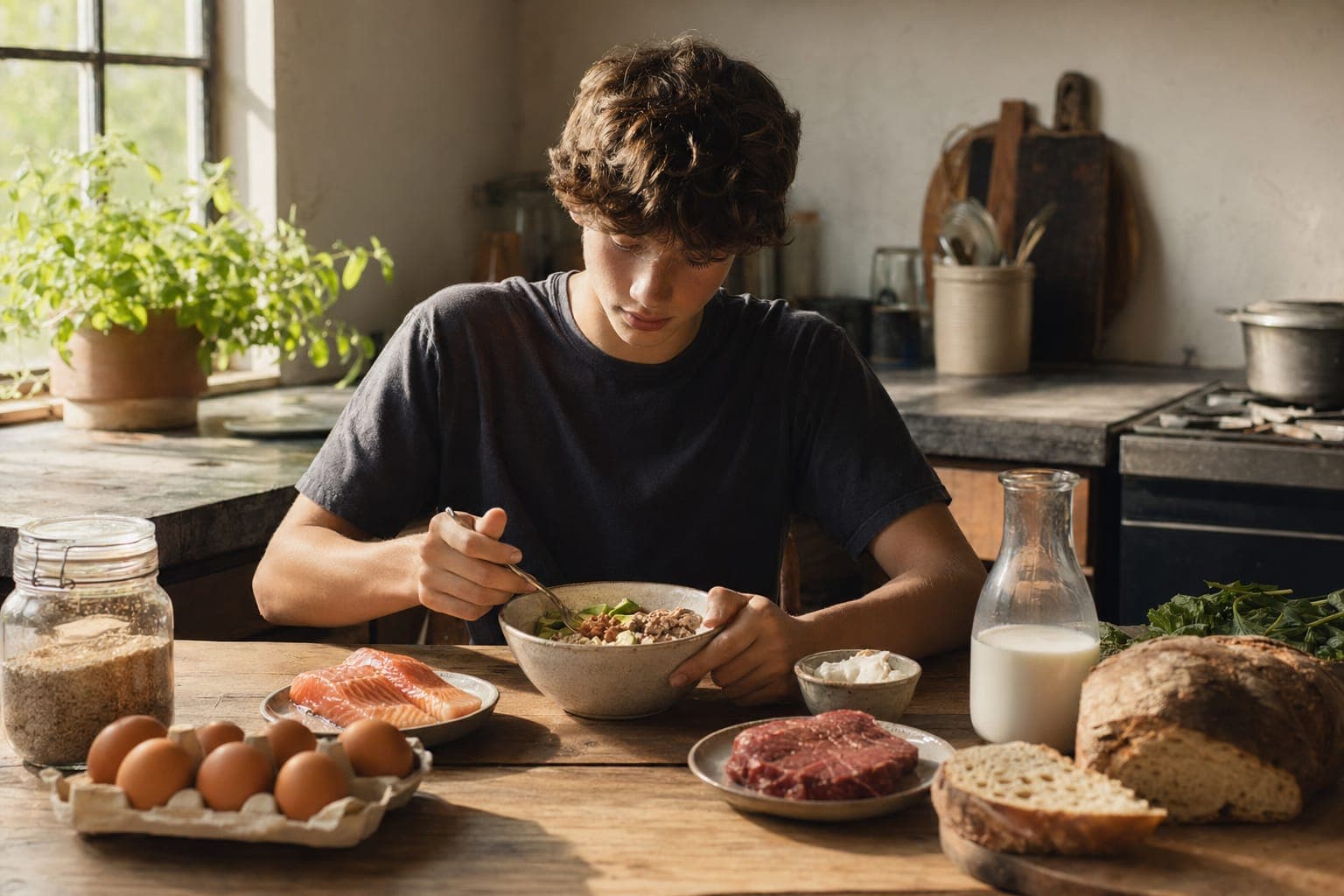
Protein is the raw material for muscle growth. When a teenage athlete trains, they create tiny tears in muscle tissue. The body repairs these tears and builds them back slightly bigger and stronger. But this only happens if there's adequate protein available. Without it, training creates damage without growth.
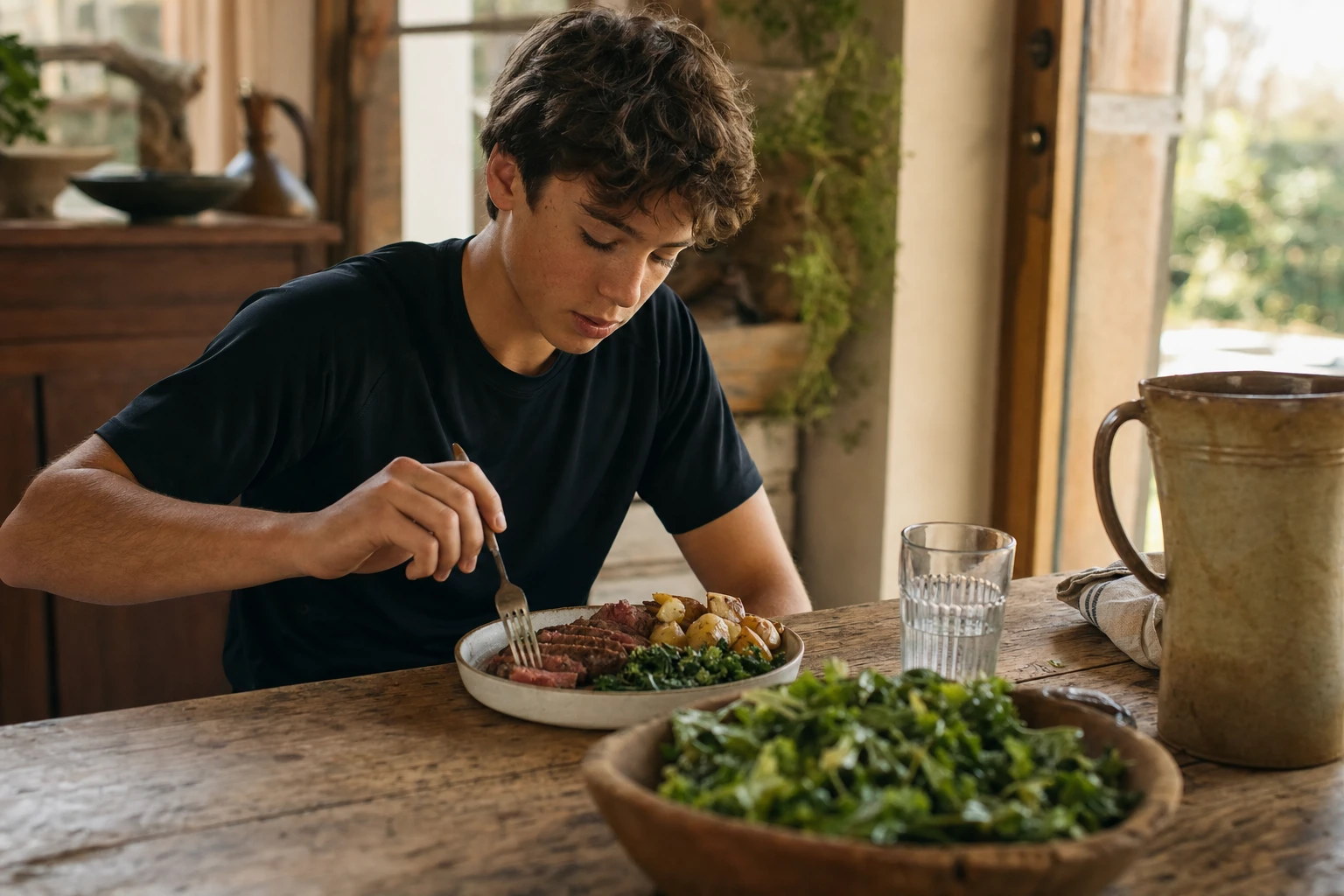
How much protein do teen athletes actually need?
The Recommended Dietary Allowance for protein in adults is 0.8 g/kg/day.1 A teenage athlete needs roughly double that. Depending on the sport and intensity of training, 1.6 to 2.0 grams per kilogram is in the range supported by sports nutrition reviews.2
For a 70-kilogram male teenage athlete, that's 112 to 140 grams of protein daily. For a 50-kilogram female teenage athlete, that's 80 to 100 grams daily. These are not extreme numbers, but they require deliberate eating.
Most teenage athletes meeting these targets through food alone consume more total calories than they expect. But the calories come with nutrients. With vitamins and minerals. With the whole nutritional package that supplements cannot provide.
A teenage athlete who's hungry all the time is not greedy. They're trying to build muscle. Feed them.
Protein timing and recovery
Protein doesn't need to be consumed in the precise window immediately after training, as the supplement industry suggests. But it does need to be consistent throughout the day.
A teenage athlete who eats 100 grams of protein at one meal and then barely touches protein for the rest of the day is not optimising recovery. Muscle protein synthesis appears to plateau at roughly 25-40 g of high-quality protein per meal, supporting distribution of intake across multiple meals.2
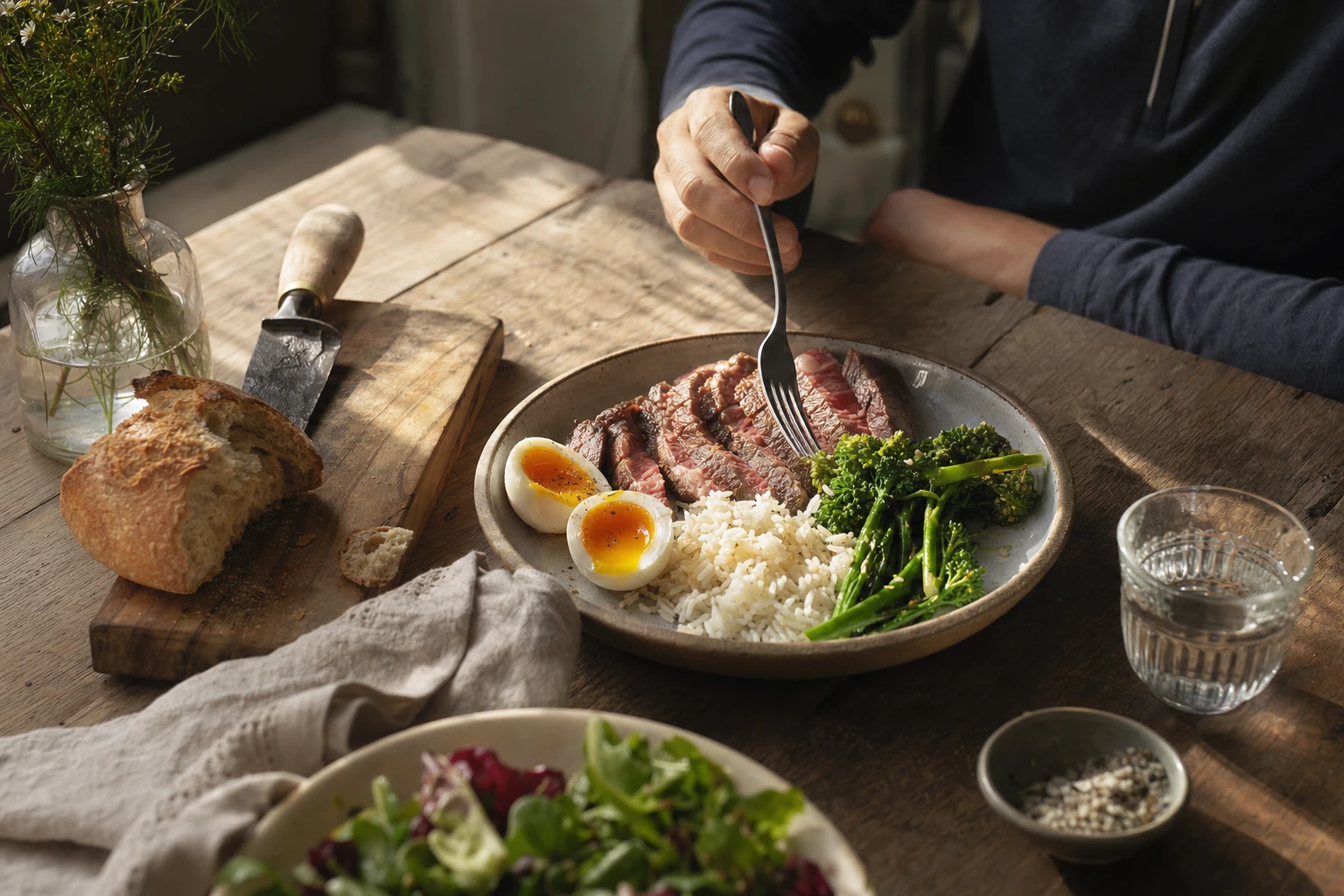
The strategy is simple: include adequate protein at every meal and snack. Breakfast with eggs and meat. Lunch with fish or chicken. Snacks with nuts, cheese, or leftover meat. Dinner with red meat or seafood. This consistency is more important than timing.
Post-training eating should be a meal containing carbohydrate for glycogen replenishment and protein for muscle repair. This can be anything: meat and potatoes, fish and rice, chicken and bread, eggs and fruit. It doesn't need to be a special product.
Whole food protein sources
The most effective protein sources for teenage athletes are whole animal foods. These deliver not just protein, but iron, zinc, B vitamins, and other micronutrients that training depletes.
- Red meat. Beef, lamb, game. Contains heme iron (easily absorbed), zinc, B12, creatine (which supports muscle performance), and all essential amino acids in optimal ratios. Several servings weekly is appropriate.
- Poultry. Chicken and turkey are lean, deliver good protein quantities, and are affordable. Dark meat is more nutrient-dense than white.
- Fish. Salmon, mackerel, sardines deliver protein plus omega-3 fatty acids and vitamin D. Whitefish is lean and good for athletes watching calorie intake.
- Eggs. Complete protein, contain choline (for brain function), and the yolk delivers fat-soluble vitamins. Three to five eggs daily is appropriate for a teenage athlete.
- Dairy. Milk, yoghurt, cheese deliver protein plus calcium for bone health. Full-fat versions deliver more bioavailable calcium and are less processed.
- Organ meats. Liver is extraordinarily nutrient-dense and delivers protein plus iron, zinc, and micronutrients no other food can match. Weekly consumption is ideal.
These foods are more satiating than supplements. A teenage athlete eating real food feels fuller on fewer calories, experiences steadier energy, and actually recovers better than one relying on protein powder and processed snacks.
Get life-stage nutrition guides, free
Two short reads a week on eating well through pregnancy, childhood and older age.
By signing up you agree to receive emails from us. No spam, unsubscribe anytime.
The supplement trap
Protein powder is marketed to teenage athletes as the efficient, easy solution. The reality is more complex. Most commercial protein powders contain sweeteners, additives, and processing that real food doesn't. They don't deliver the full micronutrient profile of whole foods.
A teenage athlete drinking a protein shake instead of eating a proper meal is saving time but losing nutrients. The shake contains protein but not the iron, zinc, B vitamins, and micronutrients that come with real food.
Protein powder is a legitimate tool if a teenage athlete genuinely cannot fit in enough whole food protein, or if they need a quick option post-training. But it should complement whole food eating, not replace it.
If you must use protein powder, choose one with minimal ingredients. Milk-based options (whey, casein) are generally superior to plant-based alternatives, which tend to be less bioavailable and more heavily processed.
Practical protein strategy
For a teenage athlete aiming for 1.6 to 2.0 grams per kilogram of body weight:
- Breakfast. 3 to 4 eggs (15 to 20 grams protein) plus meat or fish, plus carbohydrate.
- Mid-morning snack. A glass of milk, a piece of cheese, or a handful of nuts (10 grams protein).
- Lunch. Meat, fish, or poultry (30 to 40 grams protein) plus rice or bread plus vegetables.
- Pre-training snack. Fruit with nuts or nut butter (5 to 10 grams protein), or a small serving of meat.
- Post-training meal. Meat or fish (30 to 40 grams protein) plus carbohydrate. Can be the same as lunch or dinner.
- Dinner. Red meat, poultry, or fish (30 to 40 grams protein) plus vegetables and starch.
- Evening snack. Yoghurt, cheese, or milk if still hungry.
This pattern naturally delivers 100 to 140 grams of protein daily, alongside adequate carbohydrate, fat, and micronutrients.
The goal is not minimalist eating. The goal is adequate fuel for the work being done. Eat when hungry, prioritise real food, and watch what happens.

1 of 9
Daily blend
100,000+ thriving families4.9 on Trustpilot
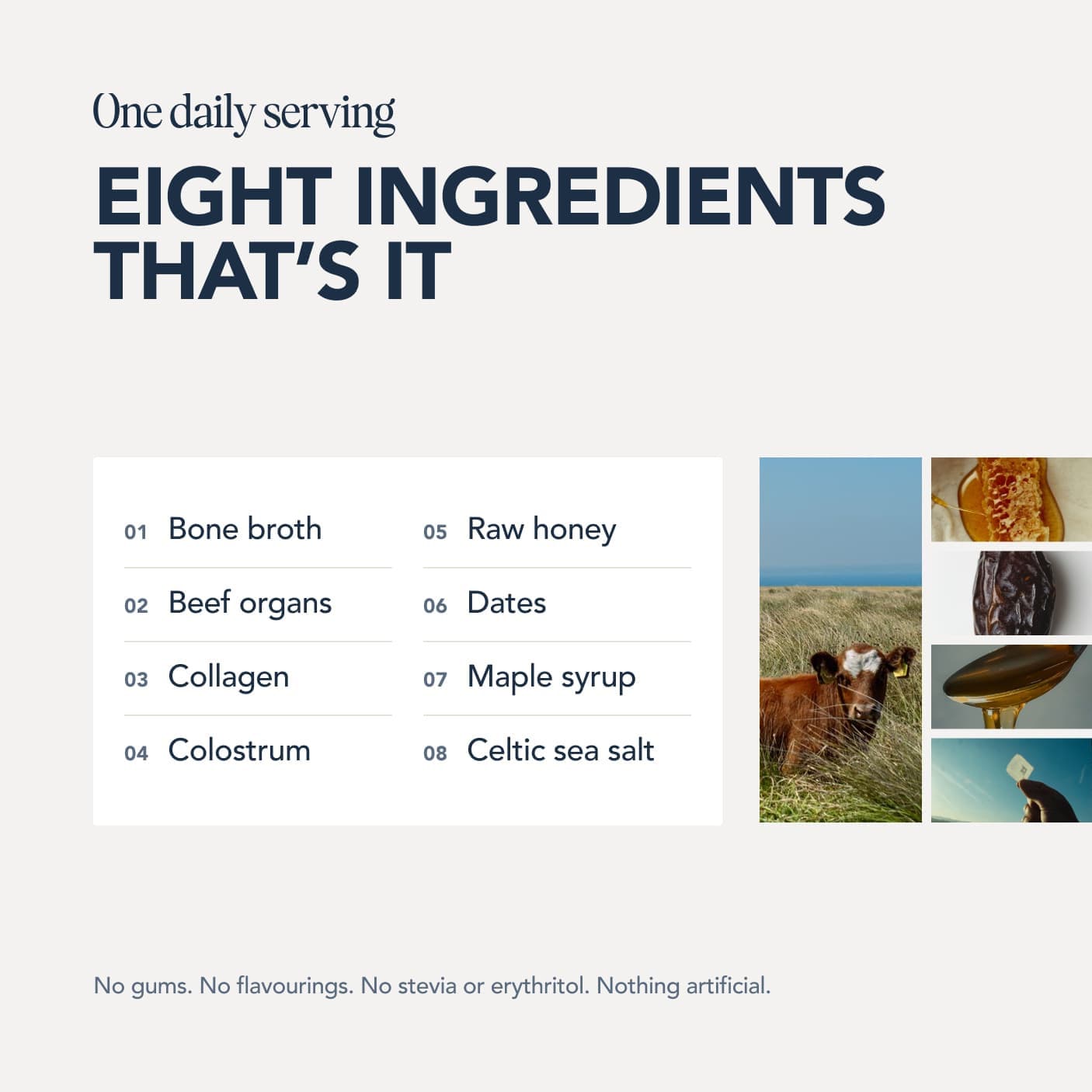
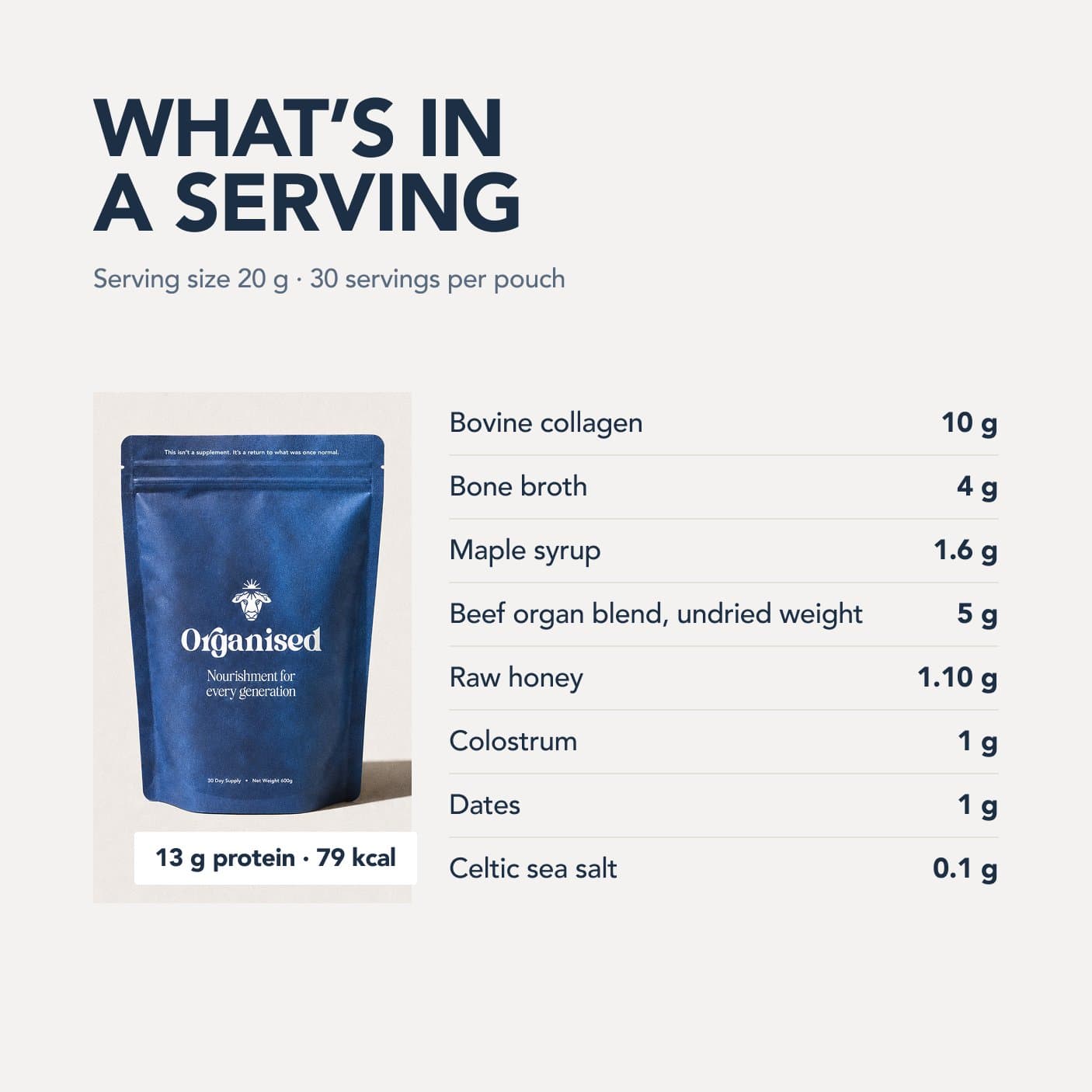
Eight real ingredients built around grass-fed beef organs, collagen and colostrum. Nothing synthetic added.
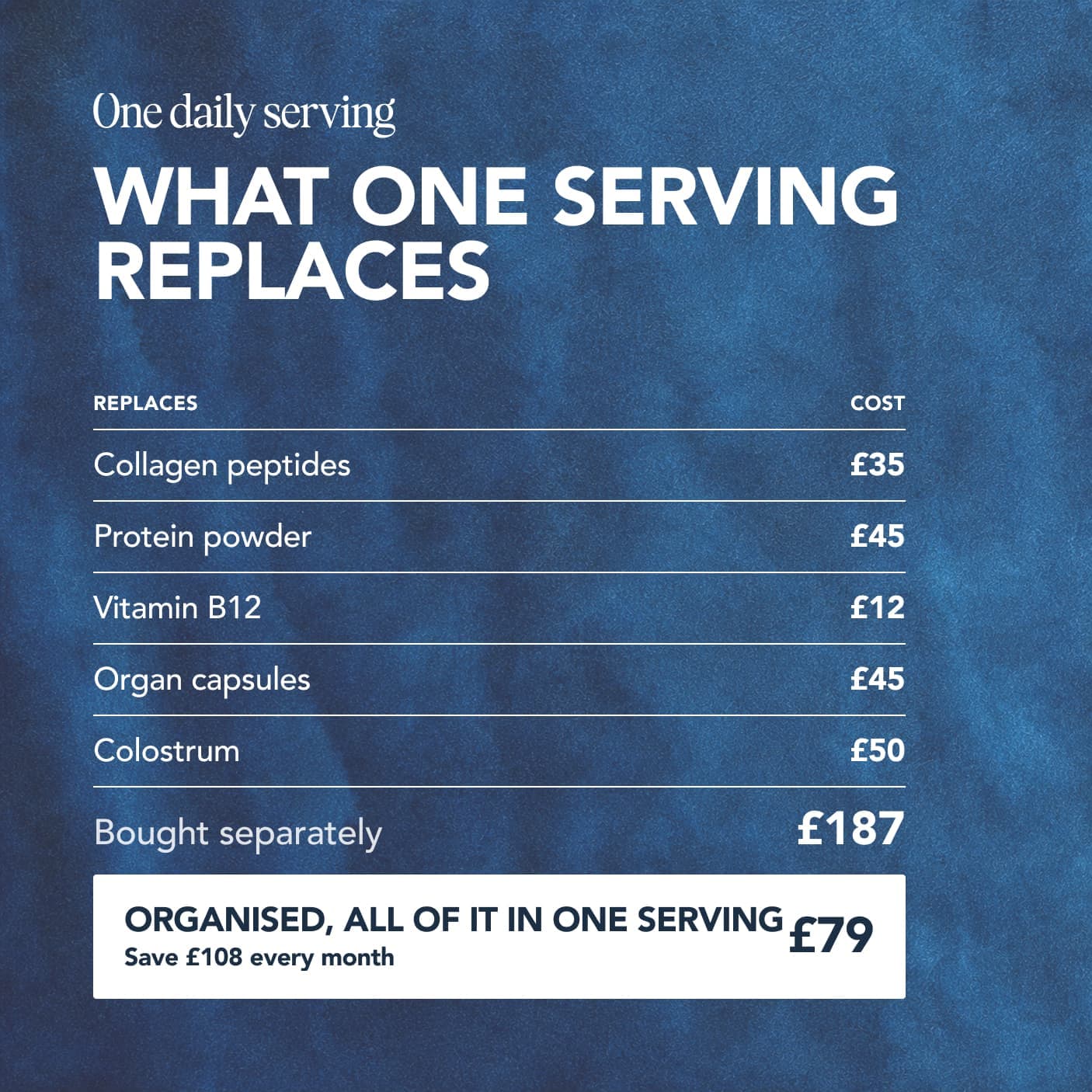
Free with your first order, worth £38. Plus £10 off the pouch with a subscription.

Free UK shipping · Made in England · 100 day money back guarantee on your first pouch · Skip, pause or cancel anytime
The injury prevention dimension
Most teenage athletes who get injured are underfed. Their connective tissue is weak because they lack adequate protein and micronutrients. Their recovery is slow because they're training hard on insufficient fuel. Their bones are fragile because they're building body density whilst depleting mineral stores.
Adequate protein is injury prevention. A teenage athlete consuming 1.6 to 2.0 grams per kilogram of body weight, spread across multiple meals daily, builds stronger muscles, tendons, and ligaments. They recover faster from training. They're more resilient to impact and strain.
The investment in nutrition now pays dividends in reduced injury risk, better performance, and longer athletic career.
The bottom line
A teenage athlete training hard deserves adequate nutrition. Not supplements designed for marketing. Not restrictive calorie limits. Real food, eaten generously, delivering the protein and micronutrients their body is asking for.
The strength gains that come from training are built on the foundation of nutrition. Underfed athletes don't get stronger. They get tired. They plateau. They get injured.
Feed your teenage athlete. Meat, fish, eggs, dairy. Real food. Let them eat until they're satisfied. Watch them get stronger.
References
Every source below was checked on 27 August 2026. Each PubMed, PMC and DOI identifier was resolved against NCBI or Crossref, and what it opens is printed under the citation, so you can see the link goes where the citation says without leaving the page. Where a citation and its identifier disagreed, the citation was corrected to the record or the reference was deleted along with the sentence marker that pointed at it, and where the resolved paper turned out not to support the sentence, the sentence was cut back to what it does support. Borrowed authority is worse than none, because it looks like rigour.
- National Academies of Sciences, Engineering, and Medicine. Dietary Reference Intakes for Energy, Carbohydrate, Fiber, Fat, Fatty Acids, Cholesterol, Protein, and Amino Acids. USDA / NAS DRIs
- Morton RW, et al. A systematic review, meta-analysis and meta-regression of the effect of protein supplementation on resistance training-induced gains in muscle mass and strength in healthy adults. Br J Sports Med. 2018;52(6):376-384. PMID 28698222Checked 27 August 2026: PMID 28698222 opens Morton RW, Murphy KT, McKellar SR et al, A systematic review, meta-analysis and meta-regression of the effect of protein supplementation on resistance training-induced gains in muscle mass and strength in healthy adults. Br J Sports Med 2018;52(6):376-384. PubMed indexes it as: Meta-Analysis, Systematic Review.The authors' own declaration, from the record: Competing interests: SMP has received grant support, travel expenses, and honoraria for presentations from the US National Dairy Council. This agency has supported trials reviewed in this analysis.
Who wrote and reviewed this guide
Niall Kiddle
Author · Founder, Organised
Niall is the founder of Organised. He started the company in 2024 after fixing his own health the slow way: in 2022 he swapped a cupboard of synthetic supplements for real food, raw milk, organ meats, bone broth and honey, and felt the difference within months.
Areas of expertise: Ancestral nutrition, Organ meats, Whole-food supplementation, Gut health, Regenerative sourcing
Read Niall's full profile
Pedro Rodrigues
Reviewer · Agronomist (farming and sourcing only)
Pedro is the agronomist Organised works with on farming and sourcing. His job on the guides is to keep the science honest: he reviews what we publish about soil health, regenerative agriculture, grazing and the way food is actually produced.
Areas of expertise: Regenerative agriculture, Agronomy, Soil health, Grass-fed farming, Food sourcing
Reviewed this guide on
Read Pedro's full profileMore on children & teens
View all- Feeding Children for Optimal Growth and Development
- Teenage Nutrition: Fuelling Growth Spurts and Brain Development
- Building Strong Bones in Childhood: Beyond Just Milk
- Can Children Take Beef Organ Supplements?
- How to Introduce Organ Meats to Children
- Picky Eaters: How to Sneak Nutrient-Dense Foods Into Family Meals
- Screen Time, Sleep and Nutrition: The Triangle That Affects Every Child
- Sugar, Screens and Soil: Raising Healthy Children in a Modern World
- Teenage Athletes: Protein and Nutrient Needs for Growing Bodies
- The Nutrients Children Need Most (And Aren't Getting)
- Why Children Need More Nutrient-Dense Food (Not More Vitamins)
- Why Teenage Girls Are at the Highest Risk of Iron Deficiency
Browse the guides library
All guidesKeep reading

Life stage
Teenage Nutrition: Fuelling Growth Spurts and Brain Development
Teenage nutrition is critical for growth spurts, brain maturation, and bone building. Learn what teens actually need to thrive.

Life stage
Menopause and Bone Density: Protecting Your Skeleton
Oestrogen drop in menopause accelerates bone loss. Calcium plus K2 plus D plus adequate protein plus resistance training prevents fracture risk.

Life stage
Joint Pain After 50: A Nutritional Approach
Joint pain responds to collagen, glycine, omega-3s, vitamin D, and curcumin. These nutrients rebuild cartilage and reduce inflammation systemically.
Real food, made effortless
Find my daily blendA few ways to use it
All recipes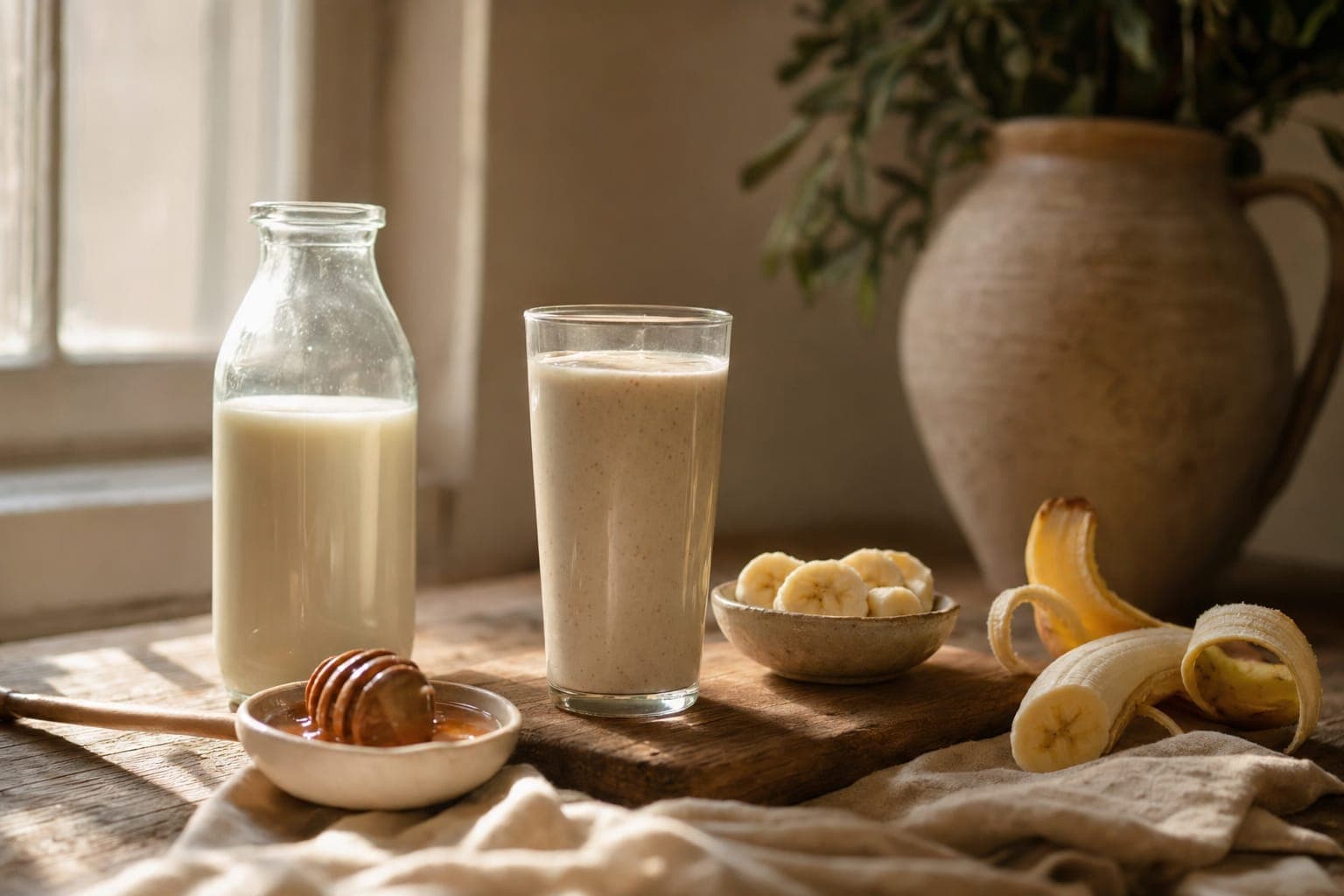
The Perfect Organised Morning Shake: Our Favourite Recipe
Our signature morning shake: Organised, raw milk, banana, honey. Simple, nourishing, and optimised for an empty stomach.
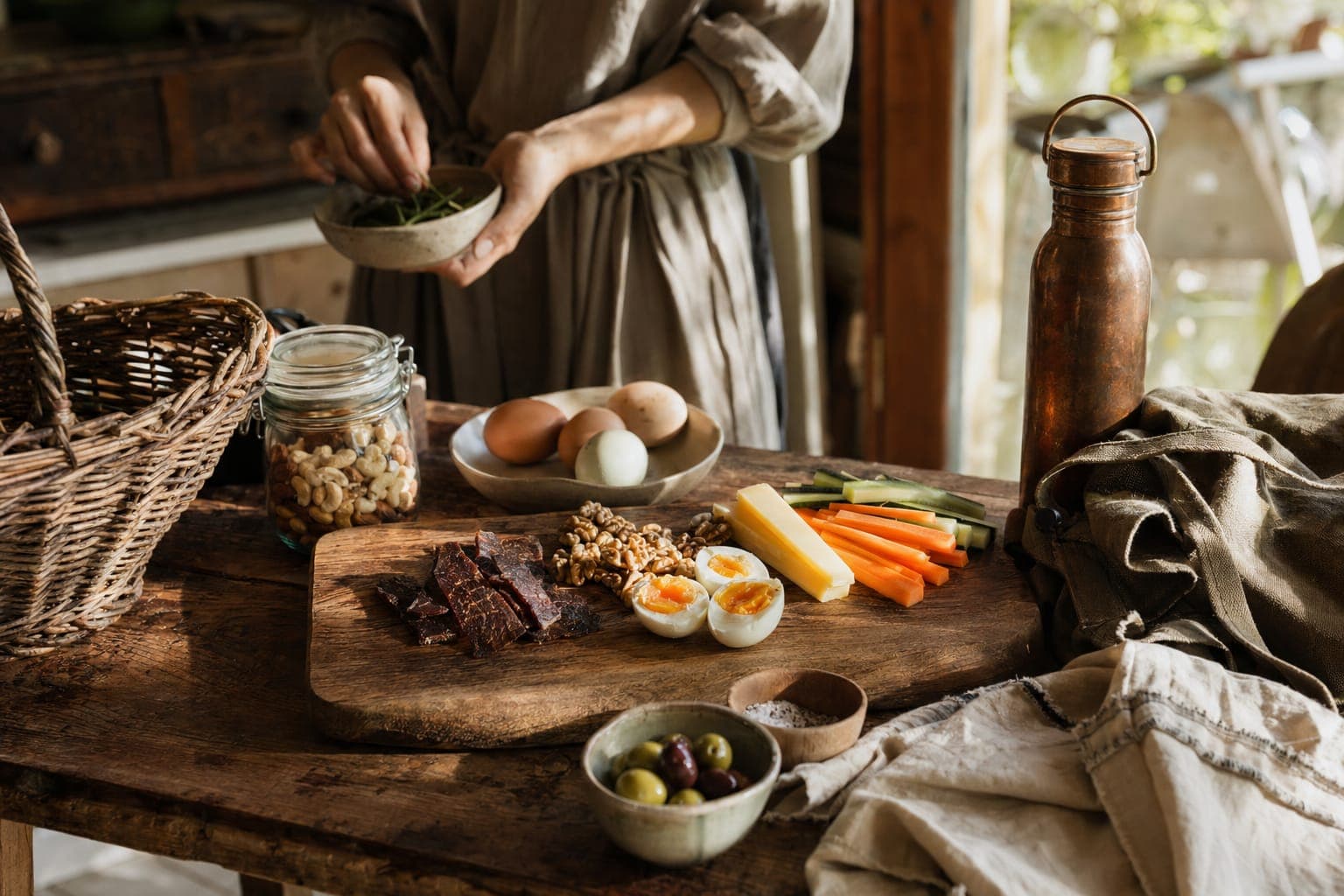
Whole Food Snacks for Busy Days
Practical whole food snacks that travel well and sustain energy. No refined carbs, no seed oils. Real food options for when you're busy.

Raw Milk Hot Chocolate with Collagen
A nourishing evening hot chocolate made with raw milk, grass-fed collagen, raw cacao, and honey. A nighttime ritual that supports sleep and gut health.


 Join over 100,000+ members
Build a better food system with us
The Organised community is thousands of people choosing real food and backing the farmers who grow it, all of us trying to leave the world a little better than we found it. If that is what you care about too, you belong here.