Energy and Vitality After 40: A Man's Nutritional Playbook
At 40, something shifts. You're not as tired as you'd be from work at 25, but you're more tired from the same work. You recover slower. You don't have the same drive. That's not just ageing. It's nutrient depletion combined with metabolic changes your body went through somewhere between 35 and 42.
By Niall Kiddle, Founder, Organised

Reviewed by Pedro Rodrigues, Agronomist (farming and sourcing only) ·
6 min read · Published · Updated · 5 cited sources
Makers of the Organised Daily blend, a grass-fed beef organ supplement from regenerative UK farms
Testosterone does decline after 40. Most men see roughly 1% annual decline starting around 30.1 That's real. But it's not the whole story. The bigger story is that your body is less efficient at extracting energy from food, less efficient at building muscle, and more vulnerable to deficiency in minerals that directly drive energy and motivation.

What happens to a man's body after 40
Your metabolic rate drops slightly. Not catastrophically, but measurably. Your growth hormone output starts to taper. Testosterone declines. Your gut produces less stomach acid, which affects mineral absorption. Your cardiovascular system becomes less efficient at moving oxygen to muscles unless you prioritise training.
Your insulin sensitivity shifts. Many men over 40 who could eat high-carbohydrate diets without consequence start seeing fat accumulation around the middle. Not because they're eating more, but because their cells are less responsive to insulin. The same diet that worked at 30 doesn't work at 42.
Most men interpret this as a sign they're getting old. What's actually happening is their nutrition has silently become inadequate for their new metabolic reality.
You're not getting old. You're eating and moving like you're 25, and your 42-year-old body is calling you out on it.
Testosterone isn't the whole picture
Testosterone matters. It drives motivation, muscle building, sexual function, and mood. A man with low testosterone feels it. But testosterone decline doesn't automatically mean you should supplement testosterone. It means you should first address the nutritional factors that support testosterone production naturally.
Zinc is critical. It's the mineral most directly involved in testosterone synthesis.2 A zinc-depleted man will have low-normal testosterone regardless of training. Zinc is easily depleted by stress, alcohol, and sexual activity. Most men over 40 are mildly deficient.
Cholesterol is the precursor for testosterone, yet most men are actively lowering their cholesterol intake because they've been told fat is bad.3 Then they wonder why their testosterone stalls. Dietary fat, particularly saturated fat and cholesterol from animal sources, is the foundation testosterone is built from.
Selenium, magnesium, and B vitamins all support testosterone function. So does adequate sleep and low chronic stress. But those are harder to control than food. Food comes first.
The nutrients that matter most
For a man over 40, the nutrients that make the biggest difference are these: iron (for oxygen transport and energy), zinc (for testosterone), magnesium (for muscle function and sleep), B vitamins (for energy production), and healthy fats (for hormone synthesis).
Iron becomes relevant for men after 40 in a way it often isn't earlier. Chronic low-grade iron deficiency causes fatigue without the obvious symptoms (no heavy periods as a warning sign). Many men over 40 are running on low iron without knowing it. You notice it as lack of drive on stairs, as tired muscles that don't recover, as afternoon energy crashes.
Zinc depletion goes hand in hand with ageing, stress, and high alcohol intake. A 100-gram serving of oysters contains 5-7 milligrams of zinc. Beef contains 5-8 milligrams per 100 grams. Most men eating processed food are getting 3-5 milligrams daily, roughly half the recommended intake.
Magnesium regulates muscle function and supports sleep quality, which drives testosterone recovery.5 A magnesium-depleted man has poor sleep quality even if he's in bed eight hours. He has muscle cramps. His training recovery suffers. Leafy greens help, but animal foods (bone broth, fish) are denser sources.
- Beef and lamb, particularly the fattier cuts, three to five times weekly
- Liver, specifically for iron and B vitamins, once weekly
- Oysters if tolerated, for zinc and selenium, once to twice weekly
- Eggs, daily, for choline and micronutrients
- Whole milk or full-fat dairy, for calcium and vitamin D
- Bone broth, three to five times weekly, for collagen, minerals, and amino acids
- Butter, lard, and coconut oil, for cooking, for saturated fat and fat-soluble vitamins
Get life-stage nutrition guides, free
Two short reads a week on eating well through pregnancy, childhood and older age.
By signing up you agree to receive emails from us. No spam, unsubscribe anytime.
Building the protocol: what to eat and when
Start with breakfast. Not a breakfast low in fat and high in refined carbs. Eggs cooked in butter, beef sausage, full-fat dairy. This stabilises blood sugar for the whole morning and provides protein and fat for steady energy.
Lunch should be substantial. A piece of red meat, a portion of vegetables if you want them, and fat. Skip the bread. Skip the sugary drinks. Drink water or bone broth. This is your opportunity to get iron, zinc, and B vitamins in concentrated form.
Dinner follows the same pattern. Protein from meat, fat from the cooking medium or from the meat itself, and if you want carbohydrates, make them potatoes or root vegetables, not grains or refined foods.
A man over 40 thriving on nutrient density looks like this: meat-based meals, full-fat dairy, strategic supplementation of organ meats, and training that builds strength.
If you're training, consider adding a specific post-workout meal. Protein for muscle repair. Carbohydrates to replenish glycogen. This is the one time refined carbohydrates make sense, when your muscles are hungry for glucose. A steak and potatoes. Beef mince and white rice. This drives recovery and testosterone support.
Sleep, stress, and the role of training
Nutrition is half the picture. Sleep is the other half. A man over 40 who sleeps five hours nightly and eats perfectly is still going to have low testosterone and fatigue. Sleep is when testosterone is produced. It's when muscles repair. It's when metabolic processes restore themselves.
Resistance training matters. A man over 40 who doesn't train loses roughly 0.5% of muscle mass annually.4 By 60, that's significant. Training stimulates testosterone production naturally and signals to your body that muscle is important. Your nutrition then supports that signal. Without the signal, nutrition alone won't preserve muscle.
Stress management is the third pillar. Chronic stress elevates cortisol, which suppresses testosterone and increases belly fat deposition. Exercise helps. Sleep helps. Time away from screens and deadlines helps. These are beyond nutrition, but they're as important as the food you eat.
How micronutrient deficiency compounds with age
At 25, marginal zinc deficiency might go unnoticed. At 45, it's affecting your testosterone, your immunity, and your recovery. Age magnifies the effects of nutrient deficiency.
This means a man over 40 cannot eat the same marginal diet he could at 25 and expect the same results. His body is less forgiving. His absorption is declining. His needs are increasing. The gap between "passable" nutrition and optimal nutrition widens.
This isn't depressing. It's clarifying. It means that small dietary improvements have outsized effects. Adding organ meats weekly. Ensuring red meat regularly. Prioritising bone broth. These aren't optional nice-to-haves. They're the difference between thriving and struggling after 40.
1 of 9
Daily blend
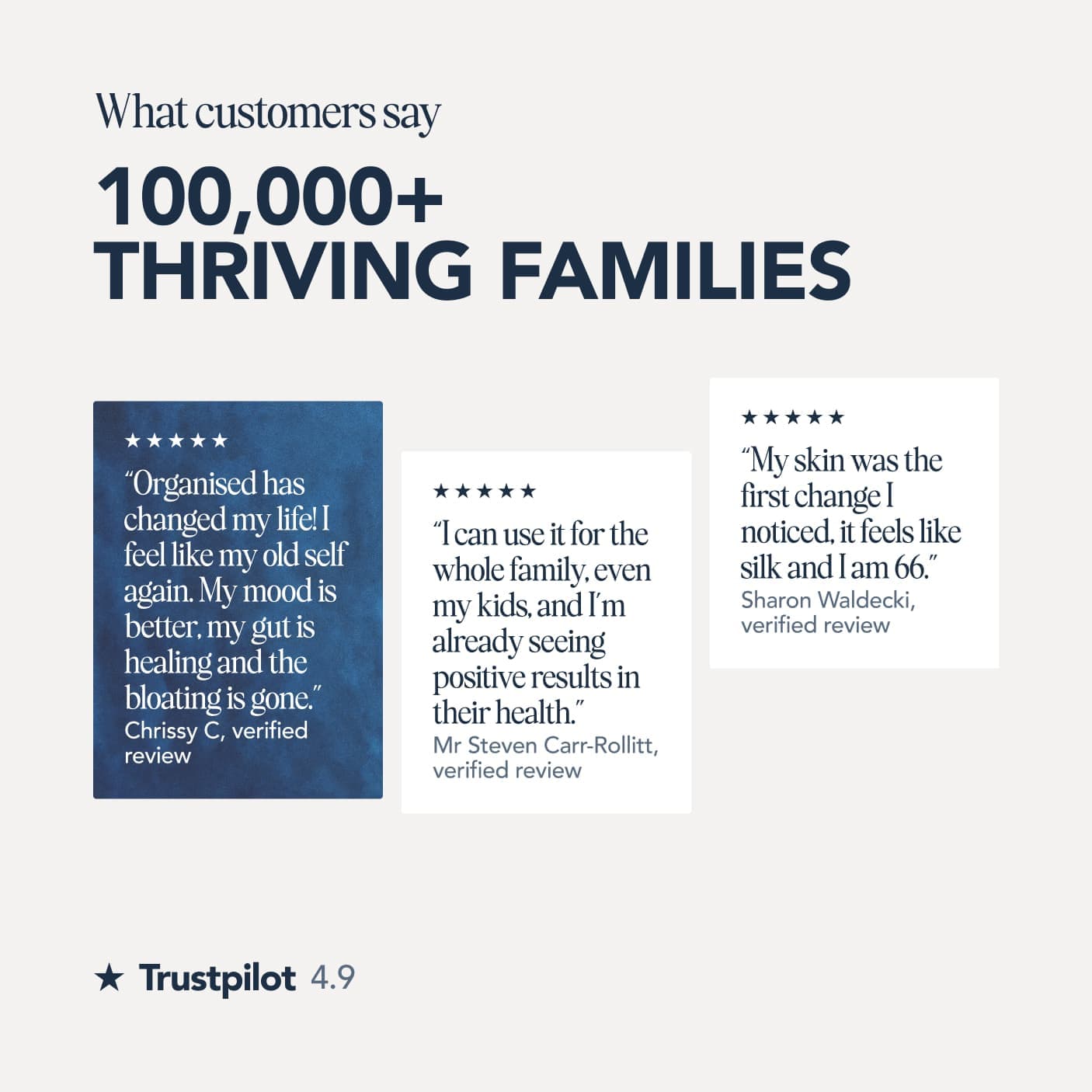
100,000+ thriving families4.9 on Trustpilot
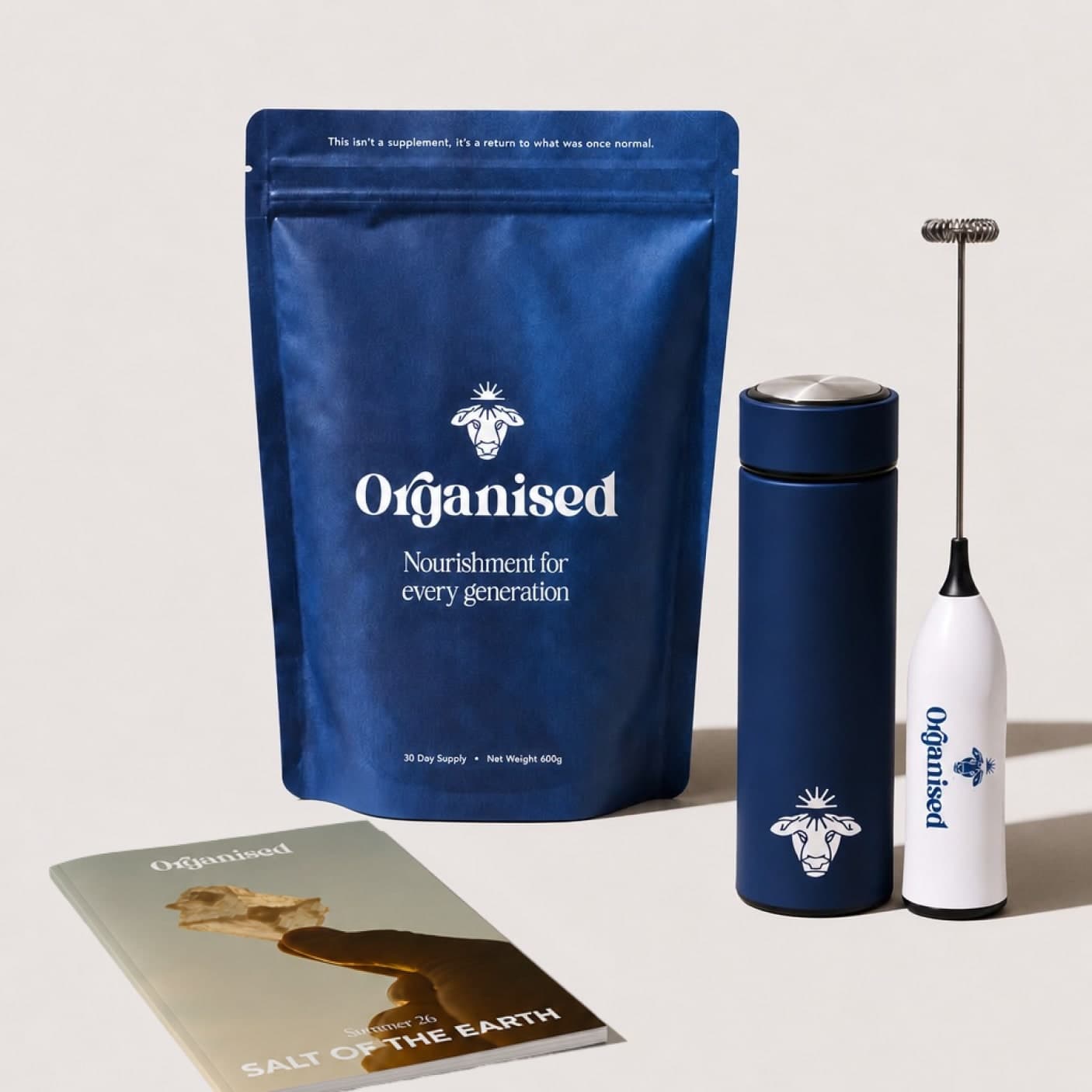
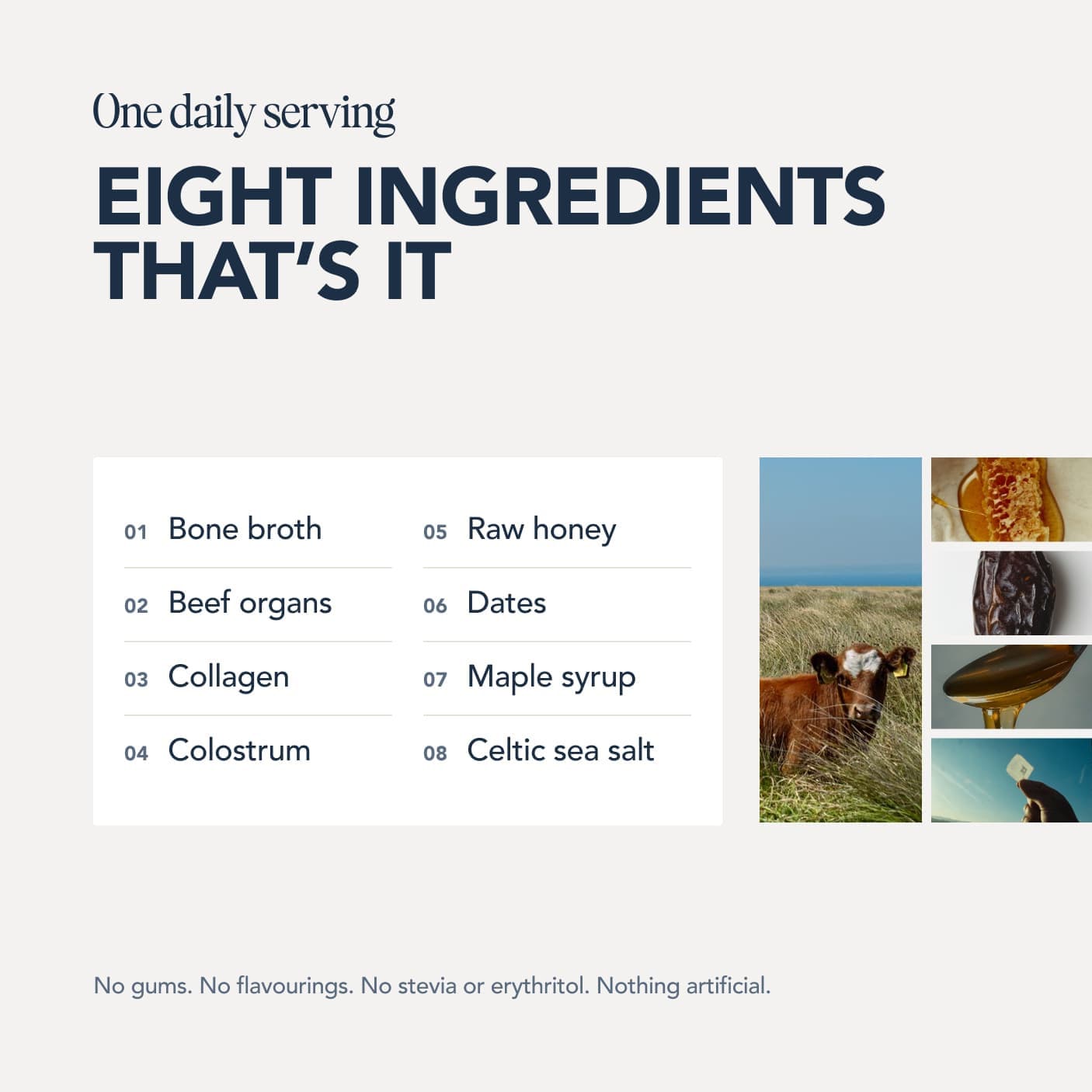
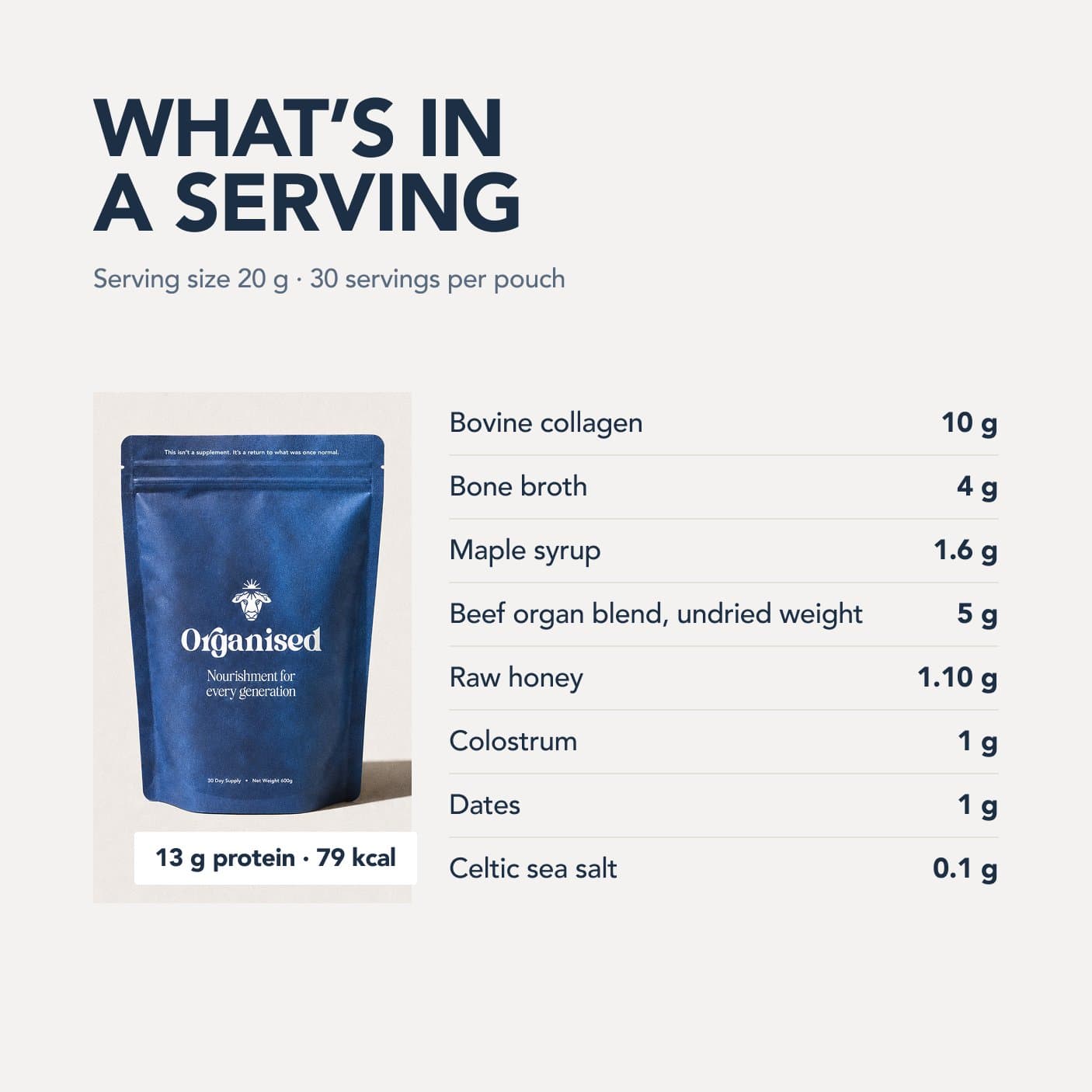
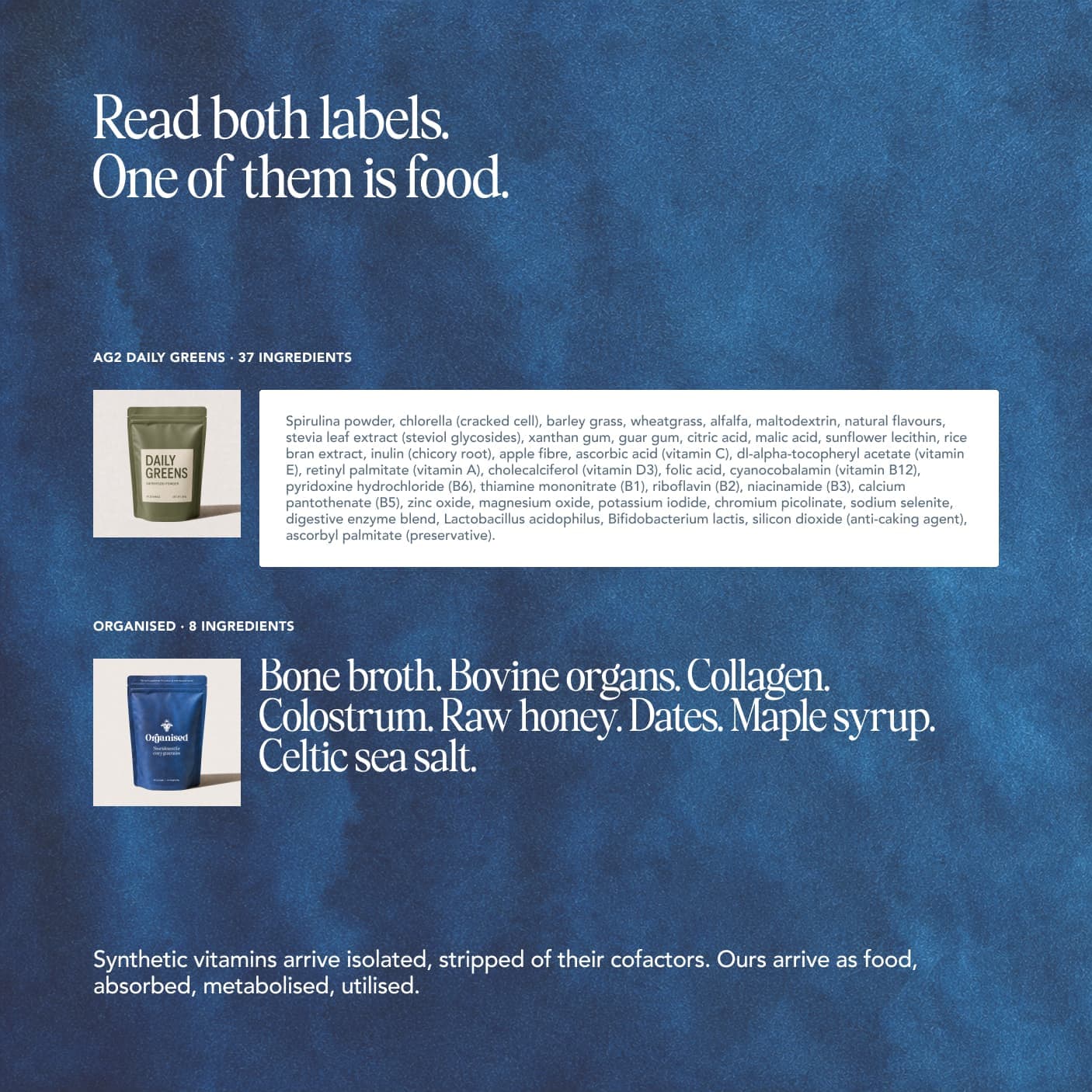
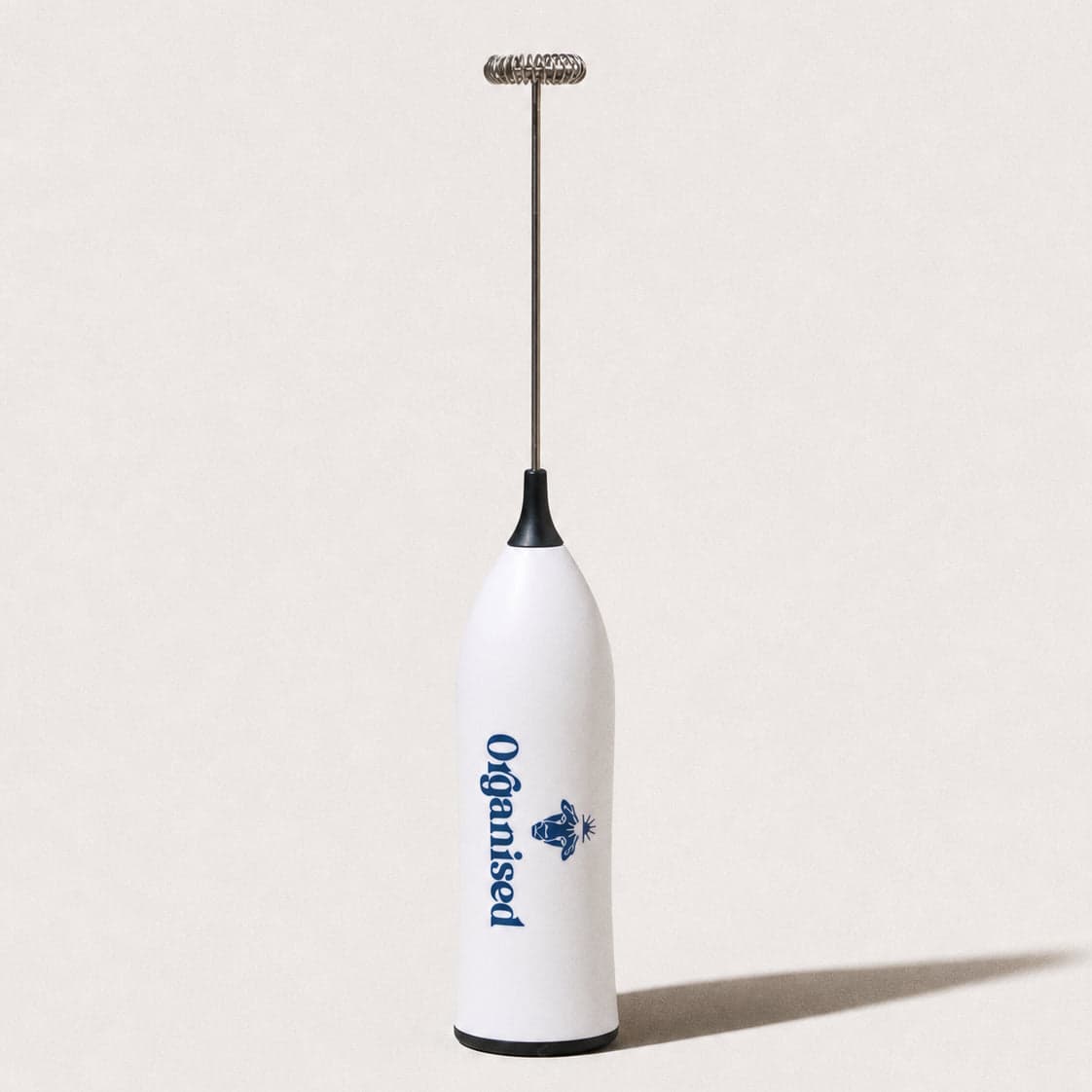
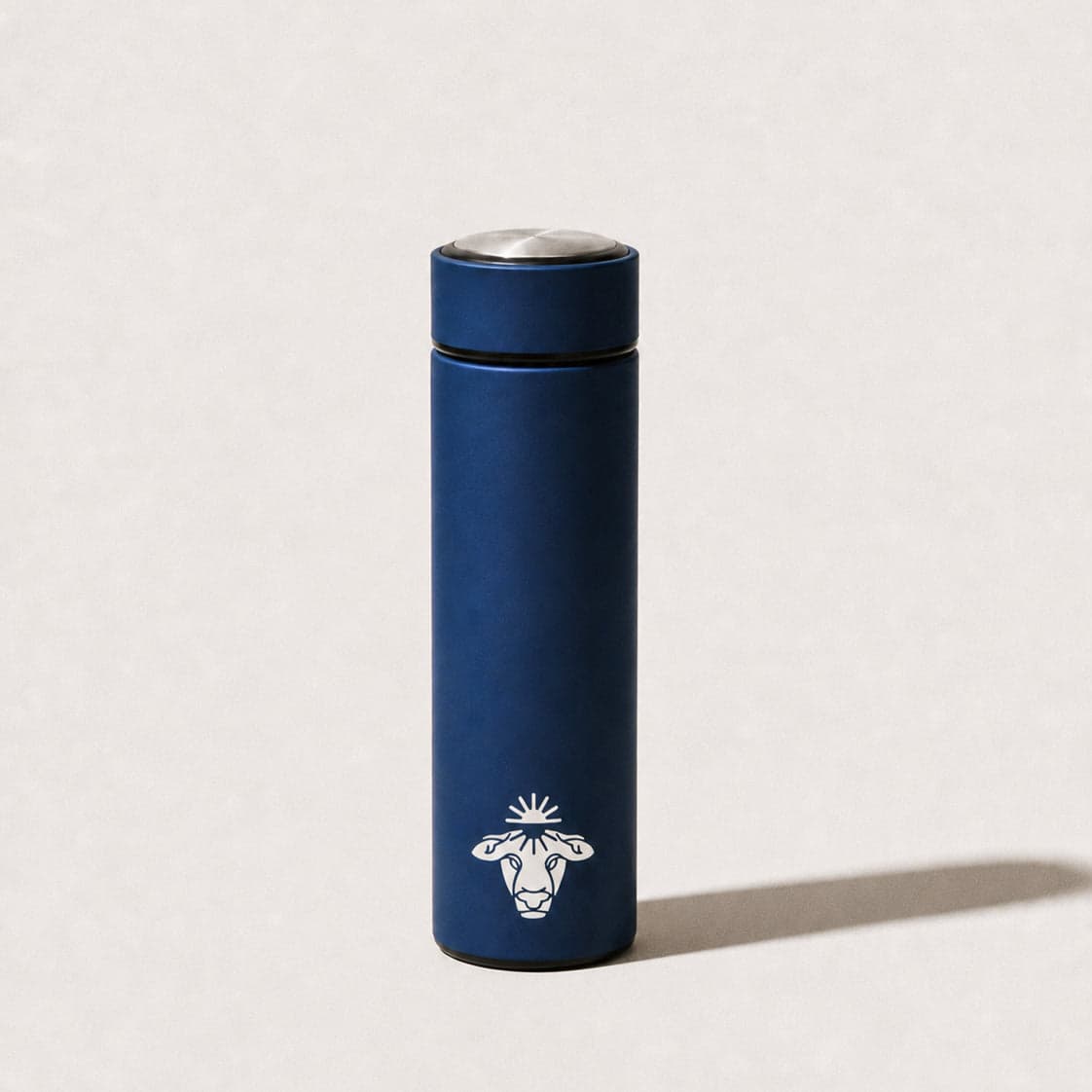
Eight real ingredients built around grass-fed beef organs, collagen and colostrum. Nothing synthetic added.
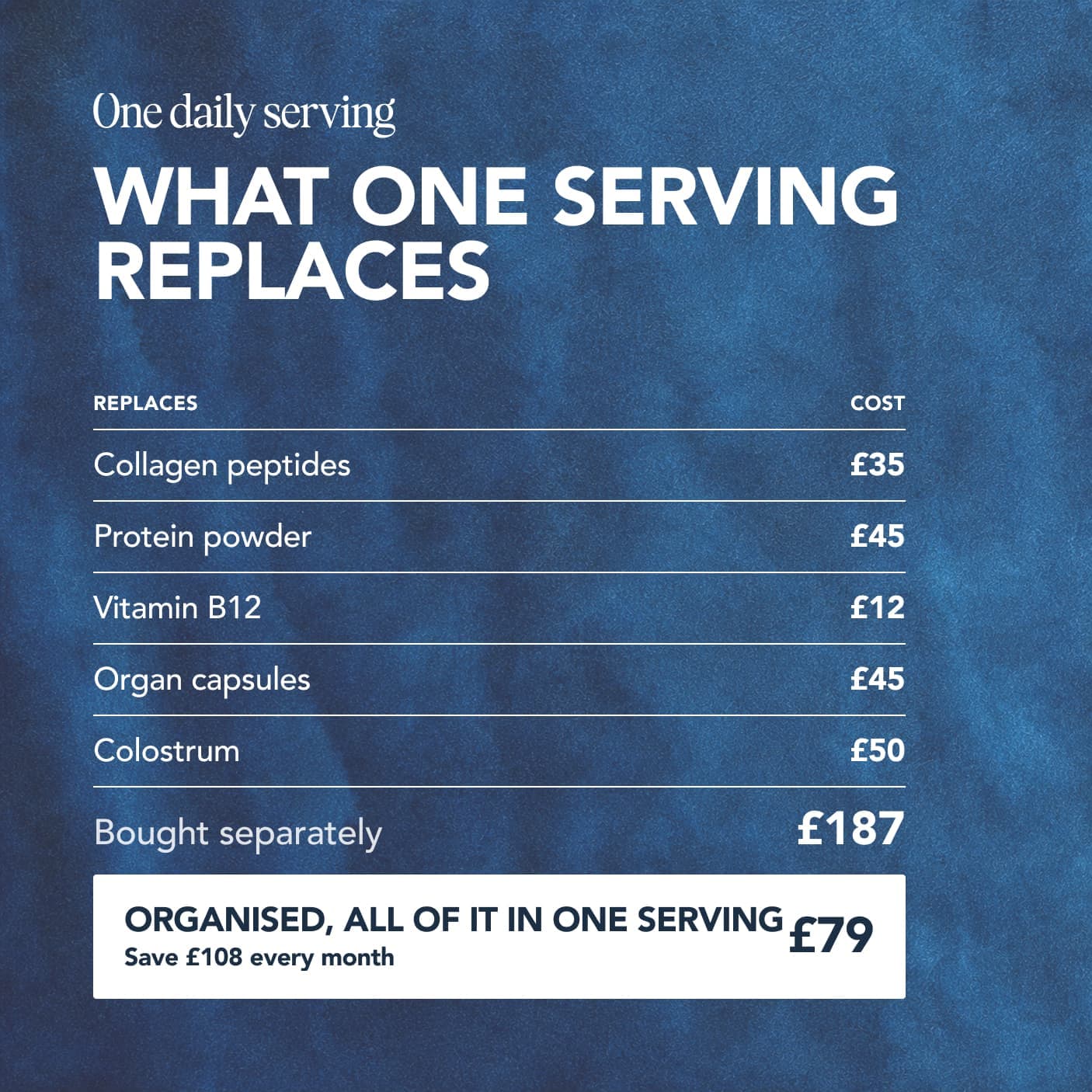
Free with your first order, worth £38. Plus £10 off the pouch with a subscription.

Free UK shipping · Made in England · 100 day money back guarantee on your first pouch · Skip, pause or cancel anytime
The testosterone conversation
Many men over 40 assume their low energy is low testosterone and reach for supplementation. Some need it. Most don't. Most need nutrient density and training stimulus.
If you're considering testosterone replacement, ask first: am I eating enough protein? Am I eating organs? Am I sleeping eight hours? Am I training? If all four are solid and you're still struggling, then test your testosterone. But most men aren't solid on all four. Most can transform their energy by fixing nutrition and training first.
The bottom line
A man over 40 who wants energy and vitality doesn't need a testosterone prescription. He needs nutrient-dense food (red meat, organs, eggs, bone broth), adequate sleep (7-9 hours nightly), regular resistance training (three times weekly), and stress management. That combination restores energy, preserves muscle, maintains cardiovascular health, and supports sexual function and drive. Everything else is optional.
References
Every source below was checked on 27 August 2026. Each PubMed, PMC and DOI identifier was resolved against NCBI or Crossref, and what it opens is printed under the citation, so you can see the link goes where the citation says without leaving the page. Where a citation and its identifier disagreed, the citation was corrected to the record or the reference was deleted along with the sentence marker that pointed at it, and where the resolved paper turned out not to support the sentence, the sentence was cut back to what it does support. Borrowed authority is worse than none, because it looks like rigour.
- Harman SM, Metter EJ, Tobin JD, Pearson J, Blackman MR. Longitudinal effects of aging on serum total and free testosterone levels in healthy men. Baltimore Longitudinal Study of Aging. Journal of Clinical Endocrinology & Metabolism. 2001;86(2):724-731. https://pubmed.ncbi.nlm.nih.gov/11158037/Checked 27 August 2026: PMID 11158037 opens Harman SM, Metter EJ, Tobin JD et al, Longitudinal effects of aging on serum total and free testosterone levels in healthy men. Baltimore Longitudinal Study of Aging. J Clin Endocrinol Metab 2001;86(2):724-31.
- Prasad AS, Mantzoros CS, Beck FW, Hess JW, Brewer GJ. Zinc status and serum testosterone levels of healthy adults. Nutrition. 1996;12(5):344-348. https://pubmed.ncbi.nlm.nih.gov/8875519/Checked 27 August 2026: PMID 8875519 opens Prasad AS, Mantzoros CS, Beck FW et al, Zinc status and serum testosterone levels of healthy adults. Nutrition 1996;12(5):344-8. PubMed indexes it as: Comparative Study.
- Volek JS, Kraemer WJ, Bush JA, Incledon T, Boetes M. Testosterone and cortisol in relationship to dietary nutrients and resistance exercise. Journal of Applied Physiology. 1997;82(1):49-54. https://pubmed.ncbi.nlm.nih.gov/9029197/Checked 27 August 2026: PMID 9029197 opens Volek JS, Kraemer WJ, Bush JA et al, Testosterone and cortisol in relationship to dietary nutrients and resistance exercise. J Appl Physiol (1985) 1997;82(1):49-54.
- Cruz-Jentoft AJ, Bahat G, Bauer J, et al. Sarcopenia: revised European consensus on definition and diagnosis. Age and Ageing. 2019;48(1):16-31. https://pmc.ncbi.nlm.nih.gov/articles/PMC6322506/Checked 27 August 2026: PMC6322506 opens Cruz-Jentoft AJ, Bahat G, Bauer J et al, Sarcopenia: revised European consensus on definition and diagnosis. Age Ageing 2019;48(1):16-31. PubMed indexes it as: Consensus Statement.
- National Institutes of Health, Office of Dietary Supplements. Magnesium: Fact Sheet for Health Professionals. https://ods.od.nih.gov/factsheets/Magnesium-HealthProfessional/ [accessed May 2026].
Who wrote and reviewed this guide
Niall Kiddle
Author · Founder, Organised
Niall is the founder of Organised. He started the company in 2024 after fixing his own health the slow way: in 2022 he swapped a cupboard of synthetic supplements for real food, raw milk, organ meats, bone broth and honey, and felt the difference within months.
Areas of expertise: Ancestral nutrition, Organ meats, Whole-food supplementation, Gut health, Regenerative sourcing
Read Niall's full profile
Pedro Rodrigues
Reviewer · Agronomist (farming and sourcing only)
Pedro is the agronomist Organised works with on farming and sourcing. His job on the guides is to keep the science honest: he reviews what we publish about soil health, regenerative agriculture, grazing and the way food is actually produced.
Areas of expertise: Regenerative agriculture, Agronomy, Soil health, Grass-fed farming, Food sourcing
Reviewed this guide on
Read Pedro's full profileMore on men's health
View allBrowse the guides library
All guidesKeep reading

Life stage
Endometriosis and Nutrition: An Evidence-Based Approach
Nutrition cannot cure endometriosis, but it can reduce pain and inflammation. Master anti-inflammatory fats, reduce seed oils, and eliminate xenoestrogens.

Life stage
The Fourth Trimester: Why Mothers Need Organ Nutrition
The fourth trimester is when mothers face severe nutrient depletion. Learn why organ nutrition is critical for recovery and what to eat.

Life stage
Teenage Nutrition: Fuelling Growth Spurts and Brain Development
Teenage nutrition is critical for growth spurts, brain maturation, and bone building. Learn what teens actually need to thrive.
Real food, made effortless
Find my daily blendA few ways to use it
All recipes
Organ Bolognese: The Family Dinner That Heals
Practical organ meat recipe using fresh beef liver and heart. Family-friendly bolognese that bridges supplements to whole food.

Bone Broth from Scratch: A Step-by-Step Guide
Step-by-step guide to making bone broth at home. Stovetop, slow cooker, and Instant Pot methods. Rich in collagen and gut-healing minerals.

The Organised Recovery Smoothie for After Exercise
A recovery smoothie made with beef protein, raw milk, frozen berries, collagen, and honey. Optimal nutrition in the 30-minute window after exercise.


 Join over 100,000+ members
Build a better food system with us
The Organised community is thousands of people choosing real food and backing the farmers who grow it, all of us trying to leave the world a little better than we found it. If that is what you care about too, you belong here.