Teenage Nutrition: Fuelling Growth Spurts and Brain Development
If you have a teenager, you've noticed the bottomless appetite. The sudden height gain. The skin changes. The emotional intensity. All of this is biology, and all of it requires specific nutrients. Most teenagers are profoundly undernourished for what their bodies are trying to do.
By Niall Kiddle, Founder, Organised

Reviewed by Pedro Rodrigues, Agronomist (farming and sourcing only) ·
7 min read · Published · Updated · 4 cited sources
Makers of the Organised Daily blend, a grass-fed beef organ supplement from regenerative UK farms

Puberty is one of the most metabolically demanding periods of human life. Growth accelerates. Hormones shift. The brain is being substantially rewired. Bone density is being built. And teenagers are expected to manage this whilst sitting in classrooms, managing increasingly complex social dynamics, and often restricting their food intake in the pursuit of a certain body image.
The result is widespread nutrient deficiency in teenagers, showing up as fatigue, poor skin, irregular periods, weak bones, mood instability, and poor concentration. These aren't character flaws. They're nutritional emergencies.

The teenage growth explosion
Teenagers grow faster than at any time since infancy. Most teens gain 20 to 25% of their adult height during the teenage years. The velocity is extraordinary, and the nutritional demand is correspondingly extraordinary.
This growth happens across all body systems at once. Height, width, organ development, bone density, muscle development, skin surface area. All of it requires raw material. Protein. Minerals. Vitamins. Calories. Not as recommendations on a chart, but as actual physiological need.
A teenage boy might need 2,500 to 3,000 calories per day during peak growth. A teenage girl might need 2,000 to 2,500. These aren't excessive numbers. They're biological reality. But if a teenager is eating less than this, growth slows, development is delayed, and their body begins to consume its own reserves to fuel what's happening.
A teenager who's hungry all the time isn't being greedy. Their body is telling them it needs fuel. Listen to it.
Brain development doesn't stop at eighteen
The teenage brain is undergoing its most profound reorganisation since early childhood. The prefrontal cortex, which governs decision-making, impulse control, and future planning, is being entirely rewired.2 White matter is being pruned and refined. Synaptic connections are being strengthened or eliminated based on what the teenager is actually using.
This process requires specific nutrients. Choline for myelin formation. Omega-3 fatty acids for neuronal membranes.4 B vitamins for energy and neurotransmitter synthesis. Iron for oxygen transport. Zinc for neurotransmitter function.
A teenager who's underfed on these nutrients has a brain that's trying to undergo massive development on insufficient fuel. It shows up as poor concentration, mood dysregulation, impulsivity, and difficulty learning. These things get attributed to "typical teenage behaviour." Often, they're malnutrition.
The irony is that teenagers often feel less hungry than they did as younger children, despite having much higher nutrient needs. This is a perception issue, not a reality. Their hunger cues can be dulled by stress, overtraining, hormonal shifts, or chronic underfuelling. Their body has adapted to functioning on insufficient fuel. The solution is not to wait for their appetite to signal; it's to feed them deliberately.
Bone building is critical during puberty
Approximately 90% of adult bone density is built by age eighteen.1 If a teenager doesn't build strong bones during puberty, their bone health trajectory is set. They'll spend the rest of their life at higher risk of fractures, osteoporosis, and chronic pain.
Bone building requires calcium, magnesium, vitamin D, vitamin K2, and collagen.1 These all come from real food. Dairy products, bone broth, fatty fish, organ meats, leafy greens with proper fat for absorption.
A teenager who's avoiding dairy because it's "fattening," or who's underfuelling generally, is sabotaging their skeletal future. Bone is built now. It's not something you can make up for later with supplements.
The process requires not just the nutrients but also mechanical stress. Weight-bearing activity. Climbing stairs, lifting things, jumping, running. A teenager who's sedentary is also compromising bone density, regardless of nutrition.
The nutrients being depleted
During the teenage years, specific nutrients are being depleted faster than at any other life stage:
- Iron. Teenage girls lose blood monthly through menstruation, and if their diet is low in iron, anaemia quickly follows.3 Iron is essential for energy production, and anaemia shows up as fatigue, poor concentration, and cold intolerance. Teenage boys also need significant iron for muscle development and oxygen transport.
- Zinc. Essential for growth, immune function, wound healing, and skin health. Teenagers with acne often have low zinc. Teenagers who catch every bug are often zinc-deficient.
- Calcium and magnesium. For bone building and nervous system function. Magnesium is also essential for sleep, and many teenagers are chronically sleep-deprived partly because they're magnesium-depleted.
- B12. For energy production, nervous system function, and mood. Particularly low in vegetarian or vegan teenagers.
- Omega-3 fatty acids. For brain development and mood regulation. Most teenagers eat far too much seed oil and far too little fish.
- Vitamin D. For bone building and immune function. Teenagers who are indoors for most of the day, or who live in northern climates, are likely deficient.
None of these deficiencies are rare. They're epidemic. And they're entirely preventable with proper nutrition.
Get life-stage nutrition guides, free
Two short reads a week on eating well through pregnancy, childhood and older age.
By signing up you agree to receive emails from us. No spam, unsubscribe anytime.
Practical teenage nutrition
The strategy is straightforward: feed your teenager real food, in adequate quantities, consistently.
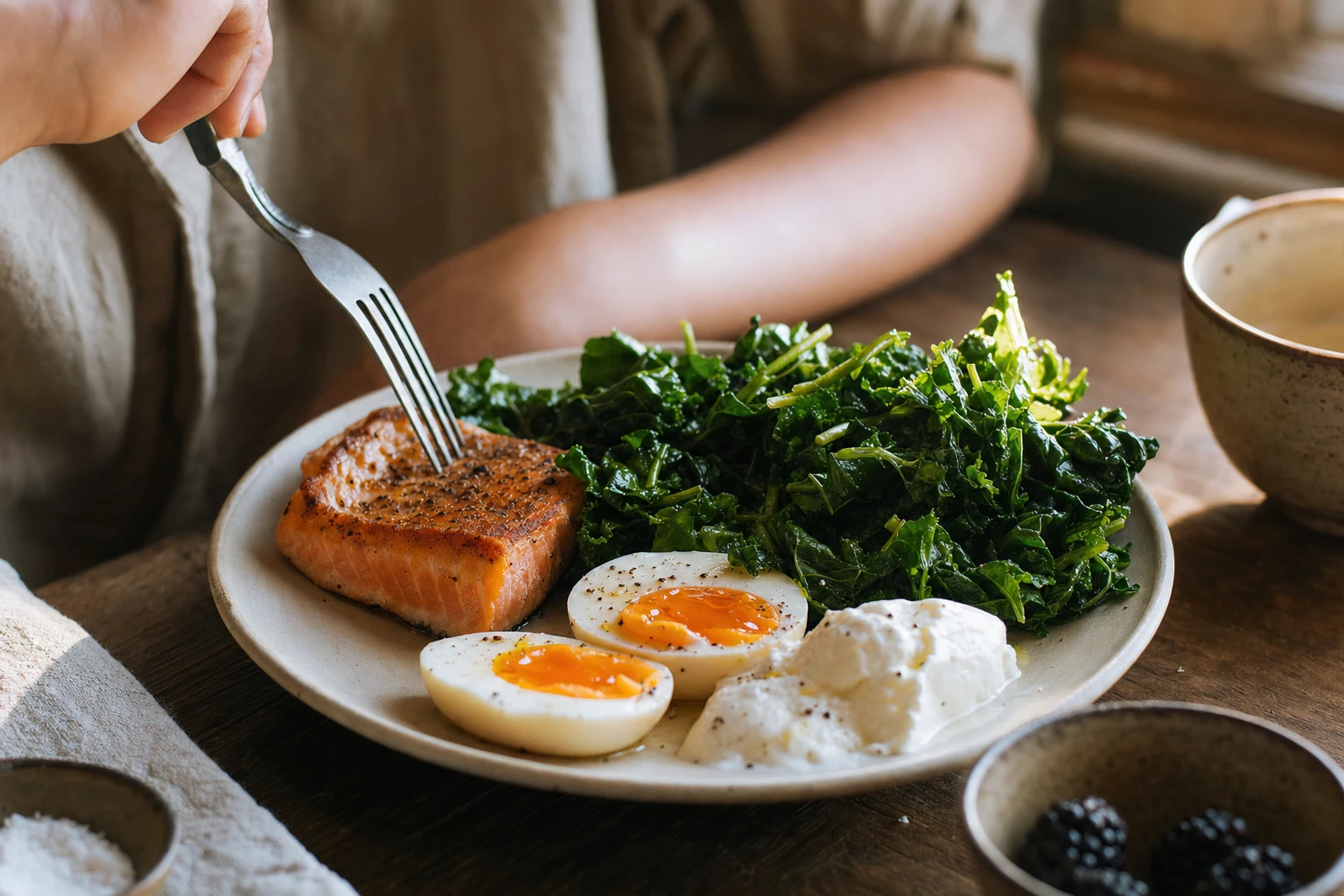
Start with breakfast. Not skipping it because they're rushed, or because they're trying to restrict calories. A substantial breakfast sets blood sugar for the day and supports concentration, mood, and growth. Eggs, meat, dairy, fruit, nuts. Something that delivers protein and fat.
Ensure adequate protein at every meal. Teenagers need more protein per kilogram of body weight than adults, because they're building muscle tissue. Meat, fish, eggs, dairy, legumes. Aim for at least 20 to 30 grams per meal.
Include iron-rich foods regularly. Red meat is the most bioavailable source. Teenagers don't need to eat red meat at every meal, but several times weekly is appropriate.
Include fatty fish twice weekly. Salmon, mackerel, sardines. For brain development and mood.
Include dairy daily, or if they don't tolerate dairy, other calcium sources: bone broth, leafy greens with fat for absorption, tinned fish with bones, nuts and seeds.
Include organ meats if possible. Liver once weekly delivers enormous amounts of the nutrients teenagers need. It's not palatable to all teenagers, but mixed into bolognese, hidden in a burger, or eaten as pâté, it's doable.
Include vegetables, especially the coloured ones: spinach, carrots, peppers, tomatoes. These are nutrient-dense and should accompany most meals. But they're not sufficient on their own; vegetables are the vegetables, not the centre of the meal.
Make snacks count. If your teenager is hungry between meals, that's normal. Snacks should be nutrient-dense: nuts, cheese, fruit with nut butter, leftover meat, eggs. Not processed snacks.

Nutrition for different teenage scenarios
If your teenager is an athlete, their nutrient needs are even higher. Training depletes minerals faster, muscle tissue requires more protein, and recovery depends on consistent nutrition. An athlete underfed on protein and minerals will plateau quickly, feel constantly fatigued, and recover poorly from training.
If your teenage daughter has started menstruating, her iron needs have jumped significantly. Many teenage girls become anaemic within a year or two of menarche, particularly if their diet is low in red meat and organ meats. The solution is consistent dietary iron, not waiting to see if the problem develops.
If your teenager is growing particularly fast, visibly shooting up in height, their nutritional needs are temporarily extreme. Feed them generously. Their appetite will signal how much they need, and restricting food during a growth spurt is sabotaging their development.

1 of 9
Daily blend
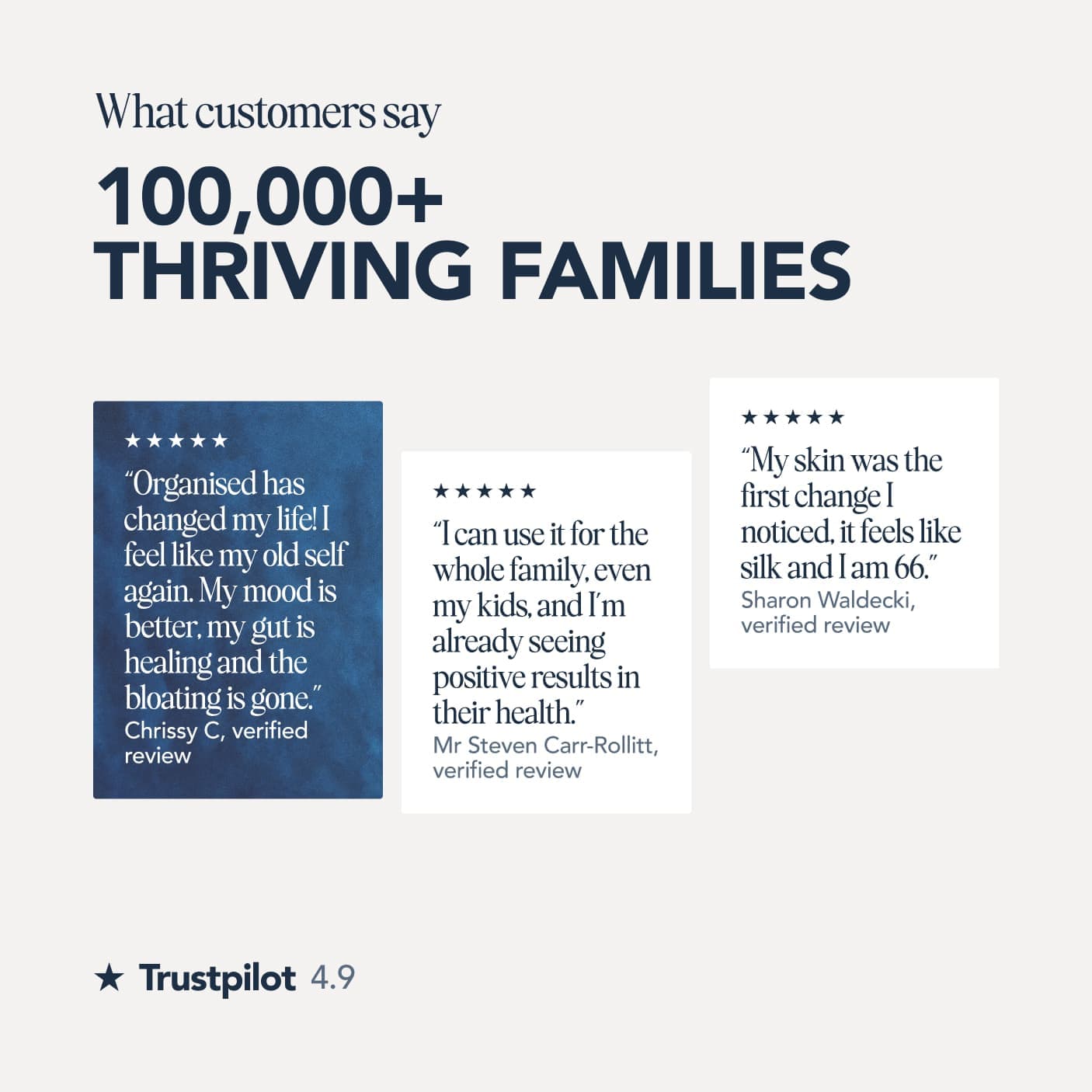
100,000+ thriving families4.9 on Trustpilot
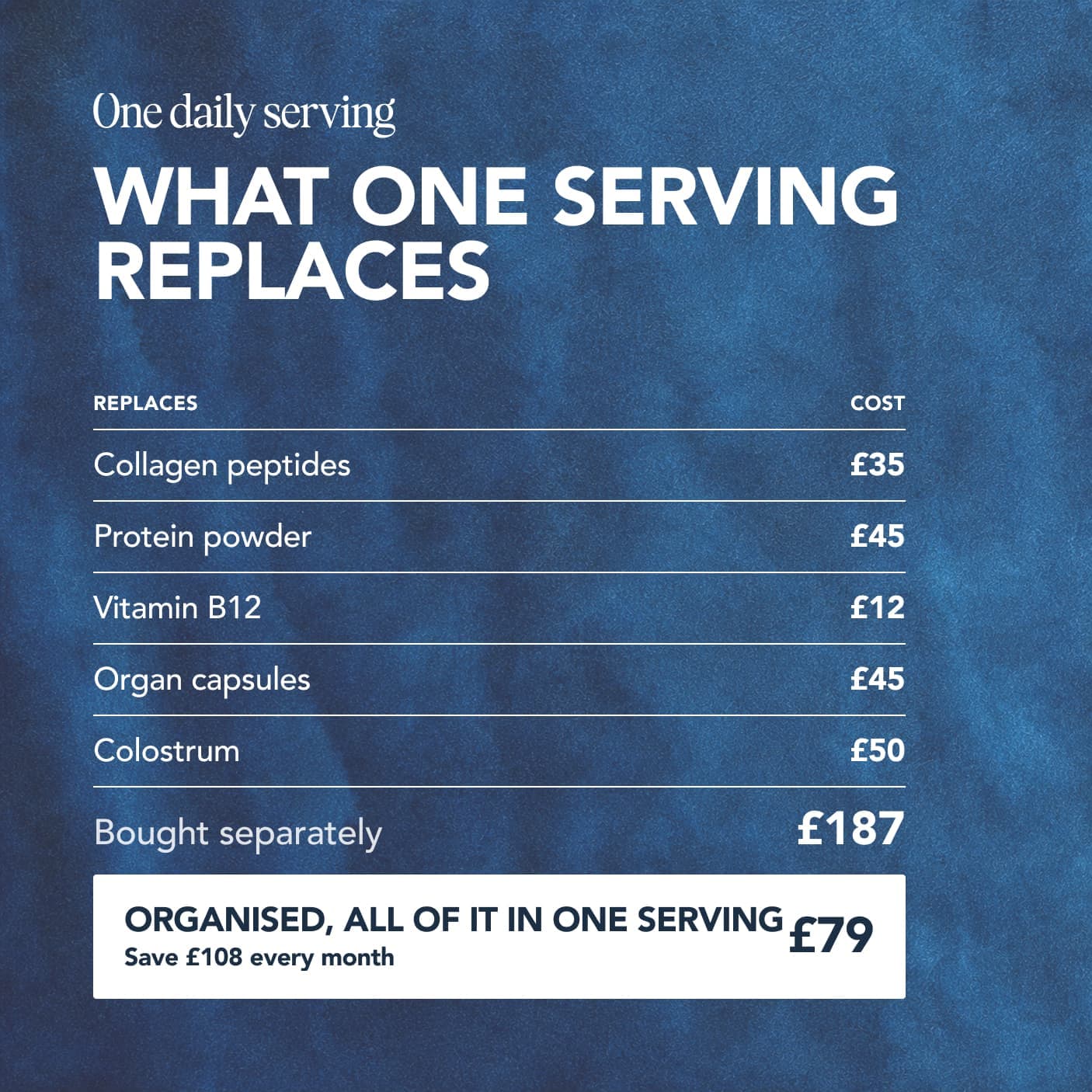
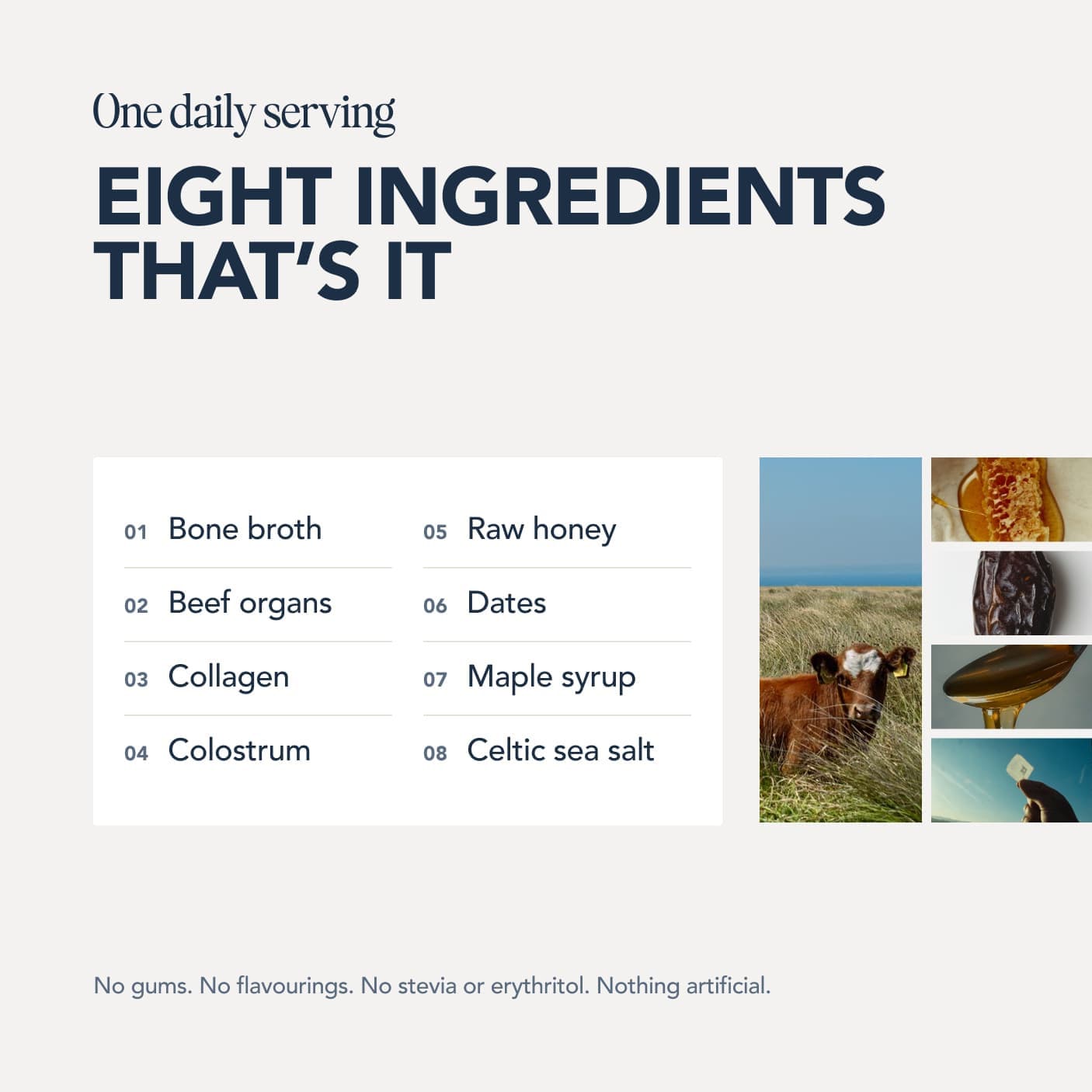
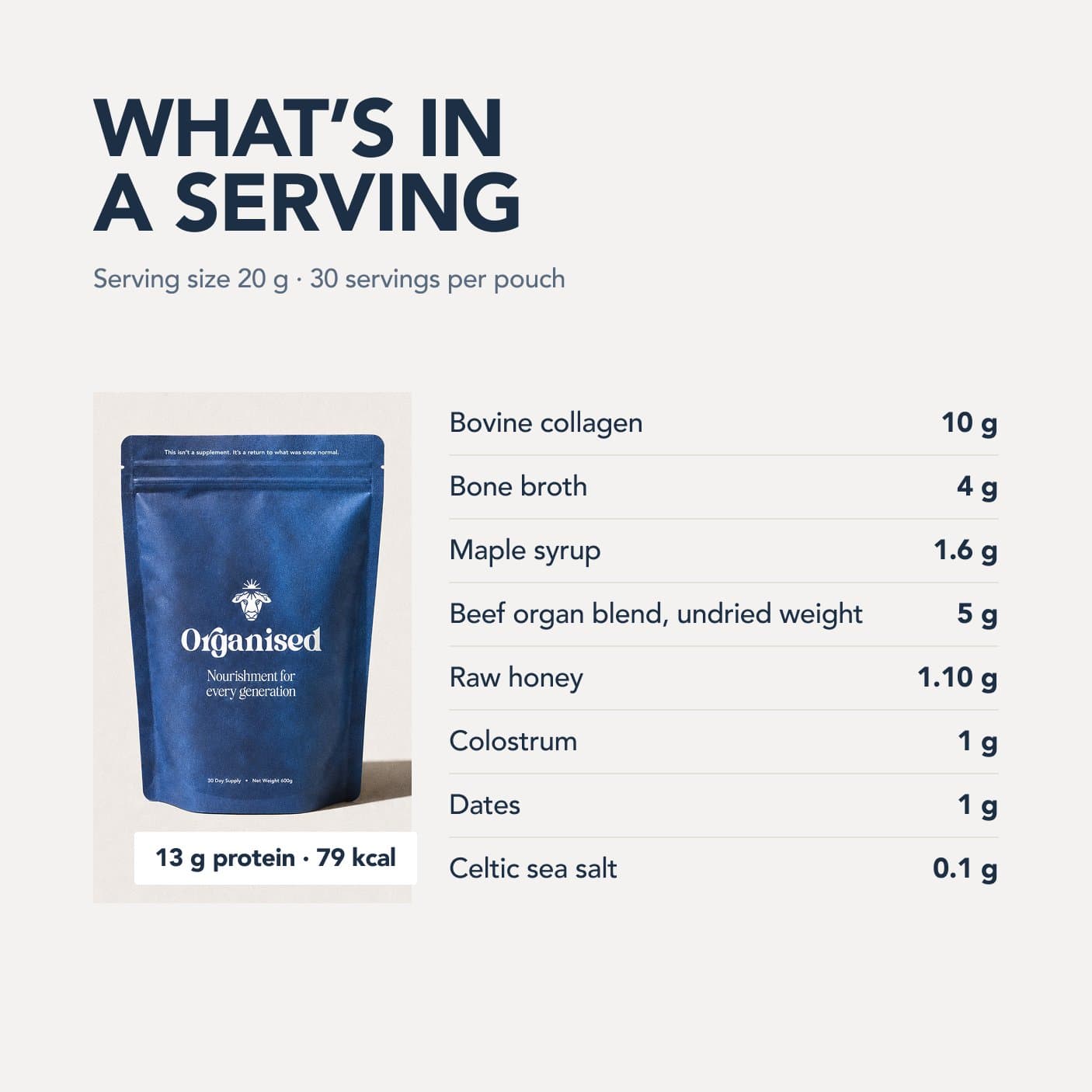
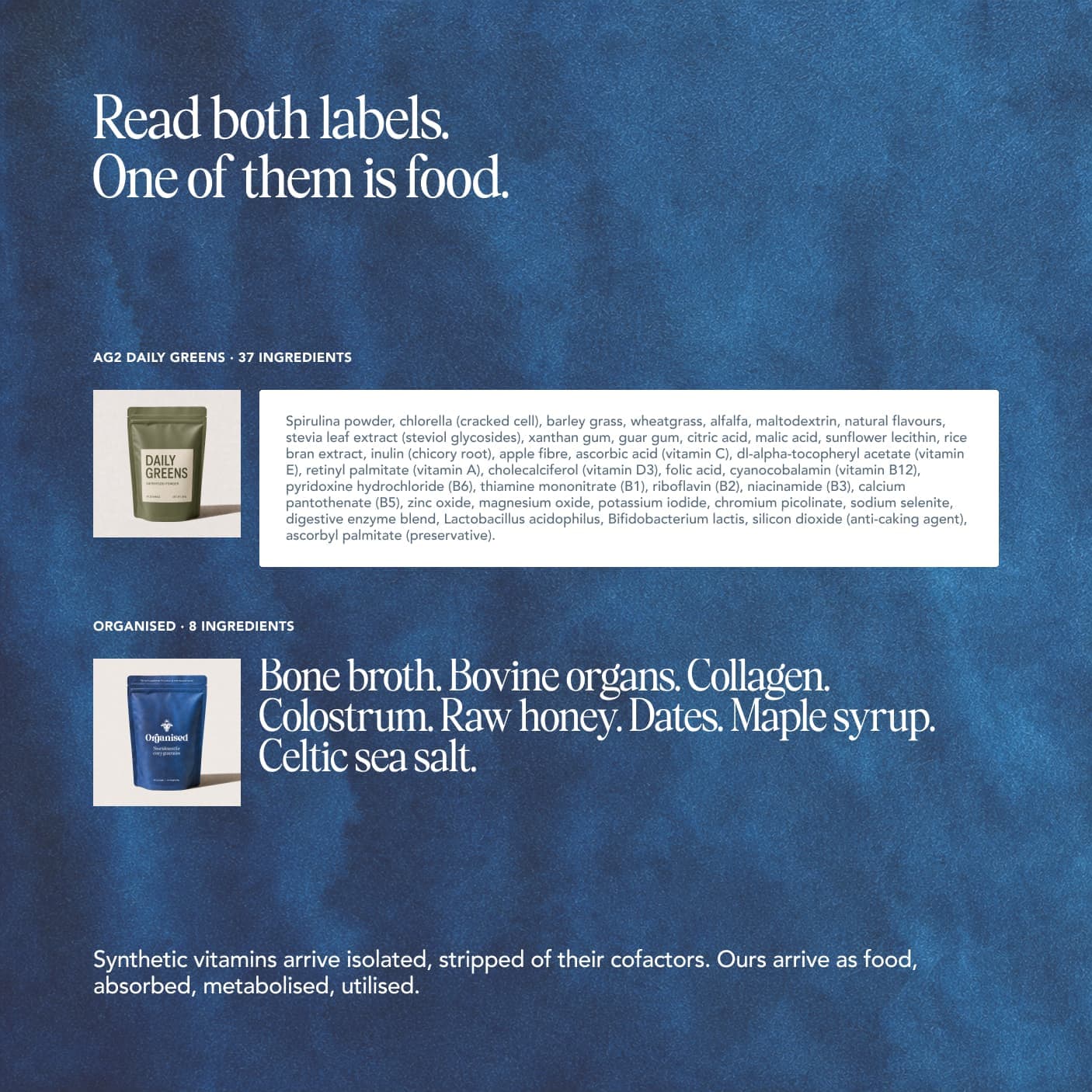
Eight real ingredients built around grass-fed beef organs, collagen and colostrum. Nothing synthetic added.
Free with your first order, worth £38. Plus £10 off the pouch with a subscription.


Free UK shipping · Made in England · 100 day money back guarantee on your first pouch · Skip, pause or cancel anytime
The bottom line
Teenagers are not small adults. They're biological beings undergoing the most dramatic transformation of their lives. That transformation requires fuel, and it requires specific nutrients that real food provides.
If your teenager is exhausted, struggling with concentration, catching every illness, or complaining of mood instability, the first place to look is nutrition. Are they eating enough? Are they eating the foods that deliver the nutrients their body is trying to use to grow and develop?
The teenage years are brief. They're also foundational. The bone density built now, the brain wiring consolidated now, the immune resilience established now, these all echo for decades. It's worth getting nutrition right.
The cost of underfuelling
Many teenagers, particularly teenage girls, are eating less than their bodies need. They're trying to manage their appearance or conform to ideas about what bodies should look like. They're stressed, busy, and often skipping meals. The result is systematic underfuelling of a body that's trying to grow and develop.
An underfed teenage body will try to conserve energy. Growth slows. Hormones become dysregulated. Menstrual periods become irregular or stop. Mood destabilises. Concentration suffers. Strength and athletic performance plateau or decline. These aren't character issues; they're biological consequences of inadequate fuel.
The solution isn't complicated: feed your teenager. Breakfast, lunch, dinner, snacks. Adequate protein at each meal. Enough calories that they feel satisfied, not constantly hungry. Real food, not restriction.
If your teenager is expressing concerns about their body image or restricting food intake, take it seriously. Eating disorders are common in teenagers, and early intervention makes a dramatic difference. Speak to your GP.
A teenager who's nourished has the physical and mental resources to navigate the complexity of adolescence. A teenager who's underfed is fighting their biology whilst trying to manage school, social relationships, and identity.
References
Every source below was checked on 27 August 2026. Each PubMed, PMC and DOI identifier was resolved against NCBI or Crossref, and what it opens is printed under the citation, so you can see the link goes where the citation says without leaving the page. Where a citation and its identifier disagreed, the citation was corrected to the record or the reference was deleted along with the sentence marker that pointed at it, and where the resolved paper turned out not to support the sentence, the sentence was cut back to what it does support. Borrowed authority is worse than none, because it looks like rigour.
- Weaver CM et al. The National Osteoporosis Foundation's position statement on peak bone mass development. Osteoporos Int. PMC4791473.Checked 27 August 2026: PMC4791473 opens Weaver CM, Gordon CM, Janz KF et al, The National Osteoporosis Foundation's position statement on peak bone mass development and lifestyle factors: a systematic review and implementation recommendations. Osteoporos Int 2016;27(4):1281-1386. PubMed indexes it as: Systematic Review, Consensus Statement.The authors' own declaration, from the record: ENDORSING SOCIETIES: This scientific statement has been reviewed and endorsed by the following scientific societies: American Bone Health American College of Sports Medicine Endocrine Society National Osteoporosis Foundation Society for Women's Health Research REVIEWERS: This scientific statement was reviewed in draft form by individuals chosen for their diverse perspectives and technical expertise. The purpose of … (abridged; the full declaration is on the record)
- Casey BJ, Jones RM, Hare TA. The adolescent brain. Ann N Y Acad Sci. PMC2475802.Checked 27 August 2026: PMC2475802 opens Casey BJ, Jones RM, Hare TA, The adolescent brain. Ann N Y Acad Sci 2008;1124:111-26. PubMed indexes it as: Review.The authors' own declaration, from the record: Conflict of Interests. The authors declare no conflicts of interest.
- National Institutes of Health Office of Dietary Supplements. Iron - Health Professional Fact Sheet. NIH ODS Iron.
- National Institutes of Health Office of Dietary Supplements. Choline - Health Professional Fact Sheet. NIH ODS Choline.
Who wrote and reviewed this guide
Niall Kiddle
Author · Founder, Organised
Niall is the founder of Organised. He started the company in 2024 after fixing his own health the slow way: in 2022 he swapped a cupboard of synthetic supplements for real food, raw milk, organ meats, bone broth and honey, and felt the difference within months.
Areas of expertise: Ancestral nutrition, Organ meats, Whole-food supplementation, Gut health, Regenerative sourcing
Read Niall's full profile
Pedro Rodrigues
Reviewer · Agronomist (farming and sourcing only)
Pedro is the agronomist Organised works with on farming and sourcing. His job on the guides is to keep the science honest: he reviews what we publish about soil health, regenerative agriculture, grazing and the way food is actually produced.
Areas of expertise: Regenerative agriculture, Agronomy, Soil health, Grass-fed farming, Food sourcing
Reviewed this guide on
Read Pedro's full profileMore on children & teens
View all- Feeding Children for Optimal Growth and Development
- Building Strong Bones in Childhood: Beyond Just Milk
- Can Children Take Beef Organ Supplements?
- How to Introduce Organ Meats to Children
- Picky Eaters: How to Sneak Nutrient-Dense Foods Into Family Meals
- Protein for Young Athletes: How Much Do Teenagers Actually Need?
- Screen Time, Sleep and Nutrition: The Triangle That Affects Every Child
- Sugar, Screens and Soil: Raising Healthy Children in a Modern World
- Teenage Athletes: Protein and Nutrient Needs for Growing Bodies
- The Nutrients Children Need Most (And Aren't Getting)
- Why Children Need More Nutrient-Dense Food (Not More Vitamins)
- Why Teenage Girls Are at the Highest Risk of Iron Deficiency
Browse the guides library
All guidesKeep reading

Life stage
Why Teenage Girls Are at the Highest Risk of Iron Deficiency
Teenage girls lose iron through menstruation and growth. Learn why deficiency is common and which foods restore it fastest.

Life stage
Protein for Young Athletes: How Much Do Teenagers Actually Need?
Learn how much protein teenage athletes need, when to eat it, and which whole foods deliver it best for performance and recovery.

Life stage
The Link Between Postpartum Depletion and Mental Health
Postnatal mood struggles often have nutritional roots. Learn what postpartum depletion takes from the body after birth and how to rebuild your reserves.
Real food, made effortless
Find my daily blendA few ways to use it
All recipes
Organised Smoothie Bowl Recipes for Every Season
Four seasonal smoothie bowl recipes using Organised. Berry in summer, apple-cinnamon in autumn, tropical in spring, warming chocolate in winter.

Organised Protein Pancakes: A Weekend Favourite
A high-protein pancake recipe using beef protein, eggs, and raw milk. Cooked in cast iron, naturally sweetened with banana and honey. Real food breakfast.
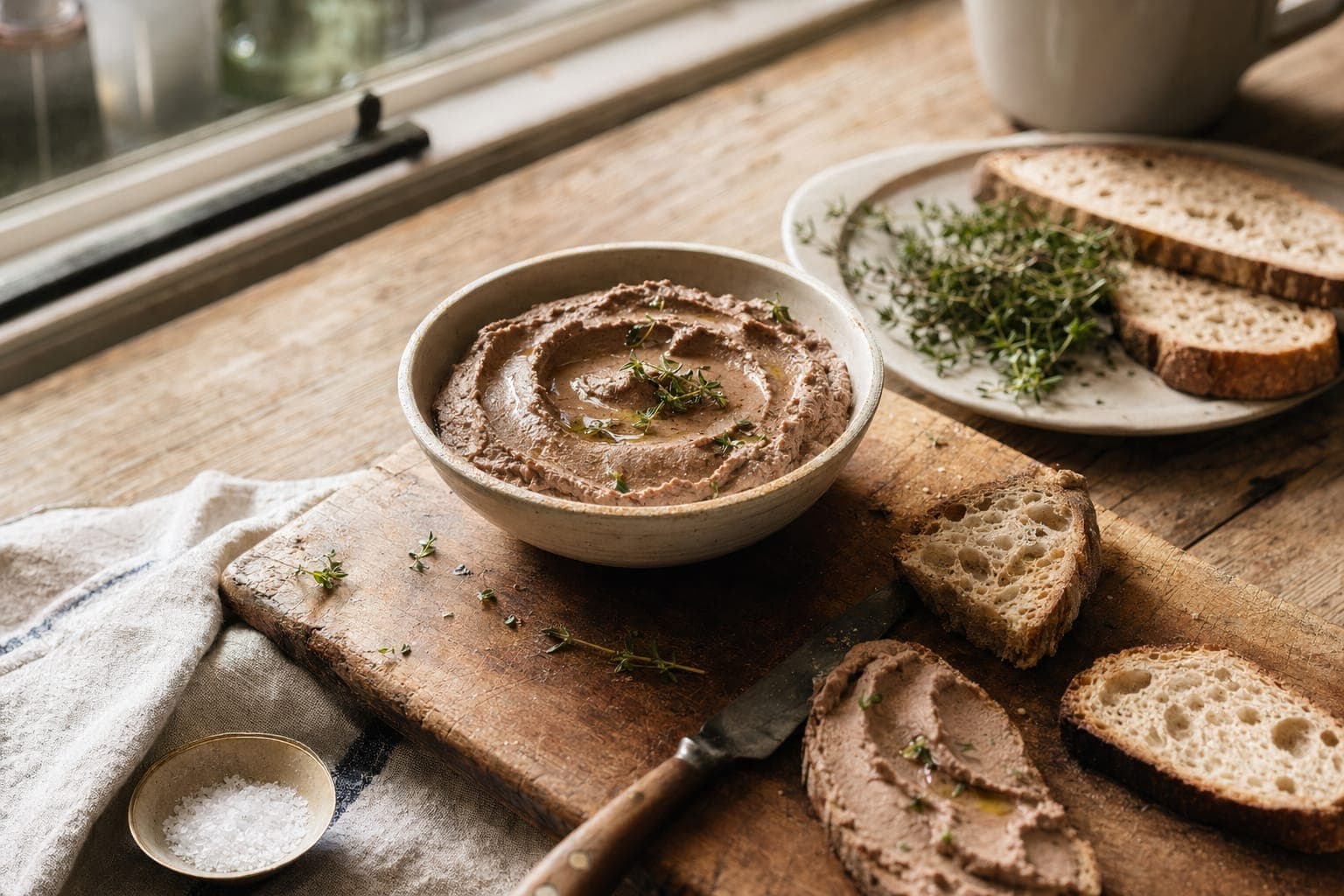
Liver Pate for Beginners: A Gentle Introduction to Organ Meats
Simple liver pate recipe to start eating organ meats. Chicken liver, butter, and herbs. Gentle introduction to nutrient-dense whole foods.


 Join over 100,000+ members
Build a better food system with us
The Organised community is thousands of people choosing real food and backing the farmers who grow it, all of us trying to leave the world a little better than we found it. If that is what you care about too, you belong here.