Eye Health and Nutrition: Protecting Your Vision as You Age
Your eyes are getting older at the same rate your body is. After 50, the risk of age-related macular degeneration (AMD) climbs steeply. It's the leading cause of vision loss in people over 65. And it's largely preventable through nutrition that most people never prioritise.
By Niall Kiddle, Founder, Organised

Reviewed by Pedro Rodrigues, Agronomist (farming and sourcing only) ·
6 min read · Published · Updated · 4 cited sources
Makers of the Organised Daily blend, a grass-fed beef organ supplement from regenerative UK farms
The macula is the central part of your retina, the part that lets you see detail and colour. Over time, oxidative damage accumulates. The retina slowly degenerates. You lose central vision while peripheral vision remains. It's not painful. It's just gone. Reading becomes impossible. Faces become unrecognisable. Driving ends.
Yet this is almost entirely preventable through the right nutrients. Not through expensive eye supplements. Through food.
How your eyes age and why nutrition matters
Your eyes are exposed to light all day. Light generates free radicals. Free radicals damage the delicate cells of the retina. Your body has antioxidant systems that neutralise these radicals, but they require nutrients to work. When those nutrients are missing, damage accumulates unchecked.
Three nutrients are specifically protective: vitamin A, lutein, and zeaxanthin. All three are found in animal foods and certain plants. All three are depleted by a modern diet of processed foods. All three must be present to maintain healthy vision.
Vitamin A is the direct building block of rhodopsin, the light-sensitive protein in your eyes that lets you see.2 Without adequate vitamin A, you lose the ability to see in dim light first. Over time, day vision deteriorates too.
If you can't see well in dim light, vitamin A deficiency is probably the reason. This is fixable within weeks.
Vitamin A: the foundation of vision
There are two forms of vitamin A: retinol, the active form found in animal foods, and beta-carotene, the precursor found in plants. Your body converts beta-carotene to retinol as needed. But the conversion is inefficient.
One microgram of retinol equals one unit of vitamin A activity. But it takes roughly 12 micrograms of beta-carotene to equal one unit of vitamin A activity. That's a 12-to-1 ratio.2 If you're relying on carrots and sweet potatoes, you're getting a fraction of the vitamin A activity you think you are.
Retinol, the form from animal foods, is immediately active. Your body uses it directly. Beef liver contains 5,000 to 6,000 micrograms of retinol per 100 grams. That's enough for days. A 100-gram serving of beef liver weekly is more vitamin A than most people get in months from plants.
Eggs are another accessible source. The yolk contains retinol, along with lutein and zeaxanthin. A boiled egg contains around 150 micrograms of retinol, roughly 20% of your daily requirement.
Lutein and zeaxanthin: the eye's antioxidant shield
Lutein and zeaxanthin are carotenoids, the same class as beta-carotene. But unlike beta-carotene, your body can't convert them to vitamin A. Instead, they accumulate in the macula, where they absorb blue light and neutralise the free radicals that light generates.3
Without lutein and zeaxanthin, blue light (from the sun and from screens) damages your macula directly. With them, this damage is neutralised. They're literally the sunscreen for your retina.
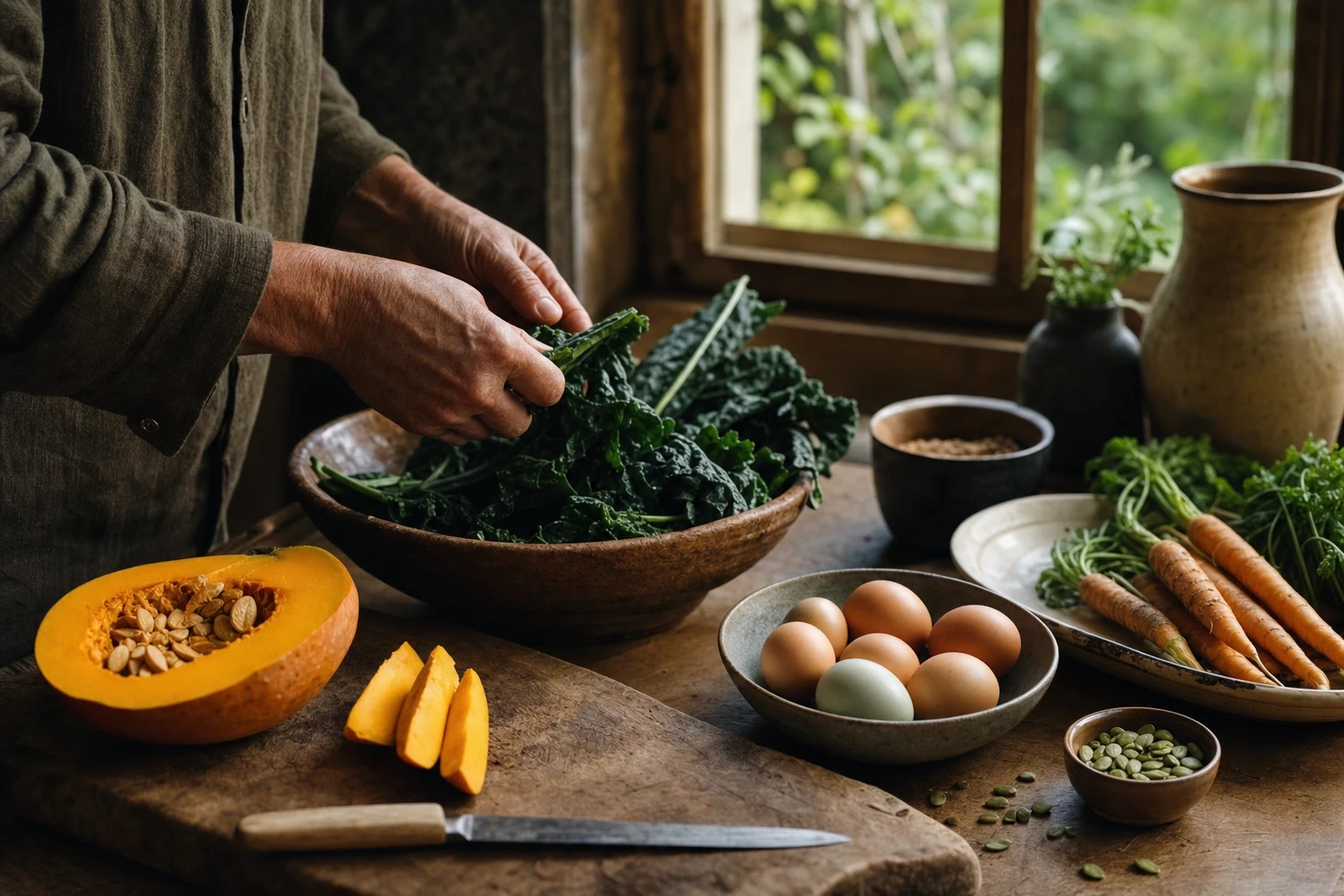
Dark leafy greens like kale and spinach contain high amounts of lutein and zeaxanthin. So do egg yolks. A study of people consuming two eggs daily showed significant accumulation of lutein in their macula within weeks. Two eggs. That's how responsive your eyes are to these nutrients.
Protect your vision by eating two eggs daily and a serving of beef liver weekly. That's the foundation. Everything else is additional.
Zinc and its critical role
Zinc is a component of the proteins that protect your retina. It's involved in the production of melanin, which shields your eyes from light damage. It's essential for the function of vitamin A. Without adequate zinc, vitamin A can't do its job properly.
Zinc is highest in oysters, beef, and organ meats. A 100-gram serving of oysters contains 5-7 milligrams of zinc. Beef liver contains 4-5 milligrams. Most plant sources contain less than one milligram per serving, and plant zinc is poorly absorbed.
If you're 50 and your vision is starting to blur, zinc deficiency is a real possibility. Zinc supplementation has been shown in studies to slow age-related macular degeneration.4 But getting zinc from food is better absorbed and safer than supplementation.
Get life-stage nutrition guides, free
Two short reads a week on eating well through pregnancy, childhood and older age.
By signing up you agree to receive emails from us. No spam, unsubscribe anytime.
Foods that genuinely protect your sight
Start with beef liver. One 50-gram serving weekly provides enough vitamin A, copper, and B vitamins to support eye health for days. It sounds intense. Start small. A liver pâté as a spread on sourdough. Finely minced into burgers. Mixed into bolognese.
Add eggs. Two daily, ideally the yolk raw or soft-boiled to preserve lutein. Three a day is fine. Eggs are among the most nutrient-dense foods available and one of the best sources of lutein for the retina.
Add oysters if you tolerate them. Once a week, six to eight oysters provides zinc, selenium, iron, and copper. All of these support eye health. If oysters are inaccessible, beef or lamb twice weekly provides adequate zinc.
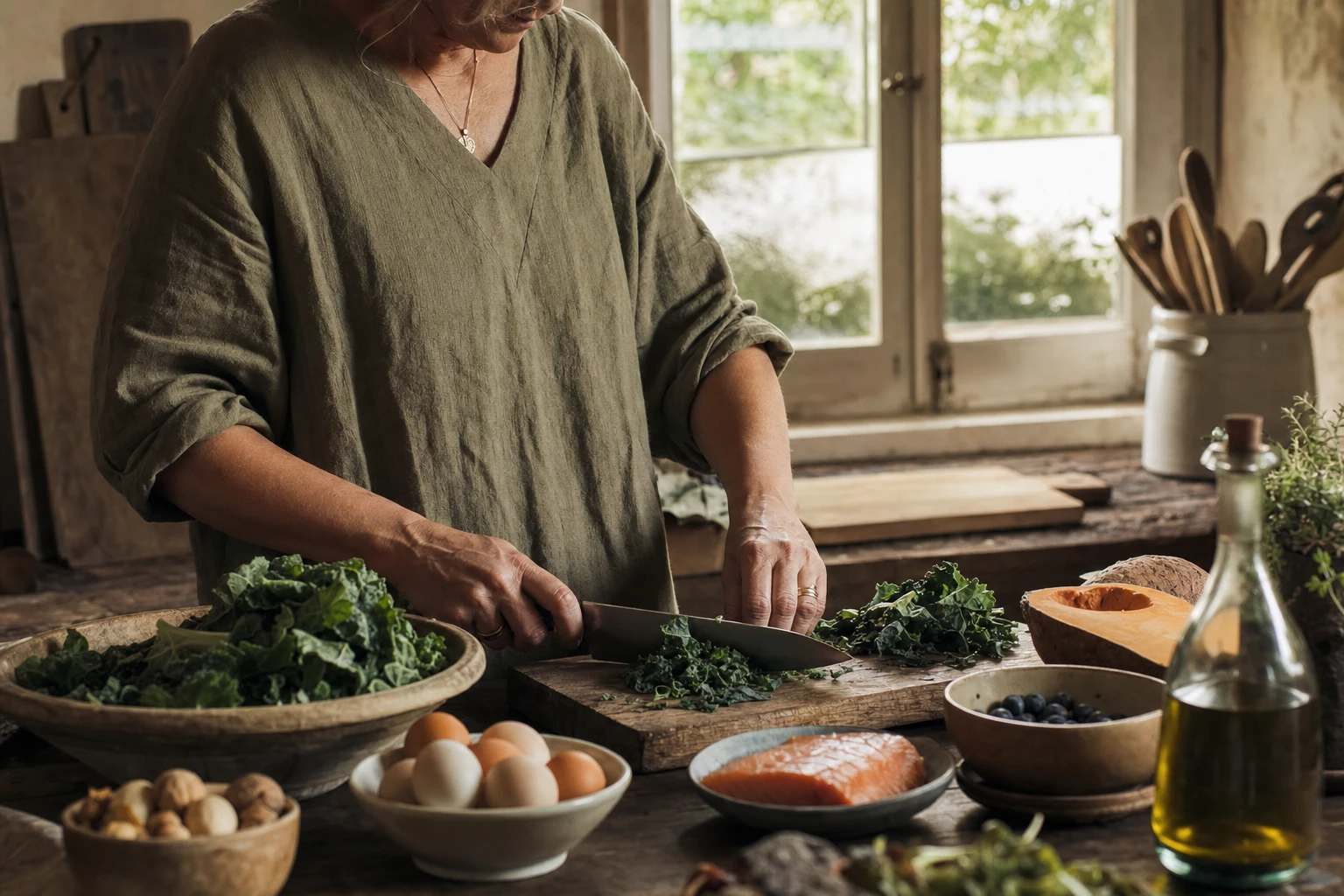
Add dark leafy greens, not for the vitamin A (plant sources are inefficient), but for lutein and zeaxanthin. A handful of spinach or kale daily, ideally with fat (butter, olive oil) for absorption.
- Beef liver, 50 grams once weekly, as a pâté or minced into other dishes
- Eggs, two to three daily, boiled or soft-cooked
- Oysters, six to eight once weekly, if tolerated
- Beef or lamb, three to four times weekly, for zinc
- Dark leafy greens, a handful daily with butter or oil
- Whole milk or full-fat dairy, for vitamin A and minerals
This isn't complicated. It's not expensive if you prioritise whole foods. A 50-gram serving of liver costs roughly the same as a coffee. Eggs cost pennies per serving. Oysters are a luxury, not a necessity. The foundation of eye health is nutrient density, and that's built on whole foods, not supplements.
1 of 9
Daily blend
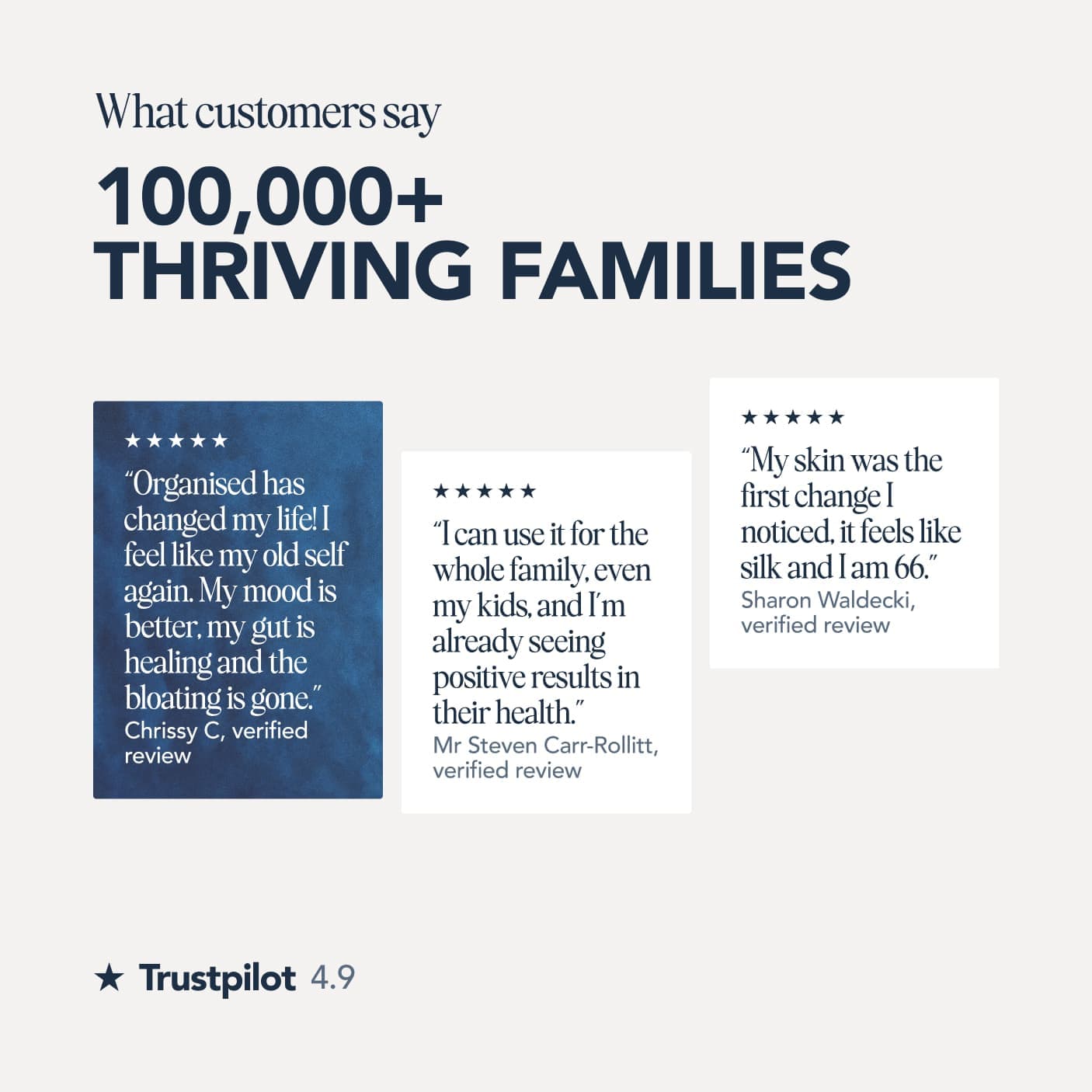
100,000+ thriving families4.9 on Trustpilot
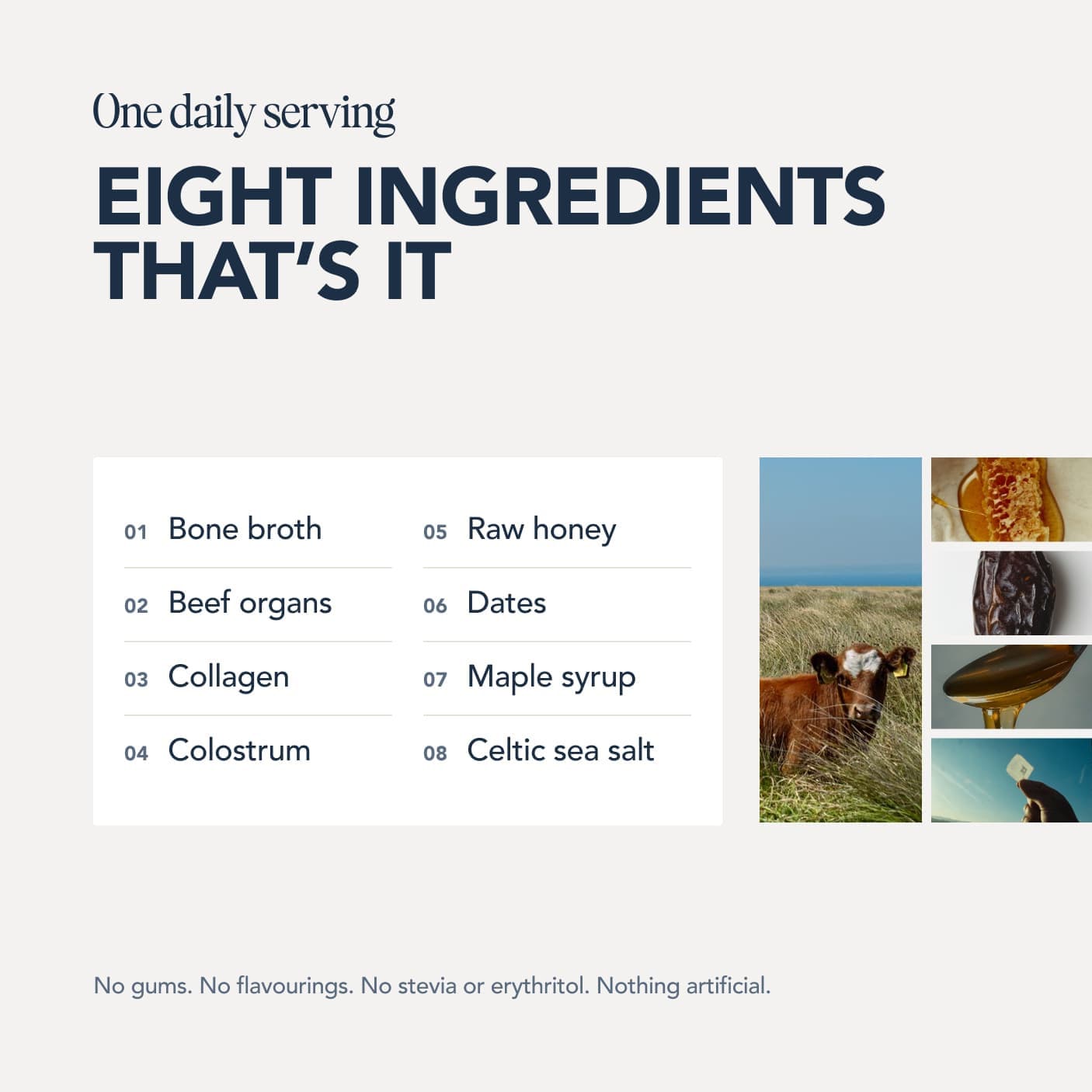
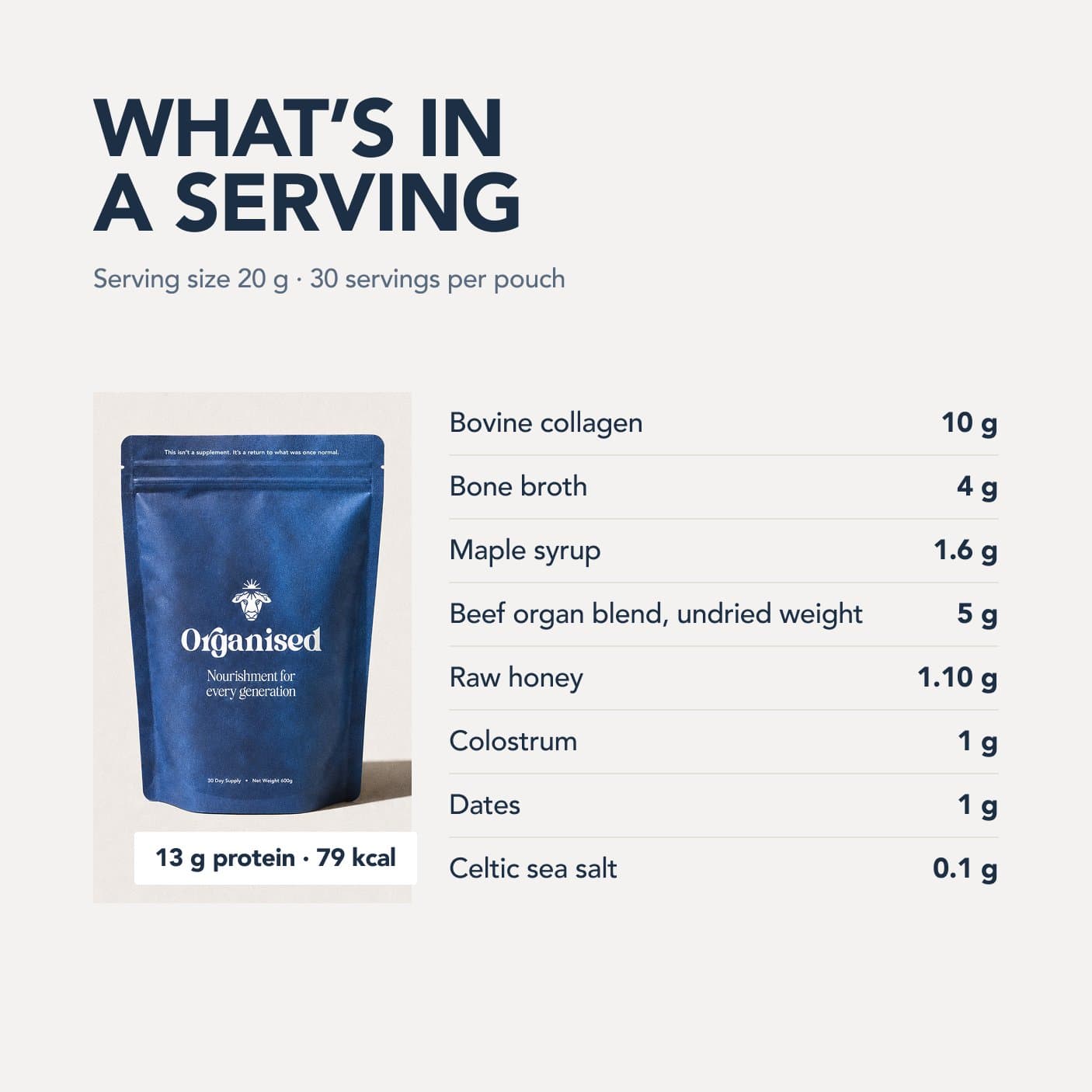
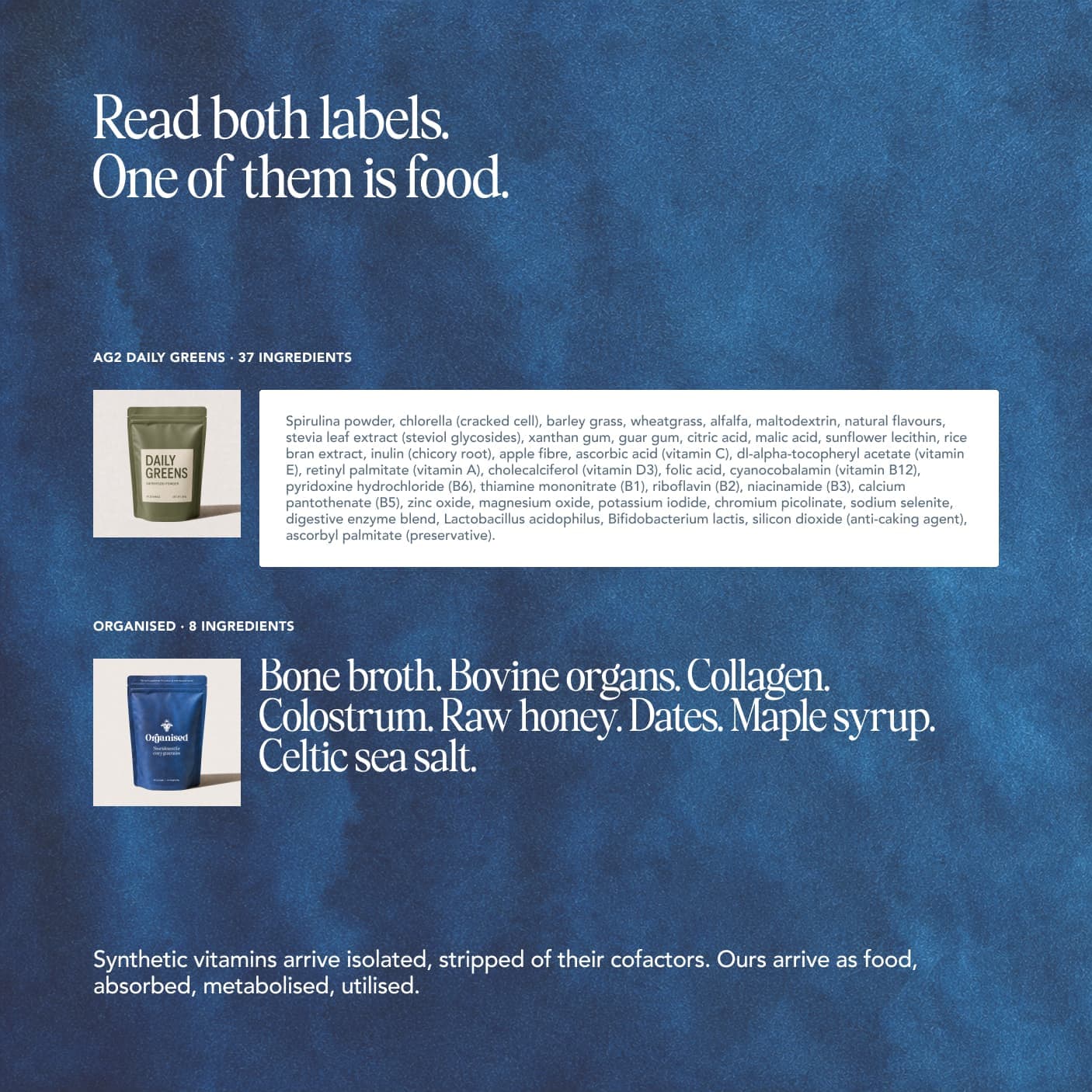
Eight real ingredients built around grass-fed beef organs, collagen and colostrum. Nothing synthetic added.
Free with your first order, worth £38. Plus £10 off the pouch with a subscription.
Free UK shipping · Made in England · 100 day money back guarantee on your first pouch · Skip, pause or cancel anytime
Prevention is the only cure for age-related macular degeneration
AMD cannot be cured once it progresses. It can only be slowed. This makes prevention through nutrition extraordinarily important. Starting now, even if you're over 50 without symptoms, is the difference between maintaining your sight and losing it.
A woman at 60 eating properly is building the nutritional foundation that will determine her vision at 80. A woman at 75 eating properly can slow the progression of early AMD. But once vision is already significantly lost, food cannot restore it.
This shifts the priority. Eye health through nutrition isn't optional. It's foundational. Every egg you eat, every serving of liver, every portion of oysters you eat is insurance against blindness. That's not hyperbole. That's the science.
The bottom line
Age-related macular degeneration is largely preventable. The nutrients that protect your vision, vitamin A from animal sources, lutein and zeaxanthin from eggs and greens, and zinc from shellfish and meat, are all accessible through real food. Eat beef liver weekly. Eat two eggs daily. Eat oysters or beef for zinc. Eat dark leafy greens. Do this starting now, before you notice vision changes, and you'll preserve your sight well into old age. It's that simple.
References
Every source below was checked on 27 August 2026. Each PubMed, PMC and DOI identifier was resolved against NCBI or Crossref, and what it opens is printed under the citation, so you can see the link goes where the citation says without leaving the page. Where a citation and its identifier disagreed, the citation was corrected to the record or the reference was deleted along with the sentence marker that pointed at it, and where the resolved paper turned out not to support the sentence, the sentence was cut back to what it does support. Borrowed authority is worse than none, because it looks like rigour.
- Wong WL et al. Global prevalence of age-related macular degeneration and disease burden projection for 2020 and 2040. Lancet Glob Health. PubMed PMID: 25104651.Checked 27 August 2026: PMID 25104651 opens Wong WL, Su X, Li X et al, Global prevalence of age-related macular degeneration and disease burden projection for 2020 and 2040: a systematic review and meta-analysis. Lancet Glob Health 2014;2(2):e106-16. PubMed indexes it as: Meta-Analysis, Systematic Review.
- National Institutes of Health Office of Dietary Supplements. Vitamin A and Carotenoids - Health Professional Fact Sheet. NIH ODS Vitamin A.
- Bernstein PS et al. Lutein, zeaxanthin, and meso-zeaxanthin: The basic and clinical science underlying carotenoid-based nutritional interventions against ocular disease. Prog Retin Eye Res. PMC4698241.Checked 27 August 2026: PMC4698241 opens Bernstein PS, Li B, Vachali PP et al, Lutein, zeaxanthin, and meso-zeaxanthin: The basic and clinical science underlying carotenoid-based nutritional interventions against ocular disease. Prog Retin Eye Res 2016;50:34-66. PubMed indexes it as: Review.
- Age-Related Eye Disease Study 2 Research Group. Lutein + zeaxanthin and omega-3 fatty acids for age-related macular degeneration: AREDS2 randomized clinical trial. JAMA. PubMed PMID: 23644932.Checked 27 August 2026: PMID 23644932 opens Age-Related Eye Disease Study 2 Research Group, Lutein + zeaxanthin and omega-3 fatty acids for age-related macular degeneration: the Age-Related Eye Disease Study 2 (AREDS2) randomized clinical trial. JAMA 2013;309(19):2005-15. PubMed indexes it as: Multicenter Study, Randomized Controlled Trial.
Who wrote and reviewed this guide
Niall Kiddle
Author · Founder, Organised
Niall is the founder of Organised. He started the company in 2024 after fixing his own health the slow way: in 2022 he swapped a cupboard of synthetic supplements for real food, raw milk, organ meats, bone broth and honey, and felt the difference within months.
Areas of expertise: Ancestral nutrition, Organ meats, Whole-food supplementation, Gut health, Regenerative sourcing
Read Niall's full profile
Pedro Rodrigues
Reviewer · Agronomist (farming and sourcing only)
Pedro is the agronomist Organised works with on farming and sourcing. His job on the guides is to keep the science honest: he reviews what we publish about soil health, regenerative agriculture, grazing and the way food is actually produced.
Areas of expertise: Regenerative agriculture, Agronomy, Soil health, Grass-fed farming, Food sourcing
Reviewed this guide on
Read Pedro's full profileMore on over 50s
View all- B12 Absorption Declines with Age: Here's What to Do
- Cognitive Decline and Nutrition: Protecting Your Brain as You Age
- Digestive Changes After 50: How to Maintain Gut Health
- Nutrition After 50: What Changes and What to Prioritise
- Preventing Bone Loss with Nutrition (Not Just Calcium)
- Sarcopenia: The Silent Muscle Loss Epidemic
Browse the guides library
All guidesKeep reading

Life stage
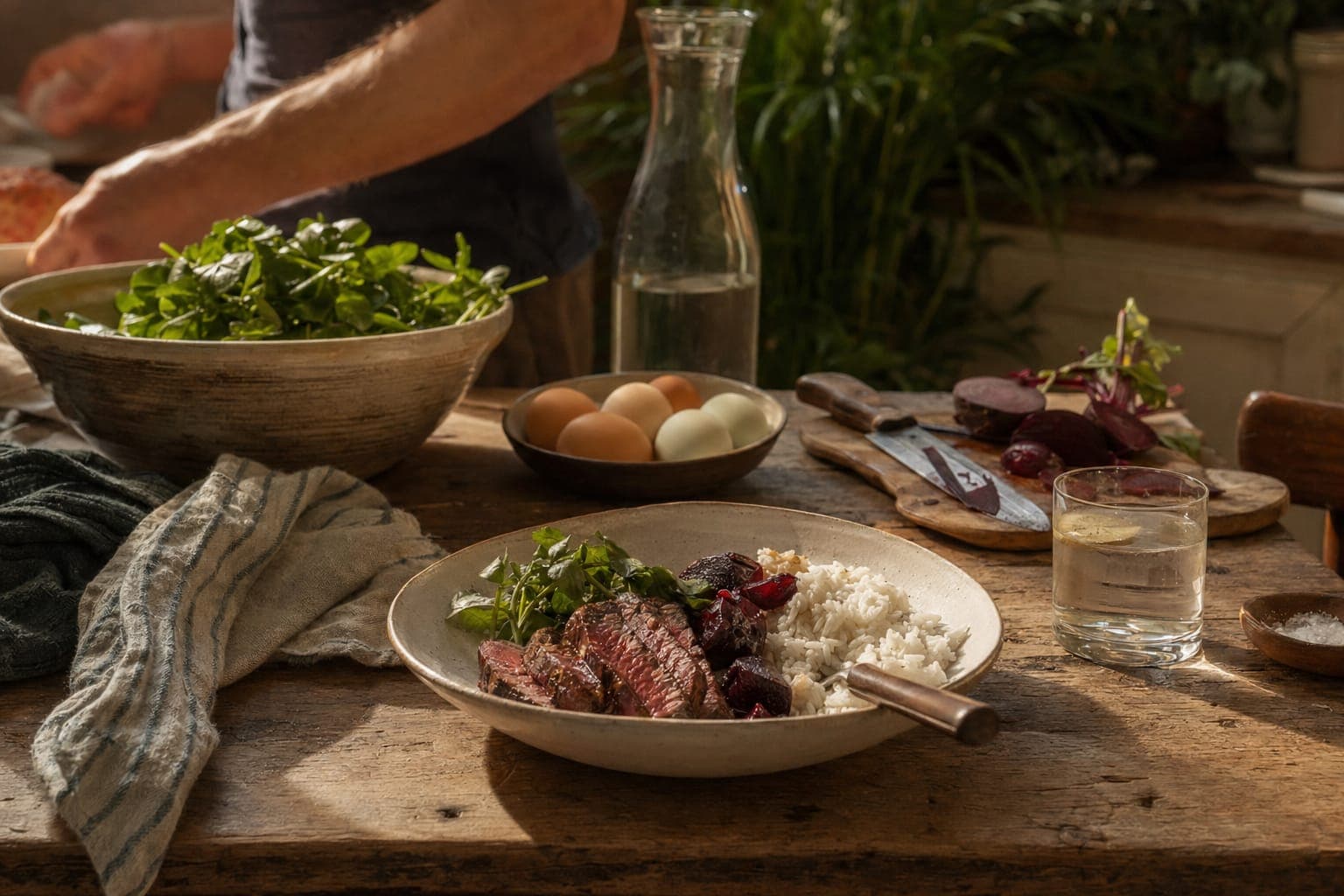
Heart Disease in Men: Can Nutrition Make a Difference?
Heart disease remains the leading cause of death in men. Discover how CoQ10, omega-3 balance, and anti-inflammatory whole foods can shift your risk.
Life stage
Recovery Nutrition: What to Eat After an Intense Training Session
Discover the post-workout recovery nutrition that matters most. The first few hours after training shape muscle repair and adaptation. Here is what to eat.
Life stage
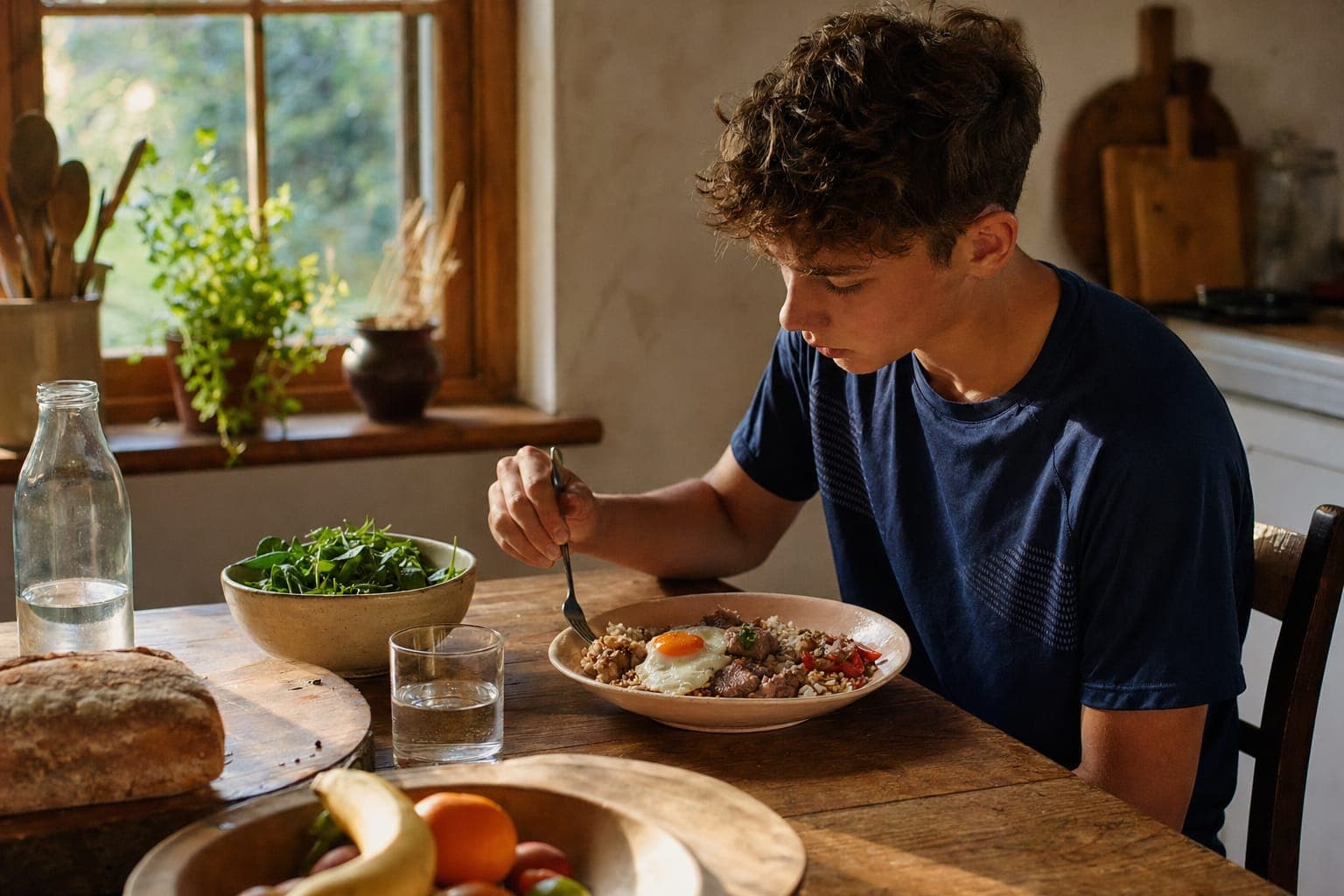
Teenage Athletes: Protein and Nutrient Needs for Growing Bodies
Protein, calories, iron, B12: what teenage athletes actually need. Why bars and shakes miss the mark. Real food for growing bodies.
Real food, made effortless
Find my daily blendA few ways to use it
All recipes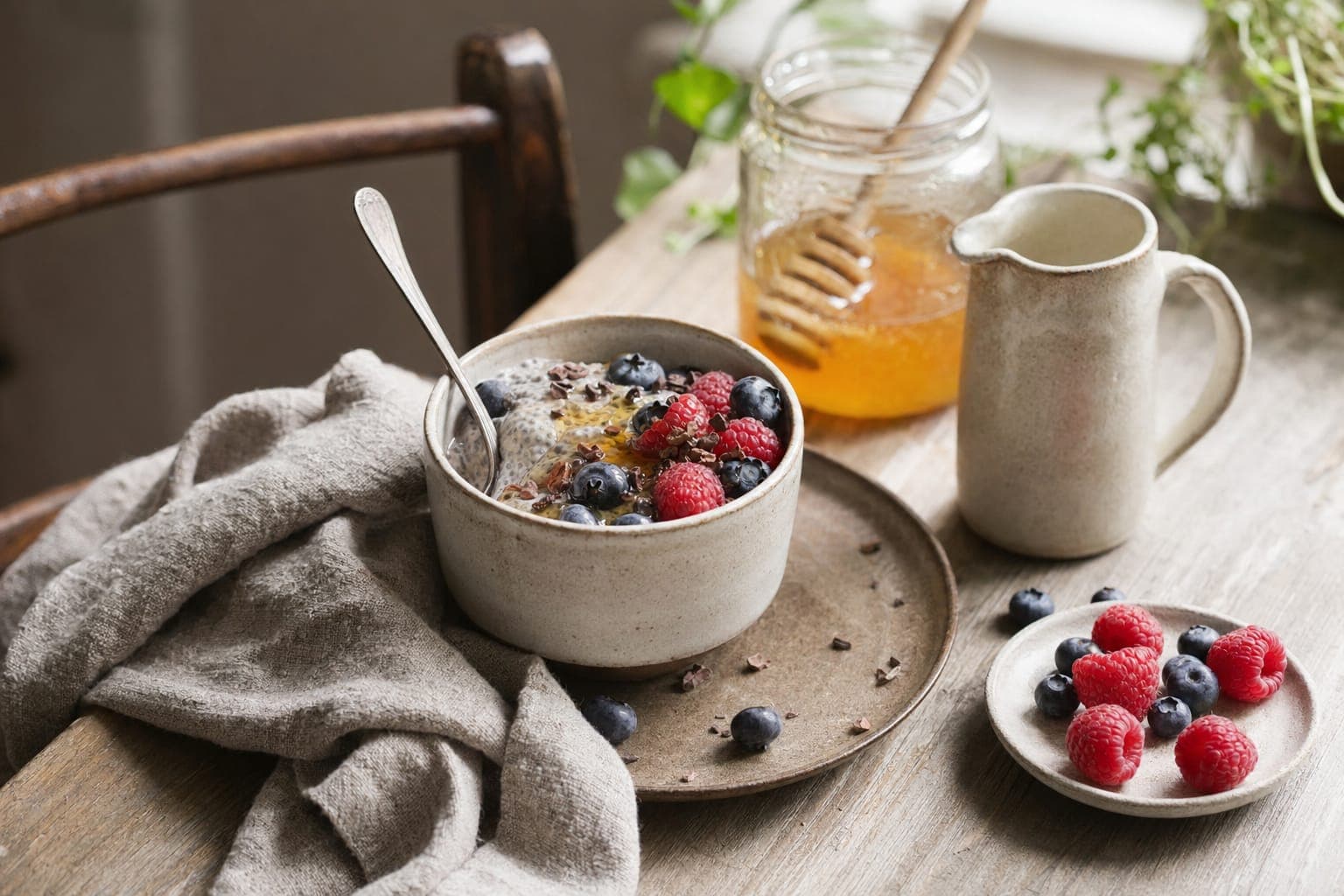
Organised Chia Pudding with Raw Honey and Berries
A no-cook chia seed pudding made with raw milk, collagen, berries, and raw honey. Prep it the night before and eat for breakfast.
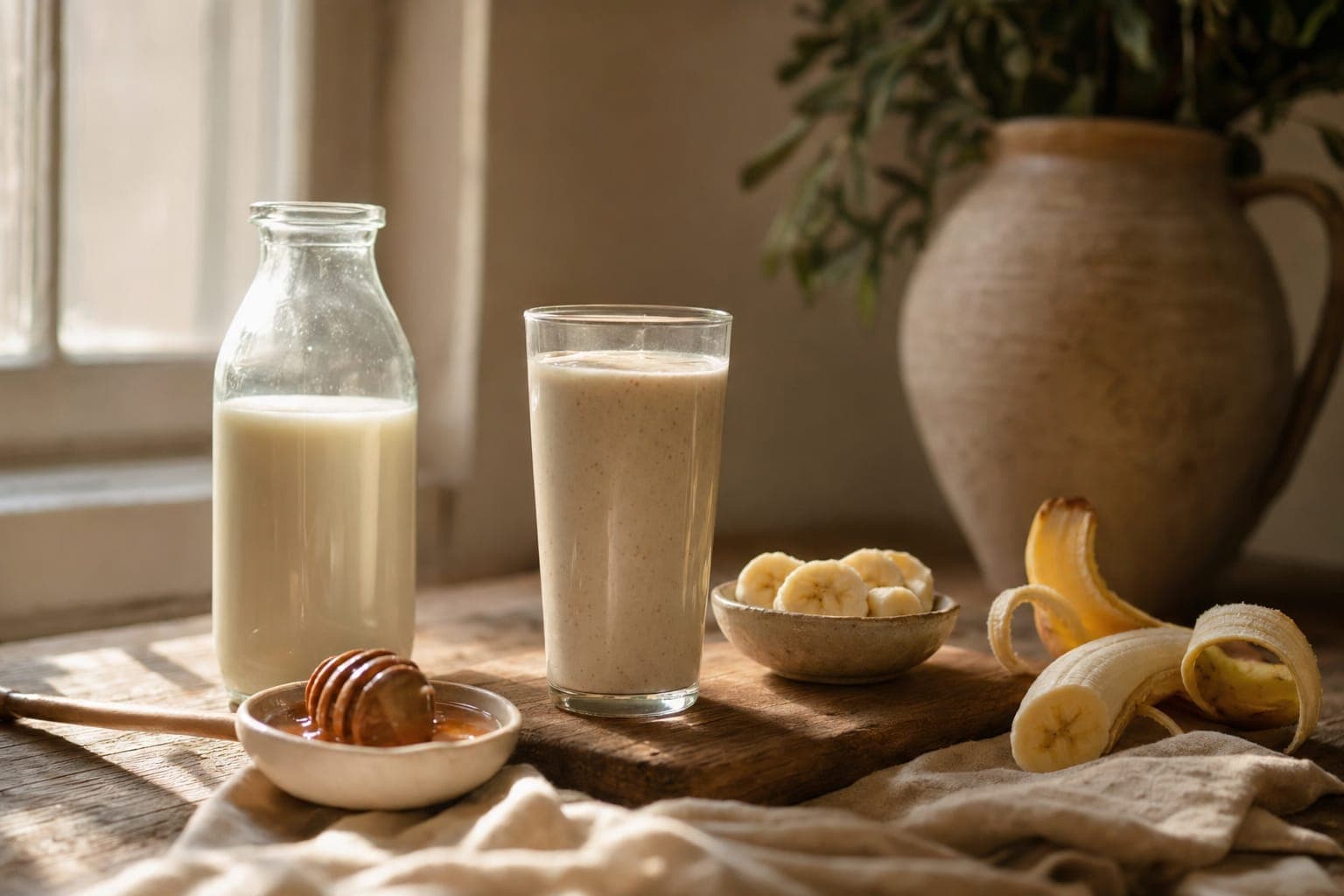
The Perfect Organised Morning Shake: Our Favourite Recipe
Our signature morning shake: Organised, raw milk, banana, honey. Simple, nourishing, and optimised for an empty stomach.
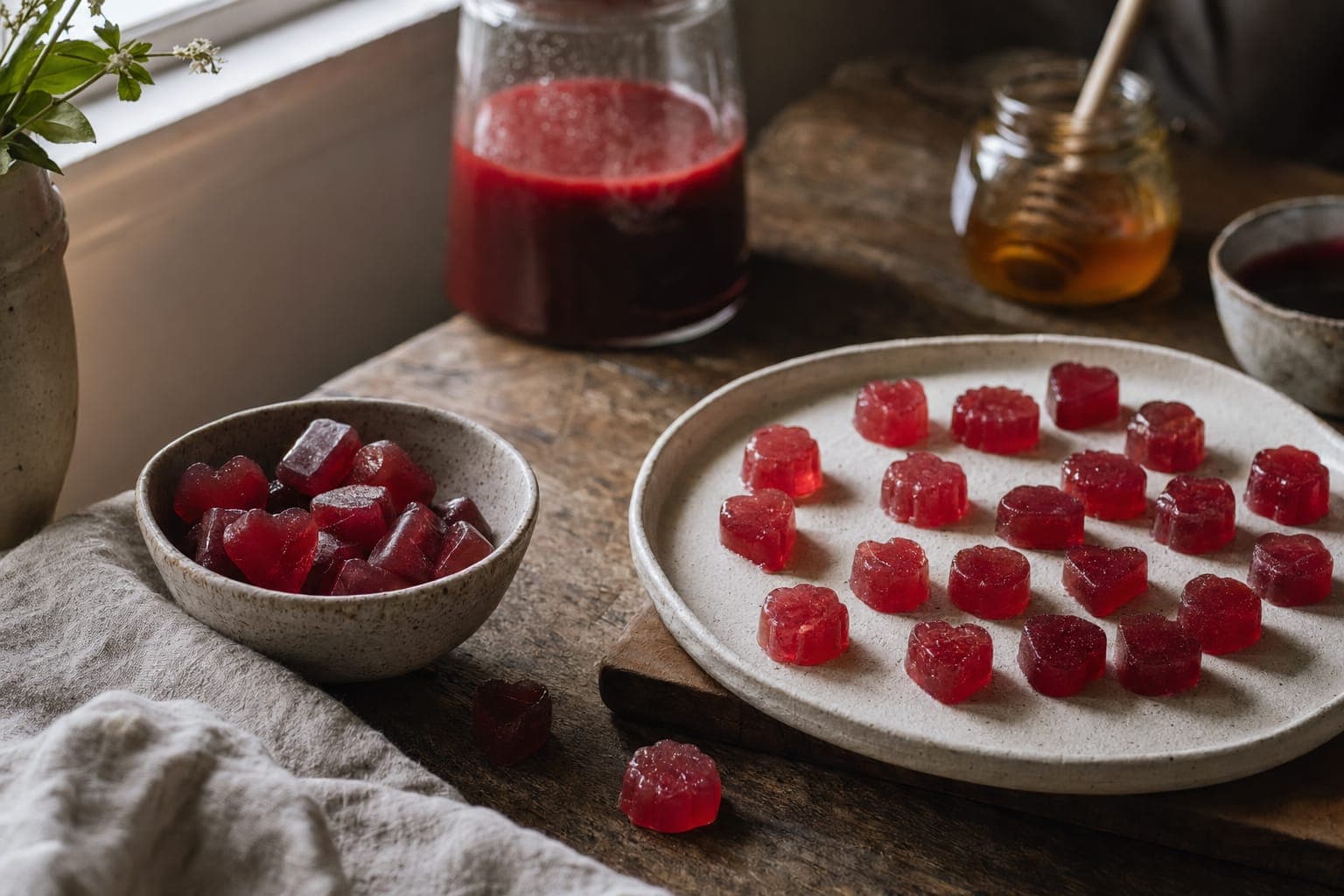
How to Make Your Own Gelatine Gummies
A simple recipe for homemade gelatine gummies using grass-fed gelatine, fresh juice, and raw honey. Better than shop-bought, kids love them.


 Join over 100,000+ members
Build a better food system with us
The Organised community is thousands of people choosing real food and backing the farmers who grow it, all of us trying to leave the world a little better than we found it. If that is what you care about too, you belong here.