Teenage Athletes: Protein and Nutrient Needs for Growing Bodies
Your teenage athlete is growing fast and training hard. Their calorie needs are higher than yours. Their protein needs are significantly elevated. And yet you're giving them bars, shakes, and supplements thinking that's adequate. It's not. A growing athlete needs real food, properly planned.
By Niall Kiddle, Founder, Organised

Reviewed by Pedro Rodrigues, Agronomist (farming and sourcing only) ·
6 min read · Published · Updated · 3 cited sources
Makers of the Organised Daily blend, a grass-fed beef organ supplement from regenerative UK farms

Most parents of teenage athletes underestimate what their child's body actually needs. They see the growth spurt and assume eating whatever is convenient is fine as long as they're eating something. It's not fine. The nutritional demands of adolescence plus athletic training require deliberate nutrition.
The growth demands are extraordinary
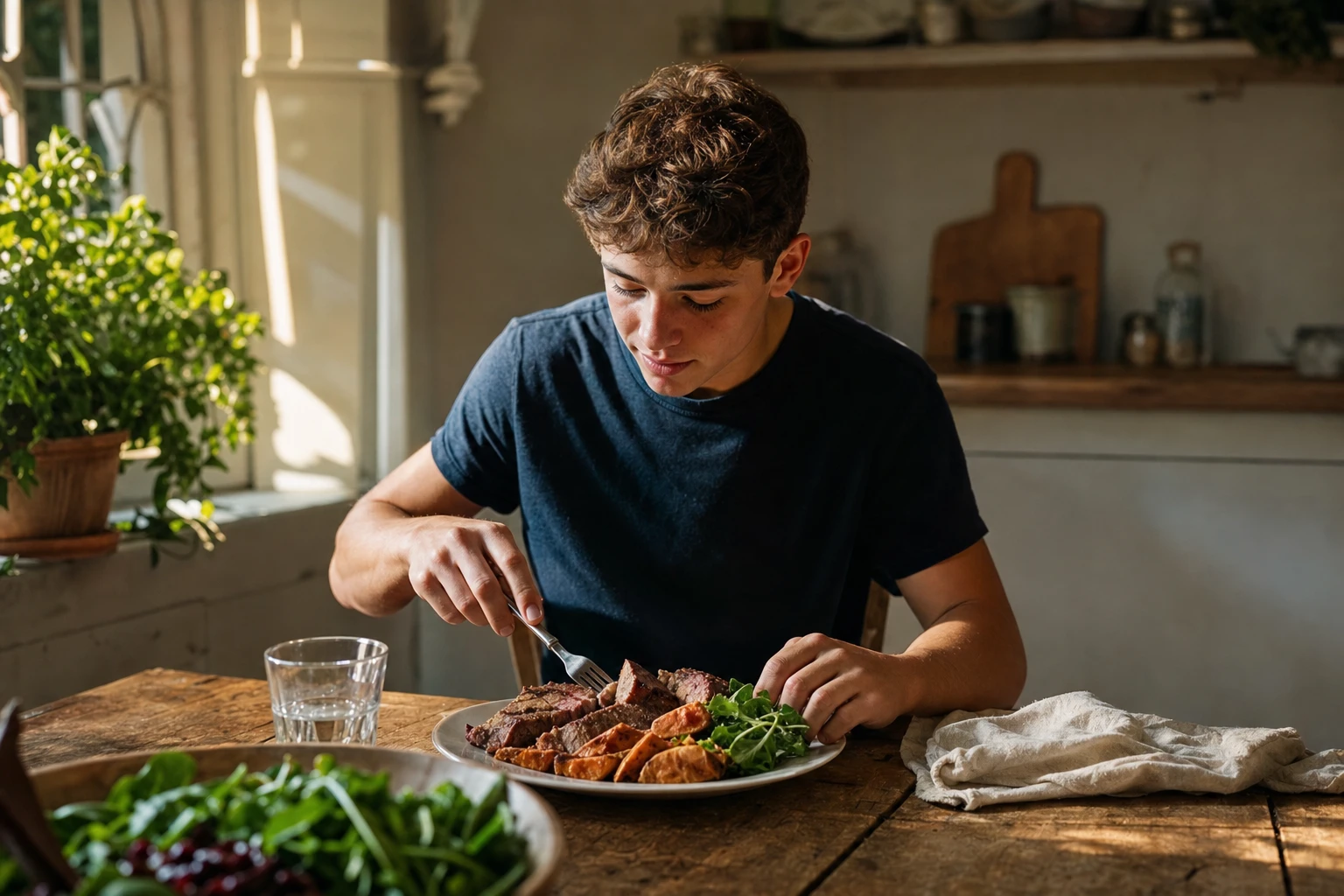
A teenage boy in a growth spurt is building muscle, bone, and organs simultaneously. A teenage girl is doing the same whilst managing menstrual cycles. Both are requiring calorie and nutrient intake far beyond what most parents provide.
Peak height velocity, the fastest period of growth, occurs around age 12 for girls and age 14 for boys. During this period, nutritional demands are higher than they'll be at almost any other point in life, except pregnancy. And if your teenage athlete is also training intensely, the demands go higher still.
Most teenage athletes are undernourished. Not starving, but lacking the calories and nutrients that would allow their bodies to build optimally and recover properly from training.
A teenage athlete in a growth spurt needs more calories per kilogram of body weight than you do. They're building new tissue. You're mostly maintaining.
Protein: the number that matters
Sports-nutrition position stands typically recommend 1.2-2.0 g/kg/day of protein for athletes, with growing adolescent athletes at the higher end of this range.1 A 70-kilogram teenage boy needs 98 to 126 grams of protein daily. A 55-kilogram teenage girl needs 77 to 99 grams daily.
These numbers are significantly higher than the standard recommended dietary allowance for non-athletes. But they're what growing, training bodies actually need to build muscle, repair tissue, and synthesise the enzymes and hormones that support athletic performance.
The protein needs to come primarily from whole food sources. Red meat, fish, eggs, dairy, poultry. These provide not just protein but the complete amino acid profile plus B12, iron, zinc, and other nutrients that bars and shakes don't adequately provide.
A teenage athlete eating insufficient protein cannot build muscle optimally. They'll feel constantly fatigued. Their recovery suffers. Their performance plateaus. Most of the teenagers you see hitting performance walls in sports are actually running on inadequate protein and calories, not lacking training volume.
Calories aren't optional
A teenage athlete in a growth spurt requires significant calorie intake. A 14-year-old boy in peak growth who trains one hour daily might need 2,800 to 3,200 calories. A 14-year-old girl in similar circumstances might need 2,200 to 2,600.
If these calorie needs aren't met, the body adapts by suppressing growth, suppressing performance, and suppressing immune function. Your teenager might seem to eat constantly yet still be underfed. That's not gluttony. That's their body's legitimate nutritional demand.
Many teenagers eating typical processed foods can't achieve these calorie levels without becoming overstuffed with food volume. Dense, calorie-rich foods are essential. Full-fat dairy, nuts, seeds, red meat, eggs, nut butters, oils. These are how you provide adequate calories without requiring your teenager to eat constantly.
Iron: especially for teenage girls
The RDA for iron is 15 mg/day for adolescent girls and 11 mg/day for adolescent boys.2 These requirements jump when menstruation begins. And if your teenage girl is an athlete, the demands are higher still due to the stress of training and the possibility of athletic amenorrhoea.
Many teenage girls are anaemic or iron-deficient without knowing it. They feel constantly fatigued, assume they're lazy or depressed, and never get their iron tested. The fatigue disappears when iron stores are replenished.
Red meat and organ meats are the most reliable source of absorbable iron. A teenage girl eating red meat three to four times weekly will maintain better iron status than one eating chicken and fish only. Liver, though many teenagers resist it, is extraordinarily iron-dense.
Teenage girl athletes with chronically low iron feel like they're not trying hard enough. They're not. They're just chronically under-oxygenated. Fix the iron, and the fatigue lifts.
B12 and nervous system function
B12 is essential for nervous system function, myelin formation, and energy production. Teenage athletes with low B12 feel fatigued, struggle to concentrate, and recover poorly from training. Yet many don't have adequate B12 status.
Vitamin B12 occurs naturally only in animal-source foods.3 If your teenage athlete eats little red meat, fish, or organ meats, their B12 status is likely compromised. Dairy and eggs contribute B12 but not as densely as animal meats.
A teenage athlete eating no red meat should have B12 tested and likely supplemented. But the better approach is to include red meat regularly and ensure adequate B12 intake through diet.
Get life-stage nutrition guides, free
Two short reads a week on eating well through pregnancy, childhood and older age.
By signing up you agree to receive emails from us. No spam, unsubscribe anytime.
Why bars and shakes fall short
Protein bars and shakes are convenient. But they're processed foods with synthetic nutrients. They provide some protein and calories, but they miss the supporting nutrients that real food provides: bioavailable iron, B12, minerals, and the cofactors that make nutrient absorption efficient.
A teenage athlete living on bars and shakes will underperform compared to one eating real food. They might have adequate protein numbers on paper, but their body doesn't function as well because the supporting nutrients are inadequate.
The other issue is that bars and shakes don't teach teenagers to eat real food. They teach them that convenience is acceptable. By age 20, this teenager has established eating patterns that persist. They're underfed on nutrients that real food provides.
What real food looks like
A teenage athlete's diet should centre on whole foods. Red meat, fish, eggs, full-fat dairy, whole grains, vegetables, fruit, nuts, and seeds. This isn't complicated. It's consistent, nutrient-dense eating.
Breakfast could be eggs with butter and toast. Snack could be cheese and nuts. Lunch could be red meat and vegetables with butter. Dinner could be fish with rice and salad. Post-training recovery could be milk with honey and fruit.
These foods provide all the protein, calories, iron, B12, and minerals your teenage athlete needs. They taste better than bars. They're cheaper. And they actually nourish the body in ways processed foods never can.

1 of 9
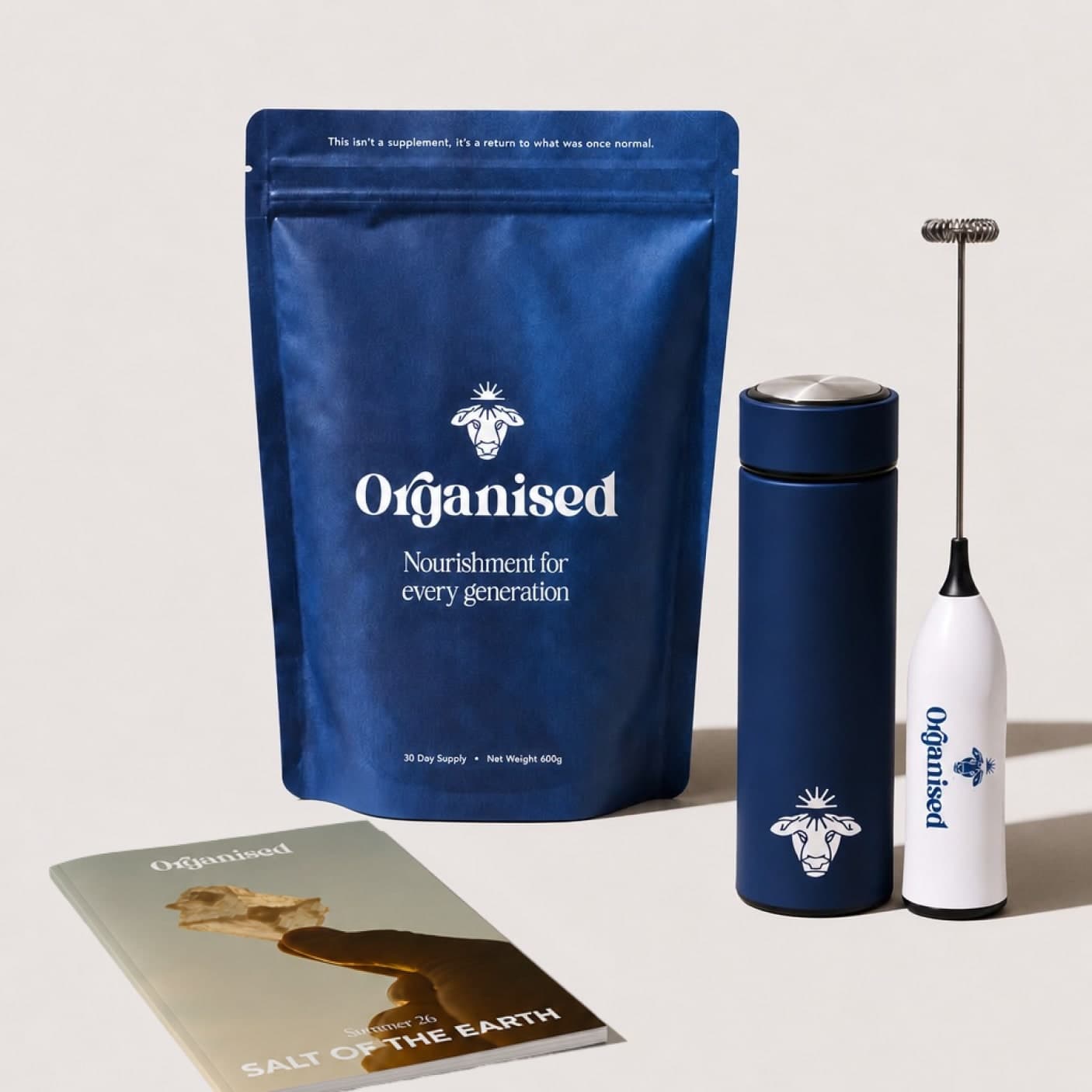
Daily blend
100,000+ thriving families4.9 on Trustpilot
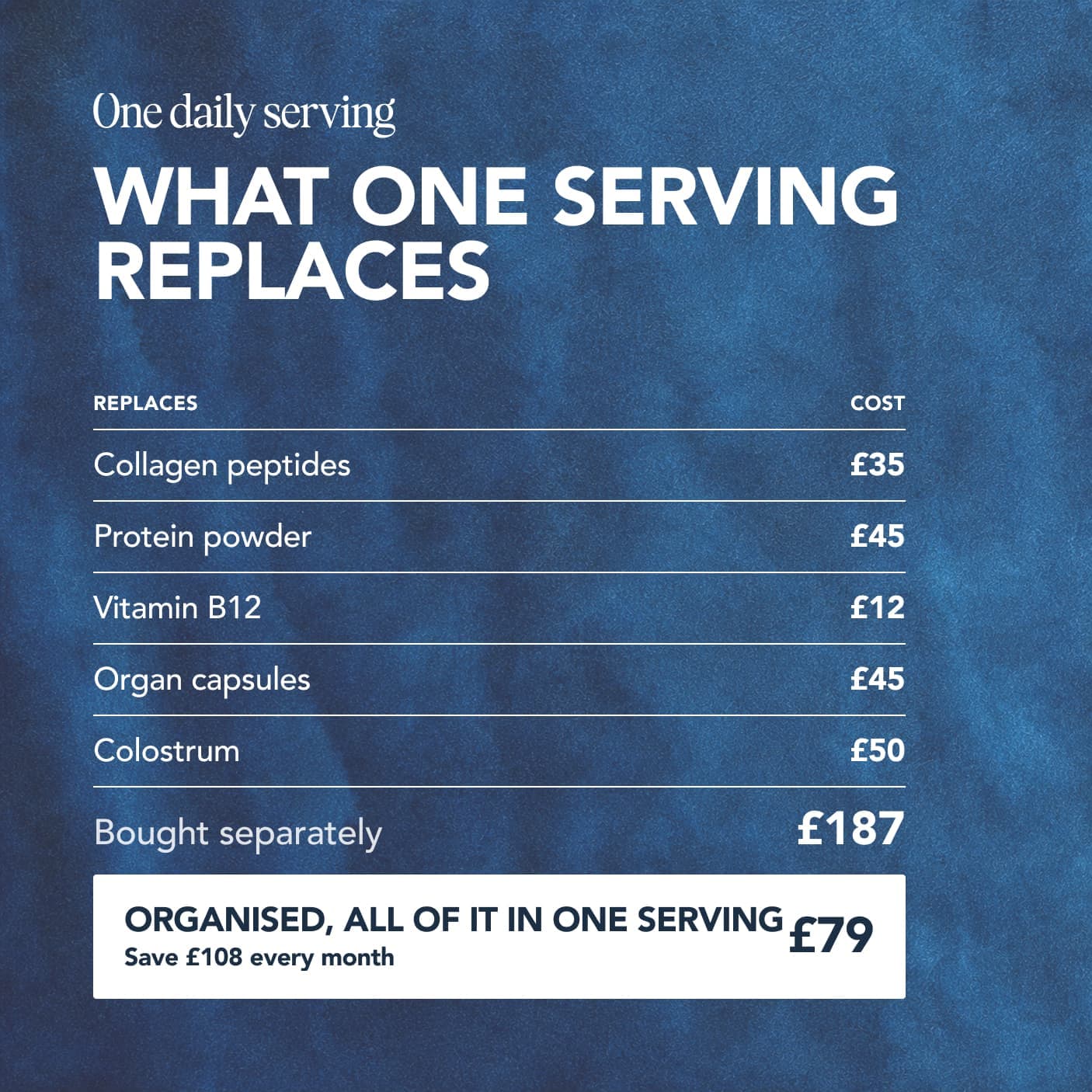
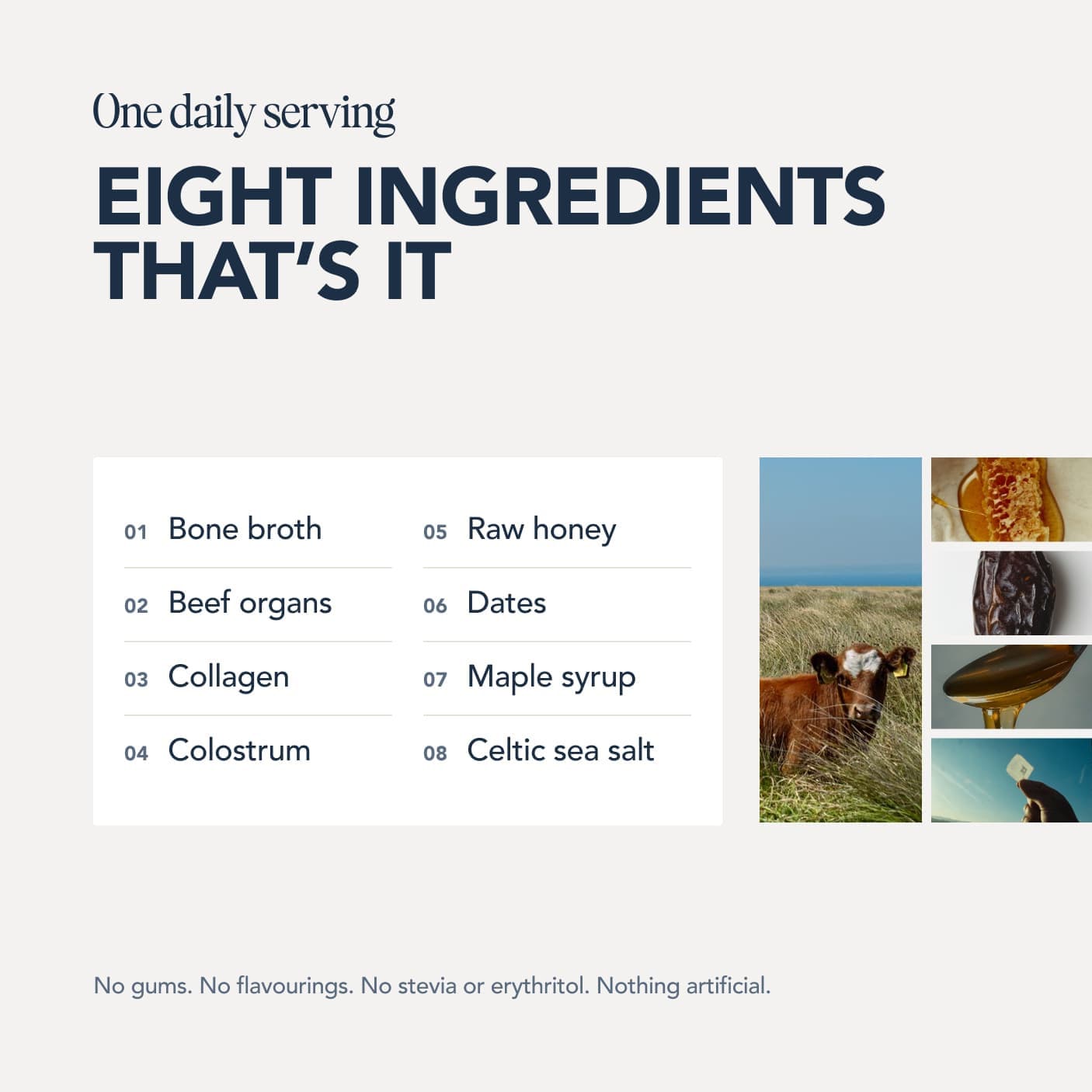
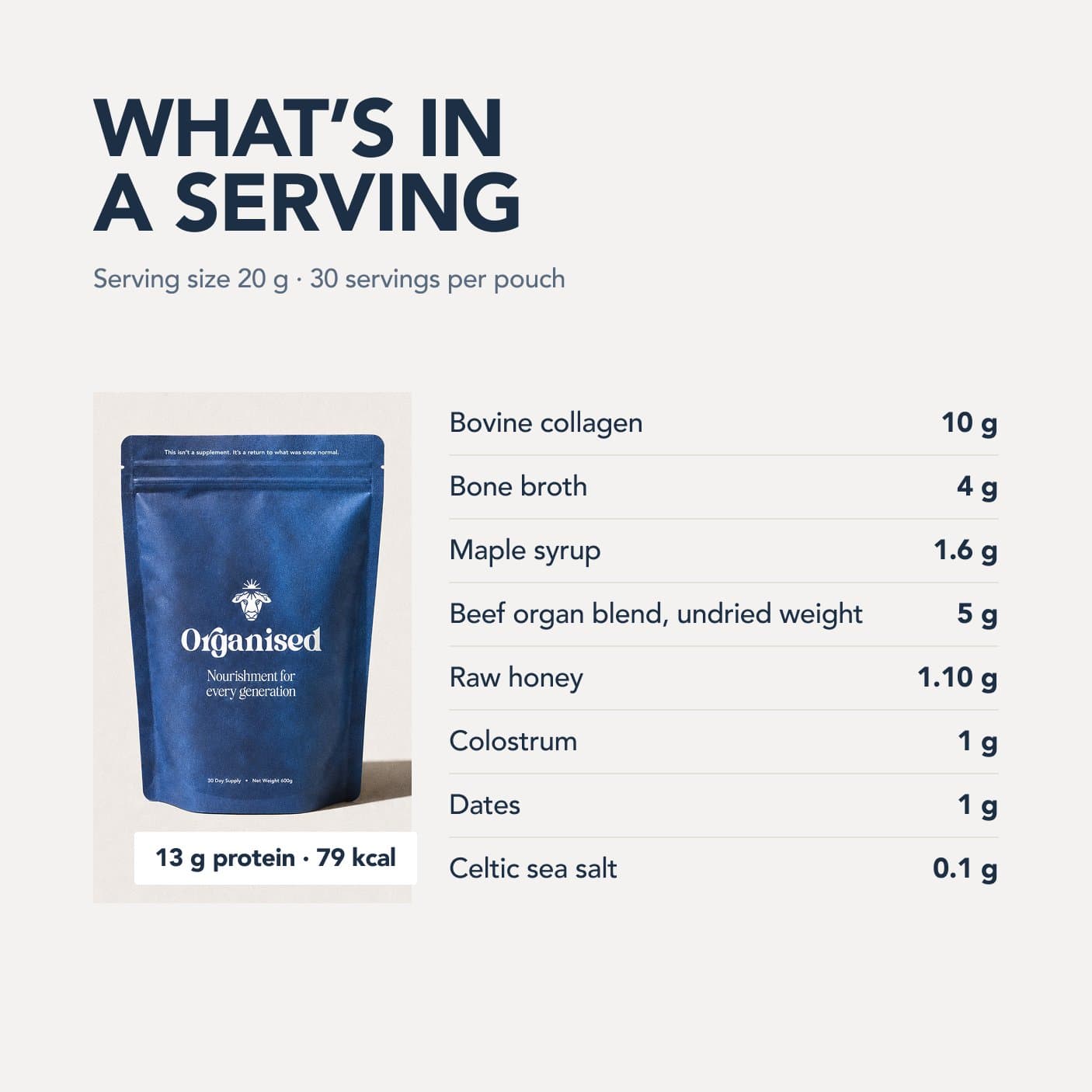
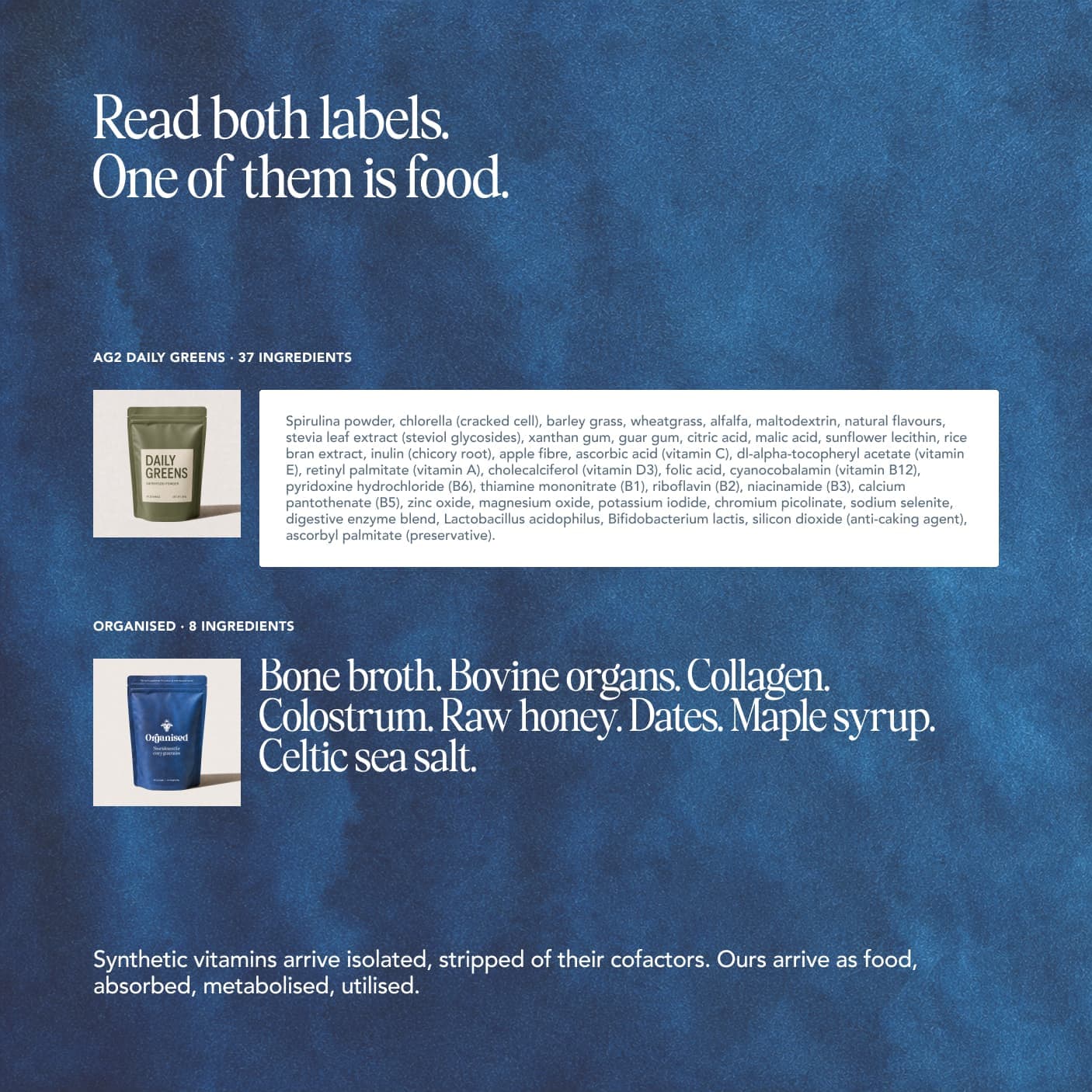
Eight real ingredients built around grass-fed beef organs, collagen and colostrum. Nothing synthetic added.
Free with your first order, worth £38. Plus £10 off the pouch with a subscription.


Free UK shipping · Made in England · 100 day money back guarantee on your first pouch · Skip, pause or cancel anytime
Meal timing and recovery
The timing of eating matters for teenage athletes. Post-training, the body is primed to absorb nutrients. Consuming protein and carbohydrate after training supports glycogen resynthesis and muscle protein synthesis, although the post-exercise "anabolic window" is wider than once thought.1
This doesn't need to be complicated. Milk and fruit. Meat and rice. Eggs and toast. Any combination of protein and carbohydrate taken quickly after training supports recovery better than waiting hours to eat or relying on processed shakes.
Throughout the day, consistent eating every three to four hours maintains stable blood sugar and ensures the teenage athlete is never truly underfed. This consistency matters more than perfection in individual meals.
Your teenage athlete's performance is determined largely by whether their body is adequately fed. Fuel the growing body properly, and performance improves dramatically.
The teenage years are the last opportunity to establish eating patterns that will persist into adulthood. A teenage athlete who learns to eat nutrient-dense whole foods now will maintain those patterns. One raised on bars and shakes will struggle.
Take the time to plan real meals. Ensure adequate protein, calories, iron, and B12. Watch your teenager's performance improve, their fatigue lift, and their recovery become noticeably faster. That's what happens when a growing, training body is actually fed properly.
References
Every source below was checked on 27 August 2026. Each PubMed, PMC and DOI identifier was resolved against NCBI or Crossref, and what it opens is printed under the citation, so you can see the link goes where the citation says without leaving the page. Where a citation and its identifier disagreed, the citation was corrected to the record or the reference was deleted along with the sentence marker that pointed at it, and where the resolved paper turned out not to support the sentence, the sentence was cut back to what it does support. Borrowed authority is worse than none, because it looks like rigour.
- Thomas DT, Erdman KA, Burke LM. Position of the Academy of Nutrition and Dietetics, Dietitians of Canada, and the American College of Sports Medicine: Nutrition and Athletic Performance. J Acad Nutr Diet. 2016;116(3):501-528. PMID 26920240Checked 27 August 2026: PMID 26920240 opens Thomas DT, Erdman KA, Burke LM, Position of the Academy of Nutrition and Dietetics, Dietitians of Canada, and the American College of Sports Medicine: Nutrition and Athletic Performance. J Acad Nutr Diet 2016;116(3):501-528.
- National Institutes of Health, Office of Dietary Supplements. Iron - Health Professional Fact Sheet. ods.od.nih.gov
- National Institutes of Health, Office of Dietary Supplements. Vitamin B12 - Health Professional Fact Sheet. ods.od.nih.gov
Who wrote and reviewed this guide
Niall Kiddle
Author · Founder, Organised
Niall is the founder of Organised. He started the company in 2024 after fixing his own health the slow way: in 2022 he swapped a cupboard of synthetic supplements for real food, raw milk, organ meats, bone broth and honey, and felt the difference within months.
Areas of expertise: Ancestral nutrition, Organ meats, Whole-food supplementation, Gut health, Regenerative sourcing
Read Niall's full profile
Pedro Rodrigues
Reviewer · Agronomist (farming and sourcing only)
Pedro is the agronomist Organised works with on farming and sourcing. His job on the guides is to keep the science honest: he reviews what we publish about soil health, regenerative agriculture, grazing and the way food is actually produced.
Areas of expertise: Regenerative agriculture, Agronomy, Soil health, Grass-fed farming, Food sourcing
Reviewed this guide on
Read Pedro's full profileMore on children & teens
View all- Feeding Children for Optimal Growth and Development
- Teenage Nutrition: Fuelling Growth Spurts and Brain Development
- Building Strong Bones in Childhood: Beyond Just Milk
- Can Children Take Beef Organ Supplements?
- How to Introduce Organ Meats to Children
- Picky Eaters: How to Sneak Nutrient-Dense Foods Into Family Meals
- Protein for Young Athletes: How Much Do Teenagers Actually Need?
- Screen Time, Sleep and Nutrition: The Triangle That Affects Every Child
- Sugar, Screens and Soil: Raising Healthy Children in a Modern World
- The Nutrients Children Need Most (And Aren't Getting)
- Why Children Need More Nutrient-Dense Food (Not More Vitamins)
- Why Teenage Girls Are at the Highest Risk of Iron Deficiency
Browse the guides library
All guidesKeep reading

Life stage
The Nutrients Children Need Most (And Aren't Getting)
The nutrients children are deficient in: iron, zinc, B12, choline, DHA, K2. Food sources and why modern diets miss them.

Life stage
Nourishing Pregnancy with Whole Food Nutrition
Discover essential nutrients for pregnancy: fat-soluble vitamins, B12, choline, iron, and DHA. Evidence-based whole food approach for expectant mothers.
Life stage
The Micronutrients Athletes Deplete Fastest
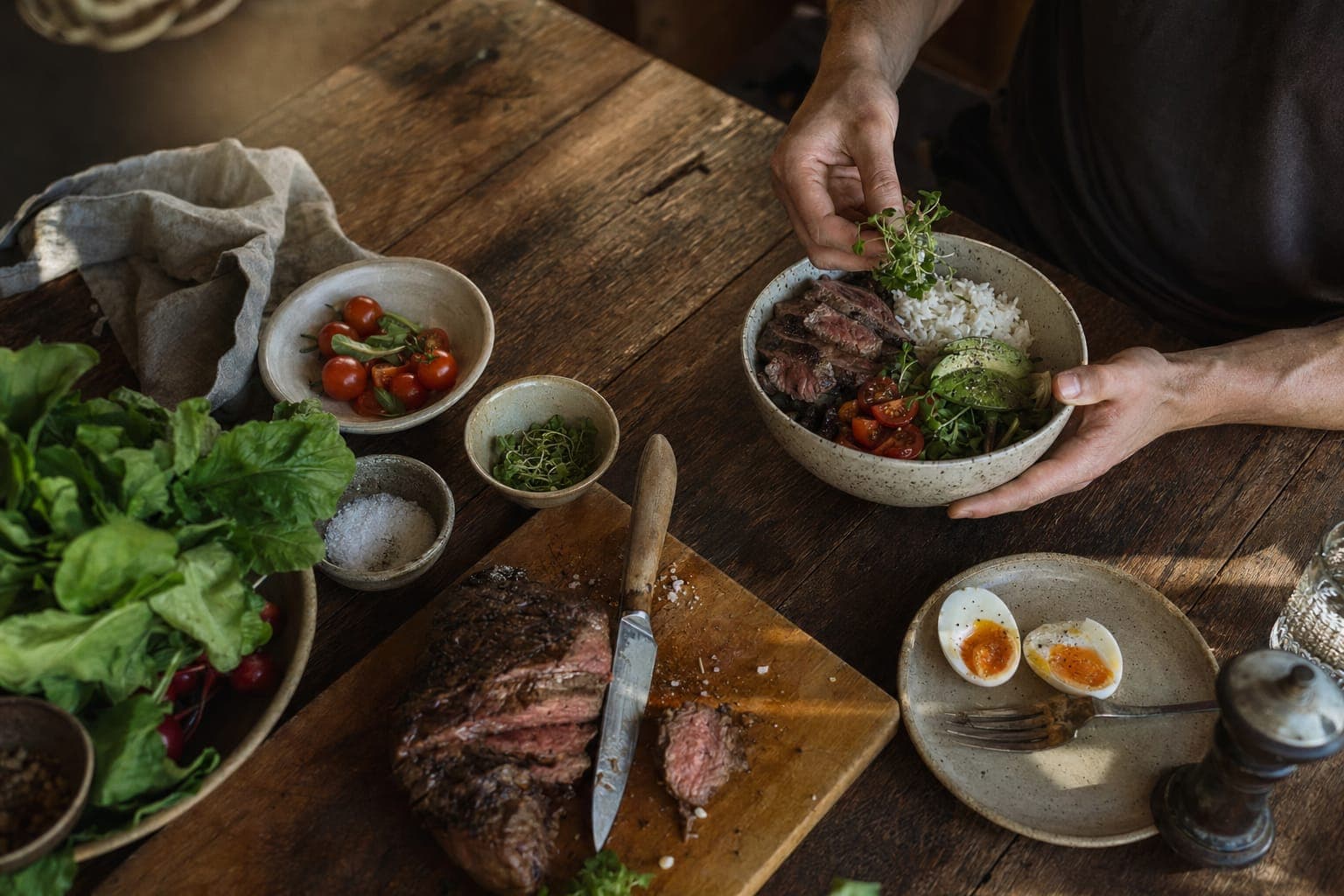
Intense training depletes micronutrients faster than you replace them. Here's what athletes lose and how to replenish it.
Real food, made effortless
Find my daily blendA few ways to use it
All recipes
Organised Protein Pancakes: A Weekend Favourite
A high-protein pancake recipe using beef protein, eggs, and raw milk. Cooked in cast iron, naturally sweetened with banana and honey. Real food breakfast.

Raw Milk Ice Cream with Organised
Make raw milk ice cream at home with Organised for a seasonal, nutrient-dense treat. Three simple flavours to try whenever the craving strikes.
Organised Overnight Oats: 3 Variations
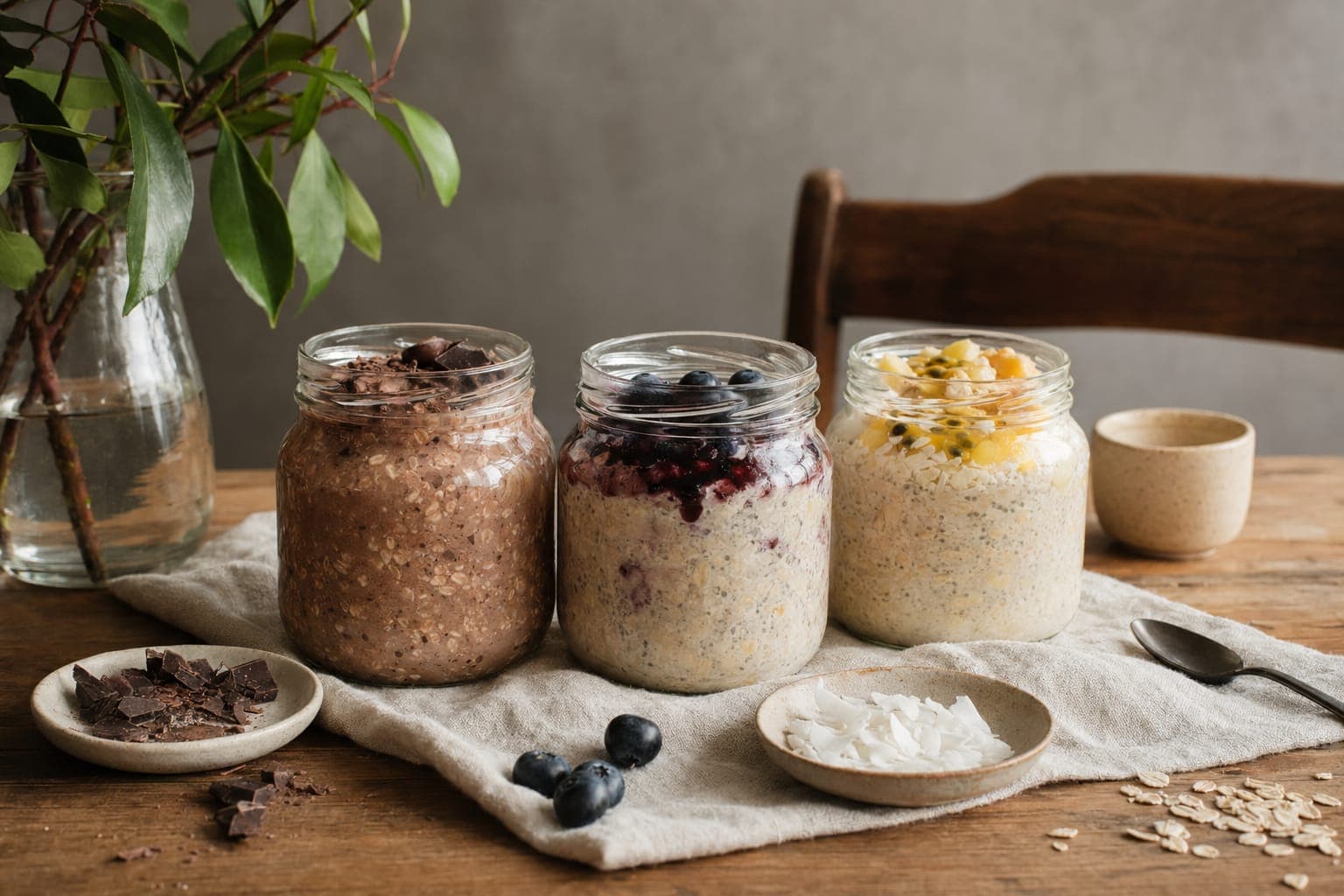
Three delicious overnight oats variations with Organised. Chocolate, berry, tropical flavours. Make them Sunday, eat them all week.


 Join over 100,000+ members
Build a better food system with us
The Organised community is thousands of people choosing real food and backing the farmers who grow it, all of us trying to leave the world a little better than we found it. If that is what you care about too, you belong here.