Recovery Nutrition: What to Eat After an Intense Training Session
You finish your training session. You're tired, you're hungry, and you reach for whatever's convenient. What you eat in the next four hours determines whether that session builds strength or just depletes you.
By Niall Kiddle, Founder, Organised

Reviewed by Pedro Rodrigues, Agronomist (farming and sourcing only) ·
6 min read · Published · Updated · 4 cited sources
Makers of the Organised Daily blend, a grass-fed beef organ supplement from regenerative UK farms

Most athletes think recovery is about stretching or icing. It's not. Recovery is built in the kitchen. Your muscles are broken down. Your glycogen is depleted. Your hormones are elevated. The food you provide in the next few hours tells your body whether to adapt and grow, or whether to use the little energy you have left just to repair the basic damage.

The immediate window: why timing matters
The first hour after intense training is uniquely important. Your muscles are primed to accept nutrients post-exercise; insulin sensitivity and glucose uptake are elevated.2 Your body is desperate for glucose and amino acids. This is when the protein you eat is most likely to be directed toward muscle repair rather than stored as fat or lost in digestion.
You need two things immediately: protein and carbohydrates. Protein provides amino acids. Carbohydrates replenish the glycogen that your muscles just burned. Together, they signal your body to recover, not to break down muscle for energy.
The old sports nutrition advice of 20 grams of protein is too conservative. After an intense session, around 0.4 g/kg protein per meal (approximately 30-40 g for many adults) supports muscle protein synthesis.1 You need carbohydrates in a roughly 1:1 ratio with protein by weight, though the ratio varies by sport. For strength training, protein-heavy. For endurance, carb-heavy. For power sports, balanced.
Recovery is built within the first two hours after you stop training. Miss this window and you've missed the adaptation signal.
Protein and carbohydrates in the first hour
For immediate recovery, you want fast-absorbed nutrients. This is the rare moment when whole-food sources might not be ideal because whole foods take time to digest. But if you can eat them, do.
A steak and white rice. A piece of roasted chicken and potatoes. A plate of well-cooked fish and white rice. These are slower than supplements, but they're better absorbed and they signal real food to your body. If you eat within 30-45 minutes of finishing training, whole food works.
If you can't eat solid food immediately, beef broth with added carbohydrates works. White rice cooled into the broth. Potatoes blended smooth. These are easily absorbed and provide both protein and glycogen.
Avoid fat in the immediate post-workout meal. Fat slows digestion. You want fast transit and fast absorption. The fat comes later. Avoid fibre. Salads, vegetables with skins, high-fibre grains. These slow digestion at a moment when you need speed. You can eat vegetables and fibre later. Right now, you need glycogen and protein.
Why whole food beats supplements
Protein powders are convenient when whole food isn't available. But a whole egg absorbed slightly slower is actually superior nutrition because it arrives with B vitamins, selenium, and choline that the powder doesn't have.
Whey isolate is rapidly absorbed, which makes it useful when time is genuinely short. But whey is also inflammatory for some athletes. A steak takes 30 minutes more to digest and provides FAR more micronutrients: iron for oxygen transport, zinc for immune function, B vitamins for energy production.
Post-workout is the moment your body is most ready to absorb and utilise whatever you give it. Why give it incomplete nutrition? If you have 30 minutes, eat real food. If you have 5 minutes, then use the powder. But set up your schedule so real food is possible.
The 2-4 hour window: deeper recovery
After the immediate window, shift toward whole-food meals that support deeper recovery. Here, fat becomes important again. Fat provides caloric density for energy rebuilding. Fat-soluble vitamins support hormone synthesis.
This is where organ meats become valuable. Beef liver contains iron (for oxygen transport in recovering muscles), B vitamins (for energy metabolism), and copper (which supports collagen formation). Eating liver 2-4 hours post-training supports the deeper adaptation that leads to long-term strength gains.
Bone broth becomes valuable for its collagen, which provides amino acids specifically for connective tissue repair. Tendons, ligaments, and cartilage all break down during training. Pre-exercise collagen and vitamin C may support connective tissue collagen synthesis in recovery.4
Eggs become important again. Full-fat dairy. Butter. These foods provide complete amino acid profiles, minerals, and the cholesterol necessary for testosterone production (both in men and women).
Within 2-4 hours post-training, eat a second meal that prioritises nutrient density: organs, eggs, bone broth, and fat.
Get life-stage nutrition guides, free
Two short reads a week on eating well through pregnancy, childhood and older age.
By signing up you agree to receive emails from us. No spam, unsubscribe anytime.
What not to eat after training
Avoid ultra-processed post-workout supplements. Most sports drinks contain high-fructose corn syrup, artificial flavours, and colours. Your body recognises none of it. You absorb the glucose rapidly, which causes an insulin spike, but the food signal is confused.
Avoid mixing alcohol with post-workout meals. Alcohol suppresses muscle protein synthesis post-exercise.3 Save the drink for later.
Avoid excessive fibre immediately post-workout, even though fibre is generally healthy. You want digestion moving quickly right now, not slowly and thoroughly.
Nutrient timing by sport
Different sports deplete different nutrients and create different recovery demands.
Strength training: Depletes glycogen moderately and breaks down muscle protein. Recovery priority is protein + amino acids + carbohydrates + minerals.
Endurance training: Depletes glycogen severely and loses electrolytes through sweat. Recovery priority is carbohydrates first, then protein, then mineral repletion.
Power sports: (sprinting, rugby, football) Explosive work depletes fast glycogen and requires rapid ATP regeneration. Priority is balanced protein and carbs with mineral focus on potassium and magnesium.
Contact sports: Physical trauma plus metabolic depletion. Priority is high protein (30-50g minimum), carbs, minerals, and anti-inflammatory foods like bone broth.
Sample recovery meals for different sports
Strength training (resistance, weight-lifting, CrossFit): 40-50 grams protein, 40-50 grams carbohydrate, immediately. Then 2-4 hours later, another meal with liver, eggs, bone broth, and starchy carbohydrates.
Endurance (running, cycling, rowing): 30-40 grams protein, 60-80 grams carbohydrate, immediately. Endurance training depletes glycogen more severely, so carbohydrates take priority. Then replenish electrolytes and minerals with bone broth.
Sports with power and strength components (rugby, football, team sports): 35-45 grams protein, 50-60 grams carbohydrate, immediately. Then a second meal with whole foods 2-4 hours later.
- Option 1: Beef steak (200g, 40g protein) with white rice (150g, 50g carbs) and butter
- Option 2: Chicken breast (200g, 40g protein) with boiled potatoes (200g, 45g carbs) and olive oil
- Option 3: Beef bone broth (400ml) with white rice cooled into it (100g, 35g carbs) and a whole egg (6g protein) = 45g protein, 35g carbs
- Then 2-4 hours later: Beef liver pate (100g, 20g protein) with roasted potatoes (200g, 45g carbs) and greens with butter

1 of 9
Daily blend
100,000+ thriving families4.9 on Trustpilot
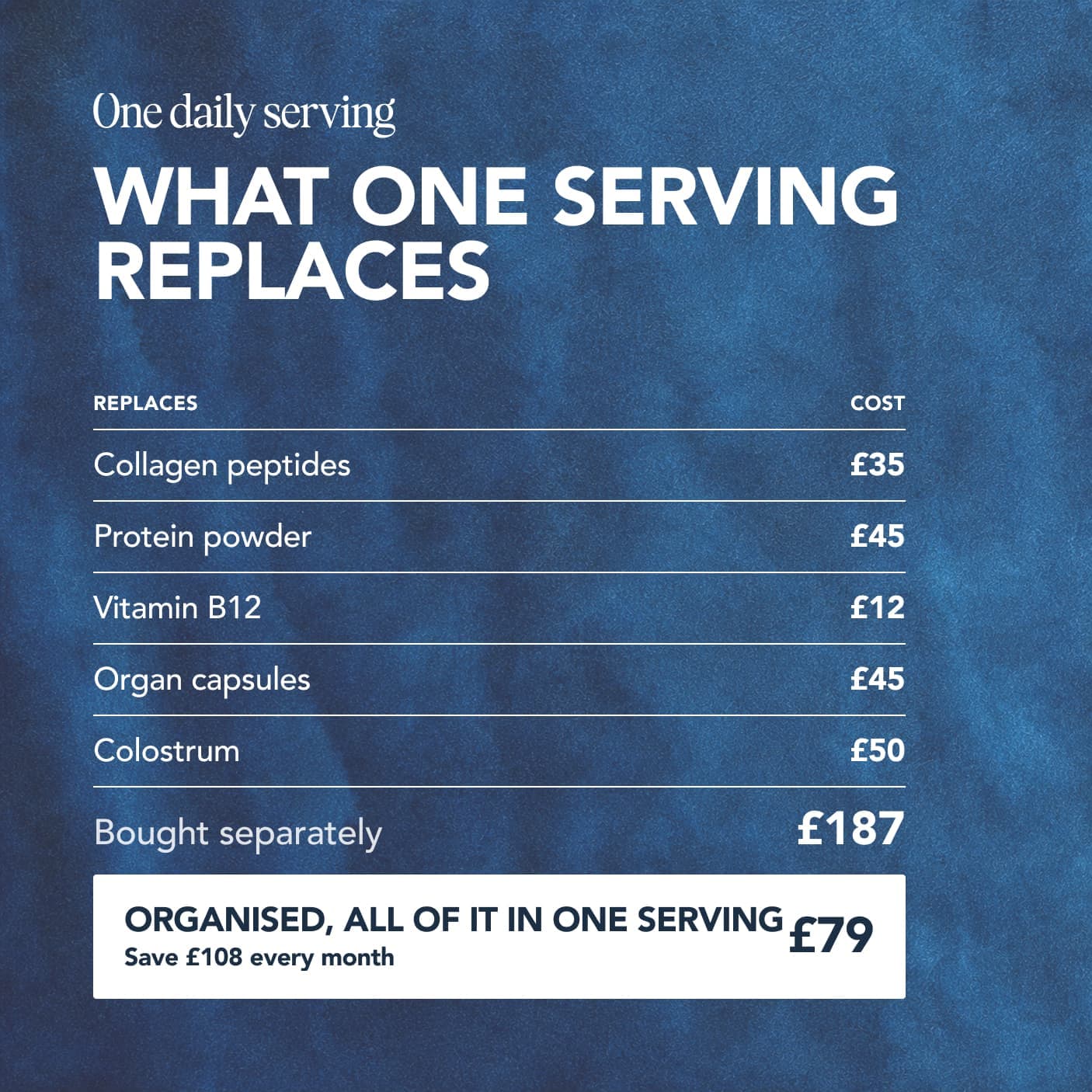
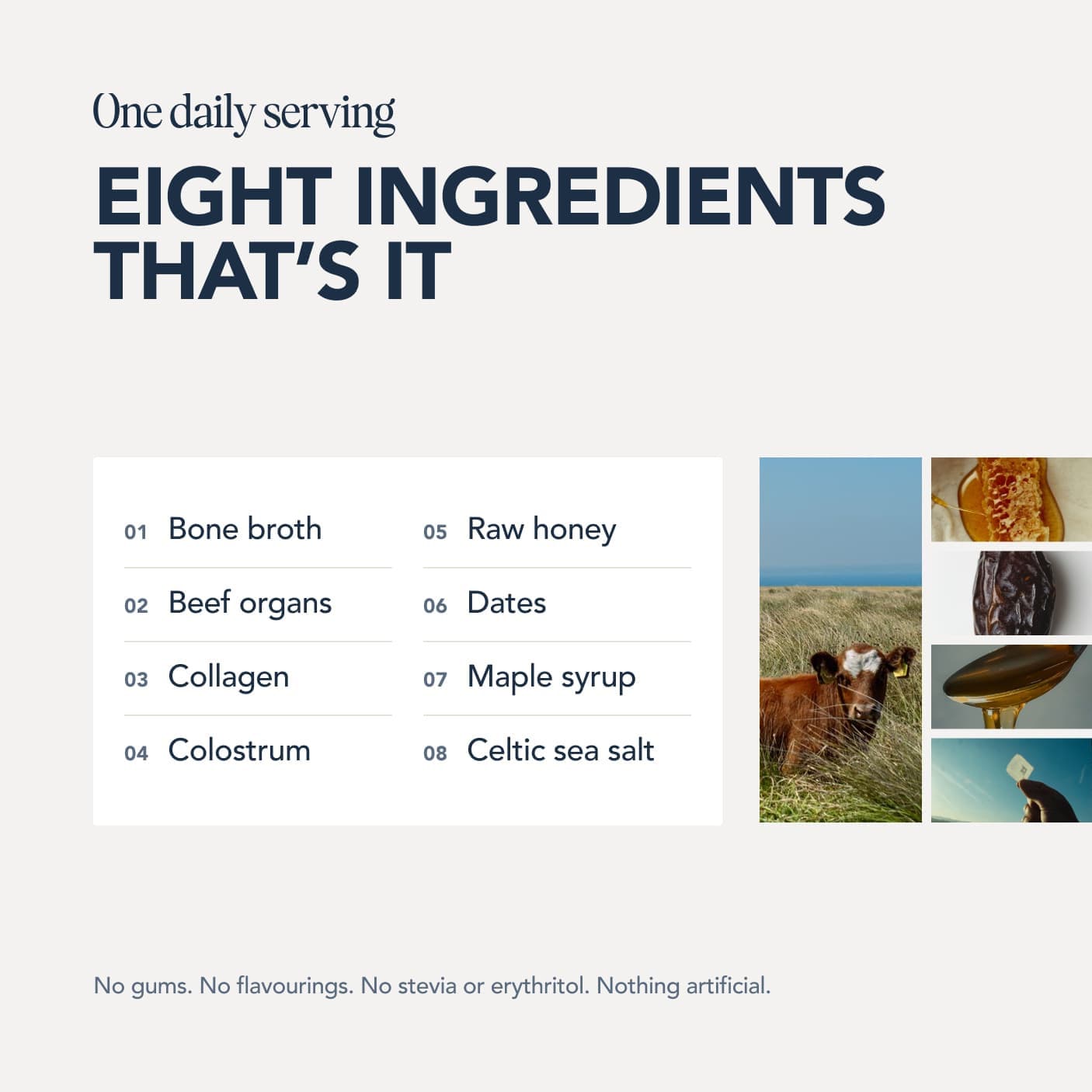
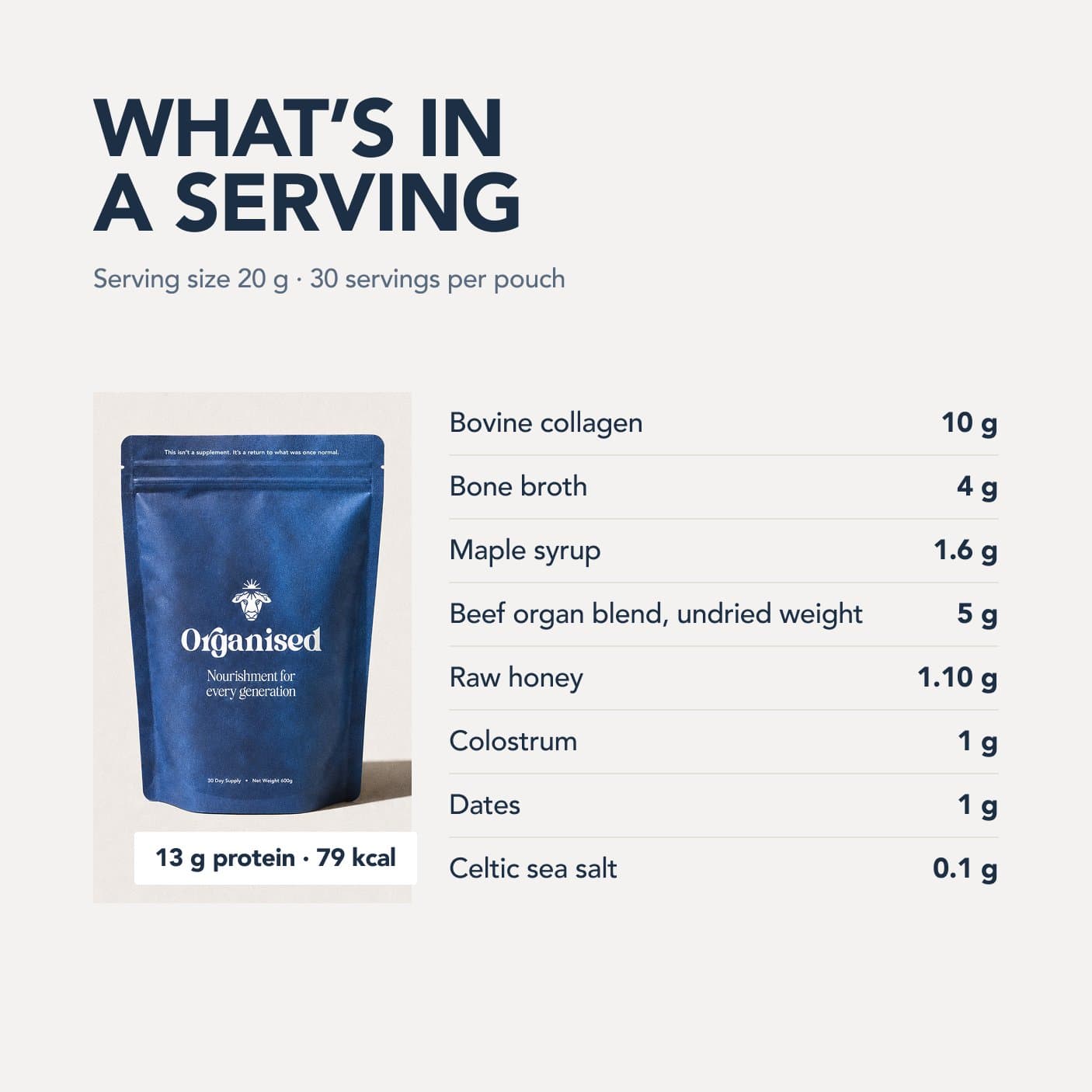
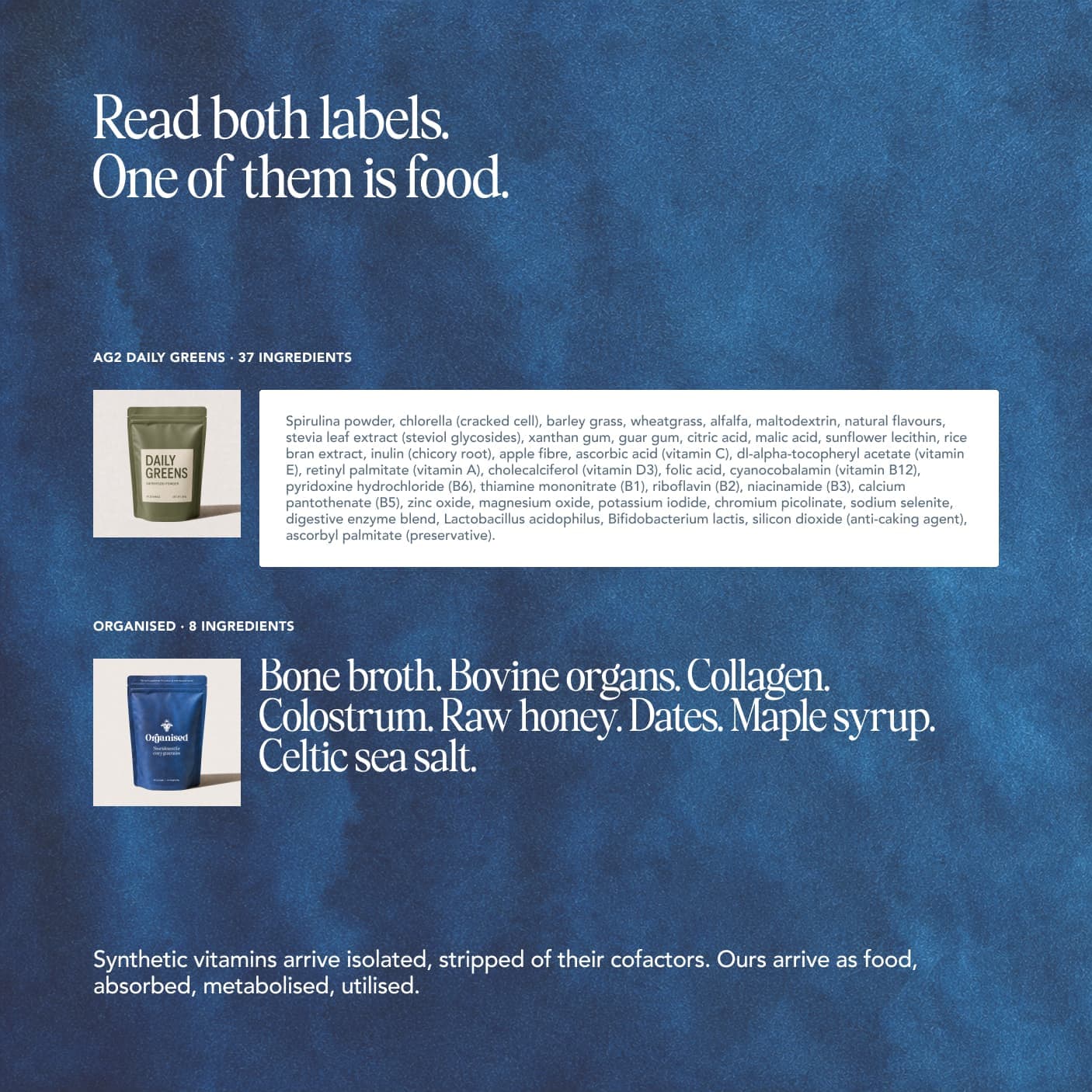
Eight real ingredients built around grass-fed beef organs, collagen and colostrum. Nothing synthetic added.
Free with your first order, worth £38. Plus £10 off the pouch with a subscription.


Free UK shipping · Made in England · 100 day money back guarantee on your first pouch · Skip, pause or cancel anytime
The bottom line
Recovery happens in the kitchen, not on the mat. Within the first hour after training, eat 30-50 grams of protein and 40-80 grams of carbohydrates from real whole foods. Then 2-4 hours later, eat a second meal prioritising nutrient density: organs, eggs, bone broth, and whole foods. This protocol supports muscle repair, glycogen restoration, and hormonal recovery. The difference between recovering athletes and chronically depleted ones is usually just what they eat in that window.
References
Every source below was checked on 27 August 2026. Each PubMed, PMC and DOI identifier was resolved against NCBI or Crossref, and what it opens is printed under the citation, so you can see the link goes where the citation says without leaving the page. Where a citation and its identifier disagreed, the citation was corrected to the record or the reference was deleted along with the sentence marker that pointed at it, and where the resolved paper turned out not to support the sentence, the sentence was cut back to what it does support. Borrowed authority is worse than none, because it looks like rigour.
- Schoenfeld BJ, Aragon AA. How much protein can the body use in a single meal for muscle-building? Implications for daily protein distribution. J Int Soc Sports Nutr. 2018;15:10. PMID: 29497353.Checked 27 August 2026: PMID 29497353 opens Schoenfeld BJ, Aragon AA, How much protein can the body use in a single meal for muscle-building? Implications for daily protein distribution. J Int Soc Sports Nutr 2018;15:10. PubMed indexes it as: Review.The authors' own declaration, from the record: N/AN/ABrad Schoenfeld serves on the scientific advisory board for Dymatize Nutrition. The authors declare no other conflicts of interest.Springer Nature remains neutral with regard to jurisdictional claims in published maps and institutional affiliations.
- Burke LM et al. Carbohydrates for training and competition. J Sports Sci. 2011;29 Suppl 1:S17-27. PMID: 21660838.Checked 27 August 2026: PMID 21660838 opens Burke LM, Hawley JA, Wong SH et al, Carbohydrates for training and competition. J Sports Sci 2011;29 Suppl 1:S17-27. PubMed indexes it as: Review.
- Parr EB et al. Alcohol ingestion impairs maximal post-exercise rates of myofibrillar protein synthesis. PLoS One. 2014;9(2):e88384. PMID: 24533082.Checked 27 August 2026: PMID 24533082 opens Parr EB, Camera DM, Areta JL et al, Alcohol ingestion impairs maximal post-exercise rates of myofibrillar protein synthesis following a single bout of concurrent training. PLoS One 2014;9(2):e88384. PubMed indexes it as: Randomized Controlled Trial.The authors' own declaration, from the record: Competing Interests: The authors have declared that no competing interests exist.
- Shaw G et al. Vitamin C-enriched gelatin supplementation before intermittent activity augments collagen synthesis. Am J Clin Nutr. 2017;105(1):136-143. PMID: 27852613.Checked 27 August 2026: PMID 27852613 opens Shaw G, Lee-Barthel A, Ross ML et al, Vitamin C-enriched gelatin supplementation before intermittent activity augments collagen synthesis. Am J Clin Nutr 2017;105(1):136-143. PubMed indexes it as: Randomized Controlled Trial.
Who wrote and reviewed this guide
Niall Kiddle
Author · Founder, Organised
Niall is the founder of Organised. He started the company in 2024 after fixing his own health the slow way: in 2022 he swapped a cupboard of synthetic supplements for real food, raw milk, organ meats, bone broth and honey, and felt the difference within months.
Areas of expertise: Ancestral nutrition, Organ meats, Whole-food supplementation, Gut health, Regenerative sourcing
Read Niall's full profile
Pedro Rodrigues
Reviewer · Agronomist (farming and sourcing only)
Pedro is the agronomist Organised works with on farming and sourcing. His job on the guides is to keep the science honest: he reviews what we publish about soil health, regenerative agriculture, grazing and the way food is actually produced.
Areas of expertise: Regenerative agriculture, Agronomy, Soil health, Grass-fed farming, Food sourcing
Reviewed this guide on
Read Pedro's full profileMore on athletes
View allBrowse the guides library
All guidesKeep reading

Life stage
The Athlete's Guide to Whole Food Performance Nutrition
Athletes need more than calories. Master protein timing, carb quality, creatine, electrolytes, sleep, and organ meat density for genuine performance gains.

Life stage
A Woman's Nutritional Guide: From Periods to Menopause
Nutritional needs change across a woman's life. Master iron, B vitamins, and fat-soluble vitamins to support your hormones from periods through menopause.

Life stage
Zinc During Pregnancy: An Overlooked Essential
Learn why zinc during pregnancy matters: low levels are linked to higher miscarriage risk and slower fetal development. Here is what you need to know.
Real food, made effortless
Find my daily blendA few ways to use it
All recipes
Energy Balls with Organised, Dates and Raw Honey
Make no-bake energy balls with Organised, dates, and raw honey. Perfect lunch box, pre-workout, or on-the-go snack. Simple recipe.

Organised Chia Pudding with Raw Honey and Berries
A no-cook chia seed pudding made with raw milk, collagen, berries, and raw honey. Prep it the night before and eat for breakfast.

Bone Broth from Scratch: A Step-by-Step Guide
Step-by-step guide to making bone broth at home. Stovetop, slow cooker, and Instant Pot methods. Rich in collagen and gut-healing minerals.


 Join over 100,000+ members
Build a better food system with us
The Organised community is thousands of people choosing real food and backing the farmers who grow it, all of us trying to leave the world a little better than we found it. If that is what you care about too, you belong here.