Gestational Diabetes and Nutrition: What Helps and What Doesn't
Your fasting glucose was 5.2. You failed the glucose tolerance test at 28 weeks. Your midwife called it gestational diabetes and your world became about numbers, restriction, and fear. But gestational diabetes is not a failure. It's information. And the information tells you exactly what your body and your baby need.
By Niall Kiddle, Founder, Organised

Reviewed by Pedro Rodrigues, Agronomist (farming and sourcing only) ·
6 min read · Published · Updated · 4 cited sources
Makers of the Organised Daily blend, a grass-fed beef organ supplement from regenerative UK farms

Gestational diabetes affects a meaningful share of pregnancies (commonly cited at around 5–10% in UK populations) and typically resolves after birth.1 But while it's present, it's not something to panic over. It's something to address, precisely and practically.
What gestational diabetes actually is
During pregnancy, the placenta produces hormones that increase insulin resistance.2 Your body has to produce more insulin to handle the same amount of glucose. For most women, this works fine. For some, the pancreas cannot keep pace and glucose stays elevated.
This is not a character flaw. It's not because you ate too much. It's not because you're not trying hard enough. It's a physiological response to pregnancy hormones, combined with genetics and current metabolic status. Some women develop it despite eating perfectly. Some don't, despite eating poorly.
What matters now is managing blood glucose to protect both you and your baby. Persistently elevated glucose increases the risk of complications: preeclampsia, larger baby at birth, neonatal hypoglycaemia. These are real risks, but they're entirely manageable with targeted nutrition strategies.
Gestational diabetes is not a punishment for how you've eaten. It's information about how your body is handling pregnancy. Use it.
Your GP or midwife will likely recommend glucose monitoring and possibly medication. That's appropriate medical management. Alongside that, nutrition can be profoundly effective at keeping your numbers in range.
Why protein-first matters more than calories
The standard gestational diabetes advice is to eat smaller portions and avoid sugar. That's not wrong, but it's incomplete. The real breakthrough is understanding that meal composition matters more than meal size.
Protein slows glucose absorption. When you eat carbohydrate alongside adequate protein, the glucose rises more slowly and to a lower peak. Compare: meal composition matters: a high-carbohydrate meal will spike glucose more than the same carbohydrate eaten alongside protein and fat.3 Same carbohydrate, completely different glucose response, just by adding protein and fat.
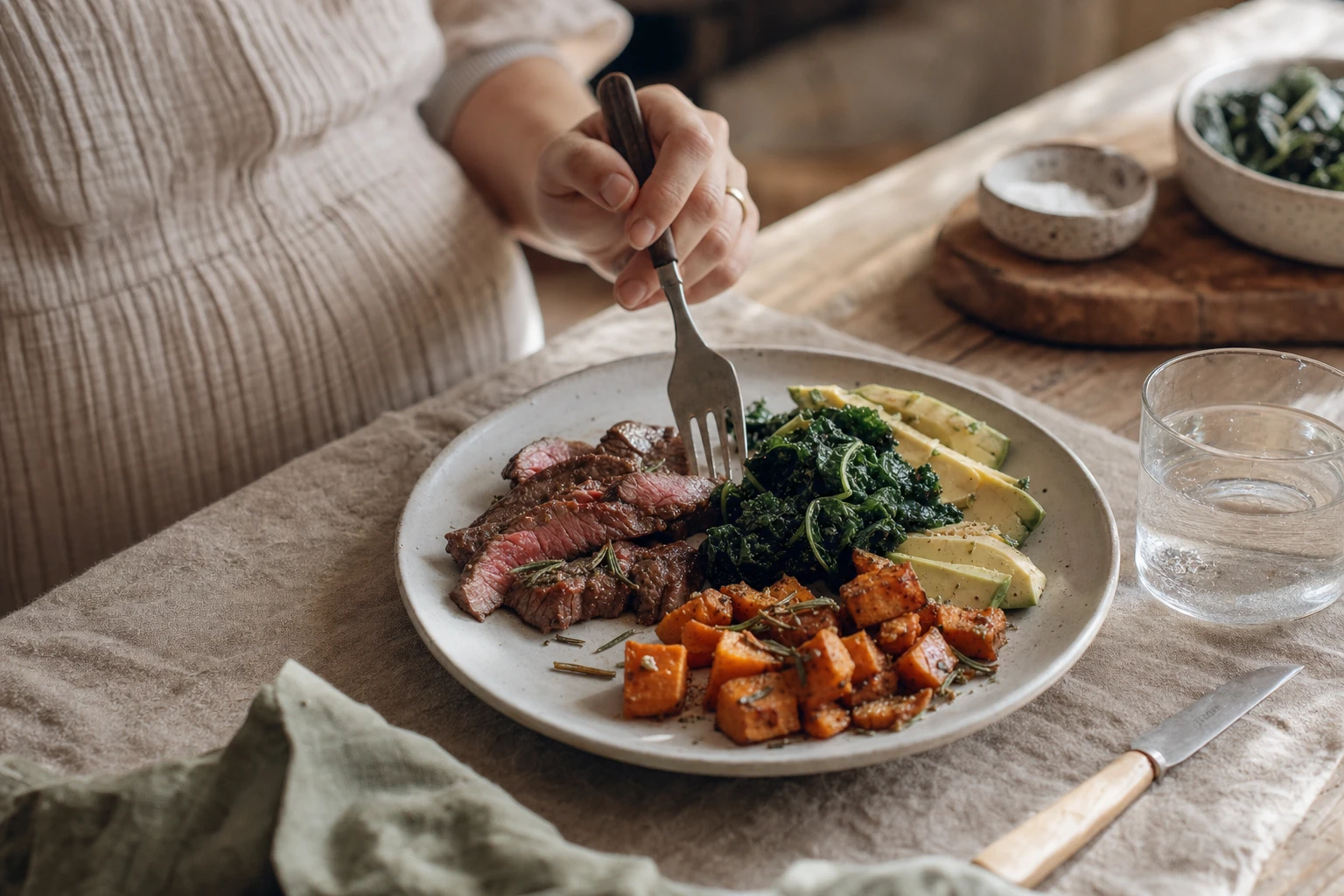
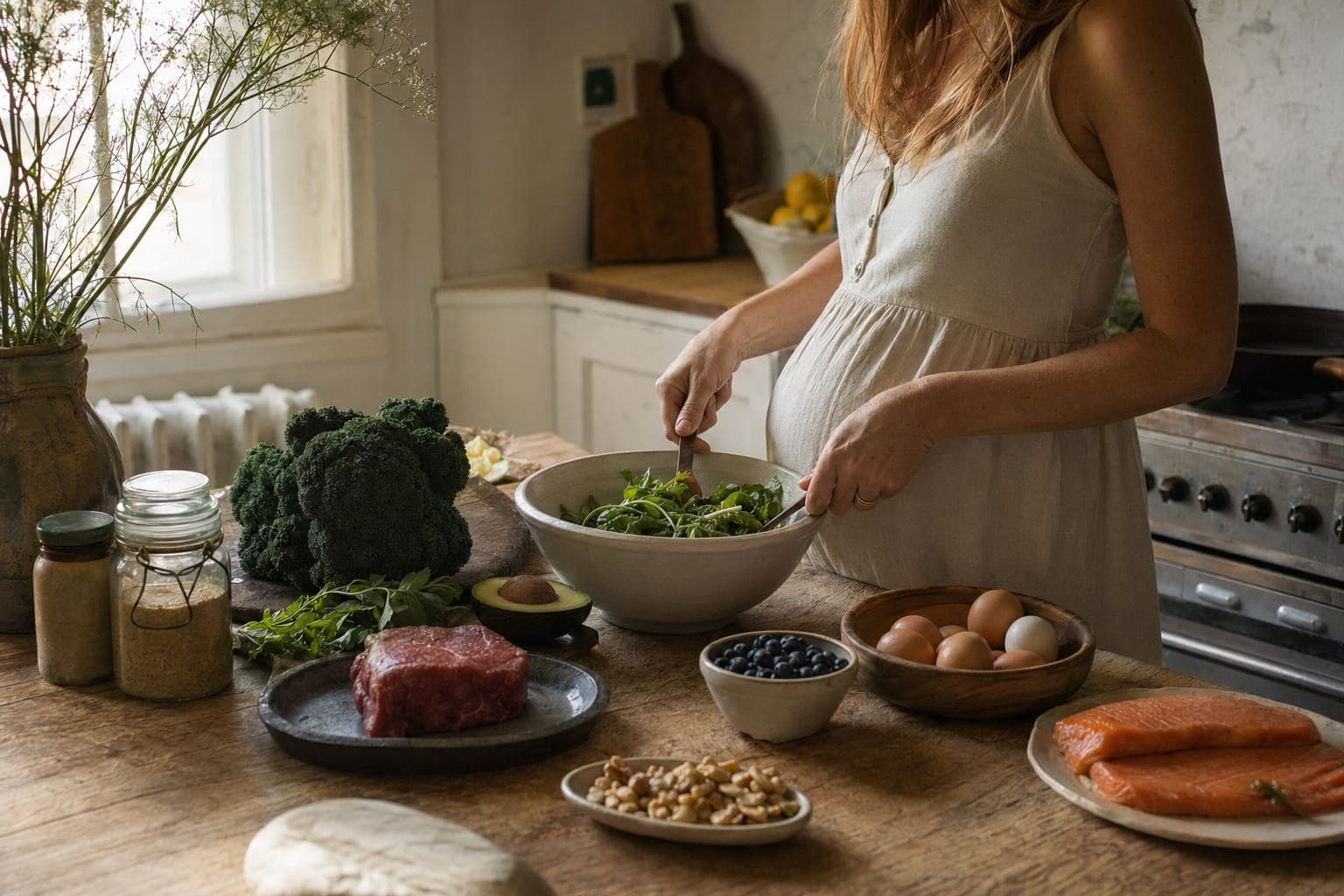
The strategy is simple: eat protein first. At every meal, the protein goes on the plate before the carbohydrate. Not protein exclusively, but protein as the anchor. A portion of meat, fish, or eggs with legumes, then vegetables, then grains or starch.
- Breakfast: Two eggs or Greek yoghurt as the foundation, then toast with butter or oats with milk.
- Lunch: Grilled chicken or tuna, then a salad, then perhaps a slice of bread.
- Dinner: Salmon or beef, vegetables, then potatoes or rice in smaller portions.
Your blood glucose responds to the order you eat food. Protein and fat first, carbohydrate last. This alone can shift your numbers into range.
Aim for at least 20 to 30 grams of protein at each meal. This is not excessive or harmful in pregnancy. It's what your baby needs for development and what your body needs to stabilise glucose.
The refined carbohydrate problem
Some carbohydrates behave differently in your body. Whole grains, legumes, and vegetables cause a slow, gentle glucose rise. Refined carbohydrates and simple sugars cause a steep spike followed by a crash.
White bread, white rice, breakfast cereals, biscuits, cakes, sweets, juice, and soft drinks all spike glucose rapidly. Your pancreas, already working harder in pregnancy, has to produce large amounts of insulin quickly. Over time, this pattern worsens insulin resistance.
The practical solution: eliminate refined carbohydrates entirely whilst managing gestational diabetes. This sounds restrictive but is actually simpler than trying to moderate them. White bread out. Sourdough or wholemeal in. White rice out. Brown rice or barley in. Breakfast cereal out. Eggs or porridge in. The boundary is clear and it removes decision fatigue.
Refined carbohydrates offer nothing but a glucose spike. The energy they provide comes with a blood sugar cost you cannot afford right now.
This is temporary. After birth, when insulin resistance returns to normal, you can reintroduce these foods if you choose. For now, whilst glucose management matters, the boundary is clear.
Get life-stage nutrition guides, free
Two short reads a week on eating well through pregnancy, childhood and older age.
By signing up you agree to receive emails from us. No spam, unsubscribe anytime.
Walking after meals changes everything
Muscle glucose uptake increases dramatically with movement. When you walk after eating, your muscles pull glucose from your bloodstream without requiring additional insulin. This is perhaps the single most effective blood glucose management strategy available and it costs nothing.
The magic number is 15 minutes. A short walk after meals reduces post-meal glucose substantially compared to remaining seated.4 This is not aggressive exercise. This is a gentle walk. A stroll around the block. Enough to be moving without being breathless.
For a woman with gestational diabetes, three 15-minute post-meal walks per day can be the difference between staying in range and requiring medication. And it has added benefits: better sleep that night, improved digestion, and reduced anxiety.
Walking after meals is not exercise for fitness. It's medicine for blood sugar. Treat it that seriously.
Make it part of your routine. After breakfast, walk to the shops or around the garden. After lunch, walk after eating. After dinner, the same. Your baby benefits from the movement. Your glucose benefits from the muscle activity. Everyone wins.

What blood sugar control actually protects
Keeping glucose in range throughout pregnancy protects several things. First, it reduces the risk of preeclampsia, a serious pregnancy complication characterised by high blood pressure and protein in the urine. Gestational diabetes increases this risk, but good glucose control mitigates it substantially.
Second, it protects your baby from being born significantly larger than appropriate. High maternal glucose leads to excess fetal insulin, which promotes fat storage. The baby is larger at birth, which increases the risk of shoulder dystocia and neonatal hypoglycaemia.1
Third, good glucose control reduces the risk that your baby will develop obesity and type 2 diabetes later in life. This is mediated through epigenetic changes: your current glucose control influences how your baby's genes are expressed. This is not permanent, but it matters.
Your blood glucose right now is not just about your health. It's one of the most important inputs to your baby's metabolic programming for life.
This is the motivator that usually lands: good glucose control now protects your child's health for decades. That's not a reason to panic. That's a reason to be very intentional about what you eat and when you move.
1 of 9
Daily blend
100,000+ thriving families4.9 on Trustpilot
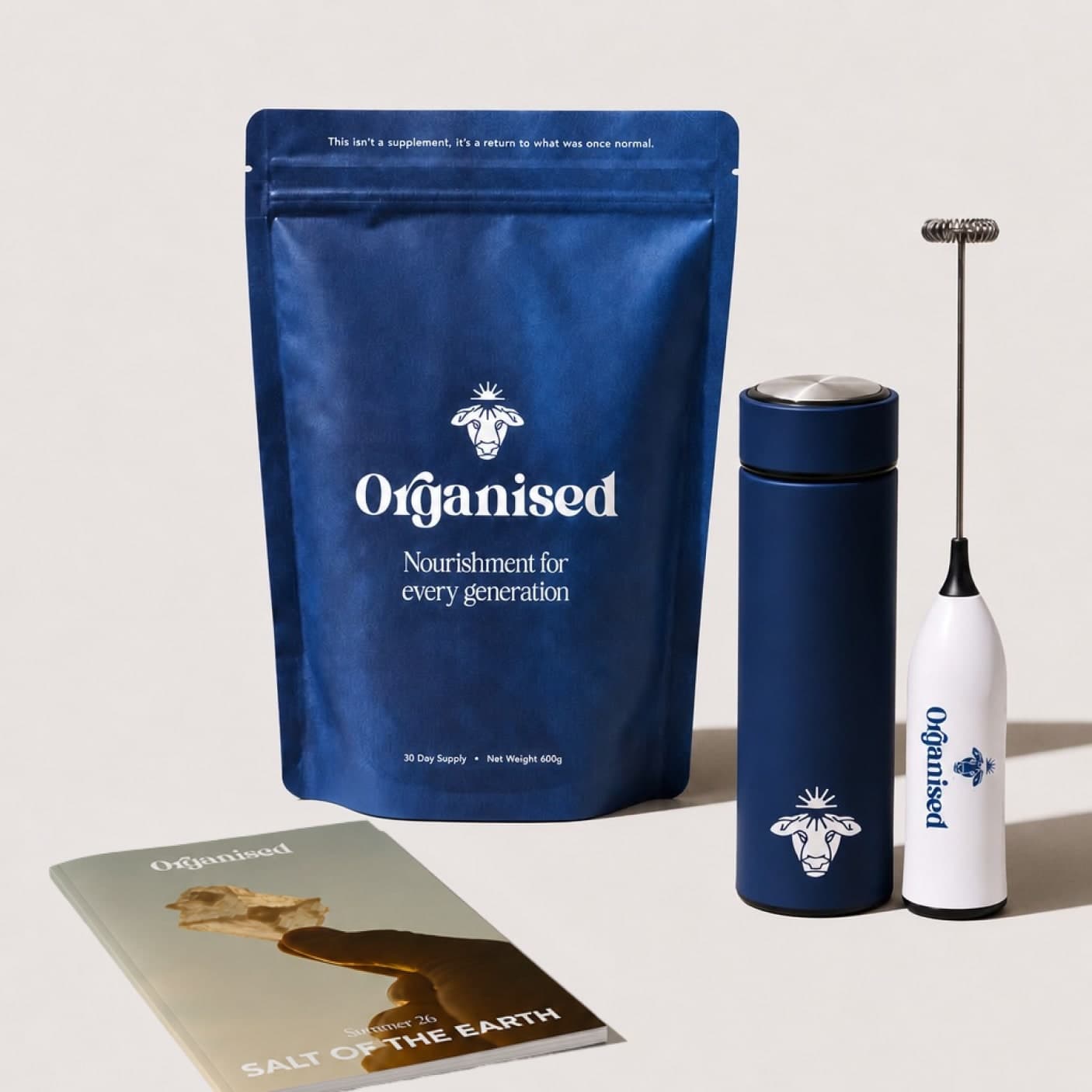
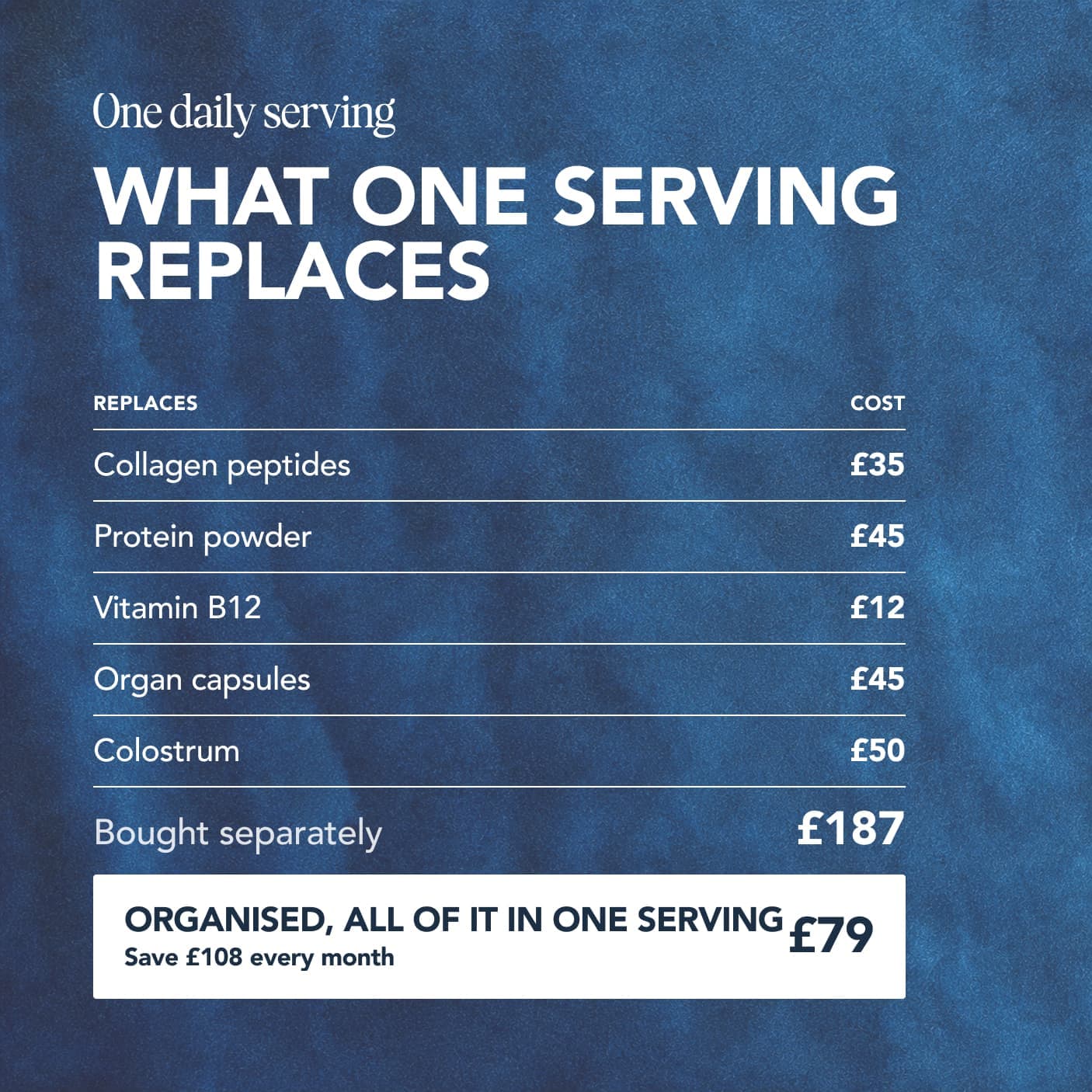
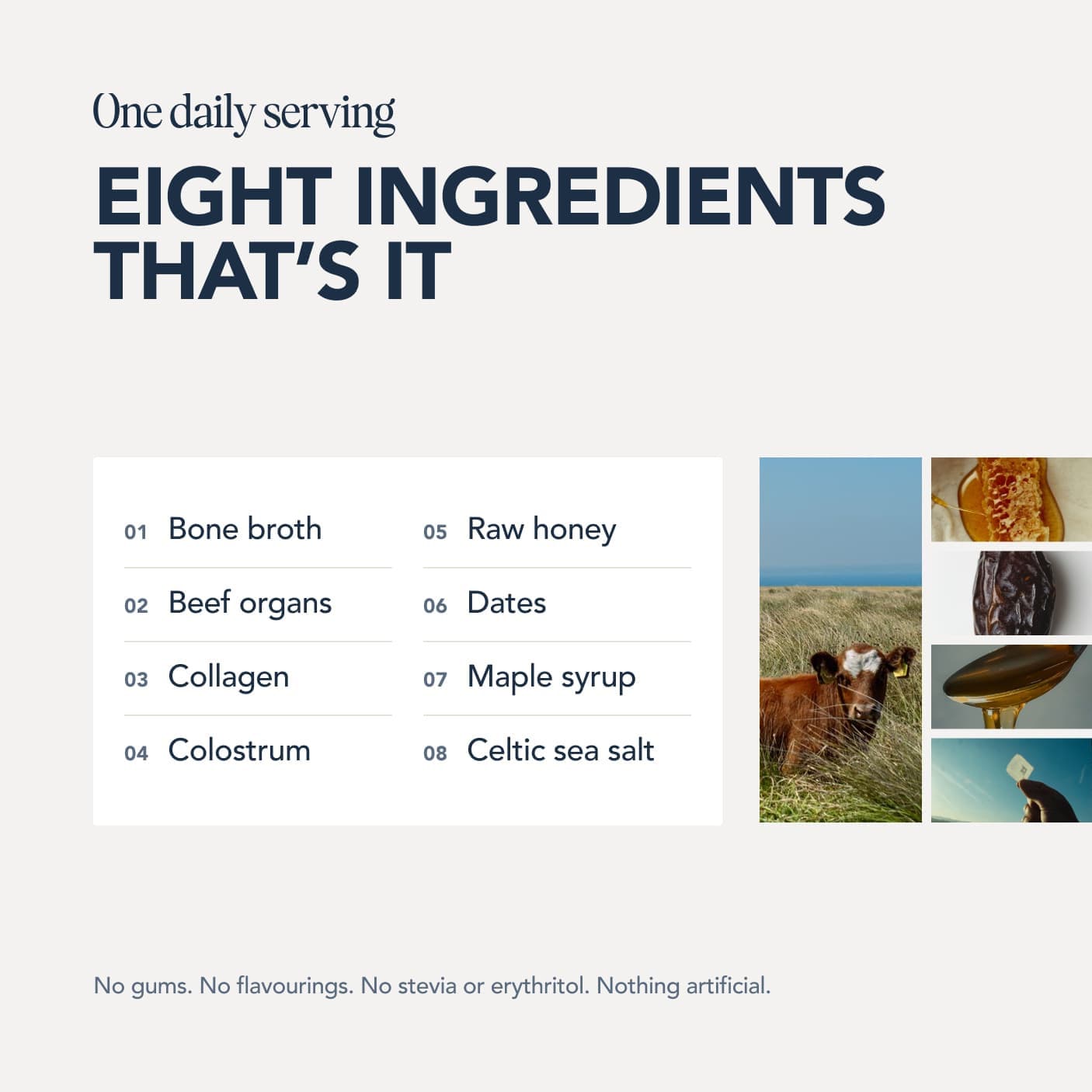
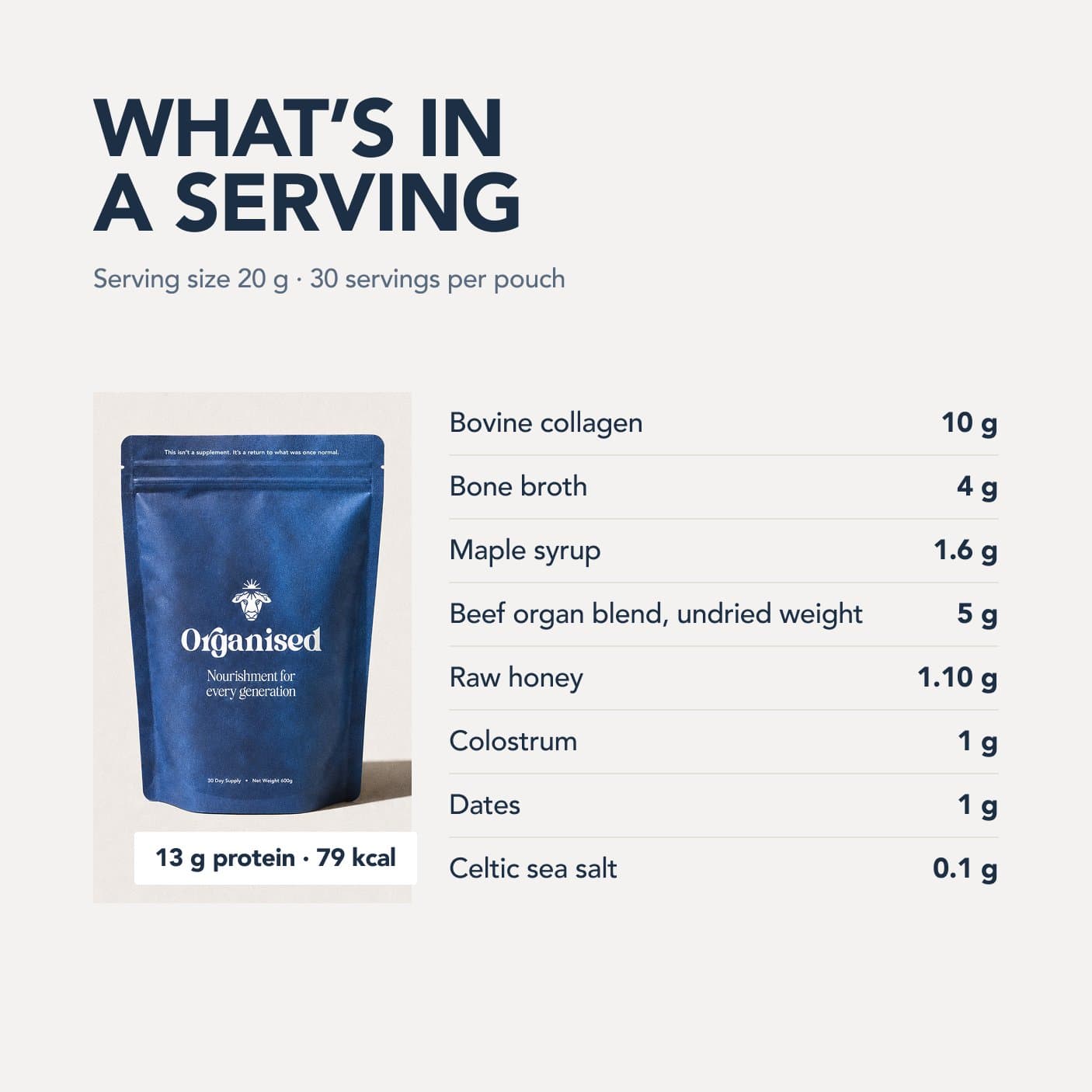
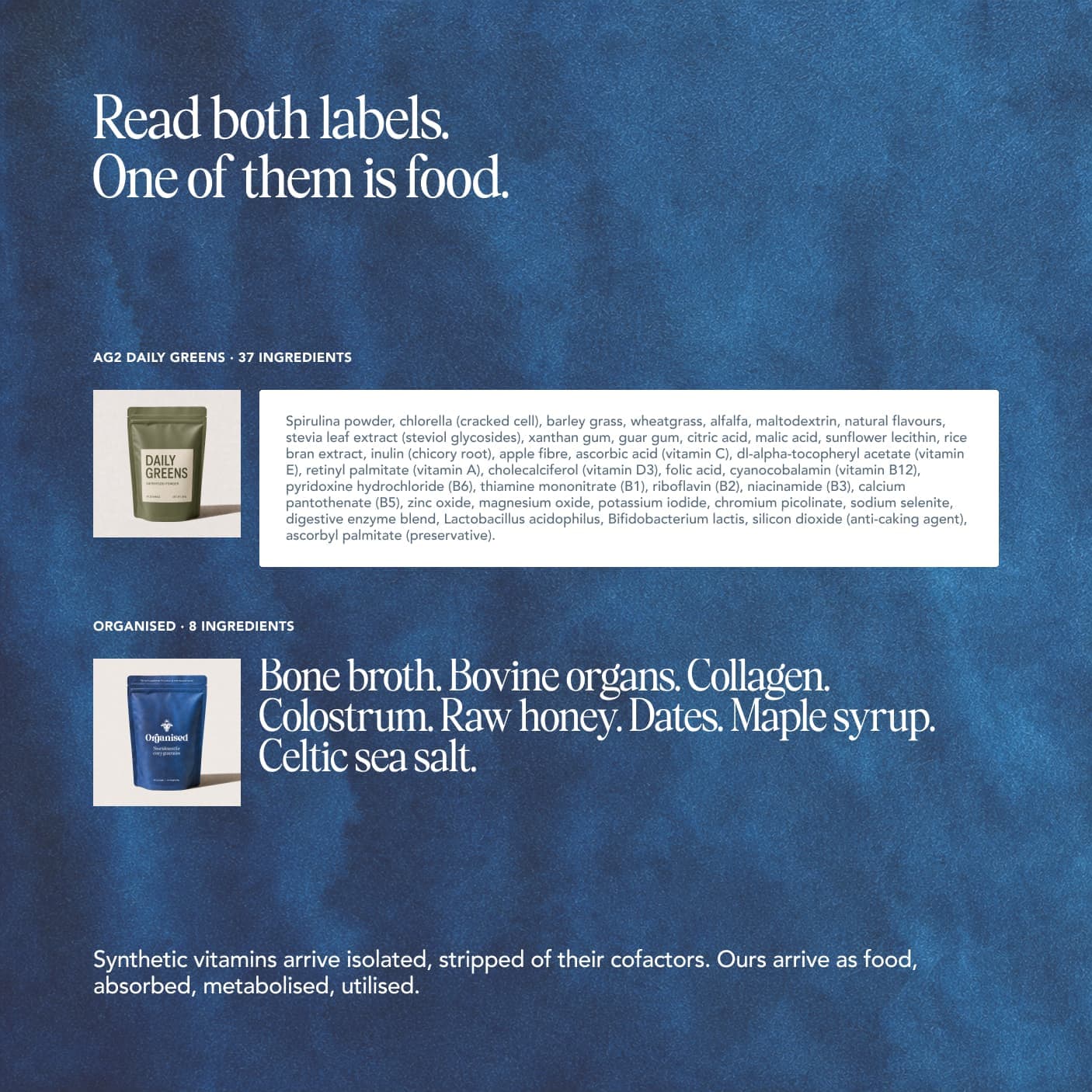
Eight real ingredients built around grass-fed beef organs, collagen and colostrum. Nothing synthetic added.
Free with your first order, worth £38. Plus £10 off the pouch with a subscription.



Free UK shipping · Made in England · 100 day money back guarantee on your first pouch · Skip, pause or cancel anytime
Working with your GP or midwife complementarily
Nutrition management works best alongside proper medical supervision. Your GP or midwife will check your fasting glucose, monitor your post-meal readings if needed, and possibly recommend medication if diet alone cannot keep you in range.
This is not failure. This is management. Some women's bodies genuinely need medication support in pregnancy, and that's okay. But nearly all women with gestational diabetes can improve their numbers significantly with the nutritional strategies here.
Be honest with your healthcare provider about what you're doing. Protein-first eating, refined carb elimination, and post-meal walking are all compatible with medical care. They're not alternative medicine. They're physiology.
If medication is recommended, take it. If diet alone works, that's wonderful. The goal is glucose control, however you achieve it. Your baby doesn't care whether it's diet or medication. Your baby cares that glucose stays stable and in range.
The bottom line
Gestational diabetes is manageable. It's not a life sentence. It's not a reflection of failure. It's a metabolic situation requiring precision nutrition for a few months. Protein-first meals, refined carb elimination, and post-meal movement can keep your numbers in range and protect both you and your baby. Work with your healthcare team. Be intentional about food and movement. And know that this is temporary. You've got this.
References
Every source below was checked on 27 August 2026. Each PubMed, PMC and DOI identifier was resolved against NCBI or Crossref, and what it opens is printed under the citation, so you can see the link goes where the citation says without leaving the page. Where a citation and its identifier disagreed, the citation was corrected to the record or the reference was deleted along with the sentence marker that pointed at it, and where the resolved paper turned out not to support the sentence, the sentence was cut back to what it does support. Borrowed authority is worse than none, because it looks like rigour.
- National Institute for Health and Care Excellence (NICE). Diabetes in pregnancy: management from preconception to the postnatal period (NG3).
- Plows JF et al. The pathophysiology of gestational diabetes mellitus. Int J Mol Sci. 2018;19(11):3342. PMID: 30373146.Checked 27 August 2026: PMID 30373146 opens Plows JF, Stanley JL, Baker PN et al, The Pathophysiology of Gestational Diabetes Mellitus. Int J Mol Sci 2018;19(11). PubMed indexes it as: Review.The authors' own declaration, from the record: The authors declare no conflict of interest.
- Shukla AP et al. Food order has a significant impact on postprandial glucose and insulin levels. Diabetes Care. 2015;38(7):e98-9. PMID: 26106234.Checked 27 August 2026: PMID 26106234 opens Shukla AP, Iliescu RG, Thomas CE et al, Food Order Has a Significant Impact on Postprandial Glucose and Insulin Levels. Diabetes Care 2015;38(7):e98-9. PubMed indexes it as: Letter.
- Buffey AJ et al. The acute effects of interrupting prolonged sitting time in adults with standing and light-intensity walking on biomarkers of cardiometabolic health. Sports Med. 2022;52(8):1765-1787. PMID: 35147898.Checked 27 August 2026: PMID 35147898 opens Buffey AJ, Herring MP, Langley CK et al, The Acute Effects of Interrupting Prolonged Sitting Time in Adults with Standing and Light-Intensity Walking on Biomarkers of Cardiometabolic Health in Adults: A Systematic Review and Meta-analysis. Sports Med 2022;52(8):1765-1787. PubMed indexes it as: Meta-Analysis, Systematic Review.The authors' own declaration, from the record: Aidan Buffey, Matthew Herring, Christina Langley, Alan Donnelly and Brian Carson declare that they have no conflicts of interests with the content of this article.
Who wrote and reviewed this guide
Niall Kiddle
Author · Founder, Organised
Niall is the founder of Organised. He started the company in 2024 after fixing his own health the slow way: in 2022 he swapped a cupboard of synthetic supplements for real food, raw milk, organ meats, bone broth and honey, and felt the difference within months.
Areas of expertise: Ancestral nutrition, Organ meats, Whole-food supplementation, Gut health, Regenerative sourcing
Read Niall's full profile
Pedro Rodrigues
Reviewer · Agronomist (farming and sourcing only)
Pedro is the agronomist Organised works with on farming and sourcing. His job on the guides is to keep the science honest: he reviews what we publish about soil health, regenerative agriculture, grazing and the way food is actually produced.
Areas of expertise: Regenerative agriculture, Agronomy, Soil health, Grass-fed farming, Food sourcing
Reviewed this guide on
Read Pedro's full profileMore on pregnancy & postpartum
View all- Nourishing Pregnancy with Whole Food Nutrition
- Postpartum Recovery Nutrition: Rebuilding After Birth
- Beef Organ Supplements and Pregnancy: Understanding Vitamin A Safety
- Breastfeeding and Nutrition: What to Eat to Nourish Two
- Folate vs Folic Acid: Why the Form Matters in Pregnancy
- Iron Needs During Pregnancy: Why Heme Iron Makes a Difference
- Morning Sickness and Nutrition: What Helps and What Makes It Worse
- Pregnancy Nutrition on Reddit: What Real Mums Recommend vs the Evidence
- Pregnancy Prep: Nutritional Foundations to Lay Before Conceiving
- Rebuilding Your Iron Stores After Birth
- The Best Foods to Eat in Each Trimester
- The Fourth Trimester: Why Mothers Need Organ Nutrition
Browse the guides library
All guidesKeep reading
Life stage
The Best Foods to Eat in Each Trimester
Pregnancy nutrition changes across trimesters. First trimester: B6 for nausea. Second: iron, choline, DHA. Third: healthy fats, magnesium, protein.

Life stage
Menopause and Bone Density: Protecting Your Skeleton
Oestrogen drop in menopause accelerates bone loss. Calcium plus K2 plus D plus adequate protein plus resistance training prevents fracture risk.

Life stage
Eye Health and Nutrition: Protecting Your Vision as You Age
Eye health and nutrition for ageing: much macular decline is preventable. Discover the foods and nutrients that help protect your vision over time.
Real food, made effortless
Find my daily blendA few ways to use it
All recipes
Raw Milk Hot Chocolate with Collagen
A nourishing evening hot chocolate made with raw milk, grass-fed collagen, raw cacao, and honey. A nighttime ritual that supports sleep and gut health.

Raw Milk Ice Cream with Organised
Make raw milk ice cream at home with Organised for a seasonal, nutrient-dense treat. Three simple flavours to try whenever the craving strikes.

5-Minute High-Protein Breakfasts Using Organised
Quick, high-protein breakfast ideas using Organised. Five recipes you can make in minutes with real food. No fussing around.


 Join over 100,000+ members
Build a better food system with us
The Organised community is thousands of people choosing real food and backing the farmers who grow it, all of us trying to leave the world a little better than we found it. If that is what you care about too, you belong here.